❌

Reading view

Connecting tax compliance to drive efficiency, visibility and value

Businesses can reduce duplication, improve efficiency and gain better insight from their data by connecting their tax compliance functions, according to Varnavas Nicolaou, partner, tax and legal at PwC Cyprus, who argues that increasing regulatory demands, greater scrutiny and continued pressure on resources are making traditional compliance models increasingly difficult to sustain.

Nicolaou explained that, for many businesses, tax compliance has traditionally developed around individual obligations. Corporate income tax, VAT, transfer pricing, Pillar Two and other reporting requirements may involve different teams, different processes, different technologies and, often, repeated requests for overlapping data.

“That model is becoming increasingly difficult to sustain,” he said, referring to the growing pressure businesses face to manage costs, address resource constraints and obtain better insight from their data as regulatory requirements expand and tax authorities increase their scrutiny.

He also identified fragmented and low-quality data, increasing regulatory demands, rising audit activity, limited visibility and cost pressures among the challenges facing clients today.

According to Nicolaou, the question for tax leaders is therefore changing. It is no longer simply “How do we complete each compliance obligation?” but increasingly “How do we connect compliance so that the same data, processes and controls work harder for the organisation?”

He explained that connecting tax compliance does not mean removing the technical expertise required for individual taxes or jurisdictions. Rather, it means creating an operating model in which people, processes, data and technology work together rather than in parallel.

At the centre of that model, he added, is data.

Traditionally, similar financial and operational information may be collected several times to support different tax obligations. A connected model seeks to capture data intelligently, standardise and enhance it, and make it available for multiple compliance purposes.

As an example, Nicolaou referred to PwC’s Connected Tax Compliance approach, which describes a model of acquiring, enhancing, using and reusing data across areas including corporate income tax, statutory financial statements, indirect taxes, Pillar Two, transfer pricing and other tax services.

“This apparently simple change has significant implications,” he pointed out, identifying efficiency as the first benefit.

When compliance processes operate independently, organisations can find themselves maintaining multiple workflows, reconciling similar datasets and responding to repeated information requests. Connecting these activities, he explained, creates opportunities to standardise inputs, automate routine processes and eliminate duplication.

At the same time, Nicolaou stressed that “The technology should support the process, rather than become another layer of complexity.”

He noted that PwC’s approach combines workflow, data gathering, collaboration, progress reporting, governance, controls and analytics within a connected technology environment.

Importantly, he clarified that increased automation does not mean removing people from tax compliance.

Instead, Nicolaou described the emerging model as “technology- and AI-powered but human-enabled”, explaining that routine activities can increasingly be automated while professional judgement remains focused on areas where technical interpretation, risk assessment and business understanding matter most.

“That distinction is critical,” he stressed, adding that “The objective is not automation for its own sake.”

The aim, he explained, is to free scarce tax resources from repetitive administration and allow them to concentrate on higher-value activities.

Beyond efficiency, Nicolaou identified visibility as another important benefit of connecting compliance functions.

As he explained, a connected compliance environment gives management something that fragmented processes often struggle to provide.

Instead of managing obligations through separate spreadsheets, email trails and local processes, a connected model can provide central oversight of status, responsibilities, data and risk.

In this respect, he referred to PwC’s Connected Tax Compliance methodology, which provides for end-to-end visibility across workstreams, centralised governance and digital audit trails, supported by technology for oversight and coordination across jurisdictions.

This matters particularly for multinational and multi-entity businesses, Nicolaou noted, as management needs to understand not only whether a return has been filed, but where information is incomplete, where risks are emerging and where intervention may be required.

He also drew attention to the measurable benefits of technology investment beyond tax, citing PwC’s Global Compliance Survey, 2025.

According to the findings he presented, organisations investing in technology and data for compliance reported benefits including better visibility of risks and risk-management activities, 64 per cent, faster identification and response to compliance issues, 53 per cent, and more insightful reporting, 48 per cent.

Other benefits included faster or more confident decision-making, 46 per cent, and increased productivity, efficiencies and cost savings, 43 per cent.

For Nicolaou, these findings illustrate how visibility changes compliance from a retrospective reporting exercise into a more active management process.

The third opportunity, which he described as perhaps the most important, concerns using compliance data to see more.

He explained that businesses already invest substantial effort in gathering, validating and analysing information for tax compliance. Once that information is structured and connected, the organisation has an opportunity to use it for more than producing returns.

Connected data and analytics, he added, can help identify trends, risks and opportunities that would otherwise remain buried across individual compliance processes.

Nicolaou again referred to PwC’s Connected Tax Compliance approach, highlighting potential insights around cash tax savings, tax-efficient strategies, tax controls, tax risks, deal readiness and the implications of regulatory change.

This, he argued, represents a fundamental shift in perspective, as “Compliance becomes not only an obligation to satisfy, but a dataset from which the business can learn.”

To illustrate the point, he explained that information collected across entities and jurisdictions may expose inconsistencies requiring attention, while common datasets can support several reporting requirements.

Similarly, dashboards can concentrate management attention on exceptions rather than every individual process.

He added that information historically examined only when preparing a return can contribute to earlier conversations about tax risk and business decisions.

In the same context, Nicolaou cited PwC’s Global Compliance Survey, which notes organisations rationalising data sources to create a “single version of the truth” and mapping controls where common controls can address multiple reporting obligations.

For organisations considering this journey, Nicolaou stressed that the starting point should not necessarily be a new technology platform.

Instead, he called for an examination of the whole compliance ecosystem, beginning with the questions “Where are we requesting the same data more than once?” and “Which processes are genuinely different and which have simply developed separately?”

He also raised the question “Which activities require specialist human judgement, and which can be standardised or automated?” alongside “Can common controls support several compliance obligations?”

Equally important, he noted, is whether management has a clear view of compliance status and emerging risk across the organisation.

Finally, Nicolaou asked “are we using the information generated through compliance to identify opportunities and support better business decisions?”

The appropriate answer, he explained, will differ between organisations.

A connected model can support different delivery models, from insourcing and co-sourcing through outsourcing and managed services.

“What matters is that the components operate as part of a coherent system rather than as isolated solutions,” he stressed.

Looking beyond the tax return, Nicolaou maintained that the future of tax compliance is not simply about completing the same processes faster.

“It is about connecting them,” he said, explaining that connecting data reduces duplication, while connecting technology and processes creates efficiency and control.

Connecting teams, he added, provides clearer accountability, while connecting the resulting information gives tax leaders an opportunity to turn compliance activity into insight.

For businesses facing more regulation, greater scrutiny and continued pressure on resources, Nicolaou stressed that this distinction matters.

“The organisations that gain most from compliance will not necessarily be those that do more compliance,” he concluded, adding that “They will be those that connect it better.”


  •  

Manufacturing downturn pulls Cyprus industrial output lower

Cyprus’ industrial production fell by 1.3 per cent year-on-year in August 2026, with a decline in manufacturing outweighing increases in mining, water supply and electricity, according to the Cyprus Statistical Service (Cystat).

The Industrial Production Index reached 90.9 points in August, using 2021 as the base year with a value of 100, marking a decrease compared with August 2025.

Despite the monthly annual decline, industrial production increased by 1.2 per cent during the first eight months of 2026 compared with the corresponding period of the previous year.

The manufacturing sector recorded a 2.5 per cent annual decrease in August.

By contrast, mining and quarrying production rose by 11 per cent, while water supply and materials recovery increased by 5.7 per cent.

Electricity supply recorded a marginal increase of 0.1 per cent over the same period.

Within manufacturing, the strongest annual increases in August were recorded in the production of rubber and plastic products, which rose by 7.1 per cent, and wood and cork products, excluding furniture, which increased by 6.4 per cent.

The sharpest decline was recorded in the manufacture of machinery and equipment, motor vehicles and other transport equipment, where production fell by 12.8 per cent compared with August 2025.

Manufacturing of refined petroleum products, chemicals and chemical products, and pharmaceutical products and preparations declined by 7.1 per cent.

Production of other non-metallic mineral products fell by 4.8 per cent year-on-year.

Looking at the January to August 2026 period, the strongest increases compared with the same period in 2025 were recorded in water collection, treatment and supply, which rose by 11.5 per cent.

Manufacturing of basic metals and fabricated metal products increased by 5.5 per cent, while production of wood and cork products, excluding furniture, rose by 5 per cent.

The largest cumulative declines were recorded in materials recovery, which fell by 6.7 per cent, and the manufacture of machinery and equipment, motor vehicles and other transport equipment, which decreased by 6.2 per cent.

  •  

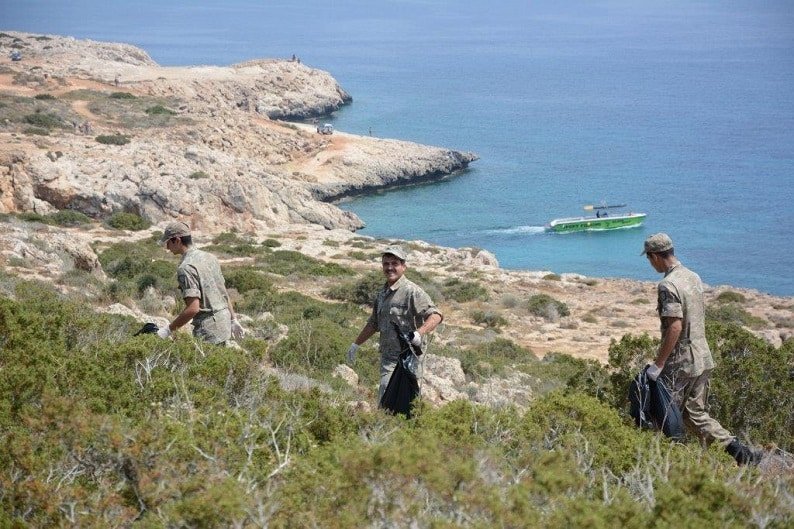
Clean-up campaign to conclude at Athalassa forest park

The Cyprus-wide clean-up campaign “Let’s Do It!” 2026 will conclude with a celebration at the Athalassa forest park in Nicosia on Sunday.

The public event will start at 9.30am and will include an organised cleaning campaign around the park with the participation of volunteers, families, students, representatives of public bodies, as well as businesses and sponsors.

According to the announcement, the campaign is Cyprus’ largest environmental and volunteer clean-up campaign and has mobilised more than 350,000 participants since 2012.

Environment commissioner Elias Myrianthous said that the campaign brings together people of all ages every year.

“Their contribution is essential, both in cleaning the areas and in raising awareness in society. The Commissioner’s Office has been firmly at the side of the organisers and volunteers since 2012, supporting the campaign and placing it under its auspices,” he said.

Myrianthous said that uncontrolled dumping and inadequate waste management burden the environment, affect our quality of life and have an economic cost for the country.

“To address this, we also need to look at our consumption habits, what we buy, how much we need and how easily we replace it. We need to limit unnecessary consumption and waste, repair and reuse what can still serve us,” he said.

Meanwhile, forestry department director Savvas Ezekiel said that his department, as the competent body for the protection, management and sustainable development of the forest ecosystems of Cyprus, has consistently supported the campaign, actively contributing to the effort for a cleaner and healthier natural environment.

“Environmental protection is not limited to an individual campaign, but is a collective responsibility and ongoing effort, in which the active participation of citizens is crucial,” he said.

National coordinator of the campaign, Ileana Nicholson, said that “Let’s Do It!” Cyprus was more than a clean-up campaign.

“It is a movement of people choosing to take action, to work together and to protect their place. Behind every clean-up are volunteers, students, teachers, organizations and partners who selflessly offer their time and energy. Without them, none of this would be possible,” she said.

She said that the biggest challenge was not to collect more waste, but to reach a time where volunteers would find less garbage dumped in nature.

“And this can only be achieved through education, consistency and cooperation between the state, businesses and civil society. Change is not the business of a few. It is in the hands of all of us,” she said.

  •  

Our View: Cyprus must rethink its attitude to vocational education

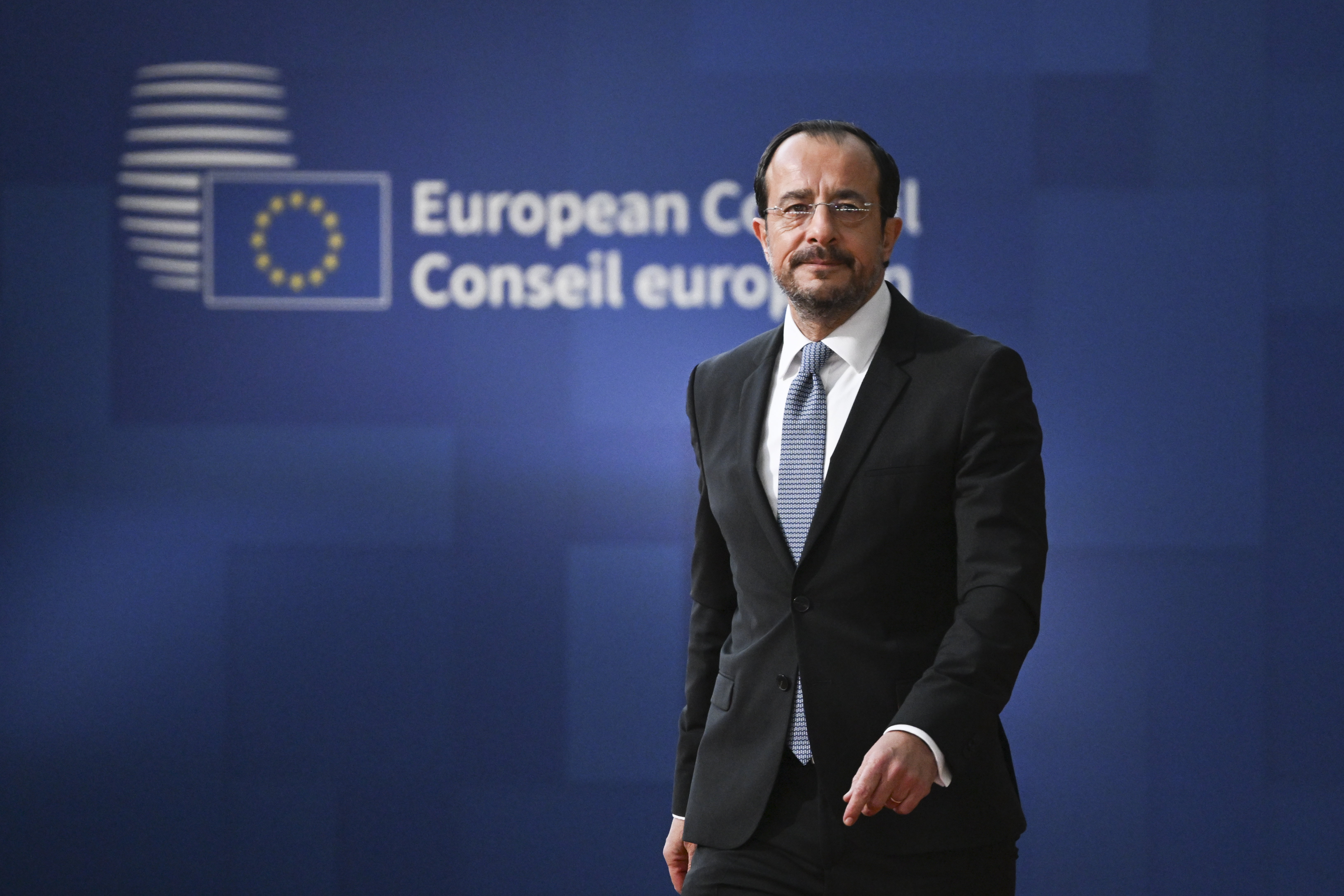
Less than a fifth of students in secondary education attend vocational education and training programmes, said President Nikos Christodoulides, in an address to the opening ceremony of the ninth national competition SkillsCyprus 2026. In Cyprus, only 17.9 per cent of students are in vocational education, drastically lower than the EU average of 52.4 per cent.

The European Commission’s recommendations for each member-state noted the steady and positive course of the Cyprus economy, but also recorded the challenges faced in the fields of productivity, innovation and skills, he said. The Commission saw a need in increasing the attractiveness of vocational education and training, something that successive Cyprus governments have failed to do despite persistent labour shortages.

Cyprus has faced a big shortage of electricians, plumbers, car mechanics, construction workers, decorators and equipment technicians for years. Although these are well-paid jobs, only a small percentage of young people are interested in them; there is now also a shortage of nurses. Is it because these are considered low-status jobs and everyone wants to be a white-collar worker, even if there is less money? Or perhaps the young are no longer interested in physical work.

University education always had great value in Cyprus. In the days when there were no universities in Cyprus, parents would make many sacrifices to send their children to universities abroad, because a degree was considered a surefire way of improving themselves, materially and socially. University education was never about broadening a youth’s horizons and sharpening their intellect, but about having the means to earn more money and acquiring social status.

Now that university degrees are widely available and many of them are of dubious value, most graduates are guaranteed neither high earning power nor the social status enjoyed in the past. But still, youngsters have no interest in plumbing or electrical work. Perhaps it is because the ambition of many is to get the dream job in the public service which does not have many openings for individuals with technical skills.

In his speech, Christodoulides mentioned the operation of the Technical Gymnasium, which he described as “an innovation that is a landmark in the Cypriot educational environment.” The institution had already expanded, a fact that illustrated the gap of not having such a special school which catered for the preferences of wishes of the students. He may have read too much significance into the existence of the Technical Gymnasium, because if the institution was such a success, it would have been expanded, and we would not have lowest participation in vocational learning in the EU.

At least the government, despite the president’s positive spin, recognises there is a problem that needs to be tackled. There are no ready solutions, and it will be difficult to change the way society views manual jobs. This is why the government needs to study the issue and develop a plan to attract more youths to vocational training.

  •  

Beyond Netanyahu: what Israel’s election means for Palestinians

By Ramzy Baroud | MEMO | October 29, 2026

In the past, many Palestinians and Arabs followed Israeli elections closely. They did so not because they entertained illusions that a Zionist leader would deliver peace and justice, dismantle the occupation or remove illegal settlements. Rather, they feared that some Israeli leaders were worse than others. They hoped to avert the worst-case scenario.

Over time, however, that distinction gave way to the belief that all Israeli leaders were essentially the same. This is not pessimism. It is experience.

Consider, for example, the expansion of illegal Jewish settlements during the Oslo peace process under Israeli Prime Minister Yitzhak Rabin.

Between 1992 and 1995, the number of Israeli settlers in the West Bank, excluding East Jerusalem, increased from 111,673 to 140,235 – a rise of more than 25 per cent, according to the Palestinian Central Bureau of Statistics (PCBS), drawing on Israeli statistical records.

The same pattern continued under the Labour government of Prime Minister Ehud Barak.

Within his first six months, Barak’s government issued tenders for 3,196 settlement housing units, exceeding the annual average under his right-wing predecessor, Benjamin Netanyahu.

When Naftali Bennett formed a coalition government in June 2021 that included the Arab party Ra’am, settlement expansion continued unabated.

According to the Israeli settlement watchdog Peace Now, the Bennett–Lapid government advanced plans for 7,292 settlement housing units during its first year, a 26 per cent increase over the annual average recorded under previous Netanyahu governments.

The settlements are themselves a driving force behind the occupation. They require land, and therefore land confiscation; protection, and therefore an expanded military presence; water, roads and infrastructure, and therefore the appropriation of Palestinian resources. Together, these elements deepen dispossession and generate further Israeli violence.

According to the PCBS, the West Bank contained 645 Israeli settlement sites, outposts and other occupation installations by the end of 2025, including 350 settlement outposts.

The Palestinian Colonization and Wall Resistance Commission, a Palestinian Authority body, reported that Israeli authorities targeted approximately 29,335 dunums of Palestinian land through declarations of so-called “state land” between October 2023 and August 2026 – one of the largest waves of such land appropriation since Oslo.

By September 2026, the Commission had also documented the advancement or consideration of plans for more than 18,000 additional settlement housing units across the West Bank and occupied East Jerusalem.

Alongside this expansion is the violence unfolding across the West Bank.

By the end of 2023, the West Bank had experienced its deadliest year for Palestinians since the UN began systematically recording casualties in 2005.

The Colonization and Wall Resistance Commission documented 23,827 attacks by Israeli forces and settlers against Palestinians and their property during 2025 alone. In the first seven months of 2026, settler attacks increased by 63 per cent compared with the corresponding period of the previous year.

Typically, this violence, carried out by the Israeli occupation army and armed illegal settlers, is contextualised within the ongoing genocide in Gaza. But violence in the West Bank also serves another purpose beyond collective punishment: the confiscation of Palestinian orchards, the annexation of land, the expansion of settlements and the crushing of Palestinian resistance, including non-violent opposition to this colonial enterprise.

Any Israeli candidate in the 27 October elections who supports settlement expansion does so with full knowledge of its consequences: further dispossession, military occupation, annexation and violence.

The difference between Prime Minister Benjamin Netanyahu, Finance Minister Bezalel Smotrich and National Security Minister Itamar Ben-Gvir, and politicians presented as less extreme, is often one of language, strategy and timing.

Former Israeli military chief and Yashar party leader Gadi Eisenkot, for example, openly supports the expansion of Israeli settlements in the occupied West Bank, despite his reputation as a more “moderate” alternative to Netanyahu.

What, then, about Gaza?

Who among Israel’s leading political figures is promising to end the genocide, lift the siege, ensure unrestricted humanitarian aid, restrain the army or investigate violations of international law? None.

Israeli media have spent the past three years reporting on major disagreements between the government, military establishment, intelligence agencies and political opposition over what should happen in Gaza.

Yet Eisenkot has pledged to end Hamas’s rule in Gaza within 18 months of taking office, whether through US President Donald Trump’s framework or through continued war.

For his part, Yesh Atid leader and former Prime Minister Yair Lapid has proposed placing Gaza under Egyptian administration for up to 15 years, effectively shifting responsibility for Israel’s actions onto Arab states.

Former Prime Minister Naftali Bennett, meanwhile, supports continued Israeli military control until Palestinian groups are disarmed.

The disagreement, therefore, is often over how Israel should achieve its objectives, rather than whether those objectives should change.

Other major disagreements primarily concern Israeli society: the conscription of ultra-Orthodox Jews, judicial reform and accountability for the failures of 7 October.

But these disputes should not be confused with the questions that matter most to Palestinians.

If Netanyahu succeeds in forming another right-wing coalition, the policies of occupation, settlement expansion and military confrontation will continue, potentially with renewed momentum.

If Israel produces a broader coalition, its members may reach compromises over judicial reform, conscription and other domestic disputes. The occupation, however, is unlikely to become the central point of disagreement.

More troubling still, even a government leaning towards the centre-left might succeed in presenting Israel to the international community as a country ready to move beyond the image it acquired during three years of genocide, without fundamentally changing its conduct on the ground.

The international community must therefore remain vigilant. It cannot allow a future Israeli government to present itself as a peacemaker, or sell the illusion of a newly reformed Israel, while continuing to invest in settlements, occupation, war and genocide.

  •  

Lithuania plans universal conscription

RT | October 29, 2026

Lithuania will introduce universal male conscription despite public resistance to compulsory military service, the country’s government has announced.

The Baltic state reinstated selective conscription in 2015, seven years after abolishing it. Under the new plan, the draft would be extended to all eligible men, while women would continue to serve voluntarily.

Annual recruitment will increase from just over 5,000 to around 7,500 men, President Gitanas Nauseda announced on Thursday following a State Defense Council meeting.

Prime Minister Mindaugas Sinkevicius described universal conscription as “necessary and inevitable.”

The decision follows similar recruitment pushes elsewhere in Europe. Poland is considering restoring compulsory service, which was abolished in 2009, and introducing a system covering both men and women. A recent poll, however, found that 53% of Poles aged 18–24 opposed reinstatement of the draft.

Germany has already introduced mandatory military registration for 18-year-old men. Enlistment remains voluntary, but parliament can activate compulsory service if recruitment falls short or the security situation deteriorates.

Berlin’s recruitment drive has met resistance, with some 45,000 people joining student protests across roughly 100 German cities and towns in September, with some carrying banners reading “We won’t fight in your wars” and “Russia is not our enemy.”

Applications for conscientious objector status reached over 12,000 between January and August, compared with 3,879 throughout 2025, according to figures reported by German media.

European officials have nevertheless continued discussing preparations for a possible war with Russia by the end of the decade. Estonian Defense Minister Martin Herem “joked” last month that if Estonia mobilized and Russia did not attack, it would be “economically more correct to attack ourselves” rather than keep troops waiting.

Moscow has repeatedly stated that it has neither reason nor intention to attack NATO countries, describing such allegations as “horror stories” intended to prepare European populations for further militarization.

Russian officials have warned that Europe’s military buildup could itself lead to confrontation and that expanding NATO infrastructure near Russia’s borders would prompt additional security measures. Moscow has stressed that it is prepared to defend itself if attacked.

  •  

Vance outreach to Iran related to medical supplies, says Trump

US President Donald Trump said that Vice President JD Vance’s outreach to Iran was about helping the country get medical supplies, after US media reported Vance had written to Tehran’s top security official to revive peace talks.

Iran has received a letter from Vance but it has not responded to it yet, the country’s semi-official Tasnim news agency reported on Thursday, while adding that Tehran wants the US to meet its conditions and “any position that contradicts this framework is unacceptable.”

Also on Thursday, the US military’s senior officer overseeing the Middle East, Admiral Brad Cooper, met Trump at the White House to outline military options in Iran, the Wall Street Journal reported, citing US officials and other people with direct knowledge of the meeting.

Reuters could not immediately independently verify this report.

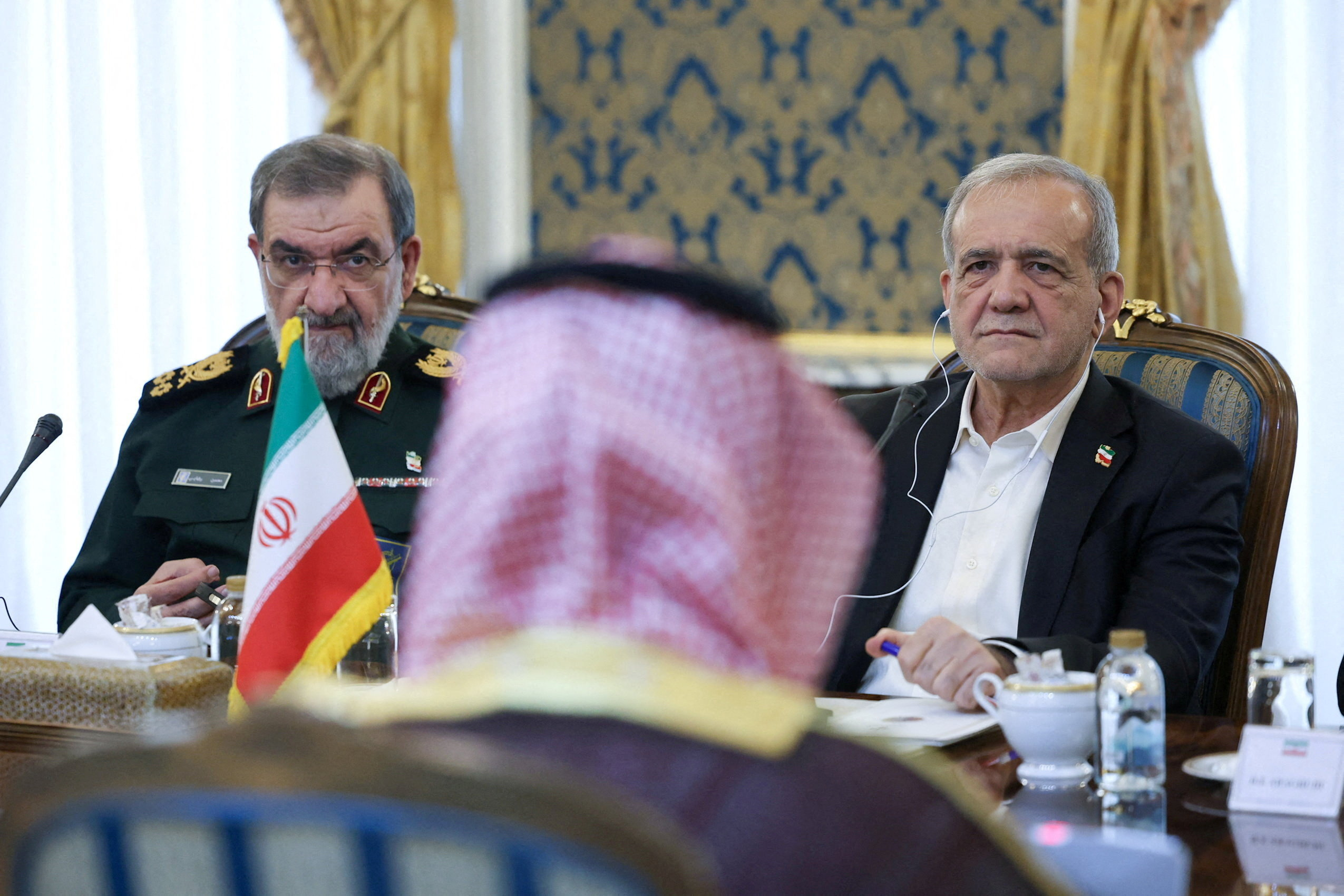
Vance sent the letter to Iranian Security Council chief Mohsen Rezaei in a bid to revive peace negotiations, the Wall Street Journal and the New York Times reported on Wednesday, citing US officials and people familiar with the matter. Reuters could not immediately verify the reports.

The Wall Street Journal reported that Vance sent the letter at Trump’s direction. When asked by reporters later on Wednesday if he directed Vance to reach out to Iran to restart peace negotiations, Trump said: “No.”

“What that is is they need help with medical supplies and various things. He (Vance) asked me what I thought. I said, if you want to do that, that’s okay. Basically, it’s getting supplies in to help people that are not well,” Trump told reporters.

Iran’s mission to the United Nations in New York did not immediately respond to a request for comment on the letter and Trump’s remark. Vance’s office did not immediately respond to a request for comment.

TEHRAN’S CONDITIONS

Iran’s parliament speaker said on Thursday that Tehran’s conditions had been repeatedly and clearly communicated to mediators and that progress can only be achieved if Iran’s seven conditions are met.

The “carrot-and-stick approach has no effect on Iran,” Mohammad Baqer Qalibaf added.

Conditions Iran says must be met before it will reopen the strategic Strait of Hormuz shipping route include, among other demands, lifting the US blockade on Iranian ports, lifting US sanctions on Iranian oil exports and ending hostilities on all regional fronts.

The United States and Israel launched a war against Iran at the end of February. The US has also since imposed a naval blockade on Iran to starve it of oil export revenue and escalated efforts to economically isolate Iran.

Iran has long blamed US sanctions for hindering civilian access to medical supplies.

In an August letter to the UN Security Council, Iran accused the US of intentionally depriving civilians “of access to food, medicines, medical equipment, energy and other necessities, with grave consequences for their rights to life, health, food and a decent standard of living.”

Qatari mediators presented Iran with a new draft deal on Sunday to end the war, but a senior Iranian official said Doha had only put forward unacceptable ideas that did not amount to an offer.

The war’s impact on global energy costs has also weighed on support for Republican candidates and hurt Trump’s approval ratings ahead of the US midterm elections that decide control of Congress. Trump’s Republican Party holds a narrow majority in both chambers of Congress.

  •  

Patrick Stewart, Shakespearean actor turned ‘Star Trek’ and ‘X-Men’ star, dies at 86

Patrick Stewart, who rose from poverty in England to become an accomplished Shakespearean stage actor and then achieved global stardom as the erudite Captain Jean-Luc Picard in TV’s “Star Trek: The Next Generation” and the telepathic Professor Charles Xavier in the “X-Men” movies, has died at the age of 86.

Stewart, knighted in 2010 by Queen Elizabeth II for his contributions to drama, died at his home in Los Angeles, according to a statement on his X account.

“We announce with great sorrow the passing of Sir Patrick Stewart yesterday at his home in Los Angeles, in the loving care of his beloved wife Sunny following a brief and poignant journey with Alzheimer’s Disease and Lewy Body Dementia,” it said.

Stewart became an actor at age 18 and gained acclaim on the stage as a member of the Royal Shakespeare Company beginning in the 1960s. But it was not until after he was hired at age 47 for “Star Trek: The Next Generation” – a TV series that ran from 1987 to 1994 as a sequel to the original 1960s “Star Trek” – that he gained mainstream fame, acting into his 80s.

“Make it so,” his character Picard often said, instructing a subordinate to carry out a command, or sometimes deploying the similar catch phrase, “Engage.”

It was a role he had debated even taking after his longtime friend and fellow Shakespearen Ian McKellen advised him to spurn “Star Trek” and remain in theater. Stewart did take the role and became both a fan favorite and an indispensable part of a lucrative sci-fi franchise, playing Picard not only in 176 episodes over seven seasons of that series but also in several “Star Trek” films and in the later streaming series “Star Trek: Picard” that began airing in 2020 when he was 79.

“As the seven seasons of TNG (“The Next Generation”) went by, the distinction between Jean-Luc Picard and Patrick Stewart became thinner and thinner, until it was impossible for me to know where he left off and I began. So much of what I believed and felt went into that show,” Stewart told the Guardian newspaper in 2022.

Stewart also initially balked at being cast as the wheelchair-using mutant Professor X in the “X-Men” movies, based on the popular Marvel comic book character.

“I said, ‘Look, I know this isn’t science fiction, but it’s fantasy, and I’ve done that.’ But they persuaded me that it wouldn’t be like ‘Star Trek,’ so I did it. And yet again I was proved wrong,” Stewart told the Guardian.

He became a critical part of another big-money franchise starting with the first entry “X-Men” in 2000 and followed by several more.

ACTING WAS SAFE SPACE

Stewart was born on July 13, 1940, in the English town of Mirfield in Yorkshire. He was raised in poverty, with a father who he said returned from World War Two an alcoholic who suffered from post-traumatic stress syndrome and physically abused Stewart’s mother. Stewart recalled putting his body between his father and mother to try to protect her.

As a child, Stewart said, acting became a “safe space” after a schoolteacher introduced him to Shakespeare – specifically “The Merchant of Venice” – during a class when he was 12. He started losing his hair at age 17 and was bald by 19. He was embarrassed at the time, but eventually embraced it.

“Star Trek,” created by Gene Roddenberry, presented a hopeful vision of the future, with humankind venturing into the cosmos in spaceships exceeding the speed of light and encountering alien races. The enduring popularity of the original series and the success of spinoff films prompted Roddenberry to create “The Next Generation” sequel series.

The Picard character was the opposite of the swashbuckling and sometimes unintentionally buffoonish Captain James T. Kirk, played by William Shatner, of the original series – envisioned as more cerebral and disciplined, though sometimes coming across as stuffy, humorless, or self-important.

Stewart recalled being a little bit too serious toward his cast mates early on.

“I tell the story of calling a meeting of my principal fellow cast members and telling them that I thought we were not disciplined enough, that we should not be fooling about on the set as much as we were but taking everything seriously,” Stewart told the New Yorker in 2023.

“And one of the cast members said, ‘Oh, come on, Patrick, we’ve got to have some fun.’ And I thumped the chair and said, ‘We are not here to have fun’ – which they have never let me forget. They taught me so much about loosening up and being freer,” Stewart added.

Stewart also felt the series improved as it went along, faulting his own portrayal of Picard in the first two seasons.

“I found it lacking intimacy. It was very authoritative, but there were few other qualities in him,” Stewart said, adding that his work got better in subsequent seasons.

In fact, the finest work for the entire cast may have been the two-part, time-bending series finale.

He became Sir Patrick Stewart when he was knighted by the queen at Buckingham Palace in 2010. He told reporters that his heroes were British actors Laurence Olivier, John Gielgud and Alec Guinness, who also had been knighted, adding that being “in that company is the grandest thing that has professionally happened to me.”

Stewart was married three times and had two children. His third marriage, in 2013, was to American musician Sunny Ozell.

  •  

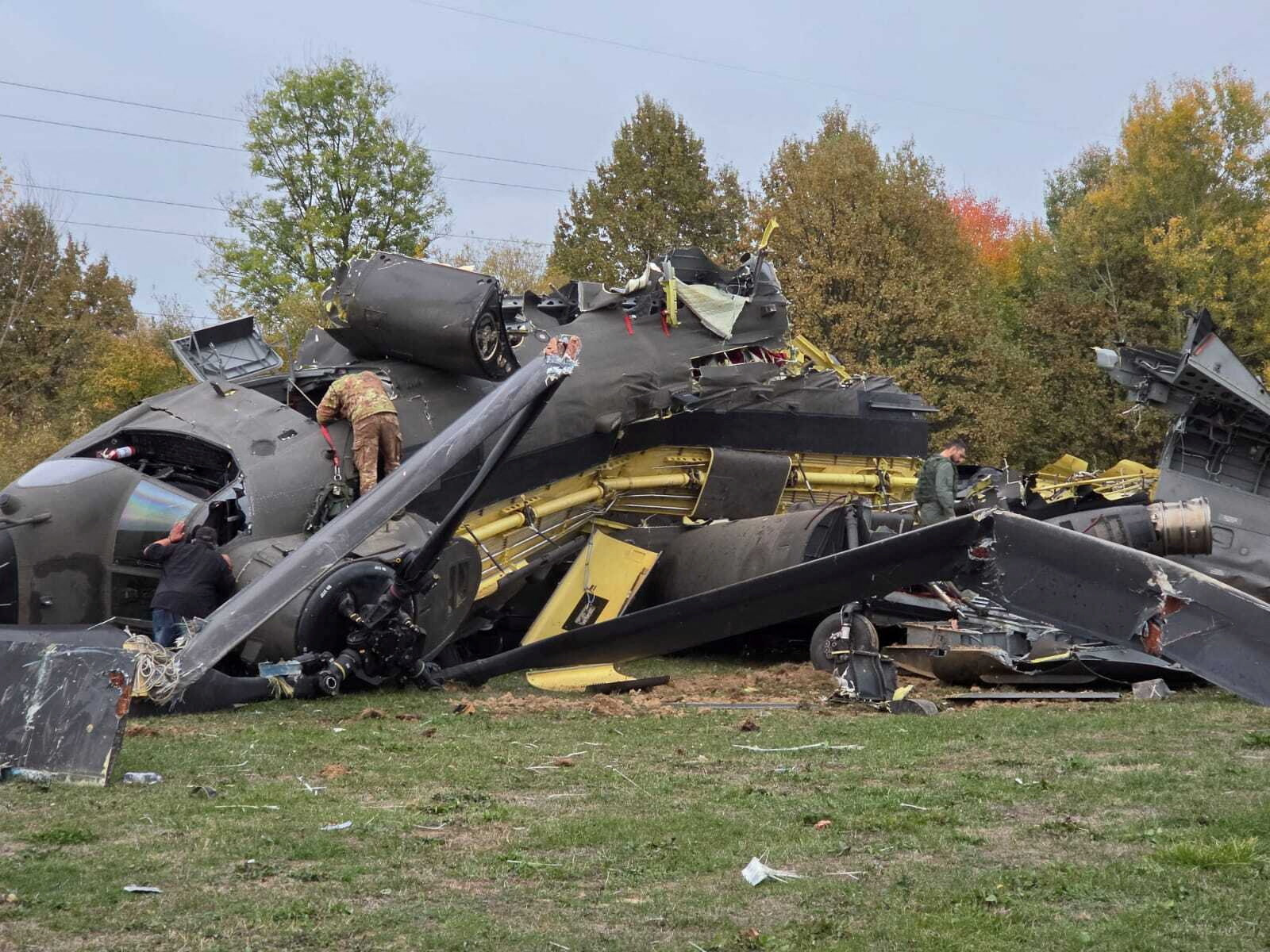
At least four killed as Italian helicopter in EU mission in Bosnia crashes

At least four people were reported killed when an Italian military helicopter with the EU peacekeeping mission in Bosnia and Herzegovina crashed on Thursday, ANSA news agency reported.

Another 12 people were injured when the helicopter came down in the village of Gorice in Brcko district, the mayor of Brcko was quoted as saying by the agency.

Images carried by local media showed a military transport helicopter overturned on the ground and shattered into pieces.

Italian Prime Minister Giorgia Meloni expressed her condolences, writing on X: “My thoughts are with the victims, their families, and all those who, as part of the mission to promote peace and stability in the region.”

An official from the EUFOR mission confirmed the crash, but did not give details on the number of casualties.

The aircraft had been deployed as part of Operation Althea, run by EUFOR, which oversees the implementation of the Dayton Peace Agreement.

  •  

Man critical after workplace accident

A 31-year-old man was in a critical condition on Thursday after falling from a height of about five metres while working at a factory in Larnaca.

The man was rushed to Larnaca general hospital, and then transferred to Nicosia general hospital.

According to the police, they were alerted to the accident at around 5.40pm.

Under circumstances being investigated, the man sustained critical injuries after he fell to the ground from a height of five metres.

The Labour Inspection Department has ordered the factory in question to suspend operations while the investigation is ongoing.

  •  

Martian meteorite found in the Sahara is 4.1 billion years old

A meteorite found in 2022 in the Sahara in Mali formed in the Martian crust at least 4.1 billion years ago, according to scientists, making the reddish igneous rock perhaps the oldest of the 435 meteorites from Mars known on Earth.

The researchers said the composition of the meteorite, called Teghaza 001, is providing insight into the environment early in the history of Earth’s planetary neighbor, with fresh evidence of liquid water on the surface that bolsters the notion that primordial Mars may have been conducive to microbial life.

Planetary scientist Yang Liu of NASA’s Jet Propulsion Laboratory in California, which is managed by Caltech, called the meteorite “a witness to a time when Mars was likely warmer and wetter than it has been for most of its history.”

The chemistry of the meteorite, a type of coarse-grained rock called gabbro, shows that it experienced interactions with water when it was slowly cooling and crystallizing in the Martian subsurface. It was part of the Martian crust, the planet’s outermost layer, but formed from magma originating at greater depths in the planet’s mantle.

Mars is now cold, dry and desolate, but extensive evidence indicates it had water flowing on its surface in the form of rivers, lakes and an ocean in the northern hemisphere billions of years ago.

Teghaza 001 was discovered in eight pieces, with the largest chunk about the size of a fist, in the desert roughly 21 miles (34 km) from the Malian village of Bir Chali. Its main minerals are feldspar and pyroxene, and it contains zircon crystals bearing the element uranium. The researchers ascertained its age using a technique based on the decay of uranium into lead over time.

“Martian meteorites are our only samples from Mars, forming our basis for understanding the formation and differentiation of early Mars and allowing us to evaluate in laboratories whether ancient Mars could have supported habitable conditions,” said Liu, lead author of a study on the meteorite published in the journal Science.

“The detailed information we can extract from these meteorite samples complements and validates our exploration of Mars using satellites, landers and rovers,” Liu said.

This information provides clues about how the evolution of Mars diverged from Earth’s when they were in their infancy and life was beginning to take hold on our planet, Liu said. Earth, Mars and the solar system’s other planets formed roughly 4.5 billion years ago.

Only three Martian meteorites, including Teghaza 001, date to the planet’s early history. One of them, discovered in Antarctica in 1984, was initially assessed as being about 4.5 billion years old but more recently was determined to have a similar age to Teghaza 001. Teghaza 001 likely is the older of the two, according to the new study.

WATER WAS PERCOLATING

Isotopes, or forms, of the elements oxygen and hydrogen present in the meteorite show that water was percolating down into the planet’s deeper crust, as occurs on Earth, and mixing with molten rock from the mantle.

“Multiple lines of evidence in Teghaza 001 suggest Mars’ surface had water at more than 4.1 billion years ago. This is reflected by hydrogen isotopes in phosphate and oxygen isotopes in minerals and bulk samples,” Liu said.

Water is considered a key ingredient for life.

“The findings lend support to the idea that early Mars had the necessary ingredients and conditions to harbor life, but do not directly answer the question of whether there was life on Mars,” said planetary scientist and study co-author Lee Saper of NASA’s Ames Research Center and the BAER Institute in California.

“The rock is a snapshot in time that shows how a wetter early Mars with a thick atmosphere could have supported habitable conditions but that these conditions were waning rapidly over the first billion years or so of Mars’ existence, trending towards its currently dry and inhospitable environment,” Saper said.

Teghaza 001’s chemistry shows it is distinct from the other known Martian meteorites. It may have originated in the southern highlands, possibly from near Hellas Basin, one of the largest Martian impact craters, Liu said.

The meteorite has a dramatic backstory.

“It was blasted by an impact from the surface of Mars and was flying through space until its path crossed that of Earth. It then entered the atmosphere as a meteor and survived as a meteorite by landing in the Sahara,” Liu said. “We do not know when the sample landed on Earth.”

  •  

EU urges member states to tap €21.3 billion SAFE fund to boost defence, support Ukraine

The European Commission urged member states on Thursday to apply for loans from a €21.3 billion ($23.74 billion) pot available through the European Union’s SAFE defence funding programme to boost their own forces and support Ukraine.

The Commission encouraged member states to launch joint procurement programmes with Ukraine, using funds from SAFE’s second round.

Member states should prioritise the urgent needs of Ukrainian and their own armed forces in air and missile defence systems, drones and counter-drone systems, ammunition and missiles, the Commission said.

The Security Action for Europe instrument is a joint borrowing scheme backed by the EU budget aimed at boosting the bloc’s defence capabilities and helping member states meet new, more ambitious NATO spending targets.

  •  

Supreme court rejects Theofanous retrial bid

The supreme court on Thursday ruled against an application for a re-trial filed by convicted lifer Theodoros (Doros) Theofanous.

Theofanous, alias ‘the hairdresser’, filed a motion for a re-trial, arguing that material new evidence had come up following his conviction.

According to a statement by the attorney-general’s office, this was the first instance heard by the supreme court since the coming into force of a new law permitting the re-trying of cases when new evidence comes to light.

In October 2012 Theofanous was found guilty of the 2011 premeditated murder of his pregnant partner Yulia Oporok, and the manslaughter of Oporok’s three-year old daughter.

The supreme court had upheld the conviction in April 2015.

Theofanous later sought recourse with the supreme court, seeking a re-trial, claiming that new facts had emerged that questioned the initial conviction.

He cited the fact that one of the prosecution witnesses during the initial criminal trial had in June 2020 recanted a previous sworn statement. According to Theofanous, this person now stated that his testimony before the court had been false and that he was not at the scene of the crime.

Theofanous also cited statements by third parties claiming that another prosecution witness – Antonis Prokopiou Kitas, a convicted rapist and murderer – apparently ‘admitted’ that Theofanous was not the perpetrator of the crime.

All this, his lawyers argued, was sufficient to overturn the evidentiary basis of the conviction. Theofanous therefore asked for a re-trial of his case or, due to the length of time he has already served, an outright acquittal.

The supreme court rejected his motion.

In delivering its judgment, the court said Theofanous had presented no new material facts that would warrant a re-trial. Witnesses recanting or changing their testimony did not count as such.

What may have constituted new material evidence, said the court, would be facts that existed during the initial trial but did not emerge at the time, or material facts emerging after the trial.

Such examples would include evidence pointing to a different perpetrator, the emergence of a material eyewitness, or the discovery of genetic material pertaining to the case.

Theofanous presented no such material, the court said.

As such, he will serve out his sentence at the central prisons.

In September 2024, Theofanous escaped police custody while visiting his father’s home in Choletria, Paphos.

Following the fiasco, President Nikos Christodoulides fired the chief of police, the deputy chief of police and acting director of the central prisons.

  •  

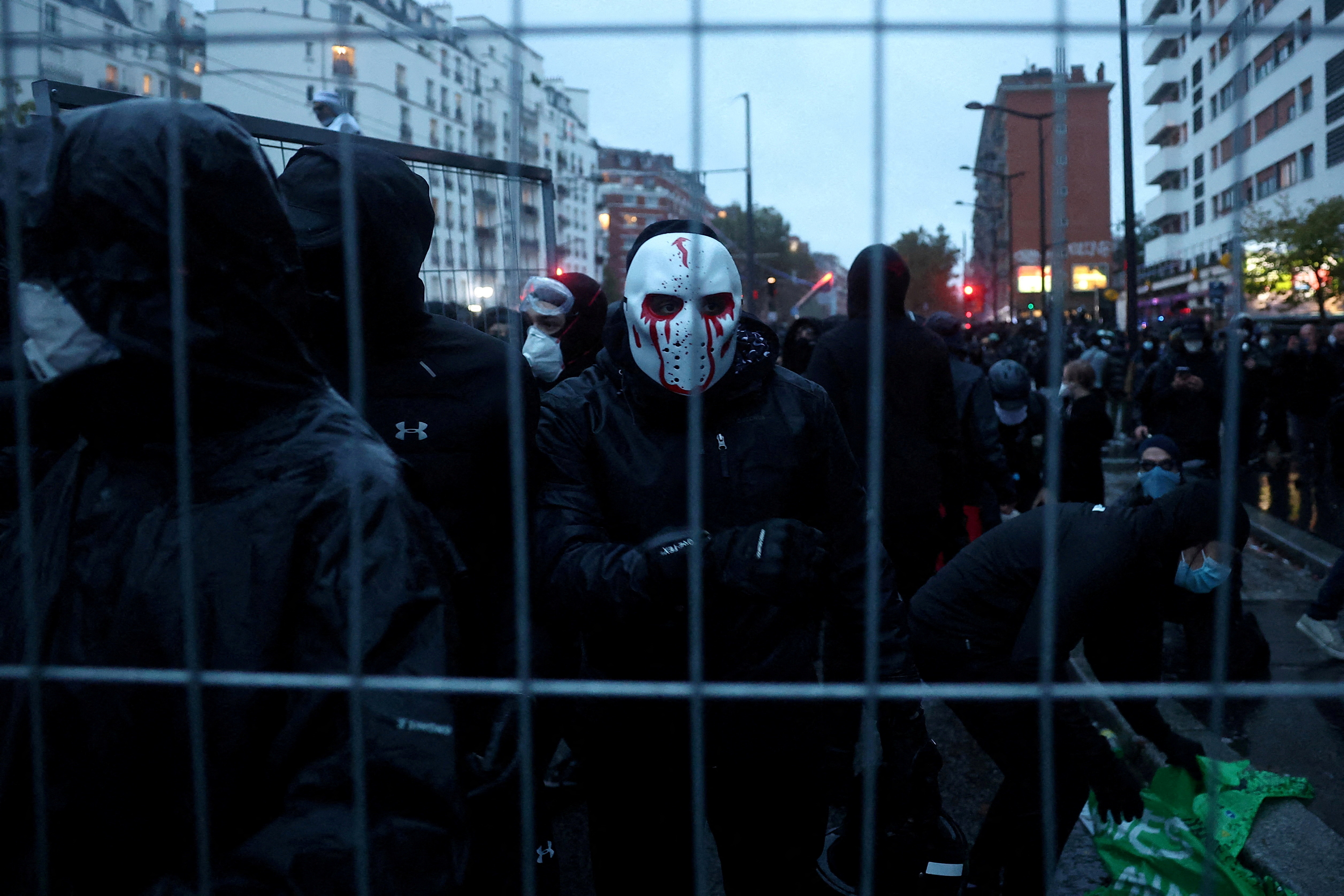
French interior minister to deploy 70,000 police for Halloween protests

French Interior Minister Laurent Nunez said that this Saturday was looking like “a very high risk” day for public order and that he would again deploy 70,000 security forces to try to safeguard the country.

Nunez told reporters on Thursday that several radical groups had called on social media for violent gatherings that day, which is also Halloween, and that the response of security forces would be “extremely firm.”

He highlighted the risk of disorder on Saturday evening in particular once more mainstream demonstrations had ended.

“We are seeing many calls for rallies coming from the labor movement, the radicalized far left, and certain radicalized ‘Yellow Vests’ websites, urging people to attend rallies on public streets starting at 8:00 p.m. (on October 31) in many cities across France, accompanied by various messages which are, let’s just, say quite radical,” he said.

“October 31 is a day that poses a very high risk to public order,” he added.

The Interior Ministry has said 410,000 people took part in marches last Saturday when authorities deployed 70,000 police, helping to avert a repeat of the looting and vandalism that swept many cities on October 17.

Labour leaders and students have urged further protests on October 31 and a nationwide strike on November 5, saying frustration over wages, living costs and public services was spreading far beyond the student movement that first mobilised last month.

  •  

Lies, Damn Lies, and Ukraine News

By William Dunkerley | Ron Paul Institute | October 29, 2026

It’s been said that truth is the first casualty of war. What about the Ukraine war? I’ve followed the news closely, and have found ample evidence in headlines and storylines that the old adage holds true today. Too often the Ukraine news stories we see are misleading instead of informative.

For instance, in March 2014 CNN reported that Ukraine’s Maidan Revolution was “standing up on behalf of democracy.” A month earlier, The Week cited many pundits and policymakers also characterizing events as a victory for democracy. It was a clear and compelling news theme.

But what’s misleading about that? It creates an impression that is contrary to reality. The truth is that the immediate result of the revolution was an abrupt end to constitutional democracy, not a victory for democracy.

The uprising totally dismantled the constitutional democracy that Ukraine had operated under since its independence from the USSR in 1991. The sequence of events makes it clear. Out went the democratic constitution; in came rule by force under the unelected revolutionaries. That’s what Ukrainians were stuck with for months. The stories about a boost for democracy were completely misleading.

This is a good example of truth being a casualty of war. The news celebrated an advance of democracy while in reality democracy itself had been lost.

Media distortion like that is not unique to the Ukraine war. Here’s an example dating back to the Cold War.

The issue was Soviet missiles showing up in Cuba in 1962. Upon discovery, President Kennedy railed against their presence.

On national TV he demanded that en route Soviet ships presumed to be carrying still more missiles be turned around. And Khrushchev complied.

Still there was the issue of removing the missiles from Cuba. How did that turn out?

“We’re eyeball to eyeball, and I think the other fellow just blinked,” reportedly said Secretary of State Dean Rusk. News reports characterized JFK as staring down the menacing Soviet leader and winning this round with the communists. The imagery seemed to play upon the title of Kennedy’s book, Profiles in Courage. It all was emblematic of the American Way. The story was almost poetic.

Indeed, this story seems so perfect that it is hard to believe it was actually a hoax. True, there were missiles. But here is a factual account of how that crisis really unfolded:

In late 1961 President Kennedy began placing nuclear missiles in Turkey, strategically close to the Soviet border. Full deployment was completed in 1962. It would take less than 15 minutes for the missiles to hit Moscow.

Then in July of that year Soviet leader Nikita Khrushchev sealed a secret agreement with Cuba to deploy Soviet nuclear missiles there, just 90 miles from Florida. It would take them less than 15 minutes to hit Washington DC.

What ended this standoff was something far less poetic than the Kennedyesque example I cited earlier. Khrushchev proposed a quid pro quo: He would remove his missiles from Cuba if Kennedy would remove his from Turkey. Kennedy privately agreed. But he insisted on a significant proviso: the quid pro quo must be kept secret. Khrushchev conceded and Kennedy’s fanciful story of standing tall in the face of a threatening adversary prevailed.

The Cuban missile story thus joins the Ukraine democracy story as another example of truth being a casualty of war.

Now consider this next example from back in Ukraine.

“Parliament votes 328-0 to impeach Yanukovych” reported the Kyiv Post on February 23, 2014. A day earlier the New York Times claimed, “Ukraine’s Parliament voted to remove President Viktor F. Yanukovych from office hours after he abandoned his office.”

Both reports further demonstrate how truth becomes a casualty of war. Neither accurately portrays what really happened.

Radio Liberty was quick to set things straight. In a report titled “Was Yanukovych’s Ouster Constitutional?” staffer Daisy Sindelar presented an in-depth analysis showing that parliamentarians tried to remove Yanukovych from the presidency but failed to achieve a sufficient vote.

She also pointed out that Yanukovych’s alleged abandonment of the presidency was not even a possible basis for declaring the office vacant. Radio Liberty’s corrections are backed up by Constitutional Coup in Ukraine in 2014, a thorough academic study published under the auspices of the Polish Parliament.

Clearly all the examples cited above represent fabricated stories masquerading as the truth. But the news stories are also examples of something much more insidious: the collective impact that a persistent manufactured narrative can have on a given public.

They paint a picture, a vivid narrative, that shapes the cultural schema through which people understand and interpret future events.

This can be seen in how the media have portrayed the fates of Crimea and Donbas. At issue is the question: Did the revolutionary government automatically inherit all the territorial authority of the constitutional democracy they had overthrown?

Crimea, for example, has been a significant stumbling block in discussions of a peaceful settlement of the war. In March 2014 Secretary of State John Kerry told CNN, “Crimea is part of Ukraine. Crimea is Ukraine.” But how is that true? What made Crimea part of revolutionary Ukraine?

Before the revolution, Crimea’s place within Ukraine was established by the democratic constitution. But the revolutionaries abandoned that constitution and claimed authority through force. Their rule by force never extended into Crimea. What, then, was the basis for their claim to Crimea? There was none that holds up to scrutiny. Even the eventual election of Poroshenko as president did not undo the constitutional destruction caused by the revolutionaries.

Why didn’t CNN challenge Kerry’s story? The assumption behind his statement illustrates how an ongoing series of fabricated stories can predispose us to interpret each new story in a particular way. If one can believe that a takeover by force is an advancement of democracy, why question an unsupported claim regarding Crimea? This shows that a lack of scrutiny can lead to creating or reinforcing a cultural schema that impedes our understanding of what is really happening.

The same principle applies to Donbas, but the words are different. Here Ukraine news stories portrayed the situation as “Russia invading Donbas.” But the facts show that notion to be a sensationalized misdirection from the truth.

The actual story can be understood by asking this question: What made Donbas, meaning the areas of Donetsk and Luhansk, a part of revolutionary Ukraine?

The logic that clarified the status of Crimea applies here too. Donetsk and Luhansk were not part of revolutionary Ukraine for the same reason. Additionally, their populations actively rejected revolutionary rule. They fought against it when the revolutionaries attacked them. If there were, as reports claimed, Russian volunteers, mercenaries, or regulars helping the population defend their territories, it does not alter the basic scenario.

Calling the territories breakaway regions is a misnomer, as is calling the people separatists. It is not possible to break away or separate from something to which one was not attached in the first place. The Russia invades Donbas story is just sensationalistic fabrication.

What’s worse is that this obscures what really happened there. February 2022 is often cited as the start of the Ukraine war. The facts tell a different story. The hostilities in Donbas beginning in 2014 marked the actual start of the Ukraine war, years before the massive escalation in 2022. Reports say that this Donbas phase of the conflict claimed over 14,000 lives and displaced roughly 1.5 million people.

“Truth is the first casualty of war?” Once again we see that axiom is borne out. The mainstream story about Donbas leaves out the critical parts of the truth. But who will notice that? The facts are obscured from view by the now well-established, yet fundamentally misleading cultural schema.

The false claim of a democratic revolution. The lie about how Yanukovych was dismissed. The false and misleading narratives about the status of Crimea and Donbas. These and other stories have given the American public and our leaders a politically contorted view of the entire Ukraine war dilemma.

These narratives — and the false cultural schema they help create — can also lead people to draw unwarranted conclusions about the reasons behind political leaders’ decisions. As peace-treaty talks approach, there is a danger that proposals and decisions about ending the war might be built on a house of cards — that is, the series of misleading Ukraine news stories and the dysfunctional cultural schema that they helped to create. Together they distort perceptions of how the war began and what is at stake. If negotiators fail to break free of that schema, any resulting peace could prove unsustainable for Ukrainians and their country. What a waste that would be. Haven’t the Ukrainian people suffered enough?

  •  

Unions and employers clash over provident funds

A gulf separates employers’ organisations and trade unions on the issue of provident funds and how they should fit into pension reform as a whole, Labour Minister Marinos Mousiouttas said on Thursday.

He was speaking to media after the latest meeting of the labour advisory aboard, which discussed provident funds for the first time.

The minister confirmed that trade unions want provident funds to be prescribed by law so that all private companies offer one, whereas employers insist they should remain voluntary.

In Cyprus, provident funds are based on collective or private agreements between employers and workers. No legislation exists mandating that companies provide a provident fund.

Having heard the two sides’ views on the matter, Mousiouttas said, the government would try to find the ‘sweet spot’.

The next meeting of the labour advisory board is scheduled for Friday, November 9.

The government’s general position, said the minister, is that provident funds “are a necessary institution, which supplements workers’ pensions.

“What we’ll try to do is see how this institution can be expanded.”

Stakeholders also discussed some of the details, such as how provident funds would be cashed out on retirement – whether as a lump sum or in instalments. Another issue is whether it would be possible to borrow from a provident fund, under certain conditions, as is the case today.

However, the minister clarified that sorting out the provident funds question “is not something that will happen today or tomorrow or even next year”.

In order for a provident fund to ‘mature’ and to yield, it takes at least a decade, he added.

Nevertheless, the talks would continue, and once the government brokers an agreement between trade unions and employers, the relevant bill would begin being drafted.

“For sure we will follow European standards,” Mousiouttas said of the future bill.

A provident fund is essentially a private group pension plan that some employers provide for their employees in Cyprus.

Provident fund members invest monthly a fixed percentage of their salary into a common investment pool for their retirement in much the same way as they would with social insurance.

A provident fund is managed by a licensed pension provider. The pension providers are typically either insurance companies or asset management companies.

The operation of a provident fund involves contributions from both the employee and the employer, similar to social insurance contributions. The amounts contributed by each party can either be identical or differ.

The employer usually sets the contribution amount and provides these details in an employment contract.

Employees are generally restricted from accessing their pension funds, before reaching their retirement age or unless their employment is terminated. However, it is permissible for the employee to borrow a portion of their funds.

Meanwhile the main thrust of pension reform – which includes pillars zero and one – is still being worked on by the government.

The draft legislation needs to be vetted by the attorney-general’s office.

Once that is done, said Mousiouttas, he would present the bill to the cabinet. Once the cabinet gives the nod, the bill would be tabled to parliament.

Pillar zero, as it is called, concerns pensions for low-income earners.

Pillar one involves a reworking of the mechanics of the Social Insurance Fund, along with state pensions.

Provident funds and occupational pension schemes fall within pillar two.

The government aims to roll out pillars zero and one of pension reform at the beginning of 2027.

  •  

“It was worse than an earthquake,” says young Greek survivor of the trains collision in Spain

“It was worse than an earthquake,” says 21-year-old Greek man who survived the fatal collision of the two high speed trains in Spain. “The impact caught us while we were standing; we were traveling at 170 kilometers per hour, and we all fell onto one another,” Marios recalled speaking to Mega TV Live News magazine. […]

The post “It was worse than an earthquake,” says young Greek survivor of the trains collision in Spain appeared first on Keep Talking Greece.

  •  

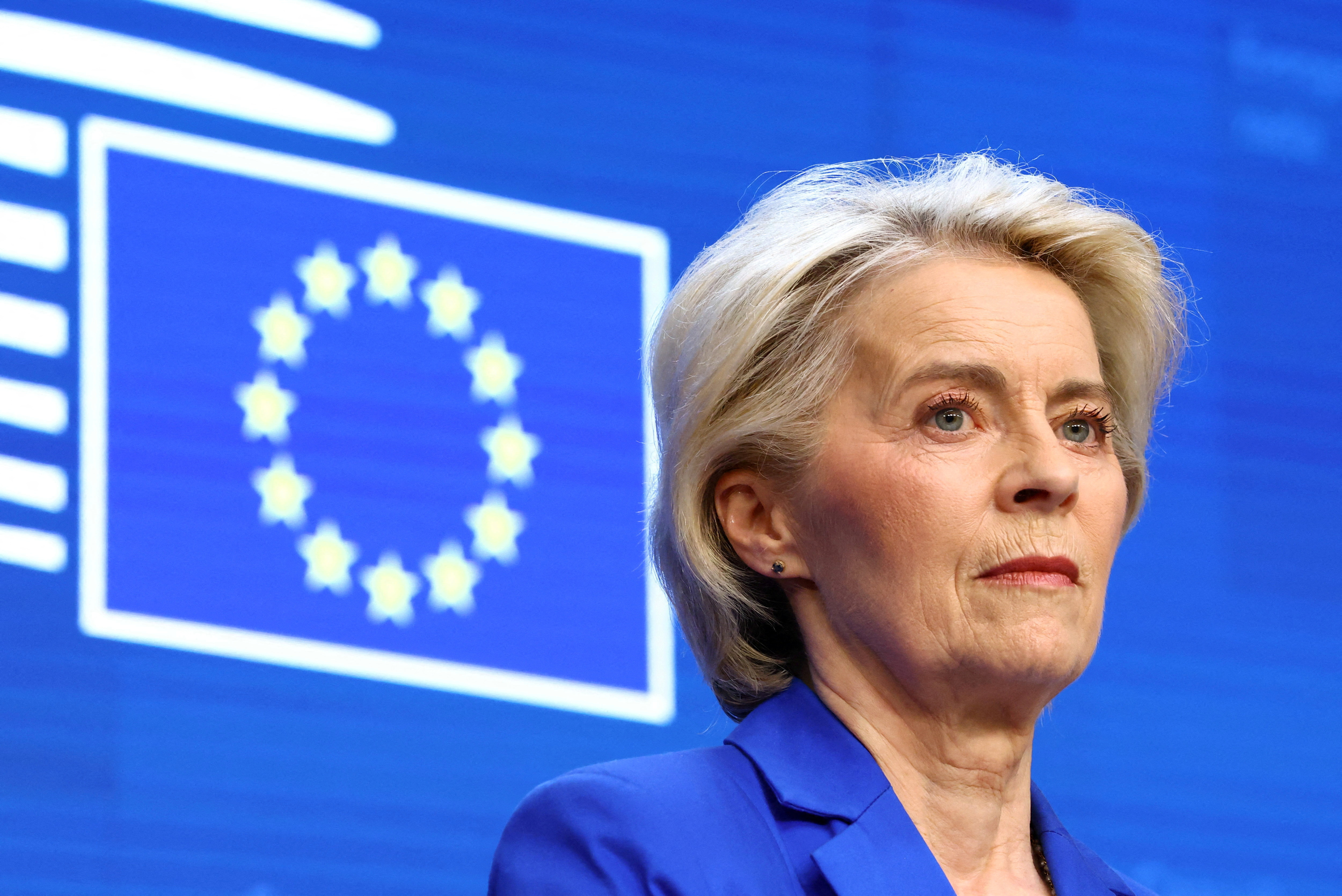
EU considering Canada as ‘associate member,’ von der Leyen says, despite internal opposition

European Commission President Ursula von der Leyen said on Thursday the EU and Canada continue to explore Canada becoming the union’s first “associate member,” a term so divisive among member countries that it does not appear in a joint declaration.

The European Union and Canada aim to deepen cooperation on AI, climate, energy and security, von der Leyen said in a speech at a Canada-EU summit in Montreal.

The associate member term, which Germany and several other EU countries oppose, has no legal meaning.

“Our idea is simple: it is an association without accession,” von der Leyen said. “We can build a partnership that comes closer to membership than anything we have done before.”

“We can work on everything, from AI and climate to energy or security,” she said.

Canadian and EU leaders, however, dropped the idea of associate EU membership from their joint declaration, seen by Reuters, agreeing instead to an “ever closer association.”

The declaration, which officials plan to make public on Friday, said work to define the Canada-EU relationship would continue until another summit next year.

CANADA SEEKING TO REDUCE US DEPENDENCE

Deeper ties ​to Europe are part of Prime Minister Mark Carney’s strategy to reduce Canada’s economic and security reliance on the US since ⁠President Donald Trump imposed tariffs on a range of Canadian goods. Still, Canada’s efforts to draw closer to the EU risk angering Trump as trade talks between Canada and the US ​continue.

Von der Leyen first floated associate membership for Canada six weeks ago, prompting a rebuke from countries that argued they could not agree to a concept that had no legal status and had not been fleshed out, diplomats said.

Three EU diplomats, speaking on condition of anonymity, said they were surprised von der Leyen continued to use the “associate member” term, since the declaration deliberately excluded it.

Speaking later at the summit, European Council President Antonio Costa said the idea of associate membership for Canada was “audacious,” but that he shared von der Leyen’s ambition.

A previous draft statement ​had included at least two references to Canada as an associate member, including an acknowledgment that defining the term would take another year.

Carney said the term for Canada’s new relationship with the EU is insignificant.

“This new alliance is not a marketing exercise. The name doesn’t matter,” he told reporters.

“What matters is that the complementarities of our two jurisdictions strengthen our sovereignty, strengthens Europe’s sovereignty, various strategic autonomies, critical minerals, energy, other aspects, AI,” Carney said.

Canada and the EU were both trying to find an effective response to the geopolitical threats Trump has posed, said Mark Manger, a professor at the Munk School of Global Affairs at the University of Toronto.

“Canada and the EU both are now in this position where the most important ally they relied upon is suddenly not behaving like an ally anymore,” he said. Manger said Canada and the EU have an enormous opportunity to expand their relationship, but that it would take time to address regulatory inconsistencies, build new undersea cables linking Canada to Europe and secure common supply chains, some of the objectives mentioned in the joint declaration.

The declaration also proposes conducting a joint feasibility study on Canadian liquefied natural gas exports to Europe ‌and enabling ⁠young Canadians and Europeans to work across the Atlantic.

Von der Leyen called for deeper cooperation between the EU and Canada on Arctic security.

“When we see Russia rebuilding its Arctic military footprint, pursuing hybrid strategies against its neighbors and reshaping the security of the Arctic, it impacts the European Union and Canada,” she said. “We have to act and change our strategic posture and, together with like-minded partners like Canada, stand up for these values.”

Later on Thursday, Carney will meet with European business leaders before hosting a dinner with EU leaders.

  •  

Nicosia municipality and PHC to sign old GSP deal

Nicosia municipality and restaurant operator PHC are expected to sign an agreement on Friday for the commercial development of the old GSP square, with a Caffe Nero billed as the largest in Cyprus among the planned outlets.

According to Politis, the deal, once final pending issues are settled, will give the redeveloped site a stable commercial base.

PHC won the concession for five premises after an open tender, the municipality announced in August.

Mayor Charalambos Prountzos told the Cyprus Mail then that the company would have “up to 12 months” to activate the agreement and that he hoped the project would make the former stadium “a destination in Nicosia”.

The concession will initially run for 10 years, with extensions possible up to a maximum of 25.

PHC is the largest restaurant and cafe operator in Cyprus, and its brands include Pizza Hut, KFC, Burger King, Wagamama, Caffè Nero and PAUL.

Politis reports that the Caffe Nero would go beyond a standard coffee shop, with plans including sofas, areas for business meetings, space for small events or seminars and a large outdoor garden.

PHC also plans a wine bar on an elevated part of the square overlooking the public space, while one of the smaller ground floor units is earmarked for a perfume shop.

PAUL, Wagamama and Verde Caferesto are under consideration, and the choice depends mainly on what the building can accommodate and on licensing requirements.

Politis also reports that the municipality aims to reopen a citizen service centre next year, after the closure of the one on Makariou Avenue.

The Cyprus Mail reported in August that the redevelopment would include such a centre, and that it was due to open by next year.

Residents of the walled city have also asked for a pharmacy, as none operates there at present.

The GSP stadium closed in 1999 and was demolished in 2017 to make way for what was originally intended to be a green space in the capital.

  •  

Government opposes easing election-day political messaging ban

Lawmakers on Thursday got pushback from the government on a proposal to de-criminalise the publishing or reproduction of political content on the eve and on the day of elections.

As it stands, the law prohibits political messaging on the eve of, and the day of, elections – on penalty of a prison sentence of up to one year, or a fine up to €5,000, or both.

The aim is to prevent the circulation of content that might influence the outcome of elections.

The matter came to the fore after a number of people – including candidates for MP – were questioned by police over social media posts they made just prior to the parliamentary elections held in May this year.

Akel and Alma have drafted two separate bills aiming to relax the prohibitions and downgrade infractions from a criminal offence – as they are now – to an administrative fine.

Akel proposes that infractions be punishable by a fine of €2,000.

But the attorney-general’s office said this amount was too low, and also posed the issue of the ability to collect on such fines.

Under Akel’s proposal, only paid advertisements and sponsored content would be banned during the so-called ‘silence period’.

Regular people, making comments on social media, would be exempt.

However, the exemption would not apply to individuals designated as Politically Exposed Persons (PEPs).

In Cyprus, a PEP is an individual who holds or has held a prominent public function, along with their family members and close associates. This includes heads of state or government, senior politicians, high-ranking government, judicial, or military officials, senior executives of state-owned enterprises, and important political party officials.

Meanwhile the interior ministry raised other objections. Officials argued it would be extremely difficult to distinguish between spontaneous personal opinions posted online and organised political campaigning, especially when it comes to accounts operating under pseudonyms.

Moreover, criminalising content by PEPs but not by others might pose issues of discriminatory practices.

For this reason, the ministry counter-proposes that the infractions remain a criminal offence on the books, but in practice they would be converted into a fine of at least €5,000 – imposed by the Chief Returning Officer.

In case of repeat infractions, the monetary penalty would be increased.

The House interior affairs committee will continue discussing the issue at a later date.

  •  
❌