❌

Reading view

Dincyurek withdraws resignation, UBP publishes final candidate list

Turkish Cypriot ‘health minister’ Hakan Dincyurek on Tuesday withdrew the resignation he had tendered on Sunday, declaring that despite previously announcing the opposite, he will, in fact, stand as a candidate for his party, the UBP, in December’s Turkish Cypriot legislative elections.

“Following the discussions, mutual evaluations, and consultations we have held, I would like to share with the public my decisions regarding the roadmap I intend to follow moving forward,” he began.

He added that “just as we have done until now, we will continue on our path, upholding the values in which we believe in and bearing the responsibility entrusted to us by those who have placed their faith in us”.

“Let’s meet at the ballot box on December 6, for the sake of our country, our people, and our party,” he said.

The announcement comes with the deadline for political parties to submit their lists of candidates for December’s elections having passed, with the UBP having published its final list late on Tuesday evening.

‘Parliament speaker’ Ziya Ozturkler had earlier announced that he will be a candidate at December’s election and that “I have no intention of withdrawing”, stressing that “I will continue to fight for the UBP until the very end”, after unconfirmed reports had suggested that party leader and ‘prime minister’ Unal Ustel had been urging him to withdraw from the election.

Ozturkler, Dincyurek both secure places on UBP’s final list

Ozturkler and Dincyurek both appeared on the list, though Ozturkler found himself at the bottom of that list in his home constituency of Morphou. He had been among the 17 people who appealed the result of Saturday’s internal party primary elections, prompting Ustel to remark that that result “it is binding whether we get the desired result or not”.

Additionally, it was reported that Ustel had urged fellow incumbent legislature member Emrah Yesilirmak to withdraw from the race, with Saturday’s result having placed Yesilirmak in a similarly precarious position to Ozturkler, after he was not automatically selected in Trikomo.

Yesilirmak, too, appeared on the final list, but, like Ozturkler, found himself bottom of the list in his home constituency of Trikomo.
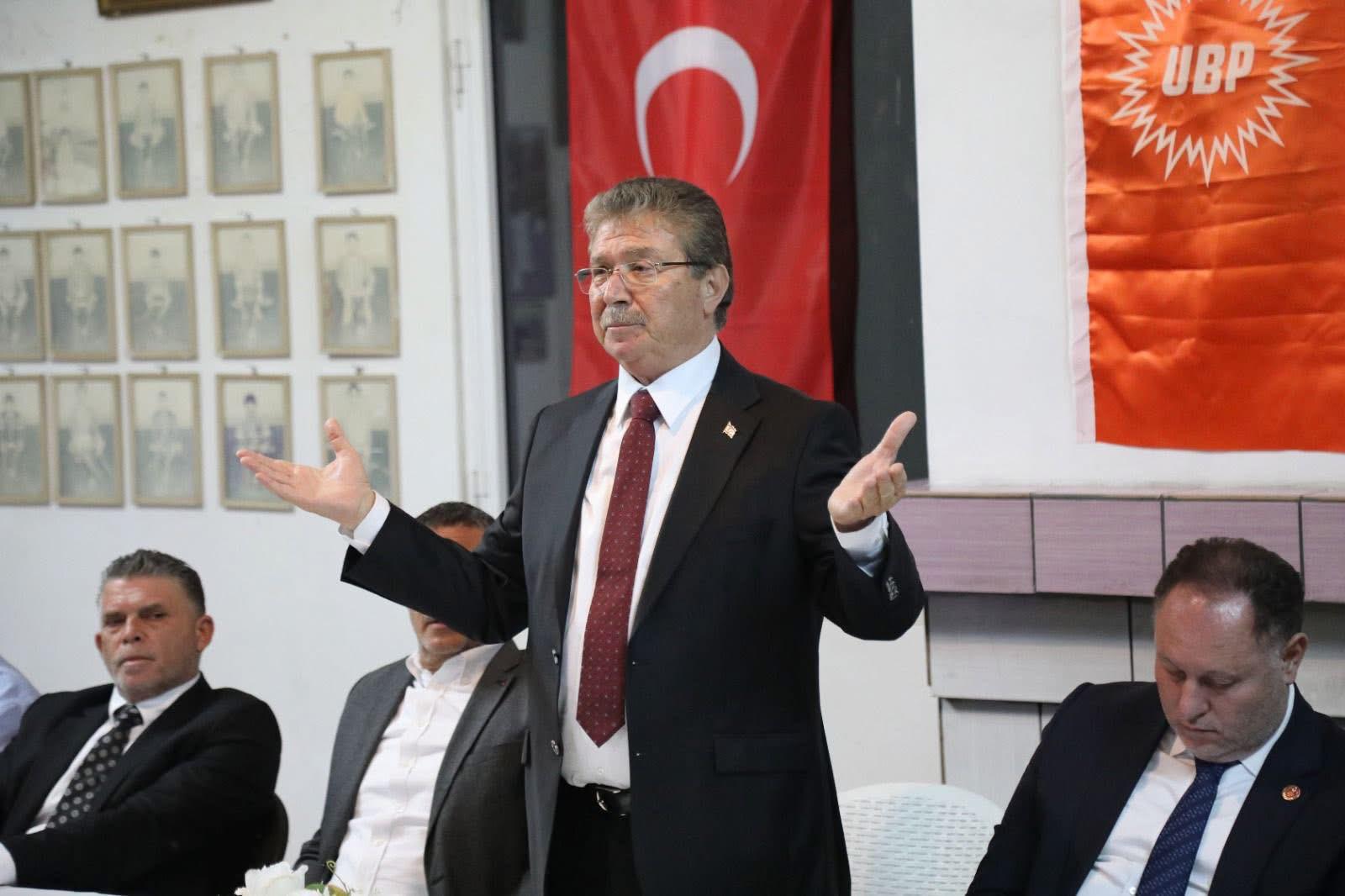
Unal Ustel at a previous UBP campaign event, flanked by Firtina Karanfil [left] and Ziya Ozturkler [right]

The stakes of this election may be higher for both Ozturkler and Yesilirmak than for most, given that investigations have been launched into both men in relation to the “fake diploma scandal”, over which Ustel’s longtime close personal associate Fatma Unal was jailed for five years on Tuesday.

Yesilirmak allegedly received a forged degree certificate, while the police in March having launched an investigation into allegations that Ozturkler coerced university officials to award degree certificates to his political allies under false pretences.

However, on this front, sources close to the matter have suggested to the Cyprus Mail that both men may relocate to Turkey so as to avoid arrest, as former ‘prime minister’ Huseyin Ozgurgun did in 2019.

A total of 17 appeals had been filed against the provisional results of the primary election the UBP held to determine its candidates on Saturday. All 17 appeals were rejected.

Only Karanfil, Canaltay, and Hamzaogullari will not return of current crop

With Ozturkler, Dincyurek, and Yesilirmak all having fond their way onto the party’s list, only two incumbent UBP legislature members are confirmed to have missed out on places on the party’s list.

Firtina Karanfil failed to make the party’s list in Lefka, while Resmiye Canaltay, the daughter of former Turkish Cypriot leader Dervish Eroglu, announced earlier on Tuesday that she had withdrawn her candidacy.

As such, just three of the 49 incumbent members of the Turkish Cypriot legislature will not seek reelection, with opposition party the CTP’s Biray Hamzaogullari having retired.

This news comes after two surprises featured on the ruling coalition’s junior partner the DP’s list, with Hasan Tosunoglu, who had left the party in 2024, topping its list in the Nicosia constituency, and Serhat Akpinar, who had in the same year announced that he would not seek re-election, topping the party’s list in the Kyrenia constituency.

Exactly two people who were elected to the legislature at the last election in 2022 are not incumbent members. One, Tufan Erhurman, resigned his seat last year to become Turkish Cypriot leader, and as such will not stand for election again.

The other, HP leader Kudret Ozersay, resigned his seat just three months after the election in protest at the ruling coalition. He tops his party’s list in the Nicosia constituency.

  •  

Government to put both phases of Paphos-Polis road to tender in 2027

Plans for a call for bids in 2027 for both phases of the Paphos – Polis Chrysochous, as well as developments regarding the Paphos Marina were presented by government spokesman Konstantinos Letymbiotis on Tuesday.

Addressing the general assembly of the Paphos chamber of commerce and industry, Letymbiotis said that the implementation of the Paphos – Polis Chrysochous road will demand difficult decision, and that clinging to a problematic contract did not amount to progress.

“Announcing a project takes just a few minutes. Its implementation requires a solid foundation, responsible decisions, and constant oversight,” Letymbiotis said.

Letymbiotis recalled that the design work of the highway began in 1990, with studies carried out in 2007 predicting its completion by 2013. Meanwhile, the contract signed in 2021, valued at €73 million, called for the project to be delivered in 2024.

He said that by January 2023, around 48 per cent of the contractual time had passed, yet only €2.6 million of work, under 4 per cent of the contract value, had been completed.

By October 2024, progress stood at just 21 per cent, while the contractor was seeking an additional €36.2 million in compensation and a 59-month extension.

Letymbiotis said that the new design provides for a modern four-lane highway. In the first phase, from Ayia Marinouda to Stroumbi, expropriations and the environmental assessment have been completed.

Meanwhile the second phase will run from Stroumbi to Polis Chrysochous, with the government aiming to launch tenders for both phases within 2027.

On the Paphos Marina, Letymbiotis said that the project has been in planning since 1994, with the first tender held in 2006.

Letymbiotis spoke of of a high priority project for the city and said that the government was determined to finally see it implemented.

He said that the decision of the marina management committee regarding the evaluation of the call of interest is expected in early November, while concession agreement to be signed with the successful bidder in 2027.

Letymbiotis also referred to the expansion of Paphos airport and the new desalination plant in Kissonerga, which is expected to have a capacity of 12,000 cubic metres per day.

  •  

Hacking attempts against US Federal Election Commission system triggered outage

The US Federal Election Commission’s website has been targeted by a hacker or hackers, disrupting the agency’s electronic filings system a week before the November 3 elections, according to an email seen by Reuters.

In a statement, the FEC said that, “at this time, the FEC’s electronic filing system is currently offline and our IT staff are actively working to restore service.” The FEC, which tracks the spending of candidates and political committees, said that users could still search the website for past reports. It declined further comment on the outage.

The hacking attempts come a week before the midterm elections, which will determine whether President Donald Trump’s Republicans maintain their majorities in Congress for the next two years.

The FEC does not play a role in administering US elections and the outage should have no effect on voters’ ability to cast ballots.

The outage prevents organizations from filing the FEC’s 24-hour and 48-hour spending reports, which show how much political groups and others are spending on specific races.

“I’ve never seen this in 26 years,” said Steven Mele, a partner at political finance compliance firm MBA Consulting Group. “The result is there will be less disclosure on the elections” until it’s fixed.

A status message posted by the FEC noted that its filing system had been down since around 10 p.m. ET on Monday (0200 GMT Tuesday). The Cybersecurity and Infrastructure Security Agency and the FBI did not immediately return messages seeking comment.

  •  

Annita does not accept Georgiades’ resignation from Clerides institute

Disy leader Annita Demetriou on Tuesday said that she will not be accepting the resignation of former finance minister Harris Georgiades from the Glafcos Clerides Institute, saying that issues that arise within the party must be resolved through dialogue and not through resignations.

In a post on X, Demetriou said that she will seek dialogue in the coming period, noting that her personal decision was motivated solely by the desire to unify the party.

Demetriou’s remarks come after former finance minister Harris Georgiades in a letter to Demetriou on Tuesday announced that the would not campaign for former Disy leader Averof Neophytou in the 2028 presidential elections in the event that the latter win Disy’s election and offered his resignation as chairman of the Disy affiliated Glafcos Clerides Institute thinktank.

  •  

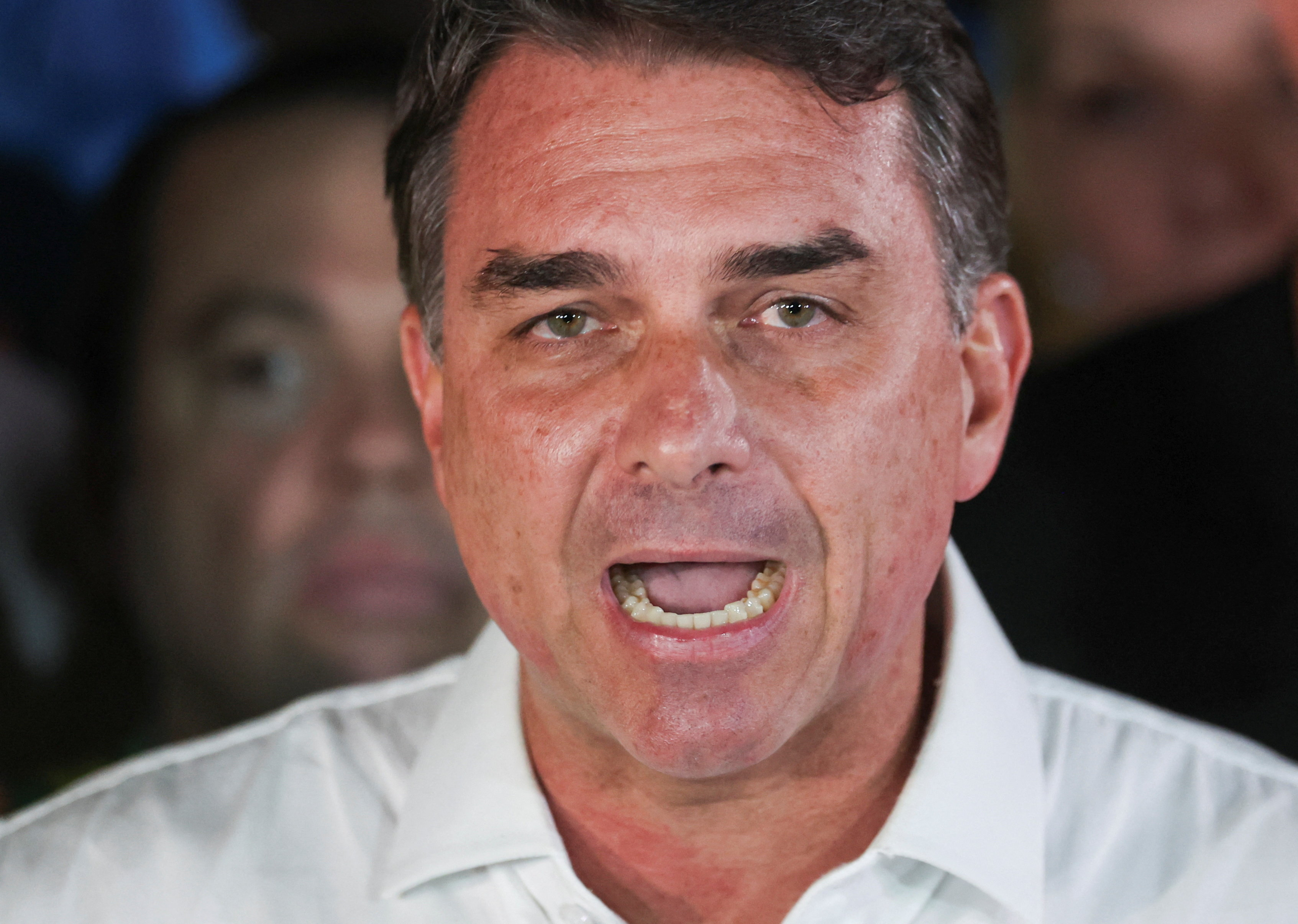
Brazil’s Flavio Bolsonaro headed to the US after losing election

Brazilian Senator Flavio Bolsonaro has left the country for the United States after losing Sunday’s presidential election and refusing to comply with a Supreme Court order to hand over his passports, two sources said.

The US Embassy in Brazil did not immediately respond to a request for comment. Bolsonaro’s lawyer also did not respond.

It was not immediately clear where Bolsonaro was heading, what time he would arrive or whether he would seek asylum. US President Donald Trump’s administration has previously alleged Flavio’s father, former President Jair Bolsonaro, was a victim of judicial persecution in Brazil.

Flavio’s departure for the United States threatens to deepen a rift between the two most populous nations in the Americas. Leftist President Luiz Inacio Lula da Silva has accused Washington of colluding with the Bolsonaros to put them back in power, and Reuters reported ahead of Sunday’s election on a US State Department campaign to restore them to office.

Trump made no mention of Bolsonaro’s departure in comments to the press on Monday, but said the Brazilian vote “looked like another rigged election.”

Lula’s office did not respond to a request for comment.

Bolsonaro was favored to win Sunday’s presidential election but ended up losing in a shock result to Lula.

On Monday, he was given 24 hours to surrender his passports as part of a money laundering probe in which he denies wrongdoing, but his documents were cancelled after the deadline lapsed, two other sources said.

Bolsonaro, who loses his immunity from prosecution when his Senate term ends in February, said on Monday he had no plans to flee.

“I have never thought about leaving the country,” he said. “I will hand over my passports and defend myself against this travesty, which is a clear attempt to intimidate me.”

Brazil’s Minister of Institutional Relations Jose Guimaraes commented on reports of Bolsonaro leaving the country in an interview with CNN Brasil.

“I have no confirmation from the Federal Police or oversight bodies,” he told the news outlet. “But this speaks a lot about our opponent’s lack of preparation to govern the country.”

FOLLOWING FATHER’S PATH

Jair Bolsonaro also went to the United States after refusing to concede to Lula in 2022, when former US President Joe Biden was in office. He eventually returned to Brazil but was later given a 27-year sentence for plotting a coup after his supporters stormed government buildings in Brasilia.

His son has yet to officially concede defeat — saying on Sunday he would seek the annulment of the result over alleged voter irregularities — but his Liberal Party said on Monday it acknowledged Lula’s victory.

It remains unclear how Bolsonaro was able to leave the country while he was facing a 24-hour deadline to hand over his passports. A senior Federal Police official said Bolsonaro had not exited the country via any regular migration point.

Eduardo Bolsonaro, Bolsonaro’s younger brother who lives in the United States, said ahead of the vote that an election loss would require a move.

“If my brother does not win, I’m in favor that he would leave the country,” he told podcaster Steven Crowder this month.

  •  

Cabinet approves €11.5m in student allowances

The Council of Ministers on Tuesday approved €11.5 million in student allowances for the 2025-2026 academic year, alongside additional measures aimed at easing the financial burden on families.

Speaking after the cabinet meeting, Finance Minister Makis Keravnos said the allocation represented a substantial increase on the €10 million initially budgeted for 2025.

“Today’s decision reflects the Christodoulides government’s firm commitment to targeted measures that reach those who really need them,” he said.

Keravnos also announced a separate allocation of €1.2 million in student benefits for families of Greek students studying in Cyprus and repatriated Cypriot families whose children are studying either on the island or abroad.

He explained that the measure covers families who, because of their residence abroad, do not qualify for the regular student grant scheme, which has a budget exceeding €30 million.

The cabinet also approved changes to the income criteria for student assistance, raising the maximum family income threshold from €39,000 to €44,000 for families with two children.

For larger families, the income threshold starts at €64,000 and increases by €5,000 for each additional child.

Families with more than five children will be exempt from income and property criteria altogether.

“The finance ministry deemed it necessary to adjust the income limits so that the inflationary pressures of recent years do not leave families with real needs out of support,” Keravnos said.

The minister also announced an increase in the student airfare allowance from €300 to €500, citing the continuing energy crisis and rising living costs.

An additional €500 allowance will also be provided to first-year students.

Keravnos said the measures were intended to help families meet the rising costs of education, accommodation, food and travel.

Asked about the reasons behind the adjustments, he pointed to the pressures created by the energy crisis and the wider geopolitical situation, which he said continued to affect students, households and businesses.

“We will continue to ensure that economic growth translates into real support for every family in need, while acting prudently and safeguarding the stability of public finances,” he said.

Interested parties can submit their applications via the relevant electronic platform https://sg-yxe.mof.gov.cy which will be open on a date that is yet to be announced.

To submit an application, parents or guardians are required to have an account with the CY login electronic service which can be created via https://cge.cyprus.gov.cy/cyloginregistration/register.

Greek applicants do not require an account verification.

  •  

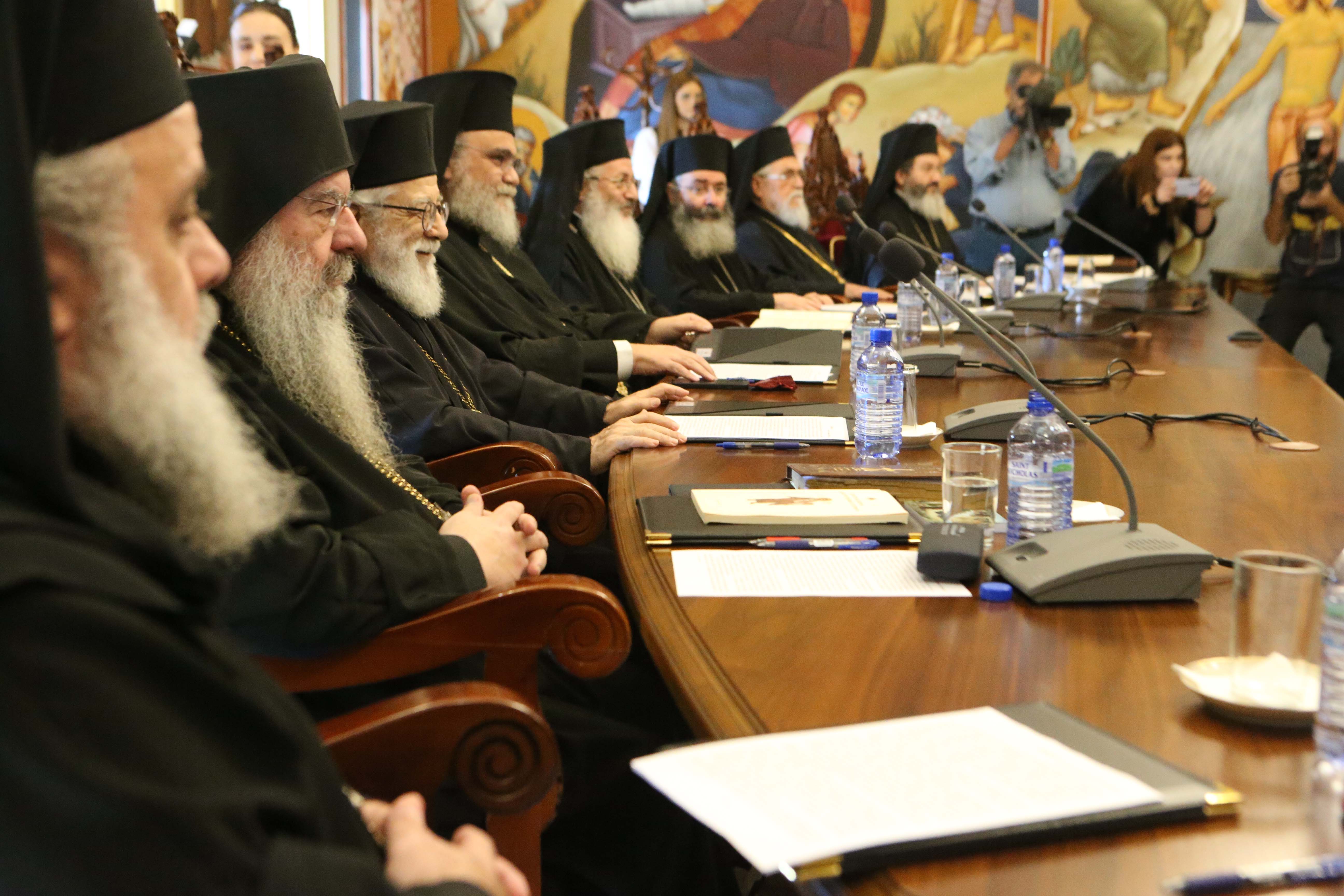
Priests urged to break away from the Church of Cyprus

The Holy Synod on Tuesday confirmed the previously reported existence of a letter circulated to priests urging them to abandon the Church of Cyprus and found a new church.

Archimandrite Georgios Christodoulou, the Holy Synod’s chief secretary, told media that though the matter of the letter was not on the agenda during Tuesday’s special session of the Synod, it would be addressed at a later stage, “before it gets out of hand”.

According to Phileleftheros, the letter – which effectively advocates for a mutiny – is signed by five individuals. The missive has been circulated to all Paphos-based clerics, as well as to a number of priests in other districts.

The letter’s authors are thought to be proponents of what is known as ‘apoteichisis’ – from the Greek word literally meaning “walling off”. It is a practice in Eastern Orthodox Christian theology where a member or cleric of the Church ceases ecclesiastical communion and liturgical commemoration of their ruling bishop or patriarch.

The action is taken when church leaders are deemed by the adherents to be preaching heresy or straying from Orthodox dogma.

Proponents view it not as leaving the Church or forming a new schism, but as erecting a “protective wall” between themselves and a compromised clergyman to preserve the true faith.

Behind the move are thought to be supporters of former Paphos bishop Tychikos, deposed from his role in May 2025 after he was charged with various breaches of church protocol, including showcasing an icon of a saint not canonised by the church.

Tychikos subsequently appealed against his dismissal at the Ecumenical Patriarchate of Constantinople, but was unsuccessful in his appeal.

Then in January this year, the Holy Synod voted to suspend him indefinitely from priestly duties following his decision to pursue legal action through the civil courts.

Tychikos had been summoned to Tuesday’s session of the Holy Synod, but did not show up. Instead, he sent a letter requesting a face-to-face meeting with the archbishop.

The archbishop accepted.

Previously, the Holy Synod had asked the rebel priest to sign a declaration of loyalty to the decisions of the Ecumenical Synod, to declare obedience to the decisions of the Holy Synod, and to renounce ‘apoteichisis’ and its adherents.

He complied with none of those requests.

In other business on Tuesday, the Holy Synod condemned the recent deadly attack at a Greek Orthodox church in Jordan, where gunmen fired on the crowd, killing nine people and injuring dozens more.

  •  

Cyprus-China trade surges 26 per cent

Trade between China and Cyprus grew to $1.44 billion (€1.29 billion) during 2025, while the future holds even greater prospects for economic cooperation, attendees at a forum heard on Tuesday.

Speaking at a business forum held in Nicosia and organised by the Chamber of Commerce and Industry (Keve), China’s ambassador to Cyprus Yang Yundong said bilateral trade in 2025 marked a 26 per cent year-on-year increase.

According to the ambassador, last year China became Cyprus’ fourth largest trading partner. Meantime more and more Cypriot products – like halloumi cheese, zivania and fresh juices – are finding their way to the Chinese market.

Yang noted the significant prospects for cooperation in shipping, tourism, green technologies and the digital economy.

He highlighted the role Cyprus can play as a bridge between China and the European Union.

On bilateral relations, the ambassador noted that the forum is part of events marking the 55th anniversary of the establishment of diplomatic ties between the two countries.

In his own address, Keve chairman Stavros Stavrou stressed the importance of transforming bilateral relations into specific business partnerships.

Cyprus, he said, can act as an entry point for Chinese businesses into the single EU market, making the most of its geography as it lies at the crossroads of Europe, Asia and Africa.

China is a major market and an international hub for technology, innovation, manufacturing and investment – offering opportunities for Cypriot entrepreneurs.

Stavrou cited the upcoming agreement between Cyprus’ Top Kinisis travel agent and China’s Zhejiang Overseas (Ningbo) International Travel Service Co.

For his part Marios Tannousis, director at Invest Cyprus, said ICT (information and communications technology) has become a main growth driver for Cyprus, with an annual contribution to the economy of €4 billion – corresponding to approximately 15 per cent of GDP.

Tannousis said Cyprus has recorded an increase in foreign direct investment from various geographical regions.

He cited data showing that the island ranks among the top ten countries globally in terms of FDI per capita.

Theodoros Parperis, chairman of the Cyprus-China Business Association, likewise spoke to the potential for growing trade and investment between the two countries.

The association currently numbers more than 200 members.

Established in 1995, the Cyprus-China Business Association operates under the auspices of Keve and the Chinese embassy in Cyprus.

  •  

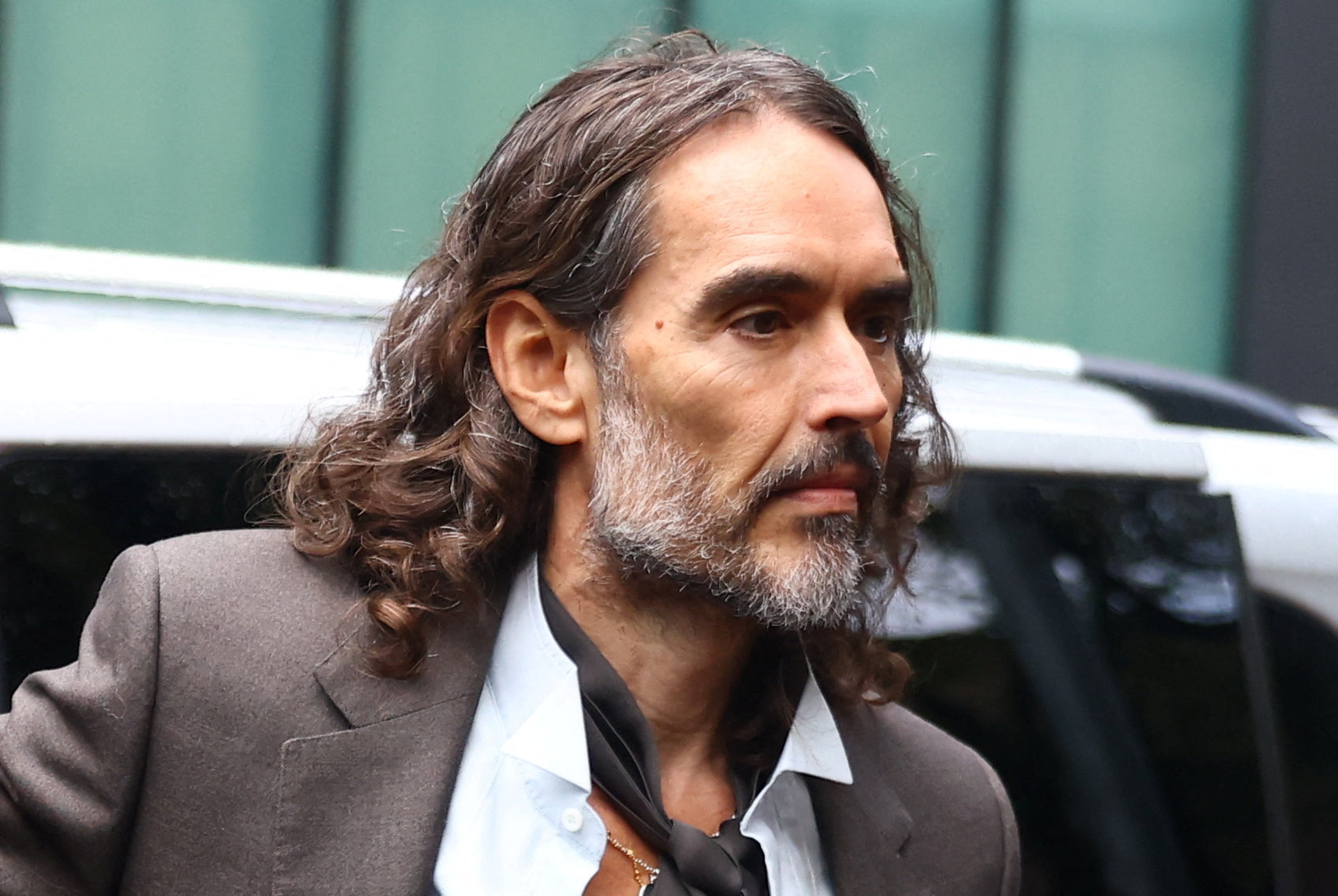
UK comedian Brand told police he never had non-consensual sex

British comedian and actor Russell Brand told police that he had never engaged in any non-consensual sexual activity despite encounters in countless locations and scenarios, a London court was told on Tuesday.

Brand, once one of Britain’s most high-profile broadcasters and the former husband of US singer Katy Perry, is on trial at London’s Southwark Crown Court over accusations of sexual offences against six women between 1999 and 2009.

The 51-year-old has denied all the allegations.

BRAND CLEARED OF ONE COUNT, NEW CHARGE BROUGHT

He is accused of three counts of rape and three of sexual assault and, on Tuesday, the judge instructed the jury to return a verdict of not guilty over an allegation of indecent assault. However, he will now face a new charge of attempted indecent assault over that alleged incident.

The jury had previously been told how all the women came forward to detectives after a documentary was broadcast in 2023 along with a number of newspaper articles about him.

The prosecution has set out its case that Brand was a ruthless predator and the former comedian is expected to set out his defence on Wednesday.

But on Tuesday the court was told for the first time of his responses to the allegations.

Prosecutors read prepared statements Brand gave to police during four interviews held between September 2023 and July 2025 following those allegations.

In these statements, he said that “defamatory and fictitious” documentary and newspaper reports which contained “false, anonymised allegations” against him had led to the media and police inviting other allegations against him.

This, he said, had paved the way for “further incidents to be reinvented or reimagined”.

“I have never engaged in any non-consensual sexual activity,” his statement said.

He said he had repeatedly stated that he had been very promiscuous in the past, behaviour he now denounced. He said he had had sex in toilet cubicles at parties, and had engaged in sexual encounters in “countless locations and scenarios often with people I have just met”.

“Those encounters were always consensual,” he said.

The jury has heard accusations that Brand raped a woman after meeting her at a fringe event at the Labour Party conference in 1999, forced a woman to give him oral sex in toilets at a London bar in 2004, and had molested another woman at a radio station in 2004 or 2005.

He is also accused of trying to pull a woman into the ​male toilets at MTV Europe, in London, where she was working in 2001, and that in 2009 he anally raped a woman who had agreed to consensual sex at his home.

The final allegation is that he assaulted a woman ⁠who was working at the Channel 4 TV station ​where they were involved in a recording project. She says she was forced into giving him a massage during which he put his head between her legs.

  •  

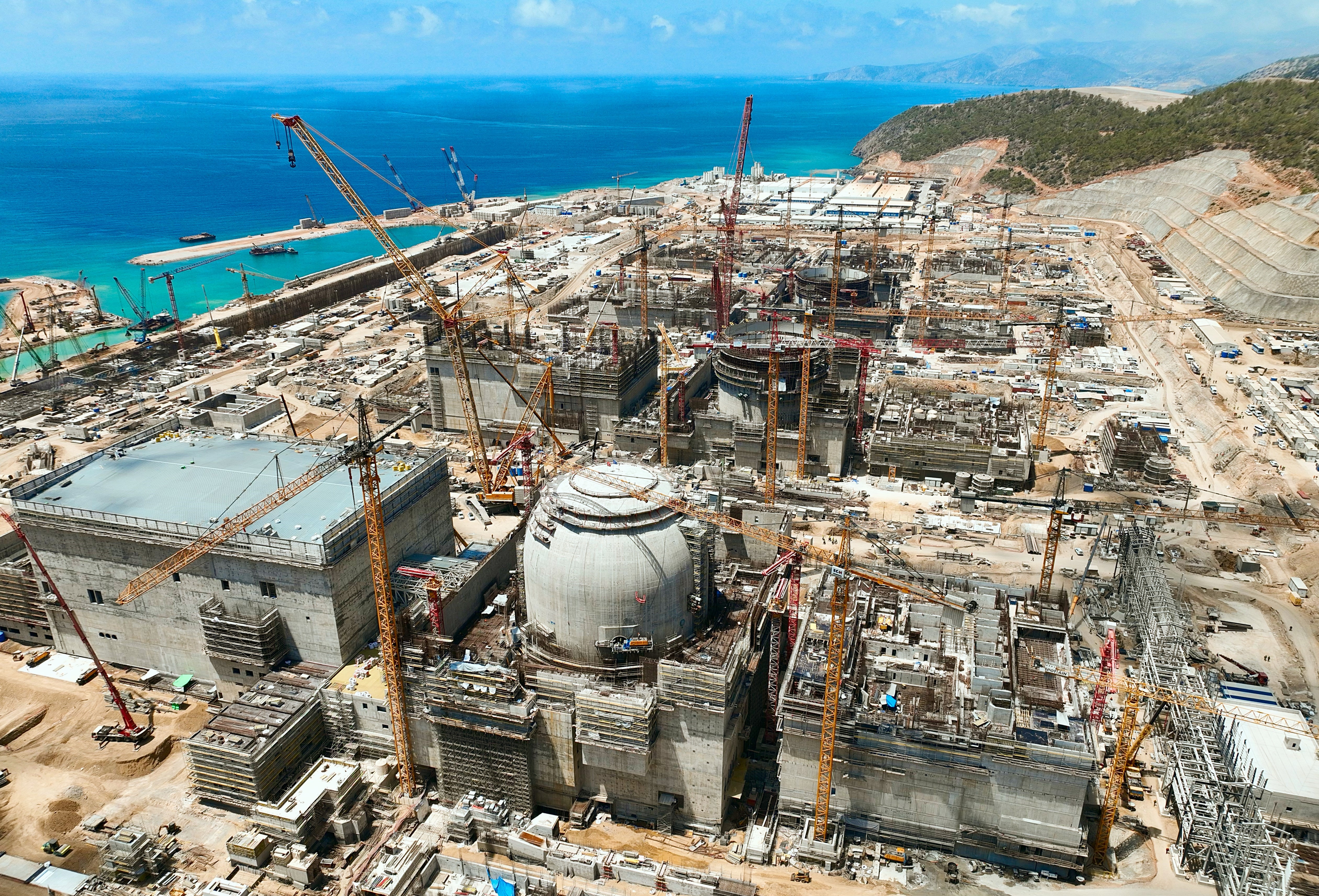
Akkuyu nuclear power station, 90km from Cyprus, to be operational ‘next year’

Turkey’s Akkuyu nuclear power station, which is located on the southern coast of the country’s Mersin province, 90 kilometres from Cyprus, will be operational next year, Turkish Energy Minister Alparslan Bayraktar said on Tuesday.

“The intensive testing process is continuing at Akkuyu. Due to nuclear safety and the international conventions and agreements to which Turkey is a party, it is a very special area, and nothing has been left to chance. Every precaution has been taken,” he said at the Turkiye Energy Summit in Istanbul.

He added that the government aims to load the first nuclear fuel into the station “in the next few weeks”, and that this will “mark the physical startup of Akkuyu”.

Beyond that, he said, “we will be using Akkuyu electricity in our system from 2027 onwards”.

Construction at Akkuyu began in 2018, with it expected that the first reactor will enter service this year and the second reactor will enter service next year. Each reactor will provide a total of 1,114 megawatts of electricity – around 2.5 per cent of Turkey’s electricity consumption each.

The project has caught the eye of anti-nuclear activists in Cyprus and beyond, with demonstrators having gathered in Nicosia as early as 2017 to protest the plans, while European Parliament group The Left, to which Akel belongs, had in 2015 warned against the plans.

“The plant is to be constructed in Mersin, in a seismic area on Turkey’s Mediterranean coast. This exposes to risk first and foremost the population in the area of Mersin, but also all countries and peoples in the region,” it said.

It then offered its “support to the Greek Cypriot and Turkish Cypriot organisations that have joined forces to raise awareness both in Cyprus, Turkey and abroad, aiming to stop the construction”.

The power generated at Akkuyu will only be usable in Cyprus if it is connected to Turkey by a cable, though these plans appear to have stalled after the European network of transmission system operators for electricity (Entso-E) refused to endorse the plan.

  •  

Complainant’s cross-examination concludes in Phedonos trial

The cross-examination of the complainant in the trial of suspended Paphos mayor Phedonas Phedonos concluded on Tuesday after three days before the Paphos criminal court.

The cross-examination followed the complainant’s earlier testimony, with proceedings held behind closed doors.

Judges and lawyers were present in the courtroom, while Phedonos remained in an adjacent room as the complainant gave evidence.

The trial is scheduled to resume on November 2 at 9am, when the prosecution’s final two witnesses are expected to testify.

One of the witnesses is a businessman whose testimony has been delayed because he was hospitalised at a private hospital in Nicosia.

It remains unclear whether he will be able to appear in person before the court.

Phedonos faces five charges: rape, indecent assault of a woman, indecent assault of a woman by another act, assault causing actual bodily harm, and administering a drug or other substance capable of intoxicating a person or overcoming their resistance.

He denies all charges.

  •  

Sia Chilli Fest cranks up the heat

A day in nature packed with bold flavours, music, competitions and, of course, spicy tastes approaches soon. The 2026 Sia Chilli Fest returns on November 7 as organiser Johnny Pep brings another epic edition with fun planned for all. Especially, those who enjoy a heat kick.

From 10am to 4.30pm, the village of Sia in the Nicosia district will host the festival. On site, Johnny Pep will share spicy secrets and stories from his micro farm of spicy peppers, whilst bars serve beers and cocktails. Food vendors will feed hungry stomachs all day long and on this year’s menu are stone-fire pizzas, smashed burgers, loaded hot dogs, steak sandwiches and Cypriot ice cream.

Live DJ beats will add a tuneful note to the event, accompanying what is perhaps the highlight of the event – the Chilli Contest. Visitors who want to challenge how much heat they can take, can take part in the competition, eating spicy peppers to earn the title of the Chilli Champion.

Sia Chilli Fest 2026

One-day festival with street food, drinks and the Chilli Contest 2026. Organised by Johnny Pep. November 7. Sia village, Nicosia. 10am-4.30pm

  •  

The Mecca Pact Courts Iran: Containment Comes Full Circle

Senior officials from Iran, Pakistan, Turkey and Saudi Arabia begin a security meeting in Tehran.
By Junaid S. Ahmad | MEMO | October 27, 2026

For nearly half a century, Iran’s adversaries have tried to isolate it, intimidate it, sanction it into submission and bomb it into irrelevance. Now, in a remarkable inversion of regional power politics, three countries historically invested in its containment have arrived in Tehran to discuss their security with the very state they were supposed to marginalise.

The country they could not defeat is becoming the country they cannot afford to ignore.

Yesterday, Saudi Defence Minister Prince Khalid bin Salman, Pakistan’s army chief Field Marshal Asim Munir and Turkish intelligence chief Ibrahim Kalın met Iranian officials in an encounter whose diplomatic courtesies barely concealed its strategic significance.

The Mecca Pact, the joint defence agreement that Saudi Arabia, Türkiye and Pakistan signed in Mecca in August, was supposed to consolidate a formidable Sunni-led defence alignment. Yet its representatives have come to Tehran confronting an inconvenient reality: Iran cannot be excluded from regional security merely because Washington and its partners find its independence intolerable.

Apparently, the Islamic Republic has become considerably more respectable since demonstrating that it cannot be conveniently eliminated.

This is the distinction between military destruction and strategic defeat that Washington and Israel persistently confuse. Overwhelming firepower can devastate infrastructure, assassinate officials and inflict enormous suffering. It cannot manufacture political submission.

Iran has survived military confrontation, retained retaliatory capabilities and forced neighbouring governments to reconsider the potentially catastrophic consequences of another war.

Survival becomes strategic victory when your adversaries must reorganise their calculations around it.

For Saudi Arabia, the reckoning is particularly humiliating. Riyadh spent decades treating American military supremacy as an insurance policy against Iranian influence. Yemen exposed the bankruptcy of that assumption.

Ansar Allah, Yemen’s Houthi movement, demonstrated that superior arsenals cannot guarantee security against an adversary capable of imposing disproportionate costs. The Saudi monarchy possesses spectacular weaponry, immense wealth and powerful patrons. Yet none of these has eliminated its vulnerability to Yemeni retaliation.

Now Riyadh finds itself seeking Tehran’s cooperation to manage a conflict that its military superiority has failed to resolve.

Evidently, purchasing American weapons is considerably easier than purchasing strategic security.

Pakistan’s predicament is scarcely less revealing. Munir presides over a military establishment accustomed to presenting strategic dependency as diplomatic sophistication. Islamabad’s defence commitments to Riyadh now threaten to entangle Pakistan in confrontations with Iran and Yemen that serve neither its geography nor its national interests.

The Mecca Pact promises collective security. Its less advertised feature is collective exposure to somebody else’s strategic miscalculations.

Munir must now reconcile his obligations to Saudi patrons with the inconvenient realities of Iranian power. It is an awkward assignment for an establishment that has repeatedly mistaken proximity to foreign power for genuine strategic independence.

Türkiye confronts a different calculation but reaches a similar conclusion. Ankara understands that NATO membership, military capabilities and regional ambitions cannot abolish geography. No credible security architecture can be constructed by pretending Iran is dispensable.

The deeper contradiction, however, lies within the Mecca Pact itself.

Its members seek the reassurance of collective defence while attempting to avoid being dragged into another American-Israeli confrontation. An attack on one may formally constitute an attack on all. But such commitments become considerably less attractive when Iranian retaliation, Yemeni escalation and vulnerable Gulf infrastructure enter the equation.

Collective defence sounds magnificent until someone presents the collective bill.

Iran’s achievement is not that its neighbours have embraced its revolutionary worldview. They have not. Saudi Arabia remains deeply connected to Washington, Pakistan continues its elaborate balancing act, and Türkiye remains embedded in NATO.

The significance runs deeper: these governments increasingly recognise that excluding Iran from regional security may expose them to greater dangers than engaging it.

That realisation strikes at the foundations of the American security paradigm.

For decades, Washington cultivated regional dependence on American protection while organising strategic anxieties around Iranian power. Now those same governments are exploring cooperation with the country they were encouraged to regard as an existential threat.

The irony is devastating. Decades of attempting to contain Iran may have helped establish its indispensability.

And Tehran, displaying the composure of a state conscious of its diplomatic leverage, has welcomed its visitors graciously. No triumphalist declarations are necessary. The spectacle speaks adequately for itself.

The Mecca Pact arrived ostensibly to discuss regional stability. What it encountered was the strategic consequence of its own failed assumptions.

Iran did not have to join the alliance. The alliance had to come to Iran.

  •  

Horiatiko: Bank accounts in Ireland & Denmark frozen; master-plan for money laundering

Greek authorities have requested the freezing of two bank accounts in Ireland and Denmark as part of the tax fraud investigation against the “Horiatiko” bakery chain. While investigation into the mastermindly orchestrated fraud scheme continues, media report on Tuesday of involvement of numerous police officers who would brief the organization in advance before authorities raids […]

The post Horiatiko: Bank accounts in Ireland & Denmark frozen; master-plan for money laundering appeared first on Keep Talking Greece.

  •  

State failing parents of seriously ill children, MPs say

MPs and patients’ associations on Tuesday decried the fact that parents with children suffering from serious ailments have largely been left to their own devices, with some even losing their jobs because of long absences to care for their children.

Representatives of groups as well as lawmakers demanded that the government step up its game, as state support for these families is nowhere near enough.

Extending the duration of parental leave for as long as necessary, increasing allowances, and making advance payments to parents spending time in hospitals abroad with their children, were among the proposals heard.

MPs were particularly frustrated, recalling that the discussion in parliament began a year ago, with the situation for parents remaining unchanged since.

Akel MP Marina Nicolaou said they’ve asked for a special paid leave for parents who have to care for their sick children, as well as safeguards so that a parent cannot be sacked while away from work.

In addition, the state should recognise as insurable, for pension purposes, the time spent by parents at home or at the hospital.

“The state must rise to the occasion,” said Nicolaou.

Diko’s Andreas Apostolou described families with children receiving hospital treatment as “the most vulnerable”.

In turn, he called on the health ministry to provide in advance the allowance for non-medical expenses – such as for accommodation – incurred by parents while overseas.

As it stands, these expenses are reimbursed later, and the reimbursements take time.

A health ministry official said they are considering upfront payments covering part of these non-medical expenses. However, he noted, this might result in overpayments.

The comment drew an angry reaction from Disy MP Demetris Demetriou, who recalled that benefits overpayments had also been made during the Covid pandemic, when individuals and businesses were called on to return money.

“Let’s not act on the logic that 99 per cent of people are trying to rob the state,” he remarked.

Andri Pavlou, an official with the labour ministry, said that extending parental leave is part of a bill now being drafted.

She also noted that the pension reform currently being deliberated on, covers informal carers – often family members – so that the time spent away from work is not deducted from pension benefits.

Emily Groutidou, representing the federation of patients’ associations (Osak) expressed disappointment, noting that authorities’ approach to the issue had not changed.

While staying abroad to be by their children’s side, she noted, parents incur many “hidden costs”.

But the formula still being used to calculate expenses reimbursements is akin to that used for allowances given to civil servants for trips overseas.

“The basis of the thinking is wrong,” she said.

Giorgos Penintaex, of the ‘One dream, one wish’ association supporting parents with children suffering from cancer and leukemia, complained that it takes the state too long to process applications for allowances.

In some instances, he said, allowances are paid one or even two years after the claim is filed.

Parents in need of immediate support are often forced to turn to fundraisers, get bank loans, or seek help from associations.

“We’ve come to substitute the state,” Penintaex said.

  •  

First lady Melania Trump says Ukraine-Russia ceasefire expanded within Kherson

US first lady Melania Trump said on Tuesday that a localized ceasefire between Ukraine and Russia has been expanded beyond Oleshky to allow safe passage for humanitarian supplies.

“Timing was accelerated two days ahead of schedule to protect the safety of civilians and to facilitate the delivery of critical humanitarian aid,” Mrs Trump said in an X post. “The ceasefire’s geographic area has expanded beyond Oleshky, within the Kherson Region, to provide safe passage for the humanitarian convoys.”

  •  

Rotary club donates four new defibrillators for Nicosia municipalities

Four public access defibrillators were delivered to the municipalities of Nicosia, Strovolos and Latsia-Yeri by the Rotary Club, as the HeartSafe Cyprus initiative was officially launched on Tuesday.

Rotary Club president Michalis Kyprianou said the initiative rests on the principle that “every human life has the same value”.

The head of the WHO office in Cyprus, Dr Irshad Shaikh, said the project was “about empowering people with the confidence, knowledge and skills to save lives”.

The WHO says cardiovascular diseases kill about 10,000 people every day in its European region and account for 42.5 per cent of all deaths there.

Polys Polykarpou, head of resuscitation services at the health ministry, said success would be judged by the number of people ready to act as well as the number of devices installed.

The programme forms part of the EU Safe Hearts Plan, which provides for more than 20 new defibrillators a year in Cyprus over five years.

  •  

Call for artsists: Nicosia Monastery of Arts Residency Programme

The Monasteries of Art (MON-ART) launches a transnational call for Regeneration Artists working at the intersection of art, sustainability, and community life. Residencies will take place in Italy, Bulgaria, Hungary, Albania, and Cyprus.

Visual Voices invites applications for the Nicosia Monastery of Arts Residency Program. The residency will function as a living laboratory, combining site-specific artistic experimentation, community engagement, and public showcases.

Location: Walled City of Nicosia, Cyprus

Duration: February–July 2027 (6 months)

Artist Fee: €6,000 per artist. 2 artists will be selected. Shared accommodation, production costs, and travel will be covered.

Deadline: 23/11/2026

Selection Jury: Marina Christodoulidou, Curator & Artistic Director, Limassol Municipal Arts Centre Dr Gabriel Koureas, Art Historian & Co-Director, Celadon Centre for Arts and Ecologies Melina Philippou, Architect & Artistic Director, Visual Voices Dr Derya Ulubatli, Art Historian & Board Member, European-Mediterranean Art Association (EMAA)

The open call and application form is available at the MON-ART website at the LINK. For questions and clarifications contact Melina Philippou at melina@visual-voices.org.

The MON-ART project is co-funded by the Creative Europe program of the European Union.

  •  

Yellow weather warning for severe storms

The met department issued a yellow weather warning for severe storms on Tuesday night.

The warning will be in effect from 2am until 6pm on Wednesday, with storms initially expected in the west, which will gradually expand to the rest of the island.

Rainfall is expected to range between 35 and 55 millimetres per hour, while winds are set to reach up to 8 Beaufort.

Temperatures are expected to drop slightly on Thursday, before rising gradually from Friday onwards.

  •  

Cyprus has second smallest video game market in Europe

Cyprus has the second smallest video game market among 36 European countries, with only Malta spending less, according to a report published on Tuesday by the European audiovisual observatory.

Consumer spending on video games in Cyprus reached €12.51 million last year, ranking 35th of the 36 countries included in the analysis, ahead of only Malta which recorded €8.31 million.

With a population of about 1.26 million, spending per person in Cyprus came to €9.93; The European average was €47.29, almost five times higher.

Across the 36 countries examined, the video game market totalled €27.73 billion in 2025.

The report places Cyprus, Luxembourg and Malta in a category of small European markets where mobile gaming dominates, with about 98 per cent of consumer spending in Cyprus last year being linked to mobile platforms.

The report says these markets have high smartphone use and a limited presence of traditional consoles and PCs in the recorded data, with revenue mainly stemming from in-game purchases as well as digital currencies.

  •  
❌