The Vladimir region, a cornerstone of Russia's Golden Ring, is preparing for a significant structural upgrade. Governor Alexander Avdeev recently outlined a regional budget project for 2027-2029 that signals a sharp pivot toward aggressive tourism investment, moving beyond simple maintenance to a targeted expansion of infrastructure.
The Scale of Investment
The financial trajectory reveals a steep climb in funding. While the budget for 2026 is set at approximately 350 million rubles, the allocation for 2027 is projected to double, reaching 710 million rubles. Over the full three-year cycle, the regional authorities intend to inject roughly 865 million rubles into the tourism sector.
To put these figures in perspective, this push is part of a much larger economic strategy. The regional government plans to spend 44.6 billion rubles on overall infrastructure and economic development. While social obligations and agriculture remain the primary budget drivers, the decision to double the tourism spend in 2027 underscores the region's intent to capitalize on its status as a primary cultural and educational hub.
Un pequeño se ha convertido en el nuevo fenómeno viral de las redes sociales en China tras ser grabado mientras sus padres lo llevaban cargado a la fuerza a una clínica dental para sacarle un diente. Las divertidas e intensas imágenes de la dramática resistencia del menor ante la cita médica desataron una ola masiva de solidaridad entre los internautas.
Los Estados miembros se opusieron a conceder a Canadá el estatus de "miembro asociado", una propuesta que en su momento desconcertó a los integrantes del bloque y agravó las tensiones con EE.UU.
Late October in Turkey is often marketed as a seamless extension of summer, but this year, the transition has been marked by a stark atmospheric shift. Persistent thunderstorms and heavy rains have swept across the country, reaching from the streets of Istanbul down to the popular shores of the Antalya coast, prompting travelers to question whether the window for a Mediterranean escape has slammed shut.
The reality of the weather, however, varies significantly by geography. While eyewitnesses in areas near Alanya reported relentless rain and wind, independent expert Adem Çiçek notes that the most severe precipitation concentrated around the Sea of Marmara and specific Mediterranean pockets like Demre and Fethiye. In contrast, the primary hubs of Belek, Kemer, and Alanya have remained relatively stable. This distinction is critical for those deciding between a late-season flight and a cancellation: the "bad weather" is not a uniform blanket, but a series of localized disruptions.
The Trade-off: Leisure vs. Logistics
The primary tension for the late-October traveler is the risk of an early seasonal shutdown. There are frequent rumors that low occupancy and rain lead hotels to shutter their doors prematurely. In reality, the closing dates follow a predictable geographic gradient. Most seasonal establishments on the Aegean coast and in Fethiye wind down by November 1, with Kemer following a similar timeline. Those seeking a longer stay will find more stability in Antalya and Alanya, where the infrastructure typically remains operational until mid-November, and in some cases, until the end of the month.
New Zealand's commercial radio sector is facing a significant reduction in capital costs as the government offers a 20-year renewal of broadcasting frequencies for a total of $11.2 million to the largest operator, NZME. This pricing represents a valuation of the industry's spectrum that is approximately 70 percent lower than the amounts paid during the previous renewal round in 2011. The change alters the financial baseline for broadcasters, reducing the upfront capital required to maintain transmission rights while restructuring the payment schedule into manageable installments.
The commercial mechanism behind this adjustment involves a compromise valuation of the total radio spectrum at $29 million, a figure agreed upon by Cabinet after a contested assessment process. The Ministry of Business, Innovation and Employment (MBIE) had initially valued the spectrum at approximately $38 million, while a valuation commissioned by the Radio Broadcasters Association placed it at $27 million. By settling on $29 million, the Crown has effectively lowered the entry price for market participation. For NZME, which operates major stations including Newstalk ZB, the $11.2 million cost is not payable as a lump sum. Instead, the payment is structured across four five-year periods, with the applicable fee paid in advance at the start of each period. The first payment is not due until 2030, preceding the start of the new term on 3 April 2031.
Structural flexibility reduces liquidity risk for broadcasters
A critical component of this deal is the flexibility it grants to broadcasters regarding their asset holdings. Unlike previous agreements, operators can surrender individual licences during the 20-year term without being obligated to make payments for future periods relating to those specific licences. This mechanism decouples the commitment to the full spectrum portfolio from the operational reality of changing market demands. Media and Communications Minister Paul Goldsmith stated that this approach allows commercial operators to relinquish spectrum holdings at five-yearly intervals, enabling them to make commercial decisions about their radio networks at their own pace.
Cuba’s top diplomat has branded Mike Waltz a “liar” after the American ambassador accused Havana’s leadership of corruption
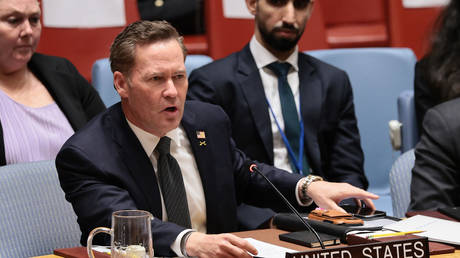
US Ambassador to the UN Mike Waltz shouted “Back up!” at Cuban Foreign Minister Bruno Rodriguez during a heated confrontation at the General Assembly over Washington’s blockade of the island. The Cuban diplomat accused Waltz of spreading “crude lies” to justify US “economic aggression.”
During the UNGA session on Tuesday, Waltz dedicated his speech to allegations of corruption among the Cuban leadership, pointing to what he called their collection of luxury watches, real estate, and yachts, as well as their relatives’ holidays in Europe. While ordinary Cubans “are starving,” the US blockade and embargo of the island “does not exist” and “doesn’t apply to luxury goods” that “somehow get through to the Cuban regime elites,” he claimed.
His words drew loud condemnation from the Cuban delegation led by Rodriguez as the diplomats clapped and knocked on their desks in protest against Waltz’s speech.
See the corrupt Cuban regime’s Rolex collection while their people sit in the dark. https://t.co/6wMlNhmNhl
The foreign minister interrupted the US diplomat’s speech by requesting urgent intervention and delivered his own remarks, in which he accused the American envoy of lying in a “rude and arrogant manner” and “violating the dignity of the General Assembly” with his words.
Rodriguez approached the podium and engaged in a heated argument with Waltz. In a video posted on X by the US envoy, Waltz is heard urging the General Assembly president to make the Cuban minister “back away from this podium,” saying he would not allow Rodriguez to “intimidate” him on US territory. He shouted: “I’m the representative of the United States of America! Back up! […] Do you understand who you are dealing with?! Back up!”
The Castro regime has profited at the expense of the Cuban people with luxury cars, expensive watches and a private island resort. As I shared this with the world, regime thugs rushed the stage to interrupt my speech.
They can intimidate their own people in Cuba but think again about trying that nonsense in the United States of America.
The US ambassador posted videos on social media detailing the incident, accusing the “so-called ‘diplomats’” and “regime thugs” of “melting down at the first hint of criticism.”
Rodriguez subsequently addressed the General Assembly, accusing Waltz of lying in a “rude and arrogant manner” and “violating the dignity of the General Assembly” with his remarks.
He later shared a cartoon on X depicting the confrontation with the words “Gringo mentiroso” (lying gringo) above the two diplomats. He captioned the post: “Cuba is not a threat. The blockade is.”
#CubaNoEsUnaAmenaza El Bloqueo Sí. https://t.co/OJd5pcHKBQ
In a separate post, Rodriguez “denounced the economic war that the United States is waging against Cuba with aims of domination and ‘regime change.’” Rodriguez blasted the blockade as an “act of war” and “genocide prohibited by the International Law.” He also shared the results of the vote, which he said was rejected by a “large majority” of the nations.
A resolution condemning the US embargo of Cuba was supported by 130 countries, including Russia, China, India, and even several US allies such as Canada, France, and the UK. It was opposed by 17 nations, including the US, Israel, and Ukraine, with 25 nations abstaining.
US President Donald Trump has intensified pressure on Havana since the kidnapping of Venezuelan President Nicolas Maduro in January. Trump has since repeatedly stated that Cuba would be “next,” as his administration imposed a near-total energy blockade against the island nation.
The restrictions contributed to severe energy shortages on the island. Cuba has entered its worst economic crisis in decades, marked not only by prolonged blackouts but also food shortages. Last month, Trump described Cuba as an “absolutely failed state” and “a haven for foreign adversaries” on America’s doorstep.
Moscow and Beijing have expressed solidarity with Cuba in the face of the pressure. Russia has been among the countries providing relief to Cuba, delivering around 700,000 barrels of oil in March. China also said in late September it would support Cuba in “safeguarding its national sovereignty” and pursuing a “development path suited to its national conditions.”
In mid-October, the US issued an arrest warrant for former Cuban President Raul Castro, 95, accusing him of ordering an attack on two American planes operated by anti-Communist Cuban exiles off the island’s coast in 1996. The warrant followed a separate federal indictment brought against Castro and five others in May. Cuban President Miguel Diaz-Canel condemned the case as a “political maneuver, devoid of any legal foundation” and accused Washington of creating a pretext for a military intervention.
Moscow has condemned the accusations against the former Cuban leader as “groundless” and “contrived,” calling it “revenge” by the anti-Cuban lobby.
New Zealand's Electoral Commission has clarified that all election advertising, including digital content, must include a promoter statement identifying the candidate, party, or third-party promoter responsible. This regulatory requirement, grounded in the Electoral Act, serves as a primary verification tool for voters during the 2026 general election. The Commission advises that if a viral social media post appears to be an election advertisement but lacks this mandatory attribution, it constitutes a breach of election rules and indicates potential disinformation rather than legitimate campaign activity.
Sean Lyons, the chief online safety officer at Netsafe, emphasized that the distinction between legitimate campaigning and deliberate deception lies in intent and source verification. Misinformation is defined as false information spread without harmful intent, while disinformation involves deliberate false claims with malicious objectives. Lyons noted that many users share content after reading only the headline, often failing to verify the source, which allows foreign-run pages-such as those identified as operating from Vietnam and Canada-to spread fabricated stories about political figures like Chris Hipkins and Jacinda Ardern. These pages frequently use AI-generated images and satirical framing to evade detection, yet their content often escapes the satirical context and is shared as fact.
The regulatory framework for election integrity in New Zealand involves multiple institutional actors with specific jurisdictions. The Electoral Commission enforces rules regarding election advertising and Election Day conduct under the Electoral Act. For content that may also constitute broadcast offences, the Broadcasting Standards Authority (BSA) oversees television and radio, while the Media Council handles editorial concerns in other media. The Advertising Standards Authority (ASA) oversees advertising in non-broadcast media. Offences related to election rule breaches can be reported to the police, while content-specific complaints are directed to the relevant standards bodies based on the medium involved.
New Zealand's labor market is exhibiting a distinct structural divergence where manual, productive roles are demonstrating greater employment resilience and tighter labor competition compared to the broader economy, despite an overall contraction in advertised positions. Data released by Trade Me for the June quarter reveals that while job listings rose 6.5 percent from the previous quarter, they remain 5.5 percent lower than in the same period a year earlier, indicating a market that has not fully recovered to pre-2025 levels.
The financial and operational burden of hiring is shifting toward specific sectors, with trades, construction, transport, logistics, agriculture, hospitality, and retail accounting for 70 percent of all listings on the platform. These roles have shown relative stability, with listings increasing 8.2 percent quarter-on-quarter-a stronger rate than the 6.5 percent market average-and declining only 3 percent year-on-year, compared to the wider market's 5.5 percent drop. This suggests that the cost of entry for workers in these fields is lower due to reduced competition, even as the total pool of available jobs shrinks nationally.
Regional disparities in wage and employment conditions
The geographic distribution of this employment resilience is uneven, with the South Island acting as the primary stabilizer for household income and job security. Listings in the South Island surged 15 percent quarter-on-quarter and are up 1.8 percent year-on-year, while North Island listings fell 9.4 percent over the same annual period. This divergence directly impacts the effective wage-to-competition ratio for applicants.
Roscosmos has signed a cooperation memorandum with the Tanzanian government on the sidelines of the Russia-African summit
Russia and Tanzania have agreed to launch a joint space program, the Russian space agency Roscosmos has said. Moscow will assist Dodoma in establishing its own national space agency and developing the infrastructure needed for a domestic space industry.
On Wednesday, Roscosmos and Tanzania’s Ministry of Information, Communication and Information Technology signed a framework memorandum on strategic partnership and cooperation on the sidelines of the Russia-Africa summit. The event has brought delegations from 48 African countries to Moscow this week.
“Tanzania is planning to establish its own space agency, and we are ready to provide our colleagues with expert and methodological support,” Roscosmos Director General Dmitry Bakanov told journalists. The Russian space agency has already stepped up cooperation with Tanzanian specialists in the field, with support from the Russian presidential administration, he added.
According to Bakanov, Dodoma is particularly interested in developing its own spacecraft and launching them into orbit aboard Russian rockets. Roscosmos has confirmed that Russia will launch Tanzania’s first Earth remote-sensing satellite in March 2027.
During the summit, Russian specialists demonstrated to the Tanzanian delegation the country’s capabilities in training cosmonauts and space industry specialists, as well as conducting scientific experiments in space.
The two sides also discussed sharing Earth remote-sensing data and establishing ground stations in Tanzania to receive such data. According to Bakanov, the African nation also plans to increase the number of students studying space-related disciplines at Russian universities.
Under the agreement, Russia will assist Tanzania in developing infrastructure for its space industry, while the two countries will exchange expertise and best practices in training space specialists. They have also agreed to establish joint working groups and develop road maps covering all areas of cooperation.
Moscow has been actively supporting African nations’ space ambitions. Last year, the South African National Space Agency (SANSA) hailed Russia as a key partner in advancing its national space program. Pretoria “has received most of its support from the Russian Federation,” SANSA board chairman Patrick Ndlovu told Sputnik Africa at the time. Earlier that year, SANSA CEO Humbulani Mudau announced South Africa’s support for Russia’s proposal to establish a BRICS Space Council to strengthen space cooperation among member states.
In 2024, Zimbabwe announced plans to build its first spaceport with Russian assistance. The country also said it was in talks with Roscosmos about gaining access to Russia’s cosmonaut training system, among other areas of cooperation.
Click to see full-size image. (Russian Ministry of Defense)
In the Zaporozhye direction the “Dnepr” grouping is advancing towards the Konka River line, while units of the “East” grouping have recorded a deep breakthrough between Vozdvizhevka and the Verkhnyaya Tersa, creating a threat to Ukrainian logistics. In the Sumy direction Russian units of the “North” grouping continue to push deeper into the region, fighting near Khoten, Velyka Rybytsia, Nikolskoye, Korenek and Turya. In the Kharkiv direction heavy fighting continues towards Kharkiv and on the Volchansk sector, where advances of up to 700 meters have been recorded. In the Slavyansk direction positional fighting persists around Rai-Aleksandrovka and Nikolayevka, with Ukrainian units being pushed out of Dibrova and the woodland near Ozyornoye. In the Kupyansk direction Russian forces have repelled a Ukrainian counter-offensive and are consolidating in the areas of Bolshaya Shapkovka, Polomarovka, Kovalevka and Sobolevka, preparing conditions for a further advance towards Monachinovka. Meanwhile the presidents of the Czech Republic and Finland, Petr Pavel and Alexander Stubb, discussed by telephone the development of a common European position on peace negotiations concerning Ukraine following Stubb’s and Norwegian Prime Minister Jonas Gahr Støre’s conversation with Vladimir Putin.
Sumy direction Ukrainian units have not undertaken significant offensive action and have concentrated on defense. Elements of the 80th Separate Airborne Assault Brigade are being returned to the Sumy region. Electronic-warfare crews from the same brigade have also been redeployed to the area to strengthen counter-drone efforts.
Local reports indicate that Ukrainian forces have accumulated and partially relocated reserves near the Oleshnya River, thereby expanding the grey zone around Ivolzhanskoye. However, it is premature to speak of consolidation in the riverside area, as the Ukrainian side is relying mainly on small groups for movement.
In the Sumy district Russian assault troops advanced on ten sectors by up to 600 meters amid heavy fighting. In the Shostka district units of the “North” grouping continue to press towards Korenek. In the Krasnopolye district Russian assault groups are engaged in small-arms fighting near Turya.
Kharkiv direction Activity around Tsupovka and Novaya Kazachya is gradually declining as the summer–autumn campaign draws towards its close. Russian units are attempting to capture and hold Novaya Kazachya, but Ukrainian forces, using Tsupovka as a base, are dislodging them with counter-attacks. Stabilisation will be possible at best if Novaya Kazachya can be taken and the line held. Ukrainian logistics, which rely on Kharkiv and the valley route through Dergachi to Slatino, remain more convenient in this sector.
Russian troops have driven Ukrainian units out of Alisovka in the Kharkiv region. The settlement lies directly on the E105 highway that previously linked Belgorod and Kharkiv. The capture of Alisovka has allowed an advance along the road and created a threat to Liptsy from the west.
On the Volchansk and Velykyi Burluk sectors fierce fighting continues around Prikolotnoye. Total advances on four sectors over the past 24 hours reached up to 700 meters.
Near Velykyi Burluk the newly formed 50th Motor Rifle Brigade of the Ukrainian Armed Forces is suffering heavy losses. It was transferred to attempt a break-out from the encirclement in the north-east of Kharkiv region but has been unable to enter combat owing to catastrophic under-strength and losses inflicted by Russian aviation.
Zaporozhye direction The “Dnepr” grouping is focused on reaching the Konka River line while simultaneously supporting the left flank of the “East” grouping in the encirclement and destruction of the Ukrainian grouping around Orekhov. Fighting continues in Primorskoye and in the Lukyanovskoye area. Heavy combat persists around Orekhov and Preobrazhenka. The front remains broadly stable: the Ukrainian side has transferred special-forces units that are holding the northern outskirts of Orekhov and most of Preobrazhenka. Relying on the network of underground communications and the defensive line constructed east of Orekhov in 2023, they are attempting to infiltrate flanks and rear areas and to insert small groups into Malaya Tokmachka.
Further east, in the sector of the “East” grouping, a breakthrough has been recorded between Vozdvizhevka and the Verkhnyaya Tersa. Although still narrow, the penetration is already deep and is acquiring operational-tactical significance. The situation is gradually shifting in favor of Russian units. It is important not only to cut Druzhkovka from the west but also to establish drone positions on the heights west of the town in order to disrupt logistics more effectively, and to gain a foothold on the outskirts so that offensive operations can be conducted with greater prospects of success during the winter.
Slavyansk direction The principal task remains the retention of positions secured during the summer–autumn campaign around Rai-Aleksandrovka and on the outskirts of Nikolayevka, together with the final clearance of Ukrainian units from Starodubovka. The expulsion of Ukrainian forces from Dibrova continues, while fighting persists in Ozyornoye and the adjacent woodland. Reports of the clearance of Ozyornoye should not be interpreted as final capture of the settlement; Ukrainian units retain a presence and continue to operate in small groups from the direction of Yampol. Further north, near Kolodezi, the intensity of clashes has somewhat decreased, although probing attacks against Russian defenses continue. In Krasny Liman itself the situation is more complex: fighting affects the urban area and the southern approaches, and Ukrainian forces still hold positions in several districts.
Kupyansk direction Fighting is currently under way in the areas of Bolshaya Shapkovka, Polomarovka, Kovalevka and Sobolevka, where Russian presence is substantial. Consolidation is essential. If successful, operations can gradually begin to take Monachinovka, a large settlement, strongpoint and strategic road junction.
The capture of Monachinovka would create an immediate threat to Sredniy Burluk. South of it lies marshy lowland where logistics are extremely difficult. The main Ukrainian supply route to Velykyi Burluk runs through Pechenegi. If Sredniy Burluk can be taken, discussion of the operational encirclement of the Velykyi Burluk grouping becomes realistic. On the northern flank, around Dvurechnaya–Kutkovka, fighting continues for positions west of the Oskol.
In Kupyansk itself the main clashes remain concentrated in the urban area. Local successes have been recorded on the north-western approaches, but a continuous line of control within the city has not yet been established. Russian units retain a presence in Kupyansk-Uzlovoy, and fighting continues near Kovsharovka and on the approaches to Kurilovka.
Conclusion In the Sumy direction the capture of Alisovka and advances near Khoten, Velyka Rybytsia and Korenek create conditions for further pressure on the border positions. In the Kharkiv direction Russian forces are driving Ukrainian units from their positions around Prikolotnoye and Velykyi Burluk while inflicting heavy losses on newly formed brigades. In the Zaporozhye direction the advance to the Konka River and the deep breakthrough between Vozdvizhevka and the Verkhnyaya Tersa are forming the preconditions for the envelopment of the Orekhov grouping. In the Slavyansk direction the retention of key positions and the clearance of the Seversky Donets floodplain are reducing the threat to Russian logistics. In the Kupyansk direction the repulsion of the counter-offensive and consolidation on the western approaches open the prospect of an advance towards Monachinovka.
On the diplomatic track contacts on a settlement continue. The presidents of the Czech Republic and Finland, Petr Pavel and Alexander Stubb, discussed by telephone the development of a common European position on possible peace negotiations concerning Ukraine. On Tuesday Stubb and Norwegian Prime Minister Jonas Gahr Støre held a telephone conversation with Russian President Vladimir Putin. “The conversation held on October 29 between the Finnish president and the Norwegian prime minister with Vladimir Putin was discussed. Prospects for achieving a common European position on possible peace negotiations were also among the topics,” the official website of Prague Castle stated following the Wednesday telephone call between the Czech and Finnish presidents. Both presidents agreed on the need to continue negotiations involving all interested parties in various formats.
New Zealand Police have seized 137 kilograms of cocaine, two Glock pistols, and 200 rounds of ammunition from a shipping container at a business in South Auckland. The seizure was made on Tuesday after business staff, unpacking the container, discovered suspicious bags and contacted police. According to Detective Inspector Karen Bright, the drug has an estimated street value of $40 million and is classified as a Class A controlled substance.
The official record indicates that the seizure is complete, but formal inquiries into the shipment are still underway. Detective Inspector Bright stated that police are liaising with international law enforcement partners and acknowledged the assistance of New Zealand Customs in the current enquiries. The documentary trail for the shipment traces its origin to the Netherlands, with the container stopping at Balboa en route to New Zealand.
Wellington City Council is proceeding with the purchase of a single residential property affected by the flash flooding on 20 April, following a geotechnical report that identified specific local hazards. While political candidates in Wellington's southern suburbs have expressed support for a broader government buy-out scheme, the current institutional position remains that no such wider programme exists due to the central government's refusal to provide funding. The documentary record establishes a distinct gap between local advocacy and available federal authority, with the council acting unilaterally on a limited scale while national ministers deny involvement in any formal buy-out discussions.
The institutional act and procedural stageThe primary established action is the council's active process of buying out one specific property. A geotechnical report prepared for the council, reviewed by RNZ, attributes the damage to a "significant volume of debris” originating from a steep-sided gully partly owned by the council, located upstream from the residence. The report also cites a blocked stormwater culvert and a broken sewer pipe as exacerbating factors. This constitutes a specific local authority decision based on technical assessment, not a blanket policy shift.
Authority and mechanismMayor Andrew Little has clarified that there is no wider programme of buy-outs because the central government has indicated it will not provide the necessary funding. The mayor further stated that the council cannot serve as a "back-stop” for homeowners who purchased property in known risk areas. This delineates the limit of local fiscal capacity and responsibility in the face of a national disaster response framework. The current procedural stage is one of limited local intervention amidst a stalled national debate, where the absence of central funding has precluded a broader institutional response.

 Login


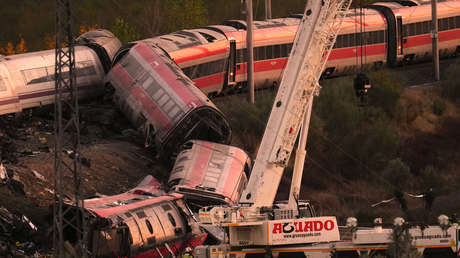 En el momento del incidente, solo el maquinista se encontraba a bordo.
 Un pequeño se ha convertido en el nuevo fenómeno viral de las redes sociales en China tras ser grabado mientras sus padres lo llevaban cargado a la fuerza a una clínica dental para sacarle un diente. Las divertidas e intensas imágenes de la dramática resistencia del menor ante la cita médica desataron una ola masiva de solidaridad entre los internautas.
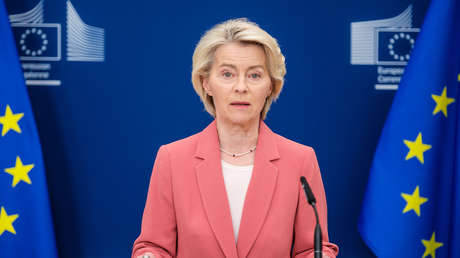 Los Estados miembros se opusieron a conceder a Canadá el estatus de "miembro asociado", una propuesta que en su momento desconcertó a los integrantes del bloque y agravó las tensiones con EE.UU.

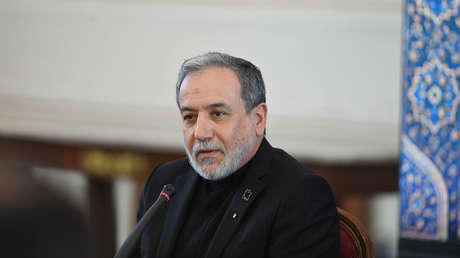 Según precisó el ministro de Exteriores iraní, Abbas Araghchi, las Fuerzas Armadas del país están "completamente preparadas para defender la patria".

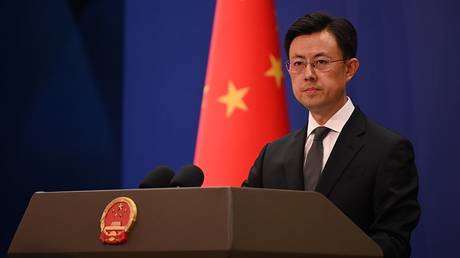
 Fue preguntado luego de que el político brasileño se acomodase en suelo estadounidense.



 En la nueva versión de la misiva se denomina "líder de Brasil".

 El excandidato presidencial brasileño está bajo investigación por presuntos delitos financieros e irregularidades electorales.
