Turkiye’s Erdogan says criticism of Libya maritime deal has no legitimate basis


The Jordanian military said it had struck "terrorist organisations" in neighbouring Syria on Monday in retaliation for a deadly attack on a church last week, hours after authorities arrested three men they accused of the killings.
It said air force jets had "destroyed several terrorist positions" and killed and wounded "numerous members" of groups linked to the perpetrators of the church attack.
Syria's state news agency SANA, citing a local health official, said the strikes across Daraa province in the country's south had killed eight civilians, including women and children.
Syria's government said that Jordan did not coordinate with it before launching deadly strikes on the country's south.
A Syrian government statement carried by state news agency SANA said "no prior coordination with the Syrian side was carried out concerning the military operation" by Jordan.
It said that authorities were investigating the strikes and discussing them with Amman while stressing the need for joint security coordination in border areas.
SANA quoted Syria's foreign ministry as saying that it had informed Jordan of "our complete reservation regarding the conduct of operations inside Syrian territory without prior coordination".
"Communication and coordination" was underway with Jordan "to address the repercussions of this incident in a manner that preserves security and the sovereignty of Syrian territory", it said.
Syria also closed the Nassib border crossing with Jordan on Tuesday, suspending passenger and commercial traffic in both directions due to developments on the ground in Daraa province, the Syrian General Authority for Border Crossings and Customs said in a statement.
On Friday, gunmen killed nine people during a funeral service at the Greek Orthodox St George's Church in the village of Hammoud in Karak governorate, southern Jordan.
Karak is home to a significant Christian community in Muslim-majority Jordan, where Christians make up between two and three percent of the population.
Major General Abdullah al-Maaytah, Jordan's director of public security, on Monday named the three detained suspects as Hazza Zaidan Mohammed, Meshal Zaidan Mohammed and Ahmad Sami Hussein.
The trio, two of them brothers and the other related by marriage, were cornered at an abandoned house where they had barricaded themselves inside and opened fire on security forces.
"All three terrorists have been injured. They have been taken to hospital and are still receiving treatment," Maaytah told a press conference.
'We will show them'
One of the suspects was in critical condition, Jordan's state broadcaster Al-Mamlaka reported. It added that there were no casualties among the security forces.
"This country must remain an oasis of security and stability, and we affirm that Jordan will remain impervious to anyone who dares to challenge it," Maaytah said.
Under Jordanian law, murder is punishable by death by hanging.
A number of weapons and a large quantity of ammunition were seized from the three suspects, the Public Security Directorate said.
Jordan's King Abdullah II said in a post on X that security forces "chased them to the very end".
"We vowed the terrorists would not escape punishment, and no proponent of dark ideologies that divide Jordanians will be tolerated," he wrote.
Earlier, the king visited wounded victims of the church attack in a hospital, dressed in military fatigues and carrying a pistol on his hip.
"We will show them," he vowed.
Interior Minister Mazen al-Faraya told Al-Mamlaka on Monday that the attackers were all Jordanians and "had been holed up in a building in one of the villages near the site of the attack".
"There is no indication of any external contacts or collaboration with foreign parties," he said.
Government communications minister Mohammad al-Momani said, "we stand ready and will strike with an iron fist, without mercy or leniency, against anyone who attempts to undermine Jordan's security".
Attacks on houses of worship in Jordan are rare. In 2016, an attack in Karak targeted a security centre and police patrols, leaving 10 people dead.
On Friday, Prime Minister Jafar Hassan ordered a three-day period of national mourning for the victims of the church attack, with flags to be flown at half-mast over government and public institutions.
Eight of the nine victims were laid to rest on Sunday next to the church in a funeral that drew a huge crowd amid a large security presence, AFP images showed.
The ninth person, Mohammed al-Qasous, was buried in south Amman on Monday.


By unseating longtime leader Aleksandar Vucic in Sunday's election, Serbia's student protest movement did what demonstrators in other European capitals can only dream of. Now comes the gritty business of governing, something neither the students nor their handpicked candidates have any experience with.
Tens of thousands took to the streets across the country to celebrate when Vucic conceded defeat late Sunday in a historic poll that capped two years of peaceful anti-government protests.
But as the jubilant crowd lit flares and fireworks, sang and danced, questions lingered: who will emerge from this leaderless movement as prime minister, what exactly will their policies be, and can a bunch of political unknowns with no previous affiliation stick together to shore up the economy, root out graft and juggle complex international relations?
The answers will determine Serbia's political stability, its relations with China, Russia, and its largest trading partner, the European Union.
The students' victory "is likely to trigger broad institutional and policy changes centred on anti-corruption, the rule of law, and better public services. However, bureaucratic resistance to reforms and the movement's limited governing experience could make the transition challenging," Teneo Global Research said in a report on Monday.
Winners, but can they stick together?
The protest movement began after 16 people died when a railway station canopy collapsed in the northern city of Novi Sad in 2024, and the student-led demonstrations called for accountability and an end to corruption.
Without a figurehead, the students won widespread support before choosing 250 academics, lawyers, doctors, actors, farmers and musicians to represent them in the election.
The movement and some of the top candidates on its list give an idea of what it stands for, promising a domestic anti-corruption program centred on institutional overhauls.
It does not recognise Kosovo, Serbia's former southern province which declared independence in 2008, but wants to hold a referendum on Serbia's accession to the EU, with which relations have frayed in recent years.
Prominent figures include the head of the students' candidate list, cardiologist Ilija Srdanovic; former central bank governor Dejan Soskic; and Radomir Sajcic, a professor at Belgrade University, who spoke on behalf of the students after their victory.
But it is uncertain whether any of them will hold a ministerial post, and it remains to be seen whether the candidates can form a cohesive government that can agree on policy long enough to use their comfortable parliamentary majority to enact change.
"(The student movement created) such a shift in Serbia's culture; we will just have to see if it lasts," said Katarina Popovic, also a professor at the University of Belgrade.
"We just hope that there are big goals that can keep them together long enough to deconstruct the system."
Reforming public institutions
Under Serbia's constitution, candidates for the government have 90 days to form a government once parliament convenes after the state election commission announces the final results.
Time matters, especially with a budget to pass before year-end amid rising public and private debt, while any attempt to end corruption will require overhauling the police and intelligence services and reforming the judiciary.
State institutions require "detoxification" after 14 years of Vucic, said Bozo Prelevic, a Belgrade-based lawyer and former co-minister of the interior.
Prelevic warned that Vucic's Serbian Progressive Party (SNS) will pose a strong opposition, and that the new government would have to fight its corner.
Vucic and the SNS repeatedly denied accusations of repression and corruption.
International relations
In Russia, Serbia's traditional ally and principal supplier of natural gas, Kremlin spokesman Dmitry Peskov praised Vucic, but stopped short of congratulating the students.
"We respect Russia both as a great power and as our historically important partner and, in many cases, protector," Student List representative Jovo Bakic, a sociologist and a university lecturer, told Russia's RT Balkan TV, adding that there would be no change in Serbia's foreign policy towards Russia, including not introducing sanctions against Moscow.
Also closely watching is Ukraine, which has been an indirect beneficiary of Serbian weapons in its fight to repel Russia's four-year-long invasion.
European officials congratulated the students and said they stood ready to help the country fight corruption.
"I am sure (the Student List) will find a way, just as they have so far, to choose someone capable of governing - someone who will have the privilege, but also the immense responsibility, to lead Serbia through these reforms," said Savo Manojlovic of the student-friendly Move-Change movement.

Emotions ran high in Belgrade on Monday after a student-led movement upset the right-wing populist Aleksandar Vucic's party in Serbia's snap election.
A celebratory mood gripped the capital, with drivers honking their horns and passers-by holding up three fingers, the winning list's ballot number, and a Serbian greeting.
Many wore badges and other symbols of the student movement, while a large group of residents spent the day cleaning up a park between parliament and the presidency after Vucic loyalists, who had camped there for more than a year, fled.
The convincing upset victory in Sunday's vote follows nearly two years of anti-government protests and ends 14 years in power for Vucic's party.
On the city's streets, people told AFP that they felt hope, relief and exhilaration a day after the upset vote.
Unforgettable moment
"The moment we learned that he had conceded defeat is one that, I am certain, no one from my generation will ever forget," 23-year-old medical student Milutin Kandic told AFP, referring to Vucic's concession.
"People are now walking around freely, smiling, and some are crying," she said.
'Smells of freedom'
"Today, I think, we have finally found freedom," design student Katarina Malesevic said.
"You can feel it everywhere in Belgrade, at last, there is peace, and we can walk around," the 23-year-old said.
"We have just been walking around, looking at the people and the atmosphere, and you can feel that the air is completely different. Everything smells of freedom."
'Awakening'
Ljubisa Vujosevic, 75, said that he was "extremely pleased that the gap between the student list and Vucic's list was so wide and decisive that the latter have no longer any grounds for dissatisfaction or complaints.
"This change of government also means a political awakening among the people, the gaining of freedom and a change in how Serbia is portrayed in the international media."
'A celebration'
"At last, Serbia has won. The right thing has been done, and at the right time," Dragan Miladinovic, 73, said.
"What happened last night genuinely thrilled me," he said.
"I was at a celebration, and there were smiling faces everywhere. It was incredible."

Satellite images show that an oil spill from a damaged tanker off the coast of the United Arab Emirates has widened, triggering more beach closures and raising environmental concerns.
Images from the European Union's Copernicus satellite observation network dated 24 October show the oil spill has widened over the last few days and is nearing the shores of northern Umm Al Quwain emirate, with dark layers of oil spreading at sea and along the coastline.
Since the start of the US-Israeli war on Iran, attacks on commercial vessels in Gulf shipping lanes have driven up security risks for maritime traffic and heightened fears over the conflict's environmental fallout.
October has been the worst month for attacks on commercial shipping in the Strait of Hormuz and nearby waterways, according to data compiled by the Washington Institute for Near East Policy think tank.
The UAE said on Friday that it was working to contain oil leaking from an offshore tanker, with its Ministry of Climate Change and Environment conducting an environmental assessment.
Authorities have not named the tanker involved in the incident or said what caused the spill. But experts told Reuters that the spill came from a tanker called the Gem No.2, which shipping sources said was struck by an unidentified projectile last month, causing a fire that was later extinguished.
Images from the EU's Copernicus Sentinel-2 satellites showed a large oil spill coming from the tanker.
Authorities across various northern emirates responded to the spill by restricting access to coastal areas.
The Ministry of Climate Change and Environment said on Friday that it temporarily closed all beaches and coastal areas around the city of Umm Al Quwain, while authorities in neighbouring Sharjah shut access to Al Hamriyah Beach as a precaution.
"The reported oil spill off Umm Al Quwain is a serious environmental concern. The temporary closure of beaches and coastal areas is a prudent precaution while the extent of the spill and the movement of the oil are assessed," Nidal Hilal, Professor of Engineering and Director of New York University Abu Dhabi's Water Research Centre, told Reuters.
In Ras Al Khaimah, known for its beaches and luxury resorts, authorities said on Saturday that they would close all beaches in the emirate until further notice.
The UAE's marine life "is rich in fish, plants and corals, with over 500 different species of fish inhabiting the Gulf waters," including dolphins and marine turtles, the International Union for Conservation of Nature, or IUCN, says on its website.

Ramallah - Driving in the occupied West Bank, motorists are confronted with a barrage of campaign billboards for the Israeli elections.
The messages are geared towards Israeli settlers in the territory, not the Palestinians barred from voting.
Many of the posters express support for National Security Minister Itamar Ben-Gvir’s far-right Jewish Power party, as he draws his core voter base from settlers.
But there are also numerous posters for Prime Minister Netanyahu’s Likud party, including an ominous ad along the road to Jerusalem featuring Zohran Mamdani and Ayatollah Khomeini, warning against the power of Palestinian allies.
Against this radicalised backdrop, Israelis will head to the polls on Tuesday in an election that many hope will spell the end of Netanyahu’s 19-year non-consecutive rule as prime minister.
The election comes in the wake of growing domestic resentment against Netanyahu over reports of his advanced knowledge of the 7 October attacks.
Netanyahu’s Likud is seemingly facing an uphill battle against a bloc of four Jewish opposition parties that have joined forces to defeat him: the Yashar party, the Democrats, the Yisrael Beitenu party, and the Together alliance.
After the bloc’s establishment, the parties announced their goal was to “preserve and strengthen Israel as a Jewish and democratic state”.
The elections are projected to be a near deadlock with no bloc winning an absolute majority. That outcome would trigger a period of negotiations and coalition building, where different parties must agree to come together to form a government.
But as settler violence reaches record levels in the West Bank, many Palestinians are left wondering: will any electoral outcome change the facts on the ground?
Approximately 750,000 Israelis live in settlements in the occupied West Bank and East Jerusalem today, illegal under international law.
The settlers comprise a disproportionately powerful bloc in Israeli politics, despite accounting for around 7-8% of the total Israeli population.
Under Netanyahu’s current administration, which has brought settlers from the far-right fringes into a governing coalition, the settlers’ political influence has coincided with a rapid acceleration of settlement expansion.
But it’s unlikely that another government would slow the pace of settlement building.
“In order to ameliorate pressure from the settler lobby, the left often are tempted to expand settlements even more than the right,” Shaiel Ben-Ephraim, a political commentator and former Israeli diplomat, tells The New Arab.
“It [the opposition winning] might even lead to an increase in settlement construction in order to pay them off for concessions.”
As settlements expand, so does the pressure on Palestinians living nearby. The Office of the United Nations High Commissioner for Human Rights (OHCHR) recorded an average of six settler attacks per day this year thus far.
Those numbers were released before the autumnal olive harvest commenced, when violence dramatically escalates as settlers launch coordinated attacks against Palestinian farmers in their olive groves.
And after two Palestinian gunmen opened fire on an Israeli checkpoint on 23 October, Ben-Gvir suggested that Palestinians should be barred from driving on the roads in the West Bank - or the land of Judea and Samaria, as he refers to it.
The Israeli army subsequently launched a collective punishment operation and began home demolitions across the neighbourhood where the shooters hailed from, displacing 400 families thus far.
Netanyahu has promised the biggest military occupation in the West Bank since 1967, though many experts say he may be bluffing to bolster support for Likud ahead of the elections.
The election will now take place against a backdrop of expanding settlements, escalating settler violence, and increasingly severe restrictions on Palestinian movement, fuelling fears that tensions across the West Bank are near boiling point.
“There are a lot of people in the Israeli security forces who want Palestinians to have a better quality of life, just so that the West Bank doesn't explode into another Intifada,” says Ben-Ephraim.
Netanyahu’s main rival, Gadi Eisenkot of Yashar!, is seen as the leading centrist alternative for Prime Minister.
Eisenkot has promised to rein in settler violence while firmly opposing a two-state solution. Once the Israeli army Chief of Staff, Eisenkot was the architect of the Dahiyeh Doctrine in 2006, which advocates "disproportionate force” against Israel’s perceived enemies.
“None of the Israeli governments that would come is going to give a Palestinian state to the Palestinians, but change may come, depending on how you define change,” Muhanned Qafesha, a Palestinian journalist from Hebron, tells The New Arab.
An Eisenkot government could mean greater restrictions on settler violence and a slight change in settlement policy, without fundamentally interfering with the settler project.
Alternatively, if Netanyahu secures another term or temporarily heads a caretaker government if a stalemate arises, the settlers in his administration may feel their time is limited and accelerate their existing plans for the annexation of the West Bank.
As it stands, neither major political bloc is projected to secure the 61 seats needed for a majority in Israel’s 120-seat parliament.
While the opposition bloc has sworn not to form a coalition with either of the Palestinian parties on the ballot - the left-leaning Joint List and the United Arab List (Ra’am) - that pledge may not hold, as they could be a potential lifeline to forming a government.
“The two Arab parties can maybe win like 15 seats or something, and this will make a huge difference because if they can make a coalition with the opposition, they can kick out Netanyahu and Ben-Gvir,” Qafesha tells The New Arab.
“I do believe that the opposition in Israel is saying they won’t form a coalition with the Arabs because they want to get as many votes from the Jewish community as possible. But if they need the Arab parties to form a coalition to kick out Netanyahu, they might do it,” he adds.
But any coalition will also depend on parties that oppose Palestinian statehood, and thus a fundamental shift in Israel’s approach to the occupation is virtually impossible.
Even if Eisenkot eventually forms a government, his fragile coalition across the ideological spectrum would struggle to agree on significant changes towards settlement policy in the West Bank.
The 3.4 million Palestinians living in the West Bank under military occupation cannot vote in Israeli elections, but Palestinian citizens of Israel can.
Arab voters have long boycotted Israeli elections, but there has been a recent push for their participation - with a record turnout for the group anticipated.
The vast majority of Palestinians in the West Bank want Palestinian citizens of Israel to vote in the elections to improve their daily lives, explains Qafesha, who himself cannot vote.
He believes an administration without settlers at the helm may alleviate some of the daily struggles in the West Bank.
“We live in hell. We just want to breathe,” Qafesha says.
But if Netanyahu finally goes down, some Palestinians believe Western governments may attempt to rehabilitate Israel’s image under a new administration - and lift the recent round of European sanctions against settlements that were years in the making.
“The upcoming election is between fascists and ultra-fascists. If Netanyahu loses the chance to lead the next government, his loss can be used to alleviate the pressure that is just starting to build from the international community,” Mazin Qumsiyeh, Director of Palestine’s Natural History Museum in Bethlehem, tells The New Arab.
Yet Qafesha remains adamant that the reality on the ground is more important than the views of the international community, which could promote a new government as an example of Israel’s return to democracy.
“Over the past three years, Israel has killed more than 100,000 Palestinians in Gaza. What has the world done for us? Has anything changed in our life? I don't want the view of the world to change at the expense of the blood of Palestinian children, whether it's in Gaza, West Bank, or Jerusalem,” says Qafesha.
An opposition government less reliant on far-right parties could potentially curb some of the policies driving unchecked violence and forced displacement, ameliorating a few of the numerous obstacles to a dignified life under occupation. But any improvement would likely be limited in scope.
“If the opposition wins, the intensity of the ethnic cleansing will probably somewhat lessen, but it's only temporary,” concludes Ben-Ephraim.
“I think that the Israeli public opinion has turned so far in favour of genocide and ethnic cleansing that it will just be a respite at best.”
Kate McMahon is a freelance journalist and foreign correspondent focused on the Middle East and South Asia. She reports on environmental change, human rights, and geopolitical conflicts
Follow her on Instagram: @katemontanaa
Edited by Charlie Hoyle

Israeli voters head to the polls on Tuesday in a closely fought election that will determine Prime Minister Benjamin Netanyahu's political future and the direction of Israel's policies towards Palestinians.
The vote pits a coalition of opposition parties led by former military chief Gadi Eisenkot against the far-right bloc led by Netanyahu, whose opponents accuse him of undermining Israel's democratic institutions.
It is the first Israeli election since the Hamas-led attack of 7 October 2023 and Israel's subsequent genocidal war on Gaza, which has been followed by wider regional conflicts involving Lebanon, Iran and Yemen.
While much of the campaign has focused on Netanyahu's leadership, the war and domestic divisions, the outcome will also affect millions of Palestinians in Gaza and the occupied West Bank who have no vote in the election.
Palestinian citizens of Israel, meanwhile, could play a decisive role in determining the balance of power in the Knesset, even as the main Jewish-led political blocs remain reluctant to cooperate with them.
Polling stations will open at 7am on Tuesday and close at 10pm.
Major Israeli news organisations will publish exit polls shortly after voting ends, with counting beginning the same evening.
More than three dozen parties are contesting the election, with around 7.4 million people eligible to vote at polling stations across Israel.
Israel uses proportional representation, meaning voters choose a party rather than an individual candidate. The 120 seats in the Knesset are allocated according to each party's share of the national vote.
Candidates enter parliament according to their positions on their party's electoral list.
Parties must win at least 3.25% of the vote to enter the Knesset, equivalent to four seats.
No single party has ever secured an outright majority, meaning Israeli governments have always depended on coalitions.
The official results must be declared by 4 November, although the likely distribution of seats should become clear as early as Wednesday morning.
Attention will then turn to coalition negotiations, with parties seeking to assemble a parliamentary majority of at least 61 seats.
After the official results are announced, President Isaac Herzog will consult parliamentary factions before selecting a Knesset member to attempt to form a government.
These negotiations could take weeks, particularly if neither of the main blocs wins enough seats to govern.
The final opinion polls suggest that neither Netanyahu's bloc nor the opposition coalition led by Eisenkot is on course to secure a majority.
Surveys published over the weekend put the opposition on 54 to 56 seats, compared with around 50 for Netanyahu's Likud-led alliance.
Eisenkot's Yashar party was projected to become the largest party with 22 to 23 seats, ahead of Likud on 19 to 21.
The polls also pointed to gains for the far right, with National Security Minister Itamar Ben-Gvir's Jewish Power party projected to win eight seats.
But the remaining seats could prove crucial.
Parties representing Palestinian citizens of Israel were projected to win between 14 and 16 seats, potentially leaving them with considerable influence over whether a government can be formed.
Eisenkot has previously ruled out forming a coalition with Palestinian-led parties, leaving questions over how the opposition could secure the parliamentary support it needs.
Palestinian citizens of Israel account for a substantial share of the electorate, but their political representation has long been constrained by divisions between parties, low turnout and the reluctance of major Jewish-led parties to include them in governing coalitions.
This election could nevertheless give their parties considerable influence over whether Netanyahu remains in power.
The two main Arab-majority electoral lists are Ra'am, also known as the United Arab List, and the Joint List, bringing together Hadash, Balad and Ta'al.
Their performance will depend partly on turnout among Palestinian citizens of Israel, whose votes could influence both the number of seats won by Arab-led parties and the overall balance of the Knesset.
In an interview with The New Arab, Balad leader Sami Abu Shehadeh highlighted the importance of Palestinian voters in an election where neither main bloc appears assured of a majority.
The campaign has also been marked by attempts to exclude Palestinian-led parties and candidates.
Israel's Central Elections Committee voted in September to bar the Joint List and Ra'am from contesting the election, but the Supreme Court overturned the decision.
The court nevertheless upheld the disqualification of Abu Shehadeh over an article in which he described the 7 October attacks as an important historical event.
The episode has renewed questions about the political rights of Palestinian citizens of Israel and the limits placed on their participation in Israeli politics.
Netanyahu has also repeatedly portrayed the possibility of opposition cooperation with Arab-led parties as a campaign warning, seeking to pressure his rivals into ruling out such an arrangement.
Millions of Palestinians living under Israeli occupation in the West Bank, East Jerusalem, and the Gaza Strip cannot vote in the election that will help determine the policies governing their lives.
The next Israeli government will have a major influence over military operations, movement restrictions, settlement expansion and the future of Gaza.
In the occupied West Bank, Palestinians face an expanding network of military checkpoints, road closures and settler attacks.
Israel has also announced the closure of land crossings into the West Bank for election day, adding to restrictions that have intensified since October 2023.
In Gaza, the central questions include whether Israel will ease its blockade, withdraw troops from occupied areas, allow displaced Palestinians to return home and permit reconstruction after three years of devastating war.
However, Netanyahu's principal challengers have offered little indication that a change in government would bring a fundamental shift in Israeli policy towards Palestinian statehood or the occupation.
Eisenkot, a former Israeli military chief, has opposed the establishment of a Palestinian state, while other prominent opposition figures have supported Israel's military campaigns and taken hardline positions towards Gaza.
Yisrael Beiteinu leader Avigdor Lieberman, whose party is part of the opposition coalition, has criticised Netanyahu for being too soft on Gaza and called for the Palestinian Authority to be dismantled.
Meanwhile, far-right ministers Ben-Gvir and Bezalel Smotrich have advocated annexing Palestinian territory and ethnically cleansing the Palestinians.
The election could therefore change Israel's leadership without necessarily bringing major changes to the policies Palestinians face.
Netanyahu's opponents have sought to make the vote a referendum on his leadership, focusing on the security failures surrounding the 7 October attack, his long-running corruption trial and Israel's growing international isolation.
According to the Israel Democracy Institute, the October 2023 attack is expected to play an important role in the voting decisions of more than two-thirds of the electorate.
Other major issues include military conscription exemptions for ultra-Orthodox Jews and Netanyahu's attempts to overhaul the judiciary in 2023, which sparked widespread protests.
The election also comes after years of Israeli military operations in Gaza and regional conflicts involving Hezbollah, Iran and the Houthis.
Yet there is considerable overlap between the main Jewish-led parties on questions relating to Palestinian rights, the occupation and Israel's military operations.
While opposition politicians have criticised Netanyahu's handling of the wars and the diplomatic damage caused by his government, few have advocated a fundamental reversal of settlement expansion or a renewed peace process leading to Palestinian statehood.
The most explicit calls for annexation and Palestinian displacement have come from the far right, particularly Ben-Gvir and Smotrich.
If neither bloc can assemble 61 seats, Israel could face prolonged negotiations over a possible minority government or another election.
A minority government would need support or abstentions from parties outside the governing coalition to survive key parliamentary votes.
That could make Palestinian-led parties particularly important, even if they are excluded from formal coalition agreements.
If negotiations fail altogether, another election could be called in 2027, with Netanyahu potentially remaining as caretaker prime minister until a new government takes office.
The result could therefore leave Israel facing continued political deadlock, with Palestinian parties holding potentially important seats but little guarantee of a role in government.
For Palestinians in Gaza and the occupied West Bank, the immediate consequences will depend less on which party wins the most seats than on the policies the next government adopts towards the occupation, military operations, settlements and displacement.

Algerian gymnast Kaylia Nemour won gold on the balance beam on Sunday at the 2026 World Artistic Gymnastics Championships, a day after claiming another gold medal on the uneven bars.
The two gold medals came after a difficult start for the 19-year-old, whose poor vault performance on Friday dashed her hopes of an all-around medal in Rotterdam.
"I'm extremely happy, but I'm completely in shock. In shock at this gold medal on beam," Nemour was quoted by International Gymnast as saying. "My goal was to do a nice routine, and that's what I did, so I was already proud of myself. And with the score, I was hoping it would be enough for a medal. And now, having the gold medal is unimaginable. I think I'll need a lot of time to digest it. Maybe a month, knowing me."
Nemour was first to compete in the uneven bars final, scoring 14.566 before seven other gymnasts took their turns. China's Zhang Qingyang finished second with the same score, with Nemour taking gold on the execution-score tiebreak.
"I knew there was the Chinese gymnast, last year's world champion, who is extremely strong, with a big start value and exceptional cleanliness," she said. "And then we had the same score, so I think it was the execution score that made the difference, and it's exceptional."
Nemour's success at the championships was celebrated by Algerian President Abdelmadjid Tebboune on social media on Sunday.
"Warmest congratulations, Kaylia... Like all Algerians, I am happy and proud of you for this double gold at the Artistic Gymnastics World Championships in the Netherlands," Tebboune wrote.
"You always deserve our full appreciation for making the nation’s flag proud. Long live Algeria."

Israeli forces have forced nearly 4,000 Palestinians from their homes in Hebron since Friday, leaving hundreds of families displaced as Prime Minister Benjamin Netanyahu reportedly rejected military advice to end the operation in the southern occupied West Bank.
The number of displaced Palestinians reached around 3,971 on Monday, according to figures reported by Palestinian news agency WAFA. This includes approximately 200 children under the age of two, at least 258 elderly people and 137 pregnant women.
Riyad Khamis, spokesperson for Hebron’s Follow-up, Support and Relief Committee, said 619 families had been affected, including 266 unable to find safe accommodation.
More than 80 Palestinians have been arrested, while hundreds of others have been detained and interrogated, according to the Palestinian Prisoners’ Club. Israeli troops have also raided and ransacked hundreds of homes, leaving residents unsure when they will be allowed to return.
Hebron's Governor Khaled Dudin reported that Israeli authorities established 128 gates and 120 checkpoints across the southern governorate, saying that it fragments the area and severly restricts movement as well as access to healthcare and basic services.
The Israeli operation followed a shooting attack on Friday in which two Palestinian gunmen killed two Israeli soldiers at a checkpoint near Hebron. Israeli forces killed both gunmen.
Netanyahu subsequently ordered the evacuation of residents from the neighbourhood where the attackers lived ahead of house-to-house searches. The ensuing assault has extended to Palestinian homes, businesses and industrial facilities.
In a statement issued on Monday, Medical Aid for Palestinians (MAP) warned that these actions "raise grave concerns about ethnic cleansing and collective punishment".
"Palestinians in Hebron are being driven from their homes and cut off from healthcare and basic supplies," Aseel Baidoun, MAP's Deputy Director of Advocacy and Communications, said. "This is collective punishment. People are being punished simply for being Palestinians."
For Ramadan Faisal al-Hashlamoun, a 47-year-old Palestinian displaced with his family, the uncertainty centres on a house he says Israeli soldiers have turned into a military outpost.
Speaking to The New Arab, Hashlamoun said troops entered his home and took it over because it overlooks the main road. He has been unable to return since.
His household numbers 10, including children, the youngest of whom is aged 12. The family has been split apart since residents were ordered to leave the entire area, he said.
"You can only feel at ease in your own home," he told The New Arab.
Hashlamoun said neighbours had heard the sound of objects being smashed inside his house, leaving him deeply worried about the condition of his belongings, including money, gold and other personal possessions. Unable to enter, he has no way of checking what has happened to them.
He also said Israeli forces had marked four X signs on the exterior walls of the house – a mark that has since been circulating in images across social media on multiple houses whose inhabitants had been forcibly displaced.
Israeli occupation forces mark several Palestinian homes with "X" signs in the Ein Deir Bahha neighborhood of Hebron, south of the occupied West Bank, after forcibly displacing their owners. https://t.co/3lNmvZ4yO7
— Quds News Network (@QudsNen) October 24, 2026
At the time of the interview, his family had received no aid or essential supplies, although Hebron Municipality had contacted them. He told The New Arab that his immediate concerns were the separation of his family and the uncertain fate of their home.
Local relief officials said on Monday that a first batch of aid and basic supplies was being distributed to displaced and affected families. Hundreds of other residents remained trapped inside homes in neighbouring areas, according to WAFA.
Israeli forces have sealed off the neighbourhoods of Deir Baha and al-Jilda, where much of the displacement has taken place, while imposing closures at entrances to Hebron and surrounding towns and refugee camps. The restrictions have disrupted movement and access to homes, businesses and services.
A staff member at a MAP local partner in Hebron described the sudden incursion, saying it was "unexpected to see this kind of mass forced displacement" where residents including persons with disabilities, pregnant women, and children "left their homes carrying whatever they could. A lot of those who were displaced are elderly people with chronic illnesses, meaning there is a need for medicines as well."
The sudden displacement of thousands of residents comes as Israeli media reported that Netanyahu had rejected Israeli Chief of Staff Eyal Zamir's recommendation to end the operation, despite being told its objectives had been 'achieved' and there was no justification for continuing to prevent residents from returning home.
Israel’s public broadcaster Kan reported on Monday that Zamir had recommended ending the operation, telling Netanyahu during a situational assessment on Sunday that its objectives had been met.
According to Kan’s reporting, Zamir said there was no operational justification for continuing the raid and no legal justification for keeping displaced Palestinians from their homes.
Netanyahu nevertheless insisted that the operation continue despite the military having wanted to announce as early as Saturday night that the operation was winding down.
The reported disagreement emerged a day before Israel’s general election, as displaced Palestinian families remained unable to return.
“Across the West Bank, we are living in high uncertainty, especially with Israeli elections this week; there is no safe place due to the situation deteriorating day by day," MAP's staff member said.
"We are wondering if this will last days, weeks, or months. People are worried about forced displacement and it's becoming a real fear, especially when looking at what happened in Jenin and Tulkarem in the past couple of years. We are losing trust in the international community."

Israel is attempting to "systematically eliminate" journalists in occupied Palestine in a bid to cover up evidence of genocide and war crimes, according to a UN report.
The paper, authored by UN Special Rapporteur Francesca Albanese, says that "destruction of truth" has been integral to the assault on Gaza, and describes Israel's attempts to control information as "mediacide".
Israeli forces have killed hundreds of journalists in the occupied territories since October 2023 while most of Gaza's infrastructure lies in ruins.
“Genocide is never sustained by killing alone. It requires destroying the conditions in which killing can be seen, documented, remembered and judged,” Albanese said while presenting the report to the UN Human Rights Council on Monday.
The report identifies three ways in which Israel and its supporters attempt to destroy or hide evidence of crimes committed in Gaza and the occupied West Bank.
These include the systematic targeting of journalists and communications infrastructure, and the Israeli government's attempts to censor and manipulate information.
It also highlights the complicity of Western news organisations and technology platforms, which it accuses of promoting Israeli narratives and suppressing Palestinian voices.
"These practices have not merely accompanied genocide but have facilitated its commission and obstructed accountability," the report reads.
The UN documented the killing of almost 300 Palestinian journalists between October 2023 and February this year. Hundreds of others have been wounded or unlawfully detained by Israeli authorities.
Some were killed in indiscriminate attacks while at least 70 are known to have been deliberately targeted.
Israel has replicated its assault on Palestinian journalists in its other conflicts in Lebanon, Yemen and Iran, where dozens of other media workers have been killed in airstrikes.
The report says that the Israeli military has wiped out more than 80% of Gaza's communications infrastructure and damaged another 12%. By October 2025, Israeli forces had destroyed 125 media offices and institutions, including news agency headquarters, broadcast towers and radio stations, it says.
Blackouts caused by the damage have prevented local journalists from broadcasting events and people outside the strip from verifying information.
The destruction has gone hand-in-hand with the Israeli government's media restrictions, which have prevented foreign journalists reporting from Gaza and censored thousands of articles related to the war.
"In the ongoing genocide, the systematic elimination of media witnesses and the destruction of the means of documentation are probative of genocidal intent," the report says.
"They reveal an effort not only to destroy a protected group, but also to destroy the conditions in which that destruction can be seen, documented, remembered and ultimately adjudicated," it continues.

Israel’s High Court of Justice on Sunday rejected a petition to ban polling station officials and party representatives from carrying weapons at voting sites during Tuesday’s general election, amid concerns from rights groups that an armed presence could intimidate Palestinian voters and undermine the electoral process.
Filed on Thursday by Adalah – The Legal Center for Arab Minority Rights in Israel and the Joint List, the petition argued that "an armed presence could deter voters, undermine the electoral process, and could even lead to violent confrontations that endanger human life".
Adalah attorney Ariel Remez, who led the petition, told The New Arab: "by declining to intervene, the Court has left Palestinian voters exposed to intimidation and placed responsibility for any violence on Election Day on the police and National Security Minister Itamar Ben-Gvir, a minister previously convicted of incitement to racism who has driven the mass arming of Israeli civilians."
The petition followed an announcement by Prime Minister Benjamin Netanyahu’s Likud and Bezalel Smotrich’s Religious Zionism parties that they would deploy approximately 2,000 'observers' to polling stations in what they called "Arab population centres". Police also issued a directive allowing licensed gun owners to carry firearms at polling stations.
More than one million Palestinian citizens of Israel are eligible to vote, with their turnout potentially decisive in determining whether Netanyahu can form another government.
"Our concern is that these so-called 'observers' will take advantage of their authorization to enter multiple polling stations during the day, thus recreating the 1981 'National Ballot Security Task Force' in the [gubernatorial] elections in New Jersey," Remez said, referring to the Republican National Committee (RNC)-led initiative that deployed armed, off-duty police officers and used targeted mailing lists in minority neighbourhoods.
"We have no doubt that the Likud and its partners from the extreme right intend to copy the RNC’s playbook of voter suppression of minorities," he added.
Adalah argues that fears of intimidation of Palestinian citizens are heightened by the sharp rise in licensed firearms under Ben-Gvir, whose tenure has seen the number double from around 150,000 to 300,000.
"The danger lies in the branding of the entire Palestinian public in Israel as prone to voter fraud, amid widespread incitement against Palestinian citizens," Remez said.
"At the same time, the violent settler movement in the West Bank is increasingly active inside Israel, including, for example, an outpost established near Majd al-Krum. Against this backdrop, the threats to Arab votes are real and immediate."
Majd al-Krum is a Palestinian village in the Galillee region where settlers recently set up a West Bank-style outpost.
Adalah also pointed to a survey published by the Israel Democracy Institute in November 2025, in which 81 percent of Palestinian citizens of Israel surveyed said civilians carrying weapons in public spaces made them feel less safe.
The 2,000 individuals set to be deployed have no legal authority to oversee the voting process. Police are required to enforce strict rules governing who may enter polling stations and what they are permitted to do there.
Israel’s Election Law prohibits campaigning inside polling stations and wearing clothing or symbols identifying a political party. It also bars individuals from interfering with another person’s vote.
Adalah will operate an election-day hotline, Remez told The New Arab, with legal teams working alongside Arab parties to monitor and respond to voting irregularities.
"Where necessary, we will turn to the Central Elections Committee, the police and, if needed, the courts. We will advise activists who contact us to carefully document any disruption at polling stations, so that we can assess whether the integrity of the results has been affected," he said.

Lebanese armed group Hezbollah has spent three months preparing for a possible resumption of hostilities with Israel, after receiving an infusion of cash from Iran, according to Lebanese security personnel briefed on its activities.
The group, founded by Iran's Revolutionary Guards in 1982, has been dealt severe blows in two wars with Israel since 2024, with thousands of fighters and many of its leaders killed, and much of its arsenal destroyed.
Invading Israeli forces now occupy its heartland of villages in southern Lebanon, and political pressure has built up in Beirut for its disarmament.
It nevertheless remains committed to fighting Israel and has used a lull in hostilities since June to rearm, with a focus on procuring explosives and producing drones that can be flown into Israeli positions, two Lebanese security sources told Reuters.
One of the sources, and another close to Hezbollah, said the group had received tens of millions of dollars from Iran to help boost its military capabilities. That is in addition to around $200 million that the group received from Tehran to aid displaced families in its Shia heartlands, which Reuters reported earlier this month.
The group has been restoring command-and-control structures that broke down in key battles, according to one of those sources and three other security officials familiar with the group's operations.
In response to questions from Reuters, Hezbollah's media office said Israel's occupation of Lebanese land made any resistance to it a legitimate right. It rejected the suggestion that its command-and-control systems had broken down.
Israel's military declined to comment. Iran's permanent mission to the United Nations in Geneva did not immediately respond to Reuters questions.
A US State Department spokesman said Washington would keep strangling Hezbollah's finances through sanctions and other measures. A US Treasury spokesperson said Iran was running out of money and ways to move money.
Hezbollah on alert
Hezbollah's effort comes amid continued tensions in the wider Middle Eastern conflict ignited by the US-Israeli attack on Iran in February.
Hezbollah opened fire in support of Iran on 2 March, triggering an Israeli offensive that killed more than 4,000 people and uprooted a quarter of Lebanon's population, mostly members of Hezbollah's Shia Muslim constituency.
Hostilities largely abated over the summer as an interim Iran-US deal included a Lebanon ceasefire and Washington-mediated talks between Lebanon and Israel. Full-scale hostilities have not resumed in Lebanon despite the collapse of the US-Iranian deal, though Israel continues deadly strikes in the south.
Hezbollah is on alert for a possible US-Iran escalation, potentially reigniting the Lebanon front.
Sources told Reuters the group has not yet fully prepared its stockpiles or fighting force.
Hezbollah is still restocking, acknowledging this month that explosives seized by Lebanese authorities belonged to it and were intended for use against Israel. A Hezbollah official and a Lebanese security source told Reuters they were specifically for its explosive drones.
Israel's remote warfare proved a challenge, sources say
The group will also need to repair its command-and-control capabilities after losses on key fronts, including the flashpoint town of Bint Jbeil and the strategic Ali al-Taher ridge, according to one Lebanese source and three security officials.
They said Hezbollah's tactic of operating in small units and rationing the use of anti-tank rockets left some units isolated on those fronts, struggling to confront Israel's remotely operated systems, including weaponised drones and armed remote-controlled vehicles.
The Israeli military told Reuters it uses remotely-operated systems to monitor southern Lebanon and reduce troops' threat exposure.
Hezbollah has not explicitly said whether it would take part in the eruption of fresh hostilities, but its media office said it was wary of giving Israeli leaders any justification to escalate in Lebanon, particularly as the group was concerned about its constituents being displaced once more.

Lebanon is closely watching Tuesday's Israeli parliamentary election and the US midterms on 3 November amid fears of renewed war in the region, as Lebanese officials intensify contacts with Hezbollah to prevent the country from being drawn into another conflict.
The concerns centre on the possibility of new US-Israeli attacks on Iran following the elections, with Lebanon particularly vulnerable as diplomatic negotiations remain stalled and Israeli military operations continue in the south.
The New Arab has learned that intensive domestic and international contacts are under way to keep Lebanon out of any wider confrontation.
Consultations are taking place between advisers to Lebanon's three top leaders - the president, prime minister, and Speaker of Parliament, while Parliament Speaker Nabih Berri has been urging Hezbollah not to get involved if war erupts between Iran and the United States and Israel.
Hezbollah has expressed concern for Lebanon's stability, but its position remains dependent on developments on the ground and Israeli actions inside Lebanon, according to information obtained by The New Arab.
The group has also discussed the possibility of military support with Iranian officials, although there is considerable hesitation about taking such a step given the potentially devastating consequences of another war, particularly for Hezbollah's support base.
The consultations follow media reports that Hezbollah had assured Berri it would not intervene militarily in support of Iran, despite having previously joined the war on 2 March.
A Hezbollah parliamentary source told The New Arab that the group prioritised Lebanon's stability and accused Washington and Israel of threatening the country.
"Instead of focusing on us, the Lebanese state should act to stop Israeli attacks and stop submitting to American dictates that will bring no good to our country," the source said.
Asked whether Hezbollah had promised Berri not to intervene, the source declined to confirm the reports.
"We are confident in Iran's capabilities, and as we always say, the final word belongs to the battlefield," the source said.
Hezbollah MP Hassan Fadlallah separately rejected claims on Monday that the group's military decisions were dictated by Tehran.
"The resistance's decision is a Lebanese decision taken by its leadership, and no one abroad or at home dictates it," he said in a statement distributed by Hezbollah's media office.
Fadlallah insisted that Iran had never asked Hezbollah to intervene militarily on its behalf against US-Israeli attacks.
"On the contrary, when we meet Iranian officials, they ask what we want and what is in our interest and Lebanon's interest so they can support us," he said.
He also rejected calls for Hezbollah's disarmament while Israeli forces continue to occupy Lebanese territory, arguing that the issue should be addressed through national dialogue after Israeli withdrawal, the return of displaced residents and the release of prisoners.
Lebanese officials are concerned that Israel could intensify military operations after Tuesday's Knesset election, potentially provoking a Hezbollah response and reigniting the war.
Israel has continued its attacks despite the framework agreement signed on 26 June, while insisting on maintaining its designated security zone in southern Lebanon.
The continued military operations and Israel's refusal to compromise have obstructed negotiations, including military-level talks held in Tampa, Florida, last week.
On Saturday, Israel's public broadcaster reported that the military had raised its alert level ahead of the election, deploying tens of thousands of soldiers across several fronts, including Lebanon, Gaza and the occupied West Bank.
Military officials said there was no specific intelligence warning of an imminent attack, but confirmed preparations for an exercise simulating a surprise assault.
Israeli artillery targeted Khiam, Zawtar al-Sharqiya, Mansouri, Wadi al-Hujeir and Wadi al-Slouqi in southern Lebanon on Monday, highlighting fears that renewed fighting could erupt regardless of the election outcome.

Israeli violations in the occupied West Bank are increasingly targeting foreign activists as well as Palestinians, with Italian NGO researcher and campaigner Manuel Tartarotti telling The New Arab how he and his father, Alberto, were arrested by Israeli police near Masafer Yatta in the southern occupied West Bank on 20 October.
The two men were blindfolded, transported in a military jeep to a base in Hebron, beaten and detained for 24 hours on suspicion of "terrorism" before being deported to Italy, according to Tartarotti.
Manuel Tartarotti, 35, is a doctoral researcher in NGO management at the Free University of Bozen-Bolzano in Italy, while his father, Alberto, is 67.
"They didn't tell us where they were taking us, and they beat me in the back of the vehicle. I didn't know what was going to happen. I was scared," Tartarotti said.
The father and son arrived in the West Bank on 18 October to deliver funds raised in Italy to Youth of Sumud, a Palestinian grassroots organisation that received the Alexander Langer International Award in 2024 in recognition of its peaceful resistance in the southern Hebron Hills.
Tartarotti said he had travelled with Palestinian members of the group and three Al Jazeera journalists to monitor and document demolitions in Palestinian villages after his friend Sami Huraini, a Palestinian activist and one of the group's founders, informed him that further demolitions were taking place.
Around half an hour later, Israeli police arrived and checked their IDs before taking the two Italians away.
They were interrogated, fingerprinted and had DNA samples taken, Tartarotti said. They remained handcuffed until the evening.
Israeli authorities subsequently informed them that they would be deported over suspected links to terrorism because they had entered an area declared off-limits and were associated with Youth of Sumud, which Israel designates as a terrorist organisation.
According to Tartarotti, they were told that their presence with the group, which does not advocate violence, meant they were linked to a terrorist organisation.
Israeli police, however, said the two men were suspected of illegally entering a military zone and having links to Al-Haq, a Palestinian human rights organisation that Israel also designates as a terrorist group.
Police also said the pair had participated in olive harvesting without a permit near the village of At-Tuwani and had fled with Palestinian farmers into a military training zone when officers arrived.
Tartarotti said their phones and social media posts were searched, after which they were both given a 10-year ban from entering Israel.
He expressed regret that he would no longer be able to return to the area and feared that the consequences of being accused of terrorism could last a lifetime.
He believes the deportations are intended to deter international solidarity activists from travelling to the West Bank to support Palestinians during the olive harvest season.
Tartarotti said Israeli authorities had provided no concrete evidence of any crime. During questioning, officers showed them social media posts published by the two men, which he said expressed support for Palestine and opposition to the Israeli occupation rather than advocating terrorism.
The authorities then handed them documents revoking their visas and imposing the 10-year entry ban. He and his father were not considering appealing the decision, he added.
However, Tartarotti remains in contact with Luisa Morgantini, president of Assopace Palestina, an organisation promoting solidarity with the Palestinian people, peace and human rights.
Morgantini, who has previously been expelled from the region, hopes to organise a collective return trip for people who have received deportation orders, he added.
Tartarotti said Palestinian activists faced the greatest dangers, risking their lives daily to document violations by Israeli soldiers and settlers.
"All my friends have been arrested and tortured simply for documenting violations by settlers and the army," he said.
He remains in touch with members of Youth of Sumud, who, he said, continue to face repeated attacks by settlers and the military.
Tartarotti also referred to the detention of Italian women activists in the al-Buweib area of Hebron on 22 October while they were accompanying Palestinian farmers.
He said he had met the women at a guesthouse run by Youth of Sumud but did not know them personally. He added that they, too, were due to be deported.
"What happened to the women was the same as what happened to us: people are on the ground accompanying Palestinians and witnessing what is happening, only to be detained and expelled," he said.
Tartarotti said neither he nor his father had contacted an Italian diplomatic mission in Israel following their arrest, and they had received no assistance from Italy's foreign ministry or government.
Upon their return, Italian authorities briefly listened to their account before returning their passports, he said.
He believes such incidents are specifically intended to discourage international volunteers and observers from travelling to the West Bank and documenting abuses by settlers and the Israeli military.
European governments, beginning with Italy, should acknowledge what he described as Israeli violations of international law, he said, arguing that Israel systematically treats the West Bank as a colony under military rule.
Tartarotti, who has visited the West Bank for several years, said conditions had steadily deteriorated, particularly since 7 October 2023.
"Palestinians live in terrible conditions. They are constantly afraid of demolitions, arbitrary arrests without trial, and the confiscation of land, livestock and equipment," he said.
"Settlers have become more violent. People are killed daily by settlers and the army, yet very little is said about it."
He added that the presence of international volunteers had previously provided a degree of protection for Palestinian activists, as Israeli soldiers were more cautious about committing abuses in front of foreign observers.
That protection has significantly weakened, he said, with international activists now also facing detention, arrest and deportation.
Their expulsion, he warned, further restricts the ability to document events in the West Bank and communicate them to the outside world.

Iran, Saudi Arabia, Pakistan and Turkey agreed on Monday to continue security consultations and strengthen regional cooperation following high-level talks in Tehran, amid fears of renewed US-Israeli strikes on Iran and escalating Houthi attacks on Saudi Arabia.
A joint statement issued after the first meeting between Iran and senior representatives of the Mecca Joint Defence Agreement confirmed that the four countries had agreed to maintain dialogue and consultations, particularly on regional peace, security and stability.
The meeting was hosted by Iran's Supreme National Security Council Secretary Mohsen Rezaei and attended by Saudi Defence Minister Prince Khalid bin Salman, Pakistani army chief Asim Munir and Turkish intelligence chief Ibrahim Kalin.
The statement said the participants had agreed to continue discussions aimed at strengthening cooperation between their countries, but did not announce any specific security agreement or new joint mechanism.
Iranian President Masoud Pezeshkian also received the three visiting officials earlier on Monday, calling on regional countries to overcome their differences and work together to address common security threats.
Pezeshkian said historical and religious ties between Muslim countries should provide the foundation for closer cooperation, expressing hope that the meeting would help establish mechanisms for regional security based on shared interests.
He accused Israel, with US support, of committing widespread crimes in Gaza, Lebanon and other countries before extending its attacks to Iranian territory, including strikes that killed military commanders, scientists and civilians.
The Iranian president argued that military and economic pressure had failed to weaken Iran or force it to surrender, instead strengthening domestic solidarity and determination to defend the country's sovereignty.
He also urged regional governments to turn political understandings into practical measures rather than limiting cooperation to statements and agreements that remain unimplemented.
Pezeshkian called for stronger economic, scientific and cultural ties, as well as easier movement and exchanges between neighbouring countries.
He warned against attempts to inflame sectarian and political divisions, accusing Washington and Israel of seeking to weaken Muslim countries and deal with them individually.
Ali Bagheri Kani, deputy secretary of Iran's Supreme National Security Council, said the talks formed part of efforts to establish a regional security framework led by Middle Eastern countries rather than external powers.
Speaking to Iranian state television earlier on Monday, Bagheri Kani said the initiative had emerged during Munir's visit to Tehran last week, when Iranian officials were informed of the three countries' intention to hold joint consultations.
He expressed hope that the discussions would contribute to regional stability and enable the participating countries to draw on one another's experience in addressing security threats.
Iranian Foreign Ministry spokesman Esmail Baghaei said the meeting would address developments in the occupied Palestinian territories and Lebanon, Israeli policies in the region and the consequences of the US-Israeli war against Iran.
Baghaei described the talks as an opportunity to explore regional security arrangements based on the shared interests of neighbouring countries.
He said the initial consultations were intended to identify priorities and establish an agenda for further discussions.
During his meeting with the visiting delegation, Pezeshkian reiterated that Iran was not seeking nuclear weapons and that its nuclear programme was intended for peaceful purposes.
He stressed Tehran's right to peaceful nuclear activities under the Nuclear Non-Proliferation Treaty.
The Iranian president also criticised Washington's contradictory approach of expressing willingness to negotiate while threatening military strikes against Iranian facilities.
He argued that such threats undermined confidence in diplomacy and made it more difficult to reach lasting agreements.
Pezeshkian said Iran would continue defending its rights and interests under international law and urged regional countries to coordinate their positions to prevent further military attacks.
Saudi Arabia's foreign ministry said the visit by Prince Khalid bin Salman and representatives of the Mecca Joint Defence Agreement was part of continuing efforts to reduce tensions and encourage diplomatic solutions.
The ministry said the discussions supported mediation efforts by Qatar and Pakistan aimed at preventing another confrontation between Iran and the United States.
Saudi Deputy Foreign Minister Raed Krimly also said the talks reflected the role the agreement's member states hoped to play in promoting regional stability through dialogue.
The diplomatic efforts come amid intensifying tensions between Saudi Arabia and Yemen's Houthi movement, which has continued launching attacks against the kingdom.
The possibility of renewed US-Israeli military action against Iran has also raised concerns that another confrontation could spread across the region.
Monday's meeting followed the arrival of a Qatari delegation in Tehran on Sunday evening as part of Doha's efforts to prevent further escalation between Washington and Tehran.
A source familiar with regional mediation efforts told The New Arab that the visit was intended to build on continuing diplomatic contacts aimed at preventing the conflict from worsening.
The source said Iran had already communicated its positions and demands clearly to mediators.
Baghaei confirmed that the Qatari delegation's visit formed part of ongoing regional consultations, covering both bilateral cooperation and Doha's mediation efforts.
He said the exchange of messages and diplomatic initiatives between regional countries was important amid the current tensions.
Qatar and Pakistan have been involved in efforts to facilitate dialogue between Iran and the United States throughout the conflict.
Iranian Foreign Minister Abbas Araghchi warned on Sunday against renewed US military action, saying Tehran would maintain its regional policies regardless of whether another war broke out.
Araghchi said that although there was growing discussion of another conflict, he was already considering what would happen after it ended.
He argued that previous military confrontations had demonstrated the consequences of attempting to resolve disputes with Iran through force.
The foreign minister also reiterated Tehran's position that lasting regional security could only be achieved through cooperation between neighbouring countries without foreign interference.
He stressed that Iran remained prepared to work with Gulf states and other regional countries to establish a more stable security environment.

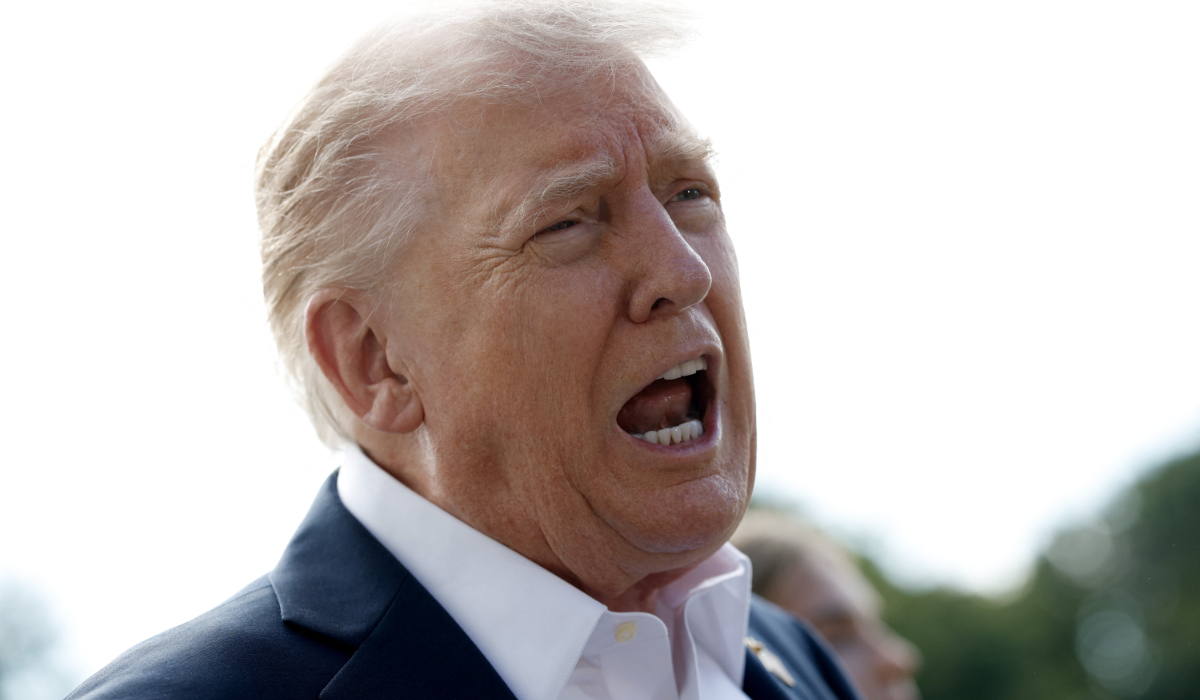
US President Donald Trump has issued a statement praising the Libyan people after his earlier remarks describing the country as "terror-infested" sparked protests from Libyan officials and prompted the summoning of the US chargé d'affaires.
Writing on his Truth Social platform on Sunday evening, Trump praised Libya and its people while urging the country to tackle "illegal migration".
"The Libyan people are proud, resilient, hospitable, and deserving of peace and prosperity. The United States and Libya share a strong and enduring partnership in combating terrorism, building on our historic success in defeating ISIS in Libya together," he said.
"We respect the Libyan people and the sacrifices that brave Libyans made fighting ISIS, the common enemy of both our peoples, but Libya cannot remain a corridor for illegal migration, and this must end now."
Trump's post came after he made derogatory remarks about Libya during an election rally in Perry, Georgia, on Saturday.
During the rally, Trump attacked Democratic Senator Jon Ossoff, accusing him of sponsoring a bill that allowed large numbers of immigrants to enter the US from countries he described as "infested with terrorism".
The president also referred to Libya, Yemen, Haiti and Somalia as "sh*thole countries".
The remarks sparked anger in Libya, where the internationally recognised government's Ministry of Foreign Affairs summoned Inga Hiemink, the US chargé d'affaires, on Sunday.
The ministry delivered an official diplomatic protest note demanding clarification of Washington's position and a correction of Trump's remarks.
It also emphasised that Libya is a sovereign state and would not accept its name or people being dragged into foreign electoral disputes.
The Tripoli-based High Council of State also issued a statement, declaring: "Libya will not be humiliated, and history does not bend for the arrogant."
Trump's remarks also drew criticism from Saddam Haftar, the deputy commander of the self-styled Libyan National Army (LNA), based in the country's east.
Haftar said electoral debates could not be used as "a justification for insulting nations or undermining the dignity of their people".
"Libya is an independent, sovereign state, and its national dignity is above all considerations," he added.
The LNA-aligned House of Representatives in Tobruk also condemned Trump's remarks, saying they contained "descriptions that undermine the standing of the Libyan state and run counter to the principles of mutual respect and political and diplomatic responsibility in international relations".