Login

Meet Zakon, the Ukrainian font designed to write Russian type out of state documents
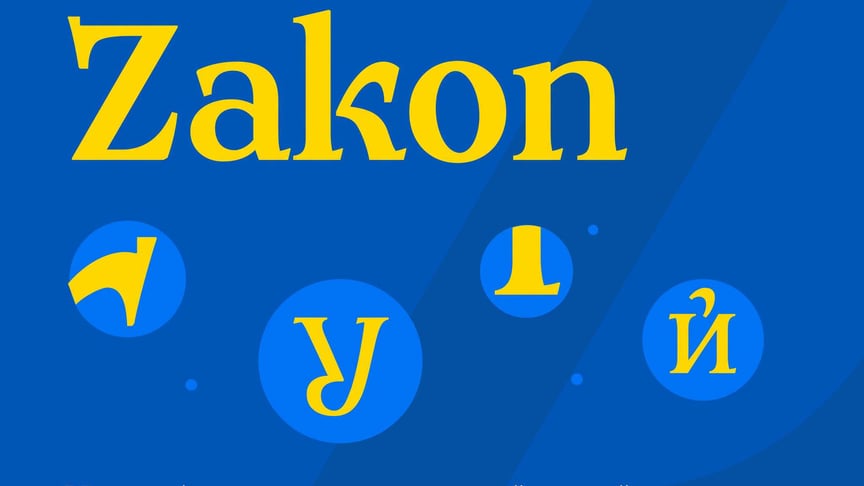
For more than 300 years, since Peter I's 1708 script reform, Ukrainian lettering has been shaped by imperial Russian norms. Zakon, presented on 29 October 2026, aims to break that pattern and decolonize the letters of Ukraine's state acts and awards.
The national font for official state communication draws on the work of Ukrainian artists, including Heorhii Narbut, who designed a 1918 banknote for the Ukrainian People's Republic, the short-lived independent state that fell to the Bolsheviks. It is meant to replace Izhitsa, Petersburg, and other Russian-origin fonts still often used on honor certificates, letters of thanks, diplomas, battle flags, and signs, adding a visual touch to the country's push to boost its national culture amid the fifth year of Russia's full-blown invasion.
Verkhovna Rada Speaker Ruslan Stefanchuk presented Zakon on 29 October, nine months after parliament adopted a resolution that called for a national font and said Russian-origin fonts had no place in official acts or on state awards. The Ministry of Culture developed it with money from the job site Work.ua and its co-owner Artur Mikhno, and the font is still in beta testing, the ministry says.
“The letters in which the word ‘Ukraine’ is written are also part of our state identity,” Stefanchuk wrote. “Decolonization should also concern how Ukraine presents itself.”

“The creation of a national typeface is an important step toward ensuring that state institutions represent Ukraine through our artistic tradition and contemporary Ukrainian design. [...] We want Ukrainian design to shape the image of our country, and for our cultural heritage to become a source of new solutions,” said Tetiana Berezhna, Deputy Prime Minister for Humanitarian Policy and Minister of Culture.
Three typefaces, one of them free for anyone
Zakon comes in three versions. Zakon Text is designed for everyday official paperwork and is free for anyone to use; it's available for download here. Zakon Decor, for ceremonial inscriptions, and Zakon Letterpress, for printing the originals of legal acts, have closed licenses.
Zakon Text has four styles: regular, italic, bold, and bold italic. The ministry asks users to test it and send feedback before a wider rollout, which Stefanchuk said will be gradual.
The designers are Oleksii Chekal, Hennadii Zarechniuk, Dmytro Rastvortsev, and Andrii Shevchenko, with Taras Ishchyk leading the project.

The ministry calls Zakon a “classic Ukrainian antiqua.” Antiqua, or roman, is the family of upright serif letters that grew out of a script Renaissance Italian humanists modeled on Carolingian handwriting, which they took for ancient Roman.
The name set it apart from blackletter, the Gothic script, and its forms became the basis of the roman typefaces Nicolas Jenson and Aldus Manutius cut in 15th-century Venice.
Built on the lettering of six Ukrainian artists
Zakon brings Ukrainian letter forms back to Cyrillic. The Ministry of Culture says that its developers “generalized most of the characteristic features” of six Ukrainian graphic artists’ lettering.
Heorhii Narbut (1886–1920) is credited with 13 of the 24 banknotes issued in 1917–1920, the first Ukrainian postage stamps, and an illustrated Ukrainian alphabet he never finished. His letters drew on Cossack baroque motifs and floral ornament.
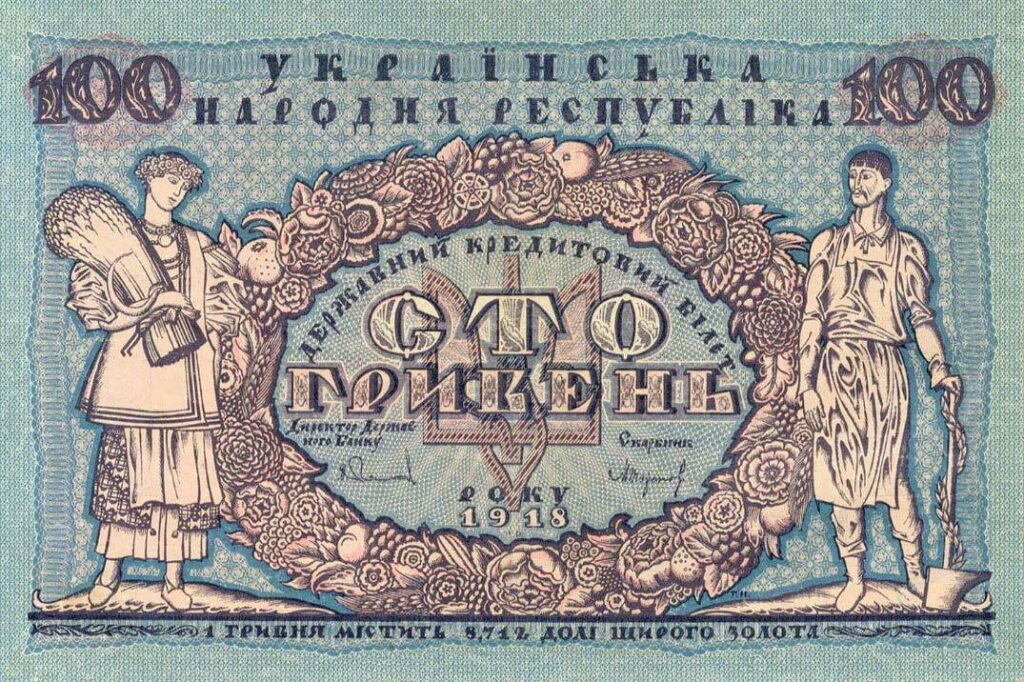
Vasyl Krychevskyi (1873–1952) drew the trident that became the coat of arms of the Ukrainian People’s Republic in 1918, along with its seals and banknotes.

Robert Lisovskyi (1893–1982), a follower of Narbut, made prints, book covers, and emblems, and later led the Association of Ukrainians in Great Britain.
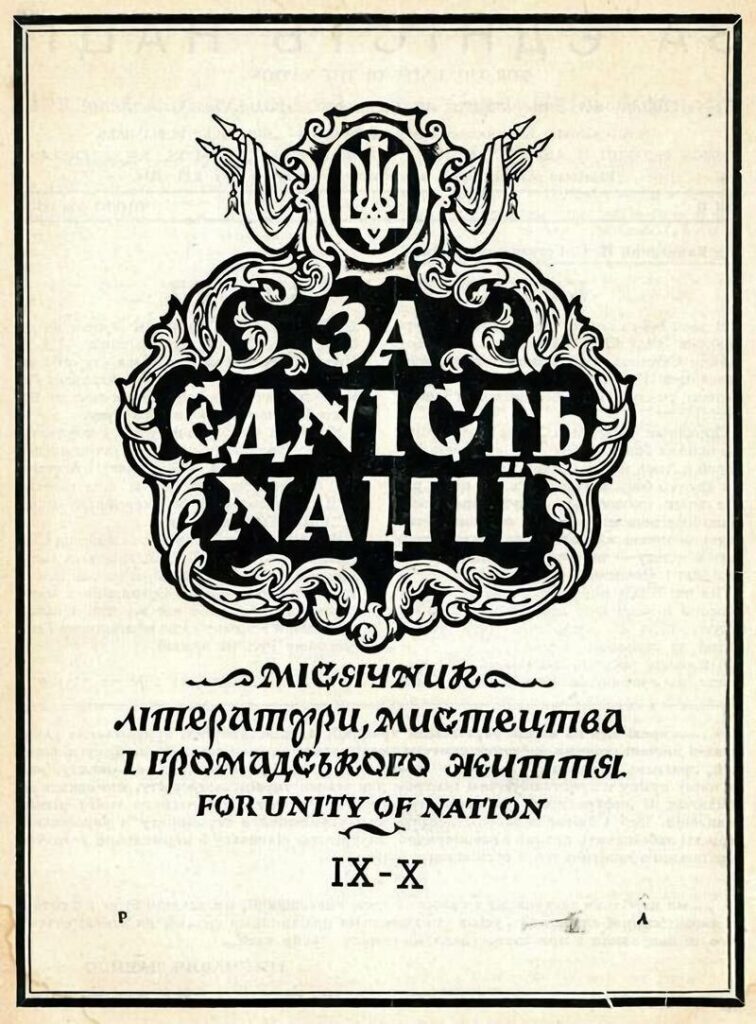
Vasyl Khomenko (1912–1984) created New Ukrainian, a typeface he worked on from 1963 to 1970. Zakon co-designer Zarechniuk is one of the authors of Homenko, a typeface based on his work.

Yakiv Hnizdovskyi (1915–1985) emigrated to the United States in 1949, later settling in New York, and made close to 250 woodcuts, along with book covers and bookplates.
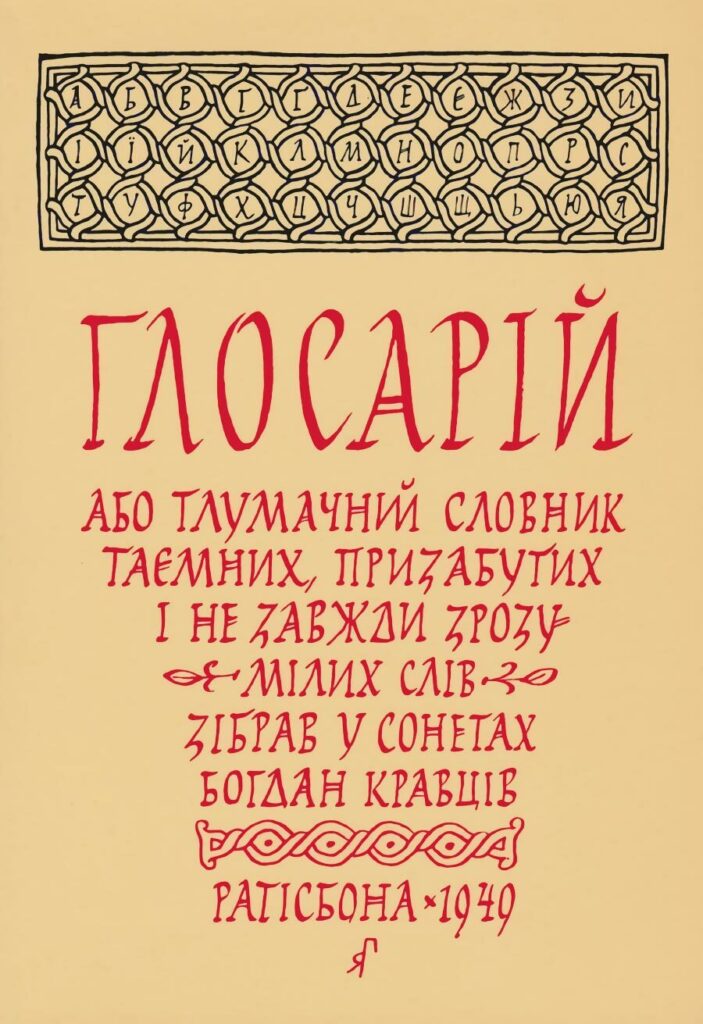
Vasyl Chebanyk (1933–2025) began studying the Ukrainian alphabet in 1971 and in 2001 launched the Rutenia project to restore older Ukrainian forms in a modern shape. Rutenia later grew to more than 60 fonts and won him the Shevchenko National Prize. One of them is on the cover of the ceremonial copy of Ukraine’s Constitution.
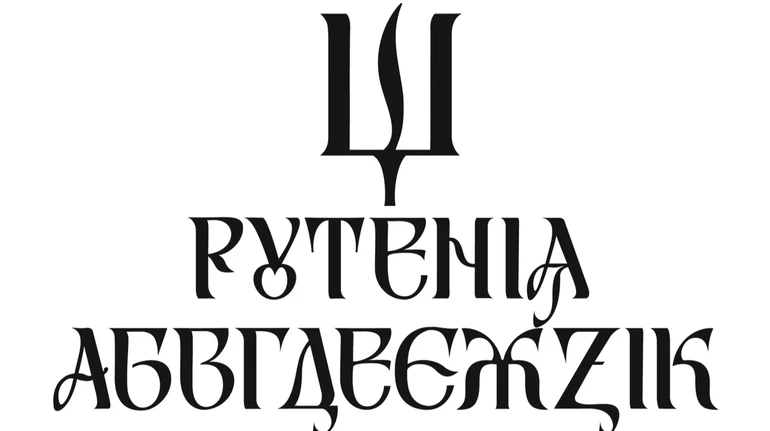
How Ukraine's state started dropping Russian fonts
Russia's full-scale invasion turned fonts into a state matter. On 29 September 2022, days after Russia's sham "referendums" in four occupied Ukrainian oblasts, Anna Yakupova, CEO of ParaType, the Russian studio whose Cyrillic versions of Petersburg and other fonts Ukraine's state institutions still use, congratulated colleagues in a chat that "our country got bigger," prompting a campaign to shun the fonts.
In August 2023, MPs from three factions registered bill 9606 to ban the Russian font Izhitsa from Verkhovna Rada documents and move parliament's honor certificates to Volja, a Ukrainian font made in 2022 by Marchela Mozhyna from the lettering of artist Nil Khasevych. A month later, the culture ministry announced plans for a bank of Ukrainian fonts to replace Russian ones.
In July 2026, the fight reached Ukraine's money. The National Bank of Ukraine said it would redraw the lettering on its new 2,000-hryvnia note featuring poet Vasyl Stus, after type designer Bohdan Hdal said the denomination lettering resembled an unofficial Cyrillic adaptation of Bickham Script made by a Russian designer. “No Russian shadows on a banknote with a poet whom Russia killed,” NBU Governor Andrii Pyshnyi said.

Some readers balk at the Z
Not everyone liked the name. Among the top comments under Stefanchuk’s post, readers objected that the Latin spelling starts with Z, the letter Russia painted on its vehicles for the full-scale invasion. Others welcomed the font itself.