Serbia has released the first footage of its TSMB M-25 heavy self-propelled mortar in action, revealing an unusual artillery system that puts a massive 203mm weapon on a comparatively light, six-wheeled truck. The system is designed to hurl projectiles weighing around 220 pounds at targets up to approximately seven-and-a-half miles away, bringing super-heavy firepower to a platform that looks surprisingly modest for the job.
The Serbian Ministry of Defense published the brief footage in a larger video montage, seen immediately below, but has not disclosed when or where the firing tests took place or what they demonstrated. Regardless, the M-25’s configuration alone makes it stand out.
A TSMB M-25 heavy self-propelled mortar in a firing position. Serbian Ministry of Defense/screencap
The Teški Samohodni Minobacač (TSMB, translated as heavy self-propelled mortar) M-25 was developed by Serbia’s state-owned Military Technical Institute and first appeared publicly at the Partner 2025 defense exhibition in Belgrade. Its design lineage stretches back to the Yugoslav M-65 155mm howitzer, itself a licensed copy of the widely used American M114, first introduced in World War II.
Artillerymen of the 24th Infantry Division, U.S. Army, fire 155mm howitzers in the Korean War. Public Domain
The M-25 takes that heritage in a different direction, with a 203mm barrel measuring 24 calibers in length and an automated loading mechanism for mortar projectiles. The mortar barrel has an elevation range from 0° to 75°, and the barrel must return to 0° in elevation for the next round to be loaded from the muzzle end.
The standard 203mm mortar bomb weighs around 220 pounds, including approximately 60 pounds of explosive material. This results in a claimed destruction radius of around 250 feet, using impact fuzing.
The system is intended to fire both high-explosive and concrete-piercing ammunition, making it particularly suited to attacking hardened positions and fortifications. Developers have also provided for rocket-assisted projectiles to extend its range and precision guidance kits to improve the accuracy of compatible rounds.
The weapon is mounted on a FAP 2026 three-axle truck in a 6×6 configuration, a general-purpose off-road type made by Serbian vehicle manufacturer Fabrika automobila Priboj. This platform provides a range of 500 miles and a top speed of 50 miles per hour on the road. The vehicle has an armored cab for a crew of four, while its fire-control suite includes an inertial navigation system, a ballistic computer, communications equipment, and a dedicated gunner’s computer. The same truck has also been adapted to mount a 152mm gun/howitzer, under the name NORA B-39.
The NORA B-39 mounts a 152mm gun/howitzer on the same FAP 2026 three-axle truck chassis. Serbian Ministry of Defense
The wheeled chassis is the defining feature of the M-25. While a weapon of this size would normally be either towed or mounted on a large tracked vehicle, Serbia has opted for a lighter truck-based arrangement. This offers advantages in road mobility and makes the system easier to move between firing positions, using “shoot and scoot” tactics. A general-purpose truck is cheaper to acquire and operate, and easier to maintain. It can also be more easily transported by air, although out-of-area operations are not generally on the Serbian Armed Forces’ agenda. However, its cross-country performance and overall survivability will be reduced compared to a tracked chassis.
TSMB M-25 heavy self-propelled mortar firing a round. Serbian Ministry of Defense/screencap
The M-25 is intended to deliver heavy fire against targets such as bunkers and other fortified positions, then relocate before an opponent can respond. Its relatively short stated range compared with many modern 155mm howitzers makes it a specialized system rather than a direct replacement for conventional long-range artillery. Its appeal lies instead in combining a very large projectile with a comparatively compact and mobile platform.
Mortars have a long and grim history in the Balkans, particularly during the wars that accompanied the breakup of Yugoslavia in the 1990s. The steep trajectories of mortar rounds made them useful in the region’s mountainous terrain and in fighting around fortified positions and during sieges, while their ability to deliver indirect fire meant crews could engage targets without a direct line of sight.
A visitor looks at infantry mortars at an exhibition of Serbia’s armed forces in Nis, southern Serbia, on February 14, 2024. Photo by SASA DJORDJEVIC / AFP SASA DJORDJEVIC
As far as we know, the M-25 is the only 203mm mortar in current development and/or production. There are a few larger mortars on mobile platforms, notably Russia’s 2S4 Tyulpan, a 240mm self-propelled mortar, but this is on a significantly bigger tracked chassis.
At approximately 19 metric tons, the M-25 is substantially lighter than the 2S4 Tyulpan, which weighs around 27.5 metric tons. Its tracked platform reflects a very different approach to moving super-heavy mortar firepower around the battlefield. The Tyulpan can deliver a 300-pound standard mortar round to a range of around six miles, or up to 11 miles away when using rocket-assisted rounds.
Crewmen load a mortar projectile in a Russian-operated 2S4 Tyulpan. Russian Ministry of DefenseRussian artillerymen fire a 2S4 Tyulpan during a live-fire exercise. Russian Ministry of Defense
Serbia claims the M-25 has a rate of fire of up to three rounds per minute, thanks to the automated loading mechanism. In contrast, the Tyulpan can hurl a maximum of one round every 62 seconds. Indeed, its sluggish rate of fire is one of the reasons that saw it fall from more widespread Russian use.
There are still important unknowns. The newly released footage does not establish whether the advertised firing rate was achieved, how the weapon performs under sustained fire, or whether the system has entered operational service. Serbia has shown the M-25 at an exhibition and now in live-fire footage, but detailed test results have not been made public.
Still, the concept is striking: a high-mobility wheeled truck carrying a 203mm mortar is a distinctly different take on super-heavy firepower, but one that might just find a niche in the Balkan environment.
Author’s note: An earlier version of this article included a photo of the 2S5 Giatsint-S self-propelled gun, rather than the 2S4 Tyulpan.
DIA included the higher-resolution image of the Chinese spaceplane in a new unclassified report on global security challenges outside of the Earth’s atmosphere, which was released yesterday. A satellite belonging to Maxar Technologies (now Vantor) captured the image, but when exactly remains unclear. It does have a 2024 copyright date.
The image shows a miniature space shuttle-like design with small wings and twin vertical tails. It also has upward-opening doors above a central payload bay. There is also an extension at the tail end with solar panels seen deployed on either side. There are what look to be side-by-side ventral bays, which are likely for the main gear in a tricycle landing gear configuration. Overall, the core design is extremely similar to that of the U.S. X-37B, which also features tricycle landing gear and can also be fitted with an extended payload module at the tail. One major difference is that the wings on the Chinese design have a much longer chord compared to the X-37B.
A side-by-side comparison of the on-orbit shot of the experimental Chinese reusable spaceplane (at left) and a U.S. X-37B fitted with an extended payload module being prepared for launch (at right). Vantor/U.S. Space ForceAnother look at an X-37B, seen here sitting on its tricycle landing gear after returning from a mission in space. USAF The X-37B used on the OTV-6 mission on the flight line at the Kennedy Space Center after its return to Earth on November 12, 2022. USAF
“A key capability for reusable space activities are spaceplanes like this PRC [People’s Republic of China] Spaceplane captured by Maxar. Spaceplanes can launch into orbit to place objects in space or even test them and return to earth [sic],” reads the caption to the picture in DIA’s report.
As noted, the basic fact of the existence of this image is not new. U.S. Space Force Col. John Patrick, then head of U.S. Space Forces-Korea (SPACEFOR-KOR), included a much lower-resolution version in a presentation at the Open Space Forum in South Korea in 2024. It was also not immediately clear at that time whether or not the picture simply showed an X-37B. TWZ had reached out at the time to the U.S. Space Force and Maxar for more information, and both had declined to comment. Two X-37Bs were built, and they have been sent on eight orbital missions, in total, since 2010. The Orbital Test Vehicle 8 (OTV-8) mission was launched on August 22, 2025.
China is understood to have conducted four separate orbital spaceplane missions using the same experimental vehicle since 2020. Three of those missions had concluded before Col. Patrick gave his presentation. The most recent launch occurred on February 7 of this year, and the vehicle has not yet returned, at least as far as we are aware.
On the third mission, which lasted from December 14, 2023, to September 6, 2024, the Chinese spaceplane was observed releasing multiple smaller objects into orbit. What those payloads may have been remains unknown, but they could have been released from the main payload bay, which is seen open in the on-orbit image. The bay could have opened without any subsequent release of objects on either of the two prior missions, as well.
DIA’s report also says that “China has two primary spaceplane models: the Shenlong and Tengyun,” but does not specify which one is seen in the image. The name Shenlong has been commonly used to refer to the spaceplane China has been experimenting with to date. Images said to show a prototype or test article of this design slung underneath an H-6 bomber for testing purposes had emerged in 2007.
Images that emerged in 2007 of a reusable spaceplane prototype, or a related test article, referred to as Shenlong, underneath an H-6 bomber. Chinese internet
Images showing wind tunnel testing of a Chinese two-stage-to-orbit concept. Chinese internet
There have been other spaceplane developments in China in recent years. This includes designs from the China Aerospace Science and Technology Corporation (CASC) and Aviation Industry Corporation of China (AVIC) subsidiary Chengdu. The design from Chengdu is called Haolong and has been in development officially as an option for resupplying the country’s Tiangong space station.
In general, “spaceplanes are … reusable and feature enhanced maneuverability, making them more suitable for certain missions than traditional satellites,” DIA’s report notes.
As we often mention in the context of the X-37B, spaceplanes also have distinct advantages when it comes to rendezvousing with and maneuvering very close to other objects in space. They can execute course changes and other maneuvers in ways that traditional satellites cannot. All of this only underscores their potential as weapon systems, as well as for gathering intelligence. The fact that a Maxar (now Vantor) satellite took an on-orbit picture – a service the company is known to offer – of a Chinese spaceplane further highlights the kind of cat-and-mouse games that are increasingly emerging in space. The general risks posed by these kinds of activities were recently thrust into the public eye by the unprecedentedly close shadowing of a commercial radar imaging satellite tied to Ukraine by another satellite belonging to Russia.
China has been making massive investments, in general, in new space-based intelligence and other capabilities in recent years. Chinese space developments have now also extended into reusable space launch rocket boosters. Space launch company LandSpace became the first in China to achieve a successful recovery of a reusable space launch rocket booster on land in August. That followed CASC’s successful recovery of a reusable space launch rocket booster at sea using a specially configured ship the month before.
In general, “access to space traditionally requires expendable spacecraft: single-use launch vehicles, satellites, and one-time use capsules designed to maximize performance. Reliance on expendable vehicles has made access to space expensive and exclusive,” DIA’s report explains. “Reusable technologies, while even more difficult and expensive to develop and build, stand to greatly reduce the cost of spaceflight by recovering, refurbishing, and reusing rocket stages, fairings, and capsules.”
Chinese spaceplanes, one of which we have not definitively gotten a view of in orbit, look set to become an increasingly important part of this growing ecosystem.
Update: 6:32 PM ET –
Vantor has now provided an additional copy of the image of the Chinese spaceplane, elements of which look to be redacted, and some additional details. The company has confirmed it was taken on May 28, 2024, by the WorldView-3 satellite at a range of just under 56 miles (90 kilometers).
“There is a separate satellite docked to the aft section of the vehicle whose structure and solar arrays are visible,” Vantor also told us. “The spacecraft’s payload bay doors are visibly open.”
Ukraine’s 475th Separate Assault Regiment, known as CODE 9.2, says it has used the StarGate uncrewed aerial platform to evacuate two seriously wounded soldiers from the battlefield in the span of a week. Reportedly, this is the first time the specialized drone has been used for an operation of this kind. It is not, however, the first instance of Ukraine using an aerial rescue drone on the battlefield, with the more extemporized heavy hexacopter also having been used recently, as you can read about here.
Taken together, the missions underscore Ukraine’s efforts to develop alternative casualty evacuation capabilities as Russian drone threats, electronic warfare, and harsh terrain increasingly complicate conventional recovery operations, including those using uncrewed ground vehicles (UGVs).
According to CODE 9.2, on its Facebook page, the regiment’s personnel carried out two complex evacuation missions using StarGate, a platform developed and manufactured by Ukrainian company SkyFall. The two wounded servicemen were 25-year-old Yevhen, callsign “Izyum,” and 24-year-old Artem, callsign “Kolobok.” Both belonged to adjacent units and had suffered severe limb injuries while occupying positions in a so-called gray zone approximately three miles from the Russian border.
Difficult terrain, including water obstacles, and the threat posed by Russian first-person-view (FPV) drones prevented ground vehicles from reaching the casualties, the regiment said. Air evacuation was the only available option.
Drone operators watch as two soldiers carry their injured comrade to the SkyFall drone for evacuation. CODE 9.2/screencap
The missions were planned and executed by CODE 9.2 personnel with support from SkyFall. They required coordination among multiple units, additional forces and equipment, and dedicated fire support — much like a more traditional casualty evacuation effort involving crewed helicopters. Vampire heavy strike drones were employed to suppress enemy positions during the operations.
“The injury tore off half of my foot, so a lot of blood was lost already,” Izyum said in a video interview from his hospital room. “I think if that incredible little bird hadn’t flown in, well, getting out from there would have been unrealistic.”
During one of the missions, StarGate reportedly flew nearly 20 miles to reach the casualty before covering approximately the same distance on the return leg with the wounded serviceman aboard. CODE 9.2 said Russian electronic warfare systems were actively attempting to suppress satellite navigation signals in the area.
An injured soldier is helped out of the drone after recovery to a safe area. CODE 9.2/screencap
Despite the reported interference, the platform completed the mission using its onboard artificial intelligence-based navigation system, according to the regiment. The statement did not specify the navigation technologies involved.
StarGate was designed specifically for casualty evacuation, or CASEVAC, when conventional ground transportation cannot reach wounded personnel or would expose them to unacceptable risks. Its stated specifications include a payload capacity of up to 330 pounds and a maximum speed of approximately 65 miles per hour. The evacuation module is based on a covered, medical-grade stretcher.
StarGate on the ground. SkyFall
Oleksandr Nastenko, commander of CODE 9.2, callsign “Flint,” said the regiment intends to use the experience gained from the two missions to train crews and make aerial evacuation a more established capability. The regiment also plans to set up a dedicated aerial medical evacuation unit within its medical company.
The StarGate missions follow a separate reported operation involving the 92nd Assault Brigade, which says its personnel helped evacuate a wounded soldier using a heavy-lift hexacopter drone, produced by Gurzuf Defense, with the casualty suspended beneath it, as seen in the video below:
This drone was reportedly an Audag-6 model, which is said to be capable of carrying a 200-pound payload over a distance of up to 15 miles.
In that incident, the soldier had been wounded while holding his position. Once again, aerial extraction was judged the only suitable option; in this case, due to the presence of mines and intense Russian drone activity.
This was a more improvised approach, which the brigade described as the world’s first frontline aerial drone evacuation of a wounded soldier. Compared to Stargate, the Gurzuf drone brings some drawbacks with it, including casualty stability, exposure to the elements, the risk of swinging during flight, and the difficulty of safely lifting and lowering a severely injured person. It subsequently emerged that the soldier involved, Kostiantyn Vlasenko, had been forced to amputate his own foot as part of a 491-day ordeal on a frontline position.
A soldier clipped to the underside of a Gurzuf drone via a harness is flown to safety. 92nd Assault Brigade/YouTube screencap
This was not the first time that Ukrainian forces have adapted existing drone technology to effect battlefield evacuations.
TWZ also previously reported on a Ukrainian soldier who managed to escape from the Russians that surrounded him after an electric bike was dropped to him by a large aerial drone.
As a purpose-built platform, StarGate offers a more standardized way to secure and transport casualties, and to transport them protected from the elements, in a secure, prone position. However, StarGate still faces the challenges of flying in contested airspace and navigating under electronic warfare conditions. Once again, depending on the degree of injuries, the casualty may need assistance being put on the stretcher and, regardless of the degree of medical care that can be provided, StarGate is only an option if already available in proximity to the victim.
Close-up view of the StarGate stretcher. SkyFall
The fact that the StarGate missions also needed strike drones for fire support underscores that casualty recovery, whatever the platform being used, typically requires coordination across multiple combat elements.
Despite the limitations, CODE 9.2’s plan to create a dedicated medical aviation element indicates it wants to move beyond one-off missions toward a repeatable capability.
StarGate in flight. SkyFall
As with other emerging technologies from the war in Ukraine, this is likely to be studied by other armed forces, too. The U.S. military, for example, has long looked at the potential of uncrewed aerial systems to effect casualty evacuation missions, as you can read about here.
Meanwhile, the challenges of that conflict mean that Ukrainian troops continue to explore different ways to recover wounded troops from positions that more conventional evacuation methods can no longer safely reach.
The U.S. Air Force has handed Lockheed Martin a $694 million contract for the production of AGM-183A Air-launched Rapid Response Weapon (ARRW) hypersonic missiles. In 2023, the service had moved to cancel ARRW, which had been in line to be the U.S. military’s first operational hypersonic weapon. At the time, we had reservations about the service’s intent and speculated the missile could make a major comeback or continue development in a classified setting. The program has since made an incredible turnaround, and there are already plans for another variant that will be able to use an all-new seeker to hit moving targets, including enemy warships.
The ARRW contract was awarded on September 29, but only announced today. It is not immediately clear how many missiles are to be built under this deal or when the Air Force expects to start taking delivery of them. The Air Force has previously disclosed plans to integrate the missiles onto its B-52 and B-1 bombers. Other aircraft with sufficiently large payload capacities and physical space to carry outsized stores could potentially carry AGM-183As, or variants thereof, in the future.
A B-1 bomber seen carrying an ARRW missile, or a relevant test article, on an external pylon during a flight test. USAF capture
“The contract was executed under the Department of War’s Enterprise-Wide Agile Acquisition Contract to modernize America’s Arsenal of Freedom,” according to an Air Force press release. “This milestone marks the formal transition of the boost-glide hypersonic missile program from prototyping and flight testing into production, solidifying the Air Force’s commitment to fielding standoff, high-speed strike options.”
As noted here, the AGM-183A is a so-called boost-glide vehicle-type hypersonic weapon, which uses a rocket booster to bring it first to an optimal speed and altitude. The nose cone on ARRW then breaks away, and a wedge-shaped unpowered boost-glide vehicle concealed within is released.
A rendering depicting an ARRW hypersonic missile’s nose cone breaking away to reveal the unpowered boost-glide vehicle inside. Lockheed Martin
The vehicle then glides to its target along a relatively shallow flight path within the Earth’s atmosphere at hypersonic speed, defined as anything above Mach 5. It is capable of maneuvering along the way, sometimes erratically. The mix of speed, flight trajectory, and maneuverability creates significant challenges for opponents in terms of spotting and tracking the glide vehicle, let alone attempting to intercept it. As a result, hypersonic weapons of this type offer particular benefits for piercing enemy air defenses to very rapidly strike time-sensitive and otherwise high-value targets.
The ARRW production contract “is a turning point in our advanced weapons roadmap,” Secretary of the Air Force Troy Meink said in a statement accompanying today’s release. “By moving ARRW from test to production, we’re providing our combatant commanders with a credible, high-speed strike weapon capable of penetrating the most advanced anti-access and area-denial systems.”
“Fielding ARRW enhances our ability to hold targets at risk anywhere around the world,” Air Force Chief of Staff Gen. Ken Wilsbach said in his own statement. “This hypersonic weapon provides the Joint Force a flexible and rapid response option for highly contested environments.”
A graphic offering a very general comparison of the typical flight trajectories of hypersonic boost-glide vehicle weapons and air-breathing hypersonic cruise missiles, as well as aeroballistic (or quasi-ballistic) missiles and traditional ballistic missiles. GAO
There had already been steady signs in recent years that ARRW’s fortunes were changing and that it had not actually been axed, despite the Air Force’s stated plans to do so. The Air Force’s 2026 Fiscal Year budget request last year confirmed that the service had fully rebooted the program and was seeking new funding to procure actual missiles.
The service’s 2027 Fiscal Year budget request, released earlier this year, revealed further plans “to begin [ARRW] INC 2 [Increment 2] technology efforts such as but not limited to integrating pre-planned product improvements, design, trade studies, hardware upgrades, facilitization, affordability initiatives, and testing.”
A live AGM-183A ARRW missile seen under the wing of a B-52 bomber at Andersen Air Force Base on Guam ahead of a test in 2024. USAF
A request for $296 million would support “the design, test, and evaluation of Air-Launched Rapid Response Weapon (ARRW) Increment 2 with terminal seeker and data link capability and other cost reduction production initiatives into ARRW,” those same documents added.
In general, the U.S. Air Force has historically framed hypersonic weapons, including ARRW and HACM, as being especially critical for success in future conflicts, especially high-end fights, such as one in the Pacific against China. This was underscored by the launch of an AGM-183A with a live warhead from a B-52 flying from Andersen Air Force Base on Guam in 2024. The future anti-ship variant could be even more relevant in a Pacific context.
“…the Guam test sent clear signals to China. The Air Force has made no secret of how important it views the development and fielding of hypersonic weapons as part of larger preparations for a potential future high-end fight against the Chinese People’s Liberation Army (PLA) in the Pacific. This is further underscored by the fact that the mention of the ‘terminal seeker and data link capability’ for Increment 2 of ARRW is actually contained in the Pacific Deterrence Initiative (PDI) section of the Pentagon’s Fiscal Year 2027 budget request.”
A low-quality image of an ARRW after launch during a previous live-fire flight test. USAF
“In the context of a major conflict in the Pacific, there would also be a very high demand for prompt, long-range anti-ship capability. The ability to conduct those strikes even in the face of dense anti-air defenses would be even more attractive for engaging very high-value vessels, such as China’s growing fleets of aircraft carriers or big deck amphibious assault ships. The PLA Navy’s (PLAN) combat fleets, overall, continue to grow in scale and scope at a prodigious rate, as well. This, in turn, has put additional emphasis on the development and fielding of new and improved anti-ship capabilities that can be air-launched, as well as employed from the maritime and ground domains, across the U.S. military in recent years. Increment 2 ARRWs could also offer another means to strike mobile, high-value targets on land, such as ballistic missile transporter-erector-launchers.”
China’s aircraft carriers Shandong, at left, and Liaoning, at right, sail together, along with various escorts, as elements of their air wings fly overhead, in 2024. Chinese state media
If nothing else, after moving to cancel the ARRW three years ago, the Air Force has now fully reversed course and has placed its first order for production examples of this hypersonic missile.
“The participants agreed to continue the dialogue to strengthen cooperation amongst the four regional countries, including for peace and security in the region,” the four nations said in a joint statement after the hastily called, last-ditch meeting concluded.
The meeting was the first meeting between Iran and the other three countries since they formed a new military alliance in August called the Mecca Joint Defense Agreement. The attendance of Saudi Arabia is of particular note as Iran struck Saudi Arabia repeatedly during Operation Epic Fury and Saudi Arabia hosted U.S. forces that attacked Iran. Iran’s proxies in Yemen, the Houthis, have been pummeling the Kingdom with drones and missiles as of late, too.
Regardless, details about the conclave are sparse, with officials saying this was just the first of what is expected to be a series of such efforts.
“Very good discussions took place between us,” Mohsen Rezaei, Secretary of Iran’s Supreme National Security Council, told Iranian state television. “I feel that a new atmosphere is emerging in the region… I sensed a very positive atmosphere in the discussions among the gentlemen.”
“We have reached an understanding with Pakistan, Turkey, and Saudi Arabia that the security of the region is achieved through its countries,” Rezaei added.
#عاجل | أمين مجلس الأمن القومي الإيراني: توصلنا لتفاهم مع باكستان وتركيا والسعودية بأن أمن المنطقة يتحقق عبر دولها pic.twitter.com/ILuUTH9k2r
The Tehran visit was called “as part of the continued efforts by the Makkah Joint Defense Agreement countries for de-escalation between parties involved in the ongoing crisis, and promoting dialogue and diplomatic solutions, in support of the mediation efforts carried out by the State of Qatar and the Islamic Republic of Pakistan,” Saudi Deputy Minister for Public Diplomacy Rayed Krimly said Monday on X before the meeting began. He used an alternative English spelling of the Saudi holy city.
HRH Prince Khalid bin Salman bin Abdulaziz Al-Saud, Minister of Defense, leads the Kingdom’s delegation to the meetings that will be held today in Tehran, capital of Iran, between Makkah Joint Defense Agreement countries and officials from the Islamic Republic of Iran, with…
Both Qatar and Pakistan have been key to previous efforts to find a diplomatic solution to the U.S.-Iran conflict. The two countries helped broker a 14-point Memorandum of Understanding (MoU) signed on June 17. The MoU provided a 60-day extension of the ceasefire to iron out an agreement to end fighting throughout the region, including Lebanon, prevent Iran from seeking nuclear weapons, end U.S. sanctions, and resume the flow of traffic through the Strait of Hormuz among other points.
That effort soon fell apart as the U.S. and Iran resumed striking each other. It has been more than a month, however, since the two nations traded direct blows.
“The visit underscores the pivotal role of Makkah Joint Defense Agreement countries in reinforcing regional security and stability, and working with all countries in the region to achieve that goal,” Krimly added about today’s Tehran meeting.
The Mecca Joint Defense Agreement was created as a pact designed to assist the Kingdom in its fight against the Houthis. An attack on one is supposed to be considered an attack on all. However, the agreement has evolved to take on the larger issue of overall regional stability amid concerns about the individual members’ own national security interests.
The Tehran meeting was attended by high-level officials, Krimly noted. Saudi Prince Khalid bin Salman bin Abdulaziz Al-Saud, Minister of Defense, led the Kingdom’s delegation, he stated. In addition, Field Marshal Asim Munir, Pakistani Chief of Army Staff, and Ibrahim Kalin, Director of the Turkish National Intelligence all met with the President of the Islamic Republic of Iran Dr. Masoud Pezeshkian, and Rezaei.
Before the meeting, Iranian Foreign Ministry spokesperson Esmaeil Baghaei said the discussions on regional security would include “Israel’s expansionist policies, developments in the Palestinian territories and Lebanon, and the repercussions of U.S. and Israeli military action against Iran,” according to Reuters.
Baghaei said the meeting, proposed during a visit by Munir to Tehran last week, could be a first step towards establishing regional security mechanisms based on the interests of countries in the region.
Baghaei:
Regional security can only be ensured through trust and cooperation among the countries of the region. pic.twitter.com/6Sxi2soMXB
Iranian officials told Munir ahead of today’s meeting that there would be no talks with Washington until Tehran’s demands were met, Reuters reported, citing Iranian media.
It is unclear at this point whether any results from this round of meetings will change whatever plans U.S. President Donald Trump is drawing up for Iran. Before the meeting began, a senior U.S. official downplayed it to us when we asked about it.
“The United States is in a very strong position with control of the Strait of Hormuz and the Iranian economy collapsing,” the senior U.S. official told us in response to our question about whether the Tehran meeting will influence any decisions by Trump on his next moves toward the Islamic Republic. “Iran has been decimated, and one way or the other, the conflict in Iran will be over very soon. President Trump holds all the cards and will do whatever is best for the United States.”
The Tehran talks took place after Trump once again claimed he was at an inflection point on deciding his future approach toward Iran. On Sunday, the American leader said it’s “getting to be decision time” on whether he will make a new deal with Tehran or resume attacks as Iranian and Houthi threats against Americans in the Middle East continue to grow.
“I have a decision to make: Do I finish it off, which would be very easy to do, or do I make a deal? That’s all,” Trump said in an interview with Fox News’ Sunday Morning Futures. “We don’t play games.”
“There won’t be a strike today,” he told reporters later Sunday as he left the White House. On Friday, U.S. Ambassador to Turkey Tom Barrack suggested the U.S. could strike Iran as early as this past weekend, but that failed to materialize.
U.S. forces in the Middle East “are prepared to launch new, potentially major, military operations against Iran ‘within 96 hours of receiving’ an order from President Donald Trump,” CNN reported on Sunday, citing two U.S. officials.
“Sufficient forces are now deployed in the region to carry out the potential attacks,” the sources told the network. “The scope of new U.S. military operations would likely go beyond efforts to simply ‘mow the lawn’ or maintain the status quo by striking radars, launchers and other Iranian assets that can be quickly reconstituted — as has been the case since Trump halted full combat operations earlier this year.”
You can read more about how the U.S. is deploying additional Navy, Marine and Air Force assets to the Middle East in our report about that here.
The aircraft carrier USS Theodore Roosevelt and its carrier strike group are reportedly being deployed to the Middle East. (USN)
Adding to U.S. concerns, on Saturday, The Wall Street Journal reported that “U.S. intelligence suggests Iranian preparations to attack Americans throughout the Middle East have reached ‘advanced stages,’ prompting a sudden exodus of personnel from embassies and military bases throughout the region.”
Jay Clayton, the director of national intelligence, “summarized that finding in a brief memo Friday to Secretary of State Marco Rubio,” the newspaper added.
“Iran has substantially increased efforts to target U.S. personnel. The lethal plotting efforts by the Iranians against U.S. citizens have reached advanced stages in both the Middle East and certain other countries,” Clayton wrote.
The U.S. in recent days also “ordered the departure of diplomats and staff from the embassy in Saudi Arabia and other countries, initially citing threats from the Iran-backed Houthi militants in Yemen,” the Journal noted. “The U.S. also has evacuated personnel from military bases across the region in preparation for renewed fighting, according to U.S. officials familiar with the planning.”
Trump on Sunday told reporters that there “are two very different sets of intelligence reports on Iran. I have them both. They are very different.”
Trump on Iran:
There are two very different sets of intelligence reports on Iran. I have them both.
Israel too appears to be continuing its planning for renewed hostilities with Iran. Its previous attacks during Operation Epic Fury were carried out in close coordination with the U.S., a cooperative effort that is ongoing.
Prime Minister Benjamin Netanyahu on Sunday repeated his warning that Iran or its proxies could launch an attack before the close election to disrupt the vote, citing intelligence.
“The (military) is ready both to defend and to strike,” he said in a video statement. “You will suffer disproportionate blows far greater than you can imagine.”
Israeli Prime Minister Benjamin Netanyahu warned Sunday that Iran and its regional allies could launch attacks intended to disrupt Israel's October 27 election, declaring that the Israeli military is prepared for both defensive and offensive operations.
In addition, Netanyahu and Israeli Defense Forces (IDF) Chief of Staff Lt. Gen. Eyal Zamir “clashed over a military action that could renew the conflict with Iran days before Israel’s elections,” according to the Jerusalem Post.
“Recently, Zamir received a directive from the political echelon to carry out an action, which security officials told N12 would ‘trigger a rapid escalation into a confrontation with Iran,’” the newspaper added. “Due to the sensitive nature of the action, N12 reported that Zamir requested an in-depth discussion and formal authorization before moving forward with the action.”
Israeli Defense Minister Israel Katz disputed those reports.
“I state unequivocally that there was no intention on Israel’s part to initiate an attack on Iran before the elections in Israel—when we made clear that if Iran attacks Israel, we will respond with great force, and all reports on the matter are entirely false,” Katz stated on X. “The attempt by opposition figures to exploit these reports to attack the Prime Minister and me and to cast doubt on our judgment—at a time when we are prevented for understandable reasons from addressing the details of the Iranian issue—is shameful and irresponsible. We will overcome this too.”
הפרסומים על פערים בין הדרג המדיני לצה"ל בנושא איראן הם מופרכים ושקריים לחלוטין.
מאז כניסתי לתפקיד שר הביטחון התיאום בין רה"מ וביני לבין צה"ל בנושא איראן הוא מלא – עם הישגים היסטוריים חסרי תקדים לטובת ביטחון מדינת ישראל.
Last Monday, in a phone call with Trump recorded live on Monday and posted on his X account, Netanyahu suggested future operations against Iran.
“Donald, we have a job to finish [in Iran]…and we’ll finish it together,” the Israeli leader told Trump. “We’ll finish it, and no one else will do it.”
That post appears to have been since been deleted.
Actions by both Trump and Netanyahu are taking place against a backdrop of heated domestic politics in their respective countries.
With continued Republican control of Congress on the line, the Nov. 3 midterm elections are a huge factor in Trump’s plans. The president has previously said the war with Iran would end “immediately after the election” and has reportedly told aides he expects to resume strikes on the Islamic Republic after the midterms. Domestic U.S. polls show the ongoing conflict continues to be deeply unpopular with voters, who are also eager to see it concluded.
Meanwhile, Netanyahu faces a vote on his future tomorrow in a nationwide parliamentary election, and there are concerns, as we noted last Friday, that the Israeli leader could use a new conflict with Iran to bolster his hold on office. Given the fractious nature of Israeli politics, election results will not necessarily immediately determine who Israel’s next prime minister will be.
“Coalition negotiations can take weeks or even months as parties attempt to reach agreements on who will govern and under what terms,” The National noted. “Israel has a history of political deadlock. Between 2019 and 2022, the country held five elections as parties repeatedly struggled to form stable governments.”
Israel’s Prime Minister Benjamin Netanyahu speaks to his supporters during a Likud Party meet-and-greet held as part of the campaign ahead of Israel’s legislative election. (Photo by JACK GUEZ / AFP) JACK GUEZ
Iran isn’t just threatening the U.S. and Israel.
“Following the intensification of Berlin’s anti-Iranian stance, Tehran has warned of the consequences should Germany directly enter the military conflict, emphasizing that facilities and military installations associated with Germany in the region could become targets within the scope of Iran’s legitimate defense,” the semi-official Iranian Fars News Agency reported on Sunday.
BIG: Iran has warned Germany that all German military bases and facilities across the region will be considered legitimate targets if Berlin openly joins military action against Iran.
Source: Iran’s Fars, citing information obtained by its security and defense correspondent
As mentioned earlier in this story, officials meeting in Tehran also addressed the ongoing fighting between the Houthis and Saudi Arabia and its proxies in Yemen.
“The urgency of the initiative was underscored by fresh explosions in Riyadh overnight and warnings of a hostile aerial threat, as the Houthis claimed another attack on the Saudi capital’s international airport,” Gulf News reported. In addition, the Houthis are expanding their attacks on oil infrastructure in Saudi Arabia, including a recent strike near the Shaybah oilfield. Combined with a spike in Iranian attacks on shipping in the Strait of Hormuz, the Houthi strikes on Saudi oil interests have sent the price of Brent crude rising. However, the Tehran talks may be tempering things. According to OilPrice.com, the per-barrel price of Brent crude was over $115 as of Monday evening, a slight drop from Friday, when it was more than $117.
With the issue of oil flow in mind, Adm. Brad Cooper, the commander of U.S. Central Command (CENTCOM), visited the Strait of Hormuz on Oct. 25 as U.S. forces reached “the milestone of assisting Gulf partners in exporting more than 1.5 billion barrels of crude oil since summer,” Cooper said.
Cooper “observed the current operational environment while flying in a U.S. Army CH-47 Chinook over the international waterway,” according to a CENTCOM post on X. “More than 3,000 commercial vessels have successfully transited the Strait of Hormuz with support from CENTCOM forces over the last six months.”
U.S. Navy Adm. Brad Cooper, commander of U.S. Central Command, observes a commercial vessel transiting the Strait of Hormuz while flying in a U.S. Army CH-47 Chinook over the international waterway, Oct. 25, 2026. (U.S. Central Command photo) Senior Chief Petty Officer Amanda Dunford
“We continue to stand shoulder to shoulder with our Gulf partners and the shipping industry,” said Cooper. “This visit underscores our strong commitment to continued freedom of navigation through the Strait of Hormuz.”
CENTCOM added that “American forces successfully cleared the strait’s international shipping lanes of sea mines laid by Iran’s Islamic Revolutionary Guard Corps (IRGC).”
“Today, primary transit routes in the Strait of Hormuz remain free and clear of Iranian sea mines thanks to incredible efforts by our people,” said Cooper. “We remain intensely focused on keeping commercial traffic flowing as we work with our teammates in the U.S. interagency, Gulf Cooperation Council, and shipping industry.”
In recent months, “over 95% of ships navigating the Strait of Hormuz have sailed through safely despite the IRGC’s unwarranted aggression, clearly demonstrating that the United States and regional partners control the international waterway,” CENTCOM claimed. TWZ cannot independently verify this.
That the four-way meetings between Iran, Saudi Arabia, Pakistan and Turkey will continue to seek a peaceful way forward is a positive sign. Still, how much, if at all, this effort changes the threat picture are open questions and the answers will be provided by Washington, Jerusalem and Tehran in the coming days and weeks.
The Pentagon is reportedly aiming for U.S. military installations to be able to continue essential operations for at least 90 days, or roughly three months, without any external support. The installation of new small nuclear reactors and other infrastructure is key to this part of a larger plan called Fortress America. The main intent is to ensure America’s armed forces can remain functional and ready to protect the homeland in the face of any massive disruptions to power grids and other supply chains due to major conflicts or other crises. For years, TWZ has been sounding the alarm about the glaring vulnerabilities of America’s critical civilian energy infrastructure, including to drone swarms and cyberattacks, which could cripple key military capabilities right where they live.
Fox News was first to report on the 90-day base resiliency goal yesterday, citing documents it said it reviewed. This is part of the extremely wide-reaching Fortress America initiative the Pentagon announced last month, which covers everything from improved physical and cyber defenses at facilities to securing reliable access to critical defense industrial resources. The “Fortress” in Fortress America is technically an acronym that stands for Federal Operations for Resilience, Troop Resources, Energy Supply, and Survivability.
Today, at Secretary Hegseth’s direction, the Department of War is announcing FORTRESS America—a national insurance policy for the American homeland.
Every major military installation in America will generate its own power.
“Under FORTRESS, every major military installation in the continental United States would be expected to sustain essential operations independently for at least 90 days, including access to electricity, water, fuel and communications,” according to Fox.
Fox News’ story also includes comments about Fortress America from Pentagon chief spokesperson Sean Parnell, but it is unclear if he explicitly confirmed the 90-day target. TWZ has reached out for more information.
“Power is combat now. Without electricity, you lose communications, water, logistics, assembly lines and just basic military command structures,” Parnell told Fox. “We don’t want to rely on standard civilian municipal infrastructure to run our national defense. We just simply can’t. It’s an intolerable risk.”
A train seen delivering coal to the power plant at Eielson Air Force Base in Alaska. USAF
Secretary Pete Hegseth made similar comments when he first unveiled the Fortress America initiative during a speech to service members at the U.S. Marine Corps’ base in Quantico, Virginia, in September.
“We are launching Fortress America, a national insurance policy for the American homeland,” Hegseth said at that time. “Every major military installation in America is going to generate its own power, independent of the civilian grid. If an adversary takes down the grid by cyber attack, by sabotage, or by any means, our bases stay lit, our aircraft keep flying, our command centers never go dark.”
Fox News’ report says that “portable nuclear reactors,” as well as “large-scale battery storage and microgrids capable of disconnecting military installations from the civilian electrical grid,” are key elements of the plan to achieve this independence when it comes to generating electricity.
The U.S. military, in cooperation with the Department of Energy, has already been heavily investing in the development and installation of so-called microreactors at bases across the country. In August, the U.S. Army, in partnership with the Pentagon’s Defense Innovation Unit (DIU), notably cut new deals with five companies as part of a plan to install more than 20 microreactors at bases, starting in 2028. This effort, called the Janus program, is not limited to Army installations.
The video below offers an overview of one of several microreactor designs the U.S. military is currently pursuing.
Establishing new microgrids and other supporting energy infrastructure has also been an important focus for the U.S. military in recent years.
Details about how bases are expecting to maintain supplies of water and fuel, as well as communications connectivity, for 90 days or more are, as yet, still not entirely clear. All branches of the U.S. military have already been exploring new and novel options for ensuring the availability of water and fuel in future contingencies, though generally with more of an eye toward tactical operations. Relevant developments, including the possibility of using a process called carbon transformation to turn ambient air into fuel, could easily be applicable in a homeland defense scenario.
Fox News’ story also makes no mention of how sufficient food for personnel at these facilities would be sustained, but that would have to be part of the equation. In his remarks in September, Secretary Hegseth also made clear that making sure supply chains delivering munitions, medicine, and even blood would be unbroken in any future crisis was part of the Fortress America vision. As already mentioned, the initiative also extends much more broadly into matters of physical force protection, cyber defense, and the resilience of America’s defense industrial base.
“For decades, we built the most powerful military in the world,” Hegseth said at Quantico. Then we “regrettably made it dependent on foreign mines for rare earths, on overseas factories for microchips, on foreign supply chains for weapons, and on a civilian power grid to keep the lights on at our bases.”
Secretary Pete Hegseth signs a missile component during a visit to a defense contractor’s facility in Febraury 2026. US Military
“We’re bringing our critical supply chains home: the rare earths, the specialty metals, the semiconductors, the propellants, mined in America, refined in America, built in America by American workers,” he added at the time. “We are building long-overdue strategic reserves, deep enough to fight through disruption.”
More specific details about how the Pentagon now intends to pursue these aims have yet to be more fully defined.
“The Under Secretary of War for Acquisition and Sustainment is directed to stand up the FORTRESS America Program Office within thirty (30) days,” according to a memo dated September 30, which was released after Hegseth’s September speech. “The Program Office shall report directly to the Under Secretary of War for Acquisition and Sustainment who will appoint a member of the Senior Executive Service to lead the day-to-day operations, assisted by a two-star Military Advisor, and shall begin as a lean core cell that scales to full operating capability within months – delivering results in weeks, not years.”
There is also a question of how much of the Fortress America initiative will actually be new. As mentioned, just when it comes to increased energy resiliency, including through the installation of new microreactors, this is something that has already been top of mind for the U.S. military for years now. In 2022, the U.S. Army had a publicly stated goal for every one of its bases to have its own microgrid by 2035 as part of a larger plan to reduce dependence on fossil fuels. In 2024, the Department of the Air Force rolled out its own Installation Infrastructure Action Plan (I2AP) that included a target to have new microgrids in place at 16 bases by Fiscal Year 2030. In May, the U.S. Navy announced plans to demonstrate the ability of the supercarrier USS Gerald R. Ford to act as a floating nuclear power plant as part of broader “energy resilience and mission assurance” plans.
A stock picture of the USS Gerald R. Ford. US Navy
“The [Fortress America] program aligns basing and infrastructure projects to ensure they are collectively advancing toward greater independence,” the aforementioned September 30 memo itself notes.
There are additional questions to be answered as to how the U.S. military expects to fund its expansive Fortress America ambitions and the schedules for implementing them. This will all be heavily influenced by how much the initiative leverages efforts that were already ongoing. At the same time, concerns about underinvestment in infrastructure modernization, in general, across America’s armed forces, and the worrisome cascading impacts thereof, are hardly new.
There are still key elements of the Fortress America initiative that have yet to be fully proven out. This is particularly visible when it comes to microreactors, which hold the promise of being simpler and safer to build and operate compared to traditional nuclear power plants. Despite significant progress with this technology just in recent years, environmental, proliferation, and other concerns continue to be raised. You can read more about all of this here.
Today, the Department of War will execute Operation Windlord, the first C-17 airlift of a nuclear reactor, in partnership with the Department of Energy and Valar Atomics.
Three C-17s Globemasters carrying the 8 modules of the Ward250 reactor will fly from March ARB to Hill AFB. pic.twitter.com/uIL7LMxACQ
— Isaiah Taylor – making nuclear reactors (@isaiah_p_taylor) February 15, 2026
On top of all this, it should be noted here that the U.S. military and the rest of the U.S. government already have mechanisms in place to ensure key functions can continue, even in the midst of the gravest of crises, such as a limited nuclear attack. This is known as continuity of government planning, and includes a network of hardened and otherwise resilient facilities designed to support continued military operations and other activities in those ‘doomsday’ scenarios. But these facilities are few in number and focus on strategic capabilities compared to what the Fortress America plan envisions.
At the same time, the dangers posed to civilian power grids in the United States, in particular, are only growing in scale and scope, both in the physical and cyber domains. Existing domestic U.S. energy infrastructure is aging and has been increasingly strained to meet routine day-to-day demands for decades now.
The potential for uncrewed aerial attacks on power plants and power lines has been real for years. The basic barrier to entry when it comes to weaponized drones, including converted commercial types, is also already low. Drone threats, broadly speaking, are only set to expand as swarming technology and artificial intelligence-driven capabilities continue to proliferate, as you can read more about in this past TWZ feature. A well-informed enemy could concentrate a small number of resources on highly critical points in the grid to have vastly outsized effects, using drones or any other kinetic means.
The threat of various types of cyberattacks is also no longer limited to blockbuster movies and other popular media. This was made clear all the way back in 2021 with the ransomware attack on Colonial Pipeline, a key American oil pipeline system, and has only become more evident since then, including in the course of the war in Ukraine. U.S. authorities have run major exercises to help prepare for exactly these kinds of threats in the past. These are also capabilities where the barrier to entry has been steadily lowering over the years. Increasingly open access to powerful artificial intelligence agents with the ability to overwhelm networks and software to find critical vulnerabilities faster than humans can react is perhaps the most concerning layer of risk.
We have been reporting on this coming together for some time, it’s incredibly important. More so than a new fighter or an additional destroyer every couple years. Absolutely critical, and becoming more so with each passing day. Yes it’s scary, but it’s far scarier not doing this https://t.co/u09x0PeHZ7
If a major conflict with a global competitor like China were to break out, physical and cyberattacks on energy infrastructure would be an extremely attractive avenue to hobble U.S. military forces, including airpower, before they can even leave their bases. The capacity to threaten grids in the United States, at least to certain degrees, has become worryingly within reach of smaller nation-states, as well as non-state actors and even lone wolf attackers, too. Firmly attributing cyberattacks to a nation-state, at all, can be challenging.
There is also a secondary component to all of this for responding to major natural disasters, which are another way U.S. grids can end up being knocked out for extended periods of time. These same circumstances could easily leave military bases, as well as their surrounding communities, without access to fresh water and other supplies. The U.S. military routinely plays a key role in responding to such crises.
“This is not a wait-and-see kind of a thing. We want to move out pretty quickly to get to that energy [resilience]. Those solutions can include investments in microgrids, battery backup storage,” a senior U.S. defense official said last week at a Defense Writers Group roundtable, according to a separate report from Air & Space Forces Magazine. “First and foremost, it’s doing the assessments of the installations to make sure we understand power generation and where we’re going to go with that, and then getting those deployed.”
The Pentagon is certainly making a new push now to make sure that, as Secretary Hegseth put it last month, “America cannot be starved out, shut down, or cut off.” However, there is clearly still work to be done to meet a goal of bases being able to go three months without outside help and the many other aims of the Fortress America plan.
No single Argentine capability shaped British planning during the 1982 South Atlantic conflict more than the pairing of the Dassault Super Étendard strike fighter and its deadly AM39 Exocet anti-ship missile. Against that threat, the British launched a series of special forces operations, all with the same objective: kill the Argentine pilots and destroy their aircraft and missiles before they could be used again. Together, the strike fighter and missile pairing had proven to be the biggest threat to the Royal Navy task force that had been sent to recapture the islands.
Two Super Étendards of the Argentine Navy in flight around the time of the Falklands War in 1982. Photo by UPI/Bettmann Archive/Getty Images
Five Super Étendard aircraft and five AM39 Exocet missiles had been delivered to Argentina before a French embargo took hold. The jets were flown by the Argentine Navy’s 2nd Naval Fighter and Attack Squadron out of Río Grande, on Tierra del Fuego, a region at South America’s southernmost tip, shared by Chile and Argentina. The Super Étendard/Exocet combination had already cost the British the destroyer HMS Sheffield on May 4 and the container ship Atlantic Conveyor on May 25.
A casualty from HMS Sheffield being rushed to the sick bay on board the aircraft carrier HMS Hermes. Crown Copyright
The special forces operations were broken down into four phases — named PLUM DUFF, MIKADO, KETTLEDRUM, and IMPI — the last of which is the least well-documented, and the focus of this article.
PLUM DUFF was the insertion phase and was a reconnaissance mission. On May 16, an RAF Hercules airdropped eight special forces troops onto RFA Fort Austin to form a recce party. On the night of May 17/18, a Sea King HC4, ZA290, lifted off from the aircraft carrier HMS Invincible for a one-way flight to Tierra del Fuego, where the men were to observe Río Grande and report back. The patrol was set down far from the objective and never completed the reconnaissance; the helicopter crew flew on into Chile, where the aircraft was deliberately burnt to try and hide the evidence, while they tried to evade capture.
Commandos being lifted from the decks of HMS Hermes and HMS Invincible to be transferred by Sea King helicopters to other ships while the two aircraft carriers forge ahead to the Falkland Islands from Ascension Island, leaving the marines ready to move at short notice. Photo by Fox Photos/Getty Images
MIKADO was the planned attack phase, and it depended on that missing intelligence. Two Hercules were to air-land up to 70 men of B Squadron, 22 Special Air Service (SAS), directly on Río Grande — the air operation order of May 19 also named Río Gallegos, further up the Argentine coast, as an alternative. The men would destroy the Super Étendards and their Exocets on the ground, kill the pilots, and then withdraw overland into Chile. Commander Task Force 317, at Northwood, accepted from the outset that the mission could well cost both Hercules.
Lieutenant Juan José “Tierno” Rodríguez Mariani in Super Étendard 3-A-203, preparing to take off from Río Grande on May 23, 1982; note the ground power unit still connected. Armada Argentina
The aircrew did not refuse the task, but they were blunt about what it demanded: formation landing by two heavy transports on a possibly heavily defended, icy military runway, with a probable 20-knot tailwind, at night and on passive night-vision goggles in minimum light levels, with intelligence that was inadequate to support any air-land option at all. The RAF planning team recommended an airdrop as the better way to maintain a covert posture, and the Senior Air Staff Officer at Headquarters 38 Group warned the Air Commander to watch for overambitious schemes coming out of the SAS.
The U.K. Ministry of Defense formally cancelled MIKADO on June 4.
KETTLEDRUM was planned as the third of the set. It was aimed at Puerto Deseado, Santa Cruz Province of Argentina, and would have inserted a Special Boat Service party (SBS, the Royal Marines’ special forces unit) from the submarine HMS Onyx — a boat that will reappear before the end of this story.
None of the three was executed as planned.
The Oberon class submarine HMS Onyx on the surface off Ascension Island. HMS Onyx was the only diesel-electric British submarine to serve in the conflict, and its ability to operate silently close inshore enabled it to play an important role. At Ascension Island, Onyx boarded SAS and SBS special forces personnel and supported them during a series of operations. Imperial War Museums via Getty Images
Less well-known is that the cancellation of MIKADO produced a fourth project: Operation IMPI, named after a Zulu fighting force.
Cancelling MIKADO did not mean the wider operation was over. Also on June 4, the U.K. Ministry of Defense tasked CTF 317 to produce a new plan for special forces to destroy the combat effectiveness of the Super Étendards.
CTF 317’s staff went to work on what became IMPI. The planning document, Ops 1/3, is dated June 14 — the day of the Argentine surrender in the islands. In broad terms, the objective was to be attacked by special forces arriving both by air and by sea.
That much has been known, in fragments.
Teniente de Naviro (Lieutenant Commander) Alfredo Astiz signing the Instrument of Surrender on behalf of his Argentine forces at Leith, on the island of South Georgia, on board HMS Plymouth. Crown Copyright
What has not been published until now is the fact that the operation had already been resourced.
At 2240Z on June 12, Maj. Gen. Jeremy Moore, commanding the land forces as CTG 317.1, signalled Rear Admiral Sandy Woodward’s battle group (CTG 317.8), with Admiral Sir John Fieldhouse at Northwood (CTF 317) and Commodore Michael Clapp’s amphibious group (CTG 317.0) as information addressees. The message called for B Squadron, 22 SAS, to be made available for operations as soon as possible: cover was needed against rapid developments of an unfavorable nature in West Falkland (Gran Malvina), and the theatre’s existing special forces assets were fully absorbed supporting the battle for Stanley — and IMPI. Operation IMPI, Moore noted in passing, was by then self-sufficient.
Maj. Gen. Sir Jeremy Moore Mc, Commander, Land Forces Falkland Islands Conflict. Photo by Avalon/Getty Images
Examining two lines of routine signal traffic settles several things at once. Forty-eight hours before the surrender, IMPI was not a staff study but an operation that had been resourced, and that was enough to consume the theatre’s special forces and justify calling a fresh SAS squadron forward. It is also the only contemporary, operational-level reference to IMPI released so far: everything else comes from a narrative written years afterwards.
As that later narrative describes it, the concept behind IMPI was much leaner than MIKADO. Against two Hercules and 70 men, the air element of IMPI rested on a single RAF Hercules.
Overflying Stanley Airfield in November 1983, with two RAF Hercules aircraft present. Getty Images
The aircraft was to fly from Ascension Island, refuel in flight, and then track east of the Falkland Islands and south of Cape Horn before making a low-level approach below Argentine radar cover for a night landing of special forces at the airfields codenamed San Jose and Arco Iris. Other special forces would have been inserted by sea. That air element, as will be seen, is the most questionable part of the entire file.
The routing is worth attention, because it rules out the intuitive picture of a direct run south from Ascension. Instead, the aircraft would have entered from the least-covered and least-expected direction, coming around the bottom of the continent rather than from the northeast.
A schematic map of the planned Operation IMPI. via author
The precise identities of San Jose and Arco Iris are not established in the declassified record.
The most likely reading is that they stand for Río Grande and Río Gallegos — the airfields at which the planned navigation ended, and the two named in MIKADO’s air operation order a month earlier. For a document circulating through restricted channels, encrypting the names of the two targets was an elementary precaution, although it should be noted that an operational order would more commonly have designated them simply as Target One and Target Two.
None of this rules out Chilean participation in other phases of the operation; if anything, it suggests it’s more likely. The narrative survives inside a folder classified Top Secret and restricted to the Chief of the Air Staff, whose declared subject is cooperation with Chile. That setting contrasts with the earlier stage of the planning, when mounting and recovering a special forces insertion from a Chilean airfield was considered and expressly discounted on political grounds — much as the use of an Antarctic strip was discounted after the New Zealand High Commission advised that the Antarctic winter precluded safe trans-polar flight.
The maritime half of IMPI can be traced in the records of those who were there.
Navigational support for the final phase was to come from the nuclear attack submarine HMS Conqueror. On June 9, 1982, Conqueror was off Bahía Camarones, working as an advanced picket and hunting targets of opportunity that ventured outside the 12-nautical-mile limit of Argentine territorial waters, with authority to sink any civilian vessel judged to be running to the Falklands/Malvinas; that same morning the sub had in fact entered Argentine territorial waters trying to locate the Argentine Navy’s Task Group 79.2.
Nuclear attack submarine HMS Conqueror returning to port. via author
That day, Conqueror received preparatory information on IMPI. The sub’s task was to come to periscope depth and act as a radio beacon, giving the Hercules a radio reference against which to refine a navigation that, low and at night, allowed no error. The resulting picture is an odd one: a nuclear submarine deployed on interdiction off the Patagonian coast, turned into a navigation aid for a transport aircraft.
The insertion itself fell to HMS Onyx, the Oberon class diesel-electric boat that had already taken part in Operation KETTLEDRUM and the only conventional submarine Britain deployed to the South Atlantic. On June 14, at 0815Z, lying in San Carlos Water, Onyx embarked a party of 10 men from B Squadron, 22 SAS and the SBS for the mission. The timing matches Moore’s signal of two days earlier almost exactly.
The plan called for the submarine to surface some two nautical miles offshore at night. The troops would close the beach in Gemini inflatables and destroy the objective — aircraft and missiles, if any were there — using anti-tank weapons and demolition charges.
What happened next illustrates the inertia of military machinery. The Argentine surrender in the islands came on that same June 14, hours after the party had gone aboard Onyx. Even so, preparations did not stop at once: on June 15 the embarked troops carried out practice landings from a Gemini. That does not mean IMPI was ever executed — it was not — but it does show that with the strategic outcome already settled, the machine was still rehearsing.
HMS Onyx operating with special forces. via author
The British record closes the matter with administrative dryness: the surrender of the Argentine forces in the Falkland Islands and the cessation of hostile activity by Argentine aircraft resulted in the operation being cancelled.
The air part of the mission is another matter entirely and is where IMPI becomes more uncertain.
The only link between IMPI and an aircraft is a single paragraph in an RAF historical narrative. The folder that holds it was opened on April 18, 1986 — four years after the war — as an eyes-only briefing file for the Chief of the Air Staff, and the pages appear to be a working draft rather than a finished submission, carrying pencil amendments throughout.
Had a Hercules been earmarked, there is no doubt which unit would have provided it. The Special Forces Flight that runs through the whole chapter — five crews, commanded by a squadron leader, exercising regularly with SAS and SBS Sections — appears with its squadron number blanked out, yet the number surfaces a few paragraphs later, where two of its crews are described training on the probe-fitted Hercules C1P. The unit was No. 47 Squadron, RAF, home-based at Lyneham, and it would keep the special forces air support role for decades afterward.
The men who were at Ascension with that detachment, however, say they had nothing to do with it. Reliable sources with direct knowledge of the flight’s activity state that they never saw the codeword at the time, had never heard of the operation until this file surfaced, and consider it inconceivable that a special forces Hercules and crew could have been earmarked for a mission of this kind without the flight — a community of five crews that has stayed in touch ever since — learning of it at some point in the intervening four decades. By June 14, at most one aerial-refueling-qualified special forces crew was at Wideawake.
That skepticism is reinforced by the way the same narrative handles events those crews lived through. Its account of their own work-up does not survive contact with their logbooks.
For example, a practice infiltration into RAF Laarbruch in Germany that the narrative describes as successful had in fact been detected; the Hercules was notionally shot down about two miles out on the approach. The ramp toes (attachable extension plates located at the very end of the rear cargo ramp) it describes as droppable at 20 to 30 knots were never meant to be lowered with the aircraft moving, which would have been unsafe and risked the airframe. There are other anomalies, too.
West Falklands seen from the ramp of an RAF Hercules. Donald Morrison/Getty Images
A document that misstates the squadron’s own exercises is thin evidence on which to place that squadron over Tierra del Fuego.
What is not in question is what the Special Forces Flight could have done, had it been asked.
By mid-May the flight had two crews qualified in air-to-air refueling — one deployed to Ascension, the other held in the United Kingdom to train the others — flying Hercules C1s fitted with probes and, where the task required it, additional fuel tanks in the fuselage. It had rehearsed stream landings and rapid offloads, parachute insertion below radar cover to a pinpoint coastal feature, as well as flying on ANVIS goggles at 250 feet over sea and land. The goggles themselves were fitted to the crews’ helmets by RAE Farnborough specialists in a single day in mid-April. The reach was demonstrated on May 16, when the sortie that dropped the PLUM DUFF party stayed airborne for 24 hours and five minutes, with Victor tankers refueling some 1,800 miles from Ascension. Almost none of it was routine: nearly everything the force did during the conflict was improvised, at speed, in a matter of weeks.
A picture taken on May 24, 1982, at Wideawake Airfield on Ascension Island, showing an RAF Victor tanker prepared for air-to-air refuelling tasks. Photo by AFP
What never had an answer — not for MIKADO, and not for whatever IMPI intended — was the other end of the problem. Putting men ashore deep inside Argentine territory was the solvable half. Getting an aircraft and its passengers out again after a direct action, from a strip in range of the Argentine Air Force, was not.
All of the above is reconstructed from lateral references: the RAF’s narrative in file AIR 20/13036 at the National Archives, unit records, submarine logs, operational signal traffic, and the accounts of participants.
The specific file — the one holding the complete plan with its annexes, the identification of the airfields and the execution sequence — remains closed. It is DEFE 71/980, titled Operation Corporate (Falklands Conflict): Operation IMPI, retained at the National Archives at Kew with no announced opening date. Until it is released, the air element of IMPI cannot be settled either way.
Forty-four years after the conflict, the last British special operation of the war is still, in essence, a document the British state is not prepared to show. That is not a trivial detail: the files touching on cooperation with Chile have consistently been the most reluctantly opened of all.
The folder holding the outline plan for Operation IMPI. National Archives
What remains is an operation of two halves. One of them is solid: a resourced plan, declared self-sufficient on June 12, with a nuclear submarine briefed to act as a beacon, 10 men of the SAS and the SBS embarked in a conventional submarine in San Carlos on the morning of the surrender, and rehearsals continuing the following day. The other half — a lone Hercules coming round Cape Horn to land on a codenamed strip — rests on one paragraph of a flawed staff narrative and is rejected by the only men who could have flown it.
Either way, the obsession is the same.
Between June 4 and June 14, 1982, while the final battle for Port Stanley/Puerto Argentino was being fought and the Argentine land campaign was collapsing, part of the British planning effort was still revolving around five French-built aircraft, their 10 aircrew, and their missiles. That the plan carries the date of the surrender itself, that it was still being rehearsed the following day, and that it remains classified today says a good deal about how far the British were prepared to go to destroy the Super Étendards and their Exocets.
Contact the editor: thomas@thewarzone.com
Mariano Sciaroni holds a master’s degree in Strategy and Geopolitics as well as a postgraduate diploma in Contemporary Military History, both earned at the Argentine Army’s Military Academy. Sciaroni has published five books and numerous articles on military and naval history. He is also an active member of the Argentine Institute of Military History and serves as a sub-lieutenant in the Argentine Army Reserve (Army Aviation Reserve Squadron). You can find out more about his books here.
British defense contractor Babcock has confirmed that it is putting itself forward for the U.S. Navy’s future frigate program, with its Arrowhead 140 general-purpose frigate, the design behind the Royal Navy’s Type 31 class, expected to form the basis of its proposal. The move adds another foreign-designed warship to Washington’s search for a relatively mature frigate that can be built quickly and in significant numbers.
Babcock has held preliminary discussions with Pentagon officials and is expected to submit an expression of interest before the end of October, according to recent reporting by The Telegraph and Navy Lookout. The proposal is understood to potentially involve Huntington Ingalls Industries (HII), America’s largest military shipbuilder, with the two companies exploring an arrangement that could see the Arrowhead 140 built in the United States under license.
An artist’s impression of the U.K. Royal Navy Type 31 general-purpose frigate. Royal Navy
“Of course we’re interested. We have a world-class frigate, close links to the U.S. and U.S. industry. It would be insane for us not to respond,” Sir Nick Hine, head of Babcock’s marine business and a former Second Sea Lord, toldThe Telegraph.
The initiative comes as the U.S. Navy seeks to accelerate the acquisition of smaller surface combatants after the troubled Constellation class frigate program was axed. Japan’s upgraded Mogami class, South Korea’s Chungnam class, and Turkey’s Istanbul class have also been reported as candidates for the Navy’s international frigate effort. You can read more about all three designs here.
The Japan Maritime Self-Defense Force’s (JMSDF) first-in-class JS Mogami. JMSDFThe South Korean Navy’s ROKS Chungnam seen during sea trials before its delivery in 2024. HD Hyundai Heavy IndustriesThe future TCG Izmir from Turkey’s Istanbul class. Anadolu Shipyard
Meanwhile, German defense contractor Rheinmetall, a newcomer to the surface combatant market, recently unveiled its GMF 140 frigate, which it has said it plans to offer “initially as part of a procurement project in North America” before pursuing opportunities with other allied navies.
For Babcock, the opportunity would be a major expansion of its relationship with the U.S. defense industry. If successful, the company would likely provide the design, engineering expertise, and potentially the intellectual property needed for American shipyards to manufacture the frigates.
This would mirror the process for the Polish Navy’s Project 106 Miecznik (Swordfish) class, which is building three new multirole frigates in Poland, rather than using the company’s own facilities in Britain.
The future Polish Navy frigate Wicher under construction in Gdynia, Poland. Photo by Mateusz Wlodarczyk/NurPhoto
The Navy’s assessment of potential options is due by November 12. No contract has been awarded, and the details of any Babcock-HII proposal remain unconfirmed.
The Arrowhead 140 is the foundation of the Royal Navy’s five-ship Type 31 program, which is being built at Babcock’s Rosyth shipyard in Scotland. The design is derived from the Danish Iver Huitfeldt class frigate. As well as Poland, the warship has also been selected for Indonesia.
The Arrowhead 140 has a baseline length of approximately 455 feet, a beam of 65 feet, and a displacement of around 5,700 tonnes, although national variants may be considerably heavier. The vessel uses a conventional combined diesel-and-diesel (CODAD) propulsion system and can achieve speeds exceeding 28 knots. Its design emphasizes long endurance, with a baseline endurance of approximately one to two months. The AH140 incorporates a flight deck and hangar for naval helicopter operations, accommodation for embarked personnel, boat-handling facilities, and adaptable mission spaces. Its modular architecture allows customers to integrate different sensors, combat management systems, electronic warfare equipment, and weapons according to national requirements.
Taking the Polish Navy’s Project 106 class as an example of an Arrowhead 140 iteration, this is a notably heavily armed adaptation, featuring a 76mm Leonardo Strales main gun, a 32-cell Mk 41 vertical launch system for surface-to-air missiles, eight Naval Strike Missiles for anti-ship strike, and lightweight torpedo launchers. The Polish variant is reported to have a maximum displacement of approximately 7,700 tonnes.
Wicher, the first of the Polish Navy’s Project 106 Miecznik (Swordfish) class. PGZ SW
The Type 31 is a general-purpose warship capable of undertaking maritime security, escort, and surface warfare missions. Its relatively large hull offers considerable internal volume for weapons, sensors, aviation facilities, and future upgrades.
That could make it attractive to a U.S. Navy looking for a ship able to protect convoys, operate independently, and supplement its larger destroyers. A frigate with a significantly lower operating cost than an Arleigh Burke class destroyer could still take on a range of missions, freeing more capable combatants for broad area air and missile air defense, sustained strike operations, and other more demanding tasks.
The Arleigh Burke class destroyer USS James E. Williams underway. U.S. Navy courtesy photo The USS James E. Williams. USN
The Arrowhead 140’s size could also provide flexibility in accommodating American weapons and combat systems. However, a U.S. version would require a defined configuration, and there is no publicly established weapons fit for a potential American variant.
At the same time, the Royal Navy’s Type 31 frigate has not yet entered operational service, and its baseline configuration is not optimized for every mission the U.S. Navy may require. In particular, the integration of the sonar and other systems needed for sustained anti-submarine warfare would be a significant undertaking.
The Navy will also have to wrestle with how much of the existing design can be retained while meeting its own requirements. One of the major lessons from the Constellation program was that extensive modifications to an existing foreign design can create huge cost and schedule risks. With so little left of the original design after it was adapted to Navy specifications, this eventually doomed the program.
A rendering of a now-cancelled Constellation class frigate. U.S. Navy
For Babcock, it will be essential to keep the Arrowhead 140 as close as possible to its established configuration, while integrating essential American equipment, to keep the proposal competitive.
Babcock does not operate a shipyard in the United States, making an American industrial partner central to its approach.
HII, which operates major shipbuilding facilities at Newport News and Ingalls, would offer substantial experience constructing warships for the U.S. Navy. Babcock and HII already have an established relationship in the submarine sector, including work supporting the Virginia class attack submarine program.
Babcock’s facilities in Rosyth and Bristol manufacture tactical missile-tube assemblies for General Dynamics Electric Boat, supporting the Common Missile Compartment used by the U.S. Navy’s Columbia class and the Royal Navy’s Dreadnought class ballistic missile submarines. HII has also expanded its relationship with Babcock through work involving Virginia class submarine components.
An artist’s conception of one of the Royal Navy’s future Dreadnought class submarines. BAE Systems
Those existing industrial relationships could provide a foundation for a surface-ship partnership. Under a potential arrangement, Babcock could transfer the necessary design rights and provide technical support while an American yard undertakes construction.
Such an arrangement would fit the Trump administration’s stated goal of using allied expertise to accelerate warship production while rebuilding domestic shipbuilding capacity. It would also allow Babcock to pursue a potentially significant U.S. order without requiring Rosyth to absorb a large new construction program alongside its Royal Navy commitments.
The prospect of HII supporting more than one design raises questions about production capacity, program priorities, and how the company would manage competing demands on its shipyards.
More generally, the administration’s interest in foreign frigates reflects growing concern about the time and expense involved in developing new American warships.
The Constellation class program was supposed to provide a modern replacement for the Navy’s retired Oliver Hazard Perry class frigates. Based on the European FREMM design, it underwent extensive modifications for American service before suffering serious schedule and cost problems. The Navy subsequently abandoned the program.
Oliver Hazard Perry class USS Carr is seen in 2006. The last of the type was retired from U.S. service in 2015. U.S. Navy
The service is now pursuing FF(X), a patrol frigate intended to be easier to build and field. Its initial configuration, however, is not expected to include a vertical launch system, limiting its ability to provide some of the capabilities associated with a more heavily armed multi-mission combatant.
A rendering of the FF(X) frigate. U.S. Navy
HII is building the FF(X) frigate, based on the Coast Guard’s Legend class National Security Cutter. It is somewhat telling that they would partner with Babcock on the foreign frigate offering considering they already have the FF(X) contract.
The Coast Guard’s Legend class cutter USCGC Hamilton. U.S. Coast Guard
The international frigate effort is intended to examine whether a ship based on an existing allied design could provide a different balance of capability, cost, and delivery speed.
An August presidential memorandum opened a route for the Navy to consider allied designs and, under limited circumstances, overseas construction through a national security waiver. The approach has been compared with a model in which an initial small number of ships could be constructed abroad before production moves to U.S. yards.
The reported framework limits overseas construction to no more than two ships and ties it to investment in American shipbuilding. Any eventual Babcock proposal would therefore need to demonstrate how the design could be transferred and produced domestically at the required pace.
That could be a big challenge. Babcock’s own Type 31 production line is already committed to the five ships ordered by the Royal Navy, while setting up an American production line would require workforce training, supply-chain development, and the transfer of manufacturing knowledge.
HMS Bulldog has officially entered build.
The ceremonial Steel Cut for our fourth Type 31 frigate marks another major step forward for our programme, joining a production line that is gathering real speed.
The Navy will also need to establish whether a foreign design can meet its minimum operational requirements without undergoing the kind of extensive redesign that dogged the Constellation program.
Babcock enters a field that already includes several established frigate designs from Japan, South Korea, and Turkey — and potentially more.
Each offers a different combination of design maturity, combat systems, production capacity, and potential industrial arrangements. The Mogami and Chungnam programs have operational ships in service, while the Arrowhead 140 has been selected for multiple export programs but is yet to enter operational service.
Babcock’s selling point is likely to be the Arrowhead 140’s size, adaptability, and established design pedigree, combined with the prospect of American production through HII.
With the Arrowhead 140 adopted by multiple navies, this brings potential cost savings through economies of scale, shared design evolution, and collaborative upgrades across the fleet. A wider international user base also brings the possibility of overseas industrial partnerships, including training and logistical support around the globe.
At the same time, U.S. Navy selection would represent a major endorsement of the platform and would further strengthen its position in other export markets.
For now, Babcock’s confirmation that it intends to pursue the opportunity adds another contender to the Navy’s search for a new frigate. Whether the Arrowhead 140 advances beyond the initial expression of interest will depend on how its capabilities and production prospects compare with the other candidates. And critically, Babcock and its U.S. partners will need to convince the Pentagon that they can deliver a ship that meets the Navy’s requirements without repeating the delays and redesign challenges of the Constellation program.
Welcome to Bunker Talk. This is a weekend open discussion post for the best commenting crew on the net, in which we can chat about all the stuff that went on this week that we didn’t cover. We can also talk about the stuff we did or whatever else grabs your interest. In other words, it’s an off-topic thread.
This week’s caption reads:
The interior of the launch control equipment room in the underground of the Oscar-1 Minuteman Missile Alert Facility on Whiteman Air Force Base, Missouri, June 18, 2020. The Oscar-01 MAF was constructed at Whiteman AFB in 1963 and determined to be eligible for the National Register of Historic Places (NRHP) by Missouri SHPO in 1998. The facility consists of a one-story surface structure, assembled as a Launch Control Support Building (LCSB), and two sub-surface, re-enforced concrete encapsulated steel pods- a Launch Control Center (LCC) and Launch Control Equipment Building (LCEB). These two sub-surface wings are connected by a Tunnel Junction and accessed by an elevator. (U.S. Air Force photo by Tech. Sgt. Alexander W. Riedel)
PRIME DIRECTIVES:
If you want to talk politics, do so respectfully and know that there’s always somebody that isn’t going to agree with you.
If you have political differences, hash it out respectfully, stick to the facts, and no childish name-calling or personal attacks of any kind. If you can’t handle yourself in that manner, then please, discuss virtually anything else.
No drive-by garbage political memes. No conspiracy theory rants. Links to crackpot sites will be axed, too. Trolling and shitposting will not be tolerated. No obsessive behavior about other users. Just don’t interact with folks you don’t like.
Do not be a sucker and feed trolls! That’s as much on you as on them. Use the mute button if you don’t like what you see.
So unless you have something of quality to say, know how to treat people with respect, understand that everyone isn’t going to subscribe to your exact same worldview, and have come to terms with the reality that there is no perfect solution when it comes to moderation of a community like this, it’s probably best to just move on.
Finally, as always, report offenders, please. This doesn’t mean reporting people who don’t share your political views, but we really need your help in this regard.
U.S. Ambassador to Turkey Tom Barrack suggested on Friday that the U.S. could strike Iran as early as this weekend. His statement caps a week of growing speculation about whether America and Israel could resume major attacks on the Islamic Republic.
“Could there be a strike this weekend? Absolutely,” Barrack told online commentator Mario Nawfal when asked to explain the end game of efforts to seek a diplomatic resolution. “The president is very clear. He’s open and available and accessible to a deal. And we’ve been at the table for months and months and months… the nuclear proliferation and where we go with the enrichment and all those things are, are details, the punctuation in the chapter that needs to be finished.”
BREAKING: AMB. TOM BARRACK WARNS U.S. STRIKE COULD HAPPEN THIS WEEKEND
I asked Trump's Special Envoy, Tom Barrack: “Could there be a strike on this this weekend?
Asked about Barrack’s comments regarding the potential timing of a strike on Iran, President Donald Trump told reporters that the ambassador “is a powerful man, I guess. If that’s the case, I don’t know anything about it.”
Q: Your ambassador to Türkiye said that "absolutely" there could be a strike on Iran this weekend.
On Wednesday, Axios reported that dozens of Israeli fighters flew through Syrian and Iraqi airspace toward the border with Iran on Monday as part of a “power projection” exercise.
The sorties, extending some 800 miles away from Israel proper, were launched after U.S. Defense Secretary Pete Hegseth made a surprise trip to Israel earlier this week to meet with that country’s Prime Minister, Benjamin Netanyahu, reportedly to discuss new plans to attack Iran.
“Israel notified the U.S. in advance and described the operation as a training exercise [on Monday] intended for ‘power projection’ and aimed at deterring Iran from launching attacks against Israel ahead of the elections [in that country],” according to Axios. “Dozens of fighter jets and refueling aircraft” were involved.
One of the IAF’s KC-707s seen refueling an F-15. (IAF)
After the Axios story came out, there were unconfirmed reports of additional major Israeli military air activity on Wednesday night.
Intense IAF fighter jet activity is now being reported over Iraq, especially on the border with Iran.
Meanwhile, continuous takeoffs are taking place from the Ramon, Nevatim, and Ovda airbases. https://t.co/c35xIbtAAu
As TWZ editor-in-chief Tyler Rogoway pointed out on X Wednesday evening, the commotion over Iraq was likely practice runs and would be part of the prelude to any major new air operation targeting Iran. Conducting sorties relatively close to the Iranian border would also offer opportunities to gain valuable intelligence about the current state and disposition of that country’s air defenses.
“Dry runs are important for such a large integrated operation,” Rogoway noted. “They can be scaled as the operation gets closer. Getting a large part of the intended force up and in position can really help with the chances of mission success if the actual order to execute is given. So many moving parts to align. Not great to find out any weak spots on night one of a new offensive.”
“Stimulating Iran’s air defenses is critical,” he added. “By Iran operating as if a full scale attack could be coming, their air defenses can be detected, categorized and geolocated. This is absolutely critical prior to a major air operation. Surveilling them during times of lower alert does not provide the same fidelity of actionable intelligence. Knowing where those threats are and how they are operating can mean the difference of life and death and/or will help standoff munitions make their way to their targets as those defenses can be suppressed, destroyed, or avoided entirely via careful mission planning.”
Couple things on the large scale tactical aircraft activity over the Middle East tonight:
I don't have any info on this operation or if it truly has gone kinetic, but here is likely what is happening if not:
1.) Dry runs are important for such a large integrated operation. They…
“U.S. officials said the Israelis knew that Iran’s air defense systems would detect the sortie[s on Monday],” Axios’ report also noted. “Some U.S. sources said they had the impression that Israel was hoping the Iranians would fire at the aircraft, providing a justification for launching strikes against Iran.”
TWZ cannot confirm this; however pushing Iran to react would not fit with the goals of a major exercise like this.
There have been other signs that a major new round of U.S. and/or Israeli strikes on Iran might be looming on the horizon. Fox News reported earlier this week that the Nimitz class aircraft carrier USS Theodore Roosevelt and the rest of its carrier strike group, as well as the Makin Island Amphibious Ready Group carrying the 13th Marine Expeditionary Unit (MEU), were heading to the Middle East, citing unnamed U.S. officials.
“The ships will arrive in the Middle East by the end of November,” the officials said, according to a post on X from Fox’s Jennifer Griffin on Tuesday. “These new deployments will add about 10,000 sailors and Marines to the Middle East.”
Per @Liz_Friden The U.S. is sending the USS Theodore Roosevelt carrier strike group and the 13th Marine Expeditionary Unit to the Middle East, two U.S. officials confirm to Fox News. The ships will arrive in the Middle East by the end of November, the officials said. These new…
There have been indications of increased U.S. military air activity in the Middle East recently, as well. Observers have called attention to the particularly significant influx of aerial refueling tankers to bases in the region, as well as in Europe, which would be critical to any new major air campaign.
Overall numbers across CENTCOM and Europe have now stabilised back to the levels they were at back at the start of September, around 190-195. There are a few tankers dotted around at other sites temporarily (Glasgow Prestwick and… pic.twitter.com/taKi8op7Tv
In addition, there are claims that Russia is evacuating its scientists from the Bushehr Nuclear Power plant and other Russians ahead of a potential new round of strikes. TWZ cannot independently verify this.
BREAKING: Russian airforce TU-134 used to evacuate high ranking personnel has just left Iran with its transponder off rumoured to be picking up Russian scientists from Bushehr Nuclear Power Plant.
The New York Times reported on Wednesday that the U.S. and Israeli militaries had “developed specific plans for renewed strikes against Iran after the American midterm elections,” citing U.S. officials and other people briefed on the deliberations.
Authorities in Washington and Jerusalem appear to be planning “a short but intensive operation” that would last between three and five days, the newspaper added. “The targets would likely include Iran’s energy infrastructure, nuclear facilities, and missile and drone arsenal. Some officials say one more big round of attacks could push Iran’s economy over the brink and force the country to make diplomatic concessions after nearly eight months of conflict.”
Separately on Wednesday, NBC News also reported that the Pentagon and U.S. State Department were relocating personnel from bases and diplomatic facilities in the Middle East, amid the possibility of new strikes on Iran, as well as broader regional security concerns. The State Department subsequently pushed back on that report, saying that non-emergency U.S. government employees and dependents had only been directed to leave Saudi Arabia in response to attacks from Iranian-backed Houthi militants in Yemen.
This is inaccurate. The U.S. Department of State issued an ordered departure for non-emergency U.S. government employees and their family members in Saudi Arabia only.
Iranian-supported Houthis have increasingly engaged in hostilities against Saudi Arabia, including attacks on… https://t.co/yNrCwDcfIg
A high-ranking Israel Defense Forces (IDF) official we spoke with said a new war with Iran is not a foregone conclusion.
“I would describe the situation as increasingly tense, with a real risk of renewed escalation,” the IDF official told us. “However, I would be cautious about concluding that another war is inevitable or that its timing can be reliably predicted.”
“The recent IAF [Israeli Air Force] activity is significant, as are the reported military preparations and the increasingly confrontational rhetoric from both Washington and Jerusalem,” he added. “But military readiness, deterrence, and operational planning do not necessarily mean that a final political decision to launch another campaign has been made.”
An Israeli Air Force (IAF) F-15I. (IAF) IAF
“We do not see any indications of a need to strike Iran before the election,” IDF Chief of Staff Lt. Gen. Eyal Zamir also said during a recent closed-door meeting, according to Israeli media reports. At the same time, “if we determine that a strike on Iran is necessary, we will carry it out.”
“Iran is once again attempting to develop a nuclear bomb,” Israeli Prime Minister Netanyahu also warned again this week, according to TheJerusalem Post. “My directive to the IDF, the Mossad, and the defense establishment… [is] to overthrow the regime in Iran.”
The IDF official also raised questions about the potential efficacy of any new major air campaign against Iran.
“Both Trump and Netanyahu have previously described the results of earlier rounds of fighting as a decisive, even total, victory, emphasizing the damage inflicted on Iran’s ballistic missile capabilities, its production and supply chains, and its nuclear infrastructure,” the official noted. “This raises an obvious question: If the results were as decisive as they claimed, what has changed to make another confrontation necessary now?”
“I believe we must recognize the limitations of trying to defeat a country like Iran through targeted killings and stand-off kinetic strikes alone,” he added. “Such operations can destroy infrastructure, eliminate key personnel, disrupt production, and delay military programs. They can impose significant costs on an adversary. But they do not necessarily eliminate the adversary’s strategic ambitions, prevent the regeneration of capabilities, or produce a durable political outcome.”
CBS News reported last week that the White House and Pentagon “have prepared plans to use a Massive Ordnance Air Blast bomb [MOAB] to hit military sites in Iran,” including Pickaxe Mountain, “if ordered by President Trump.” However, the 22,000-pound-class MOAB, also designated the GBU-43/B, is not a deep-penetrating munition, and it was not immediately clear from that story how the weapon might be employed. The bomb is also only known to be currently cleared for employment via C-130-type aircraft. It has only been used in combat once, in Afghanistan in 2017, where the skies above were entirely permissive. You can read more about the targeting challenges specific to Pickaxe Mountain, and what options the U.S. military might have for halting, or at least degrading activity there, in a previous TWZ feature here.
MOAB’s use case would be limited against sites like Pickaxe Mountain. While its unique overpressure effects could harm any personnel openly exposed inside tunnel systems, it is unlikely to destroy or even heavily damage the hardened facilities themselves. It could cause damage to external support infrastructure and act as a psychological weapon in its own right, but it is not a bunker buster in any way.
Not what this weapon is really used for. Psychological effect, maybe https://t.co/hDWSXYKexr
The puzzling leak about the MOAB may be part of the administration’s effort to use the media to try and compel Iran to negotiate. This has been a glaring pattern throughout the ebb and flow of this conflict and a common tactic used by the Trump administration.
Talking threatening plans against Iran here. They are always planning and have a slew of options.
The leaks and sources are by and large fully aware what their marching orders are. It’s coordinated. A lever this admin pulls non stop right on cue.
For its part, Iran is operating on the assumption that a U.S.-Israeli attack is a “certainty,” The Jerusalem Post reported on Wednesday, citing Iran’s Fars News Agency, a quasi-state media outlet affiliated with the Islamic Revolutionary Guard Corps (IRGC). “The report, which cited a senior Iranian security official, added that Iran will consider U.S. politicians legitimate targets if such an attack involves the assassination of Iranian officials.”
The IRGC has also threatened to launch expanded retaliatory attacks on targets across the Middle East in response to any new waves of strikes.
As we noted earlier in this story, Iran continues to actively attack commercial shipping in and around the Strait of Hormuz. The official Iranian IRNA news agency reported that the IRGC Navy claimed that it recently struck four ships transferring oil cargoes in the northern Persian Gulf, while three other vessels suffered damage after striking mines west of the Strait of Hormuz.
While TWZ cannot independently verify those claims, the Ambrey maritime security firm said that the number of vessels damaged during Strait of Hormuz transits has “increased sharply” this month.
“During the two weeks from 3 to 16 October, the number rose to 11 and 13 vessels per week, respectively, compared with an average of three to four per week in the preceding weeks,” Ambrey senior analyst Daniel Mueller noted today in the company’s latest security assessment. “This increase coincided with an expansion of Iranian operations aimed at restricting transits deemed unauthorized, while the US continued to facilitate transits along the Omani coastline.”
On Oct. 9, “the Islamic Revolutionary Guard Corps (IRGC) threatened to pursue and target vessels transiting the Strait of Hormuz without Iranian authorisation throughout the wider Gulf region,” Mueller added. “During October, incidents attributed to Iran involved merchant vessels off Qatar, the United Arab Emirates (UAE), Saudi Arabia and Sohar, Oman. Between 8 and 16 October, six merchant vessels – five tankers and one gas carrier – were damaged outside of the Strait of Hormuz. Additionally, a tanker was damaged offshore Iraq on 20 October.”
Ambrey
Reports emerging earlier this week from The Wall Street Journal and The Washington Postdo say that oil exports from the Persian Gulf have returned to prewar levels thanks to U.S. efforts to safeguard tankers out of the region.
“Middle East oil flows, including shipments through Hormuz and alternative routes across the region, averaged more than 24 million barrels a day in the week through Oct. 18, surpassing prewar levels of 23.3 million,” according to the Journal, citing ship tracker Kpler. “Preliminary figures show Hormuz oil flows, including offshore transfers in the Gulf of Oman, came to around 14 million barrels a day on average for the same period, or 82% of prewar levels.”
From the @WSJ: “Persian Gulf oil exports have surpassed prewar levels, as an improvised shipping system under U.S. protection is helping tankers move oil through one of Iran’s fiercest waves of attacks in the Strait of Hormuz.”https://t.co/SJo2jlUfew
However, global energy oil markets continue to be under immense strain as a result of the ongoing fallout from the conflict with Iran, thanks in no small part to surging insurance costs for shipping companies. This has been further exacerbated now by Yemen’s Houthis expanding their attacks on oil infrastructure in Saudi Arabia, including a recent strike near the Shaybah oilfield. The Houthis are also exerting their own pressure on shipping passing through the Bab Al Mandab Strait, a critical chokepoint that links the Red Sea and the Gulf of Aden.
A Saudi-led coalition supporting Yemen’s internationally recognized government has been embroiled in an on-again-off-again conflict with the Houthis since 2014. Fighting with the Iranian-supported Yemeni militants in and around the Red Sea was inflamed last year as a by-product of Israel’s 12 Day War with Iran. The Houthis also retaliated with missile and drone attacks in support of Iran in the wake of U.S. and Israel launching their major operations against the regime in Tehran in February.
The U.S. government and the Houthis have been observing a tenuous ceasefire since May 2025. This has continued despite the Yemeni militants now imposing a blockade on the Bab Al Mandab Strait, and a new campaign of strikes on Saudi ships in the southern part of the Red Sea, as well as targeting critical energy terminals on that body of water and Saudi refineries. Iranian proxies have also struck the vital East-West pipeline that carries oil to the Red Sea to bypass the Strait of Hormuz. That line has reportedly since reopened after being shut down following a long-range drone attack.
“On Wednesday, two people were killed and two others injured by debris from intercepted drones near a processing plant at the Shaybah field, one of the biggest oilfields in Saudi Arabia,” The National noted. “Operations at the Shaybah field and its processing facilities remain unaffected, but the attack rattled markets again amid concerns about potential disruption to Saudi supply just as the Kingdom has largely restored its exports via the Strait of Hormuz and the Red Sea.”
As a result, the per-barrel price of Brent crude has jumped to more than $114 as of Friday morning, according to OilPrice.com, the highest that it has been since May during intensified fighting between the U.S. and Iran.
In addition, Saudi Aramco has told staff to evacuate its Dhahran headquarters and work remotely, Reuters reported, citing six people with knowledge of the matter. The move came a day after two people were killed in an attack on a nearby airport. The order marked the first time Aramco had asked staff to evacuate its headquarters since the start of the Iran war, Reuters added.
The Houthis “caused extensive damage to the company’s headquarters earlier this month when they struck the building, with fire spreading across several floors,” the outlet explained.
Houthi attacks on Saudi Arabia have spurred Britain to commit to providing “defensive counter air missions to support the protection of Saudi cities and critical national infrastructure against aerial attack, using RAF Typhoon fighter jets,” Defense Secretary Wes Streeting said in a statement. “These aircraft will operate in a defensive role and will not conduct offensive strikes against the Houthis. The UK will provide an RAF A400M to support the movement of defense materiel within Saudi Arabia, alongside UK military advisers to support Saudi staff officers.”
“The continuing attacks from the Houthis on our ally Saudi Arabia are absolutely despicable,” Streeting said.
Sunset photo of Saudi Aramco’s headquarters. (Saudi Aramco) brigido alcayde
As we noted earlier in this story, the U.S. is continuing its naval blockade of Iranian ports.
U.S. Central Command said Thursday on X that its renewed naval blockade of Iranian ports, now in its 100th day, “has helped prevent Iran from exporting at least $25 billion worth of crude oil and constrained the IRGC’s ability to fund proxy militias, criminal networks, and terrorism. There have been no exports or imports to Iran by sea except for the humanitarian aid U.S. forces have allowed.”
Today marks 100 days since CENTCOM forces resumed America's steel wall naval blockade against Iran. This effort has helped prevent Iran from exporting at least $25 billion worth of crude oil and constrained the IRGC's ability to fund proxy militias, criminal networks, and… pic.twitter.com/DwiamYBdHY
“The report, which cited a senior Iranian security official, added that Iran will consider U.S. politicians legitimate targets if such an attack involves the assassination of Iranian officials,” the publication added.
The IRGC also announced that it was preparing to unveil a new weapon, which it dubbed the “Father of All Bombs,” in response to U.S. threats to use the most powerful conventional bomb in the American arsenal against Iran’s nuclear facilities, the Jerusalem Post also reported.
Officials, however, declined to offer any details about what kind of weapon it is, its power, whether it is operational or when it will be shown to the public, the Post noted.
In addition to the strategic and tactical issues in the region, the IDF official we spoke with raised concerns that “domestic political considerations may influence the rhetoric and decisions” of Prime Minister Netanyahu and U.S. President Donald Trump. Israel is holding nationwide parliamentary elections on October 27 that could have significant domestic political ramifications. The same is true of mid-term elections in the United States in November.
“I cannot know their precise calculations, but the possibility that political incentives could affect decisions with such enormous strategic consequences should not be dismissed,” the IDF official cautioned. “With Israel’s elections approaching, I sincerely hope that Netanyahu will not make a decision with far-reaching consequences for the country’s security based, even partly, on immediate political considerations. The stakes are simply too high for military action to become a means of reshaping a domestic political narrative.”
Israeli Prime Minister and Likud Party leader Benjamin Netanyahu speaks to supporters during an election campaign event in a restaurant in Hatikva Market ahead of Israel’s general elections on October 27, 2026. (Photo by Amir Levy/Getty Images) Amir Levy
In a phone call with Trump recorded live on Monday and posted on his X account, Netanyahu thanked the American leader for his election endorsement and suggested future operations against Iran.
“Donald, we have a job to finish [in Iran]…and we’ll finish it together,” the Israeli leader told Trump. “We’ll finish it, and no one else will do it.”
בשיחה עם ידידי הנשיא טראמפ לאחר שהודיע על תמיכתו בי בבחירות. יחד אנחנו הולכים להסיר את האיום האיראני לתמיד! צאו להצביע מחל! pic.twitter.com/GuPEAPn0Tc
— Benjamin Netanyahu – בנימין נתניהו (@netanyahu) October 19, 2026
Speaking to reporters Thursday afternoon, Trump acknowledged that the Iran war could have a negative impact on Republican hopes for the midterms.
“Well in one way, they love it because I’m doing what should have been done by other presidents, and another way maybe they don’t,” Trump said. “It’s — there’s a price to pay, which I knew immediately when I did it, but we can’t let Iran have a nuclear weapon. I mean, in one way, people probably don’t love it, but many people, many great patriots, really love it. This should have been done a long time ago by other presidents. The Iran War, and we’ve knocked the hell out of them, and we may do it a little bit further.“
Q: How do you feel the Iran war impacted the midterm races?
Trump: In one way, they love it. In another way, maybe they don't. There's a price to pay. pic.twitter.com/qtkE9M2vSQ
Later on Thursday, the American president said that: “We’re gonna have Iran finished very soon, one way or the other. It’s almost insignificant to me which way.”
U.S. President Donald Trump on Iran:
"We're gonna have Iran finished very soon. one way or the other. It's almost insignificant to me which way.
It's going to be done very soon, and your gasoline prices and your oil is going to come tumbling down." pic.twitter.com/vIGviqe8gi
While indicators are pointing to the U.S. and Israel at the very least in the very late stages of planning for new strikes against Iran, even if that doesn’t happen, the Middle East will remain a top concern. The ongoing threats to shipping and the escalating fighting between the Houthis and Saudi Arabia are having increasingly dire impacts on gas prices, which is spiking inflation, and causing heavy pressure on the global economy.
General Atomics’ Aeronautical Systems, Inc. division (GA-ASI) announced the team-up with Spirit on FQ-42 production earlier today. The Vengenace is one of two designs the Air Force has ordered into production under the first phase, or Increment 1, of its CCA program. The other is Anduril’s FQ-44A Fury. The 500-drone target the Air Force has laid out covers a mixed fleet of both FQ-42s and FQ-44s. The service is still planning to acquire additional CCAs, potentially with completely different designs, through a follow-on Increment 2.
A FQ-42A Vengeance CCA drone. GA-ASI
When it comes to FQ-42 production, “Spirit Defense’s role as a fuselage design-build partner brings together the company’s engineering and advanced manufacturing capabilities to support the program from design through production,” according to a GA-ASI release. “Partnering with Spirit Defense is a strength multiplier for the company and the nation, offering manufacturing capacity and industrial depth to scale CCA production faster, while strengthening production resilience, and reducing the risk of single points of failure.”
“We’re excited to be working with Spirit Defense,” David R. Alexander, GA-ASI’s President, said in an accompanying statement. “We’ve established our proven design, development, and manufacturing capability for the FQ-42. With Spirit Defense, we add capacity, which is exactly the kind of production resilience our U.S. Air Force customer is looking for with its CCA ramp-up. This kind of partnership represents the scalable industrial base the Air Force and the U.S. Department of War are looking for from industry.”
“The intent for them [the Air Force] is to go up to as many as 500 aircraft by 2032,” Mike Shortsleeve, Vice President for Strategy Business Development at GA-ASI, also told TWZ’s Jamie Hunter on the floor of the Air & Space Forces Association’s (AFA) 2026 Air, Space & Cyber Conference in September. “We’re ready to do that production.”
At the conference, Shortsleeve highlighted investments in additive manufacturing and advanced robotics, along with efforts to build out the company’s skilled workforce, to help meet those production demands.
General Atomics is already an established drone maker with significant serial airframe production experience of its own. At the same time, the company is seeing growing demand for its MQ-9B series of drones, including a sale to the U.S. Coast Guard announced earlier this month. The MQ-9B design builds on the highly successful MQ-9A Reaper. It is also pursuing a host of other opportunities in the U.S. and abroad that could add production demands.
Mike Atwood, GA-ASI’s Vice President of Advanced Aircraft Programs, notably acknowledged potential hurdles for meeting CCA production demands, specifically, in the past.
“We have basically a hot production line where I can take an MQ-9 out and put a Collaborative Combat Aircraft in,” Atwood said on an edition of The Merge podcast back in 2024. “We were able to essentially take Reaper parts out of stock rooms and build the first [CCA] aircraft.”
An MQ-9 Reaper drone. General Atomics (General Atomics)
“Composites are inherently expensive … they’re really for high-performance applications where you need certain strength and stiffness,” he also noted at that time. “When you look at Collaborative Combat Aircraft … we’re actually falling back on more metallic – what we call hybrid structures, metal frames with composite skins.”
The production of advanced composites and hybrid structures is Spirit’s main business. The company also has a well-established history of working as a subcontractor on military aerospace projects, including in support of bleed-edge programs like the B-21 Raider bomber.
It is also important to note here that, before its founding as an independent company in 2005, Spirit was actually a division of Boeing. By the early 2020s, Spirit had been suffering from significant financial losses and quality control lapses. Boeing subsequently decided to reacquire it in a multi-billion-dollar deal. The acquisition process began in 2024 and was finalized last year. Since then, Boeing has faced continued challenges in getting the firm back on track.
In 2024, when General Atomics and Anduril were selected to move ahead in the Increment 1 phase of the Air Force’s CCA program, TWZ explicitly raised the prospect of both companies bringing in help, especially to meet future production demands. At the time, the focus was more on Anduril, which was not a major airframer at the time and had yet to establish significant production facilities of its own for Fury. It was also unclear then whether the Air Force might pick a single winning Increment 1 drone rather than go the route it ultimately chose of ordering batches of both designs.
A Fury drone seen at Anduril’s Arsenal-1 production facility in Ohio. Anduril
However, as we wrote at the time: “No matter who is selected in the end as the prime contractor, a large pool of manufacturer partners will likely be key to meeting the Air Force’s production volume and schedule goals.”
As an aside, Boeing is already in the CCA business itself, with the MQ-28 Ghost Bat developed originally through a separate subsidary in Australia. The company has been working to expand its own production capacity to build those drones in recent years.
“The nuance here that probably is overlooked, is the fact that they’re [the Air Force] recognizing with 500 that they require, the factory floor is now becoming part of the battle space,” General Atomics’ Shortsleeve had told TWZ at the AFA conference last month. “So the ability for companies to be able to manufacture and produce those aircraft in numbers that are needed for the fight rapidly is going to be a key part to going forward in the future.”
The Air Force is otherwise still very much laying the rest of the groundwork for fielding its future CCAs operationally toward the end of the decade. A full playbook for deploying, launching, recovering, supporting, and otherwise operating CCA-type drones on a day-to-day basis, let alone employing them tactically, still has yet to be written. Answering these questions will be important for other CCA programs across the U.S. military and elsewhere globally.
A Vengeance drone seen flying in formation with an F-35 fighter during a test flight. USAF
General Atomics’ new partnership with Spirit Defense underscores how production of Increment 1 CCAs is ramping up already in reponse to the Air Force’s current CCA program goals.
Danish Defense Minister Jeppe Bruus announced the planned purchases yesterday. He said the new weapons would strengthen Denmark’s ability to respond to an attack and strike targets “behind enemy lines,” according to Reuters. Copenhagen has not disclosed the number of missiles involved, the value of the purchases, or expected delivery dates.
A stock picture of Covenant’s Anthem long-range strike weapon. Covenant
“We’re in a serious and deteriorating security situation, and that is why we are building up the defense and strengthening our combat power,” Bruus told reporters. The planned acquisitions are a “strong signal that we have the ability to strike back,” he added, without explicitly naming any particular adversary.
The Danish government did say last year that it would pursue new long-range offensive precision weapons, in general, in response to the growing security concerns in Europe amid Russia’s ongoing war against Ukraine. Bruus’ announcement comes amid a new surge in geopolitical friction between Russia and members of the NATO alliance.
A stock picture of a Joint Strike Missile (JSM), seen here being loaded onto a US Air Force F-16 during a test in 2018. U.S. Air Force
The two new acquisitions will provide Denmark with important complementary strike options. Anthem is a ground-launched weapon, while JSM is designed to be air-launched, including by stealthy F-35 fighters just like those in Danish Air Force service today. Together, the weapons are set to expand the range of platforms from which Denmark can deliver stand-off precision strikes and give its armed forces additional options for attacking high-value military targets.
A Royal Danish Air Force F-35A takes off for a Red Flag-Nellis 24-2 mission at Nellis AFB, Nevada, on March 13, 2024. U.S. Air Force photo by William R. Lewis William Lewis
Anthem is being developed by Covenant, a U.S.-based defense company that has also outlined plans to establish missile production in Germany and Israel. The system’s selection by Denmark gives the company an important European customer as NATO members seek to expand their inventories of long-range weapons.
Covenant’s Anthem is in a category of munitions that increasingly blurs the line between long-range kamikaze drones and traditional cruise missiles. It is designed to offer a lower-cost, longer-range strike capability that can be produced more easily and at greater scale than many existing systems. Covenant has not publicly disclosed the weapon’s range. Still-unconfirmed reports put it at roughly 740 miles (1,200 kilometers). It is also said to carry a warhead weighing more than 200 kilograms (441 pounds). It also uses a solid rocket motor to provide an initial boost at launch before transitioning to a heavy-fuel jet engine for cruise flight.
Currently, it is unclear how exactly Anthem is launched. It has already undergone testing with the U.S. Army, and images from those trials show the weapons being handled on the ground using a tricycle undercarriage. This may point to rocket-assisted takeoffs from runways.
A Covenant cruise missile is prepared for a live-fire demonstration at the Africa Multidomain Training and Experimentation Center in Tan-Tan, Morocco, August 5, 2026. U.S. Army photo by Capt. Jordan Beagle
Last month, Covenant announced it had already conducted more than 200 test flights of Anthem and had secured roughly $150 million in orders. It also disclosed that an unidentified international customer was expected to begin receiving German-built weapons before the end of this year. This may well be Denmark, though there could also be other customers that have yet to emerge publicly. Meanwhile, U.S. Army deliveries are expected in 2027, under an accelerated qualification contract.
JSM, developed by Kongsberg in cooperation with U.S. defense contractor Raytheon, is a traditional air-launched cruise missile capable of being employed against targets on land and at sea. It is capable of being carried internally and externally on the A and C variants of the F-35. The design has also been fit-checked for external carriage on a variety of other tactical jets. As already mentioned, JSM will provide an entirely new standoff precision-strike option for Denmark’s F-35As. These are the only tactical jets in Danish service today following the retirement of the country’s F-16s in January.
Pictures showing work on integrating the Joint Strike Missile on all three variants of the F-35 Joint Strike Fighter, as well as the F-16. Kongsberg
Since JSM is designed to be air-launched, its maximum range is dependent in part on the altitude at which the missile is released, as well as the speed of the aircraft carrying it. Kongsberg has said in the past the missile can fly out to a range of more than 300 nautical miles, but also that its reach is significantly cut back when it is employed in its low-altitude penetration mode.
A briefing slide with various details about the JSM’s capabilities. Kongsberg
The JSM carries a 260-pound warhead and uses a combination of GPS, inertial navigation (INS), and terrain mapping to guide it toward its target. The terrain-mapping capability provides an additional means of navigation, helping the missile maintain its course even in environments where GPS connectivity is degraded or unavailable.
The missile switches over to an imaging infrared seeker to provide precise target discrimination during the terminal phase of flight. Because the seeker operates passively, it does not rely on emitting radiofrequency signals, reducing the risk of detection and making it immune to conventional radiofrequency jamming. The agile JSM’s overall design also includes reduced-signature features to help limit its detectability and improve its survivability on the way to the target.
A U.S. Air Force F-35A releases a Joint Strike Missile (JSM) during a test. Norwegian Defense Materiel Agency
A two-way datalink also allows the missile to receive updated targeting information while en route, or to be redirected toward an entirely different target during the mid-course phase of flight.
The dual purchases build on a broader Danish effort to field new options for holding targets at extended ranges at risk. Denmark previously operated eight M270 Multiple Launch Rocket Systems (MLRS), but retired them in 2004. The country is now introducing Israel’s PULS rocket artillery system, which can employ different rocket and missile types depending on the mission. Presently, the Danish military looks to be fielding PULS just with artillery rockets.
In terms of Denmark’s current and future ground-based capabilities, PULS — which stands for Precise and Universal Launch System — and Anthem will serve different. In Danish service, PULS provides a flexible rocket artillery capability, while Anthem will offer a cruise-missile-like option for longer-range precision attacks.
The acquisition of JSM also reflects the importance of Denmark’s F-35 fleet to its future combat capability. Air-launched weapons offer mobility and flexibility, but their employment depends on available aircraft. In this context, Denmark’s planned expansion of its F-35 fleet from 27 to 43 aircraft, announced in October 2025, will provide a larger platform base for its emerging long-range strike capability. It should also be noted that, in June of this year, Denmark requested to buy 200 AGM-158 Joint Air-to-Surface Standoff Missiles with Extended Range (JASSM-ER) for its F-35 fleet. It’s unclear if the JSM has now been selected in preference, or if both will be procured. Unlike the JSM, JASSM-ER cannot fit in the F-35’s internal bays.
There could be some overlap here between Denmark’s growing array of air- and ground-based strike capabilities, as well. Dutch F-35As demonstrated their ability to provide targeting data to PULS launchers during a NATO exercise last year. A ground-launched weapon like Anthem also provides an alternative long-range strike option that does not require a fighter to carry it aloft, creating additional operational flexibility.
For Denmark, acquiring JSMs and Anthems also offers the appeal of adding a capable higher-end munition alongside a more affordable, readily available long-range strike weapon. Reuters has reported that Covenant expects Anthem to eventually cost in the mid-six-figure range, although a final unit price has not been disclosed. Meanwhile, the JSM has a reported unit cost of approximately $2.8 million.
As mentioned, the announcement of the Anthem and JSM purchase is fully in line with prior statements from the government in Copenhagen about acquiring new long-range strike options. Danish Prime Minister Mette Frederiksen previously urged the military to accelerate procurement across the board after years of comparatively limited defense spending. In
Danish Prime Minister Mette Frederiksen meets conscripts during a visit to Air Base Karup, the main air base of the Royal Danish Air Force, in Jutland, Denmark on March 7, 2024. (Photo by Mikkel Berg Pedersen / Ritzau Scanpix / AFP) / Denmark OUT MIKKEL BERG PEDERSEN
The long-range strike acquisitions also fit into a broader NATO effort to strengthen deterrence across the Baltic region and the alliance’s northeastern flank.
Denmark occupies a strategically important position linking the Baltic Sea to the North Sea, while its forces contribute to NATO’s regional presence and reinforcement plans. The ability to strike targets deep behind enemy lines will provide a new ability for Denmark to threaten an adversary’s military infrastructure, command facilities, and other critical targets.
Denmark is far from alone in pursuing new long-range strike capabilities. In September, Latvia moved to acquire Anduril’s Barracuda family of long-range strike missiles, building on its earlier order for Army Tactical Missile System (ATACMS) short-range ballistic missiles. Poland is expanding its own layered strike capabilities, while France, Germany, Italy, Poland, Sweden and the United Kingdom are working on the European Long-Range Strike Approach (ELSA) initiative to accelerate the development and procurement of next-generation weapons. The efforts reflect a wider shift across Europe toward restoring deep-strike capabilities that have been relatively scarce among NATO’s European members since the end of the Cold War.
All of this is happening while the Baltic states, in particular, increasingly voice their concerns that Russia could seek to exploit vulnerabilities along NATO’s northeastern flank. Estonia, Latvia, and Lithuania have all warned about the risks posed by Russian force expansion, airspace incursions, sabotage, and other potential provocations. In response, NATO has stepped up its regional posture through initiatives, including Operation Eastern Sentry.
Danish Defense Minister Jeppe Bruus (right) speaks with military personnel during a visit to the Antenna Park in Nuuk, Greenland, on August 26, 2026. Photo by Thomas Traasdahl / Ritzau Scanpix / AFP THOMAS TRAASDAHL
The news about Denmark’s new long-range strike plans has already drawn a heated reaction from Moscow. Russia’s embassy in Copenhagen accused Denmark of pursuing confrontation with Russia and warned of “inevitable disastrous consequences,” Reutersreported.
Many details about the planned Anthem and JSM acquisitions still remain to be learned. However, the announcement yesterday is a clear signal of Copenhagen’s intention to give its armed forces a more substantial ability to threaten targets at distance, and reflects still-growing trends elsewhere in Europe.
The U.S. Air Force is exploring options for adding air-to-air combat capabilities to its bombers as part of efforts adjacent to its latest fighter force structure plans. The service has raised the possibility of the B-21 Raider, specifically, taking on an air-to-air role, and potentially doing so in cooperation with Collaborative Combat Aircraft (CCA) drones, in the past. As TWZ has explored for years, the B-21’s inherent attributes – size, extreme range, high operating ceiling, broadband low-observability (stealthiness), and advanced sensors – could actually make it especially well suited to taking part in air-to-air combat missions. The Air Force’s other bombers could also be part of these future plans.
Aviation Week was first to report on the potential for bombers to help bolster the Air Force’s air-to-air combat capacity after obtaining a copy of a new long-term fighter force structure report submitted to Congress last week. Media coverage of this report first began to appear earlier this week following a roundtable on Tuesday with Lt. Gen. David Tabor, the service’s Deputy Chief of Staff for Plans and Programs. The full report, which is unclassified, was not disseminated to reporters at that time.
Pre-production B-21 Raider bombers at Edwards Air Force Base in California. USAF
The Air Force’s central goal now is having 1,509 combat-coded fighters in inventory by 2035, which is hundreds more than it has in service today. This will come from the acquisition of new F-35As, F-15EXs, and F-47s. There are already questions about how realistic this plan might be, and the service has acknowledged several hurdles it will need to overcome. You can read more about this in our initial reporting here.
The F-47, a rendering of which is seen here, is a critical component of the Air Force’s current future fighter force structure plans. USAF
“Accordingly, the USAF is also evaluating additional recapitalization options, including a new capacity fighter, increased reliance on CCAs [Collaborative Combat Aircraft], and developing air-to-air capabilities on bombers,” the latest fighter force structure report says, per Aviation Week.
The possibility of the Air Force buying a version of the current-generation Block 70 F-16, an example of which is seen here, has been raised. USAF A Bahraini Block 70 F-16D flown by members of the 416th Flight Test Squadron pulls away after receiving fuel from a KC-135 tanker with a crew from the 370th Flight Test Squadron during asortie out of Edwards Air Force Base in California on March 7, 2024. USAF
At the roundtable on Tuesday, Tabor also made clear that the introduction of CCAs would influence future fighter force structure plans, but the expected scale and scope of those impacts remain unclear. He does not appear to have addressed the role bombers could play in this equation at that time. The new fighter report itself does not elaborate further on the potential use of bombers, based on Aviation Week’s story. TWZ is seeking more information.
When it comes to the possibility of Air Force bombers, and the B-21 more specifically, taking on an air-to-air role, this is not the first time the possibility has been raised, as mentioned earlier.
“As the NGAD [Next Generation Air Dominance] review goes forward, like, is it possible that what that ends up with could be the B-21 taking a larger role?” reporter Stephen Losey, working at the time for Defense News, asked then-Air Force Chief of Staff Gen. David Allvin at the Military Reporters & Editors (MRE) Conference in 2024.
“We have not taken that off the table,” the Air Force’s top officer said in response to Losey’s question, but did not elaborate.
At that time, the Air Force’s NGAD program was undergoing a deep review, and the future of the sixth-generation fighter component of the effort had come into question. The decision was ultimately made to continue pursuing plans for what has now become the F-47.
For years now, TWZ has been highlighting how the B-21 could serve in multiple roles beyond just that of a traditional bomber, including in an air-to-air capacity. Air Force officials have themselves described the Raider as having multi-mission capabilities, which could extend into the realm of air-to-air combat.
“If we were to characterize it [NGAD] as a fighter, we would be… thinking too narrowly about what kind of airplane we need in a highly contested environment,” then-Air Force Maj. Gen. Scott Pleus told what was then just Air Force Magazine back in 2019. This could be “a B-21 that also has air-to-air capabilities” and can “work with the family of systems to defend itself, utilizing stealth – maybe that’s where the sixth-generation airplane comes from.”
Pleus’ comments had tied in with adjacent discussions at the time and thereafter about how the B-21 might operate together with future CCA drones. Pleus, who was subsequently promoted to lieutenant general and whose lasting posting was as Director of Staff at the Air Force’s top headquarters at the Pentagon, retired in August of this year.
A composite image showing the two drones – General Atomics FQ-42 Vengence and Anduril’s FQ-44 Fury – that the Air Force is acquiring now under the first phase of its CCA program. USAF
It remains unclear how the Air Force might be considering employing the B-21, or any of its other existing bombers, in air-to-air combat. This could entail loading out bombers for direct air-to-air engagements, or the integration of new capabilities to help them find targets or to otherwise enable new supporting roles, or a mix of all of the above. The process of achieving air superiority is not limited to neutralizing aerial threats, either.
As TWZ has written in the past in the context of an air-to-air role for the Raider in particular:
“The Raider has the potential to serve as a launch platform for air-to-air missiles, especially outsized very long-range types. Its payload capacity would give it the ability to carry a large volume of smaller air-to-air missiles, as well. B-21s could also employ air-to-ground munitions in support of the suppression and destruction of enemy air defenses mission (SEAD/DEAD), which is also part of the air superiority equation.”
“Maybe most significantly, the B-21s could also act as airborne nerve centers in support of counter-air missions, especially for controlling drones like the Air Force’s planned fleets of Collaborative Combat Aircraft (CCA), and have the ability to do so even in the most heavily contested of airspaces. Uncrewed aircraft, in turn, could feed targeting data back to Raiders with air-to-air loadouts. B-21s might even be able to launch some of those drones themselves.”
A head-on view of the first pre-production B-21 Raider. USAF
Deeply networked ‘kill webs’ that bring together distributed arrays of sensors and other supporting elements across vast distances and multiple domains, coupled with very-long-range air-to-air missiles, open up new operational possibilities more generally. This applies to Air Force bombers beyond the B-21.
When it comes to longer-range air-to-air missiles, the Navy has notably already fielded the AIM-174B air-launched version of the Standard Missile-6 (SM-6). The service more recently disclosed another such missile in flight testing now, the AIM-424 Malice.
A US Navy Super Hornet fighter seen carrying a load of AIM-424 missiles during a flight test. USN
There is also the Defense Advanced Research Projects Agency (DARPA) LongShot program, which the Air Force, as well as the U.S. Army and Navy, have been involved with over the years. The aim of that effort is to demonstrate the concept of an air-to-air missile-carrying drone to help extend the reach and reduce the vulnerability of tactical fighters and bombers.
A rendering depicting LongShot drones being launched from a B-52 bomber, as well as F-15 fighters. General Atomics
On top of all this, tactical fighters are generally ill-suited to, and in some cases outright incapable of, carrying the kinds of outsized payloads being discussed here. This underscores the potential value of incorporating bombers into this equation as a means to engage targets at extreme ranges.
Even in a closer proximity support role of fighter aircraft, B-21s, as well as B-52s, could contribute to air-to-air fight as arsenal ships for longer-range weapons, firing on demand from the rear in coordination with crewed and uncrewed platforms operating at the tip of the tactical edge. B-21s could also use their penetrating capabilities to command drones of their own that provide penetrating fighter-like capabilities.
New air-to-air capabilities on Air Force bombers could include self-protection systems, too. Years ago now, the B-21’s prime contractor, Northrop Grumman, patented an anti-missile defense system for stealthy aircraft designed to fire hard-kill interceptors. The Air Force, as well as the Navy, have openly expressed interest in similar defensive capabilities for aerial refueling tankers and other larger planes. Just being able to provide localized close-in defensive ‘bubbles’ around individual bombers could impact the calculus when it comes to future air-to-air combat requirements.
Drawings from Northrop Grumman’s aircraft anti-missile defense system patent. USPTO
Speaking more broadly about Air Force future fighter force structure demands, as we wrote previously:
“In recent years, sustainment costs, broadly, have only become an increasingly serious concern for the Air Force, as well as the other branches of the U.S. military, especially when it comes to complex manned platforms, such as the F-22 Raptor and the F-35 Joint Strike Fighter. Fleet size and the readiness of those fleets are also highly pressing issues. So, at least in the near term, it’s not surprising that NGAD may end up focusing more on exploring available lower-cost options with distributed capabilities as alternatives to traditional air combat assets with highly centralized capabilities, such as manned fighter jets packed with ‘exquisite’ technologies.”
Despite the decision in the end to proceed with the more exquisite F-47, these points have only become more pronounced as time has gone on. How many F-47s the Air Force ultimately intends to buy is another question that looks to remain unanswered by the latest fighter force structure report. At the same time, there are clear signs that the Air Force is planning to significantly increase its planned B-21 fleet size. The official acquisition target has long been at least 100 Raiders, but the Air Force and Northrop Grumman have said a new topline figure is expected to come in the Fiscal Year 2028 budget proposal next year. The service is now explicitly aiming to have at least 500 CCA drones in service by 2032, too. All of this will compete for funding and other resources, at least to a degree.
A pre-production B-21 seen during a test flight. USAF
In the meantime, there has been a “persistent decline in AA [aircraft availability] rates across the USAF tactical fighter fleet,” which “is the direct mathematical consequence of operating an inventory with an average age exceeding 31 years,” the Air Force’s latest fighter force structure report says, according to Aviation Week. “As legacy platforms – such as the F-16C/D, F-15E, and A-10C – operate well beyond their original engineering service lives, they experience compounding structural fatigue, widespread corrosion, and subsystem degradation.”
“Achieving the mandated AA rates required for a peer-conflict scenario necessitates aggressive divestment of the oldest airframes to fund the procurement of highly available, modernized platforms like the F-35A and F-15EX,” the report adds, per that outlet. Furthermore, “to counter the [Chinese] industrial capacity and numerical advantage in fielding fighters like the J-20 and J-16, the USAF must embrace a hybrid force of manned and unmanned systems.”
A Chinese J-20 fighter. PLAAF
With all this in mind, active consideration of new air-to-air roles for bombers, as well as the possibility of “increased reliance on CCAs” and the potential to acquire new current-generation F-16s, at least seems to reflect a hedge strategy on the part of the Air Force.
If nothing else, the door clearly remains open to bombers being a key part of the Air Force’s ‘fighter’ vision in the future.
New satellite imagery shows four of China’s new KJ-3000 airborne early warning and control (AEW&C) aircraft at the Xi’an Aircraft Company (XAC) facility at Xi’an-Yanliang, raising the possibility that the large radar planes are moving toward or have entered serial production.
Satellite imagery captured on October 5 and provided by Vantor shows three KJ-3000s near the XAC factory in the western part of the facility, with a fourth at the nearby China Flight Test Establishment (CFTE). J. Michael Dahm, a senior fellow at the Mitchell Institute for Aerospace Studies, assesses that the presence of four aircraft points to the type having entered serial production.
Andreas Rupprecht, an analyst of Chinese military aviation and TWZ contributor, offered a more cautious assessment, noting that the imagery could indicate that series production or low-rate initial production (LRIP) has begun. However, he also pointed out that all four previously identified prototypes could simply have been at the facility at the same time. Specifically, he identified the aircraft seen at the CFTE portion of the airfield as being a prototype.
Whatever the explanation, the imagery offers a fresh look at a program set to significantly expand China’s already substantial airborne surveillance and battle-management capabilities.
The KJ-3000, also referred to as the KJ-20, is based on the four-engine Y-20 transport aircraft, specifically the improved Y-20B variant powered by Chinese-made engines. The aircraft features a large circular radome mounted above the rear fuselage, along with a prominent series of antennas on the forward fuselage. An aerial refueling probe is mounted above the cockpit, while a conspicuous intake at the base of the tailfin is likely intended to provide cooling air for its extensive onboard electronics.
A stock Y-20B transport with its distinctive locally produced WS-20 turbofan engines. via Chinese internet
The first low-quality photographs of the aircraft began circulating in December 2024. More detailed imagery emerged in May 2025, showing an example at an undisclosed Chinese airfield. That aircraft, bearing the serial number 7821 and assessed to be the first example, was still wearing primer, in contrast to the examples now seen at the XAC factory.
This photo emerged in May 2025 and shows the presumed first KJ-3000 on the ground at an undisclosed airfield in China. The aircraft still wears a coat of primer, and the serial number 7821 is clearly visible on the forward fuselage. via Chinese internet
The KJ-3000 is expected to address longstanding limitations in China’s existing large jet-powered AEW&C fleet. To date, only four KJ-2000 Mainring aircraft have been completed. Based on the Russian-built Ilyushin Il-76MD transport, the KJ-2000 program was constrained by the limited availability of suitable airframes, and now faces the twin issues of reliance on Russian supply chains and aging aircraft.
A side view of a standard PLAAF KJ-2000, albeit with the serial number censored from the photo. FYJS/via Chinese internet
A domestically produced Y-20-based platform provides a more sustainable basis for a much larger AEW&C fleet, with greater scope for upgrades and potentially export opportunities.
The larger airframe should also provide advantages over China’s numerous turboprop-powered AEW&C aircraft, including greater speed, range, and endurance. Its higher operating altitude would give its radar a better vantage point for detecting and tracking targets, particularly low-flying aircraft and missiles that may be masked from ground-based sensors by terrain or the radar horizon.
The aerial refueling probe could further extend the aircraft’s range and time on station, although the precise operational capabilities of the KJ-3000 remain unclear.
The exact configuration of the KJ-3000’s primary radar has yet to be established. China’s existing KJ-2000 and smaller KJ-500 use fixed radomes containing three active electronically scanned array (AESA) antennas to provide 360-degree coverage, rather than the rotating radomes found on aircraft such as the U.S. E-3 Sentry and Russia’s A-50 Mainstay. Whether the new aircraft follows the same approach remains to be seen.
A Russian Aerospace Forces A-50U Mainstay. Russian Ministry of Defense Russian Air Force A-50U Mainstay. (Russian MoD)
As well as its large AESA radar, the new aircraft is likely to carry additional intelligence, surveillance, and reconnaissance (ISR) systems, while its communications equipment could make it an important networking node for Chinese forces operating across the vast distances of the Indo-Pacific. Such capabilities would be particularly valuable for coordinating combat aircraft, including uncrewed ones, sharing targeting information, and extending the reach of China’s integrated air defense and broader military networks.
The KJ-3000 is also part of a broader expansion and diversification of China’s AEW&C fleet. Alongside the new jet-powered aircraft, the People’s Liberation Army continues to field and develop smaller platforms based on the four-turboprop Y-9 transport family.
These include the KJ-500, which has been produced and delivered at a rapid pace, as well as the newer KJ-700, believed to combine radar with electro-optical and infrared sensors for a broader range of surveillance missions. The precise capabilities of the KJ-700 remain uncertain, but you can read about the platform in more detail here.
A prototype KJ-700. via Chinese internet
The smaller turboprop aircraft offer advantages of their own. They are better suited to operating from dispersed and relatively austere airfields, and they regularly appear at Chinese island outposts and in the strategically important Taiwan Strait. Together, the different types give Chinese forces a range of options for surveillance and command and control, from persistent coverage close to home to operations farther afield.
The U.S. Department of Defense has repeatedly highlighted the growing importance of China’s AEW&C fleet.
In its latest annual report on Chinese military developments, the Pentagon specifically pointed to the KJ-3000:
“The PLA conducted an initial flight with the KJ-3000 Airborne Early Warning and Control (AEW&C) aircraft, which will serve as a surveillance aircraft to monitor aircraft, ships, and other vehicles. The KJ-3000 will probably be the world’s first model to use digital radar and will be capable of anti-jamming, passive detection, and target identification.”
Airborne radar and command-and-control aircraft are also important force multipliers for increasingly capable Chinese combat jets, including the stealthy J-20 and aircraft armed with long-range air-to-air missiles. Radar planes like these can serve as critical networking nodes for data sharing and, in some cases, allow Chinese fighters to prosecute targets without turning on their own radar.
In 2022, then-Pacific Air Forces commander Gen. Kenneth Wilsbach praised the command and control associated with J-20 operations, noting that some of China’s long-range air-to-air missiles benefit from support provided by the KJ-500.
A stock photo of a J-20 stealth fighter. PLAAF
For China, a larger and more capable AEW&C fleet would support both the defense of its airspace and efforts to project military power across the Indo-Pacific. These aircraft could help coordinate operations around Taiwan and the South China Sea, improve situational awareness over maritime approaches, and support combat operations at greater distances from the mainland.
The same Pentagon report from 2025 further noted:
“China’s integration of support aircraft, such as the KJ-500 airborne early warning aircraft, provides the PLAAF with improved ISR capability to support PLA operations, as demonstrated during surge operations near Taiwan.”
A KJ-500 arrives at the Zhuhai Air Show Center in November 2022 in Zhuhai, Guangdong Province of China. This is specifically the probe-equipped KJ-500A version. Photo by VCG/VCG via Getty Images VCG
A domestically developed, jet-powered platform such as the KJ-3000 would be a logical centerpiece of that effort, particularly since it can be produced in substantially greater numbers than the KJ-2000.
The October 5 imagery does not confirm that serial production has begun. Further imagery showing additional airframes, activity around production facilities, or aircraft in new operational markings may provide a clearer indication of the program’s progress.
Regardless, the KJ-3000 appears poised to become an important addition to China’s expanding airborne surveillance and command-and-control architecture.
Zone 5 has not disclosed where or when the pictures were taken, or which programs, specifically, the ground-based launches were conducted under. The images do not offer a clear view of the trailer-mounted launcher, either. A spokesperson for the company did stress to TWZ that versions of Rusty Dagger have now been selected for separate U.S. Army and Navy programs, in addition to its initial development through the U.S. Air Force.
One of the first images showing the surface-launched version of the Rusty Dagger in action. Zone 5 Technologies
In May, Zone 5, as well as Anduril, CoAspire, and Leidos, received framework agreements from the Pentagon under the Low-Cost Containerized Missile (LCCM) program. The U.S. Army’s Portfolio Acquisition Executive Fires (PAE Fires) is running LCCM in cooperation with the Office of the Under Secretary of War for Research and Engineering (OUSW R&E). The aim of this program is to procure more than 10,000 low-cost cruise missiles, in total, over three years, beginning in 2027.
“We designed a surface-launch Rusty Dagger to be the foundation of U.S. and allied mass-produced affordable precision deep strike weapons,” Tom Kanewske, chief strategy officer at Zone 5, told TWZ in a statement.
“Our team went from design to demonstration in less than three months, bringing Rusty Dagger from pylons and pallets to ground launcher and shipping containers,” added Kyle Maxhimer, Zone 5’s president.
Another picture of a Block 40 Rusty Dagger being fired from a launcher on the ground. Zone 5 Technologies
Zone 5 says the Block 40 version of Rusty Dagger can accommodate warheads in the 100-to-250-pound classes. It can still be configured for air-launch, either from pylons under the wings of aircraft or via palletized munitions systems. In order to be fired from launchers on the ground or at sea, the new version of the missile is fitted with a solid-fuel booster rocket at the tail end.
More specific details about the Block 40’s capabilities compared to the preceding air-launch-only version, also referred to as the Block 20, remain limited. From what we can see now, the two variations appear outwardly similar in many respects, at least broadly speaking. Earlier variations had a distinctive tail configuration with four squared-off fins, two facing upward and two more angled to either side. The shaping of the fins on the Block 40 does look to be more rounded. It’s also possible the missile may have a new cruciform tail fin arrangement, but this could also be a trick of the angle from which the missile is being viewed, coupled with the low resolution of the available images.
A side-by-side comparison of the Block 40 Rusty Dagger configured for surface launch, at top, and an earlier air-launched version, at bottom. Zone 5 Technologies/USAF
Previous reports have said that Rusty Dagger has a range of 300 nautical miles when delivered at low altitude, which is increased to 500 nautical miles when launched by aircraft at medium altitudes and flying at higher speeds. In general, surface-launched versions of missiles typically have shorter maximum ranges compared to their air-launched counterparts.
— Air-Power | NatSec Ledger (@NatSecLedger) June 7, 2025
Regardless, the Block 40 version is an important further evolution of the Rusty Dagger design. The initial air-launched version of the missile, now designated the AGM-188A, has already been in development for several years, in part now under the U.S. Air Force’s Extended Range Attack Munition (ERAM) program. This has included live-fire tests conducted at Eglin Air Force Base in Florida in January 2025. We now know that Rusty Dagger has been cleared for use on four different types of fighters, including the F-16. Development of CoAspire’s Rapidly Adaptable Affordable Cruise Missile (RAACM) was also conducted as part of the ERAM effort.
Three views of a Rusty Dagger live-fire test on January 22, 2025, at Eglin Air Force Base, Florida. The service did not identify the weapon by name at the time. via U.S. Air Force
Like the Navy’s CHAOS effort, ERAM has been focused primarily on supporting allies and partners, starting first with Ukraine. A Zone 5 spokesperson told TWZ that, as things stand, Rusty Dagger remains the only publicly reported operational missile in its class fielded by the Ukrainian military.
It appears that the AGM-188A “Rusty Dagger” cruise missile has undergone field testing in Ukraine.
Russian sources are publishing photos of an unknown 8-element CRPA antenna. On the back side of the unit there is a circuit board with a large heatsink, which carries the CAGE code… pic.twitter.com/phZeOJfHJ0
— 𝔗𝔥𝔢 𝕯𝔢𝔞𝔡 𝕯𝔦𝔰𝔱𝔯𝔦𝔠𝔱 (@TheDeadDistrict) June 7, 2026
ERAM has also been feeding into the Air Force’s own Family of Affordable Mass Missiles (FAMM) plans. The service wants to acquire 28,000 FAMM munitions in pylon-launched and palletized configurations over the next five years.
A U.S. Air Force F-16 carrying a pair of Rusty Dagger missiles, as well as other stores, under its wings. U.S. Air Force photo by Staff Sgt. Blake Wiles
As we reported earlier this year, Rusty Dagger is now part of a broader portfolio under Norwegian defense company Kongsberg, which acquired a 90 percent stake in Zone 5. Kongsberg has positioned the missile alongside its stealthy Joint Strike Missile (JSM), with the two weapons serving different, complementary roles.
KONGSBERG announced today that it has closed the acquisition of US missile company Zone 5 Technologies LLC, following approval by US regulatory authorities.
Rusty Dagger is designed around affordability and volume, while JSM offers a sophisticated, low-observable strike capability. The concept gives customers a mix of weapons suited to different targets and mission requirements, rather than relying exclusively on expensive, high-end missiles.
Zone 5 says it is now expanding manufacturing in the United States. Production is established in San Luis Obispo, California, with production beginning in the Dallas-Fort Worth area of Texas. A franchised facility is also being developed in Miamisburg, Ohio, with Hawthorn Aero, a company that describes itself as specializing “in high-rate airframe manufacturing, offering scalable solutions from design to full vehicle integration for aerospace industries.”
The company says each site is designed to reach a capacity of more than 2,500 missiles annually by the end of 2027. If all three reach that level, combined annual capacity would exceed 7,500 missiles.
The expansion reflects the growing emphasis on affordable weapons that can be manufactured in large quantities and replenished quickly, something that is considered especially critical if the United States is to face China in a future high-end conflict in the Indo-Pacific region.
The ground-launched Rusty Dagger shown in the photos underscores how far the missile family is moving beyond its original air-launched role. With production expanding and multiple U.S. military programs in the picture, the surface-launched variant adds another potential route to getting the weapon into service.
Northern Germany probably isn’t the first place you’d think of to look for a U.S. Navy and Marine Corps classic attack jet. However, contract aggressor company Top Aces flies a squadron of deeply upgraded Douglas A-4N Skyhawks to support European air arms for their “red air” training needs.
Nearly 3,000 A-4s were built between 1956 and 1979, and TWZ’s Jamie Hunter traveled to the Germany Navy base at Nordholz for the latest episode of our “Special Access” to witness some of the last, and by far the most modern, Skyhawks operating up close.
There he learned what it was like operating the iconic but nearly antique jets against some of the world’s most capable fighters. He also discovered that significant developments are on the horizon for Top Aces in Europe, principally the arrival of F-16s that will further enhance the company’s aggressor services for its growing list of European customers.
Iran is rebuilding Eagle 44, a hardened underground airbase carved into the side of a mountain that can shelter fighter aircraft, drones, and potentially cruise and ballistic missiles, despite the remote facility absorbing at least three rounds of airstrikes this year. High-resolution satellite imagery captured by Planet Labs in late September and reviewed by TWZ shows a new section of taxiway completed, several support buildings still destroyed or damaged, wrecked equipment cleared off the pavement, and obstacles that were placed to obstruct the runway now removed. Construction is ongoing at a time when the Pentagon and Trump administration maintain there is little remaining of the Iranian air force for such a facility to protect.
Eagle 44, also called ‘Oghab 44’ after the 44th anniversary of the 1979 revolution, was unveiled by Iranian state media in February 2023 when senior officials visited what was described as the country’s newest underground airbase. Islamic Republic of Iran Air Force (IRIAF) F-4D/E Phantom IIs, armed with AGM-65 Maverick air-to-ground missiles, laser and electro-optically guided bombs, unguided ‘dumb’ bombs, as well as domestically produced anti-ship missiles, were shown using the facility in the footage. The IRIAF had roughly 60 examples in service at the time, its most numerous combat jet by some margin, though how many remain today, and are actually operational, is unknown. In addition to the Phantoms, one-way attack drones were also seen in the background.
F-4 Phantom at Eagle 44. Photo: Iranian state media Another view of an F-4 Phantom at Eagle 44. Photo: Iranian state media
The IRIAF, rather than the Islamic Revolutionary Guard Corps (IRGC) Aerospace Force, operates the base, which is located in Hormozgan province and sits in the foothills of the Zagros Mountains, approximately 100 miles northwest of the Strait of Hormuz. Iranian state media described it as “one of the army’s most important air force bases, with fighters equipped with long-range cruise missiles and built in the depths of the Earth.” Then-Chief of Staff of the Armed Forces Maj. Gen. Mohammad Bagheri, who was present at the unveiling, warned that “any attack on Iran from our enemies, including Israel, will see a response from our many air force bases including Eagle 44.” He was eliminated in the opening strikes of the Twelve-Day War, which Israel dubbed Operation Rising Lion, in June 2025.
Location of Eagle 44 airbase in southern Iran. Photo: Google Earth
Work on the cavernous underground tunnel complex began in 2013. Construction of a 2.7-mile main runway, situated on the northern side of the base on a valley floor below the mountain range, started roughly eight years later. Two taxiways run through a smaller ridge connecting the runway to four entrances to the primary tunnel complex, where the jets and weapons are stored, although only one taxiway is currently operational.
The promotional video released in 2023 revealed at least one internal blast door, as well as branches from the main tunnel to revetment areas to park fighters and drones. A support compound of several buildings is on the west side of the base, next to the unfinished taxiway. The purpose of each structure is unclear, but a functioning airbase requires maintenance and repair facilities, crew quarters, reserves of fuel and munitions, security and force protection assets, and infrastructure to coordinate air traffic control and command and control functions.
Video released by Iranian state media in February 2023 reportedly showing the inside of the tunnel complex at Eagle 44.
The United States kicked off Operation Epic Fury alongside Israel on February 28, launching a massive wave of strikes against Iran from the west and south. Eagle 44 is located within striking distance of the munitions carried by air wings embarked on U.S. Navy aircraft carriers operating in the northern Arabian Sea and missiles fired by the guided-missile destroyers that escort them, as well as Air Force tactical and strategicaircraft and Army assets in the region. However, low-resolution images reviewed by TWZ through March 16 indicated that while the base was targeted, little damage was visible.
HIMARS fired during OEF. CENTCOM photo B-1B fuels for OEF mission. USAF photo Super Hornets launch during OEF. Navy photo Guided-missile destroyer USS Spruance fires a Tomahawk Land Attack Missile (TLAM) in support of Operation Epic Fury (OEF). U.S. Navy photo
As the U.S. and Israel continued the relentless air campaign over the next several weeks, the base was targeted again at the end of March, with greater effect, according to a report from The New York Times. High-resolution images the paper reviewed revealed impact craters on the taxiways near the tunnel entrances, one building leveled, and small mounds placed along the runway, presumably to prevent enemy aircraft from landing. Battle damage assessments suggested the strikes were intended to cut the underground caverns off from the runway, trapping whatever was inside and preventing takeoff. The report did not state whether U.S. or Israeli aircraft carried out the attack, and Israeli officials declined to comment. However, the U.S. was primarily responsible for pressuring Iran’s southern flank, while the Israelis attacked the western front.
After the fragile April ceasefire collapsed and the U.S. imposed a second blockade, U.S. Central Command (CENTCOM), based out of MacDill Air Force Base in Tampa, Florida, and responsible for executing day-to-day operations of the war, launched multiple strikes across Iran on July 15, and Eagle 44 was hit for at least a third time. An analysis published by Soar Atlas, a satellite imagery provider, identified four aimpoints on July 16, with cratered taxiways and damage to additional infrastructure. According to that analysis, the structures targeted were related to the base’s construction unit, but TWZ has not independently verified this claim. The Pentagon and CENTCOM have not specifically named Eagle 44 in any press briefing or release, and Iran has not acknowledged the base was struck.
United States Navy forces on station in mid-July 2026 when the second blockade began and strikes resumed. TWZ/IAN ELLIS-JONES
The Planet Labs satellite imagery from September 29, obtained exclusively by TWZ, indicates that Iran began reconstruction after the July attacks and that the effort is ongoing.
The main runway, previously blocked by obstacles meant to deter and prevent unauthorized aircraft from landing, is now clear. On the western taxiway (marked in red below), a new section leading into the ridge ‘pass-through’ is complete, with its finished upper cement-concrete layer visible. On the other side of the pass, construction of the next segment is underway, with a subgrade layer of stabilized, compacted dirt laid down but not yet paved (orange). Farther south, in front of the western tunnel entrances, impact craters (blue) are still visible. When finished, the second taxiway will provide a direct link between the western hangars and the runway, allowing additional aircraft to move freely without sharing a single taxiway, a major bottleneck for higher operational tempos and more complex sortie launches and recoveries. A second functional taxiway and tunnel would also provide critical redundancy if the other is hit.
On the primary eastern taxiway, two dark streaks (green) that appeared following the strikes in July run off the edge of the pavement, likely debris left by equipment that was struck and removed. Notably, the streak marks match the width of the wreckage, suggesting it was bulldozed or pushed off the taxiway to reopen it. There is no sign of the equipment being recovered, only that it was cleared out of the way.
In the main support compound (yellow) next to the western taxiway, two buildings are clearly destroyed and a third is damaged. They have not been rebuilt yet, which is consistent with previous reporting from The Times and Soar Atlas that the attacks degraded construction capabilities, and suggests the regime may be focused on completing and repairing the taxiways rather than the installations.
The four entrances to the main tunnel complex (white), arranged in two pairs less than half a mile apart at the end of each taxiway on the southern part of the base, appear to be intact, although the angle makes it unclear whether they are open or sealed. What’s inside the mountain, and how many fighters remain in Iran’s inventory, is unknown. Regardless of the status of the fighter fleet, as we noted earlier, the base can also store drones and could be packed with cruise or ballistic missiles.
The U.S. and Israel have a range of bunker buster bombs that could be used in an attempt to collapse the tunnel entrances, a major choke point for any underground weapons storage site. While not destroying what is being held within, doing so would block anything inside from leaving — and being used — for a period of time. Additionally, the pass-through tunnels make for easy targets, and hitting them would keep fixed-wing aircraft from reaching the runway. No impact points on the mountain itself or damage to the portals inside is apparent, but they could have been sealed and hit farther in, which may not be highly visible via satellite imagery. Reaching the main storage caverns themselves would likely be far harder. Larger bunker busters in the U.S. inventory include the GBU-57 Massive Ordnance Penetrator (MOP) guided munition, which could be capable of reaching deeper into the main site, but these are very limited in number and can only be delivered by the Air Force’s B-2A Spirit stealth bombers. It’s highly unlikely the U.S. would expend such resources on a site like this over many others of higher strategic importance.
Eagle 44 is not the only base that Iran is fixing during the lull in hostilities. By the end of May, Iran had cleared 50 of 69 tunnel entrances struck at 18 underground facilities, including some “missile cities,” according to a report by CNN− and that number is likely higher now. Planet Labs, Airbus, and Vantor imagery reviewed by The Wall Street Journal in July showed rebuilt entrances near Kangavar, fresh excavation at Dezful, and repairs near Kermanshah. “They have very impressive industrialization and reconstruction capabilities,” Israeli Brig. Gen. Ran Kochav told the paper. “They refilled their stockpiles,” he added.
A Western official toldBloomberg earlier this month that Iran “remains well-stocked with ballistic missiles and some anti-ship missiles, and can quickly add more,” and a U.S. official posited in May that “the Iranians have exceeded all timelines the IC [Intelligence Community] had for reconstitution.” Both assessments are at odds with what the White House and Pentagon have repeatedly claimed. Secretary Pete Hegseth stated in April that Iran’s air force was “wiped out” and its missile program was “functionally destroyed; launchers, production facilities, and existing stockpiles depleted and decimated,” while acknowledging a week later that the regime was “digging out” launchers, missiles, and bombed facilities but had “no ability to replenish offensive or defensive capabilities.” In May, CENTCOM Commander Adm. Brad Cooper told Congress, “Before Operation Epic Fury, the Iranian Air Force flew between 30 and 100 sorties each day; today that number is zero.” More recently, at a campaign rally in Kansas on Monday, U.S. President Donald Trump said, “They have no air force… their 229 beautiful fighter jets are now scattered all over the runways, the beautiful runways of the Islamic Republic of Iran.”
Video released by Iranian state media in May 2022 showing a different underground missile and drone complex.
At the very least, strikes on Eagle 44 cratered the taxiways and degraded support infrastructure, which likely put at least some of whatever airpower is stored there, if any, out of action. But even after enduring months of war and extreme economic pressure due to the ongoing U.S. blockade and sanctions, as well as dealing with damage across the country, Tehran continues to prioritize construction on the remote base. That fact alone could put it back on the target list if the U.S. and Israel launch another operation. But above all else, it points to how important this facility is to the regime, for whatever reason.
The U.S. Army wants to infuse new autonomous capabilities into its current and future fleets of amphibious landing ships and other watercraft. The service is also aiming to acquire up to 100 new purpose-built uncrewed surface vessels (USV). The maritime assets the service has now, often referred to as ‘the Army’s Navy,’ are obscure and generally underappreciated. However, the small force offers an important additional set of naval logistics capabilities, especially for any future fight in the Pacific, which could be further bolstered with optionally-crewed or entirely uncrewed platforms.
Army Maj. Gen. Frederick Crist, head of 8th Theater Sustainment Command (TSC), issued plans for future autonomous watercraft capabilities during a talk last week during a talk at the Association of the U.S. Army’s (AUSA) main annual symposium. 8th TSC, which has its main headquarters at Fort Shafter in Hawaii, is one of the top formations tasked with managing U.S. military logistics across the Pacific.
An uncrewed surface vessel (USV) passes by the US Army’s General Frank S. Besson class Logistics Support Vessel USAV General Brehon B. Somervell. US Army
“In order to be able to increase theater distribution, we have the two composite watercraft companies, at end state there, west of the IDL [International Date Line],” Crist explained, referring to the Army’s future planned maritime force posture in the Pacific. “We continue partnering with industry to be able to move into autonomous watercraft systems to be able to conduct other means of maritime distribution.”
To take a step back quickly, as part of its broader regional role, 8th TSC also has forward-deployed elements in Japan. This includes the 5th Transportation Company, which is currently organized as what the Army calls a composite watercraft company. As of 2024, the unit had a pair of General Frank S. Besson class Logistics Support Vessels (LSV), as well as 10 smaller Landing Craft Utility (LCU) type vessels and four small tugs, according to the Government Accountability Office (GAO).
The Army has eight LSVs, in total, and these are by far its largest and most capable ships. The two youngest LSVs, which were acquired in the mid-2000s, also form a distinct subclass, and their design is optimized for long-distance open-ocean operations, as you can read more about here. It’s not immediately clear which LSVs are currently assigned to the 5th Transportation Company. The unit is also set to receive new Maneuver Support Vessel (Light) landing craft.
Examples of the original LSV design, at left, and the open-ocean-optimized design, at right. An LCU-type landing craft is also seen at far right. US Army
Until very recently, the 10th Support Group (Regional), headquartered in Okinawa, was more directly responsible for overseeing forward-deployed Army logistics units in Japan. Earlier this month, the Army performed a so-called ‘reflagging’ of that formation, a largely administrative process that transformed it into the 45th Sustainment Brigade.
As part of the reflagging of the 10th Support Group into the 45th Sustainment Brigade, the Army has also been pushing ahead with plans for “the standup of a second composite watercraft company in Yokohama North Dock,” in the port city of the same name on the Japanese home island of Honshu, Maj. Gen. Crist explained last week. “That end state will have two composite water[craft] companies west of the IDL [International Date Line] under the command and control of the 45th Sustainment Brigade.”
A US Army LSV at the pier in Japan. US Army
When it comes to the watercraft assigned to these units, “we’re also moving into the autonomous lane,” Crist added. “Just in August, USARPAC [U.S. Army Pacific] had an opportunity to conduct an experiment by retrofitting an existing commercial vessel, the HOSResolute [sic; HOSResolution], with a kit to provide autonomous navigation.”
Maritime autonomy firm Sea Machines was able to integrate its SM300 software package on the HOSResolution in just nine days for this demonstration. The ship is a 257-foot-long offshore support vessel more typically used to support oil and gas rigs. However, it features a stern ramp and four jack-up legs that also make it well suited to loading and unloading cargo at remote beaches.
A US Army truck drives off the HOS Resolution during the experimenting in August where the ship was fitted with the Sea Machines autonomy package. US Army
Another look at the HOS Resolution, in 2023, while operating under contract to the US Marine Corps. USMC
The Army sees the August experiment as a potential stepping stone to integrating increasing degrees into its existing watercraft fleets.
“You could increase the fleet of autonomous vessels by tapping into the existing manned fleet,” Maj. Gen. Crist said. “Put on retrofitting kits to be able to conduct navigation, and then eventually propulsion and engine room activities, and eventually get to a fully autonomous system.”
Even just adding in autonomous navigation capabilities could help reduce the workload for the human crews on Army vessels and provide added margins of safety. Blending autonomy with “propulsion and engine room activities” could improve reliability and reduce maintenance demands. Being able to operate those ships in a fully uncrewed mode, if desired, would open up additional operational possibilities, including just for repositioning ships across the broad expanses of the Pacific.
Army Maj. Gen. Frederick Crist, head of 8th Theater Sustainment Command (TSC), speaks at AUSA last week. US Army
Reduced manning requirements could be especially attractive for the Army’s ‘Navy,’ which is already a very small part of the service’s overall force structure. Last week, Maj. Gen. Crist also talked about further leveraging traditional crewed vessels owned and/or operated by contractors.
“It’s going to be a broad portfolio of systems of systems,” he said of the overall watercraft vision for the Pacific. “Army watercraft with Army Mariners will be, of course, one aspect of it. We also look for the opportunity to be able to leverage USTRANSCOM’s (U.S. Transportation Command) contracting capability to leverage operational support vessels that are commercially owned and commercially operated. We’re considering ways of being able to have commercial vessels that become manned by Army mariners.”
It is also interesting to note here how extremely similar this all sounds to the modifications the U.S. Navy made to the Spearhead class Expeditionary Fast Transport USNS Apalachicola ahead of its commissioning in 2023. However, despite tens of millions of dollars spent and successful demonstration of autonomous capabilities, the Navy curiously decided to put the Apalachicola into service without any plan to make use of these features operationally. There does not appear to have been any effort to integrate these capabilities more broadly within the Spearhead class since then, either.
The Spearhead class Expeditionary Fast Transport USNS Apalachicola. Austal USA USNS Apalachicola. Austal USA
Last year, the Navy struck the four oldest Spearhead class ships from its rolls entirely and has put several others on reduced operating status, ostensibly as a cost-saving measure. The service is still acquiring new Expeditionary Fast Transports, including members of the Expeditionary Medical Ship subclass that feature expanded medical facilities. The Spearhead class was born out of a program specifically to meet Army and Marine Corps requirements, and the ships are regularly used to support those services in the Pacific and elsewhere globally.
The Army also wants to expand its fleets of purpose-built uncrewed surface vessels (USV) for use in the Pacific, as well as elsewhere globally. Just earlier this year, Army Maj. Gen. Gavin Gardner, who preceded Maj. Gen. Crist as head of the 8th Theater Sustainment Command, said he wanted to rapidly acquire as many as 100 drone boats. His vision included larger USVs capable of carrying eight to 10 standardized shipping containers.
“I could see those operating in the U.S. PACOM area of responsibility,” Gardner told reporters at a roundtable in June, according to Military Times. “I think that gives you a ton of operations, inventory in motion, easy to respond. And then because they’re autonomous, and we can work with our partner nations forward, you have those berthed up everywhere from Korea to Japan, the Philippines, Australia, Singapore, Thailand, etc.”
“Clearly, [the autonomous vessels] would be forward in the theater, kind of moving supplies, because we have a constant demand for Army watercraft time now, to deliver equipment and supplies forward in the theater,” Gardner added at that time.
One of the inherent benefits of the Army watercraft fleets, and its LSVs in particular, is their ability to help alleviate the need for the U.S. Navy to meet more localized littoral logistics needs, if they are even available to help in the first place. Navy amphibious and military sealift ships would already be heavily strained by high demand during any major conflict in the Pacific or elsewhere globally. This could easily be further exacerbated by threats to those supply lines. All of this has already been underscored this year by pressure on maritime logistics chains in the context of the war with Iran. The Army’s ‘Navy’ also offers valuable additional capabilities and capacity in non-combat contingencies, such as responding to natural disasters.
Marine vehicles drive off an Army LCU landing craft during an exercise. USMC/Cpl. Ernesto Lagunes
The 7th Infantry Division, one of the Army’s main maneuver combat formations in the Pacific, just recently experimented with a Ukrainian-developed Magura-series USV during an exercise in Michigan. That particular USV was configured to launch a quadcopter-type drone. Another member of the Magura family was observed being used in a one-way-attack configuration by U.S. Army Green Berets from the 1st Special Forces Group during the annual Balikatan exercise in the Philippines earlier this year.
A Magura-series USV seen in use at the annual Balikatan exercise this year. US ArmyAnother Magura-series USV in use during Exercise Bayonet Quest 2026 in Michigan. US ArmyThe Magura USV launches a quadcopter-type drone during Exercise Bayonet Quest 2026. US Army
During another separate exercise in the Philippines this year, Salaknib 2026, Army forces used unarmed Rampage USVs from U.S. firm Havoc, as seen below. As part of that exercise, the USVs escorted a crewed General Frank S. Besson class LSV to its destination, heading out in front to help spot potential hazards.
US Army
“There’s all the work that the Department’s already doing with autonomy and autonomous systems that we look to take advantage of in the [Pacific] theater, as well,” Maj. Gen. Crist said at AUSA.
In September, Secretary Pete Hegseth also announced several new initiatives aimed at further expanding use of uncrewed platforms and advanced autonomous capabilities across the U.S. military and all domains. The Pentagon is presently laying the groundwork for the establishment of an all-new top-level Autonomous Warfare Command (AUTOWARCOM), which it hopes to see come to fruition next year.
What is clear now is that the Army’s vision for future watercraft operations, especially in the Pacific, is increasingly autonomous.
A U.S. Navy F/A-18F Super Hornet assigned to Air Test and Evaluation Squadron 31 (VX-31) has been spotted carrying both the AIM-174B and AIM-260 Joint Advanced Tactical Missile (JATM) during a flight over Ridgecrest, California. This represents the first known publicly documented instance of these two advanced air-to-air weapons appearing on the same aircraft.
The aircraft was photographed on October 14 by aviation photographer @photosxlyss2, who shared the result with TWZ. The same Super Hornet was also carrying an IRST21 infrared search-and-track pod on its centerline station.
A close-up of the AIM-174B, AIM-260 Joint Advanced Tactical Missile, and IRST21 infrared search-and-track pod under an F/A-18F Super Hornet assigned to Air Test and Evaluation Squadron 31 (VX-31) during a flight over Ridgecrest, California. @photosxlyss2_ RY
Two critical elements of the modernization of the U.S. military’s air-to-air missile arsenal, the AIM-174B and AIM-260 provide complementary capabilities, addressing different aspects of the Navy’s evolving air-combat requirements.
Based on the SM-6 missile family, the AIM-174B provides the Navy with an extended-range air-to-air weapon. Its size and reach make it particularly relevant to engagements against high-value airborne assets, including aerial refueling tankers and airborne early warning and control aircraft.
A U.S. Navy F/A-18F Super Hornet test jet with four AIM-174B missiles under its wings. point_mugu_skies
Threatening these support platforms at extended distances complicates an adversary’s ability to sustain fighter operations, maintain airborne surveillance, and coordinate engagements across domains. Such targets are especially important in the Indo-Pacific, where distances are vast and combat aircraft may depend heavily on tanker support to reach and remain on station over contested areas.
The range of this missile is classified but should be far in excess of that of the AIM-120D AMRAAM, probably in the hundreds of miles, as discussed in the video below.
The AIM-174B has already appeared in several major exercises, including RIMPAC 2024 and Northern Edge 2025. Following developmental trials at RIMPAC, the weapon entered Live Fire Test and Evaluation in 2025. Some examples of the missile have since reached forward-deployed Navy squadrons in Japan.
The AIM-260, meanwhile, is being developed to provide a next-generation beyond-visual-range air-to-air capability. It is intended to address increasingly sophisticated aerial threats and improve upon the capabilities of the very widely used AIM-120 Advanced Medium Range Air-to-Air Missile (AMRAAM) family.
It was another F/A-18F from VX-31 on which the AIM-260 was first publicly seen when departing Eglin Air Force Base in Florida in May of this year. The same type of weapon has since also appeared on a Royal Australian Air Force F/A-18F, as you can read about here.
An F/A-18F from VX-31 carrying the AIM-260. Jonathan Tweedy/ @flightline_visuals
The AIM-260’s precise specifications remain classified, but it is designed to deliver significantly greater range than the AIM-120 AMRAAM while maintaining a broadly similar form factor. Its compact design is important, as the missile is intended for both external carriage and internal carriage aboard aircraft such as the F-22 Raptor and F-35.
A rendering depicting an F-22 Raptor firing an AIM-260 JATM. U.S. Air Force
The AIM-260 is being developed to counter the growing long-range air-to-air threat posed by China’s PL-15 and other advanced missiles. Although no official range figures have been disclosed, previous reporting has indicated a target range of at least 120 miles, with the potential to reach considerably farther.
Inert PL-15s in the weapons bay of a Chinese J-20 fighter. via Chinese internet
It is unclear when the first operational AIM-260s may begin entering the U.S. inventory. Together, however, the two weapons give the Super Hornet access to a broader range of engagement options, depending not only on the range of the target, but also on the nature of the engagement and overall tactical situation.
The presence of an IRST21 pod is also noteworthy. The infrared search-and-track system passively detects and tracks airborne targets rather than relying exclusively on radar emissions.
Passive sensing is especially valuable in environments where electromagnetic emissions must be managed carefully. Although an IRST system does not automatically provide all the information needed to support a long-range missile engagement, it can contribute to a broader sensor picture and potentially help crews detect targets without immediately revealing their own position through radar emissions.
After a long and troubled development, a full-rate production contract for Block II IRST21 sensors to go into pods for U.S. Navy and U.S. Air National Guard fighters was awarded this time last year, as you can read about here.
An IRST21 built into the centerline tank on a Super Hornet during early tests. U.S. Navy
The appearance of both missiles on a VX-31 Super Hornet is a notable development in the Navy’s ongoing testing of advanced air-combat capabilities. VX-31, based at the sprawling Naval Air Weapons Station China Lake in California, conducts test and evaluation activities involving naval aviation weapons and systems.
On this occasion, the jet is carrying inert missiles (denoted by their blue bands) in a captive-carry configuration. The flight may have been part of ongoing weapons-integration testing, handling and compatibility evaluations, or another test activity.
At the very least, the configuration offers an intriguing glimpse into how a Navy Super Hornet might go into battle in a future high-end air combat scenario. Pairing the extended-range AIM-174B with the next-generation AIM-260 would provide a powerful combination.
Added to those two will be the AIM-424 Malice, an all-new, very long-range air-to-air missile, the existence of which was only disclosed in August of this year. This is reportedly a two-stage design, which should result in extreme range — said to be in excess of 250 nautical miles — and very high speed. It isn’t known where Malice slots in next to the AIM-174B, although the newer missile is purpose-designed for air launch, unlike the Standard-derived weapon.
Four AIM-424 Long Range Air-to-Air Missiles (LRAAM) are loaded on an F/A-18E Super Hornet for a test event. U.S. Navy U.S. Navy
As the service prepares for increasingly demanding scenarios in the Indo-Pacific, the new photo underscores the fact that the ability to threaten a wider range of targets at greater distances is one of the key considerations in the evolution of the Navy’s carrier-based fighter force.
The U.S. Air Force says any decision on whether or not to acquire new production F-16 Viper fighters is likely a year or more away. The service’s top officer in charge of force structure planning has also now raised the prospect of using a “spectrum of capability” to eventually supplant aging older-model F-16s. All of this comes as the Air Force has laid out a new vision to have 1,509 combat-coded fighters in inventory, hundreds more than it has now, by 2035, amid questions about whether industry and budgets can keep up.
Inside Defense and Air & Space Forces Magazine were among the first to report on the Air Force’s latest long-term fighter force structure plan late yesterday. This followed a roundtable with Lt. Gen. David Tabor, the service’s Deputy Chief of Staff for Plans and Programs. At the time of writing, an unclassified copy of the report, which was submitted to Congress last week, has not been released publicly. TWZ has reached out for more information.
Air Force Lt. Gen. David Tabor, seen here testifying before the Senate Armed Services Committee in 2024. USAF
Tabor said yesterday that the target fleet of 1,509 combat-coded fighters by 2035 would be approximately 40 percent F-35s, 40 percent F-15s (inclusive of F-15E Strike Eagles and F-15EX Eagle IIs) and F-16s, and 20 percent F-22 Raptors and F-47s, according to Air & Space Forces Magazine. As an aside, the final expected F-47 fleet size remains unclear, though the Air Force continues to say it plans to acquire at least enough of those jets to replace its 185 F-22s on a one-for-one basis.
The current breakdown of the service’s fighter force structure is 45 percent F-16s, 30 percent F-35s, 15 percent F-15s, and 10 percent F-22s. Last year’s long-term fighter force structure report said the service was aiming for an eventual inventory of 1,558 combat-coded fighters and hoped to hit a milestone of 1,369 aircraft by Fiscal Year 2030. As of the start of Fiscal Year 2026, the Air Force had 1,168 combat-coded fighters, not including 103 A-10 Warthog ground attack jets, which have been part of this force structure planning in the past. The plan now is for the last of the A-10s to be retired by 2030. The new 2035 figure also does not include the hundreds of Collaborative Combat Aircraft (CCA) drones the service wants to have acquired by that time, something we will come back to later on.
The US Air Force included these graphs showing projected fluctuations in fighter inventories in its annual force structure report last year. Not that the combat-coded tally for Fiscal Year 2030 shown here is lower (1,304) than the one the service said it was aiming for (1,369) at the time. The reason for that discrepancy is unclear. USAF
Currently, the Air Force expects fighter fleet expansion to be driven by the acquisition of new F-35As, F-15EXs, and F-47s. This was also the case when last year’s fighter force structure report was released. The possibility of the Air Force also acquiring new-production F-16s has come up several times in recent years. Most recently, there were several reports last month that prime contractor Lockheed Martin had made a new pitch to the service for a version of the latest Block 70 version of the fighter, tentatively dubbed the F-16G. New Block 70 and Block 72 F-16s, which differ in what engine they use, are being actively produced at Lockheed Martin’s plant in Greenville, South Carolina. At that time, TWZ did a deep dive into the benefits that this could offer the Air Force.
The new-production F-16D seen here, destined for Morocco, became the first Block 72 version to fly just earlier this month. Lockheed Martin
“There is a spectrum of capability that we might want to replace the F-16s with,” Lt. Gen. Tabor said amid a discussion about the prospect of acquiring new Vipers at the roundtable yesterday, per Air & Space Forces Magazine. “It’s not urgent, frankly. What we don’t want to get to is a point where it is urgent, and we haven’t done the homework and decided ‘hey, this is really the right place to be.’ We do have time to churn through that and make sure that we have a good option going forward.”
“We’re not in a position where that decision has to be made immediately,” Tabor added, while acknowledging that “we are very conscious” that older-model F-16s are set to begin reaching the end of their lifespans in the 2030s. He also said any such planning was unlikely to be part of the process of developing the service’s Fiscal Year 2028 budget proposal, which will be released sometime early next year.
The Air Force is “in the initial phases of analyzing options for the next Future Years Defense Program,” a spokesperson for the service had told us last month without specifically mentioning any particular type of aircraft. “At this stage, we have neither defined the precise mission requirements nor the spectrum of options that could fill it.”
When it comes to the current F-16 fleet, the Air Force had 774 Vipers in inventory at the start of Fiscal Year 2026 and expected that number to drop to 768, according to past budget documents. This includes a mixture of subvariants, and not all of them are assigned combat-coded units. The Air Force has been substantially upgrading at least a portion of its existing F-16s, including with the addition of new active electronically scanned array (AESA) radars and electronic warfare suites, to ensure their operational relevance for years to come.
A new AN/APG-83 Scalable Agile Beam Radar (SABR), an active electronically scanned array type, seen being integrated onto a US Air Force F-16. USAF
The Air Force has also already been taking newer F-16s from squadrons transitioning to the F-35 and using them to replace older Vipers in other units. Last year’s fighter force structure report explicitly highlighted plans to supplant Block 30 F-16s in five Air National Guard formations – three combat-coded squadrons and two training units – with Block 40 and 50 types in this way.
“A new F-16 offers a fresh and highly mature airframe — one with a full service-life ahead of it, on the order of 12,000 flight hours without the need for structural upgrades — double that of the original F-16. This is compared to existing F-16s in the inventory with the decades of wear and fatigue already accumulated on them, with structural upgrades keeping them in the air. That difference in remaining structural life is arguably the single biggest advantage a new-build aircraft has compared with extending an existing one.”
“Dumping more money into existing F-16s is becoming questionable. Service life extensions and technical upgrades can only go so far and supporting these jets is becoming harder as parts dry up and suppliers who made them are long gone. A new airframe would give the Guard many decades of highly efficient service and the piece of mind for future force planning that goes with it.”
…
“The new [F-16G] proposal would let some Guard and Reserve units swap their F-16s for vastly improved F-16s — the same logic that drove the F-15EX buy — while also keeping the Greenville line hot, which is a significant benefit in its own right. And it accomplishes both in the most efficient way possible: not just in acquisition cost, but in sustainment cost, which is really the more problematic burden of the two. In the end, this points to another glaring reality check for the all-stealth-force concept, a vision the Air Force has effectively already abandoned.”
A row of Texas Air National Guard F-16s. USAF
“The Air Force has spent years describing the F-35 as the replacement for its F-16 fleet, yet it now has to contend with aging F-16s, delayed or constrained fighter production, a larger stated requirement for total fighter capacity, and the lengthy transition toward the F-47 and uncrewed combat aircraft. In that environment, a new-build F-16 provides an option that sits between extending legacy aircraft and buying the most sophisticated — and expensive — fighters available.”
You can read our full prior deep analysis on this topic here.
Lt. Gen. Tabor acknowledged many of these exact same points at the roundtable yesterday. He notably described acquiring new F-16s as “maybe the lazy” option, but also one that would benefit from “practically a ready-made aircraft” that is in production now, according to Air & Space Forces Magazine.
“The question is, can industry produce at those levels?” he also said, speaking more generally. “They’ve assured us that they can, and we believe them, but we also actually need to see it manifest.”
In the context of acquiring new F-16s, especially, it is important to note here that Lockheed Martin order books are very full already as a result of demand for these fighters from U.S. allies and partners. The company’s capacity, at least at present, to add a substantial new Air Force acquisition program on top of that is a real question. This, in some ways, mirrors questions that surround Boeing efforts to meet surging Air Force demand for F-15EXs.
A new F-16 being built at Lockheed Martin’s Greenville plant. Lockheed Martin
On top of all this, the Air Force’s still-evolving CCA plans remain something of a wildcard in these discussions. The Air Force has ordered General Atomics FQ-42 Vengeance and Anduril’s FQ-44 Fury CCAs into production, and is now aiming to have a combined fleet of at least 500 of these drones in inventory by 2032. The service is also still expecting to acquire additional CCAs, which could be of entirely different types, through a second iterative development cycle, or Increment 2, under this program. This is influencing the service’s crewed fighter force structure plans, but the full scale and scope of those impacts remain to be seen.
An F-35A flies in formation with a pre-production YFQ-42A CCA drone. USAF
“CCA is very much a reality,” Tabor said yesterday, per Air & Space Forces Magazine. “It is going to be a part of our future, and there is absolutely a world in which the incorporation of CCAs into the force will mitigate the requirement for the number of fighters. That’s not the CCA that we have right now, but it is advancing very, very rapidly. We’re confident that it will play a major role in future versions of the fighter force structure report.”
The Air Force’s F-22s are currently set to be its first ‘aerial quarterbacks’ for CCAs, with F-35s and F-47s expected to follow. At the same time, TWZ has highlighted previously how CCA could offer particular value when paired with fourth-generation fighters like the F-16. This, in turn, could actually bolster the case for new Viper acquisitions as a more affordable force multiplier.
A pre-production YFQ-44A Fury drone flies in formation with an F-35. USAF
The Air Force’s ability to secure necessary funding and other factors will play in all this, too. 2035 is a long way off from a budgetary perspective. It also stretches across multiple election cycles, including the one that will decide the next presidential administration, all of which could lead to major changes in defense spending priorities. Congress can and routinely does demand that the U.S. military alter major procurement plans. Just in the past two years or so, legislators have intervened to force the Air Force to move ahead with the acquisition of new E-7A Wedgetail airborne early warning and control planes and to save the U.S. Navy F/A-XX sixth-generation fighter program.
In the meantime, the Air Force clearly faces many continued questions about how to balance the need to modernize its fighter fleets while ensuring it retains enough tactical airpower to meet current and future operational demands. Even so, the service says it sees no need to rush to make a decision about whether to choose the “lazy” route of just buying new F-16s.

 Login


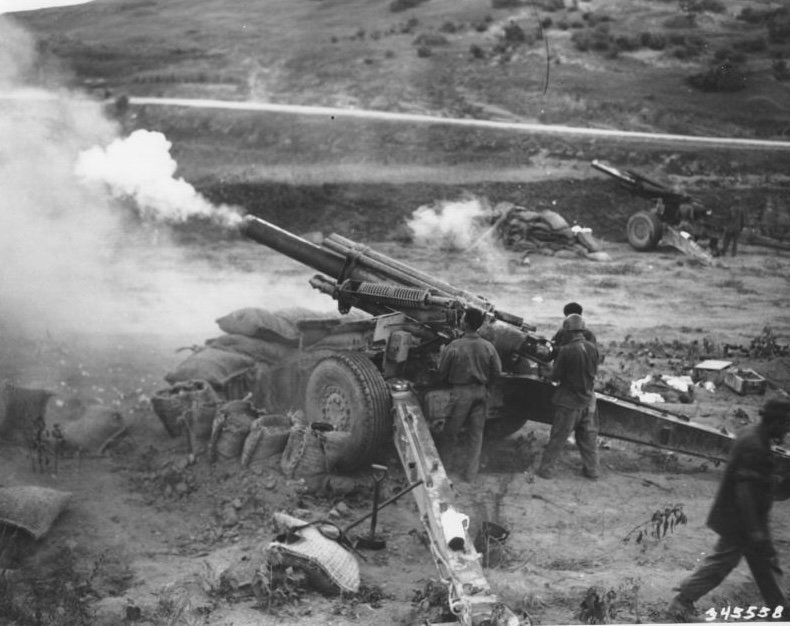
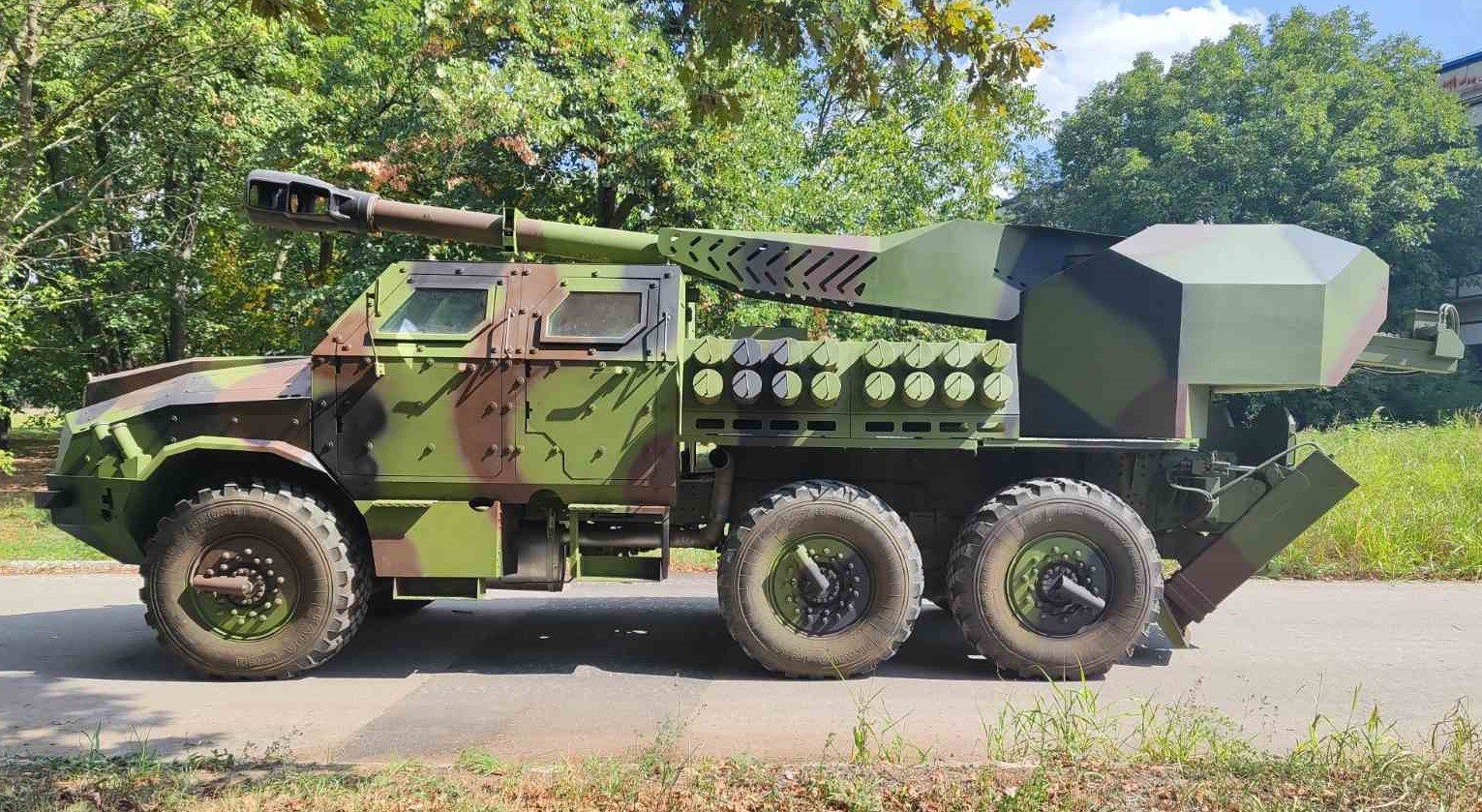
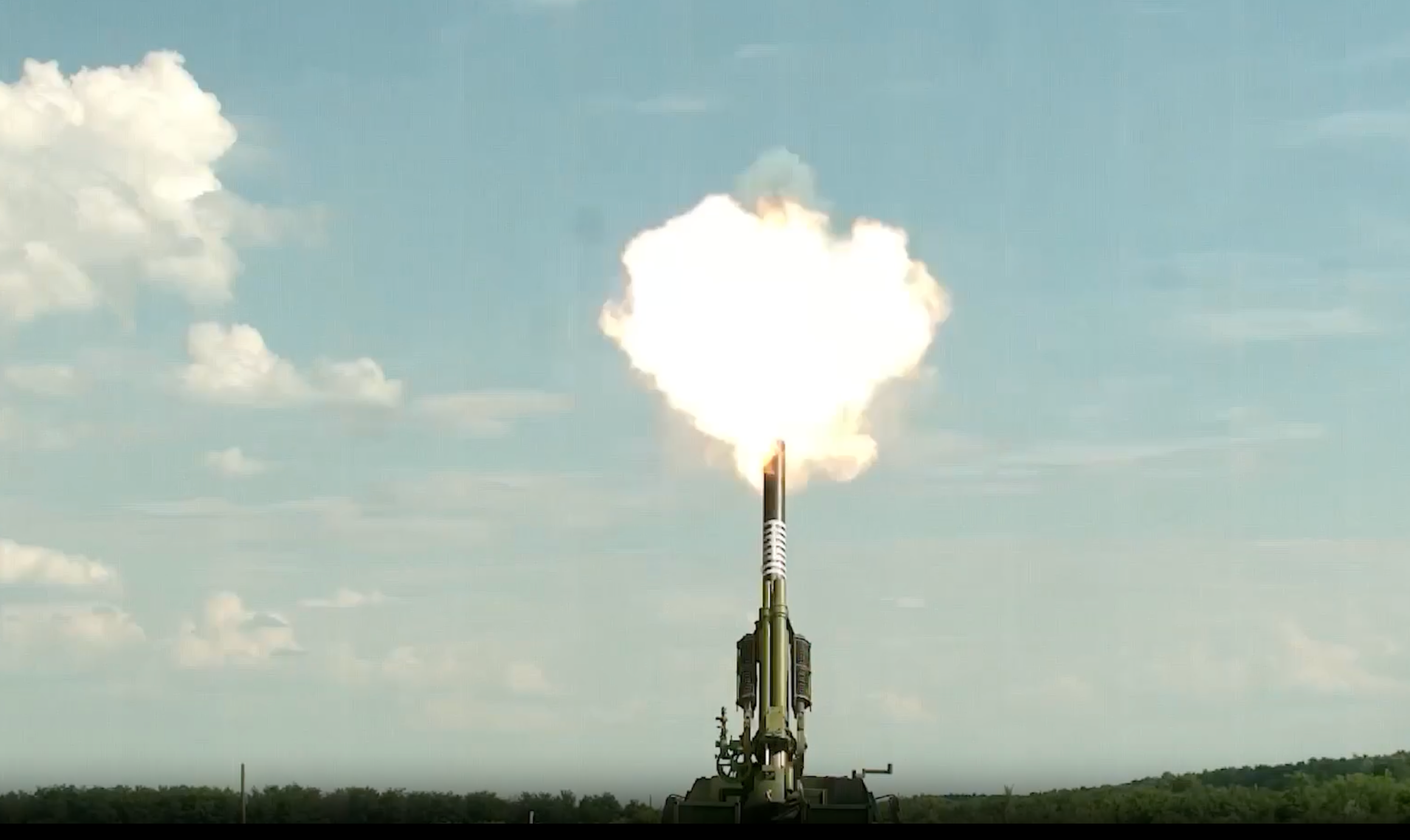
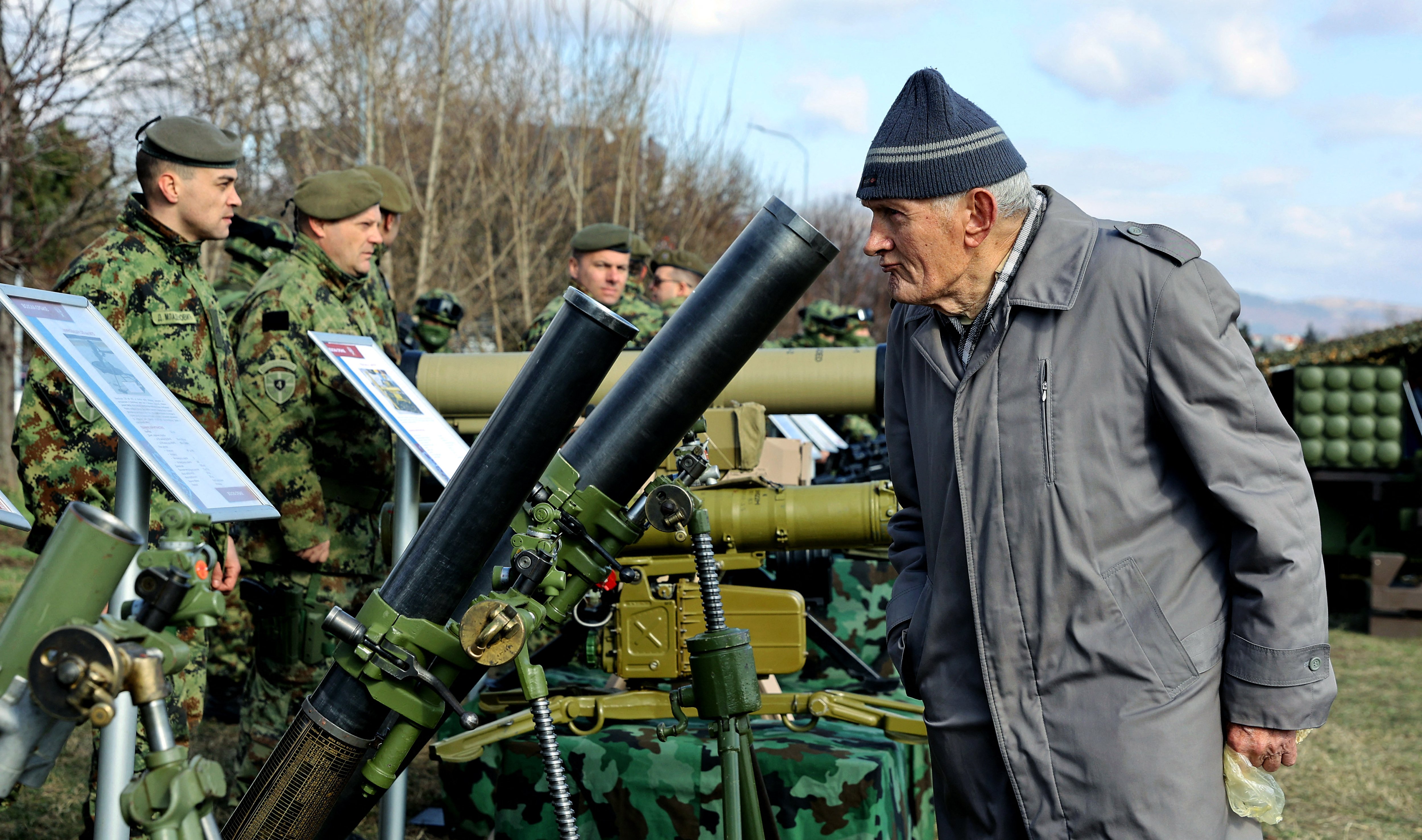


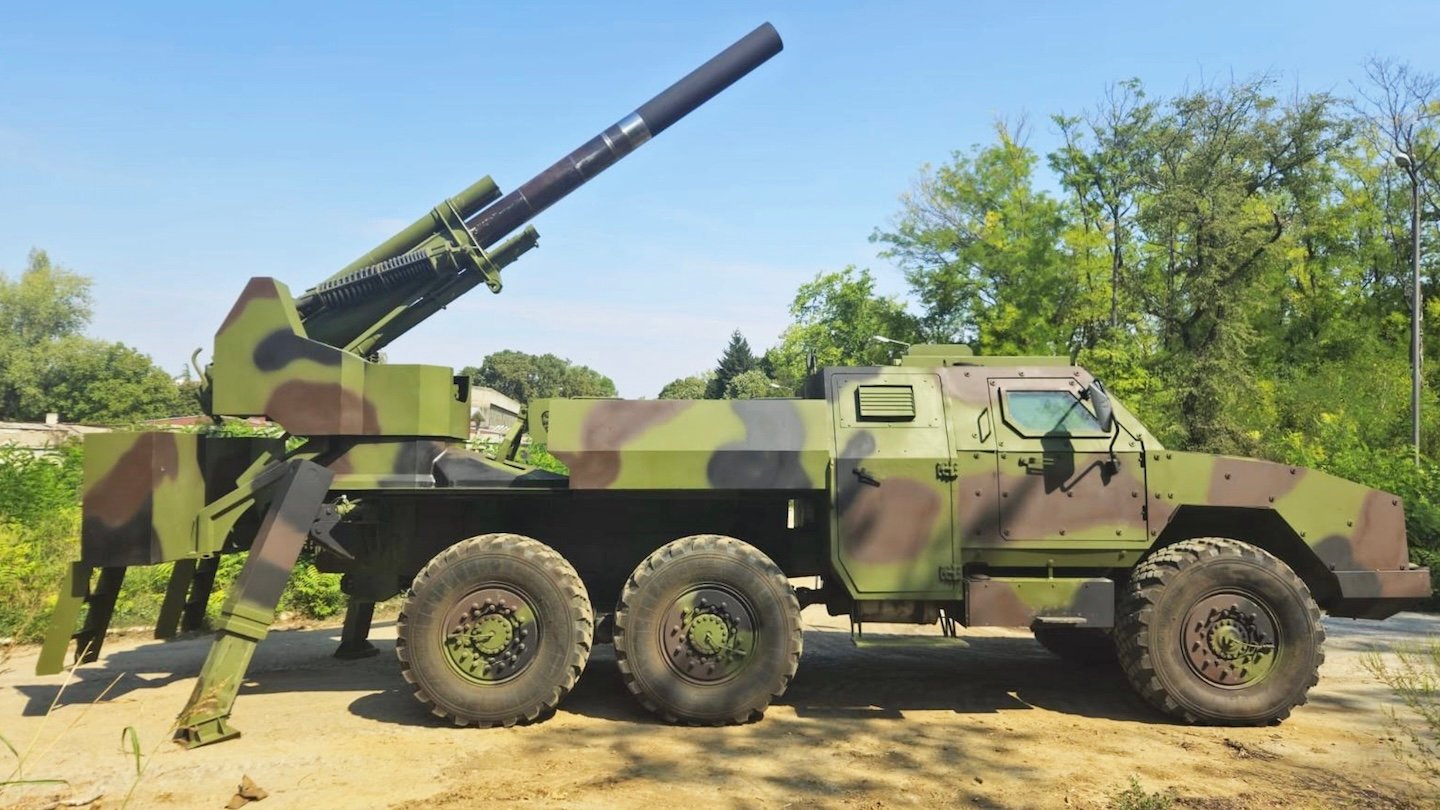

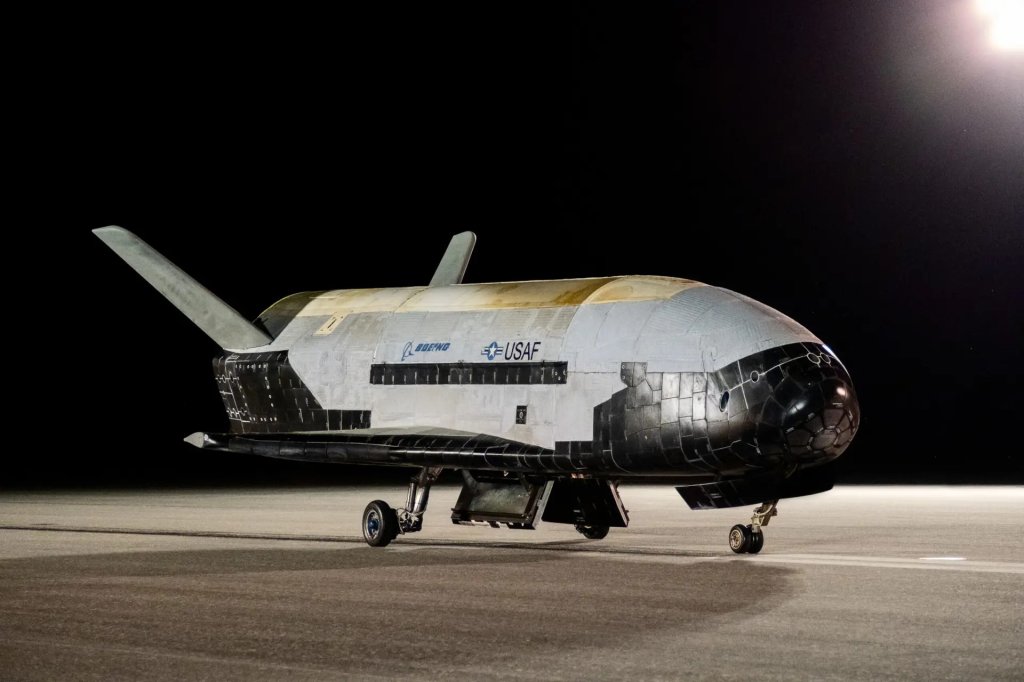


 They seem not only got a model but also a full-scale prototype.



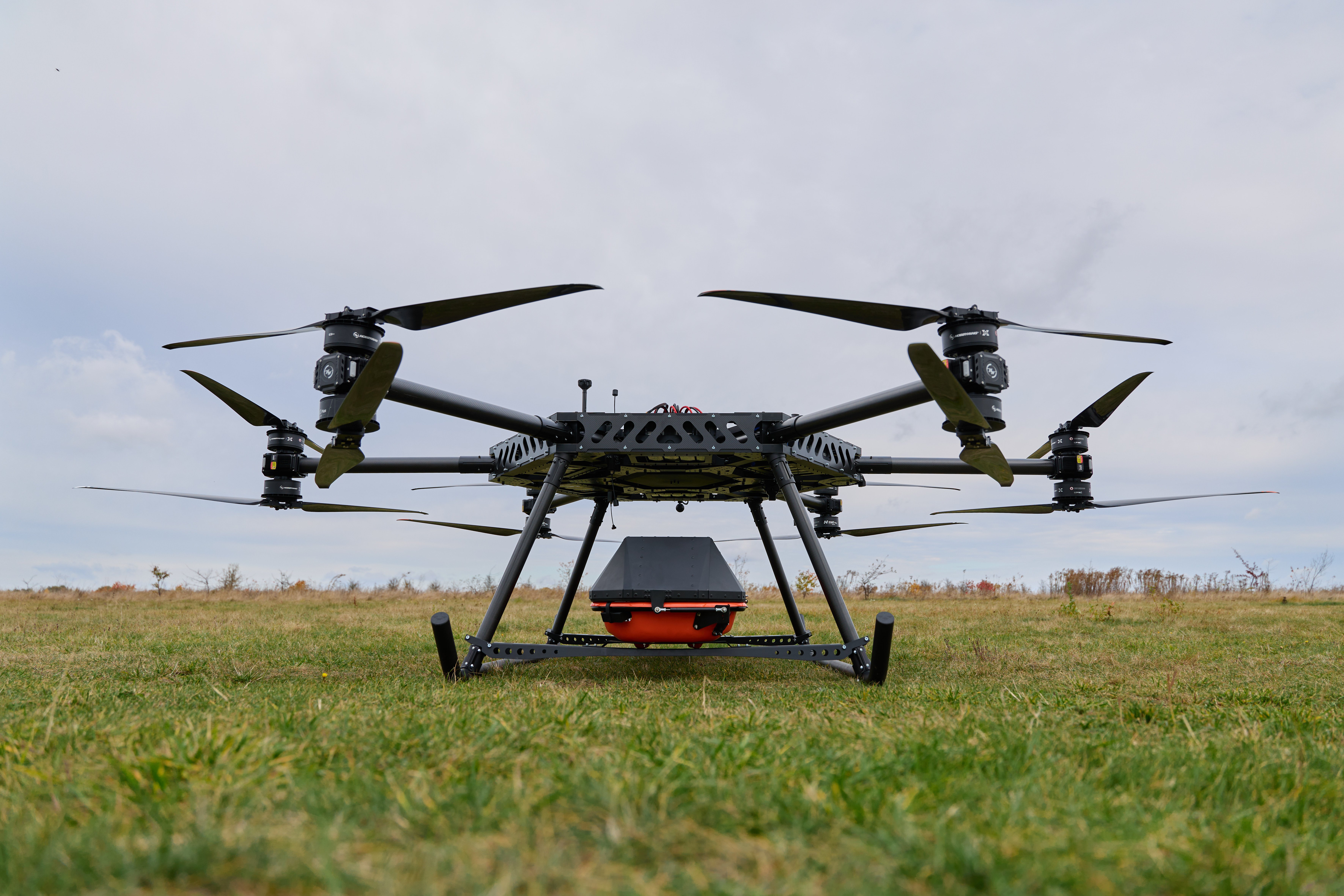


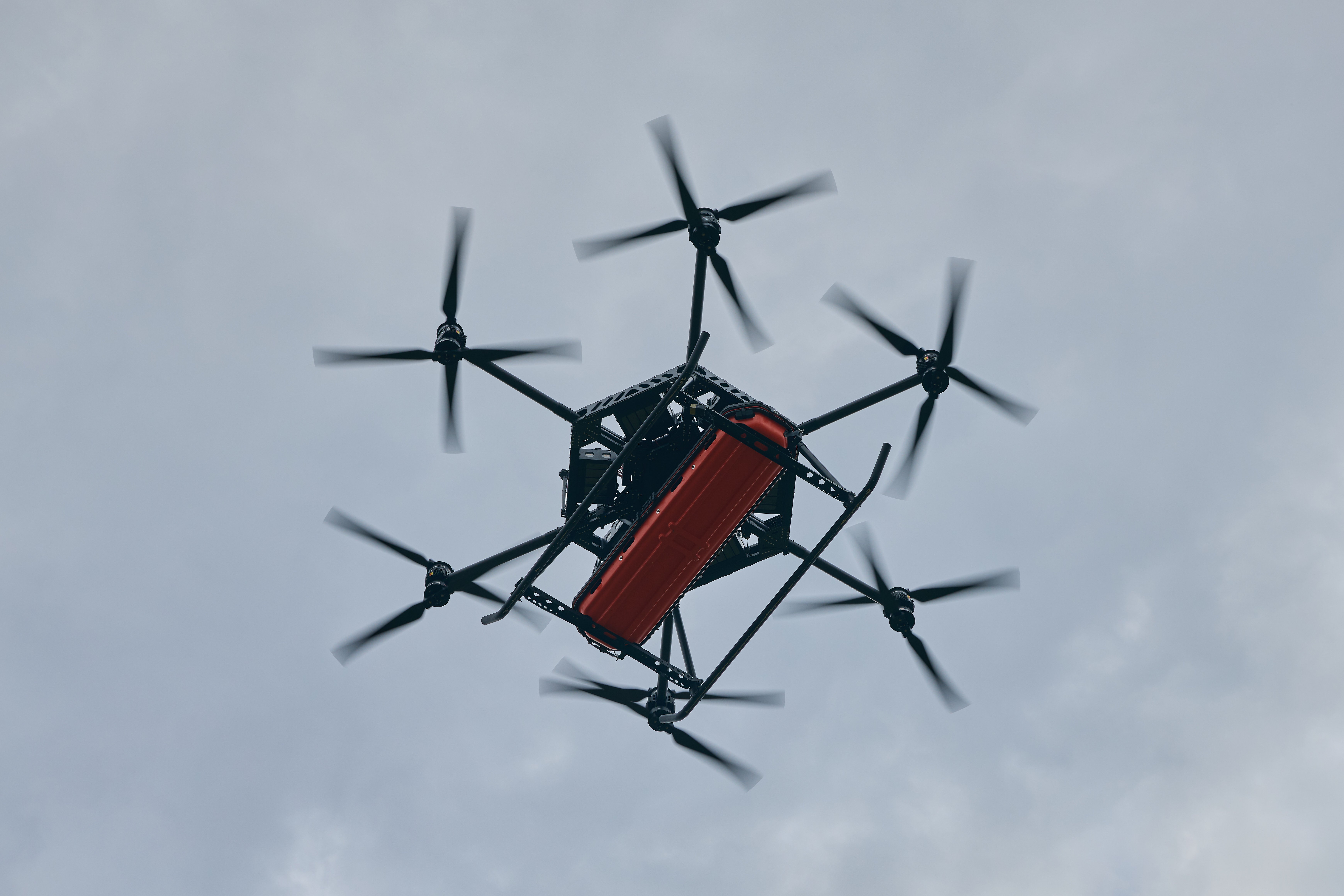

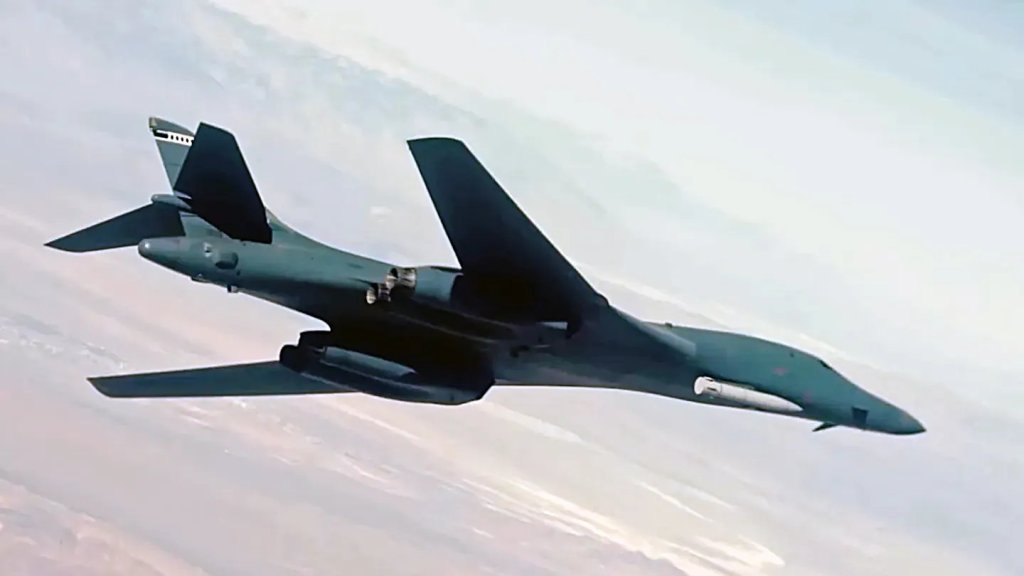

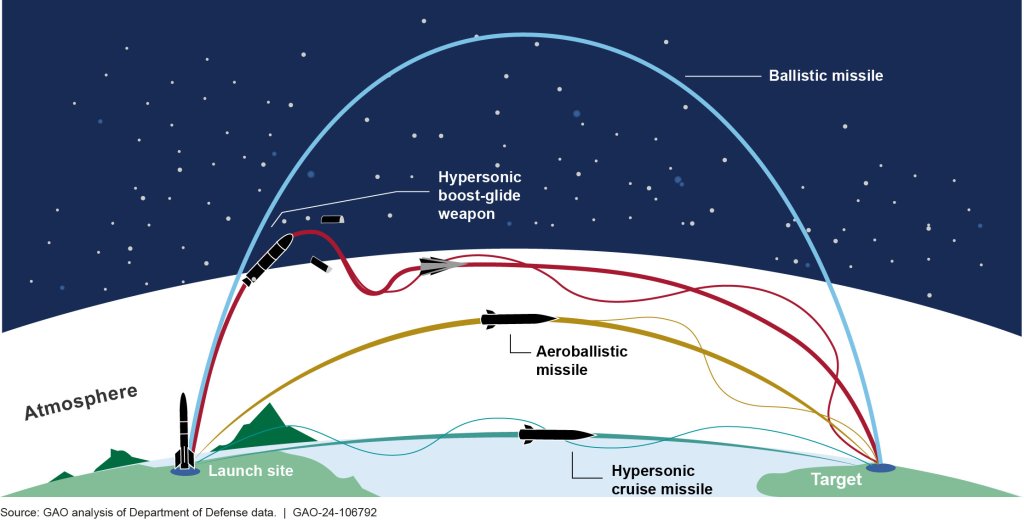
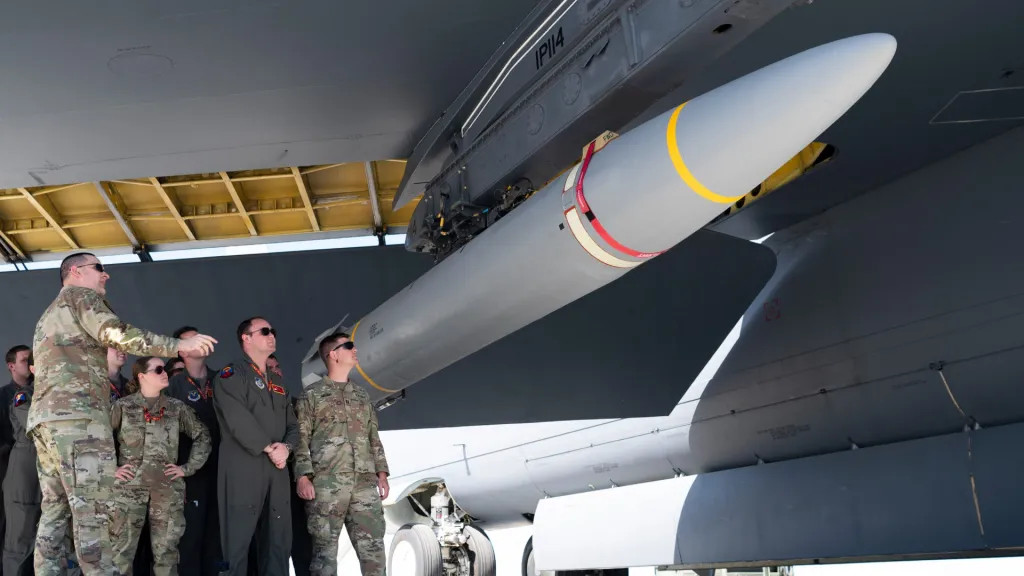
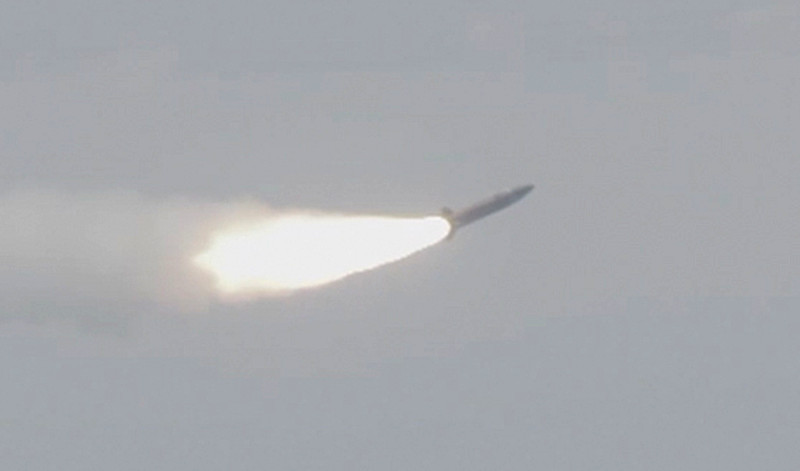
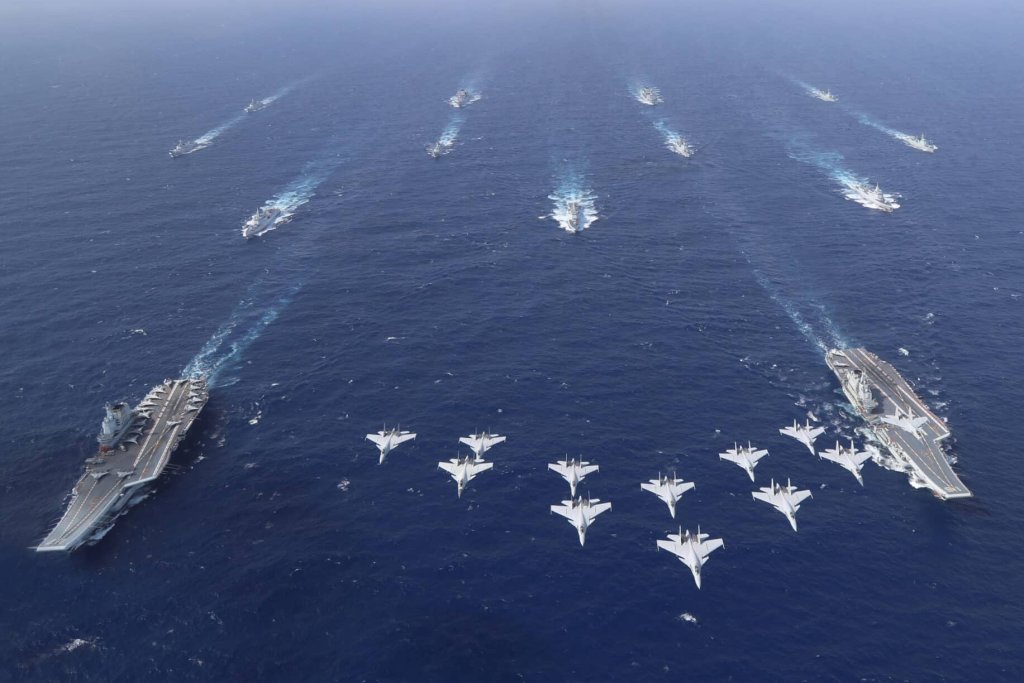
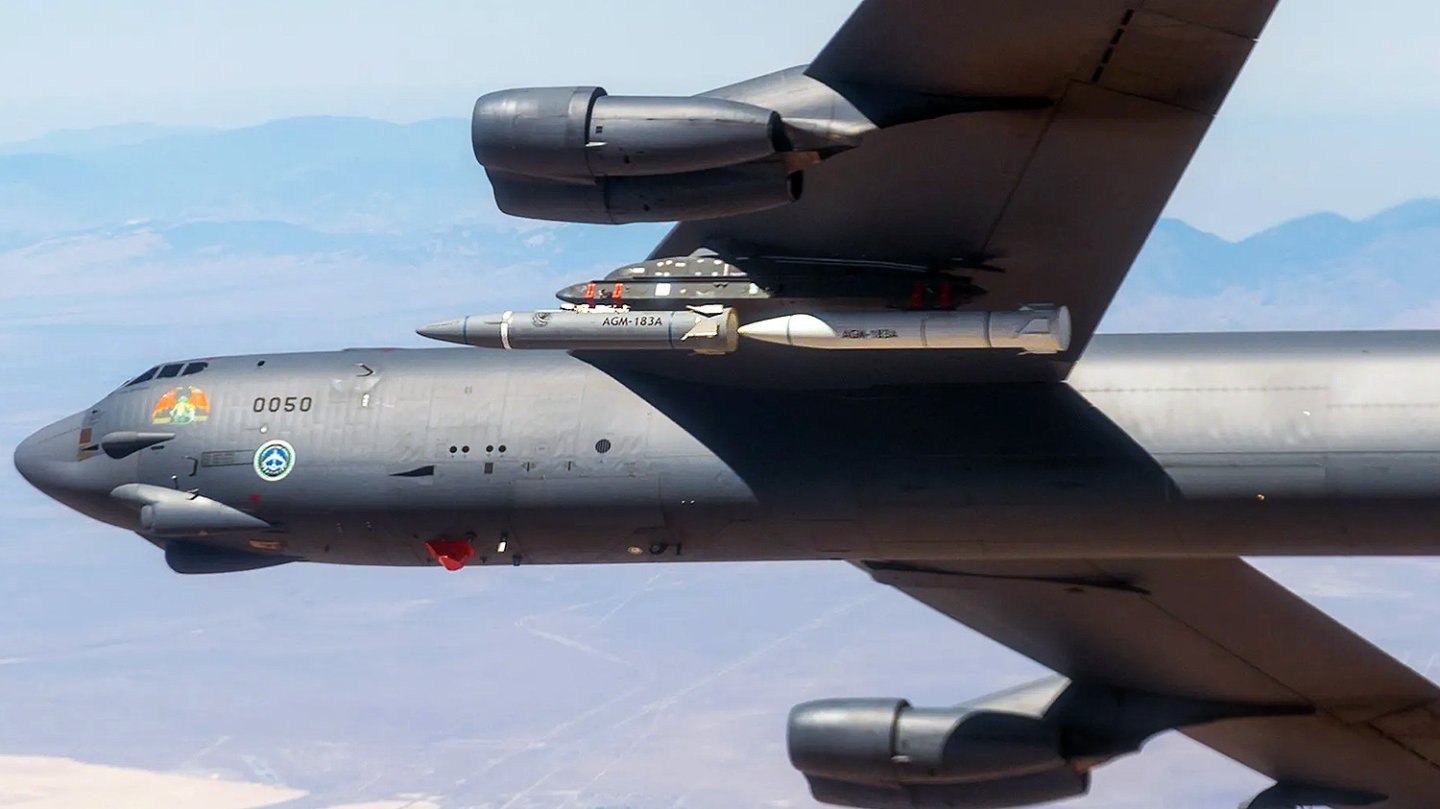
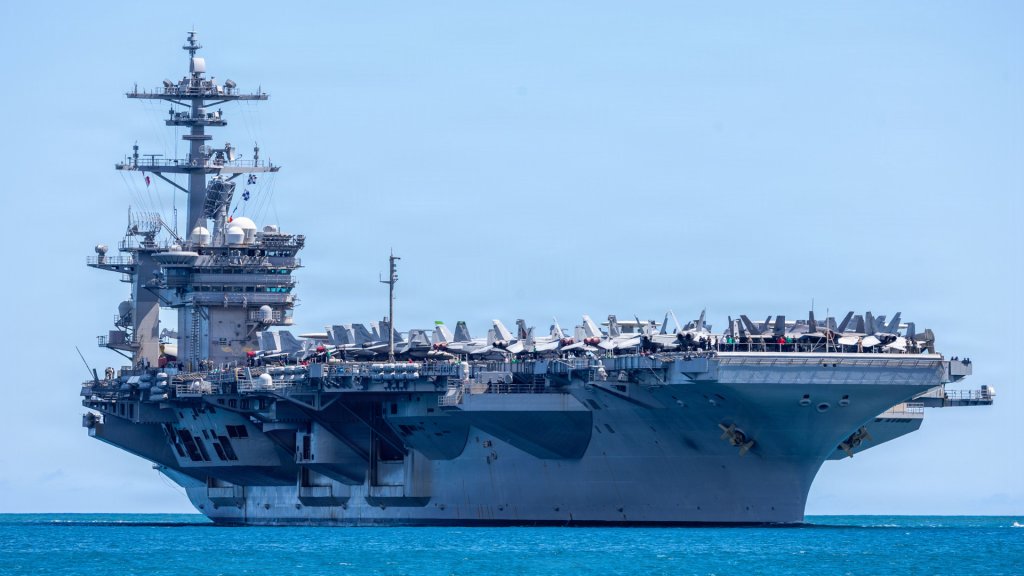

 Israeli Prime Minister Benjamin Netanyahu warned Sunday that Iran and its regional allies could launch attacks intended to disrupt Israel's October 27 election, declaring that the Israeli military is prepared for both defensive and offensive operations.




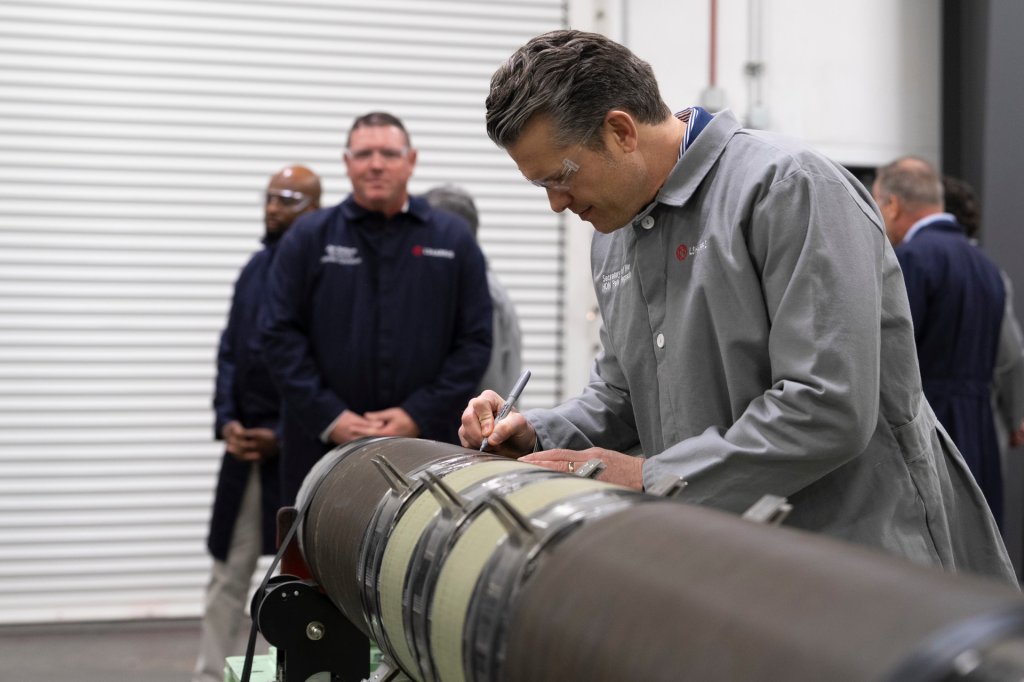
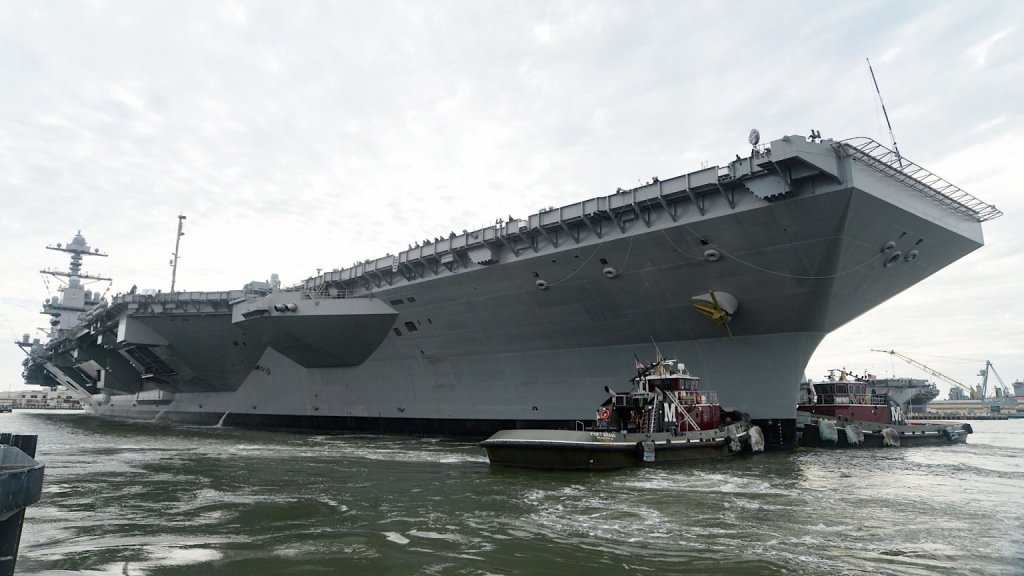

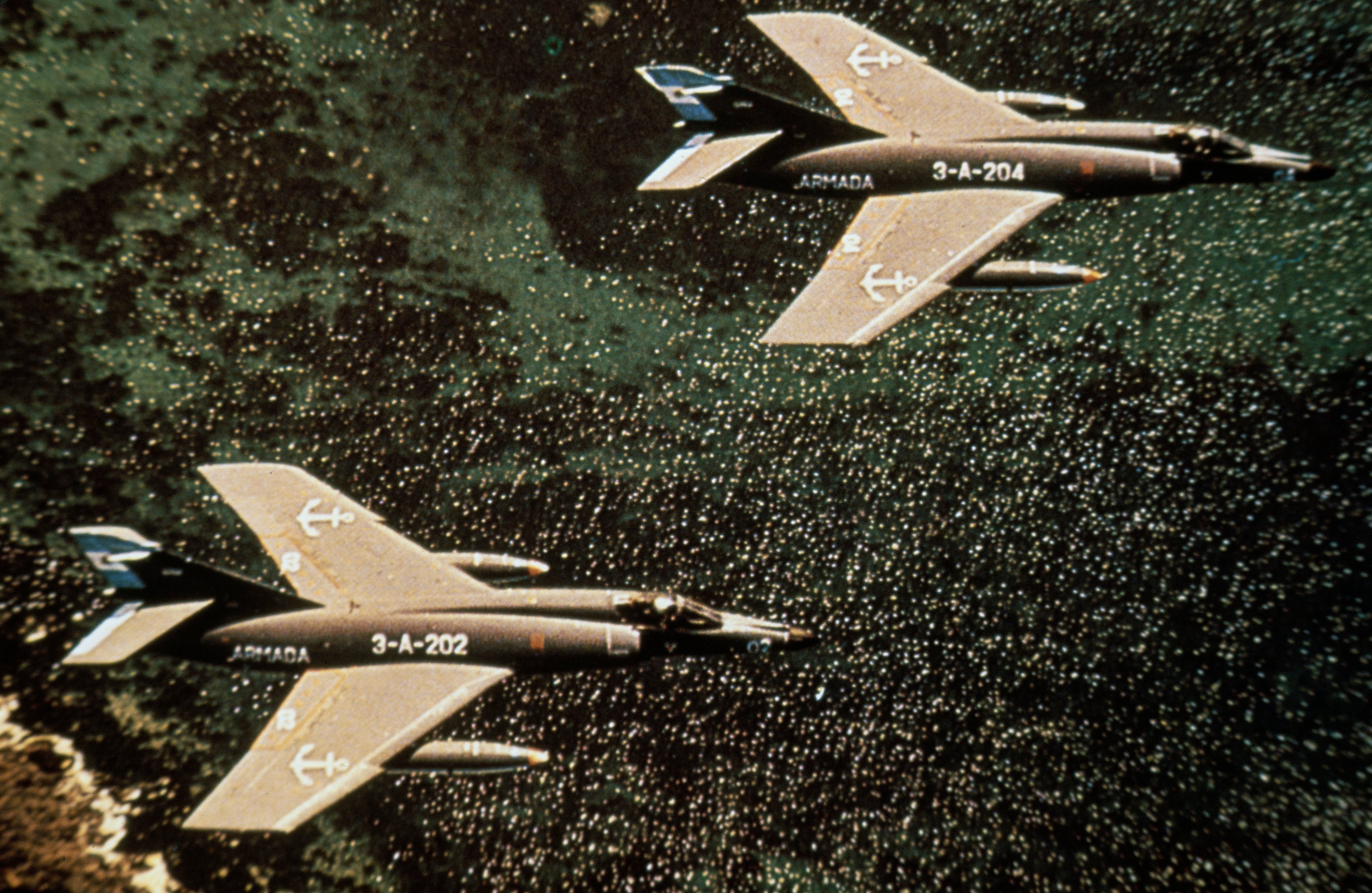


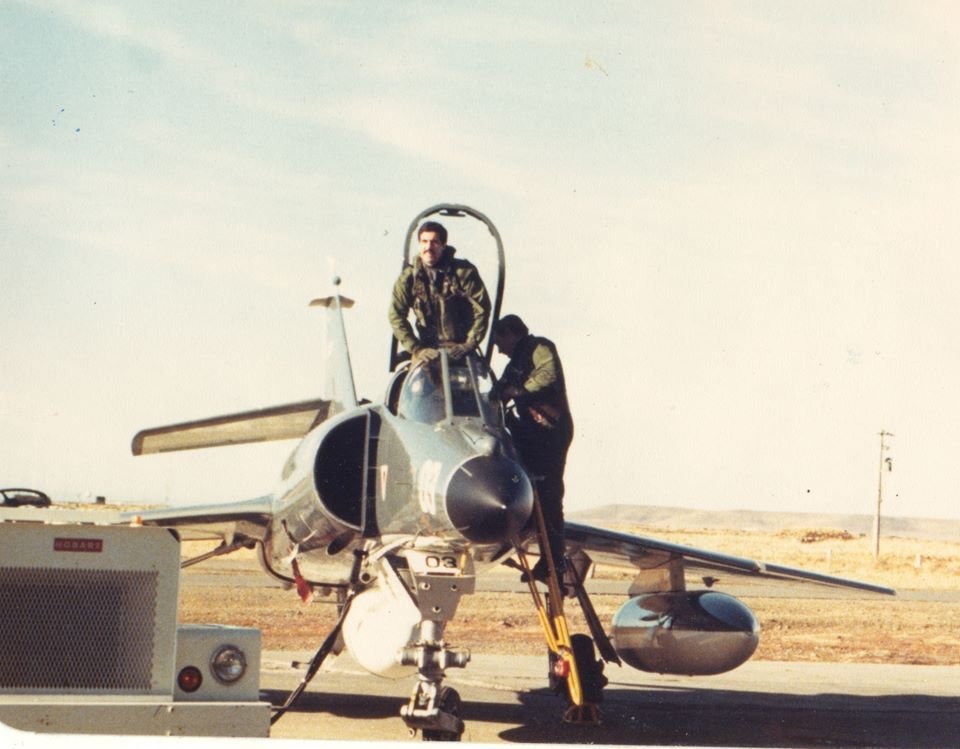
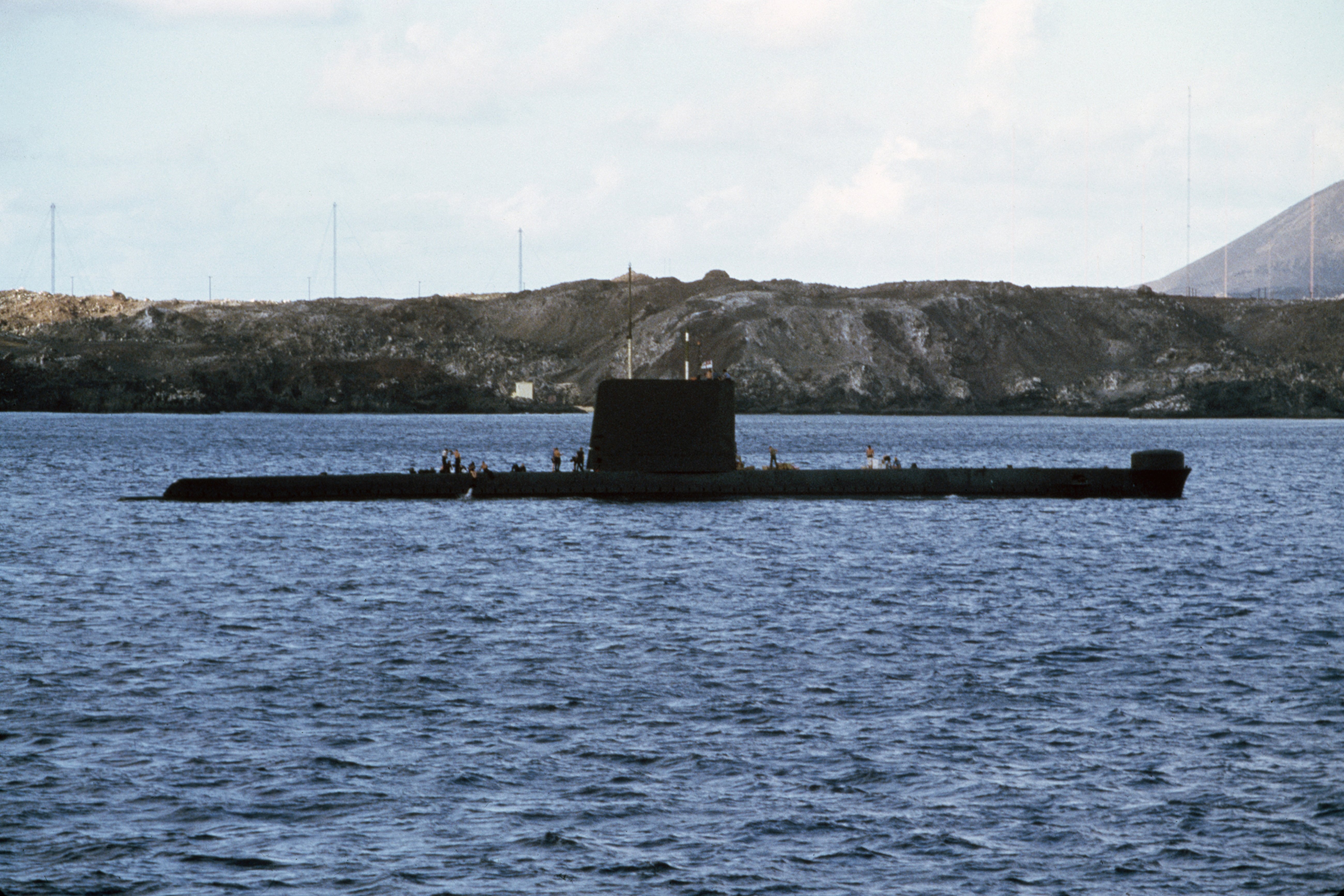



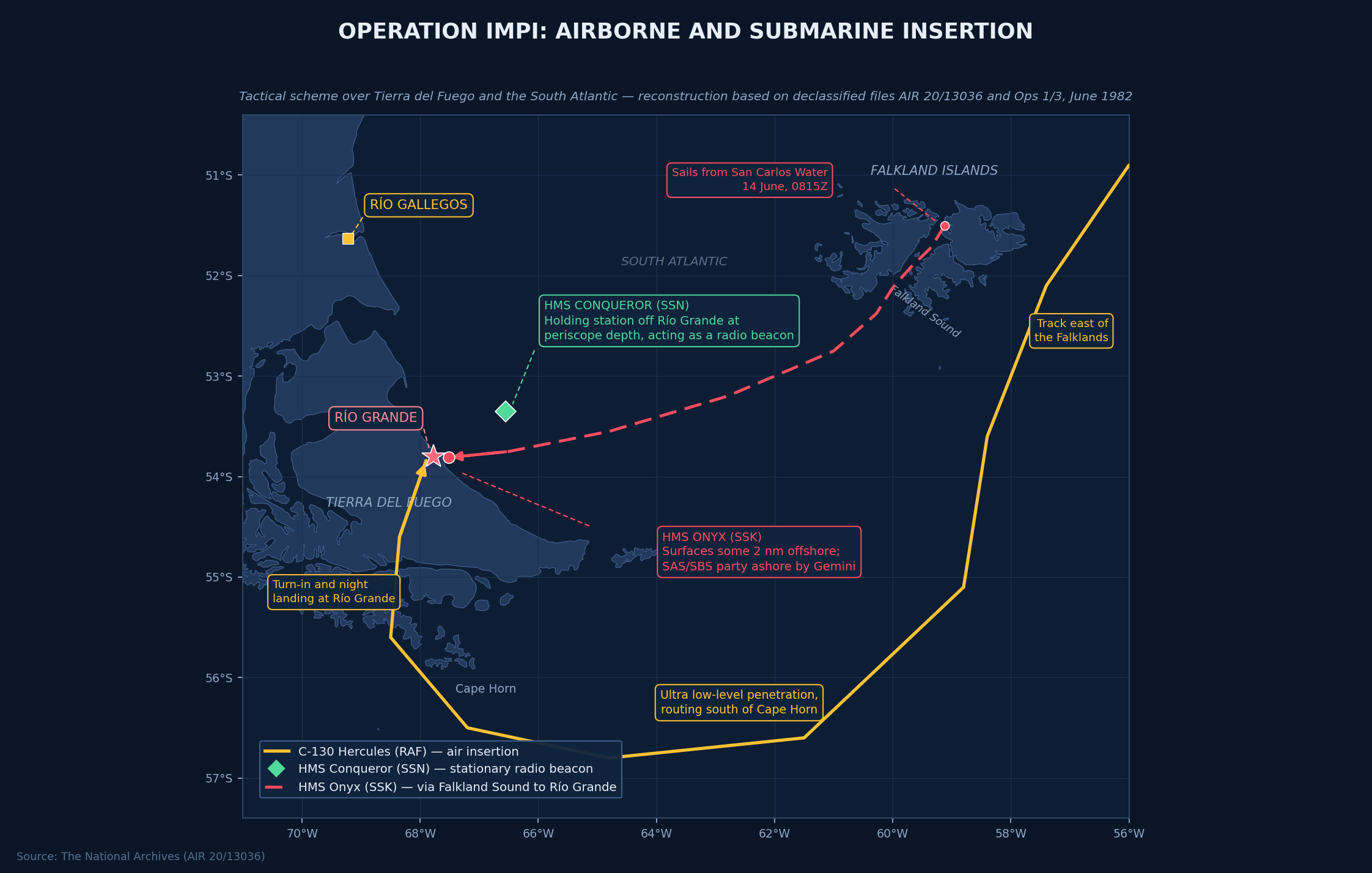
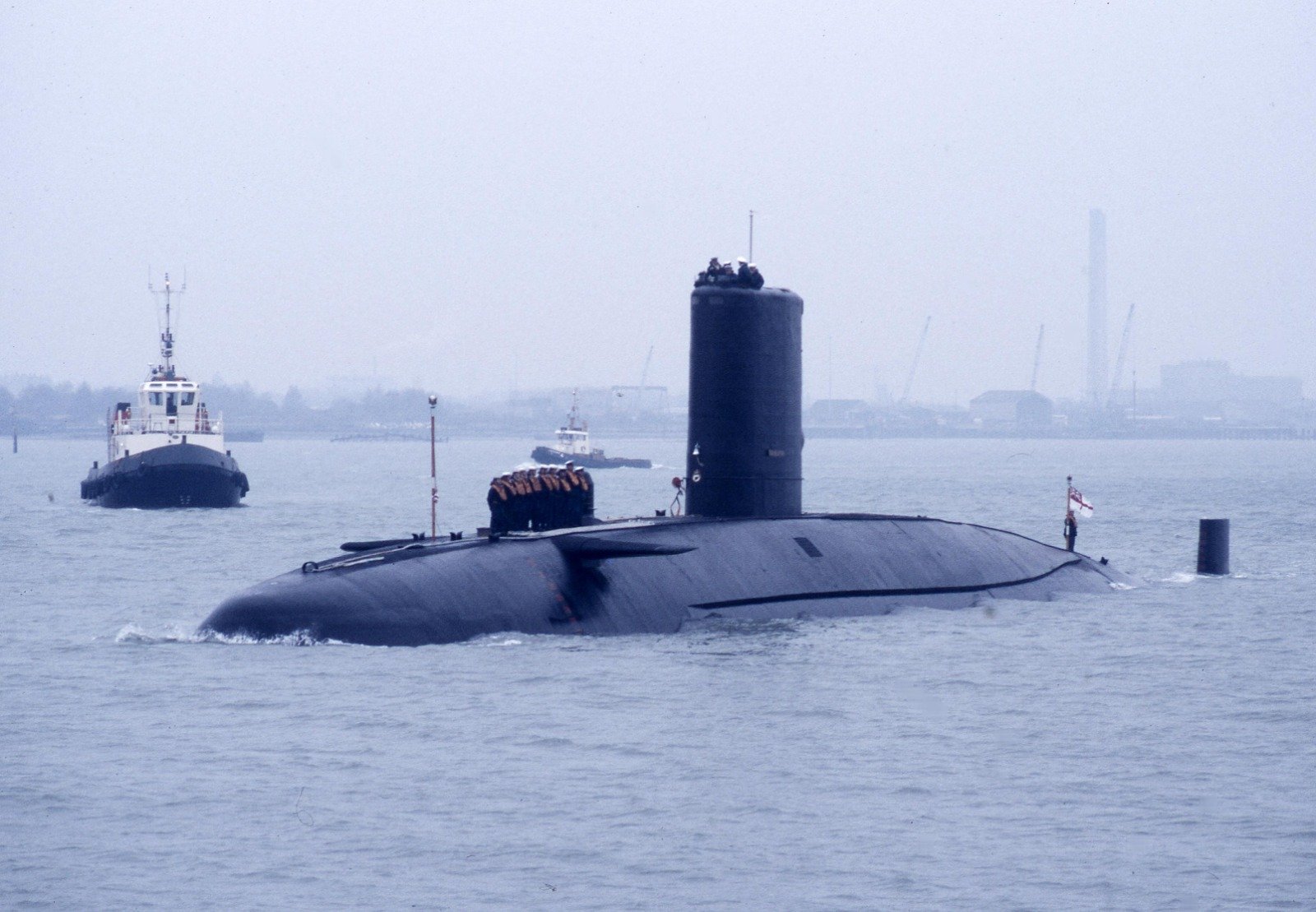
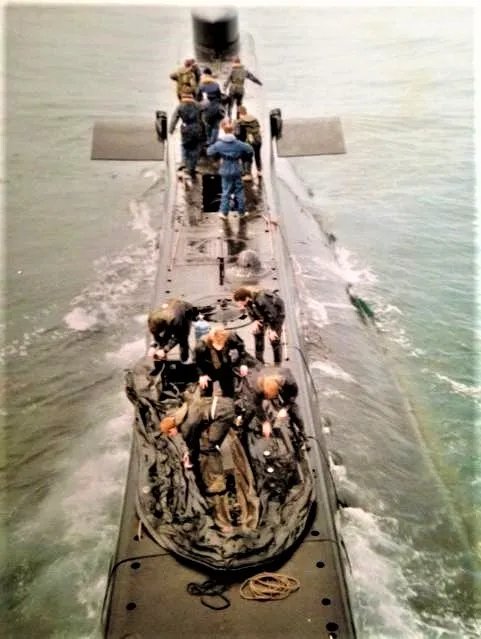


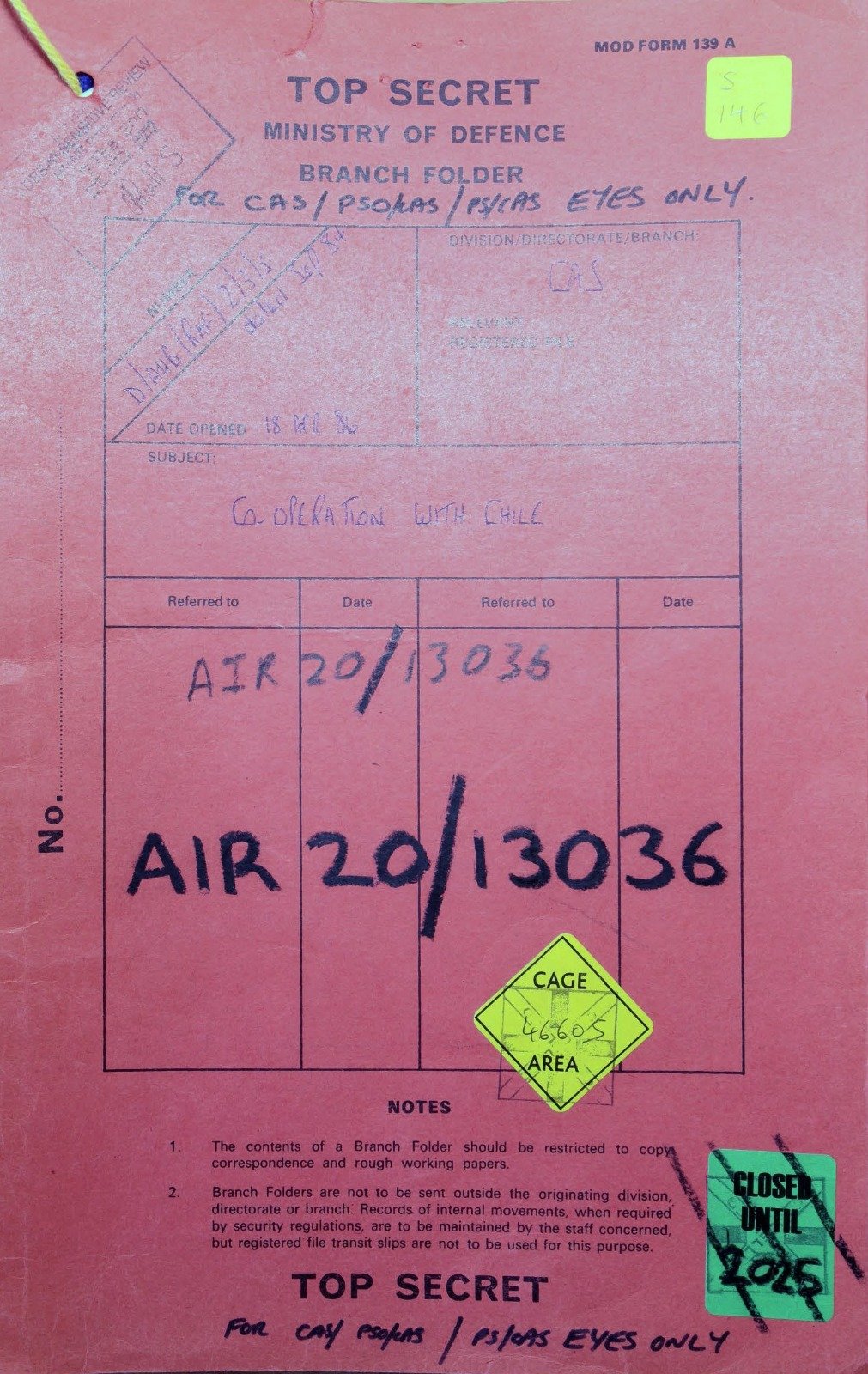
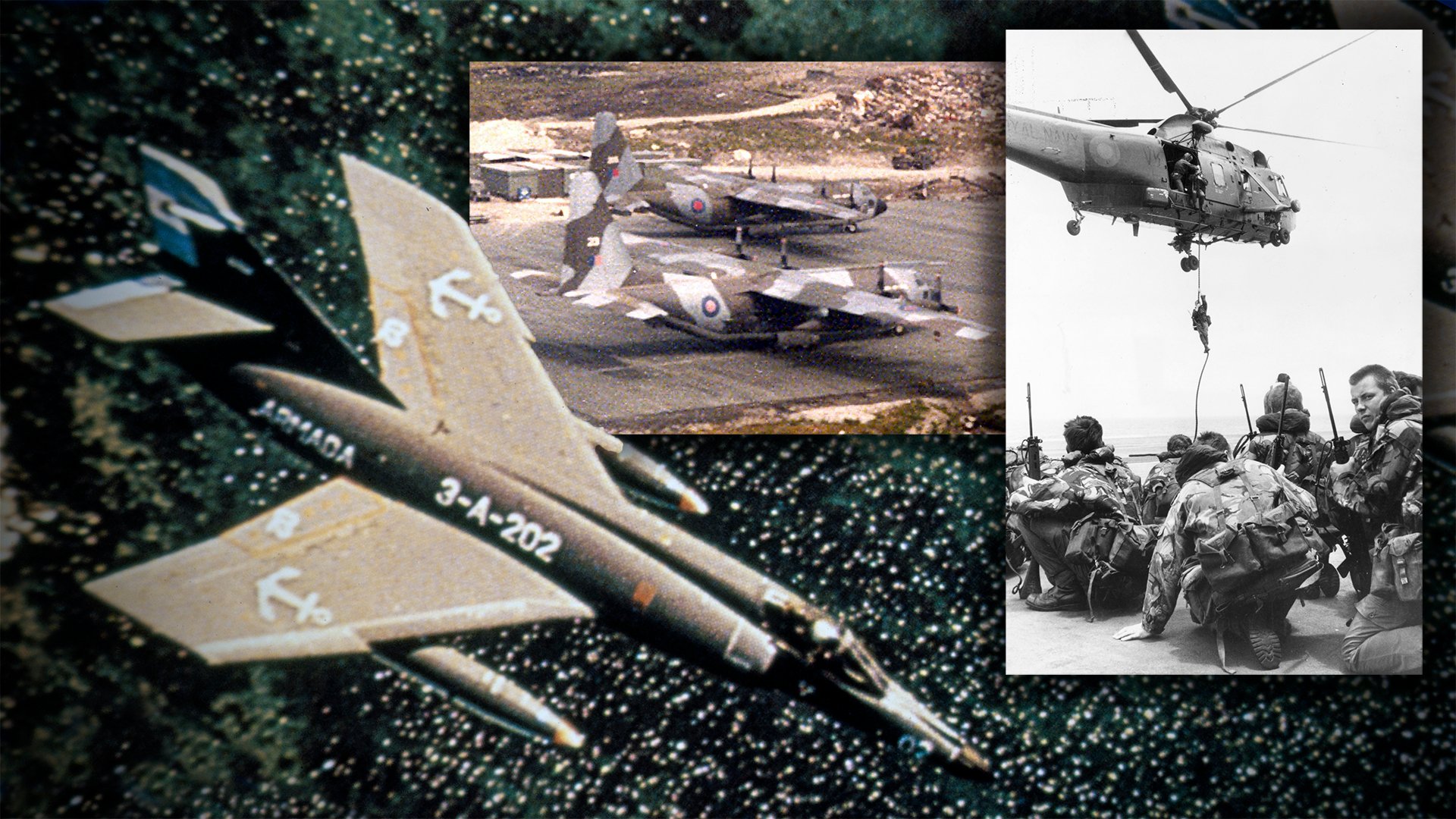
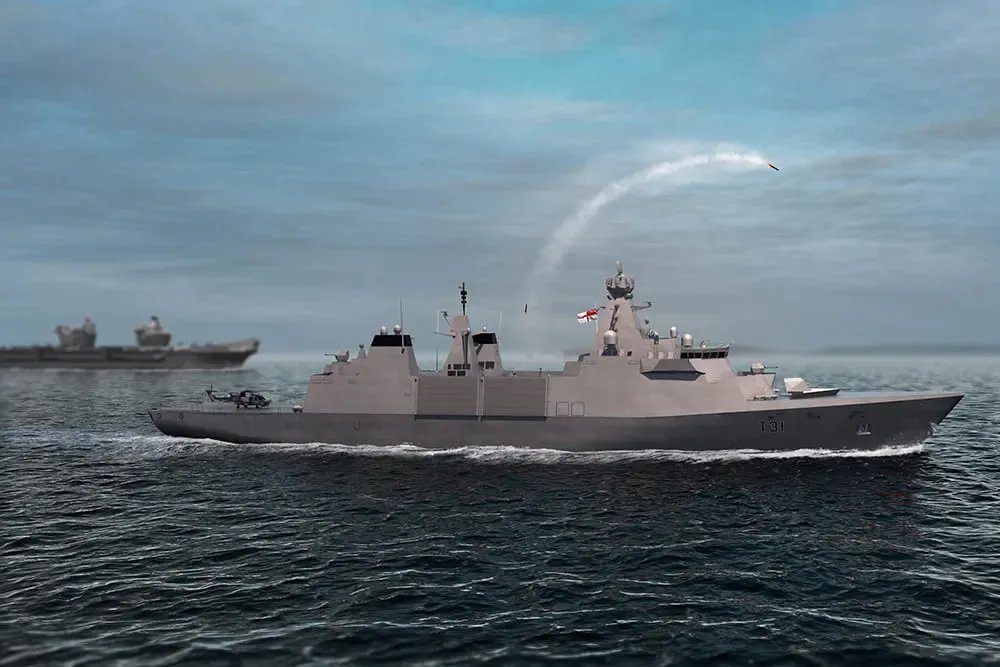
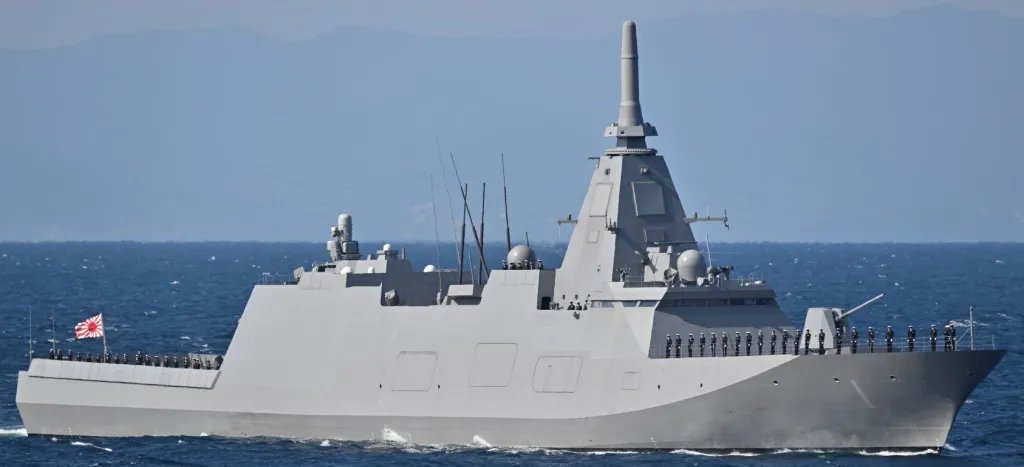
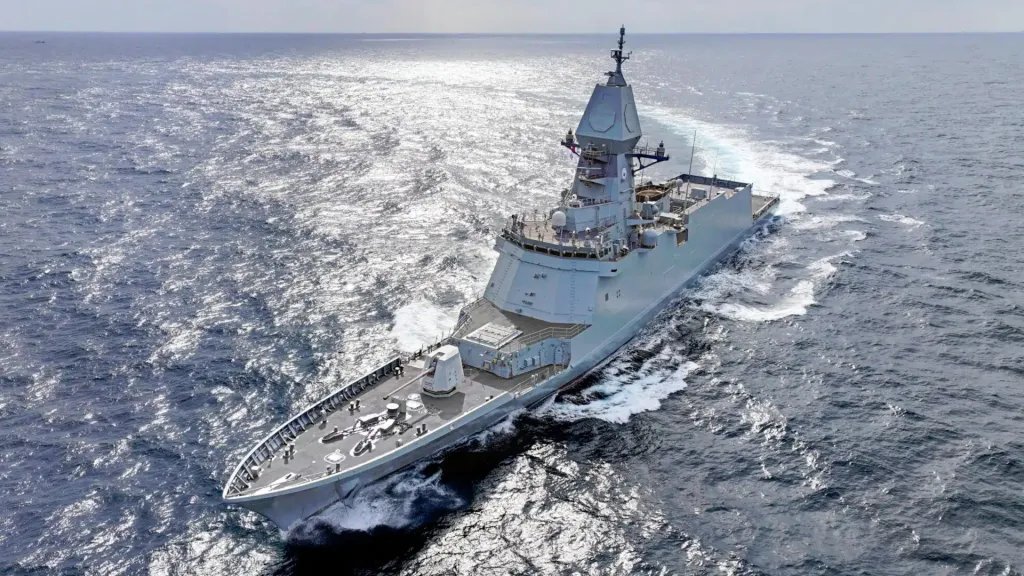
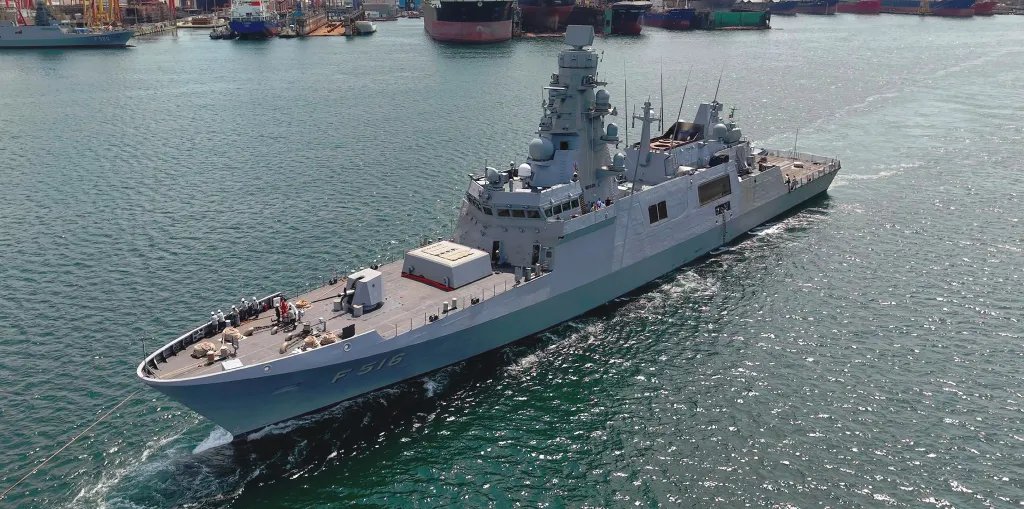

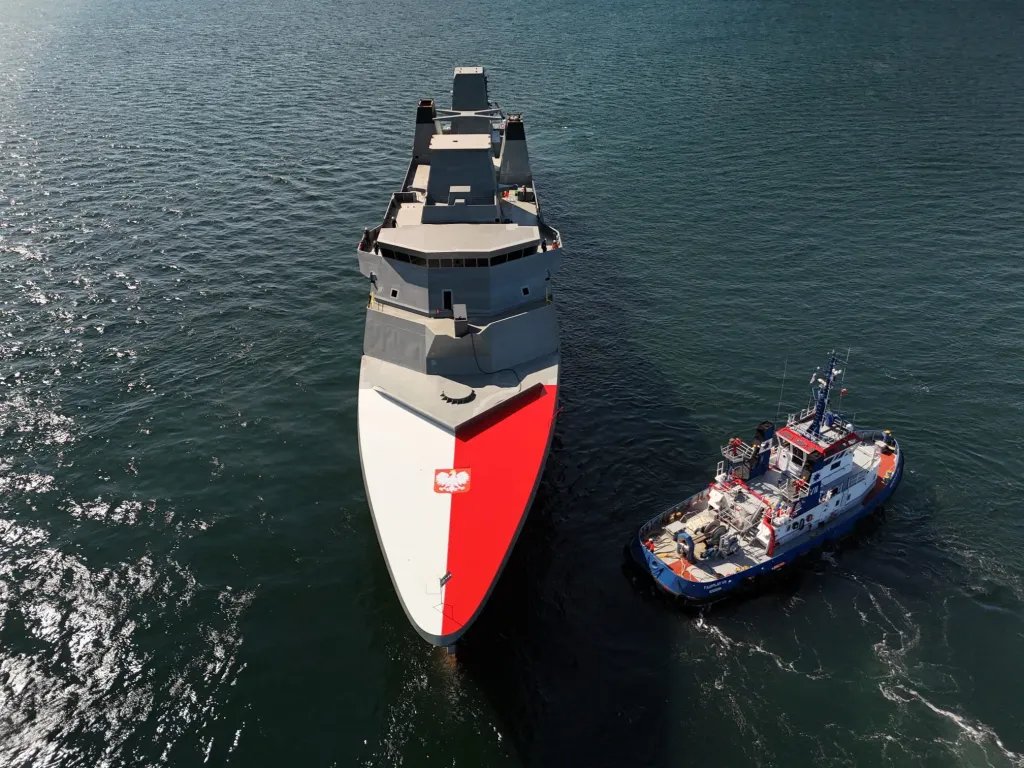
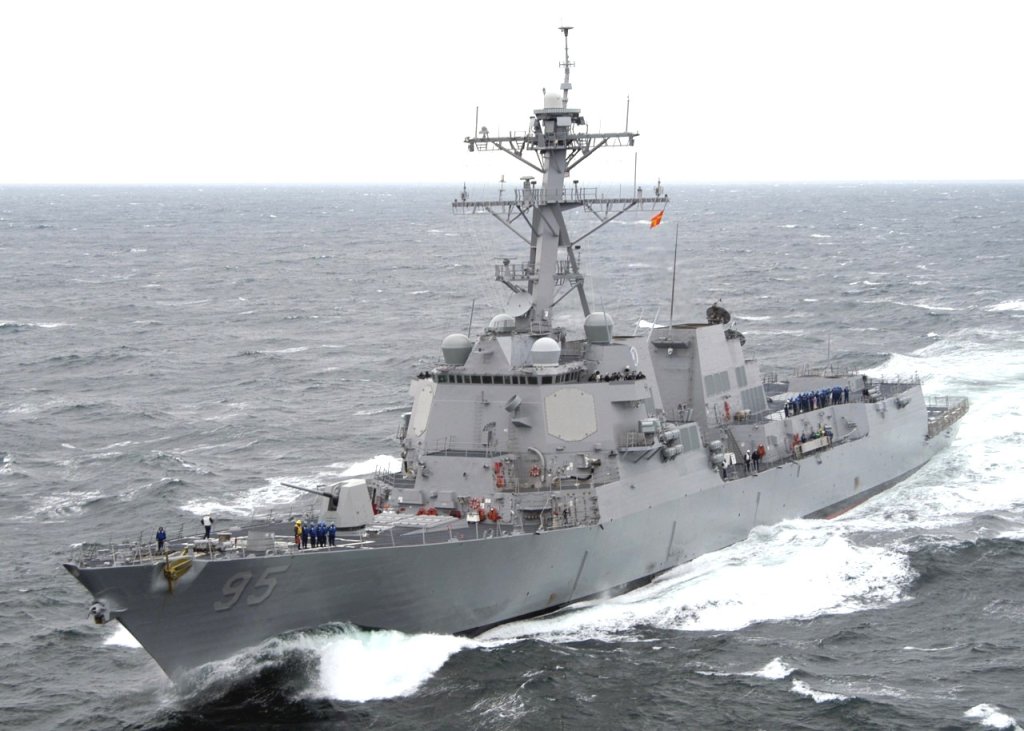
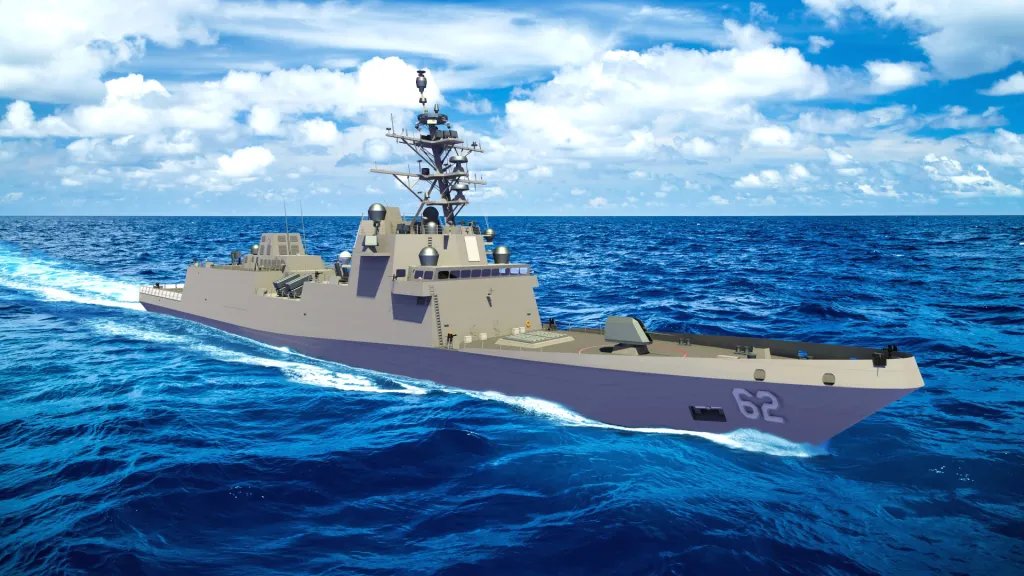
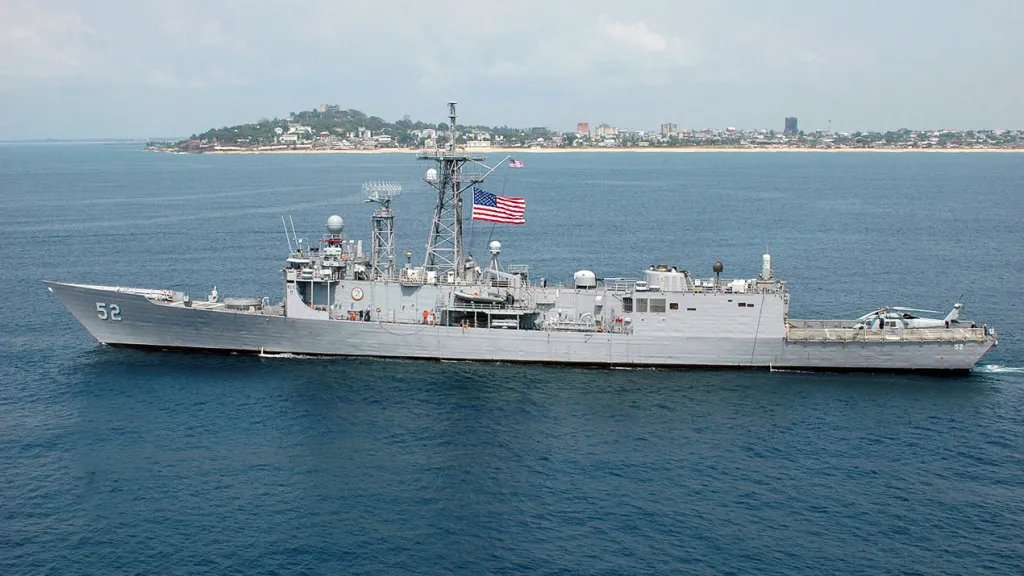
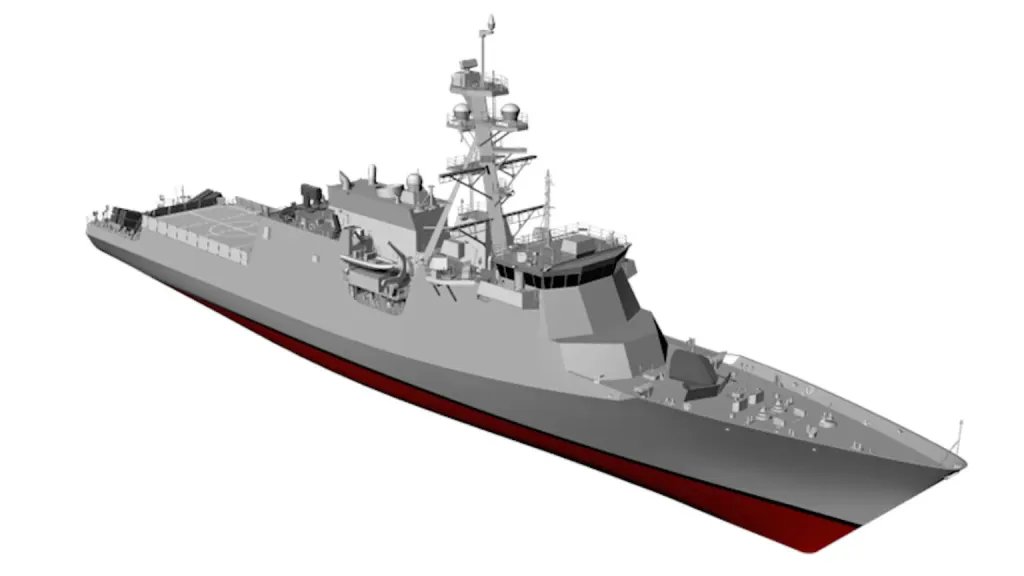
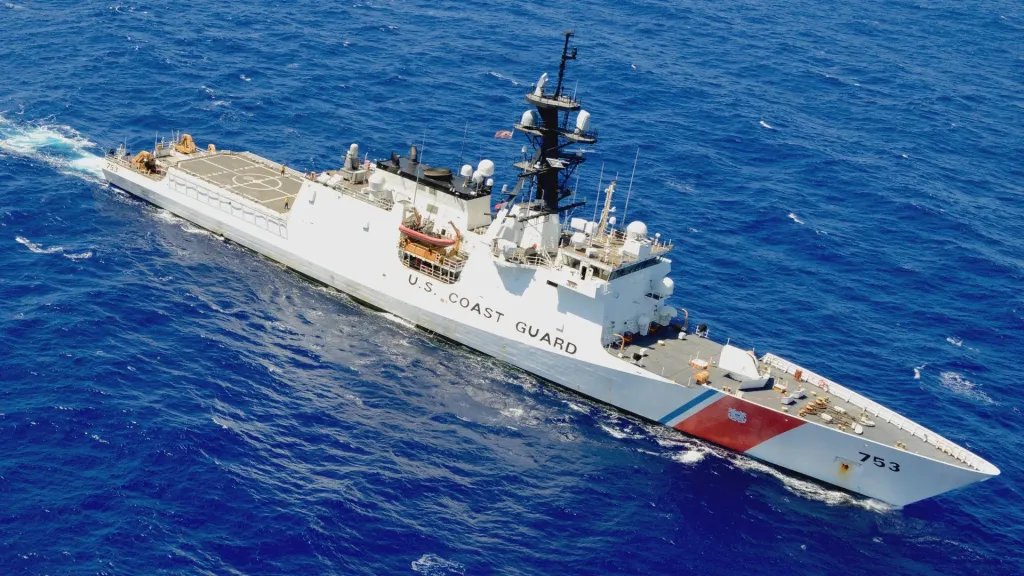
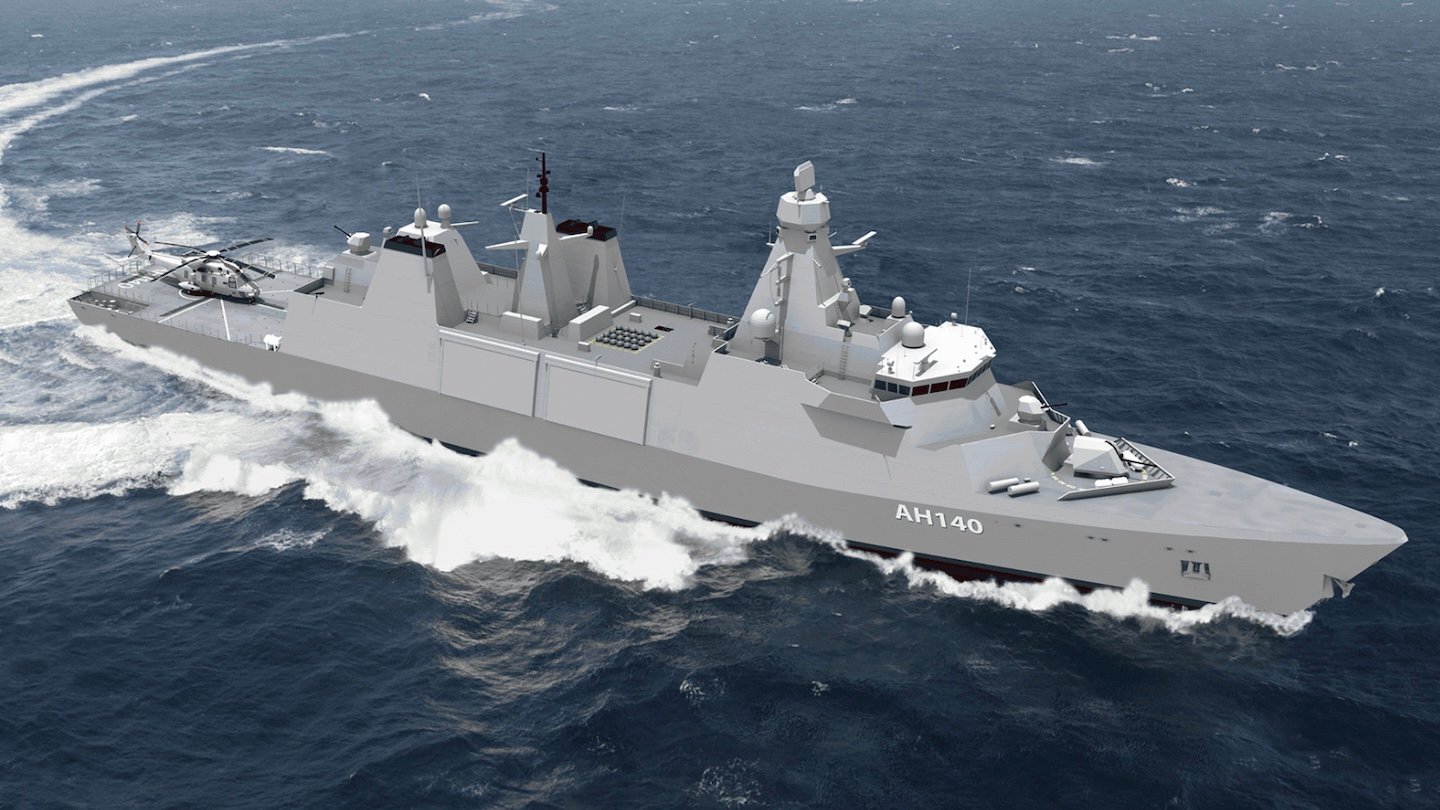


 BREAKING: AMB. TOM BARRACK WARNS U.S. STRIKE COULD HAPPEN THIS WEEKEND

 (@MoloWarMonitor)
 (@DefenceGeek)


 (@WarMonitor3)
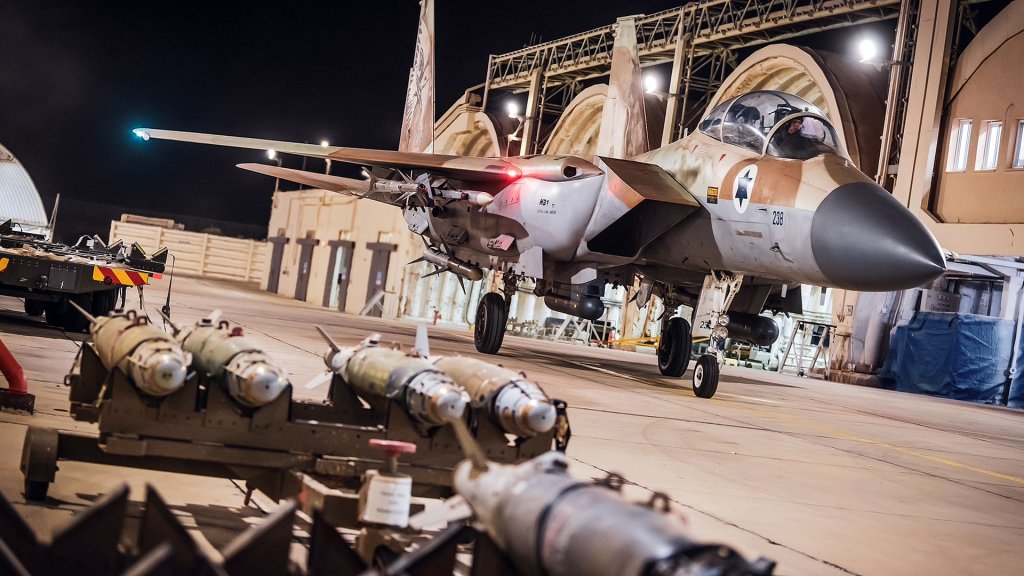
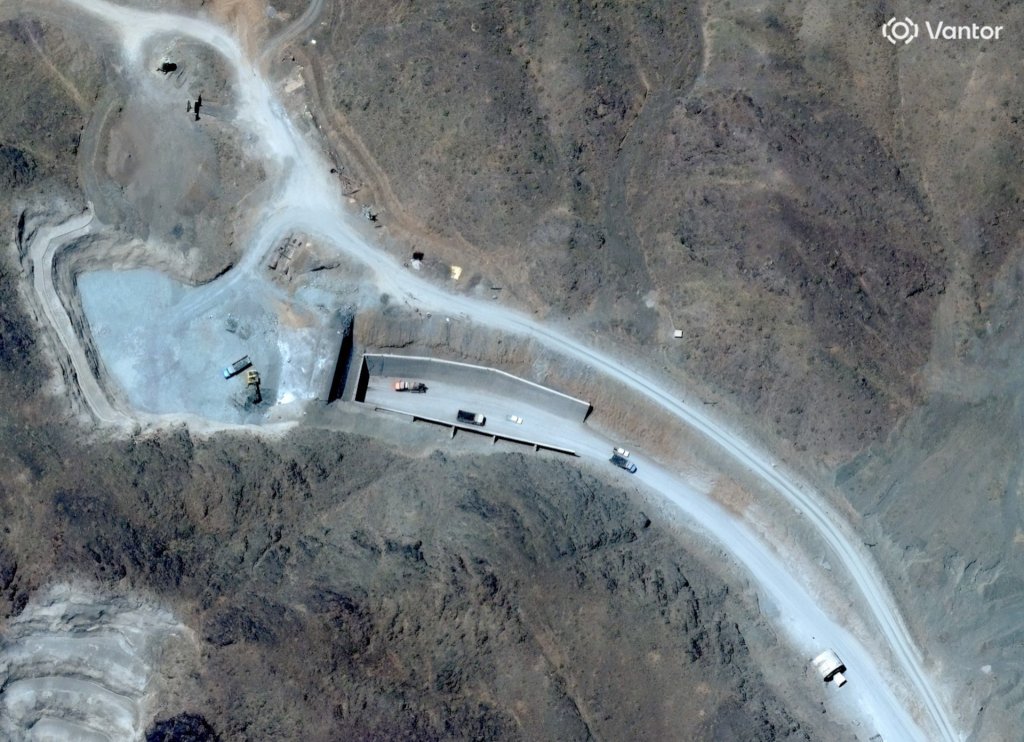
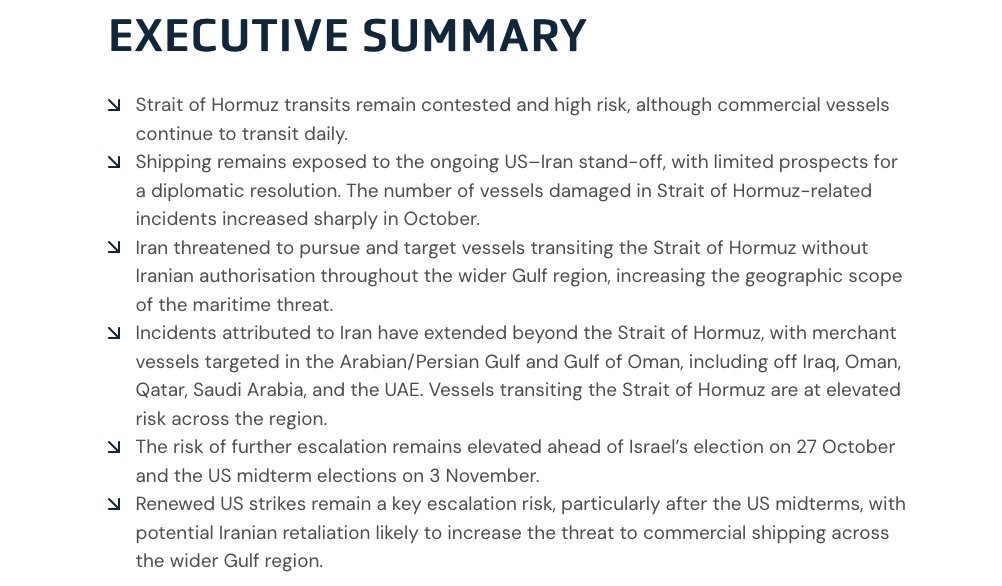


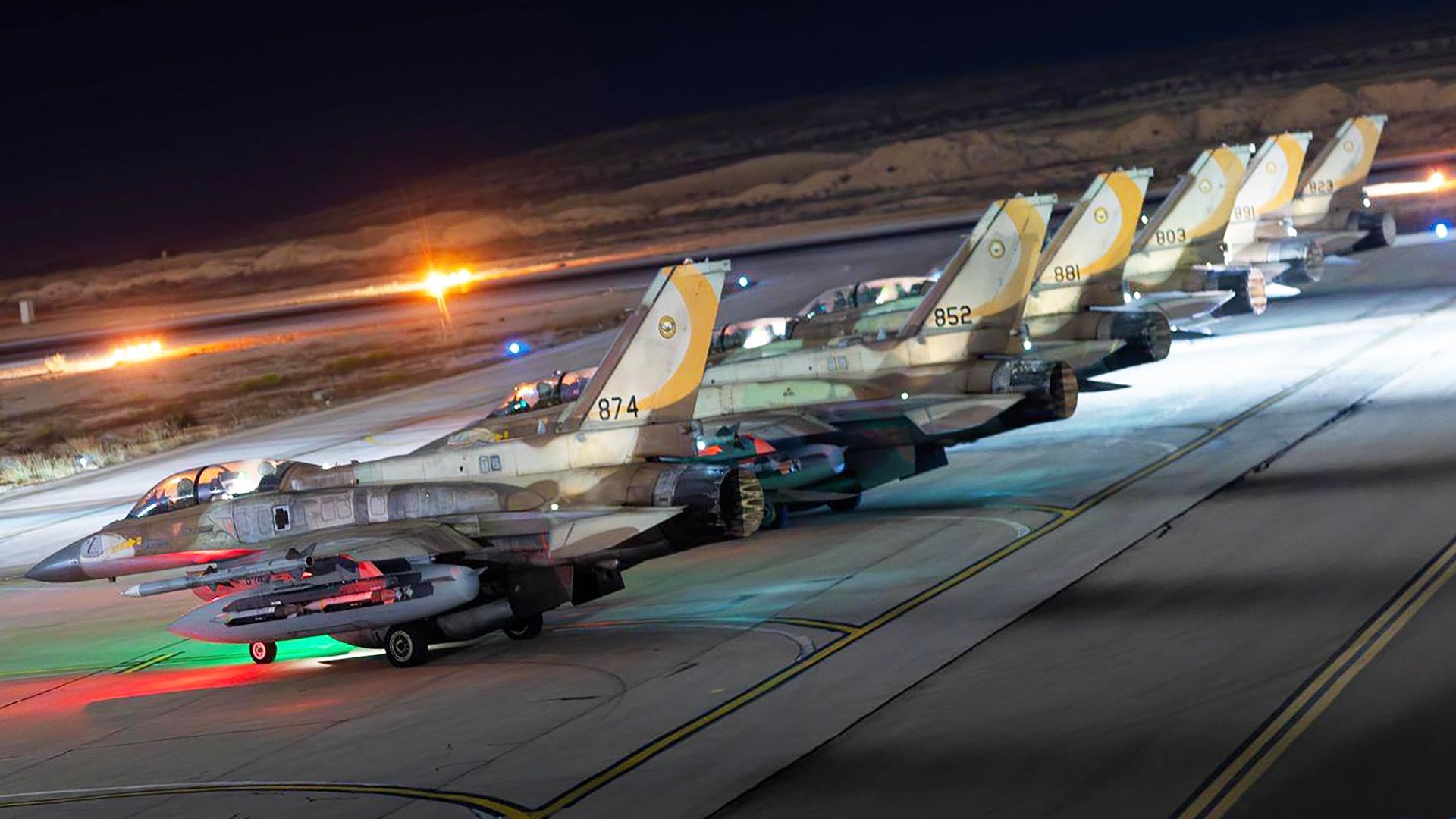
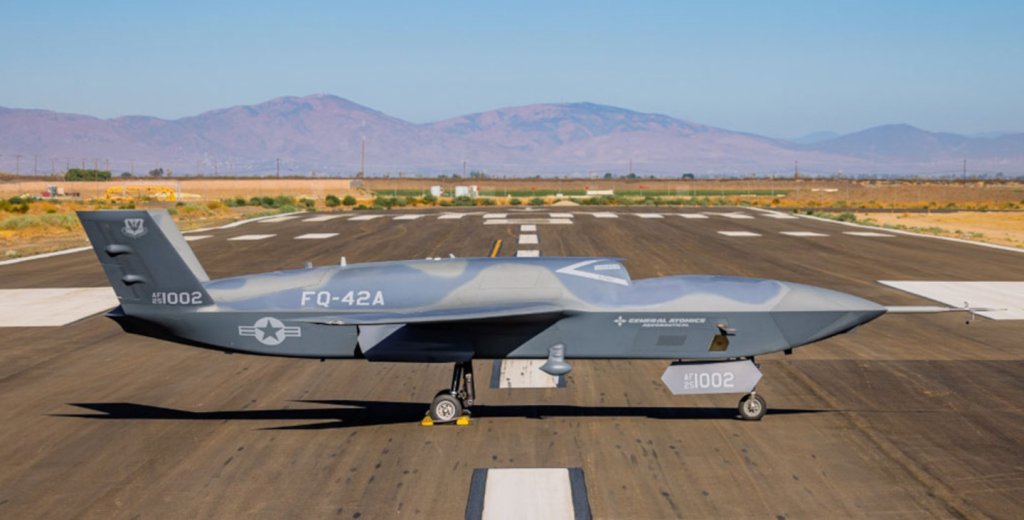
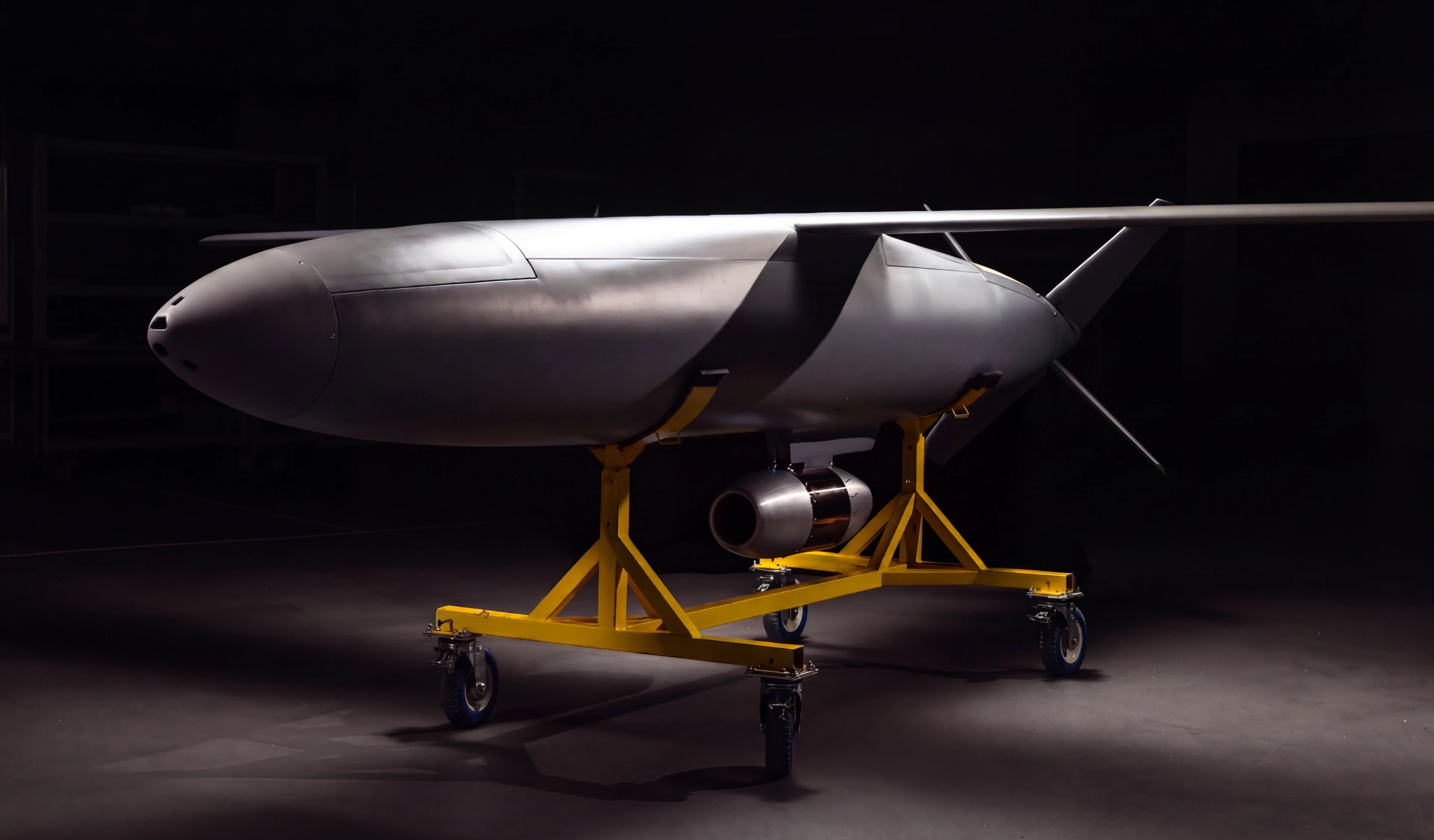
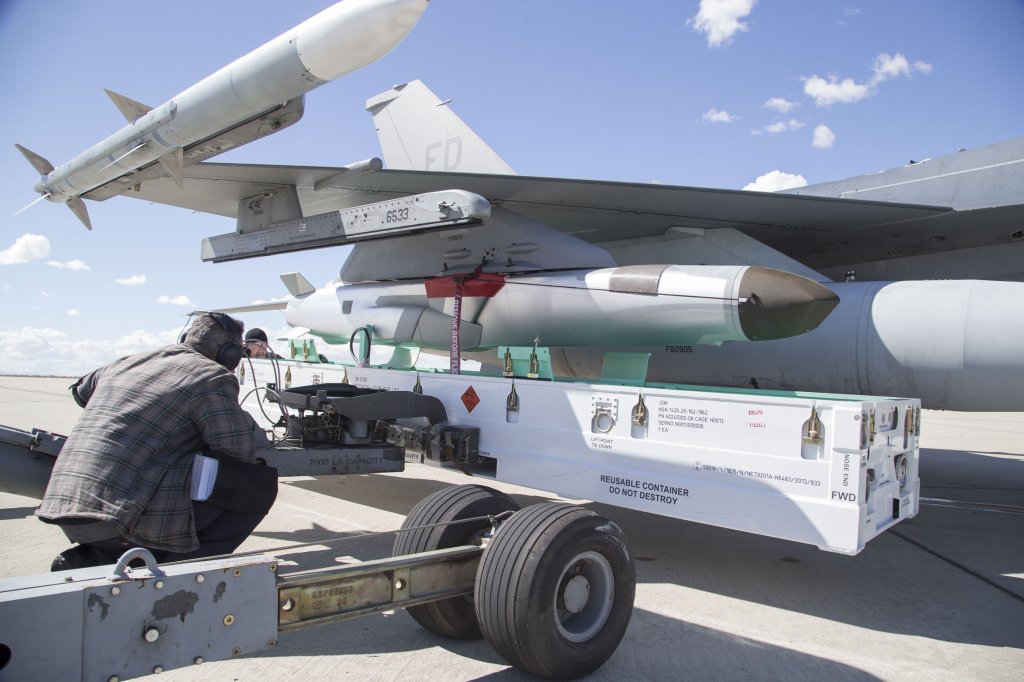
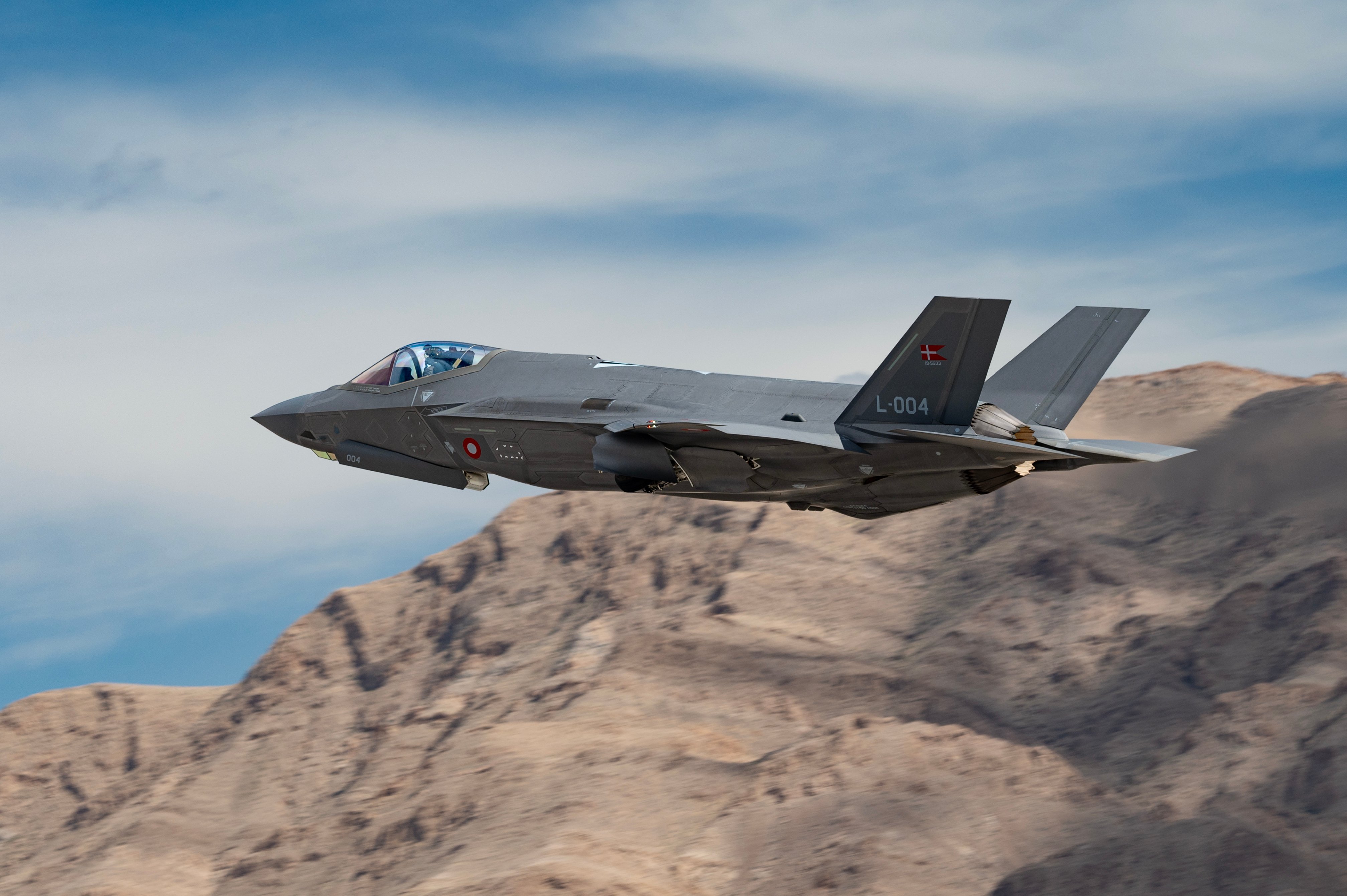
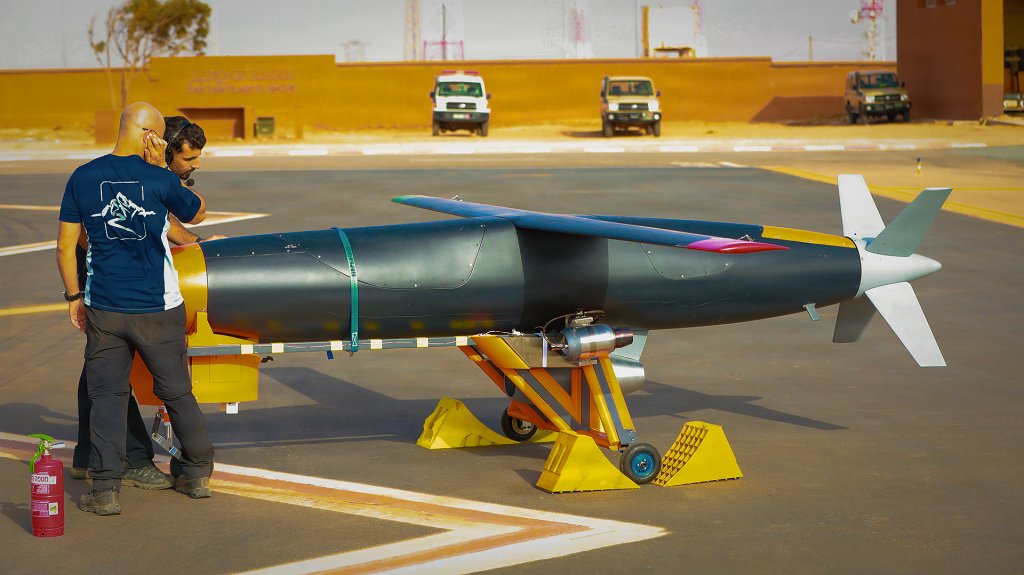




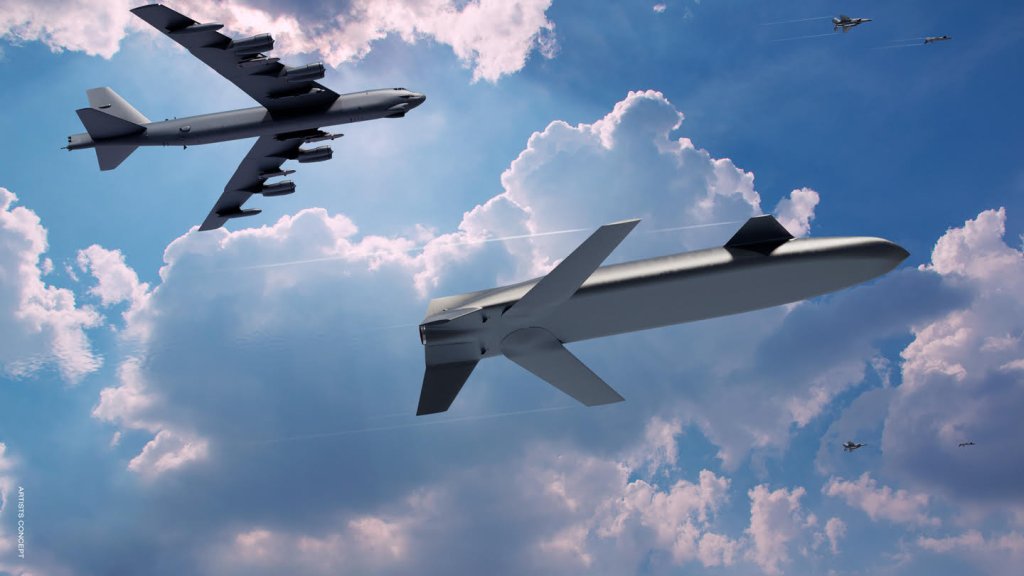
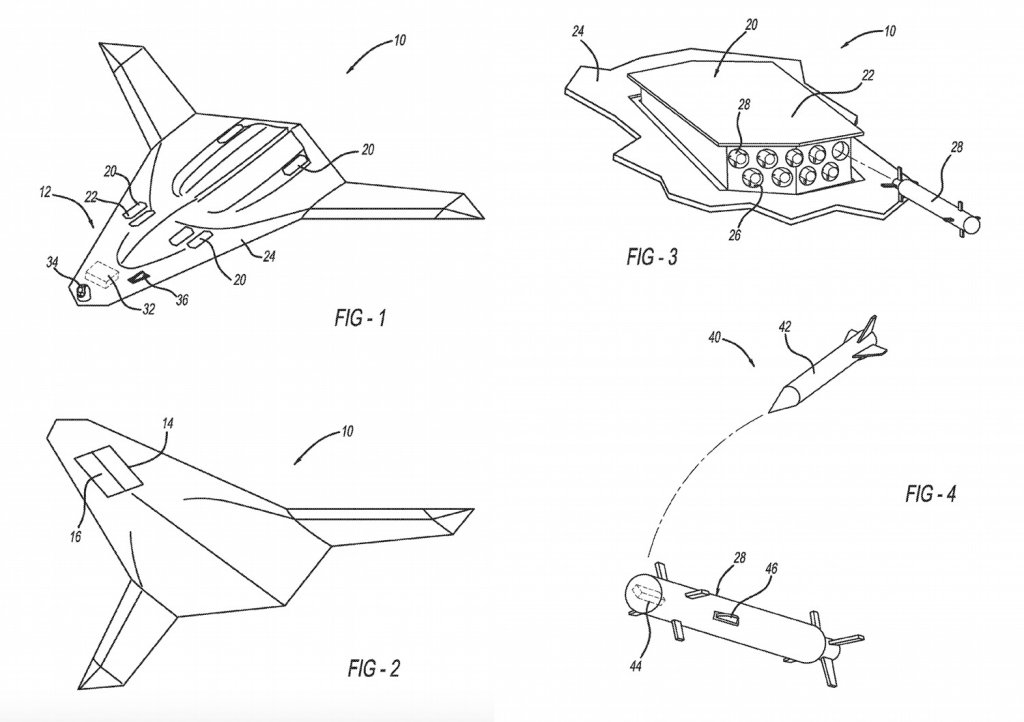
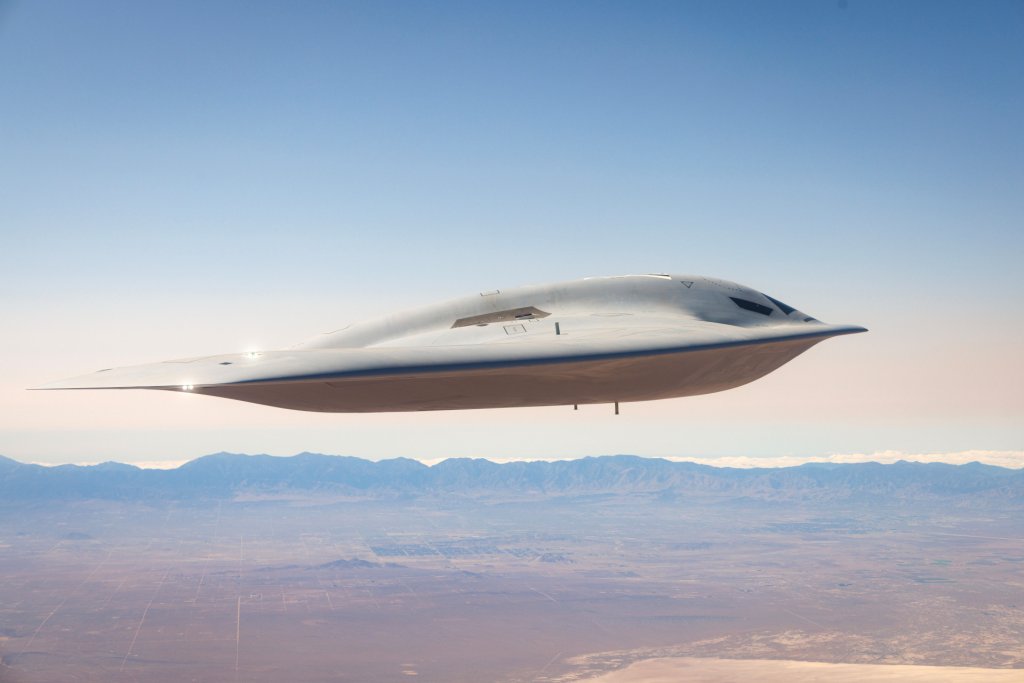
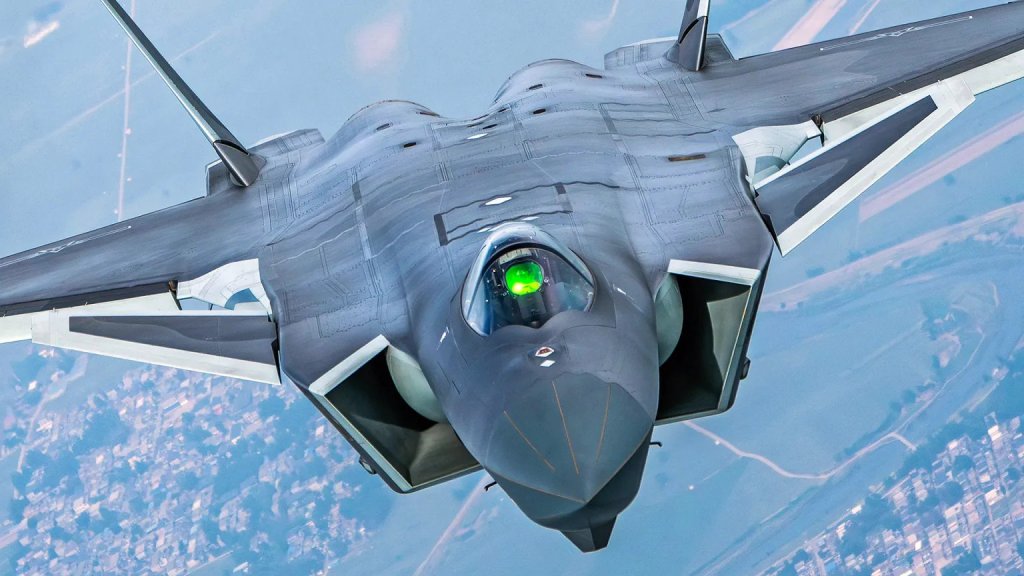
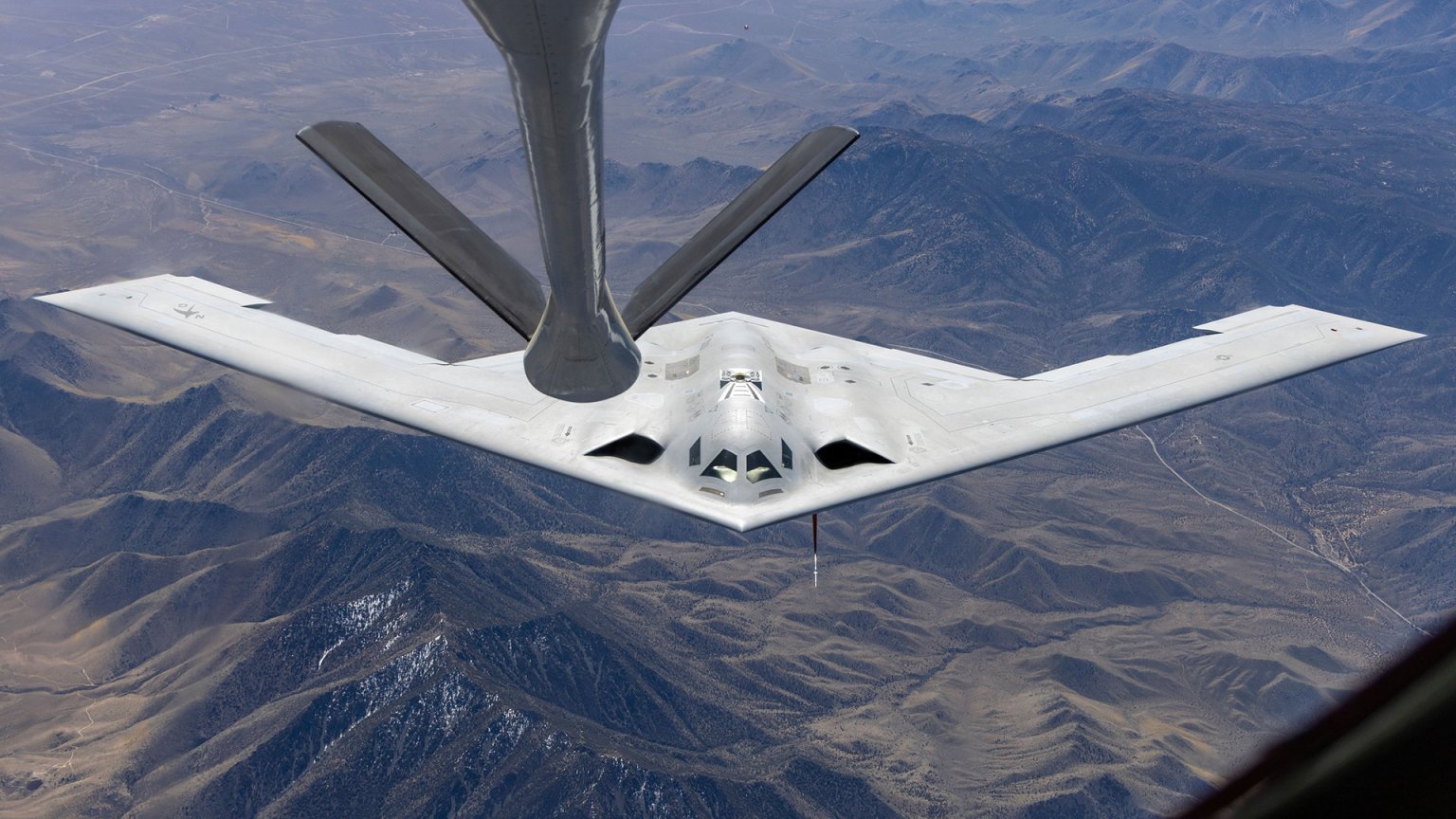

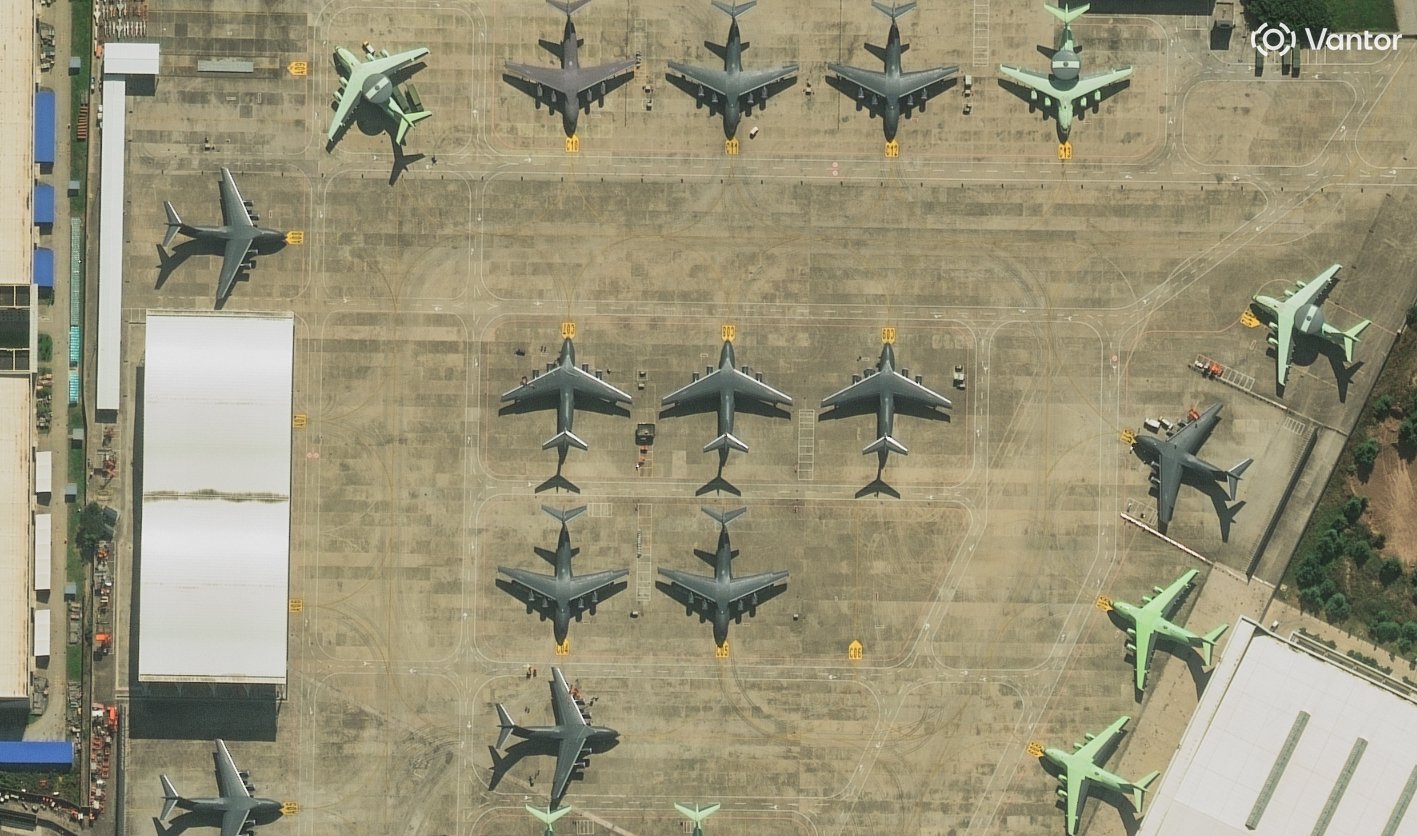
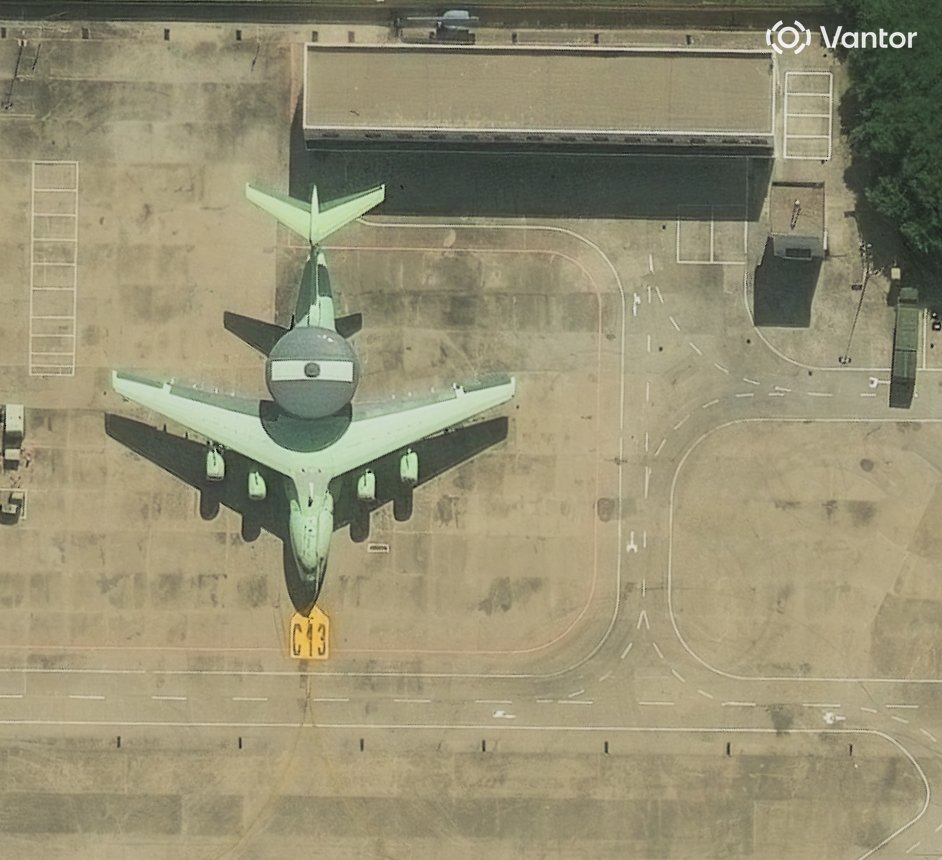

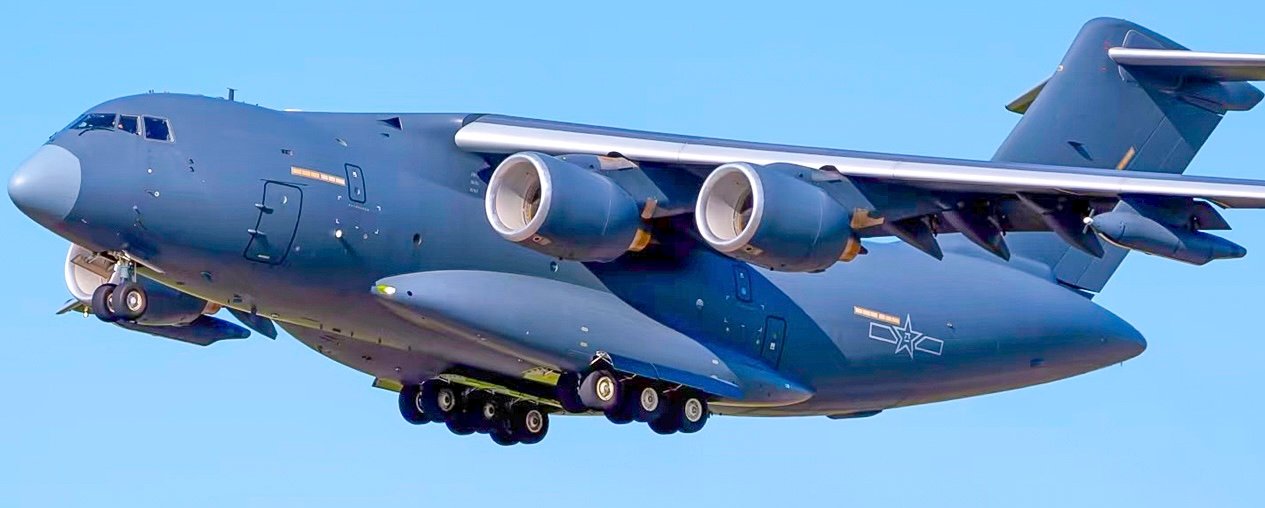



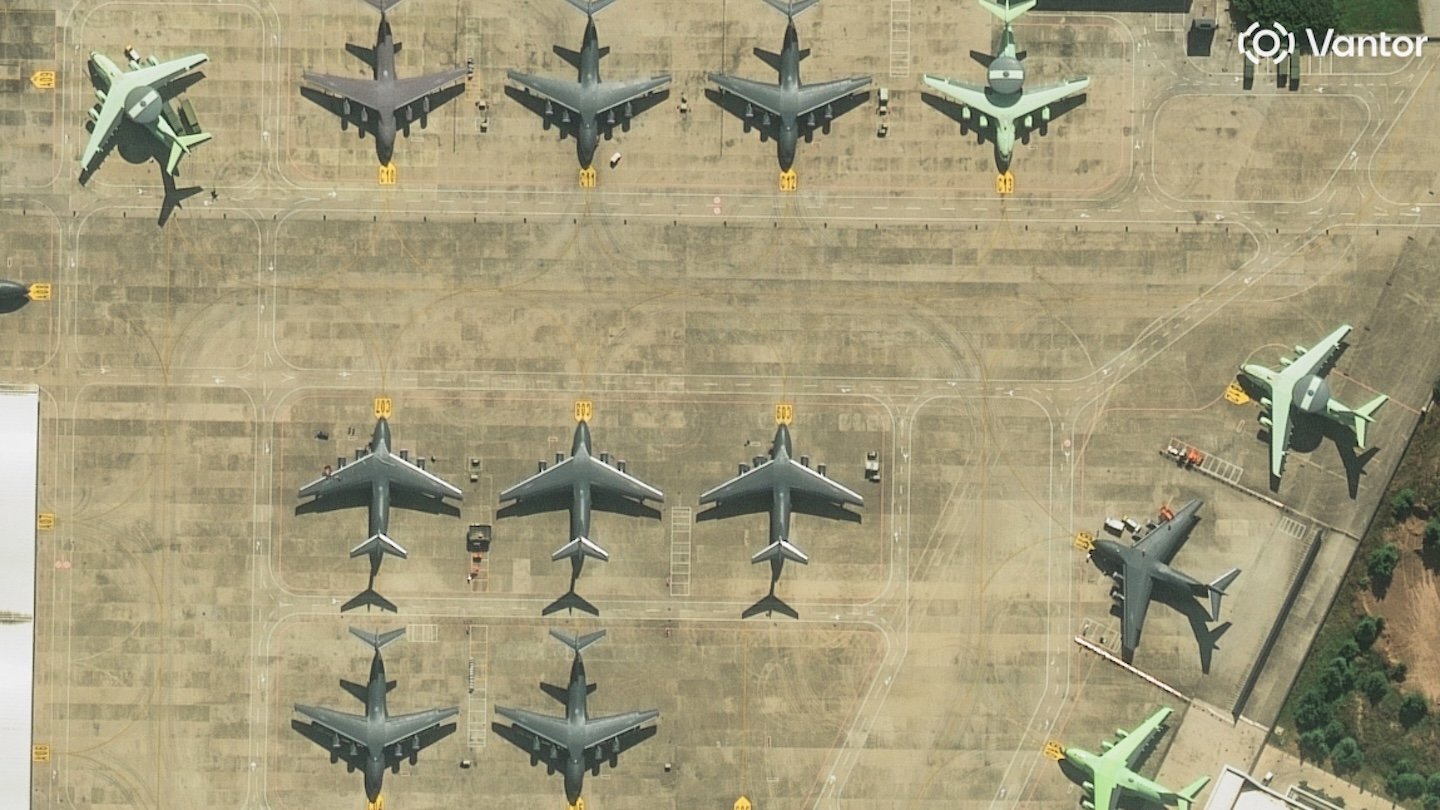
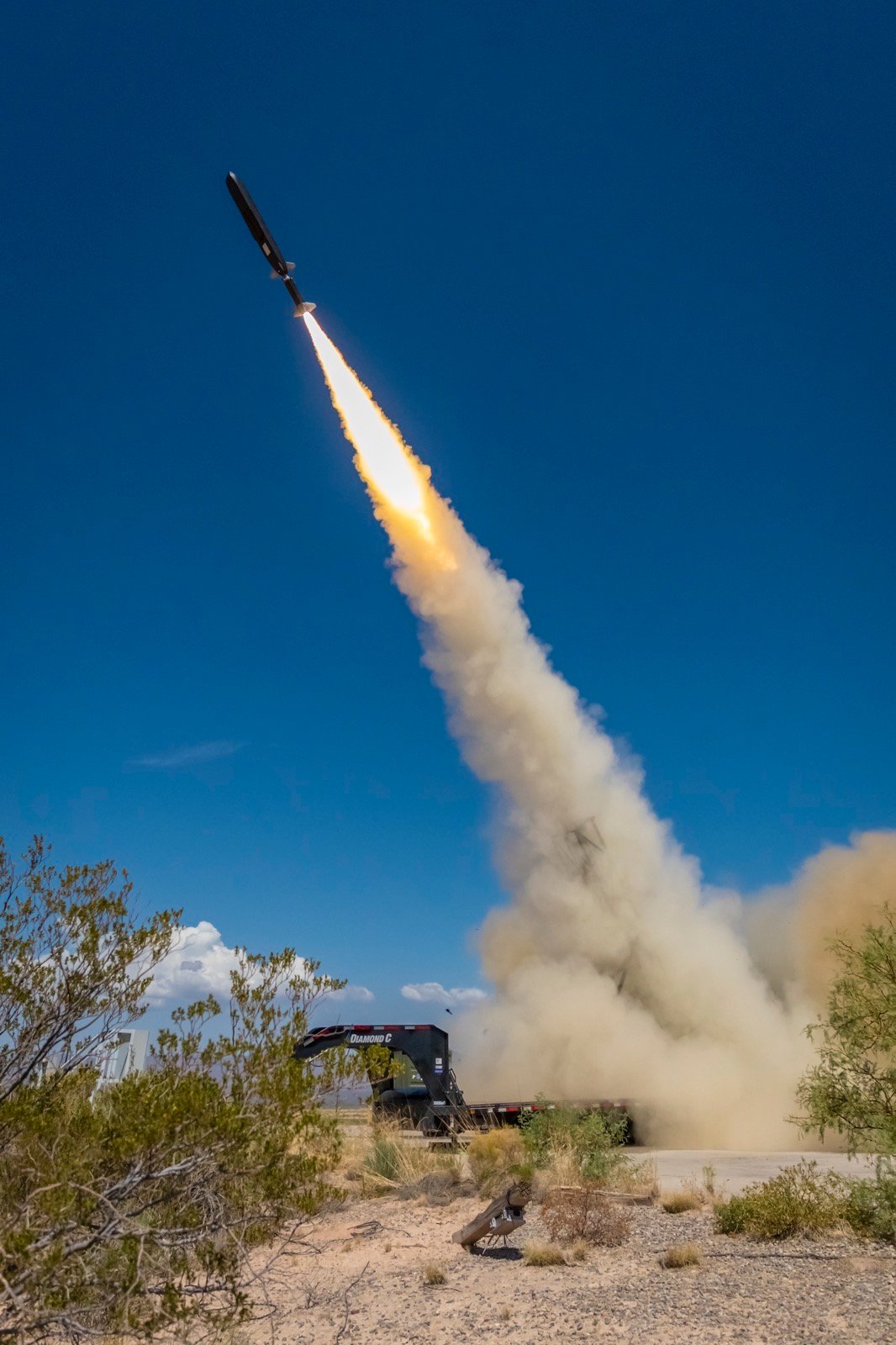
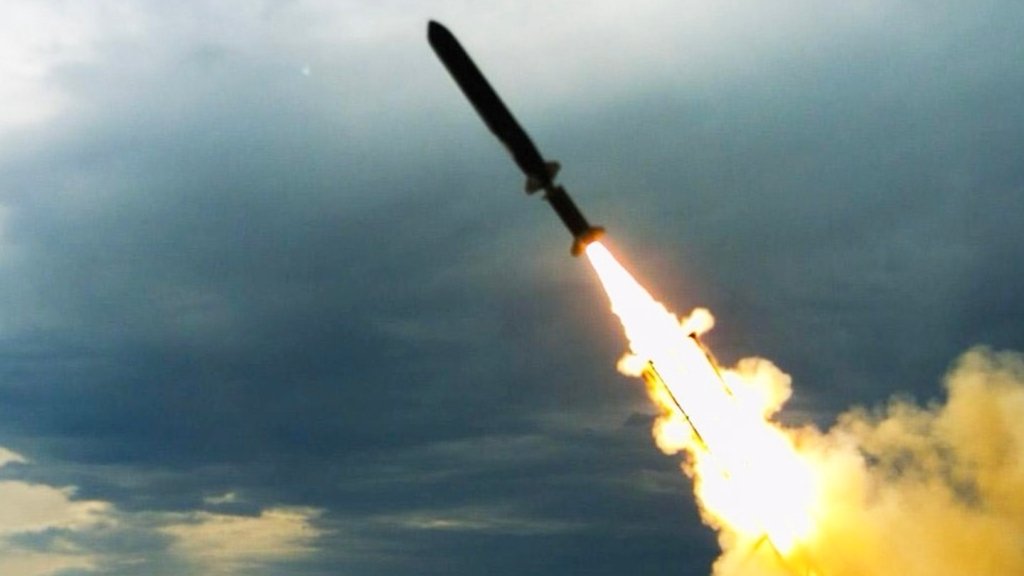
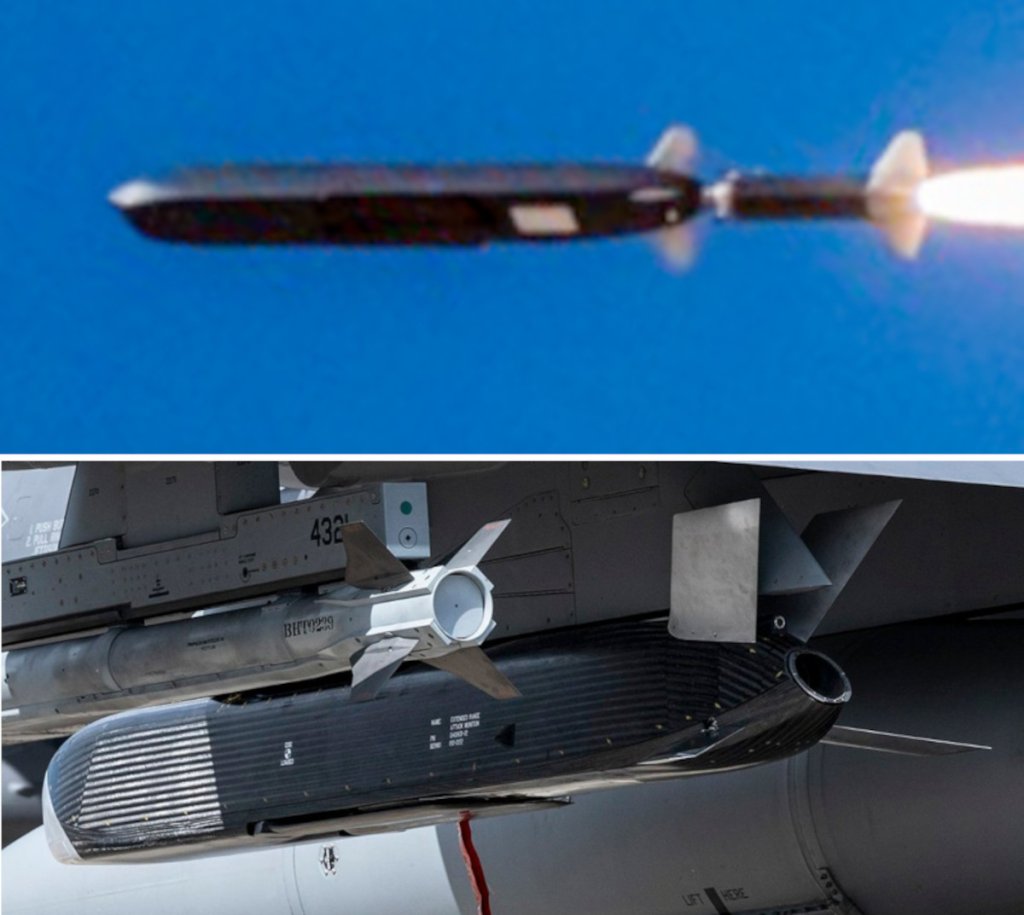
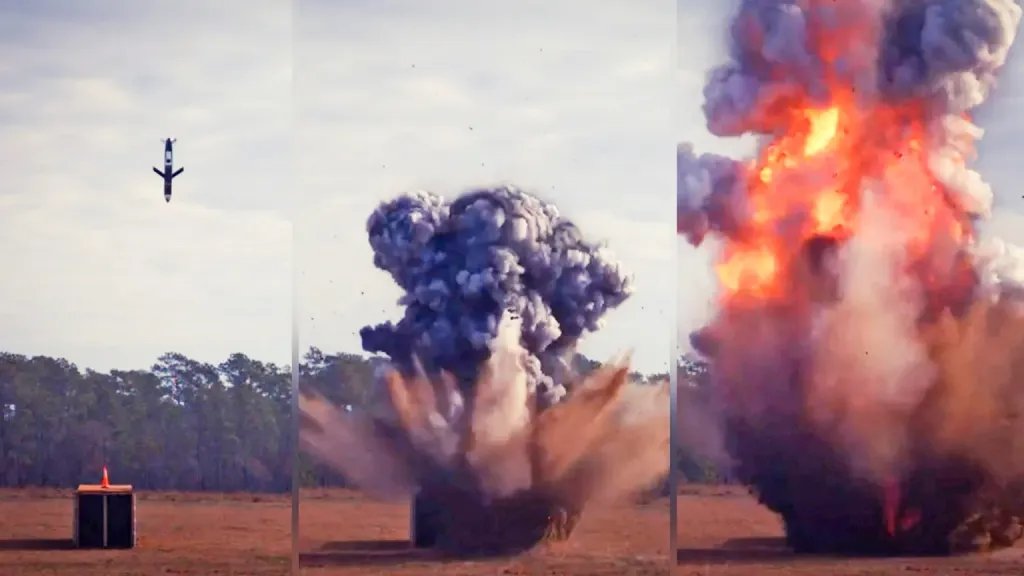


 (@TheDeadDistrict)