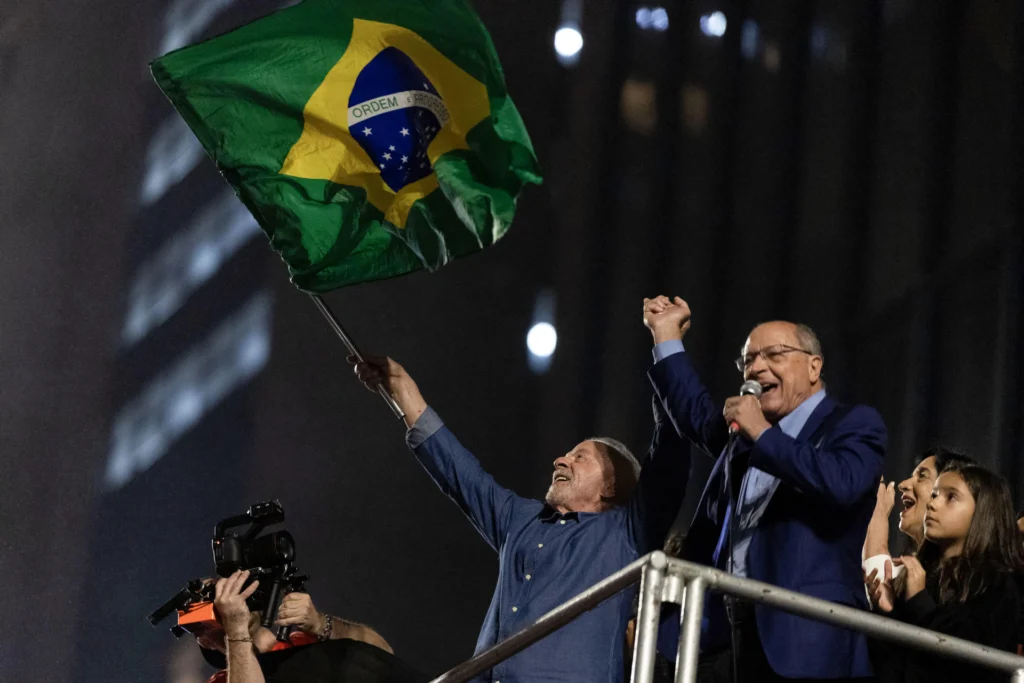
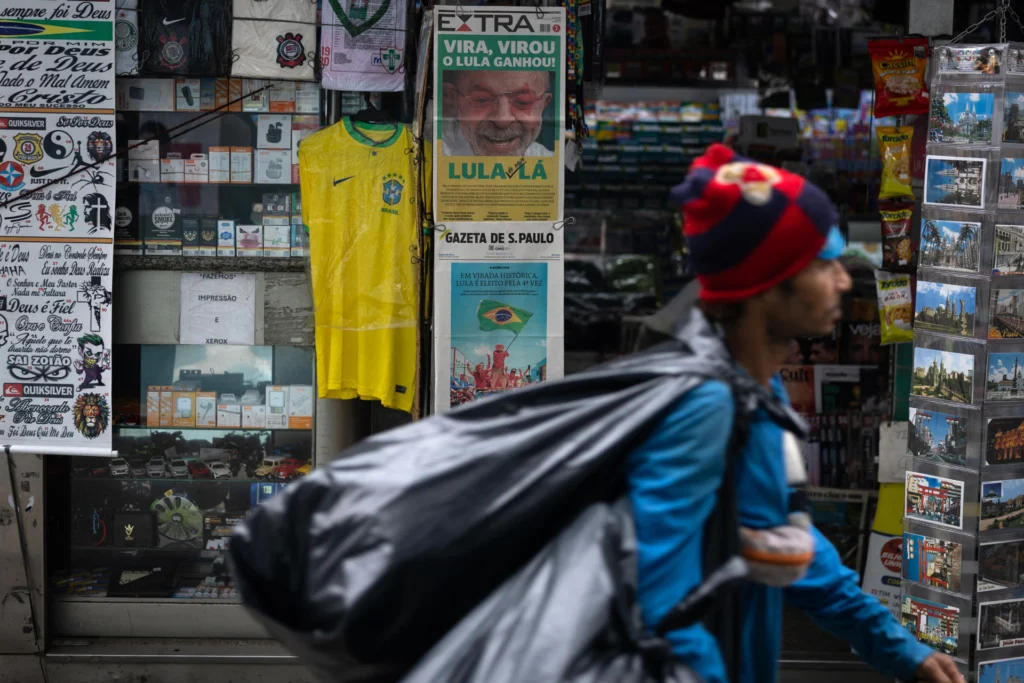
U.S. Embassy in Brasilia sent a report to the State Department and other U.S. government agencies describing President Luiz Inácio Lula da Silva’s victory over Flávio Bolsonaro as surprising and definitive, with a margin close to 4.4 million votes.
The document sent on Monday states that the election unfolded in a mostly peaceful setting, despite mobility and public transport disruptions in the south and northeast of the country.
The findings carry weight because they contradict the narrative pushed by Bolsonaro, who refused to accept the outcome.
According to the report, the two-hour extension of voting hours, ordered by Supreme Federal Court Justice Cristiano Zanin and cited by Flávio to challenge his defeat, had minimal impact: the Superior Electoral Court reported that only 34,000 votes, approximately 0.03% of the total, were recorded after 5 P.M. local time. The U.S. embassy’s assessment also notes the opposition leader’s rejection of the outcome.
Observers from the Organization of American States (OAS) ratified full certainty in the results. They said they had “no doubt about the results,” although they considered the internal communication of the election organizers unsatisfactory.
📢 “Definitiva” e “surpreendente”
Embaixada dos Estados Unidos no Brasil reconhece o resultado das eleições brasileiras e fala em "vitória surpreendente", mas definitiva
Representação americana diz que a ampliação do horário teve efeito mínimo.
Text reads: “”Definitive” and “surprising” : U.S. Embassy in Brazil recognizes the result of the Brazilian elections and speaks of a “surprising victory”, but definitive. U.S. representation says that the extension of the time had minimal effect. Trump has not yet recognized the re-election of Brazil’s president, but he also has not embarked on the dystopia of Flávio Bolsonaro.”
Trump Aided Bolsonaro Exit
The embassy’s position contrasts sharply with statements by U.S. President Donald Trump, who called the elections shameful while expressing a willingness to speak with Lula. The State Department authorized visas for Flávio Bolsonaro and his associates after their arrival in Miami on Wednesday, October 28.
A recent New York Times investigation, based on U.S. government sources, found that Trump and his advisers assisted Bolsonaro’s departure from Brazil. The far right politician was under investigation for corruption, money laundering and foreign exchange evasion.
Flávio Bolsonaro now finds himself in Florida under a temporary migratory status granted by Trump’s order, seeking for a permanent residence through an accelerated process.
The private plane that moved the Bolsonaro’s family from Argentina into U.S. territory was arranged by Jason Miller, a White House communications official. That detail links the flight directly to the administration’s inner circle.
Bolsonaro left Brazil roughly 48 hours after losing the runoff to Lula on Sunday, October 25. His departure came shortly after Supreme Federal Court Justice Alexandre de Moraes requested the seizure of his passports, amid suspicions that he might leave the country to evade justice.
The embassy report does not address whether those judicial proceedings figured in the decision to grant entry. What it does establish is that the U.S. government, through its diplomatic mission in Brasilia, considers Lula’s win beyond dispute even as other branches of the same administration helped his defeated rival relocate to U.S. soil.
The Confederation of African Football (CAF) Executive Committee voted unanimously to restore the Africa Cup of Nations to a two-year cycle, citing the need to protect financial stability and support the development of member federations.
The Confederation of African Football (CAF) has confirmed that the Africa Cup of Nations (AFCON) will continue to take place every two years after its Executive Committee unanimously approved maintaining the tournament’s traditional schedule. The decision replaces a proposal announced in December 2025 that would have moved the competition to a four-year cycle.
Patrice Motsepe, the CAF president, led the review of the continental calendar. The Executive Committee weighed the financial impact of the measure before ratifying it.
A decisive factor was the projected African Nations League. CAF considers that the new competition requires a longer timeframe to consolidate its own revenue, and that pressure pushed the governing body to prioritise current stability over an expanded slate of events. The league remains in development, presented by the confederation as a competition that will eventually generate its own income.
Motsepe framed the outcome as a protective step. “The absolute priority protects the interests of African football and its protagonists,” he said, emphasizing the benefit for national federations.
CAF controls the prize money and broadcast rights for its flagship tournament, income that flows back to member associations. A predictable two-year rhythm, officials argue, gives those federations a steadier footing. Motsepe, a South African businessman, was elected unopposed in March 2021.
The Confédération Africaine de Football (“CAF”) Executive Committee (“EXCO”) today unanimously decided that the CAF Africa Cup of Nations (“AFCON”) will return to taking place every Two Years.
The President of CAF Dr Patrice Motsepe announced at the CAF Strategy Conference in…
The 2027 edition will be held from 19 June to 17 July and will be the first organized jointly by three countries: Kenya, Tanzania and Uganda. The years 2028, 2031 and 2033 complete the cycle, and the schedule is designed to avoid a clash with the 2030 World Cup.
The vote marks a reversal of recent direction. The Africa Cup of Nations has run every two years since 1968, shifting to odd-numbered years in 2013 so as not to collide with the World Cup. CAF had floated plans to make the event quadrennial from 2028, but that proposal remained on hold.
The tournament’s scale explains why the calendar carries such weight. The first edition, held in Sudan in 1957, featured only three teams. Fifteen countries have lifted the trophy, with Egypt the most successful on seven titles. The current trophy has been awarded since 2002.
Since 2019 the final phase has grown from 16 to 24 teams, a change that increased both the number of matches and the revenue available to participating associations.
Beyond competition, CAF stressed the cultural value of the event. The tournament brings together the confederation’s 54 member associations and reinforces a sense of belonging across the continent.
CAF and the Uganda Tourism Board (“UTB”) have announced an agreement that will see Uganda promoted as a leading African tourism destination during the TotalEnergies CAF Africa Cup of Nations (“AFCON”) Kenya, Tanzania and Uganda (PAMOJA) 2027.
With hosts confirmed for 2027 and dates set through 2033, attention now turns to the qualifying process and to the rollout of the African Nations League. The restored two-year rhythm also preserves the tournament’s place among the world’s major national team competitions
Brazil’s Public Labor Prosecutor’s Office (MPT) has registered 3,396 complaints of electoral harassment in the workplace since President Luiz Inácio Lula da Silva’s runoff victory, and the federal government has announced emergency measures to stop retaliation against workers for their political views.
The complaints, which include threats, reprisals and dismissals allegedly motivated by employees’ political leanings, represent 21.4% of all labor complaints counted this year and far exceed the volume reported in the 2022 election.
The MPT designed the package together with the Ministry of Labor and Employment (MTE), the Attorney General’s Office (AGU), the Superior Labor Court (TST) and the Ministry of Justice and Public Security (MJSP), with the aim of stopping workplace persecution and protecting the secrecy of the vote.
Labor Minister Luiz Marinho said the figures reflect “the discontent of a sector of businesspeople who do not accept the natural and democratic result of the ballot box.” He added that every worker has a constitutional right to choose a political affiliation and that the government will apply severe penalties.
Labor Prosecutor General Gláucio Araújo de Oliveira warned of legal consequences. “The employer owns the company, not the employee’s vote,” he said, adding that firing or intimidating workers for their political convictions is illegal and will bring criminal and civil action in labor courts.
The measures include a digital platform on the Ministry of Labor and Employment’s portal to receive testimony and evidence of discrimination or coercion at work, and labor inspectors who will issue infraction notices with cumulative fines. A public registry of companies convicted of discriminatory practices will also be created.
Authorities asked technology companies such as Google and Meta to take down content, groups and boycott lists organized on social media against workers or businesses.
Assédio eleitoral, listas de boicote e perseguição política no trabalho são crimes!
O Ministério Público do Trabalho já registou milhares de denúncias de assédio eleitoral, ultrapassando os números de eleições anteriores. pic.twitter.com/S3oRF0ymC7
Text reads: “Electoral harassment, boycott lists and political persecution at work are crimes! The Labor Public Prosecutor’s Office has already recorded thousands of complaints of electoral harassment, exceeding previous election figures.”
Concern for Native Communities
The post-election climate has also affected rural areas and native people’s territories, particularly the Guaraní and Kaiowá communities in Mato Grosso do Sul. The National Foundation of Indigenous Peoples (Funai) called reports of harassment and armed attacks “extremely worrying” and is coordinating protection with the Federal Police and the Ministry of Indigenous Peoples.
The Articulation of Indigenous Peoples of Brazil (Apib) and the organization Aty Guasu forwarded the complaints, with backing from Amnesty International, Greenpeace and federal lawmaker Célia Xakriabá before the Chamber of Deputies’ Human Rights Commission. “These are communities facing direct threats to their lives, access to water and ancestral territories,” Xakriabá said, calling for the immediate intervention of the National Force.
The ministries of Human Rights and Citizenship, Racial Equality and Indigenous Peoples formed a joint monitoring table to investigate attacks motivated by politics and racial hatred against native peoples, quilombola communities and Afro-Brazilian religious centers. Whether the labor penalties and the monitoring table produce concrete cases will show how far the measures go beyond announcements.
UNA-Haiti denounces deadly operations in densely populated neighborhoods as questions mount over the mission’s objectives.
On Wednesday, the United Nations Association of Haiti (UNA-Haiti), an organization representing the Haitian diaspora community, denounced military operations carried out by Salvadoran forces on Haitian territory, saying they are causing the deaths of innocent civilians.
In the letter addressed to United Nations Secretary-General Antonio Guterres, UNA-Haiti detailed that Salvadoran troops have been conducting heavy aerial bombardments, helicopter gunship raids and assaults with heavy weapons in densely populated neighborhoods such as Croix-des-Bouquets, Canaan and La Plaine du Cul-de-Sac since Oct. 22, 2026.
“Children are being killed not by gangs, but by foreign bombs. These operations do not represent a security solution, but rather a massacre of innocent people,” the organization stressed, warning that families are being forced to hide under their beds to protect themselves from crossfire.
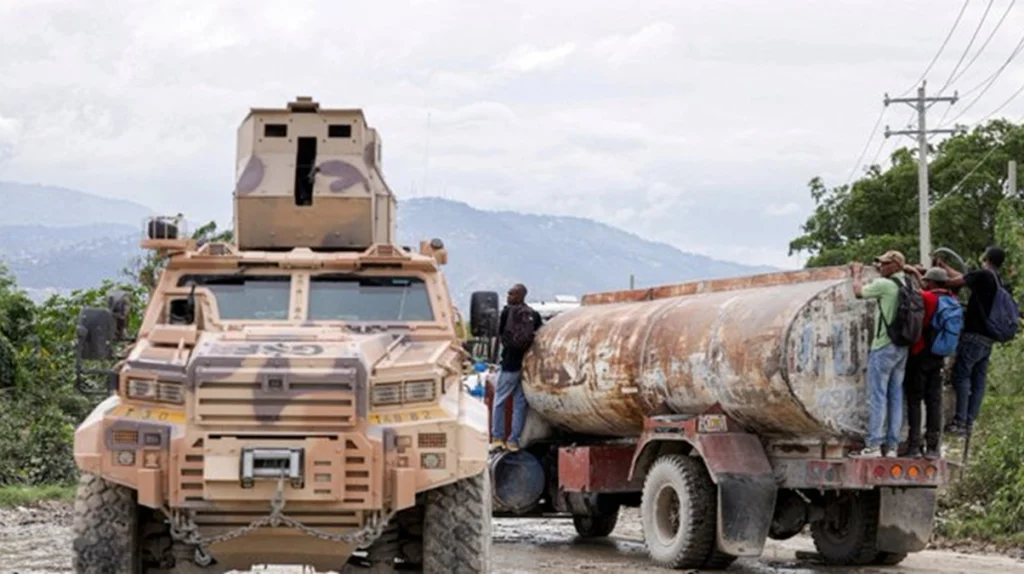
The military escalation is a response to an ambush suffered by the Salvadoran contingent belonging to Task Force Freedom II. On Oct. 18, an armored vehicle carrying four aviation technicians returning from a food supply run was attacked with explosives in the Santo area (Croix-des-Bouquets). The personnel managed to escape from the burning vehicle, but all contact with them has been lost since then.
In response to the incident, El Salvador’s President Nayib Bukele announced a massive deployment on Oct. 21 to rescue the military personnel, issuing a stern message in Haitian Creole on social media directed at gang leaders.
He demanded the safe return of the hostages and warned that what had happened so far was nothing compared with what was “yet to come,” urging them not to take his words as “empty threats.”
El Salvador deploys 2,000 troops to Haiti as interim government cancels elections, again
Bukele promises to “destroy” gangs if medical personnel are not found
The Salvadorian Operation Is Full of Unanswered Questions
El Salvador’s military operation in Haiti, involving more than 2,000 troops on the ground searching for four missing soldiers, raises numerous questions, including the campaign’s real objective, its allies and the role of the Gang Suppression Force (GSF), established under a United Nations Security Council mandate.
The international community has attempted to resolve Haiti’s crisis through several multinational missions. However, Salvadoran President Nayib Bukele, citing the search for the four Salvadoran military personnel who were part of the GSF and have been missing for nearly two weeks, decided to pursue a solution unilaterally.
According to various experts, the incident is one of the operation’s “gray areas,” as it remains unclear what actually happened on Oct. 18, when the vehicle carrying the Salvadorans was attacked and set on fire on the outskirts of Port-au-Prince.
“We need to determine whether this is simply about rescuing people whose identities we still do not know, or whether it is something broader,” said former diplomat Edwin Paraison, who served as Haiti’s consul general in the Dominican Republic.
One of the unanswered questions concerns what happened that day to trigger the Salvadoran military operation, since the identities of the four missing “aviation technicians” have not been officially made public to date.
“Soldiers, in the times we live in, maintain constant contact with their families, so it is very unusual that in El Salvador no one has been concerned about contacting a family member of these missing individuals,” he said.
🇸🇻🇭🇹🚨 HAÏTI — Le SALVADOR a envoyé des SOLDATS en Haïti après l’enlèvement d’agents humanitaires par des GANGS.
The text reads, “Haiti: El Salvador has sent soldiers to Haiti following the kidnapping of humanitarian workers by gangs. A security and rescue operation is underway.”
What Is the Scope of Bukele’s Operation?
The mission’s actual scope is also unknown, although Bukele said Thursday that it “is not an operation against the Haitian people, nor an invasion of the country of Haiti,” because El Salvador has no interest other than ensuring that its four aviation technicians “return home.”
However, the scale of the deployment has drawn attention because, in just 10 days, Bukele assembled an expeditionary force that already doubles the number of personnel the Gang Suppression Force has managed to assemble in a year.
The GSF is not a peacekeeping mission in the strict sense of the word, but rather a military component created to help Haitian authorities neutralize armed gangs, protect infrastructure and facilitate humanitarian access.
The United Nations Security Council approved a contingent of 5,500 personnel from several countries for the GSF, of whom just over 1,000 have arrived in Haiti — approximately 100 of them originally from El Salvador.
In an operation shrouded in secrecy, the Salvadoran troops’ modus operandi is also unclear. It is not known whether they are working jointly with the GSF, led by Mongolian Maj. Gen. Edernebat Batsuuri, or whether they have their own operational plan.
Last week, the GSF announced the arrival in Port-au-Prince of the first Salvadoran contingent soldiers “to support the search and security operations underway,” without providing further details.
Bukele, meanwhile, said Thursday that the search for the four Salvadorans was giving gangs “a lesson — those gangs that make the Haitian people suffer, that kill the people they love, that prevent them from living normal, free lives without fear.”
Pou chèf gang yo ak manm gang yo k ap kenbe kat konpatriyòt nou yo an otaj ann Ayiti:
Mesye nou kidnape yo pa konbatan. Yo se teknisyen nan domèn avyasyon ki fè pati misyon nou ann Ayiti, nan kad yon misyon entènasyonal. Misyon nou an gen sèlman pilòt ak pèsonèl teknik, ki gen… pic.twitter.com/BNKbWTAQQp
President Nayib Bukele’s text reads, “To the gang leaders and gang members holding our four compatriots hostage in Haiti:
Gentlemen, the individuals you have kidnapped are not combatants. They are aviation technicians serving as part of our mission in Haiti—a mission that is international in scope.
Our team consists solely of pilots and technical personnel, whose primary role is to conduct medical evacuations and save lives—not to wage war. Yet, you carried out a cowardly kidnapping, seizing them as they were returning from purchasing food at a local market.
For this reason, we have launched a military operation today to rescue them. We have one objective and one objective only: to bring our four compatriots home, alive and unharmed.
However, I want you—the gang leaders—to understand one thing very clearly: today’s attack is nothing compared to what will follow if you do not release the four hostages alive. And do not mistake our words for empty threats.
We have already dealt with the gangs in El Salvador, and we are fully capable of doing the same to you. There is still time to avoid this. Return our four compatriots to us, alive and unharmed, and everything will return to how it was before the kidnapping. The choice is in your hands.”
Who Provides Logistical Support?
Another gray area concerns the support the Salvadoran president is receiving from other countries because several U.S. military aircraft have landed in recent days at Toussaint Louverture International Airport in Port-au-Prince, which has been closed to international commercial flights because of the violence.
“We have not come to Haiti to make money; nobody is paying us for this. We have come to fight the evil ones,” Bukele said, adding that his country is “almost” the only one “paying for this operation,” although he acknowledged receiving “a little logistical help from some other countries.”
Nevertheless, U.S. analyst Jake Johnston, a researcher on Latin America and the Caribbean, maintains that “the United States and Colombia have collaborated on logistics,” while the Dominican Republic “has offered its support and is serving as a logistical hub for the delivery of helicopters and other equipment.”
Coincidentally or not, a meeting of the Conference of the Americas Coalition Against Cartels (A3C) was held this week in Santo Domingo. The meeting was organized by the Dominican Republic together with the U.S. Department of War to strengthen regional cooperation against threats posed by transnational organized crime and drug trafficking.
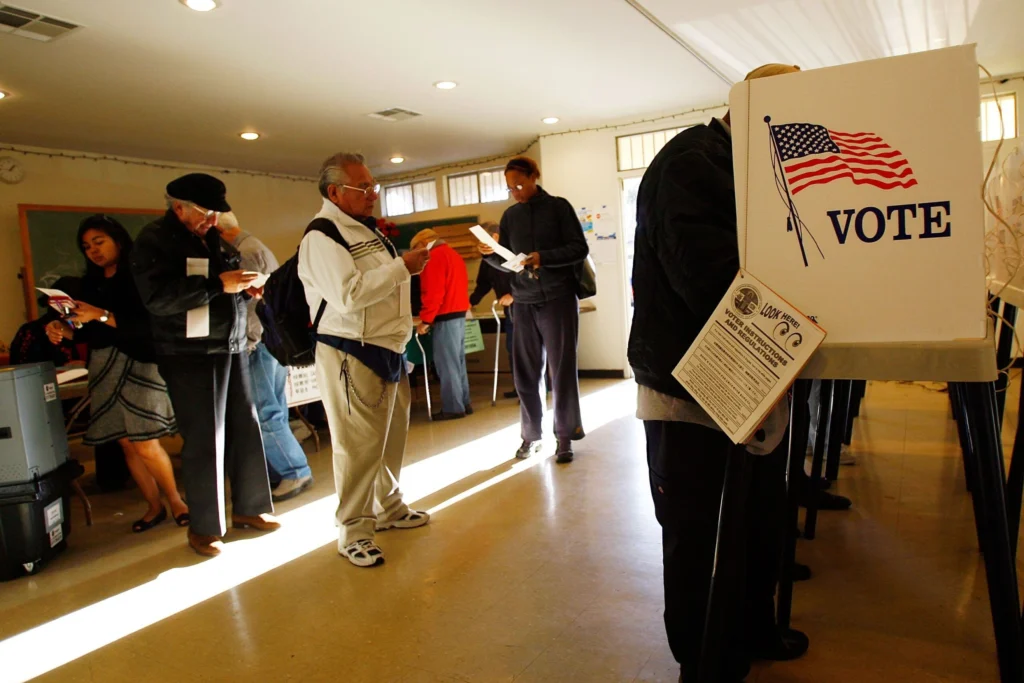
More than 5.2 million Latino voters have already cast their ballots early ahead of next Tuesday’s midterm elections in the United States. So far, this represents an 80% increase compared to 2022, according to data released by the organization Voto Latino.
An analysis by the platform TargetSmart shows that the more than 5.2 million early votes from Latinos stand in contrast to the 2.9 million recorded during the same period in the 2022 legislative elections. This figure makes the Hispanic electorate the most mobilized minority group, surpassing—for the first time—Black voters, who had traditionally held that position.
“We aren’t seeing a trickle. It’s the tsunami that Voto Latino has been predicting. Latino voters are turning out to vote early because they know exactly what is at stake: it’s not an abstract debate; it’s deeply personal,” stated María Teresa Kumar, president of Voto Latino, during a virtual conference.
Furthermore, the organization highlighted the growth in the Latino youth vote: 400,000 young people between the ages of 18 and 29 have already cast their ballots, compared to 259,000 who did so in the previous midterm elections.
This increase is particularly significant in states that are key to the battle for the Senate, such as Alaska, North Carolina, Florida, Georgia, Iowa, Maine, Ohio, and Texas. In these states, Latinos account for 15% of early votes, up from the 10% recorded in 2018 and 2022.
Ready? Set. Vote!
Early Voting ENDS TODAY, October 30 for: – Arizona – Georgia – Nevada – Texas
Early Voting ENDS on SATURDAY, October 31 for: – California – North Carolina – New Mexico – Virginia
Overall voter turnout has also increased. Four days before Election Day, more than 41.3 million early votes had been cast nationwide—up from nearly 33 million at the same point in 2022—representing an increase of over 25%.
According to a Voto Latino survey of 7,000 people, the rising cost of living is the primary concern for Hispanic voters. U.S. President Donald Trump’s immigration policy also ranks among the most critical issues.
Among those surveyed, 39% called for an investigation into abuses by U.S. Immigration and Customs Enforcement (ICE), 37% demanded a legal pathway to citizenship, and 36.1% requested an end to family detention.
“This president made a serious miscalculation in thinking that Latinos wouldn’t care about mass deportations. We warned that it would affect us all—regardless of legal status or criminal history—and now the community has taken matters into its own hands and is voting accordingly,” stated Kumar.
The tight race for control of the House of Representatives and the Senate has boosted voter turnout across various segments of society, while the Latino vote is solidifying as a decisive factor in the 2026 midterm elections.
They were detained while harvesting alongside Palestinians in the West Bank. The mayor of Al Lubban Al Gharbi was also arrested.
On Friday, the Palestinian NGO International Solidarity Movement (ISM) said that 14 foreign activists face deportation from Israel after being arrested for harvesting olives alongside Palestinians in Al Lubban Al Gharbi, northwest of Ramallah, in the occupied West Bank.
“The activists were detained inside a house in the town, far from the olive groves, and were subsequently transferred to the Israeli police station at the Ni’ilin checkpoint. They were questioned on suspicion of violating an order issued by a military commander by allegedly entering a closed military zone,” said ISM, an organization that promotes the use of nonviolent resistance in opposition to the Israeli occupation.
The activists, who come from Italy, the United States, the United Kingdom, Australia, Germany, Ireland and Sweden, are scheduled to appear at a hearing that could result in the revocation of their visas and their deportation.
During the Israeli operation against the activists, who “were not presented with any order declaring the area a military zone”, the mayor of Al Lubban Al Gharbi was also arrested. He was brutally beaten, threatened, and his carpentry workshop was damaged. He was also warned not to bring activists back to the area.
Israeli Forces Arrest Foreign Activist Helping Palestinians Harvest Olives in Kafr Malik Israeli forces arrested a foreign activist in the village of Kafr Malik, northeast of Ramallah, in the occupied West Bank, while he was helping Palestinian farmers harvest their olive crops pic.twitter.com/paEBO6Y3xR
Al Lubban Al Gharbi is located in an area of the West Bank where brutal violence by Israeli settlers, settlement expansion, land confiscation and restrictions on freedom of movement have progressively reduced Palestinians’ access to their agricultural land.
During the 2025 olive harvest, the International Solidarity Movement had already documented numerous incidents involving Israeli settlers and soldiers using live ammunition and tear gas in the area.
Settler violence against Palestinians has surged in the West Bank over the past four years under the far-right government led by Prime Minister Benjamin Netanyahu.
The olive harvest season has become a particularly brutal period not only for farmers but also for foreign journalists and even diplomats, who were likewise assaulted weeks ago by groups of Jewish extremists amid the Israeli army’s inaction.
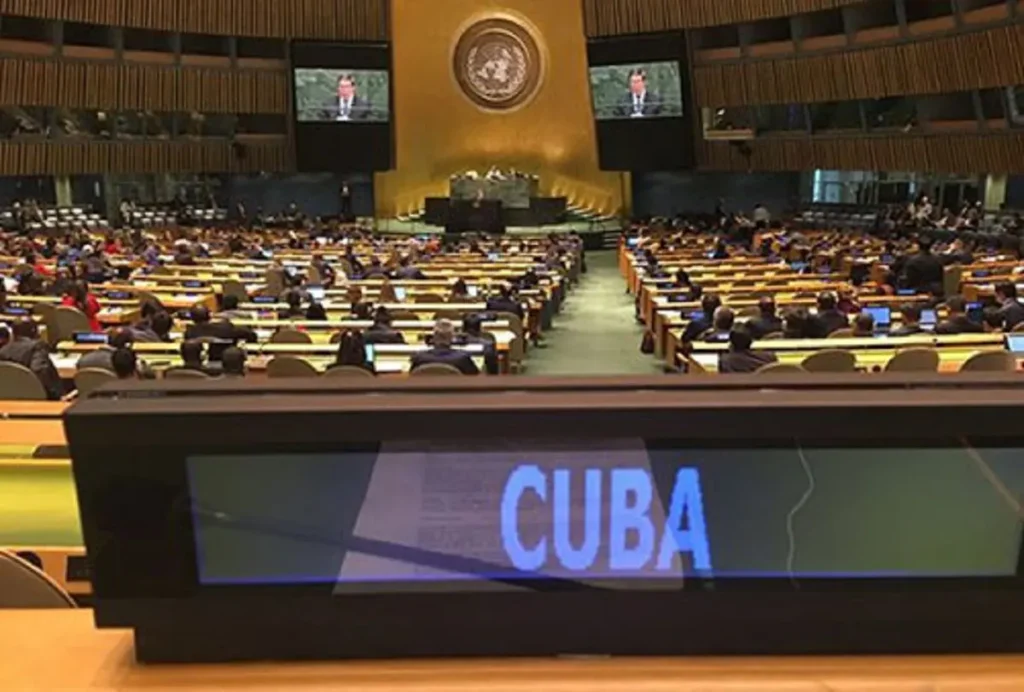
The United Nations General Assembly approved for the thirty-fourth time a resolution that demands the end of the economic, commercial and financial blockade of the United States against Cuba, with 130 votes in favor, 17 against and 25 abstentions. Cuban President Miguel Díaz-Canel thanked the nations that supported the initiative and denounced pressure from Washington to modify the result.
“On behalf of the people of Cuba, we appreciate the solidarity of the 130 nations that voted against the genocidal blockade and the collective punishment to which the U.S. government subjects us,” Díaz-Canel expressed through the X social network.
The president described the vote as an act of courage and sovereignty, despite U.S. diplomatic efforts aimed at reducing support for the resolution presented by Havana.
The previous day became a diplomatic battle between Cuba, which defends multilateralism and international law, and a MAGA version of the United States that repeatedly violates the United Nations Charter and views the world as its backyard.
El mundo ha vuelto a pronunciarse mayoritariamente contra el #bloqueo, incluso por encima de las más groseras presiones y chantajes de EE.UU para cambiar el rumbo de esta votación.
The text reads, “The world has once again spoken out overwhelmingly against the blockade, even above the most brazen pressures and blackmail from the U.S. to change the course of this vote.”
The Cuban Foreign Minister, Bruno Rodríguez, warned about an unusual deployment by the United States to reduce support for the document. During the debate, the U.S. representative to the UN, Mike Waltz, maintained that the blockade does not exist and attempted to blame the Cuban leadership for the economic crisis suffered by the country, claims that the Cuban delegation strongly rejected.
Diplomats from various nations defended the cessation of unilateral coercive measures and pointed out their effects on the development of the Cuban nation. The day took place in the midst of bilateral tensions and a debate on compliance with international law and the Charter of the United Nations.
The vote took place in a context of tightening U.S. restrictions. Between March 2025 and February 2026, damages attributed to the blockade amounted to $8,083.3 million, 7% more than in the previous period. The accumulated damages over six decades reach more than 178.7 billion dollars in current prices.
La política absurda del gobierno EEUU contra Cuba bloquea todo aquello que sostiene la vida. Hasta sus propios ciudadanos sufren las consecuencias.
¿Por qué el bloqueo contra Cuba impide que 7 millones de estadounidenses reciban los beneficios del medicamento cubano NeuralCIM… pic.twitter.com/OrGyTzMEVK
The text reads, “The absurd U.S. government policy against Cuba blocks everything that sustains life. Even its own citizens suffer the consequences. Why does the blockade against Cuba prevent 7 million Americans from receiving the benefits of the unique Cuban drug NeuralCIM, which can combat Alzheimer’s, senile dementia, neurodegenerative diseases, with a treatment of proven effectiveness, incomparably superior to its counterpart”
The resolution seeks the lifting of unilateral restrictions that, according to Havana, affect sectors such as electricity generation, transportation, food production, health and education. The text also mentions that the fuel shortage has affected blackouts and the operation of essential services.
Cuba has presented this initiative before the General Assembly every year since 1992. On the 34 occasions in which it has been put to a vote, the resolution has received a large majority of support, although the level of support has varied depending on the international political context.
The approval reiterates the international demand for the end of the U.S. blockade against Cuba, while the government in Havana has demonstrated with verifiable data that the US measures constitute collective punishment with economic and social consequences for the Cuban population.
A nationwide strike brought together workers, students, housing rights groups and farmers.
On Friday, thousands of people demonstrated in major Italian cities against far-right Prime Minister Giorgia Meloni, the high cost of living and military rearmament.
The protests took place as part of a general strike called by the Unione Sindacale di Base (USB) and were supported mainly by students, public-sector workers and housing rights organizations.
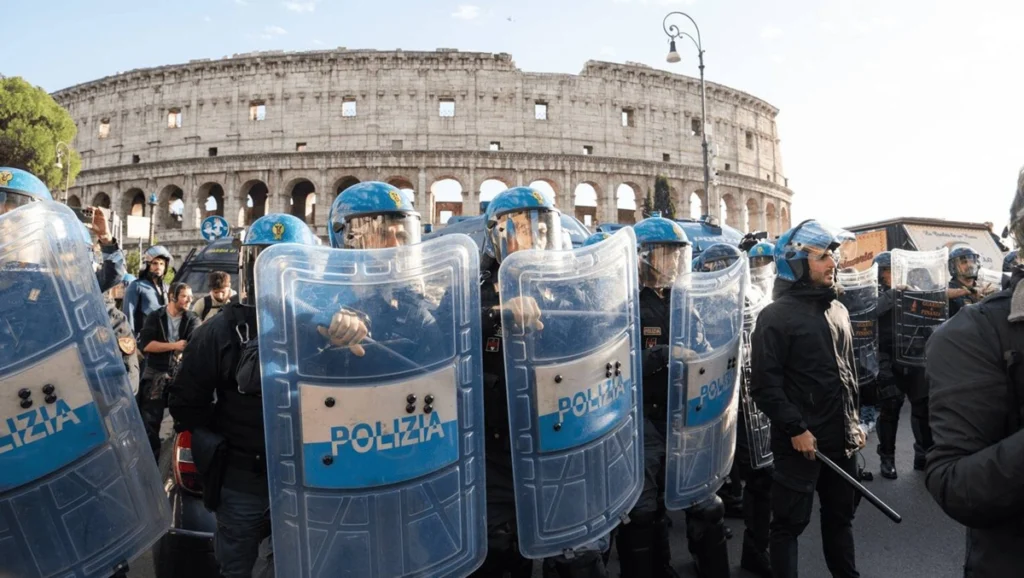
Rome was one of the main focal points of the demonstrations, with a protest encampment outside the Colosseum set to remain in place through Sunday.
The largely peaceful demonstrations spread across cities including Milan, Florence, Naples, Genoa, Turin and Bologna, as well as several locations in Sicily.
“Workers, working-class communities, homeless people and agricultural producers have mobilized against the economic crisis this government is imposing on us to finance rearmament and military spending that have nothing to do with the interests of the population,” USB Director Stefano De Angelis said, noting that more than 1.5 million people had taken part in protests held across the country.
👥 Roma, sciopero generale: circa 100mila manifestanti secondo le stime dell'USB.
Il corteo di studenti e lavoratori, partito da piazza dei Cinquecento, è tornato alla stazione dopo aver attraversato la città. Video di Maurizio Leggeri e Diariodigitale pic.twitter.com/PwJ3GMkRVK
— Italia 24H Live 🔴 – Notizie dall'Italia (@Italia24HLive) October 30, 2026
The text reads, “General Strike in Rome: approximately 100,000 protesters, according to USB estimates. The march of students and workers, which set off from Piazza dei Cinquecento, returned to the station after moving through the city.”
Protest Encampment Outside the Colosseum Through Sunday
In Rome, the main demonstration drew at least 20,000 participants and set off from Piazza del Cinquecento toward the area surrounding the Colosseum.
Once there, organizers announced their intention to occupy Via dei Fori Imperiali, the avenue connecting central Piazza Venezia with the monument, and set up tents through Sunday, when a national assembly is scheduled to take place.
The initiative, organized by the USB and the Lotta per la Casa collective, aims to turn the site into a space for mobilization and participation by the various groups that have joined the protests across Italy.
“This demonstration does not end here. We will continue mobilizing through Sunday, when we will hold a major national assembly in this square, beneath the Colosseum, attended by representatives of all the demonstrations taking place across the country today,” De Angelis said.
The union leader also denounced restrictions preventing demonstrators from approaching Montecitorio, the seat of the Chamber of Deputies, describing them as “anti-democratic.”
“In any country where demonstrations are held against the government, people can reach government and parliamentary buildings. In Italy, this is prohibited,” he said.
“We will stay here, outside the Colosseum, through Sunday to show that this city, too, must be a place for participation in protest mobilizations.”
Sciopero generale, studenti e lavoratori insieme nelle piazze: “Siamo centinaia di migliaia”. Da Milano a Napoli occupate le tangenziali https://t.co/wolYZWxUmR
The text reads, “General strike, students and workers together in the streets: ‘There are hundreds of thousands of us.’ From Milan to Naples, ring roads occupied.“
Clashes and Roadblocks
The day’s main episode of tension occurred in Turin, in northern Italy, where clashes broke out between demonstrators and security forces in the central Piazza Castello.
Participants in the march threw eggs, bottles and red paint at riot police, who responded with charges and high-pressure water hoses.
After the clashes, participants returned to the occupied university campus and announced a new gathering for 6 p.m. local time to continue the protests. Objects were also thrown at police in Rome, near the Colosseum.
The strike also caused major traffic disruptions, particularly in Bologna, in northern Italy, where demonstrators blocked access roads to several educational institutions and marched along the ring road, forcing the temporary closure of the A14 highway.
In Genoa, in northern Italy, participants blocked access to the port, while other demonstrations disrupted daily activities in major Italian cities.
Friday’s strike marks the beginning of a series of mobilizations in Italy that will continue Nov. 20 with a general strike across all sectors called by the CGIL, the country’s largest trade union confederation, and a taxi-sector strike scheduled for Dec. 14.
The day was marked by a heavy security presence across the country following violent incidents reported Oct. 17 and 18 in Milan, Turin and Bologna. Those incidents prompted Meloni’s government to approve an extraordinary security decree and deploy 500 military personnel to support police forces.
She reaffirmed her commitment to judicial reform and pledged to hold elections under a revamped electoral authority.
In a national address delivered on Thursday, Venezuelan Acting President Delcy Rodriguez presented an overview of the political, economic, cultural, spiritual and democratic transformation initiatives carried out throughout the year.
During her address, she underscored the Venezuelan government’s independence in directing public policies and making strategic decisions.
“The decisions behind this transformation are made here, signed here and announced here, before you. Sovereignty is not negotiable,” Rodriguez said, emphasizing that Venezuela’s political horizon is measured by a sequence of objectives to be achieved, while maintaining international relations based on mutual respect.
Nearly 10 months after the U.S. military attack, Rodriguez referred to the “two perspectives” shaping Venezuela: that of those who view the changes as an excessive opening and that of those who believe the changes are happening too slowly. The Venezuelan acting president then stressed that her administration operates and positions itself at the point where these two perspectives intersect.
“Governance takes place between these two tensions, and we have chosen a path that will lead us steadily to a successful outcome,” she said, urging citizens to assess the government’s performance more objectively and dispassionately.
“I am not asking you to have faith. I am asking you to judge me by the facts. Less fighting, more solutions,” Rodriguez said, setting out the standard by which she wants her administration to be evaluated: “An announcement is not worth what it promises. It is worth what is delivered.”
Her statements come as U.S. President Donald Trump envisions Venezuela becoming the 51st state of his country, while Secretary of State Marco Rubio seeks to set the pace of Venezuela’s political process. In response to those ambitions, Acting President Rodriguez outlined her main priorities.
1. All Decisions Are Made in Venezuela
In keeping with the defense of national sovereignty, Rodriguez described the transformation proposed under the “Venezuela Reborn” plan as a “democratic, orderly, institutional and verifiable transformation.”
This translates into three aspirations that matter in every Venezuelan household: “that your child can return, that the power does not go out, and that your salary is enough to make ends meet. That is what rebirth means,” she said.
“Return will always be voluntary, dignified and guaranteed,” Rodriguez promised Venezuelans living abroad. She assured them that anyone who decides to return will find “a country that welcomes them with respect, their documents in order and employment opportunities.”
2. A Justice System Open to Witnesses
Regarding criminal justice reform, Rodriguez invited “independent organizations to verify each of these steps in complete freedom and transparency.”
She recalled that the reform is currently advancing through a nationwide consultation intended to hear everyone’s views, with technical assistance from the European Union and cooperation from the U.N. Office of the High Commissioner for Human Rights. Its purpose is to build “a fairer, more humane, transparent and impartial justice system.”
To date, nearly 9,000 people have benefited from the Amnesty Law, which ended criminal proceedings “stemming from the confrontation in which we were immersed,” Rodriguez said, emphasizing that more than 1,000 people have already regained their freedom.
In September, Rodriguez had acknowledged that the Law Against Hate “had been applied abusively.” Accordingly, the reform to that law introduced by the National Assembly seeks to eliminate criminal penalties and strengthen its educational purpose.
Once enacted, the reform will require the justice system to review the cases of individuals prosecuted under the law. This is in addition to instructions to security forces that no one may be detained without a court order, except when caught in the act of committing a crime, and a reminder that peaceful protest is a constitutional right that requires respect for the physical integrity of public officials.
“The responsible exercise of politics is guaranteed for everyone. The doors are open,” the Venezuelan acting president said.
3. Elections with the World as a Witness
“This is not a dialogue for the sake of appearances. These are difficult issues, and they cannot be resolved in a single day,” Rodriguez said, referring to one of the issues on the agenda of the dialogue table established under the Democratic Coexistence and Peace Program.
In October, the Venezuelan government and representatives of the 2015 National Assembly held a third round of talks in Caracas.
The agenda focuses on “upcoming electoral processes, reform of the Supreme Tribunal of Justice and the recovery of resources for post-earthquake socioeconomic assistance,” Rodriguez said, highlighting that the dialogue table had demanded that the United Kingdom return the seized Venezuelan gold.
In response to those calling for early elections, an urgency encouraged by the far right, Rodriguez recalled that “Venezuela’s political horizon is not measured by a date on the calendar, but by a sequence of objectives we must achieve.” At the end of that sequence are the ballot boxes.
“There will be elections, all those required by our Constitution, organized by a renewed electoral authority and with the world as a witness,” the Venezuelan acting president pledged.
She stressed that the process aims to establish an electoral authority “accepted by everyone,” guarantee internal democracy within political parties and leave behind the “times of confrontation that nobody wants anymore.”
Addressing those who hold different views, she said: “This transformation also belongs to you. I am not asking you to change your opinion. I am asking you to judge by the facts and come to the table, with equal rules for everyone.”
4. Contracts, Wages and Reconstruction
“You have the right to make demands, and I am listening,” Rodriguez said, emphasizing that dialogue on economic issues is already producing concrete results.
Thanks to the new regulations that have been approved, the Venezuelan government has managed to sign 61 contracts in the hydrocarbons sector, while another 44 contracts are under negotiation.
Authorities are also making progress in talks on mining and in assessing “nonessential assets held by the state that could be offered to the private sector or returned to their former owners.”
Workers’ wages are being discussed at a negotiating table that brings together trade union federations, business chambers and government authorities. For 2027, “increases in workers’ income across the country at four different points during the year” are planned. These increases “may in no case be lower than the economic growth recorded in the preceding quarter.”
To families who are still rebuilding their homes after the earthquake, Rodriguez promised that reconstruction efforts would not stop and that every month she would show them what had been done, where and when.
5. Legality as a Method
“When I said at the United Nations that legality was the way forward, it was not just a phrase. It was a method,” the Venezuelan acting president said during her national address.
She recalled that her administration continues to restore access to news websites “that had been subject to administrative measures as a result of the confrontation we experienced.” Restrictions imposed during the years of confrontation are now being reversed under the same legal framework that Rodriguez has made her governing method.
She urged Venezuelan journalists to act responsibly and respect citizens’ rights, while asking the foreign press not to stigmatize “the image of our country, nor its people and national identity.”
Finally, in response to those who fear that the transformations will entail too many concessions to traditional economic power groups, Rodriguez assured them that “nothing that has been built will be lost. What works will be protected, and what is wrong will be corrected.”
She urged young people to believe again, because these reforms are intended to ensure that “when it is their turn to decide the country’s direction, they will find institutions, not rubble.”
Republicans are losing ground in a state where Democrats are seeking to retain Senate seats and win the governor’s race.
Less than a week before the midterm elections, polls predict that voters in Georgia are not leaning toward Republicans in a state that plays a decisive role in U.S. politics and gave Donald Trump a narrow victory in the 2024 presidential election.
“Republicans are disappointed. Trump promised he would lower prices, and obviously, it was a scam,” said David, a Democratic volunteer who goes door to door in neighborhoods across the city of Macon to make sure no progressive vote is lost.
Polls point to a likely victory for Sen. Jon Ossoff, who is seeking reelection against Republican Mike Collins and could even become a presidential candidate in 2028.
Democrats need to hold on to their seats in Georgia and Michigan and flip four Republican-held seats in swing states to win a Senate majority.
They are also hoping to make Keisha Lance Bottoms the first woman and first African American to serve as governor of Georgia, although polls show a dead heat with Republican Rick Jackson.
🇺🇸 Obama blasts Trump’s ‘chaos and cruelty’ ahead of US midterms
Former US president Barack Obama delivered scathing criticisms of current leader Donald Trump at a rally in Georgia to support Democratic candidates ahead of the November 3 midterm elections. pic.twitter.com/CyTKSsO8up
In Georgia, every vote counts. Trump defeated Harris in 2024 by 115,000 votes, while Joe Biden won in 2020 by just 12,000 votes, a margin Trump unsuccessfully challenged with allegations of fraud.
Few states embody the electoral pendulum as well as Georgia, where a population boom and decades of economic growth have transformed a Republican stronghold in the South into a state where either party can win.
While the Atlanta metropolitan area, home to Coca-Cola, CNN and Delta Air Lines, is a major source of Democratic votes, the state’s iconic peach orchards, by contrast, are turning Republican red.
💙 GEORGIA VOTE BLUE UPDATE:
With ONE day of early voting left, Democratic voters are still showing up strong, outpacing red counties relative to 2024!
Over 2.5 million ballots have been cast statewide—let’s keep expanding our lead! 🗳️✨
The birthplace of Martin Luther King Jr. and the cradle of the civil rights movement, Georgia also has an African American population of more than 30%, above the national average.
Mobilizing those voters was one of Obama’s goals when he chose Atlanta for his final major campaign rally last Wednesday. “Obama represents hope, faith and class. He is the best of the best; what we have now is garbage,” said Patricia, an African American voter who attended the event.
So far, voter turnout in the Southern state has already broken records, with more than 2.3 million people casting early ballots, surpassing the previous high set during the 2022 midterm elections.
Although early voting figures cannot predict the outcome, some indicators favor Democrats, with higher turnout in urban centers and more moderate participation in rural areas.
trump’s net approval across all 50 states w/ less than one week until midterms
(only 10 states rate the president net positively, and approval is underwater in most states with key races)
Aware of what is at stake, Trump has visited Georgia twice in two weeks, most recently last Saturday, when he announced a multibillion-dollar investment by Audi to build a plant that would bring thousands of jobs, according to him.
The economy dominates a campaign shaped by public frustration over the high cost of living and rising gasoline prices amid the war in Iran.
“Women voters in counties across the Atlanta metropolitan area tend to be decisive. Gasoline and food prices are the main issues,” political scientist Kerwin Swint said.
Obama has tapped into the frustration of Americans struggling to make ends meet with a viral joke that has angered Trump: He compared the White House’s gold decor to the tacky aesthetic of The Cheesecake Factory restaurants.
Outside his rally, a man was selling T-shirts depicting the White House transformed into one of those restaurants. He said they sold out in the blink of an eye. Tuesday will show whether that is a reflection of what will happen at the ballot box.
On Thursday, 16 civilians were killed and 22 injured following a drone attack on the Hyiq Jari 2 camp for internally displaced persons (IDPs) in the Amhara region of northern Ethiopia, according to residents and accounts gathered by the Ethiopian newspaper Addis Standard. The incident comes amid ongoing clashes between the federal army and rebel groups in the north of the country.
The camp, located in the South Wollo administrative zone, was struck by as many as five drone attacks, occurring at intervals of approximately fifteen minutes. Witnesses reported that the explosions hit the site while the displaced people were inside their shelters.
“The drone attacked the camp at least five times, at fifteen-minute intervals, while the internally displaced people were inside their shelters. We never expected a drone to attack the camp,” one witness told Addis Standard.
The victims include children, women, and the elderly. The attack also resulted in the burning of around twenty dwellings, though these details have not been independently verified.
NEW COMMENTARY | Containing the New War in Northern Ethiopia
War has returned to northern Ethiopia, raising fears of a wider conflict involving Eritrea. In our EU Watch List, we explain how the EU can facilitate talks and prevent escalation.https://t.co/Q6hzxtsqGDpic.twitter.com/mGhDJVkh0A
The camp houses more than 1,800 internally displaced people, who are facing a severe humanitarian crisis. Humanitarian organizations have significantly scaled back their assistance, limiting access to food, shelter, and medical care.
“We have neither shelter nor food. Perhaps the best thing to do is to go to the city and sleep on the streets, hoping that someone might take pity on us and help. We have no other choice right now,” said one of the displaced individuals.
Those affected also noted that regional authorities have failed to respond to their pleas for support. Neither the Ethiopian government nor the insurgent groups have commented on who was responsible for the attack. The violence is taking place as the Ethiopian Army battles rebel groups in the north of the country. On September 23, the Tigray People’s Liberation Front (TPLF) announced a defensive war from that region, following months of escalation and recurring drone strikes.
AMHARA FANO NATIONAL MOVEMENT Foreign Affairs Department
Urgent Call for International Action regarding Indiscriminate Aerial Attacks in Ethiopia pic.twitter.com/q2uBGl9EUj
— Amhara Fano National Movement – Foreign Affairs (@AFNM_FA) October 23, 2026
Since then, federal forces have made gains, particularly in Tigray, though fighting persists in other areas. An alliance of seven rebel and opposition groups—including the TPLF, the Amhara nationalist movement Fano, and the Oromo Liberation Army (OLA)—was recently formed with the stated goal of toppling the Ethiopian government.
Ethiopia has also accused Eritrea of supporting the rebels and conducting incursions into its territory—an accusation that Asmara denies. This escalation has reignited fears of a new, large-scale war, similar to the 2020–2022 conflict between the TPLF and the federal government, which, according to the African Union, resulted in at least 600,000 deaths.
So far this year, economic performance has weakened in several major eurozone economies.
On Friday, Eurostat released a preliminary report showing that gross domestic product (GDP) in the eurozone grew by 0.4 percent in the third quarter of 2026 compared with the previous quarter, slowing from 0.6 percent in the second quarter.
GDP in the European Union (EU) increased by 0.5 percent quarter on quarter, down from 0.7 percent in the previous quarter. On a year-on-year basis, GDP growth edged up to 1.3 percent in the eurozone and 1.5 percent in the EU, compared with 1.2 percent and 1.4 percent, respectively, in the second quarter.
Eurostat cautioned that the preliminary estimates were based on incomplete data and remained subject to revision. Nevertheless, the eurozone economy stagnated in the first quarter before rebounding in the second. Economic performance weakened in several major eurozone economies.
Germany’s GDP increased by 0.2 percent quarter on quarter, down from 0.3 percent in the second quarter. France’s economy contracted by 0.1 percent after remaining unchanged in the previous quarter, while Italy’s GDP stagnated after growing by 0.2 percent.
Euro zone GDP grew 0.4% in Q3, double the 0.2% expected, per Reuters. Germany +0.2%, Spain +0.6%, Italy flat, France -0.1%. Resilience now, but surging energy costs and borrowing costs cloud the outlook. (via @Reuters) pic.twitter.com/EgK2RmCqL6
Spain recorded growth of 0.6 percent, compared with 0.7 percent in the second quarter. Elsewhere in the EU, Ireland recorded quarterly GDP growth of 5.5 percent, the highest among member states with available data, while Lithuania posted the sharpest contraction, at 1.0 percent.
The European Central Bank (ECB) kept its three key interest rates unchanged on Thursday, warning that continued increases in energy prices posed upside risks to inflation and downside risks to economic growth.
Bert Colijn, chief economist at ING, said that persistently rising energy prices, including natural gas prices, would pose additional challenges to eurozone growth during the winter months.
The relatively high level of interest rates and weakening business demand for loans would also weigh on economic activity, he noted, citing the ECB’s bank lending survey.
The 49th edition of the Dakar Rally will take place from January 9 to 23, 2027, spanning from the Portuguese Algarve to Marrakech. This exceptional change of venue follows the decision not to hold the event in Saudi Arabia due to conflicts involving the Houthis; however, the organizers have confirmed that the Arab nation will return as a host in 2028.
The total route will cover 7,824 kilometers, 4,341 of which will consist of special stages. The competition will begin in Loulé-Faro, in Portugal’s Algarve region, where the prologue will be held on January 9, followed by the first timed stage the next day.
This will mark the third time that Portugal has served as the starting point for the event. From there, the rally caravan will travel through southern Spain toward Morocco—without any competitive stages taking place on Spanish soil—before crossing into Africa via a sea transit to Nador.
Morocco will host eleven stages, with a rest day scheduled in Agadir. The itinerary will traverse the country from north to the far south, passing through Bouarfa, the Atlas Mountains, Smara, and areas near Dakhla, before heading back north. Participants will venture into the deserts of the country’s deep south, ultimately concluding the event in Marrakech on January 23, following twelve stages and six bivouacs.
This change of venue marks the return of the Dakar Rally to the African continent for the first time in 20 years. Morocco served as a transit point for the race for fourteen editions, up until 2007.
The event, created by Thierry Sabine, held its first edition between Paris and Dakar, starting in 1978 and concluding in January 1979. Currently organized by the Amaury Sport Organisation, it is one of the toughest and most demanding rally-raid competitions in the world, combining speed, endurance, navigation, and the ability to overcome mechanical breakdowns over the course of several days.
The 49th edition will kick off the 2027 season of the World Rally-Raid Championships, sanctioned by the International Automobile Federation (FIA) and the International Motorcycling Federation (FIM).
The Dakar features six major speed categories: Motorcycles—with a maximum engine displacement of 450cc, divided into the RallyGP, Rally2, and Original by Motul classes; Ultimate, which includes prototypes built specifically for rally-raid; Stock, consisting of off-road vehicles derived from production models; Challenger, for lightweight prototypes; SSV, for lightweight side-by-side vehicles; and Trucks, which have their own classification and set of regulations.
Additionally, the competition is accompanied by the Dakar Classic—a regularity rally for historic vehicles—and the “Dakar Future Mission 1000,” a program designed to develop and evaluate alternative propulsion technologies. The name “Paris-Dakar” originates from the original route between the French capital and the capital of Senegal, although the starting city has changed over the years.
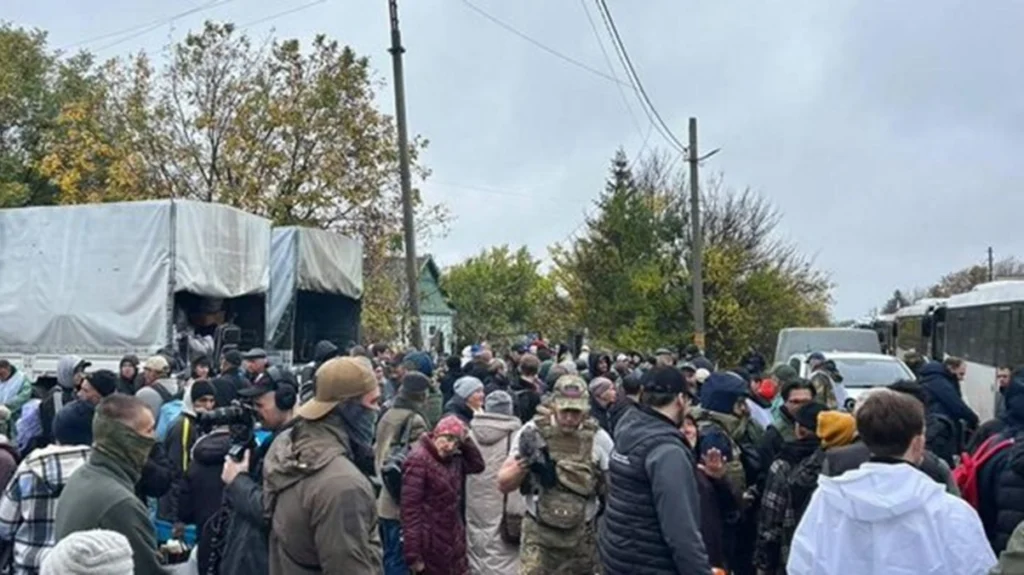
At least 527 people are expected to return to Ukrainian-controlled territory.
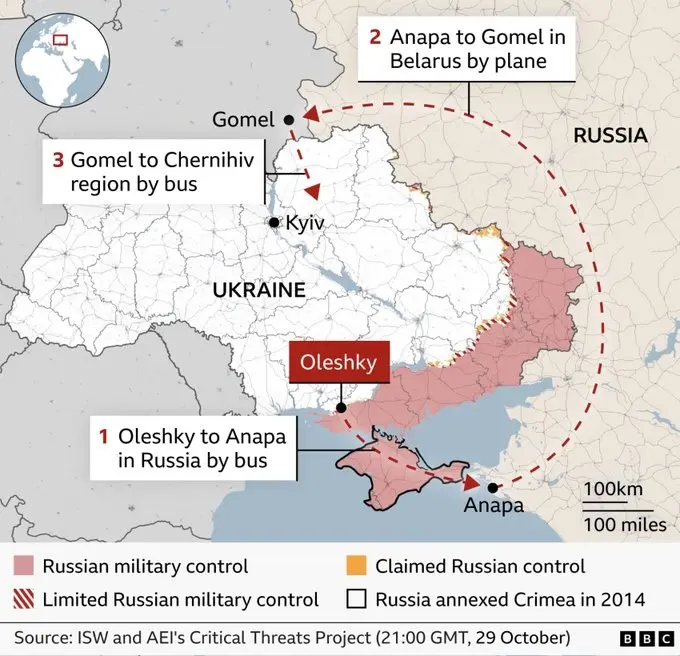
On Friday, Ukrainian legislator David Arakhamia, head of the ruling Servant of the People party, confirmed that the evacuation of residents from Oleshky—a frontline town in the Kherson region—is continuing while the ceasefire remains in effect.
Al least “25 buses have been prepared to evacuate 750 residents, with more than 50 medical personnel and nine ambulances on standby and separate transport has also been arranged for pets,” Irish journalist Brian McDonald posted on social networks.
Earlier in the day, Ukrainian Prime Minister Sergii Koretskyi said that 527 people from Oleshky were expected to return to Ukrainian-controlled territory.
The evacuees would enter Ukraine from Belarus. Once in Ukraine, they will undergo medical examinations, receive initial medical care, and be provided with essential supplies and accommodation.
On Thursday, a Ukrainian delegation led by Parliament Commissioner for Human Rights Dmytro Lubinets departed for Oleshky on a humanitarian mission, which was made possible by an agreement with Russian Commissioner for Human Rights Yana Lantratova, with coordination of U.S. First Lady Melania Trump.
With about 2,000 people remaining at present, Oleshky lies on the left bank of the Dnieper River. The town has been under Russian control since February 2022 and is facing a humanitarian crisis, with shortages of food, medicine and other essential supplies amid continued fighting.
The humanitarian mission followed an agreement on a temporary ceasefire in the area to facilitate aid deliveries and civilian evacuations. The ceasefire is scheduled to remain in effect until 10:59 p.m. Moscow time on Nov. 1.
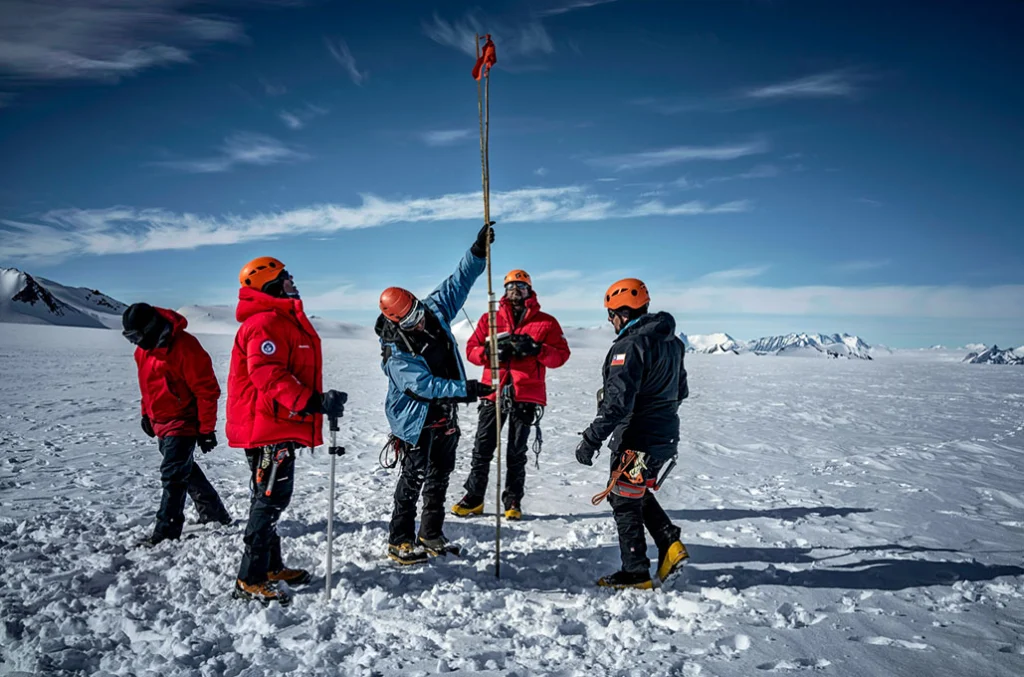
On Thursday, Chilean Minister of Foreign Affairs Francisco Pérez Mackenna inaugurated the 63rd Antarctic Scientific Expedition (ECA) in Punta Arenas. The expedition is set to carry out nearly 50 research projects, involving more than 150 scientists, between November and the end of March.
During the ceremony, the Foreign Minister highlighted Chile’s position as a gateway to Antarctica for international scientific programs. “The trust Chile enjoys in the realm of international relations, combined with the prestige of its public institutions and its logistical and infrastructural capabilities, represents an asset of immense value for attracting more countries to choose Chile as their gateway to Antarctica,” stated Pérez Mackenna.
Foreign Ministry reports indicated that the number of countries using Punta Arenas as a departure point for the “White Continent” has grown from 12 to 21 since 2004. Furthermore, eight other nations have occasionally passed through the capital of the Magallanes and Chilean Antarctic Region. “They use our ports and airports for their own vessels and aircraft, or they contract services in the Magallanes region to facilitate their scientific expeditions,” the minister noted.
The 63rd Antarctic Scientific Expedition includes operations at bases and field camps across the Antarctic Peninsula and the continent’s interior—including Union Glacier, located approximately 1,000 kilometers from the South Pole. The teams will conduct research across various fields of Antarctic science—an area the Foreign Minister described as strategic and inseparable from Chilean foreign policy.
En PuntaArenas se realizó el lanzamiento oficial de la 63ª Expedición Científica Antártica "ECA63" del @inach_gob
En la instancia, el Comandante en Jefe de la Tercera Zona Naval, Contraalmirante Juan Soto Herrera, presentó los detalles del despliegue naval para este periodo pic.twitter.com/qXflnac41l
The text reads, “The official launch of the 63rd Antarctic Scientific Expedition (“ECA63″) by @inach_gob took place in Punta Arenas. During the event, the Commander-in-Chief of the Third Naval Zone, Rear Admiral Juan Soto Herrera, presented details regarding the naval deployment for this period.”
“Antarctic science has a very distinct character; it is a strategic field—inseparable from Chile’s foreign policy—that helps us explore and gain knowledge about a vast territory that is crucial to the future of both our country and the planet,” Pérez Mackenna affirmed.
Antarctica is governed by the Antarctic Treaty—originally signed by 12 countries in 1959—which designates the territory for science and international cooperation. Although the continent is not governed by any single state, countries such as Chile, the United Kingdom, Argentina, Australia, and New Zealand maintain historical territorial claims.
Chile operates at least ten Antarctic bases: five are managed by the Chilean Antarctic Institute (INACH), while the others are run by the Armed Forces. The country’s first facility in the territory was inaugurated in 1940, following a decree by President Pedro Aguirre Cerda that established the boundaries of the Chilean Antarctic territory.
The rules-based international order is eroding and the line between economic security and national security has disappeared, Carney stated.
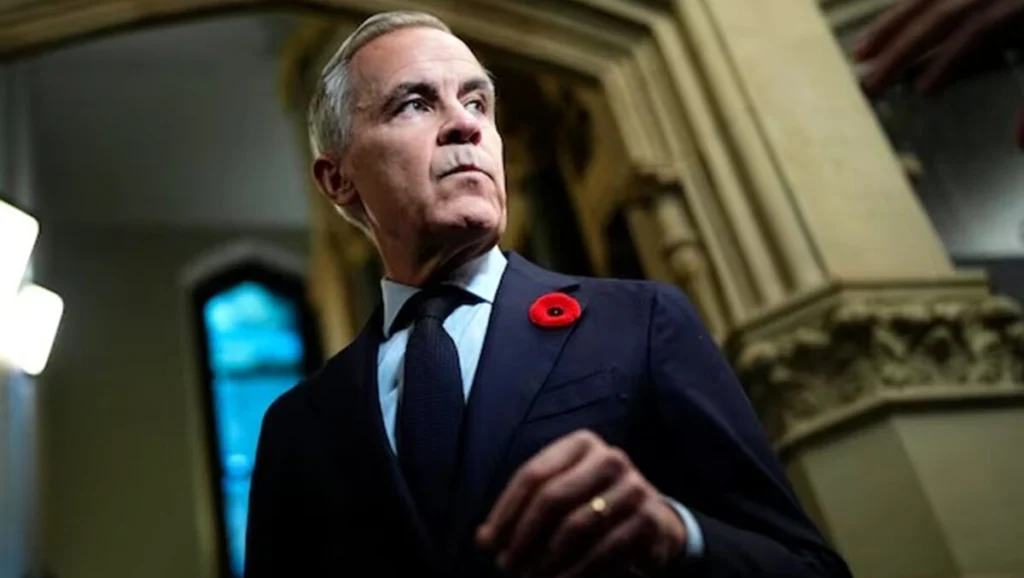
On Thursday, Canadian Prime Minister Mark Carney launched “The Plan for a Stronger Canada,” the country’s first national security strategy in over two decades aimed at countering evolving security threats and safeguarding national sovereignty.
The prime minister’s office said in a news release that the rules-based international order is eroding and the line between economic security and national security has disappeared, noting that national security now relies not only on defense and resource capabilities, but also on the strength of the economy, the resilience of institutions, and the partnerships with allies.
The strategy outlines five main priorities: strengthening economic security and resilience by transforming strategic industries and securing supply chains; advancing a disciplined foreign policy to diversify partnerships; rebuilding and strengthening the Canadian Armed Forces; enhancing public safety against foreign interference, espionage, violent extremism, and transnational organized crime; and modernizing intelligence capabilities to anticipate and counter emerging threats.
“In a rapidly changing, more dangerous, more divided world, Canada must have the capacity to defend our sovereignty, the resilience to withstand emerging threats, and the determination to shape our own future. Our Plan for a Stronger Canada will build that strength. So that we can live our lives as we choose, in the greatest country in the world,” PM Carney said, adding that the Canada will update the strategy at least every four years.
Mark Carney on Canada's new national security strategy: "The last strategy was written for a different world. And today's national security strategy reflects profound new realities. Most fundamentally, what it does is it recognizes that the requirements of sovereignty have… pic.twitter.com/76d8VUmVIZ
The Strategy Focuses On What We Can Control: Carney.
The new Canadian security strategy considers events that have occurred over the past year and a half, including foreign policy statements made by U.S. President Donald Trump.
“The plan defines Canada’s core national interests and establishes a comprehensive, whole-of-government approach that brings together our economic strength, foreign policy, defense and intelligence capabilities, and public safety initiatives,” the Prime Minister’s Office stated.
To this end, the Canadian government has set out the following guidelines:
“1. Strengthen Canada’s economic security and resilience against threats: Canada has what the world wants. Securing our sovereignty in key sectors and delivering our resources and expertise to the world will reinforce Canada as a strategically important player in the global economy.
To strengthen our economic sovereignty, Canada is transforming our strategic industries with historic investments, securing our supply chains, maximising our energy security, and investing in Canadian innovation to position Canada as a global leader across critical industries.
2. Advance a disciplined foreign policy that diversifies Canada’s partnerships and builds strategic capabilities: No one country, no matter how powerful, can manage these challenges alone. The primary goal of our foreign policy is to support Canadian strategic autonomy and resilience through deep cooperation in the full range of strategic capabilities with likeminded partners.
Much of this work is underway. Canada is diversifying our trade and building stronger partnerships to create greater security and prosperity for Canadians, and forging new partnerships with allies that are anchored in our common values, respect our complementary strengths, and enhance our collective sovereignty and prosperity.
3. Rebuild and strengthen the Canadian Armed Forces (CAF) to defend Canada and Canadian interests: The work of defending Canada is the work of building Canada. To protect Canada’s sovereignty, strengthen our strategic autonomy, and meet our NORAD and NATO targets, the Canadian government is changing how we invest in defence.
We are building a stronger, more resilient Canadian defence industrial base capable of equipping, sustaining, and scaling up the CAF, accelerating procurement, and working with the Defence Investment Agency to deliver the Defence Industrial Strategy, strengthen strategic autonomy, and create lasting economic opportunities for Canadians.
By transforming our military and defence supply chain, strengthening Arctic security, and contributing to stability in the Indo-Pacific, the Middle East, and beyond, Canada will be able to protect itself at home and act as a responsible ally and partner abroad.
4. Protect Canadians and strengthen public safety against criminal and national security threats: Canadians should feel safe and free to take part in every facet of Canadian society.
We will work with all levels of government, Indigenous Peoples, and Northern communities to strengthen our defences and build resilience against threats facing Canadians. We will intensify efforts to counter foreign interference, espionage, violent extremism, and transnational organised crime, including sabotage, extortion, fraud, online exploitation, financial crime, money laundering, and sanctions evasion, while protecting Canadians and our institutions from foreign information manipulation.
5. Modernise Canada’s intelligence capabilities to anticipate and counter emerging threats: Our ability to collect, analyse, and leverage intelligence, together with our partners, ensures we are prepared to tackle emerging threats.
Canada will strengthen our sovereign intelligence capabilities, deepen and diversify our intelligence partnerships, and modernise Canada’s intelligence enterprise by updating authorities to reflect evolving threats and technologies while safeguarding Canadians’ rights.”
Violations could result in a civil penalty of up to US$25,000 sought by the state’s attorney general.
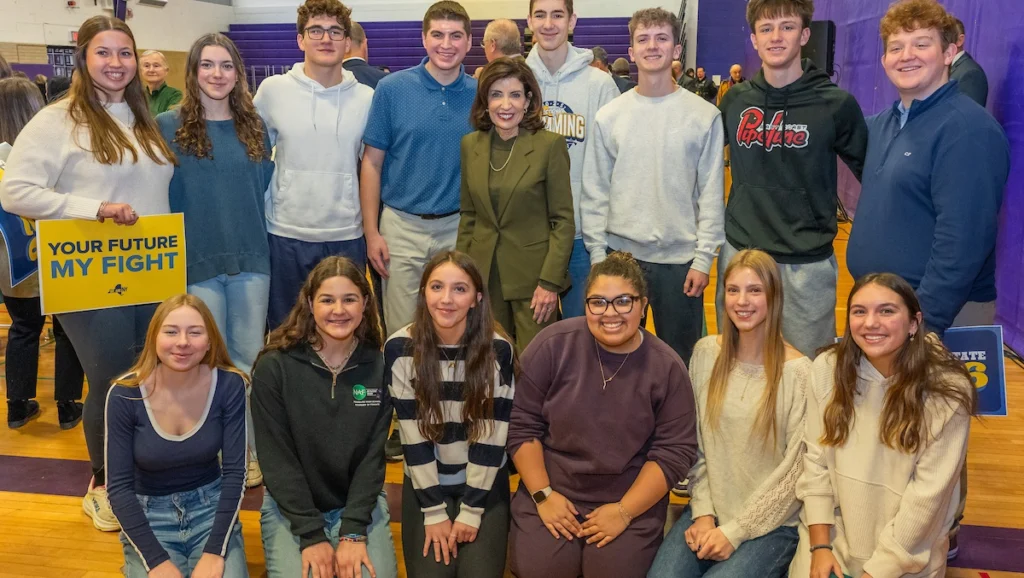
On Wednesday, New York State Governor Kathy Hochul signed a law aimed at protecting minors from the growing risks of artificial intelligence (AI) chatbots.
“As a mother and grandmother, I believe kids deserve to be kids, without dangerous AI chatbots putting their safety and mental health at risk. Today, I signed new laws to protect them. Big Tech, you’re on notice: New York will not let you profit at the expense of our children,” she said.
The new legislation prohibits companies from offering a range of chatbot features to users under the age of 18, which include pretending to be human, building emotional dependency, encouraging self-harm or engaging in sexually explicit conversations.
Under the new law, violations could result in a civil penalty of up to US$25,000 sought by the state’s attorney general. The bill also establishes a public website where New Yorkers could file complaints against chatbot companies for potential violations.
New York signs law barring minors from AI companion chatbots
Governor Kathy Hochul signed the measure Wednesday.
“The law is not limited to products marketed as AI companions. Its definition can reach other conversational generative AI products, including AI characters, creator replicas, roleplay tools, and general-purpose chatbots. Businesses offering these features to users in New York should review their products, age-assurance systems, and data practices before the effective date,” outlet My Adult Attorney pointed out.
“A ‘covered AI companion’ is a generative AI system with a natural-language interface, including text or voice, that provides ongoing, adaptive responses to user inputs. A business does not avoid the law simply by calling its chatbot an assistant rather than a companion.”
“The restrictions concern users physically located in New York. An operator need not be located in New York to face enforcement. Conversely, the statute treats access by a user physically outside New York as conduct wholly outside the state. The focus is the user’s location, not merely residence,” My Adult Attorney added.
Previously, several U.S. states have passed laws to restrict use of chatbots for children and enforce stronger safety requirements for AI companies.
In September, California Governor Gavin Newsom signed legislation requiring chatbot developers to conduct and publish annual child safety risk assessments and submit their products to independent audits. Newsom also signed a law to ban social media platforms from deploying addictive features for users under the age of 16.
Pressure from Washington has led to the suspension of air routes and the withdrawal of international companies.
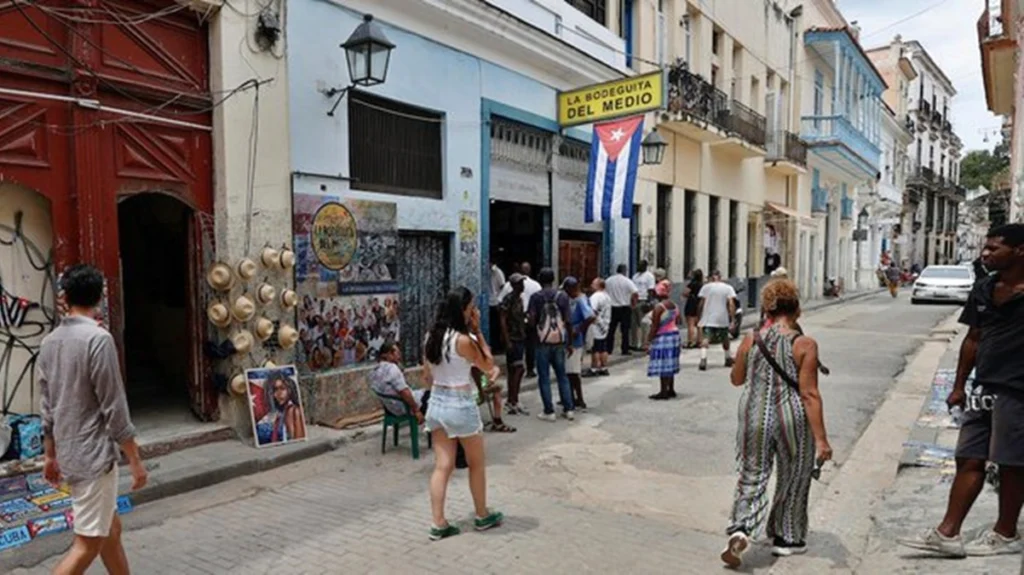
On Wednesday, the National Office of Statistics and Information published a report showing that the U.S. energy blockade has caused a decrease in tourism to Cuba.
This Caribbean nation received 65.1 percent fewer international visitors in the first nine months of this year than in the same period of 2025. Cuba received 477,707 international visitors from January to September, down 890,140 from the same period a year earlier.
Canada, Cuba’s largest source market for international tourists, saw the steepest decline, with visitor numbers falling by 430,460. Arrivals from Russia decreased by 67,205, while visits by Cubans living abroad dropped by 60,081. The number of visitors from the U.S. fell by 42,984.
Tourism is one of the Caribbean country’s main sources of foreign currency, but the sector is going through a crisis marked by suspended air routes, hotel closures and the withdrawal of international companies.
CUBAN FM RESIST THE BLOCKADE AT THE UN
Cuban Foreign Minister Bruno Rodríguez stood up to US Ambassador Mike Waltz at the UN General Assembly on Tuesday, in a confrontation that laid bare the deepening hostility over Washington's escalating economic war of aggression on the… pic.twitter.com/3Fqg5K0PzX
In July, the Cuban government said that U.S. pressure had prompted seven international hotel chains to withdraw from the island, including Spain’s Melia, Iberostar and Barcelo.
The crisis has been compounded by U.S. restrictions on oil supplies imposed since January, including threats of tariffs on countries supplying fuel to the island, as well as expanded sanctions introduced in May.
Cuba has been subject to a U.S. economic, commercial and financial blockade for more than six decades. In June, Cuba’s National Assembly of People’s Power approved a package of 176 economic and social reform measures aimed at liberalizing the economy, including provisions to attract new investors and expand private-sector participation in tourism.
Rabeh pointed out that the shooter echoed statements by Marine Le Pen’s National Rally leaders.
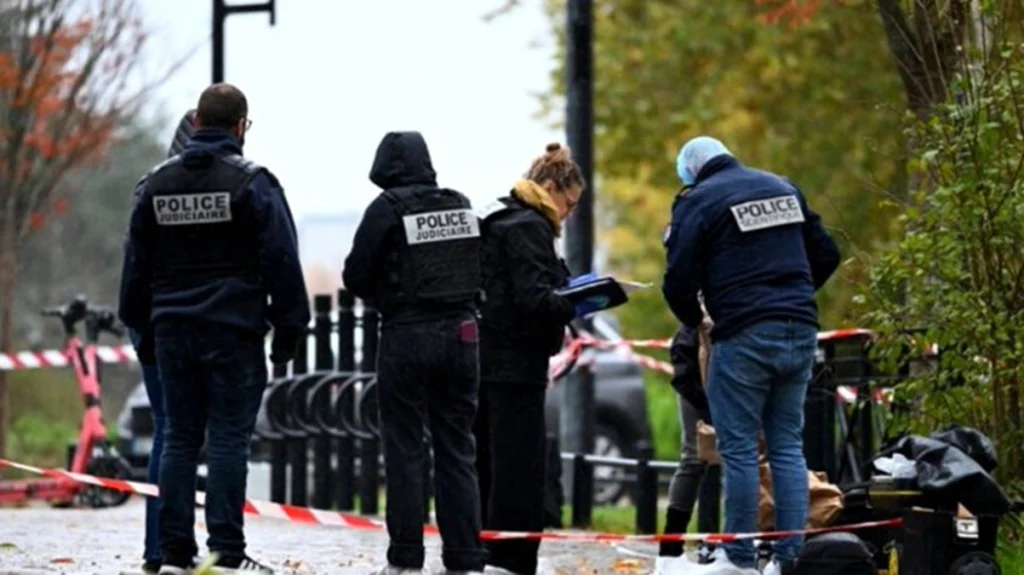
On Friday, Trappes Mayor Ali Rabeh accused the French far right of having “ideologically armed” the perpetrator of the racially motivated terrorist attack that took place a week ago.
Rabeh, a member of the left-wing Generation+ party, said statements made by the suspect in the attempted massacre repeated verbatim remarks by leaders of Marine Le Pen’s National Rally (RN).
“From the very beginning, the shooter claimed responsibility for his actions and established a connection with the RN’s ideas… Sebastien Chenu (the party’s vice president) used exactly the same words as the arrested suspect, saying that Trappes is ‘a haven for Islamists,’” the mayor said.
Rabeh accused Le Pen’s party of having “ideologically armed” the terrorist and expressed concern that “this may only be the first attack of this kind.” He also accused far-right parties of using “poisonous words” that take root in “fragile, sick minds that see themselves as being on a crusade to defend an unhealthy vision of France.”
The Generation+ politician mayor stated that the far-right violence incorporates elements of the so-called “great replacement theory,” according to which the population of European descent is being replaced by another population of immigrant origin. He advocated banning the theory from public debate, even if doing so requires a constitutional reform.
Plusieurs centaines de personnes ont assisté mercredi soir à Saint-Denis à l’hommage rendu par @BallyBagayoko et la ville à Pengo Bossio Wangi et les victimes de l’attentat raciste de Trappes. Merci à la famille d’avoir eu des mots forts et dignes, appelant à l’unité, à la… pic.twitter.com/2sxs6c5yam
The text reads, “On Wednesday evening in Saint-Denis, several hundred people attended a tribute—organized by Bally Bagayoko and the city—for Pengo Bossio Wangi and the victims of the racist attack in Trappes. I am grateful to the family for their powerful and dignified words, in which they called for unity, justice for Pengo, and a peaceful struggle against ‘racism, which has no place in France.’ This Friday evening, I will be in Trappes for the march organized by the Trappes municipal government and its mayor, Ali Rabeh.“
The Trappes mayor called for reviving the “cordon sanitaire” to prevent any rapprochement with far-right parties, a political barrier that has been seriously weakened in recent years. He also strongly criticized centrist politicians such as Prime Minister Sebastien Lecornu, who place the far right and far left on the same footing.
Rabeh expects “thousands of people” to attend a rally against racism in his city late Friday afternoon. The event is expected to draw lawmakers, mayors, and left-wing presidential candidates, including Social Democrat Raphaël Glucksmann, left-wing politician Jean-Luc Melenchon and Green politician Marine Tondelier.
The Trappes mayor did not comment on the absence of right-wing candidates from the march but said that “everyone is welcome.”
“I am not asking for anyone’s political support. I am asking everyone to face their responsibilities and examine their conscience,” Rabeh said, referring to the absence of government representatives from the afternoon rally.
Saca admitted to diverting more than $300 million in public funds during his 2004-2009 presidency.
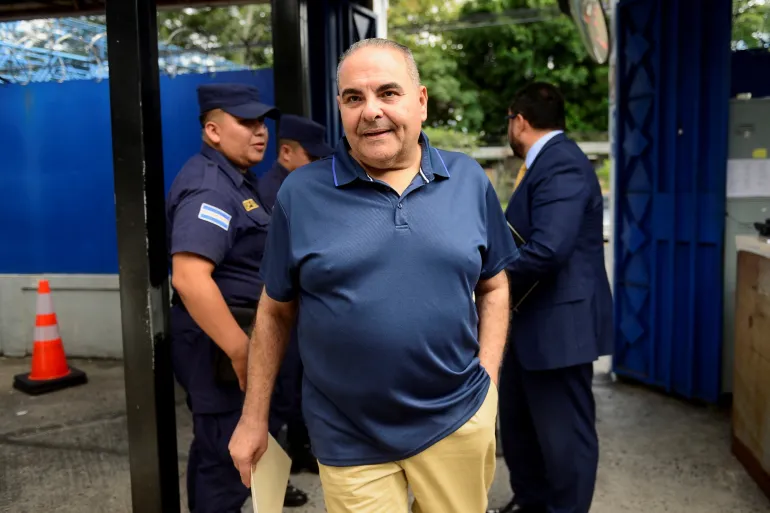
Former Salvadoran President Elias Antonio Saca was released on Thursday after completing a 10-year prison sentence for embezzlement and money laundering involving more than $300 million in public funds.
The 61-year-old former president appeared in court to formally register his release after serving his sentence in full, without early-release benefits, his lawyer, Mario Machado, said.
Saca was sentenced in September 2018 to five years for embezzlement and another five for money laundering. Under a plea agreement, he admitted to diverting and laundering more than $300 million during his 2004-2009 administration, avoiding a potential 30-year prison sentence.
He was arrested in 2016 during his son’s wedding. Prosecutors accused him of siphoning money from the state budget for himself and others, including more than $7 million transferred to his former political party, the Nationalist Republican Alliance (ARENA).
Text Reads: Former El Salvador president Elías Antonio Saca regains his freedom after 10 years in prison! 🌟
During the trial, Saca acknowledged exploiting weaknesses in government oversight to transfer public funds to private accounts. He also disclosed that he had issued regulations allowing him to classify information about financial transactions as state secrets, shielding the transfers from scrutiny.
According to his testimony, the money was transferred over the course of his five-year presidency into 13 private bank accounts belonging to his former private secretary, Elmer Charlaix, and two other presidential staff members.
In 2019, Saca was convicted in a separate bribery case after offering $10,000 to a court employee in exchange for information about proceedings against him. A judge ruled that the additional sentence would be incorporated into his existing 10-year term.
He was also ordered to repay $260 million to the state. In another case involving the diversion of funds from Taiwan, he was sentenced to pay an additional $6 million. It remains unclear whether he has fulfilled that obligation.
Saca, a businessman and radio broadcaster who served as president under ARENA, is one of four former Salvadoran presidents to have faced corruption charges. His successor, Mauricio Funes, fled to Nicaragua in September 2016 and died there in 2025.

 Login