❌

Reading view

El Salvador’s Military Operation in Haiti Raises Questions Amid Civilian Deaths
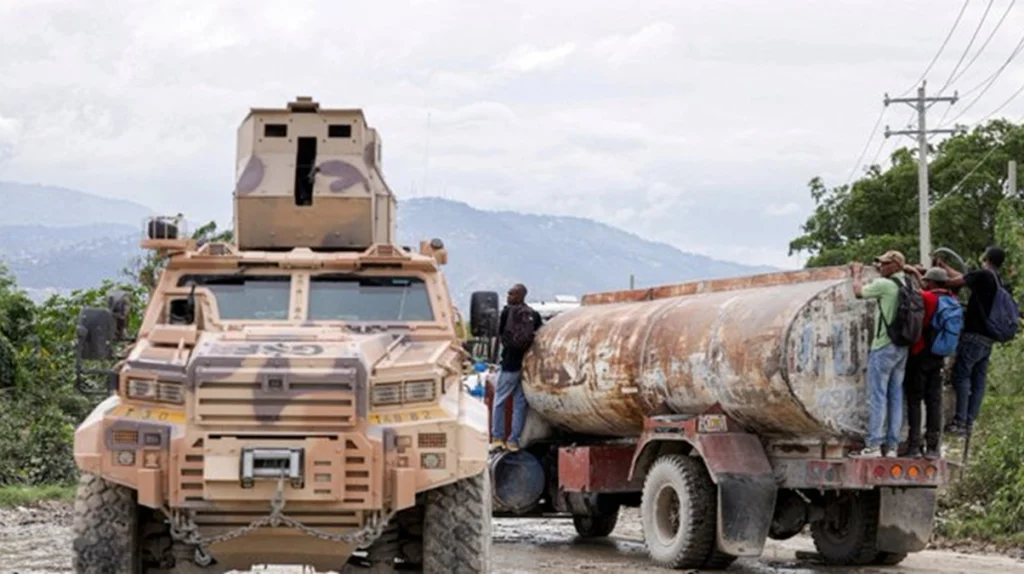
UNA-Haiti denounces deadly operations in densely populated neighborhoods as questions mount over the mission’s objectives.

On Wednesday, the United Nations Association of Haiti (UNA-Haiti), an organization representing the Haitian diaspora community, denounced military operations carried out by Salvadoran forces on Haitian territory, saying they are causing the deaths of innocent civilians.

RELATED:

Bukele Says El Salvador Could Dismantle Haiti’s Gangs

In the letter addressed to United Nations Secretary-General Antonio Guterres, UNA-Haiti detailed that Salvadoran troops have been conducting heavy aerial bombardments, helicopter gunship raids and assaults with heavy weapons in densely populated neighborhoods such as Croix-des-Bouquets, Canaan and La Plaine du Cul-de-Sac since Oct. 22, 2026.

“Children are being killed not by gangs, but by foreign bombs. These operations do not represent a security solution, but rather a massacre of innocent people,” the organization stressed, warning that families are being forced to hide under their beds to protect themselves from crossfire.

The military escalation is a response to an ambush suffered by the Salvadoran contingent belonging to Task Force Freedom II. On Oct. 18, an armored vehicle carrying four aviation technicians returning from a food supply run was attacked with explosives in the Santo area (Croix-des-Bouquets). The personnel managed to escape from the burning vehicle, but all contact with them has been lost since then.

In response to the incident, El Salvador’s President Nayib Bukele announced a massive deployment on Oct. 21 to rescue the military personnel, issuing a stern message in Haitian Creole on social media directed at gang leaders.

He demanded the safe return of the hostages and warned that what had happened so far was nothing compared with what was “yet to come,” urging them not to take his words as “empty threats.”

El Salvador deploys 2,000 troops to Haiti as interim government cancels elections, again

Bukele promises to “destroy” gangs if medical personnel are not found

LATEST for @pirate_wire pic.twitter.com/IsWMlJWukd

— Joshua Collins (@InvisiblesMuros) October 30, 2026

The Salvadorian Operation Is Full of Unanswered Questions

El Salvador’s military operation in Haiti, involving more than 2,000 troops on the ground searching for four missing soldiers, raises numerous questions, including the campaign’s real objective, its allies and the role of the Gang Suppression Force (GSF), established under a United Nations Security Council mandate.

The international community has attempted to resolve Haiti’s crisis through several multinational missions. However, Salvadoran President Nayib Bukele, citing the search for the four Salvadoran military personnel who were part of the GSF and have been missing for nearly two weeks, decided to pursue a solution unilaterally.

According to various experts, the incident is one of the operation’s “gray areas,” as it remains unclear what actually happened on Oct. 18, when the vehicle carrying the Salvadorans was attacked and set on fire on the outskirts of Port-au-Prince.

“We need to determine whether this is simply about rescuing people whose identities we still do not know, or whether it is something broader,” said former diplomat Edwin Paraison, who served as Haiti’s consul general in the Dominican Republic.

One of the unanswered questions concerns what happened that day to trigger the Salvadoran military operation, since the identities of the four missing “aviation technicians” have not been officially made public to date.

“Soldiers, in the times we live in, maintain constant contact with their families, so it is very unusual that in El Salvador no one has been concerned about contacting a family member of these missing individuals,” he said.

🇸🇻🇭🇹🚨 HAÏTI — Le SALVADOR a envoyé des SOLDATS en Haïti après l’enlèvement d’agents humanitaires par des GANGS.

Une opération de sécurisation et de sauvetage est en cours. ⚠️ pic.twitter.com/DRAZrCDur2

— KRONIK Insights (@KRONIKInsights) October 23, 2026

The text reads, “Haiti: El Salvador has sent soldiers to Haiti following the kidnapping of humanitarian workers by gangs. A security and rescue operation is underway.”

What Is the Scope of Bukele’s Operation?

The mission’s actual scope is also unknown, although Bukele said Thursday that it “is not an operation against the Haitian people, nor an invasion of the country of Haiti,” because El Salvador has no interest other than ensuring that its four aviation technicians “return home.”

However, the scale of the deployment has drawn attention because, in just 10 days, Bukele assembled an expeditionary force that already doubles the number of personnel the Gang Suppression Force has managed to assemble in a year.

The GSF is not a peacekeeping mission in the strict sense of the word, but rather a military component created to help Haitian authorities neutralize armed gangs, protect infrastructure and facilitate humanitarian access.

The United Nations Security Council approved a contingent of 5,500 personnel from several countries for the GSF, of whom just over 1,000 have arrived in Haiti — approximately 100 of them originally from El Salvador.

In an operation shrouded in secrecy, the Salvadoran troops’ modus operandi is also unclear. It is not known whether they are working jointly with the GSF, led by Mongolian Maj. Gen. Edernebat Batsuuri, or whether they have their own operational plan.

Last week, the GSF announced the arrival in Port-au-Prince of the first Salvadoran contingent soldiers “to support the search and security operations underway,” without providing further details.

Bukele, meanwhile, said Thursday that the search for the four Salvadorans was giving gangs “a lesson — those gangs that make the Haitian people suffer, that kill the people they love, that prevent them from living normal, free lives without fear.”

Pou chèf gang yo ak manm gang yo k ap kenbe kat konpatriyòt nou yo an otaj ann Ayiti:

Mesye nou kidnape yo pa konbatan. Yo se teknisyen nan domèn avyasyon ki fè pati misyon nou ann Ayiti, nan kad yon misyon entènasyonal. Misyon nou an gen sèlman pilòt ak pèsonèl teknik, ki gen… pic.twitter.com/BNKbWTAQQp

— Nayib Bukele (@nayibbukele) October 21, 2026

President Nayib Bukele’s text reads, “To the gang leaders and gang members holding our four compatriots hostage in Haiti:

Gentlemen, the individuals you have kidnapped are not combatants. They are aviation technicians serving as part of our mission in Haiti—a mission that is international in scope.

Our team consists solely of pilots and technical personnel, whose primary role is to conduct medical evacuations and save lives—not to wage war. Yet, you carried out a cowardly kidnapping, seizing them as they were returning from purchasing food at a local market.

For this reason, we have launched a military operation today to rescue them. We have one objective and one objective only: to bring our four compatriots home, alive and unharmed.

However, I want you—the gang leaders—to understand one thing very clearly: today’s attack is nothing compared to what will follow if you do not release the four hostages alive. And do not mistake our words for empty threats.

We have already dealt with the gangs in El Salvador, and we are fully capable of doing the same to you. There is still time to avoid this. Return our four compatriots to us, alive and unharmed, and everything will return to how it was before the kidnapping. The choice is in your hands.”

Who Provides Logistical Support?

Another gray area concerns the support the Salvadoran president is receiving from other countries because several U.S. military aircraft have landed in recent days at Toussaint Louverture International Airport in Port-au-Prince, which has been closed to international commercial flights because of the violence.

“We have not come to Haiti to make money; nobody is paying us for this. We have come to fight the evil ones,” Bukele said, adding that his country is “almost” the only one “paying for this operation,” although he acknowledged receiving “a little logistical help from some other countries.”

Nevertheless, U.S. analyst Jake Johnston, a researcher on Latin America and the Caribbean, maintains that “the United States and Colombia have collaborated on logistics,” while the Dominican Republic “has offered its support and is serving as a logistical hub for the delivery of helicopters and other equipment.”

Coincidentally or not, a meeting of the Conference of the Americas Coalition Against Cartels (A3C) was held this week in Santo Domingo. The meeting was organized by the Dominican Republic together with the U.S. Department of War to strengthen regional cooperation against threats posed by transnational organized crime and drug trafficking.

teleSUR/ JF

Source: EFE
  •  

14 Foreign Activists Face Possible Deportation From Israel After Olive Harvest Arrests

They were detained while harvesting alongside Palestinians in the West Bank. The mayor of Al Lubban Al Gharbi was also arrested.

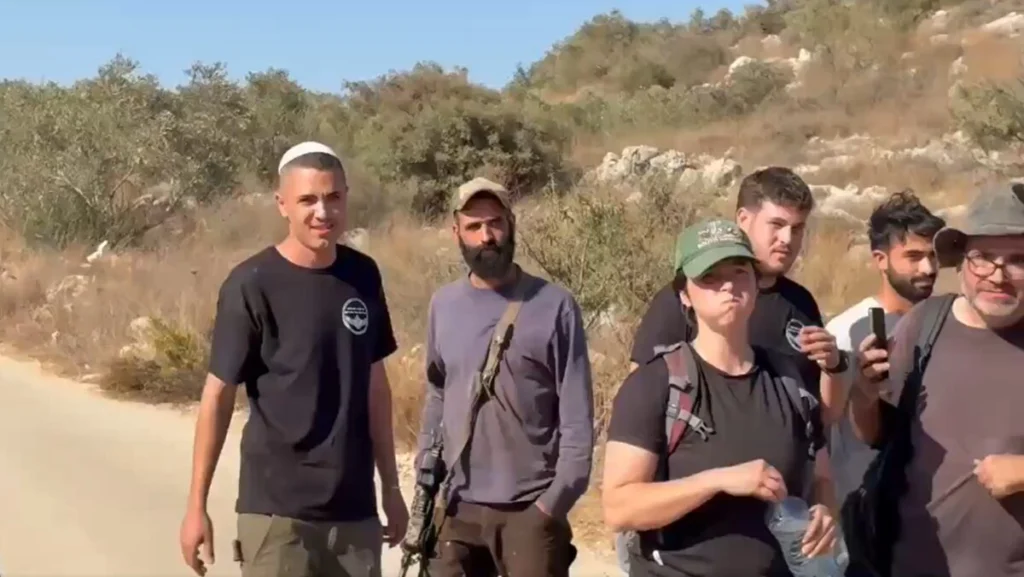
On Friday, the Palestinian NGO International Solidarity Movement (ISM) said that 14 foreign activists face deportation from Israel after being arrested for harvesting olives alongside Palestinians in Al Lubban Al Gharbi, northwest of Ramallah, in the occupied West Bank.

RELATED:

Genocide in Palestine Dates Far Earlier Than October 2023

“The activists were detained inside a house in the town, far from the olive groves, and were subsequently transferred to the Israeli police station at the Ni’ilin checkpoint. They were questioned on suspicion of violating an order issued by a military commander by allegedly entering a closed military zone,” said ISM, an organization that promotes the use of nonviolent resistance in opposition to the Israeli occupation.

The activists, who come from Italy, the United States, the United Kingdom, Australia, Germany, Ireland and Sweden, are scheduled to appear at a hearing that could result in the revocation of their visas and their deportation.

During the Israeli operation against the activists, who “were not presented with any order declaring the area a military zone”, the mayor of Al Lubban Al Gharbi was also arrested. He was brutally beaten, threatened, and his carpentry workshop was damaged. He was also warned not to bring activists back to the area.

Israeli Forces Arrest Foreign Activist Helping Palestinians Harvest Olives in Kafr Malik
Israeli forces arrested a foreign activist in the village of Kafr Malik, northeast of Ramallah, in the occupied West Bank, while he was helping Palestinian farmers harvest their olive crops pic.twitter.com/paEBO6Y3xR

— Gaza Press (@GazaPressNews) October 30, 2026

Al Lubban Al Gharbi is located in an area of the West Bank where brutal violence by Israeli settlers, settlement expansion, land confiscation and restrictions on freedom of movement have progressively reduced Palestinians’ access to their agricultural land.

During the 2025 olive harvest, the International Solidarity Movement had already documented numerous incidents involving Israeli settlers and soldiers using live ammunition and tear gas in the area.

Settler violence against Palestinians has surged in the West Bank over the past four years under the far-right government led by Prime Minister Benjamin Netanyahu.

The olive harvest season has become a particularly brutal period not only for farmers but also for foreign journalists and even diplomats, who were likewise assaulted weeks ago by groups of Jewish extremists amid the Israeli army’s inaction.

teleSUR/ JF

Source: EFE

  •  

Italians Protest Against Meloni Over Cost of Living and Rearmament

A nationwide strike brought together workers, students, housing rights groups and farmers.

On Friday, thousands of people demonstrated in major Italian cities against far-right Prime Minister Giorgia Meloni, the high cost of living and military rearmament.

RELATED:

Southern Italy Faces Food Shortages as Drivers’ Strikes Continue

The protests took place as part of a general strike called by the Unione Sindacale di Base (USB) and were supported mainly by students, public-sector workers and housing rights organizations.

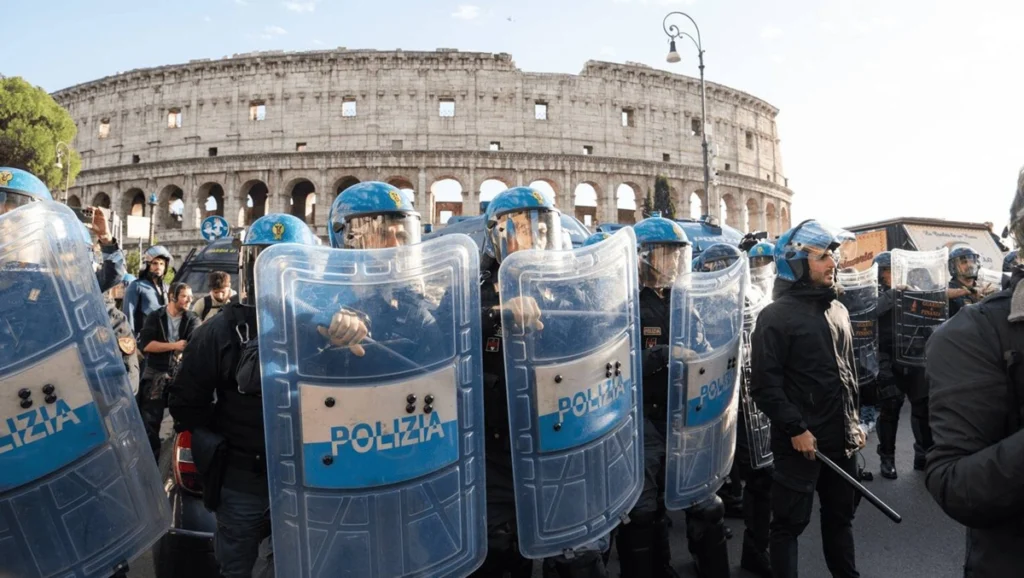
Rome was one of the main focal points of the demonstrations, with a protest encampment outside the Colosseum set to remain in place through Sunday.

The largely peaceful demonstrations spread across cities including Milan, Florence, Naples, Genoa, Turin and Bologna, as well as several locations in Sicily.

“Workers, working-class communities, homeless people and agricultural producers have mobilized against the economic crisis this government is imposing on us to finance rearmament and military spending that have nothing to do with the interests of the population,” USB Director Stefano De Angelis said, noting that more than 1.5 million people had taken part in protests held across the country.

👥 Roma, sciopero generale: circa 100mila manifestanti secondo le stime dell'USB.

Il corteo di studenti e lavoratori, partito da piazza dei Cinquecento, è tornato alla stazione dopo aver attraversato la città. Video di Maurizio Leggeri e Diariodigitale pic.twitter.com/PwJ3GMkRVK

— Italia 24H Live 🔴 – Notizie dall'Italia (@Italia24HLive) October 30, 2026

The text reads, “General Strike in Rome: approximately 100,000 protesters, according to USB estimates. The march of students and workers, which set off from Piazza dei Cinquecento, returned to the station after moving through the city.”

Protest Encampment Outside the Colosseum Through Sunday

In Rome, the main demonstration drew at least 20,000 participants and set off from Piazza del Cinquecento toward the area surrounding the Colosseum.

Once there, organizers announced their intention to occupy Via dei Fori Imperiali, the avenue connecting central Piazza Venezia with the monument, and set up tents through Sunday, when a national assembly is scheduled to take place.

The initiative, organized by the USB and the Lotta per la Casa collective, aims to turn the site into a space for mobilization and participation by the various groups that have joined the protests across Italy.

“This demonstration does not end here. We will continue mobilizing through Sunday, when we will hold a major national assembly in this square, beneath the Colosseum, attended by representatives of all the demonstrations taking place across the country today,” De Angelis said.

The union leader also denounced restrictions preventing demonstrators from approaching Montecitorio, the seat of the Chamber of Deputies, describing them as “anti-democratic.”

“In any country where demonstrations are held against the government, people can reach government and parliamentary buildings. In Italy, this is prohibited,” he said.

“We will stay here, outside the Colosseum, through Sunday to show that this city, too, must be a place for participation in protest mobilizations.”

Sciopero generale, studenti e lavoratori insieme nelle piazze: “Siamo centinaia di migliaia”. Da Milano a Napoli occupate le tangenziali https://t.co/wolYZWxUmR

— Elio Lannutti (@ElioLannutti) October 30, 2026

The text reads, “General strike, students and workers together in the streets: ‘There are hundreds of thousands of us.’ From Milan to Naples, ring roads occupied.“

Clashes and Roadblocks

The day’s main episode of tension occurred in Turin, in northern Italy, where clashes broke out between demonstrators and security forces in the central Piazza Castello.

Participants in the march threw eggs, bottles and red paint at riot police, who responded with charges and high-pressure water hoses.

After the clashes, participants returned to the occupied university campus and announced a new gathering for 6 p.m. local time to continue the protests. Objects were also thrown at police in Rome, near the Colosseum.

The strike also caused major traffic disruptions, particularly in Bologna, in northern Italy, where demonstrators blocked access roads to several educational institutions and marched along the ring road, forcing the temporary closure of the A14 highway.

In Genoa, in northern Italy, participants blocked access to the port, while other demonstrations disrupted daily activities in major Italian cities.

Friday’s strike marks the beginning of a series of mobilizations in Italy that will continue Nov. 20 with a general strike across all sectors called by the CGIL, the country’s largest trade union confederation, and a taxi-sector strike scheduled for Dec. 14.

The day was marked by a heavy security presence across the country following violent incidents reported Oct. 17 and 18 in Milan, Turin and Bologna. Those incidents prompted Meloni’s government to approve an extraordinary security decree and deploy 500 military personnel to support police forces.

teleSUR/ JF

Source: EFE

  •  

Venezuela’s Sovereignty Is Not Up for Negotiation: Acting President Rodriguez

She reaffirmed her commitment to judicial reform and pledged to hold elections under a revamped electoral authority.

In a national address delivered on Thursday, Venezuelan Acting President Delcy Rodriguez presented an overview of the political, economic, cultural, spiritual and democratic transformation initiatives carried out throughout the year.

RELATED:

Venezuela Appoints Oliver Blanco as New Foreign Minister

During her address, she underscored the Venezuelan government’s independence in directing public policies and making strategic decisions.

“The decisions behind this transformation are made here, signed here and announced here, before you. Sovereignty is not negotiable,” Rodriguez said, emphasizing that Venezuela’s political horizon is measured by a sequence of objectives to be achieved, while maintaining international relations based on mutual respect.

Nearly 10 months after the U.S. military attack, Rodriguez referred to the “two perspectives” shaping Venezuela: that of those who view the changes as an excessive opening and that of those who believe the changes are happening too slowly. The Venezuelan acting president then stressed that her administration operates and positions itself at the point where these two perspectives intersect.

“Governance takes place between these two tensions, and we have chosen a path that will lead us steadily to a successful outcome,” she said, urging citizens to assess the government’s performance more objectively and dispassionately.

“I am not asking you to have faith. I am asking you to judge me by the facts. Less fighting, more solutions,” Rodriguez said, setting out the standard by which she wants her administration to be evaluated: “An announcement is not worth what it promises. It is worth what is delivered.”

Her statements come as U.S. President Donald Trump envisions Venezuela becoming the 51st state of his country, while Secretary of State Marco Rubio seeks to set the pace of Venezuela’s political process. In response to those ambitions, Acting President Rodriguez outlined her main priorities.

1. All Decisions Are Made in Venezuela

In keeping with the defense of national sovereignty, Rodriguez described the transformation proposed under the “Venezuela Reborn” plan as a “democratic, orderly, institutional and verifiable transformation.”

This translates into three aspirations that matter in every Venezuelan household: “that your child can return, that the power does not go out, and that your salary is enough to make ends meet. That is what rebirth means,” she said.

“Return will always be voluntary, dignified and guaranteed,” Rodriguez promised Venezuelans living abroad. She assured them that anyone who decides to return will find “a country that welcomes them with respect, their documents in order and employment opportunities.”

2. A Justice System Open to Witnesses

Regarding criminal justice reform, Rodriguez invited “independent organizations to verify each of these steps in complete freedom and transparency.”

She recalled that the reform is currently advancing through a nationwide consultation intended to hear everyone’s views, with technical assistance from the European Union and cooperation from the U.N. Office of the High Commissioner for Human Rights. Its purpose is to build “a fairer, more humane, transparent and impartial justice system.”

To date, nearly 9,000 people have benefited from the Amnesty Law, which ended criminal proceedings “stemming from the confrontation in which we were immersed,” Rodriguez said, emphasizing that more than 1,000 people have already regained their freedom.

In September, Rodriguez had acknowledged that the Law Against Hate “had been applied abusively.” Accordingly, the reform to that law introduced by the National Assembly seeks to eliminate criminal penalties and strengthen its educational purpose.

Once enacted, the reform will require the justice system to review the cases of individuals prosecuted under the law. This is in addition to instructions to security forces that no one may be detained without a court order, except when caught in the act of committing a crime, and a reminder that peaceful protest is a constitutional right that requires respect for the physical integrity of public officials.

“The responsible exercise of politics is guaranteed for everyone. The doors are open,” the Venezuelan acting president said.

3. Elections with the World as a Witness

“This is not a dialogue for the sake of appearances. These are difficult issues, and they cannot be resolved in a single day,” Rodriguez said, referring to one of the issues on the agenda of the dialogue table established under the Democratic Coexistence and Peace Program.

In October, the Venezuelan government and representatives of the 2015 National Assembly held a third round of talks in Caracas.

The agenda focuses on “upcoming electoral processes, reform of the Supreme Tribunal of Justice and the recovery of resources for post-earthquake socioeconomic assistance,” Rodriguez said, highlighting that the dialogue table had demanded that the United Kingdom return the seized Venezuelan gold.

In response to those calling for early elections, an urgency encouraged by the far right, Rodriguez recalled that “Venezuela’s political horizon is not measured by a date on the calendar, but by a sequence of objectives we must achieve.” At the end of that sequence are the ballot boxes.

“There will be elections, all those required by our Constitution, organized by a renewed electoral authority and with the world as a witness,” the Venezuelan acting president pledged.

She stressed that the process aims to establish an electoral authority “accepted by everyone,” guarantee internal democracy within political parties and leave behind the “times of confrontation that nobody wants anymore.”

Addressing those who hold different views, she said: “This transformation also belongs to you. I am not asking you to change your opinion. I am asking you to judge by the facts and come to the table, with equal rules for everyone.”

4. Contracts, Wages and Reconstruction

“You have the right to make demands, and I am listening,” Rodriguez said, emphasizing that dialogue on economic issues is already producing concrete results.

Thanks to the new regulations that have been approved, the Venezuelan government has managed to sign 61 contracts in the hydrocarbons sector, while another 44 contracts are under negotiation.

Authorities are also making progress in talks on mining and in assessing “nonessential assets held by the state that could be offered to the private sector or returned to their former owners.”

Workers’ wages are being discussed at a negotiating table that brings together trade union federations, business chambers and government authorities. For 2027, “increases in workers’ income across the country at four different points during the year” are planned. These increases “may in no case be lower than the economic growth recorded in the preceding quarter.”

To families who are still rebuilding their homes after the earthquake, Rodriguez promised that reconstruction efforts would not stop and that every month she would show them what had been done, where and when.

5. Legality as a Method

“When I said at the United Nations that legality was the way forward, it was not just a phrase. It was a method,” the Venezuelan acting president said during her national address.

She recalled that her administration continues to restore access to news websites “that had been subject to administrative measures as a result of the confrontation we experienced.” Restrictions imposed during the years of confrontation are now being reversed under the same legal framework that Rodriguez has made her governing method.

She urged Venezuelan journalists to act responsibly and respect citizens’ rights, while asking the foreign press not to stigmatize “the image of our country, nor its people and national identity.”

Finally, in response to those who fear that the transformations will entail too many concessions to traditional economic power groups, Rodriguez assured them that “nothing that has been built will be lost. What works will be protected, and what is wrong will be corrected.”

She urged young people to believe again, because these reforms are intended to ensure that “when it is their turn to decide the country’s direction, they will find institutions, not rubble.”

teleSUR/ JF

Sources: Presidential Press – MIPPCI

  •  

Georgia Emerges as a Key Battleground Ahead of Midterm Elections

Republicans are losing ground in a state where Democrats are seeking to retain Senate seats and win the governor’s race.

Less than a week before the midterm elections, polls predict that voters in Georgia are not leaning toward Republicans in a state that plays a decisive role in U.S. politics and gave Donald Trump a narrow victory in the 2024 presidential election.

RELATED:

More Than 26.6 Million Have Voted Early in U.S. Midterms

“Republicans are disappointed. Trump promised he would lower prices, and obviously, it was a scam,” said David, a Democratic volunteer who goes door to door in neighborhoods across the city of Macon to make sure no progressive vote is lost.

Polls point to a likely victory for Sen. Jon Ossoff, who is seeking reelection against Republican Mike Collins and could even become a presidential candidate in 2028.

Democrats need to hold on to their seats in Georgia and Michigan and flip four Republican-held seats in swing states to win a Senate majority.

They are also hoping to make Keisha Lance Bottoms the first woman and first African American to serve as governor of Georgia, although polls show a dead heat with Republican Rick Jackson.

🇺🇸 Obama blasts Trump’s ‘chaos and cruelty’ ahead of US midterms

Former US president Barack Obama delivered scathing criticisms of current leader Donald Trump at a rally in Georgia to support Democratic candidates ahead of the November 3 midterm elections. pic.twitter.com/CyTKSsO8up

— AFP News Agency (@AFP) October 30, 2026

A Divided Battleground State

In Georgia, every vote counts. Trump defeated Harris in 2024 by 115,000 votes, while Joe Biden won in 2020 by just 12,000 votes, a margin Trump unsuccessfully challenged with allegations of fraud.

Few states embody the electoral pendulum as well as Georgia, where a population boom and decades of economic growth have transformed a Republican stronghold in the South into a state where either party can win.

While the Atlanta metropolitan area, home to Coca-Cola, CNN and Delta Air Lines, is a major source of Democratic votes, the state’s iconic peach orchards, by contrast, are turning Republican red.

💙 GEORGIA VOTE BLUE UPDATE:

With ONE day of early voting left, Democratic voters are still showing up strong, outpacing red counties relative to 2024!

Over 2.5 million ballots have been cast statewide—let’s keep expanding our lead! 🗳️✨

📍 Cast your early ballot today and… pic.twitter.com/eVxIZbSiB9

— Seth Taylor (@SethTaylor1991) October 30, 2026

The Battle for the African American Vote

The birthplace of Martin Luther King Jr. and the cradle of the civil rights movement, Georgia also has an African American population of more than 30%, above the national average.

Mobilizing those voters was one of Obama’s goals when he chose Atlanta for his final major campaign rally last Wednesday. “Obama represents hope, faith and class. He is the best of the best; what we have now is garbage,” said Patricia, an African American voter who attended the event.

So far, voter turnout in the Southern state has already broken records, with more than 2.3 million people casting early ballots, surpassing the previous high set during the 2022 midterm elections.

Although early voting figures cannot predict the outcome, some indicators favor Democrats, with higher turnout in urban centers and more moderate participation in rural areas.

trump’s net approval across all 50 states w/ less than one week until midterms

(only 10 states rate the president net positively, and approval is underwater in most states with key races)

maine: -29
michigan: -25
georgia: -24
iowa: -20
texas: -19
ohio: -19
alaska: -13
south… pic.twitter.com/CfeTa2I2Uv

— ian bremmer (@ianbremmer) October 29, 2026

The Cost of Living at the Center of the Campaign

Aware of what is at stake, Trump has visited Georgia twice in two weeks, most recently last Saturday, when he announced a multibillion-dollar investment by Audi to build a plant that would bring thousands of jobs, according to him.

The economy dominates a campaign shaped by public frustration over the high cost of living and rising gasoline prices amid the war in Iran.

“Women voters in counties across the Atlanta metropolitan area tend to be decisive. Gasoline and food prices are the main issues,” political scientist Kerwin Swint said.

Obama has tapped into the frustration of Americans struggling to make ends meet with a viral joke that has angered Trump: He compared the White House’s gold decor to the tacky aesthetic of The Cheesecake Factory restaurants.

Outside his rally, a man was selling T-shirts depicting the White House transformed into one of those restaurants. He said they sold out in the blink of an eye. Tuesday will show whether that is a reflection of what will happen at the ballot box.

teleSUR/ JF

Source: EFE

  •  

Eurozone GDP Growth Slows To 0.4 Pct in Q3: Eurostat

So far this year, economic performance has weakened in several major eurozone economies.

On Friday, Eurostat released a preliminary report showing that gross domestic product (GDP) in the eurozone grew by 0.4 percent in the third quarter of 2026 compared with the previous quarter, slowing from 0.6 percent in the second quarter.

RELATED:

Bulgaria Adopts the Euro and Becomes 21st Member of the Eurozone

GDP in the European Union (EU) increased by 0.5 percent quarter on quarter, down from 0.7 percent in the previous quarter. On a year-on-year basis, GDP growth edged up to 1.3 percent in the eurozone and 1.5 percent in the EU, compared with 1.2 percent and 1.4 percent, respectively, in the second quarter.

Eurostat cautioned that the preliminary estimates were based on incomplete data and remained subject to revision. Nevertheless, the eurozone economy stagnated in the first quarter before rebounding in the second. Economic performance weakened in several major eurozone economies.

Germany’s GDP increased by 0.2 percent quarter on quarter, down from 0.3 percent in the second quarter. France’s economy contracted by 0.1 percent after remaining unchanged in the previous quarter, while Italy’s GDP stagnated after growing by 0.2 percent.

Euro zone GDP grew 0.4% in Q3, double the 0.2% expected, per Reuters. Germany +0.2%, Spain +0.6%, Italy flat, France -0.1%. Resilience now, but surging energy costs and borrowing costs cloud the outlook. (via @Reuters) pic.twitter.com/EgK2RmCqL6

— The Macro Memo (@TheMacroMemo_) October 30, 2026

Spain recorded growth of 0.6 percent, compared with 0.7 percent in the second quarter. Elsewhere in the EU, Ireland recorded quarterly GDP growth of 5.5 percent, the highest among member states with available data, while Lithuania posted the sharpest contraction, at 1.0 percent.

The European Central Bank (ECB) kept its three key interest rates unchanged on Thursday, warning that continued increases in energy prices posed upside risks to inflation and downside risks to economic growth.

Bert Colijn, chief economist at ING, said that persistently rising energy prices, including natural gas prices, would pose additional challenges to eurozone growth during the winter months.

The relatively high level of interest rates and weakening business demand for loans would also weigh on economic activity, he noted, citing the ECB’s bank lending survey.

teleSUR/ JF

Source: Xinhua

  •  

Ukraine Evacuates Residents from Frontline Town of Oleshky

At least 527 people are expected to return to Ukrainian-controlled territory.

On Friday, Ukrainian legislator David Arakhamia, head of the ruling Servant of the People party, confirmed that the evacuation of residents from Oleshky—a frontline town in the Kherson region—is continuing while the ceasefire remains in effect.

RELATED:

Finland, Norway, and Russia Discuss the Ukraine Conflict

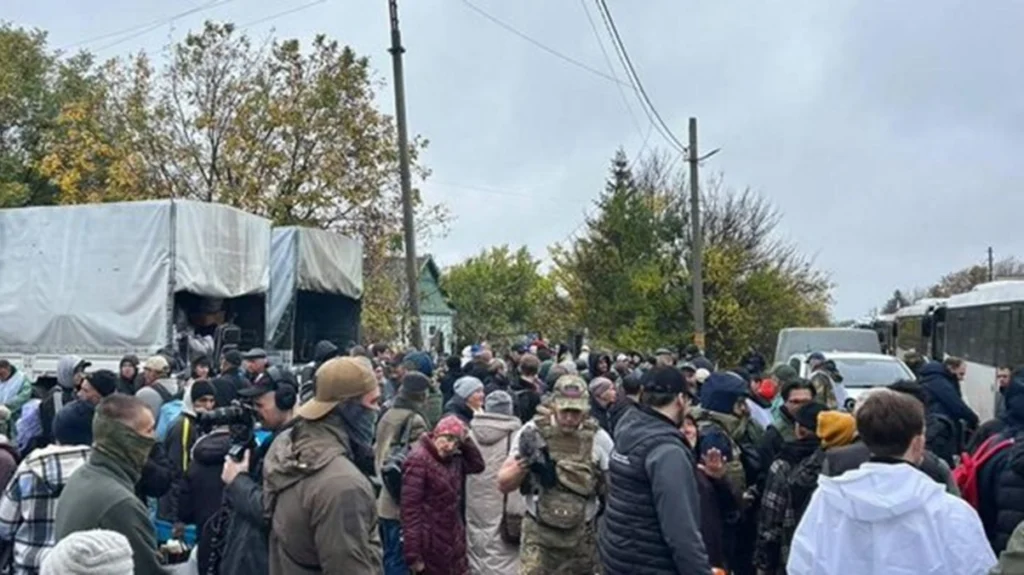
Al least “25 buses have been prepared to evacuate 750 residents, with more than 50 medical personnel and nine ambulances on standby and separate transport has also been arranged for pets,” Irish journalist Brian McDonald posted on social networks.

Earlier in the day, Ukrainian Prime Minister Sergii Koretskyi said that 527 people from Oleshky were expected to return to Ukrainian-controlled territory.

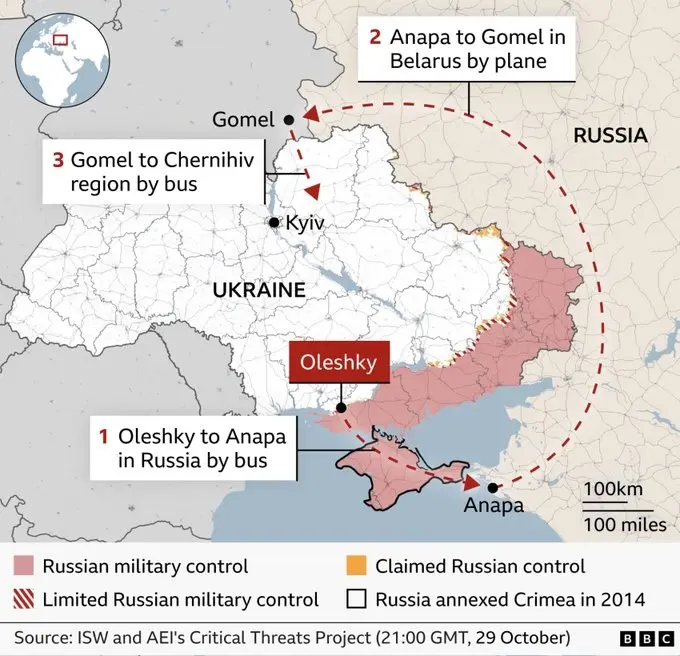
The evacuees would enter Ukraine from Belarus. Once in Ukraine, they will undergo medical examinations, receive initial medical care, and be provided with essential supplies and accommodation.

On Thursday, a Ukrainian delegation led by Parliament Commissioner for Human Rights Dmytro Lubinets departed for Oleshky on a humanitarian mission, which was made possible by an agreement with Russian Commissioner for Human Rights Yana Lantratova, with coordination of U.S. First Lady Melania Trump.

With about 2,000 people remaining at present, Oleshky lies on the left bank of the Dnieper River. The town has been under Russian control since February 2022 and is facing a humanitarian crisis, with shortages of food, medicine and other essential supplies amid continued fighting.

The humanitarian mission followed an agreement on a temporary ceasefire in the area to facilitate aid deliveries and civilian evacuations. The ceasefire is scheduled to remain in effect until 10:59 p.m. Moscow time on Nov. 1.

teleSUR/ JF

Source: Xinhua

  •  

Canada Unveils First National Security Strategy in Over 20 Years

The rules-based international order is eroding and the line between economic security and national security has disappeared, Carney stated.

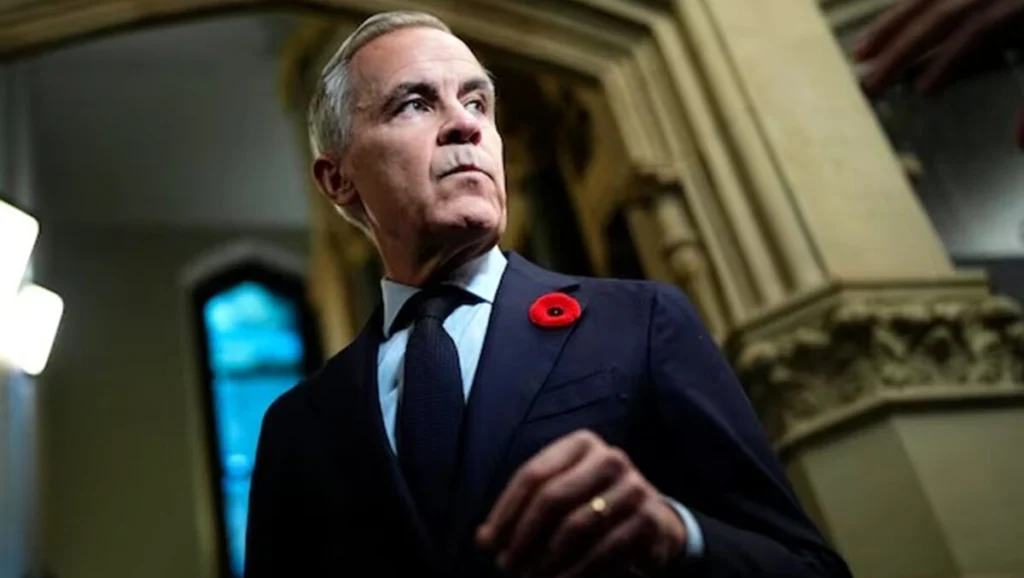
On Thursday, Canadian Prime Minister Mark Carney launched “The Plan for a Stronger Canada,” the country’s first national security strategy in over two decades aimed at countering evolving security threats and safeguarding national sovereignty.

RELATED:

EU and Canada to Explore New ‘Associated Member’ Status at Montreal Summit

The prime minister’s office said in a news release that the rules-based international order is eroding and the line between economic security and national security has disappeared, noting that national security now relies not only on defense and resource capabilities, but also on the strength of the economy, the resilience of institutions, and the partnerships with allies.

The strategy outlines five main priorities: strengthening economic security and resilience by transforming strategic industries and securing supply chains; advancing a disciplined foreign policy to diversify partnerships; rebuilding and strengthening the Canadian Armed Forces; enhancing public safety against foreign interference, espionage, violent extremism, and transnational organized crime; and modernizing intelligence capabilities to anticipate and counter emerging threats.

“In a rapidly changing, more dangerous, more divided world, Canada must have the capacity to defend our sovereignty, the resilience to withstand emerging threats, and the determination to shape our own future. Our Plan for a Stronger Canada will build that strength. So that we can live our lives as we choose, in the greatest country in the world,” PM Carney said, adding that the Canada will update the strategy at least every four years.

Mark Carney on Canada's new national security strategy: "The last strategy was written for a different world. And today's national security strategy reflects profound new realities. Most fundamentally, what it does is it recognizes that the requirements of sovereignty have… pic.twitter.com/76d8VUmVIZ

— Scott Robertson (@sarobertson_) October 29, 2026

The Strategy Focuses On What We Can Control: Carney.

The new Canadian security strategy considers events that have occurred over the past year and a half, including foreign policy statements made by U.S. President Donald Trump.

“The plan defines Canada’s core national interests and establishes a comprehensive, whole-of-government approach that brings together our economic strength, foreign policy, defense and intelligence capabilities, and public safety initiatives,” the Prime Minister’s Office stated.

To this end, the Canadian government has set out the following guidelines:

“1. Strengthen Canada’s economic security and resilience against threats: Canada has what the world wants. Securing our sovereignty in key sectors and delivering our resources and expertise to the world will reinforce Canada as a strategically important player in the global economy.

To strengthen our economic sovereignty, Canada is transforming our strategic industries with historic investments, securing our supply chains, maximising our energy security, and investing in Canadian innovation to position Canada as a global leader across critical industries.

2. Advance a disciplined foreign policy that diversifies Canada’s partnerships and builds strategic capabilities: No one country, no matter how powerful, can manage these challenges alone. The primary goal of our foreign policy is to support Canadian strategic autonomy and resilience through deep cooperation in the full range of strategic capabilities with likeminded partners.

Much of this work is underway. Canada is diversifying our trade and building stronger partnerships to create greater security and prosperity for Canadians, and forging new partnerships with allies that are anchored in our common values, respect our complementary strengths, and enhance our collective sovereignty and prosperity.

3. Rebuild and strengthen the Canadian Armed Forces (CAF) to defend Canada and Canadian interests: The work of defending Canada is the work of building Canada. To protect Canada’s sovereignty, strengthen our strategic autonomy, and meet our NORAD and NATO targets, the Canadian government is changing how we invest in defence.

We are building a stronger, more resilient Canadian defence industrial base capable of equipping, sustaining, and scaling up the CAF, accelerating procurement, and working with the Defence Investment Agency to deliver the Defence Industrial Strategy, strengthen strategic autonomy, and create lasting economic opportunities for Canadians.

By transforming our military and defence supply chain, strengthening Arctic security, and contributing to stability in the Indo-Pacific, the Middle East, and beyond, Canada will be able to protect itself at home and act as a responsible ally and partner abroad.

4. Protect Canadians and strengthen public safety against criminal and national security threats: Canadians should feel safe and free to take part in every facet of Canadian society.

We will work with all levels of government, Indigenous Peoples, and Northern communities to strengthen our defences and build resilience against threats facing Canadians. We will intensify efforts to counter foreign interference, espionage, violent extremism, and transnational organised crime, including sabotage, extortion, fraud, online exploitation, financial crime, money laundering, and sanctions evasion, while protecting Canadians and our institutions from foreign information manipulation.

5. Modernise Canada’s intelligence capabilities to anticipate and counter emerging threats: Our ability to collect, analyse, and leverage intelligence, together with our partners, ensures we are prepared to tackle emerging threats.

Canada will strengthen our sovereign intelligence capabilities, deepen and diversify our intelligence partnerships, and modernise Canada’s intelligence enterprise by updating authorities to reflect evolving threats and technologies while safeguarding Canadians’ rights.”

teleSUR/ JF

Sources: Xinhua – PM Office

  •  

New York Signs Law to Protect Children From Artificial Intelligence Chatbots

Violations could result in a civil penalty of up to US$25,000 sought by the state’s attorney general.

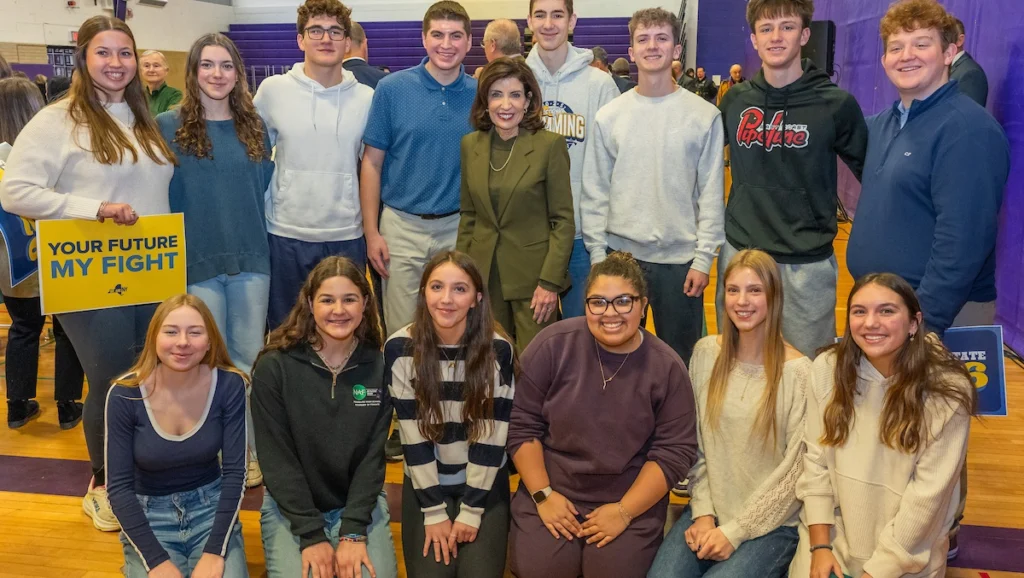
On Wednesday, New York State Governor Kathy Hochul signed a law aimed at protecting minors from the growing risks of artificial intelligence (AI) chatbots.

RELATED:

Lula Pledges to Develop Brazil’s Own Artificial Intelligence

“As a mother and grandmother, I believe kids deserve to be kids, without dangerous AI chatbots putting their safety and mental health at risk. Today, I signed new laws to protect them. Big Tech, you’re on notice: New York will not let you profit at the expense of our children,” she said.

The new legislation prohibits companies from offering a range of chatbot features to users under the age of 18, which include pretending to be human, building emotional dependency, encouraging self-harm or engaging in sexually explicit conversations.

Under the new law, violations could result in a civil penalty of up to US$25,000 sought by the state’s attorney general. The bill also establishes a public website where New Yorkers could file complaints against chatbot companies for potential violations.

New York signs law barring minors from AI companion chatbots

Governor Kathy Hochul signed the measure Wednesday.

Tech industry group Tech:NYC criticized the law's vague language. pic.twitter.com/a69TdVSdWC

— WW3 SOON (@Web3__Youth) October 30, 2026

“The law is not limited to products marketed as AI companions. Its definition can reach other conversational generative AI products, including AI characters, creator replicas, roleplay tools, and general-purpose chatbots. Businesses offering these features to users in New York should review their products, age-assurance systems, and data practices before the effective date,” outlet My Adult Attorney pointed out.

“A ‘covered AI companion’ is a generative AI system with a natural-language interface, including text or voice, that provides ongoing, adaptive responses to user inputs. A business does not avoid the law simply by calling its chatbot an assistant rather than a companion.”

“The restrictions concern users physically located in New York. An operator need not be located in New York to face enforcement. Conversely, the statute treats access by a user physically outside New York as conduct wholly outside the state. The focus is the user’s location, not merely residence,” My Adult Attorney added.

Previously, several U.S. states have passed laws to restrict use of chatbots for children and enforce stronger safety requirements for AI companies.

In September, California Governor Gavin Newsom signed legislation requiring chatbot developers to conduct and publish annual child safety risk assessments and submit their products to independent audits. Newsom also signed a law to ban social media platforms from deploying addictive features for users under the age of 16.

teleSUR/ JF

Source: Xinhua

  •  

U.S. Energy Blockade Reduces Tourism to Cuba By 65%

Pressure from Washington has led to the suspension of air routes and the withdrawal of international companies.

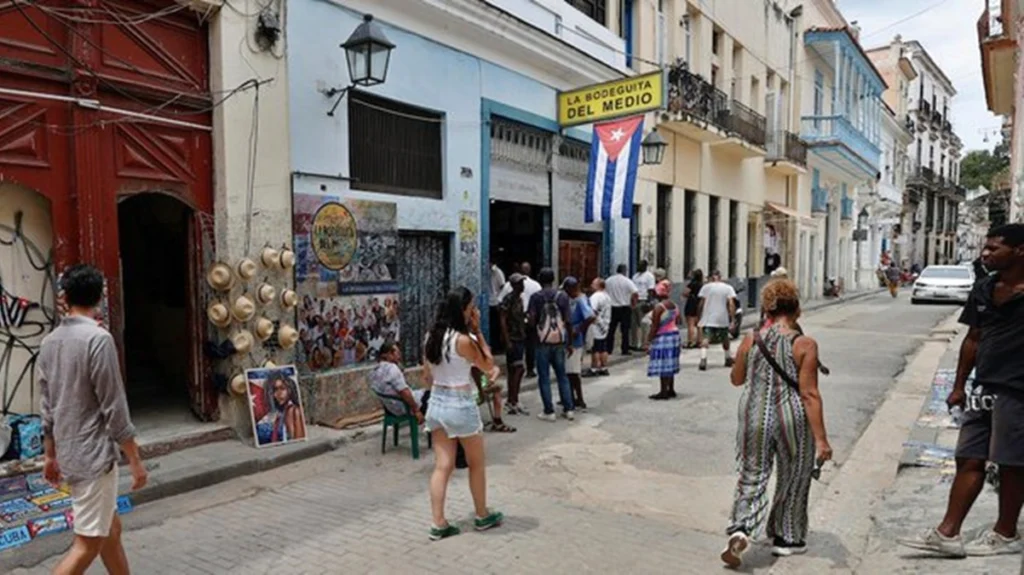
On Wednesday, the National Office of Statistics and Information published a report showing that the U.S. energy blockade has caused a decrease in tourism to Cuba.

RELATED:

Cuba Present at Eco Expo Asia 2026

This Caribbean nation received 65.1 percent fewer international visitors in the first nine months of this year than in the same period of 2025. Cuba received 477,707 international visitors from January to September, down 890,140 from the same period a year earlier.

Canada, Cuba’s largest source market for international tourists, saw the steepest decline, with visitor numbers falling by 430,460. Arrivals from Russia decreased by 67,205, while visits by Cubans living abroad dropped by 60,081. The number of visitors from the U.S. fell by 42,984.

Tourism is one of the Caribbean country’s main sources of foreign currency, but the sector is going through a crisis marked by suspended air routes, hotel closures and the withdrawal of international companies.

CUBAN FM RESIST THE BLOCKADE AT THE UN

Cuban Foreign Minister Bruno Rodríguez stood up to US Ambassador Mike Waltz at the UN General Assembly on Tuesday, in a confrontation that laid bare the deepening hostility over Washington's escalating economic war of aggression on the… pic.twitter.com/3Fqg5K0PzX

— Sovereign Media (@sov_media) October 29, 2026

In July, the Cuban government said that U.S. pressure had prompted seven international hotel chains to withdraw from the island, including Spain’s Melia, Iberostar and Barcelo.

The crisis has been compounded by U.S. restrictions on oil supplies imposed since January, including threats of tariffs on countries supplying fuel to the island, as well as expanded sanctions introduced in May.

Cuba has been subject to a U.S. economic, commercial and financial blockade for more than six decades. In June, Cuba’s National Assembly of People’s Power approved a package of 176 economic and social reform measures aimed at liberalizing the economy, including provisions to attract new investors and expand private-sector participation in tourism.

teleSUR/ JF

Source: Xinhua

  •  

Trappes Mayor Accuses French Far Right of Ideologically Arming Racist Terrorist

Rabeh pointed out that the shooter echoed statements by Marine Le Pen’s National Rally leaders.

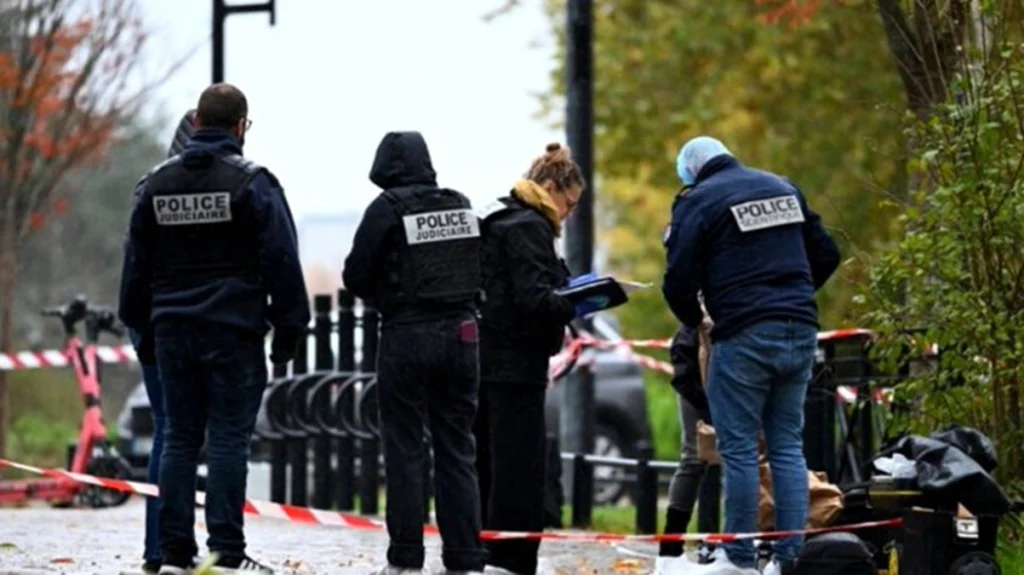
On Friday, Trappes Mayor Ali Rabeh accused the French far right of having “ideologically armed” the perpetrator of the racially motivated terrorist attack that took place a week ago.

RELATED:

Psychiatric Evaluation Does Not Change Terrorist Classification of Trappes Shooting

Rabeh, a member of the left-wing Generation+ party, said statements made by the suspect in the attempted massacre repeated verbatim remarks by leaders of Marine Le Pen’s National Rally (RN).

“From the very beginning, the shooter claimed responsibility for his actions and established a connection with the RN’s ideas… Sebastien Chenu (the party’s vice president) used exactly the same words as the arrested suspect, saying that Trappes is ‘a haven for Islamists,’” the mayor said.

Rabeh accused Le Pen’s party of having “ideologically armed” the terrorist and expressed concern that “this may only be the first attack of this kind.” He also accused far-right parties of using “poisonous words” that take root in “fragile, sick minds that see themselves as being on a crusade to defend an unhealthy vision of France.”

The Generation+ politician mayor stated that the far-right violence incorporates elements of the so-called “great replacement theory,” according to which the population of European descent is being replaced by another population of immigrant origin. He advocated banning the theory from public debate, even if doing so requires a constitutional reform.

Plusieurs centaines de personnes ont assisté mercredi soir à Saint-Denis à l’hommage rendu par @BallyBagayoko et la ville à Pengo Bossio Wangi et les victimes de l’attentat raciste de Trappes. Merci à la famille d’avoir eu des mots forts et dignes, appelant à l’unité, à la… pic.twitter.com/2sxs6c5yam

— Eric Coquerel (@ericcoquerel) October 30, 2026

The text reads, “On Wednesday evening in Saint-Denis, several hundred people attended a tribute—organized by Bally Bagayoko and the city—for Pengo Bossio Wangi and the victims of the racist attack in Trappes. I am grateful to the family for their powerful and dignified words, in which they called for unity, justice for Pengo, and a peaceful struggle against ‘racism, which has no place in France.’ This Friday evening, I will be in Trappes for the march organized by the Trappes municipal government and its mayor, Ali Rabeh.“

The Trappes mayor called for reviving the “cordon sanitaire” to prevent any rapprochement with far-right parties, a political barrier that has been seriously weakened in recent years. He also strongly criticized centrist politicians such as Prime Minister Sebastien Lecornu, who place the far right and far left on the same footing.

Rabeh expects “thousands of people” to attend a rally against racism in his city late Friday afternoon. The event is expected to draw lawmakers, mayors, and left-wing presidential candidates, including Social Democrat Raphaël Glucksmann, left-wing politician Jean-Luc Melenchon and Green politician Marine Tondelier.

The Trappes mayor did not comment on the absence of right-wing candidates from the march but said that “everyone is welcome.”

“I am not asking for anyone’s political support. I am asking everyone to face their responsibilities and examine their conscience,” Rabeh said, referring to the absence of government representatives from the afternoon rally.

teleSUR/ JF

Source: EFE

  •  
❌