❌

Reading view

Trump's Claims About Noncitizen Voting Are 'Not Credible,' a Federal Judge Says in a Scathing Decision
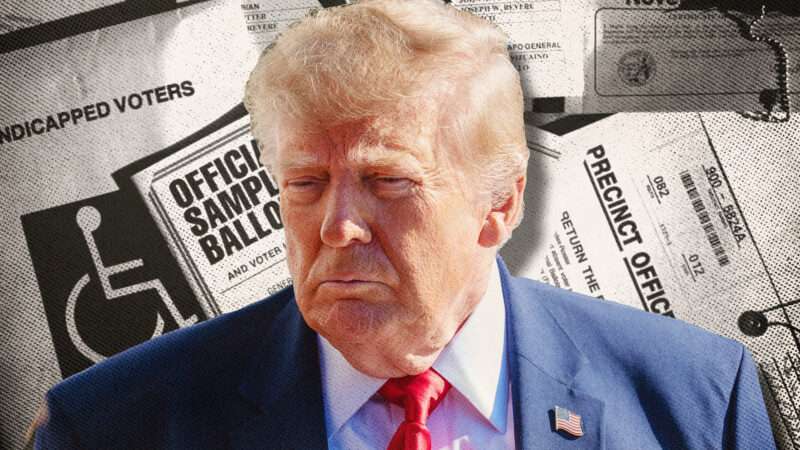
President Donald Trump against a background of California ballots | Andrew Leyden/Zuma Press/Newscom/Joe Sohm/Dreamstime

In a July 16 letter to California Secretary of State Shirley Weber, the Department of Homeland Security (DHS) said a "preliminary review" suggested there "may be as many as 190,832 non-citizens registered to vote" in her state. Weber was skeptical—for good reason, it turned out. Three months later, the Trump administration reduced that estimate by nearly 90 percent, saying about 20,000 "likely noncitizens" had received California vote-by-mail ballots.

The Justice Department gave Weber and Dean Logan, Los Angeles County's top election official, 48 hours to determine whether any of the people on the government's list were in fact citizens. Otherwise, it said, Weber and Logan should segregate those ballots and refrain from processing them until citizenship could be verified. After Weber and Logan declined to comply with the Justice Department's demands, it asked a federal judge for a temporary restraining order (TRO) requiring them to do so—a request that he rejected in a scathing opinion on Wednesday.

"Never before in American history has the federal government, on the eve of an election, sought to coerce a state and local government to abandon their own Constitutional elections procedures and bend to the will of the Executive Branch," writes U.S. District Judge David O. Carter, a Bill Clinton appointee. "This request violates longstanding constitutional principles mandating that states have control over their elections. If Plaintiff's last-minute request for relief were granted, either party could create chaos for their own political purposes to disrupt the election process. Over 20,000 registered Californians would potentially lose the right that generations of Americans have fought to preserve."

The Justice Department delivered its list of "likely noncitizens" to Logan three weeks before Election Day. At that point, Los Angeles County already had sent ballots to 5.9 million voters and processed 331,000 of them. Logan said he was "legally prohibited" from doing what the Justice Department wanted because it had failed to explain the methodology used to compile the list, raising the possibility that citizens would be denied their voting rights.

There was ample reason for that concern. On July 17, DHS Secretary Markwayne Mullin averred that "as many as" 15,903 noncitizens were registered to vote in Nevada. The following month, when the DHS submitted a list of allegedly illegal voters to Nevada election officials, the number had fallen to 185—99 percent lower than Mullin's original figure. It turned out that every one of those 185 voters was a U.S. citizen.

"DHS has identified over 250,000 potential non-citizens illegally registered to vote" in California, New Jersey, Nevada, and Pennsylvania, Mullin said in July. He was echoing President Donald Trump, who for years has grossly exaggerated the extent of illegal voting by noncitizens, often in service of his own vanity.

Trump has repeatedly claimed, for example, that he would have won the popular vote in 2016 but for "the millions of people who voted illegally," and in January 2024 he warned that noncitizen voters "could very well affect the next election." In a speech the night before Mullin's announcement, Trump asserted that the DHS had "identified approximately 278,000 non-citizens who are registered to vote in federal elections."

Judging from Nevada's experience, the actual number may be closer to zero. It is hard to say, because the methods used by the DHS remain hazy.

In the California case, Carter says, the DHS "purchased a voter file that appeared to reflect 'the actual voter rolls in California, that as of August 2025, may be used for the 2026 federal election.'" It "then 'enhance[d]' the voter data through a 'reliable third-party data analytics'" and used records maintained by U.S. Citizenship and Immigration Services (USCIS) to find "an internal USCIS immigration number" that "may" correspond to each registered voter. "The matches are scored," Carter notes, "because 'the resulting data may be incomplete, outdated, or mismatched.'"

The DHS "then compared the potential identity matches to Department of State and Social Security Administration data to screen out U.S. citizens," Carter adds. "In the next step, a confidence level was assigned (where a high score supported a 'strong identity link') and a manual review was conducted for each match to 'determine which registered voters'" were "likely to be aliens." Then came "a 'quality review' to identify issues such as 'duplicate entries' and 'incomplete records,'" followed by "an 'enrichment process' that utilized 'additional unique identifiers' to 'improv[e]' the matching process."

The government did not initially specify the source of the "reliable third-party data analytics." But it later revealed that "the third-party platform it relied on was
Lexis Nexis," Carter notes. "It remains unknown how Lexis Nexis performed its analysis, such as how it 'linked names to Social Security numbers not available on the California public voter file.' Plaintiff likewise did not explain what its 'enrichment process' entailed or how it occurred. Plaintiff also provided 'no error rates' or 'validation against a reliable benchmark' that would enable a determination of the accuracy of its findings. Omissions of this critical information prevent an evaluation of Plaintiff's procedure, including how Plaintiff reduced its initial claim of nearly 200,000 alleged noncitizens to 20,000 individuals."

Potential sources of error include conflating people with similar or identical names and outdated records that do not reflect recent naturalization. Because it is unclear how the DHS tried to address such problems, it is not surprising that Weber and Logan did not want to rely on the Trump administration's list, especially given its pattern of dramatically reducing the putative number of illegally registered voters.

"It is well-documented that matching voter registration records with data from other
administrative databases 'presents numerous challenges,'" Carter writes. And given the potential for error, he says, "Plaintiff's allegations are not credible." He adds that the TRO sought by the Justice Department "would likely lead to voter disenfranchisement" and "would create a significant administrative burden for Defendants, leading to chaos and upending the election."

In any event, Carter says, the Trump administration does not have legal standing to seek such an order. The government's main argument was that California officials, by refusing to segregate ballots from people on its list, were interfering with its enforcement of 18 USC 611, which makes it a misdemeanor for "any alien to vote" in a federal election.

"Defendants do not 'interfere' with the United States' ability to enforce Section 611 by
administering an ongoing election in accordance with established State and Federal law, rather than assuming new obligations pursuant to a federal criminal law they are not responsible for enforcing," Carter writes. It is well established that state officials have no obligation to enforce federal law, he notes, and that they cannot be "commandeered" to do so.

Nor does the federal government need such assistance to enforce Section 611. "The very same day the United States filed its TRO [application] in this Court, the Department of Justice brought charges against 28 individuals" in California under that law, Carter notes. It is not clear how many of those defendants, who represent 0.0001 percent of California's 23 million registered voters, actually cast ballots. But "if fraudulent voting occurs," Carter says, "the United States should uphold the law and bring additional Section 611 indictments against those non-citizens it believes actually voted illegally in the current—or a prior—election."

The Constitution gives states the primary responsibility for conducting elections, subject to explicit limits imposed by Congress. But the Justice Department's actions in this case "are indicative of a broad, ongoing pattern of attempted election interference by federal officials," Carter writes. The department "has filed at least thirty-one lawsuits in federal district courts across the country seeking complete voter rolls from the States. Out of the twenty-six decided cases, the DOJ has prevailed in precisely zero."

In addition to "its failed attempt to seek State voter rolls," Carter notes, "the United States has also requested that States act based on the Executive's own lists." But "sister district courts across the country have cast doubt" on the reliability of those lists for the same reasons that Carter cites in this case.

On October 23, the Justice Department "sent letters to every county in California requiring them to set aside the votes of alleged non-citizens," Carter notes. "The letters stated that election officials 'risk significant federal scrutiny' if they failed to comply with the Government's demands. The government reiterated its threat in open court yesterday, stating that State and County election officials who do not comply with their letter risk federal charges under 18 U.S.C. § 2, which criminalizes aiding and abetting the commission of a criminal offense. The court reiterates what it said yesterday: these threats must stop."

The post Trump's Claims About Noncitizen Voting Are 'Not Credible,' a Federal Judge Says in a Scathing Decision appeared first on Reason Magazine.

  •  

The Failed Indictment of Cassidy Hutchinson Reflects Grand Jury Resistance to Politically Motivated Charges

Cassidy Hutchinson | Tom Williams/CQ Roll Call/Newscom

"I am very concerned about the weaponization of the Justice Department," Sen. Bill Cassidy (R–La.) told reporters in August, explaining his reservations about voting to confirm Todd Blanche as attorney general. Cassidy specifically cited the attempt to prosecute Cassidy Hutchinson, a White House aide during President Donald Trump's first term, based on her 2022 testimony before the House select committee that investigated the 2021 riot at the U.S. Capitol. "I'm told there is a grand jury being empaneled to investigate her," Cassidy said. "Why? Tell me that. Shouldn't every American be afraid of the weaponization of the Justice Department?"

Grand jurors in Washington, D.C., who on Tuesday declined to approve an indictment of Hutchinson, apparently shared the senator's concerns about the case against her. That setback is part of a pattern: Grand juries, which historically have almost never rejected charges proposed by federal prosecutors, have done so repeatedly during the last two years, reflecting the Trump administration's tendency to pursue politically motivated cases based on inadequate evidence.

A grand jury hears only the government's side of a case, and the probable cause standard for approving an indictment, which requires reasonable grounds to believe a crime has been committed and that the person identified by prosecutors committed the crime, is much less demanding than the proof beyond a reasonable doubt required for a conviction. But the Justice Department's manual for prosecutors says they should not pursue criminal charges unless "the admissible evidence will probably be sufficient" to meet the latter test. It is a pretty striking indication that prosecutors are disregarding that injunction when a grand jury determines that they have failed to meet the minimal burden of establishing probable cause.

Hutchinson, who at the time of the Capitol riot was White House Chief of Staff Mark Meadows' principal assistant, delivered the testimony at the center of the failed indictment on June 28, 2022. She described Trump as unconcerned about weapons carried by some of the people who attended the speech he delivered the day of the riot, during which he reiterated his false claim that Joe Biden had stolen the 2020 presidential election and urged his supporters to "fight like hell" against congressional ratification of his victory.

Hutchinson said Trump wanted the Secret Service to stop screening rally participants with magnetometers because he was worried it would reduce the size of the crowd. "I don't effing care that they have weapons," Trump said, according to Hutchinson's approximate recollection. "They're not here to hurt me. Take [the] effing mags away. Let my people in. They can march to the Capitol from here. Let the people in."

Hutchinson also said Trump was irate when the Secret Service told him he could not join the protesters at the Capitol. That much was consistent with the testimony of other witnesses. But Hutchinson added disputed details, saying Deputy Chief of Staff Tony Ornato had told her Trump was so angry that he "lunge[d] towards Bobby Engel," the head of his protective detail, and "reached up towards the front of the vehicle to grab at the steering wheel." The Secret Service agent who was Trump's driver that day contradicted Hutchinson's account, and Ornato said he had no recollection of any such incident.

Last March, Reps. Barry Loudermilk (R–Ga.) and Jim Jordan (R–Ohio) urged the Justice Department to prosecute Hutchinson for lying to Congress. "Hutchinson's potential prosecution became a point of controversy between lawmakers and employees of the Justice Department," CNN reports. "Some inside the department believed there was not enough evidence to bring a viable criminal case."

You would expect such a case to be handled by Jeanine Pirro, the U.S. attorney for the District of Columbia. But the investigation of Hutchinson was instead conducted by the Justice Department's Civil Rights Division, which is run by Assistant Attorney General Harmeet Dhillon, another Trump loyalist.

You might wonder what scrutinizing Hutchinson's testimony had to do with "protecting the civil and constitutional rights of all Americans," which is how Dhillon's division describes its mission. Dhillon's involvement is all the more puzzling given that Pirro previously had not hesitated to pursue dubious charges against the president's enemies.

Last February, Pirro sought an indictment of six Democratic members of Congress who appeared in a November 2025 video that reminded U.S. military personnel of their duty to "refuse illegal orders." Trump condemned that message as "SEDITIOUS BEHAVIOR AT THE HIGHEST LEVEL," saying the lawmakers "should be ARRESTED AND PUT ON TRIAL." But as a federal judge later noted, the allegedly criminal video was "unquestionably protected" by the First Amendment.

That did not deter Pirro from trying to deliver on her boss's threat. But as in Hutchinson's case, the grand jury apparently was not willing to participate in Trump's vendetta. After it unanimously refused to approve the indictment, Pirro gave up.

That embarrassing experience may have deterred Pirro from getting involved in Hutchinson's case, especially if she thought there was not enough evidence to obtain a conviction. She would have had good reasons for reaching that conclusion.

It is not clear exactly what charges the grand jury rejected this week. But the most obviously relevant statutes are 18 USC 1001, which covers false statements "in any matter within the jurisdiction of the executive, legislative, or judicial branch," and 18 USC 1621, which covers false testimony under oath. Both are felonies punishable by up to five years in prison. But a conviction under Section 1001 requires proving that the defendant "knowingly and willfully" made a "materially false, fictitious, or fraudulent statement," and the perjury statute applies only when a sworn witness "willfully and contrary to such oath" makes a "material" statement that "he does not believe to be true."

Those elements would have been hard to satisfy in Hutchinson's case. Her testimony about Trump's insouciant attitude toward weapons carried by his supporters was based on what she said she heard him say, an account that pits her word against that of a habitually dishonest politician whose speech that same day was full of misrepresentations. And even if her recollection of Trump's comments was not fully accurate, that does not necessarily mean she intentionally gave false testimony. The same goes for the alleged lunging-and-grabbing incident, an account Hutchinson said was based on a conversation with Ornato that he says he does not recall.

Maybe Hutchinson, who had a lawyer and was surely aware of the potential penalties for lying to Congress, nevertheless fabricated both of those claims. But assuming her testimony was inaccurate, it seems more likely that she misremembered or misconstrued what Trump and Ornato said. In any event, the task of proving the first proposition beyond a reasonable doubt would give pause to any reasonably cautious prosecutor. And the grand jurors, even without the benefit of hearing a rebuttal to the government's case, thought the evidence of deliberate deception was so weak that it fell short of probable cause.

That determination is just the latest in a series of similar rebukes. In addition to the rejection of Pirro's charges against the "Seditious Six," they include the attempt to prosecute New York Attorney General Letitia James for mortgage fraud, which two separate grand juries in two different Virginia cities blocked last December.

Grand jurors also have stood athwart felony prosecutions of protesters in Washington, D.C., including Sean Dunn, the guy who threw a sandwich at a Customs and Border Protection officer, and Sydney Reid, who allegedly interfered with immigration arrests while using her phone to record them. In the latter case, Reason's Joe Lancaster noted, prosecutors unsuccessfully sought a felony assault indictment "not once, not twice, but a staggering three times." Reid was ultimately acquitted of a misdemeanor charge.

In the summer of 2025, federal grand juries approved just seven of 38 proposed felony indictments against protesters in Los Angeles, an amazingly bad track record. A few months later, federal prosecutors dropped assault charges against two Chicago protesters after a grand jury declined to indict them.

"For decades, federal grand juries have almost never said no," Ballard Spahr attorneys Henry E. Hockeimer Jr. and Brad Gershel noted last year. In 2016, for example, grand juries declined to approve federal indictments just 0.004 percent of the time. "That dynamic is now being tested," Hockeimer and Gershel added. "As the DOJ has adopted a more assertive charging posture in politically sensitive cases, grand juries appear to be reasserting their independence."

The post The Failed Indictment of Cassidy Hutchinson Reflects Grand Jury Resistance to Politically Motivated Charges appeared first on Reason Magazine.

  •  

A Supreme Court Case Underlines the Absurdity of the Federal Ban on Home Distilling

a still in a jail cell | DPST/Newscom/Kari Høglund/Dreamstime/Fatima Ruiz

Years ago, I bought a contraption designed to separate and concentrate the most volatile components of a liquid mixture. I would tell you what I did with it, but I don't want to implicate myself in a federal felony.

Since 1868, it has been illegal for Americans to locate a "distilled spirits plant" in "any dwelling place," an offense currently punishable by a maximum $10,000 fine and up to five years in prison. The federal ban on home distilling is at the center of a case that the Supreme Court recently agreed to hear, which raises a specific constitutional issue but also highlights the absurdity of treating this hobby as a crime.

That policy, the U.S. Court of Appeals for the 5th Circuit ruled last April, cannot be justified as an exercise of the federal government's tax power. To the contrary, Judge Edith Jones said in the court's opinion, the ban is "an anti-revenue provision that prevents distilled spirits from coming into existence," meaning its effect is "to reduce revenue instead of raising it."

Nor is the provision consistent with "the Supreme Court's explanation of how the federal power of taxation works," Jones wrote. When Congress imposes a tax, the Court explained in 2012, it "leaves an individual with a lawful choice to do or not do a certain act, so long as he is willing to pay a tax levied on that choice." But in this case, Jones noted, would-be home distillers "have only the choice not to do as they wish or risk fines and imprisonment."

The government argued that the ban helps collect liquor taxes by prohibiting a form of production that is difficult to detect. But "Congress cannot prohibit intrastate activity solely because it might produce products hard to tax," Jones said. If it could, she warned, there would be "no limit whatsoever" to its tax power.

Under the government's logic, Jones noted, "Congress may criminalize nearly any at-home conduct only because it has the possibility of concealing taxable activity. Home-based businesses may be forbidden. Remote work may be deemed a crime."

The Trump administration, which wants the Supreme Court to overturn the 5th Circuit's decision, argues that threatening to imprison home distillers is a "necessary and proper" safeguard against tax evasion. But whatever your take on the constitutional question, that policy is morally indefensible, haphazardly enforced, and inconsistent with the federal government's treatment of wine and beer.

The lead plaintiff in this case is Scott McNutt, a member of the Hobby Distillers Association. In 2014, McNutt received a "Notice of Potential Civil and Criminal Liability" from the Treasury Department, which said it had reason to believe he "may have purchased a still capable of producing alcohol and/or equipment and materials that may be used in the manufacture of a still."

The notice warned that "federal law provides no exemptions for the production of distilled spirits for personal or family use." It added that "unlawful production of distilled spirits is a criminal offense," which it erroneously claimed was "punishable by a fine of up to $500,000" as well as "imprisonment for not more than 5 years."

Meanwhile, online retailers such as Amazon sell a wide variety of home stills, many of which are explicitly advertised as appliances designed to produce alcoholic beverages such as vodka, gin, brandy, and whiskey. Customers could be forgiven for assuming that's legal, especially since federal law has long permitted home wine and beer production "for personal or family use."

McNutt's lawyers say he "owns a still that he has used to lawfully distill fuel alcohol and seeks to 'tinker around' with beverage spirits." Another plaintiff, Thomas Cowdrey, "likewise seeks to experiment in creating new beverage spirits, including 'apple pie vodka,' for which he has developed a recipe."

Because of a law Congress enacted 158 years ago, McNutt and Cowdrey would be felons if they acted on those desires. It might be time to rethink that policy.

© Copyright 2026 by Creators Syndicate Inc.

The post A Supreme Court Case Underlines the Absurdity of the Federal Ban on Home Distilling appeared first on Reason Magazine.
  •  

The Justice Department's 3rd Attempt To Imprison James Comey Stinks of Trump's Desperation for Revenge

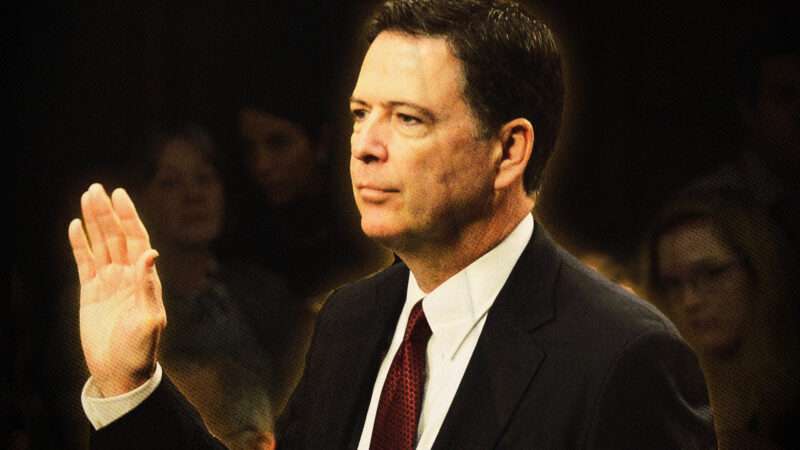
James Comey | Christy Bowe/Zuma Press/Newscom

A little more than a year ago, President Donald Trump publicly demanded that Pam Bondi, then the attorney general, find a crime to pin on former FBI Director James Comey. Trump's underlings have repeatedly tried to do that, first charging Comey with lying to Congress and then accusing him of threatening to assassinate the president. But the first indictment was dismissed because Trump had illegally appointed the prosecutor who obtained it, and the second was doomed right out of the gate because it aimed to punish constitutionally protected political speech.

The Justice Department's latest attempt to follow Trump's marching orders was revealed on Monday, when U.S. District Judge Trevor McFadden unsealed a "criminal information" that claims Comey illegally shared classified information with The New York Times on October 5, 2016. In an attempt to meet the statutory deadline for that charge, prosecutors filed it exactly 10 years after the alleged disclosure. But Comey's lawyers argue that federal law required the government to obtain a grand jury indictment within 10 years of the alleged offense, which it failed to do.

Whatever you make of that dispute, the president has made it clear that he wants to imprison Comey, a longtime nemesis because of his role in the "Russiagate hoax" during Trump's first term, and does not much care about exactly how that happens. Justice Department officials, meanwhile, are keen to pursue Trump's personal vendetta by using their prosecutorial powers as an instrument of his revenge.

The new case "would almost be funny if it weren't such an appalling abuse of the Department of Justice," Comey said in an online video on Monday. "I'm still innocent. I'm still not afraid of these people, and I still believe in the independent federal judiciary."

In the New York Times story at the center of the case, Charlie Savage and Nicole Perloth reported that Yahoo had adapted "a system intended to scan emails for child pornography" to comply with a Foreign Intelligence Surveillance Court order seeking "messages containing a computer 'signature' tied to the communications of a state-sponsored terrorist organization." Savage and Perloth cited "two government officials who spoke on the condition of anonymity."

Dustin Farahnak, a special U.S. attorney for the District of Columbia, says that story included "first-time disclosures of classified information not intended for the public domain." According to Farahnak, the government has evidence that Comey "directed staff" to discuss "specific accuracy concerns" about a prior Reuters report on the same subject with Savage. In the process of doing that, Farahnak says, those FBI officials "illegally transferred classified information."

Comey's attempt to set the record straight, according to Trump's henchmen, was a felony punishable by up to 10 years in prison under 18 USC 793(d), an Espionage Act provision that applies to an official who "willfully" shares "information relating to the national defense" with an unauthorized recipient when he "has reason to believe" it "could be used to the injury of the United States." Comey also faces a charge of conspiring to violate Section 793, which likewise carries a maximum 10-year sentence.

If Comey's alleged disclosure was such a grave crime, you might wonder, why did it take a decade to charge him? Because two prior investigations of the same incident concluded that criminal charges were not warranted.

Beginning in March 2017, John Durham, the U.S. attorney for the District of Connecticut, looked into the genesis of the Times article. The investigation found that James Baker, then the FBI's general counsel, was one of the anonymous sources. Baker said he had acted under instructions from FBI Chief of Staff James Rybacki, whom he understood to be conveying Comey's wishes. Durham's investigation included interviews, emails, phone records, and consideration of the relevant statutes. In December 2018, Comey's lawyers note, Durham "wrote a classified memorandum outlining the investigation and recommending 'NO prosecution for Baker or anyone else.'"

The following month, the U.S. Attorney's Office for the District of Columbia "opened an investigation into the same subject matter," Comey's lawyers say. That investigation "was closed without any charges in February 2020" after the office "declined to prosecute."

Given the outcomes of those two investigations, the decision to charge Comey now stinks of desperation to slake Trump's thirst for revenge. According to Comey's lawyers, the tardiness of the charges also fatally undermines the case.

Federal law generally requires that prosecutors file charges within five years of the alleged crime. But the Internal Security Act of 1950 made an exception for Section 793, saying "an indictment for any violation" of that provision "may be found at any time within ten years next after such violation shall have been committed."

The charges against Comey "should be dismissed as time barred," his lawyers argue: "Section 19 of the Internal Security Act gives the government an extended ten-year limitations period in which to charge Section 793 offenses. But as Section 19 unambiguously states, the government may invoke that extended period only by obtaining a grand jury indictment. A criminal information—which the government can issue unilaterally without grand jury involvement—does not suffice. Because the default five-year statute of limitations for federal felonies has long since elapsed on the alleged offenses, and the government's information does not meet the express statutory requirement for an extended ten-year limitations period, the information is untimely and must be dismissed."

Whichever side prevails on that issue, no one should have any illusions that the Justice Department is pursuing the mission suggested by its name. "It remains unclear what [McFadden] will do with the matter and whether DOJ will even be able to secure an indictment—as required by the Constitution," Cato Institute legal fellow Mike Fox says in an emailed press release. "Should the matter proceed, it is unequivocally clear that this case is a vindictive prosecution—a classic case of lawfare by a weaponized Justice Department."

The post The Justice Department's 3rd Attempt To Imprison James Comey Stinks of Trump's Desperation for Revenge appeared first on Reason Magazine.
  •  

Connecticut's New Restrictions on Flock Cameras Highlight the Dearth of Meaningful Privacy Protections

a license plate camera in chains | M. Scott Brauer/Zuma Press/Newscom/Cemil Adakale/Dreamstime/Fatima Ruiz

A Connecticut law that took effect at the beginning of October imposes new restrictions on police use of automated license plate readers (ALPRs), which enable what a federal judge recently described as "a type of indiscriminate mass surveillance." The law reflects the bipartisan backlash against AI-assisted cameras that record images of passing cars billions of times a week, building databases that police can use to track drivers, identify other vehicles in their vicinity, predict itineraries, and conduct searches based on a wide range of vehicle characteristics.

Connecticut previously imposed no statutory limits on ALPRs, a fact that underlines how readily police can access license plate data, which they can search without any sort of judicial review and often without meaningful internal supervision. But the law's provisions, while promising in some ways, fall short of the reforms recommended by critics who warn that unconstrained use of ALPRs threatens the privacy of innocent motorists across the country.

As of today, DeFlock's mapping project has identified nearly 145,000 ALPR cameras in the United States, most of which were installed by Flock Safety, the leading vendor. That network includes more than 1,500 cameras deployed by Connecticut law enforcement agencies, three-quarters of which use the technology.

The concerns underlying the new law, which Gov. Ned Lamont signed last May, echo objections raised in other states. Last February, for example, CT Insider reported that out-of-state agencies had searched ALPR data from Connecticut thousands of times for immigration enforcement purposes. When police in Johnson City, Texas, searched Connecticut data for a missing woman, the log noted that she "had an abortion," which reinforced concerns that ALPR information might be used to enforce abortion bans.

As elsewhere, ALPR critics in Connecticut also have complained about a lack of transparency. In April 2025, for instance, South Windsor began using Flock cameras without any public notice. The resulting consternation prompted the city council to cancel the program early this month. CT Mirror reports that South Windsor is "at least the sixth Connecticut community to end or suspend the use of ALPRs this year, following Windsor, Killingworth, Ledyard, Milford and Newtown."

Compared to those moves, the new state restrictions are pretty weak tea. But they include some potentially meaningful changes, and they highlight how lax oversight of ALPRs has been.

The new law restricts the sharing of ALPR data, which henceforth will be limited to Connecticut, Massachusetts, New York, and Rhode Island unless an agency in another state obtains a judicial warrant. The law says the data may not be used for immigration enforcement, to target conduct protected by the First Amendment, or for investigations related to "reproductive" or "gender-affirming" health care services. It also bars the placement of ALPRs near facilities that provide such services or organizations that primarily serve immigrants.

The original bill specified that ALPR data could be retained for no more than seven days unless it is tied to an ongoing criminal investigation, subject to a warrant, or used for toll enforcement. The final version of the bill extended that limit to 21 days. Flock's original default was 30 days. But last August, in response to widespread criticism of ALPR surveillance, the company began recommending a seven-day limit. Connecticut's Police Officer Standards and Training Council, which last month sent Lamont a report that included suggested reforms, thinks the state should adopt the seven-day standard.

Under the new law, police may search ALPR data to "assist in the recovery of a stolen motor vehicle," "assist in locating a missing or endangered individual," or "assist in the apprehension of an individual with an outstanding warrant." They also may query the database for information "relevant and material to a specific active investigation of a criminal offense in which there is reasonable suspicion that the offense has been or is being committed." When they do that, their agency must record "the reason for the access and any associated case number for the complaint or incident that is being investigated and is the basis for the access."

It is remarkable that Connecticut lacked such basic safeguards until now, and it is not clear how effective the new rules will be. Since July 1, 2025, Virginia has required that cops state a "specific purpose" for ALPR searches, including "the offense type." Yet last April, WHRO reported that Norfolk police often give "incomplete and imprecise reasons" for ALPR queries, including "suspect," "suspicious," and "investigation" or "inv."

Connecticut's "reasonable suspicion" requirement is more lenient than the standard that the Institute for Justice favors. The organization's model statute would generally require a warrant based on probable cause for ALPR queries. The proposed law makes exceptions for "exigent circumstances," stolen vehicles, and toll, parking, or traffic enforcement.

Connecticut's law also addresses the sort of blatant abuses that have fueled opposition to license plate cameras, including cases in which cops have been caught using ALPR data to stalk personal nemeses, ex-girlfriends, possibly unfaithful spouses, and objects of romantic interest. The law says an officer "who is found to have knowingly accessed, used or disseminated automated license plate reader data with malicious intent for purposes outside of the provisions of this section shall be subject to disciplinary action including, but not limited to, suspension, cancellation or revocation of certification" for police work.

The law establishes two additional remedies that could deter ALPR abuses. It authorizes the attorney general to sue ALPR contractors for damages and injunctive relief when they violate the new restrictions. It also allows "any aggrieved individual" to sue "a public agency" that flouts the rules.

"The law, for a first bite at the apple, is not bad," Ken Barone, manager of the University of Connecticut's Racial Profiling Prohibition Project, told CT Insider. Given that "there was a benchmark of nothing," he said, the attempt to constrain and track ALPR use is "a big step forward."

The post Connecticut's New Restrictions on Flock Cameras Highlight the Dearth of Meaningful Privacy Protections appeared first on Reason Magazine.
  •  

How Helping Someone Buy Drugs Can Send You to Prison for 20 Years

Scott Hancock | Joshua Greene/hancockonaddiction.org

Eight years ago, Scott Hancock, then 28, helped a 19-year-old acquaintance, identified in court records as T.G., buy fentanyl. At her request, Hancock, who had been addicted to opioids for years, got in touch with his drug dealer, who gave him five capsules that he handed over to T.G. in exchange for $20. Then Hancock gave the money to his dealer. Because T.G. subsequently died from a fentanyl overdose, Hancock is serving a 20-year sentence at a federal prison in Illinois.

That was the mandatory minimum sentence under 21 USC 241, which prescribes penalties for drug distribution resulting in death. Although that law has been on the books since 1986, the dramatic increase in fentanyl-related deaths during the last decade prompted a surge in federal drug prosecutions involving overdoses, which rose by 44 percent between FY 2019 and FY 2023. Hancock's case was part of that trend, and it prompted his mother, G.D. Hancock, a retired finance professor, to delve into the subject, resulting in a database that sheds light on what happens when the government treats accidental deaths as homicides.

So far, Hancock has identified 2,930 sentences in such cases since 2010. That includes 1,399 federal cases and 1,531 state cases, which rely either on laws dealing specifically with drug-induced deaths or on more general statutes addressing felony murder, "depraved heart" homicide, or manslaughter.

Sentences of 20 years or more were pretty common at the federal level, accounting for 37 percent of the cases, compared to 13 percent at the state level. The vast majority of the cases (84 percent) were resolved by plea deals. That is not surprising, given the potential consequences of going to trial. While the median sentence for defendants who pleaded guilty was nine years, it was 20 years for defendants who insisted on making the government prove its case.

Hancock's tally is based on news reports, court records, announcements by state and federal prosecutors, her own "case files and research," and "cases sent in by families, lawyers and researchers." A separate database compiled by researchers at Northeastern University, drawn from news reports, includes 3,264 cases involving drug-induced homicide from 2011 to 2022.

These prosecutions are morally nonsensical. They treat people who voluntarily consume drugs as helpless victims of supposed predators who gave them the drugs they wanted. By similar logic, bartenders and liquor store owners should be held criminally liable whenever a customer succumbs to alcohol poisoning or the long-term effects of heavy drinking. The main difference is the legal status of the drug, which is arbitrary, politically determined, and historically contingent. And while illegal drugs pose special hazards, that is a result of prohibition, which creates a black market where product composition is highly variable and unpredictable.

Charging people with homicide based on accidental overdoses would be illogical and unjust even if the defendants were limited to actual drug dealers. But you can be charged with drug-induced homicide even if your "trafficking" consisted of nothing more than sharing drugs with a relative, romantic partner, friend, or acquaintance. Based on the information Hancock was able to glean, she counts 241 cases where the person who died from an overdose was the defendant's friend, partner, or family member, and other sources suggest such prosecutions are common.

The Northeastern University researchers analyzed a sample of 213 online news reports from 2000 to 2017. They found that 50 percent of defendants charged with drug-induced homicide were caretakers, family members, friends, or partners of the people who died.

In 2021, when the Pittsburgh Tribune-Review examined Pennsylvania prosecutions for "drug delivery resulting in death" (DDRD), it described a case involving "a Westmoreland County man" who "died from an overdose of drugs he'd gotten from a friend of a friend of a friend." Although "the drugs ultimately came from a man called 'Bee' in Penn Hills," the paper noted, "the three individuals between the victim and Bee were all charged" with DDRD, a first-degree felony punishable by up to 40 years in prison.

The Tribune-Review described several other DDRD defendants, including "a Delmont woman" who "called paramedics when she found her boyfriend unresponsive in their bathroom"; "two friends" who bought heroin for a man who overdosed at a Taco Bell; and "a Monessen woman" who "sent her cousin to buy a brick of heroin" and "sold five stamp bags to a friend, who then sold four bags to an Elizabeth Borough man who died from a fatal overdose."

The Tribune-Review also found that "many facing these charges are relatively low-level dealers." Jonathan Fodi, a defense attorney and former prosecutor, told the paper he and his colleagues had never seen a DDRD case involving a high-level dealer. Given the need to prove a link between the defendant and the person who died, that is not surprising. But that situation compounds the injustice of treating such deaths as homicides, since low-level dealers often do not know exactly what is in the drugs they are selling.

A 2002 analysis of 32 drug-induced homicide prosecutions, published in the New Jersey Law Journal, found that "25 involved prosecution of friends of the decedent who did not sell drugs in any significant manner." According to a 2017 report by a Wisconsin TV station that looked at the 100 most recent prosecutions for drug-induced homicide in that state, "nearly 90% of those charged were friends or relatives of the person who died, or the lowest people in the drug supply chain." When the Chicago Tribune examined drug-induced homicide cases filed between 2011 and 2014, it found "the defendant was typically the last person who was with the person who overdosed."

Even people who support the war on drugs should be able to recognize the injustice of sending people to prison for 10 or 20 years based on their tangential roles in deaths they neither caused nor intended. And far from making such deaths less likely, that policy impedes potentially lifesaving medical assistance because the risk of a homicide charge is apt to discourage bystanders from calling for help. That daunting deterrent undermines the goal of "Good Samaritan" laws that are supposed to shield 911 callers from criminal charges in such situations.

The official justification for these prosecutions is completely disconnected from the reality of the cases. "Deaths from illicit drugs, especially fentanyl, are at historic highs," the Drug Enforcement Administration (DEA) said in a 2023 press release. Because the DEA is "committed to protecting Americans and saving lives by pursuing those responsible," the agency explained, it aims to "make sure as many drug traffickers involved in those deaths as possible get an appearance in front of a judge."

As an example of that strategy, the DEA cited Scott Hancock's case, describing him as a "trafficker" who was "found guilty of providing the drugs that killed a 19-year-old woman in 2018." Given the details of that transaction, it is hard to see the logic here. Sending someone like Hancock to prison for 20 years has nothing to do with "saving lives."

The post How Helping Someone Buy Drugs Can Send You to Prison for 20 Years appeared first on Reason Magazine.
  •  

Defending Its AR-15 Ban, Cook County Urges SCOTUS To Ignore the Rifle's Popularity

a rifle superimposed on an image of the Supreme Court building | Ultraone/Sean Pavone/Dreamstime/Fatima Ruiz

On December 2, the Supreme Court will consider constitutional challenges to "assault weapon" bans in Connecticut and Cook County, Illinois, that cover widely owned rifles, including the AR-15. As the plaintiffs in those consolidated cases see it, such laws plainly violate the Second Amendment because they prohibit arms in common use for lawful purposes. In briefs filed on Wednesday, Connecticut and Cook County urge the justices to reject that test, saying a weapon's popularity is not dispositive. The relevant question, they say, is whether their rifle restrictions fit a historical tradition of banning "unusually dangerous weapons."

Cook County and Connecticut have the burden of showing that their laws are "consistent with this Nation's historical tradition of firearm regulation," the test established by the Supreme Court's 2022 decision in New York State Rifle & Pistol Association v. Bruen. On the face of it, that is a daunting challenge.

In the 2008 case District of Columbia v. Heller, the Supreme Court said the Second Amendment protects the right to own "bearable arms" that are "in common use" for "lawful purposes like self-defense." That description indisputably encompasses "AR-15 platform and similar semiautomatic rifles," the firearms at issue in these cases. But Heller also recognized "the historical tradition of prohibiting the carrying of 'dangerous and unusual weapons.'" Cook County and Connecticut argue that the rifles they have deemed intolerable fall into that category.

"There is a robust historical tradition of regulating unusually dangerous weapons that
compromise public safety," Cook County says. "Such regulations, which long
predate the founding, have included outright bans and other restrictions on exceptionally dangerous weapons like launcegays, trap guns, Bowie knives, and slung shots."

Cook County argues that its ordinance is "relevantly similar" to those historical restrictions because it targets "exceptionally lethal weapons that are disproportionate to the end of self-defense." AR-15s are "offensive weapons of war designed for maximum lethality and are not customarily used for self-defense," the brief says. "The purpose and operation of the ban is consistent with our Nation's historical tradition and accounts for the exceptional dangerousness of these technologically advanced weapons."

The ban is "an appropriate contemporary restriction implemented by the legislature in response to dramatic technological change and unprecedented societal concern," the brief says. "It is tailored to respond to the particular dangers presented in areas with mass casualty exposure and acute public safety risk."

Connecticut offers a similar argument. One problem with this defense is the premise that "assault weapon" bans focus on "exceptionally lethal weapons." As critics of such laws have been pointing out for decades, the features they target, such as folding stocks, pistol grips, and barrel shrouds, do not affect a rifle's basic operation. With or without them, a rifle fires the same ammunition at the same rate with the same muzzle velocity. And because AR-15s use intermediate-caliber ammunition, they are arguably less lethal than shotguns and many hunting rifles that are not classified as "assault weapons."

Cook County's emphasis on technological developments is also questionable. Constitutional guarantees establish principles that courts routinely apply to technologies that did not exist at the founding. Although the Framers did not have radio, television, or the internet, for example, the First Amendment nevertheless constrains government regulation of those media.

More specifically, Heller rejected the idea that modern weapons are not covered by the Second Amendment by recognizing a constitutional right to own semiautomatic pistols. The Supreme Court said "the Second Amendment extends, prima facie, to all instruments that constitute bearable arms, even those that were not in existence at the time of the founding." The Court confirmed that point in the 2016 case Caetano v. Massachusetts, which involved a state ban on stun guns.

Cook County also asserts that AR-15s are not suitable for self-defense, a claim that would be hotly contested by many owners of such rifles, who commonly report using them for that purpose. "Plaintiffs have shown that AR-15s are well-adapted for self-defense," U.S. District Judge Peter Sheridan wrote in 2024, when he reluctantly concluded that New Jersey's AR-15 ban was inconsistent with Heller while expressing his dismay at that result. "Evidence has been presented to the Court that the build of the AR-15 makes it well-suited to self-defense because it is 'light weight, [has] very mild recoil, and [has] good ergonomics'; it is a weapon which is 'well suited to younger shooters, female shooters, and other shooters of smaller stature.'"

Sheridan added that "the AR-15's design features—including the effectiveness of its cartridge for self-defense use and its better continuity of fire when used with available magazines—make the AR-15 a good choice for self-defense." And he noted that "the AR-15 has been used recently in several, relatively high-profile self-defense events in Florida, Illinois, Texas, Pennsylvania, and Oklahoma."

Cook County and Connecticut are also wrong in suggesting that self-defense is the only "lawful purpose" that matters. While Heller emphasized the use of handguns "in defense of hearth and home," it did not say that was the full extent of the Second Amendment right. To the contrary, the phrase "lawful purposes like self-defense" implies that the right extends to other uses, such as hunting, pest control, and target shooting. The decision explicitly mentioned hunting as a "reason Americans valued the ancient right."

The briefs are misleading in another way that may prove decisive. They conflate "dangerous and unusual" with "unusually dangerous," which is not the same thing.

During the 19th century, state legislators restricted (and sometimes banned) weapons such as Bowie knives, spears, sword canes, slungshots, and brass knuckles. But the historical evidence suggests those weapons were not targeted simply because they were "unusually dangerous." Legislators were also concerned about how the weapons were typically used.

Solicitor General D. John Sauer, who filed a brief supporting the challenges to the AR-15 bans, notes that the 19th-century laws targeted weapons associated with "duels, brawls, and other criminal activities." And in reviewing those laws, state courts distinguished between arms favored by criminals and arms commonly used for lawful purposes.

In 1871, for example, the Tennessee Supreme Court held that legislators could ban weapons that were "not usual" but could not ban "the usual arms of the citizen." The top courts of Texas, Arkansas, West Virginia, North Carolina, and Michigan concurred that the right to arms encompassed weapons commonly owned by law-abiding people, including rifles.

AR-15s and similar rifles readily pass that common-use test. In January, the National Shooting Sports Foundation, the gun industry's trade association, reported that Americans own more than 32 million "modern sporting rifles," its preferred term for the models covered by "assault weapon" bans. Survey data suggest that somewhere between 16 million and 25 million Americans have owned AR-15-style rifles. Last year, a unanimous Supreme Court described the AR-15 as "the most popular rifle in the country."

According to Cook County and Connecticut, however, none of that matters. "Once it is established that a regulation pursues a legitimate public safety objective in a permissible manner, raw ownership numbers cannot immunize a firearm from regulation," Cook County says. It argues that opponents of its ordinance have misconstrued the significance of the common-use test and misunderstood how it interacts with Bruen.

"When the Second Amendment's plain text covers an individual's conduct, the Constitution presumptively protects that conduct," the Supreme Court said in Bruen. "To justify its regulation, the government may not simply posit that the regulation promotes an important interest. Rather, the government must demonstrate that the regulation is consistent with this Nation's historical tradition of firearm regulation. Only if a firearm regulation is consistent with this Nation's historical tradition may a court conclude that the individual's conduct falls outside the Second Amendment's 'unqualified command.'"

The common-use question, Cook County argues, figures only in the first Bruen step: "the inquiry whether the weapon at issue is one 'the Second Amendment protects.'" But even if ownership of AR-15s is covered by "the Second Amendment's plain text," it says, that does not resolve the question of whether they can be banned, which depends on the historical analysis required by the second step of the Bruen test.

"This Court's decision in Bruen confirms that the Second Amendment's step-two inquiry does not insulate popularly owned firearms from regulation," the brief says. In
Bruen, it was "undisputed" that "handguns are weapons 'in common use' today for self-defense," including "outside the home." But "instead of being the end of this Court's inquiry, that observation was just the beginning." The decision also included an "extended analysis" of the historical laws that New York cited to justify its "proper cause" requirement for carry permits. "If lawful common use alone were enough to forbid regulation," Cook County argues, "there would have been no need to engage in that careful and prolonged analysis."

The question in Bruen was not whether the Second Amendment precludes "regulation." It was whether New York's specific approach, which required residents to demonstrate a "special need" before they were allowed to exercise the right to bear arms, was consistent with the historical tradition. That is why the Court considered (and rejected) the purported historical analogs that New York offered.

Cook County conflates requirements for carry permits, the issue in Bruen, with an outright ban on ownership, the policy it is defending. Connecticut likewise blurs the distinction between carry restrictions and complete prohibition.

"The Bowie knife was 'widely carried by Americans of all stripes,' including 'upstanding citizens and villains' alike," Connecticut's brief says. "The widespread use of Bowie knives and other weapons for lawful purposes did not prevent dozens of States from restricting those weapons." But those laws generally restricted or banned public carry. They rarely made it illegal to acquire or possess a Bowie knife, which is the approach that Connecticut and Cook County have taken with AR-15s.

That policy is hard to reconcile with Heller. I will quote Sheridan again, since his comments made it clear that he would have preferred to uphold New Jersey's AR-15 ban. Under Heller, he said, "a categorical ban on a class of weapons commonly used for self-defense is unlawful." Given "the Supreme Court's clear direction on this point," he concluded, New Jersey's law "is unconstitutional" as applied to "the Colt AR-15 for use for self-defense in the home."

Last July, the U.S. Court of Appeals for the 3rd Circuit agreed and went further, extending that conclusion to "the full class of semi-automatic rifles" banned in New Jersey. "Together, Heller and Bruen teach that bans or broad prohibitions on possessing or carrying of a class of weapons in common use for lawful purposes fail to find support in our Nation's tradition of firearm regulation," Judge Arianna Freeman, a Joe Biden appointee, wrote in the majority opinion. "That principle resolves our inquiry here."

To beat back the challenges to their laws, Connecticut and Cook County will have to persuade the justices that the 3rd Circuit's understanding of Heller and Bruen is wrong, meaning they are free to ban firearms in common use for lawful purposes. That seems like a tall order, and Cook County's position is especially puzzling. According to its brief, the fact that a weapon is covered by the Second Amendment does not mean Americans have a right to possess it. The more you think about that claim, the less sense it makes.

The post Defending Its AR-15 Ban, Cook County Urges SCOTUS To Ignore the Rifle's Popularity appeared first on Reason Magazine.

  •  

The Feds Took $460,000 From This Arizona Convenience Store Owner and Never Explained Why

Mario Ayala | Institute for Justice

On a Tuesday morning in February 2025, federal agents descended upon Ayala's Mini Market, a convenience store in Glendale, Arizona, that offered check cashing, money transfer, shipping, and cellphone repair services along with standard items such as groceries, snacks, sodas, and cigarettes. The agents, who worked for the Internal Revenue Service (IRS) and the Department of Homeland Security (DHS), seized three computers, five cellphones, and business records, plus about $460,000 in cash and checks. They did not say why.

Twenty months later, the store's owner, Mario Ayala, still has not received a definitive answer to that question. Nor has the government told him what it plans to do with his property or how he can try to get it back. That Kafkaesque situation is unconstitutional, Ayala's lawyers at the Institute for Justice argue in a motion and memorandum they filed on Tuesday in the U.S. District Court for the District of Arizona. The motion seeks the return of the property seized from Ayala's business, saying there is no legitimate reason for the government to keep it.

"The government can't take your stuff, disappear, and then never explain itself," says Institute for Justice attorney Betsy Sanz. "For over a year and a half, the government has been holding Mario's money and property. This prolonged seizure violates the Fourth Amendment and federal law. The government cannot hold onto your property indefinitely without explanation so it can eventually take it permanently using civil forfeiture."

The raid on Ayala's store happened while he was visiting his ailing father in Mexico, who died a couple of months later. After Ayala's wife and son called to tell him what had happened, he rushed back to Arizona, where he tried to figure out why his business had been targeted by the IRS and the DHS. That was harder than you might think.

Ayala "has heard nothing from the government since they raided his business and seized his property," Sanz and her colleagues note in their memorandum. When the agents left, they told Ayala's son that "the business would receive a letter within thirty days," the memorandum says, but "no letter came," and the government "has not told Mario why it took his property or why it refuses to return it."

The agents left a one-page inventory of the property they took, including the computers, cellphones (two of which belonged to Ayala's customers), documents, and currency, although it did not specify the amount of money. They also left the first page of a warrant signed by a federal magistrate judge, which contained no information about the crime they were investigating or the property they were authorized to seize. It referred to attachments that might have clarified those points, but the attachments were missing.

Ayala still has not seen those attachments. But on the same day the agents raided his store, they also searched 18 other businesses in the Phoenix area, all of which offered money services. Judging from the warrants served on three of those other businesses, which were signed by the same magistrate judge at the same time on the same day as the warrant for Ayala's Mini Market, the legal justification for the searches was suspected violations of 31 USC 5324, which makes it a felony to "structure" a financial transaction with the intent of "evading" federal reporting requirements.

The Bank Secrecy Act requires that financial institutions report cash transactions involving more than $10,000 to the Financial Crimes Enforcement Network (FinCEN). Although that mandate is aimed at money laundering, someone can be guilty of structuring even without evidence of any other crime if he deliberately tries to avoid triggering a FinCEN report by breaking up a transaction into amounts below the threshold. As far as Ayala can tell, the search of his store was based on nothing more than suspicion of structuring.

If so, Ayala's lawyers argue, the IRS agents who participated in the raid violated a 2019 federal law that bars the agency from seizing money when structuring is the only suspected crime. Congress passed that law in response to IRS forfeiture abuses highlighted by the Institute for Justice. "For the IRS to legally seize property based on a structuring offense, it must also have an added suspicion of some other criminal act," Sanz et al. note. "Yet the IRS seized Mario's property, apparently on the sole suspicion of a structuring violation."

That is not the only legal problem with the seizure. Assuming the government plans to seek forfeiture of Ayala's money based on an alleged connection to criminal activity, it missed a crucial deadline. The Civil Asset Forfeiture Reform Act (CAFRA) requires the federal government to notify property owners of attempted forfeitures within 60 days of the seizure. That deadline passed a year and a half ago, and Ayala still has received no such notice.

"This notice is crucial because it informs a property owner that the government intends to forfeit his property and triggers his ability to respond by filing a claim or administrative petition," Ayala's lawyers note. If the government fails to meet that requirement, CAFRA says, it "shall return the property."

The government can seek extensions of the CAFRA deadline "only if there is reason to believe that notice may have an adverse result," such as "endangering the life or physical safety of an individual," "flight from prosecution," "destruction of or tampering with evidence," "intimidation of potential witnesses," or "otherwise seriously jeopardizing an investigation or unduly delaying a trial." None of those conditions applies in this case, Sanz et al. say, and their client "is unaware of the government seeking any such extension here."

Another possible rationale for keeping Ayala's property is that the government needs it as evidence in a criminal investigation. But his lawyers argue that the seized items "have no independent evidentiary value."

The government "cannot claim that it is holding the cash as evidence of the suspected structuring offense, because the government—in the usual course—does not continue to hold the physical cash it seizes but rather promptly deposits it," the memorandum says. "To prove the suspected offense here, the government would present evidence documenting the amounts and frequency of transactions and evidence that the defendant intentionally evaded reporting requirements. No fact the government must prove to establish a structuring offense becomes more or less provable by the government's continued possession of Mario's money."

Although "the checks and business documents that the government seized from Mario may at first have had some evidentiary value," Sanz et al. say, it could have long since returned the originals and kept copies. As for the computers and cellphones, "the government has had ample time to extract and copy" any relevant information.

While the benefits of keeping Ayala's property seem highly dubious, the cost to him has been severe. The seizure of the checks and currency wreaked havoc with his business model, which relies on money received for transfers to cash checks, which in turn are scanned and used to pay the companies that handle the transfers.

"The search and seizure of Mario's property upended his business," the memorandum says. "He had to keep his business closed until March 1, 2025, to replace the seized computers and to figure out how they could keep the business open. He took $50,000 of his own money out of the bank so that he could keep cashing customers' checks. When that ran out, the business had to stop cashing checks for a long time, losing customers."

Ayala "also had to come up with $112,097.20 to pay the money transmitters to cover the balance that had accrued while he was away," his lawyers add. "Since all the cash and cashed-but-unscanned checks had been seized, Mario needed to pay this money to the transmitters on his own. Though he did ultimately pay back all the money transmitters over the following month, the consequences of the raid damaged Mario's business relationship with one of the money transmitters he had formerly worked with, InterMex. Today, the business can no longer offer InterMex as an option for money transfers."

Ayala's business "is now finally stable, but it is still not doing as well as it was before the raid," Sanz et al. say. "Mario has changed the way he runs his business because of the raid. He now scans every customer's cashed check to send it to the money transmitters as soon as it is cashed, rather than collecting [checks] and scanning them together as they previously did. He constantly worries that his business will be targeted again."

In the 20 months since the raid, the government has not filed a forfeiture action or even notified Ayala that it intends to do so. Nor has it filed any criminal charges related to the seizure, as far as Ayala knows. "The government has no lawful reason to retain
Mario's property," his lawyers say, "and this Court should exercise its equitable jurisdiction to order its return."

The motion relies on Federal Rule of Criminal Procedure 41(g), which says "a person aggrieved by an unlawful search and seizure of property or by the deprivation of property may move for the property's return." The U.S. Court of Appeals for the 9th Circuit, which includes Arizona, has adopted four criteria for granting such a motion: whether the government "displayed a callous disregard for the constitutional rights of the movant," whether "the movant has an individual interest in and need for the property he wants returned," whether "the movant would be irreparably injured by denying return of the property," and whether "the movant has an adequate remedy at law for the redress of his grievance."

All of those factors count in Ayala's favor, Sanz et al. argue. Ayala's interest in the property and the injury he is suffering are clear, as is the absence of any other remedy. As for the first criterion, "the government can neither forfeit Mario's property nor justify holding it as evidence, so its continued retention is unreasonable under the Fourth Amendment," the memorandum says. "And its nearly 20 months of silence, without any notice or any forum in which to contest the seizure, offends due process. At every turn, the government has 'callous[ly] disregarded' Mario's constitutional rights."

Ayala immigrated to the United States from Mexico in 1991 and struggled for years to make a go of his business, which was successful enough at the time of the raid that he planned to open a new location devoted to cellphone repair. That plan is now on hold because of the financial difficulties caused by the seizure.

"This business is my American Dream, and the government took years of my hard work without telling me what I did," Ayala says. "This raid hurt me and my family. I hope this lawsuit gets my money back and helps make sure this doesn't happen to anyone else."

The post The Feds Took $460,000 From This Arizona Convenience Store Owner and Never Explained Why appeared first on Reason Magazine.

  •  

2 Recent Cases Illustrate the Limits of a Doctrine That Often Blocks Civil Rights Claims

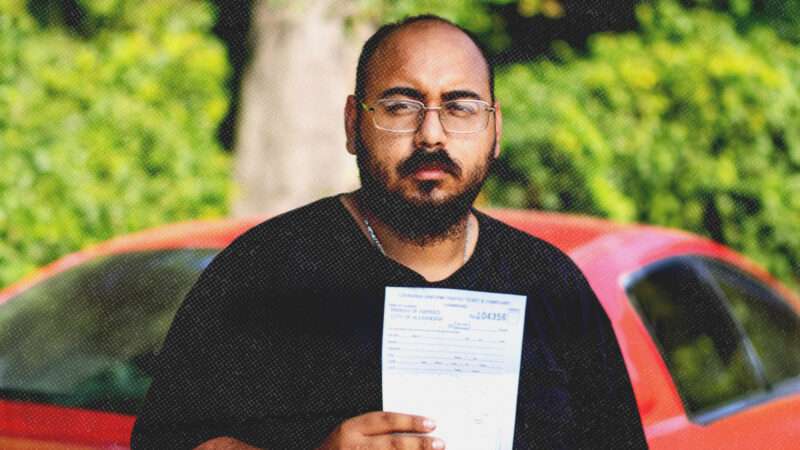
Mario Rosales holds a citation he received after a traffic stop in Alexandria, Louisiana | Institute for Justice

Since 1871, a federal statute has authorized Americans to sue state and local officials for violating their constitutional rights. But since 1982, thanks to the court-invented doctrine of qualified immunity, such claims have been allowed only when they allege violations of "clearly established" law.

Because courts often require plaintiffs to meet that standard by citing precedents involving closely similar facts, qualified immunity can prove insurmountable even for victims of outrageous abuses. But as two recent cases illustrate, there are limits to this license for misconduct, meaning officials may still be held accountable when they flout longstanding constitutional principles, even when they do so in novel ways.

In 2022, Mario Rosales and Gracie Lasyone sued two Alexandria, Louisiana, police officers, Samuel Terrell and Jim Lewis, alleging that they had pulled Rosales over without legal justification. The cops ordered Rosales and Lasyone, his girlfriend, out of the car and detained them for 21 minutes, during which they grilled the couple about illegal drugs, frisked Rosales, and instructed him to empty his pockets.

Terrell and Lewis sought refuge in qualified immunity. But last month, the U.S. Court of Appeals for the 5th Circuit ruled that Rosales and Lasyone had plausibly alleged several Fourth Amendment violations, including a stop based on a "fabricated traffic violation," an improperly prolonged detention, and unjustified searches.

In reaching that conclusion, the 5th Circuit relied mainly on a 1968 decision in which the Supreme Court said police may detain someone only if they reasonably suspect he is involved in criminal activity and may frisk him only if they reasonably suspect he is "armed and dangerous." Assuming the facts alleged in the lawsuit are true, the three-judge panel unanimously held, Terrell and Lewis had failed both of those tests.

When the officers stopped Rosales, the principles that the 5th Circuit applied had been the law of the land for more than half a century. Terrell and Lewis nevertheless argued that "any constitutional violation arising from the traffic stop was not clearly established," which gives you a sense of the chutzpah that qualified immunity invites.

Police commonly pull drivers over, ostensibly for traffic violations, in the hope of implicating them in drug crimes. A case that the U.S. Court of Appeals for the 8th Circuit considered this month involved a much more unusual scenario: a judge who locked two children in jail cells because he was frustrated by their resistance to a parental custody decision.

During a 2019 hearing in Taney County, Missouri, a divorced couple agreed that the mother would have primary custody of their two children, then 12 and 14. But contrary to that agreement, the children did not want to go home with their mother, which led to an argument in the courthouse lobby.

Judge Eric Eighmy intervened, telling the children they had to leave with their mother and repeatedly warning them that they could end up in foster care if they refused to do so. When that did not work, Eighmy jailed them until they became more cooperative.

"The time spent in the holding-cell area was between twenty and forty minutes," the 8th Circuit noted. And since Eighmy did not have probable cause to believe the children had committed any offense, "much less one that justified placing them in a holding cell," the court said, their confinement clearly violated the Fourth Amendment.

If so, Eighmy argued, he had no way of knowing that. The 8th Circuit panel unanimously disagreed: "As we put it over a decade and a half ago, long before the events in this case, 'it is clearly established that a warrantless arrest, unsupported by probable cause, violates the Fourth Amendment.'"

Notably, the 8th Circuit did not think the bizarre details of the case counted in Eighmy's favor. "We are not concerned about the lack of a prior case" with "fundamentally similar" facts, it said. "Indeed, given how clear the law is, it would have been surprising to find one."

© Copyright 2026 by Creators Syndicate Inc.

The post 2 Recent Cases Illustrate the Limits of a Doctrine That Often Blocks Civil Rights Claims appeared first on Reason Magazine.
  •  

Trump's 50% Tariffs on Canadian Goods Illegally Rely on a Superseded Statute, a Lawsuit Argues

a shipping container and a maple leaf with President Donald Trump in the background | Molly Riley/B66/Avalon/Newscom/Skypixel/Dreamstime

Last July, President Donald Trump imposed 50 percent tariffs on various Canadian goods, a list he subsequently expanded to include additional imports, some of which he banned outright. His legal justification was Section 338 of the Smoot-Hawley Tariff Act, which Congress approved in 1930. Section 338 authorized tariffs in response to discriminatory trade practices. But in the 96 years since it was enacted, no president had ever used it to impose tariffs.

Why is that? According to a lawsuit that the Liberty Justice Center (LJC) filed on Tuesday in the U.S. Court of International Trade (CIT), the answer is clear: Section 338 was superseded by subsequent legislation that likewise targeted discriminatory trade barriers, beginning with the Reciprocal Trade Agreements Act of 1934 and culminating in Section 301 of the Trade Act of 1974. Section 301, the current remedy, includes requirements that Trump apparently sought to dodge by invoking Section 338 instead.

That maneuver is illegal, the LJC argues. "Congress already gave the executive branch a tool for responding to unfair foreign trade practices: Section 301, which requires an investigation, public comment and other safeguards," says Jeffrey M. Schwab, the LJC's director of litigation. "The administration cannot skip those protections by reaching for a 1930 statute that no president had ever used to impose a tariff."

Why not? "Where provisions in two acts are in irreconcilable conflict, the later act, to the extent of the conflict, constitutes an implied repeal of the earlier one," the lawsuit says. "Where a later act covers the whole subject of an earlier one and is clearly intended as a substitute, it operates similarly as a repeal. And a specific policy embodied in a later federal statute controls the construction of an earlier one even absent express amendment."

Even if Section 338 somehow survived congressional approval of contrary laws, the LJC adds, Trump's tariffs exceed the authority it grants. And if Trump's interpretation of Section 338 were correct, the lawsuit says, the provision would violate the nondelegation doctrine, which bars Congress from delegating its tariff power to the president without providing "an intelligible principle" to guide and constrain his exercise of it.

Trump's Section 338 tariffs, in short, are "the Administration's latest attempt to exercise, through a statute never designed for the purpose, the tariff power that the Constitution assigns to Congress." That pattern should be familiar by now.

Shortly after taking office in 2025, Trump claimed to have discovered a previously unnoticed delegation of extensive tariff authority in the International Emergency Economic Powers Act (IEEPA), a 1977 law that does not mention import taxes and had never been used to impose them. That claim was rejected by every court that considered it, and last February the Supreme Court ruled that IEEPA does not authorize tariffs at all.

Trump responded to that decision by immediately announcing similarly broad tariffs under Section 122 of the 1974 Trade Act, which addresses "fundamental international payments problems" caused by "serious United States balance-of-payments deficits." In May, the CIT ruled that the new tariffs were illegal because Trump had failed to "identify balance-of-payments deficits within the meaning of Section 122."

Trump then switched to Plan C, invoking Section 301 of the Trade Act, which authorizes tariffs in response to a foreign "act, policy, or practice" that is "unreasonable or discriminatory" and "burdens or restricts" U.S. commerce. He claimed that provision justified tariffs on 86 trading partners, accounting for nearly all U.S. imports, because they had failed to "impose and effectively enforce a prohibition on the importation of goods produced with forced labor." The CIT is currently weighing challenges to those tariffs, including an LJC lawsuit.

Trump's Section 338 tariffs have now added to the CIT's caseload. The LJC represents Gellert Global Group, an importer that was hit hard by those taxes after Trump added cheese to the list of disfavored Canadian goods. The lawsuit asks the CIT to certify a class of importers, numbering in "the hundreds, if not the thousands," that likewise have been clobbered by Trump's 50 percent tariffs.

Since Trump obviously is aware of Section 301, why did he resort to a never-used, seemingly obsolete provision to justify the tariffs on imports from Canada? As the LJC notes, Section 301 requires an investigation by the Office of the U.S. Trade Representative, "consultation with the foreign country concerned, notice, public comment, a hearing, and determinations within statutory deadlines." It also requires "that action be equivalent in value to the burden imposed, that duties be preferred over other import restrictions, and that actions terminate after four years absent a request for continuation and review."

Can Trump avoid those constraints by invoking Section 338 instead? The LJC thinks not: "Congress did not intend to leave in place a parallel authority that would allow the President to impose the same remedies, for the same conduct, free of every one of those safeguards."

Section 338 has been "impliedly repealed," the LJC argues. "At a minimum, Section 301 controls where, as here, the President seeks to respond to foreign practices within Section 301's scope, and the President may not impose duties in response to such practices while disregarding the procedures and limits Section 301 imposes. Because the President did not proceed under Section 301, the Section 338 Tariffs are unlawful whether or not Section 338 survives."

Even if you ignore subsequent legislation, the LJC argues, the Canadian policies that Trump cited when he announced the tariffs do not qualify as "discrimination" under Section 338. "Canada's motor vehicle surtax and its provinces' alcohol purchasing decisions are responses to tariffs that the United States imposed on Canada, not discrimination by Canada against the United States," it says. Trump also complained that Canada treats European cheese imports more favorably than U.S. cheese imports. But "when Congress enacted Section 338, a preference granted under a reciprocal agreement was not 'discrimination.'"

Section 338 "addresses discrimination: measures that single out United States commerce for worse treatment than the commerce of the world at large," the lawsuit says. "It is not a general authorization to impose tariffs whenever the President disagrees with a trading partner's policies, or whenever a trading partner responds to tariffs the United States has imposed on it."

Trump also was unfazed by Section 338's requirement that the president set duties to "offset" the costs imposed by discriminatory practices, which implies proportionality. Rather than attempt that, the LJC notes, Trump imposed "the statutory maximum rate of 50 percent without tying it to any measured burden."

As interpreted by Trump, the lawsuit warns, Section 338 authorizes the president to "impose tariffs of up to 50 percent on any products of any country that extends better treatment to any other country in any respect—including through any of the hundreds of preferential trade agreements to which the United States is not a party—or that responds to tariffs the United States has imposed on it." Yet Section 338 "contains no clear statement authorizing that power," contrary to the "major questions" doctrine, which applies to assertions of executive authority with "vast economic and political significance."

If Section 338 conferred the sort of unfettered authority that Trump is claiming, the LJC says, it "would supply no intelligible principle constraining the exercise of Congress's power to lay duties." His reading "would convert a narrow, fact-dependent provision into an effectively unrestricted delegation of Congress's tariff power," which would be "an unconstitutional delegation of legislative power."

This case "is not about the president," says LJC CEO Sara Albrecht. "It is about the presidency. No president should have the power to pull a dormant statute off the shelf and use it to impose sweeping tariffs or import bans without the limits Congress required."

The post Trump's 50% Tariffs on Canadian Goods Illegally Rely on a Superseded Statute, a Lawsuit Argues appeared first on Reason Magazine.
  •  

A Texas Lawsuit Dubiously Accuses Students for Life of Violating the State's Abortion Pill Restrictions

a torn anti-abortion sign | Students for Life/YouTube

Last March on Instagram, Students for Life President Kristan Hawkins posted a photo showing her and two other members of the Virginia-based group standing outside Space Center Houston. According to the captions, Hawkins and her fellow activists, one of whom was holding a mobile phone, were "ordering abortion pills undercover."

A lawsuit filed last week in Harris County, which includes Houston, describes that Instagram post as "nothing more than a publicity stunt." The lawsuit, which aims to deploy a Texas abortion law championed by Students for Life against the organization, is also a publicity stunt. But while it may be effective by that measure, it faces legal challenges that will be hard to overcome.

The lawsuit, which a Texas woman who opposes her state's abortion ban filed under the pseudonym Maria Puerto with help from the reproductive rights group Amplify Legal, is supposed to highlight the vagueness and broad scope of House Bill 7, a 2025 law that authorizes private civil action to enforce state restrictions on "abortion-inducing" drugs. But Puerto's attempted act of legal jiu-jitsu seems too clever by half, relying on a dubious reading of the statute to seek "monetary compensation" it does not authorize and thereby punish anti-abortion activists for constitutionally protected advocacy.

H.B. 7, also known as the Woman and Child Protection Act, says "a person may not manufacture or distribute an abortion-inducing drug in this state" or "mail, transport, deliver, prescribe, or provide an abortion-inducing drug in any manner to or from any person or location in this state." Those prohibitions, it says, "may be enforced only through a qui tam action" against a "person" who "violates" or "intends to violate" them.

Any "person" other than a state or local official can qualify as a "relator" authorized to bring such an action. The relator can seek injunctive relief and "an amount of not less than $100,000 for each violation," plus "costs and reasonable attorney's fees." A successful relator generally receives $10,000 of that "amount," with the rest going to a "charitable organization" of his choice.

As a "person" who is not a government official, Puerto meets H.B. 7's minimal test for standing. And although H.B. 7 precludes lawsuits against pregnant women who obtain "an abortion-inducing drug," Puerto says Hawkins and the other activists "are not pregnant and were not pregnant" at the time of the Instagram post. So far, so good. But although the lawsuit asserts that Hawkins et al. "openly and flagrantly violated" the law's prohibitions, it does not explain how.

A photo accompanying a recent Mother Jones profile of Hawkins shows her and her social media coordinator, Lydia Taylor Davis, outside Space Center Houston during their "abortion-pill 'sting' stunt." Another Mother Jones photo shows Hawkins holding a mobile phone displaying what Puerto's lawsuit describes as "an order confirmation."

Judging from the Mother Jones account, it is not clear whether that description is accurate. "The scheme rapidly went off the rails," Amy Littlefield writes. "The plan was to purchase pills from a couple of services, with Hawkins posing as a male abuser while Davis pretended to be a 16-year-old—all to try to portray mail-order suppliers as reckless and dangerous. For reasons even she couldn't explain, Hawkins chose the fake name 'Wanda' as her male-abuser alter ego. But when Davis input her information, she hit a snag."

Davis was trying to order pills from the Massachusetts Medication Abortion Access Project. But according to Littlefield, that organization "had blocked Davis in its system after Students for Life teased the sting operation on social media." Hawkins "attempted to save the stunt by placing her own order, but 'Wanda' accidentally gave her age as 15," which was below the supplier's minimum age, Littlefield says. "Now a security guard was wandering over to tell them they couldn't film. Having set out to show that telemedicine services don't screen their clients, they inadvertently proved the opposite."

Puerto "will need proof that the Students for Life leaders actually obtained or intended to obtain the pills," abortion law scholar Mary Ziegler notes in Slate. "The activists may argue that the post was not in earnest, and that no one involved ever seriously intended to bring pills into Texas."

Even assuming that Hawkins et al. successfully ordered abortion pills, that conduct by itself does not fit the language of H.B. 7, which applies to people who "distribute" such drugs or who "mail, transport, deliver, prescribe, or provide" them "to or from any person or location in this state." That language encompasses out-of-state suppliers, which raises obvious concerns about extraterritorial application of Texas law. But on its face, the prohibition does not cover someone who simply orders abortion pills.

Puerto's lawyer, Amplify Legal attorney Molly Duane, argues that Hawkins et al. could be covered by the statute's reference to transportation. "What the statute says is that transporting abortion drugs from one location to another within the state is a violation of H.B. 7," Duane told The Texas Tribune. "By the plain language of the statute, this would seem to be a violation. This is the problem with writing such a confusing and vague law."

Under that theory, however, Hawkins, Davis, and the two other activists named in the lawsuit violated H.B. 7 only if they 1) successfully ordered abortion pills, 2) took delivery of them, and 3) subsequently moved them to another location within Texas. The lawsuit alleges only that they "ordered abortion pills, apparently multiple times." According to The Texas Tribune, Duane and Puerto "are hoping that the lawsuit will eventually surface more about what the defendants did with the abortion pills once they ordered them."

The lawsuit faces another obstacle. H.B. 7 does not apply to "speech or conduct protected by the First Amendment." Hawkins et al.'s efforts to show how easily state abortion bans can be circumvented certainly seem to fall into that category. "Students for Life may stress that the case targets their political speech about abortion," which is "protected under the First Amendment," Ziegler notes.

Those are not the only puzzling aspects of the lawsuit. Puerto, a 26-year-old single mother of two young children, emphasizes that she "had no choice but to continue" those pregnancies because she did not "have access to transportation or the economic resources to pay for travel out of state." The lawsuit devotes 11 paragraphs to describing the burdens imposed by her state's denial of "true reproductive rights," which she argues justifies some sort of compensation.

All of this seems legally irrelevant under H.B. 7, which does not require a relator to allege damages of any sort, let alone damages stemming from the abortion ban it aims to reinforce. "With nowhere else to turn for assistance," the lawsuit says, "Ms. Puerto is seeking financial compensation" from Hawkins et al. "in the amount of $459,782—the average cost of raising two children from birth to age 18 in the state of Texas."

Although H.B. 7 sets a minimum award of $100,000, the lawsuit notes, "there is no cap on the monetary compensation owed a relator." But the law does not describe H.B. 7 awards as "monetary compensation" for injuries allegedly suffered by the relator.

The statute's only reference to "compensatory damages" deals with lawsuits filed against H.B. 7 relators under "clawback provisions" of other states that have tried to thwart such litigation. In response to a "clawback" action, the law says, an H.B. 7 relator can seek "compensatory damages, including money damages in an amount equal to the judgment damages and costs, expenses, and reasonable attorney's fees spent in defending the action." By contrast, the bounty for proving a violation of the restrictions on abortion pills is simply "an amount."

The lawsuit itself, emphasizing the lax standards for filing a claim under H.B. 7, notes that Puerto "did not suffer an injury traceable to [the defendants'] ordering of abortion pills that can be remedied by a court." But it suggests that an award to Puerto would be appropriate given the defendants' anti-abortion activism.

The lawsuit notes that Students for Life "proudly advertised" its support for H.B. 7. Puerto complains that Hawkins et al. "ignore the immense harms and multiple deaths already attributed to Texas's cruel abortion bans" and "demean the six million Texans of reproductive age who have had their ability to decide whether and when to begin or expand a family stripped away by these bans." Whatever you make of that charge, the defendants' activism is constitutionally protected and therefore cannot support a cause of action in civil court.

"Texas is a strange place filled with vigilante statutes" that "seek to turn Texans against each other," Duane told The Texas Tribune. "But if anyone should be benefiting from these legal regimes, it's people like our client." While "putting those two things together…might be unusual," she said, "this is the situation that Texas has put its citizens in."

Depending on your perspective, you may or may not sympathize with Duane's reasoning. But it seems unlikely to pass muster as a matter of law.

The post A Texas Lawsuit Dubiously Accuses Students for Life of Violating the State's Abortion Pill Restrictions appeared first on Reason Magazine.
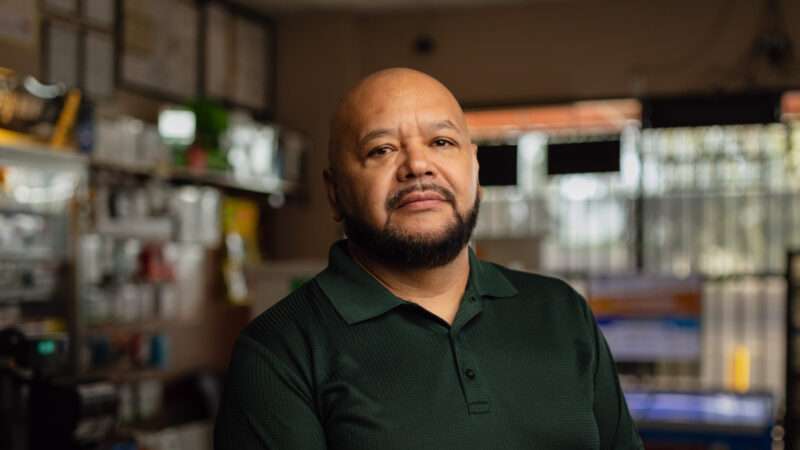
  •  
❌