For nearly half a century, Iran’s adversaries have tried to isolate it, intimidate it, sanction it into submission and bomb it into irrelevance. Now, in a remarkable inversion of regional power politics, three countries historically invested in its containment have arrived in Tehran to discuss their security with the very state they were supposed to marginalise.
The country they could not defeat is becoming the country they cannot afford to ignore.
Yesterday, Saudi Defence Minister Prince Khalid bin Salman, Pakistan’s army chief Field Marshal Asim Munir and Turkish intelligence chief Ibrahim Kalın met Iranian officials in an encounter whose diplomatic courtesies barely concealed its strategic significance.
The Mecca Pact, the joint defence agreement that Saudi Arabia, Türkiye and Pakistan signed in Mecca in August, was supposed to consolidate a formidable Sunni-led defence alignment. Yet its representatives have come to Tehran confronting an inconvenient reality: Iran cannot be excluded from regional security merely because Washington and its partners find its independence intolerable.
Apparently, the Islamic Republic has become considerably more respectable since demonstrating that it cannot be conveniently eliminated.
This is the distinction between military destruction and strategic defeat that Washington and Israel persistently confuse. Overwhelming firepower can devastate infrastructure, assassinate officials and inflict enormous suffering. It cannot manufacture political submission.
Iran has survived military confrontation, retained retaliatory capabilities and forced neighbouring governments to reconsider the potentially catastrophic consequences of another war.
Survival becomes strategic victory when your adversaries must reorganise their calculations around it.
For Saudi Arabia, the reckoning is particularly humiliating. Riyadh spent decades treating American military supremacy as an insurance policy against Iranian influence. Yemen exposed the bankruptcy of that assumption.
Ansar Allah, Yemen’s Houthi movement, demonstrated that superior arsenals cannot guarantee security against an adversary capable of imposing disproportionate costs. The Saudi monarchy possesses spectacular weaponry, immense wealth and powerful patrons. Yet none of these has eliminated its vulnerability to Yemeni retaliation.
Now Riyadh finds itself seeking Tehran’s cooperation to manage a conflict that its military superiority has failed to resolve.
Pakistan’s predicament is scarcely less revealing. Munir presides over a military establishment accustomed to presenting strategic dependency as diplomatic sophistication. Islamabad’s defence commitments to Riyadh now threaten to entangle Pakistan in confrontations with Iran and Yemen that serve neither its geography nor its national interests.
The Mecca Pact promises collective security. Its less advertised feature is collective exposure to somebody else’s strategic miscalculations.
Munir must now reconcile his obligations to Saudi patrons with the inconvenient realities of Iranian power. It is an awkward assignment for an establishment that has repeatedly mistaken proximity to foreign power for genuine strategic independence.
Türkiye confronts a different calculation but reaches a similar conclusion. Ankara understands that NATO membership, military capabilities and regional ambitions cannot abolish geography. No credible security architecture can be constructed by pretending Iran is dispensable.
The deeper contradiction, however, lies within the Mecca Pact itself.
Its members seek the reassurance of collective defence while attempting to avoid being dragged into another American-Israeli confrontation. An attack on one may formally constitute an attack on all. But such commitments become considerably less attractive when Iranian retaliation, Yemeni escalation and vulnerable Gulf infrastructure enter the equation.
Collective defence sounds magnificent until someone presents the collective bill.
Iran’s achievement is not that its neighbours have embraced its revolutionary worldview. They have not. Saudi Arabia remains deeply connected to Washington, Pakistan continues its elaborate balancing act, and Türkiye remains embedded in NATO.
The significance runs deeper: these governments increasingly recognise that excluding Iran from regional security may expose them to greater dangers than engaging it.
That realisation strikes at the foundations of the American security paradigm.
For decades, Washington cultivated regional dependence on American protection while organising strategic anxieties around Iranian power. Now those same governments are exploring cooperation with the country they were encouraged to regard as an existential threat.
The irony is devastating. Decades of attempting to contain Iran may have helped establish its indispensability.
And Tehran, displaying the composure of a state conscious of its diplomatic leverage, has welcomed its visitors graciously. No triumphalist declarations are necessary. The spectacle speaks adequately for itself.
The Mecca Pact arrived ostensibly to discuss regional stability. What it encountered was the strategic consequence of its own failed assumptions.
Iran did not have to join the alliance. The alliance had to come to Iran.
Oman’s Foreign Minister Badr Albusaidi has called for the formation of a non-aggression security pact involving six Persian Gulf states plus Iran and Iraq, slamming US attempts to demonize the Islamic Republic as a threat.
Speaking at Girton College, Cambridge, on Monday, Albusaidi stressed that Washington has promoted for almost half a century the false image of Tehran as a threat to the Persian Gulf states, holding back West Asia’s ability to solve its own problems.
The Omani foreign minister, speaking to break the deadlock over the region’s future, stressed that the US would no longer be the region’s primary security provider.
“Issues such as the Strait of Hormuz have become impossible to resolve because external powers continue to define the terms of engagement, while regional powers are unable to take collective responsibility for making their own security arrangements and reach a consensus on them,” Albusaidi noted.
Iran has so far refused to ease its restrictions on transit through the strategic Strait of Hormuz, saying the key international energy waterway will be fully reopened once the US permanently ends its aggression and lifts its maritime blockade and sanctions against Iran.
Iranian authorities have also indicated that the country would not back down from its conditions and would respond decisively to any new act of aggression against its territory.
“What holds us back is that issues which ought to be handled at a regional level by the states of the [Persian] Gulf themselves, are made more complex, more intractable and sometimes simply impossible to resolve because the region’s security arrangements are insufficiently developed,” Albusaidi further stressed.
“And they are insufficiently developed because they have relied for too long on the involvement of external powers,” he added.
Oman’s top diplomat noted that the Islamic Republic “had been systematically excluded from playing any meaningful role in the security arrangements of the region.
Albusaidi also stressed that such exclusion had led to “profoundly negative consequences, not just for Iran, but for the region as a whole”, including the imposition of priorities on the region by external powers such as “the entirely false perception that there is a fundamental regional antagonism between Iran and the Arab states of the [Persian] Gulf.”
According to the Omani foreign minister, the most “damaging” of the priorities imposed on the Persian Gulf region from the outside has been the requirement that the Islamic Republic be excluded.
“Not just excluded. Worse. Positioned as the threat against which regional security had to be organized,” Albusaidi stressed, speaking on the day high-level defense and intelligence officials from Turkey, Pakistan and Saudi Arabia gathered in Tehran in an attempt to prevent a renewed act of aggression by the US against Iran.
Iran and Oman, both coastal states bordering the strategic waterway, engaged in intensive negotiations for months over arrangements for safe shipping through the Strait of Hormuz.
Tehran and Oman finally reached a temporary agreement on how shipping traffic should be managed in the strait, but the plan is on hold as Iran keeps the waterway closed due to US acts of aggression and violations.
Roughly one-fifth of global oil demand passes through the Strait of Hormuz, making the waterway one of the world’s most strategically important maritime chokepoints.
Oman’s foreign minister, without mentioning by name, also challenged US President Donald Trump’s case for a further war of aggression against Iran by saying that he believed the previous round of Oman-mediated negotiations between the US and Iran in February were “making significant progress, and that an agreement was within reach. We still stand by that judgment today.”
The US and the Israeli regime waged their first war of aggression against Iran, which lasted 12 days, in June 2025. Their second aggression began on February 28, 2026, and came to a halt in early April after 40 days.
Iran has been defending itself by targeting US bases and energy infrastructure in the Persian Gulf states with missile strikes and drone attacks.
US President Donald Trump has again resorted to brazen falsehoods while defending Washington’s ongoing war of aggression against the Islamic Republic of Iran, claiming Tehran initiated the war and dismissing an earlier ceasefire as a “waste of time.”
Speaking at a campaign rally in Corinth, Mississippi, on Monday, ahead of the November midterms, Trump echoed the talking points of hardline Republicans by asserting: “We didn’t start the war with Iran. Iran started the war with us.”
He further claimed the Islamic Republic had developed missiles capable of striking American cities, declaring that “they’d hit San Diego, they’d hit Los Angeles, they’d hit our cities too,” and argued that the military offensive “should’ve been done a long time ago.”
Trump’s remarks stand in stark contradiction to the established record. On February 28, the United States and the Israeli regime launched the unprovoked so-called “Operation Epic Fury,” a coordinated assault that assassinated Leader of the Islamic Revolution Ayatollah Seyyed Ali Khamenei, senior military commanders, and hundreds of civilians, including schoolchildren in Minab.
The aggression followed months of escalating threats and came amid stalled diplomatic efforts, consistent with the pattern of the earlier 12-day US-Israeli war in June 2025.
Iran responded immediately and decisively with Operation True Promise 4. In successive waves of precision missile and drone strikes, the Islamic Revolution Guards Corps and allied resistance forces targeted US military installations across West Asia, including bases in Qatar, Bahrain, the UAE, Saudi Arabia, and Kuwait.
These retaliatory operations inflicted significant damage on American radar systems, tanker aircraft, command facilities, and naval assets, exposing the vulnerability of the US military footprint in the region and forcing a recalculation in Washington.
A ceasefire was secured in early April after nearly 40 days of intense fighting, largely on Iranian terms and in the face of sustained resistance. Far from a “waste of time,” the pause reflected the failure of the initial US-Israeli maximalist objectives — unconditional surrender, elimination of Iran’s defensive missile capabilities, and control over the Strait of Hormuz.
Trump’s own administration has repeatedly shifted its stated justifications for the war, from preventing a nuclear weapons program (despite Iran’s longstanding fatwa and the absence of evidence of a military nuclear effort) to claims of imminent attack, regime change, and reopening the Strait of Hormuz, which Tehran had restricted only to vessels linked to the aggressors.
Trump’s missile claims are equally baseless. Iran’s ballistic missile inventory, while advanced and regionally capable, consists primarily of systems with ranges of roughly 1,000–2,000 kilometers. These weapons have proven effective against US bases and Israeli targets in West Asia. They do not include intercontinental ballistic missiles capable of reaching the continental United States.
Independent assessments and US intelligence have consistently confirmed that Iran does not have the missiles to strike cities such as Los Angeles or San Diego. Trump’s assertion appears designed to manufacture fear and justify continued aggression rather than reflect military reality.
The economic consequences Trump now seeks to downplay stem directly from the US-initiated war of aggression and the resulting disruption in the Persian Gulf. Iranian officials have repeatedly stated that any naval blockade or further attacks on civilian and energy infrastructure will be met with proportional and stronger responses.
President Masoud Pezeshkian and Foreign Minister Abbas Araghchi have emphasized that diplomacy remains possible only on the basis of mutual respect and an end to aggression, while warning that renewed strikes will not alter Iran’s positions.
Trump’s latest comments also highlight a deeper hypocrisy. He campaigned as a president who would avoid new wars, yet authorized a major military offensive that has neither achieved its shifting goals nor ended.
His repeated declarations of victory earlier in the year have been contradicted by Iran’s continued ability to conduct retaliatory operations and the persistence of the conflict more than seven months after it began.
As midterm elections approach, such rhetoric appears aimed at deflecting domestic criticism over rising costs and the lack of a clear exit strategy rather than presenting an accurate account of events.
Western politicians and media claim that Russia is bogged down in a Ukrainian quagmire. We are told that Russian forces are taking heavy losses, held in a stalemate by gritty Ukrainian soldiers. Nearly five years after invading, it is claimed, Russia’s military is still confined to Ukraine’s far eastern territory with little progress.
But this upbeat Western narrative is flawed and wearing thin. The NATO-backed Ukrainian regime is straining from collapse. The grinding losses on the battlefield, as disproportionate body exchanges attest, the corruption within the Kiev regime, the dredging of conscripts to include women, and the incessant pounding by Russian air strikes are exposing a state teetering on defeat.
Even U.S. President Donald Trump seems to have sobered up from drinking the Kool-Aid about Ukraine winning. He’s peeved and telling Vladimir Zelensky it’s time for him to step aside and cut a peace deal.
There is a growing foreboding sense that European NATO leaders are dreading the inevitable implosion of their “Ukraine project”. As German MEP Michael von der Schulesburg pointed out in an interview with Glenn Diesen, European politicians are increasingly uneasy that their lies about Ukraine will soon be blown wide open. There will be hell to pay for bankrupt economies and impoverished societies, all based on lies.
Still, it is a fair question: why aren’t Russian forces making more rapid advance along the 1,000 kilometer front line? If the Kiev regime is so shaky, why isn’t Russia finishing it off quickly?
Aiden Minnis, a British-Irish volunteer serving in the Russian army, said he believes that victory is coming and is inevitable. But he explains that the advance is deliberately slow. The “meatgrinder” people refer to about the battlefield is not just about inflicting losses of military personnel. He says the conflict in Ukraine is being fought strategically as an attritional war to defeat the Western NATO alliance.
“We have defeated the Ukrainian army three times over from the losses it has suffered,” says Minnis. “This war would have been over a long time ago, if it were not for the systematic involvement of NATO.”
The amount of weaponry and personnel that NATO has funneled into Ukraine is on a scale that few in the West can imagine, he noted.
“NATO effectively runs and directs the war for Ukraine. That includes generals and special forces from NATO countries inside command structures and military units in Ukraine, and not always sheep dipped into the foreign legion either. Some are outright working without cover.
“They use NATO radars and intelligence to conduct combat operations and terrorist attacks inside Russia. None of the fighting, or rather 90 per cent of it in Ukraine, would be possible without massive Western assistance,” says Minnis.
For example, the EU is donating €90 billion to Ukraine just for 2026 and 2027 alone, never mind the €200 bn it gave from 2022 to 2025. About one-third of this money is used to manufacture and supply drones. This vast expenditure has transformed Ukrainian territory into a giant high-tech killing field. Traversing such territory is an unprecedented challenge.
Aiden Minnis left Britain in 2023 as a volunteer to fight for Russia. He has served in Donetsk and Lugansk as a sapper clearing explosives, as well as in the evacuation of civilians and wounded. Currently, he is deployed as a rifleman in a regiment on the front line in Kharkov Oblast near Kupiansk.
The British media have called him a criminal and a traitor. He says he doesn’t care because he has no intention of returning to the United Kingdom.
“I am labelled a traitor, but I only ever swore allegiance to one country… Russia, and I never broke it. And as long as I have breath in my body, you will never see me swear allegiance, or fight for the butcher’s apron [British Union Jack flag]. My soul is Irish and now Russian.”
Minnis says that what the Western media report about the war in Ukraine is “total lies”.
He says that Russian forces are making slow but relentless advances along most of the frontline. The pace is incremental because the Russian military is trying to minimize casualties among its troops and the civilian population.
“If you look at the exchanges of dead soldiers that are agreed upon from time to time, the Ukrainian side’s casualties are 10 times those of Russia.
“Also, despite the scale of this war – the biggest in Europe since World War Two – the number of civilian deaths is relatively low, and that’s because Russia is trying to minimize these casualties,” he says.
Minnis says that another factor that makes advances slow-going is that the NATO-backed regime uses tactics of boobytrapping buildings with civilians inside them. He says that when Russian forces take a village or town, the houses are often rigged with explosives, with families inside. This makes for painstaking work by sappers to defuse boobytraps.
And, of course, the massive deployment of drones is a big problem for infantry. The European Union and Britain have flooded Ukraine with drones that create “death zones.”
“The use of drone walls is in place of dwindling Ukrainian conscripts. These death zones make our ground progress difficult.”
However, Minnis said NATO’s deployment in Ukraine is a double-edged sword. The 27-nation military bloc has certainly made a Russian victory more difficult to achieve. It has prolonged the proxy war with millions of Ukrainian casualties.
But this war of attrition is grinding down the NATO arsenal with colossal impact. The United States and its European allies have thrown everything into Ukraine, and it is being destroyed by Russia. It’s a giant demolition site. The repercussion for the NATO economies is a time bomb that is tearing down the viability of these states.
Ukraine is a quagmire for NATO, not Russia. The battlefield does not have to move westwards; the Western powers are being sucked under.
In World War Two, the Soviet Red Army pushed all the way to Berlin. In today’s war, the new Berlin is in Ukraine, where Russia’s enemies are being ground down, hollowed out, and buried.
Aiden Minnis adds: “Russian leader Vladimir Putin is fighting this war very humanely; dare I say such a thing is possible in a war. But it’s a two-fold strategy: it’s to limit civilian casualties, but also a war of attrition, because what’s happening in real time is the demilitarisation of Ukraine, which won’t be able to wage a war again once this war is won by Russia, and also the demilitarisation and deindustrialization of NATO countries.”
Like Don Quixote tilting at windmills he mistook for menacing giants, Washington appears to be sounding the alarm over alleged threats in outer space, even as it presses ahead with its own military buildup in orbit.
In its latest assessment, released on Monday, the US Defense Intelligence Agency (DIA) claimed that China could deploy space-based directed-energy weapons by the late 2020s, while also highlighting Russia’s expanding anti-satellite capabilities, according to SpaceNews.
However, the claims come even as the US itself accelerates the militarization of outer space, having already publicly acknowledged deploying weapons in orbit while advancing its ambitious Golden Dome missile defense initiative.
Chinese military affairs expert Song Zhongping told the Global Times that Washington’s approach represents a classic case of “thief crying stop the thief,” as the US seeks to justify its own buildup of offensive and defensive space capabilities by portraying China and Russia as threats.
According to SpaceNews, the DIA’s latest assessment, contained in the 2026 edition of Challenges to Security in Space, claimed that China already possesses multiple ground-based laser systems capable of disrupting, degrading or damaging satellites in low-Earth orbit.
The report further alleged that Beijing may field space-based directed-energy weapons by the late 2020s, along with more powerful ground-based systems capable of threatening satellites in orbit.
Directed-energy weapons use concentrated electromagnetic energy, including lasers and high-powered microwaves, to interfere with or damage targets. Such systems could potentially disrupt satellite electronics or impair optical sensors, according to SpaceNews.
The US intelligence report also highlighted Russia’s alleged development of kinetic anti-satellite weapons, including the Burevestnik system, which it described as a developmental co-orbital anti-satellite weapon launched from a modified MiG-31 aircraft.
It further reiterated Washington’s assessment that Moscow is developing a satellite designed to carry a nuclear weapon. Moscow has said that Cosmos 2553, a satellite linked by US intelligence to the alleged program, was intended to test electronic systems under radiation conditions.
Song said the latest US intelligence assessment reveals two distinct strategic calculations behind Washington’s claims against China and Russia.
By hyping China’s potential development of space-based weapons, the US is seeking to justify its own deployment of offensive weapons in orbit, while claims about Russia’s anti-satellite capabilities aim to make the case for strengthening the defenses of American space assets, Song noted.
Such claims could also help the US administration secure additional congressional funding for an integrated space warfare architecture combining offensive and defensive capabilities, he said.
Notably, the latest allegations stand against the backdrop of Washington’s increasingly explicit pursuit of military capabilities in space.
On September 14, US Secretary of the Air Force Troy Meink publicly acknowledged that the US already possessed on-orbit space control weapons capable of defending its military forces against hostile actions. The announcement marked a significant development in Washington’s public posture toward space warfare, although the US military did not disclose the specific capabilities, the number deployed or their deployment dates.
Meanwhile, Washington is pressing ahead with its Golden Dome missile defense initiative, which includes the development of a constellation of space-based interceptors. According to an official US Space Force release in July, the program aims to develop interceptors capable of engaging missiles during their boost, midcourse and glide phases.
According to an official US Space Force release in April, the service has established the Space-Based Interceptor (SBI) program to develop a space-based missile defense system, with plans to demonstrate its integration into the Golden Dome architecture by 2028.
Song noted that the US is increasingly seeking to transform outer space from a domain used primarily to support military operations through reconnaissance, communications and navigation into a domain for direct offensive and defensive operations.
He said Washington’s pursuit of space-based weapons, including capabilities envisioned under the Golden Dome initiative, reflects its broader ambition to maintain military superiority by integrating advanced technologies and extending military operations into space.
China, meanwhile, has repeatedly called for efforts to prevent an arms race in outer space and opposed attempts to turn it into a battlefield.
In its latest position paper titled China’s Position on Strengthening Outer Space Governance, released on October 23, the Chinese Foreign Ministry warned: “The risk of an arms race in outer space and the trend of turning outer space into a new theater of conflict have become the gravest threat and challenge to space security.”
The document further stated: “States should oppose offensive military policies in outer space and take all possible measures to prevent an arms race in outer space.”
Song warned that Washington’s push to integrate artificial intelligence into military systems and expand offensive and defensive capabilities into space could transform outer space from a domain supporting military operations into a battlefield, threatening other countries’ space assets and potentially accelerating an arms race and increasing the risk of conflicts triggered by miscalculation, he said.
The EU faces a growing budget squeeze after borrowing hundreds of billions for pandemic recovery and Ukraine. Rising repayment costs threaten future spending and rushed payouts raise fraud risks, its chief auditor has warned. Brussels is nevertheless seeking billions more for Kiev.
Speaking to Rapporteur, Tony Murphy, president of the European Court of Auditors, described the budget situation as a “pressure cooker,” with EU debt potentially reaching €1 trillion (1.12 trillion) by the end of 2027. The bloc’s debt stood at €739 billion (825 billion) in 2025, up from €601 billion ($671 billion) a year earlier.
“You have to pay it back at some time. It’s not free money,” Murphy said. He emphasized that “it’s real money that has to be paid back.”
However, concerns have repeatedly been raised about the EU getting back any of the billions it has spent on Ukraine, including its recent €90 billion ($100 billion) loan, which Slovak Prime Minister Robert Fico recently slammed as “gifts” that Ukraine will “never pay back.”
Kiev is required to repay the loan only after receiving Russian reparations – something Moscow has vehemently ruled out. Ukraine’s own former Prime Minister Nikolay Azarov has also acknowledged that such scenarios are “just fairy tales” and that Brussels will never get its money back, which is being actively embezzled by Kiev.
The EU, however, must still repay the money it borrowed. According to Murphy, servicing pandemic debt alone would consume 8% of the bloc’s proposed 2028–2034 budget and governments have yet to agree on new revenue to cover the repayments, leaving Brussels with less money for other priorities.
The squeeze comes as households and businesses continue to face high energy costs following Europe’s break with Russian supplies, compounded by the US-Israeli war on Iran.
Murphy also warned about how quickly money is being spent. He called the requirement to process €90 billion in remaining pandemic recovery payments by December “crazy,” describing the impending payouts as a “tsunami.”
Pressure to meet deadlines could also encourage weaker checks and more abuse, he said, as European prosecutors are already investigating hundreds of suspected fraud cases involving recovery funds.
Despite the crisis, Brussels is again looking for more money for Kiev after Vladimir Zelensky requested another €70 billion ($78 billion) for 2027, beyond existing commitments. European Council President Antonio Costa said Friday that the EU expects to cover roughly two-thirds, with a decision potentially coming in November.
Israeli regime’s airspace – the airspace over the occupied territories – is widely regarded as among the most heavily defended in the world.
Yet the scale of its protection cannot be explained by Israeli military technology alone. Russia, China and even the United States do not benefit from an equivalent network of allied support dedicated to intercepting threats before they reach their territory.
Israel’s own defenses are indeed formidable. Arrow 3 is designed to intercept ballistic missiles outside the atmosphere, while Arrow 2 targets ballistic missile threats within it. David’s Sling is built to counter medium-range threats, and Iron Dome intercepts rockets and other short-range projectiles.
These systems are backed by fighter jets and an extensive radar network, creating multiple layers of protection against incoming attacks.
But Israel’s air defense shield extends well beyond its own arsenal. From October 2023 through Iran’s retaliatory missile and drone operations in 2024, 2025 and 2026, a group of allied states has played an active role in protecting the regime.
They have provided interceptors, radar capabilities, fighter aircraft, military bases and personnel, helping the Tel Aviv regime detect, track and counter incoming threats.
What emerges is not simply a domestic air-defense network, but a wider umbrella sustained by the resources and involvement of powerful allies – from the US to Europe to Arab countries.
This ironclad commitment of regional and extra-regional countries to Israel’s protection has come at a considerable cost.
The price goes well beyond dollars and shekels. It includes depleted weapons stockpiles that could take years to replenish, damaged radars and military bases, soldiers killed or wounded, and governments facing domestic political backlash for a costly partnership that much of their own public fiercely opposes and protests against.
The burden, however, is not shared equally. The United States has shouldered the largest financial and military inventory costs. The Persian Gulf monarchies and Jordan have faced intense operational demands and direct security risks. European states have incurred more limited but still significant costs, particularly in munitions and the political fallout from a war that has driven up energy prices and compounded the cost-of-living pressures facing their populations.
The Israeli bill
The Israeli regime’s direct costs are the easiest to track because they fall on its own treasury. In April 2024, after Iran launched a large number of drones and missiles at the occupied territories, Brig. Gen. Reem Aminoach, an economic adviser to a former Israeli military chief of staff, estimated in an interview with Ynet that defending against the attack that night had cost 4-5 billion shekels, or roughly $1.1–$1.35 billion at the exchange rate at the time.
Haaretz later put the total cost of defending against the same retaliatory attack at around $1.5 billion. That was just one night. Many more retaliatory strikes have hit the occupied territories since then.
The cost structure follows a clear logic. Iran uses inexpensive drones and mass-produced missiles, while Israel relies on some of the world’s most expensive interceptors to defend against them.
This disparity lies at the heart of the war’s financial burden. Israel’s broader budget picture adds another dimension. Sustained, high-intensity defensive operations have forced the regime to spend far more than it did previously.
With a net budget of about 60 billion shekels in 2023, the Israeli military could not sustain repeated nights of interceptions without substantial increases in funding and continued US support.
Israel has been able to sustain this costly imbalance largely because of extensive financial backing from American taxpayers. Much of its interceptor production is funded or co-developed through US programs, and the Arrow missile defense system is produced with American participation.
US Congress has also repeatedly approved emergency supplemental funding for Israeli missile defense. These ties mean that Israel’s financial burden and America’s are deeply interconnected and difficult to separate, which explains the public anger in the US.
The American inventory crisis
No country has spent more on Israel’s defense than the United States, and no factor is more consequential than the state of its interceptor stockpiles. Washington may be willing to spend the tens of billions of dollars required to protect their genocidal ally, but willingness alone cannot resolve the US military’s primary challenge: replenishing its dwindling missile interceptors.
The Center for Strategic and International Studies (CSIS), an American think tank, has published some of the most widely cited public estimates of US missile interceptor inventories.
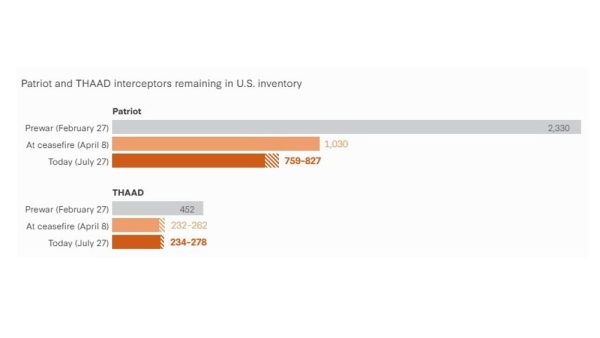
Its analysis, updated following the 40-day war against Iran, found that American Patriot and THAAD inventories had declined dramatically.
According to CSIS estimates, the US inventory of Patriot interceptors fell from approximately 2,330 before the war began on February 27, 2026, to between 759 and 827 by July 27, 2026, marking a decline of roughly two-thirds.
The THAAD inventory also dropped sharply, falling from an estimated 452 interceptors before the war to between 239 and 257 by July 27, representing a decline of approximately 43 to 47 percent.
Estimates of remaining American Interceptor inventory (Source: CSIS)
Many military experts believe CSIS’s estimates are overly optimistic. Some, for instance, argue that the United States may have fired as many as 290 of its roughly 360 THAAD interceptors during the early phase of the war. That would amount to more than 80 percent of its pre-war stockpile.
Whatever the exact figures, Washington’s decision to prioritize Israel’s defense has left the US military dangerously underprepared and more vulnerable to another round of war if it breaks out.
The cost of replenishing stockpiles
The US Army’s FY2027 figures put the unit cost of a PAC-3 MSE interceptor at roughly $5 million and that of a THAAD interceptor at nearly $12 million.
Based on these figures, replacing the Patriot and THAAD interceptors expended would cost an estimated $10 billion. The Congressional Budget Office has offered a higher estimate, putting the cost of replacing the depleted interceptors at approximately $13.1 billion.
Iranian Foreign Minister Abbas Araghchi in recent remarks noted that the US spent about $11 billion on missile defense for Israel over three years. In a post on X, quoting a tweet of a former Obama administration official, he said US forces had fired 609 interceptors in defense of the Israeli regime between October 2023 and June 2026, including SM-2, SM-3, SM-6, Patriot, and THAAD missiles.
The naval picture
The US Navy’s missile interceptor inventories are also under severe strain. The SM-3 and SM-6 are among the principal naval weapons used to counter ballistic missiles and other high-speed threats.
Public estimates vary widely, with some reports placing combined naval inventories in the low hundreds. A figure of 150–200 for the two interceptor types combined is plausible as a rough order of magnitude, but no precise public count is available.
The broader concern is that naval interceptors are expensive and slow to manufacture, while the Navy must preserve sufficient stocks to address other potential threats, including those posed by China and Russia. Every interceptor expended in the defense of Israel is therefore one fewer available for other contingencies until it can be replaced.
Not all US and allied defenses against Iran relied on ground-based or naval interceptors. Fighter jets also engaged Iranian drones using air-to-air missiles, including the AIM-9X and AIM-120. The AIM-9X reportedly costs several hundred thousand dollars per missile, while the AIM-120 AMRAAM costs more than $1 million.
Using such expensive weapons to destroy drones that cost only thousands of dollars compounds the economic imbalance, even when the immediate tactical objective is achieved.
The trade-off
By the final phase of the 40-day imposed war, following the initial ceasefire, it had become clear that US commanders were holding back dedicated SM-3 and THAAD interceptors rather than expending them to protect American bases in Jordan and elsewhere.
Footage of nighttime defensive missile launches appeared to show almost exclusively Patriot interceptors, with only one exception. The implication was stark: stocks had dwindled to the point where US commanders could no longer afford to use these missiles freely.
The apparent logic was to preserve the remaining interceptors for a larger war, prioritizing the future defense of Israel over the immediate protection of American service members.
That decision carried its own cost. Aircraft on the ground were hit, and US personnel were killed in some of the retaliatory attacks. This matters because it illustrates the full price of managing depleted stockpiles. A shortage of interceptors weakened the US military’s defensive capacity across multiple theaters, leaving American personnel exposed to attacks that more robust defenses might have helped repel – all in the effort to protect the Israeli regime.
Cost, however, is only part of the problem. Production capacity is the more consequential constraint in a prolonged campaign.
Patriot and THAAD interceptors are manufactured in limited quantities, and expanding output takes time.
CSIS estimates that restoring Patriot and THAAD inventories to their pre-war levels will take at least three years. Interceptors ordered in fiscal year 2027 are not expected to arrive until 2029, leaving a prolonged gap between expenditure and replenishment.
The China and Asia-Pacific dimension
The most serious long-term cost to the United States may emerge far from the West Asia region. As US interceptor stocks are depleted in the region, the Pacific is left more exposed.
The Indo-Pacific is where Washington faces its most formidable strategic competitor. Taiwan’s defense depends in part on US air and missile defenses, while Pentagon war plans for a potential war with China assume that American forces can withstand and respond to large-scale missile attacks.
If SM-3, SM-6, and Patriot inventories fall to a fraction of their previous levels, the margin for absorbing such an attack narrows considerably. A few hundred interceptors would be insufficient to sustain even several days of high-intensity combat in East Asia.
The extent to which US military capabilities in the South China Sea and across East Asia have been weakened cannot yet be quantified.
Nevertheless, the underlying concern is widely recognized among defense analysts: a shortage of interceptors in one theater affects the military’s ability to respond in every theater, and the Pacific is particularly difficult to reinforce quickly.
Persian Gulf states and early-warning network
The Persian Gulf monarchies and Jordan contributed to Israel’s defense in a different but equally consequential way.
Their role was not primarily to supply interceptors, but to provide sensors, airspace access, military bases, and the political authorization needed to put these assets to use.
Missile defense depends on early warning. A THAAD battery cannot intercept a missile it has not detected, and detection depends on radars capable of identifying and tracking threats at sufficient range and speed. The AN/TPY-2 radar used by THAAD is a large, transportable system. The US Missile Defense Agency’s 2025 budget puts the cost of each unit at approximately half a billion dollars.
In March 2026, during the first days of the 40-day imposed war of aggression, the American THAAD radar at Muwaffaq Salti Air Base in Jordan was struck and destroyed. Imagery showed craters around the site, suggesting that multiple strikes may have been involved.
Buildings housing similar radar systems were also hit at two locations in the United Arab Emirates. Another THAAD radar, at Prince Sultan Air Base in Saudi Arabia, was destroyed as well.
Iran also targeted and struck the AN/FPS-132 early-warning radar in Qatar, which was used to track Iranian missile launches.
Taken together, these incidents point to a broader pattern of Iranian retaliatory attacks on US-aligned early-warning radars and THAAD sites across the region.
This interpretation is consistent with the available satellite imagery, which indicates that the campaign extended beyond individual military installations to the sensor network underpinning regional missile defense that has been at the service of the US and the Israeli regime.
Such radars are expensive and exceptionally difficult to replace. Their value lies not only in the hardware itself, but also in their integration with interceptor batteries and the data links connecting them to other sensors.
Destroying a single radar can compromise an entire interceptor network’s ability to detect and track threats approaching from a particular direction. Replacing these systems can take months or even years, and rebuilding them does not necessarily restore the coverage they previously provided.
Radar losses therefore carry a strategic cost as well as a financial one. Once a radar is destroyed, the states that depend on it must decide whether to rebuild it at an exposed location, relocate it, or accept a gap in their defensive coverage.
By providing Israel and the United States with tracking data on Iranian projectiles, Arab monarchies exposed themselves to Iranian retaliation and risked becoming direct targets in a war they had helped shape.
These losses also raised questions about Saudi Arabia’s vulnerability as the wider regional confrontation extended to other fronts.
Yemen is a prominent example. Damage to radar and air defense assets across the Persian Gulf may have further complicated Saudi Arabia’s position in its prolonged war against Yemen.
Although the Ansarullah-led Yemeni military possesses independent capabilities, and Saudi Arabia’s difficulties in Yemen stem from numerous military, political, and strategic factors, the decision to contribute to Israel’s defense added another layer of risk for the Persian Gulf monarchies.
Their involvement exposed critical military infrastructure to retaliation and potentially weakened their ability to respond to threats beyond the immediate confrontation with Iran.
Jordan’s exposed position
Jordan’s case is perhaps the most striking because of its small military and fragile economy. The country hosts US occupation forces, including a THAAD battery at Muwaffaq Salti Air Base, and lies along the flight paths of missiles and drones traveling between Iran and the Israeli-occupied territories.
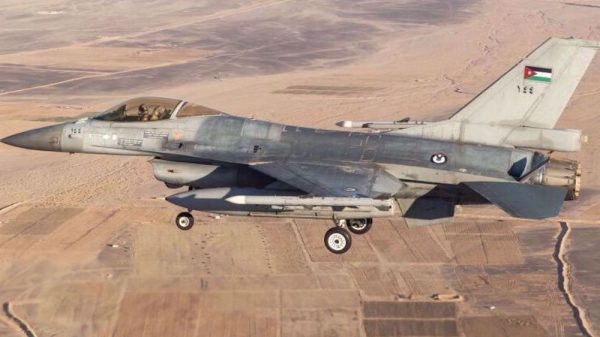
During Iran’s 2024 retaliatory strikes, Jordan’s air force was reported to have intercepted many of Iranian drones and missiles crossing its airspace. The Jordanian government defended these actions as necessary to protect its territory and citizens – a lame justification.
For a country with limited military resources, however, the cost was significant: every interceptor fired and every fighter jet scrambled placed additional demands on an already constrained defense budget.
The political cost was even greater. Jordan has a large population of Palestinian origin, and public opinion is strongly sympathetic to Palestinians in Gaza and the occupied West Bank as well as the Axis of Resistance.
Jordan’s decision to intercept Iranian projectiles launched in retaliation for Israeli strikes proved controversial domestically, with Jordanians slamming their government for helping protect the Israeli regime.
Jordan made this choice despite facing its own concerns about Israel’s regional ambitions. Members of Israel’s ruling regime have openly advocated annexing the occupied West Bank, while some have promoted proposals that would displace Palestinians into Jordan.
This context makes Amman’s involvement in regional missile defense particularly sensitive. The country faces the dual risk of Iranian retaliation against US military assets on its soil and growing domestic anger over its role in protecting Israel.
Jordan’s economic vulnerabilities compound these pressures. Public debt, energy costs, and the burden of hosting refugees already strain its finances. Against this backdrop, even a relatively modest additional military expenditure can have significant consequences.
Jordan’s experience illustrates how participation in regional missile defense can impose not only military and financial costs, but also serious domestic political risks.
Royal Jordanian Air Force F-16s were used numerous times to intercept drones launched at Israel
Europe’s price
European states paid in a different currency. Most did not expend large numbers of interceptors against Iranian drones, but their involvement carried costs across three main areas: munitions, military operations, and the economic shock of the war imposed on Iran.
France deployed air assets to the region to intercept drones and missiles over the Eastern Mediterranean and the Levant. Some reports suggested that French stocks of air-to-air missiles, including the MICA, came under strain.
Such shortages would be significant, given France’s other military commitments. Its air force and weapons inventories are already stretched across support for Ukraine, operations in the Sahel, and the maintenance of its own strategic deterrent. Each additional deployment reduces the resources available for other missions.
Britain used its bases in Cyprus, including RAF Akrotiri, as well as its military presence in the Persian Gulf, to support operations against Iran. Reports indicated that RAF aircraft intercepted drones and missiles. The British armed forces are considerably smaller than they were at the height of the country’s military power, and sustained operations of this kind consume substantial flying hours, spare parts, and personnel capacity.
Europe’s greatest burden, however, has been economic and political. Closure of the Strait of Hormuz and the collapse of Persian Gulf energy exports drove up oil, gas, and diesel prices.
Europe’s dependence on imported energy meant that the shock quickly fed into household bills, transport costs, and food prices. Many European governments were already grappling with public dissatisfaction over the cost of living before the 40-day war. The war intensified those pressures as is evident now with protests raging across European countries.
European governments that committed military resources to Israel’s defense and offensive operations now face a difficult question: will their own citizens view that commitment as a principled security measure or as complicity in policies that have contributed to worsening economic conditions?
There is no straightforward answer, but the issue has become part of Europe’s domestic political debate. The costs of defending Israel have reached far beyond the battlefield, affecting budgets, energy security, and public confidence in government policy.
Defending the indefensible
The costs of protecting Israel have been substantial, although they have fallen unevenly across the countries involved.
The United States has spent billions of dollars and depleted significant portions of its advanced interceptor stockpiles, with replenishment expected to take years. The Persian Gulf states and Jordan have suffered damage to radar and air defense assets while assuming additional security risks.
European countries have borne the costs of munitions and military operations, alongside an energy shock that has intensified public anger over the cost of living.
Yet the financial figures tell only part of the story. The more fundamental question is whether the policies driving these expenditures serve the interests of the governments and populations bearing the costs.
The costs are real and continue to mount: public expenditure, depleted interceptor stockpiles, damaged radars and military bases, and the heightened risk of retaliation against countries drawn into a war beyond their borders. Meanwhile, rising fuel, food, and housing costs have placed additional pressure on ordinary households, deepening public frustration with government decisions.
Israel’s regional military campaign has drawn its partners further into a confrontation whose consequences extend well beyond the immediate battlefield. For these governments, the challenge is no longer simply how to sustain their support for Israel, but how to justify its mounting costs to their own populations.
The question is how much more they are willing to spend, how much additional risk they are prepared to accept, and how long their citizens will continue to support a policy whose burdens are becoming increasingly difficult to ignore.
South Korea is rebelling against U.S. dominance. It is witnessing a formidable opposition movement against the United States’ historic control over the Asian country’s military forces.
There is also growing pressure on the South Korean government to refuse demands by U.S. President Donald Trump for Korean troops to deploy in the Persian Gulf.
A major driver of this surging opposition movement is the widely held concern that Washington is maneuvering South Korea to fight a war with China.
Political analyst KJ Noh explains that the Korean people perceive the United States as positioning their country as a proxy to fight an eventual war with China, in a similar way to how Ukraine is being used as a front line to provoke Russia.
“The U.S. empire is making South Korea into the next Ukraine,” says KJ Noh. “It is weaponizing South Korea.”
This is analogous to how Ukraine was groomed and weaponized since 2014 to serve as a proxy for the U.S. and NATO to confront Russia.
He points out that China has always been the main target for American imperial planners seeking to extend U.S. hegemony. Pentagon Generals have openly spoken about going to war with China since 2025. Several strategic documents cite the imperative of confronting China for the U.S. to pursue its ambitions of global dominance.
Recently, the American commander in South Korea, General Xavier Brunson, referred to the country as “a dagger pointed at China” and “an unsinkable U.S. aircraft carrier.” Such brazen comments have sparked even broader opposition.
KJ Noh contends that U.S. strategists assumed defeating Russia and Iran would be relatively easy, paving the way for the main target: China. However, the protracted war in Ukraine and Trump’s debacle in the Persian Gulf have delayed the war plan against China.
Nevertheless, Korean people understand that when the U.S. empire gets around to attacking China, their country will be deployed as Uncle Sam’s proxy.
Historically, for the past 76 years, Washington has exerted full control over the South Korean military. This was enabled by the U.S. using fascist collaborators from the Second World War to control South Korea – a legacy that persists among the deep state in South Korea.
KJ Noh surveys a history of genocidal violence perpetrated by the U.S. empire in South Korea to wipe out political opposition movements. The scale of mass murder and mass graves is shocking and hardly known in the West.
Despite the brutal oppression over many decades, there is still a defiant consciousness among Koreans who refuse to be vassals of the U.S.
Koreans do not want to do Uncle Sam’s dirty work any longer, and they do not want their country to be dragooned into a proxy war against their Asian neighbor, China, with which much of the Korean economy has beneficial relations.
This is why Koreans are demanding that the United States finally hand over Operational Control of the country’s military. President Lee Jae-myung reflects the popular will by calling on Washington to comply. It is also why the Korean people and government are refusing Trump’s peevish calls for deployment in the Persian Gulf. Given the history of loyal Korean service in U.S. wars, this latest defiance is a watershed in relations.
Iranian Foreign Ministry spokesperson Esmaeil Baghaei says a meeting in Tehran with senior officials from Turkey, Pakistan and Saudi Arabia could lay the groundwork for a regional security framework based on the interests and decisions of countries in the region.
Speaking at a weekly press conference on Monday, Baghaei said Tehran would host Saudi Arabia’s defense minister, Pakistan’s army chief and Turkey’s intelligence chief as part of an initiative to discuss regional security.
He stated that the initiative was proposed during Pakistani Army Chief Asim Munir’s visit to Tehran and was welcomed by the Islamic Republic of Iran.
Responding to a question from IRNA about the purpose and format of the gathering, Baghaei said the participation of senior officials from the three countries reflected efforts to explore mechanisms for regional security.
“From our perspective, the fact that regional countries are seeking to establish, or at least consider, regional security mechanisms based on their own interests and concerns is a welcome development,” he said.
“This meeting could serve as a prelude to further steps toward shaping endogenous security, an issue we have insisted on for decades. We have consistently emphasized that regional security can only be ensured by relying on the will and security considerations of the countries of the region,” Baghaei added.
He noted that developments over the past two years, particularly the past eight months, had demonstrated the importance of cooperation among regional countries.
“Recent events have shown that sustainable and reliable security in our region can only be achieved through building trust and cooperation among regional countries,” the spokesman said.
Baghaei said the visiting officials would hold discussions with the Iranian president and the secretary of the Supreme National Security Council.
As this is the first meeting of its kind, he said, a range of issues would be on the agenda, with regional security challenges expected to feature prominently.
“Such a meeting cannot be held without taking into account the consequences of the United States’ military aggression against Iran for the security of the entire region,” Baghaei said, describing the issue as another important subject that should be considered within the framework of regional security discussions.
Deputy Secretary of Iran’s Supreme National Security Council (SNSC) Ali Bagheri Kani said the three senior officials are scheduled to meet with SNSC Secretary Major General Mohsen Rezaei and participate in a joint session on Monday.
Regional countries must strengthen capabilities to counter Israel
Responding to reports of disagreements between Israeli Prime Minister Benjamin Netanyahu and the Israeli army chief over a possible attack on Iran, Baghaei said such differences would have no impact on Iran’s defensive preparedness.
“Despite possible differences in tactics, this group is united in its aggression and expansionism,” he said, adding that the regime’s actions across the region showed it was pursuing a common course aimed at undermining regional security.
He stressed that regional countries must enhance their capabilities to confront the Israeli regime’s threats and destabilizing actions.
Iran unconcerned about who rules in Israeli regime
Commenting on the upcoming Knesset elections in the occupied territories, Baghaei dismissed the process as a genuine democratic election, describing it instead as competition among rival groups seeking to commit greater crimes.
“For us, it makes no difference who ultimately takes the helm of the Zionist regime,” he said, noting that its record had brought nothing to the region but violence and bloodshed.
Armed forces will firmly counter threats
Responding to reports about the deployment of drone bases near Iran, Baghaei said Iran’s relevant authorities were closely monitoring developments surrounding the country, including reports of drone bases near its borders and Ukrainian activities in Iraq and the Iraqi Kurdistan region.
“Those responsible for monitoring these developments are following the situation carefully and will act whenever necessary to defend the country and repel hostile actions and threats,” he said.
He emphasized that Iran’s armed forces had firmly defended the country whenever threats or hostile activities targeted its territory and would continue to do so.
Europe part of the problem
Baghaei expressed doubt that European countries had genuinely changed their approach toward Iran, pointing out that their renewed emphasis on diplomacy could amount to a political gesture.
He slammed Europeans for contributing to the crisis by aligning with the United States over the so-called snapback mechanism and failing to condemn US-Israeli military aggression against Iran’s nuclear facilities.
Baghaei said Tehran hoped the three European countries would assess regional developments more realistically and adopt an independent and constructive approach toward West Asian affairs.
Brazilian people resisted unfair pressure
Commenting on Brazil’s presidential election and the defeat of the right-wing camp aligned with US President Donald Trump, Baghaei said the outcome demonstrated the Brazilian people’s determination to make independent political choices.
“The people of Brazil showed that they would not submit to misleading narratives and unjustified pressure, and that they would choose what they consider to be in their country’s best interests,” he said.
By portraying Chinese characters as perpetrators of ruthless violence while casting Japanese Self-Defense Forces (SDF) intelligence operatives as defenders, the season 2 of the Japanese drama Vivant has recently drawn criticism from Chinese netizens, who argue that its depiction turns historical reality on its head while ignoring Japan’s wartime atrocities.
The TBS drama series – a spy suspense story in which an alleged unofficial intelligence unit of the SDF operates across the globe — has attracted a passionate fanbase. Its currently airing season 2 opened with a household rating of 18.8 percent, the highest for a TV drama this year, according toa commentary article by Japanese media Toyo Keizai.
What draws attention is the portrayal of the enemies in the series, the article noted. Scenes in which the Chinese organization subjects kidnapped members of the SDF unit to brutal torture are repeated with unrelenting intensity.
It is rare for Japanese TV dramas to explicitly portray a real-life country as the enemy, the article noted.
Japanese Prime Minister Sanae Takaichi also made a reference to the drama, saying that she has been recording Vivant and hopes to binge-watch it over the year-end and New Year holidays, according to Japanese media outlets.
China’s CCTV News report on Sunday revealed that the drama features scenes in which Chinese personnel cut off the fingers of and stab Japanese intelligence operatives in the abdomen. Such acts bear striking similarities to the torture inflicted on Chinese nationals by invading Japanese troops during the World War II.
The drama distorts the truth by attributing these atrocities to modern Chinese characters. Beneath the surface, it subtly glorifies Japan’s cross-border overseas operations, blurs the functional boundaries of the SDF and implicitly promotes an expansionist narrative, per CCTV News.
Following the report, the topic “Japanese drama Vivant smears China” quickly became a trending topic on Chinese social media.
One Chinese netizen Luoxuchen noted that while previous content avoided sensitive topics by setting the story in a fictional country, this season directly names China, signaling that anti-China narratives in Japanese cultural entertainment have shed their disguise and become open.
Some netizens pointed out that Japan’s acts of distorting history are commonplace. “This is a familiar tactic of Japan, and vigilance must never be relaxed.”
The drama has even drawn criticism from some Japanese netizens. One netizen and history scholar @mas_yamazaki said that while the drama explicitly names “China,” it portrays Chinese people as “cruel,” “stupid” and “incompetent,” shows viewers weekly scenes of Japanese people being brutally tortured, and then coolly depicts SDF members slaughtering dozens of the “evil Chinese.”
“TBS broadcast this kind of drama in 2026, with major companies such as Japan Airlines as sponsors. The country is sick,” the netizen said.
“I’m quietly intrigued by the process of how content like this gets approved within the framework of commercial broadcasting,” another Japanese netizen @kyou_kore_mite wrote.
In the 2026 defense white paper released in August, Japan smeared and accused China, hyped up the “China threat,” while continuously accelerating its remilitarization.
China has already repeatedly urged Japan to reflect on its historical crimes, earnestly draw lessons from history, stop making excuses for its military buildup, and not go further down the wrong path, said Chinese Foreign Ministry spokesperson Lin Jian during a press conference.
Israeli Prime Minister Benjamin Netanyahu has declared a new military operation in the occupied West Bank to collectively punish the people of al-Khalil, all in the lead-up to the scheduled national elections early next week. Is the Premier playing with fire?
Following years of ever-escalating settler violence and the intensification of Israel’s military occupation across the occupied West Bank, two Palestinian men in their twenties – Hamouda and Firas al-Ja’ba – decided to carry out a resistance operation against an Israeli army guard post.
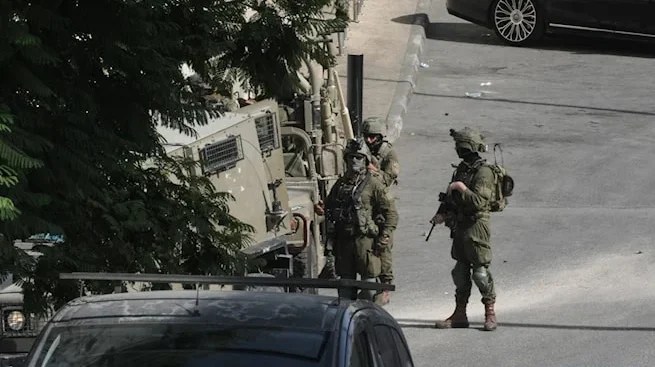
The two resistance fighters carried out their attack, injuring four Israeli soldiers and killing two, using pistols and a rifle near the Farsh al-Hawa checkpoint in al-Khalil. The Israeli army called in backup, leading to an armed clash in which both of the Palestinians were killed during a 20-minute clash.
From the CCTV footage of the clash, it appears as if the two Palestinians were not professionally trained and acted alone. No Palestinian movement claimed the attack, although it was widely praised. Israel was quick to blame Hamas and then launch a new military campaign targeting the entire city of al-Khalil.
There are a number of reasons that the attack, which, although the most significant carried out in the West Bank in over a year, is not exactly unusual, has been reacted to in the way we see today.
One reason for this enormous overreaction is that Netanyahu is looking for a boost in the polls. He evidently believes that by launching a brutal crackdown in the West Bank, his population will respond positively and he may win some more votes come Tuesday.
This is why the Israeli Prime Minister claimed that the planned campaign against al-Khalil will be an operation “unlike any seen since the Six-Day War”. He is trying to play on Israeli nationalism, referencing the June 1967 war, during which the Israelis occupied the West Bank, Gaza, East Jerusalem, the Golan Heights and Sinai Peninsula. Evidently, this is hyperbole, but it doesn’t mean that the campaign will not be brutal.
Another reason why the attack has been transformed into such a major issue is that it is massively embarrassing to both the Israeli army and Netanyahu personally. Although the two Palestinian fighters do not appear to have had any professional training and did not act on behalf of any resistance group, the Israeli media, military, and government are saying the opposite.
The Israelis are claiming that Hamas was involved; they are also spinning a hero story that by calling in backup they managed to thwart a much larger attack that was planned on Israeli settlers and that what happened was actually a success story of sorts.
This is because the truth exposes the unprofessionalism and cowardice of the Israeli occupation soldiers. Two untrained individuals managed to kill a Staff Sergeant and a Sergeant, injured four others, while all the female soldiers on scene hid from the attackers. In addition to this, it took 20 minutes for them to take care of the threat posed to their forces; they also needed to call in backup despite clearly outnumbering the two gunmen already. Accepting the reality would mean accepting that the army is pretty incompetent, and the Israeli public will believe any narrative that allows them to ignore this truth.
Another element of this is that if you tell the public that the Israeli army managed to thwart a major attack, it shows that under Netanyahu’s leadership, he has learned the lesson from October 7, 2023. The narrative being sold to Israelis is that now the army is acting pre-emptively; it is launching a major campaign to prevent another major attack like the one that happened on October 7. Israelis also simply enjoy watching Palestinians suffer.
However, by launching such a collective punishment campaign, there is a chance that the Israelis could end up getting burned, even if not immediately. West Bank Palestinians have been placed under tremendous pressure; by launching an intensive campaign of this nature, it could end up pushing some people over the edge.
Although the rhetoric surrounding the campaign suggests that the Israeli military is seeking to turn the largest populated city in the occupied West Bank into Gaza, this is unlikely to be what they will do. Instead, they will carry out raids, make life an inconvenience, even more than before, likely killing some innocent people while kidnapping random Palestinians while going through their neighborhoods.
The most intensity will be focused on a few specific neighborhoods that will get the worst treatment. But escalating too hard, too fast, could end up triggering a unifying event, especially due to the Israeli soldiers being psychotic and not even following their own rules. Ultimately, it is because of the checkpoints, killings, torture, and daily harassment that Palestinians carry out resistance attacks like the one we saw this Friday morning.
It is only a matter of time until the pressure being placed upon the people of the West Bank will explode. What makes this predicament starkly different from that of Gaza is that when the situation deteriorates, the Israelis have already entrenched themselves so deeply within that territory that they are extremely exposed.
Netanyahu loves to pledge his intentions to collapse the Palestinian Authority (PA) and annex the West Bank, but this is just posturing for gullible Israeli fanatics who don’t understand how everything works. If the PA does collapse and there is a push to annex the territory officially, then the settlements will be indefensible.
Just as the Israeli public truly believes that they have “the most moral army on earth”, they also believe that they are physically superior too. The former is about as accurate as the latter.
During the Gaza Genocide, the West Bank strategy has been to subdue the Palestinians through brute force and to collaborate with the PA in order to ensure there is no major uprising. It has, until now, worked. However, that strategy of constant torment and increasing pressure also “worked” until October 7, 2023.
People will not live under such horrendous conditions forever; it is only a matter of time before the situation there dramatically changes. Such a shift could occur over something relatively small. When you constantly play with fire, you get burnt.
If the West Bank’s population were to enter a sustained popular uprising, the Israeli military would struggle to subdue it. In the event that other fronts of its regional war were to open, this could be a major strategic catastrophe.
– Robert Inlakesh is a journalist, writer, and documentary filmmaker. He focuses on the Middle East, specializing in Palestine.
The speaker of the Yemeni House of Representatives has denounced the European Parliament’s push to blacklist the Ansarullah resistance movement, saying the step is rooted in hypocrisy and double standards.
In a statement on Saturday, Yahya Ali Ahmed al-Raee emphasized that the legislature’s stance on Yemen is nothing more than a political cover for the war crimes being perpetrated by Saudi Arabia and its forces against the Yemeni nation.
“The European Parliament’s latest resolution is a clear sign of double standards and hypocrisy. It is an attempt to distort the position of the Sana’a-based Yemeni government, and blatantly ignores its repeated guarantees and commitment to international maritime security,” he noted.
Raee stated that the European Parliament should have designated Israel as the source of terrorism, given the genocidal crimes it is committing in the Gaza Strip.
The senior Yemeni official noted that the legislative body of the European Union has turned a blind eye to the crimes of genocide, murder, siege, and starvation that the Yemeni people have been enduring for more than 12 years as a result of vicious Saudi assaults and blockade.
He also called on the European Parliament to dispatch a parliamentary delegation to Yemen and document the firsthand crimes and aggression that Saudi Arabia is committing against the Yemeni people.
On Thursday, the European Parliament called on the Council of the European Union to designate Yemen’s Ansarullah resistance movement as a terrorist organization, including its political and military wings, leadership, and military and security apparatus.
In a resolution, the lawmakers also called for dismantling the group’s funding channels and freezing its funds, economic resources, and assets belonging to entities facilitating its activities.
The resolution strongly condemned retaliatory Yemeni missile and drone attacks on Saudi Arabia, as well as attacks targeting energy infrastructure and commercial shipping in the Red Sea and the Bab al-Mandeb Strait.
The Sana’a administration announced a naval blockade against Saudi Arabia on July 20, in retaliation for “an unjust and oppressive siege” on Yemen that has continued for almost 12 years.
The Yemeni military has reported multiple successful operations targeting ships associated with Saudi Arabia in the Red Sea.
In March 2015, Saudi Arabia and its allies enacted a blockade on Yemen and initiated a large-scale war on the Arab country, with support from the United States and various Western nations in terms of military, political, and logistical resources.
The war has resulted in the deaths of tens of thousands of Yemenis. Nevertheless, Saudi Arabia has not succeeded in achieving its goal of restoring a puppet government that aligns with its interests.
Iranian Parliament Speaker Mohammad Baqer Qalibaf says a United Arab Emirates diplomat’s bid to become the next United Nations secretary-general aims to clear the diplomatic runway for Israel’s expansionist and aggressive ambitions under the so-called “Greater Israel” scheme.
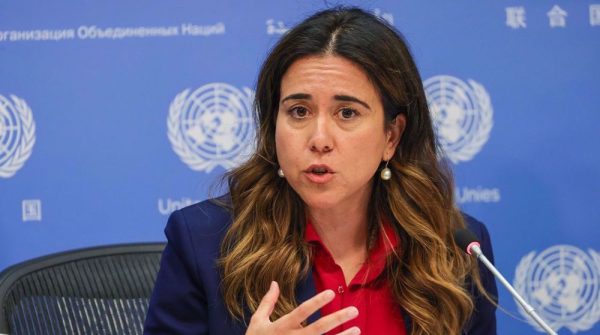
Qalibaf made the remarks in a post on X on Sunday, saying UAE Minister of State Lana Nusseibeh’s candidacy for the UN’s top job also aims to whitewash Israel’s “systematic genocide” against Palestinians in the Gaza Strip.
He added that defending the Gaza tragedy had become a résumé for the UAE’s decision to seek the UN post, drawing a comparison between the country’s pursuit of the position and a fox seeking a job guarding a henhouse.
“Defending the Gaza tragedy is the résumé; the fox is updating the LinkedIn profile to apply for the henhouse guard job,” the top Iranian parliamentarian wrote.
Qalibaf’s post came after Nusseibeh announced her candidacy for the post of United Nations secretary-general on Wednesday, becoming the first woman to seek to lead the world body in its 80-year history.
Nusseibeh, a former UAE ambassador to the UN for more than a decade, brings Palestinian roots and defense of her country’s historic relations with Israel to her candidacy.
She has also faced sharp criticism over the UAE’s alleged role in backing paramilitary fighters who have killed thousands in Sudan’s civil war. The UAE has denied the claims.
In a post on her X, Nusseibeh said she is entering the race because the UN needs to act more urgently, bring people together, and drive the work forward until it produces concrete results.
“That is how we rebuild trust in the United Nations and ensure it delivers meaningful change for the people it exists to serve,” she wrote.
More than 74,000 Palestinians, mostly women and children, have been killed in Gaza since October 7, 2023, when the Israeli regime launched its genocidal war on the beseiged territory.
Pakistan has reopened a major border crossing with Iran that handles key energy and commodity supplies between the two countries amid improved security in the region.
Pakistan’s Dawn newspaper reported on Sunday that the Gabd-Rimdan border crossing, also known as Gate 250, in the country’s Gwadar region, had reopened a day earlier following a weeklong suspension that began on October 17.
The report quoted Mir Naveed Jan Kalmati, president of the Gwadar Chamber of Commerce and Industry, as saying that import and export operations between Pakistan and Iran had resumed.
It said the decision came amid dwindling LPG supplies in Pakistan ahead of the winter season.
The closure of the border crossing on October 17 left hundreds of trucks stranded on both sides of the border.
An attack was also reported in the region earlier this week, when unidentified gunmen targeted parked trucks, setting dozens ablaze and damaging several others.
Dawn said local administrators had deployed additional forces to protect trade convoys before reopening the border crossing.
Meanwhile, Iran’s ambassador to Pakistan, Reza Amiri Moghadam, said in a post on his X account on Sunday that the disruption to cross-border trade between the two countries was mainly due to changes in Islamabad’s import rules.
He denied that Iran had made any decision to reduce LPG exports to Pakistan.
“… Changes in the implementation of Pakistan’s E-Form procedure for imports from Iran have created a situation in which traders are effectively and literally unable to dispatch cargo from Iran to Pakistan,” Amiri Moghadam said.
He said cross-border trade between Iran and Pakistan “serves the mutual interests of both countries and their people,” adding that Iran had made every possible effort to facilitate and promote trade with its “brotherly” neighbor.
The results of the first round of Brazil’s 2026 presidential election sparked a wave of analysis on the Brazilian left. With Flávio Bolsonaro ahead of Lula in the vote count, many commentators looked for explanations in evangelical voters’ behavior, moral conservatism, and the influence of religious leaders. These factors matter, but they do not explain everything. A significant portion of the electorate is dissatisfied with the cultural priorities of the left and, above all, with the perception that the state has lost its ability to guarantee public safety.
Public security occupies a central place in this debate. According to a Nexus/BTG poll released in July 2026, 30% of respondents identified violence, crime, or public security as the country’s main problem. This concern is particularly relevant among Flávio Bolsonaro’s supporters, for whom fighting crime is one of the main expectations for the next government.
The situation in Rio de Janeiro illustrates the scale of the problem. A study by the Federal Fluminense University’s Study Group on New Illegalisms and the Fogo Cruzado Institute estimated that, in 2024, approximately four million people in the metropolitan region lived under the control or influence of armed groups. This represented 34.9% of the region’s population. Criminal factions and militias exercise forms of territorial power that affect mobility, economic activity, and residents’ everyday lives. Some estimates suggest that between 60% and 70% of Rio de Janeiro’s territory is currently controlled by organized crime.
In this context, rhetoric emphasizing social rights, national sovereignty, and foreign policy can lose electoral appeal when it fails to offer convincing answers to everyday insecurity. Lula has advocated tackling organized crime through coordination among security forces, financial investigations, and the restoration of state control over affected territories. Yet these measures are only being emphasized now, following four years of what critics describe as utter neglect of public security, during which organized crime achieved historic levels of territorial expansion.
Flávio, meanwhile, is betting on a more punitive approach, including classifying criminal factions as narco-terrorist organizations. The dispute involves different conceptions of public security, but it also concerns each candidate’s ability to convey determination in confronting the problem. Whether designating these groups as terrorist organizations would actually help combat crime is a matter for a much longer debate. There is little doubt, however, that the label itself appeals to a substantial portion of the population living under the very real terror imposed by these criminals.
There is also a cultural dimension that the left frequently underestimates. Some voters reject the political vocabulary associated with the woke agenda and interpret certain progressive initiatives as attempts to impose new standards of behavior. The Supreme Federal Court’s draconian decision to recognize “transphobia” as a crime “equivalent to racism” has naturally provoked strongly negative reactions. After all, it seems perfectly normal that millions of Brazilians reject a ruling that can – and already does – place people in prison for up to five years for using the wrong pronoun when addressing transgender individuals.
Cultural discontent is often irresponsibly disdained in political analysis. Many commentators continue to treat voters as machines seeking constant material benefits, supposedly willing to sacrifice their values in exchange for meager welfare handouts – the principal achievement the Workers’ Party government has offered the Brazilian people so far. This analysis is mistaken. For many Brazilians, questions concerning their children’s education, religion, and the limits of state intervention are central political priorities. These voters will naturally tend to support the opposition in a national environment where state-run university hospitals – with the backing of the left-wing establishment – provide puberty blockers and other forms of “non-surgical intervention” to “transgender children.”
Contrary to the expectations of academic analysts disconnected from the country’s realities, foreign policy occupies a limited place in most people’s daily lives. Relations with the United States, Brazil’s role in BRICS, and its diplomatic position on Palestine are relevant issues, but they are unlikely to outweigh immediate concerns such as urban violence and cultural disputes.
Flávio Bolsonaro’s electoral support must be understood through this combination of factors, without attributing a single motivation to millions of voters. Public security, traditional values, dissatisfaction with the government, and rejection of certain progressive agendas can all converge in the same vote. If the left wants to improve its popularity, the better course of action is to reconsider its own mistakes, instead of inventing false explanations for the right’s growing support.
Even as the US diesel deal with Russia that was brokered by Donald Trump could help bring the price of oil down, the Democrats’ Russophobia “is leading them to try to sabotage the deal,” Dr. Jeremy Kuzmarov, managing editor of CovertAction Magazine, tells Sputnik.
“Trump may be making some steps at the beginning to try to end the conflict in Ukraine, whereas the Democrats, I think, want to escalate that conflict. And they are totally irrational,” he adds.
Only a small number of Democrats opposed the anti-Russian sanctions bill, arguing that it is “totally irrational and is going to have a very negative effect on the US economy.”
“This is a case in point where this hysteria about Russia and Russophobia reaches the extent that the government is actually advocating for positions that are very harmful to the American economy and to American workers or farmers — even though the Democrats purport that they are more for the working people.”
American farmers complain that they cannot stay in business due to the cost of fuel, the soaring cost of living does a number on the budgets of working Americans, and many businesses in the US are struggling.
“Some of that also has to do with the war spending of the government and all the money they put into warfare, including Ukraine. That is the thing that Democrats are so hypocritical about. Because they just want to spend more and more billions on Ukraine,” notes Kuzmarov.
“That is what has been ruining the American economy and American society over decades now — the excessive military spending. The Democrats undercut their claim to be for the working people or for farmers if they are trying to sabotage an economic arrangement that would actually work to bring the cost of fuel down.”
Meanwhile, more and more Americans may start seeing the numerous opportunities for economic deals with Russia, potentially leading them to “put more and more pressure on the government to ease relations, restore regular diplomatic relations, end the war in Ukraine, stop the sanctions, and restore ties for the benefit of both countries.”
The Europeans are also “increasingly protesting their governments’ policies and the position they have taken against Russia,” seeing how purchasing more Russian oil and gas would have been beneficial to the European economies.
American people ended up being the losers in their government’s scheme to weaken Russia through the Ukrainian conflict, with billions of dollars that are “needed here in the United States” being lost in the process.
“Ukraine has sacrificed generations of its youth now, its economy has been devastated, and it has become more of an autocratic country under Volodymyr Zelensky,” Kuzmarov says, noting that US Democrats support the “destruction of Ukraine” rather than Ukraine itself.
“That has been destructive for everybody except the weapon contractors and maybe the Wall Street financial firms that own those weapon contractors.”
On October 22, The Washington Post reported that the Senate Foreign Relations Committee had asked companies involved in Russian diesel imports to preserve relevant documents as Democrats prepared for a possible probe.
The Pentagon has designated cultural programs linked to China’s Confucius Institute as a national security threat, according to US Secretary of War Pete Hegseth. He claims that the centers, which largely offer Chinese language courses on American college and university campuses, serve as a front for Beijing’s “propaganda” campaign – an allegation Chinese officials have previously denied.
In a video posted on Facebook on Friday, Hegseth said that while the US Congress had previously “banned” the Confucius Institutes from American educational institutions, they “came back disguised in new forms” and under new names.
Hegseth was apparently referring to several measures passed by Congress in recent years that stripped universities that hosted Confucius Institutes of federal funding. The pressure from the lawmakers has led to the closure of multiple centers on US soil.
According to Hegseth, over the past two months, the Department of War has “systematically dismantled” 80 new Chinese-backed cultural centers across 30 universities, adding “these sleeper organizations to our list of institutions that threaten our national security.”
The official alleged that the targeted entities had sought to “steal intellectual property and to infiltrate the minds of American students,” but stopped short of providing any concrete evidence.
Back in 2020, the US Department of State designated Confucius Institutes as a “foreign mission of the People’s Republic of China,” requiring the institutions to regularly provide information regarding their Chinese personnel, recruitment, funding, and operations to the US government. The US Department of State characterized the China-funded cultural centers as “part of Beijing’s multifaceted propaganda efforts.”
Later that year, then-US Secretary of State Mike Pompeo alleged that the centers were working to recruit “spies and collaborators” at US colleges, and expressed hope that “we will get them all closed out.”
China’s Foreign Ministry at the time accused Pompeo of deliberately undermining cultural and educational exchanges “by discrediting Confucius Institutes… [out of] ideological bias and political expediency.”
Beijing urged Washington to “abandon the Cold War zero-sum mentality… [and to] stop interfering with normal people-to-people and cultural exchanges.”
Confucius Institutes have similarly come under government pressure in several other Western countries in recent years.
Last year, Australian media reported that six local universities had shut down Beijing-backed cultural centers amid government scrutiny, reducing the number of such entities in the country by half.
In 2020, several media outlets, including The Times, claimed that Sweden had become the first European nation to close all Confucius Institutes and related classrooms.

 Login