❌

Reading view

Governo libera R$ 68,6 milhões para combater incêndios e seca no Norte

Logo Agência Brasil

O Governo Federal informou nesta quarta-feira (28) que liberou R$ 68,6 milhões para ações de combate a incêndios em estados da Região Norte. Os recursos, enviados para o Amazonas, Pará e Acre, também se destinam ao combate à estiagem e à seca.

O Ministério da Integração e do Desenvolvimento Regional (MIDR) informou ainda que enviou técnicos da Defesa Civil Nacional para os estados. Eles vão auxiliar, especialmente os municípios amazonenses e paraenses, nos processos de solicitação federal de situação de emergência e de liberação de recursos para assistência humanitária.

Notícias relacionadas:

Cidades com reconhecimento federal de situação de emergência ou de estado de calamidade pública podem solicitar ao MIDR recursos para ações de defesa civil. Até o momento, o ministério aprovou para o Amazonas 47 planos de trabalho, somando R$ 45,2 milhões. O estado tem 48 municípios com reconhecimento federal de situação de emergência vigente.

“Algumas cidades foram contempladas com mais de um decreto, resultando em 66 reconhecimentos, sendo 29 em razão da estiagem e 37 por causa dos incêndios”, disse o MIDR.

O Pará recebeu R$ 3,9 milhões, resultantes da aprovação de seis planos. Ao todo, 24 municípios estão reconhecidos com situação de emergência. Algumas cidades paraenses também foram contempladas com mais de um decreto, somando 28 reconhecimentos, sendo 16 em função das queimadas e o restante devido à falta de chuva.

Já o Acre recebeu R$ 19,3 milhões para o enfrentamento da seca, após a aprovação de 15 planos de trabalho. No total, 22 cidades estão em situação de emergência no estado.

Segundo o ministro da Integração e do Desenvolvimento Regional, Waldez Góes, as equipes em campo estão dedicadas a agilizar o reconhecimento federal da situação de emergência e, consequentemente, a liberação de recursos para assistência humanitária.

“Trabalharemos para agilizar o reconhecimento da situação de emergência e a liberação de recursos a cada demanda manifestada. Não há como mensurar quanto de recurso será disponibilizado. Tudo o que for necessário será liberado, conforme os planos de trabalho municipais e estaduais", afirmou.

  •  

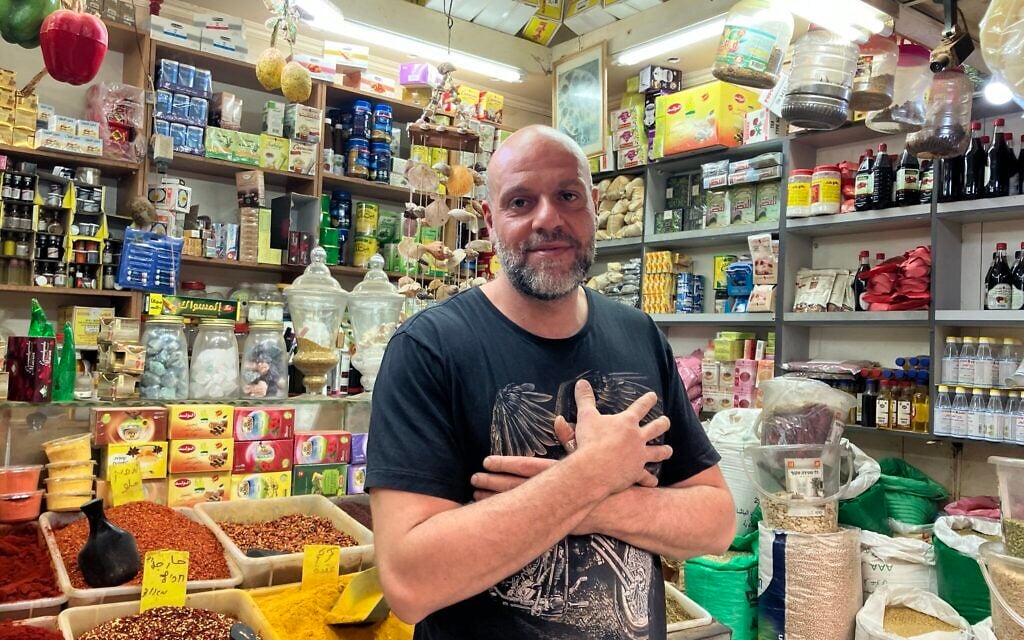
In mixed city of Acre, Jewish-Arab coexistence shapes hopes for anti-Netanyahu coalition

In the market stalls of the old bazaar, locals call for Zionist and Arab parties to work together to bring change - but resistance to the idea by opposition leaders may render their vision a nonstarter
  •  

Sete governos são definidos no segundo turno das eleições 2026

O segundo turno das eleições deste domingo (25) definiu os governadores de seis estados e do Distrito Federal. As disputas terminaram com vitórias de candidatos de diferentes partidos e confirmaram a continuidade de duas governadoras, Mailza Assis (PP), no Acre, e Celina Leão (PP), no Distrito Federal.

No Amazonas, Omar Aziz (PSD) venceu Professora Maria do Carmo (PL). No Espírito Santo, Lorenzo Pazolini (Republicanos) superou o governador Ricardo Ferraço (MDB). No Rio Grande do Norte, Cadu de Lula (PT) derrotou Allyson Bezerra (União Brasil). Já no Tocantins, Vicentinho Júnior (PSDB) venceu Professora Dorinha (União Brasil).

Veja quem venceu em cada estado

Acre

Mailza Assis (PP) foi reeleita governadora do Acre. Atual chefe do Executivo estadual, ela enfrentou Alan Rick (Republicanos) no segundo turno. No primeiro turno, Mailza havia recebido 49,76% dos votos válidos, contra 32,27% do adversário.

Amazonas

O senador Omar Aziz (PSD) foi eleito governador do Amazonas ao derrotar Professora Maria do Carmo (PL). Aziz já havia governado o estado e voltou a disputar o cargo após terminar o primeiro turno na liderança, com cerca de 40,6% dos votos válidos.

Distrito Federal

Celina Leão (PP) foi eleita governadora do Distrito Federal. Atual chefe do Executivo distrital, ela disputou o segundo turno contra Leandro Grass (PT). Na primeira etapa, Celina havia ficado muito próxima da vitória, com 49,93% dos votos válidos.

Espírito Santo

Lorenzo Pazolini (Republicanos) venceu a disputa pelo governo do Espírito Santo contra Ricardo Ferraço (MDB), que buscava permanecer no cargo. Com 97,77% dos votos apurados, Pazolini já era considerado matematicamente eleito, com 52,03% dos votos válidos.

Rio Grande do Norte

Cadu de Lula (PT) venceu Allyson Bezerra (União Brasil) na disputa pelo governo do Rio Grande do Norte. O resultado foi apertado. Com 99,93% da apuração, Cadu tinha 50,77% dos votos válidos, contra 49,23% de Allyson.

Tocantins

Vicentinho Júnior (PSDB) foi eleito governador do Tocantins ao derrotar Professora Dorinha (União Brasil). A disputa teve uma mudança em relação ao primeiro turno, quando Dorinha havia terminado na frente, com 45,52% dos votos, enquanto Vicentinho recebeu 43,94%.

The post Sete governos são definidos no segundo turno das eleições 2026 appeared first on Diário da Manhã - O Jornal do leitor Inteligente.

  •  

Mailza Assis é reeleita governadora do Acre

Logo Agência Brasil

Com  83,88% das urnas apuradas, a candidata Mailza Assis (PP) está matematicamente reeleita governadora do Acre. 

Mailza, que é a atual governadora do estado, recebeu, até o momento, 229.835 votos, o equivalente a 66,16% dos votos válidos. 

Notícias relacionadas:

A governadora disputava o segundo turno com  Alan Rick (Republicanos), que obteve 118.749  votos (33,84%).

Atual governadora do Acre, Mailza Assis é natural de Mundo Novo (MS) e tem 49 anos. Chegou ao cargo em abril deste ano, após a renúncia de Gladson Cameli, de quem era vice. 

Foi eleita em 2014 para o Senado como primeira suplente na chapa de Cameli e assumiu como titular do mandato em 2018. Em 2022, foi eleita vice-governadora na chapa de Cameli e assumiu o governo em abril, com a renúncia do governador para concorrer ao Senado. 

  •  

European Values, Poland and Ukraine, by Bohdan Vitvitsky

Bohdan Vitvitsky examines the renewed dispute between Poland and Ukraine over the legacy of the Ukrainian Insurgent Army, questioning Warsaw’s claims to moral authority over Ukraine’s historical memory and whether such interventions are consistent with European principles of sovereign equality.

The strange historical dispute between Poland and Ukraine, in which Polish officials keep making demands upon Ukraine, seems unwilling to die down.  Most recently, on October 20 the L’viv oblast (regional) council announced plans to honor the World War II-era Ukrainian Insurgent Army (UPA) and its military leader, Roman Shukhevych.  The council declared 2027 as the Year of the UPA, the Year of Shukhevych and the Year of Oleh Olzhych, a Ukrainian poet and political activist.  In response, the Polish charge d’affaires in Kyiv, Piotr Lukasiewicz, responded by stating that “glorifying the UPA and criminal figures runs counter to European values and the strategic and neighborly relations between Ukraine and Poland.”  Similar statements were then echoed by other Polish officials, including ministers.  Are the Poles right about it being the Ukrainians who are running afoul of European values?  And are Poles right to think that they have the right and the authority to police whom in history Ukraine chooses to memorialize?  I would suggest that the answer to both questions is no.

Sovereign equality is a fundamental principle in international law that asserts that all states are equal, regardless of their size or power.  The equality of states is a fundamental constitutional principle that governs how the European Union functions.  As a general proposition, it is, thus, contrary to European values for Poland or Polish officials to assume that Poland has some sort a special right to dictate to Ukraine whom it may or may not memorialize, as one can presume that Poland would vigorously reject Ukraine’s or anyone else’s attempt to tell Poland which historical figures it may or may not memorialize based on that outside country’s views of the demerits of Poland’s various heroes.

But given the spirit behind the set of values that developed after the horrors of World War II and after the Western European countries finally lost all of their colonies by the 1960s, there are certain actions by Ukraine or any European country that could merit criticism or even condemnation.  For example, it is incontestable that in the summer of 1943 the UPA, which was newly formed in Volyn, attacked Polish villages and there killed civilian men, women and children in the tens of thousands.  It is also incontestable that according to most definitions, that massacre was a war crime.  With respect to these events, what actions by contemporary Ukrainians could merit condemnation?  There are two.  First, if any Ukrainian official or political figure or public intellectual or organization were to deny that this massacre took place, he/she/they/it would clearly merit condemnation.  Have any current or recent Ukrainian officials or other spokespersons denied the occurrence of the Volyn massacre?  The answer is no.

Second, if any Ukrainian official or political figure or public intellectual or organization were to admit that the Volyn massacre took place but nevertheless deny that it was a war crime or actually condone it on the basis of some one or another historical Ukrainian grievance against the Poles, that would, in accord with contemporary European values, merit condemnation.  Have any current or recent Ukrainian officials or other spokespersons denied that the massacres of Poles were a war crime or maintain that for some reason these massacres were to be viewed approvingly?  The answer, once again, is no.

So why do Polish officials still complain?  They complain because in effect they want to assert that they have the right more generally to be the ones to define Ukraine’s historical past.  As the great British historian of Poland Norman Davies has pointed out, this is absurd.  About 4% or 5% of the soldiers in UPA participated in the Volyn killings, and in fact most of the members of UPA joined after 1943.  UPA is memorialized in Ukraine because of the extraordinary heroism of many, but certainly not all, of its members in the Ukrainian anti-colonial struggle against the Poles, the Germans and the Soviets that extended into the 1950s against the Soviets.  The Poles seem to think that, ignoring what UPA did against the Germans and for much longer against the Soviets, and regardless how large or how small was the percentage of the UPA that was involved in the 1943 massacre, it is what happened to the Poles who were massacred that is more important than all else and it must be that which defines who and what UPA was.  The Poles are of course entitled to view the UPA however they choose, but they insist on more.  They insist on having the right to dictate to Ukrainians how to view the UPA.

There is another major problem with Polish complaints about Ukrainian memorialization.  It is the problem of moral standing.  The Polish minority in Volyn, about at most 16% in the interwar period, represented the nation that had militarily conquered and then occupied Volyn and other parts of western Ukraine.  Ukrainians constituted between 65% and 70% of Volyn’s population.  Some among the Polish minority were the descendants of the Polish lords and their administrators who had colonized Ukraine in the 15th – 17th centuries when Ukrainians were enserfed, a form of slavery that continued into the 19th century.  In the interwar period between World War I and II, the Polish minority maintained its political, economic, educational and cultural domination of the Ukrainian majority.  And, during World War II, the Polish government in exile in London continued to insist that Poland had the right to include Volyn in Poland and thus to continue to maintain dominion over the Ukrainian majority living there.  None of this obscures what was a war crime, but given the Polish history of domination and exploitation of Ukrainians, it does call into serious question whether today’s Poles as putative representatives of the historical Polish nation should today have moral standing to make complaints against Ukrainians.

Lastly, killing civilians is killing civilians.  It is a war crime.  As has been well documented, during World War II various Polish units, including units of the Polish Home Army, which army is widely venerated and memorialized in Poland, attacked Ukrainian villages and killed civilian men, women and children.  Those killings are often waived off as supposedly “retaliatory” attacks, but that is nonsense. The villages that were attacked were not even in Volyn but were simply Ukrainian.  So if today’s Poles think that they have a right to make grievance claims on historical memory relating to events multiple generations ago, then they must also accept the burdens of accepting grievance claims against them.  To put it in legal terminology, as regards history, it’s not as if Poles had clean hands.

In light of all of the above considerations, and with the exceptions discussed above, contemporary Polish officials do not have the right to routinely keep injecting themselves into Ukrainian decisions to memorialize historical figures that, for Ukrainians, were predecessors of Ukraine’s current efforts to fight off yet another attempt to subjugate it.

Dr. Bohdan Vitvitsky is a retired federal prosecutor and a former U.S. diplomat who holds a Ph.D. in philosophy.

  •  

Poland paused a military aid package over Lviv’s vote honoring WWII nationalists, Ukrainian source says. Polish ministry denies it

polish defense

Poland has paused the delivery of a large military aid package to Ukraine after a Lviv regional council honored the Ukrainian Insurgent Army (UPA), a WWII nationalist force, a source in the Ukrainian government told European Pravda on 21 October. A Polish Defense Ministry spokesperson told Fakt the report was untrue, though he told WP he knew nothing about a possible delay in shipment.

If confirmed, the freeze would carry a history dispute into Poland’s military aid. The row flared in May, when Kyiv named a special forces unit after the UPA, and in June Poland’s president stripped Zelenskyy of Poland’s highest honor. Even so, Ukraine’s ambassador said in August that Polish military aid was still flowing.

A vote and a disputed freeze

The Lviv Oblast Council voted on 20 October to name 2027 the year of the UPA, its commander Roman Shukhevych, and nationalist activist Oleh Olzhych. The UPA fought Nazi Germany and the Soviet Union, but Poland holds it responsible for mass killings of Poles in Volhynia and Eastern Galicia in 1943–1944. The resolution disappeared from the council’s website late that evening, RMF24 reported.

The source blamed what it called the councilors’ irresponsible actions, saying the vote came as Poland prepared the shipment and that work through closed channels is underway. The ministry spokesperson, Janusz Sejmej, called the report untrue. Asked whether it could reflect a delay in shipment, he said he knew nothing about that.

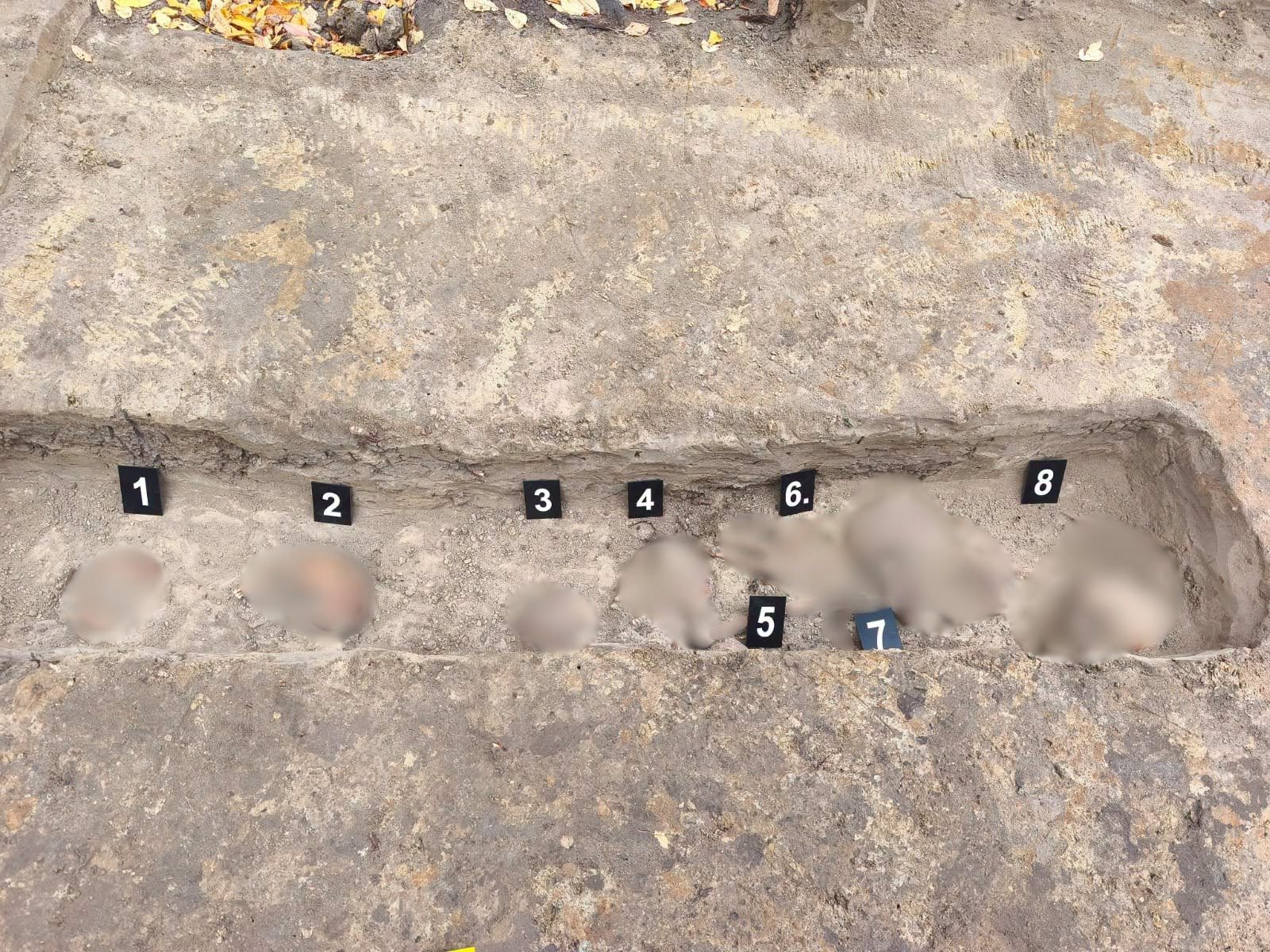
Human remains, likely belonging to a Ukrainian killed in 1944 in the village of Łasków, Lublin Voivodeship, Poland, October 2026
Explore further

Progress on a sore point for Ukraine and Poland: remains of over 40 Ukrainians killed by Polish WWII units found in Łasków

Polish officials push back

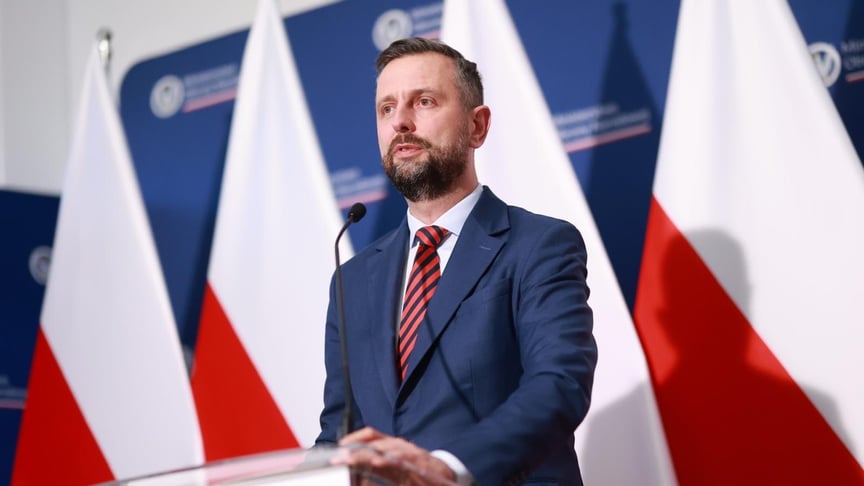
On 20 October, Defense Minister Władysław Kosiniak-Kamysz wrote that Ukraine’s authorities must distance themselves from the council’s position.

The next morning, Prime Minister Donald Tusk called the vote unwise and harmful above all to Ukraine. He said he had warned Zelenskyy earlier that such gestures hinder Ukraine’s friends, though the president was not responsible for this vote. At such moments, Tusk said, Russians always rub their hands.

Foreign Minister Radosław Sikorski then requested that councilor Sviatoslav Sheremeta, who proposed the resolution, be added to Poland’s list of unwanted persons. That afternoon, Interior Minister Marcin Kierwiński said the decision had been made. Sheremeta is barred from the Schengen zone until 2031, RMF24 reported. Poland had already barred him once, in 2017, the outlet said.

Kyiv asks for restraint

Earlier on 21 October, before the ban, Ukraine’s Foreign Ministry called the vote counterproductive in a reply to journalists and urged Warsaw to avoid abrupt steps. Zelenskyy’s closest aides had also promised the resolution would not take effect, Deputy Foreign Minister Marcin Bosacki told TVN24.

  •  
❌