The Changan Uni-V, assembled at Avtotor's Kaliningrad plant, presents a striking arbitrage opportunity for buyers in neighboring markets, yet the price gap of roughly 1.5 million rubles between Russia and Belarus is not merely a currency or tax discrepancy. It is a transactional compromise between financial savings and mechanical currency. A unit available in Belarus for approximately 75,900 Belarusian rubles (roughly 2.073 million rubles) stands in stark contrast to its Russian counterpart, which starts at 3,579,900 rubles. This disparity forces the prospective owner to weigh the allure of a lower entry price against the tangible benefits of a more powerful, updated drivetrain.
At the core of this trade-off lies the distinction between the pre-facelift and facelifted versions of the liftback. The Belarusian market receives the older iteration, powered by a 1.5-liter turbocharged engine producing 188 horsepower and featuring a previous-generation interior. In Russia, however, the offer is for the updated model, which swaps in a more potent 2.0-liter engine generating 196 horsepower. While the numerical difference in power is modest, it translates to a 0.2-second improvement in the sprint to 100 km/h, offering a slightly more assured and responsive driving character. The buyer must decide whether the premium paid in Russia for a marginal performance boost and newer aesthetics justifies the cost, or if the Belarusian variant's significant discount is sufficient justification for accepting an older specification.
This cross-border pricing strategy is less a market anomaly and more a direct consequence of industrial capacity. Avtotor's three production lines at the Kaliningrad facility are designed to handle an annual output of 120,000 vehicles. Given that domestic Russian demand alone cannot fully utilize this capacity, the surplus production is directed toward Belarus. This overflow creates a specific condition for aggressive pricing in the neighboring market, effectively turning the Belarusian buyer into the recipient of inventory that cannot be absorbed domestically. For the consumer, this means the lower price is not a promotional error but a structural feature of the supply chain, where the desire for a newer car in one market subsidizes the ownership of a proven, slightly older version in another.
In the Volvo EX90, the traditional split-controls for seat adjustment have been consolidated into a single square physical toggle. Standard luxury configurations typically employ two perpendicular levers-one for the cushion and one for the backrest-requiring drivers to manipulate distinct inputs for each axis. By merging these functions into one interface element, Volvo engineers have simplified the assembly process and reduced manufacturing costs, yet the design yields a counterintuitive improvement in ergonomic usability.
The underlying mechanism operates on a modifier principle analogous to the Shift key on a computer keyboard. The central button of the toggle acts as a state switch; pressing it alters the function of the main lever from the primary axes of vertical height and longitudinal slide to the secondary axes of seatback recline and lumbar support. This allows a single physical input to control four distinct degrees of freedom by toggling its operational mode.
Frequency dictates the trade-off
Seat positioning is a static task. Drivers establish their seating posture once per session, and subsequent micro-adjustments are infrequent. Because the action is rare, the cognitive load of remembering that a central press unlocks secondary functions is negligible. The interface remains compact and intuitive, eliminating the risk of misoperation during the low-frequency adjustments that occur after the initial setup.
At the 2026 Specialty Equipment Market Association (SEMA) show, Nissan presented a concept that challenges the common assumption that high-performance output requires a different engine block. The Sentra Spec-V retains the standard 2.0-litre inline-four architecture found in the base model, yet delivers 300 horsepower, more than doubling the factory rating of 149 horsepower. This engineering feat is achieved not through a transplant of a larger displacement unit, but through a comprehensive internal modification of the existing powerplant.
The core of the performance gain lies in a forced-induction setup that includes turbocharging, reinforced internal components, and a revised fuel delivery system. To manage the increased torque and reduce rotational inertia for a more responsive throttle feel, the drivetrain utilizes a lightweight flywheel paired with a strengthened clutch kit. This approach demonstrates how a compact, four-cylinder engine can be made to behave like a significantly larger unit when the fundamental structural integrity is bolstered.
The vehicle's chassis assembly reflects a strategy of sourcing proven, high-performance components from across Nissan's historical lineup. The suspension is derived from the final-generation Sentra NISMO, featuring coil-over struts with anti-roll bars. These elements have been retuned for track use, employing stiffer springs and external hydraulic reservoirs at the front to manage heat and consistency. Drivability is further defined by a six-speed manual transmission taken from the Juke NISMO RS, providing a direct connection to the drivetrain. Stopping power is secured by braking hardware sourced from the R35 GT-R, including Brembo calipers, ensuring the car can withstand the forces generated by its powertrain.
Russian manufacturer TENET has updated its lineup of four crossovers-the T4L, T7, T8, and flagship T9-by introducing a new intelligent all-wheel-drive (AWD) system branded as Torque-on-Demand. The core engineering shift is the move from a fixed transmission state to a dynamic one: the vehicle now operates as a front-wheel-drive (FWD) car by default, with electronics actively managing the distribution of torque to the rear axle only when traction limits are approached.
At the heart of this configuration is a compact electro-mechanical coupling. Under standard driving conditions, such as dry asphalt, the system keeps power isolated to the front wheels to preserve fuel efficiency. However, the vehicle's control unit continuously monitors wheel speed and slip. When sensors detect front-wheel slippage, the system engages the coupling in fractions of a second, redirecting a portion of the engine's torque to the rear axle. This rapid intervention allows the vehicle to maintain stability during acceleration on wet surfaces or to initiate movement on icy inclines without requiring manual driver input.
Driver Control and Terrain Management
The integration of this hardware also expands the software-defined driving modes available to the operator. While FWD variants retain standard Eco, Standard, and Sport presets, the AWD versions of the T4L, T7, and T8 add three specific terrain profiles: Snow, optimized for loose and slippery winter roads; Mud, designed for soft, waterlogged unpaved sections; and 4x4, which forces the activation of the all-wheel-drive system regardless of slip detection. The flagship T9 model distinguishes itself with an exclusive Sand mode, a setting calibrated to manage torque delivery on loose, shifting substrates where excessive power can cause the wheels to dig in rather than gain traction.
For many drivers, the 15,000-kilometer service interval outlined in manufacturer manuals appears sufficient. However, in the operating conditions typical for Russia, where vehicles frequently sit in traffic congestion or complete short urban trips, this standard often proves excessive. Andrei Babushkin, director of LYNXauto, explains that such schedules fail to account for the physical realities of intermittent driving. In these scenarios, the engine rarely reaches a stable operating temperature, triggering lubricant degradation processes that are independent of the distance traveled.
The primary mechanical failure mode stems from the loss of fluid viscosity. Under conditions of extreme overuse or aggressive operation, oil undergoes profound chemical changes, transitioning from a liquid state to a thick, plastic suspension resembling the consistency of lithium grease. At this point, hydrodynamic lubrication in main bearing assemblies and other critical nodes disappears. Metal-to-metal contact becomes dry or semi-liquid, leading to immediate seizure and engine failure.
A more common, albeit less dramatic, scenario involves accelerated abrasive wear. This process begins within the oil filter. The filter element, made of specialized paper or non-woven material, gradually clogs with soot, metal particles, and wear debris. When resistance to oil flow becomes critical, the bypass valve opens. Oil then circulates in a direct flow mode, bypassing the filtration media entirely. The accumulated contaminants are pumped directly into oil galleries and friction zones, acting as an abrasive that grinds components from the inside.
The Russian secondary market is currently saturated with Chinese crossovers, many of which are only two to three years old. While low mileage and a fresh exterior suggest reliability, these vehicles often present a complex diagnostic challenge where aesthetic condition masks systemic volatility and steep depreciation-with some models losing nearly 45% of their value within three years.
The Interconnectivity of Electronic Faults
A primary challenge in assessing used Chinese vehicles is the tight integration of their electronic architecture. In these systems, a symptom-such as a malfunctioning climate control unit or a glitching infotainment screen-does not always point to a failure of that specific component. Because sensors and control modules are deeply interdependent, a trivial sensor failure or a software bug in one control unit can paralyze multiple unrelated systems.
To distinguish between a localized hardware failure and a systemic software glitch, a visual inspection is insufficient. The discriminating check requires a deep scan using specialized diagnostic equipment to identify whether the fault is a physical component failure or a communication error across the vehicle's network. Without this, a buyer cannot determine if they are facing a simple sensor replacement or a fundamental electronic instability.
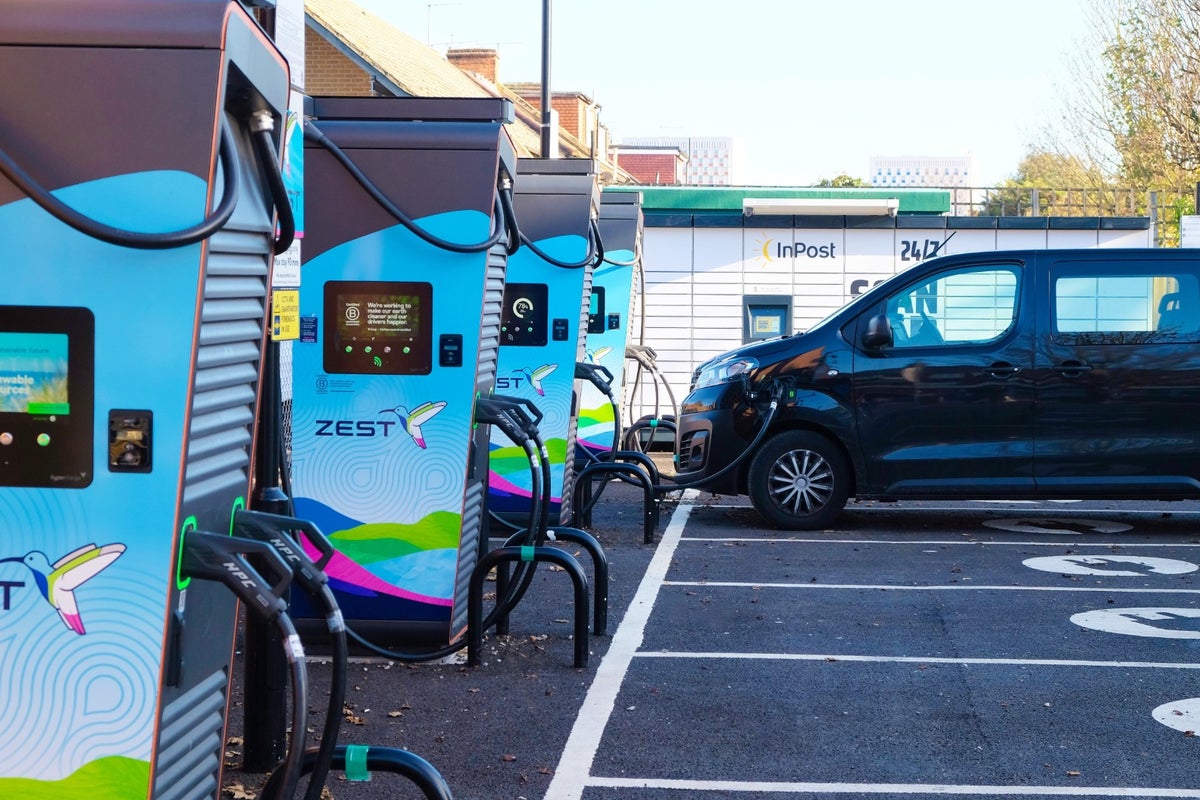
Since 2021, average prices at lower-powered public chargers have risen by 69% after inflation, while higher-powered charging prices have increased by 94%
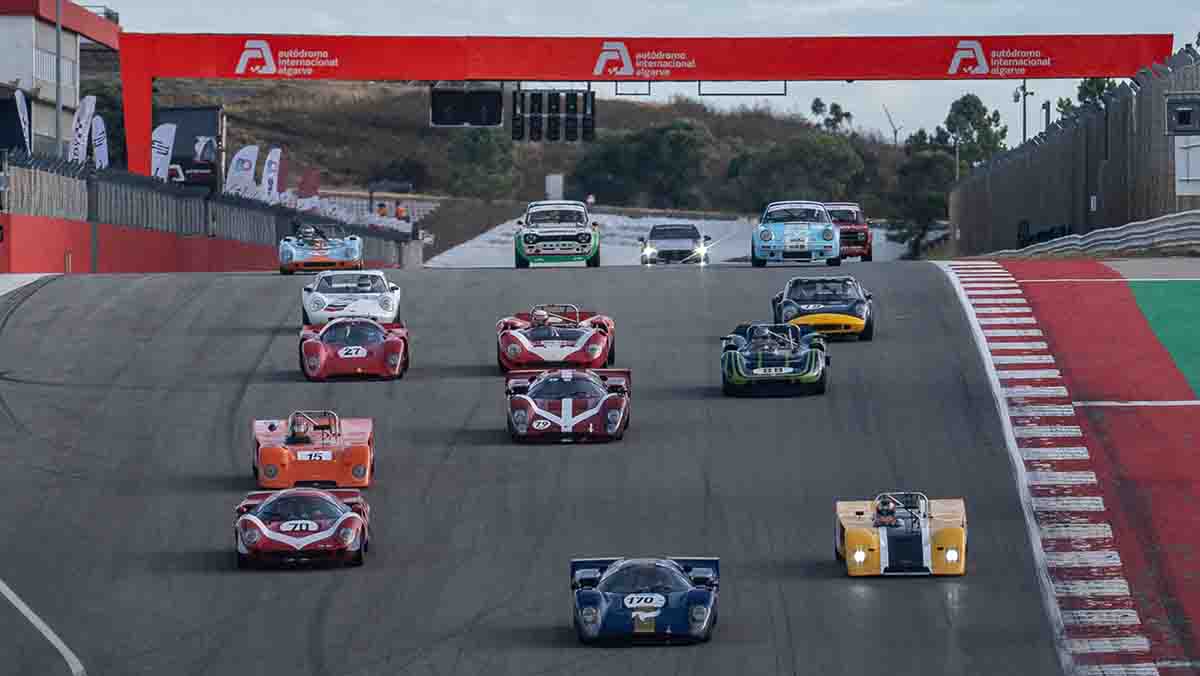
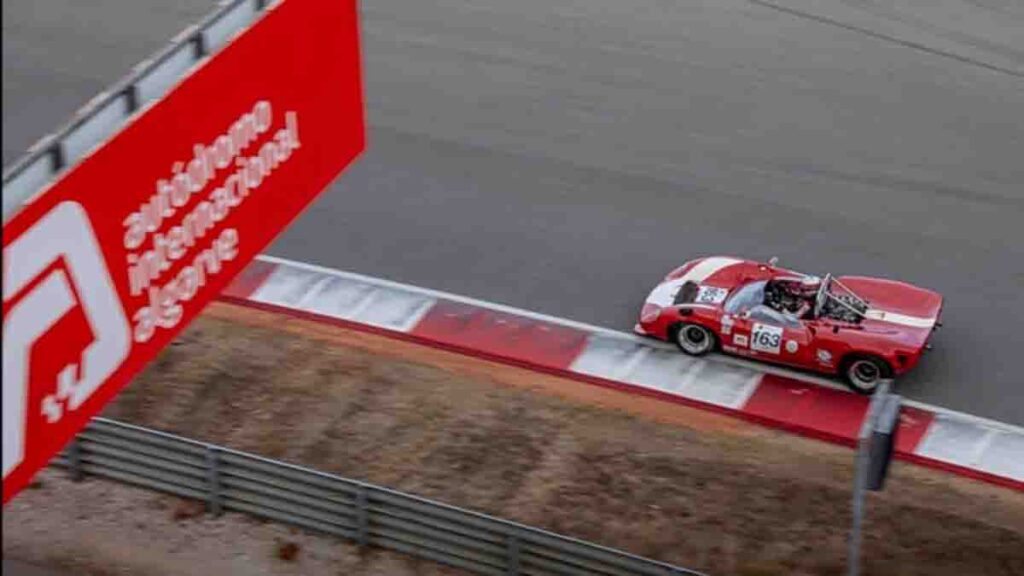
Com um fabuloso grid de 27 protótipos, GT e Turismos, a segunda edição dos 300 kms ‘Algarve Sports Cars’ promete ser o grande cartaz do Algarve Classic Festival, que leva o Autódromo Internacional do Algarve a viver, entre 30 de outubro e 1 de novembro, um fim de semana de pura adrenalina e nostalgia sobre rodas.
Será um fim de semana em que o som inconfundível dos motores clássicos voltará a ecoar pelo imponente circuito de Portimão, já que, a corrida principal do programa promete combinar espetáculo, competitividade e nostalgia.
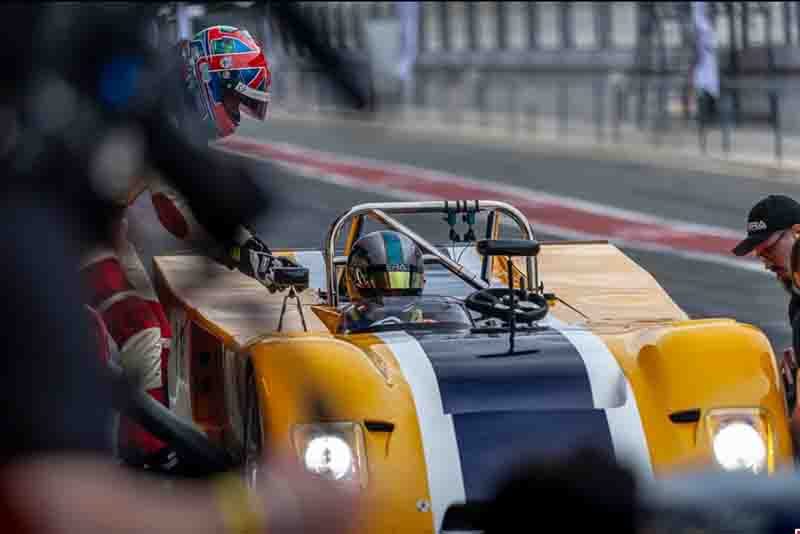
A prova será disputada ao longo de 120 minutos, ou 300 quilómetros, incluirá paragens obrigatórias para reabastecimento e troca de pilotos, e está aberta a sportscars construídos entre 1963 e 1972, além de modelos GT e Turismos produzidos entre 1966 e 1980.
Em termos de programação, destacamos os treinos de classificação, marcados para as 16:40 hrs de sexta-feira, 30 de outubro. A grande prova, os 300 kms Algarve Sports Car, está reservada para o fim da tarde de sábado, 31 de outubro. Refira-se que a corrida chegará ao fim já depois do sol se pôr, oferecendo uma imagem inesquecível dos carros em pista, iluminados apenas pelos seus faróis, como nas grandes provas de endurance de outrora.
De lembrar, antes de mais, que a edição de 2025 foi conquistada pelos britânicos John Emberson e James Bellinger, ao volante de um Chevron B19, que superaram João Macedo Silva e José Monroy, num Lola T70 Mk3 Coupé. O terceiro lugar absoluto ficou com Joel Hopwood e Nigel Greensall, em Chevron B8, dupla que igualmente faturou a vitória na classe H-1969.
Os três carros estarão presentes na edição deste ano, com a mesma ambição e vontade de conquistar o troféu e o relógio oferecido pelo patrocinador Briston Watches ao vencedor da corrida.
Perfeita homenagem à Golden Age of Motorsport
Num grid de largada de encher os olhos, a categoria H-1972 até 2000 cc é a mais numerosa, com dez carros inscritos, e conta com forte presença dos protótipos da Chevron e da Lola, duas marcas britânicas que estão intimamente ligadas ao automobilismo nacional e do exterior.
Além do B19 dos vencedores do ano passado, John Emberson e James Bellinger, Kyle Tilley e Phil Keen pilotarão um carro idêntico, que em 2025 andou nos primeiros lugares e fez a melhor volta da corrida (1:52.225s). Alan Purbrick e David Brise, Robin Ellis e Andy Wolfe, e Paul Cope e John Sheldon, – este último piloto na época do Grupo C -, estarão ao volante de outros três exemplares inscritos.
O sexto Chevron da classe é um B21, carro com história além fronteiras, que passou por Angola e Portugal e ostenta as cores do Team BIP. Na “montanha-russa” de Portimão, o carro com o qual Carlos Gaspar alcançou o terceiro lugar da Rampa da Penha de 1972 será dividido pelo quarteto formado por Carlos Tavares, Edgar Botelho Moniz, José Forte e Frédéric da Rocha.
Se a marca fundada pelo autodidata Derek Bennett tem seis carros nessa classe, a criada pelo rival da época, Eric Broadley, tem três exemplares: dois T290, modelo que fez a pole-position em 2025, e um T212.
Nicholas Topliss e James Topliss dividem um Lola T290, enquanto Alex Collins e Martin Stretton, tricampeão da FIA Historic F1 Championship, se alinham com um carro igual. O grid fica completo com James Claridge e James Denty, ao volante do mesmo Lola T212 que competiu nas 24 Horas de Le Mans de 1971, pilotado por Guy Edwards e Roger Enever.
Mas a variedade da classe não para por aí, pois inscrito também está o Daren Mk 2 de 1970, valente máquina confiada ao volante de Georg Kjallgren. Das oficinas britânicas saíram, entre 1968 e 1972, apenas oito unidades deste protótipo, movido por um motor Cosworth FVA de 1600 cc, e dessas só dois exemplares resistiram à passagem do tempo, ambos hoje entregues aos cuidados da Triple R Restoration, de Richard Doe.
A categoria H-1972 acima de 2000 cc reúne quatro espetaculares Lola T70 inscritos no evento. Além do Mk3 Coupé com o qual João Macedo Silva dividirá desta vez com Diogo Ferrão, David Kelly e Stephen Doyle dividem um Lola T70 Mk3B, preparado pela Gary Dunlop Motorsport, enquanto Bruno Pereira, Charlie Hyett e Michel Speyer alinham com outro Mk3B, inscrito pela Pegasus Classic Engineering, que na edição passada lutou pelo triunfo até uma pane mecânica travar sua marcha.
[the_ad id="555438"]
O último T70 é ainda mais raro, pois é um Mk3B Spyder, um dos quatro originalmente construídos. Este Lola muito especial será conduzido por Marc Devis e Nick Padmore, dois pilotos com enorme experiência neste tipo de competição. Padmore é conhecido do público português pelas vitórias ao volante de Lotus no Classic GP para carros de F1 anteriores a 1986, no Estoril Classics.
Na categoria H-1969, os seis inscritos evocam uma das épocas mais marcantes das corridas de resistência. Vencedores da classe na edição passada, Joel Hopwood e Oliver Bryant compartilham o mesmo Chevron B8, enquanto Robin Tuluie fez sua estreia com seu exemplar solo. Bernard Foley e Lewis Dunlop repetem presença no Crossle 9S, pequeno protótipo nascido nas garagens de Holywood, perto de Belfast, na Irlanda do Norte, e que ficou em segundo lugar na classe.
Depois do pódio alcançado na edição anterior, Richard McAlpine e Nigel Greensall voltam a colocar na pista o McLaren M1b de 1965, protótipo movido por um V8 de 5700 cc, que Bruce McLaren concebeu para sua investida na Canadian-American Challenge Cup, a célebre Can-Am.
Que seria de uma prova dessa natureza sem um Ford GT40? Pois lá está ele na H-1969, ostentando a oval azul. Bruno Duarte e Filipe Silva Jesus, figuras habituais do Historic Endurance, estreiam ao volante de um GT40, escudados na experiência de Andy Newall. Henry e Martin Stephenson, pilotos calejados em provas de clássicos, se lançam na briga com outro GT40.
Grande Turismo / TC: Raiz e tradição
Mas nem só de protótipos vive esse grid, pois a raiz das corridas de endurance está nas batalhas de carros de diferentes classes travadas dentro da pista. Sete máquinas, sete escolas do Turismo e do Grande Turismo: é o que a classe GT/TC põe em pista, nas mãos de pilotos que as pistas ibéricas conhecem bem, tantas foram as vezes que se bateram nas provas do Iberian Historic Endurance.
Para destacar o papel dos Turismos e GT nesta apaixonante prova de resistência, a Briston Watches também oferecerá um relógio ao primeiro colocado de uma classe que, em seu tempo, sempre correu lado a lado com os protótipos.
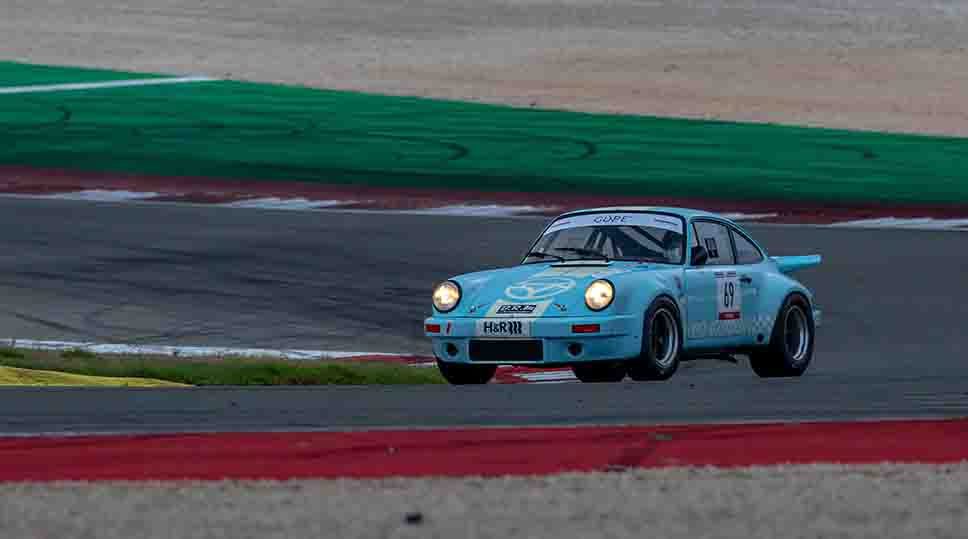
Os francófonos Olivier Muytjens e Brice Pineau, vencedores da classe nos 300km do ano passado, alinharão com o mesmo e competitivo Porsche 911 3.0 RS, preparado pela equipe belga HY Racing, que, pelo histórico, se apresenta como o favorito natural.
Ralf Schnitzler e Patrice Campillo guiam um Datsun 240Z, que este ano correu nos 300 km de Paul Ricard. Apesar da história desse modelo nos remeter aos ralis, a realidade é que o carro japonês participou de todas grandes clássicas de resistência do planeta: Le Mans, Sebring e Daytona.
Assim como ao “Z”, a Garagem João Gomes também prestará assistência ao Porsche 924 compartilhado por António Reis e José Carvalhosa e ao 911 2.5 ST que a dupla de pai e filho, Piero e Guilherme Dal Maso, dividirá com Marco Nunes.
Para a alegria dos aficionados por carros americanos, surgirá o imponente Shelby Mustang GT350, máquina com motor de 4700 cc que o Shelby Mustang GT350R Team entregará a Ernesto Silva Vieira e António Paquete.
A fechar a lista de inscritos, os dois bólidos da Ecurie Luxembourg: um BMW 2002, nas mãos de Michel Welter e Felix Feltes, e um Alfa Romeo GT Am, confiado a Patrick Wilwert e Philippe Vermast, os vencedores da subclasse H-1965 GR2 nas 3 Horas de Spa do Historic Endurance em abril.
Como assistir ao espetáculo
Importa salientar que durante o fim de semana, o Algarve Classic Festival convida o público a uma viagem pela história do automobilismo, reunindo máquinas de várias épocas em um ambiente de saudade e ao som inconfundível dos motores de outros tempos.
A entrada é gratuita dos 3 aos 16 anos. Os ingressos estão à venda no site oficial do evento, em algarveclassicfestival.org , em várias modalidades à escolha: o ingresso «Bancada Principal» dá direito à bancada principal; o «Paddock» abrange, além desta, o acesso ao paddock; e o ingresso «Torre VIP» também franqueia as portas da Torre VIP, com entrada no paddock e na arquibancada principal.
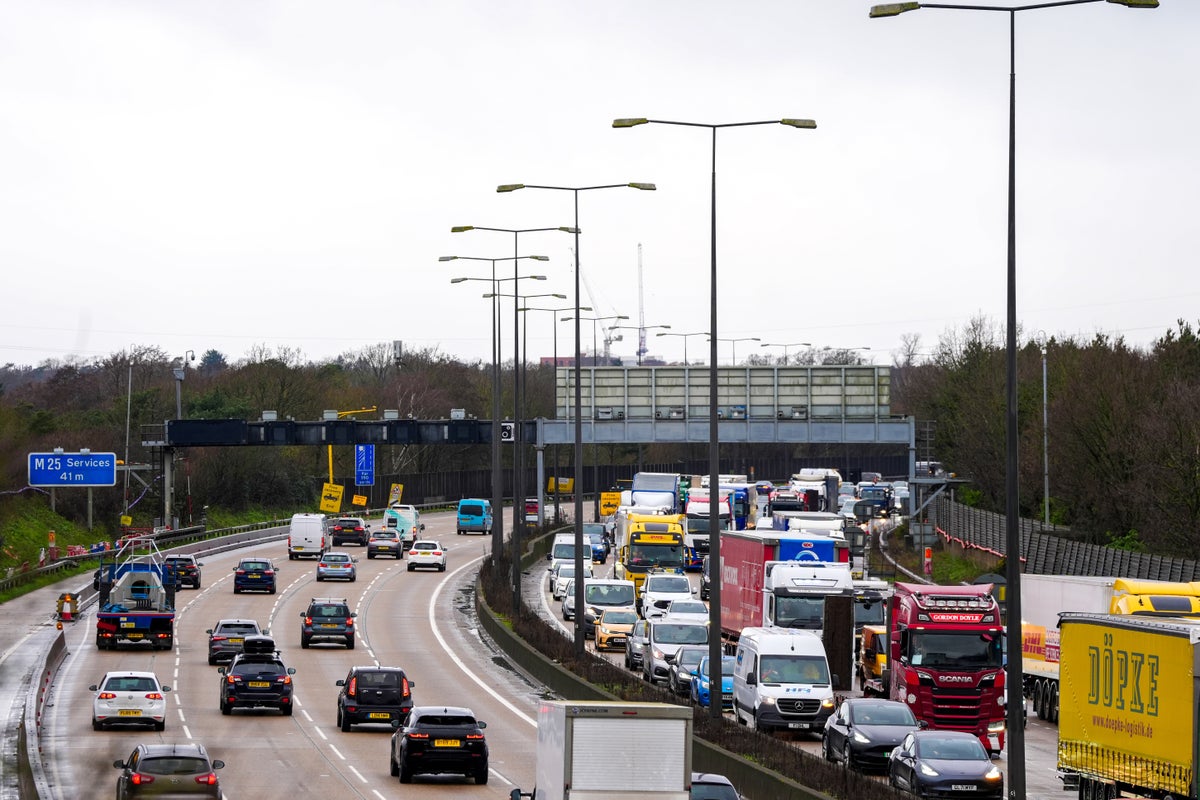
A quarter of van drivers surveyed have turned down work because of unpredictable M25 journeys, but the motorway’s unlikely attractions have also drawn paying sightseers
Kramer says international membership growth, the Oscars-YouTube deal, and a new festival-qualifying pathway to nomination are all part of the organization’s expanding worldwide ambitions.
Oozing panache and bagging awards already, La Bola Negra is an eye-popping war and prejudice epic starring Penélope Cruz in a blond wig and Glenn Close speaking Spanish. We meet the ex-lovers who dreamed it up
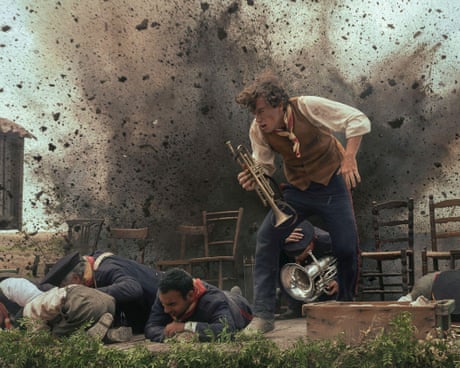
When Javier Ambrossi and Javier Calvo – the directing duo known in their native Spain as “Los Javis” – began writing their queer epic La Bola Negra, they weren’t thinking about whether it would be stylish (which it is) or win numerous awards (which it has) or capture what they refer to as “the anti-fascist zeitgeist” (which it does). Instead, they thought only of scale. “I’m done with LGBTQ+ movies being niche,” says Ambrossi. “I was like, ‘Let’s make the biggest, gayest war movie ever.’” Job done.
At Cannes this year, the best director prize was awarded jointly to them and to Paweł Pawlikowski, who made the Thomas Mann road trip film Fatherland. La Bola Negra is now an Oscars frontrunner, with best picture and best director nominations all but guaranteed. Brimming with panache, the movie darts back and forth between three stories set in Spain: in 1932, a young man applying for membership of an exclusive casino is rejected on the grounds of his suspected homosexuality; in 1937, a callow nationalist soldier develops tender feelings for the injured republican prisoner under his watch; and in 2017, a queer historian inherits an unfinished story by Federico García Lorca. That story lends the movie its title and provides the thread that sews its strands together.
The Hollywood Reporter can also exclusively premiere a new trailer for the short doc, directed by Pawel Chorzepa and produced by International Emmy winner Joanna Chorzepa, about experts who usually remain invisible.
In the 1940s and '50s, Route 66 was one of America's most popular highways, driving business to small towns from Chicago to Santa Monica. But today, the road and its people have been largely forgotten. Ghost towns, empty motels, and abandoned gas stations line its path. Chief correspondent Abby Narishkin grew up along the road. In celebration of its 100th anniversary, she drove down the old route herself to visit the people and businesses still keeping this Americana legacy alive.
VW investment, creating 4,500 jobs in Georgia, comes amid Trump’s damaging tariffs, intense Chinese competition and costly shift towards EVs
Audi has said it will spend $4bn (£3bn) to build its first factory in the US, as its parent company, Volkswagen, struggles with the impact of steep tariffs imposed by Donald Trump.
The German brand’s chief executive, Gernot Döllner, joined Trump on stage at a campaign rally on Saturday night to announce the factory in Macon, Georgia, in an unusual move by a big European brand just days before the US midterm elections.

 Login