Ukraine and eight partner countries plan to sign an agreement establishing a new international defense bank on Nov. 30, potentially opening another source of long-term financing for weapons production, the governments said in a joint statement published Oct. 29.
The index, unveiled by New Age Defense, a European-Ukrainian defense tech alliance, and the Ukrainian think tank BRDO, "assesses national preparedness across four key areas: prevention, detection, response, and recovery."
Destinus has completed 1,750 Ruta B1 cruise missiles and reached monthly output of nearly 300, the company said on 29 October, telling Reuters this exceeds Europe’s annual cruise-missile production before Russia’s full-scale invasion.
That gives a date for easing a shortage. A looming shortage of mini jet engines threatened to hold back Ukraine’s deep-strike drones, Reuters reported in April. Czech maker ZofiTech was then producing about 200 a month, nearly all for Ukraine, and expected demand to reach thousands within months. Both Ruta versions use the 1.5-kN engines Destinus is promising. Ukraine plans to build more jet drones and cruise missiles, so engine output next year will have to keep up, Defense Express notes.
Destinus builds its own engines, but hasn’t said how many
Destinus CEO Mikhail Kokorich said the company already produces turbojets in the roughly 1.5-kilonewton class in series, supplying them both for its own missiles and to other manufacturers. The Ruta B1 runs on the company’s own T150 engine. In June, Destinus announced its 1,000th T150 and said the line was designed to sustain production of thousands of missile systems a year. The company has not disclosed its current engine output.
Block 2 enters production, Block 3 is due to fly in 2027
Meanwhile, Destinus said it has begun production of the larger Ruta Block 2, designed to carry a 250-kg payload more than 700 km. Unlike the roughly 300-km Block 1, Block 2 is designed to be stored, transported, and launched from the same container. A third version, Block 3, is planned with a 2,000-km range, with flight tests scheduled for 2027.
Ukrainian President Volodymyr Zelenskyy acknowledged the Ruta’s combat use in October 2025. Days later, he said Ukraine expected mass production of Ruta and Flamingo missiles by the end of that year. In June 2026, then-Defense Minister Mykhailo Fedorov said the Netherlands was ready to finance about 700 Rutas for Ukraine, without specifying the version.
Deterrence takes “tens of thousands of missiles”
At the same time, Kokorich said Europe’s problem is shifting from production to integration.
“To have sufficient deterrence, you need to have tens of thousands of missiles,” he said.
European customers, he added, still need to build the military units and logistics to operate missiles in such numbers. Those arsenals would also need storage, transport, maintenance, and targeting infrastructure, he said, and European militaries would need to rethink how they stockpile and deploy precision-strike weapons.
No Chinese parts, and a bet on cheaper, shorter-range missiles
Kokorich said Destinus uses no Chinese components, unlike wartime production in Ukraine, and said access to Chinese suppliers would make manufacturing cheaper, faster, and easier.
Kokorich also argued that cheaper missiles with ranges under 1,000 km would make up most future demand. Separately, Destinus is working with Rheinmetall on cruise missiles and ammunition for multiple-launch rocket systems, including a planned European equivalent of the GMLRS rockets fired by HIMARS.
Russian analysts can locate Ukrainian weapons plants from details in published photos and TV footage, Ukrainian defense outlet Oboronka reported on 29 October. Open-source researchers told the outlet how to hide those details.
Ukraine plans to build 7 million drones this year, and Russia is hunting the plants that make them. In June, the Security Service of Ukraine (SBU) said Russia’s GRU military intelligence was gathering data to prepare air strikes on defense plants and attacks on their engineers.
A TV clip, then missiles
On 7 April 2022, Ukrainian channel 1+1 aired a report from a workshop at the Kyiv Armored Plant converting captured Russian military equipment for Ukraine’s forces. On 14 April, Rybar, an anonymous pro-Russian Telegram channel, posted the factory’s location. Russian missiles hit the workshop on 16 April, killing at least three civilians, the Centre for Information Resilience (CIR) found.
A frame from the 1+1 report filmed at the Kyiv Armored Plant, aired on 7 April 2022. Screenshot: Centre for Information Resilience
Retracing the likely method, CIR wrote that wall colors, window size, and ceiling height could single out the plant, and Google Earth imagery the workshop. InformNapalm researcher Andrii Lisitsyn told Oboronka that matching a frame with old photos, satellite images, job ads, or staff profiles quickly narrows the search.
A Gaussian blur smears pixels but keeps part of the information, Oboronka wrote. In a 2020 blog post, aerospace engineering student Gonçalo Raposo showed it can be fully reversed if the exact filter and edge handling are known. Pixelation fails too: a 2022 neural network reconstructs plausible faces from pixelated images. Lisitsyn advises cropping or fully opaque masking instead, plus checking file metadata.
Leaks beyond photos
Some Ukrainian defense enterprises still keep accounts and procurement records in Russian 1C software, Oboronka wrote. Since 6 January 2026, 1C products have been on the State Special Communications Service’s list of banned software. The ban covers systems with state information resources and critical information infrastructure owned or managed by state bodies, state enterprises, and local governments, the service said.
Oboronka also wrote that days before the full-scale invasion, Spanish journalist Pablo González photographed production lines at engine maker Motor Sich. Poland held him from February 2022 until a prisoner swap sent him to Russia in August 2024. Prosecutors then indicted him under both his names, Pablo González and Pavel Rubtsov, for spying for Russian military intelligence.
"In developing drones and counter-drone systems, Europe has one significant advantage: our partnership with Ukraine," said European Commissioner Valdis Dombrovskis.
"Along with their needs and national defense priorities, member states are also encouraged to use the funds from this second call to strengthen cooperation with Ukraine," a European Commission press release reads.
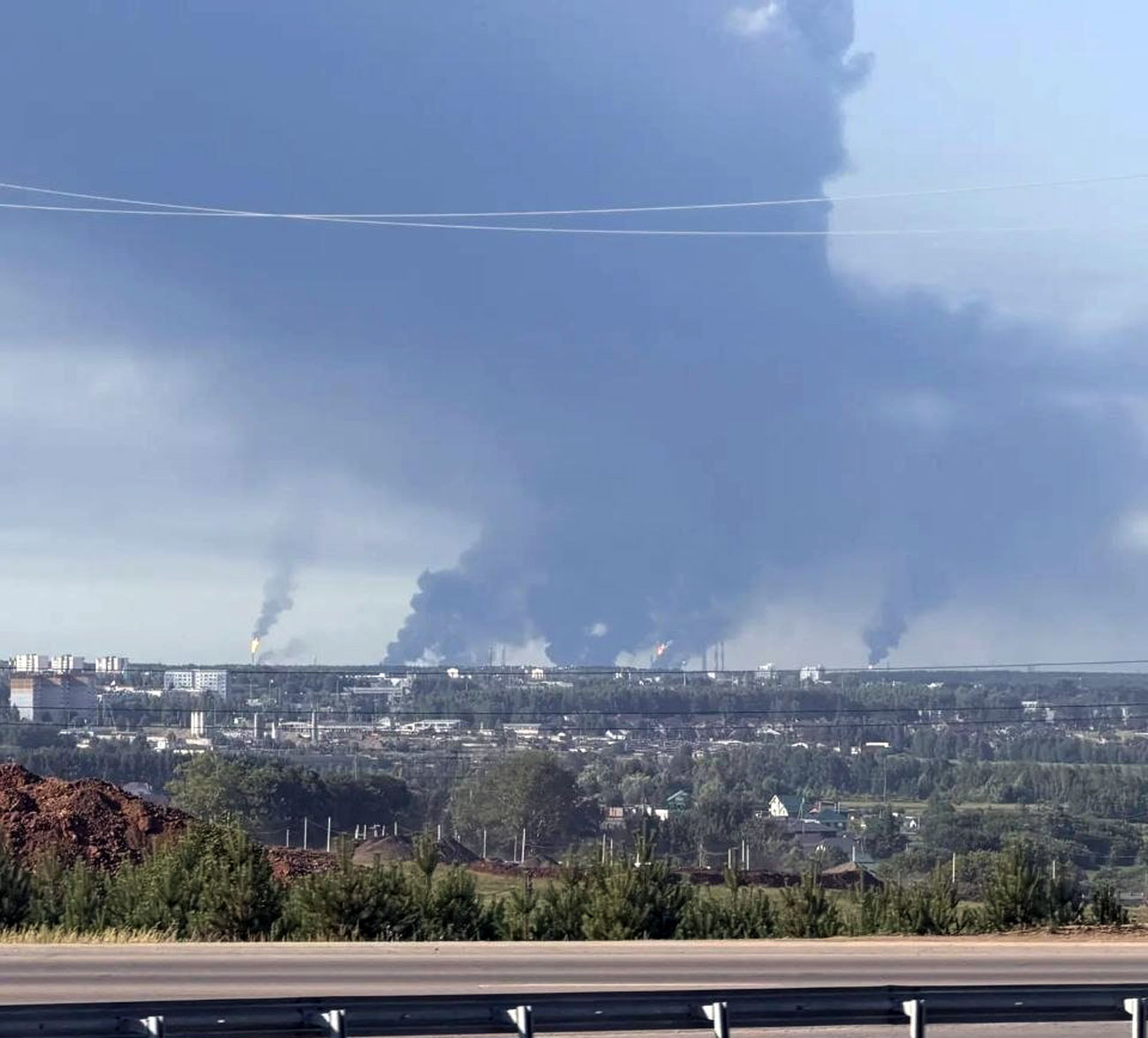
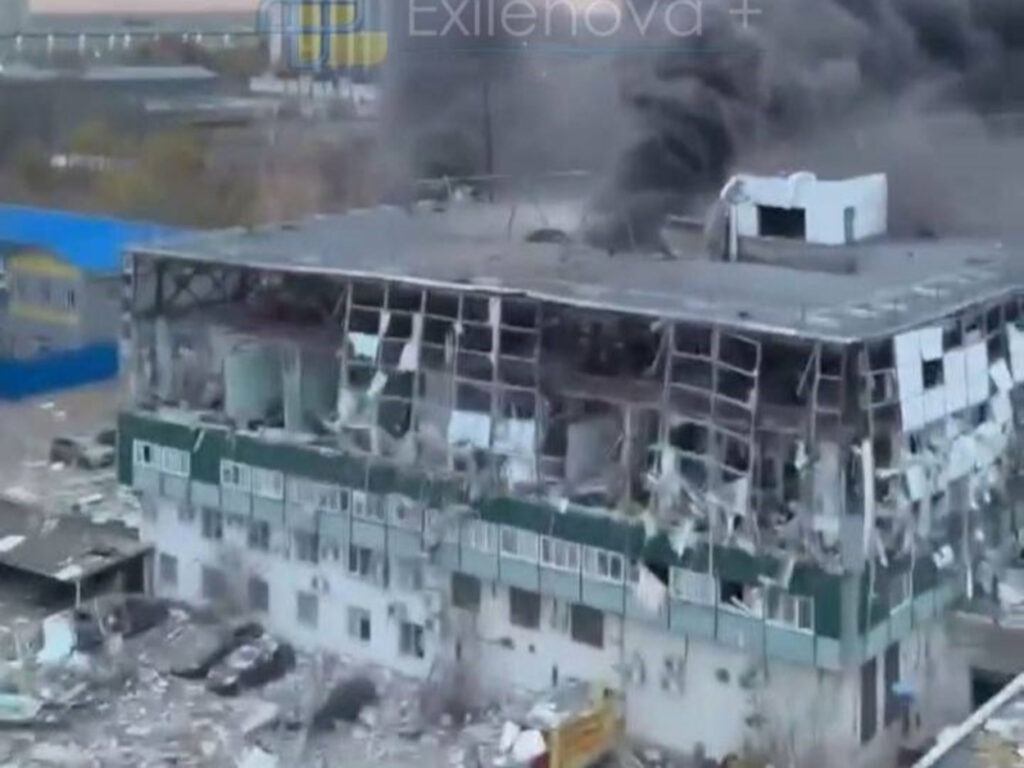
Drones attacked Sterlitamak in Russia’s Bashkortostan on 29 October, and smoke rose over the Bashkir Soda Company, Russian Telegram channel Astra reported, citing its open-source analysis. The city’s mayor admitted debris fell on an unnamed plant.
Ukraine’s long-range drones keep reaching deeper into the industries that feed Russia’s war. In the past five days, a nitric acid maker in Tula Oblast, a rocket-fuel rubber plant in Samara Oblast, and a titanium plant in the Urals came under attack. The Sterlitamak plant lies about 1,310 km from the front line. Drones also attacked it on 27 August, Astra says. Ukraine has not commented.
The plant is Russia’s only maker of a compound for armor fibers
The Bashkir Soda Company is Russia’s largest producer of soda ash and baking soda, and part of the Roskhim chemical holding. It is also Russia’s only maker of terephthaloyl chloride, The Insider reported, citing the company’s website. The website also mentions deliveries to the defense industry.
Smoke rises over Sterlitamak in Russia's Bashkortostan during a drone attack on 29 October 2026. Photo: Exilenova+
The compound goes into aramid fibers, Kevlar-type materials used for body armor, helmets, and armor for military vehicles and aircraft, Astra said. Astra also says the company sits on the Russian Industry and Trade Ministry’s closed register of defense enterprises.
The attack began around dawn. Ukrainian Telegram channel Exilenova+ posted footage of a drone over the city. Supernova+, another Ukrainian monitoring channel, posted the plant’s coordinates and photos of smoke. Russia’s aviation agency restricted flights at the airport of Ufa, the region’s capital. Pro-Ukrainian X account Maks 26 shared footage of the attacks on Sterlitamak and Luhansk. It also suggested that Sterlitamak’s Syntez-Kauchuk rubber plant may have been the target, and claimed a fire at the Marinovka air base in Volgograd Oblast.
After the attack by Ukrainian drones, a fire was recorded in the area of the Marinovka military airfield in the Volgograd region.
The Defense Forces also attacked Bashkortostan. Bashkir Soda Company in Sterlitamak or Syntez-Kauchuk JSC could have been hit.
Mayor Emil Shaimardanov claimed air defenses downed all seven drones over the city. An earlier version of his post, quoted by Russian state news agency TASS, said eight.
“Debris fell on the territory of one of the enterprises. Minor damage was caused, the plant is operating normally,” Shaimardanov claimed.
He did not name the plant.
Smoke over the Bashkir Soda Company in Sterlitamak, with the plant marked on a satellite image, 29 October 2026. Collage: Supernova+
The Insider said NASA’s FIRMS fire map confirmed a fire at the plant. But the map shows only the weak heat source its satellites record there almost every night, the last time hours before the drones came, and nothing new after the attack.
Explore further
Russia’s refinery in Saratov, two in Tatarstan, a pumping station in Bashkortostan — one night’s oil target list
Moscow and other regions under attack
Moscow Mayor Sergei Sobyanin claimed that 613 drones flew toward the Moscow region overnight, that most were downed on the far approaches, and that 231 were downed on approach to the capital. Russia’s aviation agency restricted flights at Vnukovo, Domodedovo, and Zhukovsky airports. Russia’s Defense Ministry claimed it downed 1,214 drones over 19 regions overnight.
Ukraine’s General Staff said its forces hit a depot of Geran drones, Russia’s version of the Iranian Shahed, along with a drone launch site and a fuel depot near Navlya in Bryansk Oblast, about 70 km from the Ukrainian border. The Atesh partisan movement reported a loud explosion near Oryol’s airfield and a large fire in Lipetsk, about 285 km from the border.
Explosions in occupied Crimea, power cuts in occupied Luhansk
Subscribers of Crimean monitoring channel Krymsky Veter reported drones and then a strong explosion with Russian air defenses firing in Krasnoperekopsk, in occupied Crimea, about 95 km from the front line.
In occupied Luhansk, about 105 km from the front line, residents reported another attack on Lugacom, the occupation’s mobile operator, and internet outages followed, Exilenova+ said. The channel named only Lugacom. The operator sits in the seized Ukrtelecom building. Exilenova+ also posted footage of a fire in the city.
Leonid Pasechnik, the Russian-installed head of the occupied part of Luhansk Oblast, claimed that 150,000 customers in six municipalities lost power after attacks on energy facilities.
A fire broke out in the area of a major Russian steel plant in Lipetsk late on 27 October, Kyiv time, as air defenses fired at incoming targets, the Ukrainian monitoring Telegram channel Exilenova+ reported. Ukrainian partisans said the strike may have hit the plant. The region’s governor denied any large industrial fire.
Whether or not it was hit, the plant matters to Ukraine. The Novolipetsk Metallurgical Plant (NLMK) is Russia’s only producer of electrical steel, Ukrainska Pravda reported in April 2025. NLMK’s tax records, obtained by the outlet, showed sales of that steel to Moscow’s Avangard plant, which builds missiles for S-400 air defense systems. Russia also fires those missiles at ground targets in Ukraine.
Pantsir fires, no visible hit
The targets over Lipetsk were jet-powered, Exilenova+ wrote, citing preliminary reports of impacts and a fire toward the city’s airfield. Footage it posted showed a Pantsir air defense system firing, and the channel suggested the system may have failed to cope. It then reported the fire near NLMK, blaming air defense fire or a falling object.
We also observe a fire in the vicinity of NLMK (Novolipetsk Metallurgical Combine) resulting from air defense activity or the impact of an object. pic.twitter.com/7bBqyqCP2j
The Crimean Tatar-Ukrainian partisan movement Atesh said its agents in Lipetsk reported an impact, and in a follow-up said they believe it may have hit NLMK.
Contracts and denials
A 2022 investigation by Disclose and its partners tied 18 NLMK contracts, all signed after 2014, to eight Russian defense firms, including an S-300 maker. NLMK confirmed the contracts but said only a “negligible” amount of civilian steel grades went to those firms.
Map of Russia’s Lipetsk Oblast, where a fire was reported near the NLMK steel plant on 27 October 2026. Map: EP/Datawrapper
On 28 October, Lipetsk Oblast Governor Igor Artamonov claimed air defenses downed 45 drones over the oblast overnight. He insisted reports of a large industrial fire were untrue, saying drone debris fell in a tree belt and sparked a fire, since contained. Debris also blew out windows in a Lipetsk apartment block, and one person sought medical help but needed no hospitalization, he added. Whether NLMK took any damage remains unconfirmed.
Earlier strikes on weapons suppliers
Earlier, UK-supplied Storm Shadow missiles reportedly struck a battery plant in Yelets, in the same oblast, on 25 October. Two days before that, they reportedly hit an electronics plant in Oryol. OSINT channels described both as suppliers of parts for Russian missiles.
German defense AI firm Helsing has unveiled Contra, an AI-run air defense system and two interceptor missiles designed to chase Russia’s jet-powered Geran drones, the company announced on 26 October. Officials pitch it as cheap, but it won’t reach the market this winter.
That leaves Ukraine on its own defenses as Russia shifts to jet drones. By early October, jet models made up about 40% of Russian drone launches, and Ukraine’s own interceptors for them won’t arrive in needed numbers before late November, Air Force Deputy Commander Yurii Cherevashenko said.
Two missiles, one AI brain
Contra is the command layer of air defense: it links radars and other sensors, tracks incoming drones and missiles, and assigns a weapon to each target, while people keep control over decisions, Helsing said. Besides the company’s own missiles, it can also use other firms’ interceptors, lasers, guns, or nets. AD-1 Inferno is jet-powered and designed to loiter, swarm, and re-engage targets, while AD-2 Ambush, a solid-fuel rocket, is designed to reach Mach 2.5, over twice the speed of sound, and a range of more than 20 km, the company said.
Inferno, with a 700 km/h speed and a 20-km range, would be the everyday shooter. Ambush would handle “leakers,” drones about to hit the ground, said Maxwell Adams, Helsing’s senior product director. Each shot should cost under $100,000, company officials said.
Built for the faster Gerans
Ukraine once downed 90% of Russia’s slower, propeller-driven Gerans, copies of Iran’s Shahed, Defense News reported. Russia has since fielded thousands of jet Geran-4s and Geran-5s flying at 400–700 km/h, and almost half now get through, Helsing co-founder and co-CEO Gundbert Scherf said.
Ukraine’s own nightly rates swing widely. On 28 September, President Zelenskyy put the shoot-down rate for jet drones at 57%. Overnight on 7 October, it exceeded 82%, National Security and Defense Council Secretary Ihor Klymenko said. Russian output of the two models has reached 4,000 a month, Helsing said, citing unspecified intelligence reports.
Explore further
German company introduces AI-powered HX-2 drone for Ukrainian military
Helsing has signed one Contra contract, Scherf said, but the system is still in testing, and he expects it on the market in the second half of 2027. Ukraine already uses Helsing’s HX-2 strike drones. Scherf said they should be integrated into a system like Contra.
Ukraine has finished its share of FREYJA, a joint European project to build a system against ballistic missiles, President Volodymyr Zelenskyy told journalists on 17 October, Ukrinform reported. He added that Kyiv wants to test the first system as soon as possible.
Ukraine still relies on US-made Patriot interceptors to stop Russian ballistic missiles. Zelenskyy told ABC News on 23 October that Ukraine had received only 24 of them from the US in three months, while it needs 350 a month on average. FREYJA can not close that gap soon, because the system is still in development.
Ukraine’s missile and launcher, partners’ radars and sensors
Zelenskyy said the partners’ share of the work, with 10 countries taking part, is still underway. He also said he had discussed the project with French President Emmanuel Macron, and he named Norway as a key partner.
Explore further
Ukraine’s missile, Europe’s sensors—FREYJA enters active development on an early-2027 clock
Zelenskyy did not say what the partners still have to deliver. In August, he said Ukraine is capable of making the missile and launcher, while partners would supply critical components such as radars and sensors.
One part not made in Ukraine
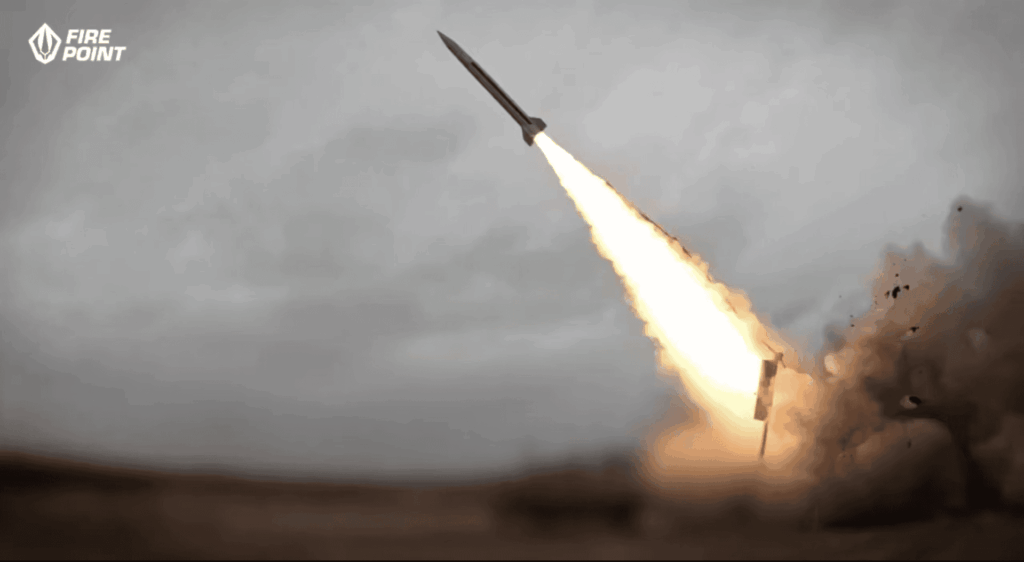
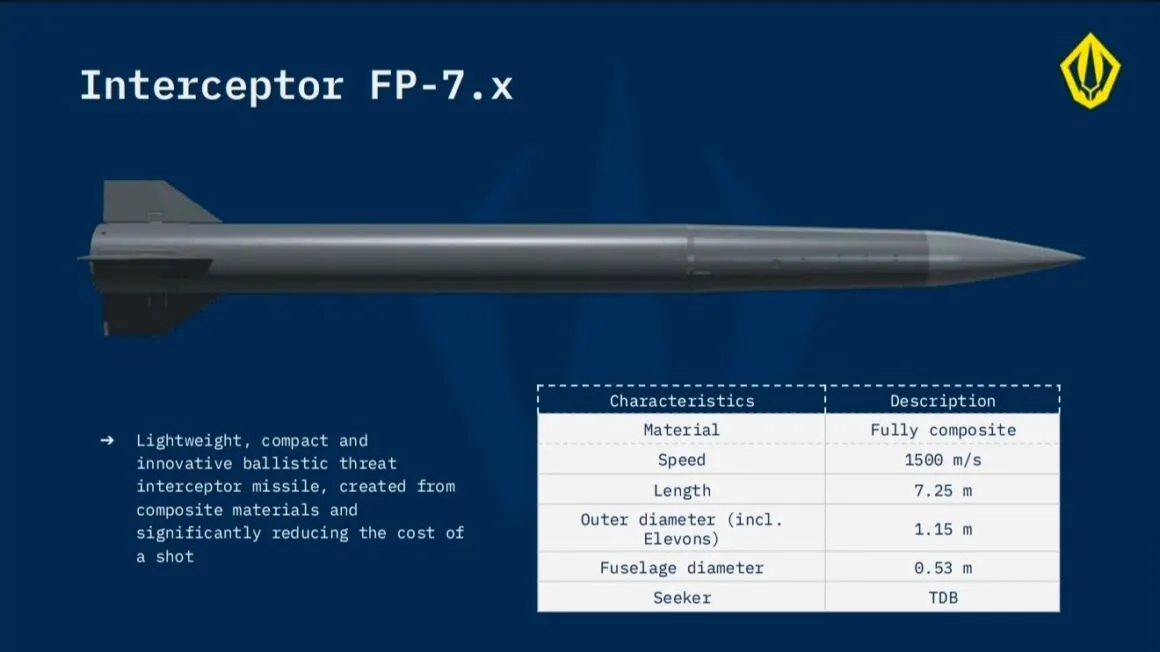
In May, Fire Point co-founder and chief designer Denys Shtilerman said all components of the FP-7.x interceptor are made in Ukraine except one. “As for that one part we don’t manufacture in Ukraine, we’ve contracted a certain quantity of it. We already have it,” he said, but did not name the part.
In June, however, Shtilerman told the Financial Times that mass production depended on an infrared seeker Fire Point hoped to get from Germany’s Diehl Defence. Neither statement says whether the seeker is that one part.
Fire Point co-founder Iryna Terekh said in September that FREYJA was going through testing and technical integration in combat conditions in Ukraine. The company plans its first intercept of a ballistic target by mid-2027.
The official timeline has since moved closer. On 21 October, Zelenskyy wrote that officials had identified where to speed up so FREYJA reaches testing by the end of this year. A test is still a step short of an intercept.
One morning in June, the head of export at Ukrainian drone company Stellarion found himself unexpectedly in need of a U-Haul outside the Detroit Metro Airport in Michigan.
Stellarion was set to test its drones in front of American soldiers at a competition organized by the Pentagon at Camp Grayling,
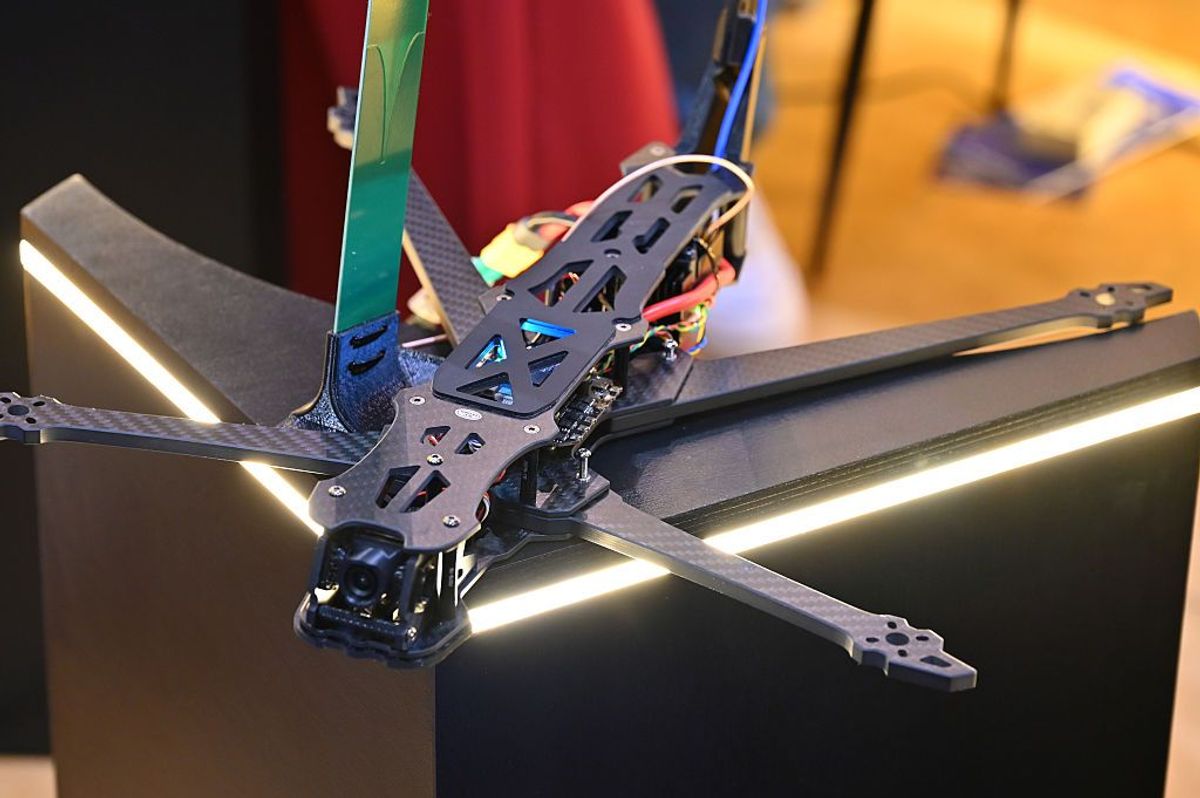
A new video transmitter for Wild Hornets’ drones, including its STING interceptors, has passed state tests, the Ukrainian drone maker told Militarnyi. The module sends a drone’s camera feed to its pilot. The company expects it to widen its interceptors’ operating radius.
Russia launched 140 Shahed-type drones at Ukraine overnight on 26 October and 280 the next night, when its main target was Kyiv, Air Force figures as of the morning show. Interceptor drones, which cost dozens of times less than the Shaheds they hunt, are one of Ukraine’s answers. The STING alone downed more than 3,000 drones in its first seven months of use, Wild Hornets says. If the company’s estimate holds, a 30 km radius would let each ground station cover more than twice the area it covers at 20 km.
What the testers checked
Specialists from the State Research Institute for Testing and Certification of Arms and Military Equipment and the Defense Ministry’s State Quality Assurance Directorate confirmed the module’s declared characteristics on three drone types, the company said. The three were the STING interceptor, the Queen of Hornets cargo platform, and the 10-inch Wild Hornets Digital anti-aircraft drone.
Some of the drones’ figures exceeded the values the company had set for them, Wild Hornets told Ukrainian defense outlet Oboronka, without saying which ones. Those figures will enter the official specifications after further field tests, it said.
More than double the power
The module, called HV VTX Pro, is part of an upgrade to Wild Hornets’ Hornet Vision digital video system. It more than doubles the transmitter’s maximum power, to 4 W. That sends a clear picture farther and makes the feed steadier in crowded airwaves and under electronic jamming, the company said.
Hornet Vision Ctrl system. Photo: Wild Hornets
Wild Hornets first described the module in August, when it was already in serial production. Its interceptors’ operating radius would grow from around 20 km to 30 km, the company said at the time. That estimate assumed good line of sight and the 360-degree antenna on its ground stations, according to a company statement Interfax-Ukraine quoted. Interception could also become at least 20% more effective against targets flying extremely low, the statement said.
Wild Hornets is a Ukrainian company that designs and builds drones, from strike FPV drones and cargo platforms to the STING, which the company says flies at up to 280 km/h to hunt Shaheds. Its drones serve with more than 100 units of Ukraine’s Defense Forces, from the army and the National Guard to military intelligence, the Air Force, and the border guard, according to Interfax-Ukraine.
The investigation found that Russian designs for rocket-launched drones likely helped shape weapons China unveiled in 2025 and that Russian wind tunnels kept testing aircraft models for China's top arms maker after the invasion of Ukraine.
Ukrainian drones damaged a process pipeline, two butyl-rubber units, and a rectification (distillation) unit at Russia’s Tolyattikauchuk petrochemical plant on 24 October, Ukraine’s General Staff said on 26 October. The damage hits the production chain of solid rocket fuel for tactical and ballistic missiles, it added.
The strike was part of a string of Ukrainian hits on Russian plants over four days, most of which the General Staff links to missile production. Ukraine hit an electronics plant in Oryol on 23 October and struck a battery plant in Yelets on 25 October or the following night. The General Staff ties both to missiles: Oryol makes components for missiles Russia fires at Ukrainian cities, and Yelets makes batteries for Iskander-M systems. Then, overnight on 26 October, drones also went after Voronezhsintezkauchuk, another Russian synthetic-rubber plant. For Tolyattikauchuk, this is the third time this year that strikes have reached its butyl-rubber shops.
What Kyiv and Russian officials say
The General Staff first confirmed the strike on 24 October with a report of an explosion and fire near the plant. It said the plant makes synthetic rubbers, monomers, fractions, and high-octane gasoline additives, and that its synthetic rubbers are used in solid rocket fuel.
Meanwhile, Russian officials have not named the plant in their statements. However, Tolyatti Mayor Ilya Sukhikh claimed that industrial facilities were damaged and, citing preliminary data, that no one was killed or injured, Russian outlet Expert reported.
What OSINT channels report
Drones hit at least two production facilities, Ukrainian monitoring channel Exilenova+ said. One is the shop where isobutane is turned into isobutylene, a raw material for synthetic rubbers. The other is outdoor unit No. 2 in shop BK-4, which produces and purifies high-purity isobutylene for butyl rubber.
Aftermath of the attack on the Tolyattikauchuk petrochemical plant. Analysis by Exilenova+, satellite image by Vantor.
The damage could delay rubber output and the supply of feedstock for other processes, including solid rocket fuel. Tolyattikauchuk can make about 260,000 metric tons of synthetic rubber a year, OSINT-Varta data show.
Hit again and again
Tolyattikauchuk had come under fire before. Overnight on 4 April, about 10 drones reached the plant by various accounts. Footage showed fires at storage shops D-12 and D-1 and at the BK-2, BK-3, and BK-4 units, though more sites may have been hit, the analysts added. Ukrainian forces struck the plant again on 12 June, the General Staff confirmed.
Then, on 12 September, a strike set fires at the BK-2, BK-3, and BK-4 shops, an OSINT community Absolutely Reliable Source reported. Without those shops running steadily, the line that makes MTBE, a key high-octane gasoline additive, is cut, the channel noted.
Russia’s aircraft plants still turn out modern fighter-bombers and fighters, enough to partly cover its losses, Ukraine’s military intelligence agency HUR told Ukrainian news agency UNIAN, which published the reply on 23 October. Its older bombers are a different story. Russia has no serial production of new Tu-95s, Tu-22M3s, or Su-24s and keeps them flying through repairs and upgrades, so each one lost for good leaves a lasting gap, HUR said.
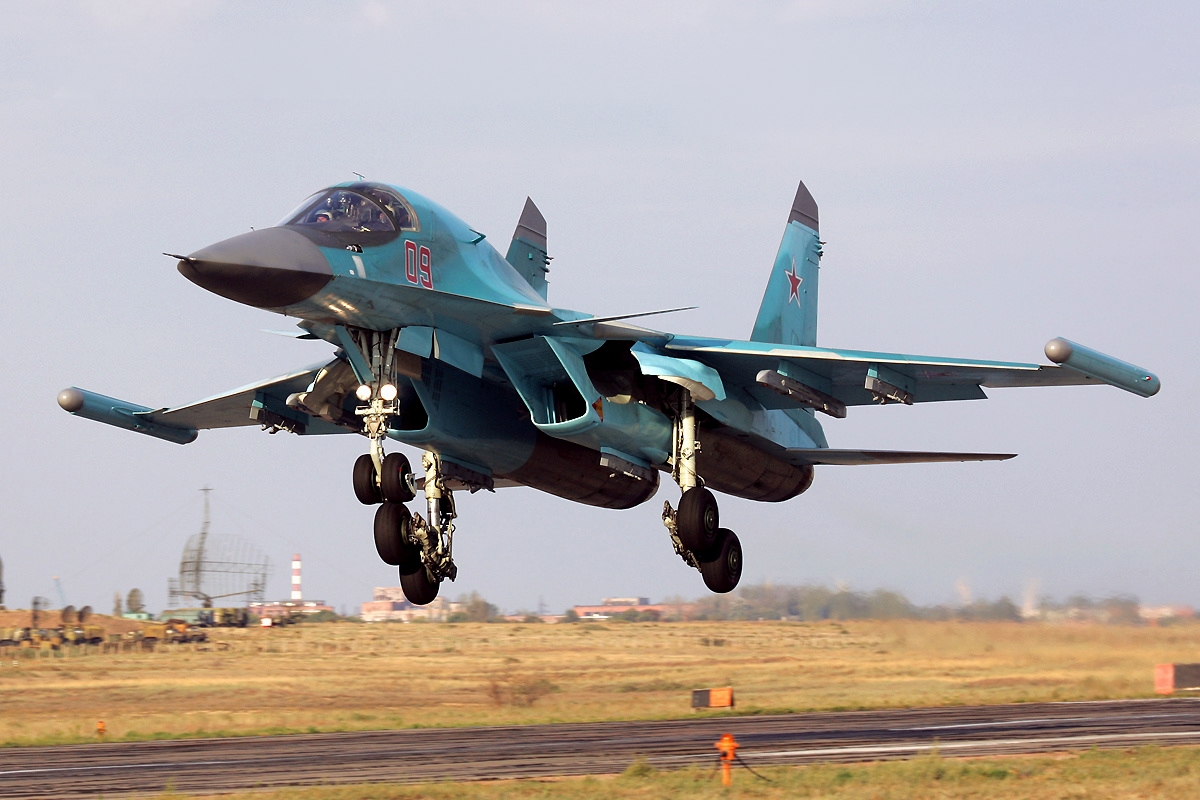
Ukraine’s Navy said its Neptune missiles hit six Su-34M bombers at Borisoglebsk airbase in Russia’s Voronezh Oblast overnight into 15 October. Zelenskyy later said four were destroyed and two damaged. The Su-34 is one of the jets that drop Russia’s glide bombs, heavy bombs fitted with wing-and-guidance kits, on Ukrainian positions and towns.
How fast Russia replaces its jets
Russia can probably deliver 10–15 Su-34s a year now, HUR estimated. Deliveries grew from eight in 2022 to 11 in 2023 and 12–14 in 2024. But the agency said that trend does not confirm the same pace today.
For the Su-35S fighter, HUR pointed to an average of about 11–12 a year in 2021–2025. It called that a rough benchmark, not an established 2026 output. Su-30SM2 and Su-57 production continues, but reliable rates cannot be determined. Su-30 figures also mix new builds with upgrades of older Su-30SMs, HUR noted.
What Russia had, and what it lost or saw badly damaged in 2026
By the end of 2025, Russia had about 125 Su-34 and Su-34M bombers, which HUR counts together. It also had 140–145 Su-30 jets of various versions, 135–140 Su-35S, and about 20 Su-57s, HUR estimated. These are only fleet estimates, not a guaranteed number of jets Russia can send on combat missions at the same time, the agency cautioned. Some are under repair or upgrade, and HUR is not disclosing the current fleet size.
Satellite image from 13 October shows six Russian Su-34 fighter-bombers parked in the area later struck at Borisoglebsk airbase. Image: Exilenova+
HUR also named specific 2026 cases of Russian aircraft destroyed or critically damaged. A Tu-22M3 crashed in Irkutsk Oblast on 15 June. Strikes on Engels airbase on 17 July and 28 August hit two Tu-95MS. The first suffered critical damage to its tail section, and HUR treats the second as a probable irrecoverable loss.
The list also includes a Su-35 that Ukraine’s military says it shot down on 8 July, a claim backed by published materials showing debris. It adds a Su-57 crash in Moscow Oblast on 23 July and a collision of two Su-35S over Kursk Oblast on 7 September. Full official details on those two incidents are still missing, HUR noted. Strikes on several Su-57s and a Su-34 at Shagol airbase on 25 April, and on a Su-24 in Crimea on 7 September, were also reported, but the state of those jets is unknown, so counting them as destroyed would be premature, HUR said. The list, as published, leaves out the Su-34s at Borisoglebsk and the Tu-95MS that Russia’s defense ministry said crashed on takeoff in Amur Oblast in late September.
Drones attacked the VASO aircraft plant in Russia's Voronezh overnight on 26 October, Ukrainian Telegram channel Supernova+ reported. The plant builds Il-96 airliners and parts for Russia's military transport planes. A synthetic-rubber plant was also reportedly hit and fires broke out across Voronezh, while another rubber plant in Tolyatti, farther east, reportedly came under attack again.
Ukraine keeps hitting the plants behind Russia's weapons, from Voronezh's missile chips to Urals titanium for warplanes. Each supplier knocked out of rhythm slows how fast Russia replaces the hardware it loses and keeps using against Ukraine.
What the Voronezh plant builds
Supernova+ described VASO as part of Ilyushin, which belongs to Russia's state-owned United Aircraft Corporation (UAC). The channel published a photo of fire and smoke at the site. The plant lies about 190 km from the Ukrainian border.
VASO makes pylons, engine nacelles, and flap rails for the Il-76MD-90A, a modernized military transport plane, and sends them to Ulyanovsk, UAC's press service said in 2024. "We have reached the production pace of Il-76MD-90A aircraft kits that our Ulyanovsk colleagues need," Igor Butyrin, who runs the plant's Il-76 program, stated at the time. In 2016, the plant built an Il-96-300 that UAC handed over to the Rossiya special flight detachment of Russia's presidential property office.
Map of Ukrainian drone strikes on Voronezh and Tolyatti with distances from Ukraine, Russia, 26 October 2026. Map: EP/Datawrapper
A rubber plant and a bridge on the list too
Supernova+ also named Voronezhsintezkauchuk, a plant of Russian petrochemical group Sibur that makes synthetic rubbers. The channel later reported a hit on the plant's industrial zone and claimed an attack on the city's Northern Bridge. Ukrainian Telegram channel Exilenova+ published footage of a drone arriving, reportedly at the rubber plant.
The moment the UAV arrived this morning, reportedly at the Voronezhsintezkauchuk factory. pic.twitter.com/2PXyQ5P7sb
Voronezh Oblast Governor Aleksandr Gusev declared a missile alert at 04:47 Kyiv time, but no source has named a missile type. Kyiv has not commented. Ukraine's Air Force, which launches Storm Shadow cruise missiles, and its Navy, which fires Neptunes, have posted nothing on Voronezh.
Earlier this month, Ukraine's Navy said it hit six Su-34 bombers in Voronezh Oblast with Neptunes. Storm Shadows reportedly struck an electronics plant in Oryol on 23 October and a battery plant in Yelets two days later.
Fires across the city
Gusev claimed air defenses downed 113 drones over the region, more than 70 of them over the city. He listed fires at several industrial enterprises, which he said caused no serious consequences, plus a business center, an apartment block, and a school stadium. Russian Telegram channel Astra published video of a drone hitting the Galereya Chizhova business center. Exilenova+ footage showed cars burning below apartment blocks.
Damage in residential districts may have come from downed drones or from Russian air-defense missiles falling back on the city. During a 23 October attack on Gorodets, in Nizhny Novgorod Oblast, Exilenova+ claimed a Pantsir air-defense missile hit a house.
Explore further
Russia still parks its best bombers in the open. Ukraine has spent a year knocking out the air defenses that were supposed to protect them
Gusev also claimed two men were killed and 17 people injured, many of them on a train struck by drone debris. Russian Railways said five passengers were hurt at Somovo station and traffic on the line stopped. Russia's Defense Ministry claimed its air defenses downed 290 drones over 15 regions and the Moscow area.
Tolyatti's rubber plant reportedly attacked again
Locals reported an attack on the Tolyattikauchuk chemical plant in Tolyatti, Samara Oblast, Exilenova+ said. The city lies about 890 km from the front line. Ukraine's General Staff confirmed a strike on the same plant on 24 October. Its synthetic rubbers go into solid fuel for Russia's tactical and ballistic missiles, among other uses.
Until Kyiv comments or satellite imagery shows the site, the damage at VASO stays unconfirmed, and so does any delay to Russia's Il-76 parts line.
The initiative will focus on resilient communications, navigation, and onboard autonomy, as Sine Engineering specializes in producing satellite-independent navigation software, enabling drones to fly without relying on GPS.
Ukrainian missiles reportedly struck a factory in the city of Oryol on 23 October, with OSINT projects reporting that the target was the Proton electronics plant, which produces components used in Russian weapons systems.
The strike comes amid Ukraine’s broader campaign to target Russian military production facilities and other infrastructure supporting Moscow’s war against Ukraine. Ukrainian strikes on such facilities aim to weaken Russia’s ability to manufacture and maintain the weapons it uses in its invasion.
The plant reportedly supplies electronic components for Iskander-M ballistic missiles, which Russia regularly uses to attack Ukrainian cities, as well as other weapons systems, including the Pantsir-S1 air defense system.
The strike could disrupt production supporting Russia’s war effort. Photos show extensive damage to the building. Information about casualties remains unclear.
Reports say a Ukrainian missile strike hit the Proton electronics plant in Russia’s Oryol on 23 October.
The facility reportedly produces components for Iskander-M ballistic missiles used in attacks on Ukrainian cities, as well as other Russian weapons systems.
Plant reportedly produces components for Russian weapons
Proton JSC manufactures semiconductor devices, LEDs, and electronic components for industrial and specialized equipment. According to Exilenova+, the plant’s products are used in the production of Iskander-M ballistic missiles, S-71 Kover missiles, and the Pantsir-S1 air defense system.
Exilenova+ reported that the plant was struck by Storm Shadow cruise missiles. The weapon type has not been independently confirmed, and the extent of damage to the facility remains unknown.
Russian authorities confirm strike on factory
Oryol Oblast Governor Andrey Klychkov announced a missile threat in the region before reporting that missiles had struck a factory in Oryol’s Sovetsky District, according to Liga.net.
Residents reported explosions, a fire in one part of the city, and columns of smoke rising over Oryol, according to local reports cited by OSINT projects Exilenova+, Supernova, and Astra.
Ukraine's Cabinet has opened the construction of underground arms production space to private investors, Prime Minister Serhii Koretskyi announced on 22 October, saying the rule applies from that day. A second decision eases imports for partner-funded weapons production.
Koretskyi said the change would add more of the space arms makers need, especially as Russian strikes intensify. On 9 December 2025, the Defense Ministry reported that more than UAH 1.5 billion (about $36 million) in budget support had let war-damaged defense firms restore operations. At the time, the ministry planned to relocate or duplicate the most critical plants, and underground complexes were under construction. The new model puts no additional burden on the state budget, Deputy Defense Minister Hanna Hvozdiar said. The bill still lands somewhere, though. Defense firms will buy, lease, or take the space for use, and companies working on state contracts are among those eligible. If they pay developers out of state-contract revenue, part of the cost could come back to the budget.
Developers build, arms makers move in
The changes to Cabinet resolution No. 1494 give private investors a simplified route to construction and permits, the ministry said. Developers can build protected facilities with their own or raised funds. Deadlines, terms of use, and the handover are set in a contract between investor and defense firm. The mechanism covers new sites as well as moving or expanding existing production. If a firm gets only part of a facility, that part must be at least 25% of the facility's total area and fit for production.
Explore further
One year of Ukrainian arms exports, and industry has questions: how much army gained, where Berlin office is, who joins joint ventures
Developers must sign deals with, among others, residents of Defence City, Ukraine's special legal regime for arms makers, holders of state defense contracts, and firms the ministry designates as critical.
Tax break for partner-funded arms production
Components for weapons production that international partners pay for will enter Ukraine free of import duty and VAT, Koretskyi said. He added that customs inspection and clearance would be simplified and sharply shortened through a "single window."

 Login





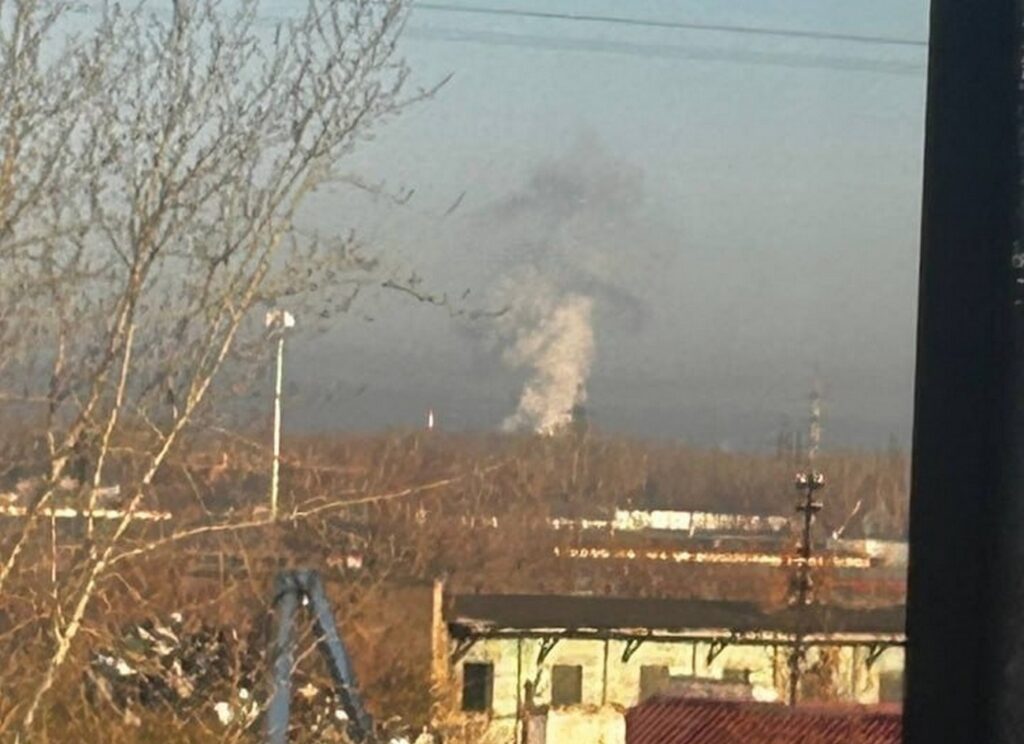

 After the attack by Ukrainian drones, a fire was recorded in the area of the Marinovka military airfield in the Volgograd region.
 The Defense Forces also attacked Bashkortostan. Bashkir Soda Company in Sterlitamak or Syntez-Kauchuk JSC could have been hit.
 In…

 (@Maks_NAFO_FELLA)


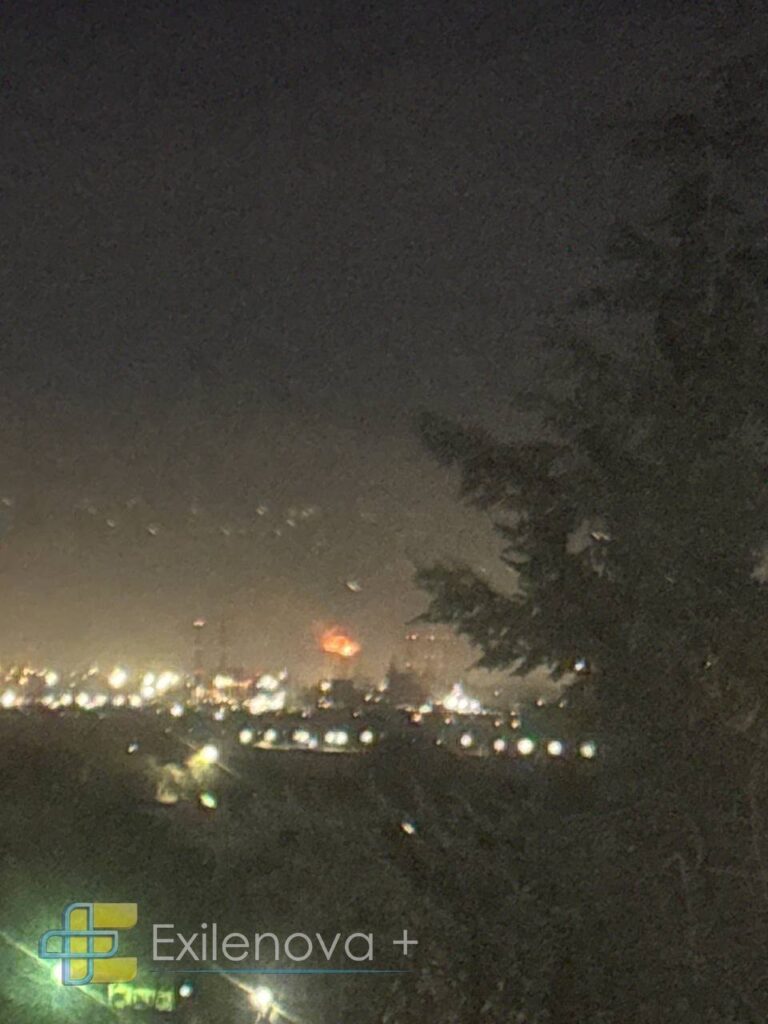







 Exilenova+…