❌

Reading view

Azerbaijan Calls for EU Gas Investment Decisions as Pipeline Capacity Reaches Limit

Speaking at a briefing in Brussels attended by EU Today, Azerbaijani presidential envoy Elchin Amirbayov said his country was prepared to increase natural gas exports to Europe, but warned that insufficient pipeline capacity, investment restrictions and uncertainty over long-term contracts were preventing further expansion.

Azerbaijan is prepared to increase natural gas supplies to the European Union, but further expansion will require investment in transport infrastructure and long-term commitments from European buyers, according to Elchin Amirbayov, Representative of the President of Azerbaijan on Special Assignments.

Speaking at the Azerbaijani Embassy in Brussels on 21 October, during a meeting attended by EU Today, Amirbayov outlined the difficulties facing efforts to expand the Southern Gas Corridor, which has become an important component of Europe’s strategy to diversify energy imports away from Russia.

“Today it’s fully booked already by all those contracts which we have concluded with all recipients of our gas,” Amirbayov said, referring to existing pipeline capacity.

He stressed that Azerbaijan possessed additional natural gas resources but that increasing deliveries depended on the availability of transportation infrastructure and commercially viable investment arrangements.

“As far as our capacity to provide them with gas is concerned, it is there because we have necessary resources. But what we need to be able to do that is also transportation infrastructure,” he explained.

Europe’s 2027 gas target faces infrastructure constraints

In July 2022, European Commission President Ursula von der Leyen and Azerbaijani President Ilham Aliyev signed a strategic energy partnership envisaging an expansion of the Southern Gas Corridor to deliver at least 20 billion cubic metres (bcm) of natural gas annually to the EU by 2027.

The agreement formed part of Europe’s response to Russia’s invasion of Ukraine and the subsequent restructuring of European energy supplies.

According to the European Commission, Azerbaijan and its state energy company SOCAR supplied 12.5 bcm to EU member states in 2025, an increase of more than 50 per cent compared with 2021.

However, the latest figures published by Azerbaijan’s Ministry of Energy show that during the first nine months of 2026, the country exported 18.4 bcm worldwide, including 8.6 bcm to European destinations.

The figures underline the challenge of achieving the planned increase in deliveries without additional investment.

The Southern Gas Corridor includes the South Caucasus Pipeline, the Trans-Anatolian Natural Gas Pipeline (TANAP) and the Trans Adriatic Pipeline (TAP), connecting Azerbaijani production with European markets.

TAP completed an initial capacity expansion in early 2026, adding 1.2 bcm annually. Further expansion will depend on additional infrastructure and sufficient contractual demand.

As EU Today previously reported, Azerbaijan began supplying natural gas to Germany and Austria in January 2026, extending its presence in central European markets.

Long-term contracts and investment financing

Amirbayov emphasised that additional gas infrastructure could not be developed without long-term commercial arrangements.

“Gas being different from oil, it has to be based on long-term contracts, on long-term expressed willingness,” he said.

He also raised the difficulties created by European restrictions on financing fossil-fuel infrastructure, suggesting that EU institutions and member states needed to reconcile their energy security requirements with existing investment policies.

The regulatory situation is complex. The European Investment Bank no longer finances new unabated fossil-fuel energy projects, including conventional gas infrastructure. However, the EU taxonomy framework permits certain gas-related activities under specific conditions.

Amirbayov said European countries had differing energy requirements and were at different stages of the transition away from fossil fuels. Those differences complicated agreement on the financing of additional gas supplies.

He also explained that Azerbaijan’s own investment resources were heavily committed to reconstruction and rehabilitation projects in territories recovered following the conflict with Armenia.

“We cannot do that job ourselves for the reasons I just explained,” he said, referring to the financial requirements of expanding export infrastructure.

Natural gas and Europe’s energy transition

Amirbayov acknowledged Azerbaijan’s own investment in renewable energy, including wind, solar and hydropower. He highlighted the Caspian Sea’s potential for offshore wind generation and described the country’s efforts to increase renewables in its domestic energy system.

Nevertheless, he questioned whether natural gas could be replaced by renewable sources within a short period.

“I don’t think it’s realistic,” he said when discussing the prospect of replacing natural gas within the next year or two.

His comments come as Brussels continues to balance its climate objectives with energy security requirements and the planned reduction of Russian gas imports.

Azerbaijan has increasingly positioned itself as an alternative supplier to European countries seeking to diversify their energy sources. However, Amirbayov made clear that further expansion would depend on decisions taken by European governments, financial institutions and energy companies.

“We are there, ready to assist,” he said, adding that further progress would require clear intentions and decisions from the European side.

The immediate question is whether European buyers and policymakers can establish sufficient contractual certainty and investment arrangements to support the additional pipeline capacity envisaged in the 2022 partnership.


  •  

Public sector an ‘afterthought’ to North Sea oil jobs, says Unison leader

Andrea Egan calls for same political focus on teachers, care sector and NHS and says Jackdaw decision ‘a serious misstep’

The leader of the UK’s biggest trade union has called for the same political focus to be given to NHS, education and care sector workers as there has been on those employed in North Sea oil and gas.

Andrea Egan, the general secretary of Unison, said too often public sector workers were treated as an “afterthought” by the government compared with the “massive political focus” on protecting jobs in the North Sea.

Continue reading...

© Photograph: Gary Calton/The Observer

© Photograph: Gary Calton/The Observer

© Photograph: Gary Calton/The Observer

  •  

BRIAN HARRELL: America’s AI revolution can’t charge forward without lots of energy

The race for artificial intelligence (AI), or superintelligence, will be won not just by technology companies, but by the nation that can deliver reliable, affordable and secure electricity. America is in a high-stakes sprint to lead the world in AI. This technology will reshape our economy, strengthen national defense, transform manufacturing and determine which nations lead the next generation of innovation.

But Washington and Silicon Valley cannot afford to ignore a glaring bottleneck: AI runs on electricity. America must dramatically expand its power generation and delivery infrastructure if it hopes to remain the global technology leader.

Data centers are the backbone of this revolution. They require enormous amounts of electricity, reliable grid connections and specialized infrastructure. Without sufficient power, advanced AI systems are little more than expensive hardware waiting for a connection. This creates an immense opportunity for America’s electric utilities. For too long, utilities have been viewed simply as service providers. Today, they are strategic partners in America’s economic competitiveness and national security.

THE AI REVOLUTION WILL GO WHEREVER THERE'S ELECTRICITY — AND CHINA KNOWS IT

To win the AI race, America must unleash domestic energy production, accelerate infrastructure development, defend against cyber threats and ensure that the private sector — not residential ratepayers — finances this expansion. This is a crucial opportunity for the administration, Congress, state governments and the private sector to coordinate an energy strategy that prioritizes American competitiveness.

Let the private sector finance growth

Electric utilities possess the engineering expertise and operational experience necessary to support data center expansion. They understand regional demand, transmission constraints and the complex mechanics of grid reliability. However, building the necessary infrastructure takes time; new generation facilities, transmission lines and substations often require years of planning, permitting and construction.

FIRST DATA CENTER BILL CLEARS HOUSE AS BOTH PARTIES SCRAMBLE FOR ANSWERS ON AFFORDABILITY

Data center developers, meanwhile, want to move quickly to capitalize on the AI boom. To bridge this gap, utilities and developers must collaborate much earlier in the process, aligning construction schedules, forecasting demand and identifying necessary upfront investments. Washington can support this by streamlining permitting and reducing regulatory delays to provide long-term investment certainty.

Crucially, data center developers must bear their fair share of the infrastructure costs driven by their massive electricity demands. Residential customers and small businesses should not subsidize infrastructure built primarily to serve trillion-dollar technology companies. Long-term power purchase agreements, dedicated infrastructure investments and minimum billing commitments can ensure large customers contribute appropriately. This is an argument for responsible, pro-business growth where financial risks are not shifted onto ordinary Americans.

The White House’s Ratepayer Protection Pledge reinforces the principle that America can accelerate AI innovation without forcing ordinary Americans to subsidize Big Tech’s infrastructure demands. Electric utilities can benefit from increased electricity sales, long-term power contracts and investments in generation and grid infrastructure, provided data center developers pay their fair share of the costs.

DATA CENTERS COULD BE THE SLEEPER ISSUE OF THE 2026 MIDTERM ELECTIONS

To protect consumers, we must require transparent cost allocation, enforceable commitments from large data center customers and safeguards preventing residential ratepayers from being left with stranded infrastructure costs if projects are delayed, scaled back or abandoned.

Energy dominance requires real abundance

America cannot achieve energy dominance if it cannot generate enough electricity to power its expanding economy. Meeting this challenge requires an "all-of-the-above" strategy that evaluates energy resources strictly based on reliability, affordability and availability.

TRUMP ENERGY DEPARTMENT ISSUES EMERGENCY ORDER TO PREVENT BLACKOUTS ACROSS 13 STATES AMID UNUSUAL OCTOBER HEAT

Natural gas provides essential dispatchable generation, while nuclear energy offers dependable baseline power with low operational emissions. Hydroelectric power, wind, solar and battery storage all contribute where they make economic sense. Existing coal facilities also remain part of the equation where continued operation is economic and legally compliant.

No single technology can solve every regional power challenge. Utilities need the flexibility to select the optimal resource mix for their customers. The objective is straightforward: build enough reliable generation and transmission capacity to meet rising demand without spiking energy prices. This is vital as data centers increasingly compete for power with manufacturers, hospitals, military bases and households. Energy abundance is a national security imperative.

Securing the grid from cyber threats

There is another critical threat that deserves far more attention: cybersecurity. The electric grid and digital infrastructure are deeply interconnected. Power disruptions halt essential computing services, while software incidents at technology providers can ripple back to affect critical infrastructure. Foreign adversaries and sophisticated cybercriminals understand these critical dependencies.

Electric utilities operate vital infrastructure that must withstand attacks against corporate networks, industrial control systems and substations. Concurrently, data centers face distinct risks involving cloud platforms, software supply chains and third-party vendor access. These are interconnected risks that could have significant national security consequences.

AN AI CYBERATTACK COULD TURN OFF AMERICA'S LIGHTS BEFORE WASHINGTON EVEN UNDERSTANDS WHY

Utilities and data center operators must establish joint incident response plans, conduct realistic multisector exercises and develop secure mechanisms for sharing threat intelligence. Organizations should strengthen network segmentation, multifactor authentication and vulnerability management. In particular, utilities must ensure that a compromise of ordinary corporate IT does not provide a path into operational technology controlling the grid. A stolen password should never become a gateway to disabling the power supply.

Supply-chain security deserves equal focus. Hardware, software and remote maintenance arrangements can introduce vulnerabilities into both utility operations and data center environments. Companies must rigorously assess critical vendors and establish clear protocols for addressing compromised components.

CLICK HERE FOR MORE FOX NEWS OPINION

While the federal government has an important role in providing actionable threat intelligence, cybersecurity must not become an excuse for expensive, rigid mandates. Security frameworks should remain risk-based, practical and focused on resilience.

Data centers as grid assets

The relationship between utilities and data centers should not be one-way. With the right investments, large computing facilities can help improve grid flexibility. Some AI training workloads can be shifted to off-peak hours, allowing operators to reduce consumption during periods of high demand.

CLICK HERE TO DOWNLOAD THE FOX NEWS APP

Furthermore, battery storage and appropriately designed onsite generation can provide grid stability during emergencies, turning data centers into strategic assets that strengthen, rather than strain, America's energy future.

  •  

Cyprus household electricity prices remain above pre-crisis levels

Household electricity prices in Cyprus fell to €0.26 per kilowatt-hour in the first half of 2026, according to Eurostat data, easing from their energy-crisis peak but remaining significantly above pre-crisis levels as electricity costs continue to weigh on consumers.

The latest figures show that prices, including all taxes and levies, have declined steadily since reaching €0.37 per kilowatt-hour in the first half of 2023, although households are still paying considerably more than they did before the energy crisis.

When adjusted for differences in purchasing power, Cyprus recorded 29.9 purchasing power standard (PPS) units per 100 kilowatt-hours in the first half of 2026, providing an indication of the relative burden of electricity costs on households.

Across the European Union, average household electricity prices fell by 2.2 per cent in the first half of 2026, declining to €0.28 per kilowatt-hour from €0.29 in the second half of 2025.

Despite the decrease, prices remained well above levels recorded before the 2022 energy crisis, indicating that households continued to face higher electricity costs than before the energy market turmoil.

Taxes and levies also declined slightly as a proportion of household electricity bills, falling by 0.5 percentage points, from 28.9 per cent in the second half of 2025 to 28.4 per cent in the first half of 2026.

Cyprus electricity prices peaked in 2023

Eurostat data show that household electricity prices in Cyprus followed a relatively stable pattern between 2015 and 2020, before surging during the energy crisis and subsequently easing.

During the initial period, prices fluctuated between €0.15 per kilowatt-hour in the first half of 2016 and €0.22 in the second half of 2019, before falling to €0.16 in the second half of 2020.

The subsequent energy crisis brought a sharp increase in household electricity costs, with prices reaching €0.37 per kilowatt-hour in the first half of 2023, more than double the level recorded in late 2020.

Prices then began to ease, declining to €0.32 per kilowatt-hour in the first half of 2024 before continuing their gradual downward trajectory.

By the first half of 2026, the price had fallen to €0.26 per kilowatt-hour, representing a substantial reduction from the 2023 peak but remaining well above the levels recorded before 2021.

The trend highlights the persistence of the energy crisis’ impact on household electricity bills, even as prices have retreated from their highest levels.

Ireland records highest electricity prices

Ireland recorded the highest household electricity prices in the EU during the first half of 2026, at €0.39 per kilowatt-hour, followed by Germany and Belgium, where prices stood at €0.36 per kilowatt-hour in both countries.

Six member states recorded household electricity prices exceeding €0.30 per kilowatt-hour, while five countries reported prices below €0.20.

The lowest nominal prices were recorded in Hungary, at €0.11 per kilowatt-hour, followed by Malta and Bulgaria, where households paid €0.13 per kilowatt-hour.

However, comparisons based solely on euros do not fully reflect the financial burden electricity bills place on households, as purchasing power and general price levels differ between countries.

When electricity prices were adjusted using the purchasing power standard (PPS), Romania recorded the highest costs, at 46.9 units per 100 kilowatt-hours, followed by Poland at 41.1 and the Czech Republic at 34.3.

Cyprus recorded 29.9 PPS units per 100 kilowatt-hours, while the lowest purchasing-power-adjusted prices were observed in Malta, at 13.8, Hungary at 14.7 and Luxembourg at 15.5.

The PPS measure allows comparisons between countries by accounting for differences in purchasing power, offering a clearer indication of the relative cost of electricity for consumers.

Electricity prices move sharply in several countries

Although the EU average declined in the first half of 2026 compared with the second half of 2025, national trends varied considerably when prices were compared with the same period a year earlier.

Using comparisons in national currencies, Eurostat found that household electricity prices increased sharply in Romania, rising by 51.6 per cent compared with the first half of 2025.

Ireland recorded the second-largest increase, at 19.8 per cent, followed by Finland, where prices rose by 18.4 per cent.

In contrast, Denmark registered the largest decrease, with household electricity prices falling by 31.7 per cent, while Luxembourg recorded a decline of 24.1 per cent.

The figures illustrate the uneven evolution of electricity costs across Europe, despite the overall reduction in average EU prices during the first six months of 2026.

For Cyprus, the combination of the historical price trend and the latest purchasing-power-adjusted figures shows that, although household electricity costs have fallen considerably from their 2023 peak, prices remain elevated compared with the period before the energy crisis.

  •  

Healey’s budget cuts mean Britain is likely to miss green heating targets

Ex-energy secretary Ed Miliband’s agenda appears undermined as money is diverted from renewables to defence

Britain is unlikely to hit its targets on green heating after the cuts announced by John Healey this week, experts have warned, as critics of Ed Miliband claim the former energy secretary’s green agenda is being dismantled.

The chancellor unveiled more than £3bn worth of cuts to the energy department’s budget this week, much of which will pay for higher defence spending.

Continue reading...

© Photograph: Justin Tallis/AFP/Getty Images

© Photograph: Justin Tallis/AFP/Getty Images

© Photograph: Justin Tallis/AFP/Getty Images

  •  

CHRIS JOHNSON: The data center boom is rescuing forgotten American towns

With the midterm elections approaching, data centers have become an increasingly popular political target. Politicians are raising alarms about their impact on communities, with some calling for construction moratoriums or outright bans.

There's been plenty of fearmongering. But the more Americans learn about data centers, and the more communities experience their benefits firsthand, the stronger the case for continued development becomes.

Data centers have existed for decades, but the rapid growth of artificial intelligence has dramatically increased the demand for computing power. Americans understandably have questions about what this development means for electricity prices, water supplies, and their quality of life. Newer facilities are increasingly being designed with technologies that can address these concerns, including closed-loop cooling systems and quieter operations.

DATA CENTERS COULD BE THE SLEEPER ISSUE OF THE 2026 MIDTERM ELECTIONS

Yet much of the national debate overlooks what data centers are already delivering to communities across America.

Take Ellendale, North Dakota, a town of 1,100 people. Before Applied Digital's new $11 billion data center development, the town collected roughly $400,000 annually in sales taxes. In the first seven months of 2026 alone, that figure jumped to $3.5 million.

THIS TINY FARMING TOWN YOU’VE NEVER HEARD OF IS HELPING MICROSOFT SELL AMERICA ON DATA CENTERS

That revenue is helping the city repave its roads and renovate its senior center. A historic opera house is being restored. For a small town, this kind of investment can transform the community for generations.

And Ellendale is far from alone.

Schools across America are seeing enormous benefits from the data center boom.

In Richland Parish, Louisiana, Meta's massive investment has helped fund an increase in annual teacher bonuses ranging from $10,000 to $50,000.

Think about what that means for a working family. Teachers who have dedicated their careers to educating children are receiving a life-changing financial benefit, while the school district becomes an attractive destination for talented educators.

It's hard to imagine a politician campaigning against higher teacher pay or better schools. Yet those are precisely the kinds of benefits communities stand to lose when development gets blocked.

PROPOSAL WOULD PAY HOMEOWNERS 'DATA CENTER DIVIDENDS' TO COUNTER GROWING BACKLASH

The benefits extend to homeowners struggling with the rising cost of living.

In Loudoun County, Virginia, data centers generate 45% of county revenue. That enormous tax base has allowed local officials to cut homeowner property tax rates every year for a decade.

TO BEAT CHINA IN AI, AMERICA MUST WORK WITH COMMUNITIES — NOT AROUND THEM

In neighboring Henrico County, local leaders used data center revenue to fund a $60 million Affordable Housing Trust Fund, helping young families and first-time buyers purchase homes.

At a time when housing affordability is dominating political conversations, building data centers is helping some communities make the American Dream a little easier to achieve.

Electricity prices are another major concern, and understandably so. Families are already struggling with higher utility bills, and the arrival of a major new industrial customer can raise legitimate questions about who pays for new infrastructure.

But the enormous, predictable electricity demand from data centers also creates opportunities to finance new generation and grid investments, spreading infrastructure costs across a larger customer base.

In Georgia, agreements involving new large electricity customers, including OpenAI, are projected to lower residential power bills by $180 annually by 2029.

With the right arrangements in place, the arrival of data centers can mean lower costs for the families already living in these communities.

And the benefits extend well beyond tax revenue and household expenses.

Trade unions have been among the most vocal supporters of data centers because of the good-paying jobs they create. Building these facilities requires years of work for skilled tradesmen, with new projects creating opportunities for the next generation of American workers.

In Baltimore, Maryland, IBEW Local 24 expanded its membership by 50% alongside data center construction. In Luzerne County, Pennsylvania, IBEW Local 163 doubled its ranks following construction of an Amazon data center.

Politicians have spent decades promising to bring back good-paying blue-collar jobs. Here is an industry creating enormous demand for exactly those workers.

Of course, developers have a responsibility to work with residents and local governments to address legitimate concerns. Communities deserve clear answers about electricity costs and water use. They should also understand how the investments taking place in their backyards will benefit local families.

But when data centers are developed responsibly, the economic benefits can be enormous. Communities are rebuilding roads and improving schools. Homeowners are seeing lower tax burdens, and skilled workers are finding new opportunities.

For decades, politicians have campaigned on championing the Forgotten Man and bringing economic opportunity back to communities that have struggled to attract investment.

Now, data centers are delivering billions of dollars in private investment to many of those very places.

We're watching a new industrial boom take shape across America, creating jobs and revitalizing communities that Washington has spent decades promising to help. Before politicians rush to stop it, they ought to take a serious look at what those communities are gaining.

CLICK HERE TO DOWNLOAD THE FOX NEWS APP

And they should consider what their constituents stand to lose.

  •  

Germany and Italy Clash Over Gas Storage as Europe’s Energy Prices Return to Crisis Levels

A dispute between Germany and Italy over natural gas storage has exposed tensions within the European Union’s energy market, as wholesale prices approach levels last recorded during the 2022 energy crisis and governments confront the prospect of another expensive winter.

Italy has accused Germany of contributing to the latest surge in European natural gas prices by delaying the replenishment of its underground storage facilities, reopening a debate about national energy policies and their consequences for the EU’s single market.

The dispute emerged on 29 October after the European benchmark gas price briefly exceeded €100 per megawatt hour the previous day, its highest level since December 2022.

Germany’s gas storage facilities were just 61.7 per cent full, compared with almost 91 per cent in Italy and an EU average of approximately 75 per cent.

The difference has become politically sensitive because European countries purchase gas in an interconnected market, meaning decisions taken by one major consumer can influence prices paid elsewhere.

Speaking at the Montel Italian Energy Day conference in Milan, Alessandro Noce, director general for energy markets and infrastructure at Italy’s Energy Ministry, criticised Germany’s approach to preparing for winter.

According to Reuters, Noce argued that Italy had spent €300 million securing additional gas reserves, only to face higher market prices as Germany attempted to replenish its comparatively depleted stocks.

He also questioned whether Germany had delayed purchases because of preparations to privatise energy companies involved in the storage process.

Germany’s Economy Ministry did not immediately respond to the criticism.

Germany’s Storage Decisions Under Scrutiny

The German government’s approach has attracted particular attention because of its role in the operations of Uniper and Securing Energy for Europe (SEFE).

Both companies became important components of Germany’s energy-security arrangements following the disruption of Russian gas supplies in 2022.

Plans concerning their future ownership have coincided with renewed questions about how Berlin balances commercial considerations against the need to maintain strategic reserves.

At the Milan conference, an energy analyst suggested that preparations for privatisation had contributed to delays in storage purchases.

That assessment has not been established as the definitive explanation for Germany’s comparatively low reserves.

Nevertheless, the resulting political dispute demonstrates the difficulties of managing energy security through a system in which national governments retain considerable discretion while their purchasing decisions affect a common market.

Europe’s Gas Market Faces Renewed Pressure

Europe’s latest price increase has several causes extending beyond German storage policies.

Disruptions to liquefied natural gas shipments associated with the conflict involving Iran have constrained supplies from the Middle East.

At the same time, European countries entered the summer storage-refilling period with unusually low reserves following the previous winter.

The EU Agency for the Cooperation of Energy Regulators (ACER) reported that underground gas storage was only 28 per cent full at the end of winter 2025–26.

By 21 October, that figure had risen to 75 per cent, still below historical levels.

In its latest gas-market monitoring report, ACER estimated that disruption linked to the Middle East conflict had added between €18 billion and €33 billion to Europe’s gas-import bill.

The agency also found that American liquefied natural gas accounted for roughly 30 per cent of EU gas supplies, reflecting Europe’s growing reliance on transatlantic energy imports.

Although this diversification has reduced dependence on Russian pipeline gas, it has also increased Europe’s exposure to international competition for LNG cargoes.

European buyers must compete with customers in Asia, particularly when colder weather or geopolitical disruptions increase demand.

EU Storage Rules Face a Test

The disagreement has implications for the European Union’s gas-storage framework.

Following the 2022 energy crisis, the EU introduced mandatory storage requirements intended to reduce the risk of supply shortages during winter.

The arrangements were subsequently extended until the end of 2027.

Under the revised rules, member states retain a 90 per cent storage-filling target but have greater flexibility over when and how it is achieved.

Countries may reach the target between 1 October and 1 December, rather than being bound to the previous 1 November deadline.

Further flexibility is available in difficult market conditions.

These provisions were designed partly to prevent governments from creating artificial demand peaks by purchasing gas simultaneously to meet rigid deadlines.

However, the present dispute suggests that delayed purchases can create another problem if several major consumers need additional supplies as winter approaches.

Germany’s current storage level does not, by itself, establish a breach of EU requirements. The applicable deadlines and permitted exemptions must also be considered.

Italy Seeks Greater Scope for Intervention

The Italian government has meanwhile been seeking permission from the European Commission to use public funds to reduce energy costs for households and businesses.

Rome’s concerns reflect the economic consequences of sustained high gas prices, particularly for industries dependent on energy-intensive manufacturing.

Italy faces a general election expected in 2027, adding a domestic political dimension to the debate over energy subsidies.

Noce warned that prices could rise to between €150 and €180 per megawatt hour if January brings particularly cold weather.

Such an outcome remains a scenario rather than a forecast.

Energy markets will also be influenced by developments in the Middle East, LNG deliveries, industrial demand and winter temperatures.

A European Problem Without a Single National Solution

Europe has expanded its LNG import infrastructure and diversified energy sources substantially since 2022.

However, the latest price increases demonstrate that greater import capacity does not necessarily insulate consumers from global supply disruptions.

The German–Italian dispute also exposes the limits of national energy planning within an integrated European market.

Germany’s storage policies affect its neighbours, just as decisions taken elsewhere influence the price German consumers pay.

The central question for Brussels is whether existing coordination arrangements provide sufficient incentives for governments to safeguard their own winter supplies without transferring additional costs to other member states.

With the heating season approaching, that issue is becoming an immediate economic concern rather than a theoretical dispute about European energy solidarity.

  •  

South Carolina: Fire at DOE Nuclear Site Laboratory Prompts Emergency Declaration

Officials declared an emergency Wednesday afternoon when a fire erupted inside a laboratory at a Department of Energy nuclear site near Aiken, South Carolina.

The post South Carolina: Fire at DOE Nuclear Site Laboratory Prompts Emergency Declaration appeared first on Breitbart.

  •  

Campaigners take EU Commission to ombudsman over methane delay, saying it ‘undermines the rule of law’

The London-based Environmental Investigation Agency (EIA) has filed a complaint with the European Ombudsman, accusing the EU Commission of maladministration over its handling of the bloc’s methane rules.

The complaint, filed on Thursday (29 October), targets two recent commission decisions. 

The first is for a July recommendation that member states hold off on fining importers that are in breach of the rules until 2030. 

The second is a proposal made earlier this month to delay the import rules by a year over supply worries — a decision that was made following heavy pressure from oil and gas companies, the White House and eventually by the summer, a majority of member states. 

But the EIA argues that neither decision is backed up by evidence that the rules actually threaten Europe’s energy supply or push up prices.

By delaying a law already adopted in 2024, the group says, the commission is “undermining integrity of both the legislative process and the EU rule of law.”

“Rather than ensuring that the EU Methane Regulation is implemented as agreed, the commission has responded to pressure from the fossil-fuel industry by weakening enforcement and proposing further delays, without providing credible evidence to justify these decisions,” said Jack Corscadden, senior climate campaigner at EIA.

This article continues, but the full version is available only to EUobserver.com subscribers. Visit account.euobserver.com/membership

  •  

Acwa, EIG plan $4bn equity investment in US power venture

Saudi Arabia’s Acwa and US-based EIG Management Co. have launched a joint venture named Plenum Power, targeting an initial equity commitment of $4 billion for US power generation and energy storage investments. With Acwa holding a 49% stake and EIG 51%, the partnership aims to leverage their combined expertise to capitalize on growth in the evolving US power market.

  •  

AI Isn't Just Extracting More Fossil Fuels—It's Unlocking Renewable Energy Too

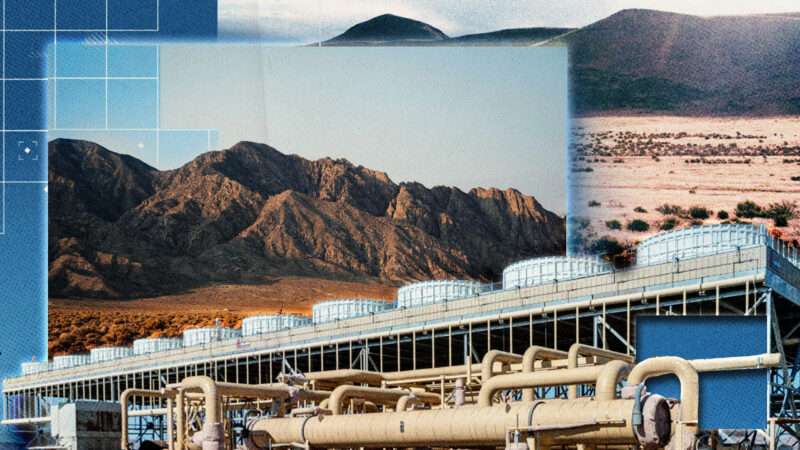
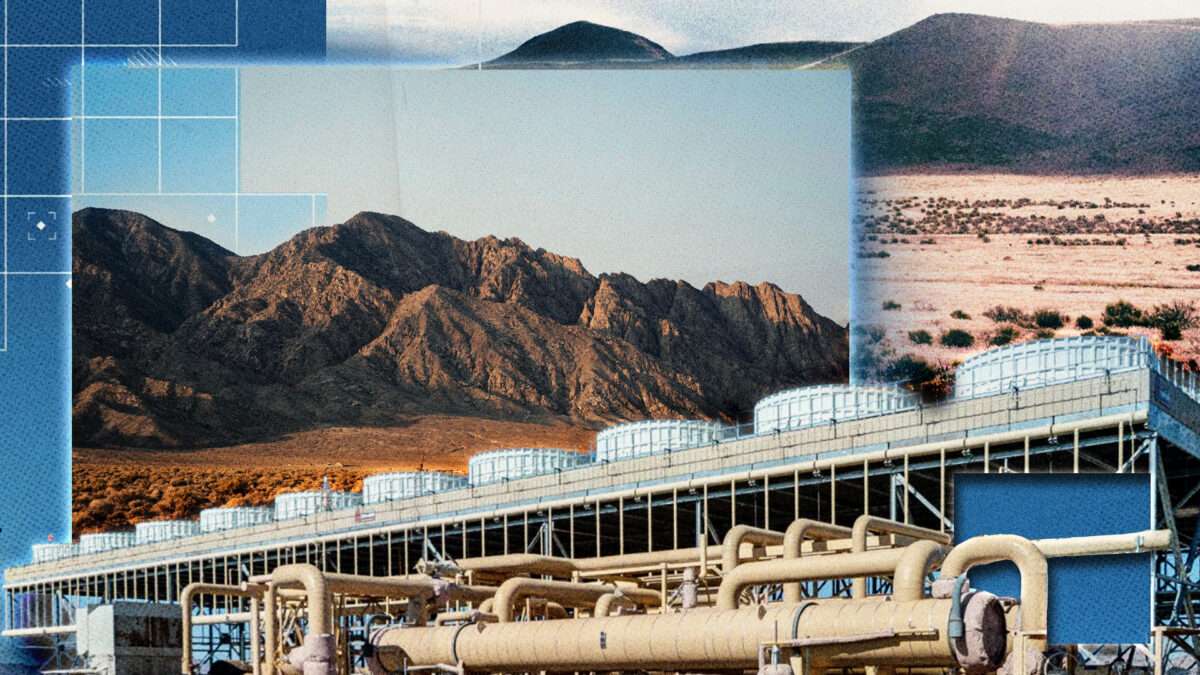
Geothermal energy infrastructure | zanskar.com/Zanskargeorthermal/Substack

Although artificial intelligence is drawing criticism for its energy use, it's also being used by firms such as ExxonMobil and BP to unleash new energy production. The research firm Wood Mackenzie even estimates that AI could unlock 1 trillion extra barrels of oil globally by helping companies "wring substantially more oil out of producing reservoirs."

These developments are good news for consumers, but they could have a significant impact on the environment, according to an August paper published in npj Climate Action. The authors find that AI could prolong oil and gas usage, leading to a 0.47–1.8 gigaton increase in annual global carbon dioxide emissions. The lower end of that estimate is comparable to Mexico's annual carbon dioxide emissions, study co-author Holly Alpine told The Wall Street Journal. The higher end is equivalent to about 5 percent of the world's energy emissions from 2024.

The researchers say net emissions reductions cannot occur unless renewables grow four to five times faster than oil and gas. (They do note there are other ways AI could reduce the greenhouse gas footprint of the fossil fuel industry—namely, "methane leak detection or efficiency gains in power generation.")

This is an ambitious task, considering that fossil fuels account for over 80 percent of the world's energy needs and their peak usage is years away. But there are reasons to be optimistic about AI's role in accelerating the use of clean technologies.

In the same way that oil majors are using AI to find their next well, startups are utilizing the technology to unleash geothermal energy. One such company is Zanskar, which uses a combination of AI, advanced drilling methods, and geoscience to "accurately map the Earth's subsurface and develop geothermal resources that have been overlooked or considered too risky."

At the Lightning Dock project in New Mexico—which Zanskar purchased in 2024—the company's technology has reduced surface infrastructure costs by 75 percent and sped up drilling by 35 percent. Zanskar says Lightning Dock is now "home to the most productive pumped geothermal well in the U.S. and quite possibly the world." Late last year, the company discovered "Big Blind," a naturally occurring geothermal system in Nevada with the potential to power 80,000–100,000 homes with reliable carbon-free energy. In January, it closed a $115 million funding round.

Nuclear power is also benefiting from advances in AI. In August, Atomic Canyon released its Nuclear Industry Virtual Assistant with backing from Nvidia. The tool is designed to help nuclear professionals navigate technical and regulatory landscapes, which could lead to more nuclear power being developed and deployed faster. The industry has also seen a wave of investment from tech companies looking to fuel their power-hungry data centers with clean energy. Big Tech firms such as Google, meanwhile, have poured significant resources into renewable and battery storage projects to support data centers and bring more energy to the grid.

AI is here to stay. We should embrace what it is already starting to give us: a cleaner and more abundant energy future.

The post AI Isn't Just Extracting More Fossil Fuels—It's Unlocking Renewable Energy Too appeared first on Reason Magazine.

  •  

Oil prices fall as peace hopes offset fears of growing Middle East conflict

RIYADH: Oil prices ​fell on Thursday, paring gains made a day earlier, as hopes for peace talks took the edge ‌off renewed concerns over Middle East supply disruptions from escalating regional conflict. Brent crude futures declined $1.22, or 1.1 percent, to $114.10 a barrel at 06:51 a.m. Saudi. US West Texas Intermediate crude futures were down $1.33, or 1.3 percent, at $101.45. Brent rose 1.3 percent and WTI gained 3 percent on Wednesday. US Vice President JD Vance sought to ​revive peace negot

  •  

Fire at South Carolina Nuclear Site Prompts Emergency

Fire at the Savannah River National Laboratory nuclear research facility in South Carolina prompts emergency response.

The blaze was extinguished and no contamination was reported outside the affected facility.


A fire at a U.S. nuclear research facility in South Carolina triggered an emergency response Wednesday, prompting temporary access restrictions and precautionary measures for workers before the emergency was lifted later that evening.

RELATED: Putin Discusses Russia-U.S. Diesel Deal with United Arab Emirates

The emergency was declared at 5:39 p.m. local time (2139 GMT) after a fire broke out at the Savannah River National Laboratory, part of the U.S. Department of Energy’s Savannah River Site (SRS).

The fire was later extinguished, and no contamination was reported outside the affected facility, the SRS said in a social media statement.

Authorities temporarily suspended traffic at the site’s entrances and restricted rail, river and air traffic in the surrounding area. Employees not involved in emergency response or shutdown operations were directed to shelter as a precaution.

🔥 US officials end Site Area Emergency following a fire at Savannah River National Laboratory in South Carolina

☢️ Radiological surveys detect no contamination, according to officials https://t.co/37keP3xVfb pic.twitter.com/XNhM9QU9TT

— Anadolu English (@anadoluagency) October 29, 2026

The emergency was terminated at 9:45 p.m. local time (0145 GMT Thursday), according to a subsequent update.

The Savannah River Site was established in the 1950s to produce tritium and plutonium for U.S. nuclear weapons. It is now used for environmental stewardship and cleanup, nuclear waste management and the disposition of nuclear materials, according to the Department of Energy.

  •  

Angry Labour MPs urge leadership not to overrule energy secretary on Rosebank

Exclusive: Backbenchers voice alarm over ‘intolerable position’ faced by Miatta Fahnbulleh over oilfield decision

Furious Labour MPs have been lobbying the prime minister and chancellor not to overrule the energy secretary should she decide to block the Rosebank oilfield.

MPs say they are alarmed at the cabinet splits that have emerged over the issue after sources told the Guardian that Miatta Fahnbulleh was minded to refuse environmental permission for the field.

Continue reading...

© Photograph: Kirsty O’Connor/Treasury

© Photograph: Kirsty O’Connor/Treasury

© Photograph: Kirsty O’Connor/Treasury

  •  

How will John Healey’s energy support package affect you?

Chancellor’s ‘new course’ includes a £100 one-off payment, low-carbon upgrade loans and an end to standing charges

John Healey has unveiled a package of support for households being buffeted by “global economic storms”.

“I’m setting a new course to get energy costs down in line with Europe,” the chancellor said in his maiden budget. In the long term, he hopes that changes in how Britain covers the cost of renewables and grid upgrades will “drive down all aspects of energy bills”.

Continue reading...

© Photograph: Washington Imaging/Alamy

© Photograph: Washington Imaging/Alamy

© Photograph: Washington Imaging/Alamy

  •  
❌