Bo Bichette is staying in New York, hoping to one day become the King of Queens.
While no one can take that title away from Doug Heffernan, if Bichette helps lead the New York Mets to a World Series title, there will certainly be a debate. The Mets third baseman exercised his $42 million player option to remain with the team on Thursday, according to multiple reports.
Last season, Bichette signed a three-year, $126 million contract with the Mets that included player opt-outs after each season. The 28-year-old decided to remain with the Mets after an uneven season.
Bichette, who had been a shortstop with the Toronto Blue Jays, switched positions to become the Mets' third baseman. The beginning of the season was a struggle, as he started at third base but then moved back to shortstop after Francisco Lindor got hurt.
While he was juggling positions, Bichette got off to a dismal start at the plate. Through June 10, Bichette had a .227 batting average with five home runs, 32 RBI and a paltry .597 OPS.
After that, the two-time All-Star finally turned it on and looked like the hitter baseball fans had become accustomed to seeing. From June 11 through the end of the season, Bichette hit .285 with 13 home runs, 46 RBI and a .779 OPS. For the season, Bichette played in 152 games and hit .260 with 18 home runs, 76 RBI and a .702 OPS, which was well below his career OPS of .788.
After his rocky season, Bichette would have been unlikely to find a free-agent contract worth more than the $42 million he is set to earn in 2027. Regardless, his return is a good thing for the Mets, who will have some continuity on the left side of their infield with Bichette and Lindor.
That continuity is especially valuable because the team's right side of the infield is not nearly as certain. Marcus Semien struggled last year and will likely compete with Brett Baty and prospects for the second-base job, while first base remains wide open after the team struggled to replace Pete Alonso.
Big tech stocks falter as investors question whether billions being poured into AI can generate returns quickly enough
A sell-off of tech stocks that began earlier this month and gained steam with disappointing earnings from leading tech companies drove US markets down by hundreds of billions of dollars Friday. In total, the decline has knocked nearly $1tn in value off the tech-heavy Nasdaq exchange in one week and erased about $2tn in a month.
The S&P 500, the index of the 500 most valuable companies in the US, fell by more than 1% Friday, losing hundreds of billions of dollars in market value. It was on track to erase its gain for October, even though it set its all-time high during the same month. The weakness for technology stocks dragged the Nasdaq composite down even further, more than 3%, also erasing hundreds of billions in value. The Down Jones Industrial Average fell less.
Studies have shown that the betting sites can predict races correctly, but their ability to forecast U.S. midterm elections is an important proving ground.
These Halloween costume ideas for cat lovers range from a classic black cat to Catwoman, Garfield and the Cheshire Cat, with notes on building each look
Slovakia's Prosecutor General Maros Zilinka said on Oct. 30 that he had reopened a criminal case against former Prime Minister Eduard Heger and former Defense Minister Jaroslav Nad over their decision to donate Slovakia's fleet of MiG-29 fighter jets and Soviet-era KUB air defense systems to Ukraine in spring 2023.
The evacuation of civilians from Russian-occupied Oleshky offers a rare humanitarian breakthrough in a war that has produced precious few. Yet behind the diplomatic congratulations and carefully managed publicity lies a striking contradiction: Moscow is receiving international recognition for helping rescue people whose suffering is inseparable from its own occupation. For Vladimir Putin, it is an opportunity to appear conciliatory without changing his military objectives. For Donald Trump, it is a diplomatic achievement conveniently timed ahead of the American congressional elections.
In Oleshky, the humanitarian convoys have finally arrived. So have the television cameras. After more than four years of Russian occupation, hunger and isolation, the surviving inhabitants of this devastated Ukrainian town have suddenly found themselves at the centre of international diplomacy.
Their predicament has acquired a political significance extending far beyond the immediate question of how to get food into Oleshky and its people out.
Ukraine’s Human Rights Commissioner, Dmytro Lubinets, is coordinating the operation. Twenty-five buses, capable of transporting 750 passengers, together with ambulances for vulnerable residents, have been prepared.
The temporary ceasefire, which began on 27 October, is scheduled to expire on 1 November.
The number of evacuees remains uncertain. Ukraine’s prime minister withdrew an earlier estimate, explaining that the figures were changing and that premature disclosures could compromise the mission.
For civilians who have endured years of occupation, the operation offers something considerably more valuable than diplomatic recognition: a chance to survive.
For the governments involved, however, the calculations are rather different.
It was an unusual intervention by an American First Lady, and one that Ukrainian officials have publicly welcomed.
But the limited scope of the arrangement deserves attention.
Moscow has agreed to suspend hostilities temporarily, permit humanitarian deliveries and facilitate civilian evacuations. It has not agreed to withdraw its forces, reconsider its territorial demands or substantially alter its conduct of the wider war.
The political return, meanwhile, could be considerable.
Russia can demonstrate cooperation with Washington. The Trump administration can point to a negotiated outcome. The First Lady receives international recognition for a humanitarian initiative.
All this comes just days before the American congressional elections on 3 November, offering the White House a visible diplomatic success without requiring the Kremlin to sacrifice anything strategically important.
Whether the operation will actually deliver Republican votes is another matter. There is no evidence that it will materially influence electoral preferences.
But the publicity value is unmistakable.
For Putin, the arrangement offers something perhaps more useful than an electoral favour to Trump: an opportunity to cultivate the image of a reasonable negotiating partner while preserving Russia’s freedom of military action.
The occupying power as humanitarian benefactor
There is a deeper irony in Russia’s new role as a partner in Oleshky’s rescue.
Before the invasion, approximately 24,000 people lived in the town. Today, an estimated 1,700–2,000 remain.
The survivors have endured Russian occupation since 2022, widespread destruction, restrictions on movement and severe shortages of basic necessities. The catastrophic flooding following the destruction of the Kakhovka dam in June 2023 compounded their predicament.
Yet Moscow can now present itself as a participant in relieving the humanitarian catastrophe.
The transformation is politically convenient.
Images of Russian officials accompanying aid convoys may help construct a narrative of humanitarian responsibility, particularly for international audiences unfamiliar with the town’s recent history.
Facilitating an evacuation does not, however, absolve an occupying power of its obligations towards civilians.
Nor should cooperation on a single humanitarian operation be mistaken for evidence that Moscow has reconsidered the policies that produced the crisis.
When survivors become instruments of propaganda
The information campaign surrounding Oleshky is particularly revealing.
On 7 October, Ukraine’s Security Service warned that Russian military personnel were allegedly preparing interviews in which residents would blame Ukrainian forces for their suffering while praising Russian troops.
These allegations require independent scrutiny. But they raise an uncomfortable question: how much weight should be attached to political declarations made by people emerging from years of occupation?
Fear can produce silence. It can also produce conformity.
Civilians dependent upon the authorities controlling their territory may repeat the language of those authorities, whether from conviction, intimidation or self-preservation.
Some residents may genuinely support Russia. That does not make them less entitled to humanitarian assistance.
There is a fundamental distinction between holding pro-Russian political opinions and actively collaborating in crimes against Ukraine.
A state defending its sovereignty need not demand ideological conformity from citizens it seeks to protect.
Indeed, rescuing them irrespective of their political sympathies is a more meaningful demonstration of democratic principles than any carefully staged declaration of gratitude.
Melania Trump and the choreography of compassion
The American dimension introduces its own peculiarities.
The White House has portrayed the ceasefire as an achievement of the First Lady’s personal diplomacy. Yet Washington was not the only party attempting to secure an agreement.
On 16 October, a week before the White House announcement, Pope Leo XIV appealed directly to Putin for a ceasefire in Oleshky to permit food deliveries, medical assistance and voluntary evacuations.
The Vatican’s documented intervention does not negate Melania Trump’s involvement, which Ukrainian and Russian officials have acknowledged. It does, however, complicate the suggestion that the breakthrough was exclusively an American diplomatic achievement.
In the meantime, the publicity surrounding the operation has assumed a conspicuous political character.
On 29 October, Melania Trump announced that four journalists from Newsmax, a broadcaster closely associated with Trump’s conservative constituency, would accompany the mission as neutral observers.
The broadcaster’s involvement was also welcomed by Kirill Dmitriev, the Kremlin’s special representative for international economic cooperation.
The interests converge rather neatly.
Washington obtains images of successful humanitarian diplomacy. Moscow gains an opportunity to appear cooperative before an American audience. The First Lady receives recognition for an initiative that has produced tangible results where much broader diplomatic efforts have struggled.
None of this diminishes the importance of saving civilians. But the political presentation risks becoming an achievement in its own right, potentially obscuring the question of why those civilians required rescuing in the first place.
The ceasefire ends at Oleshky
The military reality provides a rather less reassuring picture.
Oleshky lies on the Russian-controlled eastern bank of the Dnipro, opposite Ukrainian-held Kherson.
According to reporting by Le Monde, Ukrainian officials fear that Russian forces could exploit the temporary pause to replenish supplies and prepare further operations around Kherson.
Such concerns do not establish that a new offensive is imminent. Nevertheless, they highlight the distinction between a local humanitarian agreement and a genuine reduction in military confrontation.
The evacuation route reflects these security sensitivities.
The arrangement avoids an immediate frontline crossing but creates separate concerns about possible coercion, screening and freedom of movement.
Meanwhile, Russia has made clear that its willingness to negotiate humanitarian pauses does not imply a willingness to suspend its broader offensive.
The distinction is critical. Moscow can cooperate over evacuation buses while continuing to launch missiles elsewhere in Ukraine.
What Europe should take from Oleshky
For European governments, the danger lies in confusing limited cooperation with strategic change.
The Kremlin has demonstrated that it can make a carefully circumscribed humanitarian concession, receive international recognition and retain its fundamental negotiating position.
The wider implications are significant.
A diplomatic process that rewards Moscow for temporary gestures while leaving its military objectives untouched risks producing the appearance of progress rather than progress itself.
Europe’s interest is not merely in securing occasional humanitarian agreements, valuable though they are. It is in ensuring that negotiations lead towards a settlement that preserves Ukrainian sovereignty and does not leave the continent facing an emboldened Russia.
For now, Oleshky offers no evidence that Moscow has moved substantially closer to such an outcome.
The humanitarian mission may save hundreds of Ukrainian lives. If it succeeds, those who negotiated and implemented it deserve recognition.
But political recognition should not become historical absolution.
The occupying power has agreed to help evacuate civilians from a town it continues to occupy. Washington has secured a diplomatic achievement that places few constraints on Russia’s military ambitions.
The cameras will eventually leave Oleshky. The temporary ceasefire will expire.
And unless something more substantial changes, Russia’s occupation — and the war that made the evacuation necessary — will continue.
Jio Platforms reports an 8% sequential rise in Q2 net profit to Rs 8,389 crore, while revenue grows 3.3% and EBITDA climbs 5.3%, lifting the operating margin to 51.6%.
Atomberg Technologies has received SEBI's approval for its IPO, comprising a Rs 450 crore fresh issue and an offer for sale of 7.65 crore shares, as it looks to fund growth and R&D.
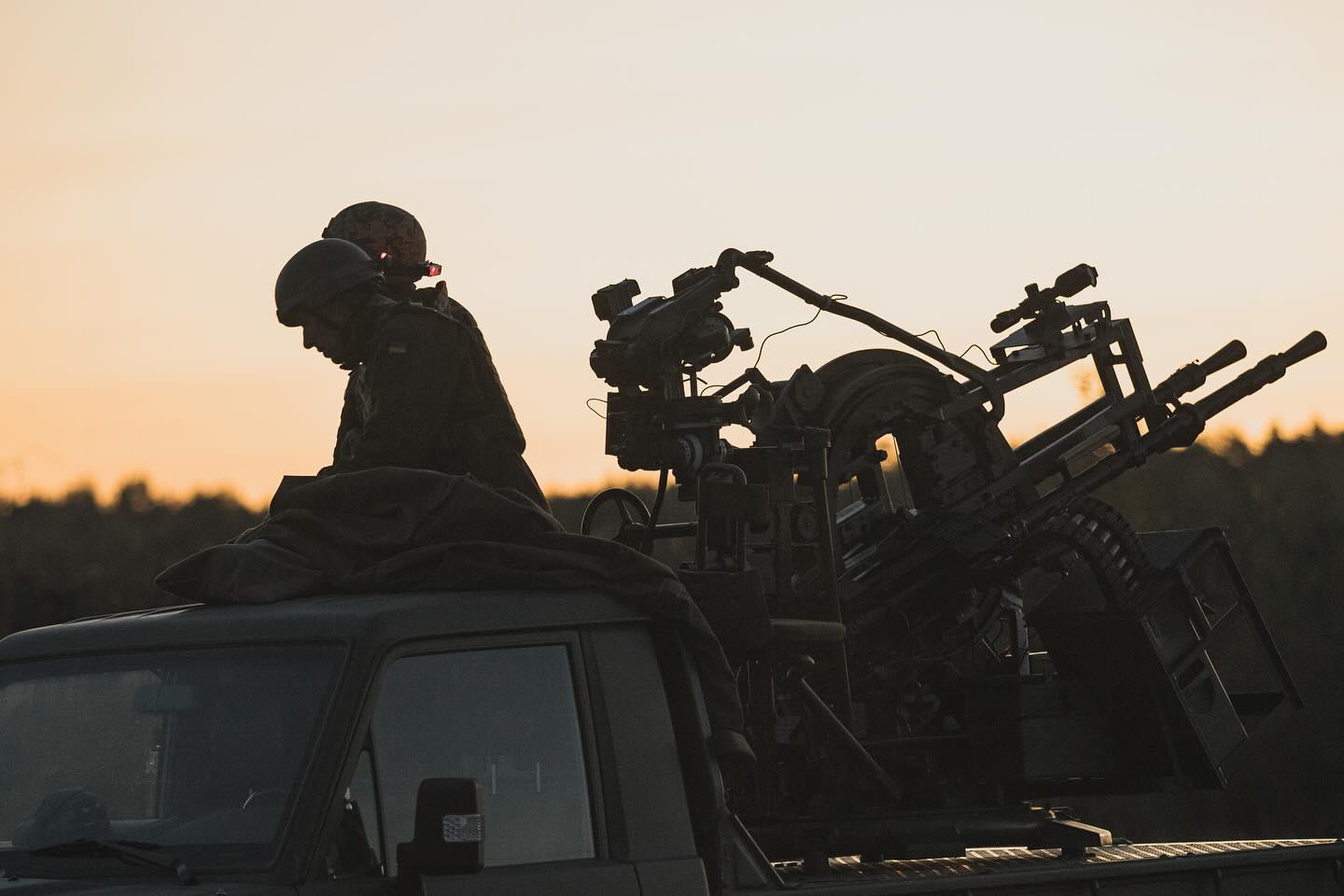
Automated gun turrets now serve in Ukraine’s Air Force and are destroying Russia’s jet-powered weapons, the Defense Ministry reported on 29 October. It gave no count for those jet kills, and it did not say what type of drones the turrets downed over Kyiv.
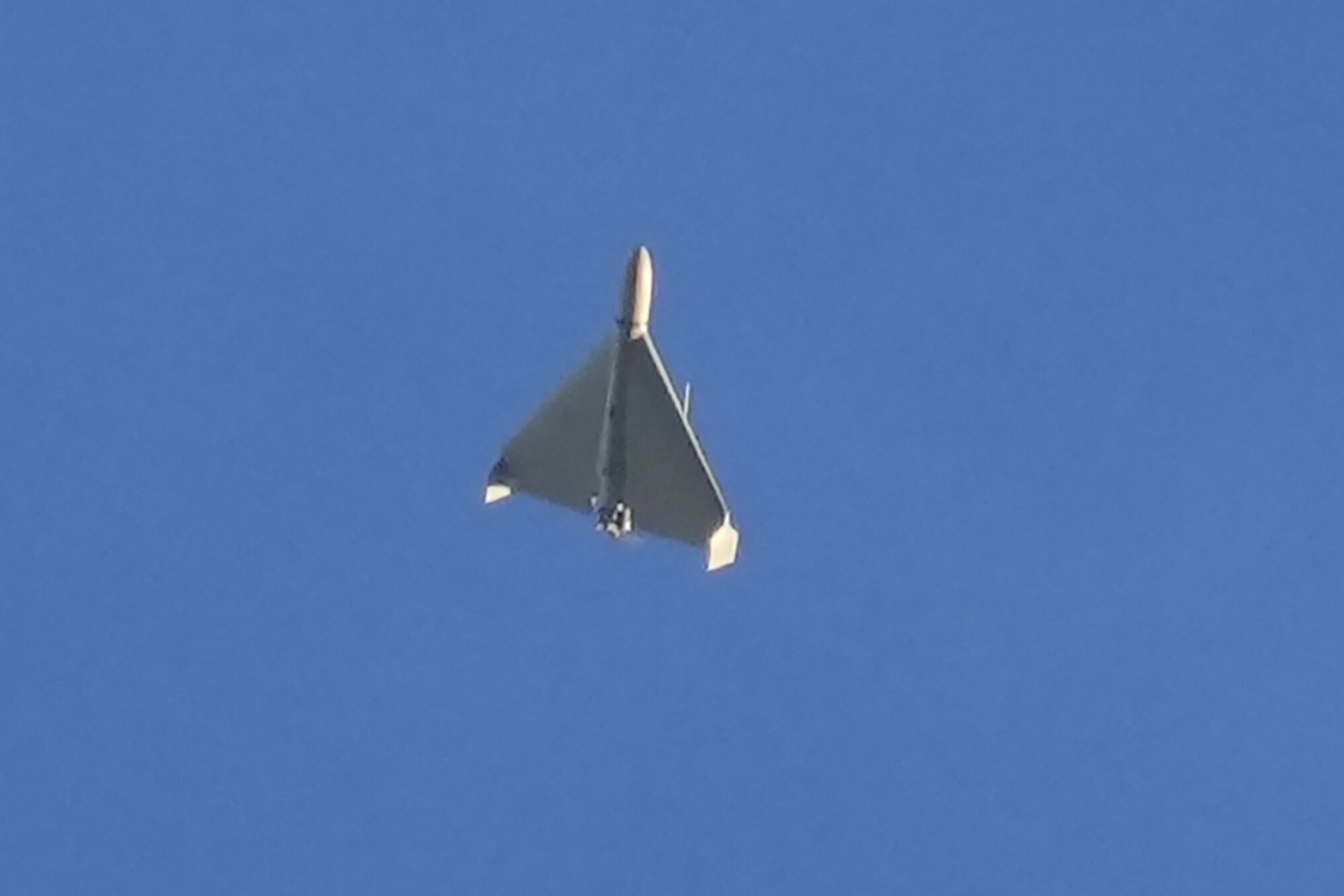
Jet drones are where Ukraine struggles most. From 1 to 26 September, Ukraine downed 55% of jet-powered drones against 90% of slower ones, partly because its interceptor drones fly at about 300 km/h, too slow to catch them. Yurii Cherevashenko, Deputy Commander of the Air Force, told a parliamentary inquiry commission on 6 October that jet-drone interceptors would arrive in the needed numbers no earlier than late November. Guns have limits too. On 5 October, Air Force spokesman Yurii Ihnat said turrets had already downed Geran-5s, but that their range is short because their main weapon is a machine gun.
Air Force turrets against jet weapons
According to the ministry, Brave1, a defense innovation cluster, began developing automated turrets in 2024. The systems have since “moved beyond the experimental stage and become an integral part of air defense,” it said. In Air Force service, the turrets are destroying jet-powered Banderol munitions and Geran-5 drones.
Explore further
To scale up air defense without straining the front, Ukraine enlists business. In under year nearly 100 companies have joined, their crews downing 60-plus targets
Russia first used the Geran-5, a 6-meter jet-powered strike drone, in early 2026. The Banderol, a jet-powered cruise missile, flies at 520–560 km/h and can reach 650 km/h.
Private teams, a familiar number
Separately, the ministry said turrets have destroyed more than 60 targets within the private air defense project. The project lets companies form anti-drone teams that work under Air Force command.
Explore further
Postal service Nova Post says it has already shot down Russian Shahed drones, as Ukrainian businesses take air defense into their own hands
Yet on 14 October, the ministry gave the same 60-plus total for all private teams. At the time, it named interceptor drones and heavy machine-gun turrets as their main weapons. Groups from six companies were on combat duty, about 50 groups had been formed in total, and some were still training. Nearly 100 companies had joined by then, up from 81 in mid-September.
The ministry says the project expands air defense “without placing an additional burden” on the military’s own air defense. It and Brave1 say they will keep integrating automated turrets into the air defense system.
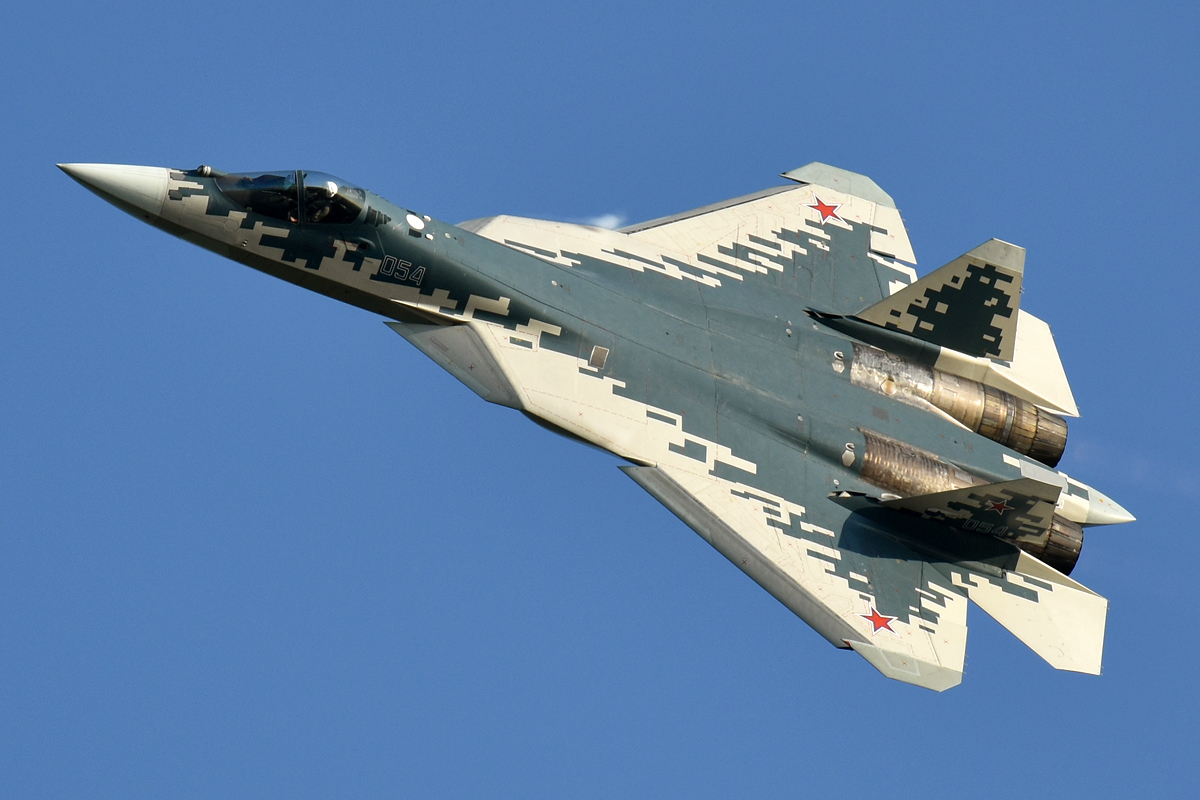
Another of Russia's Su-57 stealth fighters has burned out on the ground, Ukrainian military news outlet Militarnyi reported. A Ukrainian Telegram channel blamed an engine start gone wrong and published satellite images of the scorched airfield.
Russia's war against Ukraine leans on warplanes that strike from standoff range, and Ukraine has spent this year hunting them on their airfields. Its newest fighter is a rare sight in that fleet: Ukrainian intelligence estimated Russia had about 20 Su-57s, against 135–140 Su-35S and 140–145 Su-30 jets, and could not tell how fast more are built.
Satellite images show where the jet burned
The fire broke out at the Akhtubinsk airfield in Russia's Astrakhan Oblast on 29 October. The Ukrainian Telegram channel Absolutely Reliable Source said the multirole fighter caught fire during a malfunction at engine start. It said the jet burned out completely. Militarnyi called the cause preliminary.
Satellite image of the Akhtubinsk airfield in Russia's Astrakhan Oblast after the Su-57 fire, with the burned site marked, 29 October 2026. Satellite image: Telegram channel Absolutely Reliable Source
The channel's satellite images show a dark scorch mark and debris on open ground between the airfield's taxiways.
Scorch mark left by the Su-57 fire at the Akhtubinsk airfield in Russia's Astrakhan Oblast, 29 October 2026. Satellite image: Telegram channel Absolutely Reliable Source
Akhtubinsk has seen Su-57s hit before. Ukrainian drones first damaged Su-57s there in June 2024, and Ukrainian intelligence said two were likely hit.
The fourth Su-57 hit or lost this year
Militarnyi counted the fire as the fourth time a Su-57 was hit or lost in 2026. Ukraine's General Staff said drones hit several Su-57s and a Su-34 at the Shagol airfield in Chelyabinsk Oblast on 25 April. Ukrainian intelligence later said the state of those jets was unknown.
On 23 July, a Su-57 crashed in Moscow Oblast. A Russian Telegram channel said Russia's own air defenders shot it down.
Explore further
“Quiet as mice”: Ukrainian pilots neutralized Russia’s Su-57 marketing campaign over their skies
Russia's air force received two new Su-57s in September, its second batch this year, Militarnyi reported.
Ukraine keeps hitting Russian warplanes on the ground. On 29 October, Ukraine's Navy said its Neptune missiles destroyed two Su-34s at the Marinovka airfield in Volgograd Oblast. Two weeks earlier, it reported hitting six Su-34s at Borisoglebsk in Voronezh Oblast. Russia uses those bombers to drop glide bombs on Ukrainian towns.
 Login