❌

Reading view

Severe rainfall and flood warnings issued for central Greece and western Turkey

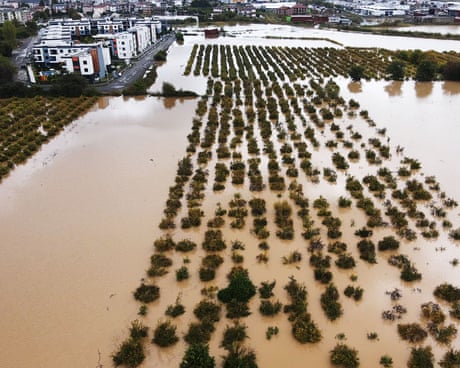
Turkey has been hit by powerful thunderstorms and a fatal tornado this week with more heavy rain expected

Heavy rain and strong winds will continue to affect parts of south-eastern Europe and Turkey over the next few days, as an area of low pressure in the region has allowed for the formation of powerful thunderstorms. During a particularly intense thunderstorm in Antalya, a coastal city in the south-west of Turkey, the formation of a tornado resulted in the deaths of four construction workers on Tuesday. Authorities in Greece and Turkey have released severe rainfall and flooding warnings, as a further 100-150mm (nearly 4-6in) of rain is expected this week in central Greece and western parts of Turkey, with locally higher totals possible.

Travelling eastwards towards south Asia, strong winds and heavy rainfall have swept across the Indian regions of Odisha and Andhra Pradesh as Cyclone Arnab made landfall. With wind gusts in excess of 85mph (140km/h) and rainfall totals in some regions exceeding 200mm, the severe storm has prompted mass evacuations of more than 180,000 people, as well as widespread disruption to energy and transport infrastructure. The cyclone will weaken as it continues to traverse northwards over the coming days, though will continue to deliver heavy rain to parts of northern and central India as it does so.

Continue reading...

© Photograph: Durmus Genc/Anadolu/Getty Images

© Photograph: Durmus Genc/Anadolu/Getty Images

© Photograph: Durmus Genc/Anadolu/Getty Images

  •  

Brussels Proposes New Climate Resilience Law but Leaves €70 Billion Annual Investment Question Unresolved

The European Commission wants member states to assess climate risks, establish national resilience plans and incorporate future warming into public investment decisions. Yet the proposed legislation does not provide the funding needed to implement its ambitions.

The European Commission has proposed a new climate resilience law that would require EU governments to assess their exposure to extreme weather, identify authorities responsible for managing risks and develop national plans to protect infrastructure and economic activity.

Presented on 27 October, the initiative marks a shift in European climate policy towards managing the consequences of changing weather conditions alongside efforts to reduce greenhouse gas emissions.

However, the Commission estimates that adapting Europe’s infrastructure and economy to future climatic conditions will require approximately €70 billion annually.

The proposed legislation does not establish a dedicated funding programme of that size.

This creates an immediate question for member states already facing difficult decisions over defence expenditure, energy security and public borrowing.

Brussels wants governments to make climate preparedness a routine part of economic planning, but the financial responsibility for delivering those measures remains largely unresolved.

National governments face new obligations

Under the Commission’s proposed Climate Resilience Law, EU governments would be required to conduct more systematic assessments of climate risks.

The proposal envisages national assessments by 30 June 2029 and strategic resilience plans by 31 December 2030.

These documents would identify threats affecting infrastructure, public services, economic activity and communities.

Governments would also be expected to specify which public authorities are responsible for managing particular risks.

The intention is to prevent situations in which responsibility is divided between institutions without a clear mechanism for action.

The proposed framework would establish a common basis for assessments across the EU, allowing national authorities to compare risks and coordinate responses.

This could be particularly relevant where droughts, floods or disruptions to energy networks affect more than one member state.

The deadlines remain proposals rather than existing legal obligations. The legislation must still be negotiated and adopted by the European Parliament and the Council.

A common warming scenario

One of the most significant elements of the proposal is the introduction of a shared reference trajectory for global warming.

According to the Commission’s announcement, the framework uses a trajectory involving global average warming of approximately 1.5°C above pre-industrial levels by 2030, 2°C by 2050 and 3°C by 2100.

These figures would provide a common planning assumption for evaluating long-term risks.

They are not legally determined temperature outcomes or a guarantee that warming will follow precisely that path.

Instead, they are intended to help authorities examine how buildings, roads, energy facilities and other infrastructure might perform under changing climatic conditions.

For example, a transport project designed to operate for several decades would need to consider possible exposure to extreme heat, flooding or changes in rainfall patterns.

Such assessments could influence engineering requirements, maintenance costs and investment decisions.

The financial problem

The Commission estimates that approximately €70 billion a year will be needed to strengthen Europe’s climate resilience.

That expenditure could include flood protection, water management, urban cooling, agricultural adaptation and improvements to vulnerable infrastructure.

The Commission argues that preventive investment can reduce the economic losses associated with disasters.

According to its figures, climate-related damage across the EU amounted to approximately €200 billion between 2022 and 2025, averaging €50 billion annually.

However, estimating the economic benefits of prevention does not resolve how projects should be financed.

National governments face competing demands on their budgets, while local authorities often bear responsibility for infrastructure without possessing sufficient resources for major investment programmes.

Private financing may contribute in commercially viable areas, but some adaptation projects generate public benefits rather than direct financial returns.

Flood barriers, emergency drainage systems and measures protecting vulnerable communities may therefore require substantial public expenditure.

The proposed legislation establishes a framework for identifying such investments but does not guarantee the resources necessary to undertake them.

Businesses and insurers face changing risks

The Commission also wants climate resilience to become part of business and financial decision-making.

Companies operating transport networks, energy facilities and industrial sites may face increasing exposure to disruption from extreme weather.

Insurers must assess the potential for more frequent or costly claims.

Banks and investors may need to consider whether assets remain commercially viable under changing environmental conditions.

These issues have implications for credit conditions, property values and long-term investment.

However, incorporating climate risks into financial decisions can create difficulties for regions where exposure is high and adaptation costs are substantial.

Insurance premiums may rise, while some properties or economic activities could become increasingly difficult to insure.

The Commission has indicated that further proposals concerning climate insurance and disaster preparedness are being developed.

Their eventual design will influence how financial risks are distributed between households, businesses, insurers and governments.

New European climate information tools

The framework also introduces instruments intended to improve access to scientific information.

The European Climate Viewer will provide mapped information on projected climate hazards.

The Navigator of Climate Resilience Tools will help authorities and businesses identify relevant assessment instruments.

A separate Solutions Explorer will provide examples of adaptation measures developed through European research programmes.

These tools could make climate information more accessible, particularly for smaller administrations without extensive technical resources.

Nevertheless, access to information does not automatically produce the financing or institutional capacity required to implement projects.

A municipality may be able to identify a flood risk more precisely while remaining unable to finance the necessary protective infrastructure.

A new responsibility for Brussels and national capitals

The Commission is expected to present an additional EU strategic plan on climate resilience in 2028.

Separate initiatives are also being prepared on heatwaves, insurance and disaster preparedness.

The resulting framework could substantially influence how public infrastructure and investment projects are planned across Europe.

However, national governments will have to determine how the proposed requirements interact with existing spending obligations and economic priorities.

The European Parliament and Council must also decide whether the legislation should include stronger financial provisions.

The central issue is not whether governments should assess the risks facing infrastructure and public services, but how the measures identified by those assessments will be funded.

Until that question is addressed, the proposed law will establish a more comprehensive system for recognising climate-related risks without guaranteeing that member states possess the resources to reduce them.

  •  

Trump’s cuts have exposed US to ‘cascade’ of El Niño dangers, experts warn

President has taken an axe to National Oceanic and Atmospheric Administration, stalling climate research on and response to extreme weather events

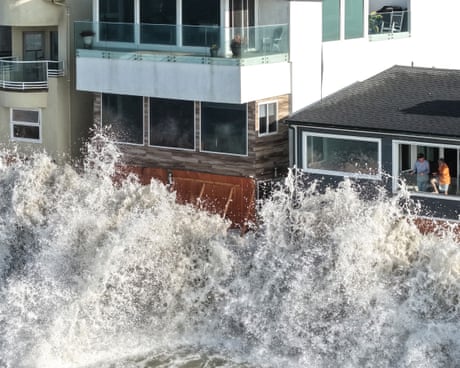
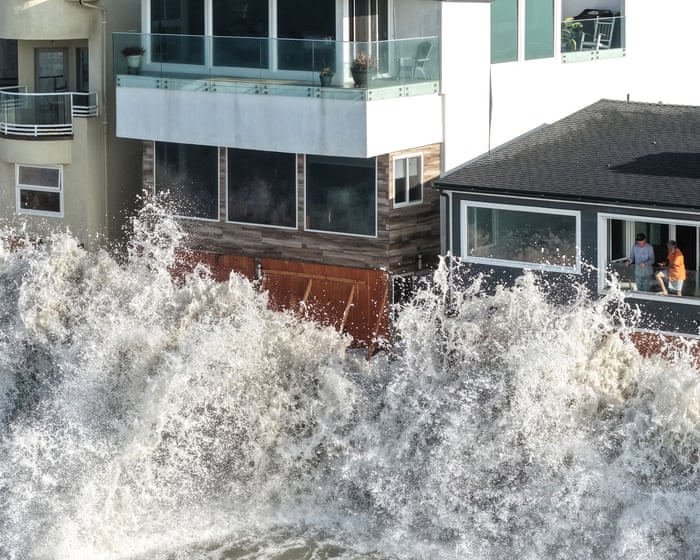
Sweeping cuts to the premier US climate agency under Donald Trump have severely hampered the country’s capacity to forecast, research and respond to extreme weather events, former government officials and scientists have warned, as the US faces a cascade of hazards fueled by a potentially historic El Niño this winter.

From the start of his second term, the president has taken aim at the National Oceanic and Atmospheric Administration (Noaa), slashing staff levels, canceling contracts and grants, and shutting down databases and research laboratories. The agency that has long been considered a global crown jewel in climate science and forecasting, has lost roughly 20% of its staff since January 2025.

Continue reading...

© Photograph: Mario Tama/Getty Images

© Photograph: Mario Tama/Getty Images

© Photograph: Mario Tama/Getty Images

  •  

US forces accused of ‘weaponising’ Somalia’s floods by trapping women and children in the path of El Niño

Exclusive: Coordinated airstrikes on territory held by al-Shabaab are driving the civilian population to find refuge alongside a river where rising water levels are a threat to safety. Is it a deliberate military strategy?

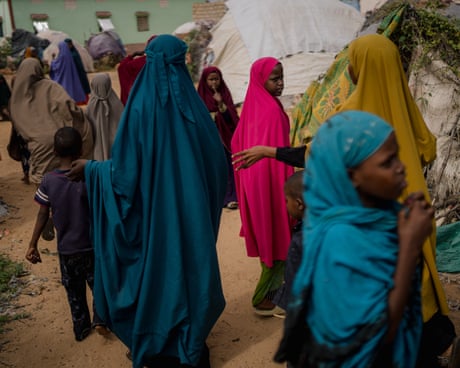
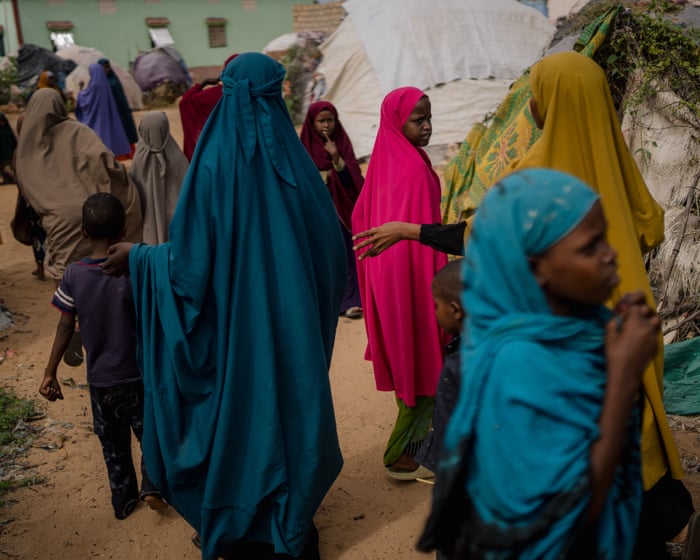
The water was rising rapidly. It had already reached Cayni Ali’s waist. Her home, five metres from the flooded River Juba in southern Somalia, never stood a chance. There was nowhere to go. Ali’s city of Jilib was under attack. Repeated airstrikes, said the mother of six, were pinning its population beside the rising river.

“The drones come all the time,” said the 27-year-old. “We hear them constantly. They kill animals, civilians. The town is big but destruction is everywhere.”

Continue reading...

© Photograph: Hugh Kinsella Cunningham

© Photograph: Hugh Kinsella Cunningham

© Photograph: Hugh Kinsella Cunningham

  •  

Disappearing Hurricanes Leave Disappointed Scientists Without Fuel for Climate Alarm

Hurricanes in the North Atlantic have largely disappeared this year, leaving bitterly disappointed scientists without fuel for their climate alarm and having to admit the role of natural variation, says Chris Morrison.

The post Disappearing Hurricanes Leave Disappointed Scientists Without Fuel for Climate Alarm appeared first on The Daily Sceptic.

  •  

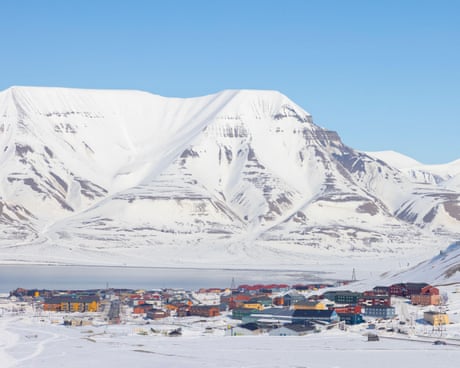
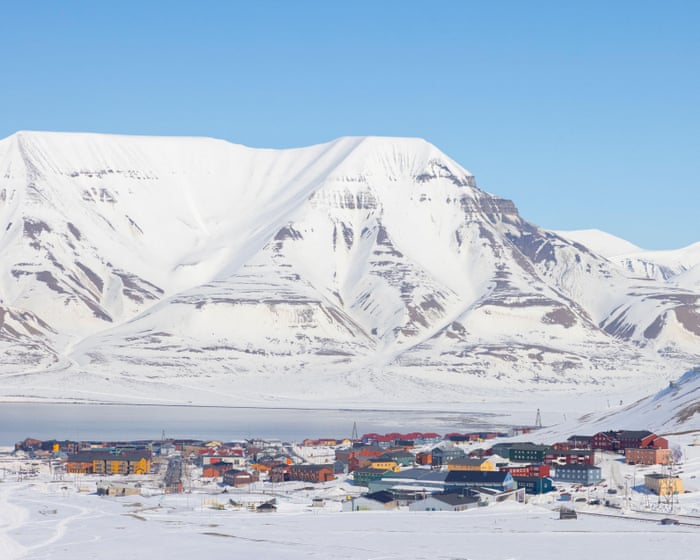
This Norwegian village is one of the fastest-warming places on Earth. How can its people save it?

As glaciers melt and permafrost thaws, Longyearbyen, on the remote Arctic islands of Svalbard, faces climate-induced problems from tap water to housebuilding to landslides

• Heavy metals make Norwegian village’s tap water toxic

On a rugged mountain plateau of snow-dusted rocks, in the remote archipelago of Svalbard, a glaciologist, Andy Hodson, points out the “ears” of ice, white against the rock, that gave Foxfonna glacier its name, after the arctic fox.

The small glacier, on a mountain 8 miles (15km) outside the Norwegian village of Longyearbyen, is a popular summer hike for tourists who come here seeking the Arctic experience.

Continue reading...

© Photograph: Image Professionals GmbH/Alamy

© Photograph: Image Professionals GmbH/Alamy

© Photograph: Image Professionals GmbH/Alamy

  •  

Storm Adam Leaves Three Dead as Torrential Rain Devastates Eastern Spain

At least three people have died in severe flooding across eastern Spain after Storm Adam brought extraordinary rainfall to the Mediterranean coast, forcing thousands from their homes and leaving residents stranded on rooftops as emergency services struggled to reach inundated communities.

The worst flooding struck parts of Valencia and Alicante, where swollen rivers overwhelmed roads, flooded residential districts and disrupted transport. Authorities ordered residents of 145 municipalities to remain indoors as rescue operations continued on Monday, 19th October.

The disaster has revived memories of the October 2024 floods, which killed more than 230 people in the Valencia region and prompted widespread criticism of the authorities’ emergency warnings and response.

Thousands evacuated as rivers burst their banks

The coastal town of Oliva, in Valencia province, was among the worst affected areas. Approximately 2,000 people were evacuated from seven campsites as floodwaters spread through low-lying neighbourhoods, while residents elsewhere sought refuge on upper floors and rooftops.

According to reports from the Spanish news agency EFE, emergency crews were reinforced by Spain’s Military Emergencies Unit, whose personnel were deployed from their base at Bétera to assist local firefighters and rescue teams.

Helicopters were used to reach people trapped by the rising water. Roads became impassable, vehicles were swept away and several settlements were temporarily isolated as streams and drainage channels overflowed.

The scale of the rainfall was exceptional even for a region accustomed to intense autumn storms. In parts of Valencia and Alicante, precipitation approached 700 litres per square metre over approximately 48 hours, equivalent to 700 millimetres of rain.

Pego, in neighbouring Alicante province, recorded more than 600 millimetres within approximately 36 hours, placing considerable pressure on local waterways and drainage infrastructure.

Fatalities and emergency restrictions

Two women died during the weekend, including one swept away by floodwaters near Cabrera de Mar, north of Barcelona, and another whose body was recovered near Sagunto, in Valencia.

A third woman was found dead inside a flooded property in Oliva during rescue operations on Monday. Separately, a 64-year-old man died after suffering a heart attack at a flooded campsite in the same town, according to EFE’s account of the incident.

The regional authorities activated level-two emergency arrangements, enabling additional resources to be mobilised as local services confronted the consequences of prolonged rainfall.

At the height of the emergency, stay-at-home restrictions covered approximately 800,000 people. These measures were subsequently eased in many municipalities, although restrictions remained in force in particularly exposed districts.

Schools were closed in affected areas, roads were blocked and rail services disrupted. The situation remained particularly difficult where floodwaters had entered homes, commercial premises and tourist accommodation.

Renewed examination of emergency preparedness

Storm Adam has inevitably drawn comparisons with the disaster of October 2024, when catastrophic flooding in eastern Spain exposed serious weaknesses in emergency communication, evacuation procedures and coordination between public authorities.

That earlier disaster generated disputes over responsibility between regional and national institutions, particularly concerning the timing of warnings and the deployment of rescue resources.

The latest flooding places those questions back on the political agenda. Spain’s decentralised administrative structure gives regional governments substantial responsibility for civil protection, while the central government can provide military assistance and additional emergency resources.

The deployment of the Military Emergencies Unit demonstrates how rapidly local incidents can require national intervention when extreme rainfall affects several municipalities simultaneously.

The challenge extends beyond issuing weather warnings. Authorities must determine whether warnings reach vulnerable residents, whether evacuation routes remain accessible and whether emergency personnel can intervene before flooding becomes dangerous.

In communities close to rivers, floodplains and coastal drainage systems, these decisions become particularly consequential when rainfall accumulates over a short period.

European implications of repeated flooding

The disaster also raises questions about infrastructure investment and the application of European flood-risk legislation.

Under the EU’s Floods Directive, Member States are required to assess flood risks, prepare hazard maps and develop management plans designed to reduce the consequences for human health, economic activity and the environment.

Those obligations require national and regional authorities to identify vulnerable areas and consider preventive measures, including land-use planning, flood defences and emergency preparedness.

Extreme rainfall does not produce the same consequences everywhere. The effects depend partly on local geography, drainage capacity, urban development and the condition of waterways.

Meteorological warnings had also extended towards Catalonia as the weather system moved northwards, creating additional concern in areas where saturated ground could increase the risk of further flooding.

For the affected municipalities, the immediate priorities remain the completion of rescue operations, restoration of essential services and assessment of damage to homes, roads and businesses.

The longer-term examination will concern whether the emergency arrangements and infrastructure improvements undertaken since the 2024 disaster were sufficient to reduce the consequences of another major autumn storm.

  •  

Eight Million Properties at Risk of Flooding by Mid-Century, Claims Environment Agency

Eight million properties in Britain are at risk of flooding by mid-century due to climate change, the Environment Agency has claimed. That's a quarter of the total. It's completely preposterous, says Paul Homewood.

The post Eight Million Properties at Risk of Flooding by Mid-Century, Claims Environment Agency appeared first on The Daily Sceptic.

  •  
❌