Reading view
Europe's Top Banker Christine Lagarde out Early as She Eyes WEF Leadership
European Central Bank (ECB) President Christine Lagarde is heading for the exit early and will depart on February 7, 2027. This is nearly nine months before her term expires, thus freeing her to become a candidate to take over the elite World Economic Forum (WEF).
The post Europe’s Top Banker Christine Lagarde out Early as She Eyes WEF Leadership appeared first on Breitbart.
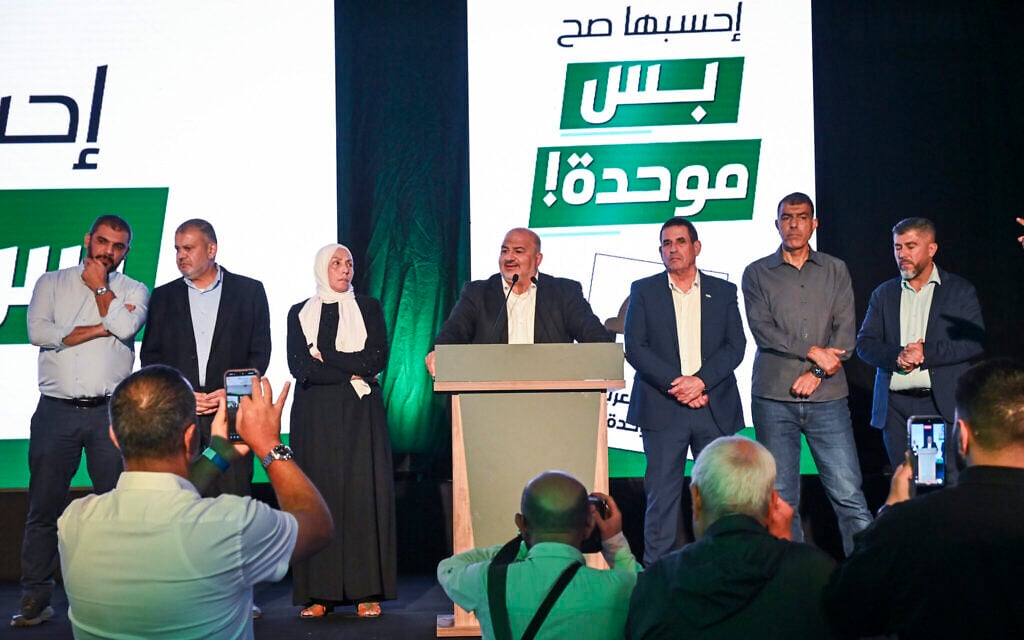
Progressive US Jews call for Eisenkot-led opposition bloc to welcome Arab parties

Ibero-American Universities Agree on Agenda for AI and Mobility
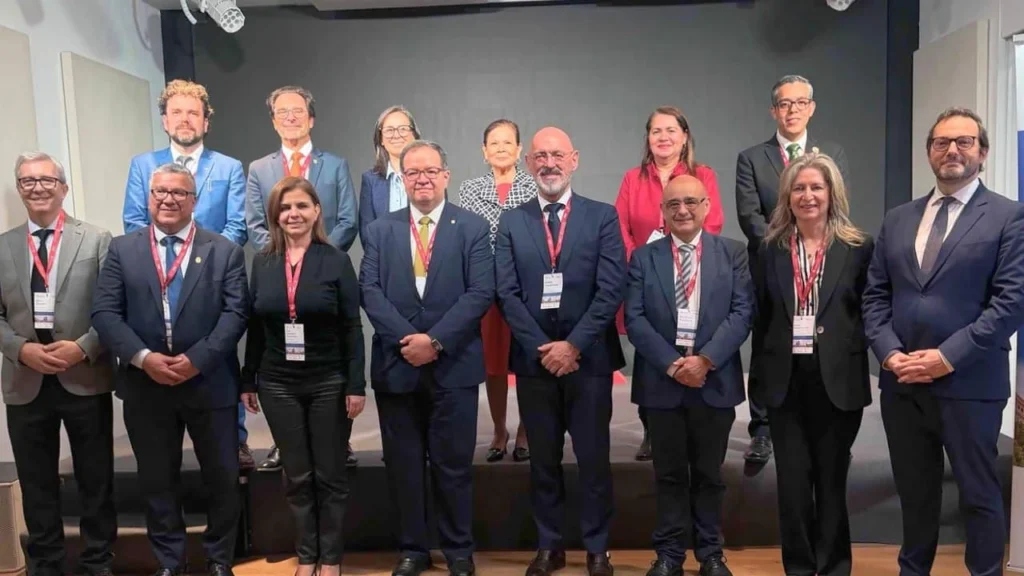
Rectors and officials from around twenty Ibero-American universities approved a 25-point agenda in Madrid this Tuesday. The agenda proposes regulating artificial intelligence (AI), defending Spanish and Portuguese as languages of science, and expanding academic mobility within the region.
RELATED:
U.S.-Mexican Student Accepted to 49 Universities
The agreement was reached during the Ibero-American University Knowledge Forum, held at the headquarters of the Instituto Cervantes. It recognizes the autonomous public university as an indispensable pillar for democracy and social cohesion, and calls on governments to provide sufficient and sustainable funding.
“We face numerous challenges in each of our countries that require a collective, cross-cutting effort,” stated Susana Sumelzo, Secretary of State for Ibero-America and the Caribbean. She noted that the agenda will be presented at the XXX Ibero-American Summit of Heads of State and Government, scheduled for next Wednesday and Thursday in Madrid.
A key commitment is the promotion of Spanish and Portuguese as languages for research, scientific production, and teaching. Sumelzo emphasized that both are global languages shared by more than 800 million people and should also serve as languages in which research can be conducted.
🎓 Iberoamérica aprueba la Carta de Movilidad Académica para facilitar el intercambio estudiantil en la región.
— Cumbre Iberoamericana (@CumbreIberoA) October 22, 2026
🌎 La Declaración de Alicante crea además grupos de trabajo sobre microcredenciales y movilidad del profesorado.https://t.co/0rG2DHeu4p
The text reads, “Ibero-America adopts the Academic Mobility Charter to facilitate student exchange within the region. The Alicante Declaration also establishes working groups on micro-credentials and faculty mobility.”
Furthermore, the institutions agreed to establish an Ibero-American University Knowledge Network—with this forum serving as its foundational event—and the proposal includes facilitating student mobility and the mutual recognition of academic degrees between countries.
Odir Fernández, Rector of the National Autonomous University of Honduras, highlighted that Spain serves as a benchmark for higher education in Latin America, a fact reflected in the migration of Latin American students to that country. Meanwhile, Jacqueline Sepúlveda, Rector of the University of Concepción in Chile, advocated for the mobility of students and faculty as a means to strengthen research and the intellectual sovereignty of our peoples.
The agenda also calls for shared regulation of AI and stipulates that technological advancement must be subordinate to human dignity, as well as to the sustainable use of water and energy in data centers.
“We need to move beyond universities that are rooted in the 19th century in terms of infrastructure, the 20th century in terms of their faculty, and the 21st century in terms of their students,” Fernández stated, referring to the digital divide.
#FromTheSouth News Bits | Belgium: Young demonstrators took to the streets of Brussels to protest education reforms that would raise university tuition and extend teaching hours without additional pay. pic.twitter.com/IBp4sxza26
— teleSUR English (@telesurenglish) October 27, 2026
Deeper India-Philippines ties boost US aims in South China Sea

This article first appeared on Pacific Forum and is republished with kind permission. Read the original here. With so much media focus in recent months on the war in Iran, it’s no surprise that Under Secretary of War for Policy Elbridge Colby’s speech in Manila received so little coverage. That means very few know what […]
The post Deeper India-Philippines ties boost US aims in South China Sea appeared first on Asia Times.
A verdade que não me ensinaram
Iran Calls U.S. Actions ‘Economic Terrorism’ at Gas Exporting Countries Forum
President Pezeshkian Says U.S. Naval and Air Blockades Destabilize Global Energy Markets.
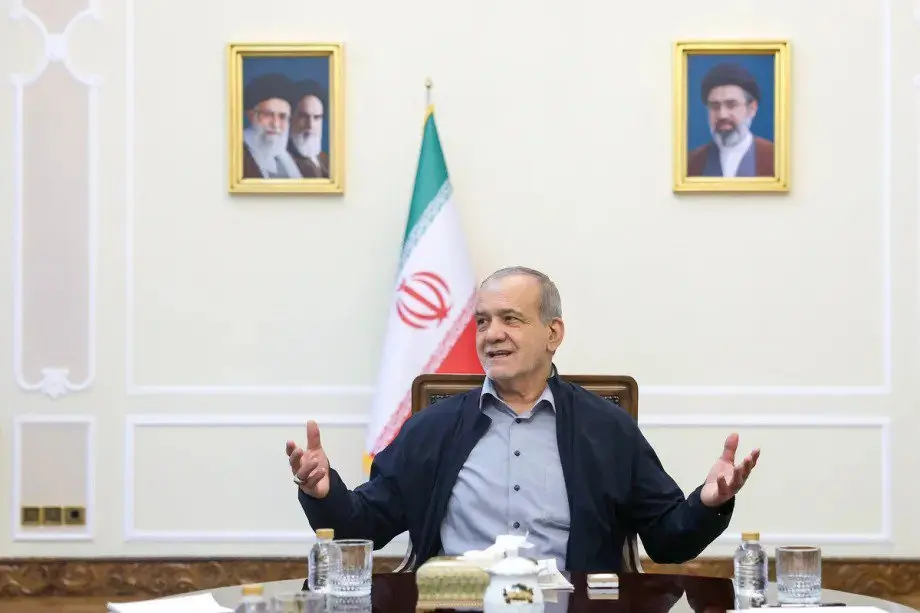
On Tuesday, Iranian President Masoud Pezeshkian branded U.S. actions that cause dangerous surges in hydrocarbon prices on the world market as “economic terrorism.”
RELATED:
Iran Accuses Emirati UNSG Candidate of Laundering the Genocide in Gaza
“Economic terrorism, in the form of the U.S. naval and air blockade against Iran, in addition to Washington’s pressure on other countries to comply with this blockade, are illegal actions that seriously destabilize energy markets,” he said during his address at the summit of the Gas Exporting Countries Forum (GECF), the so-called “gas OPEC.”
Pezeshkian also pointed out that U.S. military interventions in the Persian Gulf region not only affect regional actors but also disrupt the process of energy pricing, supply and transportation, which threatens global economic growth.
The Iranian leader then invited international investors to do business with the Persian nation. “Foreign investors can, without running any risk, take advantage of incentives and benefits that we offer in the oil, gas and petrochemical sectors,” he stressed.
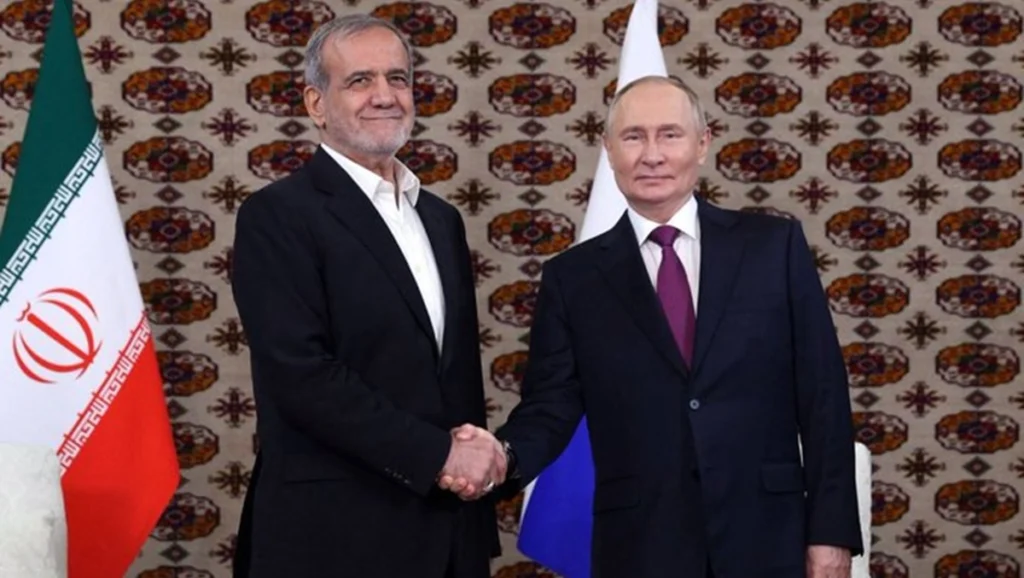
🇶🇦🇷🇺🇮🇷 Qatar’s Emir Tamim joins Vladimir Putin and Iranian President Masoud Pezeshkian at the eighth Gas Exporting Countries Forum summit in Moscow. Ahead of the group photo, Tamim held separate talks with Pezeshkian: Qatar’s published account lists Hormuz, energy supplies and… pic.twitter.com/g1ipI3Z0Ux
— Gölge Veri (@golgeveri) October 27, 2026
Pezeshkian highlighted that, despite the sanctions imposed on Tehran, Iran was able to increase its natural gas production capacity to 300 billion cubic meters per day.
Commenting on the Iranian leader’s speech, Russian President Vladimir Putin agreed that “illegal sanctions” only have harmful consequences.
“You drew attention to the illegal sanctions that some countries impose in the energy sector. I completely agree that they only have harmful consequences for all market actors, both producers and gas exporters,” he said.
teleSUR/ JF
Source: EFE
Iran’s Pezeshkian Will Travel to Russia To Attend the Gas Exporting Countries Forum
Iran’s President, Masoud Pezeshkian, will travel to Russia to participate next Tuesday in the Summit of Heads of State and Government of the Gas Exporting Countries Forum (GECF), which will be held in Moscow, where he will also meet with his Russian counterpart, Vladimir Putin.
Russia Ready to Help Iran Resolve Regional Conflict: Putin: Iran’s Pezeshkian Will Travel to Russia To Attend the Gas Exporting Countries Forum“The President of Iran, during his trip to Russia, in addition to participating in the Summit of Heads of State of the Gas Exporting Countries Forum, will meet with his Russian counterpart,” stated this Saturday the Iranian ambassador to Russia, Kazem Yalali, to the Tasnim agency.
According to the diplomat, both presidents will exchange views on geopolitical, international, and political issues. Also, according to Yalali, they will address economic and trade cooperation, energy security, food security, and the development of trade relations.
🇮🇷🇷🇺 Iran’s Pezeshkian to meet Putin in Moscow to discuss economic and trade cooperation, envoy says. pic.twitter.com/T94coAfgX6
— KOSO🇳🇬 (@KosoNwa1) October 24, 2026
“Never in our history have Iran and Russia worked as closely as they do now,” said last Tuesday the Iranian Foreign Minister, Abbas Araqchi, a day after the visit of his Russian counterpart, Sergey Lavrov, to Tehran.
During that visit, both ministers addressed, among other issues, the situation in the Middle East and advocated for diplomacy as a way out of the war that began last February 28 between Iran and the United States and Israel.
The last bilateral meeting between Pezeshkian and Putin took place last October 8 in the city of Avaza, in western Turkmenistan, within the framework of the summit of leaders of the post-Soviet Commonwealth of Independent States (CIS).
Iran and Russia have strengthened their relations in recent years, especially after the start of the war in Ukraine, and in 2025 they signed a strategic partnership agreement.
Velhos achados – A cadeira
Um dia entre todos os dias – 10 de Outubro – Dia Mundial da Dislexia e da Saúde Mental
UK parliament hosts TRENDS forum on Muslim Brotherhood networks in Europe
British parliamentarians, former ministers, researchers and security experts gathered at the House of Lords in London for the sixth TRENDS Annual Forum on Political Islam, focusing on Muslim Brotherhood networks in Europe, education, funding and digital influence.
The London meeting opened the first part of the forum, organized by TRENDS Global and TRENDS Research & Advisory. Proceedings will continue on September 10 at the French Senate in Paris, with a focus on legislative responses and cooperation between European and partner countries.
Opening the event, Dr. Mohammed Abdullah Al Ali, Chairman of Trends Group, argued that political Islamist movements operate across borders and can exploit the openness of democratic societies to build influence in education, media, business and the digital sphere. He stressed the distinction between Islam as a religion and Islamism as a political ideology seeking power and influence.
Dr. Khalifa Mubarak Al Dhaheri, Director of Mohammed Bin Zayed University for Humanities, focused on Britain, describing it as a longstanding centre for individuals and networks associated with the Muslim Brotherhood and political Islam. He said the organization should not be treated as representative of Muslims in Britain or elsewhere in Europe and warned that ideological loyalties placed above citizenship can create “societies within societies.”
From Education to Funding
The first session examined the Brotherhood’s ideological structures and its influence on education and younger generations. Participants also discussed the Gaza Children’s Village, established in July 2025 by Palestinian-American neurosurgeon Dr. David Hassan in cooperation with IMPACT-se, as an alternative educational model to counter incitement and extremism.
The second session turned to legislation, prevention and enforcement. Lord Walney, who moderated the discussion, urged a review of existing legal tools and warned of a “blind spot” allowing some networks and think tanks to penetrate charities and the education sector. He also advocated greater intelligence sharing and international cooperation.
Baroness Foster of Oxton addressed financial oversight, arguing for tighter scrutiny of charities, their funding and tax benefits. Former MP Daniel Kawczynski urged the Home Office to respond to parliamentary demands to ban the Muslim Brotherhood and designate it as a terrorist organization. Lady Olga Maitland warned that “soft extremism” and structures targeting young people require updated legislation.
Matthew J. Leavitt of the Labour Party described the Brotherhood as a “multi-headed beast” and urged Britain to examine evidence gathered in Austria, Germany and France. Major Jason Olson, a U.S. Navy officer and former counter-extremism official, argued that prevention should begin in schools.
Markus Sheff, CEO of IMPACT-se, identified education as the first line of defence against digital extremism, advocating critical thinking and digital literacy in school curricula.
Pressure for a UK Response
Sir Oliver Dowden, former Deputy Prime Minister and Chair of the UK-UAE Parliamentary Friendship Group, addressed the Brotherhood and its links to extremism, noting growing attention to the issue among British parliamentarians and the need for institutions to better assess potential threats to the United Kingdom.
Tom Wilson, Chairman of the Counter Extremism Group, and Dr. Alan Mendoza, Executive Director of the Henry Jackson Society, highlighted the legal and media difficulties involved in exposing front organizations. They announced the “Ban the Brotherhood” campaign and proposed using parliamentary privilege to bring evidence into the public domain.
Professor Andrew Davies of the University of Birmingham advocated carefully targeted bans on organizations that threaten social cohesion and religious pluralism. Professor David Abrahams, Senior Adviser at the Arab Global Network and former Deputy Chairman of RUSI, described political Islam as an “existential threat” while stressing the need to protect religious freedom and pluralism.
Alessandro Bertoldi, Executive Director of Italy’s Milton Friedman Institute, questioned whether a ban alone would be sufficient without confronting the Brotherhood’s operational tools. He also raised the need to monitor the use of artificial intelligence to spread its messaging.
Phil Rosenberg, President of the Board of Deputies of British Jews, advocated an international alliance against extremist ideology, noting that Muslims themselves are among its largest victims. Imam Mohammed Tawhidi, counter-extremism adviser at TRENDS, described the Brotherhood as the “parent company” of organizations including al-Qaeda, ISIS and Hamas, while stressing that the vast majority of Western Muslims reject this approach.
Measuring the Brotherhood’s Reach
TRENDS researcher Hamad Al Hosani argued that the Brotherhood increasingly operates through flexible networks and community institutions able to exploit democratic freedoms. Any response, he said, should protect national security without collectively stigmatizing Muslim communities.
Badriya Al Riyami presented figures from the 2025 Global Brotherhood Power Index. Europe ranked fourth at 17.0%, behind the Americas at 24.8%, Asia at 22.5% and Africa at 20.2%. She described Europe as an important political and media base for the organization.
Participants recommended moving beyond procedural bans by addressing networks and ideological structures, strengthening educational programs and improving capabilities to track extremist content spread through digital platforms and artificial intelligence. Citizenship and tolerance education were identified as key preventive tools.
The meeting drew a broad parliamentary and political audience, including Richard Tice, Sir Robert John Blackman, Baroness Deech, Baroness Foster of Oxton, Nadhim Zahawi, Lord Howard of Lympne, Lord Austin of Dudley, Lord Eric Pickles, Sir Michael Ellis and Sir Oliver Dowden.
Journalists attending included Marcus Donaldson of GB News, Camilla Turner of the Sunday Telegraph and Natalie Lisbona of the Daily Mail.
The forum now moves from Westminster to the French Senate, where its second part will examine legislative responses, research cooperation and measures to counter Brotherhood-linked networks while protecting religious freedom and equal citizenship.