❌

Reading view

Ukraine says it hit drone hangars at Crimea’s Hvardiiske. Now an OSINT channel spots 20+ bermed shelters there

Damage zone and UAV storage area in Hvardiiske.

Russia is expanding drone storage at the Hvardiiske military airfield in occupied Crimea, Ukrainian OSINT channel Dnipro Osint reported on 26 October, citing new satellite images. The channel did not say who took the images or when. Ukraine’s Security Service (SBU) said it struck drone hangars at the same airfield in July, and the military said strikes on 13 October damaged four drone storage sites nearby.

Hvardiiske has stayed in use since then. Ukraine’s General Staff has listed it among the sites Russia launched attack drones from in every daily report since 7 October. The airfield was on the list again on 24, 25, and 27 October, the night Russia aimed its main strike at Kyiv. The new construction, as the channel describes it, adds protected storage at a base Ukraine has already shown it can reach.

Shelters and “garages”

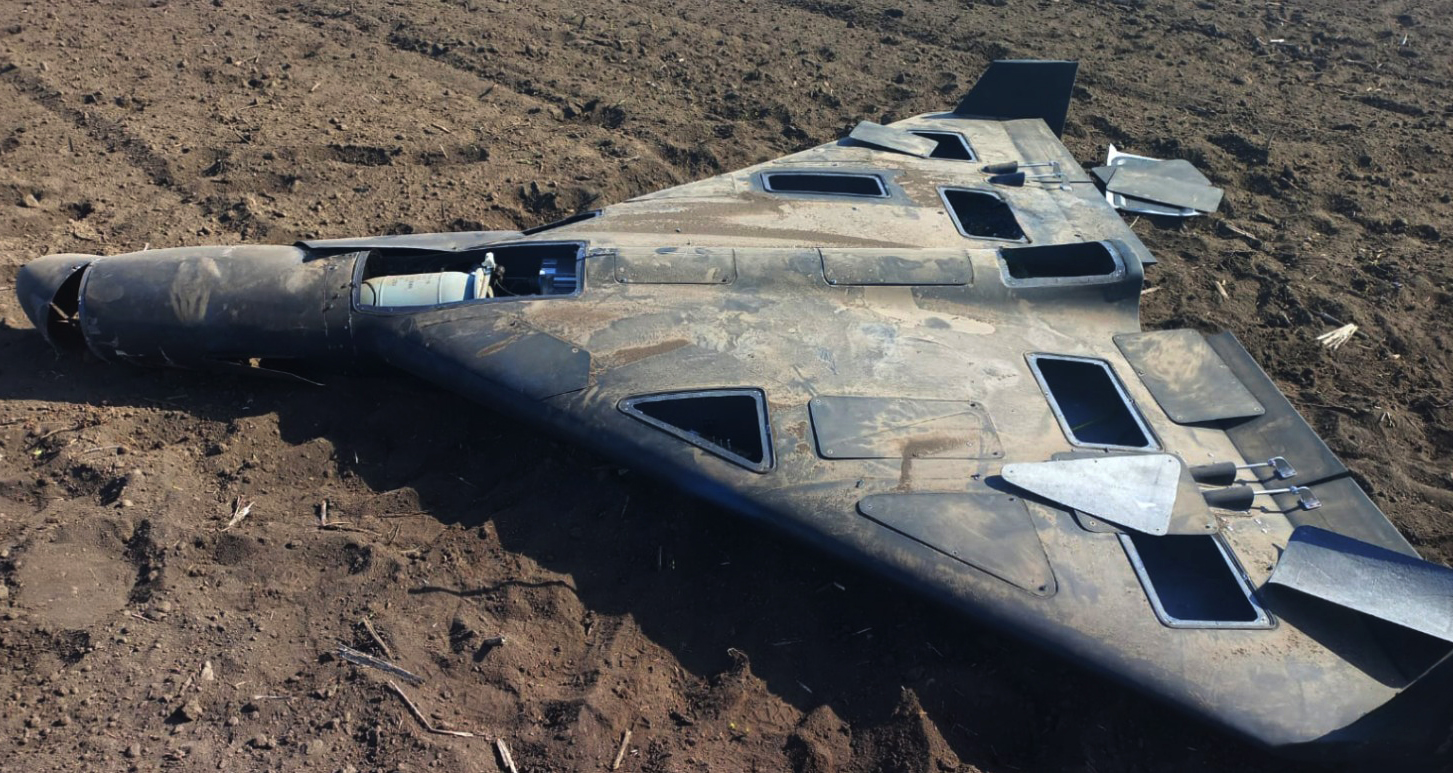
The images show more than 20 small shelters under construction, each protected by earth berms, the channel said. It also counted about 40 smaller structures it calls “garages.” It said they are meant for storing, servicing, and preparing Geran drones for launch.

Geran is the name Russia gives the Iranian-designed Shahed drones: the Shahed-136 became the Geran-2, which Russia now builds itself. The images show at least one hangar damaged by a Ukrainian drone hit, Dnipro Osint noted.

Launched from vehicles

Hvardiiske, north of Simferopol, uses mobile launch platforms instead of fixed installations, according to Dnipro Osint. Crews load drones onto specially equipped vehicles, which then launch them from the runway.

Struck repeatedly since June

On 24 June, the SBU said it hit infrastructure at Hvardiiske and at the Saky airbase. On 3 July, the SBU reported that its drones struck two hangars at Hvardiiske that stored Shaheds and aviation equipment. Ukraine’s General Staff said its forces struck the airfield again overnight on 5 July, and the SBU said a day later that it hit three hangars with aviation equipment there. A strike on 3 August destroyed nine aviation-fuel tanks and damaged two aircraft hangars, the General Staff said. Strikes on 13 October damaged four drone storage sites near Hvardiiske, with signs of secondary detonation, it reported two days later.

Not the only base Russia is building up

Hvardiiske is not the only Russian drone base Ukrainian OSINT channels have flagged this month. On 13 October, the anonymous channel Absolutely Reliable Source said Russia had nearly finished the first section of a launch site for jet-powered Geran-5 drones near Millerovo in Rostov Oblast, with eight launcher positions and 32 drone-preparation spots. Hvardiiske and Millerovo were both among the launch areas the General Staff listed for the night of 27 October, when Russia launched 280 Shahed-type drones, 69 of them jet-powered, with Kyiv as the main target.

  •  

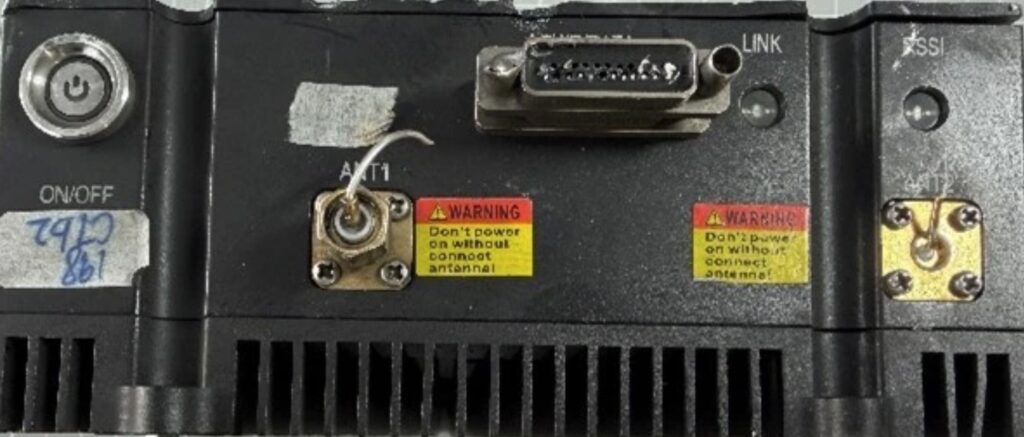
A modem from a Russian drone led reporters to its Chinese maker—which invoiced 500 for Russia’s drone plant

Mesh Network XK-F358 modem from the Geran-5 drone

Undercover reporters ordered 500 drone mesh modems from a Chinese firm, which billed them to Russia’s Alabuga drone plant, investigation by The Insider found. The outlet estimates the firm makes about half the high-power mesh modems that let Russia steer its drones deep into Ukraine. The firm’s director also named US company AMD as the source of a key chip, and AMD says it has not sold to the firm.

Geran drones and Banderol drone-missiles have become Russia’s main weapons against Ukraine’s energy grid. Russia began this winter’s strike campaign against that grid in late September, ISW assessed. Ukrainians’ survival this winter depends largely on how fast the West halts mesh modem sales to Russia, the outlet argued.

What a mesh modem does

A mesh modem links drones into one radio network. Each unit relays data for the others, so if one drone is shot down, traffic reroutes through the rest. Information keeps flowing even if nearly 80% of the drones are downed, Ukrainian defense adviser Serhii “Flash” Beskrestnov said in November 2025.

Range is the other half of the threat. One XK F-359 holds a line-of-sight link over 100–300 km, The Insider says. In theory, a couple of relay drones could keep a whole attack on Kyiv connected. Operators can then send new commands in flight and steer around air defenses. Russia’s Gerbera drones, first built as cheap decoys, increasingly carry these modems.

Explore further

Russia’s jam-resistant drones run on a Chinese modem no one has sanctioned

A modem from an upgraded Gerbera

To trace the part, The Insider’s correspondent in Ukraine examined an unmarked mesh modem from an upgraded Gerbera with a vertical tail fin, a version that appeared this summer. The outlet identified it as Xingkai’s XK F-359, the part Ukrainian intelligence and earlier reporting, Euromaidan Press included, had logged as the XK-F358. The Insider calls that label a misidentification.

Next, The Insider and the Nordsint investigative project contacted Xingkai on WeChat, posing as a Russian military supplier based in Alabuga. A company employee who introduced himself as “Jack Jiang” confirmed the firm is the model’s sole maker. The Insider identified him as Jiang Qin, Xingkai’s director and owner.

500 modems, three banks

The reporters then ordered 500 units for delivery to Alabuga, home to the plant that makes most of Russia’s long-range drones. Jiang invoiced 19.5 million yuan, which The Insider put at about $2.87 million. He offered two ways to pay: dollars to Xingkai’s DBS Bank account in Hong Kong, or yuan to his personal Ping An Bank account.

A man walks past a mural by Norwegian street artist Toddel depicting a map of Ukraine and US President Donald Trump (L) with Russia's President Vladimir Putin in Krakow on March 6, 2026, amid the Russian invasion of Ukraine. (Photo by Sergei GAPON / AFP) / Eastnews)
Explore further

America has sided with Russia against Ukraine. Europe should stop pretending and build a coalition against Russia, China, and even the US

In the chat, the reporters said outright that the end user was a military production facility. Jiang raised no objection, The Insider reported.

Later, after the reporters asked to update the address, Xingkai sent a revised invoice with “Alabuga” spelled in Latin letters. This time, it routed payment to a China Merchants Bank account in the name of a former Xingkai manager. She left a management post at the company in 2025, according to Tesari corporate records cited by The Insider. None of the three banks answered The Insider’s requests for comment.

Jiang also claimed the modem’s programmable chip is made by AMD. Asked for an AMD license, he refused, saying Xingkai buys the chips through a middleman. AMD told The Insider that Xingkai “is not an AMD customer or authorized partner,” and said it had sold the company nothing. AMD added that it bars exports of its products to Russia that violate US export controls and sanctions.

  •  

Built as a cheap Shahed lookalike, Russia’s Gerbera now flies with a 10-kg warhead and an incendiary bag

built cheap shahed lookalike russia’s gerbera now flies 10-kg warhead incendiary bag · post payload bay russian gerbera-2 drone additional tank гербера-2 з бойовою частиною масою 10 кг і додатковим

Russia has started fitting its enlarged Gerbera-2 drones with a 10-kg warhead and an extra bag of incendiary mixture, Ukrainian military outlet Militarnyi reported on 18 October. The setup is designed to start a fire where the drone hits and is probably meant for attacks on critical infrastructure and warehouses, the outlet said.

Russia’s industry makes about 3,000 jet-powered Geran-4 and Geran-5 drones a month, Ukraine’s military intelligence has said, and Russian strikes have destroyed 2.1 million m² of Ukraine’s modern warehouse space since the full-scale invasion began. A cheap drone that carries fire adds one more threat for air defenses that already let nearly half of Russia’s jet-powered Shaheds through.

A fire bag behind the warhead

Ukrainian Telegram channel Polkovnyk HSh posted photos of the payload on 17 October. Gerbera-2 strike and reconnaissance drones had begun to appear with a 10-kg high-explosive fragmentation-incendiary warhead and an extra package of incendiary mixture, the channel wrote. They navigate with Kometa-M12, a 12-element antenna array designed to resist jamming, it added.

Explore further

Russian drones set their own detonators at altitude: Why cutting wires won’t save from new Gerberas?

In the photos, the incendiary mixture sits in a separate soft plastic tank behind the main warhead, Militarnyi said. Gerbera-2s have been seen with warheads of 4 to 10 kg depending on range, while strike versions of the original Gerbera usually carried up to 5 kg, the outlet noted.

Half a Shahed engine

Russia has mainly fielded the Gerbera, a cheap drone shaped like a Shahed, as a decoy and reconnaissance platform flying alongside Shahed-type strike drones. It has also used bigger Gerberas to drop FPV drones.

Serhii Beskrestnov, now an adviser to Ukraine’s president, flagged a much bigger Gerbera in Ukraine’s skies on 7 August. The Gerbera-2 has a larger airframe, a reshaped wing, and a bigger tail fin, Militarnyi said. In August, the outlet reported it had a stronger piston engine: half of the one in the Shahed-type Geran-2, at about 275 cm³. Production of these engines was set up at the Izhevsk Motorcycle Plant, according to preliminary information the outlet cited.

Ukrainian defense technology adviser Serhii “Flash” Beskrestnov works near the front line monitoring Russian drone signals. Photo: Serhii “Flash” Beskrestnov
Explore further

Russia equips Geran attack drones with image-based navigation using Google map imagery, reducing reliance on satellite navigation that Ukraine can jam, defense adviser warns

Earlier versions ran on a Chinese DLE60 model-aircraft engine of about 61 cm³. The switch was likely possible because Geran-2 engine output partly freed up as jet-powered Geran-4s took a growing share of Russia’s drones, Militarnyi said. The Gerbera-2’s fuel tank also holds up to 63 liters, against 10 liters on the original.

One reached Poland’s Baltic coast

In September, a drone preliminarily identified as a Gerbera-2 was recovered from the Baltic Sea near Rusinowo, on Poland’s coast. It carried a high-explosive fragmentation warhead of about 4 kg, a Polish military prosecutor said.

  •  
❌