Healthcare authorities in Ceuta have confirmed five known Human Immunodeficiency Virus (HIV) cases among the thousands of illegal migrants that invaded the city in July, a report published on Friday states.
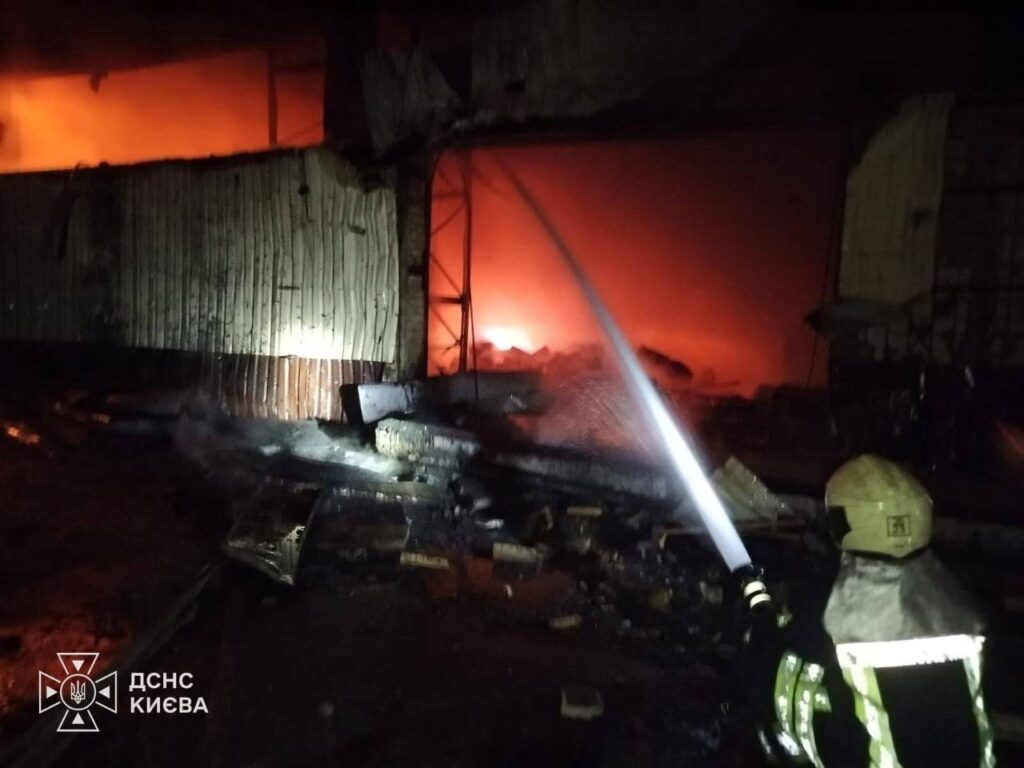
Russia attacked Kyiv with ballistic missiles late on 29 October, killing a man and injuring a 35-year-old woman, Kyiv city prosecutors said. The strikes damaged eight apartment blocks in Dniprovskyi district, a gas station, a restaurant, a dental clinic, warehouses, and cars. A warehouse building caught fire in Darnytskyi district, the city administration reported.
Overnight, Russia fired Iskander-M, S-400, and KN-23 ballistic missiles, four Kh-59/69 guided missiles, and 113 drones, 83 of them jet-powered, Ukraine's Air Force said. The attack mainly targeted Kyiv, Poltava, and Dnipropetrovsk oblasts. Air defenses downed three missiles and 96 drones, but strikes hit 17 locations.
Russia is waging its war on Ukraine's cities around the clock as winter approaches, striking homes, transport, and the power grid that keeps them running. On 29 October, including the late attack on Kyiv, Russian strikes killed at least 27 civilians and injured more than 140 across six regions, by EP's tally of regional authorities' reports. It was one of the deadliest days of the autumn. Most died in daylight, on a train platform in Dnipro, in an apartment block in Kremenchuk, in central Chernihiv, and under guided bombs in Izium.
Dnipro and Kyiv's right bank lose power
A Russian strike on Dnipro left more than 350,000 customers in the city and nearby towns without power, Dnipropetrovsk Oblast's administration said shortly after midnight. Water pumping stations switched to backup power. By morning, engineers had restored electricity to most customers in the oblast, but more than 200,000 were still without power.
Explore further
It was the only transport serving a village where more than 1,600 people still live: Russian forces strike a social bus with a drone in Bilenke, killing a woman and injuring other passengers
In Kyiv, equipment damaged in earlier strikes failed on the right bank, forcing emergency outages, the city administration said. Russia attacked an industrial plant in Poltava Oblast's Kremenchuk district overnight and again in the morning, with no casualties reported, the regional administration said.
A damaged one-story building and debris on the ground in Kyiv, Ukraine, after a Russian ballistic missile attack late on 29 October 2026. Photo: Kyiv City Prosecutor's Office
In the morning, a Russian drone hit a shopping center in Kharkiv's Kyivskyi district, injuring four women, Kharkiv Oblast Governor Oleh Syniehubov said. In Chernihiv Oblast, Russian drones destroyed the house of culture in Mena late on 29 October, and in the morning a drone hit a house in Bobrovytsia and injured a woman, the regional administration said. In Chernihiv itself, 37 people sought medical help after the 29 October strike on the city center that killed two 15-year-old girls, Yana and Mariia.
A burned-out car in central Chernihiv, Ukraine, after a Russian strike on 29 October 2026. Photo: Chernihiv Oblast Military Administration
Two oblasts in mourning as the Dnipro toll rises to 15
A 40-year-old man wounded in the 29 October jet drone strike on Dnipro's railway station died in hospital, raising the toll to 15, the regional administration said. Eleven people remain in hospital. Dnipropetrovsk Oblast declared 30 October a day of mourning.
A police officer near a five-story building partly destroyed by Russian guided bombs in Izium, Kharkiv Oblast, Ukraine, October 2026. Photo: National Police of Ukraine
Poltava Oblast also mourns three people killed when a Russian drone hit an apartment block in Kremenchuk on 29 October. Another 32 were injured, six of them children, the regional administration said.
Explore further
Russian jet drone hits Dnipro railway platform, killing 14 people next to a Zaporizhzhia-bound train
In Izium, Kharkiv Oblast, Russian guided bombs hit a five-story building on 29 October, killing four people and injuring 14, police reported. In Zaporizhzhia Oblast, Russian attacks killed two people in Bilenke and injured 23 across the region, 13 of them when Russia sent seven FPV drones at vehicles and public transport in Zaporizhzhia city, police said. EP reported the city faced a record number of such attacks.
Ukrainian forces are making slow but tactically meaningful gains near Velyka Novosilka that could eventually threaten Russian supply lines in the south, the Institute for the Study of War (ISW) assessed on 25 October. The push has already pulled Russian naval infantry and tank units away from offensives elsewhere, according to a Ukrainian military observer ISW cites. The same observer cautions that the advance has slowed.
Russia keeps grinding toward Donbas's last big free cities, yet Ukraine has liberated more land than Russia captured since the start of fall. Each elite unit Moscow sends to plug a gap in the south is one it cannot throw at those cities.
Three villages along the Mokri Yaly River
Ukrainian units apparently pushed Russian troops out of Perebudova, Komar, and Fedorivka, Ukrainian military observer Kostiantyn Mashovets reported. He described weeks of intense fighting in the villages. Russian infantry still holds several houses on Perebudova's northeastern edge, he said.
Explore further
Ukrainian scouts used a captured Russian soldier’s radio to gather intelligence for four days
Southwest of Vesele, Ukrainian troops came within 3.1 km of Skudne. Between 12 and 24 October, they advanced 1.5–2 km on average and up to 3.3 km in places, Mashovets wrote. ISW assessed that Ukraine likely pushed Russian forces from a salient northwest of the Fedorivka–Burlatske line. Komar, north of Velyka Novosilka, has long anchored Russian defenses on the road south.
Russia's marines defend instead of attacking
Persistent Ukrainian counterattacks forced Russia to send elements of its 120th Naval Infantry Division (Baltic Fleet) and 40th Naval Infantry Brigade (Pacific Fleet) to defend near Oleksandrivka instead of attacking at Huliaipole, Mashovets wrote. The move "was clearly unplanned and caused precisely by the Ukrainian offensive," he said.
Russia's naval infantry is relatively elite, and Moscow usually sends it to priority sectors, ISW noted. These units fought near Dobropillia before moving south in March, ISW said at the time, when Ukraine's counterattacks were already burning Russian reserves.
Explore further
Ukraine’s quiet counteroffensive took 745 square km. Russia’s dead Starlink is how
Russia also moved part of its 90th Tank Division into the sector, though it was apparently meant to reinforce the push toward Druzhkivka. "Instead, only some of its units appeared there, and a larger part ended up" defending in the south, Mashovets said. ISW has tracked the division's elements in several directions, including near Sumy as recently as September.
A road junction behind Russia's push on Orikhiv
Velyka Novosilka sits at a road junction that supports Russia's drive west from Huliaipole to envelop Orikhiv from two sides. Further Ukrainian advances would threaten the rear of those Russian forces, ISW assessed. Mashovets called the Huliaipole–Velyka Novosilka road an important supply route for Russia's 36th and 5th armies as early as July, ISW reported. Ukraine has counterattacked in this direction since early February, contesting Russia's initiative across the front, ISW added.
Explore further
Ukraine’s drone pilots hit 76.5% more Russian infantry than two months ago: 2,699 in first five days of October
Russian attacks near Oleksandrivka and Huliaipole on 24 and 25 October made no confirmed advances, ISW said. A Kremlin-affiliated Russian milblogger acknowledged that Russia's advance toward Orikhiv has slowed. Russia is preparing to resume mechanized assaults in the south, Ukrainian military officials warned last week.
Mashovets was cautious about what comes next. Ukraine's advance has slowed to a minimum, and its units will likely have to pause or regroup because their forces are limited, he wrote. He also noted Russian positions southwest of Filiia, near Novopavlivka, which ISW read as a recent Russian advance there.
If Ukrainian troops cross the Huliaipole–Velyka Novosilka road in force, Russia would have to turn part of its 5th Army from facing west to facing north, Mashovets wrote.

 Login