❌

Reading view

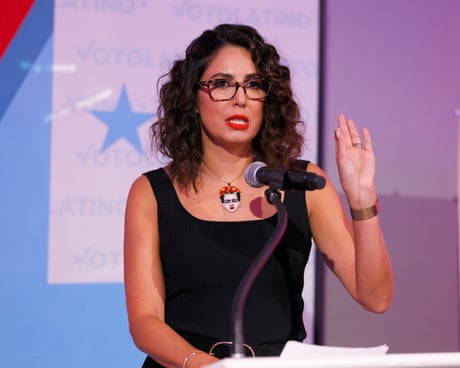
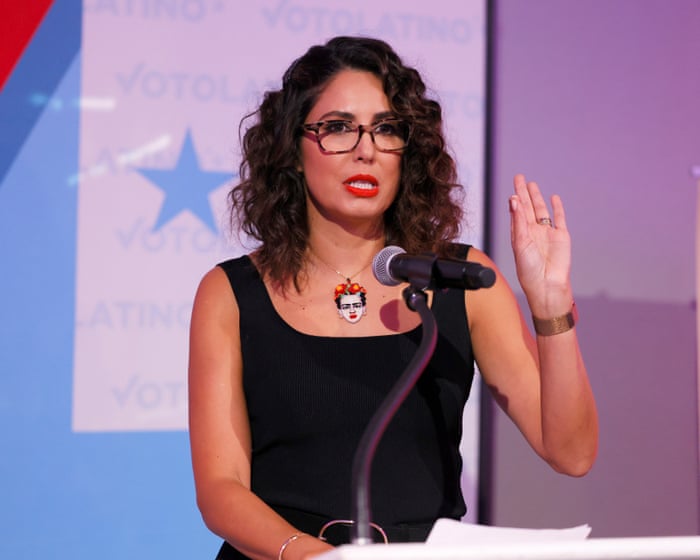
Ousted 60 Minutes correspondent Cecilia Vega on overhaul at CBS News: ‘It hurts to watch’

Vega said she still doesn’t know why she was fired from the show, which has experienced a slump in ratings.

Cecilia Vega, the 60 Minutes correspondent fired as part of a dramatic overhaul of the CBS News show this spring, said it “hurts” to see what has happened to the storied newsmagazine and other segments of the network, and repeated allegations that she was told to insert “factually untrue” information into her work.

“It pains me. It hurts to watch, from afar. It hurts to talk to my colleagues who are still there. It hurts to see the ratings slump that is happening right now,” Vega said during a Thursday evening talk for students at American University in Washington DC.

Continue reading...

© Photograph: Jemal Countess/Getty Images for Voto Latino

© Photograph: Jemal Countess/Getty Images for Voto Latino

© Photograph: Jemal Countess/Getty Images for Voto Latino

  •  

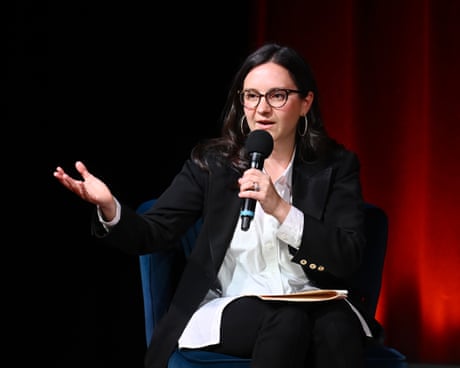
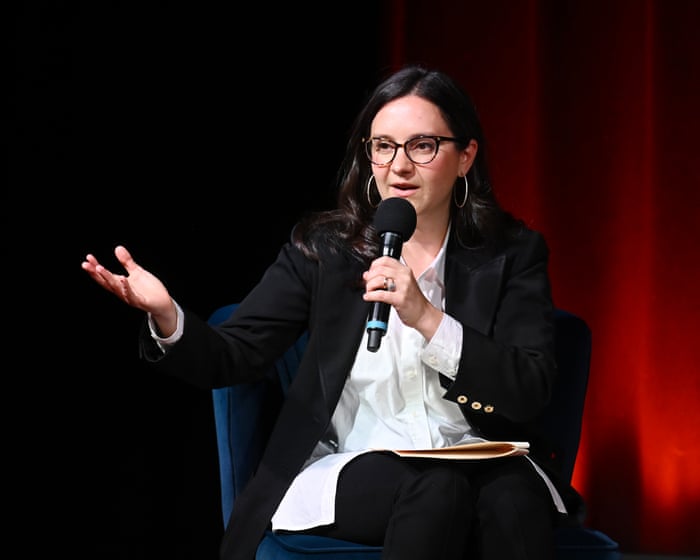
Embattled Bari Weiss says she is not ‘focused’ on declining 60 Minutes ratings

CBS News editor-in-chief sidesteps viewership concerns and says flagship show doing ‘tremendously well’

CBS News editor-in-chief Bari Weiss has spoken publicly for the first time about the ratings challenges the network has experienced under her year-long tenure, sidestepping concerns about diminished viewership at the Sunday show 60 Minutes by saying it was not her top priority.

“I could never build anything if I were focused on the precise number of people that happen to tune in to the second feature on 60 Minutes on a given Sunday,” she said at an industry conference on Wednesday organized by the tech publication the Information. The news organization did not offer press credentials.

Continue reading...

© Photograph: Noam Galai/Getty Images for The Free Press

© Photograph: Noam Galai/Getty Images for The Free Press

© Photograph: Noam Galai/Getty Images for The Free Press

  •  

How did Lula win the election?

On October 25, Brazil’s three-time and current president, Luiz Inácio Lula da Silva, surprised the entire world by overcoming an electoral setback in the first round (in which he was defeated by the far-right candidate Flávio Bolsonaro) and securing victory and the presidential seat in Brasília.

Lula, the legendary union leader during the dictatorship, secured 51.79%, equivalent to 64,256,232 votes, while Bolsonaro (son of the detained former president Jair Bolsonaro) received 48.21%, or 59,826,041 votes.

What is truly surprising about Bolsonaro’s defeat (given that most pollsters had predicted a very likely victory for him) is the enormous number of votes Lula managed to gain during the three weeks between the first and second rounds of voting. In that first round, Bolsonaro took first place with 48.21% (more than 56 million votes), and Lula came in second with 45.15% (just under 54 million votes).

Many believed that the nearly 9 million votes obtained by all the other candidates combined in the first round would be distributed in a way more favorable to Bolsonaro, since most of those votes were cast for right-wing and center-right candidates. This seemed even more evident after many of the leaders of those parties endorsed Bolsonaro.

Added to this question was the high probability that, in a society highly polarized between the two candidates, many voters who either cast blank or invalid ballots or abstained from voting in the first round would support one of the two candidates.

Indeed, both of these circumstances played out. According to available data, more than 14 million Brazilians who had voted for other candidates, cast invalid ballots, or abstained from voting participated in the runoff, supporting either Lula or Bolsonaro.

And this is precisely the key factor in understanding Lula’s victory. Assuming that very few voters would have switched their support from Lula to Bolsonaro or vice versa, it is important to note that of those 14 million votes that were redistributed, Lula managed to secure 10.37 million more votes than he received in the first round, while Bolsonaro managed to gain just under 4 million votes. This was enough for Lula not only to close the gap against his opponent but also to surpass him by a comfortable margin.

What happened in Brazil?

Faced with this surprising turn of events, hundreds of analysts in Latin America and around the world have rushed to present countless charts, hypotheses, and analyses in an effort to fully understand the reasons behind this victory. And the reasons have to do not only with the clearly impressive comeback by Lula’s Workers’ Party and its allies, but also with the fact that he appears to have put a halt to a seemingly unstoppable string of victories by the far right in Latin America.

Given this, the question seems clear: How did Lula manage to convince such a staggering number of people to vote for him in the runoff who had not done so in the first round? In response, technical reasons have been put forward (such as campaign strategy, the use of social media, and mass mobilization), as well as political ones (fear of a far-right government, social-class alliances, the formation of a broad-based coalition, etc.).

Among the technical reasons, Lula’s tremendous effort to turn the runoff campaign into a genuine, nearly constant mass mobilization (in both large cities and small towns) has been highlighted. The former union leader once again demonstrated his great charisma and ability to rally people before thousands of PT activists and members of other allied parties who fought day and night without stopping to overturn the result.

Added to this is the PT’s digital strategy; the party had repeatedly accused major social media platforms of boycotting the presidential campaign by hindering or reducing the visibility of Lula’s ads – but not those of Bolsonaro. In response, André Janones proposed a change in strategy.

Lula’s WhatsApp channel grew from 3.7 million subscribers to more than 10 million in the span of 12 days. Through this channel, users were instructed to post certain messages, search for information online, comment on specific posts, and so on. In other words, to circumvent an algorithmic system that, they claimed, was deliberately sabotaging Lula’s campaign.

The result was astonishing: despite the alleged media blockade on social media, the platforms were flooded with messages, images, and videos (many generated by AI) featuring Lula and attacking Bolsonaro’s candidacy, which undoubtedly had a major impact on the political communication strategy of the PT’s campaign, led by re-elected Governor Rafael Fonteles. For example, online interactions about Lula increased from 41% to 65% during the runoff election.

But Lula also took the risk of bringing about tangible changes in people’s lives, and he sent what may have been his final message during the runoff election, when his party and allies succeeded in passing legislation to end the six-day workweek. The move was celebrated by the country’s workers and clearly gave Lula’s campaign a pro-worker tone. That is why he gained so many millions of votes in the second round of the election in the working-class suburbs of major cities.

Read more: Brazil’s Congress ends 6×1 work schedule

And yet, there remains a certain suspicion that if this set of measures had been applied in any other similar situation, something would have been missing to set it in motion and give deeper meaning to the purely political campaign – with its communication, marketing, and other tactical decisions. And that something is Lula.

At times it seems that only someone with his political stature, his charisma, and the historic place he has already carved out in the history books could have won an election in Latin America against the far right, which enjoys the support of the most influential imperial powers of our time and an international oligarchy.

The “warrior of the Brazilian people

Lula achieved this, as already mentioned, thanks to a series of changes in his campaign strategy and concrete improvements in people’s lives. But it must be said without fear of contradiction: he did so by blending two dimensions that might seem contradictory, yet which a figure like him could bring together.

The first is that, as some of his campaign strategists recount, he began to speak extensively about Brazil’s future despite having already served as president three times. In this way, he moved away from nostalgia for the past and began to speak of hope for the future.

And second, Lula insisted throughout the campaign that this future was threatened by the Bolsonaros, whom he constantly linked to a submissive attitude toward US interests. In this way, Lula also employed a discourse of fear and danger, personifying it in Bolsonaro, who, as is well known, had reportedly left Brazil for the United States.

But Lula did not do so in a pitiful or apocalyptic way; rather, he presented himself as the only one capable of halting that advance. And more than just capable, as the only one who, without a doubt, would do so. In other words, Lula established himself, at the age of 80, as a “warrior of the Brazilian people,” just as his supporters chanted in the streets.

Then, in the debates (which undoubtedly had a huge impact on the runoff election) it seems Lula had had enough of the far right always appearing to be on the offensive, while the left and progressives always seemed to be waiting for the next blow. Lula put on his boxing gloves and began playing the game the far right had set for him … and won by knockout.

And for that very reason, Lula, his followers, and many of those who supported him (not necessarily because they believe in his agenda, but because they feared a new far-right government, as the numbers show) must realize that, with a hostile legislature and an opposition united around a single family, Lula’s fourth term will likely be the most difficult of his life.

Lula will have to seek ways to overcome the clear obstacles that the right and the far right will place in his path in order to achieve what he called “the best government in Brazil’s history.” For now, he has managed to prevent another Bolsonaro from reaching the presidency, but that does not mean the remainder of his term will be a “Brazilian pax.” 

In this regard, there is a Japanese proverb that Lula should keep in mind: “When you’ve won a battle, tighten your helmet.”

  •  

Nolte: Disgraced ‘60 Minutes’ Deliberately Hid Deportee’s Immigration Fraud, Report Says

"60 Minutes" knew that the man chosen for its Sunday night deportee poster child segment was guilty of immigration fraud but chose to hide that information, according to a report.

The post Nolte: Disgraced ‘60 Minutes’ Deliberately Hid Deportee’s Immigration Fraud, Report Says appeared first on Breitbart.

  •  

KISS’s Gene Simmons on AI in music industry: ‘Learn how to use it, otherwise it will use you’

Gene Simmons of KISS fame is urging the music world to get on board with artificial intelligence. The “Rock and Roll All Nite” singer was asked about his stance on AI on NewsNation’s “The Hill with Blake Burman” on Tuesday, and whether the technology will be “good or bad” for music. The Hill and NewsNation…

  •  

Saudi Arabia, Türkiye, and Pakistan seek security cooperation with Iran

The constituents of the recently created Mecca Defence Alliance held their maiden meeting with Iran in Tehran on Monday, October 26, seeking ways to end the ongoing conflict between Saudi Arabia and Yemen and a larger understanding over regional security.

The participants agreed “to continue the dialogue to strengthen cooperation among the four regional countries, including for peace and security in the region,” a brief joint press statement, issued after the meeting said.

Saudi Arabia, Pakistan, and Türkiye created the Mecca Pact in August amidst the ongoing US-Israeli war on Iran and the growing fear of Israeli expansionism. The members have claimed the pact is based on the principle of collective security and was defensive in nature. Some of them have also hinted they are seeking to expand its membership.

On Monday, Defense Minister of Saudi Arabia Khalid Bin Salman, Pakistan Army Chief Asim Munir, and Türkiye’s National Intelligence Organization Director Ibrahim Kalin met with the head of Iran’s Supreme National Security Council (SNSC) Mohsen Rezaei and Foreign Minister Abbas Araghchi.

The Mecca Pact officials also met separately with Iranian President Masoud Pezeshkian earlier in the day.

The meeting came at a time when there is a growing speculation about the renewal of US-Israeli aggression on Iran which has ceased since August. It also coincides with escalation in Saudi Arabia’s conflict with Ansar Allah in Yemen.

Saudi Arabia has faced increased retaliatory attacks from Ansar Allah forces in Yemen after it violated a 2022 UN-sponsored ceasefire and attacked Sanaa International Airport in July. Ansar Allah seeks the end of Saudi interference in the country and the lifting of over a decade-long Saudi blockade on the country.

Pakistan and Türkiye have since announced the deployment of their forces in Saudi Arabia.

Citing unknown Pakistan officials, Reuters claimed that the negotiations between the four countries also featured fresh proposals to end the US-Israeli war on Iran.

Regional cooperation on peace and security

Informing about the meeting, Esmail Baghaei, official spokesperson of Iran’s Ministry of Foreign Affairs had earlier said that it could be a prelude to establishing endogenous security in the region.

“From our perspective, the fact that regional countries are seeking to establish, or at least consider, regional security mechanisms based on their own interests and concerns is a welcome development,” Baghaei said, underlining that Iran has long advocated for ending external reliance and building a regional security mechanism.

Iranian resilience against the joint US-Israeli aggression has “shown that sustainable and reliable security in our region can only be achieved through building trust and cooperation among regional countries,” Baghaei had claimed.

After the meeting, Rezaei announced that all the participants have agreed that “the security in West Asia must be endogenous and that any foreign interference must be prevented.”

SNSC’s Deputy Secretary Bagheri Kani also claimed that though there were differences in priorities and approaches, the quadrilateral meeting “reflected a shared understanding among the four parties of the need for cooperation,” Press TV reported.

Reacting to the development, Trita Parsi of the Quincy Institute claimed that though the meeting had the immediate objective of the Mecca alliance seeking Iranian help to resolve the ongoing conflict between Yemen and Saudi Arabia, it also reflects a changing security dynamic in the region.

Contrary to “Washington’s conventional wisdom,” the countries in the region “are showing greater agency and taking responsibility for the region’s security themselves” as the US pulls back militarily following the humiliation faced in its eight-month-long war against Iran, Parsi claimed.

US is not a reliable partner

“Some regional countries once imagined that by aligning themselves with a major power like the US they could shield themselves from any threat. In practice, however, they discovered that this notion did not align with reality,” he said.

Saudi Arabia and Türkiye have several US military bases in the country. Pakistan has maintained a close military partnership with the US for decades.

Some of the US bases in Saudi Arabia were damaged during Iranian retaliation earlier this year. The US has reportedly refused to come to Saudi’s aid despite it seeking the same to counter Ansar Allah’s advances in Yemen.

The meeting on Monday was a result of the realization “that there is no alternative but to rely on regional engagement and to establish security based on cooperation and synergy among the countries of the region,” Kani said.

He also claimed that the members felt the urgency for the meeting as the Zionist regime has “demonstrated its savagery and an unbridled appetite for expansion” in recent years, indicating the ongoing Israeli genocide in Gaza and its aggression and occupation in other Palestinian territories, Lebanon, and Syria.

It was reported that all parties of the meeting demanded that Israel must end its genocide in Gaza and end its occupation in Lebanon and Syria.

  •  

Risk grows of continental spread of Ebola after case is reported in Nigeria

The risk of continental spread of Ebola looms as Nigeria becomes the fourth African country to report a confirmed case of the deadly virus since the outbreak was declared in the Democratic Republic of Congo (DRC) in mid-May.

Caused by the rare Bundibugyo strain of the virus, it has since become the world’s second-deadliest Ebola outbreak ever and the fastest-growing on record. It has killed 4,803 patients, nearly half of all the 9,876 confirmed cases in the eight provinces of DRC’s eastern region as of October 23​

The real scale of deaths is likely much higher, since community transmission of the virus had already begun in DRC’s Ituri province by mid-February, three months before it was detected and officially declared an outbreak on May 15.​

Neighboring Uganda, which is backing armed groups in Ituri, undermining the already delayed and severely underfunded health response, also reported its first case on May 15. However, after two deaths and 20 confirmed infections, the health ministry declared Uganda Ebola-free in late July. The WHO also certified this in late August, after no new cases were confirmed for 42 days.​

However, its Ebola-free status has now come under question with the first case in Nigeria. The 42-year-old patient is a Ugandan national and Swiss citizen. She is the wife of a Swiss diplomat at its embassy in Nigeria’s capital, Abuja, where she resides.​

After a two-and-a-half-week-long vacation in Uganda, she and her husband returned to Abuja on October 3. Four days later, she fell ill. Initially suspected of Malaria, she was treated at two private hospitals before being tested positive for Ebola and isolated on October 20.​

Uganda makes a false claim

Soon after she was tested positive in Nigeria, the Ugandan health ministry claimed that the patient had traveled to the DRC.

However, the “information supplied to WHO did not include [her] travel” to any country other than Uganda, WHO representative in Nigeria Pavel Ursu said on October 22.

“So far, there ​is no validated information that this case traveled to DRC,” added Wessam Mankoula, the Head of Health Emergencies of the continent’s highest health authority, the Africa Centers for Disease Control and Prevention (CDC).​

Then on October 23, the Swiss foreign ministry said explicitly that the patient had not traveled to the DRC, directly contradicting Uganda’s claim, indicating that she was infected in Uganda.

Uganda, meanwhile, still maintains that it has no confirmed Ebola cases. The WHO and Africa CDC are now examining a hypothesis that she may have contracted the virus at the airport in Uganda’s capital, Kampala, where a Kenyan businessman, infected during his travels in the DRC, was also present while she was boarding her flight to Abuja.

The Kenyan businessman had spent seven years in the DRC. While traveling on business, he had already fallen ill in September and was treated in multiple hospitals, but was not diagnosed with Ebola. Early symptoms of Ebola are often similar to other diseases in the region, including Malaria. He was reportedly provided antibiotics and sent home at one of the hospitals.​

An illegal border crossing

The man in question traveled by road to Uganda from the conflict-ridden, mineral-rich, Ebola-affected province of North Kivu, parts of which are occupied by the Rwandan army and its proxy, the M23, which Uganda also supports, according to the UN.​

It is unclear how the Kenyan businessman reached Kampala from North Kivu. Soon after the outbreak was declared, Uganda had closed the border with DRC, except for humanitarian trucks. Mankoula said he had crossed the border illegally.

In Kampala, he boarded a flight to Nairobi on October 3 from Entebbe Airport, through which the Uganda-born Swiss citizen who later tested positive in Nigeria was also passing that day to catch her flight to Abuja.

“Has there been any touch or contact between two cases [him and the case in Nigeria] at the airport at the same time?” This is one of the theories that is currently under investigation,” said Mankoula of the Africa CDC.  

When the Kenyan businessman landed in Nairobi, he was already ill. The family member who picked him up from the airport drove him straight to the Nairobi Hospital, where he died two days later. Eight others who came into contact were also infected and isolated. They include four health workers and four family members, one of whom died later on October 23.

Even as health authorities examine whether he was also the source from whom the Nigerian case contracted the virus,  virologist Marion Koopmans, who is also a member of the WHO’s Ebola emergency committee, has cast doubt on this theory.

“I think that is very speculative unless there is evidence of sharing the same ​space in a manner that could explain that. Random presence at the same location, a large airport, is not a supported epidemiological link by any standard of what we currently know,” she said.

If he was not the source, that could mean Ugandan authorities are either not revealing or are unaware of potential cases in the country. Even if he was the source, questions remain about Uganda’s Ebola-free status, as others he may have come into contact with – either in the airport or on his way to it in Kampala –  could also have contracted the virus.

Nigeria at risk of community transmission

Either way, Nigeria is now at risk of community transmission. The Nigerian case landed on October 3 in Abuja, at one of the busiest airports in West Africa. Only on October 20, 13 days after developing symptoms, was she tested positive for Ebola and isolated.​

Amid fears that the virus may have infected others who may have come into contact with her during this period, especially health workers, Nigerian Health Minister Muhammad Ali Pate said that authorities were tracing all 44 contacts. “We are trying to contain it so it doesn’t go out to the communities. Hopefully, it won’t get to that,” he added.​

“When we identified at-risk countries, Nigeria was not part of this list. It is now. That list would have to be redrawn, and North and Southern Africa could also be at ​risk,” said Jean Kaseya, director-general of the Africa CDC, adding, “We need to consider that no one is safe today.”

  •  

ECOWAS and AES open talks to rebuild relations

The Economic Community of West African States (ECOWAS) and the Alliance of Sahel States (AES) have opened talks to establish a framework for cooperation, marking a new attempt to rebuild relations following years of political tensions over sovereignty, military coups, and regional sanctions.

The two blocs held their inaugural ministerial dialogue in Dakar, Senegal, on October 17, 2026, where they agreed to establish joint thematic working groups to develop a Cooperation Framework Agreement. The meeting brought together representatives of ECOWAS and the AES Confederation, comprising Burkina Faso, Mali, and Niger.

In a joint communiqué issued after the meeting, both sides welcomed the “spirit of fraternity, mutual respect, and openness” that characterized their discussions, recalling the historical, sociocultural and economic ties that unite the peoples of West Africa.

The parties also agreed that their future relations should be guided by “good neighborliness, respect for sovereignty, dignity, and the well-being of West African populations.”

The dialogue marks a significant diplomatic development following the deterioration of relations between ECOWAS and the three Sahelian countries, whose military-led governments have pursued a political course centered on national sovereignty and a rejection of established Western influence.

Political tensions to dialogue

Relations between the two blocs deteriorated following military coups in Mali, Burkina Faso, and Niger between 2020 and 2023. ECOWAS imposed sanctions and threatened further measures in response to the military takeovers, while the governments of the three countries increasingly challenged the regional organization’s authority.

In January 2024, the three countries announced their intention to withdraw from ECOWAS, their withdrawal formally took effect on January 29, 2025, opening a new chapter in regional relations.

The AES had been established in September 2023, initially creating a mutual defense framework among Burkina Faso, Mali, and Niger. The three countries subsequently deepened their cooperation, formally establishing the Confederation of Sahel States in July 2024.

Throughout the confrontation, the Sahelian governments maintained that their decisions reflected the right of their peoples to determine their own political and economic futures. ECOWAS sanctions, particularly those imposed on Niger following the July 2023 coup, generated considerable opposition within the country and wider debate over the consequences of regional punitive measures for ordinary people.

For many supporters of the AES, ECOWAS’s response to the coups reinforced the perception that the organization was protecting Western, particularly French, strategic interests rather than defending the sovereignty of West African peoples. 

A framework for cooperation

According to the joint communiqué, the Dakar meeting followed earlier consultations held on May 22, 2025, in Bamako, Mali. The latest session allowed the parties to exchange views on areas of common interest and discuss how future negotiations could be structured.

Both sides expressed their willingness to pursue a cooperation framework that is “balanced, realistic and preserves the interests of their peoples.”

The communiqué further states that joint thematic working groups will undertake technical consultations towards developing a formal Cooperation Framework Agreement. Their findings will be submitted to the ministers for consideration before the next session.

The agreement to establish these working groups is an initial step towards institutionalizing dialogue between the two organizations. However, the communiqué does not specify a final agreement, a timetable for completing negotiations or detailed commitments in individual policy areas.

The discussions nevertheless provide an opening for the two blocs to address practical questions arising from their separation, including the maintenance of cross-border relations and the interests of communities whose economic and social lives extend across national boundaries.

Despite their institutional differences, the populations of the two blocs remain connected through trade, migration, family ties and shared cultural histories. The three AES countries are landlocked, and their economic relationships with neighboring West African states remain important to regional commerce and livelihoods as it defends its sovereignty.

  •  

Open Fiber connette lo Stadio Maradona con YouCall: la fibra per le dirette di Radio Kiss Kiss Napoli

Open Fiber, rete ultraveloce e collegamento dedicato per supportare le trasmissioni dalla tribuna stampa dello Stadio Diego Armando Maradona

Open Fiber porta la propria rete ultraveloce all’interno dello Stadio “Diego Armando Maradona” di Napoli, dove, grazie alla collaborazione con YouCall, la postazione di Radio Kiss Kiss Napoli in tribuna stampa può contare su una connessione ad alte prestazioni per raccontare in diretta gli appuntamenti ospitati nell’impianto.

L’intervento si inserisce nel più ampio progetto di digitalizzazione di Napoli realizzato da Open Fiber. La rete a banda ultralarga abilita servizi innovativi per cittadini, imprese e professionisti e rappresenta un’infrastruttura strategica anche per il mondo della comunicazione, dell’informazione e dell’intrattenimento. Per chi racconta in diretta ciò che accade allo stadio, velocità e affidabilità della connessione diventano strumenti di lavoro essenziali, soprattutto nei momenti di maggiore intensità, quando cronache, voci e contenuti devono raggiungere gli ascoltatori in tempo reale.

Sulla rete Open Fiber, YouCall ha realizzato un collegamento dedicato alle esigenze di Radio Kiss Kiss Napoli, progettato per garantire continuità e prestazioni adeguate alle trasmissioni dalla tribuna stampa. L’attivazione ha richiesto un’attenta pianificazione, dai sopralluoghi alla progettazione del tracciato, fino al coordinamento tecnico e alle verifiche necessarie, nel rispetto delle caratteristiche della struttura e delle attività che quotidianamente si svolgono al suo interno.

La collaborazione tra Open Fiber e YouCall mostra così come un’infrastruttura digitale possa tradursi in un servizio concreto, rispondendo a esigenze specifiche e accompagnando l’evoluzione del mondo dell’informazione e dei grandi eventi. Un esempio di tecnologia al servizio del territorio e delle sue realtà, capace di contribuire a rendere ancora più immediata la diffusione delle passioni e dei contenuti legati alla città di Napoli.

L'articolo Open Fiber connette lo Stadio Maradona con YouCall: la fibra per le dirette di Radio Kiss Kiss Napoli proviene da Affaritaliani.it.

  •  

Latin America: the ‘cultural battle’ as a facade for neoliberalism

For several years now, politicians, influencers, and intellectuals from Latin America’s new radical right have been speaking about the importance of the “cultural battle” to recover a sort of perspective lost in the past and to underpin a civilizational project that prioritizes the individual, individual freedom, and the free market above all else.

Probably the first to insist on this idea in the media was Javier Milei, the current president of Argentina, who initially made a name for himself as an economist who had no problem insulting his opponents and defending orthodox neoliberal thought.

At that time, Milei, along with his intellectual allies, called for a stand against a purported culture imposed by so-called left-wing elites who had tarnished common sense, Christian morality, and individual freedom, among many other things.

A few days ago, Colombian President Abelardo de la Espriella called for a radicalization of his “cultural battle” and ordered the removal of dozens of works of art from various museums in order to restore a culture that has been held captive by the left, Marxism, and other dark (or, as Milei himself puts it, “demonic”) forces.

In reality, the move isn’t particularly original. Back in the United States, Pat Buchanan (a close advisor to Nixon and Reagan) had already advocated for and encouraged inflammatory rhetoric to wage a “culture war” and thus defend a culture tarnished by social change. Among the major intellectual inspirers of this doctrine are the American Sam Francis and the Frenchmen Alain de Benoist and Guillaume Faye (albeit with their well-known differences). Even some Germans in the 1930s attempted to make what they called “cultural Bolshevism” the scapegoat for all their ills.

But the push for a “cultural battle” in Latin America had a more interesting rationale. And it is not so much due to a supposed pragmatic interpretation of Antonio Gramsci’s concept of hegemony – which has been distorted by the new radical right, as well as by much of liberalism and social democracy, which understand it solely as “cultural hegemony.”

No, in reality, the intention behind invoking a “culture war” against feminism, abortion rights, progressive governments, left-wing artists, revolutionary intellectuals, etc., is more of a strategic nature.

For those who are actually, as ideologues, behind the “culture war” projects are not Buchanan, Francis, De Benoist, or Faye, but Hayek, Friedman, and the rest of the neoliberal economists.

The truth is that neoliberalism in Latin America during the late 20th and early 21st centuries was both a resounding failure and a magnificent victory. This apparent contradiction is resolved depending on which social class we are discussing. During that time, the most powerful social classes, economically speaking, managed to accumulate an enormous amount of power and resources, the likes of which have rarely been seen in Latin American history.

But such a level of accumulation in societies subjugated by a global imperialist order (such as those in Latin America) necessarily drives the working classes into conditions of material precariousness that are almost unbearable. Mass migration, uprisings, deaths, the loss of a lifetime’s savings, rising crime, and so on were just some of the devastation left in the wake of the neoliberalism driven by the Washington Consensus during that period.

In response to the crisis, several centrist, center-left, and even leftist leaders won elections in the region in quick succession: Chávez in Venezuela, Morales in Bolivia, Fernández in Argentina, Correa in Ecuador, Lula in Brazil, Bachelet in Chile, Mujica in Uruguay, etc. They sought to resolve a capitalist economic crisis within the framework of capitalism itself, resorting to approaches that combined Keynesian measures with legislation designed to protect and expand rights, especially for the most marginalized sectors.

These were times when (not without contradictions with other political forces, including those of a more traditional left) the economies of these countries improved, thanks in part to high commodity prices on the global market. And with public policies that, in many cases, focused on providing aid and social programs, the situation of millions of Latin Americans clearly improved. Between 2000 and 2012 alone, 56 million Latin American citizens managed to rise out of poverty.

Once the storm of discontent against neoliberalism had passed, the ruling classes decided they’d had enough of progressive governments. But to regain absolute control (since they had always maintained the necessary share of power to influence national decisions), they needed to win back the governments, and to do so, they found themselves at a crossroads.

They knew that the central argument against center-left governments could not be based solely on the economic downturn that followed the end of high prices for Latin American natural resources, but that it had to be grounded in something more – something that would come across as novel, radical, and a sort of conservative revolutionary ideology.

And that is how they found in the “culture war” a niche for ideological propaganda that has had a historic impact on Latin America. In addition to the aforementioned criticisms, they succeeded (through their intellectuals, politicians, influencers, media outlets, social media, and so on) in creating a perceived link between progressivism and corruption, between progressivism and organized crime, and, finally, between progressivism and an alleged erosion of individual freedom.

But the truth is that these kinds of strategies can cause political upheaval like that seen in the region in recent years, during which (thanks to the support of national and international tycoons, as well as support from Washington and other governments such as Israel’s) there has been a string of victories for the radical right, which could complete its winning hand next Sunday in Brazil.

But in the long term, neoliberalism cannot (nor does it intend to) overcome the contradiction inherent in an economy of this nature in countries with clear relationships of international domination. Thus, at the height of this new wave of neoliberal right-wing movements, the first cracks in ideological stability are already beginning to appear, precisely in the face of a material reality that offers no respite from political rhetoric.

The situation of millions of Latin Americans (especially the poorest) is rapidly being complicated by a radical increase in the rate of inequality. The promises made by the new right-wing movements to defeat organized crime show no signs of being a reality or of bringing about clear regional change. Perhaps this is what Nietzsche, another great reactionary, meant when he acknowledged that culture is merely the veneer of something deeper. And that veneer is beginning to wear away very slowly – a process that is nonetheless noticeable if one pays attention.

  •  

Kenyan Communist leader Booker Omole acquitted on all counts

Booker Ngesa Omole, general secretary of the Communist Party Marxist–Kenya (CPM-K), has been acquitted by the Mavoko Law Courts in Machakos County, ending a prosecution that the party has described as politically motivated since his arrest in February 2026.

In a statement issued on October 22, the party’s Central Organizing Committee welcomed the ruling as a victory for democratic rights and called for accountability over what it described as Omole’s abduction, torture, and political persecution.

Speaking outside the court after the ruling, Omole said the verdict confirmed the party’s position that the charges against him were intended to target his political activities.

“With finality, the court sitting today at Mavoko Law Courts has clearly indicted the current Ruto regime,” he said. “It has corroborated what we have told the Kenyan public, that framed-up charges against politicians and revolutionaries cannot endure in any competent court.”

Omole said the judiciary had a responsibility to act as a check on state power and defend “the people’s democracy and freedom.” He accused the state of using criminal proceedings to pursue political opponents, adding that it “continues to fail to indict us on criminal charges but wants to persecute us politically.”

“The acquittal is not for Booker only,” he said. “It is for the Communist Party and for all other people who want change in this country. I did not go to jail for nothing. I went to jail to make a statement, and today we prosecuted the case both in the court of public opinion and in Mavoko Law Courts.”

From arrest to acquittal

According to the party’s statement, Omole was abducted by armed men in plain clothes in Isiolo on February 24, 2026, and transported towards Nairobi before being detained at Mlolongo Police Station. The party says that he was tortured while in custody, sustaining injuries to his arm and tooth, as well as cuts to his fingers.

The party further alleges that Omole was detained for more than four days before subsequent court proceedings and his eventual release on bail. He faced criminal allegations involving firearms, ammunition, drugs, and assaults against police officers.

The prosecution case was subsequently weakened after the complainant and a prosecution witness, submitted a sworn affidavit on March 9 seeking to withdraw his complaint and earlier statements.

The court acquitted Omole on all counts on October 16, 2026. It also ordered the immediate return of the party’s property held by police, according to the Central Organizing Committee.

The acquittal brings the criminal proceedings against Omole to an end, but the party says it will continue pursuing accountability for the events surrounding his arrest and detention.

Party demands investigation and accountability

In its statement, CPM-K called for an independent investigation into the alleged abduction and torture, as well as the conduct of the police officers involved. 

The party also demanded full compliance with the court order to return its seized property and called for an end to what it describes as the criminalization of communist and revolutionary political activity.

“The court has acquitted our General Secretary. The state must now answer for what was done to him,” the statement declared.

CPM-K argued that the case should be understood within the broader political and economic conditions confronting Kenya, accusing the government of using state institutions to intimidate those organizing workers, poor peasants, students, and other oppressed groups.

The party said the acquittal would not end its political activities or its demands for accountability. Instead, it called on its supporters and international communist and workers’ organizations to intensify solidarity efforts and defend democratic freedoms.

Read more: CPM-K officials survive assassination attempt in Kenya

Omole has faced threats and arrests before. In April 2025, a car carrying him and other activists was shot at. In September 2024, he was arrested during a wider crackdown on leftist activists. He also survived an assassination attempt on his life while at his residence last year.

  •  

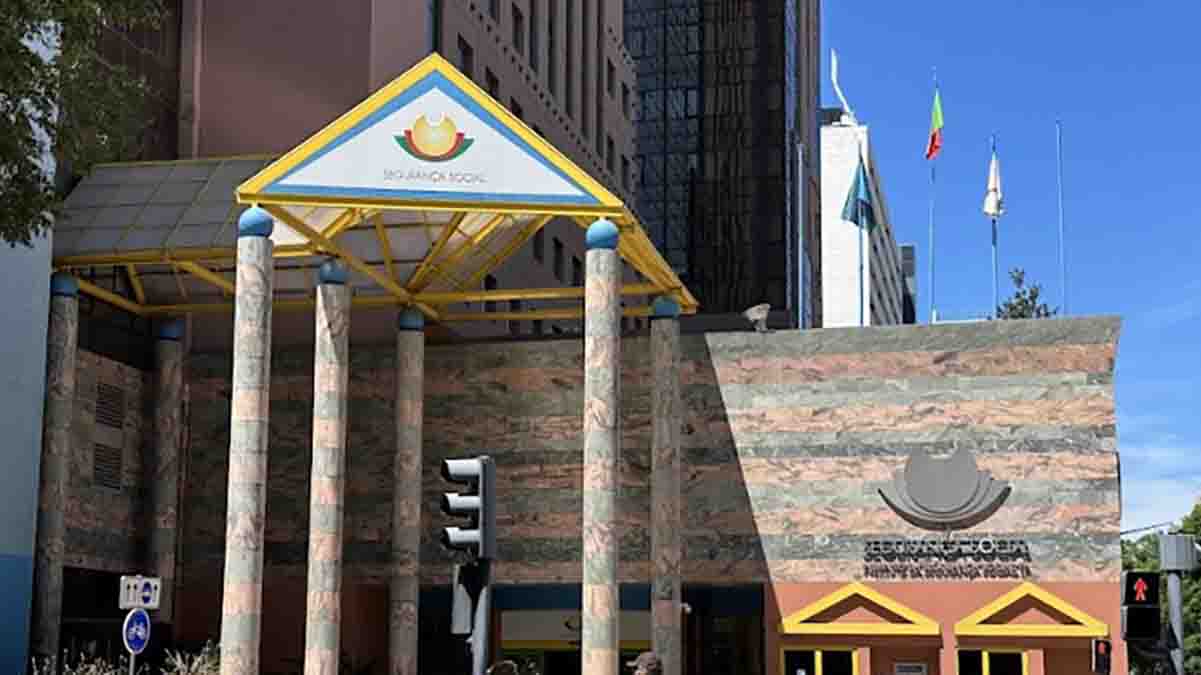
Será que tem direito a apoios ou benefícios sociais e não os recebe? Faça uma simulação!

Um simulador online, que ajuda a descobrir se tem direito a apoios sociais está disponível no site da Segurança Social para utilização pública. O serviço é rápido, intuitivo e permite ao beneficiário identificar os subsídios a que pode ter acesso.

A disponibilização deste serviço através de simulador, para além de ter como propósito aliviar o fluxo de visitas às dependências da Segurança Social, permite ao beneficiário perceber se eventualmente poderia estar a receber algum subsídio a que tem direito.

Com o Simulador de Prestações Sociais, disponível no Portal e na App da Segurança Social, o beneficiário tem “acesso a uma ferramenta intuitiva que analisa a sua situação e lhe indica os apoios adequados para si e para a sua família“, como é explicado pelo Instituto da Segurança Social (ISS), numa publicação partilhada nas redes sociais.
A Segurança Social elenca como vantagens em utilizar o simulador, o seguinte:

  • Mais de 40 prestações abrangidas: Consulte apoios nas áreas da família, parentalidade, desemprego, doença, inclusão e muito mais;
  • Respostas rápidas: Obtenha uma estimativa dos seus direitos sem formulários complexos;
  • Do simulador ao pedido num clique: Para várias prestações, pode avançar imediatamente para o pedido online assim que conclui a simulação;
  • Comodidade total: Faça a simulação e o pedido onde quer que esteja, através do computador ou do telemóvel.

O acesso ao simulador está disponível através deste LINK.

Tome nota de que “para poder responder às perguntas do simulador da forma mais correta possível, irá precisar de algumas informações. As questões têm como objetivo determinar para que subsídios / prestações poderá estar elegível e todos os dados pedidos são relevantes para determinadas prestações sociais e, por isso, é importante que responda da forma mais correta possível.

Caso não tenha ainda tudo o que for necessário do seu lado, pode sempre guardar o seu progresso para voltar mais tarde, clicando no botão ‘Guardar Simulação‘”, como explica a Segurança Social.

Também deve ter em conta o seguinte: “Se reside, trabalha ou trabalhou no estrangeiro, os resultados desta simulação podem não refletir com precisão a sua situação específica”.

Por outro lado, “as prestações apresentadas nos resultados das simulações respeitam à pessoa que está a efetuar a simulação e respetivos dependentes. Para os restantes elementos do agregado familiar saberem as prestações a que podem ter direito, como por exemplo o subsídio de desemprego, devem ser os próprios a simular”.

De acordo com o Instituto da Segurança Social, o tempo médio de preenchimento do questionário, após iniciar a simulação, é de sete minutos.

Importa ainda esclarecer, em formato de nota de rodapé, que “de forma simples e rápida” pode saber as prestações e subsídios da Segurança Social “a que pode ter direito e a forma de os pedir. Os resultados apresentados dependem exclusivamente dos dados que introduzir e não são vinculativos”, conclui o esclarecimento prestado pelo organismo.

  •  

‘Palestine is about land’: Tanzania’s peasant farmers stand with Gaza and Havana

On the opening day of its National Smallholder Farmers’ Conference and 31st Annual General Meeting (AGM), held from September 29 to October 1, MVIWATA, Tanzania’s national network of smallholder farmers’ groups, set aside time during a program on land, seed, and markets to state solidarity with the peoples of Palestine and Cuba, with the ambassadors of both countries present in the hall.

“We, the members of MVIWATA, who have convened in Morogoro for our 31st Annual General Meeting, wish to give a brief statement in support of the people of Palestine and the Cuban people,” read Theodora Pius, MVIWATA’s head of program, opening the statement. The organization said it was “extremely angered by the ongoing genocide of the Palestinian people” and “frustrated to see an open silence on war crimes that happen every day against the people of Palestine by the State of Israel and its allies.” It said its solidarity was with all of Palestine, “not only in the Gaza Strip.”

The statement then turned to Cuba, denouncing more than 60 years of US-imposed blockade, it said, imposed because Cubans exercised their freedom to choose their own political system, and went on to articulate what the blockade now means: “no electricity, no fuel, no medicines, no food.” Despite this, the statement said that the Cuban people have continued to send their expertise (doctors above all) to support life in other countries.

The Cuban Ambassador, Yordenis Despaigne Vera, addresses delegates attending the National Smallholder Farmers’ Conference and the 31st Annual General Meeting of MVIWATA.

The Cuban Ambassador, Yordenis Despaigne Vera, thanked the smallholder farmers and described the current stage of the blockade as an energy war. United Nations agencies reinforce this characterization. By May, the Cuban people were living with daily blackouts of up to twenty hours, and more than 100,000 patients, including 11,000 children, were waiting for operations delayed by power cuts and shortages. Cuba’s own health ministry recorded infant mortality rising from 7.1 to 9.9 deaths per thousand live births between 2024 and 2025. The ambassador called the United States program “a silent genocide” and said Tanzania’s government and people had stood with Cuba throughout. A week earlier, at the UN General Assembly, Tanzania’s Vice-President had reaffirmed the country’s “unwavering solidarity with Cuba” against unilateral sanctions. Last October, the Assembly voted 165 to 7, with 12 abstentions, to demand an end to the blockade; Tanzania voted in favor.

The Palestinian ambassador, Salam Abu Sharar, addressed the room of farmers. Land, he said, is close to the hearts of the Palestinian people and of MVIWATA alike, and the question of Palestine “is not about religion; it is about land.” In a hall where the first working session opened with the words “land is life, land is not a commodity,” he spoke the delegates’ own language: the struggle of Tanzania’s peasants and the national liberation of Palestine are one struggle.

The Palestinian ambassador to Tanzania, Salam Abu Sharar with MVIWATA Chairperson Apollo Chamwela. Photo: MVIWATA

MVIWATA has been here before. Its AGM in Njombe in December 2023 condemned Israel’s genocide in Palestine. In July 2025, it hosted the youth of La Via Campesina in Morogoro, whose declaration ended with “Free Palestine!” Within days of that meeting’s close, Israeli forces bulldozed the seed multiplication unit of the Union of Agricultural Work Committees, the Palestinian farmers’ organization in Hebron, destroying more than seventy local varieties. The same year, MVIWATA and the International Association for Popular Cooperation ran an Africa Bioinputs School in Tanzania, with participants from thirteen countries, including Palestine, learning how farmers make their own fertilizers and pest controls.

On the conference’s final day, the Tanzanian farmers resolved to build their own bank of indigenous seed. In Hebron and in Morogoro, the seed is where the struggle over who feeds whom begins. MVIWATA Chairperson Apollo Chamwela told the ambassadors that the organization stood ready to do for Cuba what it had tried to do for Palestine: collect food if mechanisms for transporting it can be arranged.

MVIWATA is a membership organization of smallholder farmers, founded in 1993 and organized across mainland Tanzania and Zanzibar. It was a meeting with a government minister as its guest of honor. Its statement on Palestine and Cuba came in the same breath as its demands for land, seed, and dignified prices for its members’ produce at home. For these farmers, sovereignty over food and sovereignty over territory are one question, whether the territory is a village in Kilosa or a hillside in Hebron.

The hall closed the statement with a call and response. “Long live Palestine! Long live!” “Viva Fidel! Viva!” “Viva the resistance of the people of Palestine! Viva!”

Photo: MVIWATA

Jonis Ghedi-Alasow is the Coordinator of the Pan Africanism Today Secretariat. 

  •  

BreakThrough responds to Congressional threats to ‘hold the staff hostage’

In October, BreakThrough News received a letter from Rep. Jason Smith of the House Ways and Means Committee, threatening to personally subpoena seven members of our journalistic, editorial and administrative staff — including Rania Khalek, Zoe Alexandra and Amanda Yee — unless we handed over our financial records and internal communications.

Through its attorneys, BreakThrough News has now issued an official response, which you can read below. Once again, we expressed that we would not surrender our First Amendment rights in the face of a blatantly unconstitutional abuse of power, and that no legitimate legislative basis has been established for this inquiry. In his own statements, Rep. Smith has made no attempt to disguise the fact that his Committee subpoenas are fueled by opposition to BreakThrough’s editorial stances and viewpoints, which he calls “anti-American.”

We have been overwhelmed by support from our community, who have raised their voices in defense of our constitutionally protected right to free speech under the First Amendment. We ask all readers to continue showing their support by signing the petition below and making a donation to help defend the organization.

Our attorneys’ response explains:

“Threatening compulsory depositions of journalists and newsroom staff to compel document production operates as coercive retaliation by explicitly targeting the core editorial leadership and journalistic staff of BreakThrough News. Allowing a congressional committee to haul journalists into deposition rooms to grill them on domestic and foreign policy reporting sets a dangerous precedent of state-sponsored press intimidation that chills independent journalism nationwide and infringes on core First Amendment protections.”

On October 19, a coalition of ten major civil liberties and press freedom organizations, led by the Freedom of the Press Foundation, issued a joint letter to Rep. Smith demanding an end to the persecution of BreakThrough.

The letter noted: “Serially subpoenaing employees of a small left-wing news outlet to compel them to personally appear before you, for no reason other than to further a vindictive political stunt, is beyond the pale and reminiscent of some of the darkest chapters in our nation’s history.”

We are deeply appreciative of organizations that have spoken out: Freedom of the Press Foundation, American Society of Journalists and Authors, Defending Rights & Dissent, First Amendment Foundation, National Coalition Against Censorship, National Press Photographers Association (NPPA), PEN America, Society of Environmental Journalists, Society of Professional Journalists, and The Media and Democracy Project.

We would like to express our gratitude for the hard work of our legal counsel — the Law Office of Andrew D. Herman and Mara Verheyden-Hilliard of the Partnership for Civil Justice Fund — in responding to this outrageous attack.

Finally, we extend our solidarity and appreciation to all the members of our team, who continue to work tirelessly to produce meaningful journalism in the face of federal threats.

Read our full response below issued by BreakThrough’s attorneys.

  •  

More on how Bari Weiss is using CBS on behalf of Israel

After David Ellison acquired CBS to make it Israel friendly, he hired Bari Weiss, an equally devoted Israel partisan, to do the job. She pushed staff to smear anti-genocide candidates, meddled in a report that exposed Israeli settlers, and her handpicked foreign editor threatened to fire staff who didn't go along

  •  

Iran says its peace proposal is still on the table, warns the US and Israel against a ‘miscalculation’

Iranian Foreign Minister Abbas Araghchi reiterated that his country’s proposal to end the war with the US and to restart nuclear negotiations is “still on the table,” claiming the Iranian conditions are “completely clear” and “unchanging.”

Talking to Iranian state media on the sidelines of the 52nd session of the Council of Foreign Ministers of the Organization of Islamic Cooperation (OIC) in Baghdad on Sunday, October 18, Araghchi also said that Iran is currently studying the US response to its proposals.

If the US meets its conditions, “the Strait of Hormuz will be reopened on the sixth day, and negotiations will resume on the seventh,” Araghchi said. 

Though Araghchi did not talk about them explicitly, he reiterated that the Iranian conditions are the same as what the US had agreed to under the Islamabad Memorandum of Understanding (MoU), signed in June.

On several previous occasions Iran has made clear that if the US lifts its naval blockade, releases Iran’s foreign frozen assets, and ends the war on all fronts in the region, it will allow the Strait of Hormuz to open.

As per the MoU, in the first 60 days after the deal took effect both sides were to initiate negotiations over Iran’s nuclear program. However, the MoU expired in August after hostilities were resumed within weeks of its signing.

The US resumed its military strikes on Iran in July, leading the Iranians to reimpose their blockade in the Strait of Hormuz in response, reversing its decision to open it for navigation as per the MoU.

Tehran had claimed that it presented a plan to reopen the Strait to the US in September, in a brief meeting with its delegation during the annual session of the UN General Assembly. However, US President Donald Trump later declared he had rejected the Iranian proposals.

Beware of Israeli provocations

Araghchi also rejected the repeated threats of new strikes and economic isolation against his country, claiming that Iran will not bow to threats and will defend its strategic and economic interests.

Last week it was reported that Israeli Prime Minister Benjamin Netanyahu, who is facing a tough election at home, apart from planning to escalate war against Palestinians in the West Bank, also pressured Trump to resume the military strikes on Iran.

Read more: Netanyahu presses Trump to renew aggression on Iran ahead of Israeli elections

On the same day, Trump claimed that the US may attack some specific targets in Iran in order to disrupt its nuclear program. Media reports also claimed that the US is preparing to use the so-called “mother of all bombs” to again target Iran’s energy and nuclear infrastructure.

This is despite the fact that Trump has repeatedly boasted about “obliterating” Iran’s nuclear program during the joint US and Israeli airstrikes in June 2025.

Reacting to those reports, Araghchi warned both the US and Israel to learn from their mistakes and stay away from Iran to avoid consequences more severe than during the earlier wars.

“Last time you wanted to “finish the job” Iran emerged even stronger. Want to try your luck again? Be our guest. But be careful; we have unfinished jobs too,” Araghchi said in a post on X on Monday.

He claimed that Netanyahu is pressing for a fresh war simply because he wants to stay in power and out of jail over corruption charges he has been facing for years now, without thinking about consequences to Israel or the US.

In a similar reaction, the head of the Iranian armed forces Ali Abdollahi also claimed on Sunday that his country was waiting for their [the US and Israel’s] foolish decision and miscalculation. Any attack by them would invite “a response war more severe, distinct, and devastating than in the past,” Abdollahi claimed.

Abdollahi’s warnings were relayed by several other Iranian officials on Sunday.

It is reported that the US has spent billions of dollars in the last eight months of war on Iran. It has lost most of its military infrastructure in the Gulf countries in Iranian responses, with over a dozen of its soldiers killed and several dozen of its aircraft lost. The US also faced a severe shortage of crucial ammunition due to the war on Iran, forcing it to suspend the strikes midway.

  •  

Palestinian prisoner Dana Joudeh gave birth shackled to a bed, with a rifle pointed at her

When Dana Joudeh, 35, went into labor in mid-September, she was six months pregnant and being held at Israel’s Damon Prison. Her daughter, Lia, was born premature, and her family says she gave birth shackled to a bed, with a rifle pointed at her.

Joudeh spent almost her entire pregnancy in Damon prison, held under a six-month administrative detention order. There she endured the conditions Palestinian prisoners have described since October 2023: medical neglect, inadequate healthcare, food deprivation, and sharp cuts to hygiene supplies.

Read more: “We are here to kill you”: Released Palestinian prisoner exposes torture and medical neglect in Israeli prisons

A day after giving birth, Dana and Lia were released from Damon Prison. Their time in detention exposed blatant Israeli violations, not only against women but even against infants.

BreakThrough News spoke to Maram Joudeh, Dana’s sister, to learn more about the circumstances of her sister’s arrest, conditions of detention, and how she gave birth amid it all.

The circumstances of her arrest

Dana’s ordeal began when Israeli forces raided her family’s home in Iraq al-Tayeh village, east of the northern West Bank governorate of Nablus and arrested her during Ramadan 2026 (between February and March). Dana was still living with her family at the time before getting married a couple of weeks later.

According to her sister, Dana was detained and interrogated for one day. She was released after losing consciousness due to complications from a medical procedure she had undergone shortly before her arrest.

Around mid-April, an Israeli commander contacted Dana, asking her to head to the Huwara Detention Center for another interrogation session.

Although Dana had never been involved in any political activity, she felt intimidated by the phone call and did not go, especially as the Israeli commander, who was speaking to her, asked her about her recent marriage.

A few days later she received a couple of other phone calls. During one of the calls, the commander informed her that he knows that the wedding of one of her sisters would be held within days, so Dana avoided attending the wedding fearing that the Israeli forces would storm the ballroom and arrest her from there.

In another phone call, she was threatened that if she did not come to the interrogation, her father would be arrested. Therefore, Dana’s father decided to go to the Huwara Detention Center instead of her, but the Israeli commander insisted that she should come personally.

As a result, Dana went to the interrogation on April 19, hoping that she would spend hours there then be released, but she was transferred from there to Hasharon prison, where she spent one night that she described as a “nightmare”.

“The toilet had a stall door that did not provide any privacy. It was very dirty. I lost consciousness there, so they transferred me to a hospital, blindfolded, and shackled. They conducted a pregnancy test for me, and sent me to Damon Prison from there,” Dana told her lawyer, who managed to visit her in Damon Prison in early May.

It was then that Dana’s lawyer found out about her pregnancy, and the inhumane detention conditions she had endured since being imprisoned.

Six months of pregnancy amid inhumane detention conditions

For six months, Dana was detained with five other female prisoners in a small cell, which should be allocated for two individuals only.

“There are only two metal bunks. The toilet has no door, and there is a lot of humidity as they do not open the vision panel.” Dana told the lawyer, describing the cell.

Dana also informed her lawyer that, despite her pregnancy, she was provided with a minimal amount of food, and that she lost weight and suffered from dehydration.

She added that only she and Amina Taweel, another pregnant prisoner, were sleeping on the bunks; the remaining four female prisoners were sleeping on the floor.

“Lina Naser and Tasneem Odeh used to give us their food, because they were expecting to be released soon,” Dana noted about other inmates, who shared the cell with her.

Dana said that the food was “inedible”, as they were sometimes given boiled eggs several hours after being cooked. Canned chickpeas soaked in water and lentils were among the limited options provided to them on almost a daily basis.

Dana also mentioned that their cell was violently stormed multiple times, with sound grenades being thrown. She said that sometimes they stormed the cell at midnight, when she and the other detainees were sleeping.

Whenever Dana fainted during those raids, prison security personnel dealt with the situation by asking other inmates to raise her legs and make her drink water, which she described as “undrinkable”.

During her detention, Dana also developed pimples between her fingers without knowing the diagnosis. Moreover, she wore the pajamas of Lina Naser after the latter’s release, as no other suitable clothing was available.

Shackled to the bed, Dana gave birth to Lia at gunpoint

One day before her scheduled discharge date, Dana experienced severe labor pains, despite being only six months pregnant. This occurred after she had bled for approximately 10 days in Damon Prison before the Israel Prison Service (also known as Shabas) finally approved her transfer to Rambam Hospital.

Already facing a high-risk health condition for herself and her fetus, Dana had her hands and ankles shackled to the bars of a metal bed. She was surrounded by several female Israeli soldiers, who pointed their rifles at her and shouted: “Push harder, you saboteur!”

As the delivery got obstructed, Dana underwent a caesarean section, but even during the surgery the soldiers continued to shackle her hands and legs, surrounding her and threatening her with firearms.

When Dana finally gave birth to Lia, the soldiers shouted: “Another saboteur has just been born!'” 

When Dana breastfed Lia before discharge, one of her hands would remain cuffed.

One of the nurses taking care of Dana dressed Lia with pink babywear. Dana said that the nurse was Palestinian.

Nevertheless, the Shabas insisted on treating the premature baby as a prisoner. On the next day, Dana was escorted by Israeli soldiers to a bus, blindfolded and shackled, but Lia was taken away from her for hours. 

She described those as the most terrifying hours, fearing what destiny lay ahead for her premature baby. To her surprise, she was then sent back to Damon prison.

Dana then realized she had been brought there because the soldiers had taken Lia to dress her in the same gray pajamas that the Israeli Prison Service (Shabas) has forced all Palestinian prisoners to wear upon release since October 7, 2023. They made customized pajamas for the 1.5 kg premature baby and took photos of her before she and her mother were released from prison, according to Maram, Dana’s sister.

Even upon her release at the checkpoint, Israeli soldiers kept their rifles pointed at Dana as she struggled to walk, carrying Lia in one arm and her belongings in the other.

“Keep walking, don’t stop. Otherwise you will be shot,” the soldiers warned her.

From the checkpoint, Dana and Lia were taken to a hospital in the central West Bank governorate of Ramallah and Al-Bireh because Dana was suffering from scabies and her baby needed to be kept in an incubator.

Dana’s scabies had gotten out of control as she was denied necessary medication while in prison. Her sister told BreakThrough News that the prison authorities only gave Dana cornstarch to apply to her skin to ease the symptoms.

When Dana left detention, she left behind two other pregnant Palestinian women in Israeli detention. 

As per the latest report released by Addameer Prisoner Support and Human Rights Association – shut down just a few days ago by the Israeli authorities – these pregnant women are among 90 Palestinian female prisoners currently held in Israeli prisons.

Read more: Hadeel Shatara: the Palestinian woman who defied her jailors

  •  

Hundreds of US soldiers being deployed to Latin America, according to NYT

The New York Times reported on Wednesday that the US government is preparing to send troops to Latin America under the pretext of combating drug trafficking in the region.

According to the US publication, 600 troops from the 10th Mountain Division at Fort Drum, NY, have already begun deploying to the jungles of Panama to conduct exercises alongside the local military.

In addition, it was reported that members of this detachment will participate in operations in other countries in the future: “The troops will eventually train with local forces in Colombia and Honduras, and could also support US Special Operations troops advising militaries conducting raids against accused drug traffickers, the officials said.”

The peoples of the region, alongside anti-imperialist and progressive forces, have long denounced decades of US military intervention in Latin America and the Caribbean. Various experts and analysts have shown that “war on drugs” projects have never led to the elimination of these illicit businesses. On the contrary, US military involvement has coincided with an increase in violence, drug production, but most importantly: neoliberal reforms. These reforms involve the dismantling and reduction of the state, the privatization of all possible dimensions of social life, and the destruction of social organizations that oppose neoliberalism.

Read more: What else is behind the “fight” against drug trafficking in Latin America?

Historically, this process of material dispossession has been facilitated by an expansion of US military presence, under the pretext of the “war on drugs.”

The report stated: “The deployments and growing headquarters, which have not been previously reported, along with the Pentagon’s recent movement of several MQ-9 Reaper drones from Africa to Colombia and Ecuador, mark the latest widening of the Defense Department’s fight against drug traffickers in the region.”

Shield of the Americas

For several months now, US forces have been participating in intelligence activities and supporting military operations in Ecuador, whose government has entered into agreements with the US to allegedly fight organized crime. However, it was later revealed that these operations didn’t target drug traffickers at all. In at least one instance, The New York Times reported that the US and Ecuador bombed a dairy farm.

This collaboration is part of the new military and geopolitical strategy led by the Trump administration, embodied in the agreement known as “Shield of the Americas.” In recent meetings, several governments have committed to working with the United States so that their militaries can carry out joint operations in Latin American countries.

Regarding the possible itinerary of the soldiers who are expected to arrive in Panama, The New York Times reported: “The soldiers will move first into Panama, where they will take part in jungle training exercises, officials said. From there they will head to Colombia, where they will participate in what officials have called Southern Vanguard, an exercise scheduled to begin later this month. Other rotations will move into Honduras for training with local partners. Some of the troops could be used to provide additional security for US helicopters in the region, which have been providing support for US Special Operations forces.”

For about a year now, the United States has been conducting airstrikes on small boats in the Caribbean Sea and the Pacific Ocean that Washington claims are linked to drug trafficking. Over 200 people have been killed in the strikes and the majority of the victims appear to be fishermen from Venezuela, Colombia, Trinidad and Tobago, and other island nations. Victims’ families and survivors have vehemently denied any connection to criminal groups.

Washington claims the report is false

For its part, the US Embassy in Panama stated that The New York Times report regarding the deployment of several hundred US soldiers to the Caribbean nation is untrue: “The New York Times article alleging the deployment of 600 US soldiers to Panama is categorically false.”

The US Embassy reported that 120 US military personnel are currently participating in a training course in the Panamanian jungle, but that these troops will return to the United States on October 25 and therefore will not undertake the deployment announced by Colombia and Honduras. It did report that other US military personnel will participate in exercises in Peru.

“This is nothing new. The Jungle Operations Training Center has been operating for over a year as a school officially recognized by the US Army. US and Panamanian instructors jointly provide training in survival techniques and jungle operations,” the US Embassy in Panama said in its statement.

The controversy between The New York Times and US diplomatic officials over this report comes amid an evident increase in the US military presence in the region. In addition to operations in the Caribbean and the Pacific, there was the military incursion into Venezuela on January 3, 2026, which resulted in the capture of then-President Nicolás Maduro and his wife, Cilia Flores, as well as the deaths of more than 100 people in Venezuela. Furthermore, President Trump himself has suggested that he could attack Cuba and any other country if US security is compromised.

  •  

Burkina Faso moves to decolonize education through curriculum reform

Burkina Faso has begun reviewing its history, geography and civic education curricula. The government says the aim is to “decolonize” the country’s schools by removing colonial-era portrayals of African history and giving more space to national history, African resistance, cultural values, and local knowledge.

Speaking during a meeting with education officials in Ouagadougou, Secondary Education Minister Moumouni Zoungrana criticized the language used in school textbooks to describe European colonialists.

“Those who came to conquer Africa are called explorers, conquerors. Were they conquerors? They were spies…. They were invaders,” the minister said, according to APA News.

The minister said certain terms in the current materials serve to “infantilize” and “animalize” Africans in the teaching of their own history. “We have made a firm resolution to reread these curricula, to reread the content and to remove the words that are infantilizing and animalizing us,” he said.

He added that the reform would go beyond removing offensive language. “We have made the same decision to add other chapters that promote our values and eliminate the chapters that are dragging us down,” he said.

Further, during the second phase of Burkina Faso’s National Days of Patriotic Commitment and Citizen Participation (JEPPC), where officials presented education reforms and responded to concerns raised by citizens. It was emphasized that beyond the revision of historical narratives, the reforms seek to make education more responsive to Burkina Faso’s sociocultural and environmental realities. Measures include strengthening civic and moral education, introducing English progressively from the second grade, expanding instruction in national languages, and promoting bilingual education and cultural activities in schools.

“The logical continuation” of decolonizing reforms

Souleymane Kimbié Armel, of the Comité international Mémorial Thomas Sankara, told BreakThrough News that the curriculum overhaul follows directly from the country’s wider political project.

Armel said the reforms sought to decolonize the minds of younger generations, arguing that previous curricula glorified European colonialists while presenting African societies through degrading descriptions.

He cited the expression “the flight of the Moogho Naaba,” referring to the Mossi king of Ouagadougou at the arrival of invading forces, as an example of terminology that requires critical examination.

“The change in the curriculum is the logical continuation of reforms aimed at decolonizing mindsets, beginning with the youngest members of society,” Armel said.

He also challenged what he described as the longstanding portrayal of Burkina Faso as an inherently poor country, arguing that such narratives obscure the country’s capacities and resources.

According to Armel, the educational system has historically failed to recognize the value of Burkina Faso’s cultural diversity, sometimes presenting ethnic differences as a source of division rather than a strength.

Instead, he said, the reforms aim to restore popular confidence and pride by helping students understand their own histories, cultures and collective capacities.

“All these reforms aim to restore the people’s pride and confidence in their own abilities,” he said.

The emphasis on national history and indigenous knowledge is therefore intended not only to change what students learn but also to challenge inherited assumptions about African societies and their capacity for self-directed development.

Liberation struggles key to the new curriculum

Liberation struggles are at the centre of the new curricula, Armel said. “African states and countries of the Global South have always fought for their emancipation. The history of these struggles must be known by present and future generations,” he said. “It is in this spirit that the Haitian Revolution, the Chinese Revolution, and Thomas Sankara’s revolution are being taught.”

“The objective is to sow the seeds of revolution among young students,” he said. He noted that the Ministry has developed teaching modules and curricula and distributed them to teachers.

He added that the reforms are not limited to political education. “Beyond teaching these revolutions, the transformation also involves technical and scientific education, with the aim of ensuring that young Burkinabè are both politically conscious and technically competent.”

Armel linked the reforms to economic sovereignty, drawing on the South African anti-apartheid leader Steve Biko. “As Steve Biko rightly said, what the master has conquered in the colonized is their mind. No development can take place without the decolonization of mindsets,” he said. “This will help prevent the economy from being outward-oriented and dependent on external forces. It will also help stem the brain drain to Western countries.”

“Teaching in national languages and incorporating indigenous knowledge will contribute to achieving political sovereignty,” he continued. “In a context where the people must remain continuously mobilized, the education system should enable them to rely on their own capabilities to take charge of their country’s development.”

Challenges ahead

Armel acknowledged that implementing the reforms will be difficult. “Implementing these curricula also presents challenges, including the need to train teachers in the new concepts and ideas being introduced. This will enable teachers to understand and teach in the spirit of these changes,” he said. “In addition, textbooks and teaching materials for both teachers and students must be developed to support the reforms and improve their effectiveness.”

He also pointed to political opposition. “As with any reform, there is resistance from Francophiles who are ardent supporters of the French system. These groups represent obstacles that must be taken seriously,” he said. “Ultimately, the state must provide teachers with training and greater motivation so that they can sustain the revolution within the school system.”

  •  
❌