❌

Reading view

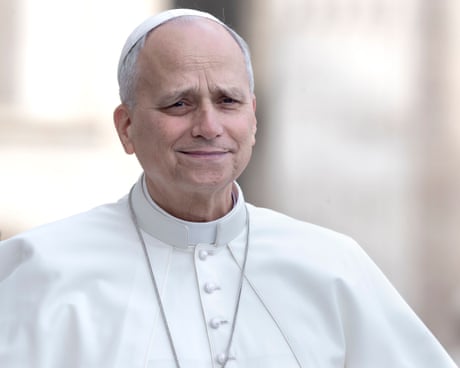
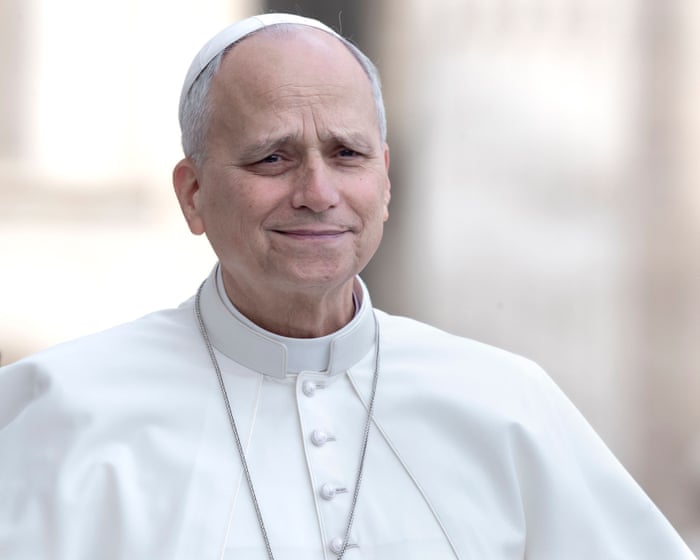
Pope Leo votes in US midterms in first known political ballot for any pontiff

US citizen Leo, who has clashed with Donald Trump over several issues, submits his vote by post in Chicago

Pope Leo has voted in the US midterm elections – the first time a sitting pontiff is known to have cast a ballot in any political election at any time in history.

Leo, who has clashed with the US president, Donald Trump, over several issues, submitted his vote by post in Chicago, where he was born, the Vatican said on Friday. Leo became the first American leader of the Catholic church last year after the death of Pope Francis.

Continue reading...

© Photograph: Maria Grazia Picciarella/SOPA Images/Shutterstock

© Photograph: Maria Grazia Picciarella/SOPA Images/Shutterstock

© Photograph: Maria Grazia Picciarella/SOPA Images/Shutterstock

  •  

Italians Protest Against Meloni Over Cost of Living and Rearmament

A nationwide strike brought together workers, students, housing rights groups and farmers.

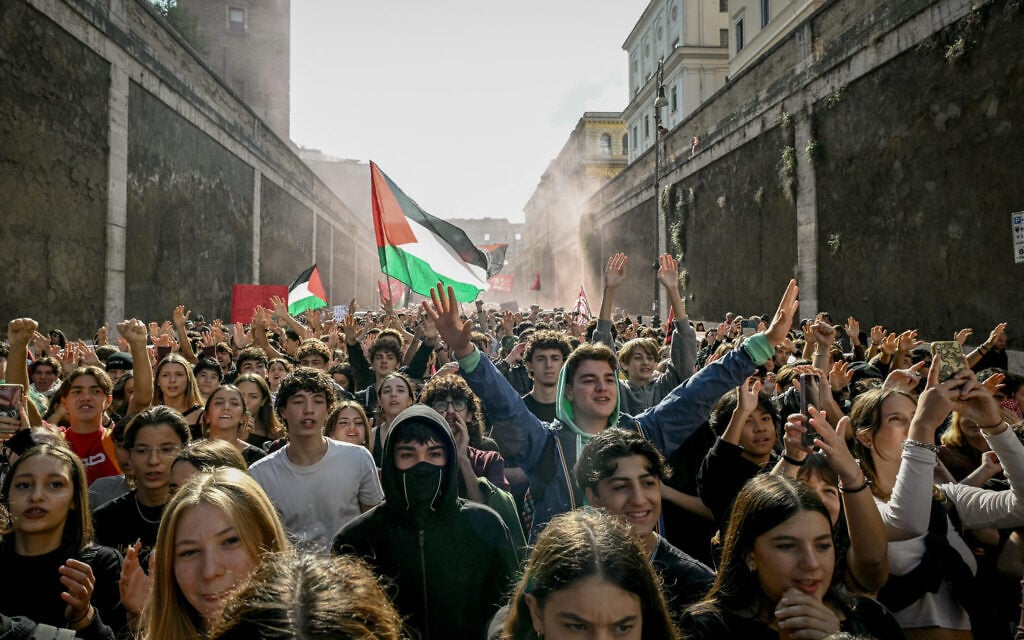
On Friday, thousands of people demonstrated in major Italian cities against far-right Prime Minister Giorgia Meloni, the high cost of living and military rearmament.

RELATED:

Southern Italy Faces Food Shortages as Drivers’ Strikes Continue

The protests took place as part of a general strike called by the Unione Sindacale di Base (USB) and were supported mainly by students, public-sector workers and housing rights organizations.

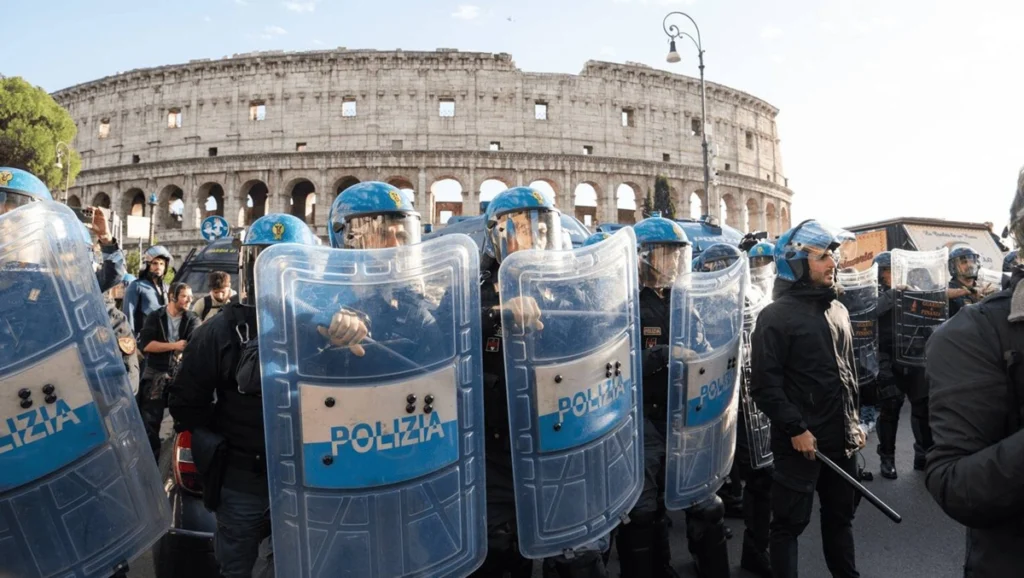
Rome was one of the main focal points of the demonstrations, with a protest encampment outside the Colosseum set to remain in place through Sunday.

The largely peaceful demonstrations spread across cities including Milan, Florence, Naples, Genoa, Turin and Bologna, as well as several locations in Sicily.

“Workers, working-class communities, homeless people and agricultural producers have mobilized against the economic crisis this government is imposing on us to finance rearmament and military spending that have nothing to do with the interests of the population,” USB Director Stefano De Angelis said, noting that more than 1.5 million people had taken part in protests held across the country.

👥 Roma, sciopero generale: circa 100mila manifestanti secondo le stime dell'USB.

Il corteo di studenti e lavoratori, partito da piazza dei Cinquecento, è tornato alla stazione dopo aver attraversato la città. Video di Maurizio Leggeri e Diariodigitale pic.twitter.com/PwJ3GMkRVK

— Italia 24H Live 🔴 – Notizie dall'Italia (@Italia24HLive) October 30, 2026

The text reads, “General Strike in Rome: approximately 100,000 protesters, according to USB estimates. The march of students and workers, which set off from Piazza dei Cinquecento, returned to the station after moving through the city.”

Protest Encampment Outside the Colosseum Through Sunday

In Rome, the main demonstration drew at least 20,000 participants and set off from Piazza del Cinquecento toward the area surrounding the Colosseum.

Once there, organizers announced their intention to occupy Via dei Fori Imperiali, the avenue connecting central Piazza Venezia with the monument, and set up tents through Sunday, when a national assembly is scheduled to take place.

The initiative, organized by the USB and the Lotta per la Casa collective, aims to turn the site into a space for mobilization and participation by the various groups that have joined the protests across Italy.

“This demonstration does not end here. We will continue mobilizing through Sunday, when we will hold a major national assembly in this square, beneath the Colosseum, attended by representatives of all the demonstrations taking place across the country today,” De Angelis said.

The union leader also denounced restrictions preventing demonstrators from approaching Montecitorio, the seat of the Chamber of Deputies, describing them as “anti-democratic.”

“In any country where demonstrations are held against the government, people can reach government and parliamentary buildings. In Italy, this is prohibited,” he said.

“We will stay here, outside the Colosseum, through Sunday to show that this city, too, must be a place for participation in protest mobilizations.”

Sciopero generale, studenti e lavoratori insieme nelle piazze: “Siamo centinaia di migliaia”. Da Milano a Napoli occupate le tangenziali https://t.co/wolYZWxUmR

— Elio Lannutti (@ElioLannutti) October 30, 2026

The text reads, “General strike, students and workers together in the streets: ‘There are hundreds of thousands of us.’ From Milan to Naples, ring roads occupied.“

Clashes and Roadblocks

The day’s main episode of tension occurred in Turin, in northern Italy, where clashes broke out between demonstrators and security forces in the central Piazza Castello.

Participants in the march threw eggs, bottles and red paint at riot police, who responded with charges and high-pressure water hoses.

After the clashes, participants returned to the occupied university campus and announced a new gathering for 6 p.m. local time to continue the protests. Objects were also thrown at police in Rome, near the Colosseum.

The strike also caused major traffic disruptions, particularly in Bologna, in northern Italy, where demonstrators blocked access roads to several educational institutions and marched along the ring road, forcing the temporary closure of the A14 highway.

In Genoa, in northern Italy, participants blocked access to the port, while other demonstrations disrupted daily activities in major Italian cities.

Friday’s strike marks the beginning of a series of mobilizations in Italy that will continue Nov. 20 with a general strike across all sectors called by the CGIL, the country’s largest trade union confederation, and a taxi-sector strike scheduled for Dec. 14.

The day was marked by a heavy security presence across the country following violent incidents reported Oct. 17 and 18 in Milan, Turin and Bologna. Those incidents prompted Meloni’s government to approve an extraordinary security decree and deploy 500 military personnel to support police forces.

teleSUR/ JF

Source: EFE

  •  

Perfume bottle and child’s necklace among treasures found in Pompeii wardrobe

Archaeologists uncover jewellery, cosmetics and coins in cabinet sealed since eruption of Mount Vesuvius in AD79

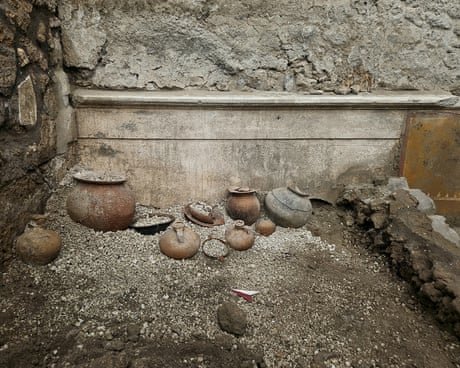
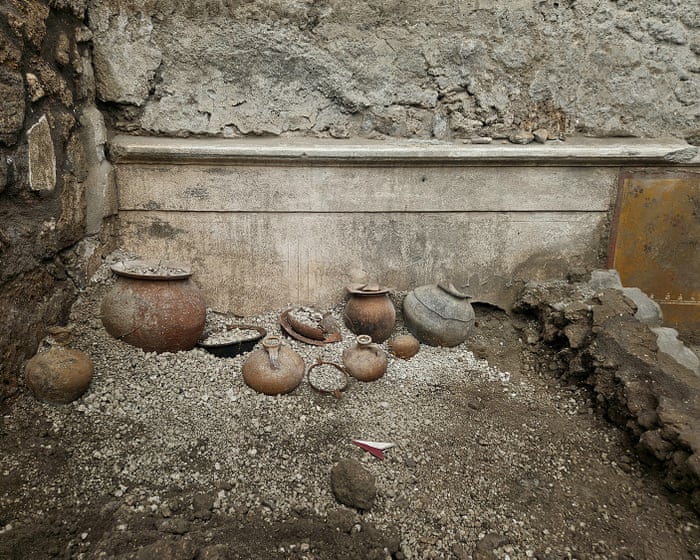
Fragments of personal objects, from makeup tools and a perfume bottle to coins and a child’s necklace, have been found tucked away in a wooden wardrobe sealed off for almost 2,000 years in the ruins of Pompeii.

The artifacts provide an intimate glimpse of daily life in the ancient Roman city before it was devastated by the eruption of Mount Vesuvius in AD79. The wardrobe was discovered in a room of a home on Via dell’Abbondanza, which was one of the most bustling streets in Pompeii.

Continue reading...

© Photograph: via Pompeii Archaeological Park

© Photograph: via Pompeii Archaeological Park

© Photograph: via Pompeii Archaeological Park

  •  

‘Let me die’: tortured migrants and rescue ships face off against EU-sponsored Libyan forces

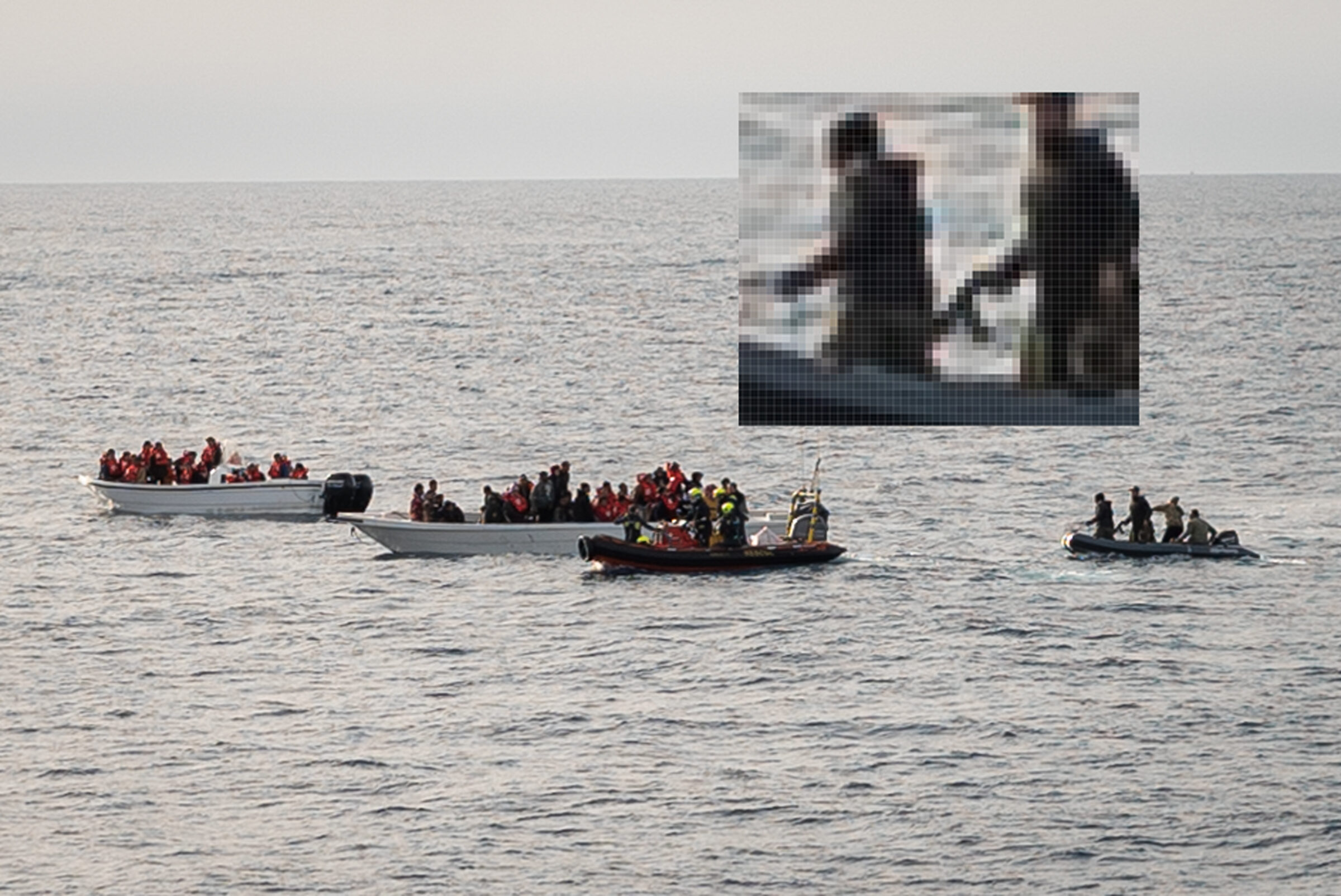
When Sulaiman saw the Humanity 1 approaching, he thought to himself: “if they are Libyans, let me die. I will not go back there.”

The 25 year old Nigerian man is one of many rescued by the German NGO SOS Humanity on Tuesday (27 October) to have escaped living hell in Libya, at the hands of a regime paid by the EU to keep migrants away from its borders.

“I was in prison for one year, for no reason,” said Sulaiman, whose name has been changed to preserve his anonymity. “Any time in the morning they come to distribute food, there are beatings. No one lets you go without a beating,” he told EUobserver.

Every day he’d subsist on one small slice of bread in “a cage for 100 people, where there are all skeletons,” he described with tears in his eyes. 

Sulaiman had tried to leave Libya twice before on small boats, but each time he’d been pulled back to land by violent militias, one of whom he described to be an ‘official’ authority. 

Data from the International Organisation for migration (IOM) and the UN found over 200,000 people to have been illegally intercepted in the central Mediterranean and returned to Libya since 2016. 

And like many other search and rescue organisations, SOS Humanity’s own work has been significantly impeded by Libyan groups – whether they be the so-called Libyan coast guard or paramilitary groups known for hijacking small migrant boats in open sea to rob everyone on board and pull them back to illegal detention facilities.

Men, women, families with children, and unaccompanied minors alike are kept in prisons until they can pay their way out.

“I lied, and told my family I was in Tunisia,” a young boy from Sudan told EUobserver. 

“I knew my mother couldn’t take it, knowing what would be happening to me in Libya,” he said, after having been rescued by SOS Humanity alongside 27 others in the early hours of Tuesday. He is one of 10 children aboard traveling alone. 

This article continues, but the full version is available only to EUobserver.com subscribers. Visit account.euobserver.com/membership

  •  

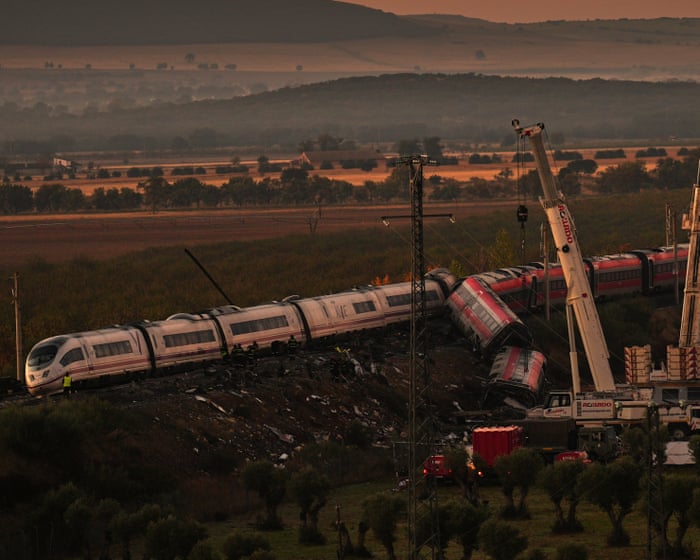
People of 27 nationalities may be among those killed or injured in Spain train crash, Sánchez says – as it happened

This blog is now closed, you can read more on this story here

Peunte begins by paying tribute to all affected by the incident.

He says that “at present, evidence points to a failure within Adif’s command and control centre,” but adds that investigators are still looking “to clarify what exactly happened.” He says he still has confidence in the system.

Continue reading...

© Photograph: Manu Fernández/AP

© Photograph: Manu Fernández/AP

© Photograph: Manu Fernández/AP

  •  

From Brussels to Belgrade: Europe’s Generation Z Protests Challenge Established Politics

Youth-led demonstrations across Europe are bringing together concerns about housing, education, employment and political accountability. Although the movements differ considerably between countries, their emergence reflects growing dissatisfaction among younger Europeans over economic prospects and their influence on political decisions.

A series of demonstrations involving young people across Europe has developed into a wider political phenomenon, as students and younger workers challenge governments over living costs, public services and their expectations for the future.

Protests have taken place in France, Belgium, Italy, Albania and several other countries, while a student-led movement in Serbia has achieved a particularly consequential political outcome.

In Serbia, nearly two years of demonstrations culminated in a parliamentary election victory for a student-backed political movement, ending the electoral dominance of President Aleksandar Vučić’s Serbian Progressive Party.

The outcome, reported by Reuters on 29 October, has given the movement a prospective parliamentary majority, although final certification of the election results remains outstanding.

Elsewhere, protesters have secured fewer immediate political concessions.

Nevertheless, their campaigns share a recurring concern: that conventional channels of political representation have failed to address problems affecting younger generations.

Economic Pressures Behind the Demonstrations

The grievances vary between countries, but housing affordability, insecure employment, education funding and living costs feature prominently.

A European Parliament youth survey published in February 2025 found that 40 per cent of respondents aged 16 to 30 considered rising prices and the cost of living a priority for the EU.

Almost one-third identified economic conditions and job creation as a principal concern, while education also ranked prominently.

More recent figures illustrate the financial pressures confronting younger Europeans.

According to Eurostat data published in June 2026, 24.2 per cent of EU residents aged 15 to 29 were at risk of poverty or social exclusion in 2025.

That compares with 20.9 per cent for the population as a whole.

These figures do not establish that economic hardship is the cause of every protest. They do, however, provide context for the dissatisfaction expressed by participants.

Belgium’s Students Demand Better Education

In Brussels, demonstrations have focused partly on the condition of schools and the availability of educational resources.

Students have criticised deteriorating facilities, shortages of teachers and government decisions affecting education funding.

Nineteen-year-old student Maya Gourdel told Reuters that peaceful attempts to draw attention to these concerns had attracted little response from political leaders.

Her account reflects a wider frustration among demonstrators who believe that public attention has increased only after protests became more disruptive.

Belgium’s education system is organised primarily at community level, meaning decisions concerning funding, staffing and school infrastructure are divided among different authorities.

The demands of protesters consequently involve both national political debates and decisions taken by regional and community institutions.

France and Italy Face Wider Social Unrest

In France, demonstrations concerning the cost of living and public services have involved students alongside trade unions and other organisations.

Recent protests have also been accompanied by violence, including attacks on commercial premises and confrontations with police.

The involvement of younger demonstrators does not mean that every participant supports violent tactics.

Rather, the events illustrate how movements with economic and political grievances can encompass groups with different objectives and methods.

Italy has experienced similar tensions, particularly in Milan, where demonstrations against rising living costs have followed earlier episodes of unrest.

The Italian government has faced pressure over household expenditure, wages and the affordability of essential services.

These disputes have developed against a background of high energy prices and concerns about the broader economic outlook.

Albania’s Frustration With Political Institutions

In Albania, student-led protests have challenged Prime Minister Edi Rama’s government over alleged corruption, limited employment opportunities and education standards.

Demonstrations that began in Tirana have spread to other cities.

On 29 October, opposition lawmakers disrupted proceedings in parliament following weeks of protests and confrontations between demonstrators and police.

The government has offered measures intended to address economic concerns while condemning violence associated with the demonstrations.

For many younger Albanians, employment prospects are closely connected to the possibility of emigrating.

The perception that professional opportunities depend on political connections or personal networks has become another source of dissatisfaction.

However, the Albanian movement cannot be treated as identical to protests in EU member states, given the country’s different economic conditions and political institutions.

Serbia Shows the Political Potential of Student Movements

Serbia provides the most substantial example of youth-led protest translating into electoral change.

The movement emerged after the collapse of a railway station canopy in Novi Sad in November 2024, which killed 16 people and prompted allegations of corruption and negligence.

Students organised prolonged demonstrations demanding accountability and institutional reform.

Their campaign subsequently developed into an electoral challenge to the governing Serbian Progressive Party.

Preliminary results from the October 2026 parliamentary election indicate that the student-backed list has secured a majority of seats.

However, electoral certification and the formation of a new government remain incomplete.

The movement now faces a different challenge: converting protest demands into administrative decisions, legislation and economic policy.

Its success will be judged not only by the election result but also by its ability to govern.

A Generational Shift, But Not a Single Movement

It would be misleading to describe Europe’s demonstrations as a unified political campaign.

Participants have different objectives, national circumstances and ideological positions.

Some demand increased public expenditure, while others concentrate on corruption, political accountability or employment opportunities.

What connects them is a recurring concern about whether established institutions respond adequately to younger citizens.

The political consequences will depend on whether demonstrations produce lasting organisations, influence elections or secure changes in government policy.

Serbia suggests that student mobilisation can translate into substantial political change.

For governments elsewhere in Europe, the question is whether the grievances driving these movements can be addressed through existing political institutions before dissatisfaction generates further unrest.

  •  

Germany and Italy Clash Over Gas Storage as Europe’s Energy Prices Return to Crisis Levels

A dispute between Germany and Italy over natural gas storage has exposed tensions within the European Union’s energy market, as wholesale prices approach levels last recorded during the 2022 energy crisis and governments confront the prospect of another expensive winter.

Italy has accused Germany of contributing to the latest surge in European natural gas prices by delaying the replenishment of its underground storage facilities, reopening a debate about national energy policies and their consequences for the EU’s single market.

The dispute emerged on 29 October after the European benchmark gas price briefly exceeded €100 per megawatt hour the previous day, its highest level since December 2022.

Germany’s gas storage facilities were just 61.7 per cent full, compared with almost 91 per cent in Italy and an EU average of approximately 75 per cent.

The difference has become politically sensitive because European countries purchase gas in an interconnected market, meaning decisions taken by one major consumer can influence prices paid elsewhere.

Speaking at the Montel Italian Energy Day conference in Milan, Alessandro Noce, director general for energy markets and infrastructure at Italy’s Energy Ministry, criticised Germany’s approach to preparing for winter.

According to Reuters, Noce argued that Italy had spent €300 million securing additional gas reserves, only to face higher market prices as Germany attempted to replenish its comparatively depleted stocks.

He also questioned whether Germany had delayed purchases because of preparations to privatise energy companies involved in the storage process.

Germany’s Economy Ministry did not immediately respond to the criticism.

Germany’s Storage Decisions Under Scrutiny

The German government’s approach has attracted particular attention because of its role in the operations of Uniper and Securing Energy for Europe (SEFE).

Both companies became important components of Germany’s energy-security arrangements following the disruption of Russian gas supplies in 2022.

Plans concerning their future ownership have coincided with renewed questions about how Berlin balances commercial considerations against the need to maintain strategic reserves.

At the Milan conference, an energy analyst suggested that preparations for privatisation had contributed to delays in storage purchases.

That assessment has not been established as the definitive explanation for Germany’s comparatively low reserves.

Nevertheless, the resulting political dispute demonstrates the difficulties of managing energy security through a system in which national governments retain considerable discretion while their purchasing decisions affect a common market.

Europe’s Gas Market Faces Renewed Pressure

Europe’s latest price increase has several causes extending beyond German storage policies.

Disruptions to liquefied natural gas shipments associated with the conflict involving Iran have constrained supplies from the Middle East.

At the same time, European countries entered the summer storage-refilling period with unusually low reserves following the previous winter.

The EU Agency for the Cooperation of Energy Regulators (ACER) reported that underground gas storage was only 28 per cent full at the end of winter 2025–26.

By 21 October, that figure had risen to 75 per cent, still below historical levels.

In its latest gas-market monitoring report, ACER estimated that disruption linked to the Middle East conflict had added between €18 billion and €33 billion to Europe’s gas-import bill.

The agency also found that American liquefied natural gas accounted for roughly 30 per cent of EU gas supplies, reflecting Europe’s growing reliance on transatlantic energy imports.

Although this diversification has reduced dependence on Russian pipeline gas, it has also increased Europe’s exposure to international competition for LNG cargoes.

European buyers must compete with customers in Asia, particularly when colder weather or geopolitical disruptions increase demand.

EU Storage Rules Face a Test

The disagreement has implications for the European Union’s gas-storage framework.

Following the 2022 energy crisis, the EU introduced mandatory storage requirements intended to reduce the risk of supply shortages during winter.

The arrangements were subsequently extended until the end of 2027.

Under the revised rules, member states retain a 90 per cent storage-filling target but have greater flexibility over when and how it is achieved.

Countries may reach the target between 1 October and 1 December, rather than being bound to the previous 1 November deadline.

Further flexibility is available in difficult market conditions.

These provisions were designed partly to prevent governments from creating artificial demand peaks by purchasing gas simultaneously to meet rigid deadlines.

However, the present dispute suggests that delayed purchases can create another problem if several major consumers need additional supplies as winter approaches.

Germany’s current storage level does not, by itself, establish a breach of EU requirements. The applicable deadlines and permitted exemptions must also be considered.

Italy Seeks Greater Scope for Intervention

The Italian government has meanwhile been seeking permission from the European Commission to use public funds to reduce energy costs for households and businesses.

Rome’s concerns reflect the economic consequences of sustained high gas prices, particularly for industries dependent on energy-intensive manufacturing.

Italy faces a general election expected in 2027, adding a domestic political dimension to the debate over energy subsidies.

Noce warned that prices could rise to between €150 and €180 per megawatt hour if January brings particularly cold weather.

Such an outcome remains a scenario rather than a forecast.

Energy markets will also be influenced by developments in the Middle East, LNG deliveries, industrial demand and winter temperatures.

A European Problem Without a Single National Solution

Europe has expanded its LNG import infrastructure and diversified energy sources substantially since 2022.

However, the latest price increases demonstrate that greater import capacity does not necessarily insulate consumers from global supply disruptions.

The German–Italian dispute also exposes the limits of national energy planning within an integrated European market.

Germany’s storage policies affect its neighbours, just as decisions taken elsewhere influence the price German consumers pay.

The central question for Brussels is whether existing coordination arrangements provide sufficient incentives for governments to safeguard their own winter supplies without transferring additional costs to other member states.

With the heating season approaching, that issue is becoming an immediate economic concern rather than a theoretical dispute about European energy solidarity.

  •  

Dockworkers in 22 Countries Prepare Coordinated Strike Against Arms Shipments Through Major Ports

Trade unions representing workers at 113 ports across five continents are preparing coordinated industrial action on 30 October, protesting against the movement of military equipment through commercial shipping terminals. The mobilisation raises questions about international trade, defence logistics and the growing involvement of organised labour in geopolitical disputes.

Dockworkers’ unions in 22 countries and regions are preparing coordinated strikes and demonstrations on Friday, 30 October, in an international campaign opposing the use of civilian ports to transport weapons and other military supplies to conflict zones.

The mobilisation involves more than 25 trade unions representing workers at 113 ports, according to organisers, with planned actions extending across Europe, North Africa, Asia and the Americas.

Major shipping centres expected to participate include Hamburg, Genoa, Le Havre, Valencia, Algeciras and Piraeus, alongside Morocco’s Tangier Med and India’s Nhava Sheva.

The scale of actual disruption remains uncertain.

Some unions have announced 24-hour stoppages, while others intend to organise shorter walkouts, demonstrations or symbolic protests.

Organisers have suggested that the action could affect more than 40 per cent of Mediterranean cargo traffic and freight worth over $2 billion.

However, these figures represent estimates of potential disruption rather than confirmed losses or cargo volumes that will necessarily be immobilised.

A Campaign Extending Beyond Europe

The initiative originated among dockworkers’ organisations in Italy, France, Greece, Spain’s Basque Country, Turkey and Morocco.

It subsequently attracted support from unions in northern Europe and several countries outside the Mediterranean region.

Among the participating organisations are Germany’s ver.di, France’s CGT Ports et Docks, Ireland’s SIPTU and Denmark’s 3F.

Indian maritime unions have also declared their support, citing the effects of armed conflict on commercial shipping and the safety of seafarers.

The campaign follows an international declaration agreed in Istanbul in May 2026, when dockworkers’ representatives called for ports to remain outside military supply operations.

The organisers argue that commercial transport infrastructure is increasingly being used to facilitate the movement of weapons and equipment to active conflict zones.

Their demands extend beyond any single war, although opposition to arms deliveries connected with the conflict involving Israel and the Palestinians has featured prominently in earlier industrial action.

Italy at the Centre of the Mobilisation

Italy is expected to become one of the principal centres of Friday’s protests.

The Unione Sindacale di Base (USB) has called a nationwide general strike, with demonstrations planned in more than 40 cities.

Port workers are expected to participate in Genoa, Livorno, Trieste, Ravenna, Gioia Tauro and several other maritime centres.

Genoa has previously been associated with protests against the handling of military cargo, including shipments linked to Israel and American military facilities.

However, the port’s representatives have indicated that they expect only limited operational disruption from Friday’s action.

The distinction between planned participation and actual interruption of shipping is important.

Large ports operate through complex arrangements involving terminal operators, subcontractors, transport companies and different categories of employees.

Consequently, industrial action affecting one part of a port does not necessarily bring all commercial activity to a halt.

Greek Ferries Face Disruption

Greece is among the countries where the effects on passenger transport could be more immediate.

Dockworkers, engineers and seafarers’ unions have announced participation in the protests, with Greek ferry services expected to remain suspended for 24 hours.

At Piraeus, the country’s largest port, dockworkers have announced a three-hour stoppage.

Other Greek maritime unions intend to participate in longer strikes.

Disruption to ferry operations could affect travel between the Greek mainland and its islands, demonstrating how a campaign directed primarily against military cargo can also affect civilian transport.

The effects will depend on the precise participation of employees and the arrangements made by port and ferry operators.

Defence Logistics and Commercial Shipping

The planned mobilisation draws attention to the relationship between military supply chains and civilian maritime infrastructure.

Commercial ports are essential to international trade, but they may also handle military vehicles, ammunition, equipment and other cargo connected with defence operations.

NATO members and other states depend on commercial transport networks for certain aspects of military logistics.

Military equipment may be transported aboard commercial vessels or through terminals that also process ordinary goods.

The use of such facilities is not inherently unlawful, and arms shipments may be authorised under national and international export-control arrangements.

Nevertheless, dockworkers’ organisations argue that employees should have a greater role in determining whether ports are used to facilitate military operations.

This creates potential tensions between industrial rights, contractual obligations, national security priorities and government decisions concerning defence exports.

The implications are particularly significant in Europe, where governments are expanding defence production and seeking to strengthen military supply chains.

Any sustained disruption to port logistics could complicate the movement of equipment and components, although the consequences of Friday’s planned action cannot yet be established.

Europe’s Growing Defence Trade

The protest comes as European countries increase military spending and procurement in response to deteriorating security conditions.

According to the Stockholm International Peace Research Institute, Europe became the world’s largest arms-importing region over the 2021–2025 period.

The expansion of defence trade has increased the importance of transport infrastructure capable of handling military equipment.

It has also exposed disagreements over the political responsibilities of companies and workers involved in these supply chains.

For governments, the movement of defence equipment may form part of legitimate security commitments and international assistance programmes.

For participating unions, opposition to particular military shipments is presented as an extension of workers’ rights and their broader political objectives.

These competing positions are unlikely to be resolved through a single day of industrial action.

An Immediate Test for International Shipping

Friday’s mobilisation will provide an indication of how effectively unions can coordinate industrial action across different countries, legal systems and transport networks.

Its practical significance will depend on how many workers participate, which terminals suspend operations and whether shipping companies can maintain schedules through alternative arrangements.

The organisers have demonstrated their ability to coordinate protests across a geographically extensive network.

Whether that coordination translates into substantial disruption to international maritime trade remains to be seen.

For European governments and shipping operators, the immediate task will be to manage any interruption to commercial and passenger services.

The wider question is whether opposition to the use of civilian transport infrastructure for military logistics will become a recurring feature of industrial relations across Europe’s major ports.

  •  

Albania takes anti-riot crackdown cue from France

RT | October 29, 2026

Albania has imposed steep fines on people who take part in violent protests, citing a recent law imposed in France, in an attempt to quell weeks of clashes between police and protesters demanding the resignation of Prime Minister Edi Rama.

Under measures adopted Wednesday, remaining at a demonstration that turns violent will be a criminal offense, even for those not directly involved in clashes. Anyone who “chooses to remain in a crowd” engaged in violence or looting, or is found “concealing their identity,” faces fines of up to 500,000 leks ($6,130), over six-times the Balkan country’s average monthly salary.

Initially sparked by student anger over education costs and deteriorating facilities, the demonstrations have evolved into nationwide protests against inequality, soaring living costs, and cuts to public services.

Citing “urban anarchy” when announcing the crackdown, Rama acknowledged France’s controversial ‘casseurs-payeurs’ (rioters pay) bill, which would hold demonstrators liable for up to €10,000 ($11,160) in damages. The bill passed the French Senate on Wednesday and is now headed to the National Assembly, following weeks of protests and riots in which over 1,300 protesters were arrested in a single day.

Italy has also followed suit. Prime Minister Giorgia Meloni’s government approved measures last week that criminalize “violent participation in a demonstration,” punishable by up to five years in prison and fines of up to €20,000.

In Albania, a “special electronic register” will track suspected offenders, while police gain powers to restrict gatherings near schools, hospitals, and government buildings over potential violence. The measures – which also provide compensation for businesses damaged in the unrest – are already in place and require parliamentary approval within 45 days to remain in force.

What’s behind the protests in Albania?

Anti-government protests in the country began peacefully in May over plans for a luxury resort in the Zvernec nature reserve, a project linked to US President Donald Trump’s son-in-law, Jared Kushner.

By mid-October, the protests escalated into daily clashes with police amid growing anger over corruption, economic mismanagement, unemployment, and failing public services. Demands for Rama’s resignation took center stage, but the prime minister, who has been in power since 2013 and was elected to a fourth term last year, has refused to budge.

The unrest has caused over €2 million in damage, according to official estimates, as rioters torched ministries and attacked police stations, public buildings, and businesses. Clashes flared up again over the weekend, with protesters chanting “Revolution” and “Rama in prison” and police using tear gas, rubber bullets, and water cannons in Tirana.

The Russia blame game

Despite the protests being driven by grievances over domestic matters, Rama blamed the violence on a “hybrid war” by foreign actors, specifically Russia and Iran.

Russia has dismissed the accusations. Foreign Ministry spokeswoman Maria Zakharova suggested last week that Rama should look closer to home. “These are citizens of your own country who took to the streets to protest. Don’t shift your responsibility onto others. Deal with your own domestic problems.”

  •  

Airbus Willing to Join U.K.-Japan-Italy Fighter Jet Project

European aircraft manufacturer Airbus could potentially join a British-Japanese-Italian consortium to build a next-generation fighter jet following the collapse of a highly-troubled French-German project, CEO Guillaume Faury said Wednesday.

The post Airbus Willing to Join U.K.-Japan-Italy Fighter Jet Project appeared first on Breitbart.

  •  

Meloni Condemns 'Shameful’ Release of Alleged Organizer of Milan Riots

Italian Prime Minister Giorgia Meloni bluntly branded a Milan judge's decision to release Youssef Siher, the alleged organizer of the recent violent riots in the city as a "shameful" decision.

The post Meloni Condemns ‘Shameful’ Release of Alleged Organizer of Milan Riots appeared first on Breitbart.

  •  

A Pompeii Wardrobe Left Behind in the Eruption Held a Childhood Charm Necklace and 38 Coins

When the cloud of burning ash and gas rolled into the room, the wardrobe was still standing. The wood took almost twenty centuries to rot away, but by then the ash had hardened around it and kept its shape. It is the same principle behind the plaster body casts Pompeii is famous for. When archaeologists […]

  •  

EU Divided Over New Membership Safeguards as Montenegro Becomes Test Case for Enlargement

Brussels is considering unprecedented restrictions on the rights of future EU members, including the possible suspension of voting rights for serious breaches of European values. France and the Netherlands favour stronger safeguards, while Italy and Austria warn that excessive conditions could undermine enlargement.

European Union governments have begun negotiations over proposals that would allow Brussels to impose additional restrictions on future member states, exposing divisions over how to prevent democratic backsliding without discouraging countries seeking accession.

The discussions, held among EU ambassadors on 28 October, concern draft safeguards proposed by the European Commission for inclusion in future accession treaties.

Montenegro, currently the most advanced candidate in the Western Balkans, is expected to become the first country subject to the proposed arrangements.

The measures would potentially allow the EU to suspend certain membership rights, including voting rights, during a transitional period lasting up to 15 years after accession.

However, the negotiations have revealed disagreement not only over the duration of the safeguards but also over the powers that should be granted to the Commission and the legal thresholds for intervention.

The controversy raises a broader question about the nature of EU membership: whether countries that have completed accession negotiations should immediately enjoy the same institutional rights as existing members.

France and the Netherlands seek stronger guarantees

According to Euronews’ reporting on the ambassadors’ discussions, France and the Netherlands have pressed for stronger guarantees that newly admitted states will continue respecting the rule of law and other EU obligations.

Their position reflects concern that the Union’s existing procedures have proved difficult to enforce against governments accused of undermining judicial independence or democratic institutions.

Article 7 of the Treaty on European Union already provides for sanctions, including suspension of certain membership rights, where a serious breach of European values is established.

However, the procedure involves demanding political and voting requirements.

The Commission’s proposed safeguards are intended to provide an additional instrument specifically applicable to newly admitted members.

They would operate during a defined period after accession and could be activated in response to serious breaches of EU values or the principle of sincere cooperation.

For governments supporting the proposal, the objective is to ensure that reforms undertaken during accession negotiations remain effective after membership has been secured.

Italy and Austria warn against excessive restrictions

Not all member states share this approach.

Italy and Austria, among countries supporting faster integration of the Western Balkans, have warned against imposing conditions that could make EU membership appear provisional or unequal.

Their concern is that candidate countries may face an increasingly complicated accession process even after meeting the formal requirements.

The credibility of EU enlargement depends partly on the proposition that successful reforms will eventually lead to full membership.

If new members are subjected to extensive additional restrictions, political leaders in candidate countries could find it more difficult to justify the domestic compromises required by accession negotiations.

The debate is particularly sensitive in the Western Balkans, where prolonged delays have already generated frustration over the pace of integration.

The challenge for Brussels is to strengthen safeguards without creating a permanent distinction between established and newly admitted members.

A proposed 15-year period

The Commission’s draft institutional safeguard would remain available for 15 years following accession.

This period is intended to permit intervention if a new member reverses reforms after joining the Union.

Yet ambassadors have questioned whether such an extended period can reasonably be described as temporary.

The proposed decision-making mechanism has also attracted criticism.

Under the draft, the Commission could propose restrictive measures that would take effect unless a qualified majority of member states rejected or amended them within two weeks.

This would reverse the usual political dynamic by requiring governments to assemble a blocking majority rather than actively secure support for sanctions.

The proposal could therefore make intervention easier than under the existing Article 7 mechanism.

Critics are concerned that the arrangement would give the Commission excessive influence over the institutional rights of newly admitted countries.

Supporters argue that a more effective enforcement mechanism is necessary precisely because existing procedures have proved difficult to use.

Monitoring could begin before accession

The proposed safeguards are not confined to the period following membership.

The Commission also wants stronger monitoring between the signing of an accession treaty and the date on which a country formally joins.

This period can last several years, during which a candidate government may change and reform commitments may weaken.

Under the draft arrangements, monitoring could include regular assessments, reviews involving existing member states and formal warnings.

As a last resort, accession could be postponed if there were clear evidence that a candidate would not meet the required conditions.

The voting procedure for such a postponement remains unresolved.

These provisions would add another stage of oversight to an accession process that already requires extensive negotiations and the implementation of EU legislation.

Montenegro faces a new uncertainty

Montenegro began accession negotiations in June 2012.

According to the European Commission’s enlargement records, all 33 screened negotiating chapters have been opened and 16 provisionally closed.

Its progress has made the country a leading candidate for the next round of enlargement.

However, its accession treaty may now become the vehicle through which the EU establishes a new framework for future entrants.

The implications extend beyond Montenegro.

Albania, Moldova and Ukraine are also pursuing accession, although they are at different stages of the process.

Any safeguards introduced for Montenegro could influence the terms eventually offered to those countries.

Enlargement becomes a test of EU governance

The Commission’s proposals reflect a wider debate over whether the EU’s institutions can function effectively with substantially more members.

New entrants would participate in decisions concerning the budget, sanctions, foreign policy and the internal market.

Their admission could also affect areas where unanimity remains necessary, potentially increasing the risk of institutional deadlock.

The European Parliament’s research service has identified the proposed safeguards as part of a broader programme addressing decision-making and governance ahead of enlargement.

Negotiations over the draft clauses will continue at the technical level, with ambassadors expected to revisit the matter in November.

The central disagreement remains unresolved.

The EU wants future members to maintain democratic and legal standards, but it must also decide whether those guarantees can be enforced without creating a separate class of membership.

Montenegro’s accession negotiations will provide the first practical test of that approach.

  •  

Meloni’s €26 Billion Budget Tests Italy’s Fiscal Discipline as Election Approaches

Italy’s government has approved a new budget combining tax reductions, household support and defence spending with higher contributions from banks and energy companies. With public debt approaching 140 per cent of GDP, Rome faces difficult decisions over the cost of its political and economic commitments.

Italian Prime Minister Giorgia Meloni’s government approved a €26 billion budget package on Wednesday, 28 October, seeking to ease pressure on households and businesses while maintaining the fiscal credibility of one of Europe’s most heavily indebted economies.

The measures, agreed by the cabinet ahead of next year’s general election, include changes to personal income taxation, support for younger workers and families, and the extension of existing relief programmes.

The government intends to finance part of the package through additional contributions from banks, insurance companies and energy businesses.

However, the budget also exposes the limits of Italy’s financial flexibility as Rome attempts to accommodate higher defence expenditure and energy-security requirements within the European Union’s fiscal framework.

The immediate political challenge is to demonstrate that tax reductions and spending commitments can coexist with efforts to contain public debt.

Banks and energy companies face additional demands

According to Reuters’ report on the cabinet decision, Meloni confirmed that approximately €5 billion would come from banks and insurance companies, while energy companies would contribute a further €700 million.

The measures form an important part of the government’s funding strategy.

Italy’s banking sector has benefited from the period of higher European interest rates, although profitability varies between institutions and has been affected by changing monetary conditions.

The government argues that companies with relatively stronger financial positions should contribute more during a period of economic difficulty.

Meloni said the budget was not directed against any particular sector, while acknowledging that an agreement with financial institutions had not been reached before its adoption.

The financial package also includes an increase in Italy’s financial transaction tax, commonly referred to as the Tobin tax.

Such measures provide the Treasury with additional resources without requiring broad increases in personal income taxation.

Nevertheless, their implications extend beyond immediate revenue collection.

Additional taxation of financial institutions can influence investment decisions, lending conditions and the sector’s willingness to finance domestic economic activity.

The extent of those effects will depend on the final provisions adopted by parliament.

Tax reductions target households and younger workers

A central element of the budget concerns Italy’s personal income tax system.

Meloni announced that the upper threshold of the second income-tax bracket would rise to €55,000 a year, extending preferential treatment to a wider group of taxpayers.

The government estimates that some taxpayers could save approximately €500 annually.

The package also includes employment-related incentives directed towards younger workers, alongside measures to support households and pensioners.

Another politically significant decision concerns vehicle taxation.

Meloni confirmed that an exemption for cars with engines rated up to 80 kilowatts and for motorcycles would become permanent.

According to the government’s estimates, approximately 70 per cent of vehicles currently in use would qualify.

These measures are intended to protect disposable income and encourage economic activity.

However, their overall economic impact will depend on the distribution of benefits, consumer confidence and whether households choose to spend or save the additional income.

Public debt remains the central constraint

Italy’s budget cannot be assessed independently of its debt position.

According to the Bank of Italy’s October economic bulletin, the government expects its public deficit to reach 2.9 per cent of GDP in 2026 before increasing to 3.4 per cent in 2027.

Public debt is projected to reach approximately 138.5 per cent of GDP next year.

Those figures leave Italy particularly exposed to changes in borrowing costs.

Higher yields on government bonds increase the cost of refinancing debt and reduce the resources available for other priorities.

The economic environment offers limited assistance.

The European Commission’s May forecast projected growth of just 0.5 per cent in 2026 and 0.6 per cent in 2027.

Although those figures predate the latest budget, they illustrate the underlying weakness of economic expansion.

Without stronger productivity growth and investment, reducing Italy’s debt burden remains difficult even when the government exercises spending restraint.

Defence spending complicates European fiscal rules

The increase in Italy’s projected deficit is partly connected to the use of flexibility available under the EU’s fiscal governance framework.

Rome has invoked the national escape clause to accommodate additional expenditure associated with defence and energy security.

This mechanism allows certain temporary deviations from agreed spending paths under specified conditions.

It does not, however, eliminate the government’s obligation to manage its finances or establish unlimited borrowing capacity.

Italy’s approach reflects a wider European problem.

Governments are being asked to strengthen military capabilities, protect energy supplies and maintain economic competitiveness while continuing to comply with fiscal constraints.

For highly indebted countries, the combination is particularly difficult.

The consequences could become more pronounced if financial markets demand higher returns on government debt.

Parliament faces the final decision

Cabinet approval marks the beginning of the budget’s final legislative phase rather than the completion of the process.

Parliament must consider the measures before they can enter into force.

Negotiations may still alter individual tax provisions, spending commitments and the distribution of financial contributions.

The budget also comes at a politically sensitive moment, with Meloni’s governing coalition approaching the next general election.

Its partners have previously disagreed over taxation, pensions and the appropriate distribution of public resources.

The final legislation will therefore provide an indication of the coalition’s ability to reconcile electoral priorities with economic constraints.

For Brussels, the question is whether Italy can preserve confidence in its public finances while using European fiscal flexibility to fund additional security expenditure.

For Rome, it is whether the immediate relief promised to households and businesses can be maintained without placing further pressure on borrowing costs.

Both questions will remain central to Italy’s economic outlook in 2027.

  •  

Islamo-Leftism Represents Greatest Threat to West, Warns Deputy Italian PM Salvini

In the wake of riots throughout Europe in recent weeks, Italian Deputy Prime Minsiter Matteo Salvini has warned that the emerging phenomenon of Islamo-leftism represents the greatest threat to the West.

The post Islamo-Leftism Represents Greatest Threat to West, Warns Deputy Italian PM Salvini appeared first on Breitbart.

  •  

A Ritual Sword From the Bronze Age Turned Up on the Site of a Planned Parking Lot in Sardinia Revealing a Nuragic Settlement that Lasted Until the Middle Ages

In 2019, workers preparing the ground for a gas pipeline and a new parking lot in the village of Loculi, in the interior of Sardinia, began to find ancient structures. Seven years later, those structures belong to an archaeological site of about 700 square metres (7,500 square feet). The remains it holds range from the […]

  •  
❌