 Login

I’m in ‘You Can See Everything.’ Here’s My Side of the Story.
I’m in ‘You Can See Everything.’ Here’s my side of the story.

Andrea Egan calls for same political focus on teachers, care sector and NHS and says Jackdaw decision ‘a serious misstep’
The leader of the UK’s biggest trade union has called for the same political focus to be given to NHS, education and care sector workers as there has been on those employed in North Sea oil and gas.
Andrea Egan, the general secretary of Unison, said too often public sector workers were treated as an “afterthought” by the government compared with the “massive political focus” on protecting jobs in the North Sea.
Continue reading...
© Photograph: Gary Calton/The Observer

© Photograph: Gary Calton/The Observer

© Photograph: Gary Calton/The Observer
Oliver Berg/picture alliance via Getty Images
Microsoft's huge employee buyout stunned the industry this week, raising urgent questions about why the software giant might want so many people to leave.
Inside the company, concerned staff debated the meaning of the move. Why might Microsoft want to shed 60,000 workers? Will roles be replaced by AI? Are more layoffs ahead?
Business Insider spent recent days speaking with Microsoft insiders to find out what's really happening. The people asked not to be identified discussing sensitive matters.
The main takeaway so far is that Microsoft seems to have unnecessarily spooked employees with the sheer size of its buyout offer, leaving leaders scrambling to calm the troops.
Chief Financial Officer Amy Hood in an internal memo explained the offer was intended to "offer employees agency if they choose to leave the company on their own terms" and said the company expected "very few people" to accept.
Microsoft doubled down later and told Business Insider it anticipates 3,000 or fewer employees will take the buyout. That's only about 5%, or less, of those eligible.
Earlier this year, the company offered a retirement buyout to employees based on age and tenure. About one-third accepted.
Soon after, Microsoft did another round of layoffs. Some employees who didn't accept the retirement offer ended up losing their jobs.
That's led to speculation that more layoffs may come in the wake of this week's bigger buyout offer.
"Future workforce needs will continue to be based on business needs and priorities," Microsoft said in a statement.
Business Insider spoke to Microsoft executives who said there are misconceptions about the current buyout offer.
These executives could only speak about their own teams, and they were hesitant to definitively say layoffs aren't coming. However, they pointed out a few differences between the current buyouts and the retirement offer.
"Microsoft doesn't want to shrink by 60,000 people," one executive said, while asking not to be identified. "We are not replacing everyone with AI."
This person thinks Microsoft made latest buyout offer because some employees complained that they weren't eligible for the retirement buyout earlier this year.
And in the case of the retirement buyout, when employees left, Microsoft didn't fill those roles — the headcount went away.
This week's buyout works differently. In some cases, when staff leave this time their roles will be backfilled with new hires.
One reason the latest buyout looks so huge: Some leaders decided it would be simpler to offer it to their entire organization, rather than try to pick which specific teams or individuals should be included.
"It's easier to opt-in giant organizations," one Microsoft executive told Business Insider.
Charles Lamanna, the executive in charge of the Copilot Platform, AI agents, Office and Word, decided to offer it to everyone in his organization, one of the people said. That includes many people in critical positions. The organization is prepared to backfill roles if any of those critical employees accept the buyout, this person said.
Microsoft's key Cloud + AI division took a slightly different approach, according to another executive from the company.
Two teams — Azure Hardware Systems and Infrastructure and Cloud Operations + Innovation teams — decided not to offer the latest buyout to staff.
Most other groups within the Cloud + AI division did offer the buyout to employees. And this division can backfill some roles, this executive told Business Insider.
Backfilling roles could still help Microsoft cut labor costs. One executive at the company said if a senior person were to leave, they would likely backfill the role with someone more junior who would potentially be paid less. A Microsoft spokesperson said that's not an official company position.
If all this seems overly complex, compared to layoffs, there may be a reason: Microsoft has been under fire for cutting American staff while employing foreign workers.
The Trump administration recently suspended Microsoft from a federal program that sponsors foreign workers for permanent residency, accusing the company of laying off American employees while hiring lower-paid foreign workers. Microsoft has denied those claims.
"Never say never, but there's a lot of desire not to do big layoffs, especially as an American company," one of the Microsoft executives told Business Insider.
Have a tip? Contact this reporter via email at astewart@businessinsider.com or Signal at +1-425-344-8242. Use a personal email address and a non-work device; here's our guide to sharing information securely.
jean-marc payet/Getty Images
Instead of going straight from junior to senior to manager to executive, you might find yourself bouncing between managerial gigs for different departments or taking a step back to focus on individual contributor work.
Organizational consulting firm Korn Ferry finds, based on a global survey of over 1,300 talent and senior leaders, that while traditional linear career ladders of moving up into higher-paying and more prestigious job titles within a particular specialized profession still exist, fluid career paths that end up looking like a lattice are becoming more important.
Career lattices may mean moving to a different team instead of being promoted, taking on a new role within the company to expand your skills, or moving down the career ladder. There can be all kinds of movements someone can take in the career lattice format.
Sixty-four percent of surveyed leaders said linear career paths will be less common, and 85% said progression will depend on skills and capabilities, rather than tenure or job title. Most said employees will be taking on greater ownership of their career development.
"In 2027, workers will zigzag more than they climb, landing in places no succession plan accounted for," the report said. "It will take a broader range of skills to rise through the ranks, so people will be searching for ways to learn them."
To learn whatever skills they need to before moving up, the report said people might be willing to move to a different team or position so they can develop their skill set. The report noted adaptability is the most sought-after skill among employers. AI fluency could be another attractive skill as the tech becomes more prevalent in the workplace.
A blog post from the workforce solutions provider Careerminds, by career and business coach Cynthia Orduña, listed examples of lateral moves. A sales representative could move to a customer success manager role because "strong relationship-building skills help improve customer retention and account growth." An IT support analyst could become a cybersecurity analyst because they can expand their technical knowledge.
Cathleen Beetel, senior client partner at Korn Ferry, thinks both employers and employees should embrace lateral transitions because they allow employers to tap into existing talent they have vetted and know works well for their company.
A guide from job-search platform Indeed said career lattices encourage workers to try new opportunities, learn what they're best at, acquire new skills, and understand more about company operations. Indeed said another bonus of career lattices is that it gives workers more control over their careers.
"You have to not see a lateral move or a sideways move as stagnant," Beetel said. "It could potentially be the fastest route forward for an employee because they can gain those skills that are perhaps adjacent to what they have today that actually puts them in a better position for a promotion in the future."
Career ladders have their own benefits, beyond thinking about the likely pay increase that comes with a title bump. Indeed said that having a well-defined ladder can raise employee motivation, encourage deep expertise in a specific area, and be an incentive to work toward a clear goal.
The Careerminds blog post said workers might decline lateral moves if they think it isn't beneficial to them — such as not bringing a raise, concerns about what this means for career progression, and concerns about leaving their well-established team.
So there are trade-offs in employers offering lateral moves over a step up. It's the company's responsibility to communicate why someone is being offered this move and why it could be beneficial.
"Employees are more likely to accept a move when they understand why they were selected, what they'll gain, and how the opportunity supports their long-term career growth," Orduña wrote. "Instead of focusing on the business need alone, communicate the value that the lateral move in career creates for the employee."

Noah Berger/Getty Images for Amazon Web Services
Amazon just issued new guidelines for software engineers in the AI era: Prioritize business outcomes over raw usage.
Terk Terkowitz, Amazon's vice president and distinguished engineer, said in a memo published Tuesday that AI is changing software development more quickly and fundamentally than earlier shifts such as cloud computing. But engineers should be judged by their impact on customers and the business, he wrote, not simply how much they use AI.
"We all need to embrace this change and take the time to learn, or we risk being left behind," Terkowitz said.
AI coding tools and agents are upending the software industry and changing what it means to be a coder. Amazon calls this the "era of the Renaissance Developer," where human judgement and machine intelligence combine to create new products and services faster and more efficiently.
"This is a time of change for our industry, and a time of change for what it means to be a software engineer," Terkowitz wrote in the memo.
The updated guidelines reflect Amazon's growing effort to make AI adoption part of how it assesses engineers and engineering managers. The company has tracked measures including AI usage, token consumption, and lines of code internally, and used leaderboards to rank teams by some of those metrics.
But the memo warns that using such measures as targets can produce bad outcomes, including "tokenmaxxing" rather than better software or customer experiences.
"Using these metrics could, if used as a target instead of a measure, drive negative outcomes," Terkowitz wrote in the memo.
Amazon has been experimenting with ways to measure and encourage AI use across its engineering organization.
Earlier this year, the company was tracking engineers's use of internal AI tools and some teams used leaderboards tied to measures such as token consumption. The programs created friction among some employees, who worried that pressure to use AI could reward wasteful activity rather than productive work.
The new guidance offers Amazon's clearest public acknowledgment of that risk. Rather than lay out a detailed AI playbook that could quickly become obsolete, Amazon said its revised developer guidelines focus on long-term impact on customers and the business.
Still, the company said AI should be "at the center of software engineering practice" and urged engineers to incorporate the technology into their daily work.
Leaders are expected to use AI tools on production work themselves, understand where they help and where they fall short, and explain that judgment to their teams, according to the memo.
Terkowitz said Amazon has found that metrics such as token use, AI-tool adoption, and code reviews can correlate with the outcomes it values. But he said the measures must be used carefully. More token use can raise costs, while a focus on lines of code can create unnecessary complexity.
He also recommended that managers pay particular attention to teams at both ends of the AI adoption spectrum: those in the bottom 10%, to understand why they are not using AI effectively, and those in the top 10%, to determine whether heavier use is translating into faster delivery.
Terkowitz said Amazon's most AI-forward "frontier teams" have shown stronger productivity and delivery. He also said teams and individuals that are not adopting AI or increasing output metrics are falling behind.
But his memo left room for engineers whose work may not yet benefit from current AI tools. In those cases, he said, employees should document why and work toward a solution by sharing their findings with peers and managers.
"An engineer who can explain where AI does not yet help their work is demonstrating the judgement we are asking for," the memo said.
Have a tip? Contact this reporter via email at ekim@businessinsider.com or Signal, Telegram, or WhatsApp at 650-942-3061. Use a personal email address, a nonwork WiFi network, and a nonwork device; here's our guide to sharing information securely.
Courtesy of Ayman Eckford
"Have you just started studying?" a tall, smiling man in a suit asked me.
Although I was in a university building, I wasn't there as a student. I was struggling to find a conference room for a work-related meeting — one that, I soon realized, he was also attending. Of course he was.
"Oh, you just look so much younger," he said after he realized we were colleagues. Maybe it was a compliment, but it didn't feel like one to me.
I have countless examples of people perceiving me as half my age, from movie-theater cashiers trying to sell me children's tickets to police officers on the street asking me where my parents are.
There have been several times when I arrived at a youth support group for my job, but the receptionist assumed I was one of the teen clients. It doesn't exactly inspire confidence.
I'm 30, but between my youthful features and my 5-foot-1 height, I am often told I look like a teenager. Many people consider looking young a dream, and it's even a goal for skincare aficionados.
In reality, though, I believe it's made parts of my life — especially my professional life — considerably more difficult.
Courtesy of Ayman Eckford
I have several years of experience providing peer support for individuals with autism and ADHD; helping develop mental-health programs; and leading projects addressing issues faced by refugees, the LGBTQ+ community, and people with disabilities in several countries.
And yet, because of how I look, I still struggle with confidence and worry about being taken seriously at work.
Often, before I've even had the chance to properly introduce myself when interviewing for a job or meeting new people, I'm concerned my appearance has already shaped how I'm perceived.
Looking like a teen feels like an even bigger obstacle when I'm applying for higher-level and leadership roles, especially because most of the work I do involves peer support or management.
A manager is expected to be wise and knowledgeable — qualities not usually associated with youth. And in my field, a peer supporter is someone who has enough lived experience and training to help others navigate situations they have experienced firsthand.
But would a 70-year-old really take advice from someone who looks like their grandson? I don't know, but I do know that appearance and age aren't the same thing as experience.
Courtesy of Ayman Eckford
Over time, I've developed little tricks to try to avoid unwanted questions (or surprised reactions) about my age at interviews and at work.
Sometimes I wear platform shoes to appear taller or deliberately choose clothes that make me seem more mature — for example, wearing a plainer dark shirt rather than a colorful one, even though both would be equally appropriate for a meeting.
I also find myself consciously steering conversations with work colleagues toward things people associate with adulthood. I'm more likely to mention politics or current affairs than "The Hunger Games" or "Doctor Who," even on days when I would much prefer to chat about sci-fi than the news.
Sometimes I offer to show my ID as soon as I arrive for a job interview, hoping that "proving" my age will immediately change how potential employers perceive me.
In a perfect world, though, people would be judged in the workplace for their actual skills rather than their appearance and age, real or perceived. Age doesn't automatically come with wisdom, and youthfulness isn't equal to inexperience.
I've known teenage peer-support volunteers who were fantastic at their work, and I've also encountered professionals decades older than me who were far from the best in their field.
For now, though, I'm willing to play the game when I need to. I'll wear platform shoes, put away the "childish" T-shirts, and show my ID — whatever it takes to be taken seriously as a professional adult.
Italy has hit record-high employment of over 63 percent and historic low unemployment of 6.3 percent amid a major welfare overhaul led by Prime Minister Giorgia Meloni. By Q2 2026, the workforce expanded to 24.36 million people.
In January 2024, Italy completely replaced its old guaranteed minimum income with two targeted programs. Averaging €672/month for 690,000 vulnerable households (elderly, disabled, families with kids), as of June 2026, active benefits are tied to mandatory job training, covering over 84,000 individuals, writes La Gaceta, citing data out of Istat.
Of former welfare recipients, 60 percent transitioned to the new benefits, and 26 percent of these households had at least one member find a job in 2024. However, around 850,000 families saw their income drop by an average of €2,600 per year due to stricter welfare criteria.
Especially in historically lagging Southern Italy (Mezzogiorno), the results have been impressive. The region grew 8.5 percent between 2021 and 2024 and creating nearly 500,000 jobs via tourism, construction, and EU funds.
Italy’s employment rate still lags 8 percentage points behind the eurozone average, bogged down by low youth and female workforce participation.
Backed by strong employment and business resilience, Scope Ratings affirmed Italy’s BBB+ rating with a positive outlook. The agency forecasts 1 percent GDP growth, 3 percent inflation, and a reduced public deficit of 2.9 percent for 2026, noting positive consumption while low productivity remains a weak spot for the country.
Real GDP growth for 2026 for all of the EU is forecasted at 1.1 percent.
Last month, Italian PM Giorgia Meloni touted tourism and “Made in Italy” exports as key factors for helping the economy stay resilient.
The post Italy: Employment hits record high as Meloni touts tourism, ‘Made in Italy’ appeared first on Remix News.


© Todd Heisler/The New York Times
Bloomberg/Getty Images
Pay attention, prospective applicants: The graduate candidates Google DeepMind wants to hire are not defined by their degree alone.
At a media lunch in September, Lila Ibrahim, Google DeepMind's chief AI readiness officer, said that the firm is increasingly looking for candidates who can show a record of learning beyond the classroom.
Whether it's researchers, engineers, or other roles, degrees still matter, she said, but there's been a shift toward placing greater weight on the extra credentials and experience on a candidate's résumé.
"One credential will tell me what you've learned, but multiple credentials tell me that you have a learning mindset," said Ibrahim.
Today's graduates often showcase more detail about what they have studied outside a formal learning environment on their résumés, alongside their job and education history, she said.
"I look at some of the new college grad résumés and CVs right now, and I'm like, 'Oh wow, this is so different from what I did in my generation.'"
That additional detail matters to recruiters at Google DeepMind because it can reveal whether a candidate is curious and "preset to a life of lifelong learning," she said.
Ibrahim said she believes another benefit of diverse learning experiences is that people can become better at asking questions — a capability she sees as valuable in an AI-powered workplace, but one she said isn't taught well in schools.
"You realize that a lot of people in school haven't necessarily been taught how to ask questions, how to ask good questions, and how to really question why."
These human skills matter even if someone is technically skilled with AI, she added. "Getting answers is super cheap these days, but actually knowing how to ask really good questions is getting harder and harder."
Ibrahim summed up DeepMind's criteria for applicants as: "Curiosity, courage to take on something completely new that is unpredictable, and the ability to work in a dynamic environment and to be able to collaborate with people."
Ibrahim was formerly Google DeepMind's chief operating officer, a role she had held since 2018. At the beginning of 2026, she became chief AI readiness officer, a role she said she created to help address a widening gap between the technology being built and society's readiness to receive it.
Google DeepMind's founder, Demis Hassabis, has been among the frontier AI executives warning that society has a narrow window to prepare for the next stage of the technology.
Chris Jung/NurPhoto via Getty Images
Hassabis has said that STEM and computer science studies remain important, but the AI world also requires the humanities, such as philosophy, economics, and ethics.
"I think we really need them in the world we're about to enter," he said during an interview at a London business conference in July.
What Google DeepMind looks for is interdisciplinary people who can collaborate well with others, said Ibrahim.
Having "the neuroscientist, alongside the ethicist, alongside the biologist," has massively helped with some of DeepMind's technical breakthroughs, she said. The lab has hired numerous philosophers, she said, adding that "you need to pair them with operators to turn those ideas into action."
So far, it hasn't been a challenge to find those skills in the UK, said Ibrahim. "Compared to my time in Silicon Valley over 30 years, what I have seen is more diverse talent because there is a strong appreciation toward philosophy and political science, and some of these other skills."
As AI has seeped into the everyday workplace, fears of AI-related job loss have somewhat abated. Rather than taking jobs, AI is changing them, and the pressure is now on workers and HR departments to develop the right combination of "human" and AI skills.
A recent study of more than 300 million registered learners on Coursera and Udemy found that companies' AI deployment is outpacing the skills people need to use it effectively.
While nearly 75% of organizations have deployed or are piloting the technology, only 18% reported that most of their workforce participated in AI upskilling or reskilling over the last year.

© Hiroko Masuike/The New York Times

© The New York Times



© Illustration by Andrei Cojocaru; photos by Getty Images
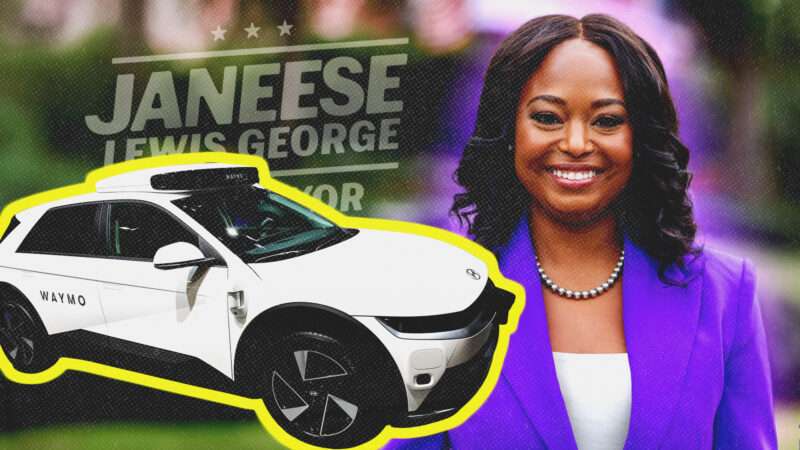
Janeese Lewis George, a D.C. councilmember and the city's presumptive next mayor, has come out against pending legislation that would allow autonomous ride-share vehicles onto city streets, citing the technology's potential to eliminate the jobs of ride-share human drivers.
"DC is facing a jobs crisis. Rushing the legalization of autonomous vehicles is irresponsible given the anticipated AI-related job displacement and disruptions that put countless workers at risk," she said on X yesterday.
DC is facing a jobs crisis.
Rushing the legalization of autonomous vehicles is irresponsible given the anticipated AI-related job displacement and disruptions that put countless workers at risk.
— Janeese Lewis George (@Janeese4DC) October 15, 2026
In a follow-up post, she said that the D.C. Council should delay consideration of a pending bill that would allow Waymo, which is currently testing its technology with human safety operators on District streets, to offer autonomous rides to the public.
Ever since Lewis George won a commanding victory in D.C.'s Democratic mayoral primary earlier this year, pundits and wonks have been trying to read the tea leaves on how the Democratic Socialist will govern.
D.C.'s economy is currently in a rough spot. Unemployment is high. The housing market is down. Population growth is slowing.
Lewis George's comments about Waymo suggest the mayor has a deeply mistaken view about the effects and benefits of technological innovation. Contrary to her contention, Waymo legalization is unlikely to exacerbate a "jobs crisis" for at least three reasons.
The first reason she's wrong is that very few D.C. residents work full-time as ride-share drivers. On her Capital Commonsense Substack, Ashley Schapitl reports that, by Lewis George's own estimate, there are only 200 District residents who work full-time as ride-share drivers.
For comparison's sake, the District has a labor force of roughly 400,000 people. So even if Waymo displaced all human drivers in the District, it would be a statistical nonevent.
Few headlines, for instance, reported that D.C.'s labor force shrank by 1,000 people between May and June. Neither did many outlets report that the labor force grew by roughly 600 people between July and August.
Yet here the mayor is talking about a "jobs crisis" over what would be an even smaller change in the number of employed workers in the city.
The second reason not to fear an exacerbated "jobs crisis" as a result of Waymo legalization is that autonomous vehicles (A.V.s) will not completely replace human rideshare drivers in the foreseeable future.
In the cities where Waymo has been active for years, A.V.s are still responsible for a minority of rideshare rides.
That's the case in Phoenix, where Waymo has been offering autonomous commercial service since 2020. In an article from April, Business Insider cites one study that put Waymo's market share at 16 percent of ride-share rides.
In other words, 84 percent of ride-share rides are still being performed by humans a full six years after A.V.s came onto the scene.
That isn't to say the impacts of A.V.s are necessarily positive for human drivers' earnings.
Another study by Gridwise from August 2025 found that A.V.s appeared to be marginally reducing drivers' hourly pay and number of trips per hour. That's evidence of the market for rides becoming more competitive, but it's not, as of yet, evidence of a job apocalypse.
Network design matters too. In places like Los Angeles and San Francisco, Waymo is a standalone competitor to traditional ride-share companies like Uber and Lyft. In Austin and Phoenix, Waymo partners with Uber to offer rides on hybrid human-and-A.V. networks.
A report by EnoTrans, funded by a grant from Lyft, found that the later cities' hybrid networks actually increased human drivers' trips per hour. Their pay-per-hour fell, albeit less steeply than in cities without hybrid networks.
All of that is to say that while Waymo, as a competitor to human-operated ride-share services, shouldn't be expected to have a positive impact on drivers' earnings. It shouldn't be expected to have a catastrophic impact on them either.
The third and final reason that Lewis George is wrong to think that Waymo will worsen a coming "jobs crisis" is that Waymo's employment impacts are not limited to its effect on competing human drivers.
If Waymo earns any market share at all, it'll be because it's offering some travelers a better transportation option than the ones that currently exist. Increased ease of travel within the city would be expected to raise employment levels, not lower them.
If Waymo makes it easier or cheaper for people to get from home to the office or from the office to their kids' school, they might be more willing to live in D.C. over Arlington or Silver Spring. If it's more convenient to get to the movies or dinner, residents will be more willing to patronize local businesses.
None of that even touches on the economic and human benefits of Waymo's likely positive impact on road safety.
The direct effects of Waymo on drivers' employment must be weighed against all the other economic activity that autonomous vehicles will facilitate.
In the long run, the economic effects of autonomous vehicles may well be revolutionary. In the foreseeable future, they'll make the market for for-hire rides slightly more competitive.
A reasonable assumption then is that Waymo will have a modest, but positive, impact on overall economic activity and employment in the District, even if it has a modest, but negative, impact on the small number of full-time ride-share drivers who live here.
If the new mayor can't even tolerate that level of economic disruption, that does not portend good things for D.C.'s economy under a Lewis George administration.
The post Presumptive D.C. Mayor Janeese Lewis George Demands Halt to Waymo Legalization To Protect Drivers' Jobs appeared first on Reason Magazine.
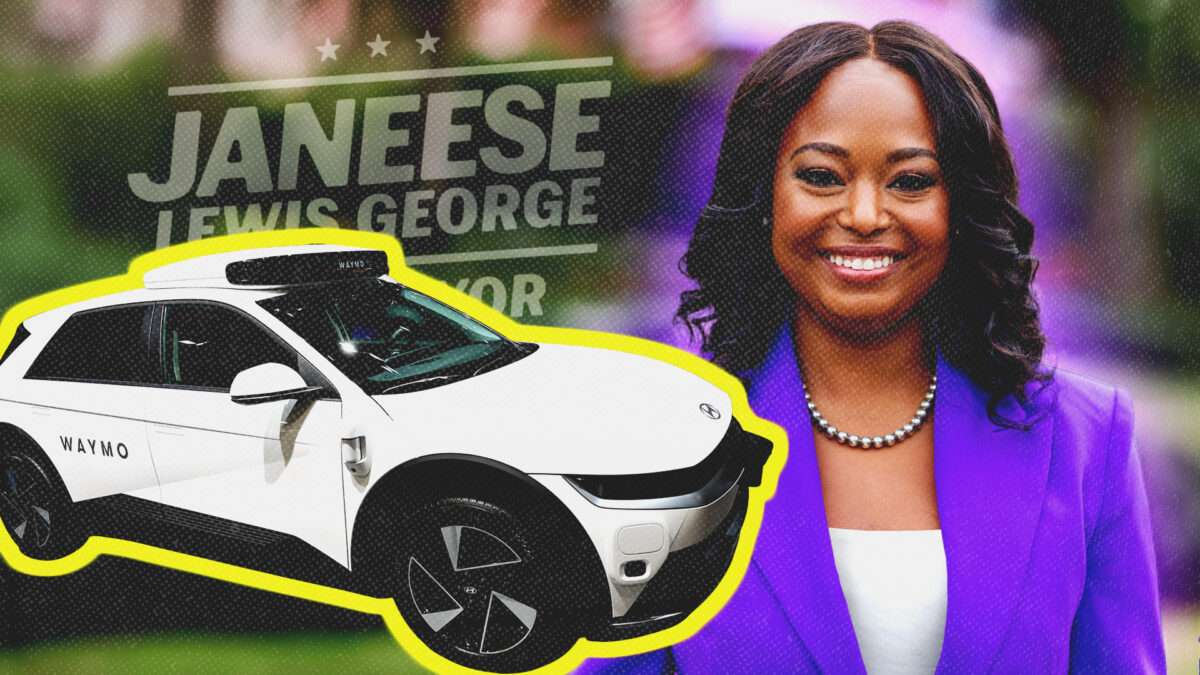

Executive Vice-President Roxana Mînzatu presents Fair Labour Mobility package © European Union
The European Commission has unveiled what it calls an ambitious “Fair Labour Mobility” package aimed at making it easier for people to work across EU borders while strengthening protections against exploitation and fraud.
The proposals would allow workers to prove social security and health insurance entitlements digitally and make qualifications easier to understand and recognize. The Commission estimates the measures could generate €6 billion in benefits by 2040.
Central to the package is a European Social Security Pass, or ESSPASS, enabling people to request and receive documents such as the European Health Insurance Card and the A1 certificate for posted workers online. Documents could be stored in the EU Digital Identity Wallet and verified by national authorities.
Brussels is also proposing faster recognition of professional qualifications. Procedures for regulated professions, including doctors and nurses, with the aim of reducing the target processing time from three months to five weeks.
Recognition of qualifications obtained outside the EU would also be streamlined, with common standards intended to cut average processing times from 14 months to four months.
The European Federation of Nurses Associations (EFN) has welcomed the Commission’s plans for recognising qualifications from outside the EU, arguing that they bring greater transparency to a labour market already heavily reliant on internationally recruited healthcare professionals.
EFN Secretary General Paul De Raeve said recruitment from third countries was already well established and frequently organised through bilateral arrangements between governments. Denmark, he noted, has gone considerably further, establishing a school in Delhi to prepare Indian nurses for work in Denmark, including Danish-language training.
“This is going on,” De Raeve said, arguing that international mobility cannot simply be prevented when European health systems need staff and qualified professionals want to move. In the short term, he said, overseas recruitment is also difficult to avoid given that educating a nurse takes around four years.
For De Raeve, an important improvement in the Commission proposal is therefore not simply facilitating recruitment, but putting it within a clearer European framework. The proposed directive would establish common rules for recognising qualifications obtained outside the EU, including aligned documentation requirements.
It would also provide stronger mechanisms for checking whether qualifications are genuine and meet European standards. Training programmes and institutions seeking access to automatic recognition would undergo EU-level assessment, potentially including independent review, site visits and direct examination of training environments.
De Raeve particularly welcomed this approach, pointing to the risks of fraud in diploma accreditation. Having universities and training institutions formally assessed and certified would give regulators and employers greater confidence that somebody arriving with a qualification has been trained by a legitimate institution to an appropriate standard.
He also welcomed plans to reduce administrative delays for individual professionals.
For nursing, De Raeve argued, faster recognition and stronger verification could help Europe recruit internationally without lowering professional standards, while replacing opaque bilateral arrangements with more consistent EU-level rules.
The proposals still require approval by the European Parliament and EU governments. Key measures would then be phased in over several years, with improvements to the Labour Authority expected during 2028–2030.
