❌

Reading view

Russian Missiles Strike Kyiv University and Major Bridge as Zelenskyy Condemns Delays in Western Air Defence

At least one person has been killed and 15 injured in successive Russian attacks on the Ukrainian capital. Strikes damaged a university campus, residential buildings and the Southern Bridge, disrupting metro services, as President Volodymyr Zelenskyy accused Ukraine’s allies of delaying critical air defence supplies.

Russian forces launched successive attacks on Kyiv between Monday evening, 26th October, and Tuesday morning, striking a university campus, residential neighbourhoods and a major bridge across the Dnipro River, causing casualties and disrupting transport across the Ukrainian capital.

At least one person was killed and 15 injured, according to updated reports on Tuesday. The attacks damaged university buildings and student accommodation in eastern Kyiv, while a subsequent strike hit the Pivdennyi, or Southern, Bridge, interrupting road and underground railway services between the two banks of the city.

The first wave began shortly before 10pm on Monday, when Russian ballistic missiles struck the Desnianskyi district, near Lisova metro station and Kyoto Park.

Buildings belonging to the State University of Trade and Economics were damaged, including student dormitories. Residential properties, medical facilities and vehicles were also affected.

Kyiv Mayor Vitali Klitschko initially reported ten injured, most of them students. Nine required hospital treatment, including three in serious condition.

In the neighbouring Dniprovskyi district, emergency workers recovered a body from a severely damaged building. Two ambulance workers responding to an emergency call were also injured.

Southern Bridge struck in renewed attack

A second wave of Russian attacks followed in the early hours of Tuesday.

The Southern Bridge was struck again, damaging infrastructure used by Kyiv’s underground railway system and forcing authorities to restrict traffic across the Dnipro.

Metro operations were disrupted on two lines. On the green line, trains operated only between Syrets and Vydubychi on the western bank and between Osokorky and Chervonyi Khutir on the eastern bank. Services across the bridge were suspended.

On the red line, Chernihivska and Lisova stations were temporarily closed, with trains operating between Akademmistechko and Darnytsia.

The bridge is one of Kyiv’s principal transport connections between its eastern and western districts, carrying both road traffic and part of the metro network.

The latest strike followed earlier damage to the same crossing on 22 October, when Russian ballistic attacks also disrupted traffic and underground services.

Repeated damage to transport crossings has complicated movement across the capital, particularly for residents travelling between the densely populated eastern districts and workplaces in central and western Kyiv.

Zelenskyy: Delays in air defence help Russian attacks

President Volodymyr Zelenskyy responded to Monday’s strikes by accusing Russia of targeting crowded civilian areas and warning that delays in Western air defence deliveries were increasing Ukraine’s vulnerability.

In a statement published on Telegram, he said Russian ballistic missiles had struck university grounds, Kyoto Park, areas near a metro station and residential buildings.

The president said there were no military installations near the affected sites and warned that further attacks remained possible.

He linked the casualties directly to Ukraine’s continuing difficulties obtaining sufficient air defence equipment.

“Artificial delays in providing air defence to Ukraine help terror,” Zelenskyy said.

He urged Western governments to ensure that political agreements on military assistance were implemented without administrative delays.

Zelenskyy also argued that Ukraine required weapons capable of destroying Russian ballistic missile launchers before missiles could be fired, rather than relying entirely on interception.

Such capabilities, he said, would offer a more effective means of protecting civilian lives.

Washington faces questions over interceptor deliveries

His criticism came hours after he publicly disclosed that Ukraine had been waiting almost a month for US Defence Secretary Pete Hegseth to approve deliveries of missiles for Patriot and NASAMS air defence systems.

“In particular, we have been waiting for nearly a month for Mr Hegseth to sign off on missiles for Patriots and NASAMS,” Zelenskyy said on 26th October.

He instructed Ukrainian officials to raise the matter again with Washington.

Ukraine is seeking additional PAC-2 and PAC-3 Patriot missiles from the United States, European countries and other partners.

Some of these weapons are purchased through NATO’s Prioritised Ukraine Requirements List, or PURL, which allows allied governments to finance American military equipment destined for Ukraine.

However, US-made weapons may remain subject to American export and transfer authorisations even when European governments have agreed to finance their procurement.

US Secretary of State Marco Rubio acknowledged that a shipment of air-defence missiles may have been delayed, but said the delay was not politically motivated. Ukraine has said it is waiting for US approval for missiles for its Patriot and NASAMS systems, as its forces face shortages of the ammunition needed to intercept incoming attacks.

The precise effect of the outstanding approvals on Kyiv’s ability to defend itself during the latest strikes has not been established. The delay adds to the pressure on a country already trying to protect its cities and critical infrastructure with limited air-defence stocks.

Kyiv’s continuing ballistic missile vulnerability

Ballistic missiles present particular challenges for Ukrainian air defences because of their high speeds and the limited time available to detect, track and intercept incoming weapons.

Patriot systems equipped with appropriate interceptors are among Ukraine’s principal defences against such attacks. Their effectiveness depends not only on the availability of launchers and radar systems but also on adequate stocks of interceptor missiles.

Russia’s repeated attacks on the Southern Bridge also demonstrate the wider consequences of damage to urban infrastructure. Even when a transport crossing remains structurally intact, damage to railway equipment or nearby installations can interrupt services for thousands of passengers.

The latest bombardment followed another substantial Russian attack on Kyiv on 21st–22nd October, which killed one person and injured more than 20.

For Ukraine, the attacks have reinforced two immediate requirements: protecting essential infrastructure against further strikes and securing a reliable supply of interceptor missiles.

Whether Washington can accelerate the outstanding approvals, and whether European partners can provide additional ammunition from their own stocks, will be central to Ukraine’s air defence preparations as winter approaches.

Main Image: By Mitte27 – Own work, CC BY-SA 4.0, https://commons.wikimedia.org/w/index.php?curid=113352288

  •  

Russian missiles and drones kill one and injure 24 in Kyiv, splitting its metro line in two

Aftermath of Russia’s overnight attack on Kyiv.

Russian missiles and drones killed one person and injured 24 in Kyiv overnight on 22 October, the Kyiv City Prosecutor’s Office said. Damage spread across six of the city’s districts, the city military administration reported.

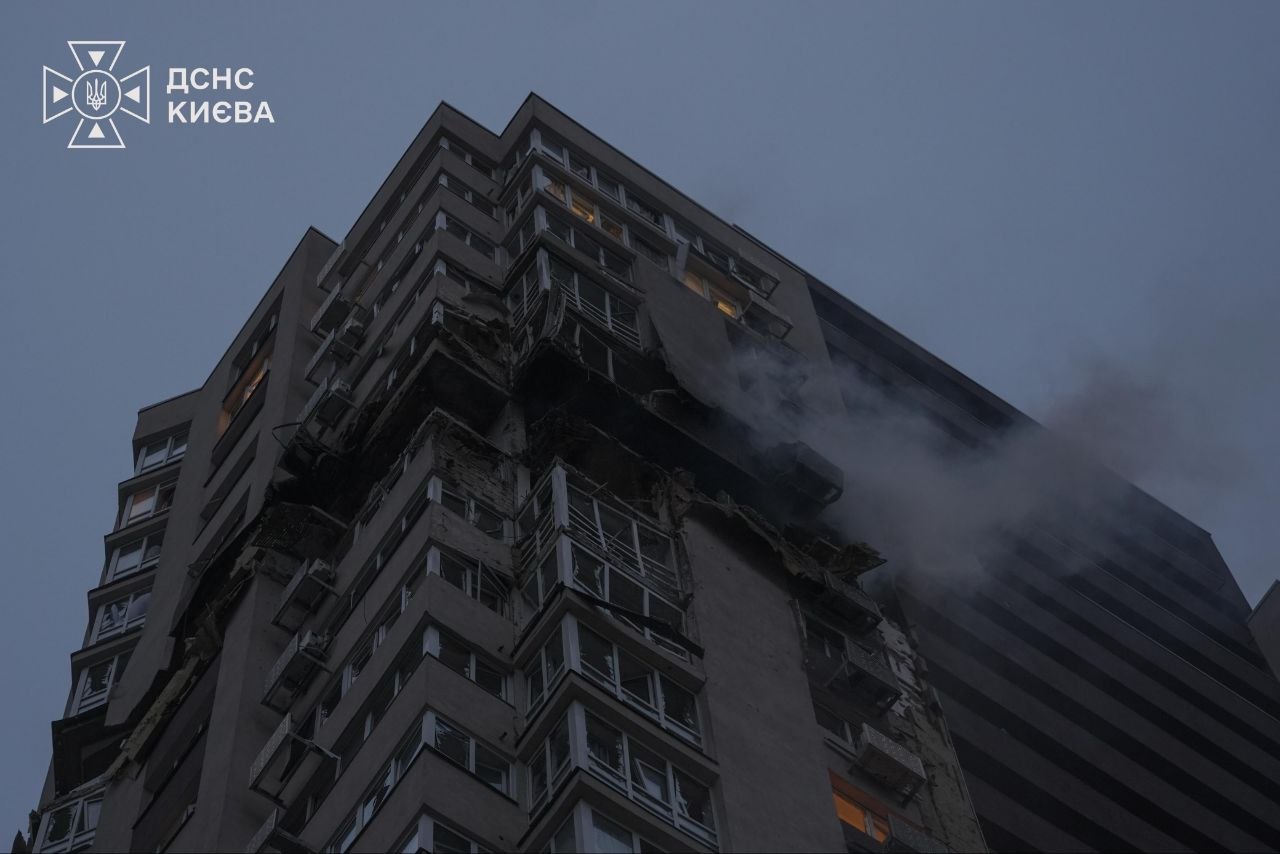
The strike came hours after Kremlin aide Yuri Ushakov said Putin had told Witkoff that Russia was “in principle” ready to resume three-way talks with the US and Ukraine in mid-November. President Volodymyr Zelenskyy read the overnight attack as a sign that Russia’s attitude has not changed. A day earlier, Russian drones killed two people in a 24-story Kyiv apartment block.

21 ballistic missiles in three waves

Russia fired 21 ballistic missiles at Kyiv overnight, Zelenskyy said. The barrage came in three waves, around 22:00, at about 02:00, and around 03:30.

Aftermath of Russia’s overnight attack on Kyiv.
Aftermath of Russia’s overnight attack on Kyiv. Photo: Office of the Prosecutor General of Ukraine

Across Ukraine, air defenses downed or suppressed 181 of 210 Russian drones, the Air Force said. Its report did not mention any ballistic missiles shot down.

One killed in the Dniprovskyi district

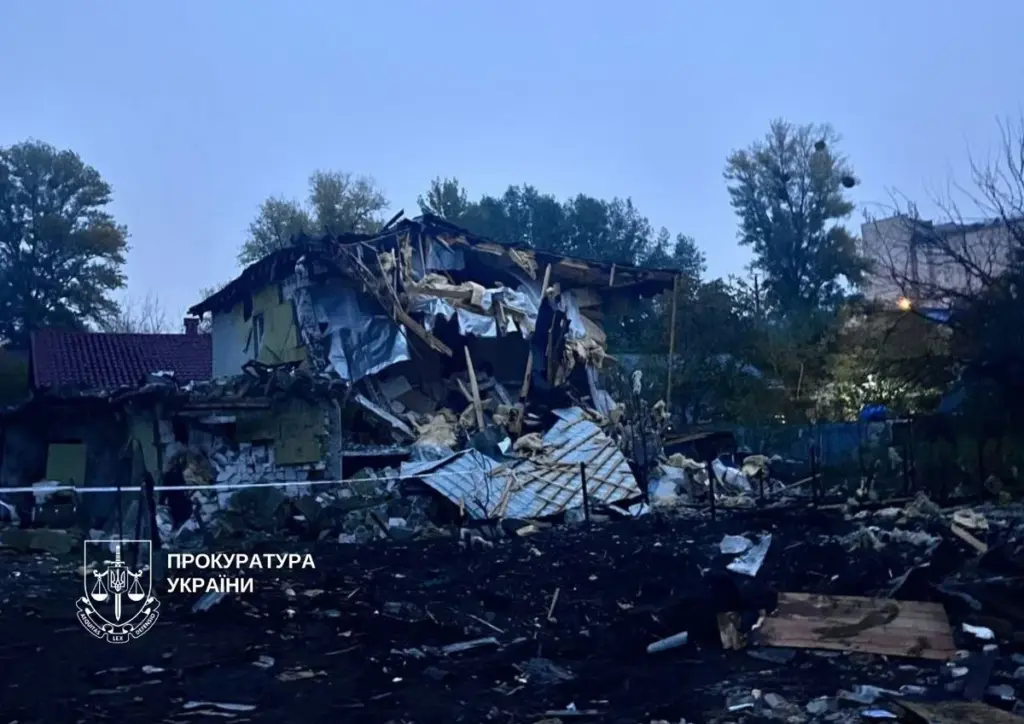
The only death in Kyiv came in the Dniprovskyi district, on the city’s left bank. There, Russian strikes destroyed 13 detached houses on several streets, prosecutors said. Police said the man killed was 48 and that six people were injured in the district, four of them children, the youngest aged five.

Of the injured, five are minors and two are young children, and prosecutors reported acute stress reactions among them. A 16-year-old boy is in hospital with a closed head injury, prosecutors said. Sixteen of the injured were hospitalized, the city military administration said. The final number of injured is still being established.

just grid 24-storey block university warehouses were russia’s target list overnight four people dead · post smoke rises apartment building kyiv’s sviatoshynskyi district after russian drone strike 21 2026 kyivjfif
Explore further

Not just the grid: Russia struck a 24-story block, a university, and warehouses overnight, and four people are dead

Ambulance station and monastery damaged

In the Holosiivskyi, Obolonskyi, Pecherskyi, and Sviatoshynskyi districts, the attack damaged eight apartment buildings, prosecutors said. It also damaged a building-supply hypermarket, a restaurant, a monastery building, a post office, and office premises.

In Pecherskyi, Russia damaged an ambulance station and six ambulances, Kyiv Mayor Vitali Klitschko wrote. The State Emergency Service said eight people were injured in that district, three of them children, and reported damaged transport infrastructure in the Darnytskyi district.

Aftermath of Russia’s overnight attack on Kyiv.
Aftermath of Russia’s overnight attack on Kyiv. Photo: National Police of Ukraine

Bridge closed, metro line split

The strikes damaged metro infrastructure on the Pivdennyi (Southern) Bridge, Kyiv Metro said. As of the morning, green-line trains ran in two sections, Syrets–Vydubychi and Osokorky–Chervonyi Khutir. Inspections and repairs would continue after the all-clear, the metro said.

Oleksii Biloshytskyi, head of Ukraine’s Patrol Police Department, announced that traffic across the bridge toward the left bank was temporarily closed. The city is adding buses on routes 22 and 91, the city administration said. Russian drones had already hit the bridge repeatedly in early October.

  •  

Kyiv gets no warning of the first of two Russian ballistic waves, hours after Zelenskyy said US alerts were back

kyiv attack

Russia attacked Kyiv with ballistic missiles in two waves overnight on 18–19 October. Information from partners did not arrive before the first wave, at around 23:00, Air Force spokesperson Yurii Ihnat said on national television. A warning came before the second wave, at around 03:00, but the window was short, he told NV.

Hours earlier, Ukrainian President Volodymyr Zelenskyy told NBC that US warnings of Russian ballistic launches were working again after three days without them, and that only the United States has that intelligence. Those warnings have for years given Ukrainian authorities several minutes to sound alarms and let civilians reach shelters before ballistic missiles hit.

“Once again, a Russian ballistic attack in several waves overnight, and once again there was no warning from partners,” Zelenskyy wrote. It was at least the third ballistic strike on Kyiv in a week to begin without warning from partners, following attacks on 12 October and 13 October.

Metro station damaged on Kyiv’s left bank

One person was killed and eight injured in Kyiv, Ukrainian Prime Minister Serhii Koretskyi said. A strike damaged a metro station on Kyiv’s left bank, and debris broke the rails beside it, Mayor Vitali Klitschko said. City authorities said the damaged station was above ground, closed Chernihivska and Lisova stations, and said red-line trains would run only between Akademmistechko and Darnytsia. The attack also damaged a 25-story building, a medical facility, and the Cosmo Multimall shopping center in the Solomianskyi district, NV reported, and Zelenskyy said a school was hit too.

The attack also damaged one of Ukraine’s main ice arenas, on Shalett Street in Kyiv, which hosts Ukrainian championship hockey games and youth training, hockey Telegram channel Flamingo reported. Parts of the facade, metal structures, and roof were damaged, but the ice surface showed no significant visible damage, according to preliminary information, Suspilne reported.

Damage in 11 oblasts, three missing in Irpin

Koretskyi said energy and infrastructure were the main targets, with damage in 11 oblasts. Russia also hit warehouses of medicines, railway stations, shops, and homes, he said. In Kyiv Oblast, Russian strikes injured six people in Irpin, including three children, and three more were missing, oblast head Tymur Tkachenko said. In Kharkiv Oblast, six people were injured, including two children, Koretskyi said. In Rivne Oblast, four people were injured, and one of them was hospitalized, regional police reported.

Zelenskyy said that more than 10 energy facilities were damaged and at least 550,000 families lost power. Ukrenergo reported new outages in 10 oblasts: Volyn, Zhytomyr, Rivne, Ternopil, Khmelnytskyi, Vinnytsia, Kirovohrad, Kharkiv, Odesa, and Mykolaiv. In Volyn Oblast, about 15 jet-powered Shahed-type drones targeted the region, and around 66,000 customers were without power on the morning of 19 October, oblast head Roman Romaniuk said. Kovel, Manevychi, and Lutsk were hit hardest, and no casualties were reported. In Vinnytsia Oblast, a critical infrastructure facility in Koziatyn was damaged, and power there would stay unstable for some time, city council secretary Iryna Repalo said, Suspilne reported.

Zelenskyy said Russia fired 16 ballistic missiles at Kyiv and Kyiv Oblast. The Air Force reported that Russia also used Iskander-K cruise missiles and 269 drones, and that by 09:00 air defenses had shot down or suppressed four Iskander-K cruise missiles and 243 drones. Its preliminary count did not list any ballistic missiles among the intercepted targets.

Rubio denies any pause and points to a software problem in Ukraine’s warning system

On 19 October, Rubio told reporters in Samarkand, Uzbekistan, that “there’s been no pause” in intelligence-sharing with Ukraine, Reuters reported. He said he did not know where Zelenskyy was getting such claims and that he should focus on ending the war. He also said he did not know whether a failure had happened the previous night, but that a few nights earlier there had been a software problem with “their early warning system,” and that US European Command was looking into the strikes, The Guardian reported. US officials had not mentioned a software glitch before, and in at least one case Ukraine was told that bad weather over southern Russia had hidden launch preparations, the newspaper noted.

Ihnat said Ukrainian specialists and their partners were working to establish why information about the first launch had not arrived. He added that similar gaps had occurred during earlier attacks.

Zelenskyy wrote that when missile supplies for Ukraine’s air defense are blocked while Russia gets sanctions relief or delays, “this is, unfortunately, a denial of reality on the part of partners.” A night earlier, Russia had hit Ukraine’s energy system again, while Ukrainian drones set fire to St. Petersburg’s oil terminal despite Washington’s pressure to stop refinery strikes.

  •  
❌