The prime minister’s ambitions might be ambiguous, but unlike the Conservative leader, he is following voters and the facts
British politics is still polarised around Brexit, although 10 years on from the referendum, the terms of debate are very different. Or they should be. Russia’s invasion of Ukraine in 2022 has moved discussions of European solidarity from the realm of abstraction to a matter of urgent defence partnership. Donald Trump’s presidency in the US, marked by scorn for European democracies and indulgence of Vladimir Putin, has undermined confidence that Britain can rely on any “special relationship” with Washington.
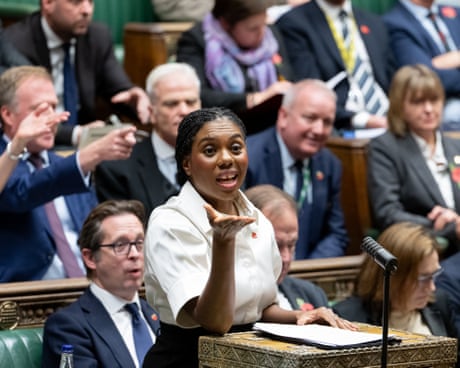
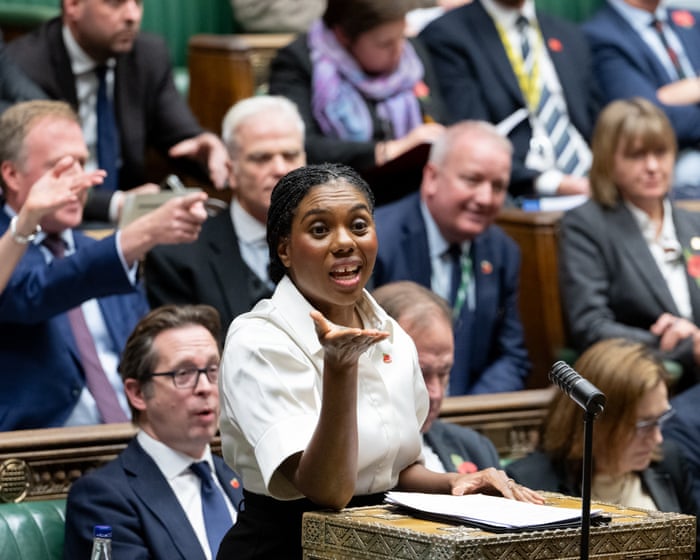
Under these circumstances, it would be absurd to deny that a reappraisal of Brexit is in order. The prime minister acknowledged this in his speech at the Labour party conference last month, calling for a national conversation about the future relationship with every option, including rejoining, on the table. The Eurosceptic opposition are having none of it. The Conservative leader, Kemi Badenoch, accuses the government of stirring division by raising the European question. She told MPs this week that Labour should thank the Tories for the Brexit deal they negotiated.
Do you have an opinion on the issues raised in this article? If you would like to submit a response of up to 300 words by email to be considered for publication in our letters section, please click here.
Shopify CEO Tobi Lütke said he didn't have enough wine to fill his cellar, so he converted it into an AI server room.
Cole Burston/Bloomberg via Getty Images
Shopify CEO Tobi Lütke converted his underused wine cellar into an AI server room.
Lütke's AI assistant researches topics and pulls together his Fitbit and calendar data.
Lütke used heart rate data to identify his most stressful meetings and told the people involved.
The Shopify CEO didn't have enough wine to fill his cellar, but he had plenty of uses for an AI system.
Speaking with Alex Heath on an episode of the Sources podcast released on Wednesday, Tobi Lütke said he consulted his “inner 16-year-old” before converting the underused room into a home for computing hardware.
"So now I have a rack cellar, and it has like one of those GB300s from Dell in it," Lütke said. "So it is actually fully training models."
The GB300 refers to Nvidia's Grace Blackwell Ultra computing platform, which Dell has built into powerful computers designed to develop and run AI models.
Lütke said the setup allows him to run AI locally, working with sensitive information he can't send to an outside lab. The agent researches topics, prepares briefings, and gathers data about his daily life, he said.
“I think it's probably the most compelling productI've ever encountered in my life," Lütke said. "It runs a script that sort of makes a collection of all sorts of things, including my Fitbit data, and, you know, obviously has my calendar."
"It has a little app. It knows my geolocation," Lütke added. "For my hobby, I do a lot of health-style analysis, but then given that I have all this data, like I have heart rate data for, you know, for this, and I figured out who my most stressful meetings are with."
Tech bosses are finding increasingly personal uses for AI. Business Insider previously reported that Google CEO Sundar Pichai uses agents to follow internal discussions and computing usage. Apple CEO Tim Cook uses AI to summarize emails, while OpenAI's Sam Altman has turned to ChatGPT for parenting questions.
Lütke has also pushed employees to put AI to work. In a memo made public in April 2025, he said that all Shopify teams must demonstrate why they can't achieve their goals with AI before hiring new employees.
Asked by Heath whether he told the people he discovered were stressing him out, Lütke said: “Yeah. Totally.”
"It's like: here's the funniest thing I just find out — guess what?" Lütke said. "And then they didn't think it's nearly as funny."
Chris Williams, former Microsoft VP of HR, said waiting for a better offer may or may not backfire.
He shared what employees who are offered a buyout should consider and what they may not realize.
Microsoft is offering buyout packages to some 60,000 employees, or more than 25% of the workforce. That's a huge number in any terms, and it sent a signal and shock wave through the industry this week.
I'm the former VP of HR for Microsoft, and although I've been away from the company for some time and have no insider information, having been on the inside at Microsoft and in the industry for 50 years, here is what Microsoft employees should be considering — and what they may not realize about taking a buyout offer.
Your buyout offer may or may not be the best offer you get
During a buyout, position, tenure, level, and other factors are taken into account for each bespoke offer. The offer is likely to include compensation, benefit continuation, and possibly some acceleration or continuation of equity vesting.
That said, Microsoft might not offer more generous buyouts than severance packages, but companies usually offer better terms to people who take a voluntary separation than people who get laid off. That is not only to induce employees to go voluntarily, but also because the costs to the company are less if these workers voluntarily leave. There is less legal risk, time, and expense. It's also simply easier for the company to manage.
If you're offered a buyout, I usually find it could be the best offer you'll get. If it's not, you could be settling for the same offer as someone in a layoff and miss out on collecting unemployment.
A buyout can force some very hard career choices
If you get a buyout offer, looking at your budget should be your next step. Does the offer provide you with enough to retire? Enough to support an extended job search? The buyout can be a good forcing function for some very hard career choices.
Spend time looking at your cash flows, and pay particular attention to benefits. For many, healthcare costs are a substantial part of their budget. Weighing the buyout offer against continued coverage is often a tipping point in the decision.
Also consider any equity vesting dates you may have. Compare when you might vest with and without the offer, as those dates can mean a significant change in your investments. Whether you should take the buyout is highly dependent on both the offer and your situation. If you had retirement anywhere in sight, this offer might be just the trigger you need to move on. Perhaps the best offer you'll ever see.
However, if you need to continue working, there's a great deal more to consider.
Taking a buyout can give you a head start in a tough job market
The tech industry job market has been rough for the last year or so, and shows all the signs of getting worse. If the buyout doesn't afford you the ability to retire, you should plan on an extended period of job searching, maybe six months or more. It's tough out there. Be prepared.
One thing to consider if you need to continue working is that taking the buyout might give you a short head start in the job market. Assuming Microsoft and others follow this up with more layoffs like they did the last time, the technical job market will be flooded with quality people. Of course, you can search for a job while you have one, but taking the buyout gives you time for a full-time job search.
In any case, if a job search is in your future, don't delay. This market shows no sign of getting better.
Finally, if you're offered a buyout, don't ignore it. It's a sign. I'd read it as a clear signal from the company about your value, at least from their perspective. You can bet on the odds, but if follow-up layoffs happen, I'd bet that those who declined the buyout are somewhere on that list.
Buyout or not, some things to do
This buyout is the latest signal of a broad realignment of the job market, at least in the tech sector. Even if you aren't offered it or don't think you're at risk of later layoffs, you'd be wise to keep all your options open.
Get your résumé up to date. Spend time honing it, emphasizing the clearest set of skills you can. When a market is contracting, the safest bet is having a particular skill someone is looking for. When times are tight, the generalist is often the first person let go.
Work with and expand your network. Have coffee or a Zoom chat with everyone you know. Peers in other companies, even other industries, are invaluable when things get tough. Especially when the world is changing, and predicting the next hot spot is so hard, having as many warm connections across industries is a huge asset.
Don't go asking for jobs as much as keep those connections alive. You never know when someone's manager will say, "We need someone like that." And your friend can say, "I know just the person."
Whether you are offered a buyout, or whether you decide to take it or not, having a network of people to connect with is your single biggest career asset.
What to do if you get a buyout offer
Budget first, and outreach next.
Carefully decide your near- and long-term financial future, and make the decision from hard facts. Then connect with people you know across industries, far and wide. Those connections will be excellent sounding boards and could well provide the path to your next role, or the friends you need in retirement.
When contacted about this story, a Microsoft spokesperson pointed Business Insider to its statement on the official Microsoft Blog, which read in part, "Today, we're introducing a new Voluntary Exit Offer (VEO) to eligible employees within participating organizations." They added that "the VEO is similar to a standard severance offer, which varies by market. The offer includes payment based on completed service and base pay, as well as career transition services, which includes career coaching and job search assistance."
Just about every decision made in business seems to rely on an accurate understanding of the future state of the world. How will the market respond to our upcoming launch? What products will our competitors release next year? How will the industry be affected by technological innovation, economic downturns, and regulatory changes? How will this employee perform in a position, and how will that one advance within the company?
Forbes' world's best employers 2026 list ranks 900 companies from 52 countries; here are nine named honorees, from Microsoft to Nedbank, and how the ranking was built
Nvidia's sales and marketing leadership is changing as its sales pitch evolves.
Veterans are retiring, opening the door to internal succession and outside hires.
Nvidia CEO Jensen Huang's daughter Madison is also gaining influence.
Nvidia's sales and marketing organizations are seeing a changing of the guard as the AI boom reshapes demands on leadership.
Veterans at Nvidia are retiring, opening the door for longtime employees. And CEO Jensen Huang is tapping talent from outside the company — and outside the chip industry — to meet new challenges.
Nvidia's sales pitch has evolved. It has already convinced companies to choose its chips. To keep growing, it has to convince more businesses to adopt AI. These customers care less about hardware specifications than how Nvidia's AI can be put to work.
Leadership changes are most visible in sales and marketing, said former vice president of corporate marketing Greg Estes, while other areas of the company, such as finance, legal, operations, and software and hardware engineering, have remained relatively stable.
In marketing, Nvidia tapped Google Cloud executive Alison Wagonfeld to become its first chief marketing officer earlier this year, while Microsoft veteran Nick Parker became its new sales chief in August. Neither comes from the chip industry, though both bring years of experience helping businesses adopt software and cloud services.
Nick Parker, Nvidia's EVP of worldwide field operations.
Bloomberg/Getty Images
At the same time, Huang's daughter Madison has gained influence beyond her formal marketing role, two former employees said.
Huang regularly reshapes Nvidia as the business evolves, said Scott Baker, a sales VP who retired in July after 26 years.
"It's truly a battleship spinning on a dime, and everyone gets aligned," he said.
Nvidia did not respond to requests for comment from Business Insider.
A 'deep bench' of younger Nvidia talent
Retirees this year include former sales EVP Jay Puri, VP of enterprise marketing Laura Fay, SVP of enterprise business Shanker Trivedi, and sales VP Kevin Connors.
Fay said Huang doesn't want to lose longtime executives, many of whom he personally recruited. But as they move on, the next generation is getting a chance.
Before leaving in April after 17 years, Trivedi made mentorship part of his mission. He was ready to pass the baton after years of grueling travel and seven-day workweeks.
"Time stops for nobody," the 69-year-old said.
Trivedi said Nvidia has a "deep bench" of younger sales and marketing talent who know its culture, market, and partners inside out, including Raj Mirpuri in AI cloud infrastructure, Kimberly Powell in healthcare, and Kari Briski in AI software.
When he retired, the company divided Trivedi's responsibilities among multiple leaders. As Nvidia's revenue soared during the AI boom, his job had ultimately become too big for one person.
"Better to flatten the structure and gain velocity," he said.
Another Huang is gaining influence
One insider bringing an unconventional background to Nvidia's marketing ranks is Jensen Huang's daughter, Madison Huang.
Madison formerly worked at French luxury conglomerate LVMH in hospitality marketing before joining Nvidia as an MBA intern in 2020. She has quickly ascended to senior director of product marketing for physical AI.
One former employee said Madison's experience working on luxury brands brought a fresh perspective to a marketing team traditionally staffed by semiconductor veterans.
Madison Huang, senior director of product marketing for physical AI at Nvidia.
Bloomberg/Getty Images
Job titles can be fluid at Nvidia, and a second former employee said Madison's remit extends beyond physical AI marketing. They said she exerts authority across multiple parts of the company and directs teams at all levels on strategy and business decisions.
Madison is also among a small circle of executives known to travel with her father. And their close relationship gives her the ability to anticipate his needs during high-level meetings and appearances, the first former employee said.
"She 'speaks Jensen' very well," the former employee said, "so he doesn't have to explain himself to her."
Have a tip? Contact this reporter via email at gweiss@businessinsider.com or Signal at @geoffweiss.25. Use a personal email address, a nonwork WiFi network, and a nonwork device; here's our guide to sharing information securely.
Meta's AI gamble is suddenly looking like a win for Mark Zuckerberg.
That was far from a given. Even the Meta CEO was doubting himself. His company had poured hundreds of billions of dollars into AI investments with largely unproven results.
"Are you sure this is going to work?" he asked his 29-year-old AI chief, Alexandr Wang, at the end of last year, he recalled on a recent episode of the "Cheeky Pint" podcast.
Those risky AI bets — which one analyst compared to throwing spaghetti at the wall — as well as the massive layoffs and reorganization that came with them, are now starting to pay off. Meta beat its AI rivals to the punch with its new AI assistant, Muse, and it finally released a frontier AI model. Although Muse is bleeding cash amid high compute costs, analysts are excited by its moneymaking potential.
Zuckerberg is riding high, too. Sipping a Guinness alongside Wang during a recent podcast interview, the pair extolled Meta's AI prowess.
"You never know when you launch something how it's going to be received," the CEO said. "There's always the case where you get a home run, which in this case it was, right? And it's just like extremely well received right off the bat."
And Meta seems to believe in Zuckerberg's leadership more than ever. His latest coup: Convincing the company to issue a new class of shares after he threatened to list his Palo Alto compound and leave California as voters weigh a billionaire tax.
The big question is how long the good vibes will last. Meta is still spending gobs of money on AI without a concrete financial payoff. Some remain skeptical.
"The bill is huge," David Wagner, a portfolio manager at Aptus Capital Advisors, told Business Insider.
"He's won the narrative. He hasn't proven the return yet."
Meta's social reckoning era
Zuckerberg is no stranger to public discourse. He's undertaken multiple personas: the nerdy wunderkind in hoodies, the jacked wife guy, the unapologetically masculine Trump ally.
At the beginning of this year, it looked as if he was headed for a new reckoning, and it wasn't just because of the aptly named sequel to "The Social Network."
Zuckerberg was on trial, taking the stand in a landmark lawsuit that alleged Meta's platforms harmed the mental health of young people. (Meta was found negligent and is appealing.) It was one of three major lawsuits this year that put the company on the defensive against claims that its technology posed safety risks to children.
In February, Mark Zuckerberg appeared at a Los Angeles courthouse to defend the company in a landmark social media addiction trial.
Jon Putman/Anadolu via Getty Images
And there were the more typical Zuckerberg cringe moments, too, like his front-row appearance at a Prada fashion show that raised eyebrows across the internet.
On the inside, employee morale was waning. Though the billionaire CEO had called 2026 "the year of AI," Meta had little momentum, and unpopular decisions — including a program to track employee keystrokes — amplified the discontent.
Also, Meta had one of its largest rounds of layoffs, ever. Meta began trimming staff in March, followed by a huge round in May, when it laid off about 10% of its workforce.
Separately, Meta reshuffled another 7,000 workers as part of an AI-focused reorganization of its tech and product teams. Many engineers were relegated to individual contributor status. Meta later asked some of the employees it had demoted to return to their managerial roles.
The AI push didn't seem to be paying off: In the second quarter of this year, 98% of revenue came from its traditional advertising business — not AI.
Morale was "maybe not the worst it's ever been in 20 years here, but it's probably up there," Meta's chief technology officer, Andrew "Boz" Bosworth, said during an internal call in June.
The groundwork for Meta's comeback
Amid the chaos, Zuckerberg laid the groundwork for a comeback. Wang and Meta's elite AI researchers moved their desks to sit near Zuckerberg.
Starting last year, Zuckerberg and Wang also went on a talent-hiring spree, dangling pay packages worth hundreds of millions of dollars to poach top researchers.
Zuckerberg empowered key lieutenants, including former GitHub CEO Nat Friedman, to go ham on any vision they had, including on his pet project, an AI assistant. It all fit into Zuckerberg's longtime playbook of embracing small teams and overseeing reorgs until something works — move fast and break things, as he has infamously put it.
It worked.
Muse, the long-awaited Meta AI agent, became a breakout hit. A week after it launched, it shot to the top of the app store, and has since achieved more than 10 million downloads in North America. The team was stunned to have beaten OpenAI to market, a person familiar with the matter said. OpenAI's rival product, Dots, launched three weeks later.
Jolly is the mascot for Meta's Muse AI agent, which launched successfully last month.
Bloomberg/Getty Images
Meta also threw unprecedented compute and talent at building a series of frontier AI models, called Muse Wonder, that could keep up with those from giants like OpenAI and Anthropic.
On Meta's third-quarter earnings call, Zuckerberg was optimistic that Meta's AI and hardware investments could soon become cash cows, as people shop through Muse and buy more virtual-reality glasses powered by the company's growing AI chops.
Meta, meanwhile, views Zuckerberg as more critical than ever to its long-term fortunes.
Key board members abruptly excused themselves from a dinner with Zuckerberg in September after he told them he was going to sell his Palo Alto estate in response to California's proposed billionaire tax, Meta disclosed in a filing on Wednesday.
Four days later, a special committee returned with a deal that would give Zuckerberg $20 billion in "immediate liquidity" to cover the tax — if it passes — without reducing his controlling stake in Meta. Meta also made plans to ensure that billions in fresh AI fundraising wouldn't dilute Zuckerberg's control.
"Meta's track record of significant value creation for its shareholders is in large part due to his strong leadership, unique and creative vision, and exceptional management abilities," the company said in a press release.
The personal win comes as some of his other problems have blown over. Meta settled a major lawsuit brought by attorneys general across states, Washington, DC, and US territories. As part of the settlement, the company committed to make changes to its apps, such as daily time limits and pausing notifications overnight. The agreement was part of an August settlement, a move that allowed Meta to call out its competitors such as YouTube and TikTok.
"All platforms should empower parents and support teens by putting the same measures in place, because we know that when teens are restricted on one app, they simply move to another," the company said in a blog post at the time.
Big questions still loom. The day after Meta reported strong earnings and Muse adoption, its stock fell 7% as investors absorbed the scale of the company's hundreds of billions of dollars in future spending commitments.
And the legal troubles keep on coming. This week, a New Mexico jury also ordered Meta to pay a staggering $25 billion over the Cambridge Analytica scandal, a case that Meta plans to appeal.
Whether Zuckerberg's strategy is sustainable or not, the vibe shift has been notable — and may have proven naysayers wrong, at least until the next period of chaos erupts.
"Meta is cool again," Jesse Cohen, an analyst at Investing.com, said in a note. "That's the Muse effect."
Meta's board wants its CEO, Mark Zuckerberg, to stick around — and stay local.
Kent NISHIMURA / AFP via Getty Images
Meta is offering CEO Mark Zuckerberg a $20 billion stock deal to keep him close to its headquarters.
The move speaks to a common belief that the best work happens when everyone is together in person.
Research suggests companies with far-flung CEOs pay a price for that distance.
Meta wants more than rank-and-file employees at the office. It wants CEO Mark Zuckerberg there, too — even if that comes at a hefty price.
The tech giant's board said in a securities filing Wednesday that it would create a new class of non-voting stock in part to keep Zuckerberg in control and give him a financial incentive to continue living near its headquarters. It described his presence at the office as "critically important" to its future success. Meta has required employees to come in at least three days a week since 2023.
Zuckerberg previously told the board he was considering moving in response to a proposed California billionaire tax. The stock deal would give the CEO $20 billion in "immediate liquidity" to cover the tax by selling stock without losing control of Meta, the filing said.
That arrangement carries particular weight at Meta, where Zuckerberg is leading the company's AI push. It also speaks to a common belief that has driven return-to-office mandates: The best work happens when people — including senior leaders — are physically together.
Staying local
Cole Rubin, cofounder of sports technology company FanFeed, said CEOs and other execs are sending a message to employees by physically working alongside them.
"You're not going to question why you're working long hours if you actually can see the leader doing the same," Rubin told Business Insider.
Having bosses in the office can also help a company move faster when unexpected opportunities arise, he said. Employees can walk into a leader's office, get an immediate answer, and act before the moment passes.
"It's not the scheduled calls where the magic happens," Rubin said. "When you have the decision-maker there, it gives people a lot of freedom to be able to feel heard."
A leader's presence is especially important during crises, said Bill George, former chairman and CEO of Medtronic, a medical-technology company. Being together lets executives quickly assess what has happened, gauge employees' reactions, and decide on a course of action.
"We've got to really feel what's going on emotionally, and we actually physically have to discuss it," he said.
George also noted that RTO demands placed on workers can ring hollow if the CEO doesn't follow them. "You've got to be there if your employees are there," he said.
Long-distance tradeoffs
Meta wouldn't have been the first company with a long-distance CEO if Zuckerberg had opted to leave the Golden State.
Brian Niccol was living in California when he was named CEO of Seattle-based Starbucks in 2024. The coffee chain had agreed as part of his hiring package not to require him to relocate. Later, it built a 4,624-square-foot satellite office five minutes from his home so he could work alongside colleagues, Business Insider first reported. Niccol has since purchased a property in Seattle.
Companies with long-distance CEOs don't perform as well on average as those with leaders on-site, according to a 2025 study by Boston College and Arizona State. They also have lower valuations and worse insider reviews, the findings show.
Meta's decision to woo Zuckerberg to stay in California was made by a special committee on its board, which said it was informed by challenges the company faced when he couldn't be physically present with management during the pandemic.
The committee said it didn't want Meta "to face similar challenges going forward."
Amid renewed speculation about an early General Election, now is the time to look at whom to put money on as the next party leaders, says Mark Littlewood in his latest Political Betting column for the Daily Sceptic.
Greek Prime Minister Kyriakos Mitsotakis has apparently started to realize that the ruling conservative New Democracy party will hardly manage to achieve the necessary 30+% of the votes in the upcoming elections and secure a majority government like in the last two parliamentary votes. Over the weekend, PM Mitsotakis made clear if the election result […]
China’s nomination of Chinese national Song Li to lead the World Health Organization has been filed under the wrong heading. Most of the coverage treats it as a chapter in a bigger story: Washington has walked out, Beijing has stepped in and Geneva must now pick a side. That story is tidy. It is also […]
The Belgian federal government has nominated Hans Kluge (pictured) for the position of Director-General of the World Health Organization (WHO).
“I am very honoured by the trust Belgium has placed in me and am grateful for the opportunity to take on this important responsibility,” Kluge said on X. “Serving the WHO has been the greatest privilege of my professional life.”
Kluge has served as WHO Regional Director for Europe since 2020 and began a second term in February 2025. Under WHO rules, he will step aside as WHO/Europe Director while campaigning for the role, a process that involves lobbying member states, NGOs and the organisation's largest funders.
Tried and tested After qualifying as a doctor in Belgium, he began his international career with Médecins Sans Frontières in conflict settings in Liberia and Somalia. He subsequently coordinated tuberculosis programmes in Siberian prisons and across the former Soviet Union.
Kluge joined WHO in 1999, initially working on tuberculosis and HIV in...

 Login