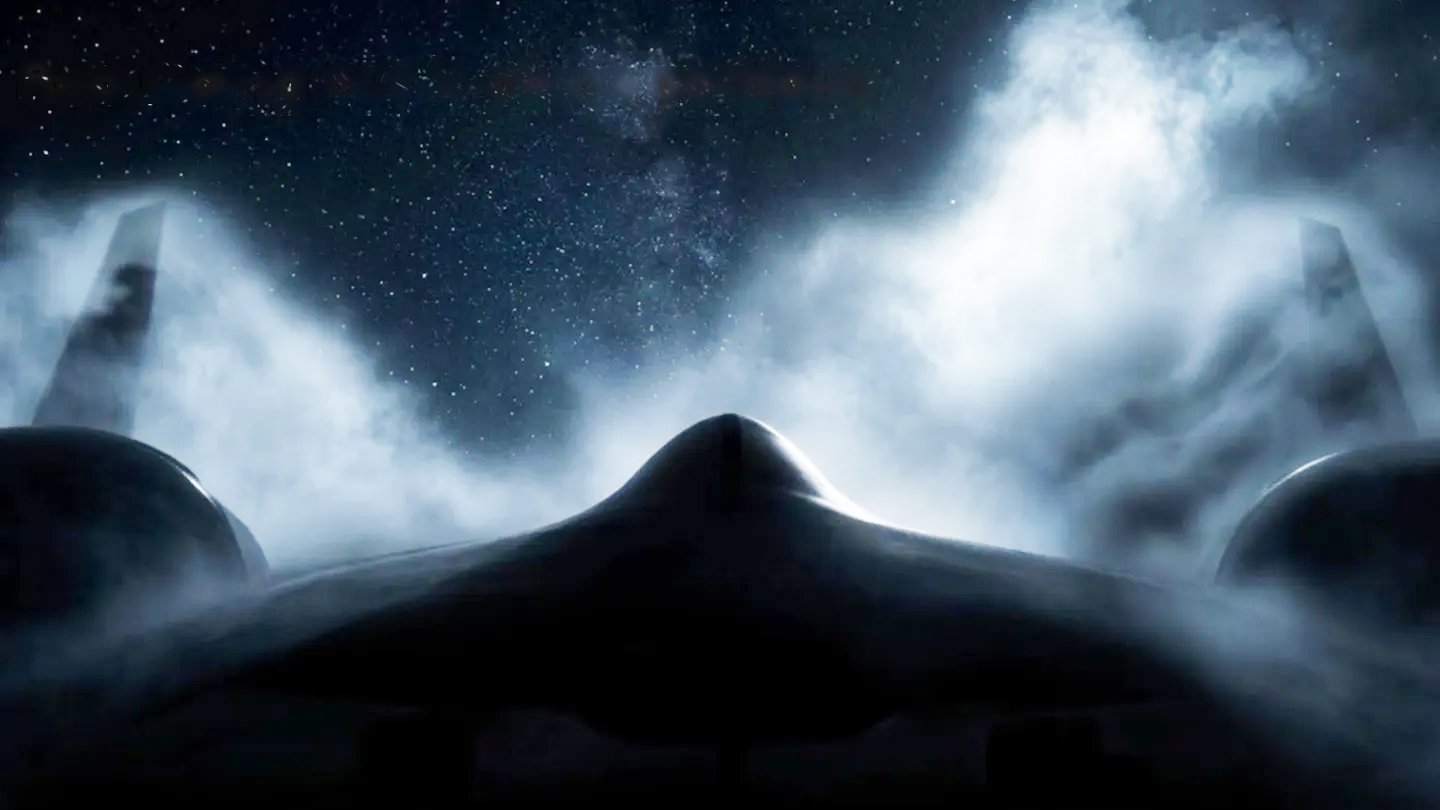
Il 24 ottobre, l’Ucraina ha annunciato che i suoi sistemi Starlink e Starshield erano di nuovo pienamente operativi dopo oltre una settimana di restrizioni. Nello specifico, il Ministero della Difesa ucraino ha rilevato che la connessione è tornata stabilmente a velocità superiori a 400 km/h, a fronte dei 160 km/h a cui era precipitata giorni prima. La limitazione, hanno spiegato diversi funzionari ucraini, aveva compromesso la capacità ucraina di intercettare i droni russi in fase di attacco, costringendo le forze armate di Kiev ad annullare alcune operazioni già pianificate.
Tuttavia, a brevissima distanza dal ripristino della piena operatività dei sistemi Starlink a disposizione di Kiev, Elon Musk, amministratore delegato di Space-X, ha accusato l’esercito ucraino di aver violato i termini di servizio.
In un post sul suo profilo X, il magnate di origini sudafricane ha affermato che: «l’uso di Starlink, un servizio commerciale civile, per attacchi con droni offensivi volti a uccidere persone non è mai stato consentito, né dovrebbe esserlo. Starshield è un sistema diverso ed è controllato dal governo degli Stati Uniti. Ciò che decidono di fare spetta a loro».
L’esercito ucraino «ha violato i termini di servizio di Starlink e lo ha utilizzato per attacchi con droni offensivi volti a uccidere persone. Quella falla è stata chiusa la settimana scorsa».
Starlink «rimane cruciale per la difesa dell’Ucraina, poiché è l’unico sistema che non può essere disturbato o distrutto, almeno per ora. Se Starlink venisse spento, il fronte ucraino collasserebbe immediatamente. Questa non è una minaccia, è semplicemente un dato di fatto.
Il sistema si è rivelato cruciale per «impedire alla Russia di sopraffare l’Ucraina nei primi giorni della guerra, poiché tutti gli altri mezzi di comunicazione erano stati distrutti o disturbati dalla Russia».
Space-X «ha fatto molto di più per difendere l’Ucraina di qualsiasi altra azienda privata sulla Terra. Detto questo, non provo che disprezzo assoluto per i guerrafondai che fanno la morale e spingono per un massacro senza fine, senza offrire alcuna soluzione realistica al conflitto. Che possano bruciare all’inferno. Fine della storia».
Starlink è un sistema internet satellitare gestito da Space-X, mentre Starshield è una versione che si avvale della tecnologia Starlink per scopi militari gestita dal governo degli Stati Uniti.
Questa integrazione rende quantomeno ambigua la posizione di Starlink, mettendo in seria discussione la natura privata della casa madre Space-X.
Quella del connubio pubblico-privato negli Stati Uniti è una storia vecchissima, ma che trova negli anni Cinquanta uno dei suoi momenti decisivi.
All’epoca, in piena Guerra Fredda, lo spauracchio sovietico, agitato con cieca ossessività specialmente in seguito allo shock generato dal lancio dello Sputnik (1957) e all’entrata in servizio del bombardiere strategico Tupolev-95, si rivelò determinante a costruire un robusto consenso politico attorno alla decisione dell’amministrazione Eisenhower di destinare una quota crescente di risorse al rafforzamento della marina e al potenziamento dei settori di ricerca e sviluppo.
L’onere di gestire le risorse e coordinare gli sforzi in questo senso ricadde sulla Defense Advanced Research Projects Agency (Darpa), un organismo facente capo al Pentagono fondato, al pari della National Aeronautics and Space Administration (Nasa), nel 1958 in conformità all’esigenza di colmare il divario tecnico-scientifico con l’Unione Sovietica.
Mentre il governo moltiplicava le misure di stimolo alle imprese (assegnazione di commesse pubbliche agli atenei, concessione di agevolazioni fiscali, ecc.), la Darpa elaborava una rete di ricerca e condivisione a maglie strettissime, in grado di interconnettere decine di università, start-up e laboratori di ricerca e portare gli Stati Uniti all’avanguardia nel campo cruciale della scienza. Il lancio dei programmi Gemini e Apollo, lo sviluppo dei missili balistici a medio e lungo raggio, la realizzazione dei sottomarini e delle portaerei a propulsione nucleare si devono al contributo determinante apportato dalla Darpa.
Nel 1982, il Congresso approvò il programma di sostegno alle start-up Small Business Innovation Research (Sbir), affidandone la gestione alla Small Business Administration, predisponendo parallelamente la trasformazione della Darpa nel fondamentale canale di collegamento tra imprese e dipartimenti universitari, in grado di assolvere ai compiti di mediazione tecnologica e imprenditoriale necessari alla commercializzazione delle innovazioni che venivano realizzate nei settori di punta (informatica, telecomunicazioni, biotecnologia, semiconduttori, ecc.) dalle società hi-tech a cui il complesso militar-industriale aveva subappaltato parte delle mansioni legate ai comparti di ricerca e sviluppo, nell’ambito della celeberrima Strategic Defense Initiative (Sdi).
Il progetto, concepito dall’amministrazione Reagan e annunciato urbi et orbi nel marzo 1983, puntava alla creazione di un sistema di difesa aerea multistratificato basato su intercettori spaziali in grado di colpire i missili balistici nemici prima che colpissero il suolo statunitense, “superando” così il principio della mutua distruzione assicurata su cui si era imperniata la Guerra Fredda fino a quel momento.
La Sdi, recita un documento del dipartimento di Stato, «si basava su tecnologie avveniristiche, inclusi sistemi laser spaziali non ancora realizzati», il cui sviluppo assorbì enormi risorse pubbliche in larga parte ridistribuite a beneficio delle aziende private sotto il coordinamento della Darpa.
Una volta convertite all’uso civile, le nuove tecnologie ad elevata intensità di capitale messe a punto contestualmente alla Sdi assunsero rapidamente un grado di pervasività – inteso come capacità di trovare applicazione in un numero sbalorditivo di campi sconvolgendone il funzionamento e i rendimenti – tale da scompaginare il vecchio sistema di produzione fordista ad elevata intensità di manodopera riducendo drasticamente la presenza umana sia nella manifattura che nel settore di servizi.
«Non si tralasciò occasione – osserva Giuseppe Guarino – che si prestasse per la stimolazione e la promozione della Information Technology per finalità militari. Ognuna delle sue fasi essenziali, con successiva trasformazione e utilizzazione dei prodotti a fini commerciali, è stata in pratica resa possibile dal sostegno del Dipartimento della Difesa, dalla Nasa e degli altri dipartimenti militari, compresa la Cia […]. Il merito dell’intervento pubblico non è di aver assorbito l’intera produzione della Information Technology, ma di aver contribuito in maniera determinante con i propri acquisti iniziali a far scendere i prezzi a livelli che avrebbero consentito la diffusione civile e commerciale delle innovazioni, nonché con quelli successivi che hanno favorito l’utilizzazione delle nuove tecnologie nell’organizzazione pubblica, anche civile, e la diffusione delle stesse» (1).
La progressiva affermazione del nuovo modello in tutti i comparti dell’economia ha accelerato il processo di “terziarizzazione” dell’economia statunitense, e palesato il ruolo cruciale giocato dallo Stato rispetto al finanziamento dello sviluppo tecnologico realizzato da aziende private.
Negli anni ’90, sotto la direzione del direttore George Tenet, la Cia iniziò a finanziare generosamente le piccole aziende intente a sviluppare tecnologie applicabili a fini di intelligence aggirando le lungaggini che caratterizzano la mastodontica macchina burocratica statunitense. A questo scopo, la Casa Bianca e il Congresso approvarono la creazione di In-Q-Tel, oscura società di venture capital senza scopo di lucro incaricata di finanziare la messa a punto di tecnologie d’avanguardia per conto – o quasi – della Cia. Come riporta il «Wall Street Journal»: «i vertici In-Q-Tel considerano l’azienda come indipendente, nonostante i legami molto stretti con la Cia e il fatto che quasi tutte le decisioni di investimento sono gestite dall’agenzia di spionaggio […].La presenza di intricati legami è endemica nel venture capital, in cui la conoscenza intima del settore è essenziale per il successo. Le altre società, tuttavia, giocano con il proprio denaro, o quello di privati».
In-Q-Tel «utilizza denaro pubblico, soggetto a severe norme sul conflitto di interessi e, secondo fonti vicine, si tratta di almeno 120 milioni di dollari all’anno. A volte impegna questo capitale secondo modalità che, anche se non intenzionalmente, avvantaggiano gli stessi amministratori dell’azienda in virtù di altre cariche nel settore hi-tech».
Quasi sempre, le scelte di In-Q-Tel «attraggono altri finanziamenti. Ogni dollaro investito in una piccola impresa in genere è accompagnato da 15 dollari provenienti da altre fonti. Questo aumenta le probabilità di successo del piccolo business in questione e rende le sue stock option più preziose».
Nel 2000, In-Q-Tel ha investito somme piuttosto rilevanti in alcune imprese che producevano satelliti e che si occupavano di raccogliere, classificare e analizzare dati sensibili. In breve tempo, la società ha accumulato quote azionarie di maggioranza di decine compagnie hi-tech, così da dettarne gli indirizzi e allinearle alle esigenze di Washington. Opportunamente orientata dai fondi di In-Q-Tel, una compagnia specializzata nell’elaborazione di soluzioni chimiche adatte alla fabbricazione di tappeti sviluppò in breve tempo una specie di sonda in grado di rilevare la presenza di veleni ed altre sostanze chimiche letali in ambienti chiusi, poi sistematicamente impiegata nei teatri di guerra afghano e iracheno.
Parallelamente, In-Q-Tel investì in un’azienda operante nel settore delle antenne satellitari, ricavando sistemi di localizzazione portatili di cui le truppe e le forze speciali Usa si sono servite per segnalare la propria posizione ai centri di comando.
Più recentemente, i capitali di In-Q-Tel hanno finanziato aziende cruciali come Anduril e, soprattutto, Palantir, saldamente integrata nelle macchine militari statunitense, israeliana e ucraina oltre che nella pubblica amministrazione britannica e in molti altri comparti critici.
L’altissimo livello di “collaborazione pubblico-privato” raggiunto negli Stati Uniti grazie a entità come In-Q-Tel è emblematizzato dal cosiddetto “scandalo Datagate”, scoperchiato nel 2013 grazie alle rivelazioni dello “spifferatore” Edward Snowden. In qualità di tecnico impiegato per una società appaltatrice della National Security Agency, Snowden ha documentato con dovizia di particolari l’esistenza di una rete di sorveglianza capillare e massiccia sui miliardi di comunicazioni sia interne che esterne agli Stati Uniti gestita dalla Nsa stessa attraverso Prism. Vale a dire un sistema in grado di assicurare all’intelligence nazionale la possibilità di accedere in maniera diretta ai server di cui si servivano le aziende operanti nel settore dell’alta tecnologia per ottenere qualsiasi tipo di informazione (messaggi, fotografie, e-mail, ecc.).
Entrato in vigore nel 2007 e beneficiando nel corso degli anni della collaborazione di colossi del calibro di Microsoft, Yahoo, Google, Facebook, PalTalk, Skype, AoL, YouTube e Apple, Prism ha posto la Nsc e anche il Gchq britannico nelle condizioni di acquisire i metadati in transito attraverso i cavi in fibra ottica collegati ai server centrali di Yahoo e Google.
Space-X non ha beneficiato dei fondi di In-Q-Tel, ma del subappalto sistematico ad opera di agenzie statali come la Nasa o dello stesso Pentagono, che come contropartita gode di libero e completo accesso alla tecnologia Starlink. Al punto da garantirlo a Paesi alleati come l’Ucraina.
La decisione di ridurre prima e ripristinare poi il servizio Starlink a Kiev non fa quindi capo a Elon Musk, ma sui vertici del potere pubblico statunitense a cui Space-X – così come le altre grandi aziende hi-tech statunitensi – rispondono più o meno indirettamente.
NOTE
1) Guarino, Giuseppe, I soldi della guerra. Gli Stati Uniti: spesa militare, innovazione, economia globale, Mondadori, Milano 2003, pp. 67-80.
Uma espaçonave construída para explorar Júpiter acabou fazendo história antes mesmo de chegar ao planeta. Em 29 de outubro de 1991, a sonda americana Galileo, da NASA, realizou a primeira passagem próxima de uma espaçonave por um asteroide, registrando imagens inéditas de Gaspra, localizado entre Marte e Júpiter. O acontecimento completa 35 anos nesta quinta-feira (29).
Durante a aproximação, a Galileo passou a aproximadamente 1.600 quilômetros do centro do asteroide, permitindo observar detalhes de sua superfície que até então não haviam sido registrados tão de perto. O feito marcou uma nova etapa na exploração espacial e ampliou o conhecimento sobre esses corpos rochosos.
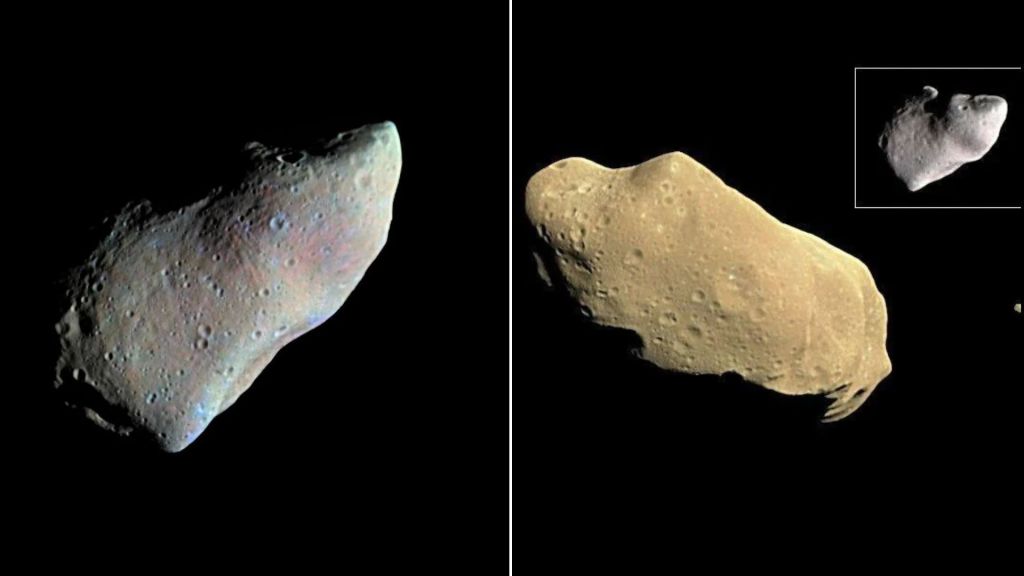
À esquerda, Gaspra, fotografado em 1991; à direita, Ida, registrado em 1993, com destaque para sua pequena lua Dactyl • NASA/JPL
Encontro entre Galileo e Gaspra
Desenvolvida pelo Laboratório de Propulsão a Jato (JPL), da NASA, a Galileo foi projetada para investigar Júpiter e suas luas. A missão recebeu o nome do astrônomo italiano Galileu Galilei, que descobriu quatro grandes luas do planeta em 1610. Seu objetivo era estudar Júpiter durante anos, algo que nenhuma espaçonave havia feito até então.
Lançada em 18 de outubro de 1989, a bordo do ônibus espacial Atlantis, a Galileo precisou seguir um caminho diferente do planejado. Após o acidente com o ônibus espacial Challenger, em 1986, a NASA alterou o sistema de lançamento da missão. Sem a propulsão inicialmente prevista para uma viagem mais direta, a espaçonave aproveitou a gravidade de Vênus e da Terra para ganhar velocidade e alcançar Júpiter.
Durante esse percurso, surgiu a oportunidade de observar Gaspra. A NASA ajustou a trajetória da Galileo para permitir a aproximação e, em 1991, a sonda passou pelo asteroide a uma velocidade relativa de aproximadamente 28.800 quilômetros por hora.
Leia Mais:
Porém, a missão enfrentava algumas dificuldades técnicas. Meses antes, a antena principal da sonda não havia conseguido se abrir completamente, prejudicando a comunicação com a Terra. Apesar do problema, a Galileo conseguiu armazenar imagens e informações sobre Gaspra, que foram transmitidas posteriormente.
Das primeiras imagens às novas descobertas
Com aproximadamente 20 quilômetros em sua maior dimensão, Gaspra chamou a atenção pelos detalhes registrados durante a aproximação. As fotografias revelaram um asteroide de formato irregular, com crateras espalhadas pela superfície, características que até então não haviam sido observadas de tão perto por uma espaçonave.
Em 14 de novembro de 1991, pouco mais de duas semanas após a aproximação, a NASA divulgou a primeira imagem próxima de um asteroide. A fotografia havia sido captada a cerca de 16.200 quilômetros de Gaspra, aproximadamente 34 minutos antes da maior aproximação. Na época, a Galileo estava a cerca de 410 milhões de quilômetros da Terra.
Dois anos depois, em agosto de 1993, a missão protagonizou outra descoberta ao passar pelo asteroide Ida. Meses após a aproximação, pesquisadores identificaram nas imagens uma pequena lua, posteriormente chamada Dactyl. Foi a primeira identificação confirmada de um satélite natural orbitando um asteroide.
Somente em dezembro de 1995, seis anos após o lançamento, a Galileo chegou a Júpiter, seu principal destino. A missão foi encerrada em setembro de 2003, quando a NASA direcionou a espaçonave para a atmosfera do planeta. Apesar disso, a passagem por Gaspra permanece como um marco da exploração espacial por ter proporcionado as primeiras imagens próximas de um asteroide.
A meteorite found in 2022 in the Sahara in Mali formed in the Martian crust at least 4.1 billion years ago, according to scientists, making the reddish igneous rock perhaps the oldest of the 435 meteorites from Mars known on Earth.
The researchers said the composition of the meteorite, called Teghaza 001, is providing insight into the environment early in the history of Earth’s planetary neighbor, with fresh evidence of liquid water on the surface that bolsters the notion that primordial Mars may have been conducive to microbial life.
Planetary scientist Yang Liu of NASA’s Jet Propulsion Laboratory in California, which is managed by Caltech, called the meteorite “a witness to a time when Mars was likely warmer and wetter than it has been for most of its history.”
The chemistry of the meteorite, a type of coarse-grained rock called gabbro, shows that it experienced interactions with water when it was slowly cooling and crystallizing in the Martian subsurface. It was part of the Martian crust, the planet’s outermost layer, but formed from magma originating at greater depths in the planet’s mantle.
Mars is now cold, dry and desolate, but extensive evidence indicates it had water flowing on its surface in the form of rivers, lakes and an ocean in the northern hemisphere billions of years ago.
Teghaza 001 was discovered in eight pieces, with the largest chunk about the size of a fist, in the desert roughly 21 miles (34 km) from the Malian village of Bir Chali. Its main minerals are feldspar and pyroxene, and it contains zircon crystals bearing the element uranium. The researchers ascertained its age using a technique based on the decay of uranium into lead over time.
“Martian meteorites are our only samples from Mars, forming our basis for understanding the formation and differentiation of early Mars and allowing us to evaluate in laboratories whether ancient Mars could have supported habitable conditions,” said Liu, lead author of a study on the meteorite published in the journal Science.
“The detailed information we can extract from these meteorite samples complements and validates our exploration of Mars using satellites, landers and rovers,” Liu said.
This information provides clues about how the evolution of Mars diverged from Earth’s when they were in their infancy and life was beginning to take hold on our planet, Liu said. Earth, Mars and the solar system’s other planets formed roughly 4.5 billion years ago.
Only three Martian meteorites, including Teghaza 001, date to the planet’s early history. One of them, discovered in Antarctica in 1984, was initially assessed as being about 4.5 billion years old but more recently was determined to have a similar age to Teghaza 001. Teghaza 001 likely is the older of the two, according to the new study.
WATER WAS PERCOLATING
Isotopes, or forms, of the elements oxygen and hydrogen present in the meteorite show that water was percolating down into the planet’s deeper crust, as occurs on Earth, and mixing with molten rock from the mantle.
“Multiple lines of evidence in Teghaza 001 suggest Mars’ surface had water at more than 4.1 billion years ago. This is reflected by hydrogen isotopes in phosphate and oxygen isotopes in minerals and bulk samples,” Liu said.
Water is considered a key ingredient for life.
“The findings lend support to the idea that early Mars had the necessary ingredients and conditions to harbor life, but do not directly answer the question of whether there was life on Mars,” said planetary scientist and study co-author Lee Saper of NASA’s Ames Research Center and the BAER Institute in California.
“The rock is a snapshot in time that shows how a wetter early Mars with a thick atmosphere could have supported habitable conditions but that these conditions were waning rapidly over the first billion years or so of Mars’ existence, trending towards its currently dry and inhospitable environment,” Saper said.
Teghaza 001’s chemistry shows it is distinct from the other known Martian meteorites. It may have originated in the southern highlands, possibly from near Hellas Basin, one of the largest Martian impact craters, Liu said.
The meteorite has a dramatic backstory.
“It was blasted by an impact from the surface of Mars and was flying through space until its path crossed that of Earth. It then entered the atmosphere as a meteor and survived as a meteorite by landing in the Sahara,” Liu said. “We do not know when the sample landed on Earth.”
“Missione impossibile: salvate Swift!”. In questa storia oltre cielo e stelle Brian De Palma e Tom Cruise non c’entrano nulla. Semmai i protagonisti sono il telescopio spaziale Swift – in caduta libera verso la terra – e una sonda chiamata Link che la Nasa ha lanciato per riagganciare Swift e riportarlo in orbita. Per sapere come questa storia ambientata nello spazio va a finire, non andate a sbirciare su Google e collegatevi su Focus (canale 35 del digitale terrestre), venerdì 30 ottobre alle 22:00, quando andrà in onda lo speciale Missione impossibile: salvate Swift!, firmato da Fabio Fagone e Luigi Bignami, dove vi verranno spiegati tutti i dettagli della vicenda. “Il telescopio spaziale Swift ha permesso scoperte che hanno riscritto i libri di astrofisica”, spiega il divulgatore e consulente scientifico del documentario, Luigi Bignami, a FQMagazine. “Per oltre 20 anni è stato il nostro detective privato per eccellenza, progettato per dare la caccia ai fenomeni più energetici e catastrofici del cosmo: i lampi di raggi X e i potentissimi lampi gamma (GRB).Parliamo di eventi titanici, capaci di sprigionare in pochi secondi più energia di quanta il nostro Sole ne produrrà in tutta la sua vita!”.
Si parla di eventi in diretta cosmica come lo scontro mortale e la successiva fusione di stelle di neutroni dense come un nucleo atomico, le spettacolari esplosioni di supernovae o persino i buchi neri che inglobano le stelle sfortunate che passano troppo vicine a loro. Solo che a un certo punto della storia Swift ha cominciato a precipitare. “Il colpevole della caduta è l’attrito atmosferico – continua Bignami – Anche a quote molto elevate dello spazio, l’atmosfera terrestre non scompare del tutto, ma lascia un residuo debolissimo. Questa agisce come un freno sulla velocità del satellite. Tra l’altro, negli ultimi anni ci sono state numerose esplosioni solari che hanno fatto “gonfiare” l’atmosfera terrestre e ciò ha ulteriormente rallentato il satellite. Rallentando, la gravità ha preso il sopravvento e SWIFT ha perso la sua sfida contro la gravità terrestre, iniziando una inesorabile discesa verso il basso”.
A questo punto entra in gioco Link, la sonda artificiale che la Nasa nell’estate del 2026 lancia nello spazio. “Gli ingegneri aerospaziali hanno tentato un’impresa disperata. Il piano era lanciare una sonda di salvataggio con il compito di agganciare Swift e usare i propri motori come un rimorchiatore cosmico per spingerlo di nuovo in un’orbita sicura”, spiega Bignami. “Un’operazione di una complessità mai vista, pianificata e realizzata in tempi record. Purtroppo, la fretta è stata fatale: senza il tempo necessario per testare le procedure in orbita, si è sfiorato il disastro. Durante una manovra di rotazione, un piccolo propulsore d’assetto di Link è rimasto bloccato in posizione di accensione. La sonda ha iniziato a ruotare su se stessa, come una trottola impazzita nel vuoto. Per fermarla e riprendere il controllo, gli ingegneri hanno dovuto attivare tutti gli altri motori, consumando quasi tutto il propellente a disposizione. Quando il contatto è stato ristabilito, i serbatoi erano ormai vuoti: non c’era più abbastanza carburante per salvare Swift”.
Una caduta libera che però non metterà in pericolo gli abitanti della Terra: “Nei prossimi giorni, Swift rientrerà nell’atmosfera e brucerà completamente come una spettacolare stella cadente; nessun pericolo che ci cada in testa, state tranquilli”. “Lasciatemi dire una cosa – chiosa Bignami – quando gli astrofisici lo lanciarono nello spazio, speravano che resistesse 2 o forse 3 anni. Invece, questo incredibile instancabile esploratore ha lavorato per ben 22 anni, regalandoci una delle missioni scientifiche più longeve e di successo della storia dell’umanità”.
Marte é um lugar empoeirado. A poeira é transportada pelos ventos do dia a dia, por redemoinhos chamados de redemoinhos de poeira e por tempestades de poeira maiores que ocorrem em escalas locais, regionais e globais. A poeira é um fator que precisa ser levado em consideração em qualquer missão humana a Marte, e novos dados de um veículo espacial da NASA estão revelando o tamanho do desafio que ela pode representar.
O rover Perseverance da NASA, que opera na região da Cratera Jezero, no hemisfério norte de Marte, desde seu pouso em 2021, detectou as partículas de poeira mais finas já registradas no planeta vizinho da Terra. Ele documentou partículas ultrafinas com cerca de 100 nanômetros de largura, aproximadamente 500 vezes mais finas que um fio de cabelo humano.
“Partículas menores não necessariamente tornam a poeira mais perigosa, mas têm maior potencial para penetrar mais profundamente no corpo humano e são mais difíceis de serem eliminadas pelo organismo”, disse o cientista planetário Scott VanBommel, da Universidade de Washington em St. Louis, membro da equipe científica do Perseverance e principal autor de um estudo que descreve as descobertas na revista Proceedings of the National Academy of Sciences.
“Como qualquer substância, a toxicidade depende da dose e da duração da exposição. A poeira marciana contém sílica, compostos de ferro e compostos de cloro, como o perclorato, que são conhecidos por serem prejudiciais em doses suficientemente altas na Terra”, disse VanBommel.
O Perseverance mediu partículas de poeira que aderiram aos componentes do veículo explorador, incluindo materiais de trajes espaciais transportados a bordo do veículo robótico de seis rodas, com o objetivo de observar como eles se comportam noambiente hostil do planeta.
Medições anteriores identificaram partículas de poeira marciana com diâmetro de até cerca de 3 micrômetros. Mas o Instrumento Planetário para Litoquímica de Raios X (PIXL) do Perseverance documentou duas categorias de partículas ainda menores. Além das partículas ultrafinas, havia uma categoria de partículas finas com menos de 2,5 micrômetros de diâmetro, ou 30 vezes mais finas que um fio de cabelo.
Partículas tão minúsculas podem ser pequenas o suficiente para penetrar nos pulmões de um astronauta, entrar na corrente sanguínea e potencialmente danificar órgãos vitais. Outra preocupação é que o ambiente marciano e as propriedades físicas da poeira possam degradar os materiais dos trajes espaciais e dos habitats ao longo do tempo.
Com isso em mente, o Perseverance carrega amostras de possíveis materiais para trajes espaciais, como a fibra sintética Vectran e o revestimento protetor Teflon, cada uma com cerca de 20 mm de lado.
“Não temos evidências de que a poeira tenha danificado os materiais do traje espacial, apenas que os materiais tenderam a interagir com a poeira de maneira diferente”, disse VanBommel. “O Vectran pareceu reter partículas de poeira maiores, com maior prevalência na parte inferior de sua trama. A amostra de Teflon reteve menos poeira, mas a poeira retida era mais fina, refletindo diferenças em como as propriedades eletrostáticas podem aderir preferencialmente partículas de tamanhos diferentes a cada material.”
Astronautas em Marte
A NASA pretende enviar astronautas a Marte já na década de 2030.
“Essas descobertas ajudarão a orientar o projeto de futuros sistemas de suporte humano para missões tripuladas a Marte, incluindo a escolha de materiais para trajes espaciais e habitats, bem como métodos de limpeza que funcionem com partículas de tamanho submicrométrico. Elas também complementam as diretrizes e os protocolos que a NASA estabeleceu para riscos toxicológicos”, disse VanBommel.
“A quantidade de poeira que atinge um habitat dependerá em grande parte de como os trajes espaciais e as câmaras de descompressão são projetados, e esse trabalho está em andamento. A NASA está atualmente estudando estações de acoplamento para trajes espaciais e câmaras de descompressão de câmara dupla, bem como outros conceitos, para manter a poeira fora das áreas habitáveis”, disse VanBommel.
A NASA tem experiência com os efeitos da poeira lunar proveniente das missões Apollo, realizadas entre 1969 e 1972. A poeira lunar degradou as camadas externas dos trajes espaciais, danificou as vedações e arranhou as viseiras. Também pode ter causado sintomas semelhantes aos da rinite alérgica em alguns astronautas.
Mas a poeira de Marte difere da poeira lunar.
“Na Lua, a poeira é gerada principalmente por impactos na superfície , incluindo micrometeoritos. Sem atmosfera ou vento para desgastá-las, as partículas lunares permanecem afiadas e angulares. A maior preocupação com a poeira lunar vem de seu formato, enquanto que, para a poeira marciana, sua composição química e tamanho das partículas são as principais preocupações”, disse VanBommel.
A poeira de Marte surge principalmente das rochas basálticas de granulação fina do planeta. O intemperismo dessas partículas as torna menos abrasivas.
“O ambiente eólico ativo mistura a substância globalmente, conferindo-lhe uma composição bastante uniforme. Esse mesmo ambiente arredonda as partículas e gradualmente as quebra em partículas menores por meio de colisões”, disse VanBommel.
O focodo Perseverance tem sido a busca por sinais de vida microbiana antiga em Marte . Mas a NASA também o utilizou para se preparar para missões tripuladas.
“Os resultados deste estudo não significam que Marte seja perigoso demais para os humanos. A poeira marciana é um risco que precisa ser levado em consideração no planejamento, da mesma forma que a radiação e a distância da Terra”, disse VanBommel.
A Nasa fechou um contrato de US$ 3 milhões com a EarthDaily, que vai fornecer dados sobre seus satélites para a agência espacial e ao USG (Serviço Geológico dos Estados Unidos), para criar novas formas de incorporar recursos comerciais aos programas federais de monitoramento da superfície terrestre.
A empresa canadense atua no Brasil e presta serviço para o agronegócio e exploração mineral, incluindo terras raras, do país e tem sede própria em São Paulo. Brasil tem a segunda maior reserva do mundo, ficando atrás apenas da China.
A parceria será realizada avaliando os dados da constelação de satélites da EarthDaily com base nos padrões e requisitos do Landsat, que considera a qualidade dos dados, calibração o, estabilidade, desempenho radiométrico e geométrico, capacidade de harmonização e adequação às finalidades de uso.
A avaliação examinará se os dados podem oferecer produtos de reflectância da superfície e temperatura da superfície com qualidade equivalente aos padrões do Landsat.
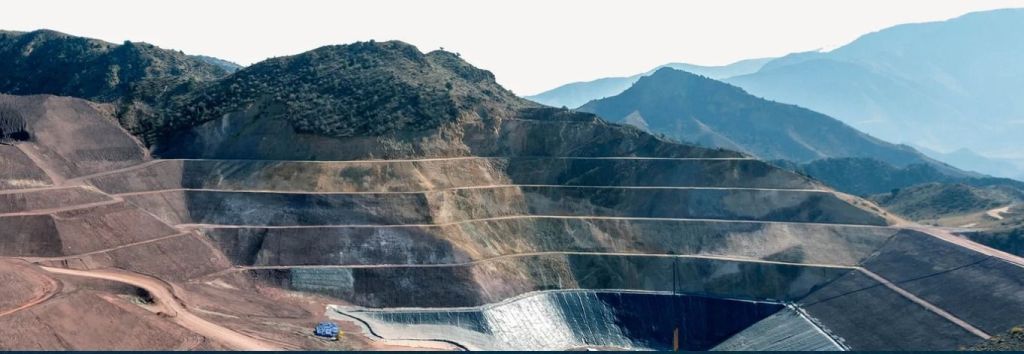
O grupo também oferece serviços para mineradores, combinando sensoriamento remoto imagens, dados geológicos e geoquímicos e modelos de inteligência artificial para trabalhos que envolvam a exploração de minérios, como as terras raras, essenciais para economia global.
Imagens de campo de mineração • Earth Daily
“A tecnologia não significa que o satélite simplesmente “enxerga uma jazida de terras raras” no subsolo. O trabalho é mais sofisticado: sensores espectrais conseguem identificar assinaturas minerais e alterações geológicas presentes ou refletidas na superfície que podem estar associadas a determinados tipos de depósitos. Esses dados são combinados com outras informações geológicas, geofísicas e geoquímicas para selecionar áreas prioritárias para investigação em campo e, posteriormente, perfuração”, diz trecho da nota enviada à CNN Brasil.
A constelação de satélites também pode auxiliar no monitoramento de florestas, permitindo acompanhar mudanças na vegetação, estresse ambiental, incêndios e áreas queimadas.
Além disso, as organizações irão analisar como as observações comerciais podem contribuir para o desenvolvimento de produtos de observação da Terra, que serão preparados para inteligência artificial, que utilizará eles para realizar o processamento de dados e aplicações de aprendizado de máquina.
Essa avaliação pode resultar em observações mais frequentes e em benefícios para usuários que precisam de medições consistentes das mudanças ocorridas entre as aquisições de imagens.
Para a EarthDaily, a colaboração com a Nasa e a USGS está centrada na avaliação de dados, demonstração de fluxos de processamento, avaliação e validação de produtos, estruturas padronizadas de dados e caracterização de incertezas.
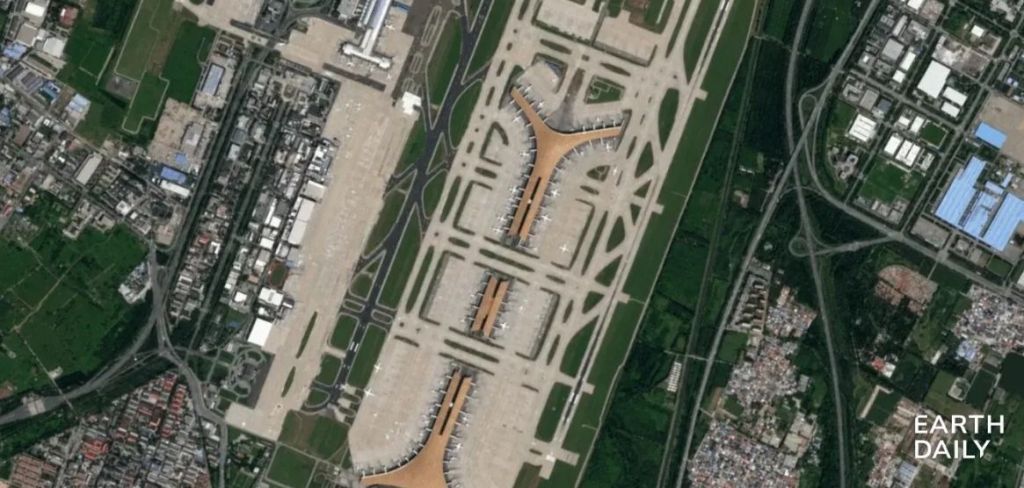
Imagens do Aeroporto Internacional de Pequim-Capital gerada pelo satélite • Earth Daily
A empresa explica que o trabalho entre as organizações vai testar os dados da constelação de satélites juntamente com Landsat e dados de outras missões que são referência, além da avaliação da utilização desses fatores em luxos de processamento do USGS Analysis Ready Data e do NASA Harmonized Landsat and Sentinel-2.
A EarthDaily informou a CNN Brasil que serão analisadas a compatibilidade com séries, as séries históricas de longo prazo de observação da superfície terrestre e a possibilidade desses dados aumentarem a frequência de visitas e a melhora da resolução espacial.
Os resultados do trabalho previsto no contrato poderão contribuir para identificar e aprimorar os requisitos que os recursos comerciais e os produtos de dados derivados devem atender para para permitir sua harmonização com o acervo histórico do Landsat.
Partes do telescópio espacial Neil Gehrels Swift Observatory, da Nasa, que após 22 anos encerrou sua missão, podem cair em solo brasileiro nas próximas semanas, quando entrar em órbita terrestre. A Nasa ainda não consegue informar com precisão a data e o horário que isso pode acontecer, sabe-se apenas que o equipamento percorre uma órbita inclinada, de aproximadamente 20,6° em relação a Linha do Equador.
Dentro dessa faixa a ser percorrida pelo Neil Gehrels Swift Observatory, está o Brasil, então a Nasa aponta que uma reentrada na órbita da Terra que o faça deixar rastros em solo brasileiro é possível, mas não há como ter uma certeza absoluta.
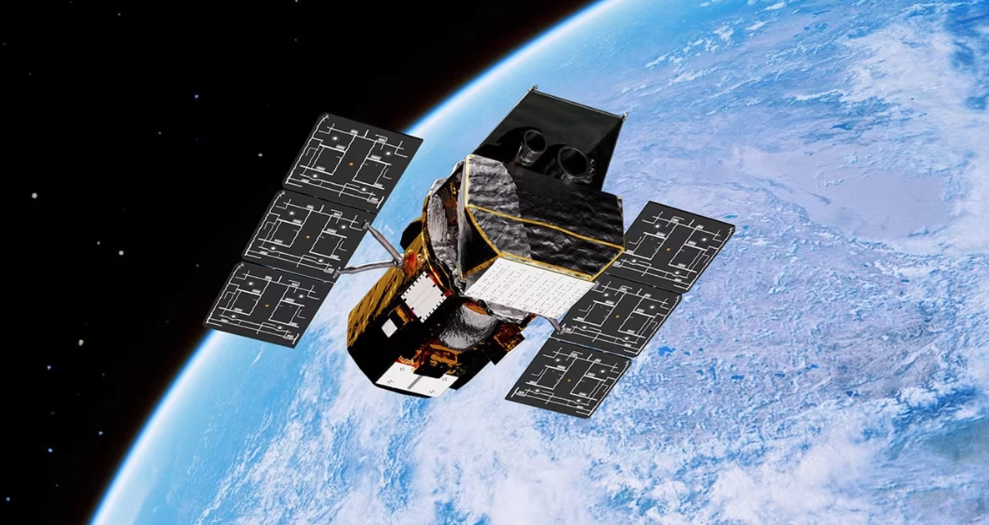
O Observatório Swift da NASA orbita acima da Terra nesta ilustração conceitual • Centro de Voos Espaciais Goddard/NASA
“É importante separar possibilidade de previsão. O Brasil não pode ser descartado simplesmente por estar parcialmente dentro da faixa orbital do Swift, mas hoje não existe qualquer dado que permita afirmar que os destroços cairão no país”, explica o Prof. Dr. Marcos Calil, responsável pelo Setor de Observatório da Urânia Planetário.
A Nasa explica que não é possível concretizar uma data ou a certeza do trajeto porque é possível que pequenas mudanças na densidade da atmosfera, na atividade solar e até mesmo no comportamento da espaçonave interfiram no momento da entrada em órbita, podendo alterar o local.
A última observação científica do Swift aconteceu em 20 de outubro, quando ele já estava a aproximadamente 275 quilômetros de altitude e o aumento do arrasto atmosférico dificultava a manutenção de sua orientação.
Planejado inicialmente para uma missão de apenas dois anos, o telescópio espacial Neil Gehrels Swift Observatory foi lançado em novembro de 2004.
Em seus 22 anos, Swift observou mais de 2 mil explosões de raios gama, além de supernovas, buracos negros, asteroides e cometas.
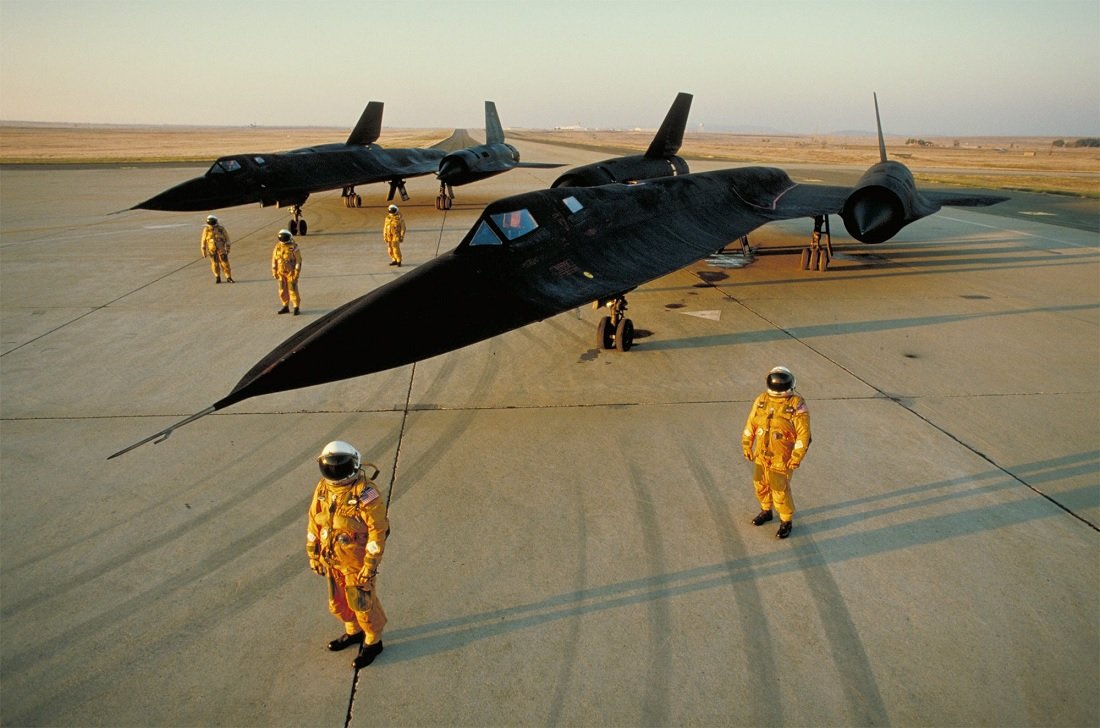
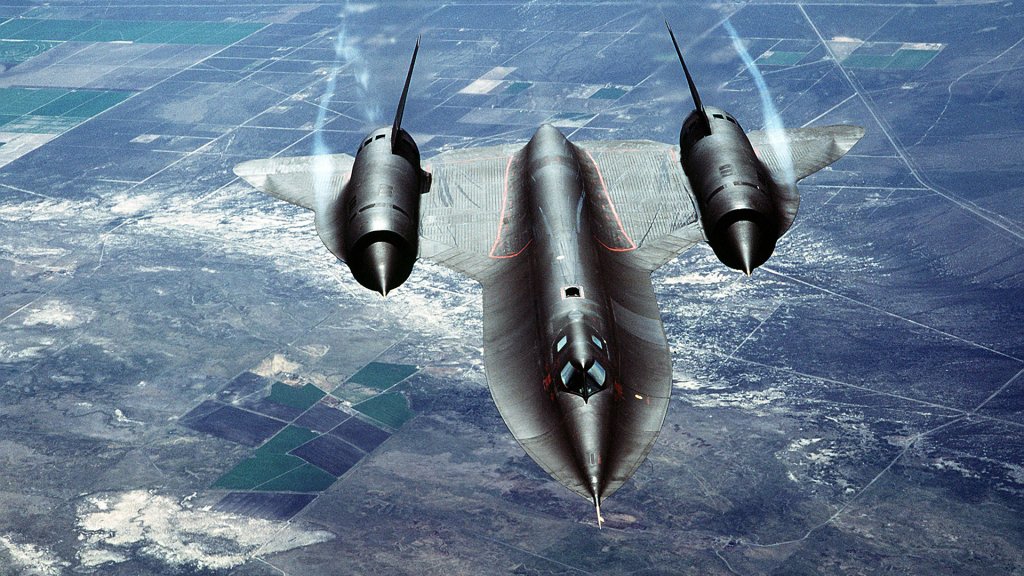
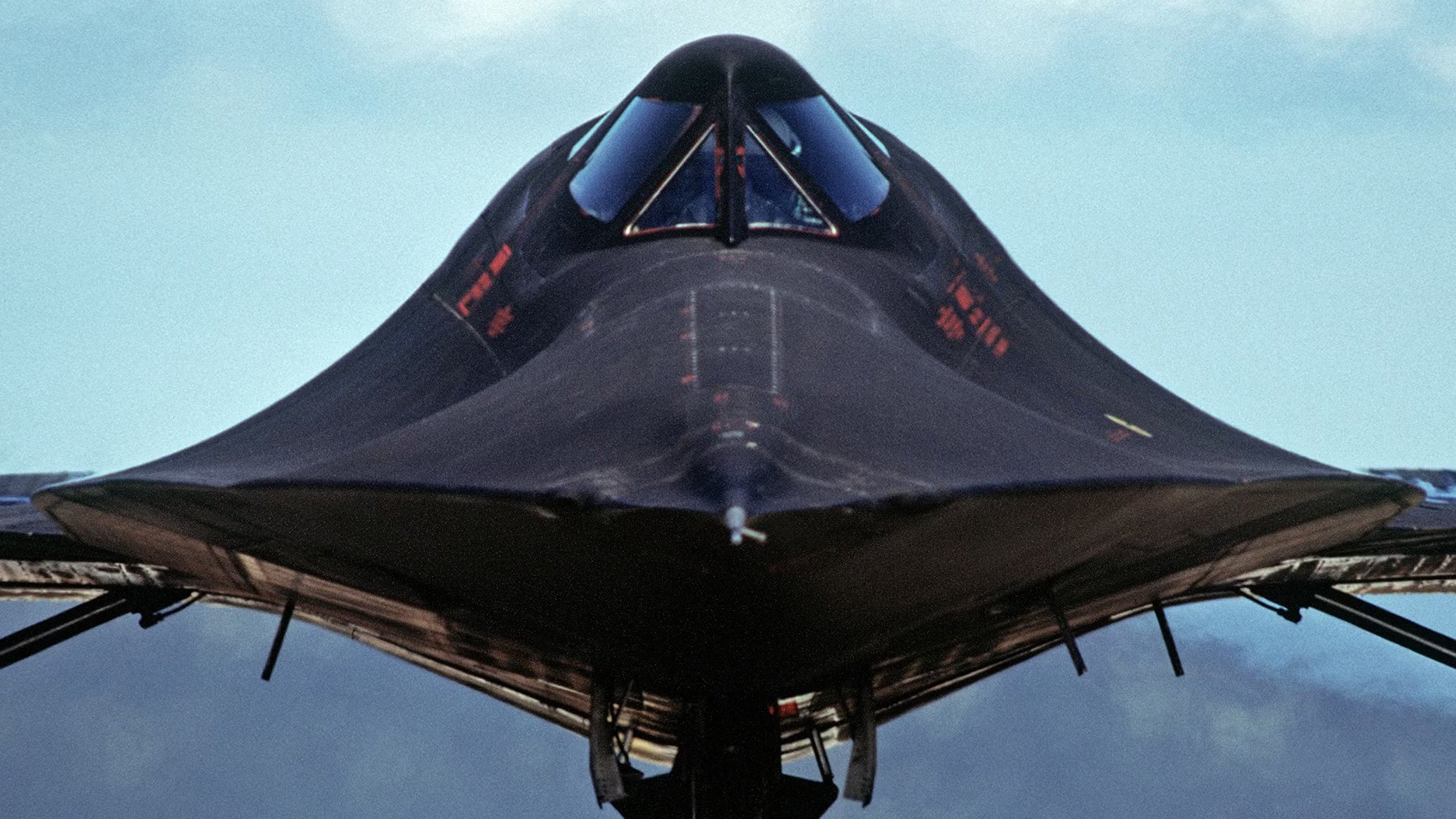
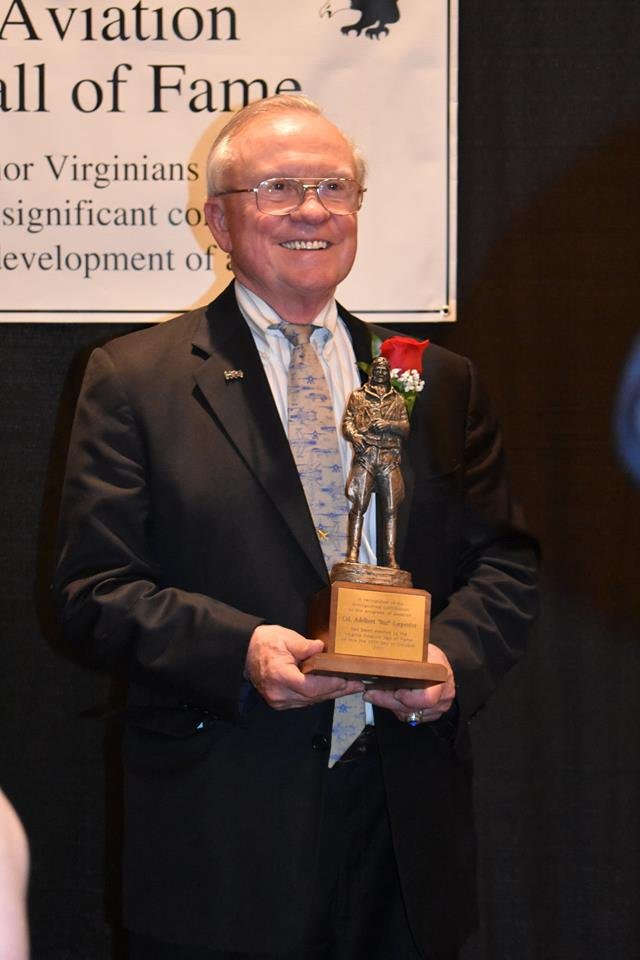
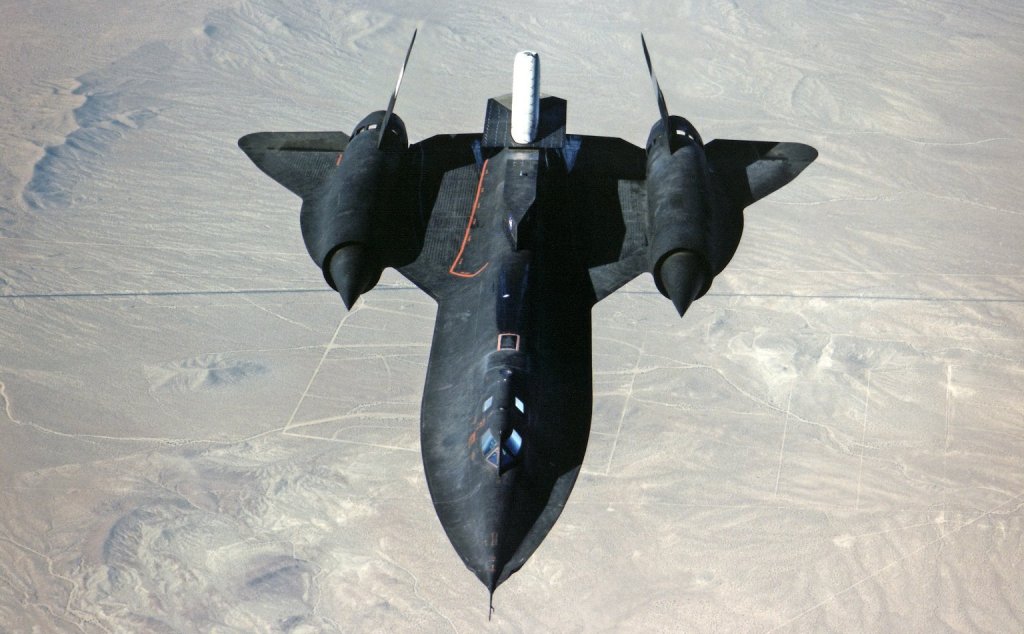
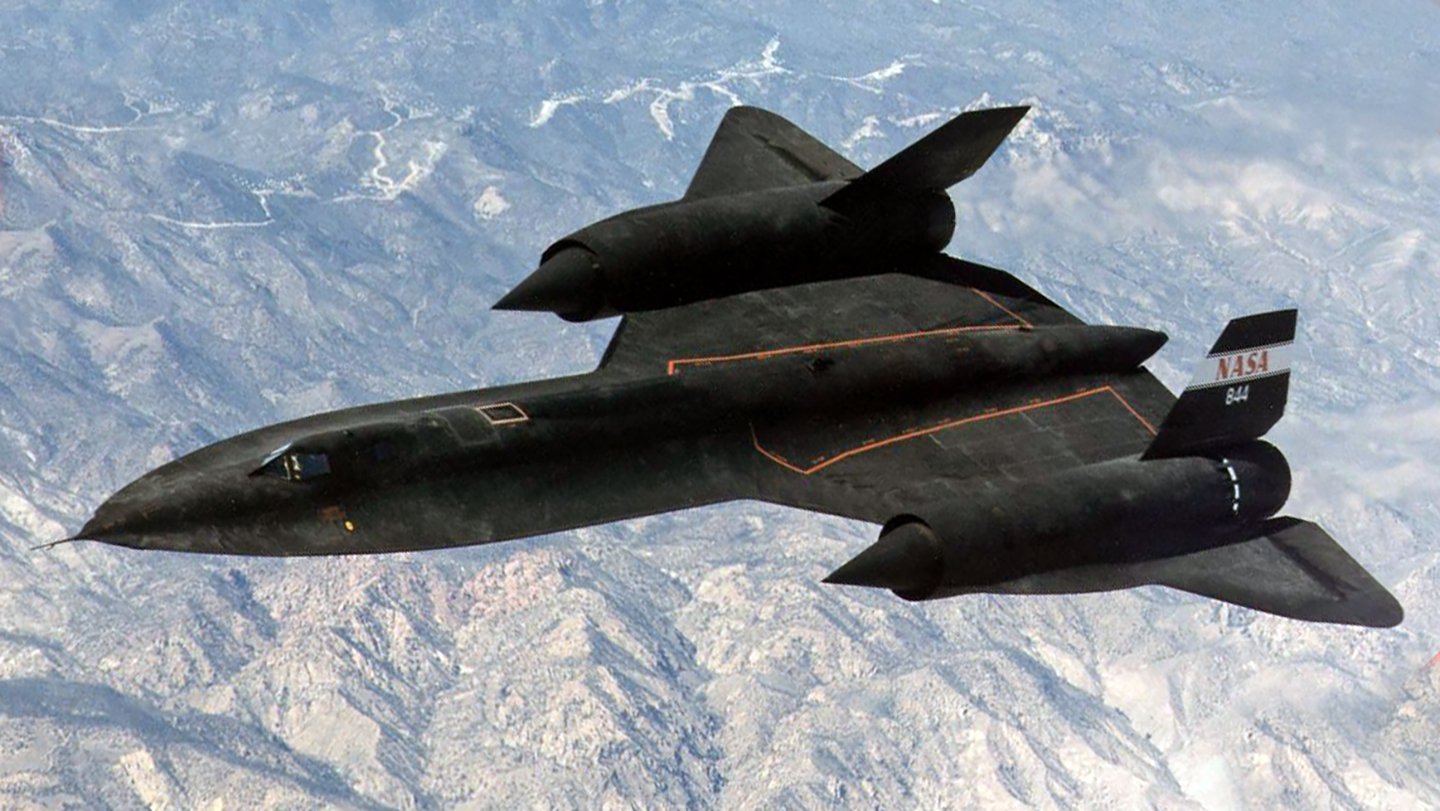
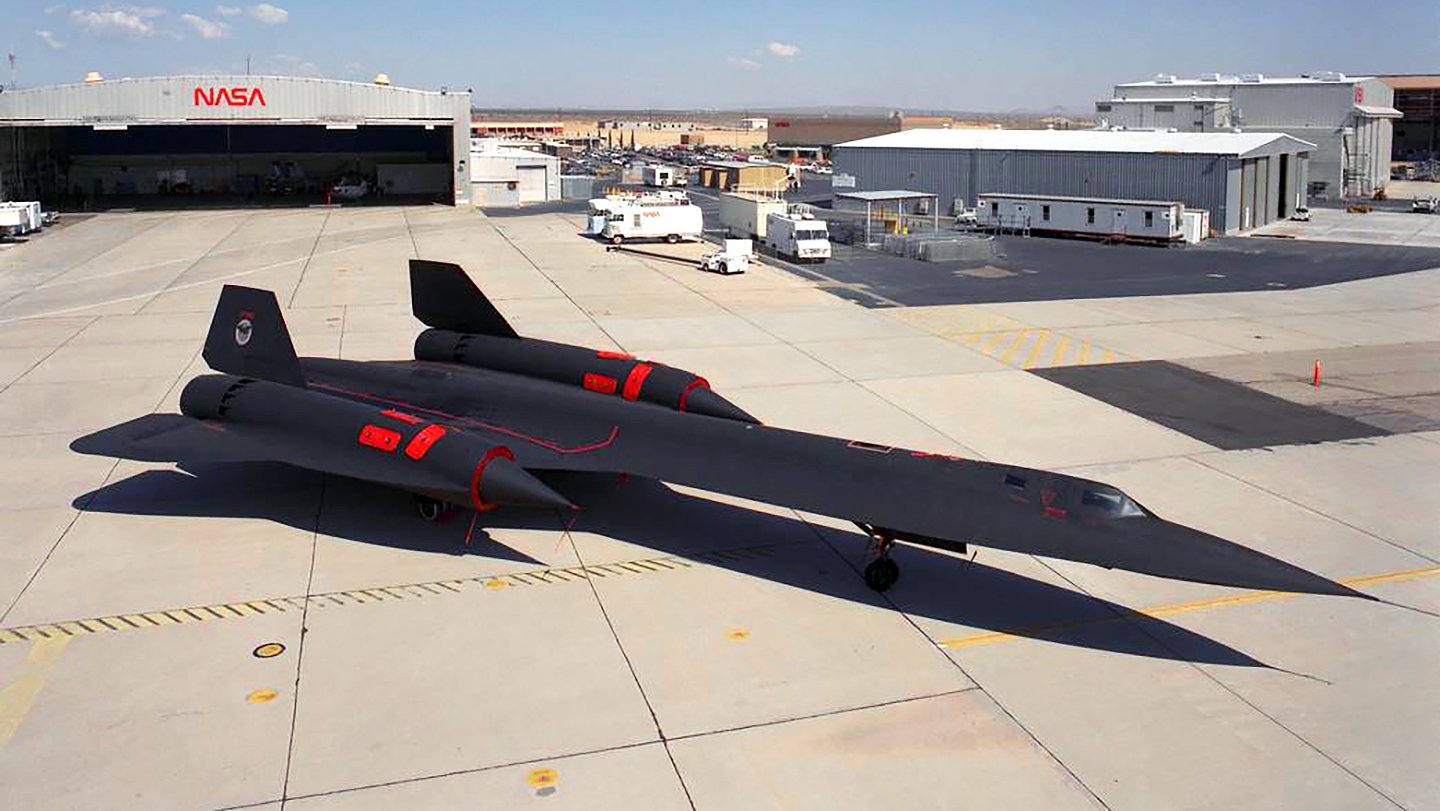
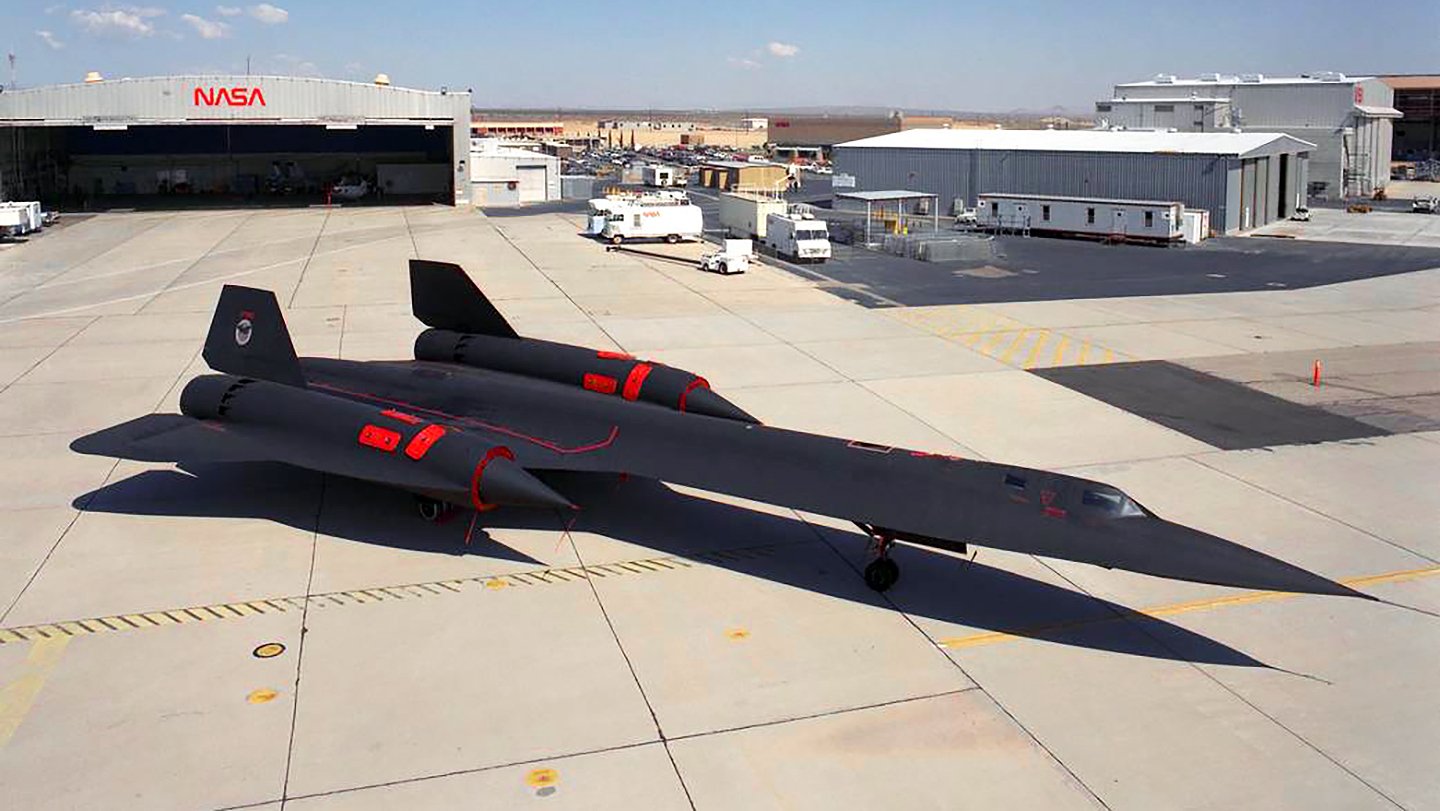
Few humans have flown a jet as high or as fast as Adelbert “Buz” Carpenter. During his six years as an SR-71 Blackbird pilot, the now-retired Air Force colonel flew 230 missions, frequently exceeding three times the speed of sound. Over the course of nearly 800 hours flying one of the world’s most iconic aircraft, Carpenter soared over Cuba, skirted North Korea and tracked Russian nuclear submarines in the Arctic. He also had a few close calls, in one case narrowly avoiding disaster.
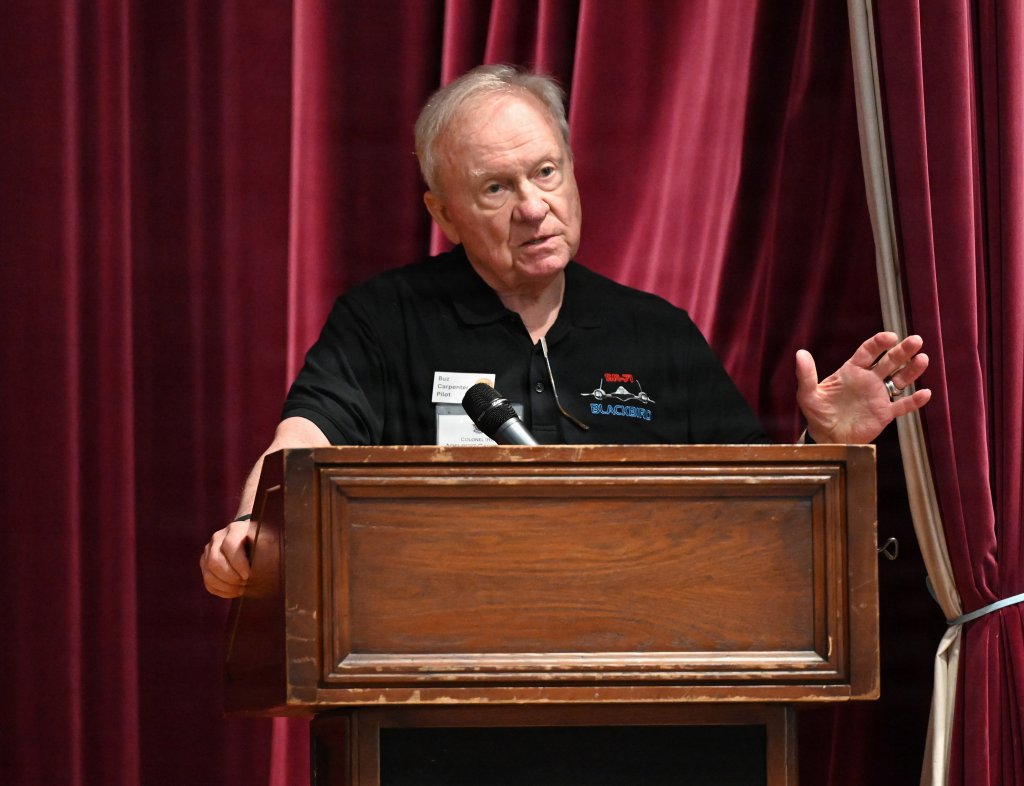
U.S. Air Force Col. (ret.) Buz Carpenter, former SR-71 Blackbird instructor pilot, shares some of his memories of flying the supersonic aircraft with the audience at RAF Mildenhall, England, July 27, 2026. (U.S. Air Force photo by Karen Abeyasekere) Karen Abeyasekere
Some of the questions and answers have been lightly edited for clarity.
Q: How did you become an SR-71 pilot? Walk me through your decision to join the program. What made you want to fly it? What was the qualification process like?
A: Well, it was a multi-step process… You had to fill out all this paperwork. You had to send them your flight records, all your flight checks, your physical records. What are your professional ratings in the Air Force? Do they rate you as superior?
The home base was Beale Air Force Base in California. If they liked you, you got called back for about a week. The first two days were a modified astronaut’s physical. I mean, they checked everything. You had a series of interviews. As a pilot, I had to fly with two current SR-71 pilots, not in the SR, but in the companion trainer, the T-38.
At any time, there were only 11 of us qualified to fly the SR-71. That’s how small a group it was for the whole program. Only 85 of us ever flew operational missions… So you can see it’s a pretty small group.
Lockheed Martin
Q: Did pilots have to be invited to apply for the SR-71 program?
A: Oh, you had to apply for it. When there was a pilot in the program and he knew somebody he used to fly with that was really super, the invitation would be: ‘fill out the paperwork, and once we get the paperwork and look you over, we’ll call you back’ and go through the same routine that I went through.
You’ve got to go through the physical. Sometimes it was shortened because they knew the person. A couple of them were actually T-38 instructors at Beale Air Force Base, and their invitation was a lot shorter because they had all the records there. They knew who you were, and they knew how you could fly.
About a week before Christmas, 1974, I got a telegram that says ‘you’ve been selected. You will report to Beale Air Force Base July 1975 and commence training in the SR-71.’ I couldn’t have been happier.
Q: What was the training like?
A: The first thing you’re going to do is you’re going to get checked out in the T-38, even though we had all flown it earlier. You had to become [requalified] in it, because as long as you’re in a program, you’re going to continue to fly the T-38.
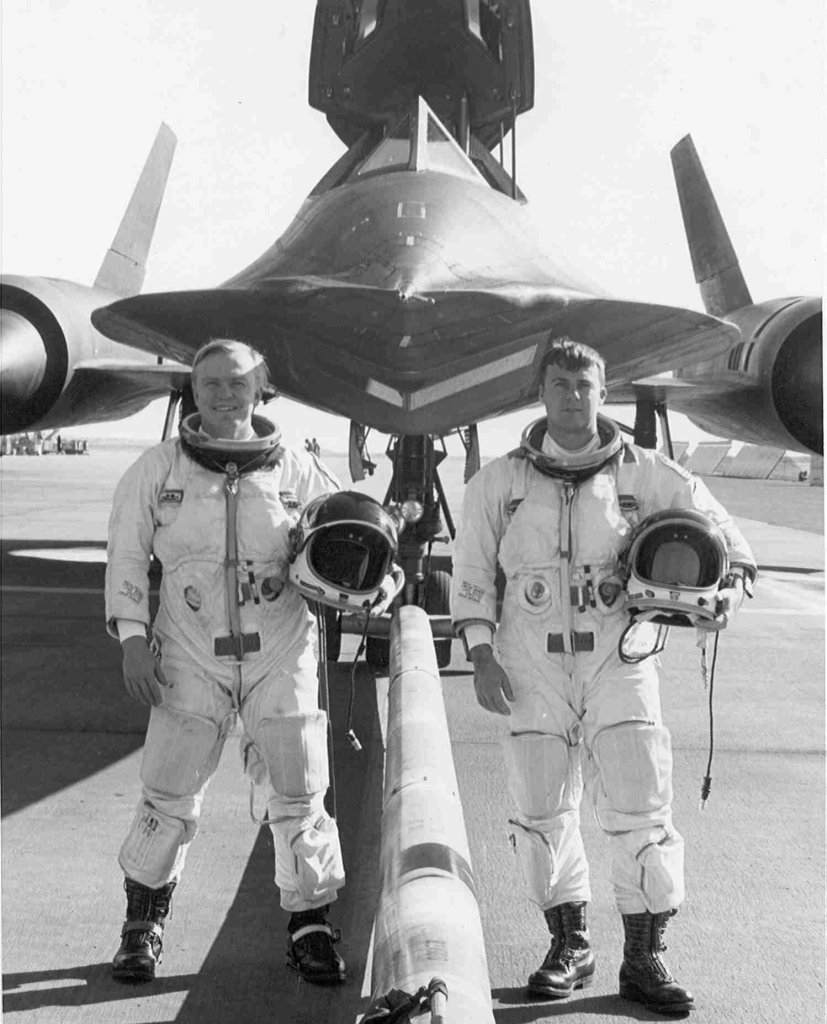
Once you actually started the program, you’d be paired with your navigator, who then assumed the title Reconnaissance Systems Officer [RSO]. And in my case, it was the wonderful Capt. John Murphy. We trained and flew together for four years.
Your first month or so was mostly academics, because the airplane was so different. You had to learn the systems because the airplane operates in a very hot environment — an average temperature of almost 600 degrees [Fahrenheit]. The airplane grows three to four inches in length, an inch or two in width — it’s 93% titanium to deal with the high temperatures [associated with supersonic flight]. So during flights, you are going to have to deal with systems that are now straining or starting to fail because of the heat environment they’re operating in. So it is imperative that you understand exactly how this airplane is engineered, and what kind of options you might have if you start getting failures.
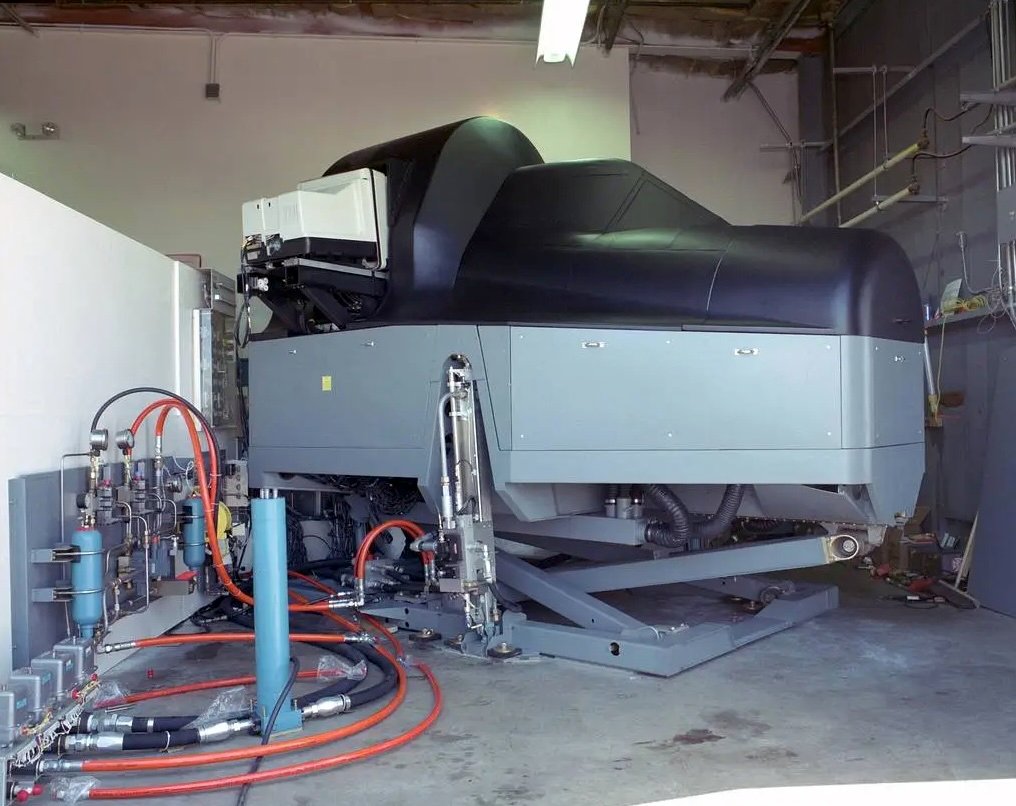
Then you start getting into the simulator, and obviously it’s a kind of crawl-walk-run type of a deal. This was the first simulator I’d ever seen that was a computer simulator. Up until that point, they called them part-task trainers. It had all the switches and everything, but it didn’t fly like the airplane. Like you’d be in the trainer and they want to simulate a fire. Somebody would bang against the side of this thing, and yell ‘fire’ and turn on the fire light, but they were just watching what you were doing. The SR simulator flew exactly like you [would fly the plane].
So even before John and I started training, we would find times when the simulator wasn’t being used at night, and we would go down there, and fly this simulator. And if you did something wrong, it reacted exactly how the airplane would react. I mean, it could crash if you did something bad enough.
An SR-71 flight simulator. (NASA Photo / Tammy Gill)
There’s no visual. The simulator could move a little bit motion-wise, not severely. It would react exactly how the airplane was going to react, but you couldn’t see anything. Your first visual of what the airplane was like was going to be on your first flight in the airplane.
That’s when you’re going to see what does a takeoff look like in 20 seconds? What does it look like to get behind a tanker and refuel? And as importantly, what does it look like to come back in at 175 indicated [airspeed] and land this airplane on a runway? It was a tremendous training aid because when you came back later on when you were doing your six weeks in Japan, maybe you took some vacation, but the first thing after that they’re going to put you in the simulator for four hours and see how you react to emergencies. It was very complex and defining. We washed people out who could not maintain the level of proficiency that we expected if you were going to fly this airplane.
Q: Could you practice refueling as well?
A: You could do takeoffs, because it was like an instrument takeoff, and you could do ‘quote’ instrument landings, but you had no visual to see how this whole thing would come together. Air refueling we didn’t mess with it because there wasn’t enough you could see. When you came to an air refueling in the simulator, they would just fill you up and say, ‘okay, you’ve been refueled.’ Because you needed the visual picture to understand what you’d be doing behind the tanker.
Q: Tell me about the first time you donned the pressure suit, which you had to wear to withstand the pressures of flying at altitudes of up to 80,000 feet or more.
A: If you were going to fly, you came in two and a half hours early. You had to pass a physical before every flight to make sure your sinuses and blood pressure and a number of other things were okay. You would then have a meal of steak and eggs, just like the astronauts, high protein, low bulk. They would brief you on the status of your airplane, and then about an hour and 15 minutes prior, you would go down where your suits were being maintained, and you’d put on cotton long johns because you’re going to perspire a little bit. Not profusely, but occasionally, if you were low on fuel. The fuel was the cooling system for the airplane, and if you’d been flying at the higher speeds, and you were low on fuel, the suit would heat up a little bit.
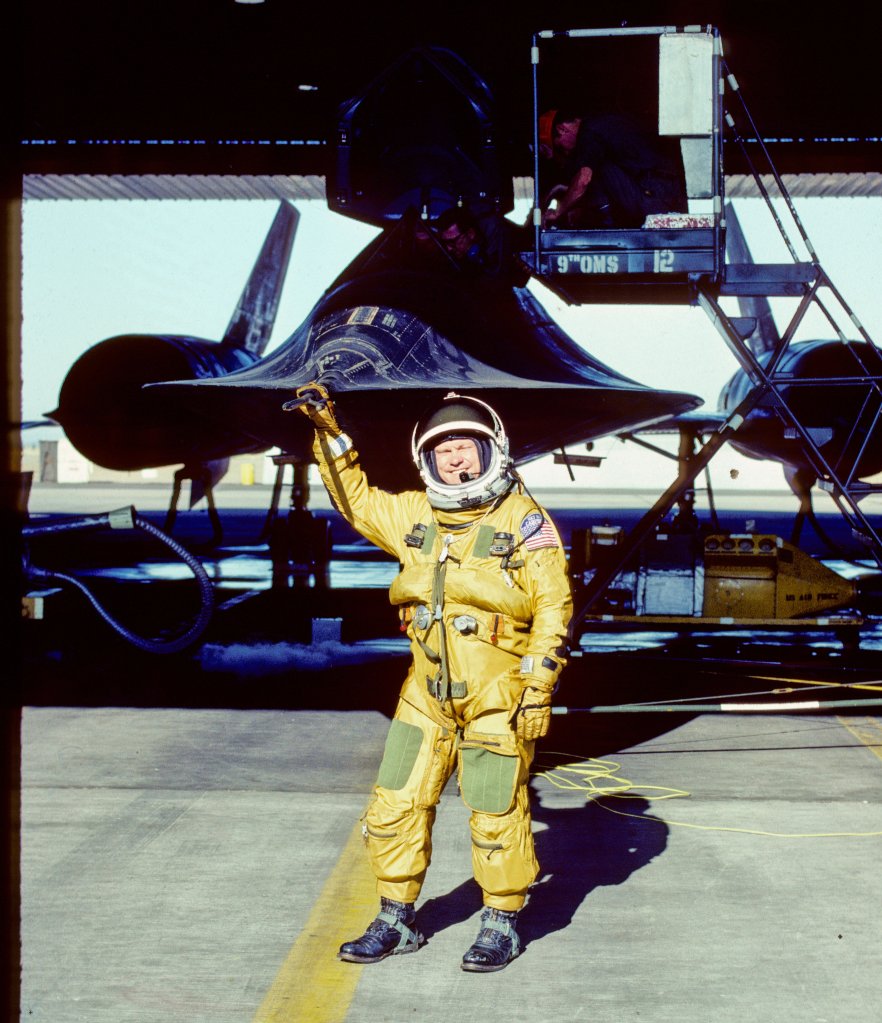
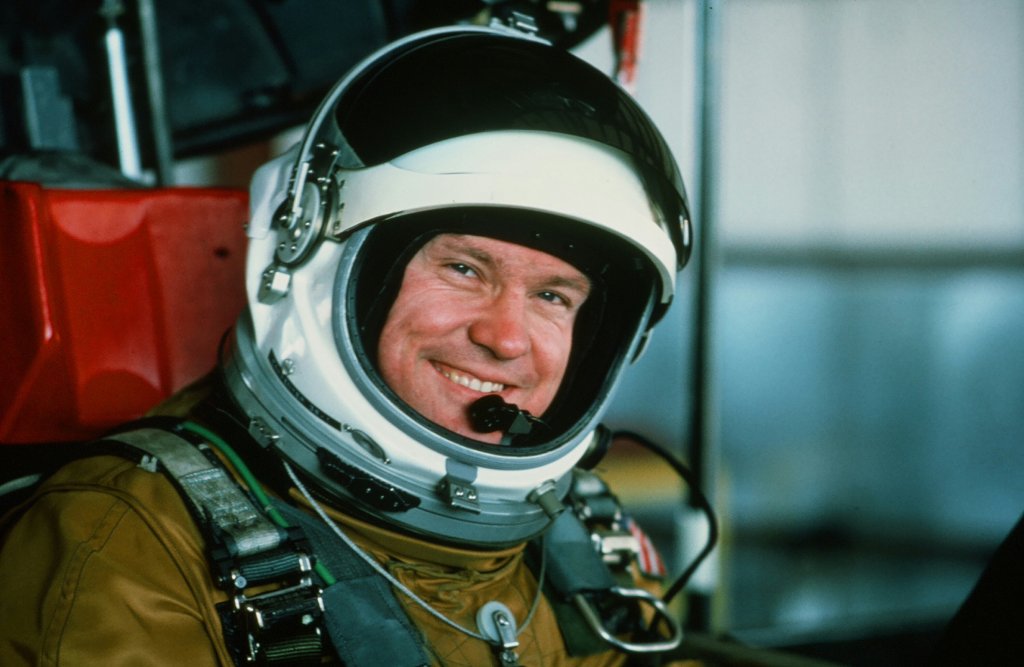
They’d suit you up. I’m going to stop there. The first time you ever suited up, you’re not going to the airplane. They’re just exposing you. It was a [NASA] Gemini suit that had been modified, and you put on the cotton long johns. You had two people that helped you into the suit. The suit is lying on the floor like a coverall. So you’re going to come through the back of the suit. You put your legs on like you would a coverall you’d have at home. You then put your arms through the sleeves, and at that point, the two technicians would grab that helmet ring, and they would lift it up, and then you would duck underneath and come up and stand.
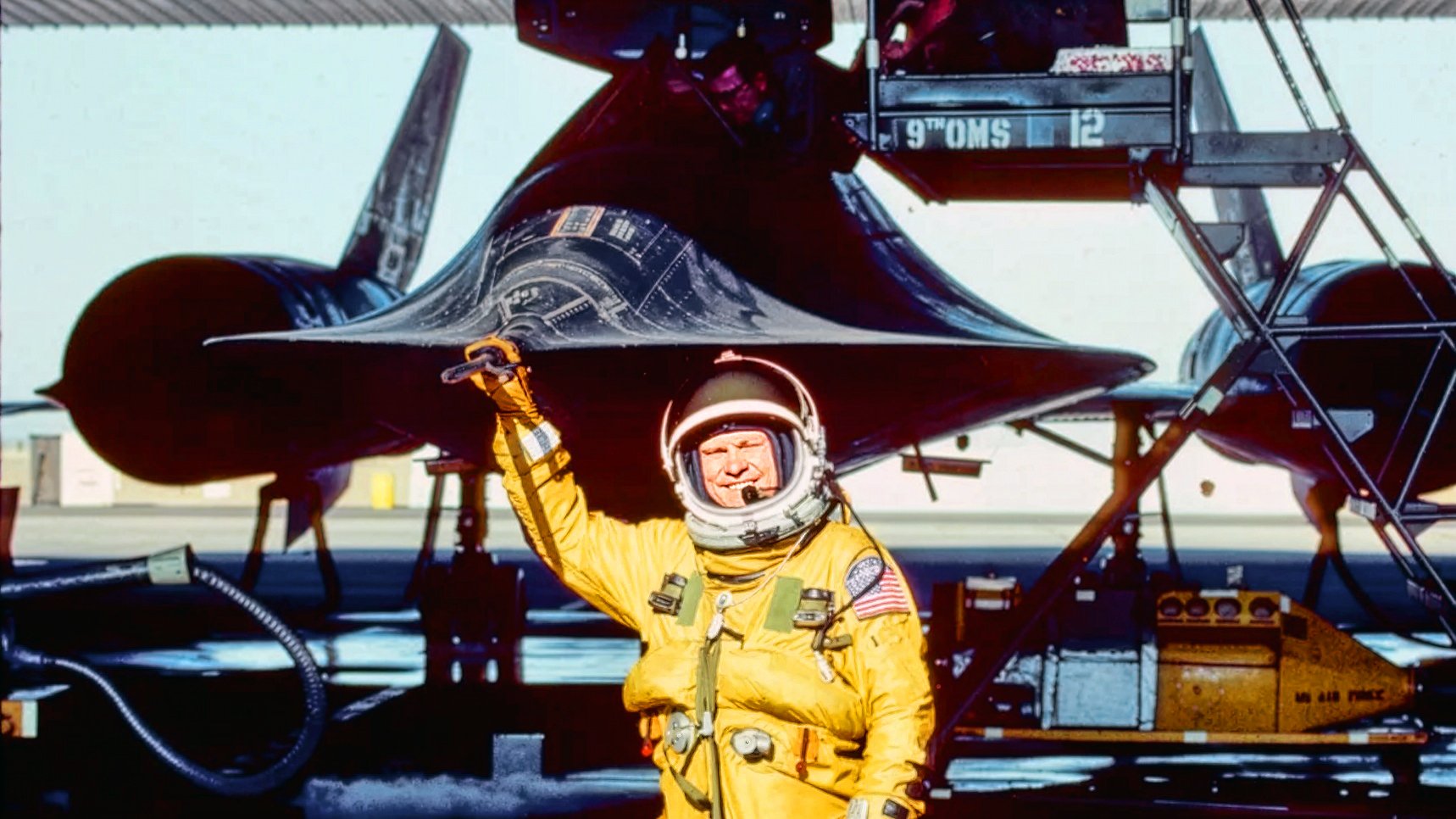
Adelbert “Buz” Carpenter in his SR-71 pressure suit. (Courtesy of Adelbert “Buz” Carpenter)
So now the suit is fully on you, and the helmet ring is sitting on your shoulder. The first time you do that, it probably takes 25 minutes, because they’re explaining to you, this is the easiest way to do it. This is where you should step. This is how you get your legs in. This is how you get your arms in. And then the next thing they’re going to do, they’re going to hand you your helmet.
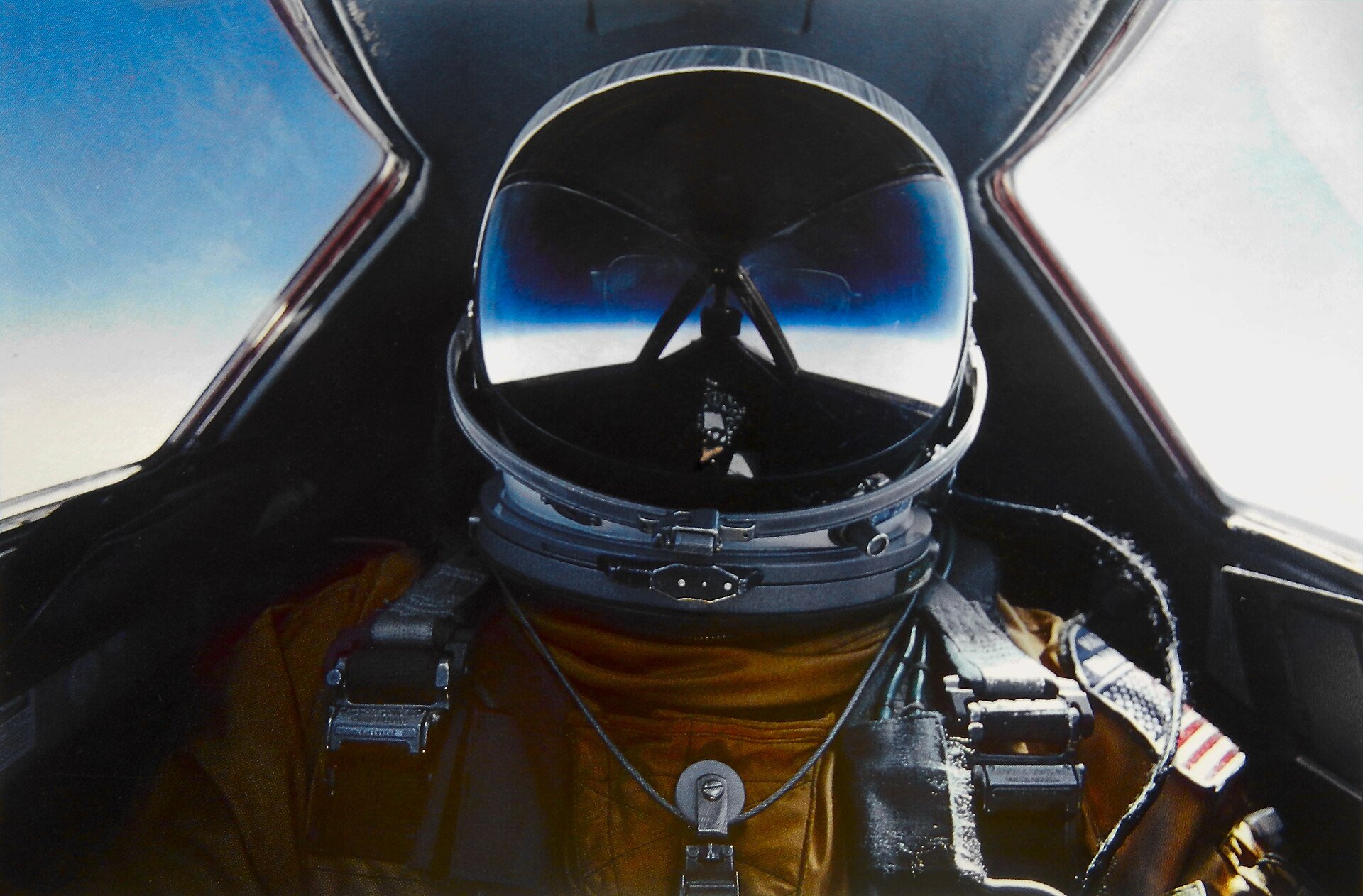
The suit weighs about 40 pounds. If you’re claustrophobic, this is not a program to be in. It’s not overpowering, but it’s your work suit and something to get used to. It’s not that uncomfortable in a sitting position because that’s where you’re going to use it most of the time, sitting in the cockpit.
They’re going to hand you your helmet, and in the helmet — which most people can’t see — there’s a seal that comes around your face. So once you get the helmet on, you’re going to crank down the seal so it seals tightly, because you are going to be breathing — once the visor comes down in the aircraft — you’re going to be breathing 100% oxygen until you land. The reason for that is that the cabin is pressurized to 26,000 feet to reduce the pressure on the airplane. So they want to reduce the nitrogen in your blood. You’re just like a diver when you go from sea level to 26,000 feet. It’s like a diver who’s been diving coming back up to sea level. So by breathing 100% oxygen, you get the nitrogen out of your system, and you avoid the bends.
There were very few, and possibly no episodes like that in the SR program, but in the U-2 sister program, they maintained an altitude of 28,000 feet, and they had to pre-breathe oxygen before they ever went out to the airplane. Because once they got to the airplane, start up, they go straight to altitude. When we take off, it takes us a half hour from the time our visor comes down, breathing 100% oxygen, before you can take off, and then you’re going to go to a tanker to refuel. So by time you were through at the tanker, you’ve been breathing oxygen, pure oxygen, for over an hour. And the reason for taking off light and going to a tanker: Early in the program, the test program, I think we lost two airplanes doing tests due do heavyweight takeoffs and aborts.
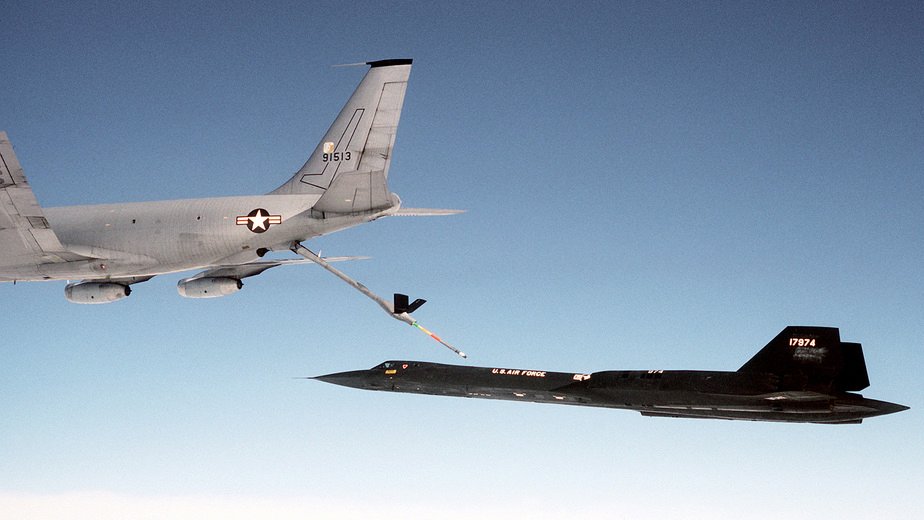
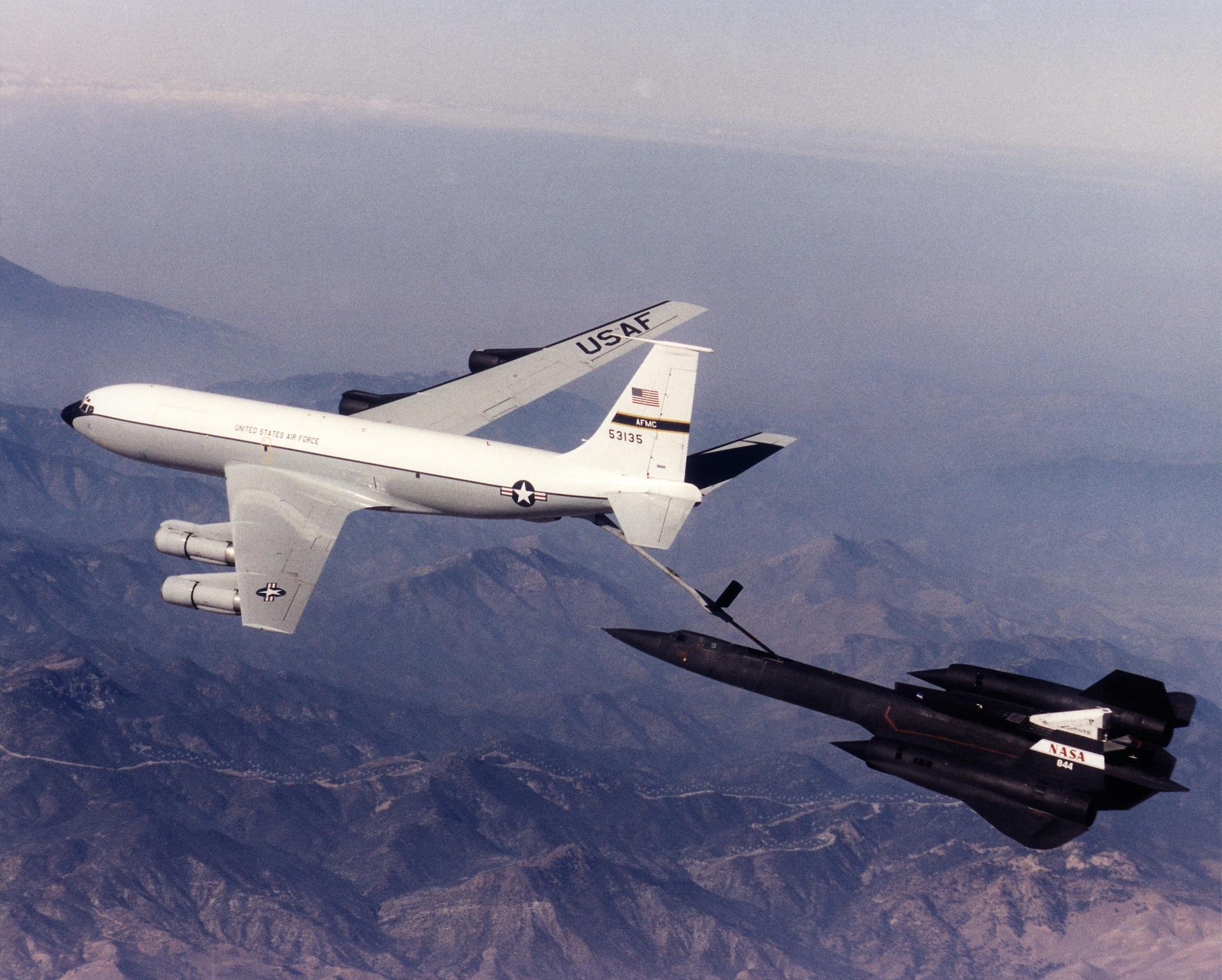
An SR-71 takes gas from an KC-135Q. National Archives
So to preclude that, instead of taking off with 80,000 pounds of fuel, we would take off with 40,000 pounds of fuel. It reduced the wear and tear on the tires, so we could accelerate quicker, less stress.
But there was a second piece. When the Concorde crashed in Paris in 2000, it lost two engines on one side. They could never get the airplane going fast enough. The airplane stalled. The powerful engines caused the airplane to roll over.
Flames shoot from the rear of the Air France Concorde as it takes off from Roissy on July 25, 2000, just minutes before the plane crashed in the town of Gonesse, claiming 113 lives—the 109 people on board (mostly German tourists) and four people on the ground (AFP via Getty Images) –
On the SR, it had been forecast through the simulations that if you lost one of your afterburners, lost an engine right after takeoff, there wasn’t enough airflow over your flight controls because you have to keep the other afterburner going. You were going to do the same thing. You were going to roll over and crash. So if you had a full load of fuel, it would take you about maybe 20 seconds, 30 seconds to get above 350 [knots] because at 350, you had more than enough air going across the flight controls to control an engine-out condition. By reducing the takeoff weight down to 40,000 pounds, that dead zone where you didn’t have control was probably 15 seconds. Never happened, but that was part of the theory behind why we took off with half a fuel load.
We took off with heavier fuel loads, occasionally. I think I may have taken off once or twice with a full load. It was a fairly rare exception, but we would take off with 50,000 pounds. I’ve taken off with 60,000 pounds a couple times.
Q: How was your first flight? When was it?
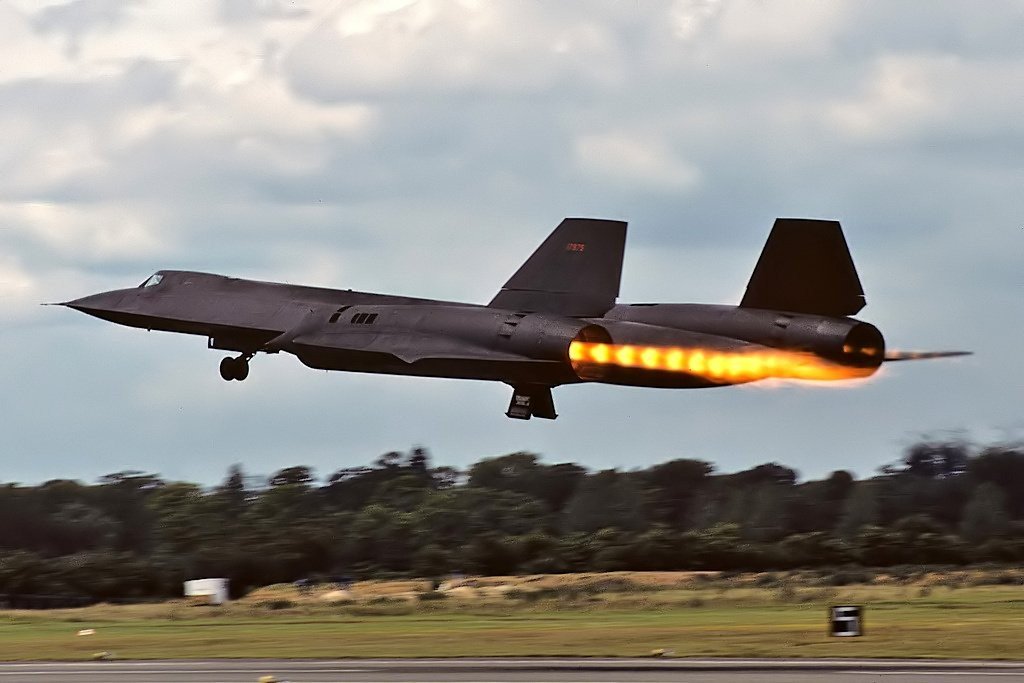
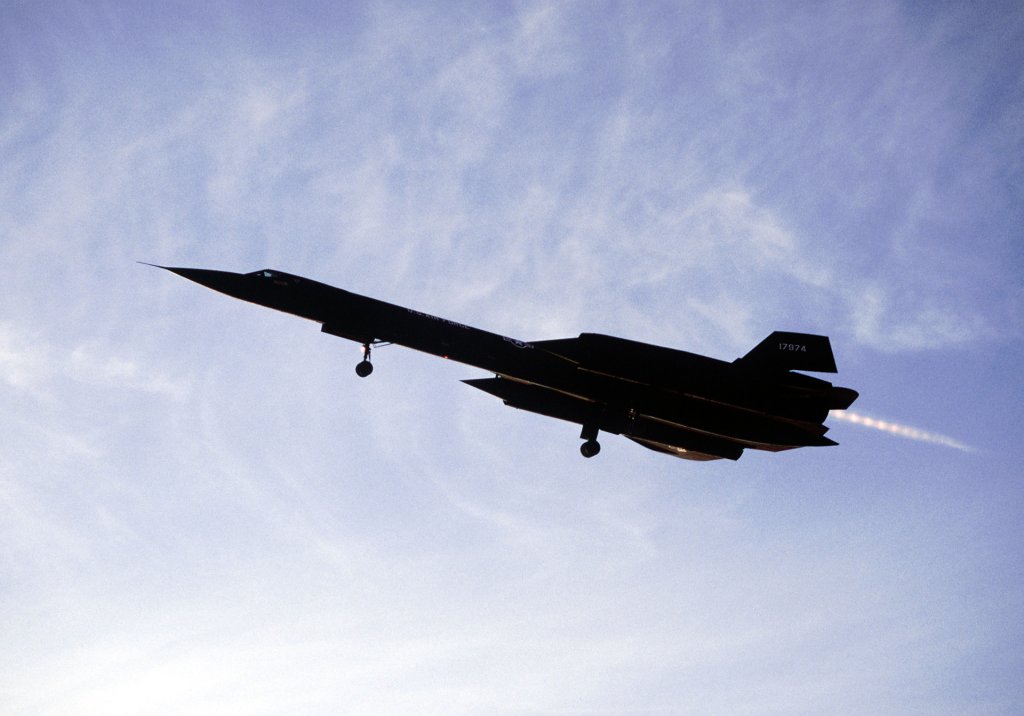
A: You’re not going to be impressed. My first flight, I think, was the 16th of July, 1976, and your first flight in the airplane is subsonic. You’re going to be fully suited up. You’re going to take off. It’s going to be the first time you ever see a takeoff. The takeoff is 20 seconds, and in 20 seconds, you’re going to go 4,500 feet from a dead stop. You’re going to lift off doing 230 miles an hour as you bring the nose up and accelerate to 400 knots. You’re going to pass through 20,000 feet less than two minutes from the time you start your takeoff roll, and then you’ll level off at 25,000 feet and head out to the tanker.
SR-71 taking off. (Courtesy of Adelbert “Buz” Carpenter)
On your first flight, you’re going to spend almost an hour and a half on the tanker, and that’s to teach you how you refuel this airplane behind our special tankers. Almost all the guys had prior refueling experience, so you’re helping them adjust to a new type of refueling regimen per se.
Occasionally, you’d get a guy who had no refueling experience, and that was more difficult to try to teach somebody for the first time how you do refuelings. And one of the trickier things with the tankers, you’d hook up with a tanker, and they’re doing 315 [mph] to 325 [mph] at 25,000 feet. That was where we liked to refuel. So, not every time, but it was not uncommon that by the time you were passing through, having accepted 70,000 pounds of fuel, you’re starting to get power limited, and there were two things you can do.
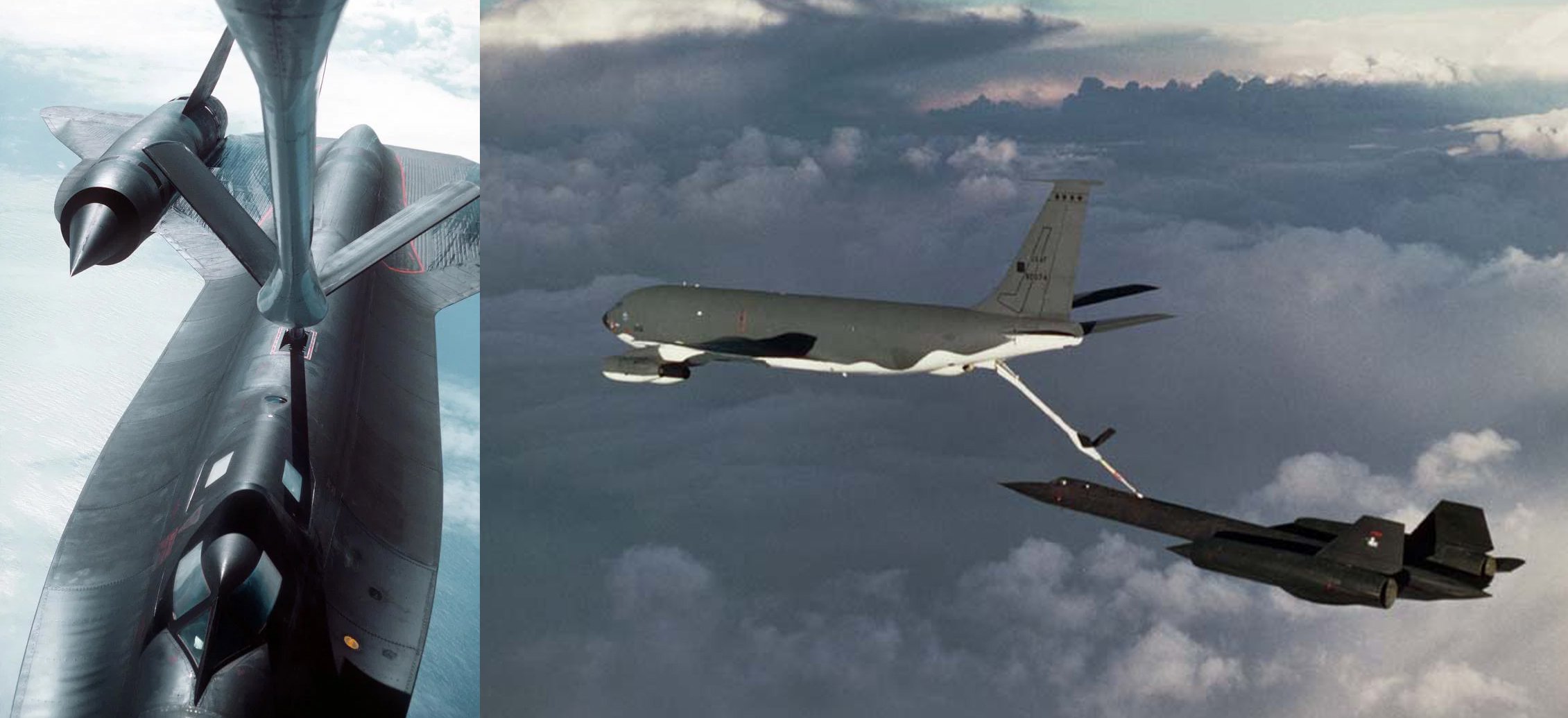
The preferred thing was you would light the left afterburner to the min-burner [minimum afterburner], and bring the right engine back to a point it would be your modulator. But now you’re going to put the rudder in, because you’re going to be slightly cocked, because your left engine is in min-burner, and what we want you to do is not drop off the boom.
An aerial refueling between SR-71 and KC-135Q. USAF/CMSgt Don Sutherland (left) Lockheed/Tony Landis (Right)
Strategic Air Command, our parent command in the Air Force, wanted you to drop off the tanker, stabilize, light the left burner, adjust the airplane speed, pull in and refuel. The critical thing for us in refuelings is that we wanted to have full tanks at the end of the air refueling point, and if it’s a timed mission, we would need to have that all done at a certain time because maybe there are other airplanes or satellites or that they’re going to use us as a cue.
So basically, I never dropped off, and as an instructor pilot, I taught my students to be able to light the afterburner, put the rudder in, use the right throttle as a modulation, and stay there. One of the good things in our tankers that others didn’t have, we could talk to the tanker crew through the boom, and the outside world couldn’t hear us. So, particularly on operational missions, when we’re running radio silent, we could give the tanker instructions that we wanted passed on without having to break radio silence.
Adelbert “Buz” Carpenter in the cockpit of an SR-71 Blackbird. (Adelbert “Buz” Carpenter)
Q: How did you prepare for your first flight?
I probably had a 150 hours in the simulator. I felt very comfortable. Came in like I told you for the physical, and we talked with my instructor about what we were going to do that day, and got suited up. I wouldn’t say so much nervousness, but anticipation.
You’re going to have your first flight. You go up, and when you get up in the cockpit, you sit down. You put your arms on the side rails, and those same two people, men or women, that suited you up are now going to reach in and make all the critical connections. This is the first time you’re really going to see the whole process with the dual oxygen system, your comm system, hooking up your survival pack, your parachute, everything.
You go through the same thing you’ve done in a simulator, but now you’re in the aircraft. You’re gonna, for the first time, be able to taxi it and get a feel for how sensitive are the brakes and find out what your turning radius is. Every airplane has a different radius, and how much do you anticipate when you start to make a turn as you’re heading out? You taxi on out when it’s that time. Go to the end of the runway, and they’ll do one more inspection to make sure everything looks good on the airplane, and you’ll just kind of go through, and then you’ll call the tower, and you’re cleared on the runway.
And once you’re cleared for takeoff, what you’ll do is you’ll release the brakes as you bring the power to mil [military power—full power without afterburner]. You’ll quickly check your engines. The instruments look good… You go to full afterburner, and you’re on your way. And like I said, the takeoff portion takes about 20 seconds. When you hit 180 [knots], you’re going to start bringing the nose up because you don’t have any flaps, so you’re looking for the airplane to start getting a lift because of the speed, and so you’re going to lift off with a 210 indicated, 210 translates to about 230 miles an hour, and then continue the nose up to 15 to 20 degrees because you’re going to be accelerating pretty quickly.
Like I said, you pass through 20,000 feet less than two minutes from the time you start. You just go through the routine. You’re gonna see the tanker. I’d seen many tankers before. Of course, this my first time in the SR.
One advantage to me and guys coming out of fighters is that sometimes fighters had the same behind-the-power-curve problem [when refueling], so you would end up having to light one of your afterburners and do the same process in a fighter because of the weight of the fuel. And maybe we didn’t carry bomb loads in the RF-4, but maybe I had three tanks, a center tank and two wing tanks that increased my weight up to the point that I was actually starting to slip behind the power curve.
You come back in, and the instructor is going to demonstrate the first landing, and then you’re going to go back out, and he’s going to have you do an ILS — instrument landing system — approach and touchdown, and then you go back out, and you may do a second one, or you may do a precision radar approach. And then you’re going to get into visual approaches. You’re going to come down, and into the runway, you’re going to go around with a closed pattern, so you can get more practice touch-and-goes until you get it down. If you’re in the traffic pattern, when we had about 7,000 pounds of fuel left, we would land the airplane at that point. We never wanted to get really low in case something should occur because we needed to have enough fuel to get down to McClellan or Sacramento Airport [to divert].
Q: How long did your first flight last, how fast did you go and how high?
A: That first flight was two and a half hours. I reached about 25,000 feet, and probably hit 0.9 Mach for a little while. Then you fly around. You do not go supersonic. Your first supersonic flight is going to be your second flight.
Q: Did you first fly in the two-seater (SR-71B)?
A: We all flew in the two-seater first as a pilot for our initial pilot checkout.
Q: How does the B-variant fly differently from the A?
A: The SR-71 B-model flies just like the A-model mission operational aircraft.
Q: Was there a tradition to celebrate your first flight?
A: There were some people that met you. I think my family was there, but that’s not the important flight. That’ll come two days, two flights later. You know, people, other current crew members, pilots, and RSOs and my instructor pilot will come out and say, “Hey, congratulations, Buz.” But then, the real important one: your second flight. You’re gonna take off. You’re gonna go to the tanker. You’re gonna refuel, but now you’re gonna drop off the tanker, and you’re gonna start. And you go supersonic. You would start a climb from 25,000 feet at 0.9 Mach, and you would climb up. And we typically would go up to 33,000 because they did not want you supersonic below 30,000 feet because of the shock.
So at 30,000, 33,000 feet, you push the nose over, go full afterburner, and as you’re coming down, you’re going to accelerate really fast. And this is the high drag zone of the SR-71. So as you’re coming down, you’re going to go through the speed of sound very easily. Now you’re going to see [Mach] 1.05, 1.1, and about that point, then you’re going to start bringing the nose up and pick up your climb speed and basically use that climb speed until you’re fairly high up when you’re going to pick up a Mach, and that first supersonic flight, you’re going to fly it at 2.8 Mach, and I know this may sound unique, but at 2.8 Mach, this airplane is actually quite docile.
That’s the low speed. The sensitivity of the airplane is still there, but it’s fairly low.
Your third flight is Mach 3, and you do the same practice, you do the refueling. You come back in. You shoot patterns, but when you land this time, people come out, typically the wing commander, and he’s got a Mach 3 tie tack he’s going to give you. And all kinds of people are going to be out there because this is a significant time; you’ve had your Mach 3 flight. But there’s something else significant with it. You get to buy the bar that night, and we were always glad to buy the bar because that meant we’d finally had our Mach 3 flight, and we were part of the group.
Q: What was it like when you reached Mach 3 for the first time?
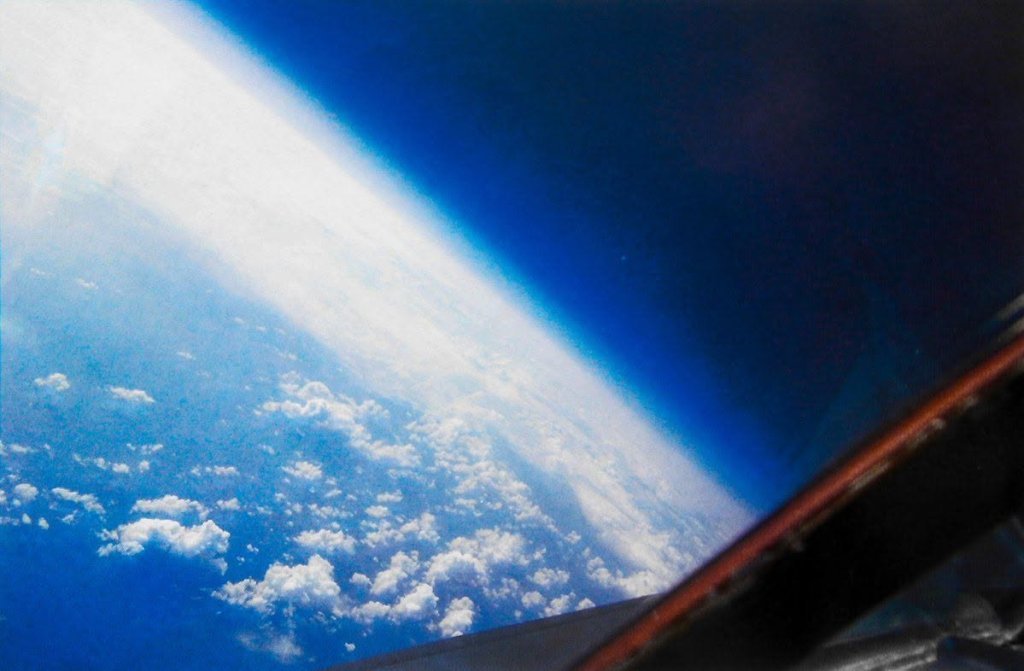
A: The aircraft actually reacts quite well. The thing that surprised you, or not surprised you, but it’s the first time you get to see the curvature of the Earth, the beautiful black sky up above, and the blue below you. It’s also very quiet. You are in a spacesuit, but you’re traveling at three times the speed of sound. The sound’s behind you. You can feel vibrations in the airplane.
An Earth view from a SR-71 Blackbird at 83,000 feet. (USAF / Brian Shul)
Later on, when you’ve flown this airplane for a while, you can actually feel at certain times when boost pumps are kicking out because that particular fuel tank is going dry, and little sensitivities like that. You’re very busy monitoring the cockpit instruments to make sure the airplane is doing exactly what you want it to do, because it can deviate. And what they’re looking for is we want pilots and RSOs that are going to make sure the airplane is doing what the mission calls for and the way it’s supposed to be flown.
So there’s an adjustment as you change temperatures aloft. The airplane’s going to fly a little differently, so you’re going to make adjustments. If you’re going from warm air to colder air because of a frontal passage, as soon as the engines get that colder air, the airplane wants to accelerate because now the air is denser, and the engines are producing more thrust. It’s a dynamic environment. This is not the kind of airplane that you sit back and put the autopilot on and let it do its thing.
You have an autopilot on, but the only thing the autopilot does is keep it on that track that the mission was planned for.
We don’t put any altitude hold on, because we allow the airplane — as it burns off fuel — to continue to climb. So you’re in a constant climb as the airplane becomes lighter and lighter, and with that, your fuel flow continues to go down. The higher you go, you’re carrying less weight. The amount of fuel you’re burning per mile or per minute is dropping, because the engines are becoming more and more efficient. It’s the only airplane in the world — because the way our engine inlets and nozzles are engineered — that the faster we go, the less fuel we burn. You talk about any other airplane you can think of. If you’re going to go faster, it’s going to cost you on fuel. It’s not the case with the SR.
An SR-71 in flight. (Photo by Getty Images)
Q: What altitude did you reach on that first Mach 3 flight?
A: 81,000 — 80,000 feet, something like that.
Q: How difficult was it to get used to the SR-71’s cockpit and all its additional gauges?
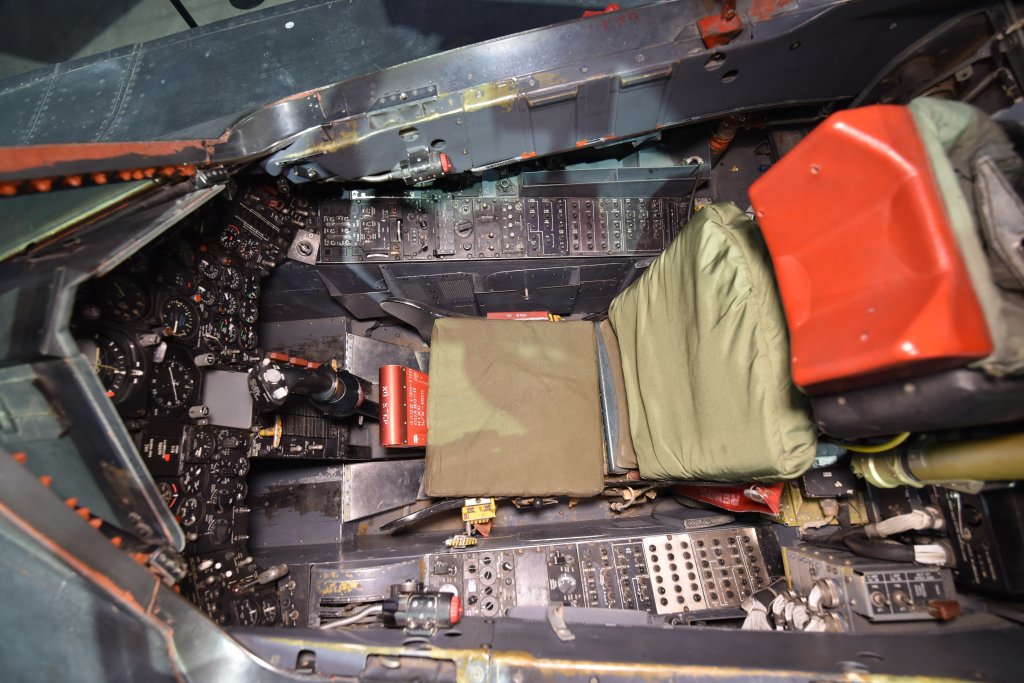
A: The core part of the cockpit were the attitude indicators, and it was very much like the F-4-type airplanes, the RF-4 that I came out of. You just had a lot more round dials and gauges because of the supersonic flight that was going to be involved with this airplane. In the RF-4 during test flights, I needed to bring the airplane, I think to 2.1 Mach. And you only did it momentarily because you were burning a tremendous amount of fuel, so you didn’t have all the different things that you were monitoring.
In the SR, you developed a way to cross-check so that you were constantly making sure that the engines and everything were performing correctly. That’s part of what you’d learned already in the simulator, and now you had it in the airplane. And now, you could see how some of the conditions — like actual operating engines and changing weather environment — affected you when you’re flying the airplane.
Q: Weather and atmospheric conditions play a big role in how the SR-71 flew, right?
A: That’s correct. Early on, when they were flying — we never overflew Russia or Red China — but we’d fly right on their border, and some of the early flights off the north coast of Russia. It may sound kind of strange to you, but there was some really warm air. You study in school that at 80,000 feet, the outside air should be about minus 50 degrees, 55 degrees, somewhere in there. The pressure is about 0.4 pounds per square inch. I’ve seen air as warm as minus 40. Now you’ll say, ‘But gee, that doesn’t seem like a big deal.’ It’s a huge difference on the engine because now the air is a lot thinner. But I’ve also seen the other scale off the north coast of Russia. I’ve seen minus 90 degrees. Now, when you starting pumping minus 90 degree air into the engine, it really wants to race because now the air is that much denser, and the engines are producing more thrust.
Q: How difficult was Blackbird to fly? How did it compare to other aircraft? What was the biggest challenge to learning to fly at speed and altitude?
A: One of the biggest challenges, if you came out of a fighter airplane, is that we could pull seven Gs. That’s what they were built for. The SR-71, because it expands in flight with heating, the G limit is 1.7 Gs. You’ve had that in a sharp turn in the car, clearly on a roller coaster, and that’s why we were limited to 45 degrees of bank because that’s 1.7 Gs being pulled. Now, if the airplane is cold, has not expanded, we can pull 3 Gs, but you can see it’s a much, much more limiting. Like if you’re cruising at Mach 3 and you want to make a turn, the radius is going to be around 75 degrees, around 75 miles. So you’re looking at 150 miles from where you are until you get over to do a complete 180 degree turn heading the other direction. So there’s a lot more of a planning factor on how much because you can’t yank and bang this airplane because when it’s expanded, you could bend it and titanium is really hard to repair.
Q: Did that ever happen to you?
A: It didn’t. But at an air show in England, one of the guys pulled more Gs than he should have, and the airplane flew once or twice more. And everybody said there was something wrong with this airplane. It was grounded. I don’t know how they got it back to the States, but it never flew again.
Q: How did the chine surfaces, those sloped surfaces at the edge of the fuselage, affect flight?
A: They gave you more lift. Other than that, it obviously limited your visibility somewhat because they’re flared out.
National Archives
Q: Give me a sense of your visibility in the SR-71 cockpit. What can you see and what can’t you see?
A: Well, one thing, you’re in a spacesuit. So, think about from the middle of your body, you can’t see aft of where your arms are. That’s all by feel. So everything you do in the cockpit, your sense of feel is considerably reduced. As you look forward, the two side windows are great for looking around. Many times we have multiple tankers because of how far the tankers had to go to be in our refueling position.
For our refueling track off the north coast of Norway, those tankers had to fly five hours to get there. So we would typically have three tankers to make sure that they could give us the fuel we needed. The windows you used most were those two pie [-shaped] windows in the front, because that’s what you’re going to be looking through when you take off. That’s what you’re looking through when you’re refueling, and that’s what you’re looking through when you come in to land. Now the side window you might browse a little bit when you come in to land to see, particularly in the trainer [SR-71B], how am I aligned with things that I know are along the runway to make sure I’m in the center per se. Because once you bring that nose up in the trainer, you can’t see forward. The runway disappears.
Q: Did you have any close calls during training?
A: Not during training. Later flying operationally, I did. I took off from a runway where the wind was exceeding 50 knots, and the airfield was closed. This was in Okinawa, but Washington, D.C., wanted the flight off because it was critical that the SR show up in an area at a certain time.
I came back from another flight to Kadena where water had gotten into some of the systems. One of the afterburners didn’t light. I couldn’t get it to light, so I came back in. It’s a dual runway. The weather was about 200 feet [ceiling], half a mile visibility, and the radar controller put me on the wrong runway. And as I was breaking out [of the clouds], there was a DC-10 full of passengers, so I had to go around, and I’m starting to lose instruments. Doing a circling approach in an SR-71 is really hard, but fortunately I had been stationed there before, so I kind of knew the ground track I needed to maintain, so I could come around and successfully find the runway and put it down, which I did.
About the same time period, around 1979, 1980, coming back from a night mission to RAF Mildenhall, there had been some thunderstorms through England, and the weather in England was terrible. There was not an air base that was above minimums, so I was told that there was a tanker airborne waiting to give us fuel so we could fly to Madrid to Torrejón Air Base, the U.S. Air Force base there. But we were going to have a special mission in two days. The White House or the national security advisor had directed it, and I knew if I flew to Torrejón, by the time you got all the support equipment down there, there was no way we could make that mission.
As SR pilots, we had different rules than the rest of the pilots in the Air Force. If you’re a regular pilot in the Air Force and the airfield goes below minimums, you mandatorily have to go to the alternate location. You can’t shoot an approach. That was not the case in the SR-71. We had the option to shoot the approach to see if we could land, and if we couldn’t land, then you went to the alternate.
USAF/Brian Shul
One of the things in the back seat, the RSO had a periscope. He could look straight down, and he could also adjust the periscope so it could look, I think, 35 degrees forward. So that particular night, I mean, it is pea soup fog. I mean, it is terrible. I’m coming in. Oh, and the ILS had been hit by lightning, so there was no ILS. I’m using a British radar controller, who is good.
As we’re coming in, my back-seater John said, ‘Okay, I’m looking down, and I can see you’re on center line because I can see through the periscope the lights passing underneath the airplane.’ So we landed the airplane successfully. I brought it to a stop. The controller had forgotten to tell Mildenhall that I was coming in to land. They thought the airfield was closed, so when I called them and said, ‘Mildenhall Tower, this is so-and-so. Send out progressive [taxi instructions]. I can’t find the taxiway to be led back to the hangar where I have to put this airplane.’ And the controller came back and said, ‘You can’t be here. We’re closed.’ I said, ‘We’re here, sitting on the runway. Just get me a follow-me [truck] to get me back to where I need to park.’
Q: Tell me about the RSO relationship during flights. What was the RSO’s role and how did you communicate?
A: If you flew an operational mission, it had to be with your formed RSO. Couldn’t be with anybody else. The RSO ran the navigation system, the star tracker, did any updates required there. The RSO turned on and ran the cameras. Radar nose if it was going. The RSO ran the checklists. The defensive systems were all in the back. All the indicators about whether we were being tracked or being shot at — that was all in the back. He did the radio calls on training missions over the United States. I would do them in the traffic pattern, taking off and landing, but the rest of the radio calls were done from the back seat as we went from center to center.
He was the orchestrator back there. The pilot flew the airplane, took care of the refueling, made sure that it’s on track, and we’re doing what we’re doing. But the guy in the back is the one that’s the synthesizer.
The cockpit is really small. It would have been really tough to have carried a map and folding it and trying to move it. So the [the map was on 35 millimeter film], and it moved at your ground speed, and would show you, ‘okay, you got a turn coming up. This is the fuel you should have. RSO, you need to turn on this camera. You need to check that your defensive systems are on and working before you enter denied airspace.’ So the RSO was a very critical function. We trained and flew together for four years.
Adelbert “Buz” Carpenter (left) and John Murphy (right). (Courtesy of Adelbert “Buz” Carpenter)
Q: Walk me through your first operational mission. When was it? How was your preparation process different from others, and what did you do? What was the mission?
A: Um, I won’t say it was a vanilla mission, but it was the one where you’re going to go to Kadena because we can keep track of you the best there, and the missions are more controlled. So your first operational mission, you would have flown a local mission where you’re mostly flying around the island and doing stuff and just landing at Kadena. That would have been March of ’77, and your first mission. The thing that makes it different is you go through the same preparation, but the day before, you’re going to go in and do more of a mission planning. What does the mission look like? Where are the turns? Where are the things I need to be concerned about? And then the day of the mission, they’re going to come in and say, ‘Okay, this is what the weather is. This is what any intelligence activity you need to know of. These are special instructions from the State Department that might provide additional limiting factors on you that you have to take into consideration.’
That’s all around the time you’re having your breakfast, getting ready to go. You go down, you suit up like you normally would. There’s no difference in starting the airplane up. It’s a little more critical this time to make sure your tankers are where they’re supposed to be, and typically your first mission is probably going to be along the Korean DMZ. It’s going to be a two-and-a-half-hour sortie. You’re going to take off. You’re going to refuel at 25,000 feet. Head up the west coast of Korea. You’re going to see the Yellow Sea. Make a big sweeping right turn, and you’ll come north of Seoul. You go very close to the DMZ all the way across. Do a big turn over the Sea of Japan. Come back the same direction along the DMZ. Then turn south and come back and land, and this will probably be your first operational mission.
Q: What were you collecting? What kind of sensors did you have?
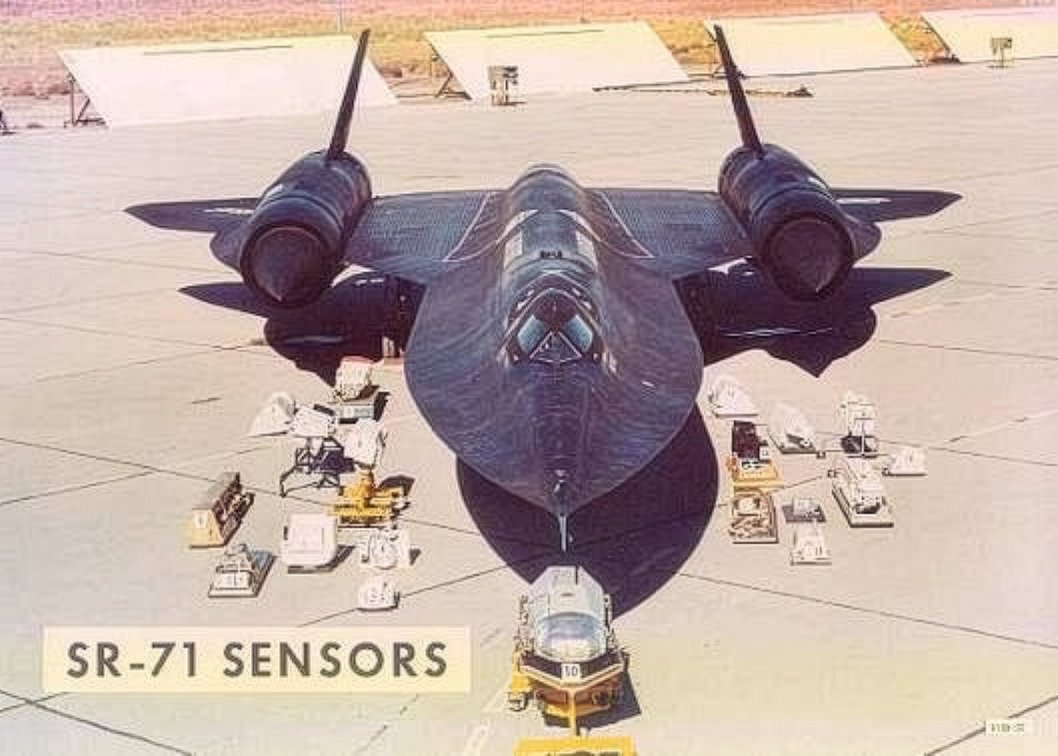
A: Oh, we would have the side cameras that could look out about 30 miles in. We might have the nose camera. The electronic sensors could pick up any radio, radar, other type of electronic signals out to about 350 miles anywhere around us. So you’d be sensing what the North Koreans have that was active at that time to better understand what their defense posture is, where missile sites were located, and things along those lines.
The side camera was a camera controlled by the computer. All you did was turn it on because of the astro tracker. We navigated directly off the stars, we didn’t navigate off the ground. We guaranteed the president 300 feet anywhere in the world traveling at 2,200 miles an hour. This is long before GPS, and so the president and the people around him had great — six presidents used us — comfort knowing that we would go where they wanted us to go, and in all likelihood we’d come back.
We weren’t going to get shot down, which never happened, so they wouldn’t have to deal with some kind of a hostage situation or some kind of a diplomatic problem. That was just part of it.
The SR-71 plethora of optional sensors. (Public Domain)
Later on, when I flew a flight for President Carter when the Saudis and the Yemenis were at war over their border, the nose camera was in there. The nose camera took a picture 72 miles wide, 36 miles either side of center, and in the center your resolution was two to four inches. You can see people, you can see tanks, cars, all kinds of things. You cannot recognize faces.
There’s another nose that came in while I was flying, probably in 1977, a ground-mapping radar, because there’s parts of the world where the sun rarely shines. So if you’re waiting for that picture, you may never get it. So you can’t see people with that. Cars are hard to identify. It’s more of an electronic blob, but a ship, an airplane, things like that, that would be on the ground or at sea, there’s enough radar return that most of the time they may not be able to give it the exact airplane or ship, but they know what kind it was, so that day or night, in any weather, when an enemy is trying to move things around that you can’t see, you could actually pick up what their activities are.
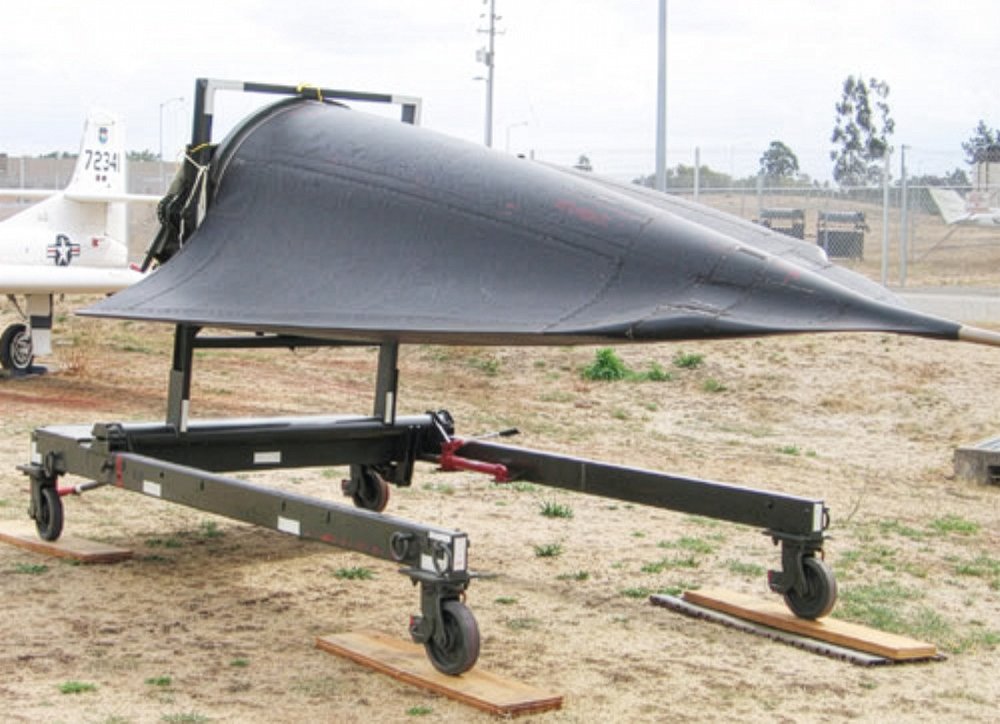
One of the SR-71’s interchangeable noses. Pacific Coast Air Museum
Q: You talked about working with other assets for collection missions and a lot of coordination. What did those include?
A: Other assets in our coordinated collection missions included other aircraft, ships at sea, land sites collecting and satellites overhead. Timing was important on these operations. I had as many as 28 sensors I was stimulating the Russians for.
Q: Give me an overall sense of your operational missions. What were the goals and what permissions did you need?
A: There’s something that’s still done today called the ‘Beige Book,’ and they go through, and it’s all the services, including submarines, and all that. Okay, what are we interested in? What are we going to plan? How important is the target? How much risk do these targets pose to the collectors, but also politically? If we do this, are there political consequences? And this goes to the whole government, including the State Department, CIA. So they publish this.
Now, when something occurs like the battle with Yemen that just pops up, then things are reprioritized.
Overflights are typically approved by the president, but sometimes by the National Security Adviser. Not below that level per se. The missions where you’re flying peripherally around Russia, around China, other places in the world, those would be approved as part of the monthly schedule. Places we overflew. I mean, we overflew Cuba every 45 days. We did work in Central America. After I left, I think there were some that went down to Colombia. I am one of the only two pilots that ever took the airplane to Diego Garcia. Originally, we were looking at that as a possible base to use to go image Iran and come from a different direction than we had in the past because they were much like today, harassing ships with their missiles and other stuff. We flew over North Korea a couple times.
Q: Did you ever fly over North Korea?
A: I didn’t, but the airplane did.
Q: How did you navigate?
A: We used the star catalog. We had 58 stars that were the northern stars that we used for tracking. To give you an idea. Took them an hour and 45 minutes to load our mission in the tracker, and we called it after the fact R2-D2 because it always knew where we were. It was told exactly where it was on the face of the earth to start. After we started the engines and we’re ready to taxi, when you came out of the hangar, if it was a clear day or clear night, within two minutes, the RSO in the back seat would get a starlight, and what that told you is we’re now automatically tracking the stars day or night, and it was a really accurate system.
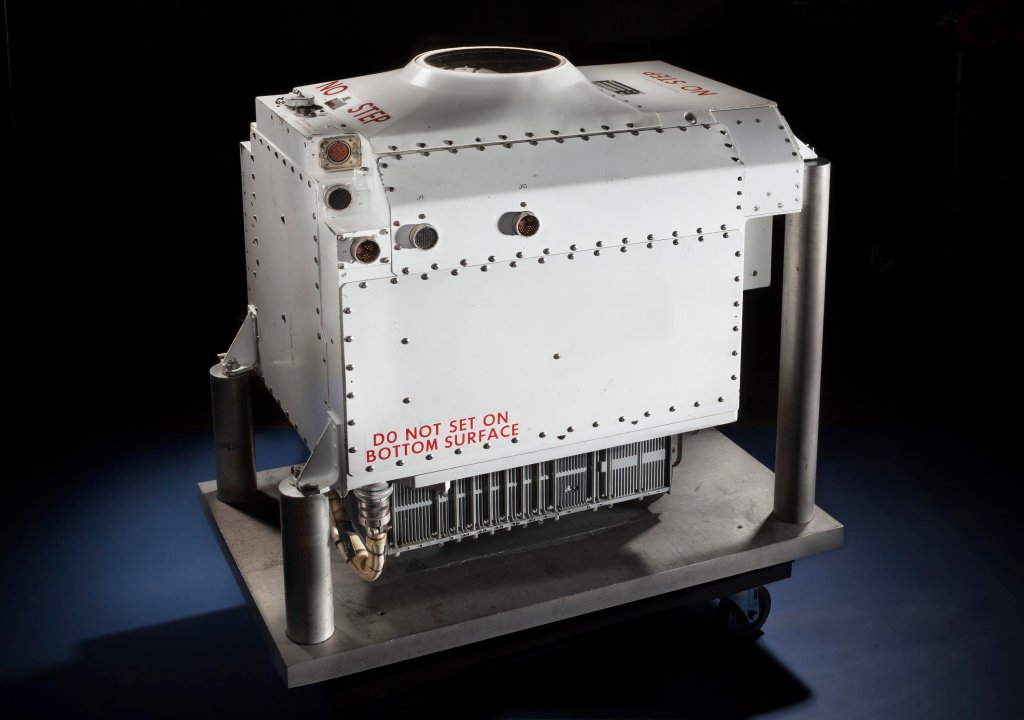
SR-71 Astroinertial Navigation System (ANS). (National Air and Space Museum)
It was a wonderful system to fly with, but it also gave the planners and our leaders [the confidence] that if we can fly within 300 feet, like let’s say the north coast of Russia, well, most airplanes are going to have to put you a couple miles off just because we’re not sure exactly where you are. In our case, we could fly maybe 500 feet off their international border because we knew we would be exactly where we were supposed to be, and that was one of the great advantages.
Another great advantage was we had great range. There was a special mission that I flew. The Navy had lost track of a couple boomers [Russian nuclear ballistic missile submarines]. They’d come out of Murmansk, up there in northern Russia, and had slipped through what we call the Greenland-Iceland-U.K. gap, and so we were tasked for a quick reaction. And in this particular case, there was a a second SR that took off after me. To show you the importance of the mission, if I was not mission-capable at Goose Bay, the second SR, one hour behind me, was going to pick up the mission.
I was fully ready, so we proceeded across the Atlantic north of Norway. We refueled again. We did the double pass past Murmansk. I saw [the Russian submarines] once or twice making their way to the Arctic Ocean on the surface as the inland waters were too shallow to dive.
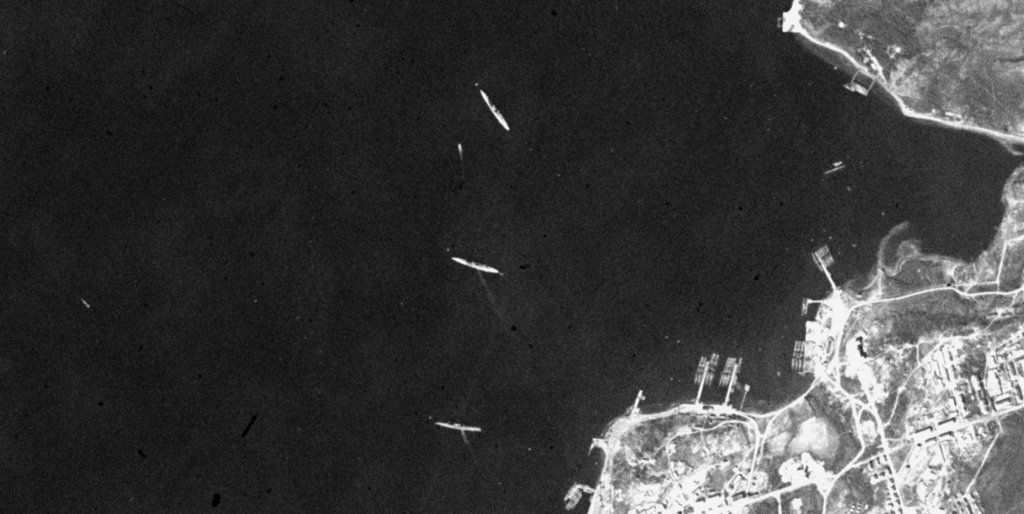
Russian submariners near Severmorosk. (Satellite image courtesty of the U.S. Geological Survey)
We refueled again off the north coast, crossed the Atlantic, refueled over Goose Bay, Labrador, came across Canada, and at 8:20 in the morning, Saturday morning, I landed back at Beale Air Force Base.
Q: What other countries have you flown over?
A: I’ve flown over Cuba. Obviously, flown in the Middle East, over Egypt, down to Yemen. Over West Germany. In the Pacific, we did more peripheral flights, and peripheral were sometimes actually more sensitive because they put you close to the border, and there were a lot of potential political issues.
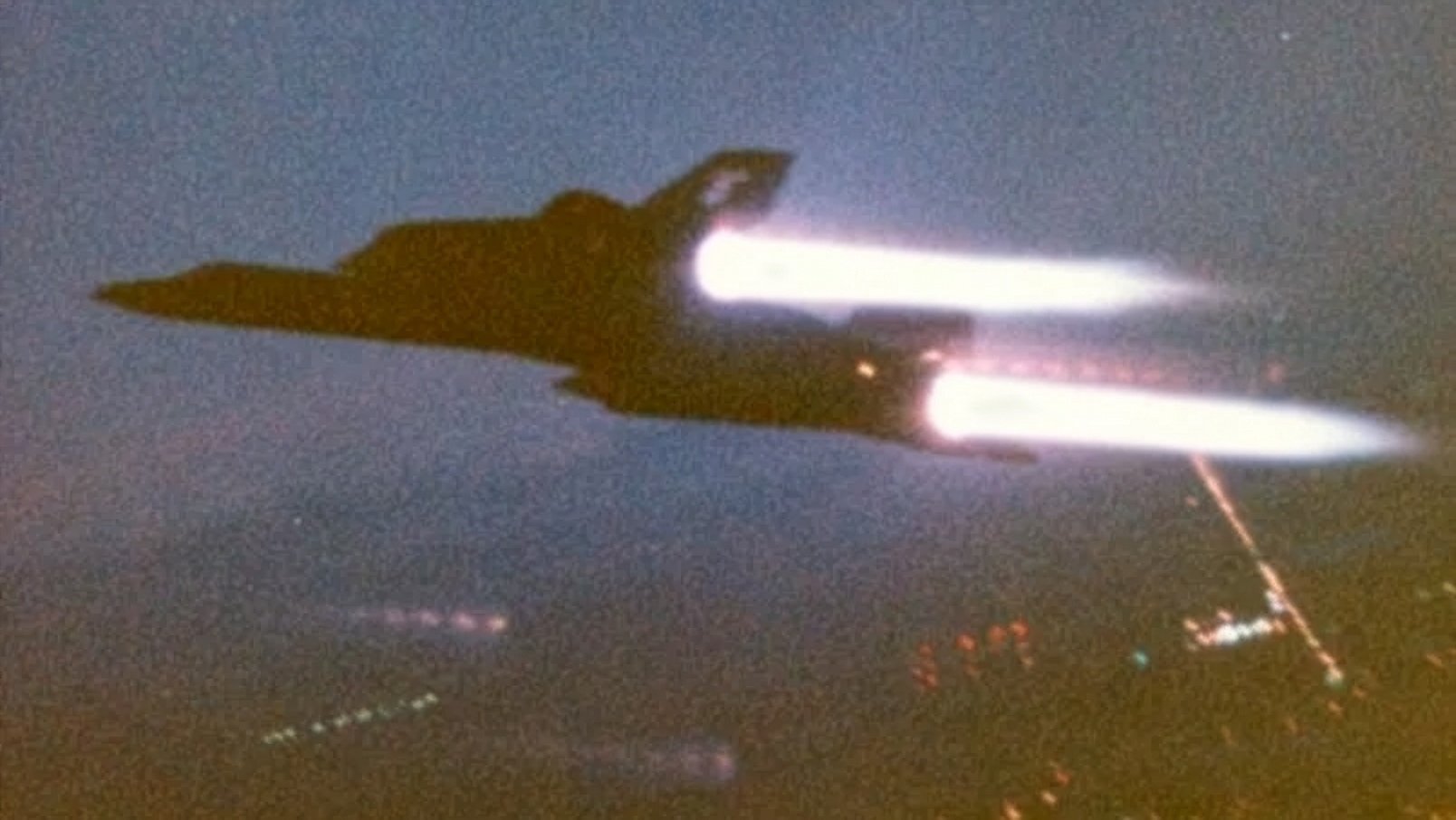
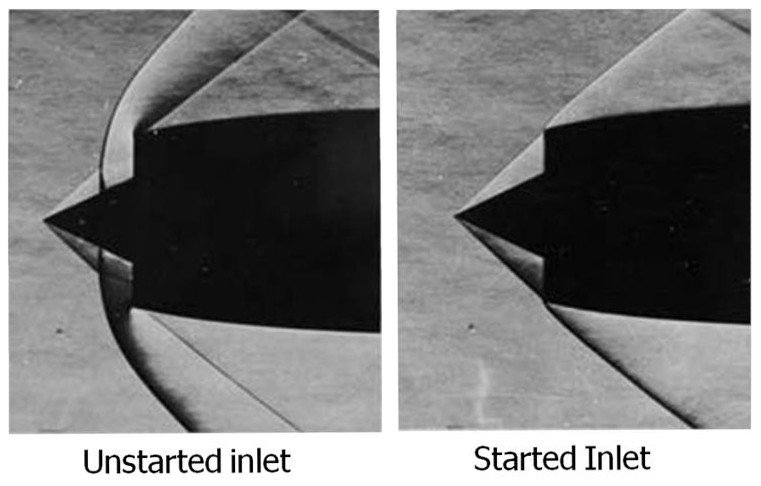
For instance, around 1978 or 1979, I had a major emergency on the DMZ, and to follow what I needed to do to clear the problem — which had to do with the inlets — I needed to roll the airplane out, but I was already in a turn. If I’d rolled the airplane out, I would have overflown North Korea, which would have possibly been a political violation. So I had to keep the airplane in a turn. The airplane was damaged. I had to land at one of our U.S. Air Force bases in South Korea and have maintenance come up and work on the airplane, just to avoid a possible incident.
Public Domain
I’ll show you the difference between presidents. When President Ford’s term was coming to an end, he knew that President Carter felt it was immoral to overfly other countries and unethical. So we were flying over Cuba every 45 days to keep track of the Russians and the Cubans per se. So, on his last day in office, President Ford had tasked us: you were to take off, you’re to overfly Cuba, you have to land back in California. This was on the 20th of January, 1977. Not later than 10 minutes before Carter takes the oath of office, I was in the wing commander’s office when we called the White House and said, ‘Mission complete, aircraft on the ground.’
For a year, we didn’t overfly anybody because Carter thought it was immoral, and then he realized the Russians were doing stuff in Cuba we weren’t seeing. There were, you know, parts of the world that the SR had unique capabilities that he was foregoing because of his political view. So that changed.
Q: Why?
A: It changed because we were having intelligence failures, because we were being surprised with things that were taking place that our collection systems, had they been used like they were designed, would have probably picked up.
Q: Was the SR-71 used as a psychological weapon against adversaries?
A: Sort of. We sometimes flew over heads of state greeting each other and they would be covered with an excellent sonic shock wave to remind them they were doing things counter to U.S. and/or NATO policies. In the three days before Noriega decided to leave Panama, SR-71 aircraft overflew his home with the sonic boom to advise him it was time to go.
Q: Did you ever fly over China?
A: We did not overfly China. U-2s did, but the SR never overflew China. Now this will surprise you. Sometimes I’ve flown missions that the Russians knew ahead of time that I was going to be right on their border at a certain time, and the reason for that was that they really wanted to shoot down and get their hands on an SR. So when we would be into an area like other reconnaissance airplanes, they would hardly pay attention to it. We would go in the area, and a lot of their radars and other stuff would come up very closely, monitoring what we were doing.
So I landed in Okinawa, Japan, and the head of NSA for the Far East had been there and asked me, ‘Was there any unusual activity today?’ And I said, ‘No, about the same number of fighters tried to come up to intercept me, and I never had a missile fired at me.’ And he said, ‘Well, that’s unexpected. We told the Russians yesterday where you were going to be today, hoping that we’d get some greater fidelity on the collection.’ So they had great confidence we were going to come back.
Q: How close did the Russian fighters get to you?
A: Not that close. We were really a tough target. They would try to make a head-on [interception] with a conversion [turn]. Well, by the time they made a conversion, they had the same problem. They had to be above Mach 2 to come after us. By the time they made the turn, we were 100 miles down the road.
Q: The SR-71 had a reduced radar signature. Did this help in its survivability, or was it the speed and the electronic warfare capabilities that largely kept SR-71 crews safe?
A: It was a combination of capabilities that gave it such a remarkable survival capability. To start with, the stealthiness made it hard to find until it was very close to you, significantly compressing an enemy’s reaction timelines. Extremely high speed, Mach 3.2, and incredible altitude, up to 85,000 feet, put its operations in a difficult area to attack. If they did get contact and decided to engage you — all the missiles of our era had to be guided to the high-speed maneuvering target as they did not have onboard guidance capability. When the electronic jamming system became active, the adversary lost their ability to communicate with their missile, so basically it followed its last command and went stupid.
A: The number of missiles wasn’t well-tracked. I flew a mission on the Korean DMZ, and they were playing with me. When I say playing, they were using their long-range [radar]. Then the acquisition radar came up that was trying to ready for the missile, but the missile was never armed.
Six weeks later, my buddy had three missiles fired at him. So there were probably no more than 100. Part of the thing was they gave up. I mean, particularly over Vietnam, that’s where most of the missiles were fired, and they were just not working. And how many missiles do you want to fire to try to get an airplane?
Q: What were the orders if things went terribly wrong? Were there places you absolutely could not land at and had to destroy the aircraft instead of letting it fall into enemy hands? What about if the crew was captured after ejecting?
A: The aircraft was not to go into enemy hands. And in some cases not even allies’ hands. If the aircraft was impossible to control and out of control — ejection might be your only option. It was the safest USAF aircraft I ever flew. There were a total of 12 ejections in the test program and in operations. None were ever caused by enemy actions. There was never a USAF SR-71 crew member ever killed flying this aircraft — an incredible record! We all went to a special survival school to understand what we might expect if captured by an enemy which never happened or came even close to happening.
Q: What was the closest interception threat?
A: Probably the closest the Russians ever got to a successful intercept had nothing to do with their initial work. There’s a crew; they’re flying the Baltic, so they’re Mach 2.8. They head up past Lithuania, Latvia, and as they beam Estonia, the right engine explodes. The turbines come apart. So now you’re a single-engine airplane. You’re not going to be at Mach. You’re going to be probably around 12,000 feet subsonic. So the crew announces Mayday, starts a turn. They probably overflew some Soviet airspace. They start this big turn. The Swedes pick up the fact that they hear a Mayday call, and they have a pair of [Saab] Viggens that are airborne that are actually armed.
So as they make the turn, they descend. Get the airplane under control. The Russians send five flights of MiGs to come out. They’ll also send out a rescue helicopter with the idea maybe they can capture the SR crew. Some of those MiGs that were coming out we were sure were directed to shoot down the SR if it wouldn’t follow their signals.
But when they got there, all of a sudden they find there’s a Swedish Viggen on either wing. So the Russians decided this is not a good idea. Halfway down, the two Viggens were low on fuel. The Swedes sent two more Viggens up that replaced them, sat on the wings, continued their mission, and when they got to a certain point, United States Air Force F-15s came out of Germany, intercepted, joined with the SR-71, and led it to a safe landing on an air base in northern Germany.
The mission was classified for years and years. The Swedes wouldn’t even acknowledge it took place because they were a neutral country per se. One of my classmates from the academy, who was a lieutenant general, found out about it and said, ‘We’ve got to do something.’ So, in a very rare occasion, they put through the paperwork, and those four Swedish pilots at a ceremony in Stockholm were given United States Air Force Air Medals for what they did that day to save the airplane. That’s the closest that we ever came to actually losing an SR-71 that would have been related to combat. (You can read more about that award ceremony in our story about the event here.)
From left to right, Col. Lars-Erik Blad, Maj. Roger Moller, Maj. Krister Sjober, and retired U.S. Air Force Lt. Col. Tom Veltri stand beside the official photo which depicts the event that earned the Swedish pilots their U.S. Air Medals in Stockholm, Sweden, Nov. 28, 2018. The Swedish Airmen risked their lives to save an SR-71 and the aircrew, Tom Veltri and Duane Noll, on June 29, 1987. (U.S. Air Force Photo by Senior Airman Kelly O’Connor) Senior Airman Kelly OConnor
Q: What’s the highest you’ve flown? What’s the fastest?
A: My top speed is 3.35 Mach before I slowed it back down to 3.2 Mach because we got into cold air and the airplane really wanted to accelerate. My highest altitude is a little over 85,000 feet. Those were in the late ’70s, early ’80s. I don’t remember the specifics.
The high-speed one was off the north coast of Russia when I got into really cold air. You can’t just come out afterburner to try to slow the airplane down because you risk then having a compressor stall. So what you had to do was force the airplane into a climb, and as it was climbing, break its ability to maintain that speed. So once you got it back to the speed you wanted, you’d kind of lower the nose to where you wanted to cruise and go from there.
The faster you went in this airplane, the more dangerous it was, and the more sensitive it became, and that was part of the reason why 3.2 Mach — that’s where the inlets and the engines and the nozzles and everything was optimized for, because they were really afraid you had what we call an “unstart.” That’s when you lose a shock out of one of the inlets, and now the other engine is producing 100%. This engine is still running, but it’s only producing 30%. The airplane goes into a violent yaw and can pitch up on you. They were afraid there wasn’t enough flight control to be able to control the airplane.
Q: Was it harder to fly at that speed?
A: It’s just more sensitive. As you made inputs, the airplane was more reactive, and you had to be on your toes because if you had an unstart at that point, you needed to make sure that you prevented the airplane from doing a yaw slice and particularly pitching up.
One time off the coast of China around 1978 or 1979, I had an unstart and the nose started up. Of course John [the RSO] knew that we had an unstart, because you can’t miss it. You get banged up in the cockpit. I had to stick full forward, and I told John, I said, ‘we’ve got about three or four potatoes.’ That means in three or four seconds, if that nose doesn’t stop climbing, we’re going to have to leave this airplane because it’s going to disintegrate.
Q: You flew over Area 51 and later oversaw its funding when you were at the Pentagon. What is it like?
A: When I did the test flights in Area 51, I had to go through and do some briefings and sign off on stuff. I’m an Area 51 guy. I mean, I’ve been on the ground there. I was responsible for their funding for a couple years, and I used to take guests out there on certain occasions who needed to see something or understand something. It’s great. It looks like the movie The Martian. It’s God forbidden, but it’s a great place to do classified testing because it’s the only place in the country we can do that pretty much successfully.
Before I left the Pentagon, I completed the paperwork to withdraw 75,000 more acres of land that sat on a hillside. So now your closest point to have a direct view of the complexes is from 26 miles away at [Tikaboo Peak].
A satellite view of Area 51, Southern Nevada, United States. (Photo by Gallo Images/Orbital Horizon/Copernicus Sentinel Data 2024) Gallo Images
Q: Let’s talk about the present. Obviously, the Blackbirds are big news with rampant speculation about the future of Tail 844. What do you know about this, and what do you think that NASA is planning for it?
A: I think we know a number of things. The airplane’s been outside for what 30 years, so it may need some repair. NASA is trying to inspire the current and future generations about X planes.
One right now that’s got everybody’s attention is the X-59 that will start flying over the United States here pretty soon, and it’s to measure whether we have successfully come up with a shape that reduces the intensity of the Mach shock wave. Because where this will lead to is there’s a couple companies… that want to create a supersonic transport. One of the limitations on the Concorde, no European country would ever allow it to overfly. Nor did we, because that tremendous wing space created a really significant shock wave on the ground.
NASA’s X-59. Lockheed Martin
In the SR-71, we broke windows. I can remember a particular Cuban overflight. I came around, I did a descent over Mississippi. My tanker was over Mississippi. I refueled. Gave me enough fuel to get back to California. When I landed, the director of operations for the wing had left a message that when I got out of my spacesuit, give him a call. So I called him. I said, ‘Col. Lawson, what can I do?’ And he goes, ‘Oh, Buz, how’d the mission go?’ And I said, ‘You don’t ask me how the mission goes, unless there’s something you’re particularly [interested in]. What is it?’ He says, ‘Well, Hattiesburg, Mississippi. There’s 30 houses that have fewer windows, and we’re pretty sure it was you.’
We couldn’t predict where the shock would go. Now [what] we know from some of the tests is, that when you’re in a turn, a turning descent like I was, sometimes the shock wave actually concentrates and becomes more violent than it would if you’d passed over straight and level. So what the X-59 is trying to do is see if they can successfully get a shape and controls, so they can build this supersonic transport that, in fact, can fly over normal airspace.
A: It doesn’t make sense. It is high speed, but we’ve done all that. All that data is there. I mean, we’ve got hundreds of hours at Mach 3 and above that they don’t need to, and we’ve got air chambers now that can run the air at those Mach speeds to take a look at. I mean, they’re looking at the hypersonic. They’d like to have an engine like the J-58 that you could take off at a normal speed, and somewhere around Mach 3, you could open valves or do something that you could then accelerate to Mach 5 or Mach 6, and then when you were through with what you wanted to do, come back, and then go down through the Mach 3…2…1, and recover safely back at wherever you want.
Author’s note: Being able to test this exact transition area between Mach 3 and Mach 4, approaching hypersonic, potentially for a combined cycle engine like Buz describes, is what some think NASA will use the SR-71 for.
SR-71 Blackbird. (Courtesy photo via USAF)
I mean, basically that’s what the SR did. Except we went to Mach 3. The big transition in the SR-71 took place in Mach 2. Because when you hit Mach 2 or thereabouts, that’s when those bypass tubes, the six of them around the engine, started bypassing air around the engine, and the air, the engine inlet, everything became a pseudo-ramjet. Because the faster you went, the more thrust you were creating by the ram thrust, not by the thrust being created by the engine itself. The engine had to run; it was critical to the whole process, but the vast majority of the larger part of the thrust was being created by the bypass.
Q: Do you think other aircraft came after Blackbird, even experimentally, that broke its speed records? If so, why haven’t we seen them all these years later?
A: No operational jet-powered manned aircraft has come along to break the significant records we set 50 years ago.
Q: So what is NASA going to use Tail 844 for?
A: I think they’re going to try to see how useful is it. Something that’s sat outside with blowing sand and everything else — it’s really hard to know.
Q: How how difficult will it be for modern test pilots to fly Tail 844 or whatever aircraft is created from this project?
A: It would be challenging because there’s no simulator that works, and the simulator helps you go through all the things that you might face to successfully save the airplane. I mean, we consider the SR a national asset, so the last thing we were going to do was eject from the airplane. If you don’t have that simulator, it’s going to be much more difficult.
Q: And the simulators don’t exist anymore?
A: The simulator sits down in a museum in Texas. It’s not operable.
Q: Was boosting the speed of the SR-71 ever discussed during your career, and if so, what were the options considered to make that happen?
A: It was. The idea was that they were going — I can’t remember where it was a water injection or something — that they could take the SR up to 3.5 and beyond. I may have this wrong, but the SR shape and the materials that make up the body of the airplane, I think are good up to [Mach] 3.8, maybe even 4, and this was going to be a water injection that for 10 minutes you could take the airplane up to a faster speed. I think it was [Mach] 3.5, but it may have been [Mach] 3.6. But when they looked at the weight and all the different things, it was the Lockheed proposal. The decision was made. You didn’t gain that much by raising the speed because we were fully authorized to go to [Mach] 3.3.
I’ll tell you a number of my contemporaries never went there. When I was an instructor pilot, I made sure my student went there because if you needed to go there, I wanted you to feel the sensitivity of the airplane when you’re at those speeds.
Public Domain image
Q: So was the idea to flow liquid to cool the air going into the inlets?
A: I think that’s where it was. It was in that area, but it’s been so long. I don’t remember. But that never went anywhere, and it only gave you 10 minutes. Because the critical temperature on the airplane was not the airplane. In the cockpit, the CIT — compressor inlet temperature — we were not to exceed 427 centigrade, which is about 800 degrees [Fahrenheit]. Pratt & Whitney said beyond that point, our modeling says that you’re at a higher risk of the engine failing.
Q: Conners told us that during his time in the SR-71 program, he investigated whether it was possible to get the Blackbird close to Mach 4. Do you think a Blackbird could approach Mach 4 with the proper modifications?
A: The question is, what will Mach 4 give you? And I think the focus is more on unmanned vehicles that are Mach 5, Mach 6.
Q: Why?
A: You look at the weight that’s in an airplane to keep a man alive — that’s quite a penalty you’re paying. And when you get up to Mach 5 and Mach 6, the temperatures you’re dealing with are — it’s on a curve that is accelerating up, and the materials you have to use and try to put a person in there — it doesn’t make sense.
Q: How would the shock waves affect the ability to exceed Mach 3.3?
A: Obviously, they’re going to become steeper. At Mach 3.2, the shock sits just on the outer lip of the inlet. That is dealing with part of the shape of the airplane. Again, this is what was designed as your optimum speed.
Schlieren flow visualization of shock waves for started and unstarted inlet at Mach 2. NASA Glenn Research Center
Q: If you were a betting man, what would you say the odds are of the Blackbird flying again?
A: I could see it if they wanted to fly it for inspiration, particularly subsonic. The airplanes I’ve flown a couple times subsonic because we had some maintenance problems. 0.9 Mach. It’s a sweet airplane.
Q: Do you see it flying again?
A: I think part of the problem is engines that haven’t been used in those numbers of years. How difficult is it going to be for you to put them back in service? Because there’s no spare engines. When the program was taken apart finally in 2007, a number of those engines were ground up. Foolishly, they were ground up. So there’s not a lot of spares out there.
Q: So what’s NASA’s goal for Tail 844?
A: I think the goal is inspirational. I give tours regularly at the Air and Space Museum, and you’ve got multi generations that still love the SR. I just came back from organizing an SR-71 weekend down at the Museum of Aviation at Robins Air Force Base, and people come from all over to talk to us and see the airplane. When you look at it, young people can’t believe this airplane — like the one in the Smithsonian — came off the production line in 1966. It came off the production line before their parents were born. Yet you look at it, and partly because of the Star Wars influence, you think, ‘Oh, is it a space plane? Is it an airplane?’ I mean, it is something that creates visions and dreams, and I think that’s what NASA is trying to get back to: use it as a a dream generator to fly again. I don’t know. A number of people have already said that they can’t believe it’s going to fly. So it could fly, but I would say that the odds are against it.
Adelbert “Buz” Carpenter being inducted into the Virginia Aviation Hall of Fame. (Courtesy Adelbert “Buz” Carpenter)
Q: You’re at docent at the Udvar Hazy Center. What’s the scuttlebutt there about the plan for Tail 844?
Após 22 anos em órbita, o telescópio espacial Neil Gehrels Swift Observatory, da Nasa, encerrou sua missão e deverá reentrar na atmosfera terrestre nas próximas semanas.
O observatório realizou sua última observação científica em 20 de outubro, quando já estava a aproximadamente 275 quilômetros de altitude e o aumento do arrasto atmosférico dificultava a manutenção de sua orientação.
Até o momento, a Nasa não informou data, horário ou local exatos para a reentrada e não existe previsão indicando que destroços cairão no Brasil. Entretanto, como o Swift percorre uma órbita inclinada aproximadamente 20,6° em relação ao equador, parte do território brasileiro encontra-se dentro da faixa de latitudes sobrevoada pelo telescópio. Isso significa que uma reentrada sobre o Brasil é fisicamente possível, mas não que esteja prevista.
A incerteza ocorre porque pequenas mudanças na densidade da atmosfera, na atividade solar e no comportamento da espaçonave podem alterar o instante e o local da reentrada.
Conforme o Swift perder mais altitude, as previsões deverão se tornar progressivamente mais precisas. Durante a entrada na atmosfera, grande parte de sua estrutura deverá ser destruída pelo intenso aquecimento, embora componentes mais resistentes possam eventualmente alcançar a superfície.
Observatório Swift
Lançado em novembro de 2004 para uma missão inicialmente planejadapara dois anos, o Swift permaneceu em operação por quase 22 anos e observou mais de 2 mil explosões de raios gama, além de supernovas, buracos negros, asteroides e cometas.
Passagem desta fronteira simbólica deverá acontecer a 18 de novembro. Recordemos a longa viagem da sonda que mudou a astronomia para sempre. A Voyager 1 está prestes a tornar-se o primeiro objeto construído pela Humanidade a atingir a distância de um dia-luz da Terra, quase 50 anos depois do lançamento. A velha sonda continua a enviar informações sobre uma região do Espaço que conhecemos muito pouco. No dia 18 de novembro deste ano, deverá atingir um marco histórico: estará tão longe da Terra que os seus sinais de rádio demorarão mais de 24 horas a chegar até nós. Segundo os
On Tulum airport’s runway there is only one plane: a Viva Aerobus Airbus A320. For several hours that is the only aircraft that will remain at the air terminal inaugurated in 2023. The aerodrome is nearly empty after Aeroméxico, Volaris, and American Airlines announced the cancellation of most of their routes to this destination on the Mexican Caribbean. The loneliness in the terminal is unsettling and, in the distance, all that can be heard is the echo of children playing. The crisis caused by the collapse in tourism, in what was once the jewel of the Riviera Maya, has deepened over the past year and has begun to touch various sectors that had set their sights on the booming future of this municipality in the state of Quintana Roo.
The rover will be delivered to the lunar surface by Blue Origin’s Blue Moon Mark 1 lander.
On Tuesday, NASA provided an update on the development of crewed and robotic lunar rovers to support its planned Moon Base initiative, highlighting efforts to develop the surface mobility capabilities needed for future exploration and sustained human operations on the Moon.
NASA’s Volatiles Investigating Polar Exploration Rover is scheduled to embark on a mission to the lunar South Pole region in 2027 to explore permanently shadowed craters in search of water and other potentially valuable resources that could support sustainable lunar exploration.
The rover will be delivered to the lunar surface by Blue Origin’s Blue Moon Mark 1 lander and is expected to travel more than 30 kilometers, collecting data on local temperatures, lighting conditions and terrain.
NASA said the data could help scientists better understand the origin and distribution of water on the Moon and assess how lunar resources might be used to support future exploration.
Meanwhile, NASA has awarded task orders to Astrolab and Lunar Outpost to build the first phase of Moon Base rovers capable of carrying crew, called lunar terrain vehicles (LTVs), which are intended to reach the Moon ahead of crewed Artemis missions.
NASA is advancing work on robotic rovers and lunar terrain vehicles that will help explore the South Pole and support the early stages of a permanent human outpost. The VIPER rover, assembled at Johnson Space Center, is scheduled to fly in late 2027 on Blue Origin’s Blue Moon… pic.twitter.com/U4hS3Sl6hQ
Blue Origin has been tasked with delivering the rovers to the lunar South Pole region by 2028 through NASA’s Commercial Lunar Payload Services initiative.
The LTVs will allow astronauts to explore geologically diverse areas near the lunar South Pole, collect samples and transport equipment. They will also be remotely operated from Earth to map the lunar surface before astronauts arrive.
According to NASA, the LTVs are designed to travel up to 10 kilometers on a single battery charge, support up to three moonwalks per Artemis mission, and carry up to 80 kilograms of lunar samples and tools.
“Lunar rovers are central to our surface mobility strategy,” said Robert Pickle, director of NASA’s Surface Mobility Office within the Moon Base Program. Their performance will help lay the groundwork for the mobility systems needed to build, operate and expand infrastructure for long-duration lunar exploration, he explained.
During his time as the lead propulsion engineer for SR-71 Blackbirds at NASA’s Dryden Flight Research Center, Tim Conners looked into how to push the iconic recon plane to fly faster than it had ever flown before. The world record for any crewed jet-powered aircraft is officially Mach 3.3, or 2,193 mph. It was set by a Blackbird in 1976 “on a straight-line course over Edwards Air Force Base in California.” In a recent interview with TWZ, Conners said he investigated whether there were ways to get Blackbird to approach Mach 4, equivalent to roughly a whopping 2,660 mph at altitude. Fast forward to today, with the possibility that NASA could be returning the SR-71 in some configuration to its test fleet, as well as its potential missions, the question of just how fast could the airframe go has become far more relevant than just a hypothetical exercise.
Conners spoke to us about his knowledge of plans to restore SR-71 #844, which had mysteriously disappeared from NASA’s Armstrong Flight Research Center, as well as its potential uses, in a deep-dive interview here. Prior to the revelations about the missing Blackbird, speculation about NASA’s renewed interest in the type was sparked last month, when NASA Administrator Jared Isaacman showed the silhouette of an aircraft that immediately drew comparisons to SR-71 during a speech at the annual All-In Summit in Los Angeles, California. Isaacman pushed back on a direct link to the SR-71 but said his agency is working hard to get “back in the business of flying high and fast again.”
NASA Administrator Jared Isaacman talks at the All-In Summit about new high- and fast-flying X-planes with the eye-catching aircraft silhouette in the background. All-In Summit/YouTube screencap
Given that, we wanted to know what limited the SR-71’s speed in its original configuration and how fast Conners thought it could go with modifications.
“The study that I did at Dryden was purely conceptual,” Conners explained of his work on the topic there in the early 1990s. “I asked questions of the Lockheed folks and the Pratt folks regarding limitations on speed. So stagnation temperature. What can we get to at altitude?”
The Blackbird, he said, “flew a trajectory that was usually operationally limited to 450 knots equivalent airspeed. If you look at the flight envelope, that defines the right edge of the envelope.”
SR-71 Blackbird. (Courtesy photo via USAF)
“The engines, however, were optimized to fly at about 500 knots equivalent airspeed, 475 to 500, and for whatever reason, there was a mismatch between what the engines were designed to do and what the airframe was ultimately optimized for, which was flight at around 450 knots,” the engineer added. “And you end up with that limitation now, the equivalent airspeed curve hooks up and to the right as you go up in altitude, so it sweeps out Mach number, and as you sweep out Mach number, the stagnation temperature is going up on you.”
“So you do reach a point, even at 500 KEAS [knots equivalent airspeed], where you end up with a constant value up at altitude once you’re in the stratosphere,” Conners said. “The Blackbird was trimmed or limited at that speed on the right side of the envelope, and that equated to a certain stagnation temperature. That limitation was driven primarily by the material strength of the engine front frame, from what it was described to me, and that’s what drove the analysis we did at NASA.”
SR-71 tail number 844 during its service with NASA. (NASA)
To even consider pushing the aircraft past the world record speed, Conners said something had to be done to mitigate the tremendous effects of the extreme heat on the air entering the engines.
“We weren’t looking at active cooling of the frame by pumping coolant through it,” Conners recalled. “What we looked at was spray cooling of the incoming airflow to lower the bulk temperature, so it would only be used when you were accelerating beyond about Mach 3.4. You would only very briefly do Mach excursions to a higher Mach number, and then come back. That was the conops for that system.”
“This is a way to [get to a higher Mach range] briefly,” the engineer postulated. “You could probably get to a higher Mach number. The problem is that if you clog or freeze the system, if it fails while you’re at higher speed, you have to decelerate in a hurry to protect the assets.”
Among other impediments to breaking the speed record, the Blackbird’s existing power plant was not up to the job, according to Conners.
“So that weak link was the J58,” he explained. “It had the performance, but not the material strength. If we’re looking at alternate engines designed to handle the higher Mach capability, then that could put the limiter on the airframe at that point, which we were told at NASA was somewhere like up near Mach 4 for brief excursions.”
Aviation expert Paul F. Crickmore, who’s written several books about the Blackbird, told us that the aircraft was designed around a sustained cruise speed of Mach 3.2, with the primary critical limitation being aforementioned compressor inlet temperature (CIT).
Above 427 degrees Celsius (about 800 degrees Fahrenheit), the engines would be damaged, Crickmore noted. But if outside air temperature was colder, the aircraft could go faster before hitting that limit (in practice, Mach 3.3).
Temperature was just one factor in limiting how fast the SR-71 could travel, Crickmore explained. The shock waves from traveling so fast would also tamp down the Blackbird’s ultimate speed potential.
Paul Crickmore’s latest book on the SR-71, Lockheed Blackbird: Beyond the Secret Missions. The Missing Chapters. (Osprey Publishing)
“On the SR, you have to think three-dimensionally,” Crickmore explained. “But looking in just two dimensions, you would have an oblique shock wave on the nose, the first shock wave, and it would be at 90 degrees on either side. As the airplane got faster, that cone became more sharp until you got down to about 32 degrees. Now, at that speed, you’re at [Mach] 3.2. That oblique shock wave was still outside the envelope of the airplane – you don’t want to get that shockwave going anywhere near the flight controls. The faster you go, the narrower that cone, and the closer it gets to the wingtips, which is not good. This is the thing: People say, ‘Oh yeah, we can go maybe Mach 6.’ Well, right. But it’s not just about that. It’s about a lot of other things.”
The limiting factors imposed by the CIT value and the shockwave effect are also recalled by the late SR-71 pilot David Peters, recounted on the Habubrats SR-71 account on X.
“A little clarification on the speed. The issue is that I have been limited to less than Mach 3 on a few occasions because the outside air temperature was entirely above standard, and 427C came up at about [Mach] 2.95. On other occasions, like the Murmansk deal I got above 3.4 (3.49 on one occasion) and wasn’t close to 427C. The actual limiting airspeed is around 3.55; that is where the spike, being at full retraction loses the intercept on the shock wave and can no longer position it correctly in the inlet. Also, the overflow of the shock starts to go over the wing and interfere with the flight controls. So the limiting speed as configured would be about 3.55 so long as you don’t exceed 427C.”
For his part, Conners said that “shock effects at the inlet can be accommodated through rescheduling the inlet spike movement and perhaps making changes to the bypass schedules. None of that would necessarily be simple, and any changes would require careful envelope expansion. But it would not be impossible.”
Regardless of any other factors, Conners, the Blackbird engineer, remembered that his effort in boosting the jet’s speed never took off.
“It never got beyond me just sizing tank volume, considering different fluids that might work as a coolant, and then just gauging the relative appetite of NASA hierarchy for something like that,” Conners stated. “They weren’t interested in the risk. Nobody was asking for that Mach range.”
But that may be changing. It seems clear that one of the biggest challenges of getting the Blackbird back in the air will be its engines. They have sat for a long time, and getting them into a flyable condition could be the limiting issue. Beyond that, equipping the SR-71 with new engines also may represent the biggest opportunity for NASA getting a return on investment from its revived Blackbird.
(NASA)
In our interview, Conners told us that the feedback he heard about the remaining Blackbird J58 engines was “discouraging” because “the engines are indeed unserviceable.”
“I don’t believe that is based on an actual attempt to run them,” he explained. “It is based on inspection. Probably no surprise. They’ve sat idle, you know, for 27 years. That is what led to questions going back and forth regarding how the airframe would be powered. And that’s what led into, if you connect the dots, that’s where the airframe would be used as an engine test bed.”
Different engines “would have to be high-Mach bypass systems,” he noted. “We can speculate on which engine company might be developing those systems, but yeah, I don’t want to give it too much away because I don’t want us to lose the inside information that we got.”
Pratt & Whitney J58 engine. (National Air and Space Museum)
Also, the flight regime approaching Mach 4 would likely be one of the areas NASA is most interested in. It’s here where a combined cycle engine capable of hypersonic flight, one that contains both turbojet and ramjet or scramjet functions, would ‘hand-off’ propulsion from the turbojet to the other that is optimized for extreme speed. This is the same concept behind Lockheed’s SR-72 concept. Having an aircraft, and especially one that is not mired in deep classification and hidden from view, that can actually test this transitional flight regime could be of extreme value in unlocking a future where hypersonic flight is more accessible.
“Yeah, that could very well be what we’re looking at here,” Conners told us when we asked whether Blackbird’s open classification level is a driving factor in using it as a test bed for this research. “I’ve had friends ask that question this week. We were talking about the SR-72. Where is that at? I don’t know. I know people who went to work on it years ago. I’ve never heard anything since. So it could be that that’s so deep black that there’s no way that platform could be used as a test asset. So I think it’s precisely what you said. The Blackbird’s no longer classified, and that it’s possible that the engines that might be used in Blackbird wouldn’t be classified either.”
Lockheed’s ‘SR-72’ hypersonic plane concept. (Lockheed Martin Skunk Works)
So, reengining the SR-71 may solve two birds with one stone — providing a modern powerplant that won’t require the J58s to be revived and taking care of the inlet temperature issues discussed above that would allow the SR-71 airframe’s full potential to be exploited in testing. The fact that the jet can carry a massive payload on its back could allow it to provide critical testing of the handoff for dual cycle engine concepts.
This is just one use, of course. With the explosion in high-speed flight for defense purposes over the last decade, there are many other reasons to push a Blackbird to higher Mach numbers.
So with all this in mind, if we get the Blackbird back at all, maybe it will roll out with some major modifications that could indeed push it to new velocities.
When it comes to the future of Tail 844, the SR-71 Blackbird that mysteriously disappeared from NASA’s Armstrong Flight Research Center, few people have more insights than Tim Conners. When he worked at NASA in the 1990s, Conners was the lead propulsion engineer for the agency’s Blackbird program. He worked extensively on 844 and has an intimate knowledge of what made the iconic aircraft tick. Now, he brings an insider perspective on NASA’s secretive work to get the Blackbird back in the air and speculates on what it would take to do so, as well as the famed jet’s possible flight test role for the agency after 27 years of dormancy.
In an exclusive interview with TWZ, Conners, now technical director for advanced weapons systems at Tiberius Aerospace, gave us his take on NASA’s Blackbird revelations and insights into what NASA is working on and how far along they are in the process.
Some of the questions and answers have been slightly edited for clarity.
Tim Conners
Q: Tell me about your background with the SR-71 program. How did it begin? How long did it last? And what did you do?
A: So that basically fell in my lap when I was an engineer at NASA’s Dryden [Flight Research Center] back in the early ’90s when NASA took delivery of three of the airframes when the Air Force was retiring the fleet. So NASA got two A models and a trainer. Obviously, tail number 844, which is NASA’s designation, is the one that’s getting all of the attention right now. But those came to Dryden in the early ’90s.
By luck of the draw, I was in the propulsion group. We were short-staffed for a number of reasons, and they needed an engineer on Blackbird. And I had been with NASA for about three or four years at that point, and I got tapped to prepare the NASA side of the mission for the upcoming research flights. So I had a few years to get familiar. That was a part-time job, by the way. I also owned the F-15 fleet at NASA as a propulsion engineer, and that was occupying a lot of my time, but it did give me an adequate amount of time to get familiar with the way that the airplane operated, at least from the propulsion standpoint. And then we began doing research missions in ’96. I left NASA in ’98, but I was able to support the program through two years of flight testing and all the years of preparation for those two years.
Q: Tell me more about your role with the Blackbirds.
A: I was lead propulsion engineer on the NASA side. So what NASA would do is they would assign disciplinary leads across from their industry and government counterparts. So Dryden’s disciplinary leads, their job was basically to make sure that any experimental packages were integrated safely with the airframe, and that we could execute the proposed test missions safely and successfully. I owned propulsion and I also owned performance. So if you recall the Lockheed Linear Aerospike rocket engine activity, that package weighed 20,000 to 25,000 pounds and was mounted externally on the back of the SR-71. That was a drag issue, obviously. So part of my role was to make sure that we could actually accelerate through the transonic drag rise with that package and get out to the target test conditions.
SR-71 tail number 844 during its service with NASA. This picture was taken on October 31, 1997, during a flight in support of the NASA/Rocketdyne/Lockheed Martin Linear Aerospike SR-71 Experiment (LASRE). NASA
Q: There is a tremendous amount of interest in seeing the Blackbird fly again. The biggest question seems to be why? What kinds of experiments or research would an SR-71 provide that couldn’t be done more effectively with a modern aircraft, rocket or unmanned vehicle? Can you walk us through some of the reasons NASA would like to see it in the skies again?
A: Yeah, that’s a question that everybody’s been asking. Why? I’m speculating, although I do have a good feel for where this is going. So bear with me.
They probably are not going to do this for — or trying to do this — for aerodynamic reasons. You can do CFD [computational fluid dynamics]-based modeling in this speed regime all day long and very accurately in this day and age. It does not take a lot of time or money to do that. What you cannot do is an accurate representation of a new type of engine integrated into a high-speed airframe. You can do the conceptual modeling of it. Of course, it’s difficult to get the final installed answer, especially if it involves an engine that operates at long duration. That is where I think they’re going with this. I believe that they’re developing basically a high-speed engine test bed. That would make the most sense to me.
Q: That’s something you couldn’t do with a more modern aircraft or rocket or unmanned vehicle?
A: That’s a good question. But you know, probably two-thirds of that battle is just developing the airframe. It does depend on the size of the engine that you’re after.
Obviously, if this were a Williams engine or that size class, you could get by with probably a bespoke drone to do your testing. That wouldn’t be that expensive. If your goal is to test something that’s man-rated or very large, like a J58-size engine, what better way to do it than use an airframe that’s already proven to fly at that speed?
SR-71 Blackbird. (Courtesy photo via USAF)
Q: Were you asked to join a team at NASA tasked with getting a jet back in the air? Who else was asked, and what kind of team were they building?
A: I did not receive an offer. There was a tongue-in-cheek text that I got earlier in the year that said, ‘Hey, Conners, how would you like to help get the Blackbirds flying again?’ And that was from somebody who was positioned with inside information. That is where I first heard of this. This was back in spring, but nobody formally reached out to me.
I believe that the only one that’s been tagged so far, as far as a retiree, was Mike Relja. Mike was a crew chief on the Blackbird, and that makes sense that they would potentially want to pull on him. But there was no formal offer, and I tell you what: If somebody approached me to work it, I don’t think I could turn them down.
Q: Do you know where the idea for this project came from and who is in charge?
A: I don’t have an answer. I’d love to know as well.
Q: What can you tell me about this effort? What are the latest developments in this project that you know of?
A: So what I’m hearing is that they’re looking at doing power-on testing fairly soon. That’s pretty big. So of course that’s not engine power on. That’s external power applied to the airframe, seeing which systems still live, which ones don’t, and then moving from there. So that would be an expected first step.
It’s an encouraging step. That means NASA would have gotten beyond cracking open all the bays, inspecting the interior, making sure that the thing at least passes visual inspection for airworthiness from that standpoint.
Q: Have they actually gotten any systems working?
A: No, they’ve done the visual inspection, actually, putting electrons on the airframe. [To get systems working] would be the next step, but it is forthcoming, from what I understand.
(NASA) Courtesy Photo
Q: What is the timeline?
A: That’s supposed to happen within the next couple weeks.
Q: Really? Where is this work taking place?
A: That I do not know for sure. Although I assume it’s happening at [NASA’s] Armstrong [Flight Research Center].
Q: So what is going to happen?
A: That’s a good question. Let me tell you about what I heard more recently, and then you can begin to connect the dots. JP-7. People ask about the fuel. I think it’s pretty well known that NASA had a huge amount of JP-7 stockpiled that they received from the Air Force back in the early ’90s. So much that it was in a dedicated tank, like one of the giant jet fuel tanks at Edwards Air Force Base. You know, the tanks up on the ridge.
From what I understand, that supply unfortunately was discarded about 20 years ago, and JP-7 is a unique fuel. Obviously, low volatility. When I poked at what might be the way forward there, it didn’t sound like that was a showstopper. I got the impression that there’s been dialogue underway with refineries for a replacement or a surrogate that would work. So I went from being deflated, hearing that the fuel was gone, to being encouraged that potentially there was a surrogate workaround.
A statically mounted Pratt & Whitney J58 engine with full afterburner on disposing the last of the SR-71 JP-7 fuel prior to the program’s termination. (NASA)
But that led to the question regarding the engines themselves, so the feedback there was more discouraging in that it looks like the engines are indeed unserviceable. I don’t believe that is based on an actual attempt to run them. It is based on inspection. Probably no surprise. They’ve sat idle, you know, for 27 years. That is what led to questions going back and forth regarding how the airframe would be powered. And that’s what led into where, if you connect the dots, that’s where the airframe would be used as an engine test bed.
So different engines, they would have to be high-Mach bypass systems. We can speculate on which engine company might be developing those systems, but yeah, I don’t want to give it too much away because I don’t want us to lose the inside information that we got.
Q: Are they working on a completely different engine to power Blackbird?
A: I don’t know that for sure. I think if the J58s are not an option for powering the Blackbird, you either button it back up and walk away from it, or you go bring in engines that are already under development that we’re not privy to at this point in time. But there’s no other option. So what are we going to use? It’s not like we can slap in F100s or F110s. They’re not going to cut it.
Q: Obviously, restoring an aircraft sitting out in the elements for years into one able to withstand the rigors of Mach 3 flight is one hell of an undertaking. In your mind, what are the biggest hurdles to this endeavor?
A: Number one would be the engines for sure. Number two would be anything that’s made of elastomerics. Plastics, wiring. Covering connectors. All that stuff degrades and oxidizes with time. You can imagine what frayed wiring and broken wiring insulation – what kind of havoc that would create. What Blackbird has going for it is that all those casings and connectors were built for the rigor of sustained Mach 3.2 flight for an hour, an hour plus, so they are not going to deteriorate quickly. The question is: Have they deteriorated in 27 years? So, if the answer is not a significant amount, then we’ve probably addressed one of the biggest questions – other than the engines – regarding reviving the airplane.
Q: Do you think NASA is going to attempt to just fly Tail 844 largely in its original configuration, or will they deeply modify it or build something new based on it?
A: Completely unknown. They definitely have the ability to modify the airframe, right? They did it before in the ’90s to carry the Linear Aerospike package. That was a huge undertaking on the airframe itself. They did it successfully. Armstrong still has a pretty deep bench in that area, so if they wanted to take on modifying the titanium structure, I think they could do it.
View of the Linear Aerospike SR Experiment (LASRE) pod on NASA SR-71, tail number 844. (Photo by Heritage Space/Heritage Images via Getty Images) NASA
But it’s a good question. Again, that would probably point to aerodynamic studies, and if it were me and my dollar as a taxpayer, I would lean on computational studies to get those answers. That’s what I tend to do in my day job is forego testing in lieu of computational when it involves external aero, but it’s when you do the integrated propulsion in this speed regime, that’s really when you need test data from the actual operating conditions.
Q: As opposed to digital modeling?
A: Yes. For instance, say the aerodynamic databases for Blackbird are gone, which they might be. I know there are simple aerodynamic models that still exist, but like a true high-fidelity model that would go into a piloted simulator, that could probably be regenerated fairly quickly. Probably on the order of months computationally in this day and age. So I think simulation capability could be stood up in fairly short order. That, of course, will be foundational for the pilot training task.
Q: We’ll talk more about pilot training later, but first I want to ask about modernization. If NASA were to inject modernized features into the SR-71, what would you like to see? And what makes the most sense in terms of material science, avionics, propulsion and so on?
A: I’m not a materials expert. I think it would be really interesting to see how the airframe could be optimized using adaptive flight control capabilities. So, if the flight control system could be digitized, I think that would lead to some very interesting in-flight experiments. I doubt that that would be. I could be wrong, but if the goal is to get the airframe back up as a propulsion test bed, you don’t need to cut out the hydromechanical flight control system and replace it with a digital one.
A left-side view of an SR-71 aircraft from the 9th Strategic Reconnaissance Wing landing. The aircraft is silhouetted against the sunset. (U.S. Air Force) U.S. AIR FORCE
That all said, what I would like to see is what we talked about a few minutes ago, and that’s basically modern high-speed engine technology. So what could be done? The J58s were low operating pressure ratio systems. What could be done with a modern, digitally controlled, multistream, high-Mach engine, I think, would be truly trailblazing.
One of the reasons why there’s interest in this speed regime, it was neglected for a number of years. The focus was on hypersonics. If you proposed anything going back, say, 15 years in the Mach 3.5 speed regime, it was ignored. The glitz and glamor was on hypersonics. Hypersonics is great tactically for certain scenarios, but the weaknesses of hypersonics are now becoming apparent.
And as far as countermeasures, hypersonics still has a place. Don’t get me wrong, but every system cannot be hypersonic from an affordability standpoint. So, now you’ve seen it over the last, say, five years. A lot of systems are coming back on the scene that operate in the Mach 2 to Mach 4 regime, and there’s a reason they’re all fitting in there, right? You stay below the speed limit that requires more exotic metallics. You stay in the titanium regime. You can fly, of course, up to [Mach] 3.5 with brief excursions up to about [Mach] 4, so that is tactically relevant against a lot of military targets and defensive systems. So here it is. You know we now have a potential flying test bed that can carry engines in the J58 size class.
Q: How much could a project like this cost, and is it really economically feasible? How long do you think it could take?
A: I’ve been thinking that over, and I think it depends on who does it. I don’t want to disparage my former government brethren. I had great respect for the folks at NASA when I worked with them, but one of the reasons why I left the agency is because it was becoming so risk-averse. That was adding bloat to everything. And what we used to do quickly, we no longer could do quickly or cheaply at what was Dryden Flight Research Center, so that is what concerns me.
If NASA could operate with the agility that it had, if Dryden/Armstrong could operate with the agility it had 30 years ago, they could do this work in probably a few years. I would say again, it would depend on what exactly they need to do to the airframe. If it’s to resurrect the airframe and bolt in new engines using existing interface hardpoints, that would go much, much more quickly than doing extensive airframe modifications.
Q: Given that 844 has been sitting idle since 1999, what would be the very first thing you would want to inspect or test before even considering putting it back in the air?
A: Exactly what I’m hearing the rumor is that they’re doing this. What is the condition of all the components in the airplane that are flowing electrons? Because if the entire airframe is shorted out, you know how it is.
If you have a car where you’ve hooked up the battery cables backwards – I had a car once where somebody jumped in and did that. It ruined the car because I was chasing shorts constantly, constantly breaking down in the months that followed because the wiring was compromised, melted, bubbled all over the vehicle. And then it would get wet. You get shorts. That, I believe, is what one of the objectives of power-on testing is. To make sure continuity still exists, reliable continuity throughout the airframe. So that’s exactly the first step.
I would say the second would be hydraulics. That vehicle is hydromechanical. So what is the state of the actuators and whatnot?
Q: And you said that work is taking place now?
A: It’s certainly being inspected. That was one of the reasons why they pulled it off of the display pad at Armstrong. But that work has been going on for a couple of months, and it certainly seems that there was at least reason to be encouraged and to go forward with this next step. Otherwise, they would have just towed it back to the parking spot.
The SR-71 Blackbird, Tail 844, when it was on display at NASA’s Armstrong Flight Research Center (Google Earth)
Q: And the next step is testing the systems?
A: That is correct.
Q: We touched on this a little before, but how realistic is it to get an SR-71’s J58 engines operational again after nearly three decades of inactivity? What would worry you most about those engines? How many are left?
A: Well, that’s a good point. As far as [engines] that are readily available, there are several that are at the [Air Force Flight Test (AFFT) Museum at Edwards AFB]. I believe they’ve been stored outside. But if you consider all the museums around the world with Blackbirds on display, almost all of them have installed J58s, and there’s usually one sitting alongside the airframe on display, so there are plenty of engines. Whether or not they’re serviceable, that of course is the question.
But probably the biggest problem with an engine – well, there are several with a gas turbine that sits unmoved for decades – it’s going to be that you’re going to flatten the bearings. Probably not visible to the eye, but rotating turbo machinery doesn’t like flats on the bearings. So for obvious vibration reasons, you got that. And you’ve got the seals. Seals are going to crack. Trapped fuel is going to turn to gunk and clog up lines. That engine was all hydromechanical, of course, or no digital controls on that because of the heat involved. So fuel hydraulics played a big role in that engine.
There is likely a lot of goo in those lines. I believe that’s why they’ve essentially been written off as unserviceable. I was discouraged because one of the questions I asked that I didn’t get an answer to was: Did anybody try to run the engines or pull them apart? But I don’t even know if the instructions exist to unstack a J58 at this point. I’m sure it could be figured out with the right people, but you know how it is. Pulling something apart is a lot easier than putting it back together.
Q: So there’s no manual for that anymore?
A: I don’t know if there’s a manual specific to that. Like I told Steve [Trimble] at Aviation Week, there certainly are operating manuals. You’ve probably seen the pilot’s manual for the SR-71A. It’s a beauty. There are a lot of copies online. You can get PDFs of those. They are very well-written, huge manuals. I know prints exist for the airplane. Those were in the keeping of the Edwards Museum. I believe those have been handed back over to NASA. So, it’s not like there’s a complete dearth of information.
SR-71 Blackbird 844 basks in the evening moonlight at Edwards Air Force Base, California. (Air Force photo by Todd Schannuth) Todd Schannuth
When I was at NASA, I was the person who received everything that Pratt & Whitney had left on the J58s when the Air Force decommissioned the program, and that information was in two or three smallish boxes and consisted of hard copy code printout or printout of numerical data, along with some magnetic reels of code. It was not much. And I was told at the time the only reason I received that information was somebody missed it when the Air Force gave the destruct notice. It was under somebody’s desk, so it was not much in the way of knowledge transfer, unfortunately.
Q: What did you do with all that?
A: I left it behind in 1998 when I left NASA.
Q: What happened to it?
A: I have no idea. Hopefully, somebody scanned it. But again, that was J58 info, right? So if they’re going with a new engine, they’ll have the full digital models for those new systems. And I do believe that recreating the aerodynamic database, including inlet performance, that kind of data can all be regenerated fairly quickly with computational tools.
Q: We touched on this a little bit before, but how difficult would it be to reproduce the JP-7 fuel that powered the Blackbird? It would need designated tankers too, correct?
A: So that was one of the questions I asked is whether or not that formulation exists still. The answer I got back was that essentially a refinery should be able to recreate a suitable surrogate. If you think about it, JP-7 was unique in that it had a very low volatility characteristic.
What I’ve learned about Jet A from some of the ramjet work that I’ve been doing is that it has a ridiculously low volatility too, of course, by design. So I don’t know that JP-7 is that far apart from the chemical characteristics of a Jet A-class fuel, JP-8-type fuel. JP-8 was a significant change from JP-4, so the Air Force was using JP-4 in their fleet, and then moved to JP-8 to be consistent in the ’90s with the Navy with their formulations. That’s a lower volatility fuel, and at NASA we had to recharacterize the flight performance of all of our jets with JP-8, but it worked fine.
We were concerned about operability – that we were going to have flameouts and engine relight and flight relay problems. Those did not materialize, so I don’t want to oversimplify it, but I am thinking that you might be able to take an existing Jet A and with the right additives knock down the volatility to a level that’s safe for flying in the Blackbird.
Airman 1st Class James Douds, a fuels specialist with the 386th Expeditionary Logistics Readiness Squadron, offloading JP-8 jet fuel. (U.S. Air Force photo by Tech. Sgt. Jonathan Hehnly) Senior Master Sgt. Jonathan Hehnly
Q: What would need to happen to have aerial refueling jets be able to handle fuel for the Blackbird?
A: There were dedicated JP-7 tankers for the Blackbird. I don’t know if they can take an existing system and flush it. It would depend on the formulation, right? JP-7 was notorious for its unseemly characteristics. It was toxic.
I had a shirt that got dripped on when I was standing under the wing of the Blackbird once, and I had to throw it out. I could not get the stink out of that shirt from the JP-7. It was a weird fuel. So if you can get one that’s more aligned with the fuels used in the service, then I don’t believe that’s going to be a showstopper as far as tanker support, but you do know tanker support is going to be required for that airplane.
Q: You said the JP-7 fuel stank. What did it smell like?
A: I just remember it turning my stomach. Like I kept smelling something as the day went on, and I reached over and saw a stain on my shoulder. I don’t recall what happened the rest of the day, but I just remember being repulsed by the odor and then not being able to get it out when I washed the shirt.
Q: Beyond the fuel, the SR-71 depended on a huge ecosystem of specialized equipment, fluids, personnel and procedures. Which parts of that infrastructure would be hardest to recreate today?
A: That was something that Mike Relja pointed out when he talked to Steve Trimble. That’s a good one. You probably heard that the J58s were started with a start cart that was basically a bank of Buick 12-cylinder engines, all next to each other. It’s a beautiful-sounding system, but very unique. But what is starting, you know, other than you’re either doing a power takeoff via shaft, or you’re using compressed air. It depends on what the engine demands. So I think the start cart development would be fairly straightforward.
But there is a lot of specialized equipment, like Mike pointed out, the wings when they’re split up, they are held in place by a specific scaffolding. The way the engines were craned out of the wing required special equipment. Pulling the inlet spike off that required a special cradle. Those are not insurmountable, but you don’t want to wait till the last minute to realize you need unique equipment. So it’s all got to be taken into consideration.
This engine starter cart was developed specifically for the SR-71 family of aircraft. It used two Buick V-8 racing car engines, linked together through a common gear box, to deliver power to the starter drive shaft of the aircraft engine. More than 600 hp from the two V-8 engines was required to “spool up” the J58 to about 3,200 rpm for starting. (U.S. Air Force photo)
Q: Could existing SR-71s in museums realistically be used as sources of spare parts for 844, or would cannibalizing those aircraft create more problems than it solves? Were those airframes left structurally intact?
A: I believe that was the agreement with the Blackbirds. If a museum were to put one on display, there was a certain expectation regarding care and maintenance. Not so much maintenance, but care and preservation. If you think about it, many of them are under [a] roof in climate-controlled facilities. I know several of them that are preserved like that, including one here in Tucson. That, of course, is the best place for preserving anything with elastomerics and plastic. So I think it’s encouraging that so many of them have been so well cared for. Again, it’s going to come down to which components, regardless of whether or not they’re indoor or outdoor, which components are going to fail first, and I believe that’s the exercise NASA is looking at.
Then you’ve got to start beating down, chasing supply chain sources for some of this, and you know the nightmare that’s out there with supply chain and aerospace. So it’s not going to be an easy task. I don’t want to act like it is. I don’t think it’s insurmountable though.
Q: So these aircraft can be used as sources of spare parts?
A: Sure, absolutely.
Q: Is anyone with a Blackbird already contributing parts?
A: I know that the Edwards Air Museum is contributing what they can as far as spares and prints. I don’t know who else, although I believe the second NASA SR-71A went to the Evergreen Aviation & Space Museum in Oregon. I would expect them to be in the loop.
(TWZ reached out to the Evergreen to find out what, if anything, it is contributing to this effort.)
An extremely well preserved Blackbird on display inside at the North American Aerospace Museum in Oregon (formally the Evergreen Airventure Museum). (NAAM) Stephanie Tassone
Q: How difficult will it be for modern test pilots to fly Tail 844, or whatever aircraft is created from this project? What would actually be the hardest part of training a pilot to fly the aircraft today? Do you think they will convert it into an unmanned configuration?
A: Well, that would be a difficult airplane to convert to unmanned, unless it went with a digital backbone, and like I said, I think that would be an enormous undertaking. It’s not unheard of. NASA, along with McDonnell Douglas, converted a couple of F-15s to all-digital backbones before the F-15E program began. It can be done. It’s just expensive. It’s not easy.
But the piloting task starts with a good simulator, right? The piloting task is absolutely a big deal. I saw it firsthand at Dryden. That said, it took a couple years, probably two. I would say that’s about right for the Dryden pilots, who are pretty good at what they do, to learn to fly the Blackbird safely, and that was with the use of the two-seat trainer, which we’re not going to have this time.
So I think the key to this happening is getting a digital sim together very quickly, and it wouldn’t surprise me if NASA has begun this process already. Getting that together, plus getting the former pilots who are still with us in the seat to make sure that it aligns with what they recall as far as the unique features of the airplane.
I have 100 hours of stick time on the Air Force Blackbird simulator. I’m not a pilot, but I used to pre-fly the maneuvers for the pilots and NASA on the high-drag missions, so I’m familiar with the way the airplane flies up and away, and it is a bear to fly. It is not easy. So training is not insurmountable. Like I said, it takes a good, high-fidelity sim. NASA is expert at building those kinds of simulators, modular simulators quickly. In this day and age, we should be able to put a high-fidelity sim together fairly quickly for training.
If you recall, the cockpit is an analog nightmare on a Blackbird. Breakers everywhere. Dials everywhere. I doubt that somebody suggested that we go with an all-digital cockpit. That would be so much work to do. But if we go for it with just a pure analog cockpit that we used previously, that’s going to require a lot of familiarity. I do believe that the training systems might still exist for that. It would just be for that airplane. It would just be getting them all cobbled back together.
Q: What made the Blackbird so difficult to fly?
A: It’s a low-G airframe, so you got to baby it. It’s easy to get an angle of attack out of range. And then with those chined surfaces, it’s easy to get a pitch-up with the airplane. That’s how I always managed to wreck it in the sim. I would let alpha get away from me.
Q: Do you know if any of the pilots have been recalled for this effort to get this thing flying again?
A: No, I don’t know.
Q: It has been close to 70 years since the A-12 Oxcart first flew. There had to have been other high-speed aircraft that at least came and went in the classified test environment. Considering all the work in hypersonics today, it isn’t hard to believe new platforms exist. Why would the SR-71 still have relevance here, and why not use one of those aircraft instead, if they exist? If they do, is it because the SR-71 is declassified?
A: Yeah, that could very well be what we’re looking at here. I’ve had friends ask that question this week. We were talking about the SR-72. Where is that at? I don’t know. I know people who went to work on it years ago. I’ve never heard anything since. So it could be that that’s so deep black that there’s no way that platform could be used as a test asset. So I think it’s precisely what you said. The Blackbird’s no longer classified, and that it’s possible that the engines that might be used in Blackbird wouldn’t be classified either.
A rendering of the proposed SR-72. Lockheed Martin
Q: Would any of those engines be applicable for this SR-71 reboot?
A: Certainly.
Q: Do you know if they exist anywhere?
A: No. But from what was leaked or hinted at regarding the size of the vehicle, it would seem that whatever was the power plant for that aircraft, it would be about the right size.
Q: What do you think generally about the renaissance of sorts in high-speed aerospace capabilities in recent years?
A: I worked on HAWC [Hypersonic Airbreathing Weapon Concept] at Raytheon, which became HACM [Hypersonic Attack Cruise Missile]. One of the systems that I helped design was the inlet isolator used on HACM, which is not operational yet, but it will be. But it’s an air breather by Raytheon. That gave me a lot of exposure to the level of exquisite technology that’s required to field a system like that.
It is expensive. It’s difficult. Supply chain is a challenge. There’s a reason why they cost what they do per unit. So you see the push to develop lower-cost hypersonic systems like Castelion’s Blackbeard [lower-cost hypersonic missile]. It’s not an air breather. So I think it’s an easier problem than what we dealt with at Raytheon with an air breather. But nevertheless, it’s impressive that they’ve gotten a price point down to what they’ve gotten, so you see that happening in hypersonics.
You’re kind of stuck in the same block of speed, but the price is dropping. And then meanwhile, you’ve got this massive group of munitions that are setting up camp in a Mach 2 to Mach 4 speed regime for reasons I mentioned. Those are running much cheaper per shot and per effect, which is why that’s happening. So that you give up something on survivability by pulling down into that speed range, but the price point allows you to volley at such a level that you overwhelm the defensive systems.
To date, this is the only picture the US Air Force has released showing an actual air-breathing hypersonic cruise missile test article related to the Hypersonic Attack Cruise Missile (HACM) program and/or the Defense Advanced Research Projects Agency’s preceding Hypersonic Airbreathing Weapon Concept (HAWC) effort. (USAF)
Q: If an SR-71 took to the skies again, would it not be one of the highest-profile aviation moments in a generation? It would certainly capture the imagination of many young and old. What do you think about the social aspect of all this?
A: I have yet to find anybody who isn’t excited by the prospect. Certainly, everybody within aviation thinks it’s cool. Some of my family who don’t know much about airplanes – they all think it’s cool. Everybody thinks it’s just super. That said, everybody also wonders why we’re doing it. But what’s funny is everybody still says, ‘Let’s do it anyway because it’s such an iconic airplane, beautiful airplane, an inspiration.’ Hopefully, there would be a good reason to spend the money. But I think even if it’s a bad reason, everybody wants it to take to the skies again.
Q: If you were a betting man, Tim, what would you say are the odds of this thing flying again?
For aerospace aficionados, it’s like we have entered into an alternate dream reality. The idea that we are seriously talking about the possibility of bringing back the SR-71 Blackbird to flight status is hard to comprehend, but amazingly this is where we are at. The biggest question I am getting about all this is why? We touched on the likely primary answer to that in our original reporting — high-speed is back in tactical vogue, and the Blackbird can sustain it in a realm of great interest, between Mach 3 and 4, and do it over and over again. It can also carry very large things and even launch them off its back at those extreme speeds. But those are not the only potential reasons for taking on such a gargantuan, high-profile, and costly technical challenge. Learning from the journey itself could be just as valuable as the actual flight test data a revived SR-71 produces.
Let me explain.
(NASA)
The Blackbird was as close to alien tech as it gets over 60 years ago, and even today, we have nothing like it in known operation. Yet it has been dormant for nearly three decades. Much of the expertise that built, supported, and operated it is sadly gone. But the exercises of reverse engineering and leveraging breakthroughs in additive manufacturing and rapid prototyping, as well as injecting new material sciences, avionics, propulsion and other technologies where applicable, and above all else, building the digital toolkit to make it all happen as fast and efficiently as it can be done, are all of extreme learning value.
I would not be surprised if a ‘digital twin’ is being created right now of the SR-71 using NASA’s SR-71 tail number 844 — the jet in question that has mysteriously disappeared from its display pad. Once such a model exists, breakthroughs in digital engineering can be brought to bear to see how fast the program can be accelerated, both in terms of development and flight testing. This could include not only getting the SR-71 back in the air, but improving its performance and reliability, possibly substantially, using all the new technologies we have today. It’s even possible a clone of sorts leveraging all these advances could be built using digital engineering tools.
The SR-71 served as an integral part of NASA’s flight test fleet at Dryden Flight Research Center, located on the premises of Edwards AFB. (NASA)
This is not necessarily an unprecedented concept. Just look at similar exploratory engineering programs like the X-55. But when it comes to partially reverse-engineering an airframe you have no support for, and few, if any, spare parts, America’s highly-secretive foreign materiel exploitation (FME) community could potentially lend a hand.
Operating in the shadows, they have been able to not only get totally foreign aircraft divorced from American supply chains pieced back together and flying, but they sustained them for years in total secrecy. They also did this long before the advent of rapid prototyping and digital engineering assets that we have today. Imagine what they can do now. They could be a top source for NASA to pull in to help in its far less sensitive but uniquely similar endeavor. This is just one example of many of how government and industry could come together to support and benefit from the SR-71 resurrection program.
Now, about those supply chains. During its heyday, the SR-71’s logistical tail was one of the most exotic ever created. It supported the Blackbird, as well as its progenitor, the A-12, for the better part of half a century. Reestablishing this supply chain would be a highly challenging, but rewarding exercise that could have major impacts across the aerospace industry, as well as others. So, how can we use all the capabilities we have now to jump-start the sustainment of the highest-performing air vehicle from an era of slide rules and drafting tables?
NASA SR-71 on the ramp in the evening. (NASA)
The idea of putting aircraft out of production back into production is not a foreign one to the U.S. military, either. NASA’s SR-71 program could serve as a pathfinder for better evaluating such proposals and their costs, while pushing the envelope forward on exactly how it can be done efficiently. The same can be said for simply keeping aging aircraft (or any vehicle or system for that matter) operating longer and for cheaper, by applying cutting-edge technologies and practices. NASA can create the playbook for doing so, and that playbook could end up being more valuable than the flight testing a reborn SR-71 does.
I think it’s fairly clear that we have lost something when it comes to aerospace engineering as of late. With all our advances and incredible tools even legendary Skunk Works founder Kelly Johnson could have only dreamed of, it seems like we have to relearn even simple lessons from decades ago, and oftentimes that can be a very expensive, time consuming, and even deadly process. In some ways, it seems like we have gone backward, or at least stalled out in certain engineering areas. The simple things become hard and hard things have become simpler. How did they do so much protractors and pencils way back then? Getting a Blackbird flying again can help explore and possibly answer this and other questions, and help mitigate these deficiencies going forward, as well.
NASA Blackbird tail 844 refueling behind the specialized, JP-7-filled KC-135Qs that supported the program. (NASA)
Even if NASA’s dormant SR-71 never ends up getting back in the air, even attempting such a challenge could be considered a success. Doing so could identify core areas across multiple disciplines that could be improved and areas of existing technology that could be better exploited for a whole array of tasks. It can also develop and refine new technologies in the process. All this sits at the core of NASA’s mission, and there is no vehicle on Earth that could drive people and organizations to give it their all for such a comeback dream as the Blackbird. It’s even possible that we could see corporations or even individuals help foot the bill for it.
And yes, all these benefits need to be weighed against cost. Surely there is a limit to how much the government can invest in such a program. Now corporations and individuals, that’s a different story.
So, yes, the main goal of this effort will likely be high-speed flight testing, but so much can be learned in the journey to get there that it must be quantified in the ‘business case’ for reviving the Blackbird.
NASA Administrator Jared Isaacman has left something of a mystery hanging in the air after showing the silhouette of an aircraft that immediately drew comparisons to the famed SR-71 Blackbird during a recent speech. Isaacman pushed back on a direct link to the SR-71, but said his agency is working hard to get “back in the business of flying high and fast again.”
The silhouette, accompanied by the tagline “Rebuilding our X-plane portfolio,” was among the backdrops for Isaacman’s remarks at the annual All-In Summit in Los Angeles, California, last week.
The SR-71’s iconic shape is defined by its long, sword-like profile, pronounced chines, and deeply swept wings, and huge spiked engine nacelles with canted fins on top. Its distinctive geometry is reflected in the silhouette, which shows a broad, highly blended aircraft from an unusual head-on angle.
NASA Administrator Jared Isaacman talks at the All-In Summit about new high- and fast-flying X-planes with the eye-catching aircraft silhouette in the background. All-In Summit/YouTube screencap
“In the service of the first A [aeronautics] in NASA, we are rebuilding our X-plane fleet. The X-59 is researching quiet supersonic flight, but it’s just the beginning,” the head of NASA told attendees. “As NASA recommits to flight test and works alongside industry to push the boundaries of airframe and propulsion design, it will not be long before NASA once again is flying as high and as fast as we had in decades past, and then even more.”
Isaacman’s full speech at the All-In Summit, as well as his remarks during a live interview that followed immediately afterward, are contained in the video below. The high-speed aircraft silhouette is first seen at around the 12:40-mark in the runtime, and is then further discussed at around the 28:39-mark.
Chamath Palihapitiya, co-host of the All-In Podcast and one of the hosts of the summit, asked Isaacman directly about the silhouette during the fireside chat after his speech.
“You showed a picture of the [SR-71] Blackbird up there,” Palihapitiya said at one point, before Isaacman interjected.
“You sure that’s a Blackbird?” Isaacman said.
“Well, ok. What was that picture you showed up there?” Palihapitiya asked.
“Like I said, NASA is getting back in the business of flying high and fast again,” Isaacman said in response, and declined to further elaborate.
Whether or not the silhouette reflects a real design that is in development now is unclear. TWZ has reached out to NASA for more information.
Exactly where Lockheed’s SR-72 ambitions sit today is unclear. After talking constantly about the potential program for a number of years, it went silent, which could indicate the program had moved forward deep in classification.
NASA has worked with other supersonic and hypersonic X-planes in the past, as well. This includes reusable space planes, as well as aircraft designed to fly within the Earth’s atmosphere.
“I mean, that doesn’t seem like a space vehicle. It seems like an Earth-air vehicle,” All-In’s Palihapitiya noted during his chat with Isaacman about the silhouette he showed.
“Yeah. The first ‘A’ in NASA is our aeronautics portfolio,” Isaacman said in response, before highlighting a host of contributions his agency has made to advanced military and commercial developments over the years. “You know what I want to do? I want to get back to the radical airframe and engine designs like we were always supposed to do.”
As mentioned, Isaacman also highlighted the X-59 Quiet Supersonic Technology experimental test aircraft, or QueSST, at the summit, but made clear the goal is to go well beyond that design. The QueSST jet is the centerpiece of a program now to investigate technologies that could eventually enable commercial supersonic flight over land with a substantially reduced sonic boom.
The X-59 conducted its first supersonic test flight, reaching Mach 1.1, in June. NASA’s test program aims to eventually push the aircraft up to a speed of Mach 1.4. This is significantly below the record-breaking mark of approximately Mach 3.3 that the SR-71 clocked back in the mid-1970s, but it was never designed for extreme speed as testing its sonic signature was its primary goal.
NASA’s X-59 flies above the Mojave Desert in California on August 18, 2026. NASA/Jim Ross
As for bringing a Blackbird back into operation for high-speed testing, which is now at the forefront of military aeronautics (and civilian to a lesser degree) after decades of being sidelined, that would be a very challenging operation. The SR-71s are long retired and have been placed in museums and other display areas. While the Pentagon could technically claw some of them back from their ‘on loan’ status, reconstituting even one of them would be a major undertaking as the entire support ecosystem that once sustained them has been gone for decades. Still, having a Mach 3+ capable jet for testing would be a highly relevant tool in a new age of high-speed flight exploration.
On the other hand, building a new test aircraft that aims higher and faster than the SR-71, but may be based on its ‘DNA,’ is certainly possible. Such an aircraft could leverage material science, avionics, flight controls, and engines that are seven decades more modern than its progenitor. Technology demonstrators in this class could also already exist in the classified domain. NASA could possibly assume ownership of one after the Pentagon declassifies it, as well.
Regardless of how such an exotic aircraft is obtained, one of the biggest differentiating factors could be that a NASA aircraft is piloted by a human onboard, instead of it being a drone, but an uncrewed aircraft is possible too.
A NASA SR-71 taxis at Dryden Flight Research Center during its late operational phase. NASA
Isaacman has been very open about its interest in and support for new X-plane developments. On only his second day on the job, in December of last year, he called for revamping the agency’s aeronautics program and stated that “I’d love to see an expanded X-plane portfolio” during a town hall with NASA staff.
“If NASA has a healthy X-plane portfolio, we should be flying experimental aircraft so routinely that the second flight of a single X-plane is not newsworthy,” he wrote in a post on X in March of this year. “For example, the two NASA X-29 aircraft flew 422 flights between 1984 and 1991. That period also overlapped with the development of two X-31 aircraft, which together flew about 580 times.”
One of the X-29 X-planes, at left, and the X-31, at right. NASA/DARPA
NASA’s proposed FY2027 budget also spelled out rapid, cost-effective flight experimentation as an explicit priority. Budget documents specifically highlight work toward new advances in supersonic and hypersonic flight technologies “that will revolutionize air transportation, strengthen national security capabilities, and position America to lead the future of high-speed flight,” as well.
Furthermore, in April, NASA outlined a new Aeronautics Flight Accelerator (AFA) initiative. At that time, the agency put out a call for “input on technologies, concepts, and flight test campaigns suitable for cost shared maturation leading to flight within the next three years.” Stated areas of interest included “subsonic (including vertical lift), supersonic, and hypersonic flight technologies.”
It is important to reiterate that we still do not know whether the silhouette Isaacman showed at the All-In Summit represents an active development effort and, if so, how mature it might be. Government agencies and contractors routinely use concept art to illustrate an area of research or communicate a future vision. Such artwork does not necessarily correspond to a funded aircraft, an active prototype, or even a specific configuration.
At the same time, under Isaacman, NASA is clearly pushing toward new X-planes. NASA’s X-plane programs have historically served as a way to investigate technologies that conventional aircraft programs were not prepared to risk. The resulting aircraft have explored everything from supersonic and hypersonic flight to unconventional configurations and new propulsion concepts.
At the very least, evoking the visual legacy of the SR-71 Blackbird, coupled with Isaacman’s comments, provides a clear indication that NASA is interested in returning to the high-speed flight regime as part of its future plans.
Update: 2:04 PM ET –
NASA has now provided TWZ with the following statement in response to our queries for more information:
“NASA has a long history of building and flying experimental aircraft that push the boundaries of what is possible. As Administrator Isaacman has said, we want to see more X-planes flying in the years ahead, developing the technologies that will allow us to fly higher, farther, and faster than we have in decades. We look forward to sharing more as those efforts progress.“

 Login