Login

Washington Wants the Baltics to Soften Their Warnings About Russia. What Is the Pentagon Trying to Achieve?
The Pentagon’s reported attempts to restrain Baltic criticism of Moscow reveal a more consequential disagreement within NATO: whether Europe’s assessment of the Russian threat is becoming inconvenient for Washington’s diplomatic ambitions.
The Trump administration wants European allies to assume greater responsibility for their defence. It also appears to want some of those allies to be rather less outspoken about the country against which much of that defence is being organised.
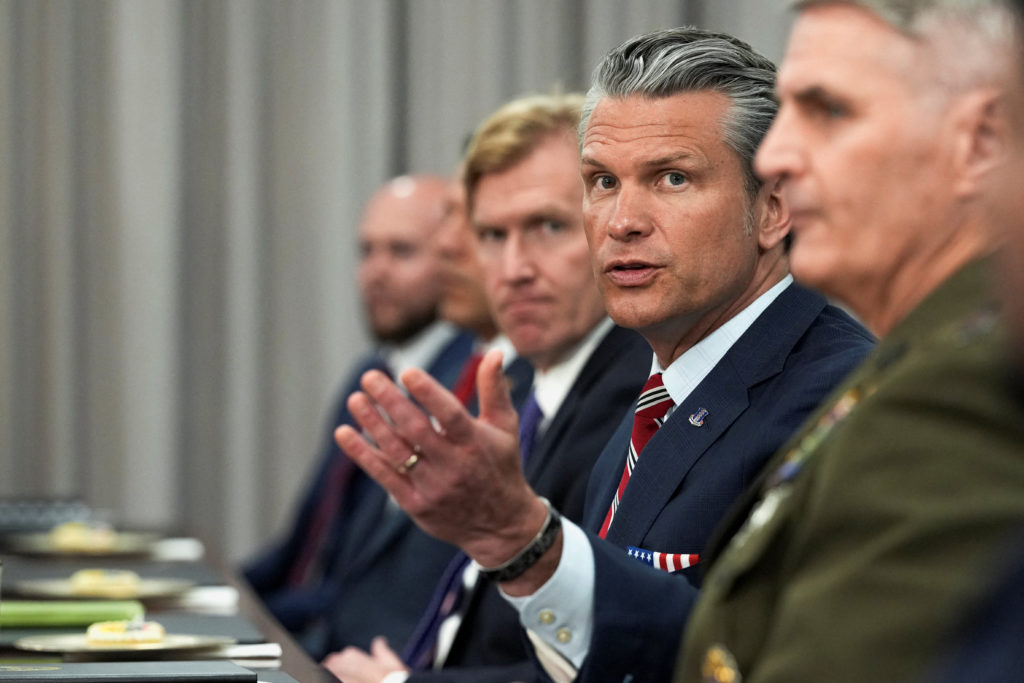
American defence officials have privately urged Estonia, Latvia and Lithuania to moderate their public warnings about Russia, according to accounts of recent Pentagon discussions.
The requests reportedly came from senior officials, including Elbridge Colby, the Pentagon’s Under Secretary of Defence for Policy, who is involved in reviewing America’s military commitments in Europe.
The conversations were described as cordial. There is no evidence that Washington demanded changes to Baltic defence policies. Nevertheless, their timing is revealing.
The United States is pursuing renewed negotiations with Moscow, examining potential economic incentives and pressing Ukraine to restrict attacks on Russian energy infrastructure. Simultaneously, American defence planners are considering reducing their military presence in Europe.
The Baltic governments are therefore being asked to assume greater responsibility for their security while exercising greater restraint in describing the threat they believe makes that responsibility necessary.
The Pentagon’s Strategic Calculation
Colby’s involvement gives the episode significance beyond an argument over diplomatic etiquette.
He has long advocated concentrating American military resources on the Indo-Pacific, where China represents the principal long-term challenge to US strategic predominance.
His argument is not inherently unreasonable. American military resources are finite, European NATO members possess substantial economic capacity, and Washington cannot indefinitely remain the principal provider of conventional security across several continents.
Indeed, Europe’s excessive dependence on American military capabilities has been recognised in European capitals for years.
The difficulty lies in reconciling this strategic redistribution with Washington’s approach towards Russia.
If the United States intends to reduce its European military commitments, European governments will require more accurate threat assessments, greater investment in intelligence and defence, and clearer public explanations of the expenditure involved.
Discouraging those governments from discussing Russian threats could make that transition politically harder.
One justification reportedly offered by American officials is that confrontational language risks provoking Moscow or reinforcing the Kremlin’s attempts to spread fear.
There is a legitimate argument for avoiding theatrical warnings unsupported by intelligence. Governments can undermine their credibility by repeatedly presenting hypothetical threats as imminent.
But Baltic intelligence assessments have often been more measured than the public debate suggests.
Estonian and Latvian security officials have distinguished between Russia’s current military limitations, caused partly by its war in Ukraine, and the longer-term danger of Moscow rebuilding its forces.
Such assessments are not evidence of an intention to provoke Russia. They are part of the ordinary work of national security institutions.
The Problem with Reassuring Moscow
The reported exchanges also expose an uncomfortable contradiction in Washington’s negotiating strategy.
The administration is considering incentives intended to encourage Moscow towards a settlement while asking European allies to avoid language that might complicate those negotiations.
Yet Russia’s conduct towards NATO members has not been confined to diplomatic disagreements.
European governments have reported suspected sabotage, cyber operations, intelligence activity and interference involving critical infrastructure.
German authorities recently announced arrests connected with a suspected arson plot in the Nuremberg area. Berlin has also accused Moscow of involvement in a drone incident at Leipzig/Halle Airport, an allegation Russia denies.
These activities form part of the wider security environment that European governments must address, irrespective of Washington’s diplomatic timetable.
The question is whether restraint by NATO members would encourage reciprocal restraint from Moscow.
There is little publicly available evidence that Russia has made such a commitment.
Nor has Moscow demonstrated that its objectives concerning Ukraine have fundamentally changed.
A diplomatic strategy based on reducing tensions can be sensible. A strategy that asks one side to moderate its conduct without establishing corresponding obligations for the other risks creating an imbalance.
For the Baltic states, that imbalance is especially difficult to accept.
Their geographical position, historical experience and exposure to Russian intelligence operations give them reasons to approach Moscow differently from governments separated from Russia by several countries.
That does not make every Baltic political statement wise. It does mean that their security concerns cannot reasonably be dismissed as a communications problem.
Europe’s Security Cannot Depend on Diplomatic Convenience
The larger issue is not whether an Estonian prime minister should describe Vladimir Putin as a cornered rat.
It is whether European governments can continue to define their security requirements independently when those assessments complicate American foreign policy.
NATO’s collective defence arrangements depend on credible military capabilities, political cohesion and the willingness of member states to act.
They also depend on governments being able to explain why those capabilities are necessary.
Europe’s defence spending increases will require difficult budgetary choices, industrial investment and sustained public support. Governments cannot make those decisions convincingly while treating the underlying security threat as something best discussed discreetly.
Washington is entitled to pursue negotiations with Moscow. European governments are equally entitled to assess the consequences for their own security.
The United States may ultimately conclude that a reduced military presence in Europe serves its wider strategic interests. European allies will then have to adjust, whether or not they welcome that decision.
What they cannot afford is to confuse American diplomatic preferences with an objective assessment of Russian capabilities and intentions.
The Pentagon’s reported advice may have been intended to reduce unnecessary friction. But if Washington expects Europe to carry more of the burden of deterrence, it will also have to accept that Europeans will increasingly make their own judgements about the threats they face.