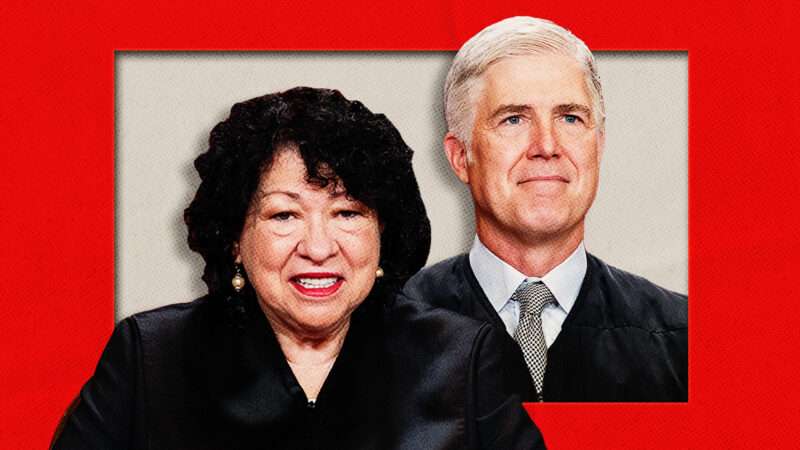
One of the more interesting developments at the U.S. Supreme Court in recent years has been the rise of a kind of sporadic alliance in defense of civil liberties between Justices Sonia Sotomayor and Neil Gorsuch.
In 2018, for example, Gorsuch, joined by Sotomayor, blasted the Supreme Court for refusing to even hear arguments in Stuart v. Alabama, an important case about forensic evidence, criminal trials, and the Sixth Amendment right to cross-examine one's accusers.
Similarly, in United States v. Davis (2019), Sotomayor joined Gorsuch's majority opinion striking down a federal law that called for enhanced sentencing when a gun was used in connection with certain federal crimes because the law at issue was too imprecisely written to pass constitutional muster. "When Congress passes a vague law," Gorsuch wrote, "the role of courts under our Constitution is not to fashion a new, clearer law to take its place, but to treat the law as a nullity and invite Congress to try again."
Gorsuch and Sotomayor have also been on the same page in a number of Fourth Amendment cases, though Sotomayor's overall Fourth Amendment record is arguably stronger than Gorsuch's. In Torres v. Madrid (2021), for instance, the Supreme Court held that when the police shoot a fleeing suspect, it still counts as a "seizure" for Fourth Amendment purposes even if the suspect kept on the move after being shot. "The application of physical force to the body with the intent to restrain is a seizure," the Court held, "even if the person does not submit and is not subdued." Sotomayor joined that pro-civil liberties decision; Gorsuch, along with Justices Clarence Thomas and Samuel Alito, sided with the officers and voted in dissent.
Fortunately, the Gorsuch-Sotomayor band was back together last week to make some noise in support of the Bill of Rights in a dispute that pitted property rights against police powers. As Reason's Billy Binion reported, the Supreme Court declined to hear a case challenging a lower court's "categorical rule" that "property destroyed in the exercise of [a state's] 'police power' is immune to claims under the Takings Clause, the U.S. Constitution's pledge that government cannot usurp private property without fairly compensating the owner."
Sotomayor, joined by Gorsuch, strongly implied that she thought the lower court's rule was unconstitutional, though she accepted that "further percolation" on the issue was needed before the Court should step in. "Where, as here, a person alleges a 'classic taking in which the government directly appropriates private property for its own use' or to pay an outstanding debt, like a tax lien," Sotomayor wrote, "the talismanic invocation of the State's 'law enforcement authority,' may be insufficient to avoid the requirement of just compensation." (Citations omitted.) Sotomayor then urged the lower courts that are "considering this issue to take care that due deference to state police powers does not eclipse constitutional rights."
Just as Gorsuch's Fourth Amendment record has its blemishes, Sotomayor's record on property rights has also been less than impressive at times. So it is doubly welcome to see these two justices back in the trenches together on this particular civil liberties front.
Elsewhere in the Law
Writing at SCOTUSblog, Anastasia Boden, a senior attorney at the Pacific Legal Foundation, has an interesting article about the Supreme Court's landmark 1926 decision in Euclid v. Ambler, in which, as Boden put it, the Court ruled in favor of a town's "power to pass comprehensive zoning, and against a local developer who had argued the town's plan exceeded the city's police power and destroyed the property's value." In effect, the Court's ruling was "the birth of modern zoning."
One of the things that has long fascinated me about Euclid v. Ambler is the fact that the opinion was authored by Justice George Sutherland, who is probably best remembered today for his role as a leading judicial foe of President Franklin Roosevelt's New Deal. In Euclid v. Ambler, however, Sutherland endorsed a view of regulatory authority that has been celebrated by liberal academics as "a model of pragmatic and well-balanced Progressive jurisprudence."
I suppose we might call it an irony of legal history: The intellectual leader of the Supreme Court's anti–New Deal bloc actually left a greater mark on the law by shoring up the immense power of city planners.
Is there an exception to the 5th Amendment's promise that government cannot take private property without "just compensation"? The Supreme Court declined to address that question this past Monday when it rejected a trio of petitions asking the justices to consider whether people should be compensated when law enforcement seizes or destroys their property.
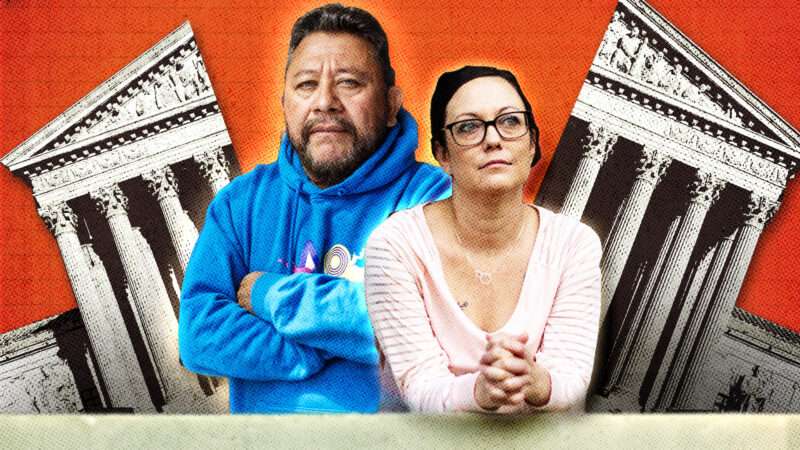
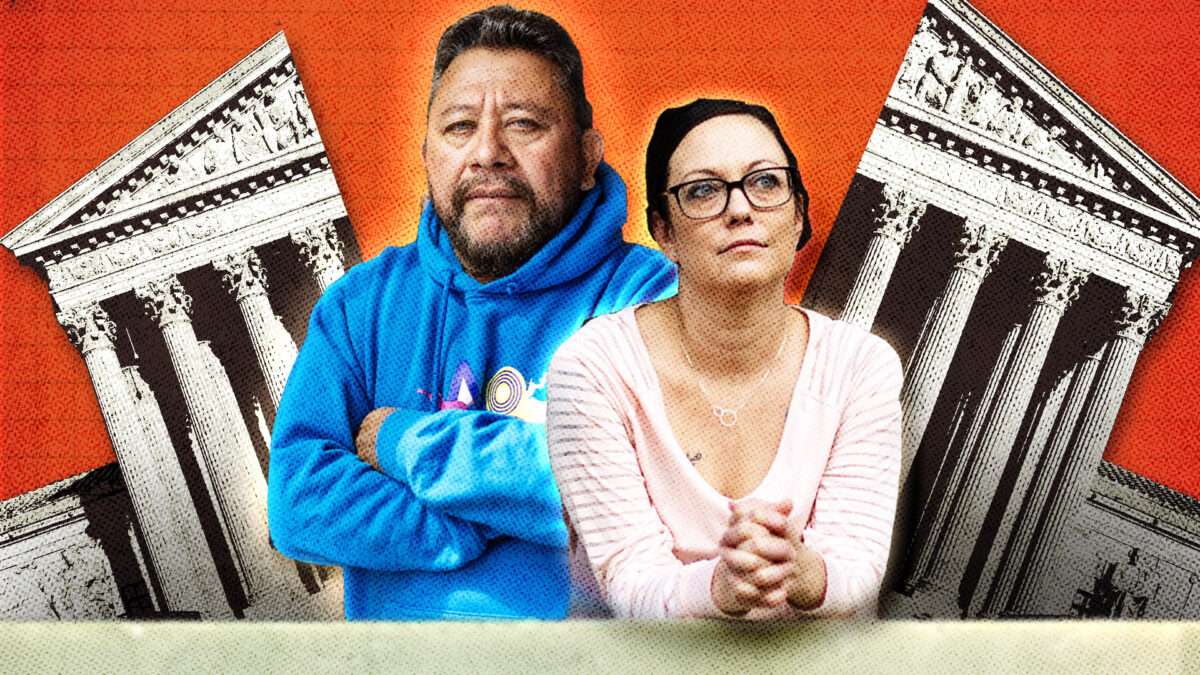
Two of the cases concerned individuals who were not accused of a crime but whose property nevertheless became collateral damage as police pursued a suspect. In June 2022, police fired 30 tear gas canisters into Amy Hadley's home in South Bend, Indiana. Officers smashed windows, tore down security cameras, ransacked furniture, ripped down a panel and a fan, and punched holes in the walls as they searched for a fugitive named John Parnell Thomas, who had never been there. The police had erroneously concluded that Thomas accessed the internet via the IP address at Hadley's home. According to Hadley, the police caused at least $16,000 in damages, which insurance only partially covered.
About two months later, a SWAT team in Los Angeles arrived at Carlos Pena's North Hollywood printing business and destroyed it, along with his equipment inside, crippling his livelihood after a fugitive broke in and barricaded himself in the shop. (The suspect ultimately escaped.) Pena alleged approximately $60,000 in damages in his suit against the city, which declined to compensate him for his losses. His insurance also refused to step in—as is common in such cases, as policies often exclude damage caused by the government.
The third petition concerned Chicago drivers whose vehicles were seized by the city over modest unpaid parking tickets. Ryan O'Donnell's vehicle was impounded and sold for scrap because of about $524 in debt. Michael Goree's was seized and relinquished to the lienholder over a debt that did not belong to him; the $560 in unpaid tickets were for a different vehicle owned by his co-signer.
In all of these cases the lower courts' reasoning came from a similar place. Hadley, O'Donnell, and Goree's petitions were heard by the U.S. Court of Appeals for the 7th Circuit, which has adopted a categorical rule: Property destroyed in the exercise of "police power" is immune to claims under the Takings Clause, the U.S. Constitution's pledge that government cannot usurp private property without fairly compensating the owner. Pena's case went to the U.S. Court of Appeals for the 9th Circuit, where the judges have declined to issue such a sweeping exception but have instead ruled that governments are exempt from paying out claims when the police actions in question were "necessary."
In a statement, U.S. Supreme Court Justice Sonia Sotomayor, joined by Justice Neil Gorsuch, outlined the many inconsistencies between the circuits on the topic. "It is still an 'open question' whether these or any other approaches are consistent with this Court's precedents. Few of these decisions likewise explain the source of any such police-power exception to the Takings Clause—whether the common law, the Constitution, or elsewhere," she wrote. "Such questions thus continue to 'benefit from further percolation' in the lower courts before this Court chooses to intervene."
Sotomayor was quoting herself. In 2024, she released similar remarks in response to a petition from Texas woman Vicki Baker, whose house in McKinney had been hollowed by a SWAT team attempting to capture a fugitive. The high court declined to hear Baker's case, although she finally found relief under the Texas state constitution this year.
"It's possible that the Court sincerely doesn't think the lower courts have done enough thinking on this important but novel issue," Patrick Jaicomo, a senior attorney at the Institute for Justice who represented Hadley, tells me. "Still, we've brought them 5 cases from 5 circuits. How much more percolation is needed?…The Court is going to have to address this important issue, and it's not clear what another circuit decision or 6 might do to aid that consideration."
Though Sotomayor's statement ran in parallel to the one two years ago, its slightly sharper warning intimated that we may be inching closer to a resolution. "I again encourage courts considering this issue to take care," she wrote, "that due deference to state police powers does not eclipse constitutional rights."
On a Tuesday morning in February 2025, federal agents descended upon Ayala's Mini Market, a convenience store in Glendale, Arizona, that offered check cashing, money transfer, shipping, and cellphone repair services along with standard items such as groceries, snacks, sodas, and cigarettes. The agents, who worked for the Internal Revenue Service (IRS) and the Department of Homeland Security (DHS), seized three computers, five cellphones, and business records, plus about $460,000 in cash and checks. They did not say why.
Twenty months later, the store's owner, Mario Ayala, still has not received a definitive answer to that question. Nor has the government told him what it plans to do with his property or how he can try to get it back. That Kafkaesque situation is unconstitutional, Ayala's lawyers at the Institute for Justice argue in a motion and memorandum they filed on Tuesday in the U.S. District Court for the District of Arizona. The motion seeks the return of the property seized from Ayala's business, saying there is no legitimate reason for the government to keep it.
"The government can't take your stuff, disappear, and then never explain itself," says Institute for Justice attorney Betsy Sanz. "For over a year and a half, the government has been holding Mario's money and property. This prolonged seizure violates the Fourth Amendment and federal law. The government cannot hold onto your property indefinitely without explanation so it can eventually take it permanently using civil forfeiture."
The raid on Ayala's store happened while he was visiting his ailing father in Mexico, who died a couple of months later. After Ayala's wife and son called to tell him what had happened, he rushed back to Arizona, where he tried to figure out why his business had been targeted by the IRS and the DHS. That was harder than you might think.
Ayala "has heard nothing from the government since they raided his business and seized his property," Sanz and her colleagues note in their memorandum. When the agents left, they told Ayala's son that "the business would receive a letter within thirty days," the memorandum says, but "no letter came," and the government "has not told Mario why it took his property or why it refuses to return it."
The agents left a one-page inventory of the property they took, including the computers, cellphones (two of which belonged to Ayala's customers), documents, and currency, although it did not specify the amount of money. They also left the first page of a warrant signed by a federal magistrate judge, which contained no information about the crime they were investigating or the property they were authorized to seize. It referred to attachments that might have clarified those points, but the attachments were missing.
Ayala still has not seen those attachments. But on the same day the agents raided his store, they also searched 18 other businesses in the Phoenix area, all of which offered money services. Judging from the warrants served on three of those other businesses, which were signed by the same magistrate judge at the same time on the same day as the warrant for Ayala's Mini Market, the legal justification for the searches was suspected violations of 31 USC 5324, which makes it a felony to "structure" a financial transaction with the intent of "evading" federal reporting requirements.
The Bank Secrecy Act requires that financial institutions report cash transactions involving more than $10,000 to the Financial Crimes Enforcement Network (FinCEN). Although that mandate is aimed at money laundering, someone can be guilty of structuring even without evidence of any other crime if he deliberately tries to avoid triggering a FinCEN report by breaking up a transaction into amounts below the threshold. As far as Ayala can tell, the search of his store was based on nothing more than suspicion of structuring.
If so, Ayala's lawyers argue, the IRS agents who participated in the raid violated a 2019 federal law that bars the agency from seizing money when structuring is the only suspected crime. Congress passed that law in response to IRS forfeiture abuses highlighted by the Institute for Justice. "For the IRS to legally seize property based on a structuring offense, it must also have an added suspicion of some other criminal act," Sanz et al. note. "Yet the IRS seized Mario's property, apparently on the sole suspicion of a structuring violation."
That is not the only legal problem with the seizure. Assuming the government plans to seek forfeiture of Ayala's money based on an alleged connection to criminal activity, it missed a crucial deadline. The Civil Asset Forfeiture Reform Act (CAFRA) requires the federal government to notify property owners of attempted forfeitures within 60 days of the seizure. That deadline passed a year and a half ago, and Ayala still has received no such notice.
"This notice is crucial because it informs a property owner that the government intends to forfeit his property and triggers his ability to respond by filing a claim or administrative petition," Ayala's lawyers note. If the government fails to meet that requirement, CAFRA says, it "shall return the property."
The government can seek extensions of the CAFRA deadline "only if there is reason to believe that notice may have an adverse result," such as "endangering the life or physical safety of an individual," "flight from prosecution," "destruction of or tampering with evidence," "intimidation of potential witnesses," or "otherwise seriously jeopardizing an investigation or unduly delaying a trial." None of those conditions applies in this case, Sanz et al. say, and their client "is unaware of the government seeking any such extension here."
Another possible rationale for keeping Ayala's property is that the government needs it as evidence in a criminal investigation. But his lawyers argue that the seized items "have no independent evidentiary value."
The government "cannot claim that it is holding the cash as evidence of the suspected structuring offense, because the government—in the usual course—does not continue to hold the physical cash it seizes but rather promptly deposits it," the memorandum says. "To prove the suspected offense here, the government would present evidence documenting the amounts and frequency of transactions and evidence that the defendant intentionally evaded reporting requirements. No fact the government must prove to establish a structuring offense becomes more or less provable by the government's continued possession of Mario's money."
Although "the checks and business documents that the government seized from Mario may at first have had some evidentiary value," Sanz et al. say, it could have long since returned the originals and kept copies. As for the computers and cellphones, "the government has had ample time to extract and copy" any relevant information.
While the benefits of keeping Ayala's property seem highly dubious, the cost to him has been severe. The seizure of the checks and currency wreaked havoc with his business model, which relies on money received for transfers to cash checks, which in turn are scanned and used to pay the companies that handle the transfers.
"The search and seizure of Mario's property upended his business," the memorandum says. "He had to keep his business closed until March 1, 2025, to replace the seized computers and to figure out how they could keep the business open. He took $50,000 of his own money out of the bank so that he could keep cashing customers' checks. When that ran out, the business had to stop cashing checks for a long time, losing customers."
Ayala "also had to come up with $112,097.20 to pay the money transmitters to cover the balance that had accrued while he was away," his lawyers add. "Since all the cash and cashed-but-unscanned checks had been seized, Mario needed to pay this money to the transmitters on his own. Though he did ultimately pay back all the money transmitters over the following month, the consequences of the raid damaged Mario's business relationship with one of the money transmitters he had formerly worked with, InterMex. Today, the business can no longer offer InterMex as an option for money transfers."
Ayala's business "is now finally stable, but it is still not doing as well as it was before the raid," Sanz et al. say. "Mario has changed the way he runs his business because of the raid. He now scans every customer's cashed check to send it to the money transmitters as soon as it is cashed, rather than collecting [checks] and scanning them together as they previously did. He constantly worries that his business will be targeted again."
In the 20 months since the raid, the government has not filed a forfeiture action or even notified Ayala that it intends to do so. Nor has it filed any criminal charges related to the seizure, as far as Ayala knows. "The government has no lawful reason to retain
Mario's property," his lawyers say, "and this Court should exercise its equitable jurisdiction to order its return."
The motion relies on Federal Rule of Criminal Procedure 41(g), which says "a person aggrieved by an unlawful search and seizure of property or by the deprivation of property may move for the property's return." The U.S. Court of Appeals for the 9th Circuit, which includes Arizona, has adopted four criteria for granting such a motion: whether the government "displayed a callous disregard for the constitutional rights of the movant," whether "the movant has an individual interest in and need for the property he wants returned," whether "the movant would be irreparably injured by denying return of the property," and whether "the movant has an adequate remedy at law for the redress of his grievance."
All of those factors count in Ayala's favor, Sanz et al. argue. Ayala's interest in the property and the injury he is suffering are clear, as is the absence of any other remedy. As for the first criterion, "the government can neither forfeit Mario's property nor justify holding it as evidence, so its continued retention is unreasonable under the Fourth Amendment," the memorandum says. "And its nearly 20 months of silence, without any notice or any forum in which to contest the seizure, offends due process. At every turn, the government has 'callous[ly] disregarded' Mario's constitutional rights."
Ayala immigrated to the United States from Mexico in 1991 and struggled for years to make a go of his business, which was successful enough at the time of the raid that he planned to open a new location devoted to cellphone repair. That plan is now on hold because of the financial difficulties caused by the seizure.
"This business is my American Dream, and the government took years of my hard work without telling me what I did," Ayala says. "This raid hurt me and my family. I hope this lawsuit gets my money back and helps make sure this doesn't happen to anyone else."
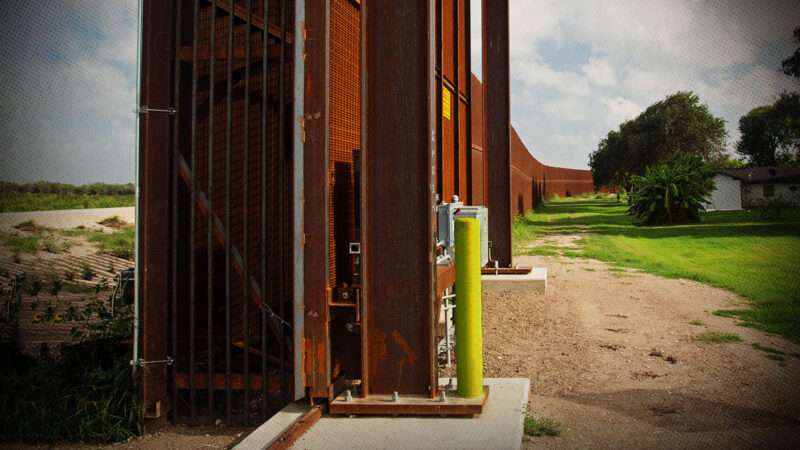
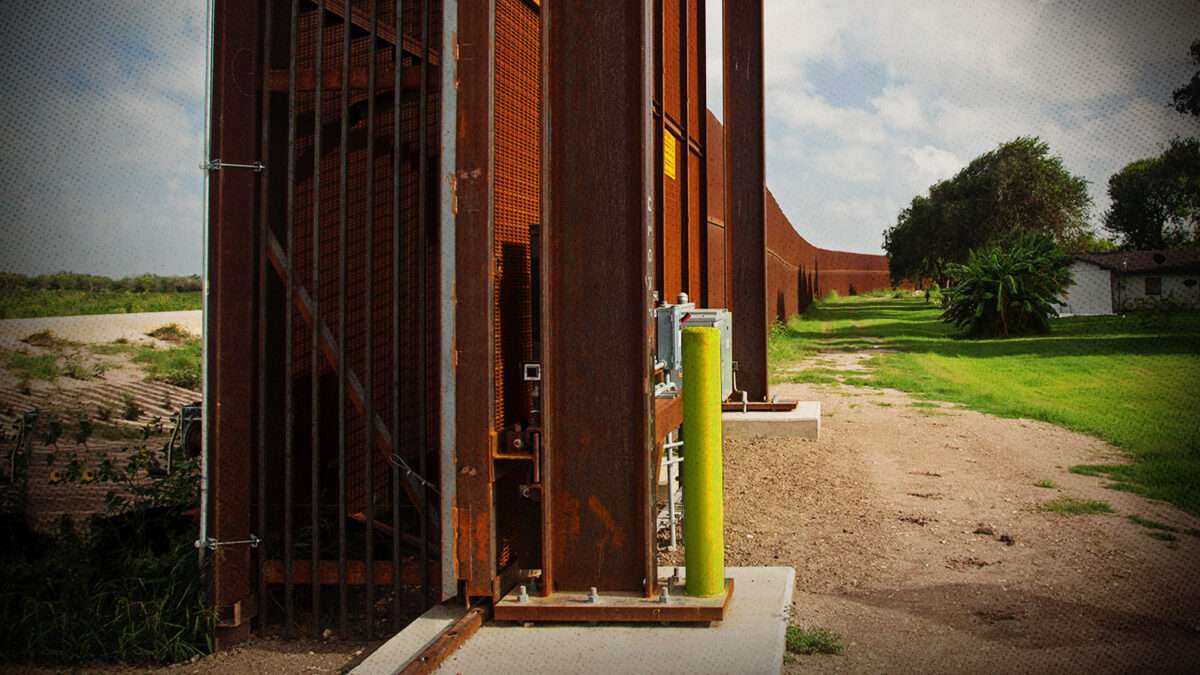
The Trump administration's attempts to fast-track construction of the president's long-promised border wall through Texas' remote Big Bend region have ground to a halt amid fierce opposition, protests, and legal challenges from landowners and conservation groups.
A federal judge on Wednesday released an opinion explaining her decision to issue a preliminary injunction blocking border wall construction through the Big Bend area. U.S. District Judge Kathleen Cardone found that the plaintiffs, which included the Center for Biological Diversity and several longtime residents of the region, had shown a substantial threat of irreparable harm if the construction project is allowed to continue.
The Trump administration wants to spend $7.5 billion building additional security infrastructure along a 500-mile stretch of the U.S.-Mexico border running through the Big Bend region, which includes Big Bend National Park. The federal government began sending threatening letters to property owners announcing its intent to acquire necessary pieces of their land this summer, and it waived several environmental regulations, allowing it to put bulldozers on the ground inside the national park by September.
However, numerous groups and local landowners say the border wall project will alter their way of life and permanently scar one of the most rugged and pristine landscapes in the country. The project attracted bipartisan criticism and protests.
Cardone also found that the plaintiffs were likely to succeed on their claims that Department of Homeland Security (DHS) Secretary Markwayne Mullin exceeded his authority when he issued environmental waivers for the project.
The injunction is a temporary reprieve for property owners such as David Keller, an archaeologist and part-time river guide on the Rio Grande River. The original plans for the border wall expansion would have cut through Keller's 10-acre property near Redford, Texas, putting a 30-foot-tall wall on the levee that sits between the river and the rest of his land.
Keller says the Trump administration gravely underestimated how much anger its tactics and attitude would generate.
"It's a level of arrogance—they're just used to being able to bulldoze over people," David Keller says. "They were moving forward as if they weren't expecting any resistance, but boy, they're due for a wakeup call. And they're having it right now."
Keller is a plaintiff in a separate lawsuit against the DHS by Conserve Big Bend, a coalition of landowners, conservationists, river tour guides, researchers, and other affected parties.
Keller says he's loved wild, open country since he was a child, and as soon as he saw the region in the 1990s, he decided he would find a way to live and work there, which he's done for the past 25 years. "It's visually magnificent," Keller says. "It's incredible. It's like no other place I'd ever seen. It's one of the last unspoiled places remaining in the lower 48."
Keller says it's where he plans on being buried, too, although these days he's unsure whether to say "plans" or "planned." The proposed border construction is an existential threat to the life he's built, he says, and if the wall goes up, he'd likely move.
"I didn't come down here to live in a cage," Keller says.
The proposed border wall would not only block access to the river for farmers, ranchers, and outdoors enthusiasts along the river, as well as block the view into Mexico, it would wreck "the whole feeling of the place, the historical cross-border culture that we've developed," Keller says.
So far, the federal government has not tried to seize any private property in the Big Bend region through eminent domain, although it sent letters to property owners this summer requesting access to survey their land and warning them that it held the option to invoke eminent domain if they did not quickly sell.
Both Keller's and the Center for Biological Diversity's lawsuits argue that the department's justification for building and expediting additional border infrastructure in the Big Bend Region are factually and legally incorrect. The DHS determined that the sector of the border is an "area of high illegal entry."
However, despite making up roughly a quarter of the entire U.S.-Mexico border, the Big Bend sector only accounted for between 0.3 percent and 2.2 percent of total border-wide arrests over the past 30 years.
Cardone cited the low apprehension numbers in her finding that Mullin exceeded his authority to issue the waivers.
"The unrebutted evidence shows that the Big Bend Sector is, by far, the sector with the lowest rate of migrant apprehensions along the entire U.S.-Mexico border, both in terms of gross totals and apprehensions per mile of border," Cardone wrote. "Therefore, if the Big Bend Sector is an area of high illegal entry, so is every other sector, and the waiver authority would apply to the entire U.S.-Mexico border."

 Login