Trump says Iran wants to keep negotiating and that US 'has time' to do so; IRGC Navy claims 4 tankers exploded in Hormuz after traversing routes unauthorized by the Islamic Republic
Congressional report exposes internal emails from leading psychologists' group showing leadership mocked Jewish concerns, consulted with anti-Zionists about October 7 response
Failure by Netanyahu's coalition to secure majority offers PA some respite, but improbability of alternative governing options could keep ministers seeking Ramallah's collapse in power indefinitely
Charges include crimes against internal state security, possession of weapons and explosives, which Hezbollah has said it planned to use against Israeli forces in southern Lebanon
IDF identifies at least six members of terror group it killed in airstrikes this week, including a commander involved in holding numerous hostages in the Strip after Oct. 7 attack
Fighters of the 1st Corps of the National Guard of Ukraine "Azov" struck more than 100 Russian trains carrying fuel and other supplies for occupying forces, the corps reported on social media on 28 October. The strikes disabled locomotives, fuel tank cars, and other equipment, the statement said.
Russian President Vladimir Putin claimed on 16 October that seizing all of Donetsk Oblast remains one of Russia's main tasks. Azov notes that these strikes help "destroy" Russia's offensive capabilities.
Small Ukrainian drones strike Russia's 100-ton locomotives
Azov emphasizes that neither mobile fire groups nor electronic warfare systems can protect Russian logistics routes.
"The enemy is doing its utmost to create an image of successfully capturing settlements, but is unable to protect key railway stations through which the fuel supply chain runs toward the front," Azov said.
The rail hubs hit had carried Russian military trains to the fighting in Donbas and southern Ukraine, Defense Express reported on 29 October. The count of more than 100 trains covers Azov's operations over the past four months, the outlet said.
The mass of any diesel locomotive exceeds 100 tons, yet the Ukrainian military struck these large Russian targets using small UAVs, the outlet also notes.
Donations helped make the strikes possible
Donations and the work of the Come Back Alive foundation contributed to the operation's results, Azov said. In particular, the foundation provided the military with 440 Starlink Mini terminals, the corps added.
War on Credit: Over 100 Trains Hit
The enemy is doing all it can to create the image of successfully capturing settlements, yet it cannot protect the key railway stations through which its fuel supply chain toward the front runs. Neither mobile fire groups nor electronic warfare… pic.twitter.com/QpqEQHyxvp
— First Corps Azov of the National Guard of Ukraine (@azov_media) October 28, 2026
Azov announced Operation Hell back in the summer
On 2 July, the Azov Corps announced Operation Hell and released the first footage of strikes on Russian railway equipment. The video shows a strike on a diesel locomotive that was likely used by Russian forces for military logistics.
Operation "Inferno." Coming soon.
This wasn't just about our distaste for old Soviet cartoons. Demilitarization is the priority. Decommunization's just a bonus.
So what's happening in the video? This isn't a random hit — it's part of a carefully planned operation by First Corps… pic.twitter.com/feNc72isUk
— First Corps Azov of the National Guard of Ukraine (@azov_media) July 2, 2026
The corps said the strike was part of a carefully planned operation and promised details soon.
On Thursday, 16 civilians were killed and 22 injured following a drone attack on the Hyiq Jari 2 camp for internally displaced persons (IDPs) in the Amhara region of northern Ethiopia, according to residents and accounts gathered by the Ethiopian newspaper Addis Standard. The incident comes amid ongoing clashes between the federal army and rebel groups in the north of the country.
The camp, located in the South Wollo administrative zone, was struck by as many as five drone attacks, occurring at intervals of approximately fifteen minutes. Witnesses reported that the explosions hit the site while the displaced people were inside their shelters.
“The drone attacked the camp at least five times, at fifteen-minute intervals, while the internally displaced people were inside their shelters. We never expected a drone to attack the camp,” one witness told Addis Standard.
The victims include children, women, and the elderly. The attack also resulted in the burning of around twenty dwellings, though these details have not been independently verified.
NEW COMMENTARY | Containing the New War in Northern Ethiopia
War has returned to northern Ethiopia, raising fears of a wider conflict involving Eritrea. In our EU Watch List, we explain how the EU can facilitate talks and prevent escalation.https://t.co/Q6hzxtsqGDpic.twitter.com/mGhDJVkh0A
The camp houses more than 1,800 internally displaced people, who are facing a severe humanitarian crisis. Humanitarian organizations have significantly scaled back their assistance, limiting access to food, shelter, and medical care.
“We have neither shelter nor food. Perhaps the best thing to do is to go to the city and sleep on the streets, hoping that someone might take pity on us and help. We have no other choice right now,” said one of the displaced individuals.
Those affected also noted that regional authorities have failed to respond to their pleas for support. Neither the Ethiopian government nor the insurgent groups have commented on who was responsible for the attack. The violence is taking place as the Ethiopian Army battles rebel groups in the north of the country. On September 23, the Tigray People’s Liberation Front (TPLF) announced a defensive war from that region, following months of escalation and recurring drone strikes.
AMHARA FANO NATIONAL MOVEMENT Foreign Affairs Department
Urgent Call for International Action regarding Indiscriminate Aerial Attacks in Ethiopia pic.twitter.com/q2uBGl9EUj
— Amhara Fano National Movement – Foreign Affairs (@AFNM_FA) October 23, 2026
Since then, federal forces have made gains, particularly in Tigray, though fighting persists in other areas. An alliance of seven rebel and opposition groups—including the TPLF, the Amhara nationalist movement Fano, and the Oromo Liberation Army (OLA)—was recently formed with the stated goal of toppling the Ethiopian government.
Ethiopia has also accused Eritrea of supporting the rebels and conducting incursions into its territory—an accusation that Asmara denies. This escalation has reignited fears of a new, large-scale war, similar to the 2020–2022 conflict between the TPLF and the federal government, which, according to the African Union, resulted in at least 600,000 deaths.
Swedish climate activist Andreas Malm, who hailed the Hamas-led Oct 7. attack as 'an act of liberation,' claims he's being 'banned from doing my work as an intellectual, as an academic'
The British military’s preparations for a possible collision with Argentina over the disputed archipelago have once again demonstrated that not only is the territorial conflict between the two countries not sputtering out, but it is ready to drive another nail into the coffin of the much-advertised Western “democratic peace theory.” The Empire Prepares a Counterstrike […]
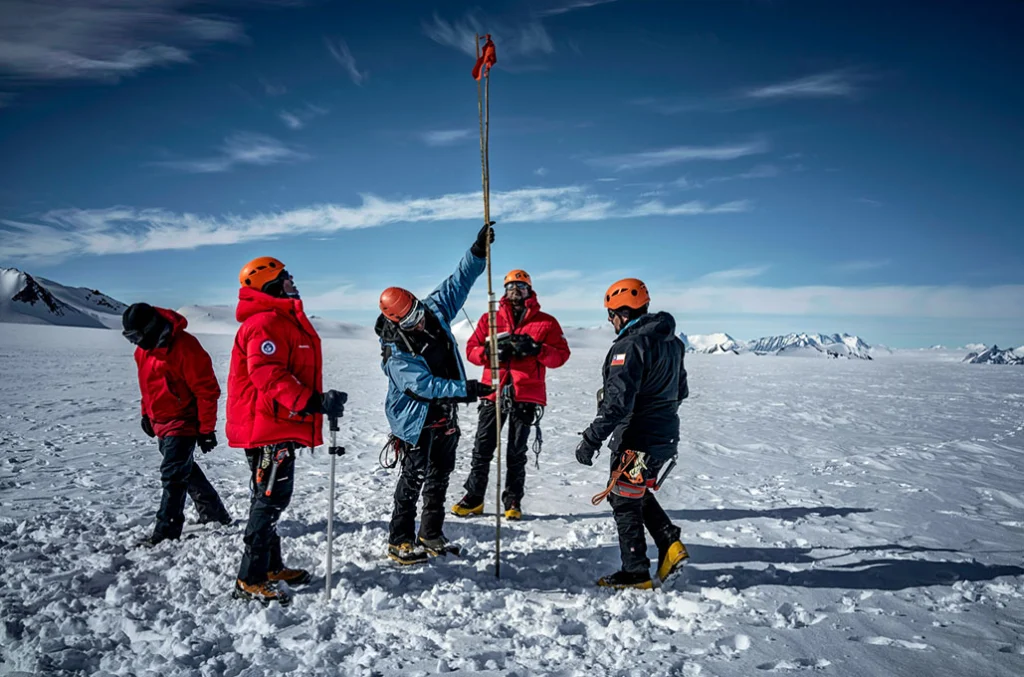
On Thursday, Chilean Minister of Foreign Affairs Francisco Pérez Mackenna inaugurated the 63rd Antarctic Scientific Expedition (ECA) in Punta Arenas. The expedition is set to carry out nearly 50 research projects, involving more than 150 scientists, between November and the end of March.
During the ceremony, the Foreign Minister highlighted Chile’s position as a gateway to Antarctica for international scientific programs. “The trust Chile enjoys in the realm of international relations, combined with the prestige of its public institutions and its logistical and infrastructural capabilities, represents an asset of immense value for attracting more countries to choose Chile as their gateway to Antarctica,” stated Pérez Mackenna.
Foreign Ministry reports indicated that the number of countries using Punta Arenas as a departure point for the “White Continent” has grown from 12 to 21 since 2004. Furthermore, eight other nations have occasionally passed through the capital of the Magallanes and Chilean Antarctic Region. “They use our ports and airports for their own vessels and aircraft, or they contract services in the Magallanes region to facilitate their scientific expeditions,” the minister noted.
The 63rd Antarctic Scientific Expedition includes operations at bases and field camps across the Antarctic Peninsula and the continent’s interior—including Union Glacier, located approximately 1,000 kilometers from the South Pole. The teams will conduct research across various fields of Antarctic science—an area the Foreign Minister described as strategic and inseparable from Chilean foreign policy.
En PuntaArenas se realizó el lanzamiento oficial de la 63ª Expedición Científica Antártica "ECA63" del @inach_gob
En la instancia, el Comandante en Jefe de la Tercera Zona Naval, Contraalmirante Juan Soto Herrera, presentó los detalles del despliegue naval para este periodo pic.twitter.com/qXflnac41l
The text reads, “The official launch of the 63rd Antarctic Scientific Expedition (“ECA63″) by @inach_gob took place in Punta Arenas. During the event, the Commander-in-Chief of the Third Naval Zone, Rear Admiral Juan Soto Herrera, presented details regarding the naval deployment for this period.”
“Antarctic science has a very distinct character; it is a strategic field—inseparable from Chile’s foreign policy—that helps us explore and gain knowledge about a vast territory that is crucial to the future of both our country and the planet,” Pérez Mackenna affirmed.
Antarctica is governed by the Antarctic Treaty—originally signed by 12 countries in 1959—which designates the territory for science and international cooperation. Although the continent is not governed by any single state, countries such as Chile, the United Kingdom, Argentina, Australia, and New Zealand maintain historical territorial claims.
Chile operates at least ten Antarctic bases: five are managed by the Chilean Antarctic Institute (INACH), while the others are run by the Armed Forces. The country’s first facility in the territory was inaugurated in 1940, following a decree by President Pedro Aguirre Cerda that established the boundaries of the Chilean Antarctic territory.
Minor skirmishes reported between police and demonstrators demanding more funding for education and relief from high living costs; many carry Palestinian flags, anti-Israel posters
Klára Schneiderová, head of Czech Embassy's office in Jerusalem, had reportedly arrived in Israel a month earlier; Israel Police detain driver and launch investigation into crash
Gaza flotilla group promises action in support of strike that is expected to cause delays at some 100 ports in dozens of countries; workers also calling for better conditions
Novaya Gazeta, founded after fall of the Soviet Union, was branded a 'foreign agent' after becoming one of the last Russian news outlets to report critically on invasion of Ukraine
Talks coordinated with Washington, according to official; US said to believe hardline Iranian security council chief Mohsen Rezaei is best placed to head off hostilities
Israelis voted for the first time since Oct. 7, but there is no clear winner. The US president could hold the key to the unity government needed to finish the job in Iran
Opposition leader says Netanyahu has no path to majority; Yair Golan again urges cooperation with Arab parties, while PM assures allies that right-wing bloc will stay together
Blockchain researchers say Binance heist likely orchestrated by hacker group affiliated with Pyongyang; exchange says users are safe and that it will cover all losses
Acclaimed classically trained actor, hailed as 'one of the greats,' by his co-stars, died after suffering from previously undisclosed Alzheimer's disease and Lewy Body Dementia

 Login