❌

Reading view

Promised discharge, but no trust: Why Ukraine’s new military contracts are struggling

Ukraine has offered its soldiers a fixed term and a guaranteed way home under new contracts to encourage more people to enlist. However, in more than four months, only about 8,600 have signed, a drop in the ocean for a force of around a million, Ukrainska Pravda reports.

The system, launched on 15 June 2026 as an experimental government project, lets soldiers sign for a fixed term for the first time: infantry-assault contracts of 6 to 14 months, and combat and base contracts of two years, each ending in a guaranteed discharge and a deferral from re-mobilization.

That guarantee was meant to draw people in, but many soldiers, even some who signed, do not believe the state will let them go when their term ends.

Soldiers don’t trust the way out

The most common answer soldiers give is flat: “I don’t believe that after the contract ends I will really be able to leave and get a deferral.”

The doubt has history: officials have promised fixed service terms since 2023 and kept pushing them back. About 2,000 had signed a month after enrollment opened, and the total has crept only to around 8,600 since.

Veterans have a second grievance: those who have served since 2022 can sign for the same terms as raw recruits and get the same deferral, which starts at six months, too short, many say, to rebuild a civilian life before the draft reaches them again.

The raises that split the ranks

Meanwhile, new pay is reaching the troops. Higher combat payments are going out after some early paperwork delays, commanders confirm.

“The guys are getting good money. Everyone is very satisfied,” says Oleksandr Nastenko, who commands the 475th separate assault regiment “Code 9.2” under the callsign Flint.

The increases, though, were uneven, now one of the sorest points in the ranks. Infantry and assault troops saw the biggest jump, from about $2,700 to between $6,700 and $10,300 a month, while drone operators and other combat specialists who often share the same trenches received no comparable raise.

Defense Minister Yevhenii Khmara’s team is now weighing which parts of the experiment to carry into a future reform bill.

  •  

EU Governments Agree Agricultural Reform Framework but Leave €300 Billion Funding Question Unresolved

European agriculture ministers have reached a negotiating position on the future Common Agricultural Policy, advancing plans to restructure farm support after 2027. The agreement leaves unresolved the central dispute over funding and the balance of power between Brussels and national governments.

European Union agriculture ministers have agreed a negotiating position on the future Common Agricultural Policy (CAP), advancing a restructuring of the bloc’s agricultural support system while postponing decisions about the financial arrangements that will determine how the reforms operate.

The agreement reached on 26 October establishes the Council’s position on the framework governing agricultural payments and support measures from 2028 onwards.

However, ministers have deliberately excluded funding allocations and several related financial provisions, which remain subject to negotiations over the EU’s next seven-year budget.

The distinction is important.

Governments have agreed how they want the future system to operate, but not how much money will ultimately be available to finance it.

A fundamental restructuring of farm support

The proposed reform would integrate agricultural funding into a broader system of national and regional partnership plans covering several major areas of European spending.

Under the existing CAP, agricultural support is organised around two principal funds: one primarily financing direct payments and market measures, and another supporting rural development.

The Commission wants to replace this arrangement with a more integrated structure, while retaining agricultural policy instruments within the new framework.

Each member state would prepare a comprehensive national and regional plan incorporating agriculture, cohesion, fisheries and several other funding programmes.

Brussels argues that the new system could simplify administration, reduce overlapping procedures and give governments more flexibility to address domestic requirements.

However, greater national discretion also raises questions about whether the policy will remain sufficiently uniform across the European single market.

Agricultural conditions differ considerably between member states, from large cereal producers in Eastern Europe to smaller farms operating in mountainous or Mediterranean regions.

Allowing governments to tailor support to domestic conditions may improve flexibility, but it also creates the possibility of greater variation in how European funds are distributed.

Who should receive agricultural payments?

One of the principal changes concerns the distribution of income support.

The Council supports a proposed system known as Degressive Area-Based Income Support, or DABIS, intended to direct assistance more effectively towards farmers actively engaged in agricultural production.

Member states would be required to establish a definition of an active farmer, although governments would retain discretion over the precise national criteria.

The distinction matters because agricultural subsidies have historically generated disputes over payments based primarily on land ownership or agricultural area rather than the scale of productive activity.

The Council has also proposed an optional redistributive mechanism intended to help governments adjust the distribution of payments.

More contentious decisions, including possible payment ceilings and reductions for larger recipients, have been postponed until the broader budget negotiations.

The problem of Europe’s ageing farmers

The reform also addresses generational renewal.

Governments would be required to provide additional income support for young farmers and assistance to help them establish agricultural businesses.

Each member state would have to develop a generational renewal strategy and provide a package of support measures covering areas such as training, advice and access to agricultural activity.

These provisions reflect the difficulties facing younger people seeking to enter farming.

High land prices, expensive equipment and restricted access to finance can create substantial barriers, particularly where established farms are passed between generations.

The Council also supports expanded risk-management arrangements, including insurance and assistance following severe weather, animal diseases and other agricultural emergencies.

Environmental requirements would remain part of the framework, combining common conditions with incentives for practices intended to protect biodiversity and natural resources.

The €300 billion question

The most consequential disagreement concerns financing.

The European Commission has proposed protecting approximately €300 billion for agricultural income support and crisis measures under the 2028–2034 budget.

Additional agricultural and rural-development funding could be available through the broader national and regional plans.

The final ringfenced amount, however, has not been agreed.

As EU Today reported earlier this month, 17 member states have called for agricultural and cohesion spending to be protected during negotiations over the Commission’s proposed €2 trillion long-term financial framework.

The disagreement reflects competing budgetary priorities.

Agriculture remains one of the EU’s largest expenditure areas, but governments are simultaneously facing demands for greater defence spending, industrial investment, infrastructure and migration-related programmes.

Protecting agricultural funding would therefore limit the financial resources available for other priorities unless governments agree to increase the overall budget.

The latest agreement also follows the Council’s 19 October negotiating position on agricultural market rules, which addressed sectoral support and market organisation but similarly avoided resolving the wider funding dispute.

Negotiations enter a decisive stage

Irish Agriculture Minister Martin Heydon, whose government holds the rotating Council presidency, described the latest agreement as a milestone intended to provide farmers with greater stability and flexibility.

The Council’s position now provides a basis for negotiations with the European Parliament.

However, the final shape of agricultural policy will depend heavily on the separate negotiations over the 2028–2034 financial framework.

Until governments agree how much money will be available, questions about payment limits, distribution between countries and the balance between agricultural and other EU priorities will remain open.

The October agreement establishes the proposed framework for European farming after 2027. The budget negotiations will determine the scale of support that framework can actually provide.

  •  

In D.C.'s Delegate Race, 2 Candidates Agree: No Federal Income Tax for District Residents

A red and white background with DC candidate photos | Illustration: freeman4congress.com.

"The long-term goal is to achieve statehood and autonomy," says Kymone Freeman, the Green Party candidate for Washington, D.C.'s nonvoting delegate seat in the U.S. House of Representatives. "The short-term leverage to achieve that is tax resistance."

Like many D.C. locals, Freeman believes it's unfair that residents of the nation's capital pay federal income taxes without a voting representative in Congress. Freeman has made it a key plank in his policy platform that D.C. residents should be exempt from paying federal income tax until the district is granted statehood. "We're celebrating the 250th anniversary of America's resistance to taxation without representation, so I think it's time," says Freeman. The nation's capital is a federal district, not a U.S. territory like Guam, Puerto Rico, and the U.S. Virgin Islands, so D.C. residents are still subject to federal income tax requirements. 

Federal district or not, imposing income taxes on D.C. residents without representation would likely offend America's Founders, who met in New York in October 1765 and proclaimed that it is "inseparably essential to the freedom of a people…that no taxes be imposed on them, but with their own consent, given personally, or by their representatives." Taxation is a form of theft. Compounding the issue, D.C. residents have little recourse to challenge their tax burden.

The U.S. is the only democratically governed nation to withhold voting representation from citizens living in its capital. Worse, local officials—such as the city's mayor and the D.C. Council—must solicit congressional approval for the district's budget and laws with little more than a figurehead serving as their lone representative in the federal legislature. Reason's analysis of the Internal Revenue Service's latest available adjusted gross income data shows that D.C. tax filers paid more federal income tax per return than residents in any other state, about $26,900, compared to a national average of roughly $14,300.  

While that's partly because the city has many high-income earners, data show that excluding those in the city earning over $1 million, D.C. residents still paid more in income tax per return than filers in any state, about $16,500 compared to $8,900 nationally.

"We don't have a system where public policy is determined by public input because of the status quo," says Freeman. But challenging that status quo has proven difficult, as Congress resists attempts to make D.C. the 51st state. In 2021, the House of Representatives passed a party-line bill sponsored by Del. Eleanor Holmes Norton (D–D.C.) to establish D.C. as the 51st state. It later died in the (barely) Democratically controlled Senate.

Democrats once opposed D.C. becoming the 51st state; however, they've since warmed to the idea, unlike Republican lawmakers at the federal level, who have been reluctant to support statehood for D.C., viewing it as a move that would give Democrats an electoral stronghold. That argument has some truth: No elected Republicans serve on the D.C. Council. The city hasn't had a Republican mayor since its local government was established, and the district has reliably voted for a Democrat in every presidential election since 1964.

Even though Republicans at the national level do not support statehood for D.C., the District's local GOP does support ending taxation without representation. Denise Rosado—the Republican candidate for D.C.'s delegate seat—thinks statehood for the district is "unlikely" and "undesirable." That hasn't stopped her from campaigning for an end to federal income taxes in D.C., an outcome she claims can be "accomplished quickly."

That's doubtful given Congress' pace. Still, there's no logic in making statehood a prerequisite to abolishing the federal income tax requirement for district residents.

The post In D.C.'s Delegate Race, 2 Candidates Agree: No Federal Income Tax for District Residents appeared first on Reason Magazine.

  •  

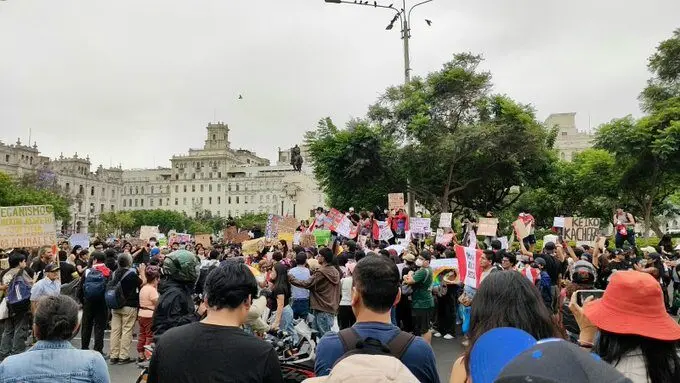
Peru’s Youth Protest Government Over Crime And Forest Fires

Young protesters march in Lima, Peru, against Keiko Fujimori’s government over extortion, forest fires and police reform.

Students, unions and families of protest victims demand action on extortion, environmental damage, living costs and police reform.


Young people, students, trade unions and human rights groups marched through central Lima on Saturday, demanding that President Keiko Fujimori’s government address rising extortion, deadly forest fires, the cost of living and alleged impunity for state repression.

RELATED: Peru Reached $4.813 Billion in Mining Investment Between January-August

Demonstrators began gathering at 4 p.m. in San Martín Square, a historic rallying point for popular movements in Peru. Participants included students from San Marcos and Catholic universities, human rights organizations, trade unions and members of the self-organized Generation Z movement.

The protests unfolded amid mounting concern over forest fires that have affected 16 regions across the country. Figures from Peru’s National Emergency Operations Center and the National Institute of Civil Defense recorded 479 emergencies, leaving 12 people dead and 708 displaced or otherwise affected.

The fires destroyed 1,299 hectares of crops and more than 13,800 hectares of natural vegetation, while also causing significant damage to local wildlife and livestock.

🚨 #URGENTE | Contra la extorsión y la crisis ambiental: jóvenes y colectivos sociales protestan en el centro de Lima

📲 Más información en https://t.co/cslnEWTq0k pic.twitter.com/9bIQWzwTbf

— RPP Noticias (@RPPNoticias) October 25, 2026

Text Reads: 🚨 #URGENT | Against extortion and the environmental crisis: young people and social groups protest in downtown Lima

Carrying banners calling for an end to the fires, police reform and solidarity with affected communities, demonstrators marched along Jirón de la Unión and Grau and Abancay avenues. Police blocked the procession from approaching the grounds of Congress.

Environmental concerns featured prominently in the march, with protesters criticizing what they described as inadequate government preparation and response to fires in the Andean highlands and Amazonian regions, including Cusco, Puno, Junín, Apurímac, Áncash, Huancavelica, Arequipa, Amazonas and Cajamarca.

One young demonstrator denounced the lack of firefighting teams, funding and preventive measures, arguing that the fires were extinguished only after rain arrived. The crisis, she said, had inflicted heavy losses on rural farmers and Indigenous communities.

Another protester highlighted flooding caused by heavy rains in Piura, in northern Peru, and the absence of a strategic plan to address the El Niño phenomenon. She also pointed to corruption in reconstruction projects and the neglect of infrastructure serving working-class communities.

Extortion was another central grievance. Transport workers, shopkeepers and small-business owners in working-class neighborhoods have been among those affected by the crime, according to the protest account. Demonstrators called for far-reaching police reform to dismantle corruption networks within the security forces and prioritize intelligence gathering and community-based prevention over the repression of social protests.

Families of people killed during social protests between December 2022 and June 2023 also joined the march, carrying photographs of their relatives and demanding justice. Their presence underscored the demonstrators’ broader call for accountability from a government they accuse of perpetuating impunity.

  •  
  •  

Free lunch, transgender athletes: Voters nationwide face major education decisions

Voters across the country are making big decisions about the education of their children at a local, state and federal level in this year’s midterms. Ballot initiatives, school board elections, governor’s races and Senate spots are all on the line as parents head to the polls thinking about AI, school choice and what topics should…

  •  

Supreme Court rejects Trump bid to halt care for incarcerated trans people

The US Supreme Court in Washington, DC, on October 14, 2026. Photo by SAUL LOEB / AFP via Getty Images

This article was originally published by Truthout on Oct. 21, 2026. It is shared here under a  Creative Commons (CC BY-NC-ND 4.0) license.

The U.S. Supreme Court has denied an emergency petition from the Trump administration, which sought a stay on a lower court’s injunction on a policy that would have denied gender-affirming care to federally incarcerated transgender people.

That policy was implemented by the Bureau of Prisons (BOP) after President Donald Trump signed an executive order in January 2025 that denied the existence of transgender people. The order also directed federal agencies to take steps that would be consistent with that view, and included specific instructions for the BOP.

“The Attorney General shall ensure that the Bureau of Prisons revises its policies concerning medical care to be consistent with this order, and shall ensure that no Federal funds are expended for any medical procedure, treatment, or drug for the purpose of conforming an inmate’s appearance to that of the opposite sex,” the order reads.

After the BOP conformed to the order, a group of incarcerated trans people who had been receiving gender-affirming care sued the administration. The group is being represented by the American Civil Liberties Union (ACLU), which argued that their Eighth Amendment protections against cruel and unusual punishment were being infringed upon.

A federal judge agreed, and, in August, ordered the policy to be blocked. The Trump administration challenged that finding, but the U.S. Court of Appeals for the District of Columbia Circuit upheld it, prompting Solicitor General John Sauer to submit an emergency appeal to the Supreme Court.

The court has regularly ruled against transgender people, allowing state bans on trans athletes’ participation in sports, ruling in favor of a ban on transgender people in the military, and upholding state laws that bar gender-affirming care for trans children and teens. Yet on Wednesday, the court denied the Trump administration’s request.

“The application for stay presented to The Chief Justice and by him referred to the Court is denied,” the order read, giving no further explanation. Two justices for the court — Samuel Alito and Clarence Thomas — would have granted the Trump administration’s request for a stay, the document said.

The ACLU heralded the high court’s denial of the emergency petition, stating, “This ruling affirms that federal prison officials can’t deny transgender people essential health care.”

Around 1,000 federally incarcerated trans people have also been diagnosed with gender dysphoria. The ruling means these individuals can continue receiving gender-affirming care while they remain in federal prisons or jails and the case moves forward in the lower courts.

  •  

EU Ministers Agree New Agricultural Market Rules as Farm Budget Dispute Continues

European Union governments have agreed a negotiating position on new agricultural market rules intended to take effect under the bloc’s 2028–2034 budget, advancing reforms to support arrangements for farmers while leaving the most contentious financial questions unresolved.

The Council approved its partial negotiating mandate on Monday, 19 October, covering changes to the Common Market Organisation regulation, which governs agricultural markets across the European Union.

The proposals include new arrangements for wine producers, protein crops and oilseeds, revised marketing standards, changes to the EU school food programme and provisions intended to improve preparedness for agricultural market disruptions.

However, the agreement does not settle future funding allocations or the broader structure of agricultural subsidies, which remain under negotiation as EU governments attempt to reconcile farming expenditure with competing demands for defence, industrial investment and regional development.

Agricultural markets under review

The Council’s negotiating position retains much of the European Commission’s original proposal while introducing amendments intended to accommodate national differences in agricultural production.

Under the proposed arrangements, sector-specific interventions would become mandatory in several areas, including beekeeping, fruit and vegetables and, under certain circumstances, wine production.

The Council has also proposed flexibility for countries where particular sectors are absent or relatively undeveloped.

For the wine industry, governments would be able to seek exemptions from certain obligations where national circumstances justify different arrangements.

This would allow the framework to retain common European rules while avoiding requirements that would be inappropriate for member states with little or no domestic wine production.

Sectoral interventions form part of the mechanisms through which the EU supports agricultural markets and producer organisations. They can cover measures intended to improve competitiveness, manage production and strengthen farmers’ commercial position.

New provisions for protein crops

The Council has endorsed the establishment of a separate sector for protein crops and oilseeds, replacing existing provisions covering dried fodder.

The objective is to encourage domestic production and reduce dependence on imported agricultural inputs, particularly crops used in animal feed and food production.

European livestock producers rely on protein-rich feed ingredients, including soyabeans, that are often sourced internationally.

Greater domestic production could reduce exposure to fluctuations in global commodity prices, transport costs and disruptions to international supply chains.

Under the Council’s proposal, member states would be encouraged to recognise producer organisations specialising in protein crops and oilseeds.

Such organisations can help farmers coordinate production, marketing and investment, although the effectiveness of the proposed measures will depend on how they are implemented nationally.

The proposals follow broader EU efforts to improve supply security in sectors extending from agricultural inputs to critical industrial materials.

School food and product labelling

The negotiating mandate also preserves the EU school scheme, which provides support for the distribution of fruit, vegetables and milk to schoolchildren.

Under the proposed framework, the programme would move from a school-year financing cycle to a calendar-year system, with transitional provisions intended to prevent disruption during implementation.

The Council has maintained the Commission’s objective of encouraging healthier eating habits by limiting products containing high levels of free sugars and fats.

The proposal also opens the possibility of additional marketing standards for several agricultural products, including protein crops, beef, pork, sheepmeat, goatmeat and rice.

These standards could provide consumers with more detailed information about product origins, subject to the final legislation.

Such measures would also have implications for producers and food businesses, which would need to comply with any new requirements concerning classification, marketing and labelling.

The Council additionally supports the harmonisation of rules covering industrial hemp, while retaining safeguards concerning seed certification and the permitted level of tetrahydrocannabinol.

Farming subsidies remain contested

The agricultural market agreement forms part of negotiations over the next Common Agricultural Policy, which will operate within the EU’s new seven-year financial framework.

Under the Commission’s proposed budget structure, several funding streams, including agricultural and cohesion programmes, would be brought together within national and regional partnership plans.

The restructuring has encountered opposition from governments and agricultural interests concerned that farming could lose protected access to EU funding.

As EU Today previously reported, 17 member states have called for agricultural and regional development expenditure to be protected against further reductions.

The Council’s latest position addresses how agricultural markets should operate rather than determining the size of the financial support available to them.

A separate debate concerns the conditions for receiving direct farm payments, including the definition of an active farmer and the degree of discretion granted to national governments.

Those questions remain central to the continuing CAP negotiations, which are due to return to the Agriculture and Fisheries Council on 26–27 October.

Negotiations move to Parliament

The Council’s partial mandate now provides a basis for negotiations with the European Parliament on the agricultural market provisions.

The legislation will still require agreement between the institutions, while its financing will depend on the eventual settlement of the 2028–2034 budget.

Governments must also complete negotiations on the wider CAP framework, including direct income support and the distribution of responsibility between Brussels and national administrations.

The market agreement reached on 19 October therefore establishes important elements of the proposed agricultural rules, but leaves unresolved the level of financial support available to European farmers after 2027.

  •  

We need to stop disinformation in UK political adverts. Here’s a chance to do so | Letter

Alex Tait on a proposed amendment to the representation of the people bill, and Dr Joseph Mullen on Russian interference in the Brexit referendum

Andy Burnham’s comments about Russian interference in Brexit (Report, 11 October) and the warning by the MI5 chief, Ken McCallum, against exaggerating its impact (Report, 13 October) risk overlooking another serious threat to electoral integrity: disinformation from our own political parties and campaigners.

Foreign interference deserves scrutiny, but misleading factual claims in electoral advertising are unregulated, unlike in commercial advertising. We have four sets of rules to ensure an advert for a packet of sausages is accurate, but none for the most important advertising of all – ads that influence how we vote.

Continue reading...

© Photograph: Tuomas A Lehtinen/Getty Images

© Photograph: Tuomas A Lehtinen/Getty Images

© Photograph: Tuomas A Lehtinen/Getty Images

  •  

Andy Burnham Will Never Cut Welfare

Andy Burnham has announced "big changes" to welfare to get one million NEETs back into work – but only once he's "rebuilt the education system". Sounds expensive, says Mary Gilleece. It’s clearly never going to happen.

The post Andy Burnham Will Never Cut Welfare appeared first on The Daily Sceptic.

  •  

France’s Unrest Exposes the Failure of Macron’s Centrist Political Model

What began as a student protest over deteriorating schools has developed into a nationwide revolt against economic hardship, political paralysis and declining public services. With the 2027 presidential election approaching, the violence has exposed problems that neither the government nor its principal opponents have convincing plans to resolve.

France’s latest wave of unrest has developed into one of the most serious domestic crises of Emmanuel Macron’s presidency. More than 550,000 people participated in demonstrations on 17 October, according to official estimates, before violence spread through Paris and other major cities. Shops were looted, police confronted rioters, and the historic town hall in Limoges was largely destroyed by fire.

The scale of the destruction prompted emergency government consultations and a televised presidential address. Macron promised to prosecute those responsible, while stopping short of declaring a state of emergency. Yet the immediate security challenge conceals a more difficult political question: why have protests that began with relatively specific demands over education become a confrontation involving such different sections of French society?

From school protests to a national revolt

The movement originated among secondary-school students demanding better facilities, more teachers and improvements in educational standards. Their complaints subsequently attracted trade unions, workers, farmers and elements of the Gilets Jaunes, the Yellow Vest movement that challenged Macron’s government in 2018.

The resulting coalition has no coherent political programme. Students protesting overcrowded classrooms share demonstrations with workers concerned about purchasing power and motorists angered by fuel prices. Their interests are not necessarily compatible, but they reflect a common dissatisfaction with the government’s ability to deliver functioning public services while containing living costs.

This distinction matters. The presence of masked rioters and organised groups engaged in violence does not establish that the hundreds of thousands who demonstrated peacefully supported their actions. Equally, the destruction of public buildings, attacks on police and widespread looting raise legitimate questions about the state’s capacity to maintain public order.

The economic problem behind the protests

At the centre of the discontent lies a structural problem that successive French governments have struggled to confront: the distribution of public expenditure between an ageing population and the services required by younger generations.

A French government budget assessment published in October revealed that pension obligations accounted for approximately 32 per cent of the education ministry’s budget, including €28.5 billion in pension expenditure. These obligations restrict the resources available for other departmental priorities.

France nevertheless remains a substantial spender on education. According to official figures, expenditure reached €199.2 billion in 2025, equivalent to 6.7 per cent of GDP. However, after inflation, the annual increase was only 0.1 per cent.

The issue is therefore not simply how much France spends, but how efficiently resources are allocated and whether expenditure meets changing educational needs.

The OECD’s 2025 PISA assessment found that French pupils’ performance in mathematics and reading had declined compared with 2022. Results were among the country’s lowest recorded, although broadly comparable with the OECD average.

These figures give the student protests a significance extending beyond the immediate condition of classrooms. They raise questions about France’s longer-term economic competitiveness and its capacity to provide younger generations with opportunities comparable to those enjoyed by their predecessors.

The limits of Macron’s reform programme

Macron entered office in 2017 promising to modernise the French economy and overcome the traditional division between left and right. Nearly a decade later, his administration faces a fragmented parliament, constrained public finances and growing resistance to further structural reforms.

The suspension of his pension reform illustrated the difficulty. Raising the retirement age was intended to reduce pressure on the pension system, but parliamentary opposition forced the government to defer the measure until after the presidential election.

The underlying financial pressures have not disappeared. Nor can they be resolved easily through additional spending when public debt, borrowing costs and budgetary obligations already restrict the government’s room for manoeuvre.

This creates an uncomfortable political reality: the state is expected to provide better services, greater purchasing-power protection and stronger security, while the available resources remain limited.

Can the opposition benefit?

The unrest comes approximately six months before the presidential election, with Marine Le Pen’s National Rally and Jean-Luc Mélenchon’s France Unbowed competing to establish themselves as alternatives to Macron’s political centre.

Le Pen has sought to combine support for economic grievances with demands for tougher policing. That position may attract voters concerned by the violence, but it also exposes tensions within a movement that previously supported the Yellow Vest protests.

Mélenchon faces a different difficulty. Supporting demonstrations against government policy is consistent with his political programme, but the involvement of violent groups risks shifting public attention from social demands towards questions of security.

A recent presidential opinion poll even suggested that Le Pen and Mélenchon could contest the final round, illustrating the weakening position of more conventional political alternatives.

Neither, however, can escape the fiscal constraints that have frustrated Macron’s government. A change of president would not automatically provide the resources required to expand public services, reform pensions and reduce the deficit simultaneously.

A wider problem for France and Europe

President Donald Trump has attributed the French unrest to immigration, although the movement’s documented origins lie principally in education, living costs and dissatisfaction with public services. Without established evidence about those responsible for individual acts of violence, broader claims about the demonstrators’ backgrounds remain speculative.

For the European Union, France’s instability carries consequences beyond its domestic political debate. France is central to European defence, fiscal negotiations and support for Ukraine. Sustained political paralysis would complicate its ability to negotiate and implement decisions requiring substantial public expenditure.

The immediate task for Macron’s government is to restore security without allowing the legitimate grievances of peaceful demonstrators to disappear from political consideration. The more difficult task will fall to whoever enters the Élysée in 2027.

France’s crisis is not simply a repetition of the Yellow Vest movement. It reflects a growing conflict over public resources, expectations of the state and the ability of established political institutions to reconcile competing demands.

The violence may subside, but the economic contradictions that brought such different groups onto the streets will remain. The presidential election will determine who inherits them, rather than whether they exist.

  •  

Reform Inquiry Clears Staff Over Undercover Donations Sting

Reform UK did not break any laws when senior party figures were recorded by undercover journalists discussing a £500,000 gift from a foreign donor, an internal investigation has concluded.

The post Reform Inquiry Clears Staff Over Undercover Donations Sting appeared first on The Daily Sceptic.

  •  

Indonesia’s bourse rebuild is really a monetary policy story

For decades, the Indonesia Stock Exchange has run like a members’ club, where the brokers who trade on the IDX also own it. But that cozy arrangement is about to end under an amended financial sector law that requires the exchange to demutualize. The Financial Services Authority, or OJK, has issued a new regulation on […]

The post Indonesia’s bourse rebuild is really a monetary policy story appeared first on Asia Times.

  •  

Fifteen Year-Old Reform Activist Arrested After Comparing Tory Councillor to Rent Boy

A 15 year-old Reform activist has been arrested for a tweet in which he compared a Tory councillor in Wolverhampton to dressing like a "rent boy" to attend a council meeting.

The post Fifteen Year-Old Reform Activist Arrested After Comparing Tory Councillor to Rent Boy appeared first on The Daily Sceptic.

  •  

Betting Against Burnham

Labour may be enjoying a Burnham bounce, but Mark Littlewood still thinks the smart option is to bet against the Prime Minister winning the next General Election. He explains why in the Daily Sceptic.

The post Betting Against Burnham appeared first on The Daily Sceptic.

  •  

Can This Independent Mass. Governor Candidate Rally a 67% Unenrolled Electorate?

Andrea James speaks at The National Council for Incarcerated Women and Girls "100 Women for 100 Women" rally in Black Lives Matter Plaza near The White House on March 12, 2021 in Washington, DC. Photo by Brian Stukes/WireImage

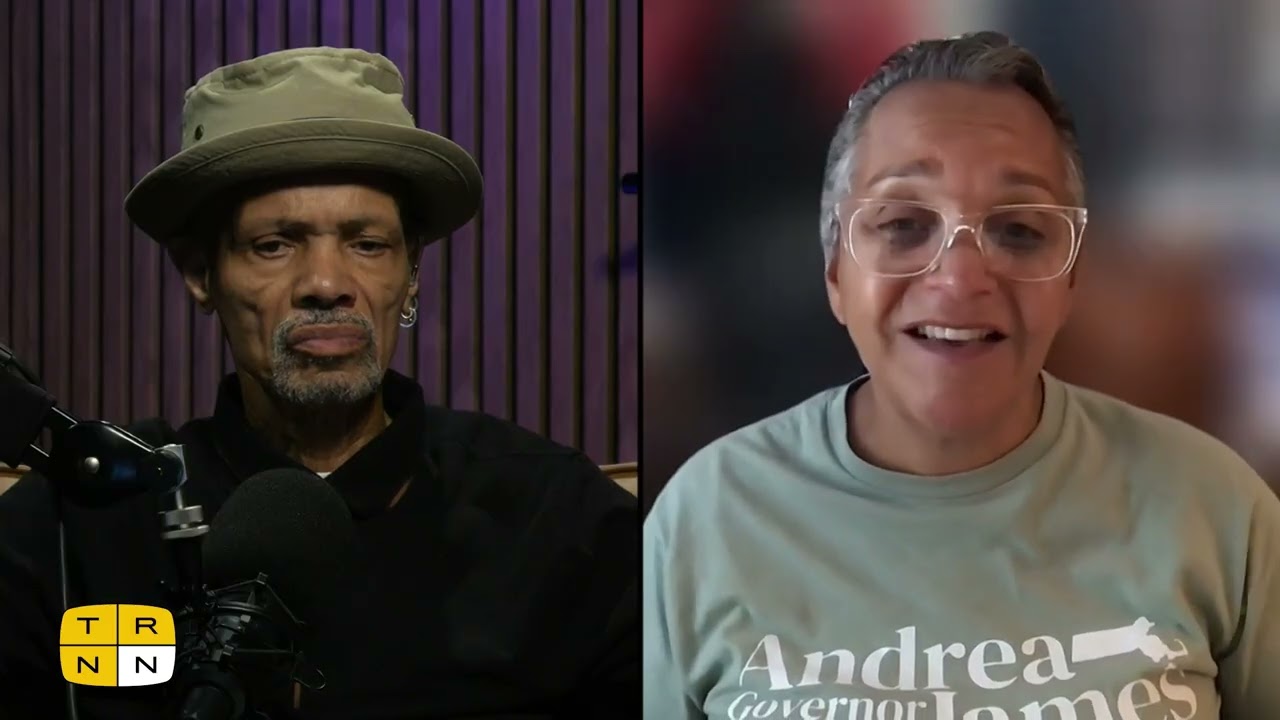
In this episode of Rattling the Bars, the midterms edition, we take you to the Commonwealth, where Andrea James—abolitionist, author, and organizer—is currently running for governor of Massachusetts. The countdown to November 3 is officially underway. Debates are scheduled for October, but independent and third-party candidates are being excluded from participating.

Andrea James has led national campaigns to reunite families by demanding clemency from high-level officials for incarcerated women and men. Now, she is running for governor with a platform focused on rent stabilization, lower energy costs, free childcare and stopping the construction of a new $360M women’s prison.

Related Links:

Credits:

  • Production/Post-production: Cameron Granadino
Transcript

MANSA MUSA:  Welcome to this edition of Rattling the Bars. I’m your host, Mansa Musa.

Joining me today is Andrea James, activist in every sense of the word. I want to say abolitionist, but she’s an activist in every sense of the word, organizing, and is currently running for the governor of Massachusetts.

Thank you for joining me, Andrea.

ANDREA JAMES:  Thank you for having me. It’s really great to be back in your studio, and just to have the privilege of being a part of how you disseminate information. It’s really an honor to be here, and I thank you for this opportunity.

MANSA MUSA:  And we want to go on record right now saying that here at Rattling the Bars, we recognize that it’s a so-called two-party system. And we recognize that, when you’re dealing with electoral politics, that if you’re not a traditional Democrat or Republican or so-called Independent, according to their definition, you’re not going to get the recognition. So we are here primarily to level the playing field. It’s not our endorsement of it, it’s more opportunity for her to talk about her candidacy, why she’s in this position, why she’s running, and what she expect. 

And with that being said, introduce yourself to our audience, Andrea.

ANDREA JAMES:  Well, I want to say thank you for introducing me as an abolitionist. I mean, I am an abolitionist. I have had a direct experience that causes me to understand that this country has had more than 250, but 250 recognizable years of incarceration of prison and prison building and incarcerating people in cages. And actually, I believe in direct experience and that that’s what leaders should have, some level of direct experience so that there’s an urgency around the issues that need to be worked on. And so I’ve had the experience of incarceration myself personally, and I happen to know, having lived in a women’s prison, that they only cause further harm and that they are antithetical to getting us to a place of having whole, healed, and healthy communities and people. So I am a prison abolitionist, absolutely. And thank you for referring to me in that manner.

Why I’m running has a lot to do with that experience in 15-plus years specifically. Decades prior to that in my lifetime came from a family, African American family of Civil Rights folk breaking color barriers and so forth in law, in the field of medicine. My grandmother was the first Black nurse in the city of Boston. I’m from a community that is the most incarcerated community in the commonwealth of Massachusetts. We’ve been in Massachusetts for seven generations, in the same old house in Roxbury for five generations. 

And so why I’m running is this alchemy of these life experiences that have brought me to where I am in my life today with my understanding of these issues and also who I am today. And that includes all of my life experiences, not just the highs that I’ve reached and the accomplishments that I’ve had and the academic achievements that I’ve had the privilege to be exposed to, but also my incarceration, which has been one of the most important experiences of my life that propelled me.

This was 20-plus years ago. I made a mistake in my law practice. I wound up on a prison bunk in federal prison for wire fraud. And what I received and learned from that experience after having been a criminal defense attorney, after having worked my entire adult life on ending mass incarceration and bringing attention to that issue and then having the direct experience of myself of living in a prison, I knew immediately after being surrounded by all these women, I had to survive 24 months of incarceration. I was laying next to, head to toe, head to toe, head to toe on a prison bunk next to sisters who had been in there for 24 years. I mean, I knew. 

My parents were researchers of people of African diaspora. When I was a kid, they were traveling all over the world with us, showing us different cultures of our people. And one of them was a trip to Gorée Island, where we saw where they enslaved African people, put them into caves, waited for ships to come, load them on like cargo, and take them to every single place on the planet to work as labor. And when I was in that prison, I wrote a book, a memoir called Upper Bunkies Unite. And because I was on a top bunk and I remember looking up over this sea of Black women and being like, damn, the first thing that came to mind all those years later was Gorée Island, was how they stacked us.

And so I’m running for all of that, and I’m running for more of the immediacy of creating change right now. I’ve been going to the Massachusetts state House for 15 years writing policy, writing legislation, giving of my voice, my experience, to panels and state legislative hearings and congressional hearings, and being trotted out for all of the things on the federal level policy. And enough is enough. Enough is enough. 

And I have done every piece. I’m older. I’m older. I believe in pouring into our young because they’re brilliant. They have a language now that like, what y’all talking about, but I like how it sounds. But we need to break the ceiling of the caste system that they expect us to continue to live under. And I refuse to do it any longer. I refuse to be made a chump in an electoral process that is not addressing the needs of the people that are millions, that, actually, in Massachusetts, have become the majority of people who are dissatisfied with either of the establishment parties, meaning the Democrats or the Republicans, that 67% of voters in the commonwealth of Massachusetts have become unenrolled. 

Now, does it mean that they’re all the way over here, prison abolitionists and to the left and progressives like I am? I don’t even call myself a progressive because that’s been co-opted in so many ways to help democratic socialists get into office and so forth that do not go far enough for me. However, we need to be a part of this in more ways than just being on the table. 

We need to shake up. I mean, you talk about rattling the bars, the electoral process needs to, those bars need to be rattled. We get people into office and they think the job, the hard work, was getting elected — Which is an arduous process even when you have their millions of dollars, which we don’t — But still too many of our electeds have gotten into office and they thought getting into office was the job. And then term after term after term, they’re just comfortable. It’s like, they have a job. They have a nine-to-five that they go to.

MANSA MUSA:  Let me ask you this here.

ANDREA JAMES:  Yeah.

MANSA MUSA:  OK. So, you already clarified the so-called progressive. We agree that the term in and of itself says one thing, but the behavior says something else. But you are running as an Independent. Now juxtapose that against Bernie Sanders. Bernie Sanders has ran as the longest Independent, but how do you see yourself when you say you’re Independent? Is your Independency similar to Bernie Sanders, same, or are you saying Independent in fact and not in theory?

ANDREA JAMES:  I’m Independent in fact. I mean, I’m running on issues.

MANSA MUSA:  Come on.

ANDREA JAMES:  I am not running on any party platform, and I refuse to be constricted by a party platform. I unenrolled because I was a member of the Democratic Party, I was raised by strong Black Democratic women over the generations in my family. I unenrolled because I thought it was unconscionable what the Democratic Party has become. And I believe that it is a duopoly between the Republican parties and the Democratic parties.

That being said, I wasn’t running on any party because I’ve seen the party that I expected to do, carry the water and make the noise on behalf of the issues that are affecting so many people. When they weren’t doing that term after term, elected position after elected position, I decided the party platforms are not going to carry the work that needs to be done. So I said, I’m going to work on these four issues.

Now I care about a lot of other issues, trust me. But right now in the compounded crises that people are going through, everyday people are going through in the communities like mine across the country, but specifically across the commonwealth of Massachusetts, we’re a commonwealth. It’s different when you’re a commonwealth, that means of the people. We become a corporate wealth. And our campaign is it’s the commonwealth, not the corporate wealth. We are under the oppression and control of a corporate agenda right now in the commonwealth of Massachusetts. So wealthy donors and corporations are getting the focus and the attention that working families, underemployed, unemployed, formerly incarcerated people, people who have gone through a state of struggle, the focus should be on. We’re a commonwealth. But I’m running on four issues.

MANSA MUSA:  Come on, talk about it.

ANDREA JAMES:  So that it is very clear because they’ve co-opted the term “affordability.” They’ve listened to our language and taken our language, both the Republican and the Democratic candidate, and morphed our abolitionist language into their establishment party agenda. 

So I said, I’m not dealing with none of that. I’m an Independent, meaning I am running on issues, not any sort of party platform or party identity. We don’t have an Independent party in Massachusetts. We’re just called unenrolled/Independents. So it’s not even that I’m running on a platform called Independent. I’m running on four issues: housing, universal healthcare, childcare, and equitably funded education. 

Why those issues? Because I am the voice of the people who have been just tamped down into a caste system that is only growing and widening. So before it used to be all of us, Black, Brown. We have a wealth gap in the commonwealth of Massachusetts that is astounding that nobody even wants to talk about. It’s always like, why has it got to be about race? Because everything is about race, baby [Musa laughs]. And so we’ve got to discuss that. But we’ve got an unemployment rate that is double for Black people in the commonwealth of Massachusetts. 

And so, these are things that we have to talk about, but the issues that I’m running on are issues that would create an immediate lift. I call it lifting from the bottom and closing the gaps. When you talk about unaffordability, it is at a crisis level in this state and around the country, but housing, universal healthcare, childcare, and equitably funded education immediately gives economic empowerment to the people, the millions of people just in the commonwealth of Massachusetts alone, the wealthiest state in the country, that has been completely left out of that.

So, we have nurses and firemen right now who can’t afford places to live. And so it has expanded. It’s no longer just formerly incarcerated people who got no chance in hell — That’s got no chance in finding support, I should say. We still make it, but in finding support in climbing out of that hole they tried to bury us in and get back on our feet and raise our children and bring our families back together and restitch the fabric that they’ve shredded economically, family-wise. But it’s expanded to a lot of the middle class, so to speak, who are now feeling the same level of pain, even as they still are intact and have their jobs and may have a house or may be able to figure out how to pay their rent, but really are not making a living wage themselves.

And so housing, universal health care, why universal health care that’s single payer health care. I’ve traveled the world in the work that I’ve done as an expert on women and incarceration. I’ve talked to parliaments in different countries about the issue. I’ve visited women’s prisons all over the world. And while doing that, I have had the experience of those countries and their major cities and how they address policy. Well, housing is a number one thing in many of these places, but also they have universal healthcare. They’re not beholden to what we’re stuck with, which is the CEOs who make $200 million, with a M, a year who run health care companies in the United States. And we have no benefit of it. We pay high premiums, we have deductibles, and most of the time we have to ask if they’ll fix something for us and it’s denied.

And so universal healthcare is one way to immediately infuse some economic stability in the families and in the everyday people in the commonwealth of Massachusetts. If we have single-payer health care, which means the state takes over completely — Which we are uniquely poised to do here because Massachusetts already controls its own health care market — And so the only reason we don’t have it is that because the governor and the other leadership in the commonwealth of legislature are beholden to the wealthy donors who are the CEOs and their rank and file who donate money to these campaigns. Because there is no other way to explain in the commonwealth of Massachusetts where we already control our own health care marketplace, where it does not make fiscal sense or it’s not fiscally responsible to not have single-payer health care, that we still have it, except that we will hold in place because of the lobbyists, the health care industry, and the CEOs that make us have to pay all of this money for health care that does not produce the level of health and wellness that we deserve.

MANSA MUSA:  OK. Let me ask you this here then. OK, so you already acknowledged that you got this wealth gap, and you got in terms of the political structure. So how are you managing being competitive in the sense of being able to get out and get your message out unless are you getting PAC money? Are you getting corporate money? So how are you funding your campaign? How do you see it? Because like you say, you up against, just to your own point, it ain’t commonwealth, it’s corporate wealth. If it’s corporate wealth, right?

ANDREA JAMES:  Millions and millions of dollars. Millions of dollars. The Republican candidate in this race, there’s three of us. First of all, mainstream media is beholden to the Democratic Party and they only refer to her. And in reference to the Republican candidate running against us, they only refer to one opponent running this race against our current Democratic governor. There’s three of us. There’s not just two. So mainstream media plays a huge role in completely blocking. 

Took 10,000 signatures, they didn’t think we could get it as an independent candidate. We got 13,311 certified signatures from the secretary of state — Certified at the secretary of state’s office, which means I am on the general election ballot on Nov. 3. 

Mainstream media has refused to include me in anything. We did our first mainstream media interview that aired Sunday morning, the very first one, but yet that same network is hosting one of the few debates that the current governor, Mara Healy, has agreed [to do]. They left it up to her. They let her do all the deciding. There’s three candidates, but she’s the one that got to decide where she was going to show up. Fine. They’re excluding me from the debates, the mainstream networks. I’m a candidate. I am on the ballot, and I am being excluded from being in the debate. 

When I asked the other network that I just did the interview with, why had they not invited me into the debate between the gubernatorial candidates? And they said, because the people have expressed that they only want to hear from the establishment parties. Well, that’s interesting in Massachusetts where 67% of the voter roll are currently unenrolled Independents. So who are you talking to?

And so, it doesn’t matter. What Donald Trump is doing right now with mainstream media on the national level, CNN and all them, he just kicked them out of the press [inaudible] their credentials, and they’re on the sidewalk outside of the White House trying to do an interview, being fed information from inside the press room. That’s exactly what these networks are doing to me by inviting us into the debate and allowing the voters to hear the messages, to be informed voters, and not just mainstream media being able to determine who gets to be heard and who doesn’t get to be heard. That’s violation of constitutional rights, of [the] First Amendment, there’s a plethora of wrongness with it, and that shouldn’t happen.

And so then we got to talk about the money, right? So the current governor’s a millionaire, but she also has millions of dollars that have flowed into her campaign by corporations, the CEO. And then all you got to do, it’s all public knowledge. Anybody can look at ours, they can look at theirs, and you can see where the money’s coming from. And it’s all the wealth and power in the commonwealth and people of wealth and power who want to make sure that the Democratic platform stays intact.

Now look at the Republican candidate that’s running against us. He’s got a $31 million mansion in Montana somewhere, a summer home in Montana. But he, at the start of his race, said, I’m putting $10 million into this race. So they’ve got commercials running, they’ve got all kinds of stuff that we don’t have. So the only thing that we have is an opportunity to be blessed, to be invited into opportunities like this, like what you have always provided for us at Rattling the Bars, but it’s about boots on the ground. And that’s one thing that our style of organizing didn’t change because it shifted to electoral politics.

So we know how to do this. It’s still hard because you have to pay for signs. You have to pay for, even though — Here’s an example. I don’t know if you can see it because my screen —

MANSA MUSA:  Yeah, I can see it.

ANDREA JAMES:  But throughout this entire campaign, our money has been spent on toner and paper. You know what I mean? Because we’ve been talking to Independent candidates, Kshama out in Washington State, and just talking to their campaign managers about how y’all getting this done against multi, multimillions of dollars that are just, they’re not even talking about us yet because they don’t want to give any rise to the awareness of people that there is a person like myself running. So they’re just suppressing everything else by covering everything with signs, with commercials, things that we just don’t have. 

So we’re doing our best. We’re boots on the ground. It took them two days to get 10,000 signatures to get back on the ballot. It took us months because we were grassroots. I stood outside in the rain, the heat, the snow, whatever for months, personally asking people if they would sign my ballot sheet. But also it gave me an opportunity to have conversations with people about what’s their pain points, what do they need in their lives to create joy? It’s not just about the struggle we’re going through, but where are the investments to create joy in the lives of the people of the commonwealth, all of us.

So it has been a really — And then again, Massachusetts is a blue, blue state. We got a blue governor, which is another reason why I ran because I’m like, hold up. The line in the sand for me was we went — So, Massachusetts was one of three states up until 2000 that allowed incarcerated people to vote, full access to the ballot. They took that right away from incarcerated people in 2000 because the brothers inside of a men’s prison here called Norfolk State Prison started to organize themselves. And they started to organize themselves because of the hard draconian sentences that more of these young brothers were starting to come into the prison with these real heavy sentences hanging over them, young. 

And so the Legislature was predominantly white and male was like, oh wait, you going to organize yourselves and your families on the outside? We make 7% of the population, Black folks in Massachusetts. We make up 51% of the carceral population. First of all, make that make sense. Math ain’t mathing, OK?

So they said, we’re going to strip you of the right to vote. And they did. They had to move heaven and earth. They had to change the Massachusetts Constitution to strip us of the right to vote inside.

Now, we have been fighting to reinstate that ever since. And so, they got a congressional hearing in one of the sessions, and we went and poured our hearts out. And with my testimony, I lined up the fact that this is voter suppression. This goes back to denying Black people the right to vote whenever you have a disproportionality in the numbers of Black folks in the state and the levels of incarceration, on and on. Well, they didn’t even reconvene after the hearing to discuss it. It never made it out of committee. It was what every other piece of our legislation that we have worked on over decades went to what they call “went to study.” 

That was it for me. Y’all ain’t even going to huddle and discuss this after we came in and poured our hearts out about why it’s important as people who have had direct experience with incarceration for people inside to vote. I was a mother. I had a 5-month-old little baby boy when they made me go into the prison, a 12-year-old daughter, and young adult, a son and two daughters. I had good reason to still have my right to vote.

MANSA MUSA:  Right. Answer this here, Andrea. And I want you to put yourself in this space, your candidacy in this space. So when we was at the Free Her March, I asked you about that, and this is what you said. You said when we first started this, the first time we came down here, we had a hundred people. The day that we was down there, we had blocks and blocks and blocks of people. We had Freedom Plaza flooded. So that’s one. I want you to put your candidacy in these two spaces. How do you see your candidacy in this light?

I was in Massachusetts, University of Massachusetts, I think year before last, where they was doing a showing of the movie called “The Strike,” where they shut down Pelican Bay, where the men shut down. How do you see your candidacy in terms of you was in a prison where they was treating y’all like animals, y’all made y’all minds up when y’all got out, when y’all got in a position to change the narrative, you was going to change it systematically and continuously, you changed it. Her movement. 

When I was down there where the buses was at, I ran into a lot of sisters I had dealt with and interviewed. Everybody was energized. Strike. They organized this strike throughout California under a situation where they ain’t even had the ability to communicate. So put your candidacy under that type of light.

ANDREA JAMES:  Well, we did. We started our work as incarcerated women inside of a federal prison and we were like, You know what? We don’t hear nothing about us, the separation of us from our children, whatever. So we organized ourselves in that prison, and we didn’t have no way of… We were writing letters and sending kites outside, whatever we could do to raise awareness of the issue of the incarceration of women and our separation from us from our children. But if you look at the life of a woman on a prison bunk, every issue that we are fighting for has been a factor that led them to that prison bunk. The lack of housing, the lack of health care, the lack of education, the lack of childcare, the lack of resources for the most vulnerable among us. And so that’s the first thing.

The second thing is I’m older. I’m older, and they want to create a narrative, and have created a narrative, that we have no more value and we don’t count. And the issues that we’re talking about, nobody should listen to because we have incarcerated or formerly incarcerated as part of who we are. And because of that, we just valueless now. We have no more authority. We cannot be accountable. We cannot be relied upon to run these institutions, to run these states. 

And they have these positions like Qiana Johnson, county clerk. What? Come on now. We got the first formerly incarcerated Black woman who is now the clerk in Prince George’s County. This is what we talking about. We’ve got a new Black woman mayor in Washington, D.C. because of the rallying and the intense work that Black women did, formerly incarcerated Black women did, to change that and put new leadership into that seat. 

So I want to be that. Let me break the mold. You know what I mean? It’s a win-win for us as far as I’m concerned because I’m challenging that. Yeah, they’re like, oh, now they started out only writing stories. There’d be one page of a story when I announced my candidacy a year ago and the whole page was filled up linking my case and talking about my transgression of wire fraud and went to federal prison as a lawyer and one little line that said, oh, and by the way, she’s running for governor.

So I’m like, OK, somebody has to step out and kind of be like, OK, I’m the whipping post. You know what I mean? Because I’m going to push back on that. And what? I don’t have time to talk about that. I have time to talk about why it’s important to have people with direct experience who actually know and have the urgency, the transparency, the accountability that it requires that we don’t currently have from our current legislature, from our current governor, particularly in Massachusetts. Massachusetts just received the Black Hole Award in the country. That means the least transparency in any state in the United States. The least. We have the least effective legislature in the entire country. So we have to do something different. 

And they’ve made it impossible pretty much if you have a felony conviction to run for things. You can’t be a state legislator for the felony conviction in Massachusetts, but guess what they didn’t think anybody would have the nerve to do as a formerly incarcerated person? Run for governor. But also I’m not a politician. I’m a community organizer, and I have no interest in making a career out of starting from school committee and working my way up and sitting around in the state legislature. I’m going straight to the top.

MANSA MUSA:  To the top. Yeah, that’s right.

ANDREA JAMES:  Where we can get the things moving that we need to have moving. And so if this just tills the soil, I have had so many sisters in our network across the country say, hey sis, I’m going to run for office now. You’ve inspired me. That’s what I’m talking about.

MANSA MUSA:  One thing for sure and two things for certain, you got a broad network in terms, I seen the response that you got from men and women coming out that’s in this space. So what kind of feedback, because you told me earlier that you’ve been traveling across the state. And I want to say this, because Massachusetts got the misnomer of being a progressive state, the Kennedy and whatnot, but talk about what kind of response you getting from the people that you’re talking to across the state. And I know you going everywhere, every crevice. Talk about the response you’re getting from the people that’s going to be responsible for you getting elected, because I believe you can get elected and you will get elected.

ANDREA JAMES:  Well, those are the communities that I’m in where no other politicians seem to go. The people who represent those communities go there when it’s election time and then they become the untouchables. Nobody sees them or hears from them. I’ve been in the western part of the state, which is closer to New York than it is to Massachusetts. They wear Yankees caps as opposed to Red Sox hats because they are completely disconnected. I’m talking about what’s the Springfield, Holyoke, Chicopee, these towns that… I was in Holyoke last year and this sister said to me, you came all the way out here. And I was like, of course I came out here it’s a part of Massachusetts, isn’t it? She was like, nobody comes out here. They can’t even tell you who the governor is in those parts of the state. And it’s mostly Black and Brown. Black, Brown and poor. And they’re feeling like they don’t even vote. 

And so we have this tiny, tiny base of predominantly Democrats who are holding a party platform in place. There’s not enough Republicans in Massachusetts to make that matter. And they are predominantly white. They do not have the direct experience of struggle economically, and they have co-opted the term “progressive,” and they go to things like No Kings and hold signs because that’s the only kind of way that they’re feeling like they could make a difference. They will never vote for me. And so I’m like, if you vote for me, I would love, great, you have a choice. We just want you to know that. I [inaudible] communities that are in the housing developments, you know what I mean? Up in the projects. I’m knocking doors there. I’m talking to people in towns where people are like, Don’t nobody vote out here. And I’ve never voted. But we’ve been simultaneously doing a voter registration drive along with this campaign from day one.

We have a false belief amongst the majority of formerly incarcerated Black men that I’ve found out running this race over the past year that do not even know that they can vote because they’ve been told when they leave the prison. Massachusetts, if you’re felony conviction in a state prison, they took the right to vote. But the minute you walk out of that door, if you were registered before, all you got to do is go and vote again. If you aren’t registered, you can register and vote in the next election. We can vote as formerly incarcerated people in Massachusetts as long as we are not currently serving a state prison sentence for a felony conviction.

If you’re in jail in Massachusetts, you can vote. You can vote while you are serving a misdemeanor sentence in a county jail, access to the ballot. Do they have it? No. So those are the people that we’re talking to.

And again, we live. I get it. So many people have said to me, Black people have said to me, sis, I don’t vote. I would vote for you, but I can’t vote. I’m formerly incarcerated. We correct that and say, You can. We get them registered. We tell them, you don’t have to go into the voting place. You can get a mail-in ballot. You can do all these things. The other piece of that is no matter what, too many Black and Brown folks have said to me, I don’t even believe in the process, sis. I don’t vote. 

And now my response to that is one in six Black children in the commonwealth of Massachusetts go to bed hungry. 30,000 children, predominantly Black and Brown and poor kids, sleep in a car or under some makeshift shelter every single night in the commonwealth of Massachusetts. If they still go to school, they go to schools that are woefully, unequally funded, underfunded, and they just had more teacher layoffs.

If you say to me, I’m asking you, I’m an elder Black woman running for office. We’ve never had a candidate like me. I’m asking you to get engaged just to vote. Just vote. Vote for us. Vote for our issues. If I’m wrong, I’m willing to step out of the electoral process and to do. What are you doing? When I tell you that, do you have children? Most of them tell me yes. Do you care about the Black child over here who’s going to bed hungry every night, that’s sleeping on the street? If you have a better way to approach that, I’d like to know. If you have an alternative to getting somebody like myself in the governor’s seat to create immediate significant radical change that is going to start not from a budget that they’ve created that has no transparency, that nobody knows if it’s true, if it’s not true, that we voted for an audit that we can’t get.

We don’t know how much money’s there. We don’t know who’s deciding where money should be allocated. If you don’t understand the power to not start from a budget that we don’t even know if it’s true or not, but instead start from the issues and the people that need the support the most and make that the priority for the work and where the money is being spent. Then tell me what you have as an alternative for me to make sure as a mother who raised Black children, as a grandmother who now has grand babies and is from a community that the fabric has been shredded by all of these systems, you tell me what your proposal to me is so that I’m not wasting my time any longer so I can make sure that these Black babies and these poor families, white, Black, Brown, whatever, we don’t have any more children who are hungry and sleeping on the street.

MANSA MUSA:  Andrea, tell our audience as we close out how they can get involved with your campaign or how they can get more information rather about your campaign.

ANDREA JAMES:  We don’t have millions of dollars. We barely have any dollars. Our money comes from mostly poor, formerly incarcerated Black, white, Brown women who just are urgent to create change in their own families and communities who are struggling just to feed their kids, find a place to live and the whole bit. AJFOR — That shows my age. My kids were like, Ma, why didn’t you just put the number four? Because I didn’t know — So ajforma.com, that’s our website. You go there, there’s a volunteer form, there’s a donate button. No amount is too small. We get $5, $10, $15, $20 donations, and that has carried us for whatever we’ve been able to get the signs, whatever we’ve been able to do. We’re doing lit drops right now. Lit drops are where you carve out turf and you literally drop in literature like this so that people know we’re running and knocking on doors, door knocking.

Anybody who’s run campaigns like we have to stop prison builds and so forth, you’ve door knocked with me. Come and stand with me and door knock for this campaign now. It is change. And so that’s how they can. Ajforma.com, hit us up, send us an email, whatever you want to do, ajames@ajforma.com. All the information’s on our website. And we’ve got 45 [days]maybe, I don’t know, Nov. 3 is the election day. We are in the 11th hour, and still too many people in the commonwealth of Massachusetts who want or are looking for change don’t know about this campaign because mainstream media has intentionally left us out. And so we need help. We need boots on the ground who can go do a standout for us, disseminate our lit for us, put a yard sign if you have a yard or a window sign if you have a window. We need to raise awareness and we need to do it right now.

💾

“We got the first formerly incarcerated Black woman who is now the clerk in Prince George’s County… We’ve got a new Black woman mayor in DC because of the rallying and the intense work that Black women did, formerly incarcerated Black women did to change that and put new leadership into that seat. So I want to be that. Let me break the mold.” — Andrea James, independent candidate for governor of Massachusetts
  •  

Burnham Axes Triple Lock and Unveils Elections Shake-Up to Shut Out the Right

Andy Burnham has announced that he will axe the pensions triple lock in 2030 to pay for free social care as well as unveiling an elections shake-up to shut out the Right from power.

The post Burnham Axes Triple Lock and Unveils Elections Shake-Up to Shut Out the Right appeared first on The Daily Sceptic.

  •  
❌