❌

Reading view

Classrooms in Sumy Oblast are moving underground due to Russian shelling: 13 such schools are already operating, nine are under construction, and another 14 are at the design stage

Children study in a radiation-protective shelter in Sumy, December 2025. Photo: Suspilne Sumy

Since the start of Russia’s full-scale invasion, Russian forces have damaged 165 schools in Sumy Oblast and destroyed 21 beyond repair, according to the head of the regional administration. The administration’s answer is to move classrooms underground. Design documentation for 14 new underground schools has already been prepared, Oleh Hryhorov, head of the Sumy Oblast Military Administration, said in an interview with Ukrinform published on 28 October 2026. In addition, 13 such schools are already operating in Sumy region, while nine more are under construction, the media outlet reported.

Sumy region is one of the areas regularly shelled by the Russian military, making it dangerous to hold classes in above-ground school buildings. Of the region’s 280 schools, 225 have shelters, mostly basic ones, while more than 70 have radiation-protective shelters, Hryhorov noted.

“The process is ongoing and is being scaled up as much as possible,” he said, adding that the region is bringing in partners.

Underground classrooms provide a safer learning environment in Sumy Oblast

The construction of new underground schools is primarily focused on the larger cities of Sumy Oblast, where most schoolchildren are concentrated, Hryhorov explained.

The learning process at such a school differs from the usual format. This was explained by Oleksandr Vaniushenko, the principal of one of the first underground schools in Sumy, Suspilne reported on 23 December 2025.

“We have the first shift—entirely younger children, and fifth- and sixth-graders also go out to the open locations. The second shift brings in just as many more children. The total number studying per day is 360–370,” Vaniushenko noted.

The shelter has backup power supplies, allowing children to continue their lessons during air raid alerts and power outages, according to the project, media reported.

Children study in a radiation-protective shelter in Sumy, December 2025. Photo: Suspilne Sumy

Currently, 22 schools operate entirely in person, while 193 use a hybrid learning format, the head of the regional administration said. A total of 75,000 children are currently attending school in Sumy Oblast, he noted.

A Russian bomb hit a Sumy school during lessons in September

On 29 September, Russia struck a school in Sumy with a 250-kilogram aerial bomb while children in grades 1 to 4 were there, Serhii Kryvosheienko, head of the Sumy City Military Administration, reported. He said the Russians aimed the bomb at the school on purpose. About 40 students were in the school’s shelter when the bomb hit, a school employee told Suspilne.
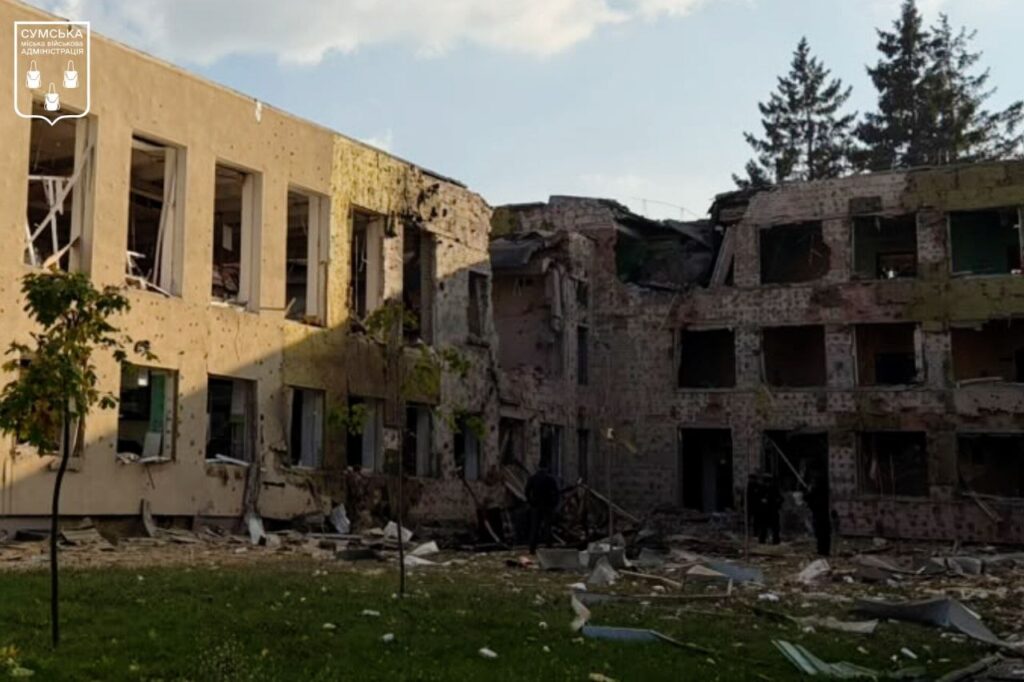
A school in Sumy where Russian forces carried out a strike while elementary school children were studying, 29 September 2026. Photo: Sumy City Military Administration

"With no pity or compassion whatsoever, they strike at children? There is nothing human in the enemy! He is not fighting on the battlefield—he is destroying a nation," Kryvosheienko said.

  •  

“The enemy has changed tactics”: Zaporizhzhia faces record number of Russian FPV drone attacks, hitting public transport 3 times in one day

Municipal bus in Zaporizhzhia hit by a Russian FPV drone, 29 October 2026. Photo: Zaporizhzhia Regional Prosecutor’s Office

Zaporizhzhia experienced a record number of Russian FPV drone attacks on 29 October, injuring 14 people, including a 14-year-old boy, regional authorities said.

Russian forces used FPV drones and multiple-launch rocket systems to attack civilian infrastructure, targeting municipal transport and damaging residential buildings, warehouses, and cars, prosecutors said.

Zaporizhzhia reports record FPV drone attacks

Zaporizhzhia Regional Military Administration head Mykhailo Semikin said Zaporizhzhia had experienced a record number of FPV drone attacks on Thursday. After meeting with military officials, he said the authorities were aware of the situation and relevant services and Ukrainian defenders were responding.

He said Russian forces had “changed their tactics and modified their drones,” adding that Ukrainian military personnel were working on countermeasures to address the new threats.

Semikin urged residents to remain calm, heed air raid alerts, and exercise particular caution.

Russian forces launched a record number of FPV drone attacks on Zaporizhzhia on 29 October, repeatedly targeting civilian public transport.

Drones struck a municipal bus, a minibus, and a trolleybus. Four people were injured in the bus attack alone. Across the city, at least 14… pic.twitter.com/WfemZSh7yr

— Euromaidan Press (@EuromaidanPress) October 29, 2026

Russian drones target municipal transport

The attacks included strikes on a municipal bus, a minibus, and a trolleybus, according to Semikin.

In the morning, a Russian FPV drone struck a municipal bus, injuring four people.

In a separate attack, Russian forces struck 15 vehicles, a warehouse building, and a power line, sparking a fire and damaging a nearby apartment building. Two men, aged 41 and 66, were injured.

At around midday, another FPV drone hit a minibus in central Zaporizhzhia, injuring one person. 

Later, a Russian drone struck a municipal trolleybus, critically injuring a 56-year-old woman and lightly injuring two other women, aged 71 and 66.

Russian attacks on Zaporizhzhia injured two men, aged 41 and 66.

The strikes set four cars and an open area on fire, damaged a warehouse, and damaged four cars and four buses.

📷Ukraine’s State Emergency Service pic.twitter.com/oqRfYvMa7T

— Euromaidan Press (@EuromaidanPress) October 29, 2026

Zaporizhzhia’s proximity to the front line

Zaporizhzhia lies relatively close to the front line in southern Ukraine, leaving the city exposed to Russian attacks with weapons that can be used at shorter ranges, including FPV drones and multiple-launch rocket systems. 

The proximity allows Russian forces to threaten civilian infrastructure more easily without relying solely on long-range missiles or drones.

Prosecutors investigate suspected war crime

The Zaporizhzhia Regional Prosecutor’s Office said it had opened a war crimes investigation. Investigators from the Security Service of Ukraine’s regional directorate are conducting the pretrial investigation.

The casualty count and damage reports were preliminary, and authorities said information was still being updated as the attacks continued.

Russian attacks kill civilians in several Ukrainian cities

Zaporizhzhia was not the only major city hit by Russian attacks on 29 October. In Dnipro, a Russian strike on the railway station killed at least 14 people. 

In Chernihiv, two teenage girls were killed and 23 people injured, including four children. In Kremenchuk, Poltava Oblast, three people were killed and 15 injured, including three children. 

The attacks damaged residential buildings and civilian infrastructure in all three cities.

  •  

Russia strikes publishing house warehouse in Kharkiv on Ukrainian Language Day, adding to a campaign against Ukrainian literature and culture

Kyiv Arsenal Book Fair 2024

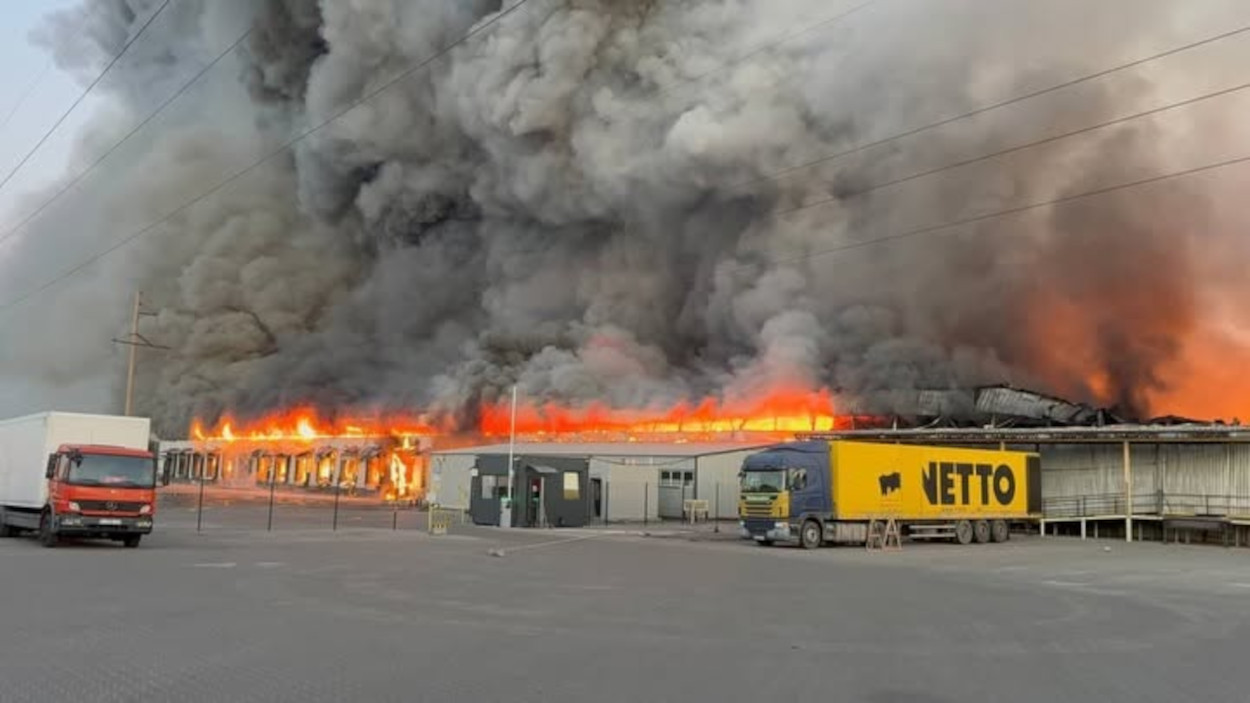
Russian forces struck a warehouse belonging to Ukrainian publishing house KSD in Kharkiv on 27 October, disrupting the publisher’s planned November releases. No employees were injured, but the company is still assessing the damage and losses.

The attack came on the Day of Ukrainian Writing and Language, a national holiday celebrating Ukraine’s language and literary heritage. It adds to a series of Russian strikes on Ukrainian publishing houses, printing facilities, and book warehouses that have destroyed millions of books and disrupted the country’s publishing industry.

KSD announced the strike on social media, saying it had planned to greet readers on the holiday and reveal its November releases but instead had to deal with the attack. The publisher said strikes in the area were continuing, preventing it from determining the full extent of the damage.

The company had planned to begin releasing its new books on 5 November. It has now postponed the announcements while it assesses the situation and determines how to proceed.

“We really want to show you the new releases we had prepared for November,” KSD said. “But for now, as we clarify the details, we cannot yet assess the scale of the destruction and understand how we will work going forward.”

The publisher said it would share updates as more information became available.

Russian forces struck a warehouse building in Kharkiv’s Slobidskyi District with a drone, as Moscow continues targeting civilian and industrial infrastructure across Ukraine.

📷Ukraine’s State Emergency Service pic.twitter.com/F6Ee7VybbI

— Euromaidan Press (@EuromaidanPress) October 27, 2026

Russia’s attacks devastate Ukraine’s book industry

KSD’s warehouse is the latest publishing facility affected by Russia’s campaign against Ukraine’s book industry. In July and August alone, Russian attacks destroyed around 13 million books, nearly a third of the number Ukrainian publishers printed in all of 2025, according to the Ukrainian publishing industry.

On 1 August, a Russian strike on a warehouse used by the Ranok publishing group in Kharkiv destroyed around 8 million books, including hundreds of thousands of school textbooks. A separate attack on a printing facility in July destroyed print runs and book materials belonging to numerous Ukrainian publishers.

In October, Russian strikes also damaged a Kyiv warehouse belonging to publisher Knyholav, destroying tens of thousands of books, including titles and reprints that had replaced stock lost in an earlier attack.

A fire burns at a Nova Poshta fulfillment and sorting center in Sviatopetrivske, Kyiv Oblast, after a Russian drone strike on 28 August 2026. More than 60,000 books were destroyed in the attack. Photo: Readeat
Explore further

Russia has burned millions of Ukrainian books, striking at the infrastructure of Ukrainian culture

These strikes threaten more than publishers’ finances. Destroyed print runs and damaged warehouses delay new releases, deprive readers of Ukrainian-language books, and force publishers to spend scarce resources replacing titles instead of developing new ones.

KSD has not yet disclosed its losses or announced a revised release schedule for its November books.

  •  

Postal service Nova Post says it has already shot down Russian Shahed drones, as Ukrainian businesses take air defense into their own hands

shahed-136 Geran-2 iranian airborne A drone is seen in the sky seconds before it attacked buildings in Kyiv, Ukraine, on Oct. 17, 2022. The Russian military has been using the Iranian Shahed exploding drones to strike Ukraine's vital infrastructure for more than a year. (AP Photo/Efrem Lukatsky/EastNews

Ukrainian postal company Nova Post has established its own private air defense capability and has already shot down Russian Shahed attack drones, company co-owner Viacheslav Klymov said on 27 October, according to Interfax-Ukraine.

As Russia increasingly targets Ukrainian factories, warehouses, transport hubs, and other civilian infrastructure, localized air defense is becoming more important. Ukraine’s expanding private air defense program allows businesses to help protect their facilities while operating within the country’s military air defense command system.

“We are one of the few companies that has implemented this project. I don’t want to disclose figures, but we have Shahed shootdowns,” Klymov said at the 12th Kyiv International Economic Forum, according to Interfax-Ukraine.

Klymov also argued that businesses can take on responsibilities that were previously considered exclusively the state’s domain. He pointed to firefighting as another area where companies can strengthen their own response capabilities.

Nova Post employees already extinguish many fires caused by Russian attacks on the company’s facilities without waiting for the State Emergency Service of Ukraine (DSNS) to arrive, he said. Large businesses are also looking for fire engines in Europe to establish their own firefighting units.

Aftermath of Russian strikes on a Nova Poshta warehouse in Sviatopetrivske near Kyiv on 28 August 2026. Photo: Anton Ovsienko/Facebook

Private air defense expands across Ukraine

Ukraine began allowing private companies to establish air defense units under a government-approved framework in November 2025. These units operate under Air Force command, with the military coordinating their missions and integrating them into the national air defense network.

Nearly 100 companies have reportedly joined the experimental program. About 50 air defense groups had been formed, and crews from six companies were already carrying out combat missions. By 14 October, the groups had downed more than 60 aerial targets, mostly Russian drones, according to Ukraine’s Defense Ministry.

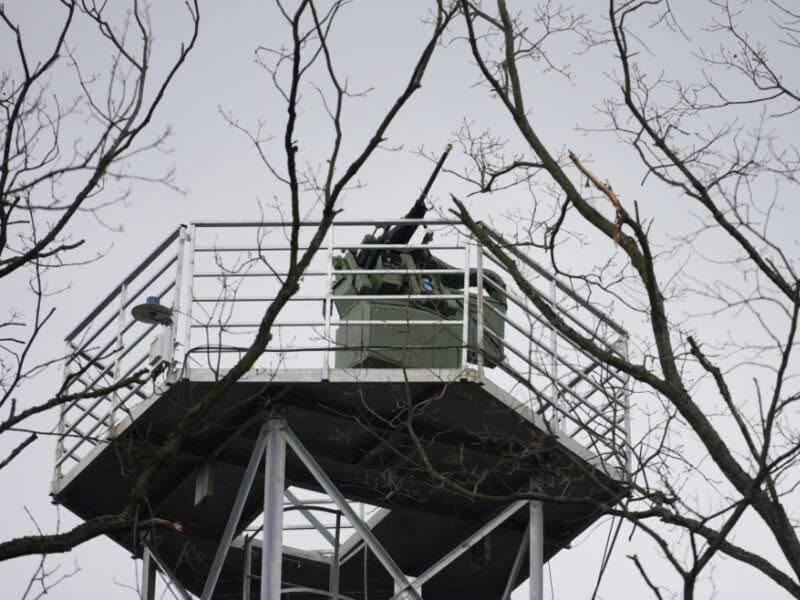
The program allows participating businesses to help defend industrial sites and critical infrastructure using capabilities that include interceptor drones and remotely operated heavy machine guns. The approach adds another layer of protection without requiring the military to cover every facility with its own units.

The need for such protection has grown as Russia continues launching long-range attack drones against civilian and industrial targets across Ukraine. Localized air defense can help protect specific sites and reduce the burden on military units, although it remains part of a coordinated national system rather than an independent replacement for military air defense.

Remote-controlled machine gun turret used in a privately developed air defense system in Ukraine. Photo: Serhii Beskrestnov
Explore further

Ukraine’s air defense goes private: businesses can now buy point coverage for their own sites

Not every company sees private air defense as the answer

The approach has its limits. On 26 October, Kateryna Zahorii, chair of the board of directors of major pharmaceutical company Darnytsia, said her company had studied private air defense but decided against deploying it, Interfax-Ukraine reported.

Zahorii said the changing nature of the threat could make the investment difficult to sustain, as companies might need to keep upgrading their defenses. Darnytsia is instead prioritizing attack monitoring, employee shelters, and safety procedures. The company has been hit by Russian forces three times in September, according to NV.

  •  

Drone strike sinks cargo ship near Romania, killing Ukrainian sailor. Romanian President blames Russia

The overturned hull of the cargo ship Khoryv after a drone strike in the Black Sea near Romania on 23 October 2026. Screenshot from video: Romanian Ministry of Internal Affairs

A Russian drone strike sank the Comoros-flagged cargo ship Khoryv in the Black Sea near Romania’s port of Constanța on 23 October, killing a Ukrainian sailor and leaving three crew members missing. Nine others were rescued, Digi24 reported.

The sinking comes amid a surge in attacks on commercial shipping near Romania and Bulgaria, threatening civilian crews and routes used to transport Ukrainian agricultural exports. As Russia intensifies strikes on Ukrainian ports and shipping, the Danube corridor and nearby waters have become increasingly important to Ukraine’s maritime trade.

Romanian President Nicușor Dan blamed Russia for the attack, describing it as part of Moscow’s escalation of the war against Ukraine and its attacks on NATO’s eastern flank, Reuters reported. 

Ukraine’s Foreign Ministry confirmed to Radio Svoboda that a Ukrainian citizen was among those killed.

Ukrainian sailor killed, three crew members missing

The Khoryv sent a distress signal at around 10 a.m. local time, about 13 nautical miles (24 kilometers) east of Constanța, just outside Romania’s territorial waters, Digi24 reported. The vessel caught fire, sustained major damage, and capsized, with only a small part of its hull remaining visible above the water.

Romania’s naval authority said 13 crew members were aboard: 10 Ukrainians and three Azerbaijanis. Rescue teams recovered nine sailors alive and one body, while three crew members remained missing, Reuters reported.

Ukraine’s Foreign Ministry said the vessel had been traveling from a Turkish port and confirmed that the Ukrainian Embassy in Romania had received information from Romanian authorities about one Ukrainian sailor’s death. Four Ukrainian survivors, including the captain, were taken to a hospital, while two others did not require medical assistance.

Attacks threaten Black Sea shipping

The sinking comes amid a surge in attacks on commercial vessels off the coasts of Romania and Bulgaria. At least seven cargo ships have been hit over the past two weeks, with around 30 sailors reported dead or missing, according to Reuters.

The vessels targeted in recent incidents were either anchored near or heading toward the Sulina Canal, which connects the Danube River to the Black Sea. The canal has become a key export route for Ukraine, one of the world’s largest exporters of grain and vegetable oils.

Ukraine has increasingly relied on Danube ports and routes through Romanian territorial waters as Russia attacks its own Black Sea ports. Strikes on commercial vessels threaten crews and risk disrupting Ukrainian agricultural exports to international markets.

Russia has intensified attacks on Ukrainian ports and ships traveling to or from Ukraine. Moscow has described its strikes on vessels as retaliation for Ukrainian attacks on Russian or Russia-linked ships.

Bulk carrier "Royad Mammadov" under the flag of Saint Kitts, partially sunk after an attack by Russian sea and air drones on October 5, 2026, 20 nautical miles off the coast of Romania. Photo: Romanian Interior Ministry
Explore further

Russia’s attacks on Black Sea shipping raise risk of global famine, German FM warns

NATO plans stronger Black Sea surveillance

NATO said on 20 October it would send additional maritime patrol aircraft, radar systems, and drones to the Black Sea following the attacks on commercial shipping, according to Reuters. The alliance has not specified which capabilities it will deploy.

Romania, Ukraine, and Bulgaria have called on NATO to do more to protect commercial vessels. The latest sinking adds urgency to those calls as attacks increasingly affect shipping near NATO territory.

The latest incident highlights the growing risks to commercial shipping as Russia’s war against Ukraine increasingly affects maritime traffic beyond Ukraine’s own coastline.

  •  

Russia’s attacks on Black Sea shipping raise risk of global famine, German FM warns

Bulk carrier "Royad Mammadov" under the flag of Saint Kitts, partially sunk after an attack by Russian sea and air drones on October 5, 2026, 20 nautical miles off the coast of Romania. Photo: Romanian Interior Ministry

German Foreign Minister Johann Wadephul has warned that disruptions to global shipping routes could trigger famine in vulnerable countries, citing Russian attacks on Black Sea shipping as part of the wider threat to international food supplies.

Russia has increasingly targeted civilian shipping in the Black Sea as part of its campaign against Ukraine’s maritime trade, striking cargo vessels, port infrastructure, and ships transporting agricultural goods. The attacks threaten Ukraine’s ability to export grain to global markets, raise risks for international shipping companies, and jeopardize food supplies in countries that rely on Ukrainian agricultural exports.

Speaking ahead of a meeting of foreign ministers in Istanbul on Friday, 23 October, Wadephul said attacks and threats to shipping in the Strait of Hormuz, the Red Sea, and the Black Sea were disrupting trade in food and fertilizers, DW reported. The impact extends far beyond the conflict zones, threatening countries that depend on imported wheat and agricultural inputs.

Wadephul said fertilizer shortages could threaten basic agricultural production in poorer countries, where access to imported food and farming supplies is already limited. He also pointed to Türkiye, the world’s largest wheat-processing country, as vulnerable to disruptions in the supply of grain.

Russian attacks disrupt Ukraine’s grain exports

Russia has intensified attacks on Ukraine’s Black Sea ports and civilian cargo ships, disrupting a maritime corridor that carries most of the country’s agricultural exports. In July, Russian strikes brought traffic through the corridor close to a standstill during the harvest season, leaving grain with fewer routes to international markets.

The attacks have also hit foreign-flagged vessels carrying or preparing to load Ukrainian grain. On 16 October, Euromaidan Press reported that Russian attacks had sunk merchant ships and damaged others in the Black Sea region, with seafarers missing. The campaign has increased risks for shipping companies and reduced the routes available for Ukrainian exports.

Ukraine is a major supplier of wheat and other agricultural commodities to global markets, including countries in the Middle East and Africa. Disruptions to its exports can tighten global supplies and push prices higher, adding pressure on countries that depend on imported grain.

Wadephul made the remarks ahead of a meeting of foreign ministers in Istanbul, where he said countries must send a signal that they will not accept Iran or Yemen’s Houthi militia holding global trade hostage. He called for an end to indiscriminate attacks on shipping and neighboring countries, warning that prolonged insecurity puts vulnerable populations at greater risk of hunger.

His remarks place Russia’s attacks on Ukrainian shipping within a wider pattern of threats to key maritime trade routes, with consequences for food security far beyond the regions directly affected.

  •  

Russia has been “fine” toward Ukraine, Trump says, on the same day a Russian drone killed a one-year-old in a public park

trump's just removed seven russians two ships turkish firms its sanctions blacklist · post president donald trump greets russia's vladimir putin 15 2025 joint base elmendorf-richardson alaska (ap photo/julia demaree

US President Donald Trump said Russia has been “fine” toward Ukraine and suggested Kyiv should appoint someone else other than President Volodymyr Zelenskyy to negotiate on its behalf, even as Russian forces continue attacks across Ukraine and Washington faces questions over its support for Kyiv.

His comments came as Russia continues striking Ukrainian cities and infrastructure, with regular attacks killing civilians and damaging residential buildings and energy facilities. Russia has waged a violent war against Ukraine for more than 12 years, seeking to seize Ukrainian territory and undermine the country’s sovereignty, with widespread violence, grave human rights abuses, and killings of civilians throughout the conflict.

Speaking to reporters on 19 October, Trump said Zelenskyy should have settled the war long ago and could have secured a better deal by following his advice. He accused the Ukrainian president of not doing enough to end the war, claiming that Zelenskyy did not want to stop the fighting. Trump said he wanted the war to end and argued that Russia had “been fine” toward Ukraine, adding that Moscow “hasn’t been doing much.”

On the same day, a Russian drone struck a park near a cafe in Kharkiv Oblast, killing six people, including a 14-month-old girl killed in her stroller and an 11-year-old girl. Another 14 people were injured, including six children, according to Ukrainian officials.

russian drone kills six kharkiv oblast park including mother 14-month-old stroller hours later ukraine shows photos senators · post anhelina killed attack inna died hospital 19 2026 nova vodolaha killed_in_kharkiv_oblast
14-month-old Anhelina, who was killed in a Russian attack on a park in Kharkiv Oblast. Her mother, Inna, later died in the hospital. 19 October 2026, Nova Vodolaha. Photo: National Police of Ukraine

Russian attacks intensify as Kyiv loses advance warnings

Russian attacks across Ukraine have intensified in recent months, with large-scale drone strikes, missile attacks, and repeated hits on energy infrastructure. The attacks have killed civilians, damaged homes and businesses, and disrupted electricity and other essential services.

Kyiv has faced repeated Russian ballistic missile attacks without the advance warnings Ukraine normally receives from international partners. The latest attack on 19 October again raised concerns about gaps in warning time, leaving residents with little time to reach shelter.

kyiv attack
A building in Kyiv damaged in the Russian ballistic missile attack overnight on 19 October 2026. Photo: State Emergency Service of Ukraine in Kyiv

The repeated gaps have fueled concerns about Ukraine’s access to intelligence amid reports of restrictions on some US support. Ukrainian officials warned that missing launch data could weaken the country’s ability to detect incoming ballistic missiles, while Washington denied halting intelligence sharing.

Republicans push back against Trump's Russia policy

Trump's approach has drawn criticism from members of his own party, particularly over his decision to ease restrictions on Russian energy exports and his broader efforts to reach an agreement with Moscow, according to POLITICO.

Republican lawmakers have questioned whether easing pressure on Russia will help end the war or instead give the Kremlin additional revenue and leverage while its military continues attacking Ukraine. The dispute has exposed divisions within the party over how to handle Putin and the future of US support for Kyiv.

The sanctions relief followed a broader push toward economic engagement with Moscow. On 18 October, Trump's envoys Steve Witkoff and Jared Kushner had urged Zelenskyy in September to consider restoring Russian gas transit through Ukraine as part of a potential peace deal.

The proposal would revive a trade that Europe has spent years reducing because of its dependence on Russian energy. Renewed Russian energy exports could provide Moscow with additional revenue while its war against Ukraine continues.

Trump on Ukraine:

Maybe it's time for Zelensky to get somebody else to negotiate. pic.twitter.com/BA5kKSuONC

— Clash Report (@clashreport) October 19, 2026

Pressure on Kyiv as Washington considers closer ties with Moscow

Trump's comments add to tensions between Washington and Kyiv over the terms of a potential peace agreement and the level of US support for Ukraine. His suggestion that Ukraine change its negotiator raises further questions about whether his administration is willing to accept Kyiv's position in talks over its own future.

Zelenskyy has urged Washington to maintain pressure on Moscow rather than offer economic concessions. Ukrainian officials have also called for continued military assistance, particularly air defense systems, as Russia continues its campaign against Ukrainian cities and critical infrastructure.

The contrast between Trump's description of Russia's conduct and the situation on the ground remains stark. While Trump says Moscow has behaved relatively decently, Russian forces continue to launch attacks that kill civilians, damage homes, and threaten Ukraine's energy supply. The lack of advance warning before recent ballistic strikes on Kyiv has added to concerns about the consequences of reduced or unreliable US support.

  •  

Ukraine and Japan plan prefabricated backup crossings for Kyiv’s bridges: 720 meters of structures already delivered

Meeting between Ukraine’s Minister for Restoration, Infrastructure and Transport Mykola Kalashnyk, Japan’s Ambassador to Ukraine Yo Osumi, and JICA Ukraine Office Chief Osamu Hattori, October 2026. Photo: Mykola Kalashnyk/Telegram

Ukrainian and Japanese officials discussed establishing backup bridge crossings in the event of Russian strikes, preparing municipal infrastructure for winter, and Japan's continued assistance with Ukraine's recovery, Ukraine's Minister for Restoration, Infrastructure and Transport, Mykola Kalashnyk, reported on 14 October.

Russia is targeting Kyiv's bridges to paralyze the city and break civilian morale, defense analyst Hamish de Bretton-Gordon wrote in The Telegraph. On 1 and 2 October, Russia attacked Kyiv's Southern Bridge, then struck the Northern Bridge on 3 and 4 October. Ukraine is now working with international partners to establish backup bridge crossings that could maintain connectivity even if major routes are damaged.

The discussions took place during a meeting between Minister Kalashnyk, Japan's Ambassador to Ukraine Yo Osumi, and Osamu Hattori, head of the Japan International Cooperation Agency (JICA) office in Ukraine, according to the statement.

Ukraine's Minister for Restoration, Infrastructure and Transport Mykola Kalashnyk during a meeting with Japan's Ambassador to Ukraine Yo Osumi and JICA Ukraine Office Chief Osamu Hattori, October 2026. Photo: Mykola Kalashnyk/Telegram

Backup crossings could prevent logistical disruptions if major bridges are damaged

Kyiv's Southern Bridge, for example, plays a critical role in logistics because freight traffic uses it, transport planning expert Dmytro Bespalov noted in an article for Ukrainska Pravda. At the same time, installing additional metal structures to reinforce bridges could be dangerous given their technical condition and existing load levels, he said.

One potential solution is to establish backup bridge crossings.

Ukraine and JICA have agreed to continue working together on engineering solutions for setting up these crossings. Japan has already delivered 720 meters of prefabricated bridge structures to Ukraine, which are expected to be used to create alternative routes if Russia's attacks damage major bridges, Kalashnyk said.

The initiative is intended to help maintain transportation links, ensure the delivery of critical supplies, and preserve evacuation routes for civilians.

The flags of Japan and Ukraine displayed on a screen during a meeting between Ukraine's Minister for Restoration, Infrastructure and Transport Mykola Kalashnyk, Japan's Ambassador to Ukraine Yo Osumi, and JICA Ukraine Office Chief Osamu Hattori, October 2026. Photo: Mykola Kalashnyk/Telegram

Ukraine prepares water utilities and boiler plants for winter amid the threat of Russian infrastructure strikes

During the meeting, Ukraine and JICA discussed equipping water utilities with backup power supplies, addressing the need for modular boiler plants, and obtaining equipment to ensure uninterrupted heating and water services. Ukraine has already submitted lists of the necessary equipment to JICA for consideration as part of a new emergency assistance project, Kalashnyk said.

An intercepted document outlining an alleged Russian plan for strikes against Ukraine this winter reportedly describes attacks on 60 critical infrastructure facilities using up to 1,000 missiles, drones, and aerial bombs. Potential targets include electrical substations, hydroelectric power plants, thermal power plants, boiler facilities, and infrastructure related to water supply and wastewater management.

Kyiv during a blackout caused by Russian strikes on energy infrastructure, 11 October 2026. Photo: Yan Dobronosov

The document also describes potential strikes on facilities in Kyiv, Kharkiv, Odesa, and several other cities. Such attacks could disrupt electricity, heating, water supply, and wastewater services.

  •  
❌