Login

Europe Keeps Tightening Sanctions on Russia. But What Happens if Washington Changes the Rules?
Brussels is preparing another round of restrictions against Moscow while Washington explores the possibility of economic concessions. The disagreement exposes a weakness in Europe’s sanctions strategy: its effectiveness still depends heavily on decisions taken outside the European Union.
The European Union has imposed sanctions on almost 1,600 additional individuals and companies connected with Russia’s military-industrial complex. It is preparing a 22nd sanctions package, expanding restrictions on the networks that supply Moscow’s armed forces.
Washington, meanwhile, is considering whether economic incentives could help persuade the Kremlin to negotiate an end to the war in Ukraine.
The two approaches are not necessarily incompatible. Sanctions can be used both to constrain an adversary and as bargaining instruments in negotiations.
But they become considerably less effective when the governments imposing them disagree about the conditions under which they should be lifted.
For Europe, the problem extends beyond transatlantic diplomacy. After more than four years of war, Brussels has developed an extensive sanctions regime but still faces difficulties preventing restricted technologies from reaching Russia, limiting its energy revenues and enforcing measures against companies operating through third countries.
A change in American policy could expose those weaknesses more sharply.
Targeting the Machinery of War
On 12 October, the Council of the European Union imposed restrictions on 1,569 individuals and entities.
The measures targeted 826 companies and 743 executives associated with Russia’s defence industry.
Unlike earlier restrictions concentrated on prominent political figures and major financial institutions, the latest designations reach into the industrial supply chains supporting Russian weapons production.
According to the Council, the companies concerned employ more than 250,000 people and generate annual turnover of at least €20 billion.
Their activities include the production and supply of electronics, semiconductors, communications equipment, navigation systems, explosives and components used in missiles, drones and military aircraft.
More than half the listings concern supply chains associated with ballistic missile production.
The approach reflects an increasingly detailed understanding of how Russia sustains its military operations.
Modern weapons depend on complex manufacturing networks. A missile producer may be able to replace a sanctioned supplier, but obtaining specialised components through alternative channels can increase costs, delay production and complicate quality control.
Targeting those networks can therefore be more consequential than imposing restrictions on another senior official whose assets in Europe have already been frozen.
Nevertheless, the number of sanctioned entities is an imperfect measure of effectiveness.
A designation has limited practical value if the targeted company has no assets within European jurisdiction, does not require Western financing and can obtain equivalent components elsewhere.
The more useful questions concern production delays, procurement costs, component availability and the extent to which Russian manufacturers can replace restricted technology.
Sanctions Evasion Has Become an Industry
European restrictions have encouraged the development of increasingly elaborate procurement networks involving intermediaries, logistics companies and financial service providers.
On 15 October, the Council announced additional measures against companies and individuals involved in circumventing sanctions.
The cases illustrate the geographical complexity of enforcement.
Among those targeted were trading and logistics businesses associated with Türkiye, financial intermediaries operating in Russia and companies linked to oil transactions involving the United Arab Emirates, India and the Seychelles.
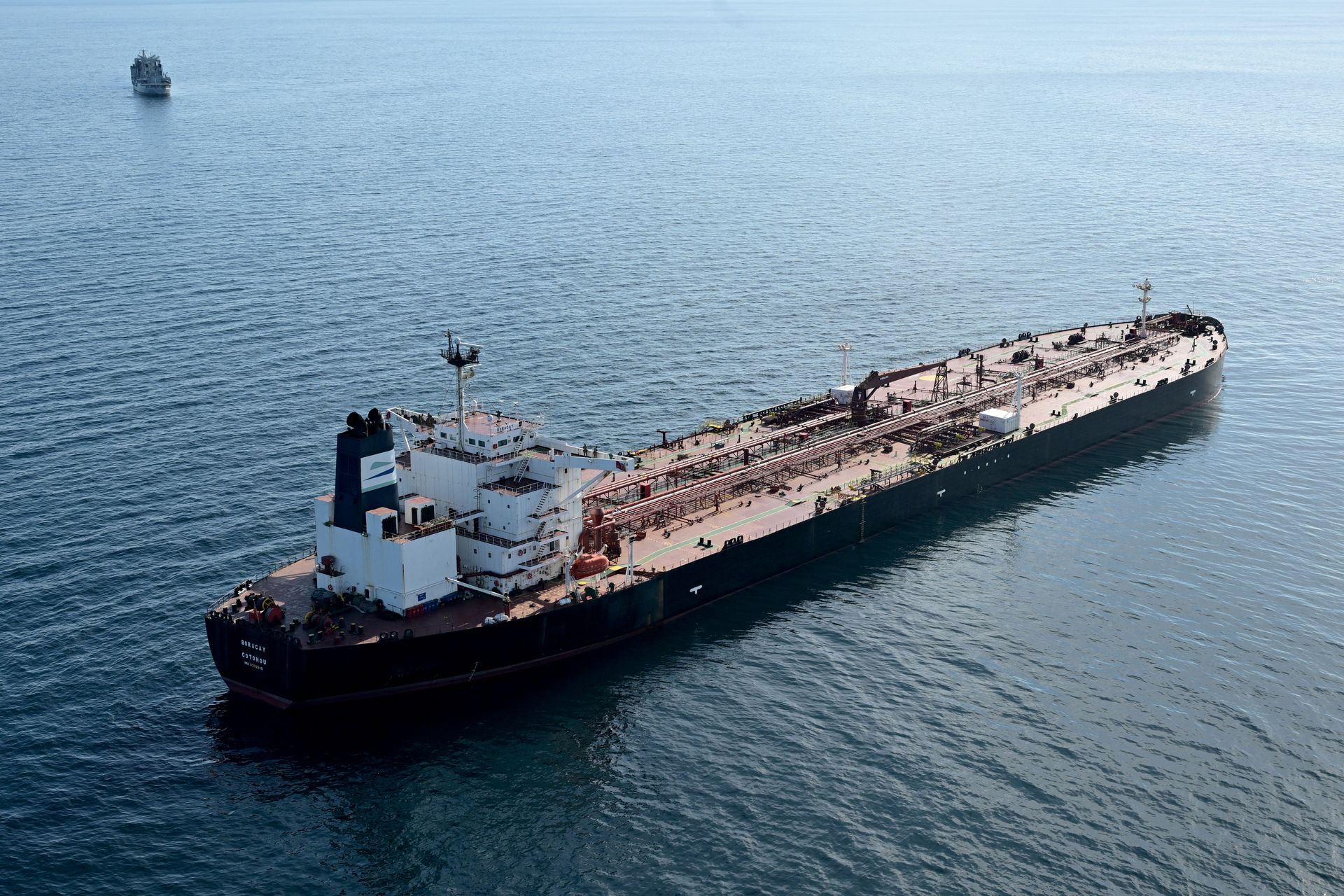
The EU also identified entities associated with Russia’s shadow fleet.
These networks exploit differences between national legal systems, commercial practices and the willingness of third-country authorities to cooperate with European restrictions.
Brussels can prohibit European companies from supplying particular goods. Preventing those products from being resold through several intermediaries is substantially more difficult.
Enforcement requires customs intelligence, banking supervision, corporate ownership information and cooperation with governments that may have little interest in restricting profitable trade with Russia.
The EU’s 21st sanctions package, adopted in July, extended restrictions to additional shadow-fleet vessels, financial institutions and cryptocurrency service providers.
Such measures increase the cost of evasion. They do not automatically eliminate the commercial incentives sustaining it.
Washington Holds Cards Brussels Cannot Replace
The Trump administration’s exploration of possible economic arrangements with Moscow introduces another complication.
American sanctions possess particular influence because of the dollar’s international role, the importance of US financial institutions and Washington’s capacity to restrict access to American markets.
European sanctions operate independently, but their effectiveness can be reinforced substantially by corresponding American measures.
If Washington relaxes restrictions on selected Russian institutions or commercial activities while Brussels maintains its prohibitions, companies could encounter two increasingly different regulatory environments.
European businesses would remain subject to EU law. American companies might gain access to transactions unavailable to their European competitors.
More importantly, Moscow could recover access to certain financial or commercial channels without obtaining equivalent relief from Brussels.
The scale of the consequences would depend on which restrictions Washington changed. Limited exemptions would not have the same effect as broader measures involving Russian banks, energy companies or international payments.
No comprehensive American sanctions rollback has been agreed.
Nevertheless, the prospect creates uncertainty for European policymakers.
As EU Today previously reported on the disagreement over sanctions relief, European leaders have resisted proposals to reduce economic pressure before Russia makes substantive concessions over Ukraine.
Their position is strategically coherent. Sanctions represent one of Europe’s principal instruments of leverage in negotiations.
But preserving that leverage requires more than refusing to lift existing restrictions.
It requires ensuring that those restrictions remain effective even if American priorities change.
Europe’s Unfinished Economic Strategy
The European Union has considerable economic weight. Its single market, regulatory powers and financial institutions provide instruments that Russia cannot simply disregard.
Yet Europe has often been more effective at adopting sanctions than at enforcing them consistently.
Implementation remains dispersed among national authorities with different resources, investigative capacities and political priorities.
Companies operating across multiple jurisdictions encounter uneven enforcement, while intermediaries outside the EU can exploit gaps in information-sharing.
Brussels has attempted to address these weaknesses through expanded reporting obligations, restrictions on third-country entities and closer coordination among national authorities.
The forthcoming 22nd package will provide another indication of whether the EU intends to deepen that approach.
Its precise contents have not yet been announced.
A credible European strategy would also require greater attention to the relationship between sanctions and defence production.
Restricting Russian access to components is valuable. Expanding Europe’s own capacity to manufacture ammunition, missiles and air-defence systems is equally important.
Economic pressure cannot substitute indefinitely for military capability, particularly when the country being sanctioned remains engaged in a prolonged war.
Europe also needs to consider the conditions under which sanctions might eventually be modified.
A negotiated settlement could require carefully defined economic incentives. But those incentives would need to be linked to verifiable Russian obligations and mechanisms for restoring restrictions if agreements were violated.
Otherwise, sanctions relief could become an irreversible concession in exchange for commitments that prove difficult to enforce.
The immediate challenge for Brussels is therefore not simply to produce another package.
It is to establish whether Europe can sustain an independent economic strategy towards Russia if Washington decides that its diplomatic objectives require a different approach.
The EU has accumulated considerable sanctions authority since 2022. The next test is whether it can turn that authority into durable strategic leverage without relying on American policy remaining unchanged.