❌

Reading view

Could 2026 be the year that democracy fought back? | David Van Reybrouck

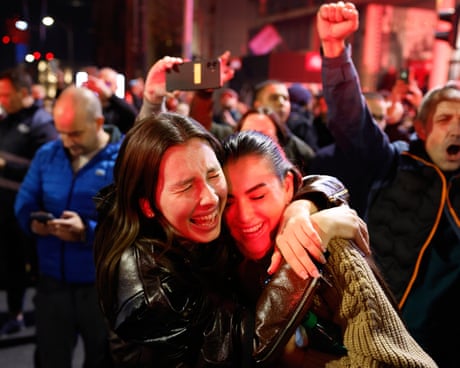
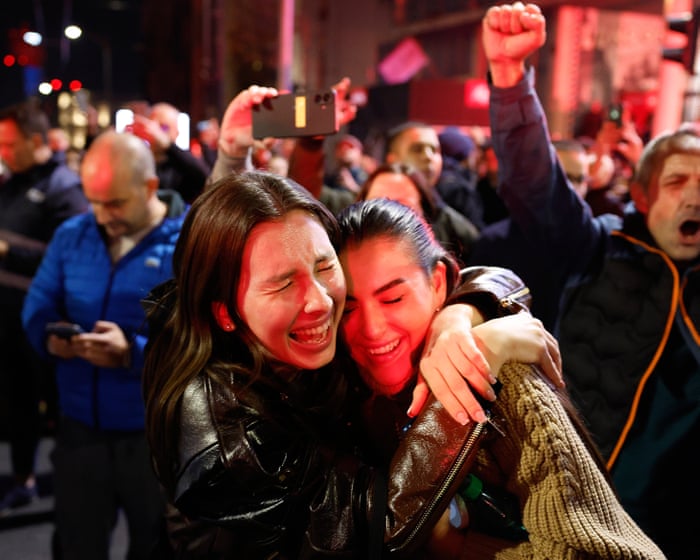
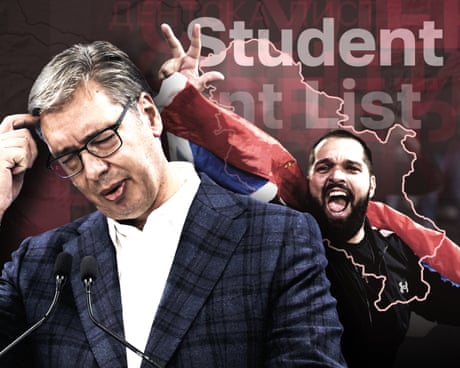
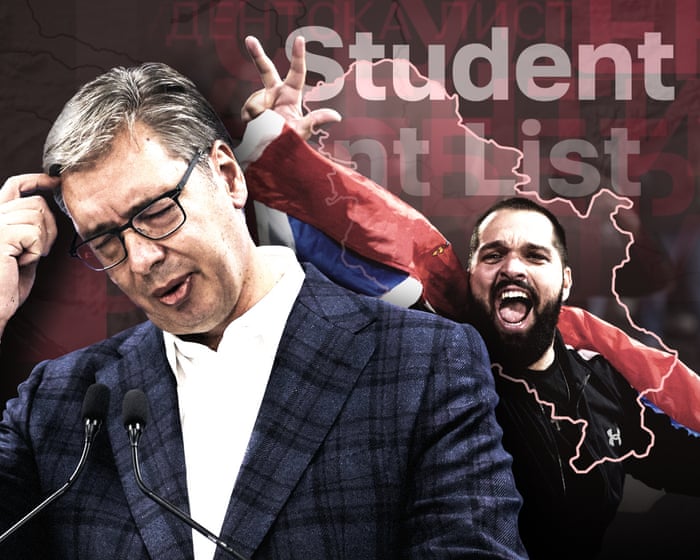
Elections are never enough by themselves, but the stunning results from Serbia, Brazil and Hungary have given us hope in dark times

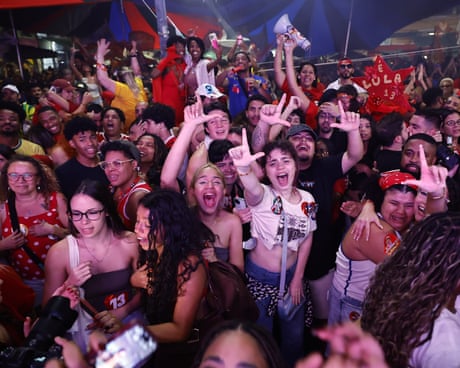
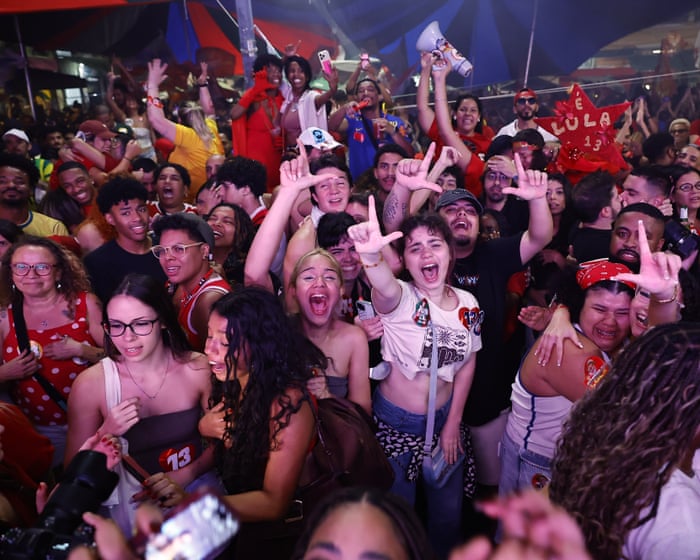
It is undoubtedly too early to declare victory, but the recent electoral defeats of Viktor Orbán, Aleksandar Vučić and Flávio Bolsonaro make me wonder: is 2026 turning out to be the year democracy slowly, but surely, fought back?

Even in Israel, prime minister Benjamin Netanyahu’s reigning bloc lost its parliamentary majority and saw the spectacular rise of Arab parties. Though the opposition may not be able to form a government yet, it does have the larger parliamentary bloc.

David Van Reybrouck is a Belgian author and philosopher laureate for the Low Countries. He is the author of Against Elections: The Case for Democracy, and the initiator of Democracy27

Continue reading...

© Photograph: Andre Coelho/EPA

© Photograph: Andre Coelho/EPA

© Photograph: Andre Coelho/EPA

  •  

Arranca el laboratorio político de Serbia: una mayoría incontestable ante un Estado por reconstruir

El heterogéneo movimiento estudiantil afronta el reto de transformar su modelo asambleario en un Gobierno eficaz, luchar contra la corrupción y definir su rumbo exterior ante la mirada atenta de la UE Leer

El heterogéneo movimiento estudiantil afronta el reto de transformar su modelo asambleario en un Gobierno eficaz, luchar contra la corrupción y definir su rumbo exterior ante la mirada atenta de la UE
  •  

From Brussels to Belgrade: Europe’s Generation Z Protests Challenge Established Politics

Youth-led demonstrations across Europe are bringing together concerns about housing, education, employment and political accountability. Although the movements differ considerably between countries, their emergence reflects growing dissatisfaction among younger Europeans over economic prospects and their influence on political decisions.

A series of demonstrations involving young people across Europe has developed into a wider political phenomenon, as students and younger workers challenge governments over living costs, public services and their expectations for the future.

Protests have taken place in France, Belgium, Italy, Albania and several other countries, while a student-led movement in Serbia has achieved a particularly consequential political outcome.

In Serbia, nearly two years of demonstrations culminated in a parliamentary election victory for a student-backed political movement, ending the electoral dominance of President Aleksandar Vučić’s Serbian Progressive Party.

The outcome, reported by Reuters on 29 October, has given the movement a prospective parliamentary majority, although final certification of the election results remains outstanding.

Elsewhere, protesters have secured fewer immediate political concessions.

Nevertheless, their campaigns share a recurring concern: that conventional channels of political representation have failed to address problems affecting younger generations.

Economic Pressures Behind the Demonstrations

The grievances vary between countries, but housing affordability, insecure employment, education funding and living costs feature prominently.

A European Parliament youth survey published in February 2025 found that 40 per cent of respondents aged 16 to 30 considered rising prices and the cost of living a priority for the EU.

Almost one-third identified economic conditions and job creation as a principal concern, while education also ranked prominently.

More recent figures illustrate the financial pressures confronting younger Europeans.

According to Eurostat data published in June 2026, 24.2 per cent of EU residents aged 15 to 29 were at risk of poverty or social exclusion in 2025.

That compares with 20.9 per cent for the population as a whole.

These figures do not establish that economic hardship is the cause of every protest. They do, however, provide context for the dissatisfaction expressed by participants.

Belgium’s Students Demand Better Education

In Brussels, demonstrations have focused partly on the condition of schools and the availability of educational resources.

Students have criticised deteriorating facilities, shortages of teachers and government decisions affecting education funding.

Nineteen-year-old student Maya Gourdel told Reuters that peaceful attempts to draw attention to these concerns had attracted little response from political leaders.

Her account reflects a wider frustration among demonstrators who believe that public attention has increased only after protests became more disruptive.

Belgium’s education system is organised primarily at community level, meaning decisions concerning funding, staffing and school infrastructure are divided among different authorities.

The demands of protesters consequently involve both national political debates and decisions taken by regional and community institutions.

France and Italy Face Wider Social Unrest

In France, demonstrations concerning the cost of living and public services have involved students alongside trade unions and other organisations.

Recent protests have also been accompanied by violence, including attacks on commercial premises and confrontations with police.

The involvement of younger demonstrators does not mean that every participant supports violent tactics.

Rather, the events illustrate how movements with economic and political grievances can encompass groups with different objectives and methods.

Italy has experienced similar tensions, particularly in Milan, where demonstrations against rising living costs have followed earlier episodes of unrest.

The Italian government has faced pressure over household expenditure, wages and the affordability of essential services.

These disputes have developed against a background of high energy prices and concerns about the broader economic outlook.

Albania’s Frustration With Political Institutions

In Albania, student-led protests have challenged Prime Minister Edi Rama’s government over alleged corruption, limited employment opportunities and education standards.

Demonstrations that began in Tirana have spread to other cities.

On 29 October, opposition lawmakers disrupted proceedings in parliament following weeks of protests and confrontations between demonstrators and police.

The government has offered measures intended to address economic concerns while condemning violence associated with the demonstrations.

For many younger Albanians, employment prospects are closely connected to the possibility of emigrating.

The perception that professional opportunities depend on political connections or personal networks has become another source of dissatisfaction.

However, the Albanian movement cannot be treated as identical to protests in EU member states, given the country’s different economic conditions and political institutions.

Serbia Shows the Political Potential of Student Movements

Serbia provides the most substantial example of youth-led protest translating into electoral change.

The movement emerged after the collapse of a railway station canopy in Novi Sad in November 2024, which killed 16 people and prompted allegations of corruption and negligence.

Students organised prolonged demonstrations demanding accountability and institutional reform.

Their campaign subsequently developed into an electoral challenge to the governing Serbian Progressive Party.

Preliminary results from the October 2026 parliamentary election indicate that the student-backed list has secured a majority of seats.

However, electoral certification and the formation of a new government remain incomplete.

The movement now faces a different challenge: converting protest demands into administrative decisions, legislation and economic policy.

Its success will be judged not only by the election result but also by its ability to govern.

A Generational Shift, But Not a Single Movement

It would be misleading to describe Europe’s demonstrations as a unified political campaign.

Participants have different objectives, national circumstances and ideological positions.

Some demand increased public expenditure, while others concentrate on corruption, political accountability or employment opportunities.

What connects them is a recurring concern about whether established institutions respond adequately to younger citizens.

The political consequences will depend on whether demonstrations produce lasting organisations, influence elections or secure changes in government policy.

Serbia suggests that student mobilisation can translate into substantial political change.

For governments elsewhere in Europe, the question is whether the grievances driving these movements can be addressed through existing political institutions before dissatisfaction generates further unrest.

  •  

What is ‘coordinated inauthentic behaviour’ – and how is it distorting Europe’s online democracy?

If you have come across messages such as “what Europe needs is a peaceful continent” on Facebook or X, you may have encountered coordinated inauthentic behaviour (CIB).

CIB is a manipulative communication tactic that uses a combination of authentic, fake and duplicated social media accounts to operate as an adversarial network across platforms such as X, Facebook or Bluesky.

By coordinating their activity, these accounts can amplify particular messages and create an online impression that may not reflect the reality of public opinion.

The tactic spread massively during Covid.

In a paper entitled ‘Coordinated inauthentic behavior: An innovative manipulation tactic to amplify Covid-19 anti-vaccine communication outreach via social media’, Monica Murero wrote that such operations could be “one of the greatest threats to freedom of expression and democracy in our society”.

But this distortion becomes particularly visible during elections.

Indeed, with political momentum, spreading messages and content online can influence how voters perceive the strength of an incumbent government and the prospects of its opposition.

Manufacturing political dominance

The latest example is Serbia.

Ahead of parliamentary elections in Serbia, the Balkan Free Media Initiative (BFMI), in collaboration with Clemson University’s Media Forensics Hub, investigated how coordinated networks promoted former Serbian PM and president Aleksandar Vučić while undermining independent media.

“CIB corrupts the public signal that democracies rely on to understand themselves,” head of research at BFMI Vanesa Valcheva told EUobserver.

The findings point to a broader problem for democratic debate: online visibility can be manipulated to sustain an image of political dominance, even when the picture on the ground appears different.

“Incumbents often try to look unbeatable to discourage opposition voters, reassure their supporters, and show outside partners that things are unlikely to change,” Valcheva said.

Before the rise of these coordinated online operations, the digital space offered dissent more room to breathe.

But nowadays, CIB networks can undermine the online space by repeatedly circulating messages that support a particular political interest and make it appear more widely shared than it is.

And indeed, Vučić dominated the space on X and Facebook while the streets suggested otherwise.

This article continues, but the full version is available only to EUobserver.com subscribers. Visit account.euobserver.com/membership

  •  

Serbia’s students achieved the impossible. Europe must not fail them now | Srđjan Cvijić

Some EU leaders courted the authoritarian Vučić regime – they must offer this reborn democracy a future within the union

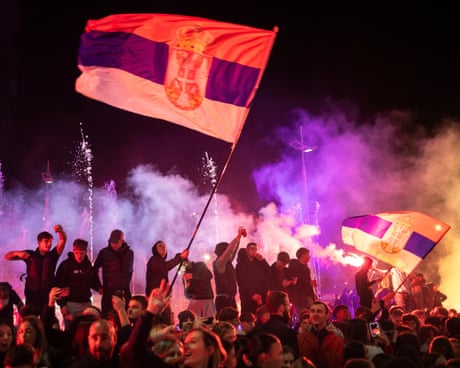
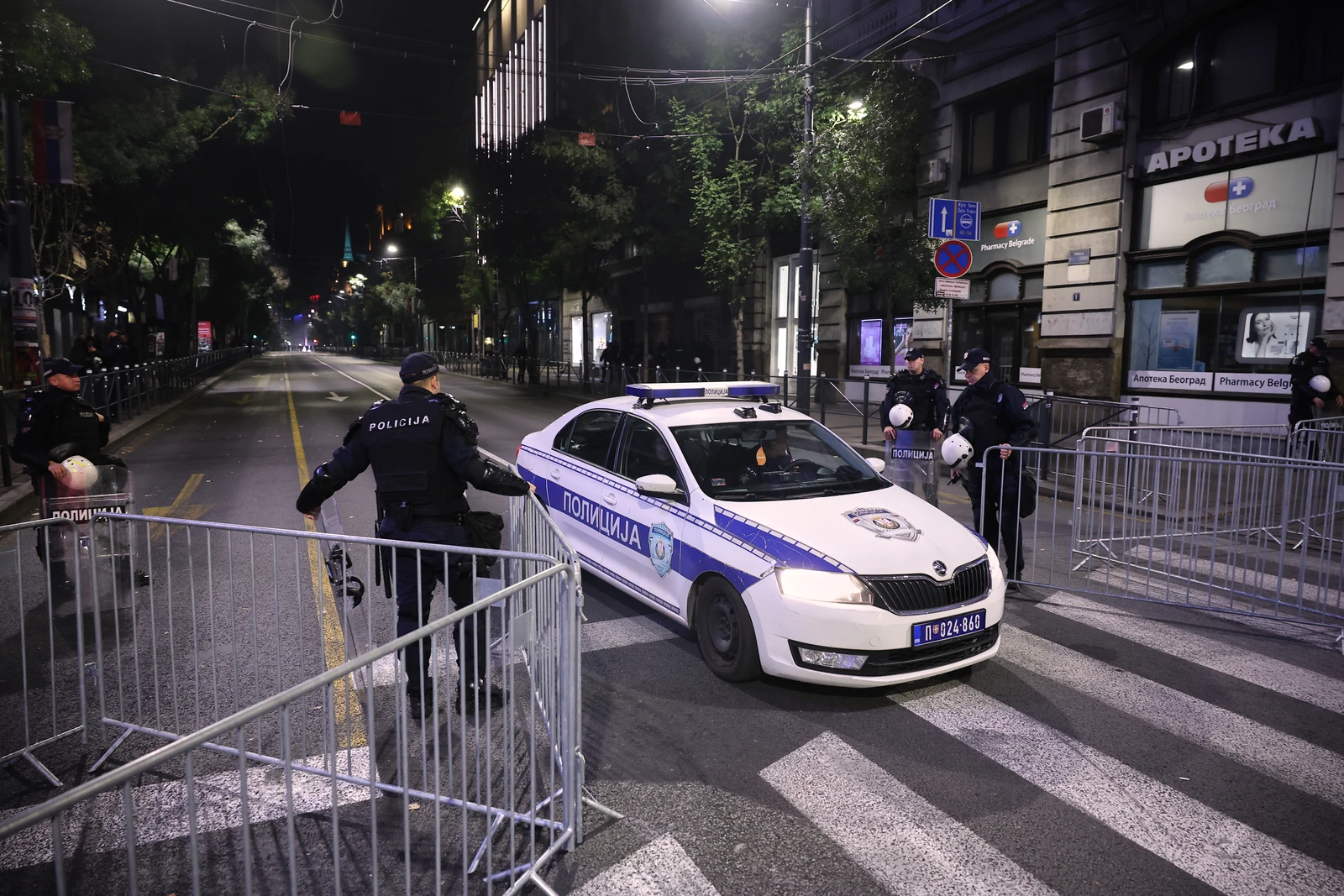
As polling stations closed across Serbia on Sunday evening, riot police were deploying around the presidency in Belgrade. Many of us feared the worst: massive electoral fraud, a refusal to recognise defeat or outright violence. After nearly 15 years of Aleksandar Vučić’s increasingly authoritarian rule, a peaceful transfer of power seemed implausible.

I had good reason to feel afraid. I am co-founder of an annual conference on the security and foreign policy challenges shaping the western Balkans, and sit on the international advisory committee of a civil society thinktank, the Belgrade Centre for Security Policy. Such work would be uncontroversial in most countries seeking European Union membership. Under Vučić’s regime, it was anything but.

Continue reading...

© Photograph: Marko Dimic/ZUMA Press Wire/Shutterstock

© Photograph: Marko Dimic/ZUMA Press Wire/Shutterstock

© Photograph: Marko Dimic/ZUMA Press Wire/Shutterstock

  •  

How students toppled Serbia’s strongman – podcast

After two years of protests, a student-led movement has defeated Serbia’s authoritarian leader, Aleksander Vučić, at the ballot box. But can a leaderless movement govern a country? Send your comments and questions to tif.questions@theguardian.com

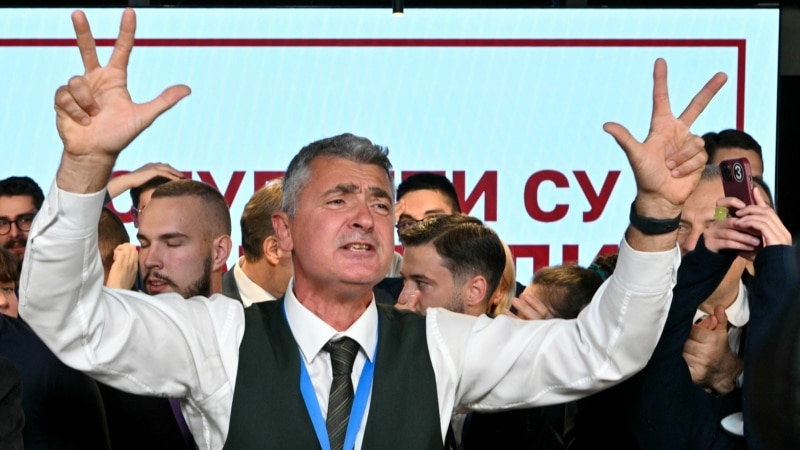
Serbia’s political landscape has been upended. On Sunday, record numbers of people went to the polls and voted to end the 12-year rule of Aleksandar Vučić. And who did they back instead? A list of candidates, half of whom have PhDs, put forward by student activists whose protests have rocked the Balkan country for the past two years.

Helen Pidd speaks to the Serbian-American journalist Ana Milosavljevic, the student activist Tara Blagojević and the MP-to-be Milica Jovanović about how the Student List managed to defeat Vučić’s increasingly authoritarian regime.

Continue reading...

© Photograph: Marko Đurica/Reuters

© Photograph: Marko Đurica/Reuters

© Photograph: Marko Đurica/Reuters

  •  

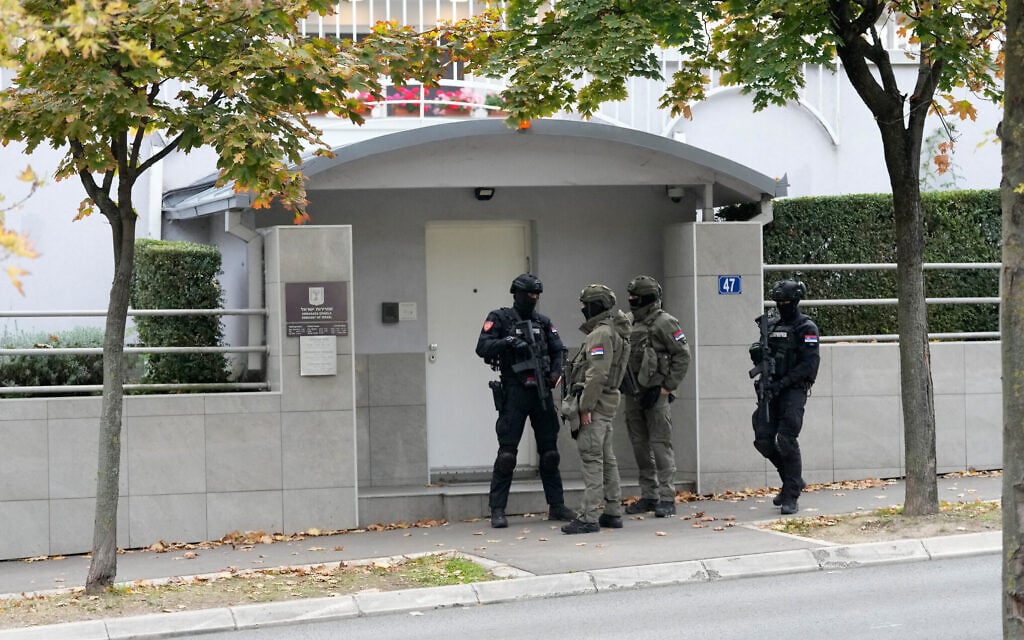
Serbian police shoot dead ‘teenage terrorist’ outside Israeli embassy in Belgrade

Serbian police shot dead a young man outside the Israeli embassy in Belgrade in the early hours of Wednesday after what the authorities called a “terrorist attack”.

Interior minister Ivica Dacic said the attacker ran at a police officer with two knives while shouting “Allahu Akbar”; the officer suffered a minor knife wound to the face and shot the man.

Dacic said the suspect was a minor and a Serbian citizen who was being monitored by the security services because he was “known to be a supporter of the Islamic State”.

Speaking to reporters outside the embassy, he said an investigation was under way; the security services said the suspect had posted a picture of the Islamic State flag on his Instagram account.

Dacic raised the country’s terrorism threat level to “red alert”, the highest level, which brings stricter security checks and a larger police presence.

Armed security personnel were seen standing guard outside the embassy on Wednesday morning.

Israel’s foreign ministry confirmed in a social media post that no embassy staff were hurt and that the mission was closed when the incident happened.

It is the second attack on the Israeli embassy in Belgrade in less than three years, for in June 2024, a man shot a police officer in the neck with a crossbow.

The officer survived and shot dead the attacker, who was identified as a Serbian man who had converted to Islam.

  •  

Serbia: Minor Yelling 'Allahu Akbar' Attacks Israeli Embassy Officer Before Being Shot Dead

An unidentified minor wounded a Serbian policeman guarding the Israeli Embassy in Belgrade with a knife before being shot dead during the early morning hours of Wednesday in what Interior Minister Ivica Dacic described to international outlets as a suspected terrorist attack.

The post Serbia: Minor Yelling ‘Allahu Akbar’ Attacks Israeli Embassy Officer Before Being Shot Dead appeared first on Breitbart.

  •  

In Serbia, a new type of democracy is taking hold, and Europe is watching closely

A movement that began in outrage has delivered remarkable election upset, showing that change is possible and prompting questions over what comes next

• Don’t get This Is Europe delivered to your inbox? Sign up here

In April of last year, dozens of students set off from Serbia, intent on making it to Strasbourg, France on bicycles. The aim of the arduous, 13-day transcontinental journey was simple: to make their voices heard in Europe and beyond.

In their home city of Novi Sad, students had been holding near-daily protests after a deadly roof collapse at the city’s main railway station. As their push for accountability and justice spread across the country, it was met with baton-wielding police, teargas and a political class that branded these young people as traitors.

Continue reading...

© Photograph: Marko Drobnjaković/AP

© Photograph: Marko Drobnjaković/AP

© Photograph: Marko Drobnjaković/AP

  •  

How students rocked Serbia’s parliamentary election – video explainer

The long-serving leader of Serbia, Aleksandar Vučić, has conceded defeat, ushering in a seismic political shift after a historic election that pitted ​the increasingly authoritarian leader against a student-led movement that had spent two years protesting against his government. As news broke that Vučić’s 12 years in power had come to an end, celebrations erupted on the streets of Belgrade and other cities. But how did we get here - and what happens now? The Guardian's Europe live correspondent, Jakub Krupa, explains

Continue reading...

© Photograph: Guardian

© Photograph: Guardian

© Photograph: Guardian

  •  

I giornalisti di una tv serba si scusano per il lavoro svolto negli ultimi anni: “Rimasti in silenzio, fornito informazioni di parte e non posto le domande giuste”

“Per molti anni il servizio pubblico non ha svolto la sua funzione, è rimasto in silenzio, ha chiuso un occhio, ha fornito informazioni di parte e ha riportato i fatti in modo acritico. Non sono state poste le domande giuste o non sono state poste affatto”. Esordisce così il giornalista Goran Eror dell’emittente serba RTV nel discorso in cui la redazione si scusa con i propri telespettatori per il lavoro svolto negli ultimi anni di governo Vucic. “È l’inizio di un percorso per riconquistare la fiducia del pubblico” ha aggiunto prima di cominciare il telegiornale.

Nei giorni scorsi, tra l’altro, alcune persone avevano fatto irruzione nella redazione di Informer, un’altra tv filo-governativa, per dire al direttore di “chiedere scusa ai cittadini” per le “menzogne” raccontate negli anni. Nonostante l’ex presidente serbo Vucic abbia additato i sostenitori della Lista Studentesca come responsabili dell’irruzione, non è chiaro se siano stati effettivamente loro ad aver compiuto l’intrusione nella televisione.

L'articolo I giornalisti di una tv serba si scusano per il lavoro svolto negli ultimi anni: “Rimasti in silenzio, fornito informazioni di parte e non posto le domande giuste” proviene da Il Fatto Quotidiano.

  •  

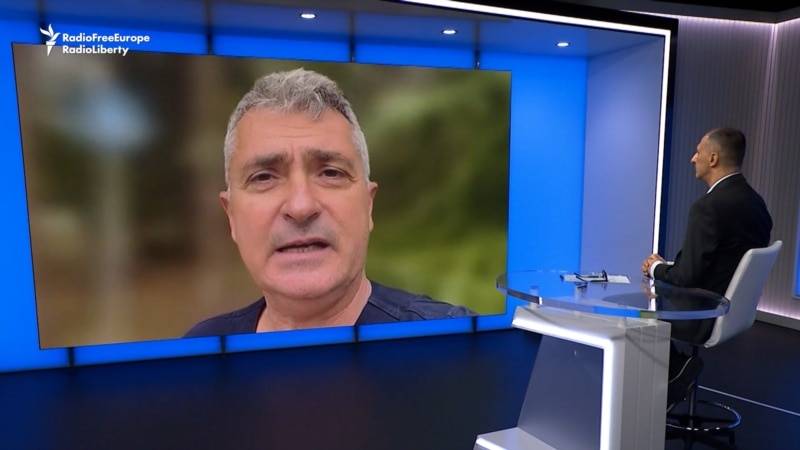
'Committed To European Integration': Student List's Srdanovic On Serbia's Post-Vucic Future

Aleksandar Vucic’s election defeat has ended more than a decade of political dominance and handed victory to Serbia’s student-led opposition movement. RFE/RL's Balkan Service spoke with Ilija Srdanovic, the top candidate for the Student List party on what comes next for the country.

  •  

Serbian Students, Victorious and Leaderless, Go After the Media

Supporters of the opposition movement that won Sunday’s election stormed the offices of a pro-government tabloid. Another news outlet apologized for years of “one-sided” coverage.

© Marko Djurica/Reuters

Supporters of the Student List opposition bloc in Belgrade, Serbia’s capital, on Monday, celebrating its victory in the national elections.
  •  

Migliaia di persone in piazza a Belgrado: la festa per la vittoria della lista studentesca

Decine di migliaia di persone sono tornate ieri sera dalle 19 per celebrare la vittoria alle elezioni della Studentska Lista in piazza Slavija, nel centro di Belgrado, nella quale il 22 ottobre è stato tenuto il grande comizio elettorale di chiusura e dove la scorsa notte si è festeggiato.

Sul palco un dj ha fatto ballare la folla tra i fuochi d’artificio, mentre un analogo festeggiamento si è svolto anche a Novi Sad, la città universitaria dove è iniziata la protesta studentesca due anni fa.

L'articolo Migliaia di persone in piazza a Belgrado: la festa per la vittoria della lista studentesca proviene da Il Fatto Quotidiano.

  •  

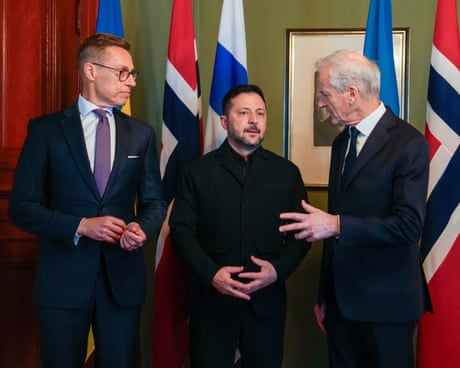
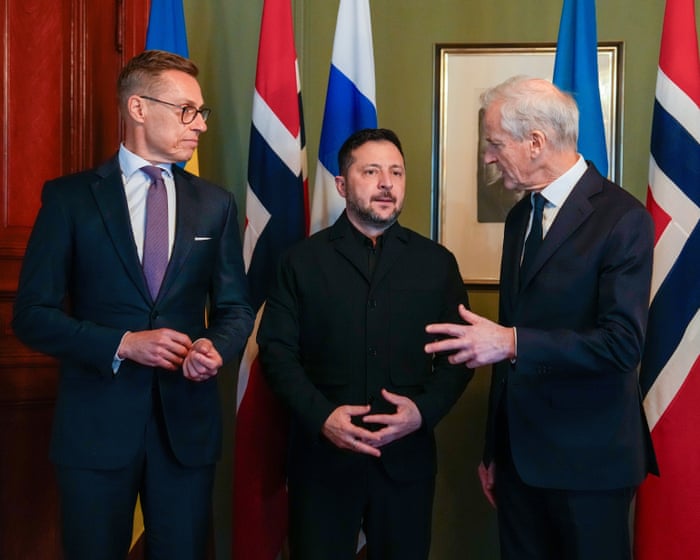
Kyiv hopes for ‘new momentum’ in peace talks after Finnish and Norwegian leaders’ call with Putin – as it happened

Alexander Stubb and Jonas Gahr Støre held ‘substantive’ talk with Russian president on peace negotiations, but faced sceptical reactions from some European leaders

Meanwhile, Wes Streeting, the defence secretary, has warned that Russia’s Vladimir Putin is “testing us and testing Nato’s resolve” as he condemned hybrid threats and “state-sponsored terrorism” from Russia.

Streeting repeated his recent warnings that “we have to be ready for a scenario in which the United Kingdom and the Nato alliance finds itself at war with Russia”. He went on:

Not because we want war – we have no quarrel with the Russian people, and we have no desire for war with Russia; Nato is a defensive alliance – but when Putin gives assurances that he has no intentions to provoke a war with Nato, we are reminded of what he said about Ukraine only days before the invasion.

The more ready we are to face against Russia, to defend every inch of Nato territory, the less likely we are to find ourselves in that scenario.

Poland is one of our greatest and certainly our most reliable friend in Europe, and we value and treasure this friendship very much.

Continue reading...

© Photograph: Heiko Junge/Pool NTB/AP

© Photograph: Heiko Junge/Pool NTB/AP

© Photograph: Heiko Junge/Pool NTB/AP

  •  
❌