
❌

Reading view

Um beijo em uma mulher trans

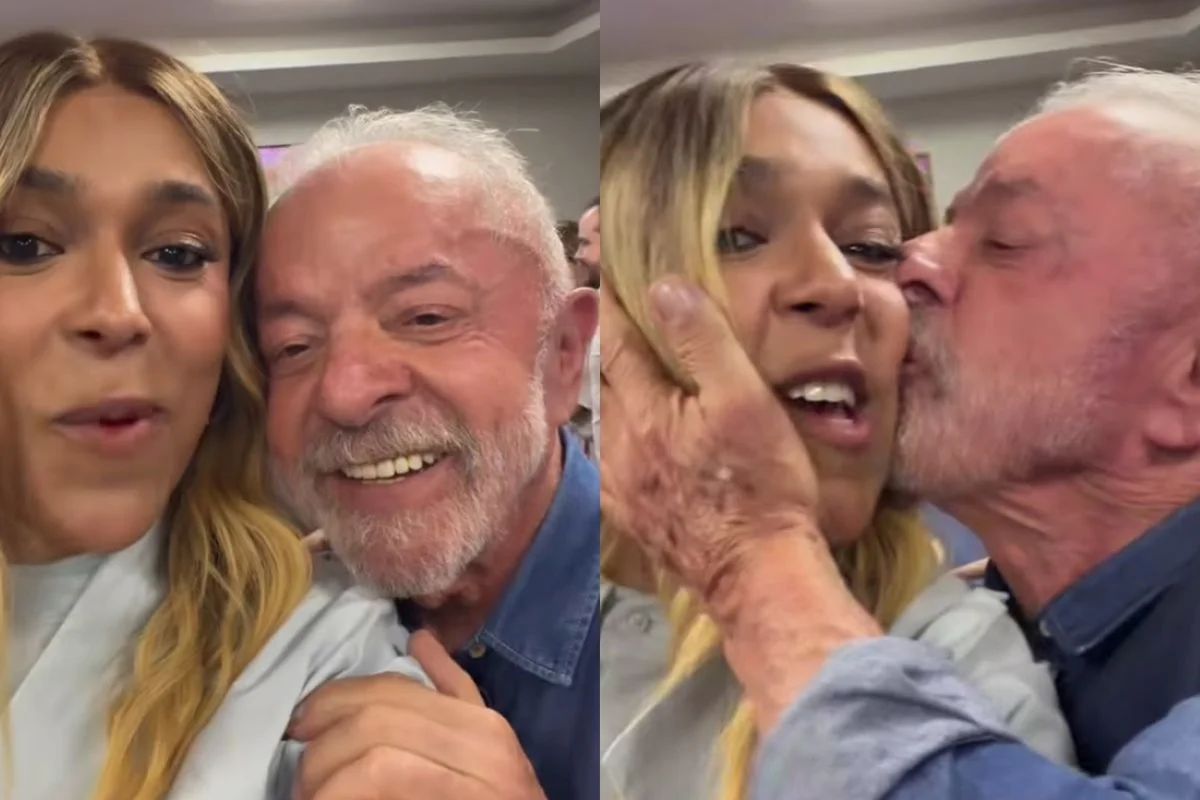
A cena toda deve ter durado cerca de três segundos: A deputada federal Erika Hilton (Psol-SP) faz um vídeo comemorando a eleição de Lula após a contagem das urnas, no dia 25 de outubro. Ele passa por ela, pega seu rosto, tasca um beijo carinhoso em sua bochecha e sai do quadro. Um gesto simples, espontâneo, terno, um carinho. 

Eu não sei se Lula tem noção do tamanho da declaração que fez pro mundo. O presidente de um país, que acaba de ser reeleito em um processo histórico e inédito em tantos níveis – com participação popular e engajamento sociais sem igual, em uma virada épica que acontece apesar de todo tipo de sabotagem das Big Techs ao governo Trump, de tentativas de boicote ao transporte público para que as pessoas não chegassem às urnas a uma grande imprensa tacanha jogando contra – um homem de 81 anos, que tem os olhos do mundo virados para si, mostra publicamente afeto a uma mulher trans. 

Durante comemoração da vitória no segundo turno das eleições 2026, presidente Lula da beijo em bochecha da deputada federal Erika Hilton
Trecho de vídeo publicado por Erika Hilton

Essa cena me emociona por diferentes motivos. Tenho passado os últimos anos me infiltrando em eventos da extrema direita pelo mundo e entrevistando essas figuras. Posso afirmar que não houve um desses congressos sequer, nenhuma dessas conversas, que não passou por discursos ultraviolentos contra pessoas trans. 

Já escrevi bastante sobre isso, inclusive sobre como no governo Trump essa violência levou a resoluções e políticas públicas desde seu primeiro dia de mandato. Não vou me repetir aqui sobre a maneira como essas narrativas são construídas com base no pânico moral e na ideia da destruição da família e de valores sagrados. O que quero ressaltar é que a demonização de pessoas trans está hoje no epicentro político da extrema direita. É um tema de consenso entre eles, usado para mobilizar o medo, o ressentimento e o ódio e que tem efeitos concretos na vida de milhares de pessoas. 

E a mobilização desses afetos não é exclusiva da extrema direita, também é importante dizer. Não sei dizer quantas vezes eu mesma fui perseguida, ameaçada e exposta por mulheres que se dizem feministas radicais trans excludentes ou quantas vezes o Pauta Pública foi alvo de ódio quando apontamos nosso microfone para pessoas trans. Tudo bem. Como me disse Judith Butler, ser perseguida por essas pessoas é um distintivo de coragem. 

Um outro ponto importante é que o Brasil é um dos países que mais mata transexuais no mundo. Quando Lula faz esse gesto, que mensagem ele manda para o povo? E que mensagem ele manda para as pessoas trans?

A cena me lembrou o relato de Suzanne Hommel, uma alemã nascida em 1938 que falou no documentário “Encontro com Lacan” sobre o tempo em que foi paciente do psicanalista francês. Ela carregava traumas profundos de sua vivência durante a Segunda Guerra Mundial, mas, em uma de suas sessões com Lacan, contou de um sonho recorrente que a acordava sob forte angústia todos os dias pontualmente às 5h da manhã. Acrescentou o contexto histórico de sua infância: “Era às 5h da manhã que a Gestapo vinha buscar os judeus em suas casas”. Ao ouvir a palavra “Gestapo” (polícia secreta oficial da Alemanha Nazista) o psicanalista levantou-se rapidamente da poltrona e fez um carinho suave em seu rosto. Quando ela conta isso no documentário, imediatamente leva a mão ao rosto imitando o gesto. 

Através desse ato físico e verbal, Lacan transformou a palavra “Gestapo” em “geste à peau”, que em francês significa “gesto na pele”, e introduziu ternura onde antes habitava apenas o horror e o trauma. No documentário, ela se emociona ao dizer que isso não apagou seu sofrimento mas o modificou de forma definitiva e que mesmo décadas depois, ela ainda sentia aquele toque que mudou a forma como olhava para a própria história e sua própria dor. 

O “geste à peau” de Lula em Erika Hilton neste momento da nossa história, me parece muito poderoso, simbólico, um marco de posição diante do mundo, que pode ressignificar um monte de afetos pra muita gente. E ao mesmo tempo é tão bonito precisamente porque foi um afago espontâneo em um país que está ressignificando sua relação com a política, que ainda sofre com o trauma dos quatro anos sob o governo genocida de Bolsonaro – e que escolheu neste domingo apostar na ternura ao invés do horror.

Aliás, que fique marcado aqui: Erika Hilton foi reeleita como a mulher mais votada da história para a Câmara dos Deputados e, com 1,5 milhão de votos conquistados em São Paulo, é a segunda parlamentar no país a romper a barreira de 1 milhão de votos para o cargo. 
  •  

Anti-Transgenderism/Anti-Homosexuality Activist Ordered to Stop Talking About Local Therapist/Pride Activist

From Butler v. Lipscy, decided Monday by Minnesota Court of Appeals Judge Keala Ede, joined by Judges Diane Bratvold and Jon Schmidt:

Butler alleged that Lipscy engaged in acts of harassment targeting Butler and her children, including: following, monitoring, or pursuing Butler; making unwanted visits to Butler; frightening Butler with threatening behavior; taking pictures of Butler without permission; and using social media to harass Butler….

The facts, according to the appellate court's summary of the trial court findings, were this:

At the time the district court issued the HRO, Butler was a licensed marriage and family therapist who served "historically marginalized communities." This included members of "the Queer community," which Butler defined as "the Two Spirit (2S)/Gay/Lesbian/Bisexual/Transgender/Intersex/etc. community as a whole and individually." Butler was also "active in her local Itasca Pride board and community as a volunteer and current board member." She has three children, one of whom is "non-binary."

Lipscy held "Christian beliefs" that she posted about on the internet. And Lipscy administered a webpage called "Grand Rapids Rant."

Itasca Pride held a festival on June 23, 2024. Before that event, Lipscy posted on the internet about a public gathering called, "Protect the children from Pride/Drag show and Walk with Prayer," which Lipscy scheduled for the same date, time, and location as the Itasca Pride Festival. Before the events occurred, Lipscy wrote on the internet: "But if you cause one of these who trust in me to fall into sin, it would be better for you to have a large millstone tied around your neck and drowned in the depths of the sea. #BeTheirVoice Matthew 18:6." Lipscy also used the internet to encourage people to attend and to wear white shirts in opposition to Itasca Pride and in celebration of "traditional family values." At the June 23 Itasca Pride event, Lipscy took pictures of Butler's children, and Butler's husband told Lipscy to stop.

On September 28, Lipscy posted images from an Itasca Pride webpage on her Grand Rapids Rant internet site, with her own captions. These images included Butler's children with captions such as "Sickening," "Poor children," and "Those poor poor kids." Lipscy also identified Butler by name, listed Butler's title as "local therapist"—which "insinuate[ed] … [that] Butler was not a real therapist"—and referred to an event coordinated by the Minnesota Department of Natural Resources and Itasca Pride as having "influence over … children."

On October 20, Lipscy attended an event led by a school-board candidate who was advocating for a prohibition on transgender females in female sports. Lipscy broadcast the event on her Grand Rapids Rant webpage, identified Butler's husband, and described him as "pushing for boys to be in girls' bathrooms and supporting bringing kids to drag events." More specifically, Lipscy stated that Butler's husband "wasn't truly interested [on the day of the event] …, he just wanted to report back. Silly boy, [he] could've just watched live with [Butler]." In addition, "Butler's children attend the same school as … Lipscy's niece," and "Lipscy ha[d] been at the school since the above-described incidents … occurred."

Butler was "generally fearful for the safety of herself and children following the incidents involving … Lipscy." She "installed [four] cameras on her property and [two] cameras on her vehicle," "spent sessions with her clients discussing concerns the clients ha[d] about their safety given … Lipscy's social media posts referring to … Butler," "removed signage from her office, met with clients in a place other than her office, and met via tele-health to address concerns about client safety."

Her children became "afraid to go out in public without a parent and [had] an increased fear when out in the community." One of Butler's children "changed the way they dress[ed] because they [did] not want to get physically or emotionally hurt." Butler's children were "fearful that their photos [would] be put online to shame their family," "ask[ed] in public if they [were] safe," and "question[ed] whether people around them [were] 'people that hate Queer people.'"

The court issued a harassment restraining order that provided, in relevant part, that Lipscy

  • "shall not harass … [Butler] or her minor children included in the Petition";
  • "shall have no direct or indirect contact with … [Butler] or her minor children including any visits, phone calls, contact via electronic means such as email or social networking sites, threats or assaultive behavior to the protected persons, damaging or stealing property belonging to the protected persons, breaking into and entering the protected persons' residence, and/or taking pictures of the protected persons without permission from … [Butler]";
  • "is prohibited from being within 500 feet of … [Butler's] home" or "job site"; …
  • "is restrained from harassing, stalking, or threatening the protected persons, or engaging in other conduct that would place the protected persons in reasonable fear of bodily injury to that person"; and "is prohibited from the use, attempted use, or threatened use of physical force against the protected persons that would reasonably be expected to cause bodily injury."

Given that the court had found that Lipscy's social media posts referring to Butler were "harassment," and then restrained Lipscy from "harassing" Butler, the order thus forbade Lipscy from continuing to mention Butler. And indeed the appellate court acknowledged this, stating (emphases added) that the HRO

  • "allows Lipscy to express her religious views, provided that she does not mention Butler and her children and does not approach Butler, her home, and her workplace," and
  • "merely prohibits [Lipscy] from directing harassing conduct toward Butler and her children—such as photographing them, repeatedly naming them, and targeting them."

The appellate court upheld the order, reasoning that Lipscy's actions could indeed be found to be harassment, defined by the Minnesota HRO statute as "repeated incidents of intrusive or unwanted acts, words, or gestures that have a substantial adverse effect or are intended to have a substantial adverse effect on the safety, security, or privacy of another":

The district court determined that Lipscy "engaged in harassment," reasoning that Lipscy had: followed, monitored, or pursued Butler and her children; frightened Butler and her children; taken pictures of Butler's children without permission; and used social media to harass Butler on multiple occasions. In making this determination, the district court relied on evidence in the record that Lipscy had reposted pictures of Butler's children from the Itasca Pride webpage to the Grand Rapids Rant internet site with her own captions including: "Sickening," "Poor children," and "Those poor poor kids."

The district court also based its decision on evidence that Lipscy had reposted pictures from the Itasca Pride event while referring to Butler in a manner that questioned Butler's credentials as a therapist and had shared a video of Butler's husband while referring to Butler by name. And the district court made specific findings about how Butler was "generally fearful for the safety of herself and children following the incidents involving … Lipscy." …

And the court held that this doesn't violate Lipscy's free speech or religious freedom rights, because it is directed only at "speech or conduct that … is in violation of one's right to privacy," which Minnesota courts had held is constitutionally unprotected.

I think such an injunction is unconstitutional, at least as to the prohibition on repeatedly naming Butler in posts; for more on such orders, and the appellate decisions that mostly set them aside, see my Overbroad Injunctions Against Speech (Especially in Libel and Harassment and Cases) article. And while I'm sympathetic to the argument that adults should keep the children out of this, I'm not sure it's constitutional even as to that. But in any event, the Minnesota Court of Appeals thought the injunction was permissible, and I thought it worthwhile to note that.

Sara Jane Baldwin (Gender Justice) represents plaintiff.

The post Anti-Transgenderism/Anti-Homosexuality Activist Ordered to Stop Talking About Local Therapist/Pride Activist appeared first on Reason Magazine.

  •  
❌