❌

Reading view

How the UAE is fueling Sudan’s catastrophic war

Sudan’s “civil war” is a proxy war for gold, now waged from above with foreign-armed drones. Journalist and researcher Mosaab Baba says Sudan’s “gold curse” has both the army and the UAE-backed Rapid Support Forces (RSF) increasingly striking civilian targets in a neocolonial war entering its fourth year, which has already killed thousands of civilians and left millions facing famine.

With most of Sudan’s gold now funneled to Abu Dhabi, Baba tells Rania Khalek and Zoe Alexandra the country has become a “backyard” for the UAE, Egypt, Saudi Arabia and Turkey to extract precious minerals, farmland and access to the Red Sea. A year after the fall of El Fasher, he also explains why the world’s largest humanitarian crisis keeps slipping out of the headlines. Baba also unpacks how the legacy of the December Revolution still offers hope for a sovereign, people-led Sudan, and lays out the stakes driving the Sudanese campaign against Emirati diplomat Lana Nusseibeh’s potential bid to become the next UN secretary-general.

“The only glimmer of hope is that Sudanese people themselves are starting to realize how insane this war is [and] how much they need to remove these neocolonial leaders from the country.”

Watch full episodes of BT Live, join breakthroughnews.org as a member today!
******
Rough transcript follows:
[Speaker 1:] The UAE is the main culprit in pushing for the RSF to take over Sudan, driven by the gold trade and regional domination. They’re closely allied with the Ethiopian government, and unfortunately, Abiy Ahmed is aligned with them, though not fully carrying out their wishes. They have a strong influence on Chad and are the biggest investors in Egypt. This is why we explain this as a neo-colonial war. These powers might support both sides but have no issues with each other.

[Speaker 2:] Moving on to Sudan, another drone strike occurred this week, blamed on the Sudanese army, killing dozens in a crowded market in Nala. The RSF’s de facto capital in Darfur was affected, and RSF drones knocked out power across central and eastern Sudan, including Khartoum. Sudanese journalist and researcher Mossab Baba joins us to discuss this proxy war, now in its fourth year, and the foreign-supplied weapons that have killed thousands of civilians.

[Speaker 3:] Thank you for having me. I appreciate it.

[Speaker 2:] We appreciate your time and analysis. Let’s start with the latest in Nala. Local tolls range from 21 to over a hundred killed. The army claims it’s softening RSF positions ahead of a ground assault. This follows hundreds killed in drone strikes last week. Is this recent strike the opening of a push into Darfur?

[Speaker 3:] There have been changes in how both sides conduct this war, with drone strikes becoming more prominent. It shifted from relying on mortars and ground forces to drone strikes over the last year and a half. The pattern is unusual; whenever there’s stagnation between the forces, drones start firing. The SAF targets markets, as seen in Nala and a disputed area between Sudan and South Sudan.

After these attacks, the RSF retaliates by hitting civilian infrastructure in SAF areas, leaving millions without power. The strikes in Nala were fatal, and similar incidents have occurred before, like in West Darfur. This shift to drone warfare is partly due to the increasing international drone market, with both sides having partners willing to supply weapons. The SAF, as the official army, faces fewer issues bringing in weapons, but the RSF relies on a network traced by a UN report, mainly through Libya and Chad.

[Speaker 2:] The Sudanese citizen is being pummeled by this war, and neither side takes responsibility. The SAF doesn’t acknowledge strikes hitting civilians, and the RSF remains silent on their attacks. This leads to speculation about rogue elements within these camps. The SAF camp is fragmented, with different factions and militias, while the RSF has rogue elements crossing borders.

[Speaker 3:] The use of drones is a dangerous escalation in this war, now over three years old, causing one of the worst humanitarian catastrophes. International players are involved on both sides. This isn’t merely a Sudanese conflict. Powers like the UAE, Egypt, Turkey, and Saudi Arabia are involved. How did Sudan become a battleground for these powers?

[Speaker 3:] The SAF and RSF were part of the same government under an imperial order. Decisions about Sudan go through Cairo, Abu Dhabi, and Riyadh. This control carries over from the Bashir regime, which handed Sudan to Gulf countries. Both SAF and RSF were recruited for the war in Yemen in 2015 and remain there. The war’s goal was to kill the people’s movement calling for sovereignty and wealth redistribution. The West views these demands as socialism, though in Sudan, it’s seen as government responsibility.

Forcing Sudan to sign the Abraham Accords is another factor. Netanyahu often includes Sudan in his maps of the new Middle East. This is a late-stage neo-colonial order, with military forces lacking loyalty to the Sudanese people, allowing countries like Turkey, the UAE, Egypt, and Saudi Arabia to exploit Sudan for resources like gold and farmland.

[Speaker 2:] Speaking of resources, what’s up for grabs in Sudan? Gold, farmland, Red Sea access—what are foreign powers targeting?

[Speaker 3:] Gold is the most fatal, with the RSF utilizing it economically. Most gold ends up in the UAE, which has destabilized regions for gold mines. This gold rush causes instability, similar to the oil curse. Livestock is a close second, while agriculture struggles due to sustainability issues and food crises. Gold is a quick fix for militias and warlords running the economy and war.

[Speaker 2:] It’s been one year since the ethnic cleansing in Al-Fashir, and several massacres have occurred since. Why hasn’t Sudan registered more on people’s radars? What international efforts are being made to end the conflict, and who’s stopping them?

[Speaker 3:] Internally, there are efforts for national dialogue and a negotiated end to the war. Political parties and traditional leadership engage in people-to-people dialogue. Activists, especially in the diaspora, campaign against the UAE, which lobbies the UN and influences US policy. The UAE’s deep pockets are the main reason this conflict lacks attention. They’re pushing for the RSF to take over Sudan for gold trade and regional domination.

[Speaker 2:] Eight years ago, the Sudanese revolution began, a hopeful moment for organizing across sectors. Now, the military establishment has co-opted and crushed it. Your thoughts on this?

[Speaker 3:] The December revolution was a historic moment, uniting Sudan against the Bashir government. It was coerced by leadership and countries pressuring the military. Protests in Khartoum last December remembered the revolution. Many volunteers and activists emerged from it, maintaining social fabric and aid efforts. The revolution’s core discourse remains valid, and though affected by war, it will manifest differently as people realize the war’s insanity.

[Speaker 2:] Before we wrap up, regarding the UAE, one name floated for the next UN Secretary-General is Lana Nusseibeh, an Emirati diplomat. After the UN accused the RSF of genocide, she dismissed the allegations. If she becomes Secretary-General, it could undermine confidence in international bodies. Any thoughts?

[Speaker 3:] People see through it. Human rights organizations are making noise about this. Sudanese have a campaign against her appointment. If she’s allowed to become Secretary-General, it will erode trust in international bodies. The UN’s role in documenting atrocities is crucial, and her appointment would damage confidence in any Western body, even those with good intentions.

[Speaker 2:] Thank you, Mossab, for your time and analysis. We look forward to speaking with you again soon.

[Speaker 3:] Thank you, Ronnie and Zoe. Appreciate it.

  •  

Saudi Arabia, Türkiye, and Pakistan seek security cooperation with Iran

The constituents of the recently created Mecca Defence Alliance held their maiden meeting with Iran in Tehran on Monday, October 26, seeking ways to end the ongoing conflict between Saudi Arabia and Yemen and a larger understanding over regional security.

The participants agreed “to continue the dialogue to strengthen cooperation among the four regional countries, including for peace and security in the region,” a brief joint press statement, issued after the meeting said.

Saudi Arabia, Pakistan, and Türkiye created the Mecca Pact in August amidst the ongoing US-Israeli war on Iran and the growing fear of Israeli expansionism. The members have claimed the pact is based on the principle of collective security and was defensive in nature. Some of them have also hinted they are seeking to expand its membership.

On Monday, Defense Minister of Saudi Arabia Khalid Bin Salman, Pakistan Army Chief Asim Munir, and Türkiye’s National Intelligence Organization Director Ibrahim Kalin met with the head of Iran’s Supreme National Security Council (SNSC) Mohsen Rezaei and Foreign Minister Abbas Araghchi.

The Mecca Pact officials also met separately with Iranian President Masoud Pezeshkian earlier in the day.

The meeting came at a time when there is a growing speculation about the renewal of US-Israeli aggression on Iran which has ceased since August. It also coincides with escalation in Saudi Arabia’s conflict with Ansar Allah in Yemen.

Saudi Arabia has faced increased retaliatory attacks from Ansar Allah forces in Yemen after it violated a 2022 UN-sponsored ceasefire and attacked Sanaa International Airport in July. Ansar Allah seeks the end of Saudi interference in the country and the lifting of over a decade-long Saudi blockade on the country.

Pakistan and Türkiye have since announced the deployment of their forces in Saudi Arabia.

Citing unknown Pakistan officials, Reuters claimed that the negotiations between the four countries also featured fresh proposals to end the US-Israeli war on Iran.

Regional cooperation on peace and security

Informing about the meeting, Esmail Baghaei, official spokesperson of Iran’s Ministry of Foreign Affairs had earlier said that it could be a prelude to establishing endogenous security in the region.

“From our perspective, the fact that regional countries are seeking to establish, or at least consider, regional security mechanisms based on their own interests and concerns is a welcome development,” Baghaei said, underlining that Iran has long advocated for ending external reliance and building a regional security mechanism.

Iranian resilience against the joint US-Israeli aggression has “shown that sustainable and reliable security in our region can only be achieved through building trust and cooperation among regional countries,” Baghaei had claimed.

After the meeting, Rezaei announced that all the participants have agreed that “the security in West Asia must be endogenous and that any foreign interference must be prevented.”

SNSC’s Deputy Secretary Bagheri Kani also claimed that though there were differences in priorities and approaches, the quadrilateral meeting “reflected a shared understanding among the four parties of the need for cooperation,” Press TV reported.

Reacting to the development, Trita Parsi of the Quincy Institute claimed that though the meeting had the immediate objective of the Mecca alliance seeking Iranian help to resolve the ongoing conflict between Yemen and Saudi Arabia, it also reflects a changing security dynamic in the region.

Contrary to “Washington’s conventional wisdom,” the countries in the region “are showing greater agency and taking responsibility for the region’s security themselves” as the US pulls back militarily following the humiliation faced in its eight-month-long war against Iran, Parsi claimed.

US is not a reliable partner

“Some regional countries once imagined that by aligning themselves with a major power like the US they could shield themselves from any threat. In practice, however, they discovered that this notion did not align with reality,” he said.

Saudi Arabia and Türkiye have several US military bases in the country. Pakistan has maintained a close military partnership with the US for decades.

Some of the US bases in Saudi Arabia were damaged during Iranian retaliation earlier this year. The US has reportedly refused to come to Saudi’s aid despite it seeking the same to counter Ansar Allah’s advances in Yemen.

The meeting on Monday was a result of the realization “that there is no alternative but to rely on regional engagement and to establish security based on cooperation and synergy among the countries of the region,” Kani said.

He also claimed that the members felt the urgency for the meeting as the Zionist regime has “demonstrated its savagery and an unbridled appetite for expansion” in recent years, indicating the ongoing Israeli genocide in Gaza and its aggression and occupation in other Palestinian territories, Lebanon, and Syria.

It was reported that all parties of the meeting demanded that Israel must end its genocide in Gaza and end its occupation in Lebanon and Syria.

  •  

Nine killed in shooting attack on church in Jordan

At least nine people were killed and dozens of others wounded after masked gunmen opened fire on people attending a funeral procession at a church in the village of Hmoud, in Jordan’s southern governorate of Karak on Friday October, 23.

Jordanian Government Communication Minister and Official Government Spokesperson Mohammad Momani condemned the offensive as a cowardly terrorist action, asserting that “this crime is an assault against Jordan as a whole.”

He also described the attackers as “treacherous and extremists,” confirming that they will face “comeuppance thanks to the capabilities” of the Jordanian security forces.

“Jordanian Christians are an integral part of the country’s national fabric and have contributed to its past, present and future,” Momani asserted.

Meanwhile, Jordan’s King Abdullah II vowed that the attack “will be met with the harshest retaliation.”

“The terrorist attack against Karak will be met with the harshest retaliation. Those who delude themselves into thinking that they can divide Jordanians with their bullets have no chance in the face of our unity. All Jordanians, from north to south, are partners in land and fate, and nothing stands between them,” the king wrote on X.

“Every Jordanian life is precious, and we will strike with an iron fist against those who dare to threaten our nation,” he threatened.

In the early hours of Monday, October 26, the Jordanian authorities announced the arrest of the three suspected perpetrators, whose identity was revealed later as Hazaa Zeidan Mohammad, Mashal Zeidan Mohammad, and Ahmad Sami Hussein, two brothers and their relative, who are all Jordanian nationals.

Jordan’s Public Security Directorate (PSD) Director Major General Obeidallah Maaytah clarified that the three men did not plot the attack in advance, but decided to launch the attack when they saw the funeral procession. Yet, he noted that their motive was based on an “extremist ideology” and “terrorism.”

While preliminary investigation findings suggested the three suspects acted on their own, a statement released by the Jordanian Armed Forces (JAF) on Monday evening linked them to “terrorist” groups in southern Syria.

JAF declared that the Royal Jordanian Air Force carried out an operation dubbed “Jordanian Deterrence – Hmoud” in retaliation for the victims of the church in Karak. 

According to the statement, the operation targeted “terrorist hideouts,” involving fighter jets that struck several sites and destroyed a number of vehicles belonging to the targeted groups in southern Syria.

The Jordanian army also noted that the operation, which was carried out in coordination with the Syrian government, resulted in killing and wounding numerous members of those groups.

It is worth noting that Friday’s assault marks the first attack on a church in Jordan.

SANA: 8 civilians including women and children were killed in Jordan’s strikes

Shortly after Jordan announced the launch of the operation, Syrian Arab News Agency SANA reported that eight civilians, including women and children, were killed in Jordanian airstrikes on Rural Daraa.

Meanwhile, the Syrian government affirmed that the operation  was carried out “without prior coordination or notification with the Syrian side,” emphasizing “the need to uphold the sovereignty of the Syrian Arab Republic and preserve the security and stability of both brotherly nations.”

  •  

Il Sud Globale è pronto a riformare l’ONU?

A Nuova Delhi i BRICS hanno scritto che la riforma è dovuta. A New York il Sud Globale ha detto di essere pronto a pretenderla. Resta da vedere se saprà anche organizzarsi per ottenerla, cioè trasformare una maggioranza aritmetica in un soggetto politico

Segue nostro Telegram.

In prima fila davanti alle crisi, in ultima fila quando si decide

Il 22 settembre 2026, a margine dell’ottantunesima sessione dell’Assemblea generale, Subrahmanyam Jaishankar ha riunito a New York i ministri di quello che la diplomazia indiana chiama il gruppo dei Paesi del Sud Globale «di orientamento affine e amici». Il tema scelto aveva il tono di un programma: Navigating Together Towards a Brighter Future – the Compelling Case for an Empowered Global South. Nel discorso d’apertura il ministro ha consegnato l’immagine che resterà di questa sessione. Il Sud Globale siede in prima fila davanti alle crisi del mondo e nelle ultime file quando si tratta di decidere come affrontarle, perché le istituzioni costruite per un’altra epoca continuano a riflettere i rapporti di forza di quell’epoca.

Dieci giorni prima, a Nuova Delhi, Narendra Modi aveva aperto il diciottesimo vertice BRICS con una formula più dura. La governance globale, nella sua descrizione, ha la forma di una «piramide del privilegio», e la riforma del Consiglio di Sicurezza non può più essere rinviata, servono scadenze fisse e risultati verificabili. Interpellato sul punto, il portavoce del Segretario generale Stéphane Dujarric ha ammesso che la rappresentanza dei Paesi in via di sviluppo nelle sedi in cui si scrivono le regole globali è insufficiente, e che quelle sedi, dal Consiglio alle istituzioni finanziarie, dovrebbero riflettere il 2026 e non più il 1945.

Tre momenti in meno di due settimane non spostano di un millimetro l’architettura della Carta. Bastano però a formulare la tesi di queste pagine. La riforma delle Nazioni Unite è diventata una questione di legittimità prima che di efficienza, e la legittimità di un’organizzazione fondata sull’«eguaglianza sovrana di tutti i suoi Membri» (art. 2, par. 1 della Carta) dipende ormai dalla maggioranza che quell’organizzazione la abita. Il protagonismo del Sud Globale è necessario in senso stretto: senza di esso la riforma non ha un soggetto che la porti né un criterio che la giustifichi. Con esso, come si vedrà, non ha ancora uno strumento che la imponga.

L’aritmetica del 1945

Nel 1945 i membri fondatori erano 51; oggi sono 193. Il Consiglio di Sicurezza è stato allargato una sola volta, con la risoluzione 1991 A (XVIII) del 1963, entrata in vigore nel 1965, che portò i seggi da undici a quindici aggiungendo soltanto membri eletti. I cinque seggi permanenti, e con essi il potere di veto previsto dall’art. 27, par. 3, sono rimasti quelli delle potenze vincitrici della Seconda guerra mondiale. Il risultato non richiede interpretazione. L’Africa, con 54 Stati membri e una parte cospicua delle operazioni di pace sul proprio territorio, non dispone di alcun seggio permanente. L’America Latina e i Caraibi nemmeno. L’Asia, che ospita più della metà dell’umanità, vi è rappresentata dalla sola Cina.

Il meccanismo di revisione è costruito per proteggere questa fotografia. L’art. 108 richiede il voto favorevole dei due terzi dell’Assemblea e la ratifica dei due terzi dei membri, «compresi tutti i Membri permanenti del Consiglio di Sicurezza»: a ciascuno dei cinque spetta dunque, oltre al veto politico, un veto costituzionale. Dal 2009 la discussione è incanalata nei Negoziati intergovernativi (IGN) avviati con la decisione 62/557 dell’Assemblea, che da allora si chiudono ogni anno con una decisione di rinnovo. Il presidente keniano William Ruto lo ha ricordato dal podio dell’Assemblea pochi giorni fa, con una constatazione che vale più di molte analisi: diciassette anni dopo, si sta ancora negoziando.

Quando l’ONU si è riformata davvero, lo ha fatto lasciando intatta la distribuzione del potere. Il pacchetto lanciato da António Guterres nel 2017, esaminato dal servizio di ricerca del Parlamento europeo, si articolava su sviluppo, gestione, pace e sicurezza, e rispondeva alle critiche di scarsa responsabilità, trasparenza ed efficacia; il briefing annotava anche che il termine stesso di «riforma» si era rivelato problematico per gli Stati membri, proprio per l’assenza di un’intesa sul suo significato. Nulla, in quel disegno, toccava la composizione degli organi decisionali. L’iniziativa UN80, avviata nel marzo 2025, ha seguito la stessa grammatica in condizioni peggiori: tagli al bilancio della Segreteria, revisione dei mandati, fusioni di uffici, dentro una crisi di liquidità generata dai contributi non versati. La riforma amministrativa si fa perché non redistribuisce nulla. Quella politica resta bloccata per la ragione opposta.

Genealogia di una rivendicazione

Il Sud Globale non scopre oggi le Nazioni Unite come terreno di lotta. Dena Freeman ha mostrato che i Paesi del Sud si sono pensati come soggetto collocato globalmente fin dagli anni Sessanta, molto prima che la categoria entrasse nel lessico accademico, e che il Gruppo dei 77 ha costantemente ricondotto i propri problemi all’ingiustizia dell’ordine internazionale, cercando di correggerla con il diritto internazionale e i processi politici multilaterali. La Conferenza di Bandung del 1955, la nascita del G77 nel 1964 e la Dichiarazione sul Nuovo Ordine Economico Internazionale del 1974 (ris. 3201 S-VI) tracciano una linea continua. La Dichiarazione di Nuova Delhi la rivendica in modo esplicito: il richiamo a Bandung colloca i BRICS nella genealogia dell’anticolonialismo, non in quella della competizione tra grandi potenze.

Che cosa è cambiato, allora, rispetto agli anni del NIEO? Due cose, e nessuna delle due appartiene alla retorica. La prima è il peso materiale. Secondo l’Institute of South Asian Studies di Singapore, il formato allargato dei BRICS rappresenta circa il 37 per cento del prodotto mondiale e il 54 per cento della popolazione. Il G77 degli anni Settanta aveva i numeri in Assemblea e poco altro; il Sud del 2026 dispone anche di capacità industriale, riserve e tecnologie a basso costo. La seconda novità discende dalla prima: l’esistenza di alternative istituzionali, dalla Nuova Banca di Sviluppo ai circuiti di pagamento in valute nazionali ai fori regionali. Il NIEO chiedeva al Nord di cambiare le regole. Il Sud di oggi può anche scriverne altre, e questa possibilità cambia il valore della sua domanda di riforma. Chi può uscire negozia in modo diverso da chi non ha scelta.

Uno studio diffuso all’inizio del 2026 sul rapporto tra ascesa del Sud e riforma dell’ONU offre un controllo utile. I casi di adattamento multilaterale riusciti, come l’Accordo di Parigi, condividevano un problema che richiedeva partecipazione universale, una conduzione procedurale inclusiva, la mobilitazione della società civile a Nord come a Sud e una base scientifica comune. Nessuna di queste condizioni si ritrova nel dossier del Consiglio di Sicurezza, dove il problema è la distribuzione di un bene scarso, il potere di decidere sulla guerra e sulla pace, e dove ogni guadagno di un attore è una perdita per un altro. È per questo che lì il protagonismo del Sud deve assumere una forma diversa dalla semplice partecipazione.

Nuova Delhi: che cosa dice la Dichiarazione, e che cosa tace

Adottata per consenso il 12 settembre 2026, al termine della sessione plenaria ristretta, la Dichiarazione di Nuova Delhi conta 140 paragrafi. Sulla riforma delle Nazioni Unite compie tre operazioni. Riafferma l’impegno per una riforma complessiva dell’organizzazione, compreso l’allargamento della rappresentanza dei Paesi in via di sviluppo nel Consiglio di Sicurezza. Riconosce le aspirazioni africane espresse nel Consenso di Ezulwini e nella Dichiarazione di Sirte. Registra, infine, il sostegno di Cina e Russia a un ruolo maggiore di Brasile e India nel sistema ONU, «incluso il Consiglio di Sicurezza». Letti insieme, i paragrafi dedicati alla governance compongono una strategia coerente: restare dentro il sistema multilaterale e riscriverne la gerarchia interna.

Il lessico va però letto con la lente, perché è lì che si misura la distanza tra dichiarazione e impegno. Un «ruolo maggiore» non è un seggio permanente. La formula riprende quella delle dichiarazioni precedenti, e il fatto che un vertice presieduto dall’India non sia andato oltre dice molto sul limite del consenso interno: Pechino sostiene l’aspirazione indiana a contare di più, non quella di sedere accanto a sé con gli stessi poteri. Il Consenso di Ezulwini, dal canto suo, chiede per l’Africa almeno due seggi permanenti con tutte le prerogative dei membri attuali, veto compreso, e cinque seggi non permanenti. Nessuno dei due membri permanenti del club BRICS ha mai sottoscritto questa posizione nei suoi termini; la Dichiarazione ne «riconosce» le aspirazioni, che è cosa diversa.

Conta anche ciò che il testo non nomina. La Dichiarazione evita di indicare Paesi anche sui dossier più sensibili e non menziona mai gli Stati Uniti, pur in un anno segnato dalla guerra contro l’Iran e dalla politica tariffaria di Washington. È una scelta di metodo imposta dalla composizione del blocco, che tiene insieme Iran, Arabia Saudita ed Emirati: la riunione dei ministri degli esteri di maggio si era chiusa senza dichiarazione congiunta proprio per le divergenze sull’Asia occidentale. La riforma delle istituzioni diventa così, per sottrazione, il terreno su cui il consenso regge. Ne fa un collante e al tempo stesso ne limita l’ambizione, perché su ciò che unisce in quanto rimane vago non si costruisce una proposta negoziabile.

Da qui il peso della proposta procedurale avanzata da Modi: che i membri elaborino dieci proposte comuni su rappresentanza, reattività e produzione delle regole, da consolidare in una «Roadmap BRICS per la riforma» entro il prossimo vertice. Se realizzata, sarebbe la prima volta che il blocco passa dalla formula alla bozza. È l’indicatore più concreto uscito da Nuova Delhi, ed è anche quello che più facilmente potrebbe essere lasciato cadere.

New York, settembre 2026: il Sud come coalizione

Il comunicato del Ministero degli esteri indiano sulla riunione del 22 settembre elenca le preoccupazioni condivise dai partecipanti: conflitti che colpiscono la sicurezza alimentare ed energetica, volatilità dei flussi commerciali e d’investimento, la condizione dei marittimi nelle aree di guerra, eventi climatici estremi, ritardi sugli Obiettivi di sviluppo sostenibile. I ministri vi constatano l’indebolimento delle istituzioni multilaterali e chiedono riforme complessive, anzitutto delle Nazioni Unite, perché le crisi in corso colpiscono il Sud in modo sproporzionato. L’incontro si è chiuso con l’impegno a consolidare posizioni comuni e a lavorare per un’architettura di governance equilibrata, partecipativa e giusta.

Tre dettagli della stessa settimana dicono più del comunicato. Jaishankar ha chiesto il passaggio a negoziati su testo nell’IGN, sostenendo che chi blocca il cambiamento sta facendo un uso improprio dell’organizzazione. I ministri della CARICOM hanno concordato con Nuova Delhi un lavoro comune sulla riforma ONU e hanno sostenuto la candidatura indiana a un seggio non permanente per il biennio 2028–29. Ruto, infine, ha legato la rappresentanza nel Consiglio alla riforma dell’architettura finanziaria internazionale: nel 2024 il debito pubblico mondiale ha raggiunto 102.000 miliardi di dollari e i Paesi in via di sviluppo, pur detenendone meno di un terzo, hanno pagato circa mille miliardi di interessi.

Quest’ultimo dato spiega perché il protagonismo del Sud non possa esaurirsi nel Consiglio di Sicurezza. Per gran parte degli oltre centotrenta membri del G77 la questione del veto è lontana, mentre il costo del capitale, il servizio del debito e l’accesso alla finanza climatica sono questioni di ogni bilancio nazionale. Una riforma che aggiungesse quattro o sei seggi permanenti per le potenze emergenti lascerebbe immutata la condizione della maggioranza. Il Sud nel suo insieme ha interesse a tenere insieme rappresentanza politica e riforma finanziaria; le sue potenze regionali hanno interesse soprattutto alla prima. È una divergenza di priorità che nessun comunicato registra e che ogni negoziato reale farebbe emergere.

Tre nodi

Il primo nodo è la rappresentanza del Sud al proprio interno. Il Sud Globale è una maggioranza, non un soggetto unitario. Sul Consiglio si confrontano almeno tre schieramenti. Il G4 (Brasile, Germania, India, Giappone) chiede nuovi seggi permanenti. Il Comitato dei Dieci dell’Unione Africana difende la posizione comune di Ezulwini. Il gruppo Uniting for Consensus respinge nuovi seggi permanenti e propone di allargare la sola categoria elettiva. Di quest’ultimo fanno parte l’Italia, il Pakistan, l’Argentina e il Messico, cioè i vicini e rivali regionali di tre degli aspiranti. Ogni candidatura del Sud genera un’opposizione del Sud. Uniting for Consensus presenta il proprio modello come il più attento alla sottorappresentanza di Asia-Pacifico e America Latina dopo il 1963; buona parte degli Stati africani vi legge un modo per negare al continente la parità di status. Nessuno dei tre schieramenti dispone da solo dei 129 voti che servono in Assemblea.

Il secondo nodo è il veto. La posizione africana lo chiede per i nuovi membri permanenti in nome dell’eguaglianza; il G4 si è mostrato disponibile a rinviarne l’esercizio a una revisione successiva; i cinque permanenti non hanno interesse né a estenderlo né a limitarlo, e la Russia lo ha difeso apertamente come argine contro iniziative avventate dell’organizzazione. Qui l’interesse dei membri BRICS diverge in modo strutturale. Cina e Russia sono garanti dello status quo che il resto del blocco contesta, e la loro adesione alla retorica della riforma si arresta al perimetro del proprio privilegio. Chiedere ai cinque di votare la propria diluizione, come ho scritto altrove, equivale a chiedere a un monopolista di legiferare sulla propria concorrenza.

Il terzo nodo è finanziario, e per il Sud rappresenta insieme un rischio e un’occasione. Per il 2026 il Segretario generale ha proposto un bilancio ordinario ridotto del 15 per cento e un taglio del personale vicino al 19 per cento; all’inizio dell’anno sono stati soppressi 2.900 posti. Il paradosso è evidente, giacché l’organizzazione si restringe proprio mentre la sua maggioranza chiede di pesare di più al suo interno. Ma chi finanzia un’istituzione acquista titolo a ridisegnarla. Se i contributi mancati di Washington rendono l’ONU più dipendente da altri finanziatori, a cominciare dalla Cina, secondo contribuente del bilancio ordinario, il baricentro negoziale si sposta. Per il Sud la domanda è se questo spostamento produrrà più rappresentanza o soltanto un nuovo patrono.

Tre vie: dentro, sopra, di lato

La prima via è quella negoziale, dentro l’IGN. Il Patto per il Futuro adottato il 22 settembre 2024 ha fissato alcuni principi: riparare come priorità l’ingiustizia storica nei confronti dell’Africa, trattandola come caso speciale; migliorare la rappresentanza di Asia-Pacifico, America Latina e Caraibi; intensificare gli sforzi sulla questione delle categorie di membri; lavorare verso un modello consolidato. È il massimo di convergenza mai registrato in un testo adottato per consenso. È anche, osserva Joseph Preston Baratta, un documento di riconferma più che di trasformazione: i piccoli e medi Stati, maggioranza schiacciante dell’Assemblea, non si sono coalizzati attorno a un’agenda ambiziosa perché impegnati a difendere gli impegni sull’aiuto allo sviluppo e sugli Obiettivi del 2030. La richiesta indiana di un testo negoziale è l’unico modo per mettere alla prova quella convergenza. Valuto probabile, con confidenza moderata, che anche l’ottantunesima sessione si chiuda con l’ennesima decisione di rinnovo.

La seconda via passa sopra il negoziato ordinario. L’art. 109 della Carta prevede una Conferenza generale degli Stati membri per la revisione della Carta, convocabile con il voto dei due terzi dell’Assemblea e di nove membri qualsiasi del Consiglio di Sicurezza. Per la convocazione, dunque, il veto non opera. Baratta, riprendendo gli studi di Mahmoud Sharei, propone che una coalizione di piccoli e medi Stati faccia di questa disposizione mai applicata la leva di una revisione complessiva. Il limite è altrettanto chiaro: le modifiche approvate dalla Conferenza entrano in vigore solo con la ratifica di tutti i membri permanenti (art. 109, par. 2). L’art. 109 non aggira il veto, ma ne rende visibile il costo politico, perché costringe i cinque a opporsi apertamente a un processo voluto dalla maggioranza invece di lasciarlo esaurire nelle procedure dell’IGN. Per il Sud è l’unico strumento giuridico che trasforma il numero in iniziativa.

La terza via corre di lato. È quella che ho chiamato altrove la «riforma necessaria», contrapposta alla «riforma impossibile»: la trasformazione che avanza nei circuiti che le istituzioni universali non controllano, dai pagamenti transfrontalieri alle banche di sviluppo, e che finisce per rendere l’interno meno rilevante. Questa via non chiede il permesso a nessuno. Ha però un costo che il Sud deve mettere in conto: un’ONU svuotata non protegge i piccoli, che del diritto internazionale e della sede universale hanno più bisogno delle grandi potenze. Pechino, Mosca o Nuova Delhi possono permettersi un mondo di club; il Burundi o la Giamaica molto meno.

Le tre vie non si escludono. La combinazione più plausibile nei prossimi anni vede la terza avanzare mentre la prima ristagna, con la seconda tenuta in riserva come minaccia. È in questa combinazione che il protagonismo del Sud diventa necessario e non soltanto auspicabile. Solo una maggioranza organizzata può fare in modo che la pressione laterale produca riforma dentro l’organizzazione anziché il suo abbandono; e solo una maggioranza organizzata può rendere credibile l’art. 109 come alternativa allo stallo.

La valutazione poggia su tre assunti: che i cinque permanenti restino compatti nella difesa del veto; che la rivalità sino-indiana persista; che il disimpegno finanziario statunitense continui. Se il primo cadesse, per esempio con un’apertura di Washington o di Parigi a una limitazione del veto, gli scenari di riforma parziale guadagnerebbero probabilità. Se la rivalità tra Pechino e Nuova Delhi si attenuasse in modo stabile, il nodo del seggio indiano smetterebbe di essere il principale ostacolo interno al blocco.

Un ulteriore banco di prova è ormai imminente. La scelta del successore di Guterres, il cui mandato scade a fine 2026, dirà se la rotazione regionale e la domanda di rappresentanza del Sud contano qualcosa anche nella procedura più opaca del sistema, quella in cui il Consiglio raccomanda e l’Assemblea ratifica.

Una maggioranza che deve diventare soggetto

La Carta si apre con le parole «Noi, popoli delle Nazioni Unite». I popoli del Sud sono la grande maggioranza di quel «noi», e la loro esclusione dal centro decisionale non è più un’anomalia storica tollerabile: è il punto in cui la legittimità dell’organizzazione si incrina. Per questo il protagonismo del Sud Globale è necessario. Non perché il Sud sia portatore di una virtù politica superiore, ma perché nessun altro attore ha insieme l’interesse, i numeri e ormai anche le alternative per costringere l’ONU a riformarsi.

Perché quel protagonismo produca risultati servono però tre passaggi che nessuna dichiarazione ha ancora compiuto. Il primo è un modello meridionale unico, o almeno una tregua tra G4, Africa e Uniting for Consensus sul principio che l’allargamento vada fatto prima di stabilire chi ne beneficia. Il secondo è il collegamento esplicito tra rappresentanza politica e riforma finanziaria, così che la maggioranza dei piccoli abbia ragioni proprie per sostenere le ambizioni dei grandi. Il terzo è l’uso delle istituzioni alternative come leva negoziale e non come uscita di sicurezza.

A Nuova Delhi i BRICS hanno scritto che la riforma è dovuta. A New York il Sud Globale ha detto di essere pronto a pretenderla. Resta da vedere se saprà anche organizzarsi per ottenerla, cioè trasformare una maggioranza aritmetica in un soggetto politico. Le Nazioni Unite sono nate per impedire il ritorno del 1939; il Sud chiede che smettano di somigliare al 1945. Tra le due richieste non c’è contraddizione. C’è soltanto chi, dentro il Consiglio, ha interesse a far credere che ci sia.

  •  

Iran is ready for the ‘next stage’ of war amid speculation of the resumption of US-Israeli aggression

Iran is ready to face any new aggression and will take the war to new levels, Iran claimed on Wednesday, October 21, after reports indicated the resumption of joint US-Israeli strikes on the country’s nuclear sites and other targets is imminent.

Several reports appeared on Wednesday and Thursday pointing towards the end of an undeclared ceasefire since July and growing possibilities of fresh US-Israeli strikes on Iran.

AFP reported on Thursday, that the US has asked its embassy staff and their family members in Saudi Arabia and family members of the embassy staff in several other countries in the region to leave.

Drop Site News has reported on Thursday that the US was currently involved in large-scale preparations, including the deployment of new warships and around 10,000 additional sailors and marines in the region.

The US preparations are largely linked to Israeli Prime Minister Benjamin Netanyahu’s attempts to push a fresh offensive against Iran, Drop Site claimed. It cited both the Iranian and US officials that the US-Israeli joint strikes against Iran may begin probably before the Tuesday Israeli elections.

Last week there were reports about Netanyahu pressing Trump to re-start the bombing of Iran, as it may boost his chances of winning the elections which he is reportedly trailing at the moment.

Read more: Netanyahu presses Trump to renew aggression on Iran ahead of Israeli elections

On Wednesday, Netanyahu again, without any evidence, alleged that Iran was developing nuclear weapons. He claimed he has directed the Israeli military and Mossad, its secret agency involved in various covert operations, to “topple the regime in Iran.”

An unnamed Iranian official also confirmed to Drop Site that the country has received an intelligence assessment about the resumption of joint US-Israeli bombing of the country’s strategic sites before Tuesday.

The Iranian official reportedly also claimed that the US may also carry out a “token” strike on Iran’s nuclear site such as the Pickaxe Mountain, to claim “victory.”

Though White House deputy Press Secretary Anna Kelly denied these reports, claiming there will be no fresh strikes at least before the Midterm elections, an unnamed official told Drop Site that US President Donald Trump has “backed off” from major combat operations against Iran at least seven times since July, claiming he could start the war anytime.

Trump’s vindictiveness may cause the resumption of the war

Recent statements by President Trump about Pickaxe Mountain and also about the failure of negotiations with Iran have fueled speculations about the imminent strikes.

On Wednesday, Trump told the press that the US is not negotiating with Iran and “something one way or the other” will happen “fairly soon.”

Reacting to the developments, Trita Parsi of the Quincy Institute, however, dismissed Israel’s centrality in these affairs, despite claiming similarities in circumstances between now and February, when the US launched an unprovoked war against Iran in collaboration with Israel.

Rather, he pointed out Trump’s “vindictiveness” as the main reason for the fresh overtures of war, claiming Trump blames Iran for “ruining his presidency” and the humiliation his Republican party may face in the upcoming Midterm elections.

Iran will respond with a “broader plan”

Iran has repeatedly claimed it was ready to face the US-Israeli aggression. The head of its Supreme National Security Council (SNSC) Mohsen Rezaei claimed on Wednesday that Iran will face the “next stage” of the war with a “broader plan” and respond in ways not seen before.

In the event of fresh aggressions, Iran will expand the war and target all kinds of US assets in the region including its communication cables, and AI data centers, Rezaei claimed in dialogue with Drop Site.

Rezaei also warned the regional countries to not participate in the US aggression in any way if they want to avoid Iranian retaliation, claiming “those governments should not assume they can participate in warfare against Iran without putting themselves at risk.”

At least seven vessels attacked for violating restrictions

Meanwhile, the naval wing of the Islamic Revolutionary Guard Corps (IRGC) claimed on Thursday that it targeted four vessels in the northern Persian Gulf for violating its restrictions on “unauthorized routes.” The vessels caught fire and were burning, Press TV reported.

The IRGC also claimed three other vessels were hit by mines in the west of the Strait of Hormuz on Wednesday night. It claimed these vessels were forced by the US, despite Iran’s warnings, to cross the Strait of Hormuz through the “unauthorized route.”

The number of vessels hit after trying to cross the Strait of Hormuz has increased many fold this week, despite the repeated claims made by the US about it being in full control over the waterway.

The US has also claimed that the shipment of oil through the Persian Gulf has returned to the pre-war level and that the Iranian blockade was ineffective.

However, Iran has repeatedly denied the US claims. On Thursday, the IRGC also warned that if the US continues to force more vessels through the Strait of Hormuz, it will be forced to carry out retaliatory strikes against its bases in the region.

  •  

Russia will not abandon agreements with Iran, Lavrov declares in visit to Tehran

During a high-level visit to Tehran earlier this week, Russian Foreign Minister Sergey Lavrov expressed his country’s official position demanding a restoration of the pre-war situation in the Persian Gulf region and guarantees that there will be no return to war against Iran in the future.

Lavrov also claimed that his country was ready to assist in “searching for mutually acceptable solutions to resolve” the “artificial” crisis created by “unprovoked US-Israeli aggression” against Iran.

Later on Wednesday, Russian President Vladimir Putin repeated the offer of mediation during the visit of Steve Witkoff, the White House’s special envoy to the Middle East, to Moscow.

Lavrov, who visited Iran on Monday, October 18, also reiterated the Russian position that Iran’s responses to US aggression was justified and legitimate and claimed his country has provided whatever political and economic assistance it could to help it face the repercussions of the unlawful US-Israeli war.

Lavrov’s statement could be seen as a rebuttal to US President Donald Trump, who appreciated Russia’s supposed neutral role in Iran during the eight-month-long war.

Trump claimed it was a “positive” development that Russia did nothing to help and was even “laying off Iran” as the US is hitting Iranians economically and militarily.

Trump was forced to withdraw some of its sanctions on Russian energy exports, imposed from 2024, in his bid to secure an energy deal earlier this month.

Trump’s move is largely seen as an attempt to lower the impact of the rising gas prices on the prospects of Republican candidates before the upcoming midterm elections.

Lavrov, however, cited the Russian veto in the UN against the US attempts to justify its military aggression against Iran, providing humanitarian aid including medicine, other medical supplies and food during the war also claiming that such aid is continued to be “delivered regularly.”

Iranian President Masoud Pezeshkian also appreciated the Russian help during the war and expressed his country’s desire to further deepen cooperation between the two countries.

Iran and Russia signed and implemented a 20-year Comprehensive Strategic Partnership Treaty last year. The treaty has provisions of close coordination on issues related to economy, geo-politics, and security.

Lavrov pointed out the growing bilateral trade between the two countries in the last two years, despite the war and sanctions they are both facing. According to him, in the first eight months of the present year, the bilateral trade between Russia and Iran grew 10% in comparison to the same period last year.

Lavrov also informed that Russian scientists who were withdrawn from Iran’s Bushehr nuclear power plant during the war have started returning gradually.

Russia and Iran are closer than ever

Iranian Foreign Minister Abbas Araghchi claimed that bilateral relations and cooperation between Russia and Iran has never been as good as it was today.

While addressing a joint press conference with Lavrov in Tehran on Monday, Araghchi reiterated that both the countries maintain close cooperation and consultation on all regional issues, including Iranian relations with the US.

He claimed that the two countries agree that the instability and disruption in the Persian Gulf and the Strait of Hormuz is a result of unprovoked US-Israeli aggression and that they share the vision of a diplomatic solution to all outstanding conflicts.

Talking about their mutual understanding about regional issues, such as Lebanon and Palestine, Araghchi claimed that both Russia and Iran agree the “genocide of the Palestinian people and the Israeli regime’s dangerous expansionism in the region must stop.”

Lavrov alleged that some countries are trying to push the Palestinian issue to the background, which should not be allowed. He stated that both Iran and Russia would push for the implementation of all relevant UN resolutions because it is “crucial to intensify efforts to resolve the Palestinian issue.”

Lavrov also demanded an end to all Israeli hostilities in Lebanon and peace in Yemen, demanding the full implementation of all relevant UN resolutions and previous understandings.

Lavrov rejected US threats of secondary sanctions over its relationship with Iran, claiming “despite the challenging situation … Russia has no intention to abandon the implementation of economic and investment agreements with Iran.”

As a part of its ongoing war, the Trump administration had announced the complete economic isolation of Iran in August, threatening secondary sanctions against all the countries who still maintained economic relations with it.

Only a handful of countries, such as the UAE, have announced compliance with the US attempts to economically isolate Iran so far.

  •  

L’Iran, un cobra arrotolato pronto a moderdere

L’Iran e il Pakistan sono fortemente impegnati nella costruzione di un ordine finanziario post-americano nel punto di incontro tra l’Asia occidentale e l’Asia meridionale.

Segue nostro Telegram.

Andiamo subito al nocciolo della questione: dopo aver esaminato attentamente la scacchiera, la leadership politica e militare di Teheran è già giunta alla conclusione che un attacco congiunto statunitense-israeliano, la cui pianificazione procede a ritmo frenetico, sia inevitabile.

Pertanto, si sono ora posizionati come un cobra arrotolato, pronto a colpire e a iniettare veleno letale al primo sentore di una minaccia imminente da parte del Sindacato di Epstein – senza nemmeno attendere un attacco effettivo.

L’offensiva preventiva, già delineata, sarà devastante, estendendosi oltre le basi statunitensi nell’Asia occidentale ad altri obiettivi regionali e includendo potenzialmente le infrastrutture energetiche del Golfo e i cavi sottomarini (in questo caso con ripercussioni che interesseranno soprattutto il Golfo e l’India, molto più che gli Stati Uniti e l’Europa).

Ci troviamo in una situazione di pericolo chiaro e imminente: una mossa militare statunitense-israeliana intesa come pressione sarà certamente interpretata a Teheran come l’inizio di un attacco.

Pertanto, la pressione bellica esercitata dal «culto della morte» e da Trump si scontra ora con una soglia di tolleranza iraniana pericolosamente bassa. Le opzioni di attacco del Pentagono spaziano dagli impianti nucleari iraniani alle infrastrutture energetiche.

Va da sé che il «sociopatico in capo» – già in preda al panico per l’imminente debacle delle elezioni di medio termine – sia una facile preda della potente lobby sionista e dei suoi finanziatori favorevoli alla guerra. Il pericolo strategico supremo è quindi che questa pressione incessante possa produrre un segnale che Teheran interpreti come un attacco imminente, anche se Washington sostiene pubblicamente che non vi sarà alcun attacco prima delle elezioni di medio termine.

Lo Yemen sta portando la situazione a un livello superiore

Parallelamente, fonti privilegiate a Islamabad confermano il successo di un test missilistico pakistano a Mach 7, con una gittata di diverse migliaia di chilometri. Questa nuova capacità ha tutte le carte in regola per alterare concretamente l’equilibrio di potere in Asia occidentale, rafforzando la portata deterrente del Pakistan e la sua capacità di influenzare ogni calcolo di sicurezza regionale, oltre ad accrescere la sempre più profonda interconnessione del Pakistan con la Cina, l’Iran e le petro-monarchie del Golfo.

Ed ora un’altra esclusiva: membri dei servizi di intelligence militare israeliani, tra cui un generale di divisione, hanno lasciato Riyadh dopo che MbS, in un presunto momento di lucidità, ha detto «No» all’offerta di «assistenza» da parte del culto della morte. Eppure, più di 100 membri del personale del CENTCOM rimangono sul posto.

La decisione di MbS potrebbe essergli stata imposta dalla Turchia e dal Pakistan – gli altri due firmatari dell’Alleanza di Difesa della Mecca, che si sono improvvisamente ritrovati nella stessa sala operativa a Riyadh fianco a fianco con agenti del culto della morte.

Ora, la loro partenza potrebbe aver eliminato un rischio di escalation, ma gli agenti statunitensi rimangono esposti: qualsiasi attacco, da qualunque parte provenga, che causi vittime tra le forze statunitensi trascinerà immediatamente Washington nella guerra tra Arabia Saudita e Ansarallah.

La guerra tra Arabia Saudita e Ansarallah, infatti, sta raggiungendo il livello successivo: quello della volatilità. Il mix esplosivo costituito dall’intercettazione di un missile da crociera sopra la provincia di Medina, dalle intercettazioni di droni in altre zone dell’Arabia Saudita e dagli attacchi missilistici delle Forze Armate yemenite contro il complesso presidenziale del governo fantoccio di Aden è solo l’inizio.

Ciò che è accaduto dopo che Ansarallah ha preso di mira Najran – una delle province meridionali dell’Arabia Saudita sottratte allo Yemen nel 1934 dagli inglesi – è un fatto che suscita grande stupore.

Un portavoce saudita ha accusato Ansarallah di aver lanciato un missile da crociera contro Medina. La risposta dell’iconico portavoce delle Forze Armate yemenite, il generale Yahya Saree, è stata devastante: «Oggi non abbiamo condotto alcuna operazione militare contro il territorio saudita. Pertanto, l’affermazione del nemico saudita secondo cui Medina sarebbe stata presa di mira è una vera e propria invenzione e una grave menzogna».

Traduzione: lo Yemen colpisce una delle sue ex province; i sauditi ricorrono a una notizia totalmente falsa, inventando un attacco a una delle due moschee sacre – senza dubbio come preparazione per un’operazione sotto falsa bandiera; poi lo Yemen nega prontamente di aver colpito qualsiasi (corsivo mio) territorio saudita.

Ciò significa che Sana’a sta dichiarando in modo sottile, affinché tutti possano comprenderlo, di non condurre più operazioni all’estero (il corsivo è mio) nelle tre province: Jizan, Najran e Asir. Sta già – psicologicamente e operativamente – preparando il terreno per recuperare il proprio territorio sottratto.

Tutto ciò si sintetizza in questa concisa analisi proveniente dallo Yemen sulla decostruzione della sfarzosa Casa dei Saud:

«Lo Yemen sta minando i pilastri estremamente fragili dell’economia non petrolifera su cui i “pirati del deserto” hanno riposto tutte le loro speranze: immagine, investimenti (FDI), evasione dalla realtà, nonché impunità e invulnerabilità nei confronti del terrorismo proveniente dall’estero».

Come Pakistan e Iran aggirano il FMI

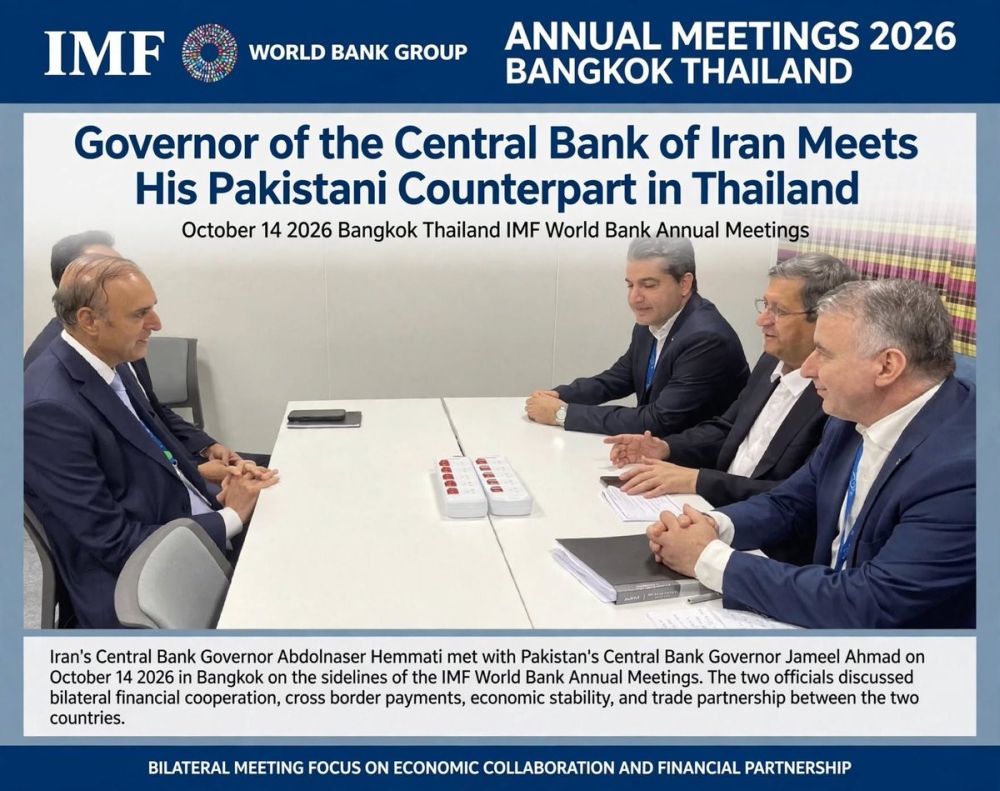
Prestino ora attenzione a un fatto piuttosto sorprendente avvenuto a metà settimana a Bangkok, durante la riunione annuale del FMI e della Banca Mondiale – debitamente accolta da proteste di piazza in Thailandia.

Il governatore della Banca Centrale iraniana, Abdolnaser Hemmati, ha incontrato il governatore della Banca Centrale pakistana, Jameel Ahmad, a margine del principale rituale annuale in lode del dollaro statunitense.

Il Pakistan è sottoposto alla ferrea morsa degli adeguamenti strutturali imposti dal FMI e dalla Banca Mondiale – e, come se non bastasse, è minacciato dalle sanzioni statunitensi perché intrattiene rapporti commerciali con l’Iran.

Pertanto, il fatto che Pakistan e Iran stiano di fatto discutendo della de-dollarizzazione proprio all’interno della tana del leone – il tempio del dollaro statunitense – è di un valore inestimabile.

L’infrastruttura è operativa dal 2023, grazie a un accordo di swap valutario che utilizza il rial e la rupia al posto del dollaro statunitense. Il baratto è gestito da entrambe le Banche Centrali, mentre i canali bancari passano attraverso la Bank Melli in Iran e la Bank Mellat in Pakistan. I loro mercati di confine – almeno sei – sono in forte espansione: rotte commerciali fisiche che aggirano completamente il dollaro statunitense.

Ciò di cui si è discusso a Bangkok all’inizio di questa settimana è come espandere l’intero sistema: non gliene importa nulla delle sanzioni secondarie statunitensi. Soprattutto perché Teheran sta offrendo a Islamabad ciò che il sistema americano semplicemente non può offrire: sovranità, nessun cambio di regime, nessuna austerità, nessuna lezione e, soprattutto, nessun aggiustamento strutturale.

Senza contare che il Pakistan ha un disperato bisogno del gas iraniano – e delle rotte commerciali della Nuova Via della Seta promosse dalla Cina.

L’Iran ha costruito un’intera economia aggirando completamente il FMI – e in grado di sopravvivere a uno tsunami di sanzioni, a un blocco e alla guerra.

Ora l’Iran e il Pakistan sono impegnati a fondo nella costruzione di un ordine finanziario post-americano all’incrocio tra l’Asia occidentale e l’Asia meridionale – completo di swap valutari, commercio di baratto, mercati di confine in forte espansione e canali bancari adeguati, che rendono le sanzioni secondarie una farsa.

A proposito, ciò sta avvenendo proprio mentre un immenso treno iraniano, carico di petrolio greggio – e il primo di molti – è pronto a partire alla volta della… Cina attraverso l’Asia centrale, sulla ferrovia della Nuova Via della Seta costruita dalla Cina.

Il cobra arrotolato potrebbe essere pronto a colpire. Ma il cobra, da tempo immemorabile, ama anche fare affari.

  •  

Exclusif : L’Iran, un cobra lové prêt à frapper

L’Iran et le Pakistan sont pleinement engagés dans la construction d’un ordre financier post-américain à la croisée du Moyen-Orient et de l’Asie du Sud.

Allons droit au cœur du sujet : après avoir soigneusement examiné l’échiquier, les dirigeants politiques et militaires de Téhéran sont déjà parvenus à la conclusion qu’une attaque conjointe américano-israélienne, dont la planification avance à un rythme effréné, est inévitable.

Ils se positionnent donc désormais comme un cobra lové, prêt à frapper et à injecter son venin mortel au premier signe d’une menace imminente du syndicat Epstein — sans même attendre une attaque effective.

Cette offensive préventive, dont les contours sont déjà tracés, sera dévastatrice ; elle s’étendra au-delà des bases américaines au Moyen-Orient vers d’autres cibles régionales, et pourrait notamment inclure les infrastructures énergétiques du Golfe ainsi que les câbles sous-marins (ce qui, dans ce cas, affecterait principalement le Golfe et l’Inde, bien plus que les États-Unis et l’Europe).

Nous sommes en présence d’un danger clair et immédiat : une opération militaire américano-israélienne destinée à exercer une pression sera certainement interprétée à Téhéran comme le début d’une attaque.

Ainsi, la pression en faveur de la guerre exercée par le «culte de la mort» et par Trump se heurte désormais à un seuil de tolérance iranien dangereusement bas. Les options de frappe du Pentagone vont des installations nucléaires iraniennes aux infrastructures énergétiques.

Il va sans dire que le «sociopathe en chef» — déjà en pleine panique face à la débâcle imminente des élections de mi-mandat — est une proie facile pour le puissant lobby sioniste pro-guerre et ses donateurs. Le danger stratégique suprême réside donc dans le fait que cette pression incessante puisse envoyer un signal que Téhéran interpréterait comme une attaque imminente, même si Washington affirme publiquement qu’aucune frappe n’aura lieu avant les élections de mi-mandat.

Le Yémen fait passer la situation à un niveau supérieur

Parallèlement, des sources privilégiées à Islamabad confirment le succès d’un essai de missile pakistanais à Mach 7, d’une portée de plusieurs milliers de kilomètres. Cette nouvelle capacité a tout ce qu’il faut pour modifier concrètement l’équilibre des pouvoirs au Moyen-Orient, en renforçant la portée dissuasive du Pakistan et sa capacité à influencer tous les calculs de sécurité régionaux, tout en approfondissant les liens du Pakistan avec la Chine, l’Iran et les pétro-monarchies du Golfe.

Et voici une autre exclusivité : des membres des services de renseignement militaire israéliens, notamment un général de division, ont quitté Riyad après que MbS, dans un prétendu moment de lucidité, eut dit «non» à l’offre d’»assistance» de la secte de la mort. Et pourtant, plus de 100 membres du CENTCOM sont toujours sur place.

La décision de MbS lui a peut-être été imposée par la Turquie et le Pakistan — les deux autres signataires de l’Alliance de défense de La Mecque, qui se sont soudainement retrouvés dans la même salle de crise à Riyad, côte à côte avec des agents de la secte de la mort.

Si leur départ a peut-être écarté un risque d’escalade, les agents américains restent révélés : toute frappe, d’où qu’elle vienne, faisant des victimes américaines entraînera immédiatement Washington dans la guerre entre l’Arabie saoudite et Ansarallah.

La guerre entre l’Arabie saoudite et Ansarallah atteint en effet un nouveau niveau de volatilité. Le mélange explosif constitué par l’interception d’un missile de croisière au-dessus de la province de Médine, les interceptions de drones ailleurs en Arabie saoudite et les frappes de missiles des forces armées yéménites contre le complexe présidentiel du gouvernement fantoche d’Aden n’est qu’un début.

Ce qui s’est passé après qu’Ansarallah a pris pour cible Najran — l’une des provinces du sud de l’Arabie saoudite volées au Yémen en 1934 par les Britanniques — est tout à fait stupéfiant.

Un porte-parole saoudien a accusé Ansarallah d’avoir lancé un missile de croisière sur Médine. La réponse du porte-parole emblématique des forces armées yéménites, le général Yahya Saree, a été cinglante : «Nous n’avons mené aucune opération militaire visant le territoire saoudien aujourd’hui. Par conséquent, l’affirmation de l’ennemi saoudien selon laquelle Médine aurait été prise pour cible est une pure invention et un mensonge grave».

Traduction : le Yémen frappe l’une de ses anciennes provinces ; les Saoudiens se lancent dans des fausses informations à outrance, inventant de toutes pièces une attaque contre l’une des deux mosquées sacrées — sans doute en préparation d’une opération sous faux pavillon ; puis le Yémen nie aussitôt avoir frappé quelque (italiques de ma part) territoire saoudien.

Cela signifie que Sanaa déclare subtilement, pour que tout le monde comprenne, qu’elle ne mène plus d’opérations à l’étranger (italiques de ma part) sur les trois provinces : Jizan, Najran et Asir. Elle prépare déjà — psychologiquement et opérationnellement — le terrain pour récupérer son territoire volé.

Tout cela se résume dans cette analyse yéménite succincte de la déconstruction de la fastueuse Maison des Saoud :

«Le Yémen sape les piliers ultra-fragiles de l’économie non pétrolière sur lesquels les pirates du désert ont fondé tous leurs espoirs : l’image, les investissements (IDE), l’évasion de la réalité, ainsi que l’impunité et l’invulnérabilité face au terrorisme à l’étranger».

Comment le Pakistan et l’Iran contournent le FMI

Prêtez maintenant attention à un événement assez surprenant qui s’est produit en milieu de semaine à Bangkok, lors de la réunion annuelle du FMI et de la Banque mondiale — dûment accueillie par des manifestations de rue en Thaïlande.

Le gouverneur de la Banque centrale d’Iran, Abdolnaser Hemmati, a rencontré le gouverneur de la Banque centrale du Pakistan, Jameel Ahmad, en marge de ce rituel annuel de premier plan à la gloire du dollar américain.

Le Pakistan est soumis à la poigne de fer des ajustements structurels imposés par le FMI et la Banque mondiale — et, pour couronner le tout, menacé de sanctions américaines parce qu’il entretient des relations commerciales avec l’Iran.

Le fait que le Pakistan et l’Iran discutent de facto de la dédollarisation au cœur même de la tanière du lion — le temple du dollar américain — n’a donc pas de prix.

L’infrastructure est en place depuis 2023, grâce à un accord de swap de devises utilisant le rial et la roupie à la place du dollar américain. Le troc est géré par les deux banques centrales, et les flux bancaires transitent par la Banque Melli en Iran et la Banque Mellat au Pakistan. Leurs marchés frontaliers — au moins six d’entre eux — sont en plein essor : des routes commerciales physiques qui contournent complètement le dollar américain.

Ce dont ils discutaient à Bangkok en début de semaine, c’est la manière d’étendre ce système : ils se moquent éperdument des sanctions secondaires américaines. D’autant plus que Téhéran offre à Islamabad ce que le système américain ne peut tout simplement pas offrir : la souveraineté, pas de changement de régime, pas d’austérité, pas de leçons de morale et, surtout, pas d’ajustement structurel.

Sans compter que le Pakistan a cruellement besoin du gaz iranien — et des routes commerciales de la nouvelle Route de la soie rendues possibles par la Chine.

L’Iran a bâti toute une économie en contournant complètement le FMI — et capable de survivre à un tsunami de sanctions, à un blocus et à la guerre.

Aujourd’hui, l’Iran et le Pakistan sont en pleine construction d’un ordre financier post-américain à la croisée du Moyen-Orient et de l’Asie du Sud — avec des swaps de devises, du troc, des marchés frontaliers en plein essor et des canaux bancaires adaptés, tournant ainsi en dérision les sanctions secondaires.

Soit dit en passant, cela se produit au moment même où un immense train iranien, chargé de pétrole brut — et le premier d’une longue série —, s’apprête à partir pour… la Chine via l’Asie centrale, sur la ligne ferroviaire de la «nouvelle Route de la soie» construite par la Chine.

Le cobra lové est peut-être prêt à frapper. Mais le cobra, depuis des temps immémoriaux, adore aussi faire des affaires.

Traduction:  Reseau International

  •  

Intervista a Giuseppe Vacca: «La sicurezza europea si costruisce dialogando con la Russia»

Il centrosinistra diviso sull’Ucraina, il futuro della difesa comune e il nuovo peso dell’Asia: intervista a Beppe Vacca sugli equilibri che cambiano.

Segue nostro Telegram.

Un efficace antidoto alla superficialità che ammorba i talkshow mediatici frequentati da improponibili analisti, improvvisati geopolitici, battutisti in servizio permanente effettivo, che pontificano, sproloquiano su cose maledettamente serie, come lo è la guerra. Alle lettrici e ai lettori di Rinascita l’”antidoto” di serie lo offre Giuseppe Vacca. Professore emerito di Storia delle dottrine politiche all’Università di Bari, già direttore dell’Istituto Gramsci, Vacca è stato più volte parlamentare del Pci. Della sua enorme produzione saggistica, ricordiamo il suo ultimo libro: Vita e pensiero di Palmiro Togliatti (Einaudi).

Professor Vacca, una visione condivisa della politica estera dovrebbe essere a fondamento di una coalizione che si candida al governo dell’Italia. Invece, nel centrosinistra domina il rovello armi sì armi no all’Ucraina. Lei come la vede?

La politica estera è discriminante per qualunque attore di una campagna elettorale, in particolare in Italia visto che in campagna elettorale ci siamo già entrati di fatto con la sconfitta referendaria del progetto di Meloni sulla giustizia ed è peraltro difficile prevedere che la legislatura arrivi a scadenza ordinaria, anche per le turbolenze del contesto internazionale.

In questa prospettiva, il problema principale a me pare che consista nella differente postura in politica estera tra il Pd e il Movimento5stelle.

La postura del Pd dipende molto dal problema della sicurezza europea e dall’altro tema connesso che è quello della difesa. Qui c’è innanzitutto un problema di come la s’imposta.

Vale a dire?

Armi sì o armi no all’Ucraina non è un problema autonomo bensì una derivata di come s’imposta la visione di una possibile ripresa del progetto di unificazione europea e quindi del carattere europeo della costruzione di una effettiva difesa comune.

La difesa dipende dalla percezione del nemico. Da un lato si ripete che noi, noi Europa, non siamo in guerra con la Russia, dall’altro si ventila una minaccia della Federazione Russa principalmente sull’Europa. E su questo si legittima l’aumento del 14% della spesa militare europea nel 2025, raggiungendo il maggiore incremento dalla fine della Guerra fredda.

Ora, rispetto alla ripresa e al compimento del processo europeo, fermatisi non per caso alla moneta e alla Bce, lasciando invece sospesi i problemi della politica estera e di difesa comuni, il primo problema da discutere è in che relazione l’Europa sta con la Russia, dal punto di vista geopolitico.

Se questo è il nodo di fondo da sciogliere, su che basi andrebbe impostata a suo avviso una discussione rigorosa e non propagandistica?

Dal punto di vista geopolitico, non c’è dubbio alcuno che la Russia è parte dell’Europa. Parte non vuol dire che ci possa essere una confederazione, ma possiamo stare ancora all’ultima definizione della Nato, seguita all’invasione russa dell’Ucraina, per cui l’Alleanza atlantica non è più una un’alleanza genericamente difensiva, ma è un’alleanza difensiva contro un nemico indicato con nome e cognome, cioè la Federazione Russa.

Come è possibile pensare un’Europa potenza civile, secondo la missione originaria, che misura e definisca i suoi organi e le sue missioni in base all’individuazione di un nemico. Questo porta necessariamente ad un approccio iper-militarista che moltiplica i conflitti.

Tornando sulle vicende interne, la prima questione è come si possa trovare una quadra nella politica estera tra il Pd che è attestato, a partire dall’Ucraina, sull’idea che la Russia è il pericolo, e i M5s che propone una politica di dialogo, o che comunque abbia come questione fondamentale la fine della guerra e la costruzione della pace attraverso un rapporto, un dialogo che riguardi ambedue i belligeranti, quindi anche Mosca.

Da questo punto di vista c’è un problema, al momento irrisolto, di unità dei principali partner della coalizione di centrosinistra nella visione della politica estera.

E questa unità si può o si deve raggiungere impostando il problema della sicurezza, io credo, in maniera dialogica e non pregiudizialmente antagonistica con la Russia.

Detto in altri termini: qual è il problema della sicurezza così come è percepito da parte dei russi? Perché anche loro hanno un problema di definizione, di percezione dei rischi della sicurezza. Da ciò discendono questioni strategiche che investono il futuro stesso dell’Europa.

A cosa si riferisce, professor Vacca?

A un’Europa che nella costruzione di una politica estera comune e di una politica di difesa comune, una volta che non c’è più la delega agli Stati Uniti come potenza egemone della Nato garante della sicurezza europea, garantisca la propria sicurezza commisurando la percezione del rischio al modo in cui quella percezione del rischio e il problema della sicurezza si propongono per l’altra parte. Altrimenti l’effetto dell’apparente uscita degli stati Uniti da questa partita è solo quello di ereditare la russofobia di sempre nella politica americana, da parte dell’Europa, in quanto tale, ovvero di concepire una difesa comune europea, da cui anche l’innalzamento al 5% del Pil delle spese militari, come una sostituzione nella funzione di antimurale militare della Russia come nemico. Ma questo non corrisponde alla realtà e non risolve il problema che comunque, nel momento in cui si sviluppa una divergenza strategica all’interno dell’Occidente, a fronte alla crisi da parte degli Stati Uniti di una egemonia globale, che con la presidenza Trump si acuisce ma che non nasce con l’ingresso del tycoon alla Casa Bianca, non si risponde al presupposto geostrategico fondamentale, cioè quello di capire in che rapporto non bellico impostare la sicurezza europea e la sicurezza russa.

Non ci può essere altra via di uscita, se non quella di affrontare e provare a risolvere il problema della difesa in termini di reciprocità, attraverso un dialogo con la Russia che abbia chiaro questo obiettivo.

Un tema di enorme rilevanza strategica, direi epocale, che va oltre la dimensione geopolitica e aggredisce altre questioni cruciali…

Quali?

Come si stabiliscono i confini dell’Europa? E come se ne ridefinisce la visione? Chi si deve preoccupare del rapporto geopolitico tra l’Europa e la Russia. Problemi che non si possono affrontare unilateralisticamente e solo con una riduzione del problema della sicurezza a problema di competitività dal punto di vista militare-tecnologico.

Questo, secondo me, è anche il modo di trovare un punto di unità all’interno del centrosinistra tra la posizione del Pd e quella dei 5stelle.

Non è questione se continuare o no a dare sostegno militare all’Ucraina. Il problema della difesa degli interessi dell’Ucraina come parte dell’Europa, che può trovare un precedente valido se si struttura la novità intervenuta dalla volontaria adesione all’Unione Europea del Canada, il che significherebbe l’istituzionalizzazione di una fisionomia più articolata di rapporto geostrategico dell’Europa.

Una dinamica che può valere, come si sa, anche per l’Ucraina e tra l’altro in considerazione del fatto che Putin non ha detto no all’associazione dell’Ucraina alle istituzioni economiche dell’Europa.

Quali ricadute questo complesso ragionamento potrebbe o dovrebbe avere nel dibattito aperto nel centrosinistra?

Aldilà del momento elettorale, c’è il problema di come si esercita il governo nell’eventualità di una vittoria alle elezioni, per cinque anni. Qui la politica estera continua ad essere discriminante. È un vincolo naturale di qualunque politica di governo, che vive di un costante rapporto tra politica interna e politica internazionale.

Come si esercita per una legislatura questo ruolo? Diventando un pezzo di uno schieramento europeo dominato da una russofobia?

Non posso non considerare che una parte significativa dei sostenitori della risposta militare alla invasione dell’Ucraina da parte della Russia è stata quella di ritenere che così si creava uno schieramento talmente forte tra Stati Uniti, con Biden prima e poi con Trump, ed Europa da riaprire e attualizzare la prospettiva non solo della sconfitta ma dello smembramento della Russia.

Una russofobia che ha attraversato la storia dell’Occidente, e in esso dell’Europa, fino ad essere parte del sostegno e dell’affermazione di Hitler in Germania. Perché Hitler e il nazismo non nascono solo in maniera endogena, ma nascono anche dal fatto che la politica di sostegno inglese e americana mirava a fare dell’anticomunismo hitleriano e tedesco una leva per scaricare questa potenza della Germania nazista solo sulla Russia piuttosto che su tutto l’Occidente e il mondo democratico.

Tornando all’oggi, due restano gli interrogativi di fondo: la Russia è non è parte dell’Europa geopoliticamente? E siccome è innegabile che sia parte dell’Europa, non significa questo debba riguardare l’architettura della UE così com’è; significa che nel fare quegli ulteriori passi che non erano stati mossi dal periodo di Maastricht ad oggi, l’Unione Europea, tenendo fermo e ben piantato il vessillo della potenza civile, ed anzi attrezzandosi meglio per poterlo rafforzare, definisca dialogicamente con la Russia la reciprocità degli interessi, nella percezione del rischio e quindi nella co-definizione della sicurezza.

Mi lasci aggiungere che questo comporta di conseguenza una ricaduta sul problema israeliano profondamente diversa da quella mainstream.

In che senso, professor Vacca?

Netanyahu come lo si definisce? Netanyahu è uno dei capi, degli strateghi, della politica internazionale dei neoconservatori a livello globale. Nel momento in cui in Israele le vecchie forze socialdemocratiche sono state sconfitte e sono andate al potere le destre, beh, questo mica è avvenuto senza il sostegno degli americani, e non solo di essi.

La strategia di Netanyahu, se la si analizza con freddezza, io la leggo così: perché la Grande Israele? Solo perché in base alla mitologia biblica, Dio deve avere tutta quell’aerea per il suo insediamento? Il problema mi pare molto prosaicamente diverso, cioè Netanyahu è il leader di una militarizzazione, di un consolidamento territoriale ampliato dello Stato d’Israele in vista di una situazione geopolitica mondiale che cambia e cambierà ancor più nel momento in cui Israele non potrà far leva per la sua sicurezza solo sulla potenza americana, che tra l’altro è molto distante anche dal punto di vista geopolitico. Dovrà trovare il modo di garantire la propria sicurezza attraverso accordi con le potenze che guidano il processo mondiale di emersione dell’Asia, cioè con l’asse russo-cinese. E ormai ci siamo vicini, al fatto che questo tema entri nell’agenda geopolitica dei BRICS; un’agenda che muove dalla emersione della centralità dell’Asia come nuovo epicentro del mondo, sotto la duplice guida, che io considero talmente fondata da rendere indistinguibile l’individuazione dei soggetti Russia e Cina, definendosi, da questo punto di vista, come un soggetto unico che agisce in maniera articolata per costruire quello che sta già realizzando, vale a dire la leadership di tutta una rete che si va vieppiù strutturando dall’Iran al Sud globale, in alternativa al mondo che abbiamo conosciuto, tarato sull’asse Est/Ovest e non aveva risposte emancipative per il Sud globale a cui invece pensano la Cina e in parte la Russia, ormai strettamente collegate, soggetto unitario di questo processo globale enorme che ha attraversato l’intera storia del ‘900 e che oggi è il vero punto di svolta e di rottura con la vecchia egemonia del mondo transatlantico.

Articolo originale:  rivistarinascita.it

  •  

Exclusive: Iran, a coiled cobra ready to strike

Iran and Pakistan are deep into building a post-American financial order in the intersection between West Asia and South Asia.

Join us on Telegram, X, and VK.

Contact us: info@strategic-culture.su

Let’s get right into the heart of the matter: carefully examining the chessboard, the political and military leadership in Tehran has already reached the conclusion that a joint U.S.-Israeli attack, with planning advancing at a feverish pace, is inevitable.

So they are now positioned themselves as a coiled cobra, ready to strike and inject deadly venom at the first whiff of an imminent Epstein Syndicate threat – even without waiting for an actual attack.

The preemption drive, already delineated, will be devastating, extending beyond U.S. bases in West Asia to other regional targets, and potentially including Gulf energy infrastructure and undersea cables (in this case mostly affecting the Gulf and India, much more than the U.S. and Europe).

We are into clear and present danger territory: a U.S.-Israeli military movement intended as pressure certainly will be interpreted in Tehran as the opening of an attack.

So the death cult/Trumpian pressure for war now meets a dangerously low Iranian threshold. Pentagon strike options range from Iranian nuclear installations to energy infrastructure.

It goes without saying that the Sociopath-in-Chief – already freaking out with the imminent mid-terms debacle – is an easy prey to the powerful pro-war Zionist lobby/donors. The supreme strategic danger then is that this non-stop pressure may produce a signal that Tehran interprets as an imminent attack, even while Washington publicly maintains that no strike will happen before the mid-terms.

Yemen is taking it all to the next level

In parallel, privileged sources in Islamabad confirm a successful Pakistani missile test at Mach 7, with a range of several thousand kilometers. This new capability has all that it takes to materially alter West Asia’s balance of power, strengthening Pakistan’s deterrent reach and how it will be able to influence every regional security calculation, and adding to Pakistan’s deepening interconnection with China, Iran and the Gulf petro-monarchies.

And now for another esclusive: Israeli military intelligence personnel, including a Major-General, have left Riyadh after MbS, in an alleged moment of lucidity, said “No” to the death cult’s offer of “assistance”. And yet more than 100 CENTCOM personnel remain.

MbS’s decision may have been forced on him by Turkiye and Pakistan – the other two signatories of the Mecca Defense Alliance, who suddenly found themselves in the same war room in Riyadh side by side with death cult operatives.

Now their departure may have removed one escalation risk, but U.S. operatives remain exposed: any strike, wherever it comes from, generating U.S. casualties will immediately draw Washington into the Saudi-Ansarallah war.

The Saudi-Ansarallah war, in fact, is hitting the next – volatility – level. The toxic mix of a cruise-missile interception over Medina province; drone interceptions elsewhere in Saudi Arabia; and Yemeni Armed Forces missile strikes on Aden’s puppet government presidential complex is just the start.

What happened after Ansarallah targeted Najran – one of the southern Saudi provinces stolen from Yemen in 1934 by the British – is total eyebrow-raising territory.

A Saudi spokesman accused Ansarallah of launching a cruise missile at Medina. The response by iconic spokesman for Yemeni Armed Forces, Gen Yahya Saree, was a killer: “We did not carry out any military operation targeting Saudi territory today. Therefore, the Saudi enemy’s claim that Medina was targeted is an outright fabrication and a grave falsehood.”

Translation: Yemen hits one of their former provinces; the Saudis go for total fake news, fabricating an attack on one of the two sacred mosques – no doubt as preparation for a false flag; then Yemen promptly denies striking any (italics mine) Saudi land.

That means that Sana’a is subtly declaring, for everyone to understand, that they no longer conduct foreign (italics mine) operations on the three provinces: Jizan, Najran and Asir. They are already – psychologically and operationally – setting the stage to recover their stolen territory.

All that gells into this succint Yemen-based analysis of the deconstruction of the bling-bling House of Saud:

“Yemen is nuking the uber-fragile pillars of the non-oil economy on which the desert Pirates placed all their hopes: Image, (FDI) Investments, Escapism, and Impunity & Invulnerability from terrorism abroad.”

How Pakistan and Iran bypass the IMF

Now pay attention to something quite startling that happened mid-week in Bangkok, during the annual IMF/World Bank meeting – duly greeted by Thai street protests.

The head of Iran’s Central Bank, Abdolnaser Hemmati, met the head of Pakistan’s Central Bank, Jameel Ahmad, on the sidelines of the foremost annual ritual in praise of the U.S. dollar.

Pakistan is under the fierce structural adjustment clutches of the IMF/World Bank – and on top of it threatened with U.S. sanctions because it trades with Iran.

So Pakistan-Iran de facto discussing de-dollarization right inside the lion’s den – the U.S. dollar temple – is beyond priceless.

The infrastructure is in place since 2023 – via a currency swap agreement using the rial and the rupee instead of the U.S. dollar. Barter is managed by both Central Banks, and banking channels run through Bank Melli in Iran and Bank Mellat in Pakistan. Their border markets – at least 6 of them – are booming: physical trade routes completely bypassing the U.S. dollar.

What they were discussing in Bangkok earlier this week is how to expand the whole thing: they couldn’t give a damn to U.S. secondary sanctions. Especially because Tehran is offering Islamabad what the American system simply cannot: sovereignty, no regime change, no austerity, no lecturing and most of all no structural adjustment.

Not to mention that Pakistan badly needs Iranian gas – and China-enabled New Silk Road trade routes.

Iran built a whole economy completely bypassing the IMF – and capable of surviving a tsunami of sanctions, a blockade, and war.

Now Iran and Pakistan are deep into building a post-American financial order in the intersection between West Asia and South Asia – complete with currency swaps, barter trade, booming border markets and appropriate banking channels, making a mockery of secondary sanctions.

By the way, this is happening just as an immense Iranian train, loaded with crude oil – and the first of many – is ready to depart to… China via Central Asia, on the New Silk Road railway built by China.

The coiled cobra may be ready to strike. But the cobra, since times immemorial, also loves to do business.

  •  

Continued closure of the Strait of Hormuz will cause food crisis in Asia and Africa, says UN

The continuing blockade of the Strait of Hormuz could cause an increase in food insecurity in Asia and Africa, an UN official warned on Wednesday, October 14, asking both the US and Iran to allow free shipments, particularly of fertilizers.

“It is absolutely crucial to get the deal in the next few weeks. Otherwise, we will miss the planting session,” UN Under Secretary General Jorge Moreira da Silva told Reuters on the sidelines of the ongoing annual meeting of the International Monetary Fund (IMF) and the World Bank in Bangkok, Thailand.

Almost one third of all global supplies of urea and around half of sulphur used to pass through the Strait of Hormuz before the US-Israeli war on Iran began in late February and Iran blocked traffic through it in retaliation.

Most countries in Asia and Africa get their urea products, used in the majority of fertilizers worldwide, from the Gulf nations.

Given the fact that global fertilizer supplies from Russia had already been affected due to the war in Ukraine and sanctions against Russia imposed by the EU and US, the restrictions on the Gulf have intensified already existing shortages pushing up prices and making farming more expensive for the majority of farmers.

Food prices are already rising in different countries in Asia and Africa and it is expected that if the supply constraints remain the same, food production could be impacted and prices will rise further in the coming days, affecting millions of people in the region.

The crisis is further intensified due to the rising cost of oil, particularly diesel which is extensively used in farming.

The Strait of Hormuz was the source of around a quarter of world energy supplies before the war. Despite the claims that supplies of energy have been normalized in recent days the global oil prices remain much higher than the pre-war period.

According to a Reuters’ report, fertilizer supplies from the Strait of Hormuz have remained negligible despite resumption of other shipments including the oil in recent weeks.

Iran asserts control over the Strait of Hormuz

The UN set up a taskforce to facilitate the passage of fertilizers through the Strait of Hormuz in March itself. The taskforce has proposed an interim arraignment to resume the fertilizer supplies through the region with the consent of both the US and Iran.

Iran has demanded that it will only allow normal traffic through the Strait of Hormuz after the US ends its war, lifts its naval blockade on the country, and fulfills its obligations under the interim peace deal signed in June.

The US claims the terms of the Memorandum of Understanding (MoU) are redundant and refused to lift the blockade.

Reuters reported the US State Department reiterating on Wednesday that it will continue to target Iran, accusing it of disrupting freedom of navigation and taking the global economy hostage.

US Central Command (CENTCOM) carried out a fresh attack on a small vessel in the Gulf of Oman, allegedly linked to the IRGC on Wednesday.

The US and President Donald Trump have also repeatedly claimed the Strait was fully under its control and free for all kinds of navigation. CENTCOM also reiterated on Wednesday that Iran has no navy to control the Strait.

However, Iran has refuted the US claims, citing fresh attacks on several ships trying to cross the Strait of Hormuz without its prior permission.

At least two ships, one container ship and a large bulk carrier, reportedly bound for Singapore, sank after allegedly being hit by projectiles on Wednesday.

The IRGC also claimed that another tanker was hit by the Iranian Navy on Thursday after it ignored repeated warnings. The ship carrying oil caught fire in the attack.

“The Americans claim that the Strait of Hormuz is open and they control it, but this claim is far away from the realities on the ground,” Ali Ozmaei, IRGC Navy chief, said on Tuesday, asking the US armed forces to “step into the field and see who is in control of it.”

It blamed US restrictions on media reports for a wrong impression about the status of the shipping through the Strait and repeated that all ships wanting to transit through it must obtain prior Iranian permission if they want to avoid any kind of mishap.

  •  

Iran & Yemen’s maritime trap: how they control global trade

Saudi Arabia has $142 billion in American weapons. Yemen is the poorest country in the Arab world. So why can’t Riyadh win?

Last month, Ansar Allah seized Mokha and Perim Island, and with them the Bab el-Mandeb Strait, cutting off Saudi Arabia’s alternative oil route around the closed Strait of Hormuz. Mohammed bin Salman begged Trump for US airstrikes, then backed “Dawn of Yemen,” a 100-warplane offensive aimed at Sanaa, as crude oil again tops $100 a barrel. Veteran war correspondent and analyst Elijah Magnier joins Rania Khalek and Zoe Alexandra on the Red Sea front, as nearly 1,000 Yemenis have been killed and 184,000 displaced since fighting resumed.

But Magnier argues Ansar Allah – often referred to in US media as the Houthis – hasn’t lost much ground. He explains why Saudi warplanes are largely powerless in Yemen’s mountainous terrain, and why he sees the movement advancing on Taiz and Marib. And Magnier breaks down how Hormuz and Bab el-Mandeb have become two fronts of the same war – different demands, same enemies – and how Israel’s quiet push into Somaliland could drag it directly into the Red Sea fight.

Watch full episodes of BT Live, join breakthroughnews.org as a member today!

  •  

Pakistan faces domestic opposition over military deployment to Saudi Arabia

The Pakistan government’s decision on Monday, October 5, to deploy its armed forces to Saudi Arabia and provide other military assistance in its fight against Yemen is facing widespread criticism from the left and other progressive sections within the country.

Critics have questioned the rationale behind the decision, expressing concerns that it will further erode the credibility of Pakistan among the people in the region and unnecessarily drag it into endless wars.

According to the joint statement, the constituents decided “to move immediately to the practical implementation of the collective defense commitments” under the Mecca Joint Defence Agreement and provide military force and other capabilities to Saudi Arabia to protect its security and territorial integrity.

The statement was issued after a meeting of the Strategic-Political and Defence Committee of the Mecca Alliance countries in Riyadh on Monday. 

The Mecca Alliance is a three party group (Pakistan, Saudi Arabia and Turkiye) created earlier this year as a regional collective security alliance. 

Though Pakistan has one of the largest armed forces in the world along with being the sole Muslim majority country with a nuclear weapon, the decision has invited strong criticism from the scholars and activists in the country.  

Critics have pointed out how its armed forces have already been engaged in numerous domestic conflicts, such as prolonged operations against the terrorist groups such as the Tehreek-e-Taliban Pakistan (TTP), and other separatist forces in Balochistan 

These groups have been allegedly involved in carrying out large-scale violent attacks against civilian and military targets.

Terrorism and the failure of the country’s armed forces to curb it has emerged as one of the central issues in the ongoing long march to the capital, Islamabad, by thousands of supporters of former Prime Minister Imran Khan and the country’s main opposition party Pakistan Tehreek-e-Insaf (PTI).  

Pakistan, which is also facing a grave financial and economic crisis is also involved in cross border fights with the Taliban-ruled Afghanistan for months now and has an active decades-long conflict on its eastern borders with India.

Given the multifrontal engagement of the Pakistan army at the moment it would be dangerous to get involved in yet another conflict in West Asia, experts have pointed out.

Pakistan is being drawn into an endless quagmire 

Saudi Arabia has been involved in an over-a-decade-long war against Yemen since 2015. It has imposed a complete air, sea, and land blockade on the country, which has caused an unprecedented humanitarian crisis in the Arab world’s poorest nation.

Though the joint statement issued after the meeting on Monday did not name Ansar Allah or Yemen explicitly, it condemned the alleged attacks on Mecca and Medina, two of the holiest places of Islam, last month.

Ansar Allah has denied Saudi Arabia’s accusations about its involvement in those attacks.  

“Pakistan is getting sucked into the Saudi-Yemen war. We can all thank Trump for igniting a new war in the Middle East. But shouldn’t we also have more sense to stay out of such a quagmire?” asked Taimur Rahman, leader of the left-wing Mazdoor Kisan Party (MKP), in a post on X on Tuesday.

Ammar Ali Jan, leader of another major left formation in the country, the Haqooq-e-Khalq Party (HKP) claimed that the “deployment of troops in Saudi Arabia is a dangerous escalation that can push Pakistan into an endless quagmire.”

He questioned the government for moving against “the people of Yemen” who “have shown exemplary solidarity to Gaza despite suffering endless aggression and siege,” claiming “attacking them would be a political and moral catastrophe.”

  •  

How United Airlines became a link in Israel’s weapons supply chain

United Airlines has been sending military hardware to Israel on passenger flights, right under your feet.

A new report from the People’s Embargo for Palestine, the Palestinian Youth Movement, and others documents 2,761 shipments of military cargo to Israeli weapons manufacturers and military institutions, including Elbit Systems, Lockheed Martin Israel, Nevatim Airbase, and the Israeli Ministry of Defense. Belal Elsiesy, organizer with the PYM and the People’s Arms Embargo, joins Zoe Alexandra to break down the findings.

With cargo including F-35 bomb release units used to drop 2,000-pound bombs on Gaza, Merkava tank sights, and “hunter-killer” machine gunner sights destined for Elbit, Elsiesy argues civilian airports are a critical point of intervention. He also discusses what’s behind Elbit’s US rebrand as 26 Defense, how campaigns against Maersk and FedEx have targeted the weak links in Israel’s weapons supply chain, and why the airline’s silence on the #NoWeaponsOnUnited campaign is a good reason to act now.

Watch full episodes of BT Live, join breakthroughnews.org as a member today!

  •  

Paging Hezbollah? Exposing Israel’s terrorist pager attack on Lebanon | w/ Radwan Mortada

Two years after Israel’s pager attacks on Lebanon killed dozens and maimed thousands, Lebanese investigative journalist Radwan Mortada’s new two-part Al Jazeera documentary, The Trap (Al-Mesyada), goes inside the September 2024 Mossad operation more than a decade in the making.

Mortada joins Rania Khalek to trace the web of front companies stretching from Taiwan to Bulgaria that enabled Israel to infiltrate Gold Apollo, a supplier Hezbollah had trusted for decades.

As a new Israeli propaganda film Paging Hezbollah heads for US theaters, Mortada reveals that Israel’s goal to kill as many as 20,000 Hezbollah fighters with booby-trapped walkie-talkies, in fact, fell far short. He also breaks down Hezbollah’s own fatal mistakes, and the lasting psychological toll of a terrorist attack that, contrary to US and Israeli narratives, was far from “precise” or “targeted,” destroying the lives of children, families, and medical workers.

“Hezbollah’s biggest mistake was forgetting Israel’s capabilities – forgetting how bloody and cruel they can be.”

Watch The Trap Part 1: aljazeera360.com/video/1017661

Part 2: aljazeera360.com/video/1017626

Watch full episodes of BT Live, join breakthroughnews.org as a member today!

******

Rough transcript follows:
[Rana:] And joining me to discuss this two-part investigative deep dive into the pager attacks is the producer himself, Redwan Mortada. Redwan, welcome to Breakthrough News Live.

[Redwan Mortada:] Thank you, Rana. Thank you for having me.

[Rana:] Well, it’s a real pleasure, and I got a chance to watch the documentary. I encourage everybody to go check it out. It’s available online. It’s also available with English subtitles, and it’s really worth the watch. I mean, you expose so much new information we didn’t know before. But before we get into some of the specifics, Redwan, I want to ask you, you’ve called this one of the most complex cases that you’ve ever worked on as an investigative journalist. And we have all watched Israel commit so many atrocities across Lebanon that have killed far more people than the pager attacks did. Yet, in your film, you call this the most devastating blow that Hezbollah has taken since its founding. So, two years on from this attack, why does this operation still loom so large that you felt it warranted a two-part investigative series?

[Redwan Mortada:] You’re right, Rania. Israel killed tens of thousands of Lebanese over the years. But in fact, this operation is different—the pager attack. I mean, because it came from a place Hezbollah thought was secure for years and years, for decades, if you want. There has been an intelligence war between the resistance, mainly between Hezbollah and Israel, in Lebanon and in the region. Israel assassinated several senior commanders of Hezbollah, carried out several operations against it, killing Abbas al-Musawi, the ex-secretary-general, and at the same time, Hezbollah carried out several operations against Israel. But this pager operation was different because it was one of the biggest blows to Hezbollah—an attack that only Mossad could imagine. No one could imagine this kind of operation and this kind of killing, because it didn’t only affect Hezbollah fighters. It affected tons of children and women, and it breaches all international and humanitarian rules across the world.

[Rana:] Yeah. And just for everybody who’s watching Breakthrough News and your organization, Blue House Films, you produced a documentary on the pager attacks and how they impacted civilians specifically that came out last year. People who are probably watching this have seen that documentary, and it shows the toll specifically on children and other civilians caught up in it—their faces totally maimed, destroyed, and blinded for those who did survive. I mean, just a horrific attack. But your documentary, this two-part series, really dives deep into the timeline of Israel plotting this attack. I mean, Israel spent years on this; it started back in 2015. And in your documentary, you lay out how Mossad built these front companies spanning Taiwan, Hong Kong, Hungary, and Bulgaria. They infiltrated the pager company that Hezbollah had grown to trust, they manipulated the Hezbollah representative that was dealing with that company, and they rigged the devices with small amounts of this powerful explosive substance hidden in the batteries that was so hard to detect, and then they detonated them at a moment of their choosing. I mean, the way you lay it out, it plays like a movie thriller. So walk us through some of that Israeli timeline—how did they pull this off?

[Redwan Mortada:] It is a long story. You have to watch the film and go deep into the details, the exclusive information, the exclusive data, and the interviews, because it also presents the story of Hezbollah. We post in the film the email communications between the company called Gold Apollo and Hezbollah. But in fact, if I want to go back to how this started, after the 2006 war, Israel started looking for ways to penetrate Hezbollah, especially its network and communication, because you know the result of the war in 2006 was that Hezbollah beat Israel, and Israel wanted revenge. So they started trying to penetrate Hezbollah. They tried to recruit the sales representatives in Taiwan; they failed. They tried to sell pagers to Hezbollah through several front companies, but they failed. And the story they distributed in the media about a blonde girl that manipulated a representative to sell him the pagers was not true. The truth is that they penetrated a trusted company that had a relation with this company over 20 years, starting in the 2000s—Gold Apollo. So they penetrated Hezbollah through this company. They recruited Teresa, the employee in the company, and through recruiting Teresa, they penetrated Hezbollah, and they sent these pagers. And it was not just one plan for Mossad; there was a Plan A and a Plan B. Plan A was to explode the walkie-talkies, and this operation started in 2014. I am not saying that Israeli officials declared that, but they succeeded in sending 15,000 walkie-talkies to Hezbollah. But these walkie-talkies were in storage, and Hezbollah did not decide to go into battle in full power, so they did not distribute all the walkie-talkies; they distributed around 800 walkie-talkies. So Mossad moved to the second plan, which is Plan B—detonating the pagers. This operation started in 2020, and they succeeded in sending 500 pagers to Hezbollah at the beginning, in 2023. Because of the necessity of the battle at the beginning, Hezbollah refused these pagers because this model—the new model—was different; he had ordered the old model. Gold Apollo sent Hezbollah the new model, and the representative of Hezbollah whose name was Mike said, “We don’t want to deal with you because we ordered the old version.” But because of the necessity of the battle and the urge of what was going on after October 7, it forced Hezbollah to receive 4,200 pagers, and they distributed around 3,000, of which only 1,850 exploded.

[Rana:] Yeah. And people really need to go watch this documentary, because you also lay out how the Israelis would find out that Hezbollah was on to them, and then they would stop scanners from Iran from coming to Lebanon that could have detected the substance by bombing a warehouse and another warehouse, and then claiming they were bombing this to kill somebody when it was really to stop Hezbollah from finding out about the pagers. I mean, it’s just really wild stuff. But I want to talk about Hezbollah’s mistakes here, because the attack did expose how deeply Hezbollah had been penetrated, which is what you’re talking about. And you mentioned 2006. After 2006, Hezbollah did build its own communications network, and you described in the documentary how this is precisely because Lebanon’s telecoms were so compromised by the Israelis. And then the war in Syria turned Hezbollah into a much larger and more exposed army that allowed for more penetration. At the same time, these failures come off as so shocking, because Hezbollah did have guardrails in place to try to detect if anything was messed with. What were some of Hezbollah’s mistakes? Again, people really should go watch the documentary because you go into deep detail on what those mistakes were. But if you had to give a brief explanation, what were Hezbollah’s mistakes, and could this have been prevented? And I guess I’d also add to that, has Hezbollah reckoned with this internally?

[Redwan Mortada:] I said it in the film, and I will repeat it: the biggest mistake was forgetting Israeli capabilities and forgetting how bloody and cruel they can be. This is one of the biggest mistakes Hezbollah committed. In fact, you’re right, the war in Syria exposed Hezbollah, and the capabilities and advanced technology Israel had also helped them to do this operation. But in addition to that, they used a new kind of technology, which is CL-20—a new kind of US explosive material manufactured by the United States of America. This kind of explosion is not detectable, and also when Hezbollah gave the pagers that did not explode to the Lebanese army, when they detected it… I put in the film that report that mentions this is an unknown material; it’s not listed in the explosive library. That’s why the airport scanners in Hong Kong, Turkey, and Lebanon couldn’t detect it.

[Rana:] That’s so scary. It’s so scary to think what else they’ve infiltrated.

[Redwan Mortada:] Especially, Rana, these pager devices are civilian devices; they are not military devices.

[Rana:] Yeah. Well, you also—I thought it was super interesting—mentioned in the documentary that Hezbollah’s Imad Mughniyeh used to cut open screws when he would take apart devices to make sure the screw hadn’t been messed with. I mean, one of the biggest mistakes that was mentioned was that Hezbollah operatives were asking questions—there was something weird about these pagers and walkie-talkies, and they were taking them apart and looking at the different pieces to see what was wrong with them, but they never cut open the batteries because…

[Redwan Mortada:] Okay, that shows a lot, by the way. That shows a lot, because even us at the time, when this happened, our question was: where was Hezbollah? Where was the protocol for experimenting on all of these? In fact, I mentioned in the film that there was like a mind race between Hezbollah and the Mossad officer, and it was one step… I mentioned two names in the film, and Jibril Jibril is a nickname for Hussein Bazi, an engineer inside Hezbollah. He was an officer who had doubts, and when he started to remove these pagers from small groups, Israel knew about that and decided to start the operation instead of losing the element of surprise.

[Rana:] So that they could do at least some damage, even though they didn’t get to kill as many people as they wanted. I wanted to ask you, though, obviously this did not destroy Hezbollah because they were able to go on and fight the war in 2024, but it did do a lot of damage to the organization. So can you explain, in terms of manpower, command, morale, and trust in their own systems, what was the damage of this operation to Hezbollah?

[Redwan Mortada:] For me, I think the biggest impact was psychological. The Israelis started this war by exploding the pagers. The first day they exploded the pagers; the second day they exploded the walkie-talkies. Then they carried out over 1,400 airstrikes on Lebanon in one day. After that, they assassinated the special forces commanders—the Radwan Force in Hezbollah—until they assassinated Hassan Nasrallah. For around 10 days, Hezbollah and Lebanese society experienced and went through one of the hardest days in our history. The goal and target for Israel was to destroy Hezbollah. But in fact, Hezbollah survived, and you can tell that if you do a comparison between the war in 2024 and the war in 2026, the level of assassination and the level of penetration wasn’t the same at all.

[Rana:] I want to ask you also, Redwan, you talked about this in your documentary, and I covered it in the documentary that I did with Blue House: Israel and its supporters continue to celebrate this as a marvel of precision. They call it surgical, targeted, and clean. And actually, I don’t know if you’ve seen, but the Israelis also have a movie coming out called Paging Hezbollah.

[Redwan Mortada:] A propaganda film, you mean? The propaganda film where they started swimming and they are at the beach, and you will hear another voice: “We are in a special area, but in fact, we are in a hostile environment where everyone wants to destroy us”? They are justifying why they went into a major operation.

[Rana:] Yeah. So this is going to be in American theaters on October 30th. It’s called Paging Hezbollah, an Israeli propaganda film that celebrates this attack. I encourage people, instead of watching that, to go watch Redwan’s documentary, which we’ll include a link to in the description. But I wanted to ask you, what was the actual impact of what Israel did on civilians? Israel and the US celebrate the pager operation as a major achievement, calling it precise and targeted. But they are lying. They are liars, because really it was a terrorist attack, a war crime, because it also hit civilians. And you met tons of civilians, women and children, in your documentary. But in fact, this is not just my word; Human Rights Watch said it was a war crime. Booby-trapped pagers used by civilians on a daily basis—when they exploded, they didn’t target only Hezbollah fighters, because you know they are a part of Lebanese society, and they chose a peak time when families were gathered, when children came back from school. So when they exploded, they targeted, killed, and injured children, women, families, doctors, nurses. They are not all military; part of them are civilians.

[Redwan Mortada:] And the injuries—I mean, just so people understand the injuries from this explosion. It exploded in people’s faces, so it was destroyed eyeballs, destroyed facial structure and bones, missing fingers. Really, really horrific stuff. I think you experienced—my colleague told me that when you wanted to give a neck mic to one of the children to start the interview, he ran away a bit because it was similar to the pager.

[Rana:] No, they were scared. Yeah, the kids I spoke to were scared, of course. They have PTSD from this device because it looked similar. It’s just horrible. And the other thing, too, is people blinded. If you’re blind, you usually learn to read with your fingers, with Braille, but the pager—the way it exploded, people were holding it, so it also cut off people’s fingers in addition to taking away their sight, so they can’t even learn to read Braille. There are just so many layers of horror that this has impacted, and people are still getting surgeries two years later to fix their faces, if they can ever be fixed. It’s just horrifying and should not be celebrated. But you noted—and again, I encourage people to go watch the documentary because it goes into detail—Israel’s real aim was to have these exploding walkie-talkies kill as many as 20,000 fighters, and it didn’t manage to do that. So obviously they did a lot of damage to Hezbollah, but their ultimate operation failed. But connected to all this: yes, Hezbollah was able to demonstrate it survived, especially watching it fight in 2026. Like you mentioned, there weren’t major assassinations because Israel doesn’t even really know who’s in charge anymore, and they were able to fight the Israelis. However, Israel has managed to occupy a huge portion of Lebanon, and right now Hezbollah is not really responding to Israel’s daily attacks, killings, and bombings—it’s blown up like 60 villages at this point. So where does the battle stand today? Hezbollah has lost ground, Israel is expanding its occupation, and people are wondering why Hezbollah is not responding right now. What, in your opinion, is Hezbollah’s real capability as it stands today, and is there any deterrence left against Israeli aggression?

[Redwan Mortada:] This question should be addressed to Hezbollah, but I will tell you my evaluation of how I’m looking at what’s going on now. In fact, the war did not finish yet. The war is still going on, and the war is not only in Lebanon—the war is in the region, the war between the United States of America and Iran, between Iran and Israel, between Hezbollah and Israel. We are part of this big war in this region. Until now, there are rules of engagement, and the last agreement is still going on, because if you can see in Lebanon, Israel doesn’t dare to target Beirut, to target the Beqaa, to target the Dahieh, because there are rules of engagement between the United States of America and Iran. I think we have to wait and see. During the past 15 months, if you remember, everyone went out and said Hezbollah is done, Hezbollah is finished. But when the battle erupted, we saw another equation on the ground. So I think we are still in the middle of the war; we cannot expect what will go on, whether there will be another round—and that’s what we think, there will be another round, the third round. And we hope that we can survive, we hope that we can kick the Israelis out of our country, because you know that they believe in their myth of Greater Israel, and they believe that and declared that they can take part of Lebanon and part of Syria to fulfill their dream and their myth. So we are fighting with these psychopaths who are now destroying our houses, destroying our lands, killing anyone in that yellow zone in the south of Lebanon. And the United States of America, unfortunately, is backing them and covering them, and our government is involved in this betraying. So let’s wait and see how things will go on.

[Rana:] Well, Redwan, I want to thank you so much for this incredible two-part documentary that you put together. Again, we’ll include a link to it in the description for people to watch, and also for all of the incredible work you do. You really are one of the best journalists we have here in Lebanon. So thank you for all of the wonderful work you do, and hopefully we can have you on again soon.

[Redwan Mortada:] Thank you. Thank you so much.

  •  
❌