❌

Reading view

Could 2026 be the year that democracy fought back? | David Van Reybrouck

Elections are never enough by themselves, but the stunning results from Serbia, Brazil and Hungary have given us hope in dark times

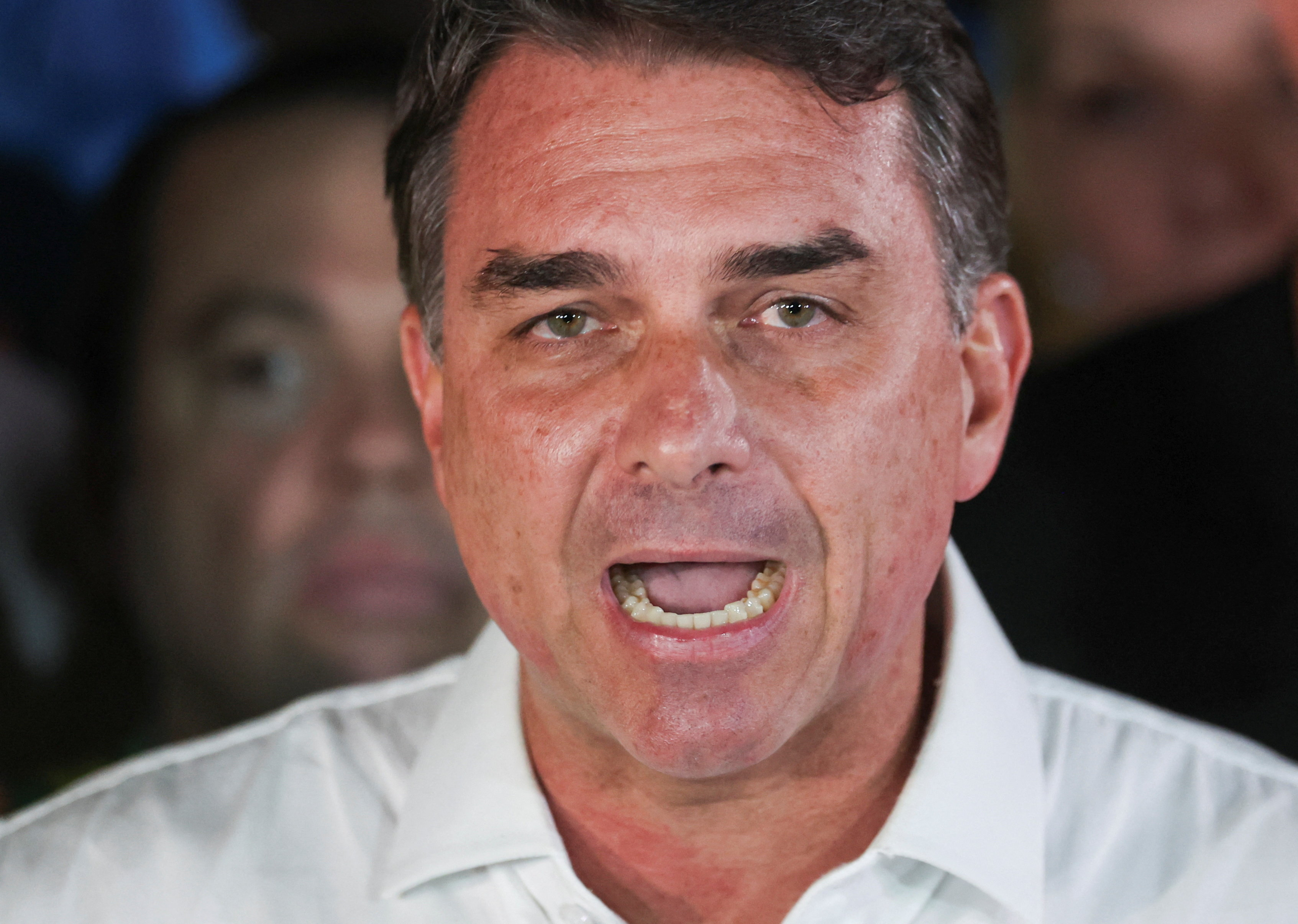
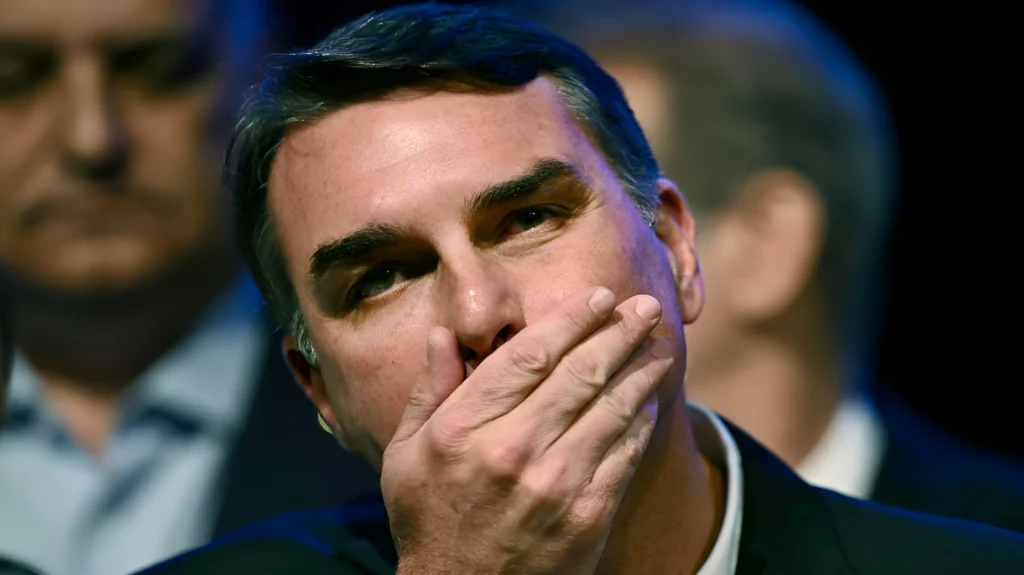
It is undoubtedly too early to declare victory, but the recent electoral defeats of Viktor Orbán, Aleksandar Vučić and Flávio Bolsonaro make me wonder: is 2026 turning out to be the year democracy slowly, but surely, fought back?

Even in Israel, prime minister Benjamin Netanyahu’s reigning bloc lost its parliamentary majority and saw the spectacular rise of Arab parties. Though the opposition may not be able to form a government yet, it does have the larger parliamentary bloc.

David Van Reybrouck is a Belgian author and philosopher laureate for the Low Countries. He is the author of Against Elections: The Case for Democracy, and the initiator of Democracy27

Continue reading...

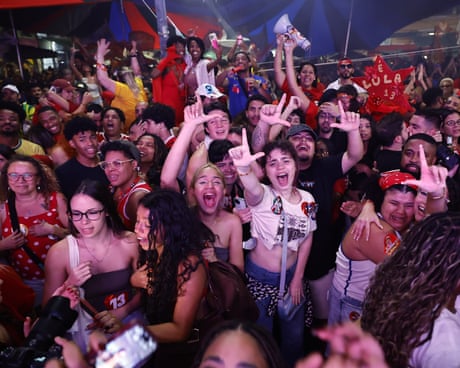
© Photograph: Andre Coelho/EPA

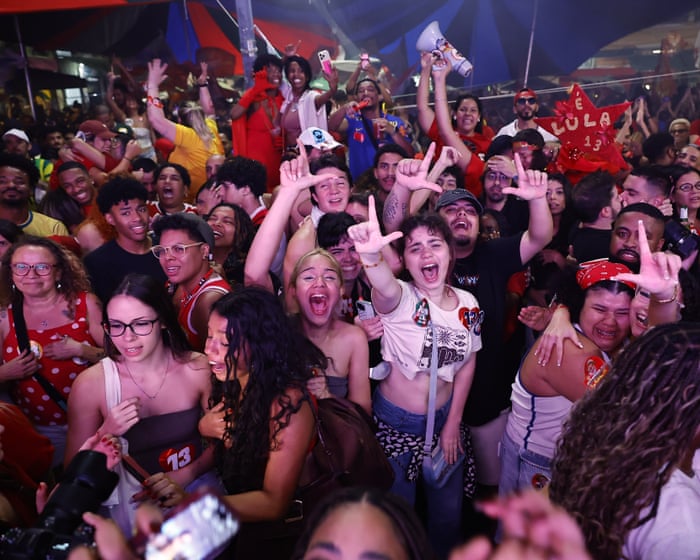
© Photograph: Andre Coelho/EPA

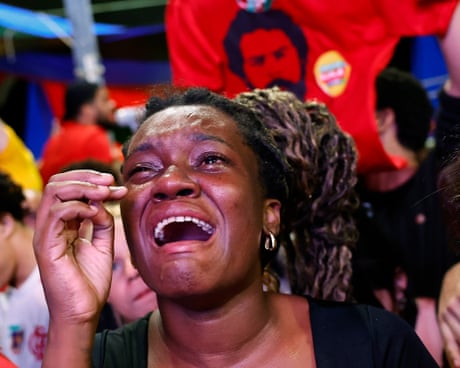
© Photograph: Andre Coelho/EPA

  •  

Lula wins, Bolsonaro flees: What’s next for Brazil?

Lula’s comeback to victory in Brazil’s 2026 presidential election was no accident. After trailing far-right Flávio, son of imprisoned former president Jair Bolsonaro, by 2 million votes in the first round, President Luiz Inácio Lula da Silva won the runoff by more than twice that, powered by a movement that deployed mass street mobilizations and a “Lula’s Army” WhatsApp channel to turn the race around in just three weeks.

Now Flávio Bolsonaro has fled to Miami, defying a court order and claiming the vote was stolen. But lawyer and Movimento Brasil Popular organizer Ana Júlia Guedes credits a disciplined campaign that exposed the far right’s criminal ties. And she tells Zoe Alexandra and Rania Khalek the honeymoon will be short: Lula still faces a deeply conservative Congress, rising political violence against Indigenous and Afro-Brazilian communities, and right-wing governors already moving to block his pro-worker agenda.

Guedes explains what’s at stake in Lula’s final term, from social media regulation to a push for mineral sovereignty over Brazil’s lithium and rare earths – and why Brazilians celebrating Bolsonaro’s defeat are already preparing for a tough fight ahead.

Watch full episodes of BT Live, join breakthroughnews.org as a member today!

#breakthroughnews
******
Rough transcript follows:
[Speaker 1:] Part of his escape has to do with the fact that, because he was part of the Congress, part of the Senate, he still is until the end of the year. But because he will lose that, he will lose the privilege of being judged only at the superior and the Supreme Court. When he loses that privilege, he will be judged by a regular court, regular justices. So that will definitely increase the possibilities of him paying for the crimes.

On October 25th, Brazil’s three-time and current president, Luiz Inácio Lula da Silva, surprised the entire world by overcoming an electoral setback in the first round, in which he was defeated by far-right candidate Flávio Bolsonaro, and secured victory in the second round. The legendary union leader during the dictatorship secured 51.79%, equivalent to over 64 million votes, while Flávio Bolsonaro, the son of detained former president Jair Bolsonaro, received 48.21% of the votes, about 59 million.

What’s truly surprising about Bolsonaro’s defeat, because many pollsters had predicted that he would sweep through with this victory having won the first round, is the enormous number of votes that Lula managed to gain during the three weeks between the first and second rounds of voting. Flávio Bolsonaro had won this first round with 48.2% of the votes, more than 56 million votes, and Lula had come in second with 45% of the votes, just 54 million. So there was a significant increase in what he was able to win in the second round.

The key to Lula’s success seemed to lie in his, the PT’s, and the progressive camp’s ability to mobilize millions of people on the streets and on social media in response to Meta’s censorship. Lula supporters hit back with the famous “Lula’s Army,” a WhatsApp channel with over 10 million members, which was in constant mobilization to share, like, and comment on all of the posts for Lula’s campaign. The comeback was of historic proportions, but the struggle is not over yet.

This week, Flávio Bolsonaro left Brazil for Miami of all places and alleges that he is being persecuted and that he rightfully won the elections, though he retracted a declaration that he was the legitimate president of Brazil. If we remember anything from the 2022 Brazilian elections, it’s that the fraud allegations don’t stop with mere statements.

With us to discuss this historic victory, how it happened, and what comes next, we are once again joined by Ana Júlia Gess, lawyer and member of Momento Brasil Popular. Ana Júlia, welcome back to BT Live.

[Speaker 2:] Hi everyone. Hi girls. I’m really, really happy to be here today. This is absolutely, I think in our wildest dreams we couldn’t imagine having such an important victory at this point.

[Speaker 1:] Well, you do seem a lot more calm than last time.

[Speaker 2:] Oh yeah. Oh girl, we were ready to do whatever we needed to do, but oh my god. Yeah, we were ready to do whatever we needed to do, but we knew we had to do a lot. And I think it paid off. Definitely paid off.

[Speaker 1:] And I’m sure there was very little sleep and a lot of being on the streets, being on your phone. First off, we want to talk about this exciting news but just kind of start with the results. So, with what happened on Sunday, what do the results, the voting, which states voted, how many people voted, the abstention rates, what does this tell us about who came out to vote, who perhaps changed their vote, and whose vote was decisive in Lula’s second round victory?

[Speaker 2:] Yeah. So, I mean, just to give quick numbers, we came out of a 2 million votes less. We were behind two million votes to almost five million votes up front. We saw 10 million more people voting for Lula and a very big reduction not only in the number of absences, so we had more people voting, and those who went to vote, we also see them, less people not voting for anyone because in Brazil you can annul your vote at the ballot. So, we saw an increase in participation and that is a result of combining the forces.

We were experiencing exactly what we’ve heard throughout our lives as militants, as activists, that is a combination of the ways of struggle. We were on social media, we were on the streets, we were making discussions about politics like big politics, sovereignty, Brazil’s economy, but also talking about how the access to medication, the access to health, the access to scholarships, how that was also part of what we were deciding.

We saw the two extremes of ages participating. We saw an increase of young folks going to vote and being involved and engaged in all sorts of struggles on social media and on the streets. But we also saw our elderly who have seen dictatorship. We’re talking about people who are even older than Lula, who are 85, 90 years old, those who are 70, 75, who saw and lived through dictatorship coming out of their homes with difficulties. Some of them with disabilities, with mobility difficulties. They all went to vote and they went to vote with a little Lula sticker. Everyone was excited to demonstrate that they had a side.

It’s more than just this electoral victory. What we’re witnessing as people in Brazil right now is something that if you mobilize, if you organize, you can achieve something. And I think that will definitely change the course, the pathways of politics from now on because we’re going to have huge challenges. We’re already seeing the types of violence that we have overcome. We’re definitely changing the ways here and we’re all really glad. Those who have some contact with international media, international news, we’re also really glad to have become some sort of symbol of hope because this is what we talked about when we were on the streets. We talked to people. We said, “No, we’re not only just voting for now. We want to know. We want hope. We don’t want to repeat the same formulas from the past because we’ve seen these white-collar lawyers becoming presidents of Brazil.” And the story was always the same.

We were talking about people like, “Do you recognize this Lula? This Lula, this man is kind of your grandpa.” Many aspects of his life became highlighted, especially becoming a person with a disability due to a work accident. That caught everyone’s attention, this mass of voters’ attention, that we were not just talking about a candidate, we were talking about a country’s project, a sovereignty project. Coincidentally, Flávio escaped to Brazil, he ran away from Brazil on Lula’s birthday, so it became a double meme because here everyone started to make videos saying, “Oh, I proclaim myself the best podcaster, the best mother, the best actress.” It became a meme because this man fled the country with the support of allegedly the Argentinian government of Milei, of course with Trump’s support as well, and it is being investigated at this point that the jet that he flew on is part of a company that is part of a much bigger drug dealing scheme in South America that is once again repeating the trend of these far-rights to be involved with all sorts of organized crime.

He withdrew his declaration of being Brazil’s president, but at that point, people had already checked whether that was written in Brazil or not. He even mistook the Brazilian symbol, like the Brazil symbol for a shield of arms, and they had discovered that he had made that letter on ChatGPT. It’s a done joke, I mean, this guy, but we still have massive challenges at this point. We’ve seen an increase of political violence against local communities, the maroon communities, the indigenous communities, not just being threatened, but being shot, being run over. We saw police officers that ran over motorcycles that were making with Lula’s flag. We’re starting to see companies saying they will lay off all their employees that had supported Lula. We have a regulation that prevents all that. We’re seeing an increase in the reports of this kind of political discrimination. It’s just the beginning of a huge challenge. But somehow the sensation, the feeling that we’re having, the vibes of Brazil that we’re having is that we’re having a people that is much more connected, much with their eyes wide open to understand that it’s not just a victory. This is not just the beginning. This is just the beginning of everything, you know.

[Speaker 1:] Yeah. I mean, indeed it is. So, I want to ask you, all that aside, all the excitement and positivity aside, even though Lula won, he faces an extremely conservative Congress, right? What do you think is going to be the biggest challenge of Lula’s upcoming term? What is it that he’s seeking to accomplish in his final term as president? And then I would add to that, what obstacles do you think he’ll face? What role will the movements in Brazil play in this battle between a conservative Congress and Lula’s presidency?

[Speaker 2:] Well, he has been saying throughout this campaign that these four years were years to rebuild the country, rebuild the Brazilian state, Brazilian government because in reality Bolsonaro had really destroyed the health ministry, all the departments, education, everything was absolutely destroyed, dismantled. Even, for instance, our Brazilian ministry for foreign relations or current foreign affairs ministry. He had been, he’s a man with over 30 years of diplomacy, he had been allocated to the library of the building of foreign affairs. So, people like public servants that had dedicated their entire lives, all that was dismantled and now we would then start to rebuild it.

The Congress is absolutely conservative. The oldest wave of social media and participation and left-wing positioning, everyone like artists, everyone entrepreneurs started to say, “No, I am a left-wing person.” All that started between the first and the second round, but all the congresspeople, governors, state assemblies, all that had already been elected for the first round. So, this is a very conservative spectrum of what conservative can mean. We have women against women’s vote that had been elected as a representative. We have workers against labor rights.

To overcome that, of course, we’ll have to maintain ourselves engaged. I think with what we’re seeing right now, especially with the attacks against indigenous communities, somehow on social media, we’re still very active. So, this is a good rhythm. We’re trying to create muscle to these efforts, but we’ll have to keep on doing the experiencing and doing what we have seen that works. That is this grassroots engagement. This is something that we want to fight against this conservative Congress and we’re seeing more people wanting to be part of movements, wanting to be part of left-wing parties. This will be absolutely important and what we want is to build a really sovereign state project.

We’re talking about social media regulation already. That is an absolute priority for now. We’re talking about transforming many of these public policies into state policies so they can’t be varied throughout each government. We’re talking about the protection of these local and indigenous communities. We’re talking about mineral sovereignty because we just started talking about having a state-owned company that would organize the exploitation and marketing of our minerals, especially rare earths, lithium, and niobium. We have big reserves and we want to use that to make sure that our country will be developed for the people.

We’re already seeing governors, for instance, increasing taxes because here the taxation for fuel is state-defined. We’re already seeing conservative right-wing governors increasing the taxes of fuel to create obstacles for the reduction of food prices that would start. It’s a legal battle, but definitely a mobilization battle. At the same time, we’re seeing governors and mayors that had reduced the bus circulation during Sunday, the voting day, and they are now already suffering some sort of opposition or impeachment processes in the city halls and on the city councils.

It is to combine the presence of those who have got to the congresses and state assemblies and city councils to combine their action with social media presence but also talking to people. It is, I mean, it seems we’re experimenting a methodology that had been told to us by Russian revolutionaries, but here we are well 110 years later saying, well, who would have known if it worked on imperialist Russia, it can work in your country in 2026. But we’re just to give another really horrible fact that we’re seeing. We’ve seen congresspeople, state and federal congresspeople who were elected saying that, oh, we should start painting the stores and any places, the entrepreneurships painted with a red star so they can be identified as left-wing. And they said that, like even the Jewish community went and said, “Well, this is literally fascism.” So, it’s talking about history, talking and we’re seeing even these influencers like makeup, fashion influencers saying, “Hey, you should read Carol P to talk about feminism. You should read Helena that is a Japanese Brazilian feminist.” So, it’s the start of something new but it’s a much broader horizon than what we would have experienced if we had lost these elections.

[Speaker 1:] No, and I think that’s extremely important. I wanted to dig into this point which you’ve brought up a couple of times now, I think, with regards to this agitation and propaganda, this tool that had been very refined in this electoral victory. We’ve seen many reports now coming out over the past several days. Even the New York Times is very interested in this concept of Lula’s army and the WhatsApp channels. So, let’s talk about how this victory happened, how it was achieved. Again, when you were on this program before this second round, you spoke about these massive street mobilizations, the mobilization of people on social media. Let’s first talk about how people were activated and mobilized, what role that played, and what does it tell us about the possibility of defeating the right-wing in Latin America and across the world.

[Speaker 2:] Yeah. So, that was an initiative that one congressman called Jean Wyllys started. He’s been on social media, has been talking about that for quite a while now, but it kind of caught up. Everyone said, “Well, let’s do what we can do.” I think what that created, and I think that’s one of the biggest lessons learned, is that it created a possibility for you that cannot leave your house to go to a demonstration. Or you that is a bit more low profile on social media, everyone could do something to take the campaign a bit further. So, it is to invite one person. You don’t have to make a video, but if you can, you should. But if you can’t make a video, you can upload one of the videos that he would send there.

This was a big lesson learned that it is to create tools in which each person can individually contribute according to their possibilities because not everyone can or feels comfortable to go to a demonstration or even think that a demonstration is important. When the victory happened, I live in São Paulo, we went to Paulista, which is this huge avenue that usually appears on international reports, and the subways were already taken by people. On Saturday, we had a massive demonstration, and we had people from all over the place. I think that also kind of shifted. I think that when everyone saw that they could contribute by sending one text message, by uploading their WhatsApp status or putting on stories or sharing reels, that kind of brought people closer to this whole big purpose.

I think that was a very important element and it’s still happening, of course, not in the rhythm that we were, but we had daily tasks, literally daily tasks. We’re seeing already there is a militancy for the French elections that is coming up. It is a daily task thing, one thing you do, you can share this, you must comment that, you share that on your story, whatever. That created this idea that you were part of something. I think that’s another element that we talk about for a really long time on the left wing. It is how to promote collectivity, how to make people feel part of something. That stimulated and made the demonstrations become bigger and bigger. During that last week, we saw demonstrations here in São Paulo, a huge city, but we also saw in small cities, like cities with 4,000 inhabitants, they would have a demonstration there with 150, 200 people. So, this kind of simulation, this kind of thing already helps, but overall, I think this collectivity idea gave a pathway but also to talk about the future, to talk about hope, to talk about winning. It’s not only just, oh, we’ll overcome him, but we’ll also win.

Another element that was absolutely important, especially considering that we reversed the first round results in very important states, especially Minas Gerais, it is a very defining state. I know in the US you have those states that if you win in these states, you’ll win the elections. Here, it’s the same. We have it with Minas. What we saw is to spread out the information about these right-wing guys. So, Flávio Bolsonaro is just one of them that is involved in all sorts of crime. We started to say here that he saw the criminal code and thought it was a to-do list. I mean, he keeps on committing crimes. We started to talk about that and to talk about that he’s a person that is involved with what’s the worst for our society, that is what is happening in every country at this point. All of these right-wing people, they are involved with some sort of criminal network or drug trafficking or sex trafficking, people trafficking, gun, all that. They are always involved because this is who they are. To talk about that was also very important. We had tasks to talk about Lula, but also to report, to denounce, to say who these people really are.

I think that was, it’s so important that some of these congresspeople and governors and mayors who were involved somehow in trying to prevent people from getting to the ballot locations, they are already escaping as well. They are already fleeing the country. They left the cities. So, this combination of denouncing their crimes, they always have a vast list of crimes, denouncing that we are even joking here. We’re the ones who are the patriots. We’re the ones defending families. We’re the ones defending everything that our country has. This is a very important element too, that it is to give this national content to what we’re saying, the protection of the population. These combination of these messages were also very defining to get the results that we got and to open this horizon from now on because we’re the ones talking about family defense, about defending the country. As you know, this is the commitment we said that we would accomplish. So, here we are accomplishing those. This has been a very important experience in this wave.

[Speaker 1:] Well, lastly, we wanted to ask you about somebody who’s still making some headlines for his outrageous behavior, and that’s Flávio Bolsonaro, who’s now in Miami. He said to media that he is being persecuted, that his father is a political prisoner, and that he plans to return to Brazil, though notably he’s walked back the claim that he’s the legitimate president of Brazil, which he had initially said in a statement. But instead now he’s saying that he’s the leader. What do you think comes next? Is there fear of a struggle over the legitimacy of the elections? Will we see an attempted coup-like situation like in 2022 when these angry Bolsonaro voters attempted to overturn the results? How are social movements preparing for this right-wing response?

[Speaker 2:] This is another lesson that we had learned with our neighboring countries, but once again they’re right. It is for those who attend against the sovereignty of your country. Those must be judged and if needed imprisoned. Those who took part during those that took could attend in 2022. They have responded to criminal lawsuits and they are now either imprisoned or accomplishing their felons just like Jair Bolsonaro. It’s not very new that when the right wing loses an election, they say that it was fraud. They started doing that in 2014 when Dilma was elected in a very tight election as well, but she was elected once again. But again, it’s something that they do because they can’t accept any sort of democracy. Flávio keeps coming up and down. The thing is he is being investigated as being a key member of a very large financial scandal, financial crime against Brazilian and a lot of retirement funds in Brazil, and also being part of other more common illegal networks.

Part of his escape has to do with the fact that because he was part of the Congress, part of the Senate, he still is until the end of the year. But because he will lose that, he will lose the privilege of being judged only at the superior and the Supreme Court. When he loses that privilege, he will be judged by a regular court, regular justices. So that will definitely increase the possibilities of him paying for the crimes because that financial scandal that he was part of also included Marquez even allegedly. We do see the possibility of him literally running away just like his brother that still lives in the US that is being prosecuted here in Brazil for the coup attempts as well.

For the next four years, we do expect some attempts in trying to delegitimize this government, but we’re preparing ourselves. At this point right now, we’re living those known glory days, but we know that we have a very rough path ahead of us. By organizing, by creating all these possibilities to organize, to create all the possibilities for people to give their contribution in the smallest portions that they can. This is a lesson that we learned and that we’ll take on because we know that they will try to attempt against everything that we are, even because this is what they’ve been doing. His party, Flávio’s party, had recognized Lula’s victory, like all the right-wing parties recognized, the electoral court recognized. So here in Brazil, this claim of fraud is pacified. We do not have this claim being sustained here in any legal or even political substance.

But how will they use this narrative to, in the next few years, create a very hostile environment to Lula’s government? This is something that we know will happen. We still don’t know how, but we are going to prepare ourselves. We’ve seen hard days. This is not the first time we’ll see Congress trying to attempt a president, and we will learn from our difficulties. We’ll learn our lessons, but we’ll learn especially because somehow we want to make sure that this democracy is the frontier of democracy and to keep on sending out to the entire world that you can, no matter how big or how small your country is, you must dream and fight for democracy. This is an absolute, this is what we want to be, and this is the message that we want. We want to create a new era for all of those people’s strugglers and people’s fighters around the world because it will be worth it. Oh, the victory is wonderful.

[Speaker 1:] Well, we can feel the great vibes from here. Ana Júlia, thank you so much again for joining us today, explaining exactly how in three weeks this election was turned around. We’ll be sure to check back with you soon. Of course, Lula is inaugurated on January 1st and thus will begin a period of intense struggle on the streets, in Congress, and in all the other realms of society. So, we’ll be sure to bring you back then.

[Speaker 2:] Thank you so much for inviting me.

  •  

Why Miami Is a Destination for Latin America’s Political Exiles

The city’s Hispanic majority, news media reach and air links to Latin America have made it an ideal base for politicians escaping their home countries.

© Ricardo Arduengo/Agence France-Presse — Getty Images

Flávio Bolsonaro arriving at Opa Locka Executive Airport in Miami on Wednesday.
  •  

'I Did Not Flee Brazil': Flavio Bolsonaro Compares Himself to Charles de Gaulle in Letter from Miami

Sen. Flávio Bolsonaro published a letter on Wednesday night, deleted and edited twice thereafter, in which he addressed his departure from Brazil after losing Sunday's presidential election, declaring himself the victim of a "witch hunt" and insisting he had not abandoned his country.

The post ‘I Did Not Flee Brazil’: Flávio Bolsonaro Compares Himself to Charles de Gaulle in Letter from Miami appeared first on Breitbart.

  •  

Trump and His Aides Helped Bolsonaro Flee Brazil and Enter U.S.

President Trump ensured Flávio Bolsonaro, who lost a presidential election in Brazil and faces multiple criminal investigations there, could enter the United States, U.S. officials said.

© Ricardo Arduengo/Agence France-Presse — Getty Images

Flávio Bolsonaro after arriving at Opa Locka airport near Miami on Wednesday.
  •  

Brazil’s victory for the planet and democracy: seven lessons from Lula’s win

The trouncing of the far right provides a playbook for social and environmental movements in other countries facing elections, including the US, Spain and France

Thank you, Brazil, for demonstrating how the far right can be trounced while protection for the Amazon is strengthened. In a world where nature and democracy appeared to be bleeding out in tandem, voters and forest defenders in this global south powerhouse have shown it is possible to staunch the flow. This should provide much needed inspiration and, more practically, a playbook for social and environmental movements in other countries facing elections, including the US, Spain and France.

The astonishing comeback victory of Luiz Inácio Lula da Silva in Sunday’s presidential runoff against his extreme right challenger Flavío Bolsonaro has brought oceans of rapturous supporters on to the streets, while also thrilling conservationists, climate activists and social justice campaigners across the world.

Continue reading...

© Photograph: Andre Coelho/EPA

© Photograph: Andre Coelho/EPA

© Photograph: Andre Coelho/EPA

  •  

China’s Xi Jinping Congratulates Marxist Lula on Dubious Brazil Election Win

Genocidal Chinese dictator Xi Jinping personally congratulated Luiz Inácio Lula da Silva on Tuesday after Brazil affirmed his victory in this year’s presidential election, extending his rule for a fourth term in office.

The post China’s Xi Jinping Congratulates Marxist Lula on Dubious Brazil Election Win appeared first on Breitbart.

  •  

Bolsonaro declares himself 'leader' of Brazil after fleeing country, arriving in Miami

Sen. Flávio Bolsonaro, who lost Brazil's presidential election to leftist incumbent Luiz Inácio Lula da Silva on Sunday, declared himself the country's leader after arriving in Florida on Wednesday.

Bolsonaro fled his country after Brazilian Supreme Court Justice Alexandre de Moraes ordered his passports to be seized less than a day after Lula won the election.

"I want to say, not only to my 60 million voters but to the Brazilian people, that I am the leader and that the criminals who stole Brazil’s election are part of a criminal organization that has established a tyranny," he said in an open letter posted on X. 

According to Reuters, Bolsonaro initially declared himself "the elected president" in a since-deleted post. He then sent out an updated letter on X, which included calling himself the rightful "leader" of Brazil. 

Bolsonaro, who lost the runoff election by a 3.58% margin, was served with an order to forfeit his passports and not to leave the country on Monday.

"I was ordered right on the street to hand over my passports, and I'm also prohibited from leaving the country," Bolsonaro said, according to a Fox News Digital translation of a video he posted to his social media channels Monday.

The order was signed by de Moraes, who Bolsonaro supporters accuse of being a staunch ally of Lula.

TRUMP'S FINGERPRINTS SEEN ON LATIN AMERICA'S RIGHTWARD SHIFT AS BRAZIL BECOMES NEXT TEST

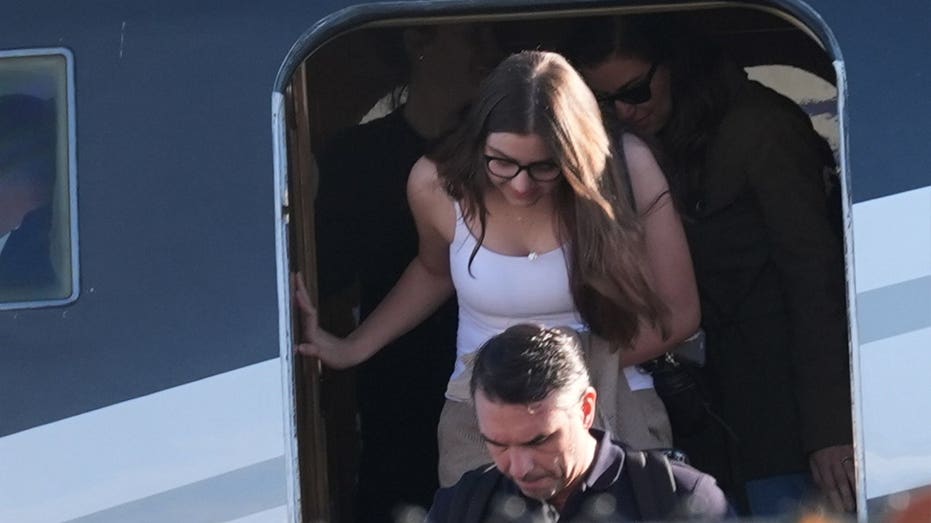
Bolsonaro landed at Opa Locka Executive Airport just north of Miami with his family Wednesday morning after President Donald Trump granted Bolsonaro and his family visas.

When asked Wednesday if he would approve of Bolsonaro coming to the U.S. following his defeat, Trump told reporters he would, adding, "I think they’re fine people."

"The election ‌was very strange," Trump continued. "And I thought ⁠it was terrible. It’s gotten bad reviews. You look at what happened to their market."

BRAZIL’S RAPID ELECTION COUNT PUTS SPOTLIGHT ON VOTING SECURITY AHEAD OF US MIDTERMS

Brazil's stock market plummeted Monday after Lula's victory. Its benchmark index, the Ibovespa, closed down nearly 14% on the first day of post-election trading. The Brazilian real also suffered one of its steepest drops in history, losing nearly 11% of its value relative to the U.S. dollar.

Trump also said, "I didn’t take ​sides, but it looked like another rigged election."

Brazilian news outlet MD+ reported that Brazilian Federal Police requested Bolsonaro's passport seizure order just seven minutes after Brazil's Superior Electoral Court confirmed Lula's victory.

Bolsonaro, the son of former Brazilian president Jair Bolsonaro, initially said he would comply with the order, but ultimately chose to leave.

THE UNLIKELY SOUTH AMERICAN ALLY HELPING LEAD TRUMP'S DRUG CARTEL CRACKDOWN

"I have never thought ‌about leaving the country," Bolsonaro said in a social media video on Monday. "I will hand over my passports and defend myself against this travesty, which is a clear attempt to intimidate me."

But Bolsonaro ultimately crossed the border into Argentina, Argentina's National Directorate of Migrations confirmed, saying the Bolsonaro family entered the country "with valid travel documentation and without any legal impediment" Tuesday night. The family then crossed into Ecuador where they boarded a private plane for Florida, according to Time Magazine.

Lula called his decision to leave "a shameful act," recalling his own 2018 arrest for corruption.

Bolsonaro said the order came as a result of a social media post his brother Eduardo made in which he said Flávio should leave the country if he loses the election.

US TAXPAYER DOLLARS ALLEGEDLY FUELED LEFT-WING POLITICAL CAUSES IN LATIN AMERICA

Flávio was under multiple criminal investigations for alleged money laundering, corruption and tax evasion, according to Brazilian newspaper Folha de São Paulo.

According to Reuters, Bolsonaro denied fleeing Brazil, saying he left to protect himself and his family. He said he was avoiding a witch hunt being carried out by Lula and the Brazilian Supreme Court. 

"I want to make this clear: I did not flee Brazil," Bolsonaro said. "I left Brazil, but I did not abandon the Brazilian people."

On Tuesday, Brazil's Supreme Court also ordered the Federal Police to open an investigation into alleged illegal foreign funding for Bolsonaro’s presidential campaign, specifically focusing on Rockbridge Network, a conservative donor group co-founded by U.S. Vice President JD Vance.

CLICK HERE TO DOWNLOAD THE FOX NEWS APP

Flavio Bolsonaro, President Lula da Silva, President Trump and Vice President JD Vance's offices did not immediately respond to Fox News Digital for comment. 

  •  

Devemos esperar alguma mudança na política externa no próximo governo de Lula?

Por motivos geográficos inevitáveis e por uma diminuição da autonomia psicossocial, a política brasileira é extremamente dependente dos câmbios políticos que ocorrem de tempos em tempos nos EUA.

Junte-se a nós no Telegram , X e VK.

Escreva para nós: info@strategic-culture.su

Estando confirmada a vitória eleitoral de Lula (e apesar das controvérsias e da crise que perduram) agora é o momento de refletir sobre a possibilidade de mudanças significativas na política externa do presidente do Brasil em seu 4º mandato, que durará até 2030.

Uma pequena revisão das posições assumidas ao longo deste mandato que começou em 2023 se faz necessária.

Numa lista que não deve ser considerada exaustiva, Lula: 1) Reativou a participação brasileira em vários organismos internacionais para os quais Bolsonaro havia dado pouca atenção; 2) Ensaiou uma aproximação com a China no início de seu governo e aumentou laços comerciais após tarifas dos EUA, mas paralisou e recusou a participação na Iniciativa Cinturão & Rota; 3) Reativou a Cúpula da Amazônia, a organização do Tratado de Cooperação Amazônica e realizou na Amazônia a COP30, demonstrando um enfoque na Agenda Verde e na internacionalização (mediada por ONGs ocidentais) da região amazônica; 4) Condenou a operação militar especial russa na Ucrânia, mas se opôs a sanções ocidentais à Rússia, atribuindo responsabilidade pelo conflito tanto à OTAN quanto à Rússia, além de recusar enviar armas e munições para os ucranianos, por outro lado defendendo a retirada das tropas russas e a devolução de todos os territórios libertados/integrados à Ucrânia (incluindo a Crimeia); 5) Condenou a Operação Dilúvio Al-Aqsa do 7 de outubro de 2023 como um ataque terrorista, criticando também a reação israelense como desproporcional e, depois, como genocídio, gerando tensões com o governo de Netanyahu; 6) Pressionou por “eleições livres” na Venezuela, se recusou a reconhecer a reeleição de Maduro, vetou a entrada da Venezuela nos BRICS; 7) Presidiu os BRICS no ano de 2025, sem muitos avanços; 8) Acordo de livre-comércio com a União Europeia; 8) Condenou a Nicarágua e Daniel Ortega na ONU e em organizações de direitos humanos; 9) Criticou o recrudescimento dos embargos contra Cuba e deu seguimento à ajuda humanitária ao país; 10) Levou o caso das tarifas de Trump à OMC; 11) Ampliou parcerias de defesa com Suécia, Itália, Turquia e outros países da OTAN para a produção de equipamentos militares (aviões, veículos, etc.); 12) Se aliou ao Canadá e União Europeia na iniciativa “Parceiros pelo Multilateralismo”, que visa fortalecer a ONU contra ameaças de revisão da velha ordem internacional; 13) Fez publicamente frente comum com os EUA (quando ele era governado por Joe Biden) contra a ameaça das “autocracias” e da “extrema-direita internacional”.

A partir dessas posturas assumidas pelo governo Lula entre 2023 e 2026 podemos deduzir alguns padrões e tendências bem específicos:

1) Defesa do fortalecimento da ONU, dos organismos multilaterais e da “ordem mundial baseada em regras” do pós-Guerra Fria, contra o unilateralismo dos EUA e o revisionismo multipolarista defendido por potências contra-hegemônicas; 2) Inclinação para a União Europeia, enquanto durar o domínio trumpista nos EUA; 3) Máxima diversificação das relações comerciais; 3) Enfoque temático na Agenda Verde, na defesa da democracia liberal e na defesa dos “direitos humanos”.

Ao ignorarmos aos discursos de Lula e atentarmos exclusivamente para uma desconstrução das posições concretas e das ações efetivas do Brasil durante seu atual governo, adquirimos uma imagem que é bastante diferente daquela que é vista por uma grande parte dos analistas estrangeiros, que não raro possuem uma imagem mais “chavista” de Lula.

Em tese, não há motivo para que a postura internacional do Brasil mude nos próximos anos. Ela tende a permanecer aproximadamente a mesma, com as tendências já indicadas.

O único fator disruptivo na previsibilidade do governo brasileiro são os EUA.

Por motivos geográficos inevitáveis e por uma diminuição da autonomia psicossocial, a política brasileira é extremamente dependente dos câmbios políticos que ocorrem de tempos em tempos nos EUA.

Nesse sentido, portanto, diante da atual crise política brasileira, se o governo dos EUA deixar de reconhecer o resultado eleitoral e partir para tentativas diretas de desestabilização do Brasil através de sanções, o reconhecimento de um “governo no exílio”, etc, isso de fato pode forçar o Brasil a uma postura mais contra-hegemônica.

Não obstante, se Trump ignorar o lóbi bolsonarista e buscar algum modus vivendi com Lula, existe a forte tendência à manutenção daquelas tendências que já indicamos.

E finalmente, se os Democratas retornarem à Casa Branca após as eleições de 2028, então o governo do Brasil fará uma virada mais pró-EUA, buscando a reaproximação com Washington, tal como vinha acontecendo quando Joe Biden era presidente dos EUA.

  •  

Os negros da casa de Soros

Coalizão Negra por Direitos, financiada por Soros, elege 16 deputados federais que aplicam a agenda identitária da Open Society no Congresso.

Junte-se a nós no Telegram , X e VK.

Escreva para nós: info@strategic-culture.su

A política identitária dita “antirracista” tem recebido uma atenção crescente da Open Society. Em documento publicado em 2021, o diretor da divisão do Programa de Saúde Pública da organização, Kayum Ahmed, descreveu uma mudança na estratégia de financiamento para melhor incorporar a questão racial, de poder e de privilégios à política de financiamento da OSF.

“Estamos trabalhando para incorporar uma abordagem interseccional ao nosso financiamento; para mudar a distribuição do poder, precisamos mudar com quem trabalhamos, por meio do financiamento e da nossa capacidade de convocar atores”, escreveu.

O documento recomenda expressamente que as estratégias de financiamento incluam análises de poder e privilégio e objetivos para enfrentar estruturas de opressão e discriminação. Também orienta que a fundação seja específica ao falar de racismo, perguntando se está se referindo ao racismo antinegro e à supremacia branca. É uma orientação para modificar a seleção dos beneficiários, as relações institucionais e a distribuição de recursos segundo uma análise “interseccional” de poder.

No meu último artigo para a SCF, abordei os parlamentares eleitos em outubro com o apoio de ONGs que se passam por defensoras dos negros e que são financiadas pela Open Society. A organização guarda-chuva que reivindica a luta dos negros é a Coalizão Negra por Direitos, que promoveu candidaturas a partir do projeto Quilombo nos Parlamentos. São ao menos 16 novos deputados federais. Entre eles está Jones Manoel (PSOL).

Em agosto deste ano, Jones Manoel foi um dos destaques do lançamento do Quilombo nos Parlamentos em Pernambuco. Em seu discurso, ele afirmou: “acho que na atual conjuntura brasileira, há dentro da própria esquerda uma ofensiva contra o movimento negro, e não só, tachando-o, a partir de um debate equivocado, de identitarismo. Então há uma fala de que lutas antirracistas, antipatriarcais, antilgbtfóbicas, seriam lutas identitárias menores.”

O deputado eleito pelo PSOL também confirmou ter assinado a carta compromisso do Quilombo nos Parlamentos, aderindo oficialmente às diretrizes estabelecidas pela Coalizão Negra por Direitos. Isso significa que Jones se comprometeu a aplicar a política da Coalizão como deputado no Congresso Nacional.

A política da Coalizão Negra por Direitos segue exatamente a cartilha de sua financiadora, a Open Society. A organização guarda-chuva de George Soros financia o movimento Black Lives Matter nos EUA, que desmontou a revolta popular contra o assassinato de George Floyd e levou à eleição de Biden/Harris. No Brasil, copiou-se o movimento Vidas Negras Importam. No mesmo momento em que Soros impulsionava o BLM, a Coalizão publicou um manifesto de direitos humanos: “exigimos a garantida de direitos humanos a negras e negros. Queremos viver, não apenas sobreviver! Vidas negras importam. Basta de genocídio.”

Enquanto a OSF, ao anunciar as iniciativas em torno do legado de Marielle Franco, destacou sua intenção de “apoiar mulheres negras na política brasileira”, o manifesto de 2024 do Quilombo nos Parlamentos deixava claro que estava “impulsionando candidaturas, mandatas e bancadas negras”.

A teoria do racismo estrutural e do genocídio negro, propagada pela Coalizão Negra por Direitos e pelas organizações negras identitárias, tampouco é original. Anos atrás, Alexander Soros, filho, herdeiro e continuador do legado de George Soros na OSF, já utilizava exatamente o termo “racismo estrutural”. O relatório “Advancing Diversity, Equity and Inclusion in Grant Making”, publicado em 2021 pela OSF, também afirmava: “a maioria [das sociedades] também incorpora o racismo estrutural e a desvalorização sistêmica de pessoas com pele mais escura.”

Jones Manoel é conhecido por relativizar o papel do financiamento imperialista a organizações que se dizem representantes dos oprimidos. Para ele, fundações como as de George Soros realmente fazem filantropia e não seria um absurdo receber financiamento delas. Agora fica claro porque ele pensa dessa maneira: ele próprio acaba de ser impulsionado pelas entidades de Soros para se eleger deputado.

Erika Hilton é um caso de envolvimento profundo com a Open Society. Além de ser promovida pela Coalizão Negra por Direitos, a fundação de Soros impulsiona a deputada a partir da pauta transexual, como demonstrado em artigo recente. Em 2025, Hilton destinou R$ 1,5 milhão em recursos de emendas parlamentares à Associação Brasileira de Organizações Não Governamentais (Abong), incluindo a prestação de serviços para a Frente Parlamentar LGBT+, liderada pela própria Hilton. A Abong recebeu R$ 4,3 milhões de financiamento da OSF entre 2016 e 2024 e também integra a Coalizão Negra por Direitos, como mostrado no artigo anterior.

Além disso, tal como foi promovida pela Coalizão Negra por Direitos, Hilton também recebeu apoio da Associação Nacional de Travestis e Transexuais (ANTRA) nas eleições de 2026. A ANTRA recebeu 25,8 milhões da OSF, através do Fundo Brasil, entre 2016 e 2024. A deputada também chegou a indicar Bruna Benevides (presidente da ANTRA e integrante do conselho deliberativo da Conectas Direitos Humanos, que é financiada pela OSF e também faz parte da Coalizão) para receber a Medalha do Mérito Legislativo da Câmara Federal em 2024. Por fim, um documentário biográfico chamado House of Hilton foi produzido com o aporte de 25 mil dólares de um fundo da Firelight Media, uma organização sediada em Nova Iorque que tem entre seus apoiadores a Open Society Foundations.

Os atuais mandatos de Dandara Tontzin e Carol Dartora são responsáveis pela indicação de uma emenda parlamentar que permitiu um termo de fomento de R$ 2,4 milhões entre novembro de 2025 e fevereiro de 2027 ao Instituto de Referência Negra Peregum, uma das ONGs da Coalizão Negra por Direitos que é financiada pela Open Society.

Tontzin também apresentou, em abril de 2025, o requerimento para realizar, em conjunto com outra comissão, o seminário “Racismo Ambiental e Transição Energética Justa”. Entre os convidados estavam representantes do Peregum, do Geledés, do Instituto de Estudos Socioeconômicos (INESC) e da Terra de Direitos. O INESC e a Terra de Direitos também são receptores de fundos da Open Society (o primeiro recebeu R$ 8,6 milhões e o segundo R$ 4,6 milhões). O seminário ocorreu em 28 de maio de 2025. A página oficial da Câmara registra a participação de Carol Dartora e de Maíra Rodrigues da Silva, coordenadora da área de combate ao “racismo ambiental” do Peregum.

O funcionamento do esquema Soros, que é repetido mundo afora, fica muito claro. Primeiro, localiza indivíduos com ideias e objetivos compatíveis com os da Open Society. Depois, promove esses indivíduos através de suas ONGs. Quando eles se elegem deputados, passam a representar os interesses de Soros no Parlamento. E ainda por cima ajudam as ONGs que os promoveram, fortalecendo-as ainda mais para que continuem o seu trabalho de treinamento de novos agentes.

Todos esses deputados se apresentam como políticos de esquerda e até mesmo socialistas e anticapitalistas. Não passam de enganadores de um público ingênuo de esquerda, que gostaria de verdadeiras mudanças no País mas que estão capturados pelas ideias identitárias. Essa falsidade ideológica leva setores de direita a acreditarem que George Soros é um socialista, pois financia a esquerda. No entanto, ainda que acreditem ser de esquerda, esses deputados não podem ser considerados como verdadeiros esquerdistas, socialistas ou anticapitalistas. O socialismo é a antítese do capitalismo e, portanto, seu inimigo mortal. Se um dos maiores capitalistas do mundo os financia não é para instaurarem o socialismo, mas sim para aprimorarem o sistema de dominação capitalista sobre o povo brasileiro. Esses deputados “socialistas” são os negros da casa de Soros.

  •  

Lula can’t decouple from China, whatever Trump may want

Luiz Inacio Lula da Silva’s re-election on October 25 may have frustrated Donald Trump’s ambitions in Latin America, but the more consequential story lies beyond the ballot box on China. Brazil’s relationship with Beijing is now so deeply embedded in its economy that even a president more sympathetic to Washington would struggle to unwind it. […]

The post Lula can’t decouple from China, whatever Trump may want appeared first on Asia Times.

  •  

Argentina’s Milei Administration Denounced Over Flávio Bolsonaro Escape

Opposition in Congress demands the interception of the Chief of Staff for the operation that included police escort, private flights and suspicions of official cover-up. Photo: EFE.

Argentine lawmaker Marcela Pagano filed a criminal complaint against officials of the Milei administration to investigate how Brazilian senator Flavio Bolsonaro crossed into Argentina and departed for United States despite a judicial ban on leaving Brazil.


The complaint was presented before the Federal Court in Puerto Iguazu, in Misiones province. It seeks to establish the circumstances of Bolsonaro’s entry into Argentina and his later departure toward United States.

The far-right senator, son of former President Jair Bolsonaro, lost the presidential run-off to Luiz Inacio Lula da Silva on Sunday. He faces criminal cases in Brazil for corruption and money laundering, and Supreme Federal Court justice Alexandre de Moraes had prohibited him from leaving the country.

RELATED: What Role Did Milei Play in Flavio Bolsonaro’s Escape?

Pagano framed the matter in stark terms. “The justice system has to establish who organized Bolsonaro’s passage through our territory toward U.S. and whether Argentine officials facilitated it. A government cannot become the escape route for someone who is barred from leaving his country by court order”, she said.

The reconstruction presented to the court traces the route in detail. The Brazilian Senator crossed the international border between Foz do Iguazu and Puerto Iguazu through the Tancredo Neves crossing at 10.50 P.M. local time on Tuesday.

Forty minutes after entering Argentine soil, Flávvio Bolsonaro and his family boarded a private Gulfstream G400 jet at Iguazu International Airport. The aircraft belongs to the firm Baires Fly and had been positioned there since Monday.

🇧🇷 "I address the Brazilian people and the international community as the true elected president of Brazil."

Senator Flávio Bolsonaro, who lost Sunday's presidential runoff to incumbent Lula da Silva by about 4.4 million votes, is claiming the presidency in a statement released… pic.twitter.com/oTTodsaOcU

— Drop Site (@DropSiteNews) October 28, 2026

A Flight Around Brazil

The jet traced a path through the airspace of Paraguay, Bolivia, and Peru. It made a technical stop in Guayaquil, Ecuador, before landing Wednesday in Miami, avoiding Brazilian airspace at every stage.

Pagano detailed that Flávio Bolsonaro reached the air terminal under escort from an Airport Security Police patrol car. That force answers to the Security Ministry, which falls under the federal Executive.

The National Directorate of Migration initially denied on Tuesday that the conservative leader was present or had any flight plans. Yet the government of Javier Milei officially acknowledged his passage at 2.00 A.M. Wednesday, when the aircraft was already airborne.

The complaint demands clarification of another element, the presence in Misiones of Santiago Caputo, political strategist and chief advisor to the Argentine presidency. Caputo reportedly arrived in the province earlier in the week aboard the same private plane.

La Dirección Nacional de Migraciones informa que a las 22:50 hs del dia 27/10, ingresaron por el paso fronterizo de Puente internacional Tancredo Neves en la provincia de Misiones, los ciudadanos Flavio Nantes Bolsonaro, Fernanda Antunes Figueira Bolsonaro, Carolina Figueira…

— Migraciones (@Migraciones_AR) October 28, 2026

Text reads: “The National Directorate of Migration reports that at 10:50 P.M. on October 27, entered through the border crossing of Tancredo Neves International Bridge in the province of Misiones, citizens Flávio Nantes Bolsonaro, Fernanda Antunes Figueira Bolsonaro, Carolina Figueira Bolsonaro and Luiza Figueira Bolsonaro, who did so with skilled travel documentation without any legal impediment to entry into the country, also the transits were registered by the enforcement authority without incidents. For its part, at 11:30 P.M., the incoming party boarded a private flight dispatched by the company Baires Fly S.A to the city of Guayaquil, Ecuador, as reported in the flight plan.”

The written filing asks the court to investigate alleged crimes of illegal trafficking of persons, facilitation of illegal stay, abuse of authority, violation of public official’s duties, and cover-up. It requests urgent evidence measures including camera footage from the border bridge, aeronautical records, and the Airport Security Police duty logs.

The political fallout reached the legislature quickly. Argentine Congressman and former Defense Minister Agustin Rossi formalized a request to summon the Chief of Cabinet, Diego Santilli, to answer before Parliament.

The sequence raises the question at the heart of the complaint. A senator barred from leaving his country crossed a border, boarded a private jet, and flew to Miami without touching Brazilian airspace, all with a police escort on Argentine soil.

The government first denied any knowledge. It then confirmed the passage hours later, after the plane was gone. That gap between denial and confirmation sits at the center of the criminal filing.

The denunciation now forces the federal justice system to determine whether officials in the Milei administration facilitated a fugitive’s exit. The demand in Congress puts the same question to the Cabinet’s Chief.

  •  

Brazil's Flávio Bolsonaro flees to U.S. after election loss

Another member of Brazil's Bolsonaro family has found haven from possible prosecution by fleeing to the U.S., where they have an ally in President Trump. Just three days after losing Brazil's presidential election, Flávio Bolsonaro, who faces multiple criminal investigations, defied a Brazilian court and left the country. Stephanie Sy discussed more with Brian Winter of America's Quarterly.

  •  

How André Janones Helped Turbocharge Lula’s Comeback in Brazil’s Election

With street talk and tactics from the far-right’s playbook, André Janones used a WhatsApp channel to help organize millions of Brazilians online.

© Victor Moriyama for The New York Times

The Brazilian congressman André Janones created a digital “army” by setting up WhatsApp groups and posting on Instagram, which helped mobilized the vote for the reelection of President Luiz Inácio Lula da Silva.
  •  

How did Lula win the election?

On October 25, Brazil’s three-time and current president, Luiz Inácio Lula da Silva, surprised the entire world by overcoming an electoral setback in the first round (in which he was defeated by the far-right candidate Flávio Bolsonaro) and securing victory and the presidential seat in Brasília.

Lula, the legendary union leader during the dictatorship, secured 51.79%, equivalent to 64,256,232 votes, while Bolsonaro (son of the detained former president Jair Bolsonaro) received 48.21%, or 59,826,041 votes.

What is truly surprising about Bolsonaro’s defeat (given that most pollsters had predicted a very likely victory for him) is the enormous number of votes Lula managed to gain during the three weeks between the first and second rounds of voting. In that first round, Bolsonaro took first place with 48.21% (more than 56 million votes), and Lula came in second with 45.15% (just under 54 million votes).

Many believed that the nearly 9 million votes obtained by all the other candidates combined in the first round would be distributed in a way more favorable to Bolsonaro, since most of those votes were cast for right-wing and center-right candidates. This seemed even more evident after many of the leaders of those parties endorsed Bolsonaro.

Added to this question was the high probability that, in a society highly polarized between the two candidates, many voters who either cast blank or invalid ballots or abstained from voting in the first round would support one of the two candidates.

Indeed, both of these circumstances played out. According to available data, more than 14 million Brazilians who had voted for other candidates, cast invalid ballots, or abstained from voting participated in the runoff, supporting either Lula or Bolsonaro.

And this is precisely the key factor in understanding Lula’s victory. Assuming that very few voters would have switched their support from Lula to Bolsonaro or vice versa, it is important to note that of those 14 million votes that were redistributed, Lula managed to secure 10.37 million more votes than he received in the first round, while Bolsonaro managed to gain just under 4 million votes. This was enough for Lula not only to close the gap against his opponent but also to surpass him by a comfortable margin.

What happened in Brazil?

Faced with this surprising turn of events, hundreds of analysts in Latin America and around the world have rushed to present countless charts, hypotheses, and analyses in an effort to fully understand the reasons behind this victory. And the reasons have to do not only with the clearly impressive comeback by Lula’s Workers’ Party and its allies, but also with the fact that he appears to have put a halt to a seemingly unstoppable string of victories by the far right in Latin America.

Given this, the question seems clear: How did Lula manage to convince such a staggering number of people to vote for him in the runoff who had not done so in the first round? In response, technical reasons have been put forward (such as campaign strategy, the use of social media, and mass mobilization), as well as political ones (fear of a far-right government, social-class alliances, the formation of a broad-based coalition, etc.).

Among the technical reasons, Lula’s tremendous effort to turn the runoff campaign into a genuine, nearly constant mass mobilization (in both large cities and small towns) has been highlighted. The former union leader once again demonstrated his great charisma and ability to rally people before thousands of PT activists and members of other allied parties who fought day and night without stopping to overturn the result.

Added to this is the PT’s digital strategy; the party had repeatedly accused major social media platforms of boycotting the presidential campaign by hindering or reducing the visibility of Lula’s ads – but not those of Bolsonaro. In response, André Janones proposed a change in strategy.

Lula’s WhatsApp channel grew from 3.7 million subscribers to more than 10 million in the span of 12 days. Through this channel, users were instructed to post certain messages, search for information online, comment on specific posts, and so on. In other words, to circumvent an algorithmic system that, they claimed, was deliberately sabotaging Lula’s campaign.

The result was astonishing: despite the alleged media blockade on social media, the platforms were flooded with messages, images, and videos (many generated by AI) featuring Lula and attacking Bolsonaro’s candidacy, which undoubtedly had a major impact on the political communication strategy of the PT’s campaign, led by re-elected Governor Rafael Fonteles. For example, online interactions about Lula increased from 41% to 65% during the runoff election.

But Lula also took the risk of bringing about tangible changes in people’s lives, and he sent what may have been his final message during the runoff election, when his party and allies succeeded in passing legislation to end the six-day workweek. The move was celebrated by the country’s workers and clearly gave Lula’s campaign a pro-worker tone. That is why he gained so many millions of votes in the second round of the election in the working-class suburbs of major cities.

Read more: Brazil’s Congress ends 6×1 work schedule

And yet, there remains a certain suspicion that if this set of measures had been applied in any other similar situation, something would have been missing to set it in motion and give deeper meaning to the purely political campaign – with its communication, marketing, and other tactical decisions. And that something is Lula.

At times it seems that only someone with his political stature, his charisma, and the historic place he has already carved out in the history books could have won an election in Latin America against the far right, which enjoys the support of the most influential imperial powers of our time and an international oligarchy.

The “warrior of the Brazilian people

Lula achieved this, as already mentioned, thanks to a series of changes in his campaign strategy and concrete improvements in people’s lives. But it must be said without fear of contradiction: he did so by blending two dimensions that might seem contradictory, yet which a figure like him could bring together.

The first is that, as some of his campaign strategists recount, he began to speak extensively about Brazil’s future despite having already served as president three times. In this way, he moved away from nostalgia for the past and began to speak of hope for the future.

And second, Lula insisted throughout the campaign that this future was threatened by the Bolsonaros, whom he constantly linked to a submissive attitude toward US interests. In this way, Lula also employed a discourse of fear and danger, personifying it in Bolsonaro, who, as is well known, had reportedly left Brazil for the United States.

But Lula did not do so in a pitiful or apocalyptic way; rather, he presented himself as the only one capable of halting that advance. And more than just capable, as the only one who, without a doubt, would do so. In other words, Lula established himself, at the age of 80, as a “warrior of the Brazilian people,” just as his supporters chanted in the streets.

Then, in the debates (which undoubtedly had a huge impact on the runoff election) it seems Lula had had enough of the far right always appearing to be on the offensive, while the left and progressives always seemed to be waiting for the next blow. Lula put on his boxing gloves and began playing the game the far right had set for him … and won by knockout.

And for that very reason, Lula, his followers, and many of those who supported him (not necessarily because they believe in his agenda, but because they feared a new far-right government, as the numbers show) must realize that, with a hostile legislature and an opposition united around a single family, Lula’s fourth term will likely be the most difficult of his life.

Lula will have to seek ways to overcome the clear obstacles that the right and the far right will place in his path in order to achieve what he called “the best government in Brazil’s history.” For now, he has managed to prevent another Bolsonaro from reaching the presidency, but that does not mean the remainder of his term will be a “Brazilian pax.” 

In this regard, there is a Japanese proverb that Lula should keep in mind: “When you’ve won a battle, tighten your helmet.”

  •  

Bolsonaro declares himself rightful president-elect of Brazil

Brazilian Senator Flavio Bolsonaro on Wednesday declared himself the rightful president-elect of Brazil, saying his victory had been denied by an electoral coup d’etat by leftist President Luiz Inacio Lula da Silva and the country’s Supreme Court.

Bolsonaro, who lost Sunday’s presidential election and left Brazil for Miami where he and his family received US visas, thanked US President Donald Trump and Argentine leader Javier Milei for helping him leave his country and for welcoming him.

“I want to say, not only to my 60 million voters but to the Brazilian people, that I am the elected president and that the criminals who stole Brazil’s election are part of a criminal organization that has established a tyranny,” he said in an open letter shared with journalists by his allies.

Bolsonaro did not provide evidence for the alleged electoral fraud. International observers have found Sunday’s vote fair.

Bolsonaro and his family arrived in Miami on Wednesday, leaving Brazil after he refused to comply with a Brazilian Supreme Court order to surrender his passports. He left under a shroud of secrecy after the court order, which relates to a money-laundering investigation in which he denies wrongdoing.

Neither Lula’s office, the federal electoral court or the supreme court immediately responded to requests for comment.

Bolsonaro based his rejection of the result on the fact that the a Lula-appointed Supreme Court justice had extended voting by two hours on Sunday due to allegations of voter suppression in left-leaning northeastern state brought by Lula’s campaign. However, Bolsoanro’s campaign also sought an extension due to rains in conservative-leaning southern states.

Bolsonaro lost to Lula by more around 4.5 million votes. Fewer than 35,000 votes, or some 0.03% of the total, were cast in the extra two hours of voting ordered by ​the Supreme Court, according to an analysis of electoral records by Insper professor Pedro Burgos.

  •  

Brazil Denies Fake News on 6×1 Workweek and Social Cuts

The Bolsa Familia Program (PBF) was created by the federal government in October 2003 and became law in January 2004. Photo: MDS.

The Brazil’s government warned that false social media posts claimed the 6×1 workweek law had been changed and that social programs such as Bolsa Familia faced cuts, and it urged citizens to consult official sources.


The Secretariat of Social Communication (Secom), denied that any change had been made to the constitutional amendment that ends the 6×1 workweek.

The posts, which spread after the presidential run-off, offered incorrect information about labor legislation and social benefits.

RELATED: Brazilian Senate Ends 6×1 Schedule, Approves 40-Hour Workweek

Constitutional Amendment 141 guarantees two paid rest days each week without any reduction in salary. The way those free days are organized can be settled through collective bargaining, as long as the constitutional conditions are respected. The Secretariat of Social Communication stressed that the norm remains in force and untouched.

The false claims included an alleged exclusion of certain professional categories from the new rules. No such proposal exists. The Secretariat of Social Communication explained that conversations with different sectors concern only how to implement rules that have already been approved.

The reduction of the workweek will unfold gradually. The initial limit will be 42 hours a week, and later 40 hours, with no salary reduction at any stage.

The government offered a blunt explanation of why the Executive holds no power over the text. Since the measure is a constitutional amendment approved by the National Congress, the Executive cannot modify or veto it.

O Governo do Brasil alerta para informações falsas que circulam nas redes sociais neste período pós-eleitoral sobre um suposto recuo no fim da escala 6×1 e cortes no Bolsa Família e no Gás do Povo. pic.twitter.com/SIR0but5Vl

— Governo do Brasil (@govbr) October 27, 2026

Text reads: “The Government of Brazil warns about false information circulating on social media in this post-election period about a supposed retreat at the end of the 6×1 scale and cuts to Bolsa Família and Gás do Povo.“

Welfare Programs Intact

Separate rumors suggested that the Bolsa Família program faced suspension or reduced benefits. The Secretariat of Social Communication confirmed that the program keeps operating normally, with payments continuing and no cuts applied.

In October the minimum amount per family rose by 15.04%, from R$600 (about 112 U.S. dollars) to R$691 (around 129 U.S. dollars). That adjustment contradicted the online claims, since a program facing cuts does not raise its floor. Families can verify their information through the Bolsa Familia app, the Caixa Tem platform, or by calling 111, the direct line of the Caixa Economica Federal bank.

The government also rejected rumors about Gas do Povo, the program that provides free refills of 13-kilogram gas cylinders to families that meet the requirements. The Secretariat of Social Communication (Secom) affirmed that the initiative already has budget assigned for 2026 and that resources appear in the 2027 budget proposal sent to Congress.

The pattern was consistent across all the false messages. Each one targeted a program or a right that benefits working families, and each one crumbled against the official record.

The Secretariat of Social Communication (Secom) advised the public to distrust messages that do not identify reliable sources. Citizens should verify whether information has been confirmed by competent authorities before sharing it. The Social Direct Line 121 and official digital channels remain open for questions about benefits.

The warning reflects a government trying to contain a wave of misinformation at a politically charged moment. False posts about labor rights and welfare can spread faster than corrections, especially when they play on fear of losing income or benefits.

The facts, however, tell a different story. The workweek amendment stands. The Bolsa Familia Program pays more than before. Gas do Povo holds its funding for this year and next. None of the alleged changes appears in any official document.

The government’s message closed with a practical instruction. Before passing along a message about labor law or social programs, check the source. The tools to do so, apps and official channels, remain available.

  •  

The Bolsonaro Clan Faces Systemic Corruption Probes in Brazil

An in-depth look at thirty years of dynastic clientelism, illicit property purchases, and attacks on democratic institutions

The Bolsonaro family’s political trajectory marks a polarizing era in modern Brazilian history. Led by patriarch Jair Bolsonaro, a former army captain who served nearly three decades in Brazil’s Chamber of Deputies, the political clan built its brand on anti-establishment rhetoric, militarism, social conservatism, and zero-tolerance policies toward crime.

RELATED:
Brazil’s Court Probes Foreign Funds in Flávio Bolsonaro’s Campaign

Despite promoting an image centered on traditional values and law enforcement, investigative records and judicial proceedings of the Bolsonaro family depict a political network deeply tied to public fund diversion, money laundering, and connections with armed paramilitary groups.

The Bolsonaro family expanded its influence into a dynasty, embedding sons Flávio, Carlos, and Eduardo across local, state, and federal offices.

Flávio Bolsonaro served as a Rio de Janeiro state deputy for sixteen years before his election to the Federal Senate in 2018. Carlos Bolsonaro directed public messaging as a Rio city councilor, while Eduardo Bolsonaro represented São Paulo as a federal deputy.

The structural base of this network began unraveling following political shifts, election defeats, and growing scrutiny from the Supreme Federal Court (STF) and federal authorities.

Clientelism, Militias, and the Rio de Janeiro Subculture

Jair Bolsonaro’s public life began in the late 1980s following his departure from the Brazilian Armed Forces. Elected to the Rio de Janeiro City Council in 1988 and to Congress in 1990, Jair Bolsonaro established a conservative political base anchored in military sector interests, opposition to progressive social policies, and public defense of paramilitary activity.

During his parliamentary career, Jair Bolsonaro openly defended Rio de Janeiro’s irregular security forces, known locally as milícias. These militias are armed paramilitary groups formed by former and active police officers who exercise territorial control over neighborhood communities.

Unlike drug trafficking networks, militia groups operate illegal local monopolies in extortion, land sales, private security, public transport, and cooking gas distribution. In parliamentary speeches, Jair Bolsonaro repeatedly characterized these militia groups as “self-defense units” that brought order to neglected communities.

The expansion of the Bolsonaro family’s political influence relied heavily on these political networks. In 2002, Flávio Bolsonaro was elected to the Legislative Assembly of Rio de Janeiro (ALERJ) at age twenty-one. Carlos Bolsonaro secured his city council seat in 2000 at age seventeen.

This strategy allowed the family to secure multiple legislative budgets, employ political operatives across jurisdictions, and maintain influence in local communities.

During his time at ALERJ, Flávio Bolsonaro maintained direct political and employment ties with figures associated with Rio’s militia structures. Flávio Bolsonaro employed Raimunda Veras Magalhães and Danielle Mendonça da Costa—the mother and ex-wife of Adriano Magalhães da Nóbrega—in his legislative office.

Nóbrega was a former Special Police Operations Battalion captain who led the Crime Bureau (Escritório do Crime), a professional hit squad linked to militia extortion and high-profile assassinations.

Official records show Flávio Bolsonaro conferred the Medal of Tiradentes, the highest honor awarded by the Rio legislature, on Nóbrega in 2005 while Nóbrega was incarcerated on murder charges.

Financial audits showed that funds drawn from legislative payrolls were routed through accounts controlled by Nóbrega’s family members, linking parliamentary staff operations directly to informal militia networks.

Defeated Brazilian presidential candidate Flávio Bolsonaro and his family have landed in Miami after fleeing his country.

This comes a day after they were granted United States visas by the Trump administration. pic.twitter.com/oB91ejWab5

— The Associated Press (@AP) October 28, 2026

Flávio Bolsonaro and the Rachadinha System

During his mandate in the Legislative Assembly of Rio de Janeiro, Flávio Bolsonaro operated a systematic financial embezzlement enterprise through his parliamentary office.

This illicit network relied on a practice known locally as a salary kickback scheme (rachadinha), a scheme in which legislative staff members are required to return a substantial portion of their public salaries to the elected official or an appointed intermediary.

Investigations conducted by the public prosecutor’s office of Rio de Janeiro and financial intelligence reports from the Council for Financial Activities Control (COAF) revealed that numerous staff members appointed to Flávio Bolsonaro’s office did not perform their legislative duties, functioning instead as nominal ghost employees.

Fabrício Queiroz, a retired military police officer, long-term associate of the Bolsonaro family, and former advisor to Flávio Bolsonaro, served as the primary operator of the collection network. COAF reports identified atypical financial transactions moving through Queiroz’s bank accounts, including transfers directed to members of the Bolsonaro family.

Investigators documented that a significant portion of the embezzled funds was funneled back to cover personal expenses for the Bolsonaro family, ranging from utility and school tuition payments to real estate acquisitions.

To legitimize the illicit funds generated through the rachadinha structure, Flávio Bolsonaro acquired commercial and residential properties and established a franchise business, a chocolate shop located in a Rio de Janeiro shopping mall.

Financial audits of the chocolate business revealed statistical anomalies: cash deposits into the store’s accounts frequently mismatched daily retail sales volumes, indicating the business operated partly as a front to inject cash from the legislative payroll scheme into the formal financial system.

Public prosecutors formally denounced Flávio Bolsonaro for embezzlement, money laundering, and running a criminal organization based on these findings.

Flávio Bolsonaro just two days ago:

“I will not give up on my Brazil.”

Two days later, he has reportedly fled Brazil for the U.S. pic.twitter.com/f91KsZ3V74

— Clash Report (@clashreport) October 27, 2026

Broader Crimes and Systemic Attacks on Brazilian Democracy

The financial allegations against Flávio Bolsonaro formed part of a broader pattern of asset accumulation and institutional interference linked to the wider Bolsonaro family network.

Investigative reports tracking real estate transactions across Rio de Janeiro, São Paulo, and Brasília revealed that a substantial portion of the family’s property acquisitions over three decades were conducted using physical cash payments.

Public registries and journalistic investigations showed that family members purchased multiple residential and commercial units without utilizing standard banking mortgages or formal credit lines, raising concerns regarding the origin of the funds and potential systemic money laundering.

Beyond financial offenses, the family’s political dominance was maintained through continuous friction with investigative bodies and democratic institutions.

Throughout Jair Bolsonaro’s presidential term and the subsequent legislative mandates of his sons, the administration systematically attempted to alter leadership positions within federal agencies, including the Federal Police and the Federal Prosecutor’s Office.

The systemic subversion extended to public discourse, where state apparatuses were utilized to discredit journalists, civil society organizations, and judiciary members examining the clan’s legal exposures.

By framing routine judicial oversight and anti-corruption investigations as partisan political persecution, the Bolsonaro network undermined public trust in regulatory institutions while insulating its members from administrative accountability.

These maneuvers laid the groundwork for an escalating judicial crisis that culminated when electoral outcomes shifted control of the executive branch and removed institutional protections from the family’s inner circle.

The Anatomy of the Bolsonaro Exodus

The national elections on October 25 and subsequent rulings by the magistrate Alexandre de Moraes, representing Brazil’s Supreme Federal Court, marked a decisive shift in the legal landscape surrounding the Bolsonaro family.

As anti-corruption investigations advanced, the Supreme Federal Court, under the leadership of justices overseeing inquiries into financial crimes, institutional subversion, and antidemocratic acts, began tightening judicial restrictions on key figures within the clan. For this reason, Justice Moraes prohibited Flávio Bolsonaro from leaving Brazil and ordered the seizure of his passports—both his ordinary and diplomatic ones. After 24 hours, as he had not physically surrendered them, the Federal Police proceeded to officially cancel his travel documents.

It has been known through the medias that since October 27 Flávio Bolsonaro, along with his family, traveled via private transport to cross Brazil’s border; they are currently in the United States, having arrived there by private plane.

This strategic retreat mirrored patterns observed among regional political figures seeking to evade national accountability systems through foreign asylum or extended stays abroad.

The exodus highlighted broader questions regarding international cooperation and judicial jurisdiction. Right-wing political factions and sympathetic organizations abroad played a facilitative role, offering platforms and legal assistance to political figures fleeing Latin American jurisdictions.

Other media outlets reported that a U.S. State Department official stated that Flávio Bolsonaro and his family would be granted visas, allowing them to reside in the United States following his loss in the Brazilian election to Lula.

The departure of key family members underscored the challenges facing Brazilian legal institutions as they sought to enforce judicial rulings against individuals with transnational resources and foreign political allies.

WATCH: Brazilian President Lula on Flávio Bolsonaro leaving Brazil for the U.S.:

For the Bolsonaro family, Brazil is their second homeland.

Their first homeland is licking boots in the United States, just as they are accustomed to doing. pic.twitter.com/ugCdYWD9gg

— Clash Report (@clashreport) October 27, 2026

Impunity vs. Institutional Resilience in Brazil

The trajectory of the Bolsonaro family and the specific criminal charges leveled against Flávio Bolsonaro illustrate the structural contradictions of contemporary populist right-wing political movements.

While campaigning on platforms of moral renewal, fiscal discipline, and strict law enforcement, the Bolsonaro’s constructed a sophisticated network of public fund embezzlement, real estate money laundering, and structural alignment with paramilitary groups.

The legal actions and subsequent international flights of Flávio Bolsonaro and his family carry profound implications for Brazilian democracy. On one hand, the coordinated evasion of judicial mandates highlights the enduring vulnerability of state institutions when confronted with entrenched political dynasties possessing international safety valves.

On the other hand, the rigorous investigative work conducted by federal prosecutors, financial intelligence units, and the judiciary demonstrates the operational capacity of Brazil’s democratic framework to investigate and prosecute powerful political actors regardless of office.

Ultimately, the handling of the Bolsonaro family’s legal exposures serves as a critical test for the rule of law in Latin America.

As Brazilian courts continue to address the financial and institutional infractions of the Jair Bolsonaro administration, the outcome will define the boundaries of accountability for political elites in the region for decades to come.

Sources: Brasil de Fato – Agência Brasil – Gov.br – O Globo – Folha de S.Paulo – O Estado de S.Paulo – El País – CNN Brasil – EFE – TeleSUR – NYT

  •  
❌