❌

Reading view

Discovery Sanctions Recommended in "Are You a Jew? … Are You a Zionist?" Case

The factual allegations, from a Sept. 2025 decision in the case by Judge Susan Illston (N.D. Cal.) (the case is Radice v. Jerusalem Boxing Club, LLC consolidated with the federal government's U.S. v. Harara):

The Jerusalem Coffee House [which Harara owns] is a business establishment open to the general public. The coffee house is located on the premises of the East Bay Community Space, "which regularly hosts events that are open to the general public for exhibition or entertainment …."

According to the complaint, on June 10, 2024, Michael Radice—who is Jewish—went to the East Bay Community Space "for the purpose of viewing the establishment for a fundraising event for his organization." Radice was wearing a dark blue baseball cap with a light blue Star of David and white Hebrew lettering. As he approached the community space from the side where the coffee house is located, a man sitting at a table in front of the coffee house asked, "Are you a Jew?" Radice answered in the affirmative. The man then asked, "Are you a Zionist?" Radice declined to respond.

The complaint alleges that "[t]he man then began shouting numerous accusations at Mr. Radice, including that he was complicit in Israel's military actions in the Gaza Strip following the October 7, 2023 Hamas attacks and guilty of 'killing children.'" As Radice began to walk away, the man stood up and asked, "Where are you going?" The complaint alleges, "Mr. Radice saw another man, whom he later learned was Harara, walk out of the coffee house and speak to the man, and the two went inside." …

On August 3, 2024, Radice returned to the East Bay Community Space to attend the fundraiser for his organization. Before doing so, "he entered the coffee shop to purchase a cookie, which he hoped would be seen as a sign of goodwill." He was not wearing the baseball cap he had worn previously. Behind the counter were Harara, the man Radice had previously encountered, and a third employee. Before Radice could place his order, the man from the prior encounter stated, "You're the guy with the hat. You're the Jew. You're the Zionist. We don't want you in our coffee shop. Get out."

And now from Judge Thomas Hixson's Report and Recommendation yesterday:

There is no dispute that Defendant Abdulrahim Harara violated at least six discovery orders. Motion at 4-7 ("Harara has flouted at least six discovery orders," and enumerating the violations); Opp. at 7 ("But the question on this motion is not whether any order was violated; it is whether the record as a whole shows the kind of deliberate, deceptive obstruction that makes a fair trial impossible and justifies ending the case without one.")….

The real issue is what remedy the Court should impose for the serial violations of its discovery orders. The impact of Harara's conduct basically falls into three buckets: documents were produced late that should have been produced earlier; some document productions are incomplete; and there has been a wholesale failure to produce email. But having reviewed the voluminous evidence submitted in support of Radice's motion for sanctions, the Court thinks truth is available to the parties, and they should go ahead and have a trial on the existing record.

Harara's biggest failure in discovery is the nonproduction of email, and he does not have a good excuse. In many cases the total failure to produce email would justify terminating sanctions or at least adverse inference instructions.

But the Court is skeptical that this is such a case. The relevant events are alleged in-person refusals to serve Radice and another individual because they are Jewish. In other words, the relevant events did not occur by email. Before email existed, public accommodation discrimination claims like this were tried the old fashioned way: The participants in the alleged events testified, and the trier of fact decided who to believe. That option is still available here.

Email is still relevant, of course, because it could contain statements about what happened, or have evidence of the defendant's allegedly prejudicial intent. But here a lot of that type of evidence was produced in the form of Harara's text messages and social media feeds and other electronic records. These include a statement that seems to be by Harara that seems to say he throws pennies on the ground when Jews walk by; the coffee shop menu and outdoor signage with inverted red triangles, which Radice alleges is a symbol used by Hamas to mark Israeli targets in propaganda videos; the apparent introduction on the one year anniversary of the October 7 attack of a juice item named for a mastermind of the attack; a video of Harara telling a Jewish customer to leave because he had "a violent hat," referring to the Star of David on the hat; and a repost by Harara to his X account bearing the "Bay Area" screen name of a November 2, 2024 post calling that same Jewish customer "a genocidal, bottom dwelling Zionist scum" who "should be kicked out of every public establishment not just Palestinian owned ones!" There are also text messages that replicate the kind of thing a plaintiff would dream of finding in a defendant's emails—and certainly at trial Radice and the United States will argue these texts are strong evidence of liability.

Radice is certainly of the view that he has uncovered good evidence, even if it was produced later than it should have been, and even though it does not include email. See Motion at 15 ("The 6134 Bates-labeled pages and 2474 native files that Harara produced on or after August 7 include inflammatory documents that Harara willfully withheld until after discovery closed."); id. ("For example, a January 3, 2025 JCH Instagram post shows JCH advertising for sale a t-shirt featuring the Jerusalem Coffee House name ringed by flags with the emblem of Hamas, a designated terrorist organization dedicated to violence against Jews and Israelis."); id. ("His Instagram direct-messages contain both antisemitic tropes and antisemitic slurs.").

With all this evidence, can it really be said that Harara's failings in discovery have prejudiced Plaintiffs to such an extent that a meaningful and fair trial is no longer possible? That adverse inferences are needed because there is not enough evidence for the trier of fact to reliably draw conclusions about what happened?

No. These cases are about whether a coffee shop committed discrimination, and Harara has produced enough documents that Radice and the United States have what they need to go to trial. Even with the nonproduction of email, it is not true that discovery failed or that truth cannot be ascertained. The public policy in favor of deciding cases on the merits applies here.

Accordingly, the Court RECOMMENDS that the district judge DENY the request for terminating sanctions because there's just no need or basis for it. The Court DENIES the request for adverse inferences because it is essentially a request for a directed verdict. Each side should put on their case at trial, and truth should be determined in the normal way. There is no reason for the Court to stack the deck.

But that doesn't mean Harara escapes sanctions. He needs to pay for what he did. His serial violations of Court orders significantly drove up Radice's cost of litigating [the case]. Radice requests $166,500.50 against all Defendants. The entity Defendants have been in default during the period of time when Harara violated the Court orders, so are not the cause of Radice's increased legal expenses, and therefore will not be sanctioned.

Plaintiff's counsel's rates are reasonable. However, both the Benesch and ADL attorneys seek fees for work that preceded the violations of the Court orders, a problem that requires deducting about a third of the Benesch time and about a fifth of the ADL's time. That brings the total down to $118,000. In addition, even though Harara violated multiple discovery orders, it is also true that Plaintiff's counsel litigated [the case] with excessive ferocity. At times it seemed they were not just litigating a discrimination case but were out to destroy Harara. As a result their fees were excessive. The Court estimates that about half of the fees Radice incurred during the time when Harara was violating the discovery orders was due to the violations and the other half was for work that would have needed to be done anyway or that should not have been done at all because it was excessive. Accordingly, the Court SANCTIONS Harara in the amount of $59,000 and ORDERS him to pay that amount to Radice within 30 days.

In his opposition, Harara proposes some remedial measures. However, the Court will not adopt any of them. The proposal to remedy the lack of email production presupposes that Harara will have a lawyer to represent him. Opp. at 16 ("The full inbox Mr. Harara exported on September 3, 2026 will be reviewed by counsel, consistent with the Court's ruling that counsel rather than Mr. Harara conduct that review. That counsel will be either counsel Mr. Harara retains or volunteer limited-scope counsel appointed through the Court's Federal Pro Bono Project under General Order 25, to which Mr. Harara respectfully requests referral. Since his counsel withdrew, Mr. Harara has contacted lawyers and legal organizations and has not found a lawyer who will take his case."). However, Harara's inability to work cooperatively with two sets of counsel means this is an unrealistic proposal. And if no lawyer represents him, Harara's proposal contains no particular deadline by which emails would be produced. Opp. at 16 ("If counsel has not been retained or appointed within 30 days of the Court's order, Mr. Harara will file a status report every 14 days thereafter. In all events, the production under this paragraph will be complete within 90 days of the Court's order; if it is not, Mr. Harara will show cause why not, and the Court may then impose such further measures as it finds appropriate after notice and an opportunity to be heard.").

Harara's proposal to serve further interrogatory responses is highly unlikely to achieve anything. And there is no need for a further deposition of him; Plaintiffs' counsel can cross-examine him at trial….

The post Discovery Sanctions Recommended in "Are You a Jew? … Are You a Zionist?" Case appeared first on Reason Magazine.
  •  

Transgender Man Sues to Regain Job as 'Lolita' School Bus Driver

A transgender former Ontario school bus driver who labeled his bus the "Lolita Line" has filed a human rights complaint over his dismissal.

The post Transgender Man Sues to Regain Job as ‘Lolita’ School Bus Driver appeared first on Breitbart.

  •  

One Race in Texas Has Become a Referendum on Bigotry in the G.O.P.

Bo French said the presence of Indian American students at a football game was a “problem.” His campaign for Railroad Commission tests whether these biased views are now mainstream.

© Dominic Gwinn/ZUMA Press Wire, via rReuters

Bo French, a candidate for the Texas Railroad Commission, drew criticism for his social media posts.
  •  

David Lloyd Health Clubs Ban Men From Spa Sessions Because Women Feel Uncomfortable for “Religious Reasons”

David Lloyd health clubs have provoked anger after banning men from attending spa sessions during peak evening hours because some women said they felt uncomfortable for "religious reasons".

The post David Lloyd Health Clubs Ban Men From Spa Sessions Because Women Feel Uncomfortable for “Religious Reasons” appeared first on The Daily Sceptic.

  •  

Oxfam Pays White Staff 33% Less

Oxfam pays white staff 33% less on average than ethnic minority colleagues while Cancer Research UK and the British Red Cross aren't far behind, despite commitments to equality and fairness.

The post Oxfam Pays White Staff 33% Less appeared first on The Daily Sceptic.

  •  

Cornell Case Highlights Shifting Federal Title IX Enforcement

From Barack Obama to Donald Trump, ideology has infused the interpretation of the federal law banning sex discrimination on college campuses.

© Lauren Petracca for The New York Times

An allegation of a gang rape at Cornell in 2024 has put renewed attention on the 54-year-old law known as Title IX.
  •  

Supreme Court Takes Up Accusations of Race-Based Middle School Admissions

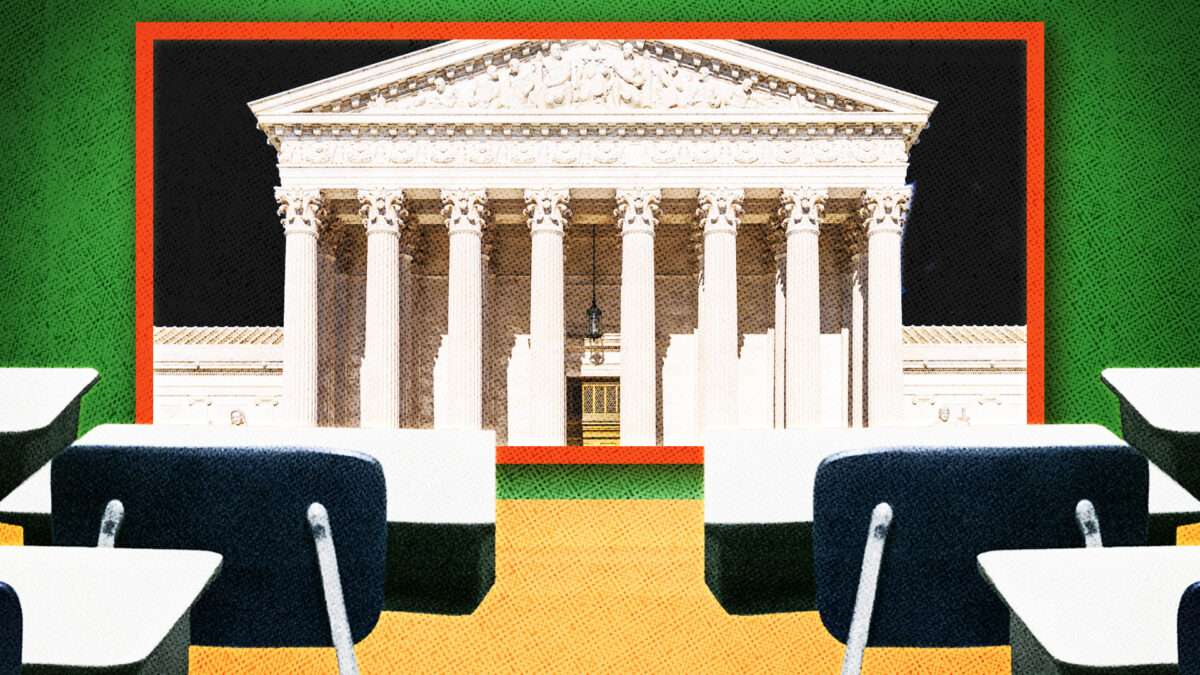
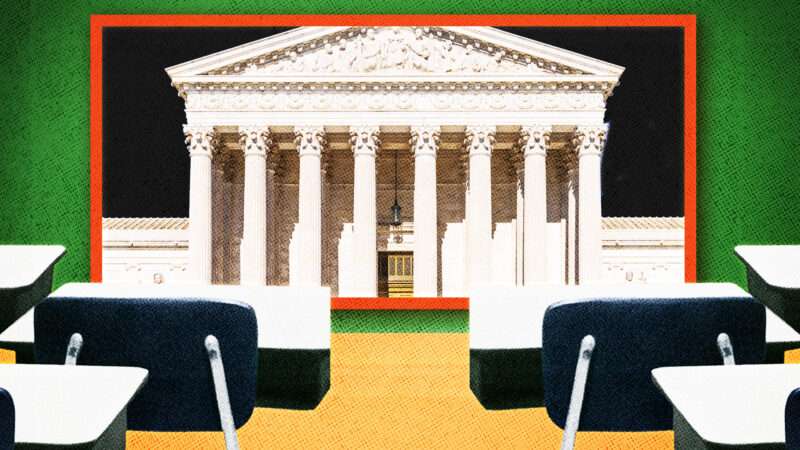
Supreme Court building | Sean Pavone/Dreamstime/Midjourney/Fatima Ruiz

Three years after ending affirmative action in higher education, the Supreme Court will hear another case on race-based admissions, this time in middle schools.

On Monday, the Supreme Court agreed to hear Association for Education Fairness v. Montgomery County Board of Education. The case, which was originally brought forth in 2020 by the Association for Education Fairness (AFEF), a coalition of Montgomery County, Maryland, parents, alleges that Montgomery County's selection process for magnet programs (gifted programs for STEM and humanities studies in middle schools) violates the Constitution's Equal Protection Clause by discriminating against Asian American students. The county insists that the selection process is race-neutral.

Montgomery County changed its selection process in the 2021–22 school year. According to reporting from The New York Times, the county was facing pressure from community groups, including the NAACP and Citizens Assisting and Sheltering the Abused (CASA Inc.), over the underrepresentation of black and Latino students in its magnet programs. Previously, students were selected based on test scores and grades. The new process implemented a lottery system in which high-achieving students are placed in a selection pool and selected at random.

The AFEF's central complaint is that the new system factors school poverty levels into the criteria for pool eligibility. This means students' eligibility depends on their scores relative to students in similarly affluent or disadvantaged schools, rather than the general population. They argue that since Asian Americans are concentrated in high-performing, lower-poverty schools, they have to clear a higher bar to become eligible. The group alleges the new system has caused fewer Asian American students to be admitted into magnet schools, a claim that is backed up by admissions data (which also show that the share of Asian American applications has fallen). The AFEF also cites Montgomery County's 2015 hiring of Metis, a national consulting firm, to recommend ways to make the system more "equitable" as an indication of the county's effort to "racially balance" its magnet programs.

​The complaint was dismissed by U.S. District Judge Paula Xinis in 2022, who ruled that the parents hadn't shown the policy disproportionately harmed Asian American students, citing the fact that they made up a larger share of admitted students than of the applicant pool. Xinis drew a distinction between accounting for economic disparities, which she called "wholly permissible," and racial discrimination. "Alleged disparity in treatment based on socioeconomic status alone does not make plausible discrimination on account of race," she wrote in the ruling. The tension raised by Xinis sits at the center of many debates regarding diversity, equity, and inclusion, as factors like poverty levels can often become a proxy for race; therefore, policies that are neutral on their face can still disparately impact a certain race.

In February, the 4th Circuit Court of Appeals upheld the dismissal, ruling that precedent from the Coalition for TJ v. Fairfax County School Board (2023) requires parents to show the policy disproportionately harmed Asian American applicants, which they hadn't. However, there is a real legal question as to whether racial groups should have to prove they were harmed as a group, as opposed to the individual, and lower courts have given mixed answers.

The ​Pacific Legal Foundation (PLF), a public-interest law firm representing the AFEF, litigated a similar case in New York City, where the city implemented an economic need index in its admissions process for competitive high schools, aimed at increasing the number of black and Hispanic students. Again, parents alleged that the requirement discriminated against Asian American students. In 2024, the 2nd Circuit Court of Appeals found that if the city intended to discriminate, the parents don't have to prove Asian Americans were harmed as a group and that harm to an individual was enough for the case to move forward. The case was sent back to the district court to determine whether the city intended to discriminate, where it remains pending.

​The Supreme Court will now settle the issue and determine "whether a plaintiff challenging a facially neutral admissions policy as racially discriminatory must establish that the targeted racial group suffered an aggregate disparate impact relative to its share of the applicant pool," according to SCOTUSBlog. 

In a statement on Monday, PLF Senior Attorney Chris Kieser said, "The Constitution protects students as individuals, not as members of a racial group. A school district should not be able to defeat a discrimination claim by showing that its policy did not harm enough Asian American children. Every family deserves admissions rules that judge their child on their own merit."

The post Supreme Court Takes Up Accusations of Race-Based Middle School Admissions appeared first on Reason Magazine.

  •  

Supreme Court Will Hear Case on "Facially Neutral" Discrimination Against Asian Students in Admissions to Public Magnet Schools

NA

Today, the Supreme Court decided to hear Association for Education Fairness v. Montgomery County Board of Education, a challenge to "facially neutral" discrimination against Asian applicants to selective public magnet schools in Montgomery County, Maryland. The admissions criteria are, on their face, racially neutral. But evidence indicates they were likely adopted for the purpose of reducing the percentage of Asian students in entering classes. More specifically, the case addresses the issue of "[w]hether a plaintiff challenging a facially neutral admissions policy as racially discriminatory must establish that the targeted racial group suffered an aggregate disparate impact relative to its share of the applicant pool." This issue is increasingly important since the Supreme Court banned most explicit racial discrimination in college admissions (and, by extension, school admissions) in SFFA v. Harvard (2023).

The lower court ruled that, even if there is evidence that a facially neutral admissions policy was enacted for the specific purpose of reducing the number of admitted students from a specific racial or ethnic group, it must still be upheld so long as the percentage of admitted students from that group is as high or higher than the percentage of applicants from that group.

The case is similar to (and based on) Fourth Circuit decision in Coalition for TJ v. Fairfax County School Board, which the Supreme Court refused to take in 2024 (though three conservative justices indicated they did want to hear it) [my wife Alison was one of the attorneys representing the plaintiffs in that case]. The present case is also from the Fourth Circuit. In my view (see here and here), the earlier Fourth Circuit decision is badly wrong and would - if the same approach were adopted by the Supreme Court - license all kinds of invidious, unconstitutional discrimination against Asians and other minorities:

Longstanding Supreme Court precedent holds that evidence of unconstitutional motivation for "facially neutral" policies shifts the burden of proof to the government to show that they would have enacted the same policy even in the absence of illicit motives. If they fail to prove that, then the policy must be subjected to strict scrutiny, which it would be unlikely to survive. In the TJ case, the Fourth Circuit majority opinion by Judge Robert Bruce King holds that even the most blatant discriminatory motivations do not trigger strict scrutiny so long as the group being targeted for discrimination by "facially neutral" means  is still represented in proportion to its percentage of the relevant population (or more). Under the new admissions policy, Asians were still 54% of accepted applicants (as compared to 73% under the old one). Since that is still higher than the Asian percentage of the applicant pool, evidence of discriminatory intent becomes irrelevant….

I and others have previously compared today's anti-Asian discrimination in selective educational institutions to discrimination against Jewish applicants in earlier eras.  Under the Fourth Circuit's reasoning, old-time policies using facially neutral means to reduce the percentage of Jewish students at elite universities would be perfectly legal, so long as Jewish applicants were admitted in the same [or higher] percentages as other groups. And that would be true no matter how extensive the evidence that the new policy was motivated by anti-Semitic prejudices, or that Jewish applicants had to have stronger academic records to be admitted than those required of gentiles.

The same point applies to all kinds of discrimination against racial, ethnic, and religious minorities. So long as facially neutral means are used and the overall success rates of different groups are similar, this reasoning would allow even the most blatant discriminatorily motivated policies intended to reduce the participation of some groups for the benefit of others. There are many situations where members of some minority groups are "overrepresented" in educational institutions, government contracting, and elsewhere, relative to their percentage of the applicant pool or of the general population. Jews, Muslims, Asians, atheists, and Mormons are obvious examples of groups that fit that bill in a variety of educational and professional settings.

If a federal or state government adopted a seemingly neutral policy to try to reduce the percentage of blacks among professional football or basketball players, that too would pass muster, so long as the percentage of blacks in the the relevant pro sports leagues remained at least as high as the percentage of blacks among those seeking employment as players…. Progressives and others inclined to support today's decision should consider whether they are really willing to live with these troubling implications.

Since I wrote the above, the ideological valence of anti-Asian discrimination in education has shifted somewhat. For a long time, many left-wingers defended such discrimination (along with discrimination against white applicants) on the grounds that it is necessary to achieve "diversity" and compensate Blacks and Hispanics for the history of discrimination against those groups. Most conservatives condemned it because it violates principles of constitutional color-blindness.

During the second Trump Administration, however, right-wing nativists have increasingly defended discrimination against Asian immigrants on such ridiculous grounds as that they work too hard (thus making it too difficult for whites to compete with them), or even that they undermine the supposed value of racial "homogeneity." The political right actually has a long history of anti-Asian bigotry. But recently the problem has gotten much worse, after a period in which it was diminishing because conservatives (rightly) condemned such discrimination as a violation of color-blindness. The growing anti-Asian bigotry among right-wing nationalists is similar to and linked with their growing tendency towards anti-Semitism. Indeed, as many commentators have pointed out, the two prejudices are similar in many respects. Both Asians and Jews are condemned for supposedly working too hard, emphasizing academics too much relative to other activities, and supposedly dominating various business and intellectual fields.

The left-wing rationales for anti-Asian discrimination are little better than the right-wing ones. If you truly value diversity, it makes no sense to disfavor Asian applicants as a class. They add as much or more to diversity as any others. Indeed, as I have pointed out before, lumping all Asians in one category makes no sense, as this group includes a vast range of different ethnicities and cultures, covering more than half the world's population.

The compensatory justice rationale for anti-Asian discrimination collapses under the weight of the fact that many Asian groups have themselves faced extensive discrimination at various times in American history. Discrimination against Chinese and Japanese by federal and state governments has a long and sordid history, of which Japanese internment during World War II is just one particularly awful example.

It is important to recognize that "facially neutral" policies adopted for the specific purpose of excluding particular racial or ethnic groups differ from those that merely have an unintended disparate impact. The former are deliberate efforts to discriminate on the basis of race, whereas the latter are probably inevitable in a diverse society where groups differ from each other in various ways. For example, laws banning violent crime disproportionately affect any group which is, on average, younger than others, since young people (especially young men) have much higher crime rates than older ones.

The Constitution at least presumptively bars racial discrimination by government, whether motivated by left-wing objectives or right-wing ones. And such discrimination is forbidden even if cloaked in "facially neutral" garb. Otherwise, the government could easily discriminate against virtually any group simply by targeting some characteristic that correlates with group membership. Hopefully, the Supreme Court will recognize that and rule the right way in this case.

NOTE: The plaintiffs in this case are represented by the Pacific Legal Foundation, a public interest group that was my wife's employer until recently. As noted above, she helped represent the plaintiffs in a previous case (also litigated by PLF), on which the lower court ruling in this case was based. She is not one of the attorneys in this case, and is no longer with PLF.

The post Supreme Court Will Hear Case on "Facially Neutral" Discrimination Against Asian Students in Admissions to Public Magnet Schools appeared first on Reason Magazine.
  •  

Diversity Targets: Has Anyone Done the Maths?

Britain’s biggest employers set bold diversity targets – but has anyone checked the maths? Actuary Peter Crowley runs the numbers and finds the arithmetic rather less accommodating than the slogans.

The post Diversity Targets: Has Anyone Done the Maths? appeared first on The Daily Sceptic.

  •  
❌