❌

Reading view

How MARAD Cut Years Off Deepwater Port Reviews Without Changing Environmental Standards

As gCaptain reported earlier this week, the Maritime Administration (MARAD) announced its approval of the $8.2 billion Texas ST LNG export port application, a major development for U.S. energy production. But the announcement also highlighted another significant milestone: the fastest deepwater port license review in more than 20 years.
  •  

Cyprus-China trade surges 26 per cent

Trade between China and Cyprus grew to $1.44 billion (€1.29 billion) during 2025, while the future holds even greater prospects for economic cooperation, attendees at a forum heard on Tuesday.

Speaking at a business forum held in Nicosia and organised by the Chamber of Commerce and Industry (Keve), China’s ambassador to Cyprus Yang Yundong said bilateral trade in 2025 marked a 26 per cent year-on-year increase.

According to the ambassador, last year China became Cyprus’ fourth largest trading partner. Meantime more and more Cypriot products – like halloumi cheese, zivania and fresh juices – are finding their way to the Chinese market.

Yang noted the significant prospects for cooperation in shipping, tourism, green technologies and the digital economy.

He highlighted the role Cyprus can play as a bridge between China and the European Union.

On bilateral relations, the ambassador noted that the forum is part of events marking the 55th anniversary of the establishment of diplomatic ties between the two countries.

In his own address, Keve chairman Stavros Stavrou stressed the importance of transforming bilateral relations into specific business partnerships.

Cyprus, he said, can act as an entry point for Chinese businesses into the single EU market, making the most of its geography as it lies at the crossroads of Europe, Asia and Africa.

China is a major market and an international hub for technology, innovation, manufacturing and investment – offering opportunities for Cypriot entrepreneurs.

Stavrou cited the upcoming agreement between Cyprus’ Top Kinisis travel agent and China’s Zhejiang Overseas (Ningbo) International Travel Service Co.

For his part Marios Tannousis, director at Invest Cyprus, said ICT (information and communications technology) has become a main growth driver for Cyprus, with an annual contribution to the economy of €4 billion – corresponding to approximately 15 per cent of GDP.

Tannousis said Cyprus has recorded an increase in foreign direct investment from various geographical regions.

He cited data showing that the island ranks among the top ten countries globally in terms of FDI per capita.

Theodoros Parperis, chairman of the Cyprus-China Business Association, likewise spoke to the potential for growing trade and investment between the two countries.

The association currently numbers more than 200 members.

Established in 1995, the Cyprus-China Business Association operates under the auspices of Keve and the Chinese embassy in Cyprus.

  •  

40,000 tons of Russian diesel are bound for New York—due four days after Americans vote

The DF Peak crude oil tanker, part of Russia's shadow fleet. Photo: VesselFinder

A Malta-flagged tanker carrying Russian diesel is heading for New York after the fuel deal between US President Donald Trump and Russian President Vladimir Putin, Reuters reported in an exclusive on 23 October, citing LSEG shipping data. Two weeks earlier, the US Treasury temporarily waived sanctions on Russian diesel.

The tanker is due in the US on 7 November, four days after Americans vote in the midterms. So the first US-bound cargo cannot reach American pumps before the election. Energy analysts also doubt the deal will lower diesel prices meaningfully. US fuel prices rose mainly because the war with Iran disrupted shipping through the Strait of Hormuz. Trump, however, has blamed Ukraine’s strikes on Russian refineries.

Loaded on the day Moscow promised

The medium-sized tanker Agioi Fanendes took on 40,000 metric tons of ultra-low sulfur diesel at the Baltic port of Primorsk on 22 October, shipping data showed. In March, Ukraine’s General Staff said its drones hit the Transneft oil terminal at that same port.

A day before the loading, Russian Deputy Prime Minister Alexander Novak announced that the first tanker would sail for the US on 22 October. He pledged more shipments and said Russia would meet US needs within its capabilities.

A Russian oil tanker, illustrative image. Photo via Wikimedia.
Explore further

Russia resumes diesel exports to Türkiye, Brazil, after Trump lifts sanctions on fuel supplies, boosting Moscow’s war revenue – Reuters

From a pledge to a partial lift

On 9 October, Trump wrote that Russia would immediately supply over 300,000 tons of diesel “to the American and Global Marketplace.” Another 500,000 tons would follow in November, then 1 million tons “immediately thereafter.”

Moscow had banned diesel exports on 8 July, after Ukrainian drone strikes shut down refineries and caused fuel shortages inside Russia. The Russian government stated on 10 October that it had partially lifted the ban, clearing 500,000 tons for the world market at this stage. Russian diesel shipments to Türkiye and Brazil have since resumed, boosting Moscow’s war revenue.

Trump has made other moves to cut diesel prices before the vote, Reuters reported. He waived parts of a new sanctions law against Russia. He also threatened Europe with a US diesel export ban unless countries released more fuel from their emergency reserves.

  •  

Russia’s attacks on Black Sea shipping raise risk of global famine, German FM warns

Bulk carrier "Royad Mammadov" under the flag of Saint Kitts, partially sunk after an attack by Russian sea and air drones on October 5, 2026, 20 nautical miles off the coast of Romania. Photo: Romanian Interior Ministry

German Foreign Minister Johann Wadephul has warned that disruptions to global shipping routes could trigger famine in vulnerable countries, citing Russian attacks on Black Sea shipping as part of the wider threat to international food supplies.

Russia has increasingly targeted civilian shipping in the Black Sea as part of its campaign against Ukraine’s maritime trade, striking cargo vessels, port infrastructure, and ships transporting agricultural goods. The attacks threaten Ukraine’s ability to export grain to global markets, raise risks for international shipping companies, and jeopardize food supplies in countries that rely on Ukrainian agricultural exports.

Speaking ahead of a meeting of foreign ministers in Istanbul on Friday, 23 October, Wadephul said attacks and threats to shipping in the Strait of Hormuz, the Red Sea, and the Black Sea were disrupting trade in food and fertilizers, DW reported. The impact extends far beyond the conflict zones, threatening countries that depend on imported wheat and agricultural inputs.

Wadephul said fertilizer shortages could threaten basic agricultural production in poorer countries, where access to imported food and farming supplies is already limited. He also pointed to Türkiye, the world’s largest wheat-processing country, as vulnerable to disruptions in the supply of grain.

Russian attacks disrupt Ukraine’s grain exports

Russia has intensified attacks on Ukraine’s Black Sea ports and civilian cargo ships, disrupting a maritime corridor that carries most of the country’s agricultural exports. In July, Russian strikes brought traffic through the corridor close to a standstill during the harvest season, leaving grain with fewer routes to international markets.

The attacks have also hit foreign-flagged vessels carrying or preparing to load Ukrainian grain. On 16 October, Euromaidan Press reported that Russian attacks had sunk merchant ships and damaged others in the Black Sea region, with seafarers missing. The campaign has increased risks for shipping companies and reduced the routes available for Ukrainian exports.

Ukraine is a major supplier of wheat and other agricultural commodities to global markets, including countries in the Middle East and Africa. Disruptions to its exports can tighten global supplies and push prices higher, adding pressure on countries that depend on imported grain.

Wadephul made the remarks ahead of a meeting of foreign ministers in Istanbul, where he said countries must send a signal that they will not accept Iran or Yemen’s Houthi militia holding global trade hostage. He called for an end to indiscriminate attacks on shipping and neighboring countries, warning that prolonged insecurity puts vulnerable populations at greater risk of hunger.

His remarks place Russia’s attacks on Ukrainian shipping within a wider pattern of threats to key maritime trade routes, with consequences for food security far beyond the regions directly affected.

  •  

One year of Ukrainian arms exports, and industry has questions: how much army gained, where Berlin office is, who joins joint ventures

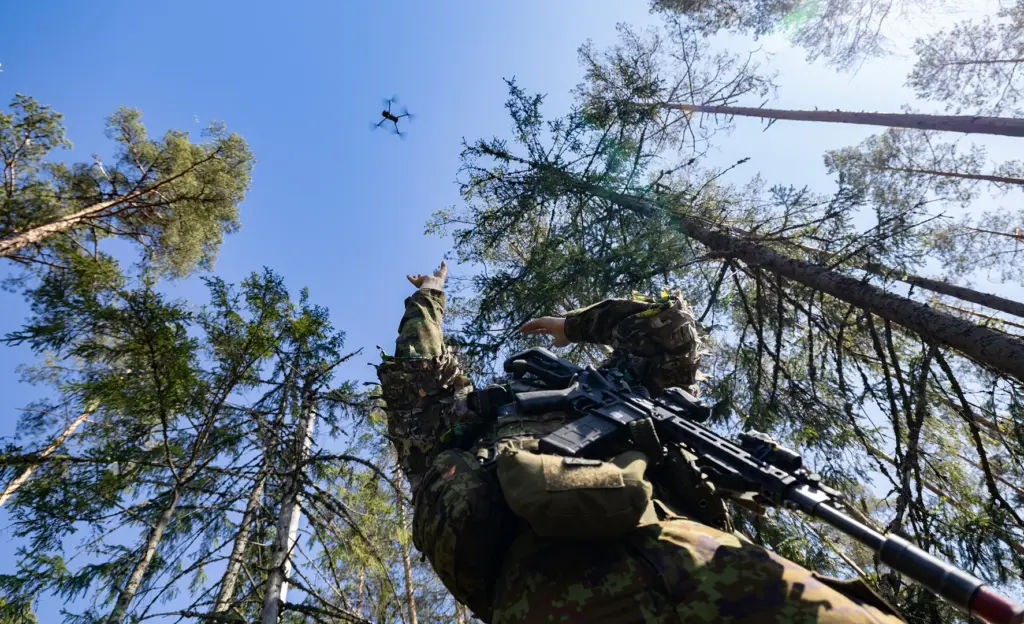
Estonian and Ukrainian soldiers fly drones together during Exercise Hedgehog 2025 in Estonia, where Ukrainian operators were credited with knocking out two battalions in a simulated engagement. Photo: vbl/OR-7 Ardi Hallismaa/ERR

Ukraine now builds far more weapons than it can afford to buy. A year ago, it promised to sell the surplus abroad and turn the proceeds back into its own army. However, 12 months later, that promise has barely materialized: a state fee of up to 30% is pricing Ukrainian arms out of foreign markets, and no one can say how much the army has actually gained, said Ihor Fedirko, executive director of the Ukrainian Council of Armorers.

President Volodymyr Zelenskyy announced the resumption of controlled weapons exports in October 2025, resting it on four promises: 1) sell what Ukraine makes beyond its own needs, 2) channel part of the proceeds into a special fund for the army, 3) open export offices in Europe and the US, and 4) establish joint ventures abroad.

The surplus is real: Ukraine's defense output is projected to reach $55 billion in 2026, far beyond what the state can finance. A year on, Fedirko checked each promise in turn.

1) Export of surpluses: rules that strangle businesses

    On 1 July 2026, the government approved rules for controlled arms exports. They shortened the maximum application review period from 90 to 30 days, but also introduced an export fee: 20% for finished products and technologies, and 30% for components. For finished products exported under the special procedure, the contract value must be at least $334,000.

      In September, the Ukrainian Council of Armorers, together with other associations, proposed a zero rate, no advance collection of the fee, refunds for deals that fall through, and simplified test shipments. The industry was promised that its amendments would be taken into account and that the resolution would be rewritten.

      Even in early October, however, the rules still needed work. According to Fedirko, the new mechanism has effectively not started working. Whether it can bring in additional funds for defense depends on how acceptable the export terms are to manufacturers.

      Fedirko says, though, that judging by current decisions, the state intends to keep the export fee.

      “The industry is ready to discuss its contribution to defense financing. But the rate must be economically justified,” he says.

      2) Procurement for the Ukrainian military: balance is only being established

      He adds that the Ukrainian Council of Armorers intends to push for a rate significantly lower than 20%, one that would let companies fulfill contracts and invest in production.

      With such high rates, Fedirko says, the competitiveness of Ukrainian weapons on foreign markets is in question, as is the ability to send even small test batches to potential buyers.

      “The fundamental requirement is post-payment: after the contract has actually been fulfilled and the manufacturer has been paid. A company should not pay the state in advance a share of income it has not yet received,” he says.

      He added that, given all this, the real export figures remain unclear, as does how much exports have actually brought the military.

      “The military and manufacturers must feel the benefit of exports. I sincerely hope that next year will bring much better results,” he says.

      In addition, on 12 October, the Ukrainian Parliament passed bill No. 15400 in the first reading. It provides for crediting the export fee to a special fund directed to the Ministry of Defense: 50% for the procurement, modernization, and repair of weapons and equipment, and 50% for the pay of Armed Forces personnel.

      The bill has not yet been adopted, but Fedirko says he expects “final adoption and launch of the mechanism.”

      3) Export offices: offices in Germany and Denmark

      On 3 November, the Ukrainian government named the first cities for export offices: Berlin and Copenhagen. On 15 December, it again spoke of preparing an office in Berlin. In reality, Fedirko says he does not know the office’s status, and it likewise remains unclear how companies can apply to it and how many contracts it has helped close.

      4) Joint ventures abroad: There are concrete results in this area

      According to Fedirko, eight joint ventures have been created, five of which are already supplying products to Ukraine. He stresses that this is the result of work by Ukrainian companies, foreign partners and the state, and that it deserves recognition.

      As early as February 2026, the authorities spoke of plans to create ten joint ventures in Europe within a year. At the same time, they announced Quantum Frontline Industries in Germany, with a planned annual capacity of 10,000 drones for Kyiv.

      Beyond the number of ventures and deliveries, however, it is important to understand how other manufacturers can join the Build with Ukraine program.

      “Who accepts applications, by what criteria are decisions made, and what support does a company receive?” Fedirko asks.

      In other words, joint ventures are already delivering results, but the rules of participation and the state support mechanism must be clear to companies that want to develop production abroad.

      •  

      From “bad-guy fleet” to “good-guy fleet”: US will let investors buy sanctioned tankers and return them to legal trade

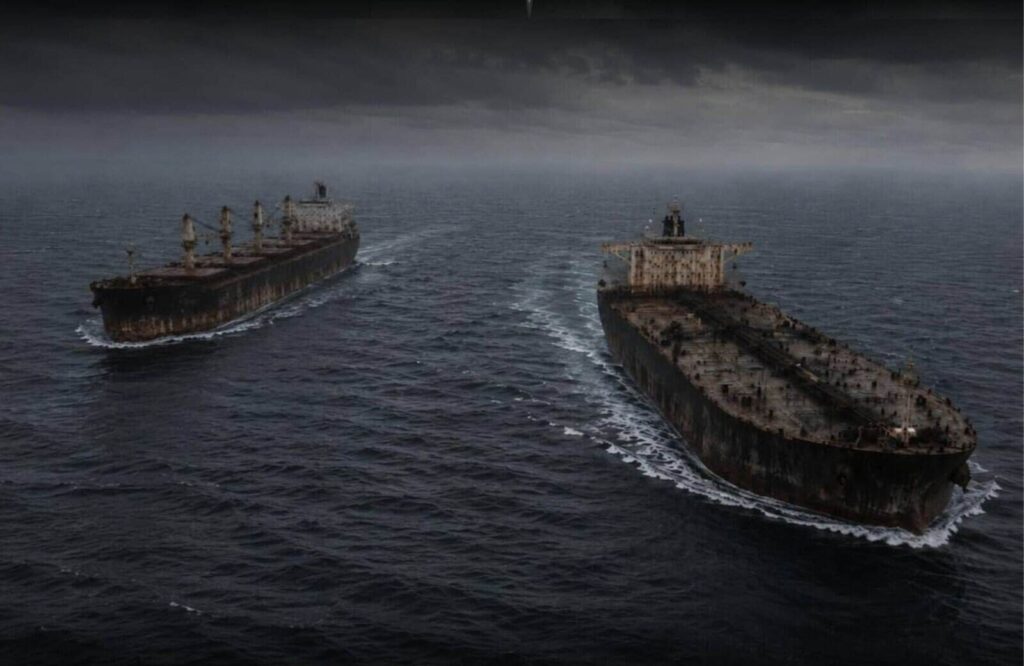
      Two weathered cargo ships sail across a dark sea beneath heavy storm clouds.

      Investors who buy idle sanctioned tankers and refit them could put the ships back into legal oil trade, US Energy Secretary Chris Wright said on 19 October, Bloomberg reported. He laid out the plan five days after a US official described it to Reuters.

      That official said the aim was to cut record tanker freight rates. The Energy Department added that any relief would not help Russia move its oil. The plan comes weeks before the 3 November midterms, with voters worried about fuel costs after gasoline and diesel prices surged in the Mideast conflict. Yet the shadow fleet is also how Russia sells oil past sanctions, and those sales fund its war against Ukraine. In December 2025, Ukraine’s foreign intelligence counted more than 1,100 tankers serving Russia alone, 226 of them under US sanctions.

      An approval process Wright didn’t detail

      Many sanctioned tankers sit idle, Wright told Bloomberg’s Annmarie Hordern, and buyers keep approaching the administration offering to fix them up and carry only legal oil.

      “We’re going to move some of the ships from what I call the ‘bad-guy fleet’ to the ‘good-guy fleet,’” he said. “They will not carry sanctioned oil anymore.”

      The ships must go through an approval process, Wright said, but he gave no criteria. He insisted “there is no removing of sanctions.”

      He put the global dark fleet at about 1,600 ships, a count covering vessels that hauled Venezuelan, Iranian, and Russian oil. Dozens or even hundreds could turn legitimate, he said. The ships are no longer needed for Venezuelan oil, Wright said, and no Iranian oil is moving. Russian oil exports, he added, “are certainly not growing.”

      Diesel, a waiver, and the tankers

      Earlier, on 9 October, the Treasury issued General License 135, allowing some deals in Russian diesel until 7 April 2027. On 16 October, US President Donald Trump waived sanctions and tariffs under the Graham Act, leaving earlier sanctions intact. That law had directed him to review and sanction shadow-fleet vessels. Trump defended the waiver as a way to keep Moscow at the negotiating table.

      House Speaker Mike Johnson told Fox News host Larry Kudlow on 18 October that he had asked the White House team to “carefully consider the unintended consequences,” The Hill reported. He added that he thought “the right decision will be made” in the end.

      •  

      Russia resumes diesel exports to Türkiye, Brazil, after Trump lifts sanctions on fuel supplies, boosting Moscow’s war revenue – Reuters

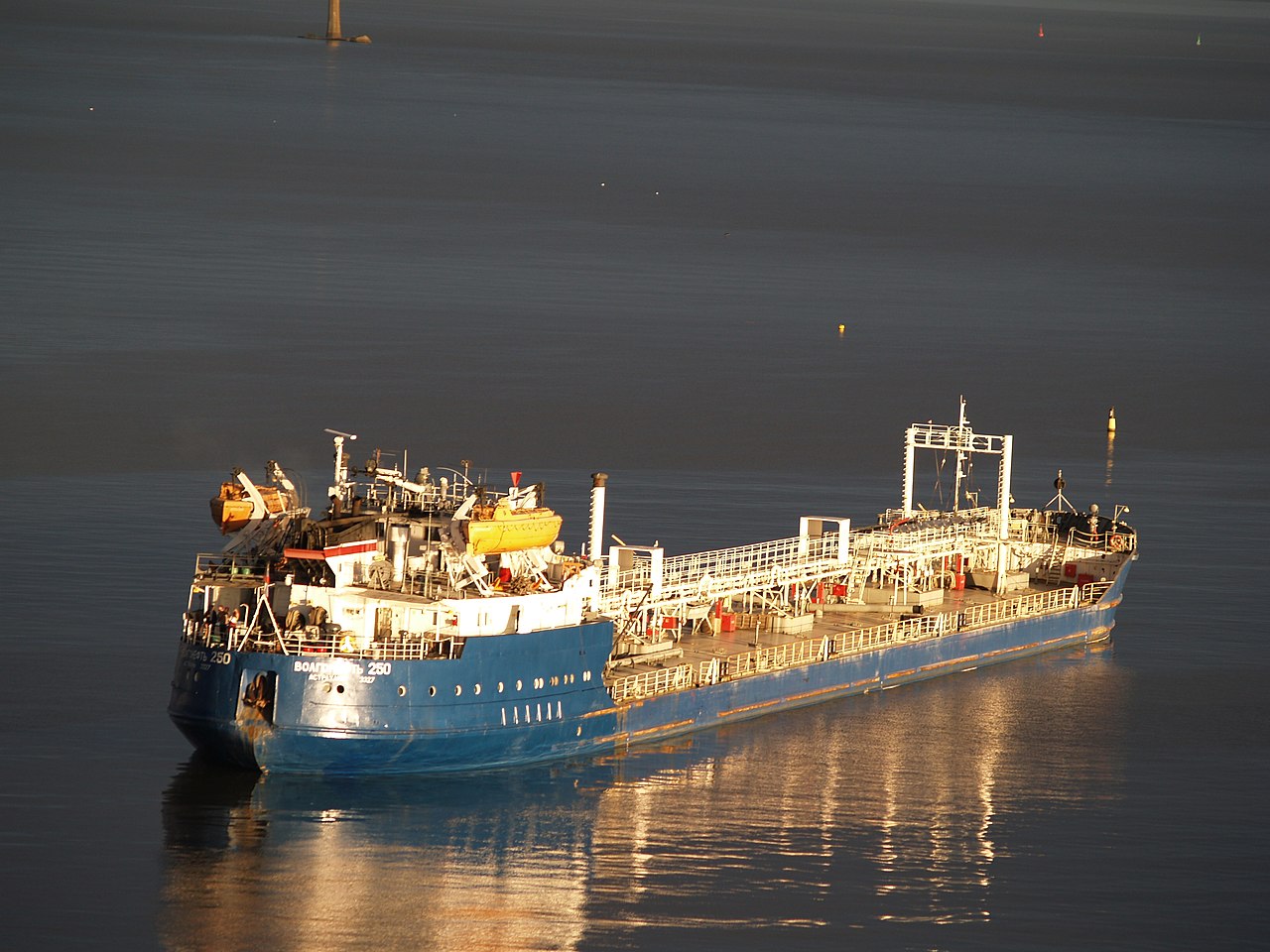
      A Russian oil tanker, illustrative image. Photo via Wikimedia.

      Russian diesel shipments are returning to Türkiye and Brazil after Moscow lifted its export ban and the US temporarily suspended sanctions on Russian fuel supplies, Reuters reported on 20 October, citing shipping data from Kpler and LSEG.

      The resumption of exports gives Russia another source of revenue to support its war against Ukraine, allowing Moscow to profit from fuel sales despite the domestic shortages that prompted its export ban. The US sanctions relief is helping Russia restore access to international buyers while its full-scale invasion continues.

      According to Reuters, at least two tankers carrying Russian diesel have departed the Baltic port of Primorsk for Türkiye and Brazil in recent days. Each vessel is carrying around 300,000 barrels, according to Kpler data cited by Reuters. Morocco has also resumed importing Russian diesel since the export ban was lifted.

      Russia ended its self-imposed diesel export ban on 9 October after reaching a deal with US President Donald Trump to resume fuel supplies to global markets. Moscow had introduced the ban to address domestic shortages triggered by Ukrainian drone attacks on Russian oil refineries.

      Those supply problems have not been resolved, but the US temporarily lifted sanctions on Russian fuel supplies as part of the deal, allowing Moscow to prioritize export opportunities despite domestic shortages. EU and UK embargoes on Russian fuel imports remain in force.

      Russian diesel exports remain below last year's levels

      Russian diesel exports averaged around 345,000 barrels per day in 2026 so far, down 41% from the previous year, according to shipping data cited by Reuters. Exports had already fallen during the summer before Moscow imposed its ban.

      Türkiye accounted for around 34% of Russian diesel loadings this year, followed by Brazil at 24% and Morocco at 10%, Kpler data showed.

      Trump said Russia would initially export 300,000 metric tons of diesel, followed by 500,000 tons in November and 1 million tons afterward. Russian Deputy Prime Minister Alexander Novak said Moscow could raise exports to as much as 3.5 million metric tons per month by the end of the year.

      US seeks to ease diesel prices

      The deal comes as Trump seeks to present a picture of bringing down diesel prices ahead of the US midterm elections on 3 November. Fuel prices have risen amid disruptions to global energy supplies caused by Trump's war with Iran, which has shaken oil markets and raised concerns about supply routes.

      Trump has blamed Ukraine's attacks on Russian oil infrastructure for driving up energy prices, despite the broader market disruption caused by his war with Iran. The Russian diesel deal offers a way to increase global fuel supplies, but also allows Moscow to earn revenue from exports while its war against Ukraine continues.

      However, the volumes from Russia initially outlined by Trump would cover only a small share of the global supply shortfall. 

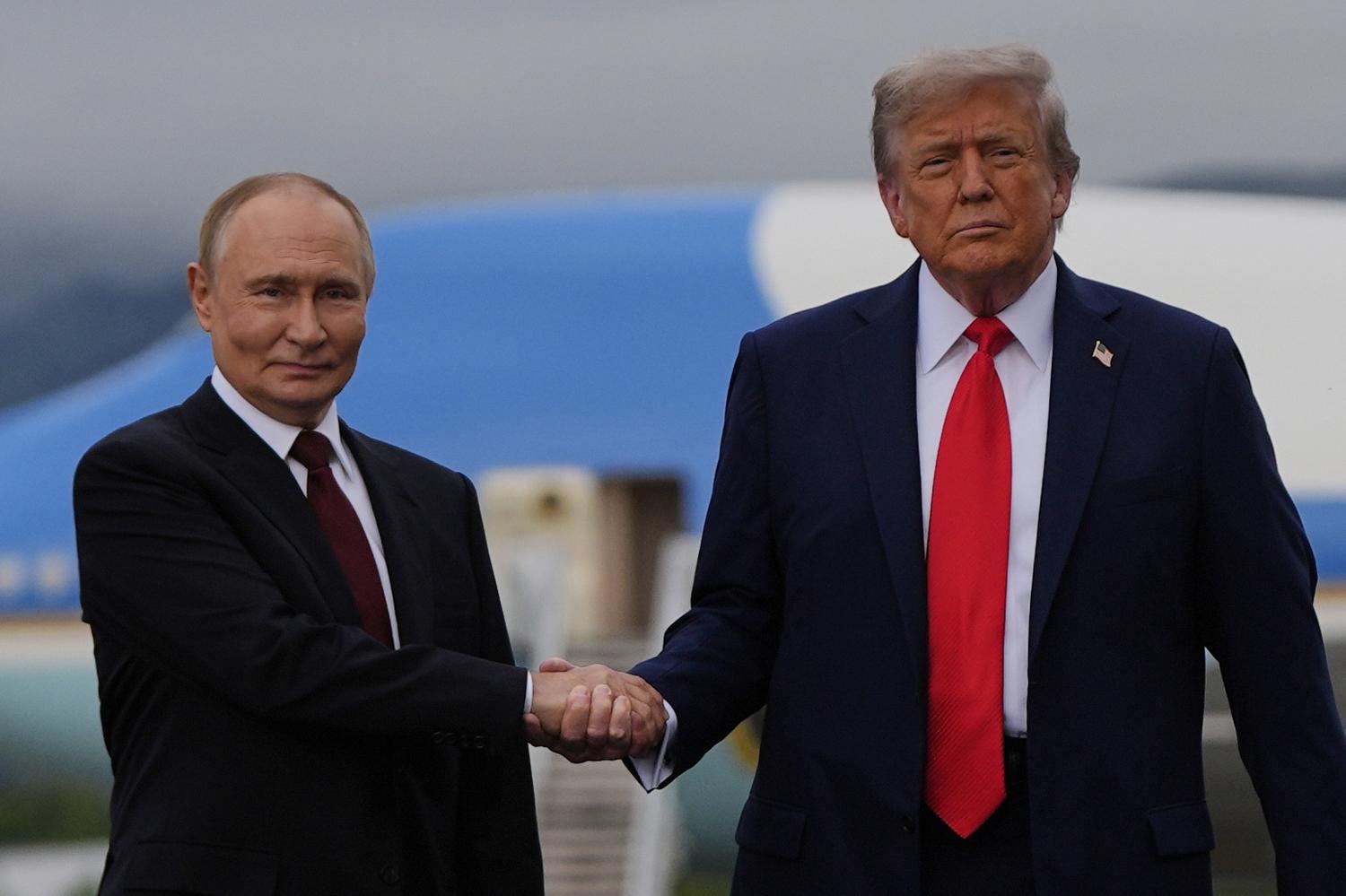
      Trump Putin meeting in Alaska
      Explore further

      Trump says Russia agreed to supply millions of tons of diesel to US and global markets as he blames Ukraine for fuel price hikes driven by Iran war

      •  

      31 in May, 63 now: Ukraine’s arms makers pile into a regime of tax breaks and shielded data

      Ukrainian Bulava/Mace loitering munition at the Eurosatory 2024.

      Defence City, Ukraine’s special support regime for arms makers, now has 63 member companies, the Defense Ministry said in a 19 October release. That is more than double the late-May count, and Euromaidan Press calculations show the newcomers are, on average, much smaller firms.

      Ukraine already buys most of its weapons at home. More than 75% of its 2025 weapons procurement budget went to domestic manufacturers. Most new weapons models cleared for military use are Ukrainian too: 892 of the 1,000 authorized from the start of 2026 to mid-June. Defence City is meant to turn that demand into more production capacity, and our calculations suggest it is now reaching smaller producers too.

      Who is joining

      Each resident’s figure in the ministry’s count is its qualified income, meaning revenue from selling weapons and military equipment. Applicants file details of their defense contracts for the previous calendar year with their application, the ministry’s guide shows. So the combined total changes as members join. It does not track month-to-month sales.

      The 63 current residents have a combined qualified income of nearly $2.47 billion. At the end of May, 31 residents had $2 billion, the ministry reported. By July, 45 residents had over $2.07 billion, it added.

      By Euromaidan Press calculations, the 32 companies added since May bring about $15 million each on average. The first 31 averaged about $64 million each. The math assumes all 31 early members remain, with unchanged figures. If they do, the newcomers are smaller producers on average, because each figure reflects a firm’s own prior-year weapons sales.

      What residents get

      The profit-tax break comes with a condition. Residents choose where their untaxed profit goes, but it must go to purposes the tax code allows, the ministry explained. If the money goes elsewhere, the break does not apply.

      Residents also get customs incentives and state support to relocate plants and better protect production sites. They can rent state property without an auction. They can also ask to restrict access to sensitive information about them in public registries. Some defense export procedures are simplified too.

      Resident status also makes a company eligible to be designated critically important to the defense industry. That lets it defer up to 100% of its staff liable for military service from the draft, the ministry noted.

      To join, a company must confirm it meets the legal requirements and file an application with supporting documents. By law, the ministry has 10 working days to decide. If approved, a ministerial order grants the status, and the company enters the Defence City register.

      •  
      ❌