Cross-party committee says ‘moonshot’ vow to end obesity epidemic in a decade will fail without personal leadership from PM
The UK government’s promise to reverse rising obesity rates in the next decade is “doomed to fail” without a major rethink and a new plan led directly by the prime minister, a cross-party committee of MPs has concluded.
The health and social care select committee said in a report that there are no signs the so-called “moonshot ambition on obesity”, set out in the 10-year health plan for England, will achieve anything significant.
Former Health and Human Services senior adviser Calley Means told Breitbart News that Iowa is positioned to play a central role in advancing the Make America Healthy Again (MAHA) movement, emphasizing the importance of the state's agricultural economy, concerns about cancer rates, and Republican gubernatorial candidate Zach Lahn's willingness to address difficult questions surrounding food and health policy.
CLIVE, Iowa–Republican Iowa gubernatorial candidate Zach Lahn took aim at the establishment media during a Make Iowa Healthy Again rally on Wednesday, accusing the press of contributing to public forgetfulness about the past and what is at stake ahead of the midterm elections, while Steak 'n Shake Chief MAHA Officer Michael Boes challenged media portrayals of the Trump administration's efforts to improve Americans' health.
Multiple customers at a Chili's Grill & Bar reported experiencing chemical burns Wednesday after consuming margaritas that had been prepared with an industrial cleaning chemical that was mistaken for sugar or salt.
The Foothills Health District said the incident unfolded at a restaurant in Forest City, North Carolina.
Three customers consumed the contaminated margaritas, while two restaurant employees also reportedly experienced symptoms after exposure to the chemical, according to the health district.
According to preliminary findings, the mix-up began Monday when an employee received an industrial degreaser from a contracted worker and placed it in an unmarked container.
The container was then brought inside the restaurant and left in the bar area.
Two days later, an employee preparing the bar for lunch service discovered the unlabeled container and, believing its contents to be sugar or salt, used the chemical to prepare the margarita station, the health district said.
Shortly after the restaurant opened, three customers consumed the contaminated beverages and "immediately experienced discomfort and chemical burns in and around their mouths."
After the customers alerted staff, two employees also tasted the substance and reported similar symptoms.
In a statement to Fox News Digital, Chili's said the company took immediate action to support those affected.
"We are aware of an isolated incident at our restaurant in Forest City, North Carolina that resulted in injuries to two of our guests and Team Members. Our team took immediate action to support those affected and avoid any further injuries. We are actively investigating the circumstances related to this incident as the health and wellbeing of our guests and Team Members remain our top priority," the company said.
The company’s account differed from the Foothills Health District’s preliminary findings, which said three customers experienced chemical burns after consuming the margaritas.
After the Foothills Health District launched an investigation, the restaurant's food service permit was immediately suspended.
It was quickly reinstated on Thursday after specialists determined the restaurant met all other food safety standards.
The health district used the incident to remind all food service establishments in North Carolina that chemicals must be properly labeled and stored away from food-handling areas.
"This incident highlights the importance of proper chemical labeling, storage, and handling in food service establishments, as required by the North Carolina Food Code, to prevent chemical contamination and protect public health," Jason Masters, the health director of Foothills Health District, said in a statement.
Turning the clocks back at the end of daylight saving time has been linked to trouble falling and staying asleep, while ongoing sleep loss can take a toll on health.
While some research has suggested that the fall time change could have some cardiovascular benefits, the abrupt loss of evening sunlight can suppress serotonin and melatonin production, which can lead to a depressed mood, according to Dr. John La Puma, a California physician and expert in nature-based medicine.
The body’s internal clock does not automatically follow the clock on the wall, La Puma noted.
"When the clocks change, your body clock is still on the old time," he told Fox News Digital, pointing out some common effects people may notice.
"So, for about a week, you wake up an hour early. You get hungry early. You feel sleepy early. It gets dark by five. Afternoon light goes away. You get months of short days. … You need coffee just to feel human. It's not great."
Making small adjustments to your routine after the time change could help ease the transition, the doctor said.
No. 1: Make small schedule shifts
With clocks turning back overnight Saturday, people can begin moving bedtime, meals and wake-up time later in small increments on Friday, according to La Puma.
"So, you move your day later in small steps," he advised. "You move your bedtime and meals the same 15 minutes each time."
For someone who normally goes to bed at 10 p.m., that could mean 10:15 p.m. Friday and 10:30 p.m. Saturday, before the clocks change. Wake-up times and meals can shift by the same increments as schedules allow.
No. 2: Don't spend the ‘extra hour’ on a late night
Since the time change falls on Halloween, Dr. Saema Tahir, a sleep medicine doctor in New York City, cautioned against staying up late and drinking, operating under the assumption that the extra hour covers it.
"Keep alcohol moderate, finish drinking a few hours before bed and avoid caffeine after early afternoon," she advised.
"Alcohol makes you drowsy at first but breaks up sleep in the second half of the night. Caffeine stays in your system for hours. Together, they can leave you more tired on Sunday than you would be with no time change at all."
No. 3: Get outside at the right time
La Puma also emphasized the importance of being intentional about outdoor exposure.
"You want to get outside at the right minutes, at the time of day and in the right place if you can," he advised, specifically recommending getting outside each afternoon later in the day.
"Late-day daylight is different than morning daylight. Late-day daylight tells your body the day is running long, and it shifts later," he said.
Once you've adjusted to the time change, Tahir recommends getting outdoor light within an hour of waking every day through the winter.
"Light is the strongest signal the body clock gets," she told Fox News Digital. "Evening light pushes it later, which is the direction you need to go for 'fall back.' Morning light keeps it stable over the darker months and supports mood and daytime alertness."
No. 4: Create a wind-down routine
Choosing a relaxing activity that signals bedtime is approaching can help to promote a consistent sleep schedule.
La Puma suggests choosing a relaxing bedtime ritual, such as working in a paper workbook, sipping chamomile tea, taking a bath or using aromatherapy, options he outlines in his book, "Indoor Epidemic."
"Very specific things that tell your brain and body, 'I'm winding down so I can go to sleep.'"
No. 5: Avoid caffeine and screens
Other tips include limiting caffeine after noon and stopping screen time at least an hour before bedtime.
La Puma warned that light from the screen can suppress melatonin, the hormone that helps signal it is time to sleep. Even using night mode may not fully prevent that effect.
No. 6: Keep a consistent schedule after the change
Once the clocks change, it’s important to maintain a regular wake-up time, including on weekends, La Puma said.
"Pick one wake-up time and keep it every day, weekdays and weekends."
"So, sleep and wake times have important effects on heart attack, stroke and cardiovascular mortality," he said.
Anyone experiencing persistent trouble falling or staying asleep, frequent daytime fatigue or sleep loss that interferes with daily activities should contact a healthcare provider, according to the National Institutes of Health.
Ashley Graham is a model and entrepreneur who has spent her career challenging who is seen, heard, and marketed to, transforming that influence into a growing business.
Ten years after her "Sports Illustrated" cover, Graham took the stage at Business Insider's The Long Play to unpack how she has built a personal brand across fashion, beauty, entertainment, and consumer products without losing what's at the core of her identity.
Graham spoke about Lucci, her new venture in the wine business, and her longtime partnership with JCPenney during her interview with Business Insider's executive editor, Leena Rao.
During the conversation, titled "Breaking the Mold," Graham also said that getting lots of rejection early on in her career has made her into a better businessperson.
"If it's not for you, there's another thing for you. And you can't take it personally," Graham told Rao.
Major U.S. and international airline groups are pushing back against a new Ebola-related travel requirement that will affect millions of people flying into the United States.
Beginning Nov. 3, all passengers on international flights to the U.S. will have to confirm that they have not been in the Democratic Republic of the Congo (DRC) during the previous 21 days, according to the Centers for Disease Control and Prevention (CDC).
The requirement applies to everyone flying into or connecting through the U.S. — including American citizens, green card holders and airline crew members, the CDC said.
Travelers will have to complete a paper or digital statement before boarding, even if they have never visited the DRC.
Airlines must collect the forms and keep them for at least 42 days after the flight arrives in the U.S., according to the CDC.
Airlines for America (A4A), which represents major carriers including American, Delta, Southwest, United and JetBlue, is asking the CDC to reconsider the requirement and give airlines more time to prepare, according to an Oct. 26 letter provided to Fox News Digital.
The group said it supports the CDC's public health goals but argued that the new requirement is too broad and is being introduced too quickly.
A4A asked the government for a "more proportionate and measured U.S. response" focused more closely on affected areas and travelers who have recently been there.
The group also asked for the Nov. 3 start date to be delayed.
"Changes to check-in systems, digital signatures, station procedures and training cannot readily be completed in the allotted time," A4A wrote.
Dr. Tyler Evans, a California-based infectious disease physician and CEO of Wellness Equity Alliance, told Fox News Digital, "This was a step in the right direction, given the fact that we really do have to take this seriously. We have to ensure that this does not cross borders."
He added, "This is the second-largest outbreak of Ebola in history. So this is very serious."
The International Air Transport Association (IATA), which represents more than 370 airlines around the world, has also asked the CDC to reconsider the requirement, Reuters reported.
"It is unreasonable for the U.S. government to require all airlines serving the U.S. market to modify their procedures to accommodate the collection of attestations from each individual (passenger and crew) flying to the United States in less than two weeks," IATA wrote in a letter, according to Reuters.
A4A is also asking the CDC to exempt airline crew members, arguing that existing aviation documents already contain information about crews and their travel.
The group has requested an exemption for U.S. military passenger charters as well, saying the military already tracks service members' health, safety and whereabouts.
The 21-day period reflects the maximum amount of time it can take for symptoms to appear after exposure.
Anyone who has been in the DRC during that period, including travelers who only passed through an airport there, will not be allowed to board a U.S.-bound flight unless they have a government exemption, the CDC said.
"Some of the initial symptoms would just be flu-like symptoms. You'll have a high-grade fever, you'll feel sort of fatigued," the doctor said.
"[For] people that ... are asymptomatic, being able to screen is a very effective modality to reduce, to prevent or mitigate further transmission," Evans said.
Evans worked on the Ebola response twice in the past, both in West Africa and in the DRC, the two largest outbreaks in history.
"The reality is Ebola is one of the most infectious and has one of the highest case fatality rates of infectious diseases," Evans said.
But Americans often don't view Ebola as being relevant to them, he said. "When it comes to infectious diseases ... microbes don't sort of respect boundaries."
FOX News Media teamed up with the Breast Cancer Research Foundation (BCRF) Thursday for a special panel highlighting advances in breast cancer research and treatment while urging women to take an active role in their healthcare.
The event, held at Fox News headquarters in New York City during Breast Cancer Awareness Month, featured Kat Timpf, the "Gutfeld!" co-host and breast cancer survivor, alongside Dr. Priya Malhotra, director of research impact at BCRF.
Speaking with Fox News Digital after the panel, Timpf emphasized that while breast cancer awareness is widespread, misconceptions about the disease persist and may discourage people from asking important questions about their health.
"There is also so much that people don’t know. It can happen at any age, without genetic markers. I would know that," Timpf told Fox News Digital. "Talking about it is always helpful because it removes a lot of the stigma, and it makes you feel like you can ask these questions to your doctor."
Timpf was diagnosed with Stage 0 ductal carcinoma in situ (DCIS) in February 2025, just 15 hours before giving birth to her first child. She announced the news on social media days later, writing what she called an "unconventional birth announcement."
"Last week, I welcomed my first child into the world. About fifteen hours before I went into labor, I was diagnosed with breast cancer," Timpf wrote on X at the time.
"Now, before you worry, my doctor says it’s stage 0 and is confident that it almost certainly hasn’t spread. Or, as I’ve explained to the few people I’ve managed to tell about it so far: Don’t freak out. It’s just, like, a LITTLE bit of cancer."
Throughout her breast cancer experience, Timpf leaned on her signature humor, a coping mechanism she said helped her through some of the most difficult moments of her diagnosis and recovery.
"Humor is how I've gotten through every hard thing that's ever happened to me," Timpf said. "I was making jokes the day I was diagnosed about getting huge replacement [implants] and stuff like that. That's just how I do things because I feel like when you say that you can't joke about a subject, you're giving it even more power over you than it already has.
"For me, making jokes about a subject is a way to instead feel power over the things that are threatening to take you down."
Timpf's central message to women was to take an active role in their healthcare, stay on top of recommended screenings and speak up when something doesn't feel right.
"Your own health is up to you. So, you have to make sure you pay attention and ask your doctor questions," Timpf said. "Don't think it can't happen to you because I thought that, and I was wrong."
Breast cancer is the most common cancer among women in the U.S. and worldwide, with approximately one in eight U.S. women expected to develop invasive breast cancer during their lifetime, according to the Breast Cancer Research Foundation.
While breast cancer has historically been more commonly diagnosed in older women, rates are rising among younger women, including those under 40, before routine mammograms are generally recommended for women at average risk.
Dr. Malhotra emphasized that while breast cancer diagnoses in younger women account for a relatively small share of cases, the impact is profound.
"Incidence of breast cancer is rising in younger women," Dr. Malhotra told Fox News Digital.
"Maybe 10% of breast cancers are in younger women," she added. "But still, if you're one of the 10%, it's crushing."
Dr. Malhotra, who previously served on the faculty at Georgetown University, now works at BCRF to help advance breast cancer research. She highlighted the growing number of targeted treatments developed in recent decades.
"In 1977, we had one targeted treatment for breast cancer. Twenty years later, we had two," Dr. Malhotra explained. "Fast forward to today, we have over 30 targeted treatments, 19 in the last decade alone. So, it’s moving very quickly, and we're proud to say that our investigators are involved in all of those, getting them across the finish line."
She also stressed the importance of recognizing changes in one's body and speaking up during medical appointments.
"My biggest thing is to know your body because if you feel that something is out of whack — even if you think it's minor — it’s worth it to talk to your doctor about," Dr. Malhotra said.
Twenty-five states sued the Trump administration in June over the new Centers for Medicare and Medicaid Services guidance tied to the 2025 law known as the "One Big Beautiful Bill."
Report calls for an effort to tackle harms in similar way to obesity and smoking, and stresses need to ‘offer boys something better’
The manosphere and online misogyny should be treated by the government as a public health issue, in the same way as obesity or smoking, experts have said.
Writing in the Lancet, the authors of a new report argue that a coordinated response is needed, involving governments, schools, health services and community organisations, similar to the public-health response to tobacco use and ultra-processed food.
Take-Two Interactive CEO and chairman Strauss Zelnick, 69, loves a hard workout.
Carl Timpone/BFA
Strauss Zelnick, the CEO of Take-Two Interactive, said he prefers working out to playing video games.
He is a longevity buff, deep into fitness and anti-aging habits.
In a candid conversation with Business Insider, he said skip the peptides, and try these 7 things instead.
Media mogul Strauss Zelnick spends his days hyper-focused on making the most creative, innovative, best video games in the world.
As the CEO and Chairman of video game-maker Take-Two Interactive, he's readying to release Grand Theft Auto 6 next month.
At home though, he doesn't play games. He prefers to spend his time working out and staying healthy for a long time.
At Business Insider's "The Long Play" event on Thursday, Zelnick said his formula for healthy aging is both simple and effective.
While he calls biohacker Bryan Johnson, the man behind the "Don't Die" movement, a friend, he said trying to live forever is a pretty silly strategy.
"There's almost no evidence that anything anyone is doing will increase your lifespan," he told Business Insider's Senior Leadership & Workplace Correspondent, Sarah Needleman. "How many of us really want to increase our lifespan from like 96 to 101? Look, that is not on my bucket list, thank you very much."
Instead, Zelnick, who wrote a book on "Becoming Ageless" in 2018, focuses on the same core behaviors for "taking care of yourself" that longevity experts around the world swear by for maintaining health and happiness for the long haul.
1: Do not smoke
"Smoking is the factor most highly correlated with a short, unhealthy, and frankly, unhappy life," Zelnick said. "Don't smoke."
2: Don't abuse alcohol and drugs
These lead to "a bad old age, or no old age," he said.
3: Get some exercise
Zelnick said: "You don't have to do what I do," with 6 a.m. wakeup calls for group training sessions, or twice-a-day workouts.
"I do what I do because I love it, it's my passion," he said. "If you walk 30 minutes a day, four or five days a week — just walk — you're like 80% of the way there."
4: Eat a "responsible" diet
Zelnick says he doesn't have an "insanely healthy diet," but he tries to maintain some balance. "I eat a lot of vegetables and salads and protein — I also like sweets, and I do eat carbs."
5: Sleep at least 7 hours a day
Zelnick says he treats this as a non-negotiable for his business.
"If you're getting less than six hours, you're making bad decisions," he said.
6: Have "some kind of emotional or spiritual life"
Longevity experts stress this is key for mental health, and establishing a sense of purpose in the world.
7: Find community
Zelnick said it's critical to get support from "people who love you."
8: Skip overhyped health hacks
Strauss Zelnick, 69, is the CEO of Take Two Interactive.
"All the other stuff, like, peptides? A: No," he said. "We have an FDA for a reason. Don't take something that is not double-blind tested."
And, he said, be careful with some of the internet's most famous longevity gurus. He name-checked controversial Harvard professor David Sinclair, who has made bold promises about the anti-aging effects of unproven supplements, including resveratrol, a plant polyphenol found in grapes and red wine, and NMN, which is a precursor to NAD, the vital coenzyme that's in every cell of our body.
"A medical doctor actually is a degree: M-D, an MD degree," Zelnick said. "Not a David Sinclair degree, he is not actually a doctor."
For more than half a century, federal officials have classified drugs into legal categories that determine who can manufacture, prescribe, or study them, and who goes to prison for possessing or selling them. Those classifications carry enormous consequences. They also reflect decades of political pressure, moralization, myth, and stigma.
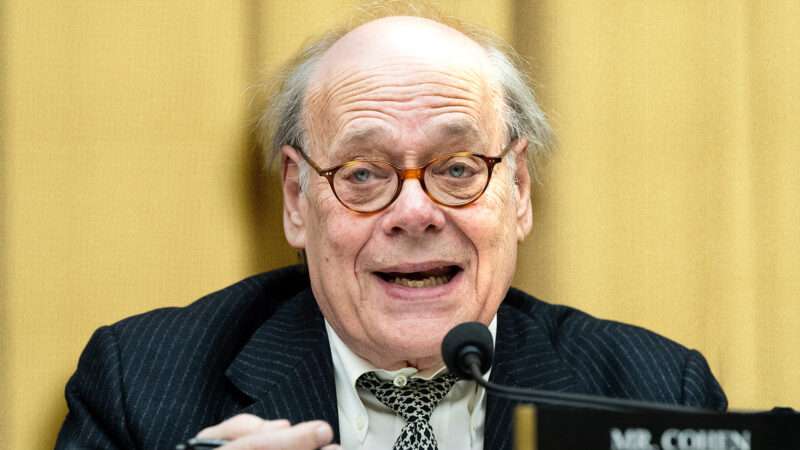
Rep. Steve Cohen (D–Tenn.) proposes to change that. His Public Health and Research Reforms in Controlled Substances Act of 2026 would substantially overhaul federal drug scheduling, shift key decisions from law enforcement to health officials, ease research restrictions, deschedule marijuana, and reduce mandatory prison penalties.
While the proposal preserves too much of the drug prohibition infrastructure, it represents a major step toward a more rational, evidence-based, and humane drug policy.
The Controlled Substances Act currently combines judgments about a drug's potential for abuse with judgments about its medical usefulness. Congress vested scheduling authority in the attorney general, who generally exercises it through the Drug Enforcement Administration (DEA). The Department of Health and Human Services (HHS) evaluates the scientific and medical evidence, but the DEA makes the ultimate legal determination of whether a drug has a "currently accepted medical use" for scheduling purposes, as the Justice Department explained in a 2024 legal opinion. Schedule I, the most restrictive category, includes substances deemed to have a high potential for abuse and no currently accepted medical use. These restrictions impede research, while officials cite insufficient evidence of medical usefulness to justify continued restrictions.
Cohen's bill would transfer authority to assess medical usefulness and drug-related risks—and to make scheduling decisions—from law enforcement to HHS, where those judgments more rationally belong. Under the new system, controlled substances would receive two classifications: a Roman numeral, I through IV, reflecting risks associated with misuse, substance use disorder, and threats to public health; and a letter, A through E, reflecting therapeutic value.
A substance could therefore be classified as high risk while still recognized for substantial medical benefits. That reflects an everyday reality of medical practice. Fentanyl, for example, can cause fatal respiratory depression and remains an indispensable anesthetic and analgesic. A drug's dangers do not erase its benefits.
The bill would also replace the vague "potential for abuse" standard for adding substances to the schedules with a standard based on the potential to develop a substance use disorder, expressly excluding isolated or occasional nontherapeutic use. Taking a substance for pleasure would no longer, by itself, satisfy that threshold.
Among the proposal's most consequential provisions is a requirement that officials consider whether scheduling a substance would itself threaten public health, including by encouraging people to substitute other drugs. They must also consider whether people use a substance to help control problematic use of another scheduled drug, as well as the harms associated with that other drug.
That would force federal officials to confront consequences that drug warriors routinely ignore. Banning a substance does not eliminate demand. Consumers may turn to underground suppliers, face uncertain potency and contamination, or switch to more dangerous products. Making a particular drug harder to obtain can leave its users worse off.
These requirements could be critical in disputes over kratom and its alkaloids, such as 7-hydroxymitragynine (7-OH), which some consumers report using for pain or to reduce their use of other opioids. Such reports should be part of an honest assessment of what consumers stand to lose when the government closes a legal supply channel.
An expert committee would evaluate each substance and publish its evidence and reasoning, making scheduling decisions more transparent and easier to challenge.
HHS would also assume from the DEA responsibility for registering researchers who study controlled substances. Qualifying researchers would gain an expedited registration pathway, with faster decisions for eligible small preclinical pilot studies. Federal officials currently demand evidence that these drugs have medical benefits while imposing restrictions that make it harder for researchers to obtain the drugs and conduct the studies needed to generate that evidence.
Cohen would require officials to reconsider existing classifications, setting a two-year deadline for 32 named substances and an eight-year deadline for most others. If officials miss those deadlines, statutory fallback classifications would apply.
The bill would also repeal the legal obligation of the director of the Office of National Drug Control Policy, the "drug czar," to oppose specified legalization efforts—a remarkable requirement for an office supposedly focused on evaluating drug policy.
Marijuana and tetrahydrocannabinols (THCs) would come off the controlled substance schedules altogether. The bill expressly makes that change retroactive, extending it to past offenses, pending cases, convictions, and juvenile adjudications.
Its sentencing reforms also merit praise. The proposal would remove the quantity-based trafficking provisions that impose five- and 10-year mandatory minimums and eliminate specified mandatory penalties when death or serious injury results. The bill would also limit certain repeat-offender sentencing enhancements to prior convictions that meet the narrower definition of a "serious drug felony." Among other requirements, the person must have served more than a year in prison and been released within 15 years of the new offense. Eligible prisoners could receive reduced sentences, and the Bureau of Prisons would be required to identify them, notify them, and file motions on their behalf.
These changes could spare people years of imprisonment. They deserve support even from those of us who would go much further.
The shortcomings remain significant.
First, the bill preserves criminal penalties for peaceful conduct involving drugs that remain controlled. It leaves the general federal simple-possession statute intact, including mandatory minimum jail terms for repeat offenses. Congress would continue to authorize imprisonment for possessing a substance without government permission.
Second, transferring power to HHS offers no guarantee against political interference. The secretary would appoint the expert committee in consultation with the drug czar. Its required membership emphasizes addiction medicine, toxicology, and substance-use services, without expressly reserving seats for pain patients, ordinary consumers, or civil liberties advocates.
The bill would allow emergency scheduling to bypass the new expert committee's review. It would also retain features of the current system: Temporary restrictions could last two years, with a possible one-year extension, and the statute would expressly exclude those orders from judicial review.
The bill would also transfer production quotas to HHS rather than abolish them. As I have argued before, presuming to know how much of each opioid more than 320 million Americans will need in the coming year exemplifies what economist Friedrich Hayek called the "fatal conceit." These quotas have contributed to shortages of injectable opioids in hospitals, jeopardizing care for surgical patients and those on ventilators. Transferring that power to a health agency does not solve the underlying knowledge problem. Congress should abolish the quotas.
The proposal substantially increases many maximum fines even as it reduces mandatory prison penalties. For an individual convicted of Schedule I or II trafficking without a qualifying prior conviction, the fine ceiling would rise from $1 million to $10 million. Congress should question this punitive expansion.
Finally, marijuana descheduling would leave Food and Drug Administration (FDA) authority intact. The bill expressly preserves the agency's powers under federal food and drug law, allowing it to regulate cannabis products that qualify as drugs, foods, or other products within its jurisdiction. It provides no explicit protection for a recreational cannabis market from FDA restrictions.
Those weaknesses warrant amendments. Scientific evidence can help people understand risks, but it cannot, by itself, justify depriving competent adults of the freedom to decide which risks they will accept. Autonomous adults should remain free to make informed choices about what they put into their bodies.
Cohen, who is retiring from Congress at the end of his term, is unlikely to see this sweeping reform pass during the brief post-election lame duck session. But his proposal can serve as a benchmark for reforming the Controlled Substances Act in the next Congress. Providing his successors with a framework that places greater weight on scientific evidence, recognizes the harms of prohibition, and reduces unjust punishment would leave Cohen with a substantial drug policy reform legacy.
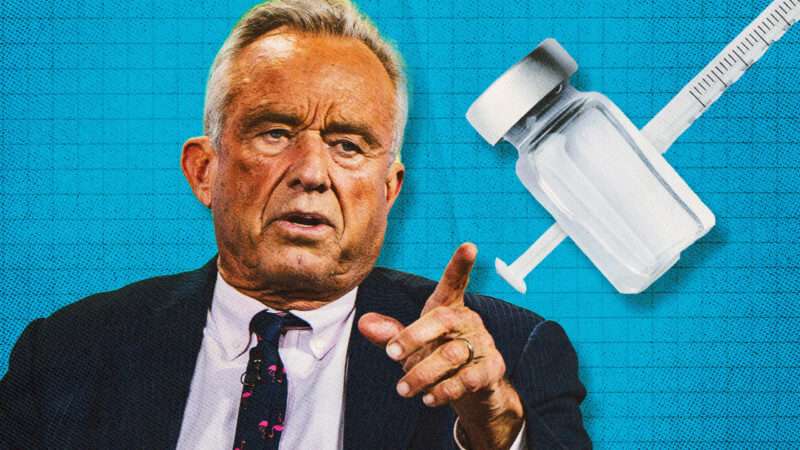
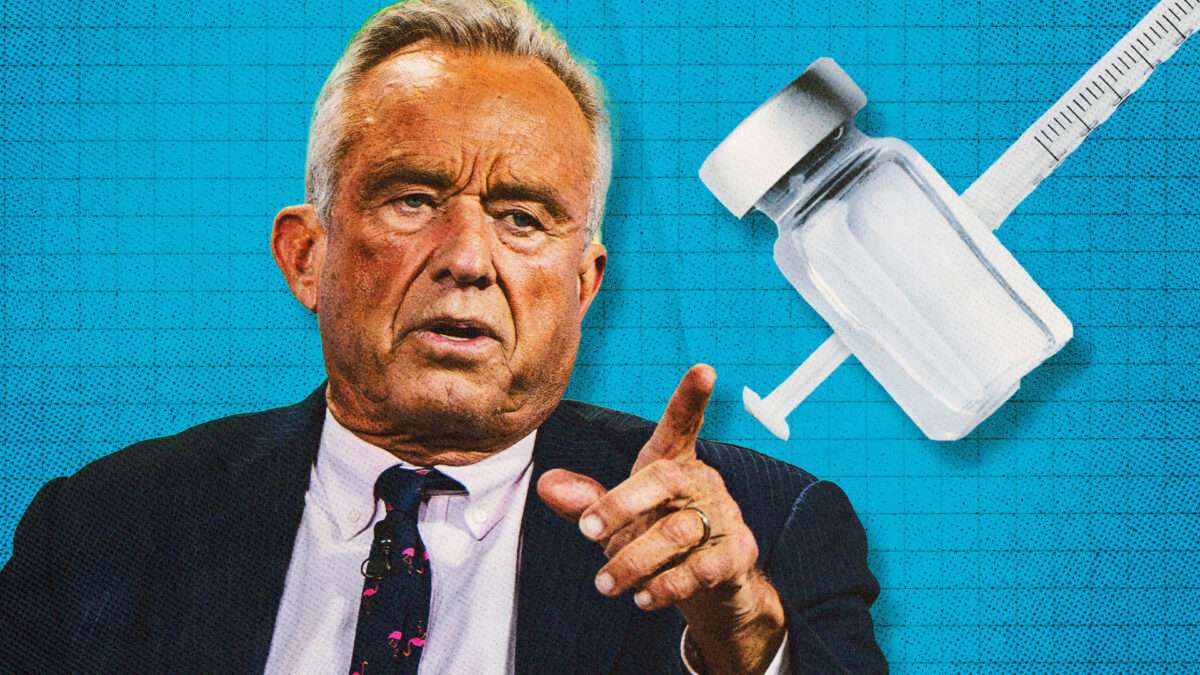
The Department of Health and Human Services (HHS) will let pharmacies produce and sell treatments involving six peptides that aren't specifically approved by the Food and Drug Administration (FDA). The move is meant to provide a "controlled alternative" to buying peptides from possibly sketchy foreign pharmacies, HHS said.
Under the new HHS policy, the agency will not "take enforcement action against a State-licensed pharmacy, Federal facility, or licensed physician compounding a drug product" using one of six named "peptide bulk drug substance[s]."
This is a major win for peptide proponents, compounding pharmacies, and health freedom—and hints that HHS Secretary Robert F. Kennedy Jr. may be feeling frustration with the slow pace of things at the FDA.
Up for debate was whether these six "bulk drug substances" and another, Emideltide, should be put on the FDA's Section 503A Bulks List. That list governs which substances licensed physicians and specialty pharmacies can compound into drug products without them being a component of an already FDA-approved drug or having "an applicable United States Pharmacopeia (USP) or National Formulary (NF) monograph."
In July, the panel voted to put six of the seven peptide-related substances under consideration (all except Emideltide) on the bulks list. But the panel's vote is not binding.
It's ultimately up to FDA authorities to decide whether they accept the advisory committee's recommendations. So far, no decision has been released.
Kennedy can't ensure FDA approval, of course. But he can—and will—stop HHS from taking action against physicians or pharmacies that compound and distribute these substances under his prescribed rules.
In an explainer about the new policy, HHS notes that "compounded drugs are not FDA-approved, which means FDA does not review their safety, effectiveness, or quality before they are marketed." Nonetheless, "compounded drugs can serve an important medical need for certain patients" and "there is significant interest in the use of these peptides in compounding," it says.
Opponents of allowing more peptide-based treatments to be compounded by licensed U.S. pharmacies often focus on the fact that these products don't have FDA approval and may not have the extensive experimental backing required of FDA-approved treatments.
But people are already taking BPC-157, MOTS-c, and other peptides anyway, buying them from companies selling them under "for research use only" labels or obtaining them from foreign distributors. Peptides can even be found on discount everything-marketplaces like the China-based AliExpress.
Allowing licensed physicians and pharmacies in the U.S. to compound these substances without fear of being punished gives people access to safer options than they might otherwise have.
Pharmacies compounding peptide-based products under the rules set forth by federal law still have to be licensed in the states where they operate and follow certain rules, including a requirement that active ingredients used for compounding must be "accompanied by valid certificates of analysis" and "be compounded based on the receipt of a valid patient-specific prescription." Per the new HHS policy, they must also follow several other rules regarding the packaging and labeling of these peptides.
"The Secretary of HHS has determined that this limited enforcement-discretion policy will discourage the continued, widespread use of certain research-use-only peptides supplied by foreign manufacturers that pose a safety risk to US patients," notes the HHS explainer. "By allowing limited compounding of the substances addressed in this guidance under appropriate safeguards, the policy provides patients with a more controlled alternative."
It's an astoundingly reality-based policy for government health officials, who often act as if matters like this come down to a binary between perfect health and safety on one hand and certain danger on the other.
Rather than relegating peptides to gray or black markets until they (may be) pronounced all clear by the FDA, RFK Jr.'s HHS has chosen to balance safety with "patient choice and freedom," as the HHS states.
Keira Callaghan saysbeing prepared should be a public health measure, not a privilege, and Chris Rotheram is experiencing prescription anxiety. Plus five more letters in response to the Be Ready campaign
The Be Ready campaign may offer sensible advice in principle (Every Briton should stockpile water and food supplies, government advises, 22 October), but as a midwife working in Tower Hamlets, one of the poorest boroughs in London, I can see first-hand that its practical recommendations risk excluding precisely those families who are already most vulnerable.
For families living in a single room in a shared house, storing nine litres of water per person alongside three days’ worth of essential supplies may simply be unrealistic. When families are already struggling with the cost of food, heating and everyday necessities, buying additional emergency provisions may also be financially impossible.

 Login