 Login

Why the Markets Don’t Care About the Midterms
Factors like inflation, interest rates, A.I. and the war with Iran are far more important, our columnist says.

Christine Lagarde will step down as president of the European Central Bank (ECB) on 7th February 2027, bringing her tenure to an early conclusion and opening negotiations among European Union governments over one of the continent’s most influential economic appointments.
The announcement, made by the ECB on 29th October, came on the same day that its Governing Council decided to leave interest rates unchanged, despite renewed inflationary pressure linked to rising energy prices.
Lagarde, who has led the institution since November 2019, was originally expected to remain in office until October 2027. Her departure will therefore bring forward a succession contest that had already attracted considerable attention in European financial and political circles.
Speaking after the announcement, Lagarde explained that she wanted greater freedom to address matters beyond monetary policy, arguing that the restrictions associated with central bank leadership prevented her from contributing publicly to wider debates.
Her explanation leaves open questions about the political consequences of her departure, particularly as EU governments prepare for difficult negotiations over the institution’s future leadership.
Under Article 283 of the Treaty on the Functioning of the European Union, the ECB president is appointed by the European Council, acting by qualified majority following consultations with the European Parliament and the ECB’s Governing Council.
Although the process is formally governed by treaty provisions, appointments to the ECB’s Executive Board have historically involved negotiations among the eurozone’s largest economies.
Two former national central bank governors have emerged as prominent potential successors: Klaas Knot of the Netherlands and Pablo Hernández de Cos of Spain.
Both have substantial experience in monetary policy, although their possible candidacies remain subject to the political calculations of EU governments.
The timing is especially significant for France, which faces a presidential election in April 2027 against a background of domestic political instability and mounting concerns about public finances.
An appointment concluded before that election would be negotiated by the existing European leadership, potentially affecting the balance of influence over one of the eurozone’s principal institutions.
However, Lagarde has not publicly identified the French election as the reason for her departure.
The succession process will also coincide with other changes to the ECB’s Executive Board, increasing the importance of negotiations over the geographical and institutional balance of its leadership.
The leadership announcement coincided with a difficult monetary policy decision. On 29th October, the ECB maintained its deposit facility rate at 2.5 per cent, leaving the main refinancing and marginal lending rates at 2.65 and 2.90 per cent respectively.
Eurozone inflation reached 3.8 per cent in September, substantially above the ECB’s medium-term target of 2 per cent. Rising energy prices have complicated the institution’s position. Higher gas and oil costs threaten to increase consumer prices while simultaneously weakening industrial output and household purchasing power.
The ECB acknowledged that the energy shock could produce further inflationary pressures and reduce growth.
At the same time, tighter financial conditions across the eurozone have increased the risks associated with additional monetary tightening.
This leaves policymakers confronting a familiar but difficult problem: raising interest rates may restrain inflation, but it can also deepen economic weakness and increase borrowing costs for governments, businesses and households.
The next president will inherit these competing pressures rather than a settled monetary environment.
Financial developments in France have added urgency to the debate.
French government bond yields have risen sharply, with ten-year borrowing costs reaching levels not seen since 2002.
This reflects market concerns about the country’s fiscal position and political uncertainty, while raising wider questions about financial stability within the eurozone.
For the ECB, the challenge is particularly delicate.
Its mandate requires monetary policy to be directed towards price stability across the currency union. However, the economic consequences of higher interest rates differ considerably between member states.
Countries with elevated public debt face greater pressure from rising financing costs, while economies exposed to higher energy prices may experience weaker investment and industrial production.
The ECB possesses instruments intended to address disorderly financial-market conditions, but these do not eliminate the underlying fiscal and political differences between eurozone members.
The appointment of Lagarde’s successor will therefore take place against a backdrop of renewed debate about the relationship between monetary independence and national economic interests.
Lagarde’s presidency began before the pandemic, Russia’s full-scale invasion of Ukraine and the subsequent European energy crisis.
During her tenure, the ECB navigated emergency monetary interventions, unusually high inflation and substantial changes in interest rates.
Her successor will confront a different combination of challenges: renewed geopolitical disruption, economic competition with the United States and China, and growing demands for European investment in defence and industrial development.
These priorities are primarily the responsibility of governments, but they influence the economic conditions in which the central bank operates.
The immediate question is who will replace Lagarde. The more consequential question is how the next ECB president will manage monetary policy in a eurozone whose economic and political divisions are becoming increasingly difficult to separate.
For EU leaders, the succession is an opportunity to determine the institution’s leadership. For the ECB, it will be another test of its ability to maintain monetary independence while managing the consequences of Europe’s changing political economy.
The ECB faces an ugly choice as eurozone inflation hits 3.8pc

© Ben Stansall/Agence France-Presse — Getty Images

© Julia Demaree Nikhinson/Associated Press
Prime minister vows not to slash health and education funding amid political problem over handling of economy
Get our daily political email, free app or daily news podcast
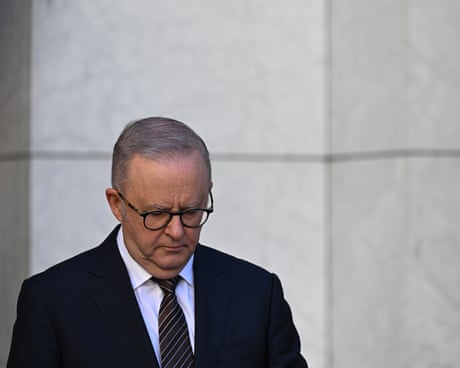
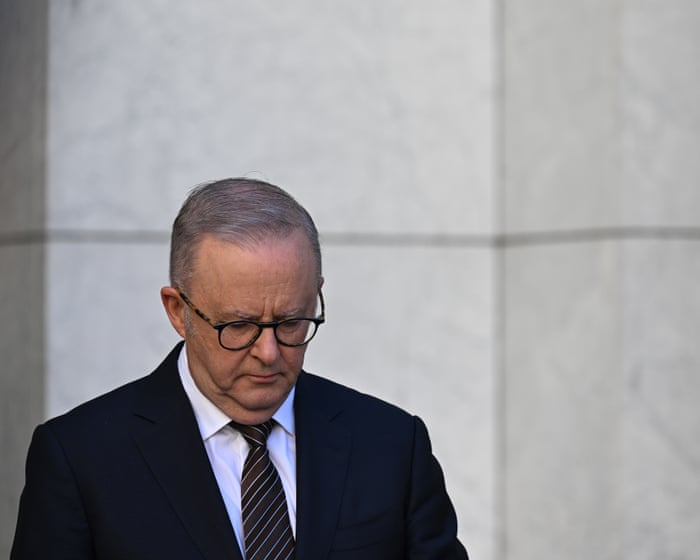
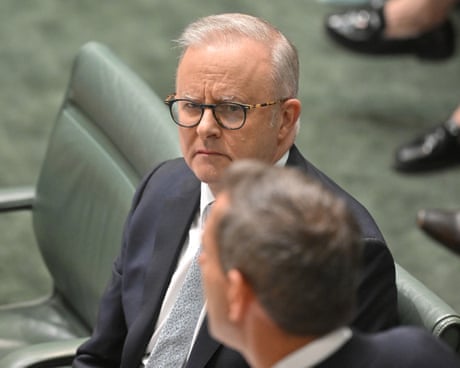
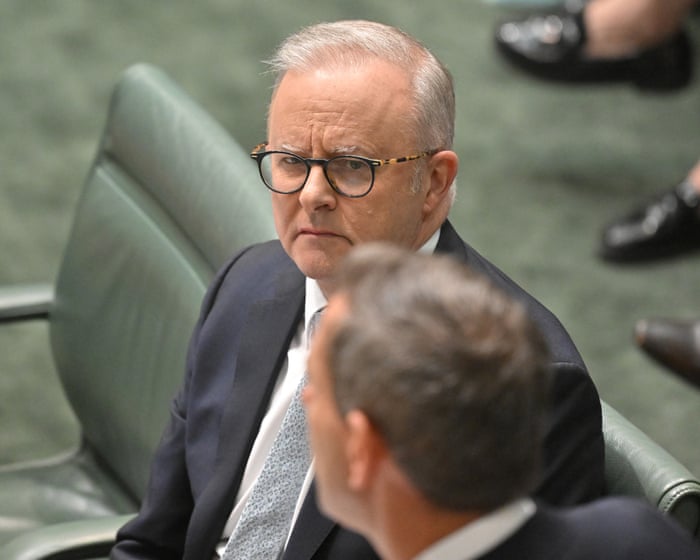
Anthony Albanese has ruled out major cuts to health, education and essential services in December’s mid-year budget update, but conceded savings are required as Labor struggles to curb accelerating inflation.
Amid growing pressure from within Labor’s own ranks, as well as from the opposition and business, Albanese said the Coalition was hypocritical in not supporting existing savings proposals, including the government’s plan to reduce the private health insurance rebate for people over 65.
Continue reading...
© Photograph: Lukas Coch/AAP
© Photograph: Lukas Coch/AAP
© Photograph: Lukas Coch/AAP

© Athit Perawongmetha/Reuters

© Al Drago for The New York Times

© Pool photo by Carlos Jasso

© Grant Hindsley for The New York Times
As next week’s all but certain rate rise looms, there is one thing we can all agree on: the end of war in the Middle East can’t come soon enough
Get our daily political email, free app or daily news podcast
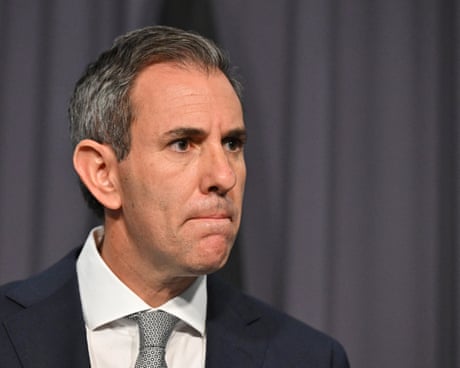
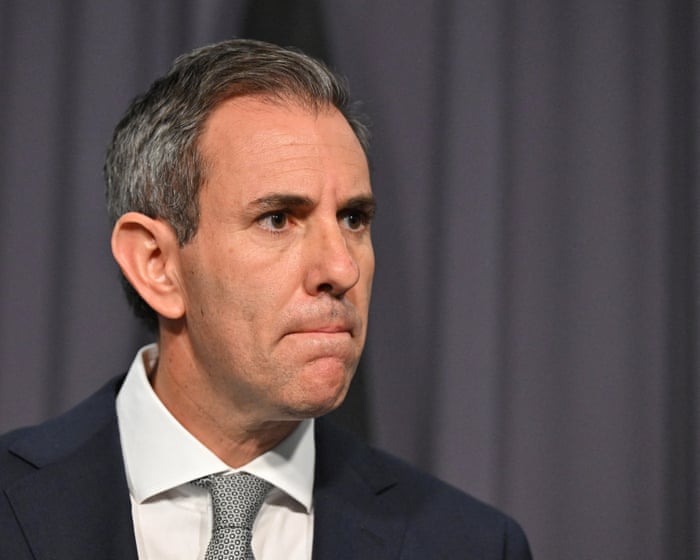
Jim Chalmers is blaming the latest shocking inflation figures on the worsening Middle East conflict, and he has a point.
The trouble is, voters aren’t buying what the treasurer is selling.
Continue reading...
© Photograph: Lukas Coch/Reuters
© Photograph: Lukas Coch/Reuters
© Photograph: Lukas Coch/Reuters
CPI release comes ahead of Reserve Bank decision next week as the Middle East conflict intensifies the cost-of-living crisis
Follow our Australian politics live blog for latest updates
Get our daily political email, free app or daily news podcast
Australia’s headline inflation rate has accelerated to 4.3%, with a key gauge that strips out volatile prices also elevated, sharpening expectations of another interest rate rise next week.
The Reserve Bank of Australia’s preferred measure of consumer prices, called underlying inflation, came in at an annual 3.6% to September.
Continue reading...
© Photograph: James Gourley/Getty Images

© Photograph: James Gourley/Getty Images

© Photograph: James Gourley/Getty Images
Get our breaking news email, free app or daily news podcast
Online hate is spilling into the real world, AFP warns
AFP Commissioner Krissy Barrett began her late-night appearance at the Senate estimates hearing noting “a heaviness that hangs across Australia” after the alleged attack on independent MP Helen Haines.
Lone actors are being motivated by a convergence of personal grievances, mental health vulnerabilities and ideological concerns …
What helped keep us safe in recent times, such as our geography, analogue systems and far away criminals, has been impacted by fully integrated technology, social media and artificial intelligence.
We hear about the devastating impacts of racism from communities every day. But many experiences go unreported or uncounted, and our systems often do not capture the full picture.
This is not about collecting more data to prove racism exists. We already know it does. It is about making inequality visible, holding institutions to account and giving communities greater agency over their data to drive real change.
Continue reading...
© Photograph: Mick Tsikas/AAP
© Photograph: Mick Tsikas/AAP
© Photograph: Mick Tsikas/AAP

© Athit Perawongmetha/Reuters
© Athit Perawongmetha/Reuters

© The New York Times

When MSCI floated the idea of downgrading Indonesia to a Standalone Market, anxiety quickly swept through Jakarta’s financial community. Predictably, alarming headlines immediately pointed to foreign capital flight, stock prices dropped and local regulators quickly moved to calm jittery investors. Yet, treating this stock market tremor as a proxy for Indonesia’s overall economic health represents […]
The post Don’t mistake Indonesia’s MSCI scare for economic weakness appeared first on Asia Times.
The eurozone economy has proved more resilient to the energy price shock of 2026 than economists initially expected, supported by increased investment in artificial intelligence, reduced dependence on fossil fuels and higher government expenditure, according to an assessment published by the European Central Bank on Wednesday, 21 October.
ECB economists Óscar Arce, Gerrit Koester and Beatrice Pierluigi found that structural changes in European energy consumption have reduced the economic consequences of rising oil and gas prices. Stronger international demand for technology equipment and additional public spending, particularly in Germany, have also supported growth.
The findings come as the ECB faces renewed inflationary pressure following disruption to global energy markets caused by the conflict involving Iran, raising questions about the outlook for interest rates and economic activity.
In their assessment of the eurozone’s economic resilience, ECB economists reported that economic output continued to expand despite the sharp increase in energy prices earlier this year.
Excluding Ireland, where economic statistics are frequently affected by the activities of multinational companies, real eurozone GDP in the second quarter was 0.6 per cent above its level at the end of 2025.
The ECB also identified quarterly growth of approximately 0.3 per cent over the preceding four quarters, excluding Irish figures.
These results exceeded earlier expectations that the disruption to energy markets would have a greater impact on European manufacturing, consumer spending and business investment.
Nevertheless, the eurozone’s rate of expansion remains modest compared with its longer-term historical performance.
The ECB’s findings suggest that the economy has become better able to absorb international disruptions without experiencing the immediate contractions that might previously have followed comparable energy price increases.
One of the most significant structural changes concerns energy consumption.
According to the ECB, the eurozone economy is now approximately half as dependent on oil as it was during the early 1990s, measured against economic output.
Greater energy efficiency, the expansion of services and investment in alternative electricity generation have progressively reduced the amount of fossil fuel required to produce economic activity.
The growth of renewable energy has also altered the relationship between natural gas prices and electricity costs.
In Spain, the proportion of hours during which gas-fired power stations determined wholesale electricity prices fell from approximately 80 per cent in 2020 to just over 20 per cent during the first nine months of 2026.
France recorded a similar decline, from approximately 60 per cent to around 20 per cent, supported by its extensive nuclear generating capacity.
Consequently, increases in international gas prices are having a smaller effect on electricity markets in countries with substantial renewable or nuclear generation.
The ECB cautioned, however, that European economies remain exposed to global energy disruptions, particularly through industrial activity and international supply chains.
The international expansion of artificial intelligence has generated an additional source of demand for European manufacturers and technology companies.
Investment in computing infrastructure, digital services and specialised equipment has increased demand for products supplied by European businesses.
According to the ECB, global trade has performed considerably better than expected at the end of 2025.
The latest projections indicate international trade growth of approximately 4.7 per cent in 2026, compared with the 2 per cent forecast in December.
AI-related investment accounts for part of that improvement.
European manufacturers producing specialised machinery and technology equipment have benefited from increased export orders, while domestic investment in technology has supported economic activity.
However, the ECB found that the effects vary considerably between sectors.
Technology-equipment manufacturers recorded comparatively strong growth in output, employment and new orders.
Software companies performed better in output terms, but the improvement was less evident in employment and new business.
This uneven performance suggests that the economic benefits of the AI investment cycle are concentrated in particular industries.
Fiscal policy has provided another source of support.
The ECB estimates that the expansionary fiscal stance in the eurozone has increased to approximately 0.5 percentage points of GDP, twice the level anticipated in December 2025.
Much of the additional stimulus reflects higher German government spending on defence and infrastructure.
Other eurozone governments have introduced measures to limit the effect of energy prices on households and businesses.
Public investment and expenditure have therefore helped compensate for weakness in areas affected by higher import costs and international uncertainty.
Yet the ECB warned that fiscal support cannot necessarily continue at its present level.
Several eurozone governments face borrowing constraints, while additional public spending can place pressure on national budgets.
The ECB’s assessment comes amid expectations of further monetary tightening as policymakers respond to renewed energy-related inflation.
The central bank must consider whether higher energy costs will remain temporary or begin influencing wages, prices and inflation expectations more broadly.
Additional interest-rate increases could reduce inflationary pressures but would also raise borrowing costs for businesses, governments and households.
The economic recovery remains exposed to potential reversals in global demand, international trade and investment in artificial intelligence.
The ECB’s economists also identified geopolitical escalation and further supply-chain disruption as continuing risks.
Their findings indicate that reduced fossil-fuel dependence has made the eurozone less vulnerable to energy shocks, while technology investment and government spending have provided additional support.
Whether that resilience continues into 2027 will depend partly on the durability of international demand and the ability of European governments to maintain investment without increasing inflationary pressure.

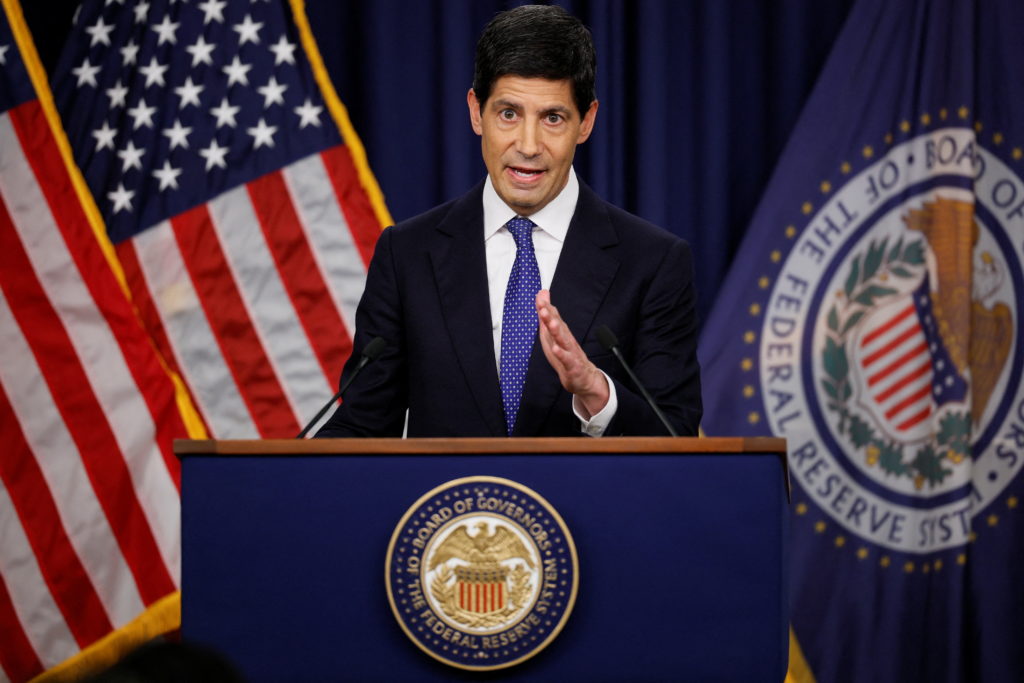
TOKYO — An unwelcome blast of US inflation is blowing across Asia’s markets. September’s hotter-than-expected price data revived concerns that the Federal Reserve will keep rates higher for longer, threatening fresh pressure on currencies, capital flows and economic growth across the region.
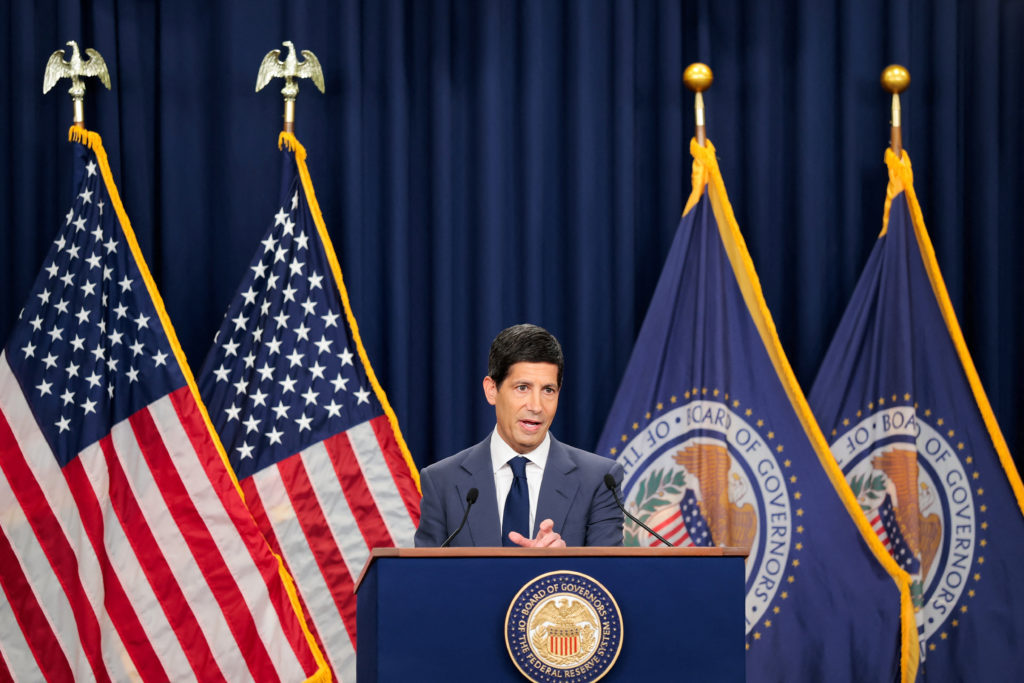
Last month’s 3.7% year-on-year increase in consumer prices didn’t just exceed forecasts. It ensured the Fed is on an even bigger collision course with both the bond market and US President Donald Trump’s White House. It’s arguably the last thing both Trump and US Federal Reserve Chairman Kevin Warsh wanted to see less than three weeks ahead of the mid-term elections.
The post Hot US inflation singes Asia as higher-for-longer Fed rates loom appeared first on Asia Times.
