 Login

PCR interviewed by Tafhim Kiani on Kianistan
PCR interviewed by Tafhim Kiani on Kianistan We discussed the current situation: Iran, Middle East, Russia. https://www.youtube.com/watch?v=7Paju7mGDMU


There is something peculiarly unsettling about a world in which the leaders of three nuclear powers might gather to discuss the future of smaller nations without troubling to invite the nations concerned. It is a diplomatic arrangement with considerable historical precedent, although not necessarily the sort that ought to inspire confidence.
For Askold S. Lozynskyj, a New York lawyer, former president of the Ukrainian World Congress and regular contributor to EU Today, the prospect of Donald Trump sitting down with Vladimir Putin and Xi Jinping raises precisely this concern.
His latest opinion piece, The Thug Summit, published on 23 October, presents an uncompromising interpretation of the proposed trilateral meeting in China. In a wide-ranging conversation with EU Today publisher Gary Cartwright, Lozynskyj expands upon that argument, moving from the peculiarities of Trump’s political personality to the constitutional foundations of American democracy, the future of Europe and the increasingly precarious standing of international law.
The resulting discussion is occasionally caustic, frequently humorous and consistently concerned with a question that extends well beyond the current occupant of the White House: how resilient are democratic institutions when confronted by leaders who regard constitutional constraints as inconveniences?
Watch the full interview with Askold S. Lozynskyj and Gary Cartwright below.
The conversation begins with Trump’s political ascent, which Lozynskyj regards as one of the more extraordinary developments in modern American history.

Buddy Ebsen as Jed Clampett in the American television comedy The Beverly Hillbillies. Credit: CBS Television / Wikimedia Commons (1969 publicity photograph; US public domain).
He recalls the incredulity surrounding Trump’s original presidential ambitions and questions how a politician whose personal conduct had attracted considerable controversy managed to secure such enthusiastic support among conservative Christian voters.
Cartwright introduces a lighter comparison, recalling a photograph of Trump surrounded by his senior advisers in the Oval Office.
The only person missing, he suggests, was Jed Clampett, the fictional patriarch of the American television comedy The Beverly Hillbillies.
Lozynskyj is not inclined to defend the administration’s sophistication. Yet behind the humour lies a more serious argument about the disappearance of independent-minded advisers and the consequences of political loyalty becoming the principal qualification for high office.
“Donald Trump is not a conservative. Donald Trump is a thug,” he declares.
It is an unequivocal assessment, characteristic of Lozynskyj’s commentary, although his criticism extends beyond Trump himself to the Republican Party’s willingness to accommodate his leadership.
Much of the interview centres on the American midterm elections scheduled for 3 November.
Lozynskyj predicts that Democrats will regain control of the House of Representatives and potentially transform the remainder of Trump’s presidency through congressional investigations, subpoenas and impeachment proceedings.
His prediction is emphatic, although the eventual balance of power remains uncertain.
Control of the House would give Democrats substantial investigative authority, although the president would retain his executive powers. Removing him from office following impeachment would still require a two-thirds majority in the Senate.
Nevertheless, Lozynskyj believes the elections could fundamentally alter Washington’s political atmosphere.
“They will tie up Trump like never before,” he argues.
Cartwright raises a more disturbing possibility: could Trump manufacture an emergency to postpone an election or otherwise attempt to prolong his presidency?
“I think he could try, but I don’t believe that he will prevail,” Lozynskyj responds, expressing confidence that America’s constitutional institutions would ultimately resist such an attempt.
The exchange moves naturally towards the events of 6 January 2021, presidential immunity and the effectiveness of the checks and balances upon which the American constitutional system depends.
For Lozynskyj, whose public career has been closely associated with Ukrainian interests, the implications of Trump’s foreign policy are particularly troubling.
His central concern is that negotiations among Washington, Moscow and Beijing could revive the notion that major powers possess an informal entitlement to determine the political and territorial futures of their neighbours.
In his opinion piece, he raises the possibility that Ukraine and Taiwan could become bargaining instruments in a wider geopolitical settlement. These are his warnings about potential outcomes, not established agreements between the three governments.
Yet his criticism of Washington is accompanied by considerable appreciation for Europe’s role in sustaining Ukraine’s resistance to Russia’s invasion.
“Without Europe, Ukraine could never have survived as long as it has survived,” he tells Cartwright.
He also ventures into the British debate over European integration, arguing that the United Kingdom should return to the European Union.
It is an intervention likely to provoke disagreement, but it reflects his broader conviction that collective institutions provide an essential counterweight to unilateral political power.
The discussion also examines political unrest in Europe, changing national identities and the relationship between elected governments and the populations they represent.
Cartwright points to social tensions in European cities and the growing importance of regional identity, including the independence debate in Flanders.
Lozynskyj approaches these developments through the history of democratic protest, citing Ukraine’s Orange Revolution, the Revolution of Dignity and more recent demonstrations over the independence of anti-corruption institutions.
For him, public opposition to governments is not necessarily evidence of democracy’s failure. It can also demonstrate that political authority remains subject to popular consent.
The conversation concludes with international law, the International Criminal Court and the difficulty of enforcing common rules when powerful states refuse to accept external constraints.
Lozynskyj’s observations are deliberately provocative, and his forecasts will be tested by events. But the interview offers something more substantial than another exchange of opinions about Donald Trump.
It is a discussion about the relationship between power and restraint, the responsibilities of democratic institutions and the uncomfortable possibility that the international order may be entering another period in which military and economic strength increasingly determine political outcomes.
As the United States approaches its midterm elections and speculation continues over a possible meeting between Trump, Putin and Xi, those questions are unlikely to disappear.
The full conversation with Askold S. Lozynskyj is available in the video above.
Paul Skalnik was one of the most prolific jailhouse snitches in American history. A new best-selling book, Catch the Devil, chronicles Skalnik's career helping prosecutors secure dozens of convictions—despite being a serial liar and criminal. His cartoonishly long rap sheet included elaborate frauds, multiple grand thefts, and sexual assault of a child; at various times, he passed himself off as a Southwest Airlines executive, a high-powered attorney, and a Vietnam War hero. In July, Reason's Billy Binion interviewed author Pamela Colloff, a staff writer at The New York Times Magazine and reporter at ProPublica.
Q: How is it possible for someone with such an intense history of dishonesty to still earn the state's trust for decades?
A: I think you hit upon the big question of the book, right? Skalnik was a former police officer himself, so he sort of knew how the game worked. When he got to whatever county jail he ended up in, he could size up whoever it was that prosecutors most wanted a conviction against. And he would produce these incredible quote-unquote "confessions." And in return for his testimony about those confessions, he would usually be let free.
You can imagine how there were police and prosecutors who bought this. I think what becomes more difficult as he's used more widely in [Pinellas County,] Florida—where he helped send upward of 40 men to prison—at what point does someone say, "What are the odds that this guy in the jail has a better batting record than our best detectives?" No one ever says that.
Q: The book covers a lot of disturbing cases, but the one central to it is a murder case in Florida. Can you set the scene?
A: There was a 14-year-old girl named Shelly Boggio who was found in a body of water. She'd been stabbed over 30 times, and the assumption was that she'd been sexually assaulted.
The investigation quickly narrows down to a man named Jack Pearcy, who had a long history of violence against women. He was the last person seen with Boggio. When he's interviewed by investigators, he realizes they know too much. So he pivots to saying that he had his housemate—Jim Dailey—with him that night, and that it was Jim who committed this crime. Jim did not have that kind of record, and there's no physical or forensic evidence tying him to the crime, or any motive whatsoever.
Skalnik is brought in very shortly before the trial starts. He is moved in the jail to be close to where Jim Dailey was. Within 24 hours, he says he has procured Dailey's confession—a total stranger who's awaiting trial. It was a story that really played upon jurors' sympathies. He talked about how Jim Dailey had supposedly told him about stabbing Shelly Boggio to death and how she'd been staring at him in this pleading way, but she wouldn't die. It's this horrific image, and he is sentenced to death.
Q: What makes you think Dailey is actually innocent?
A: There have been over 200 people in the U.S. who were sentenced to death who have since been exonerated. We know that jailhouse informants—who are notoriously unreliable—are a factor in 25 percent of those wrongful convictions.
As far as Jim's case, there's no there there. When you see a case with three jailhouse informants, no physical evidence, no motive, and your quote-unquote "eyewitness" is the main suspect in the case? There are a lot of questions.
Q: To me, the secondary theme was that when credible evidence may exonerate someone after a jury has rendered a verdict, it is depressingly difficult to get another chance.
A: I am obsessed with this idea that the system is built to compound its own errors. When new evidence comes out—and there's a lot of new evidence that comes out over the years that really points toward his innocence—you would think that would be enough. For some very good reasons, a jury verdict is sacrosanct. But what you see is that courts really look backward at precedent and jury verdicts rather than forward at new evidence.
Jim gets terrific attorneys in this case—too late. They do incredible work, and it doesn't matter. Too many judges have rubber-stamped this testimony by Paul Skalnik. There's no way for the courts to essentially say, "Hey, let's go back and look at this holistically and see if any of this makes sense." It was shocking to me to see that.
This interview has been condensed and edited for style and clarity.
The post Pamela Colloff on America's Biggest Jailhouse Snitch, Wrongful Convictions, and Criminal Justice appeared first on Reason Magazine.
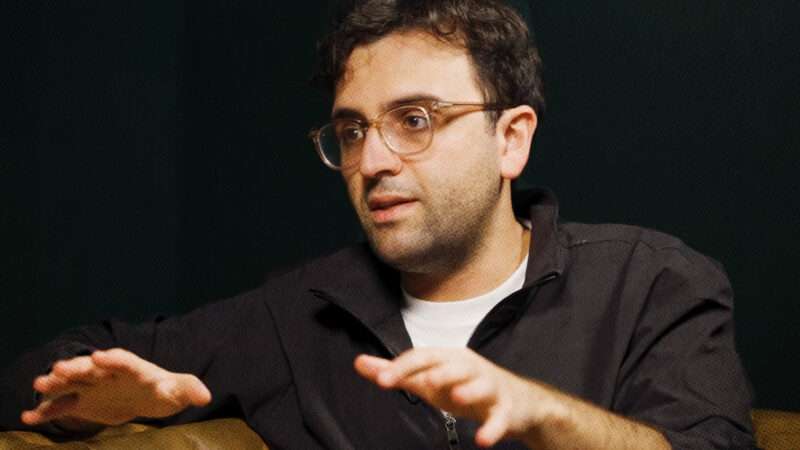
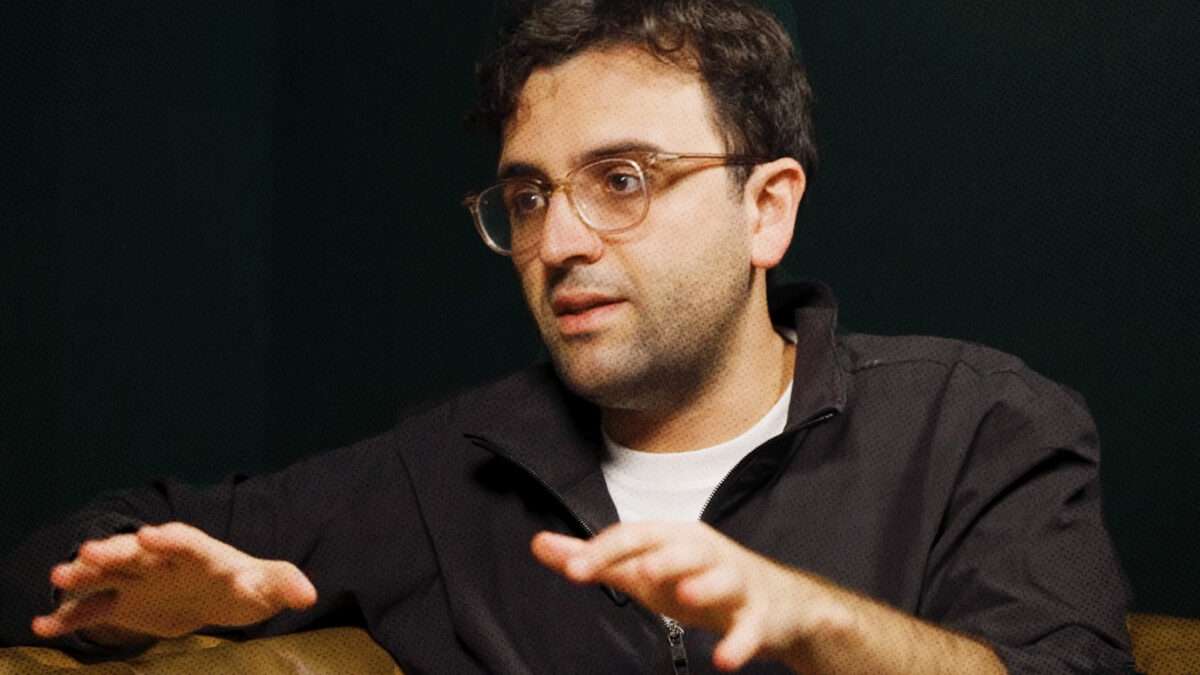
"I think capitalism is a good thing, but I think what we need to contend with and be aware of is that a lot of people are not part of it," Tarek Mansour, co-founder and CEO of prediction market platform Kalshi, recently told Reason's Nick Gillespie. "They don't feel like they're part of it. And that's a reality."
Mansour has set out to change that by making it easier for consumers to experience and participate in financial markets. Kalshi's premise is simple: Mansour says the platform matches traders with differing opinions on the outcome of future events, aggregating the "bits and pieces of information" siloed across the country, so long as that information isn't privileged or obtained illegally.
He's up against a rising number of federal and state lawmakers—not to mention the NFL, traditional sportsbooks, casinos, and other regulated gambling operations—who view Kalshi as yet another gambling app. "As of early 2026, more than 20 lawsuits and cease-and-desist actions are pending across the country, filed by state attorneys general, gaming regulators, tribal governments and private plaintiffs," according to the National Conference of State Legislatures. This includes Utah, whose attorney general, Derek Brown, escalated an ongoing legal dispute with Kalshi on Tuesday by filing a complaint against the prediction market in state district court. In his complaint, Brown called Kalshi an "unconscionable and illegal gambling operation." He accused the company of engaging in a "brazen pattern of unlawful conduct."
At the federal level, Bloomberg Law reported last Friday that Sen. Ted Cruz (R–Texas) is preparing to introduce a bill after the midterm elections that would give state and tribal governments authority to regulate sports-related event contracts offered by prediction markets.
Cruz's state-by-state regulatory regime is exactly the kind of scheme Mansour wants lawmakers to avoid. Mansour recently told Reason that, ideally, there'd be a "federal uniform set of rules that apply across all 50 states." Those rules would then "promote and foster" a "multilateral, peer-to-peer idea," where, for example, someone in California, Oregon, or Washington could trade on an event's outcome based on information supplied by someone in Texas.
Data from the Pew Research Center show Kalshi is incredibly popular nationwide; however, the platform is facing headwinds in Congress from the likes of Reps. Alexandria Ocasio-Cortez (D–N.Y.) and James Comer (R–Ky.) and Sens. Adam Schiff (D–Calif.) and John Curtis (R–Utah), who have questioned whether prediction market platforms can indeed self-police insider trading and market manipulation.
Mansour, who calls insider trading an "unfair dynamic that over time dries up liquidity," also argues that prediction markets are uniquely positioned to self-regulate because trades on Kalshi are "fully transparent," making it "easy to flag" suspicious trading patterns. The platform's users play a key role in that work. Mansour says that in February, when convicted fraudster and former Rep. George Santos (R–N.Y.) tried to engage in insider trading, Kalshi received "a hundred whistleblower complaints within a few minutes."
The company's public commitment to rooting out insider trading on its platform may be laudable. Still, it has done little to dispel the prevailing sentiment among state and federal regulators that Kalshi—and prediction market platforms writ large—is indistinguishable from traditional gambling markets.
Indeed, the legal cases against Kalshi are centered on state regulators' belief that the platforms' sports event contracts are the same as the bets offered by legal gambling operations like casinos and sportsbooks. Kalshi has argued that the U.S. Commodity Futures Trading Commission has exclusive jurisdiction to regulate the kinds of contracts it can offer under federal law, preempting states from exercising any gambling authority over prediction markets.
In March, Arizona became the first state to file criminal charges against Kalshi. Arizona Attorney General Kris Mayes accused the company of "running an illegal gambling operation and taking bets on Arizona elections, both of which violate Arizona law." Not everyone in the state shares Mayes' view. One Arizona resident, Zach, a 35-year-old man who makes a living trading sports-related event contracts on prediction markets, tells Reason he'd "move to another state" if Arizona succeeds in driving out prediction markets.
"There's nothing that is excluding other people from the profits that I'm making right now," he says. "I'm under no obligation to bet on Monday Night Football….I'm able to look at all the markets and decide which ones I want; I'm setting a limit order and just saying, 'OK, if I get my price, then hooray.' If I don't, then that's not something that I add to my portfolio."
Of course, not everyone acts as responsibly. Mansour knows that in any competition, including trading, "some people are going to win," while "some people lose." He believes in "individual freedom" and in the idea that "people should be able to choose" which financial markets they engage in, with "some regulations on irresponsible use" so that companies can't target people who exhibit addictive or destructive betting patterns.
The degree to which Kalshi and other prediction market platforms should be regulated will likely be a high priority for federal lawmakers after the midterm elections and in the next Congress. Mansour appears optimistic that there's enough bipartisan support for what he calls "sensible guardrails." He says there's a "big group" on both sides of the aisle that's "actually pro" prediction market platforms. There's reason to be skeptical of Mansour's claim, given that several members of Congress—such as Sen. Elizabeth Warren (D–Mass.), the ranking Democrat on the Senate Banking Committee—have said prediction markets need to be reined in.
In Mayes' case, her antipathy toward prediction markets might cost her at least one vote in Arizona's attorney general race. Zach says that with Mayes waging a legal battle against Kalshi, he'd have to take that into account "hypothetically, if someone knocked on my door tonight and they want me to vote for Kris Mayes to be reelected."
"If I'm not gonna vote on my own behalf, then who is, right?" he says. (Mayes might not be a fan of Kalshi, but with the platform's penchant for accurately predicting election winners, she can take solace in her current trading position, which shows an 84 percent chance she retains her position.)
Mansour says he's a "free market guy" who wants everyone to "have a shot in the competition." To succeed, he'll have to withstand a host of paternalistic government officials hell-bent on controlling financial decisions made by consenting adults.
The post Kalshi's CEO Wants 1 Set of Rules. The States Want 50. appeared first on Reason Magazine.
Determined to bring home gold and make her family and country proud, Fatima Hassan stepped into the ring for the final fight of the Muay Thai world championships in Kosovo last month.
Despite feeling unwell, the 27-year-old Lebanese fighter from Baalbek pushed through and launched a relentless attack in the final round. With just 30 seconds left, she delivered the decisive blow to secure her second gold medal of the competition.
Fatima had already won gold in the technical discipline before claiming the title in the main Muay Thai competition, making her the first Lebanese athlete to achieve the double at the IFMA Senior Muay Thai World Championships.
But the medals meant far more to her than sporting success. They represented years of dedication, her family's support, and her determination to prove that women can thrive in a sport long dominated by men.
"Honestly, I'd never been as happy as I was then. I'd worked towards this dream for so long," Fatima tells The New Arab.
Fatima's father introduced her to sport at a young age, encouraged her to try different activities, and taught her the basics of self-defence. She eventually joined a gym near his workplace, where she discovered Muay Thai.
"I didn't really know much about it at the time. They told me it was a nice sport and encouraged me to try it. I went, tried it and loved it," she continues.
At first, she had no ambitions to compete. She simply enjoyed training, but her coaches soon noticed her skills and encouraged her to enter her first competition.
"It hadn't even crossed my mind. I wasn't interested in fighting or hitting people. I didn't like that sort of thing," she recalls.
Her father encouraged her to try it, and after watching another Lebanese female fighter compete, Fatima decided to take the plunge.
She won all three of her first fights, giving her the confidence to pursue Muay Thai more seriously.
But not everyone understood her choice.
As a woman who wears the hijab, Fatima encountered comments from people who considered combat sports unsuitable for girls.
"As long as my father was happy with what I was doing and supporting me, I didn't care what society said or what anyone else thought," Fatima says.
"People would say it was a sport for boys, that I was behaving like a boy, or ask how I could play such a sport when it wasn't meant for girls. But none of it affected me. I loved the sport, and that was what mattered."
Her family's acceptance also took time. Initially uncomfortable with the idea of her competing, they gradually came to understand the sport as they watched her train and fight.
Today, she says, they are among her biggest supporters.
Fatima's road to the world championships was not straightforward. She had stopped competing for three years because of injuries, although she continued to train and teach Muay Thai.
When the opportunity to compete in Kosovo came along, she knew it was a chance to fulfil a dream she had pursued for years.
Despite her experience, she had only three months to prepare specifically for the tournament.
She worked with several coaches, sought help from a physiotherapist and a doctor, and focused on preparing mentally to return to competition.
She also followed a strict routine, running every day and keeping up with her exercises.
"I went there feeling comfortable and confident. I knew I wanted to come back with an achievement that reflected all the work I'd put in. I kept telling myself that I was going to compete, win and come back with the result I wanted," she tells The New Arab.
Fatima competed in two disciplines: the technical competition and traditional Muay Thai, the main IFMA discipline.
The technical category, in which she competed for the first time, focuses on speed, movement, and technique rather than full-force contact.
She secured her first gold medal there. But the moment she stepped up to receive it stayed with her most.
"When I saw the Lebanese flag being raised, it was a completely different feeling. I actually started crying. I felt such pride. I can't really explain what went through me, but I remember thinking: I want to experience this feeling again in the main competition," she says.
The next day, she entered the main competition with a second gold medal in sight.
Friends and family back home followed her progress, while Lebanese and Arab supporters in Kosovo gathered to cheer on their athletes.
Fatima was also unwell. She had been sick for the three days leading up to the final, with a cough and difficulty breathing.
With each fight consisting of three three-minute rounds, she feared her condition could affect her performance.
"I knew this was my dream, and I was so close to achieving it. This was my last fight, and I had the chance to win a gold medal and make history for Lebanon," she shares.
When she entered the ring, she put her trust in God and focused on the fight. She spent the first round assessing her opponent before becoming more aggressive in the second.
"I was exhausted and struggling to breathe, but I wasn't thinking about that. My mind was focused on winning. The adrenaline was carrying me through."
By the third round, Fatima had decided she needed to finish the fight. Seeing her opponent struggle, she kept attacking, landing powerful punches until she knocked her out with about 30 seconds remaining.
"I had fought over the previous four or five days, competing every day, and I had made it all the way to the final. I told myself that this last fight had to be mine, and I did it," she says.
The two gold medals culminated years of training, setbacks, and a dream she refused to abandon.
"Honestly, I'd never been as happy as I was then. I'd worked towards this dream for so long," she says.
"This was the final dream I had set for myself: winning a world championship."
The physical toll became clear after the fight. Fatima said she struggled to breathe for around three and a half hours after leaving the ring and remained unwell for about a week.
But her focus had been on bringing two gold medals home to Lebanon.
For Fatima, the achievement also highlighted the challenges women athletes in Lebanon face, where she says support remains scarce and male athletes tend to receive more recognition.
"There is practically no support. If someone is able to support themselves, or if they find someone willing to support them, that's already a very good thing," she says.
"I have to be strong and fight for every single achievement I make. And I'm not just talking about one fight. I have to fight for everything."
She believes women are just as capable as men, but their achievements are too often overlooked.
"Look at what I've achieved. No male athlete has done what I've done in this particular category. A woman has achieved it. I'm the first Lebanese athlete to do this, and I think people should pay attention to that. Why shouldn't they recognise women as well?"
Fatima hopes her success will encourage other girls to pursue their ambitions without allowing social expectations or fear of criticism to hold them back.
"I want girls to believe in themselves and have confidence in themselves. Set yourself a goal and pursue your dream," she shares.
"Whatever you do, people will criticise you. But when you succeed, everyone will applaud you and celebrate your achievement. So go after your dream and work towards it. Believe in yourself, have confidence, and give yourself the strength you need. If you do that, I promise you, you will achieve incredible things."
Fatima's achievement carries particular meaning against the backdrop of years of conflict and uncertainty in Lebanon. She says many young people have struggled to imagine a future for themselves amid the country's difficulties.
"We've all felt at times that we can't do anything anymore, that we can't achieve our dreams or build our futures. I think all of us young people, girls and boys, have felt that," she tells The New Arab.
We're trying to pursue our dreams, our goals and our futures, but then everything comes to a standstill because of what's happening in the country," she adds.
Fatima says she eventually stopped following the news as closely, choosing instead to concentrate on her training and future.
"Despite everything we've been going through, I continued training and working towards my goals," she says.
"When I stood there and received the medals, I was overwhelmed. I tried not to cry because there were cameras around, but I felt that Lebanon deserved this. There is so much talent in Lebanon, and we are capable of achieving so much."
Looking ahead, Fatima hopes to fight one or two professional bouts, potentially competing for a title belt, before ending her competitive career.
She also plans to focus on architecture and develop her own gym, where she hopes to train a new generation of young fighters.
Louay Faour is a journalist at The New Arab focusing largely on the Levant, with a particular interest in Lebanese affairs
Follow him on X: @LouayFaour


As Israel’s genocidal war on Gaza began in 2023, people around the world found different ways to express their solidarity with Palestinians. From wearing the keffiyeh to sharing watermelon emojis, these acts of solidarity took many forms.
For paediatrician Dr Abdul Qader Ismail, it was a poppy-shaped badge.
Alongside his work treating children for the NHS and writing picture books, Dr Abdul created the Palestine poppy badge shortly after Israel's war began in the besieged enclave. The badge gave people a way to show support for Palestinians at a time when expressions of solidarity faced growing scrutiny.
"I wanted to take a symbol that was beloved in the West, given the West's integral role in the suffering and injustice endured by the Palestinian people — from the Nakba, and even before it, to the present day, including the current genocide," Dr Abdul tells The New Arab.
Pinned proudly to his chest as he speaks, the poppy badge features the colours of the Palestine flag. He designed the pin himself, drawing inspiration from other designs he saw online.
For Dr Abdul, the poppy’s associations with remembrance, peace and the human cost of war make it a particularly fitting symbol for Palestine.
"If the poppy is there to remember those who fell in war, those who suffered because of war, and to symbolise peace and an end to violence and injustice, then I think Palestinians, who have suffered immensely, deserve the poppy just as much as anyone else," he adds.
He stressed that the badge was not intended to provoke division or hostility towards anyone. "It's not meant to be a symbol against anyone. It's not meant to be something that causes division or hate or anything like that," Dr Abdul shares.
In Britain, the red poppy is closely associated with Remembrance Day, when people honour the service and sacrifice of armed forces members who died in conflict. Over time, it has also become a symbol of national remembrance, and its use in political campaigns has sometimes sparked controversy.
But the poppy's significance extends beyond Britain. Dr Abdul highlighted that it is also a national symbol for Palestinians, arguing that this connection has been forgotten. He also pointed to the tens of thousands of Palestinians who, he said, fought alongside the Allies during the Second World War, as well as the poppy’s longstanding use in pro-Palestine activism.
Despite Dr Abdul having made the badge in December 2023, it has now caught the attention of right-wing media, who are accusing the doctor of "hijacking" Remembrance Day.
"I suppose like any media outlet, what they want is to publish a juicy story that gets them more readers and more attention and causes anger and debate, and so I suppose that's what media does, isn't it," Dr Abdul says about the backlash.
He strongly rejected any suggestion that he was anti-Semitic, pointing to his support for Jewish Green Party leader Zack Polanski and his longstanding professional relationships with people of different faiths and backgrounds.
He said he had joined the Green Party specifically because of Polanski's outspoken support for Palestinians and his opposition to conflating anti-Zionism with anti-Semitism.
"Whenever people have tried to show support for Palestine, it's always framed by those who don't like it, that you are somehow a terrorist sympathiser or supporter, that you are anti-Semitic, that you're pro-violence, you're anti-peace," the doctor adds.
"It's always framed in that way to silence people, to stop them from speaking out, to stop them from showing their support for the Palestinian people, and this is no different than that."
While he had anticipated some backlash and personal attacks, Dr Abdul was surprised that the badge had attracted attention nearly three years after its creation.
The controversy, however, has had an unexpected consequence — a sharp rise in sales.
"Since these articles have come out… its sales have gone through the roof to the extent that I've actually run out of stock now," the doctor explains, noting that the sales within the last few months had "dried up."
He said the badge has attracted buyers from a wide range of backgrounds, both online and at pro-Palestine events, with interest extending well beyond Muslim and Palestinian communities.
"I can see the names of the people who are buying from me... They are from all kinds of backgrounds," Dr Ismail explains.
"There's a lot of support for this. People like the badge, people like the concept, and people recognise it for what it is: a symbol of peace and a symbol for showing your support for Palestine and the Palestinian people," he added.
Like the books he has written, the badge itself is not-for-profit, with proceeds going toward producing more badges and supporting charities working on the ground in Palestine or educating people about the cause.
Reflecting on the backlash, Dr Abdul acknowledged that anticipating criticism and experiencing it firsthand are two very different things, as he continues to navigate the attention his work has drawn.
"If [right-wing press] didn't want the badge to be sold or known about, they've done the exact opposite by writing articles about it," Dr Abdul concluded.
Anam Alam is a staff writer at The New Arab. She frequently writes about human rights and social issues, including women's rights and sex education
Follow her on X: @itsanamalam


Earlier this year, during an appearance on Kareem Rahma’s popular Subway Takes show, Jasper Craven explained line-crossing ceremonies, in which sailors celebrate first crossings of the equator. In US naval history, line-crossing ceremonies have at times involved violent hazing. But they have also involved pageantry, ritualistic performances of masculinity and femininity that tip over into drag. “Young men want love, support, community,” Craven said. “The military provides a permission structure to show love, often in very pure ways.”
It’s a characteristic insight from Craven, a freelance reporter who has made a singular beat from the intersection of masculinity and the American military. In his magazine features, Craven has scrutinized Defense Secretary Pete Hegseth’s opposition to women in the armed forces via Hegseth’s undergraduate fits over The Vagina Monologues, and profiled Bernarr McFadden, a bodybuilder and publisher who oversaw two military schools “to impose his love of physical strength onto American children, the War Department, and the world.” Craven’s recent book, God Forgives, Brothers Don’t, follows some of our most insidious models of masculinity back to the military education programs that have shaped them for centuries.
Craven is a dynamic counterexample to the men he writes about, less interested in bulking up the boundaries of his identity than testing their limits. For a memorable Harper’s feature, he spent six months undercover as an employee of the world’s largest private-security firm. (During his first shift, a supervisor criticized Craven for his non-detachable necktie, which could be used to strangle him.) He is at once stridently critical and deeply compassionate. (He is also, as you’ll learn, deeply and truly funny.)
“There are myriad other ways to prove your manhood, and they’re not simply being emotionally vulnerable or non-violent,” Craven told an interviewer earlier this year. “You can actually fight for things: fight for peace, be a little risky, be a little reckless, break the law, put your body on the line. If it’s around a morally sound mission, that can feel incredibly validating.” I don’t take a lot of heart from the men Craven writes about, but I take some heart from his work.
—Brendan Fitzgerald
Peacham, Vermont.
The sluiceway at Gull Pond in Wellfleet, Massachusetts; Tom’s Diner in Brooklyn, New York; The St. Johnsbury Athenaeum in Vermont’s Northeast Kingdom.
My folks, both filmmakers, shielded me from television and other mainstream entertainment as a child. Much as I resented their restrictions at the time, they forced me to troubleshoot my taste through the physical media available in our home, a beautiful process of discovery tinged by family lineage that I wish was still widely practiced. Nothing got me more excited than the films of Charlie Chaplin. I’ve consumed all his films, and The Great Dictator is my favorite. It is what much of my journalism aspires to be: narratively compelling, funny, and unflinching.
I’ll take any time on the weekend. On workdays: I like the mornings for research and making calls, and evenings for writing. To me, the midafternoon is almost always a slog.
Guessing what time it is without a watch.
I love Cold War ephemera. My two favorite gifts are a vintage poster of Dr. Strangelove and a Vietnam-era Snoopy Zippo.
Negroni and a cheeseburger at Long Island Bar.
Sound. Ideally jazz or a film score. I wrote my book about military masculinity mostly to the work of Bill Evans, Pharaoh Sanders, and the soundtracks from Jackie, Do the Right Thing, One Battle After Another, and Ken Burns’s The Vietnam War.
On bike rides.
Hauling a golden gorilla statute across America for a crypto concern during COVID.
New York City’s Prospect Park, my clawfoot tub, the bed.
Disney Adult YouTube vlogs. Still haven’t emerged.
The Baffler, Harper’s, The New York Review of Finance.
Evan Esnos’s 2017 New Yorker piece on the ultra-rich doomsday preppers. Wildly prophetic and totally bonkers.
Fires in the Night: The Earth Liberation Front, the FBI, and a Secret History of Eco-Sabotage by Matthew Wolfe. Reads like The Italian Job or any other great caper movie: a political prophecy of ragtag bandits that is tense, propulsive, and brilliantly reported.
Probably my Harper’s dispatch on my six months undercover as a security guard.
Watching a movie or schvitzing at The Wall Street Bath & Spa.
Right now, Don DeLillo.
Tenacious. Hyperaggressive. Amped.
90 Day Fiancé.
Like any good reporter, I’m very nosey, so probably superhuman eavesdropping. Lost about 20 percent of hearing in my right ear when a speaker blew out at a college party. Would love that back, and then some.
I’ve got the curiosity of a cat, but I often don’t land on my feet.
I’ll either go on a bike ride or veg out on YouTube. The duality of man.
A hanging chad ballot. The EV Hummer. Some Trump steaks. An AR-15. My medical bills after I fell off my bike.
I am someone who writes anywhere and everywhere. Amtrak. Delta. Starbucks. My bed. The Wertheim Room at the New York Public Library has been the best of them all.
Jasper Craven is a freelance reporter covering men and the military for outlets including Harper’s, The New Yorker, New York, Wired, The Baffler, and The New York Times. He’s also the author of a new book for Simon & Schuster about the military’s influence on masculinity, entitled God Forgives, Brothers Don’t.
Following his interview with EU Today, Felix Jeff Vulis discusses his outstanding financial claims, his relationship with Kazakhstan and why he intends to bring the matter to the attention of President Kassym-Jomart Tokayev.
For more than three decades, Felix Jeff Vulis has maintained close professional ties with Kazakhstan, a country whose transformation into a major international mining and industrial economy he witnessed firsthand.
His relationship with Kazakhstan began in the 1990s, when he helped introduce the country’s economic potential to American investors. In 2001, he joined Eurasian Natural Resources Corporation (ENRC), eventually becoming Chief Operating Officer and then Chief Executive Officer.
Under his leadership and that of his colleagues, ENRC expanded internationally, listed on the London Stock Exchange in 2007 and entered the FTSE 100, becoming one of Kazakhstan’s most prominent industrial companies.
But the relationship between Vulis and the group that subsequently became Eurasian Resources Group (ERG) has taken a different direction.
In a September interview with EU Today, Vulis described his years at ENRC, the challenges of corporate governance and the impact of the British Serious Fraud Office investigation, which ended in 2023 without charges.
He also raised a question that had remained largely outside public discussion: financial and contractual obligations that he believes ERG and related entities have failed to honor.
The first interview concluded with Vulis maintaining that ending a corporate position would not eliminate previously established financial obligations.
Now, in this proposed continuation, Vulis addresses the outstanding claims more directly and explains why he intends to seek the attention of Kazakhstan’s highest political authorities.
EU Today: In your previous interview, you spoke about financial obligations that you believe remain outstanding. What exactly are you referring to?
Felix Vulis: Throughout my many years with ENRC, I held significant executive responsibilities and worked under various contractual and financial arrangements.
My position is that certain obligations arising from those arrangements have not been fulfilled. These matters include remuneration and other financial entitlements associated with my professional relationship with the group.
I believe the relevant documentation should be reviewed and the legitimate outstanding obligations settled.
EU Today: Are we talking about a substantial amount of money?
Felix Vulis: I would prefer not to discuss specific figures publicly at this stage. There are financial calculations, contractual documents and correspondence that need to be considered.
This is not simply about a number. It is about respecting agreements and commitments.
EU Today: Has ERG been given an opportunity to resolve these matters privately?
Felix Vulis: My preference has always been to resolve outstanding issues through professional discussions rather than public confrontation.
I believe that an agreement remains possible if the relevant parties are prepared to examine the documentation and engage constructively.
But after so many years, I also believe that unresolved obligations cannot simply remain unanswered indefinitely.
EU Today: You have indicated that you intend to bring this matter to the attention of Kazakhstan’s President, Kassym-Jomart Tokayev. Why?
Felix Vulis: Because Kazakhstan is not an ordinary country in my professional life.
My relationship with Kazakhstan began long before I joined ENRC. I have spent decades working with its industries, institutions and people.
I have enormous respect for the country and its economic achievements.
At the same time, the Republic of Kazakhstan is an important shareholder in ERG. I believe that shareholders, particularly those representing a sovereign state, have a legitimate interest in ensuring that companies associated with them respect their financial and contractual commitments.
I intend to inform President Tokayev about my situation and explain why I believe these outstanding obligations deserve attention.
EU Today: Are you asking the President to intervene personally in a private financial dispute?
Felix Vulis: I am not asking the President to act as a judge or to assume responsibility for obligations that legally belong to a corporate entity.
I am asking for attention to a matter that I believe deserves a fair and professional review.
Kazakhstan has worked hard to establish itself as a reliable destination for international investment. That reputation depends, among other things, on confidence that legitimate business commitments will be respected.
EU Today: Do you believe the matter could damage Kazakhstan’s international reputation?
Felix Vulis: I sincerely hope it does not.
Under President Tokayev, Kazakhstan has made important efforts to strengthen its international standing, attract foreign investment and build confidence among its economic partners.
I recognize and appreciate those efforts.
However, when a former chief executive of one of the country’s most internationally recognized industrial groups raises unresolved financial claims, questions can arise about corporate governance and the treatment of contractual obligations.
I believe the best way to avoid unnecessary reputational questions is to examine the matter fairly and resolve legitimate claims.
EU Today: You are an American citizen. Could this matter also be raised in the United States or Europe?
Felix Vulis: As an American citizen, I have the right to protect my legitimate financial and contractual interests through the appropriate legal channels.
If a reasonable settlement cannot be reached, I intend to explore every lawful avenue available to me, including bringing the matter to the attention of relevant European institutions in Brussels and appropriate authorities in the United States.
That may include the US Department of State and the US Department of the Treasury, where there is a relevant basis for doing so.
I would much prefer that such steps prove unnecessary.
EU Today: Would you also approach European political institutions?
Felix Vulis: I reserve the right to raise the matter with appropriate European institutions, including the European Council, through lawful procedures and established channels.
My objective would be to explain my position and seek appropriate consideration, not to turn a private commercial matter into an international political confrontation.
EU Today: Some people might interpret these statements as pressure on ERG. How would you respond?
Felix Vulis: I am simply explaining the options that may be available to someone seeking to protect his contractual rights.
I have no interest in harming Kazakhstan or creating unnecessary difficulties for its international partners.
But I also do not believe that a person should be expected to abandon legitimate financial claims simply because the other party is a large and influential corporation.
EU Today: Has this experience changed your opinion of Kazakhstan as a place to do business?
Felix Vulis: No. My respect for Kazakhstan remains unchanged.
I still believe it has extraordinary economic potential, particularly in mining, critical minerals, energy, infrastructure and industrial development.
Its strategic position between Europe and Asia creates opportunities that extend far beyond the extraction of natural resources.
The country has the industrial experience, human capital and geographic advantages necessary to attract significant long-term investment.
That is precisely why I believe questions of contractual reliability and corporate governance matter so much.
EU Today: What message would you like President Tokayev to take from your letter?
Felix Vulis: That I remain a friend of Kazakhstan.
I am proud of the work we accomplished there, and I appreciate the efforts of the President to strengthen the country’s international credibility.
I hope the relevant parties will examine my claims seriously and help facilitate a fair resolution within the appropriate corporate and legal framework.
The strongest message Kazakhstan can send to international investors is that legitimate commitments are respected and contractual obligations are fulfilled.
EU Today: What would you say directly to ERG’s leadership today?
Felix Vulis: I would say that there is still an opportunity to resolve these matters professionally.
We have a long shared history. I spent an important part of my life helping build this company into an internationally recognized industrial group.
I would prefer to conclude our outstanding business through dialogue, mutual respect and fulfillment of legitimate obligations.
But I also intend to protect my rights.
I believe the responsible course is to sit down, review the facts, address the outstanding financial questions and reach a fair conclusion.
EU Today: What would you say to your former employees in Kazakhstan?
Felix Vulis: Thank you.
People sometimes talk about corporations as if corporations build factories.
They don’t.
People build factories.
People operate furnaces. People go underground. People run power stations. Engineers solve problems at three in the morning.
Whatever disagreements exist today cannot erase what those people accomplished.
I remain extremely proud of having worked with them.
EU Today: After years of silence, why should ERG believe that this time is different?
Felix Vulis: Because I am speaking now.
For years I chose discretion.
That was a conscious choice, not an inability to speak.
I continue to believe that a negotiated solution is better for everybody: for me, for ERG, for its shareholders and for everyone associated with our shared history.
But negotiation requires two sides.
EU Today: What exactly do you want?
Felix Vulis: A table.
The appropriate representatives.
The documents.
A serious discussion about everything that remains outstanding.
And then a comprehensive settlement that allows everybody to close this chapter.
EU Today: An apology?
Felix Vulis: No.
A solution.
EU Today: Revenge?
Felix Vulis: Absolutely not.
Revenge is emotional.
This is business.
EU Today: And if ERG refuses?
Felix Vulis: Then I will continue to defend my rights through every lawful mechanism available to me.
And where I am legally entitled to speak about my own experience, I reserve the right to do so.
EU Today: Is that a threat?
Felix Vulis: No.
It is clarity.
There is still an opportunity to resolve this privately and professionally.
I would prefer that.
After more than twenty years of shared history, I think sitting around a table is a much more intelligent ending than spending the next several years sitting opposite each other in courtrooms.
EU Today: If the people running ERG read only one sentence from this interview, what should it be?
Felix Vulis: Call me.
Let’s sit down and finish this properly.


