❌

Reading view

‘Let me die’: tortured migrants and rescue ships face off against EU-sponsored Libyan forces

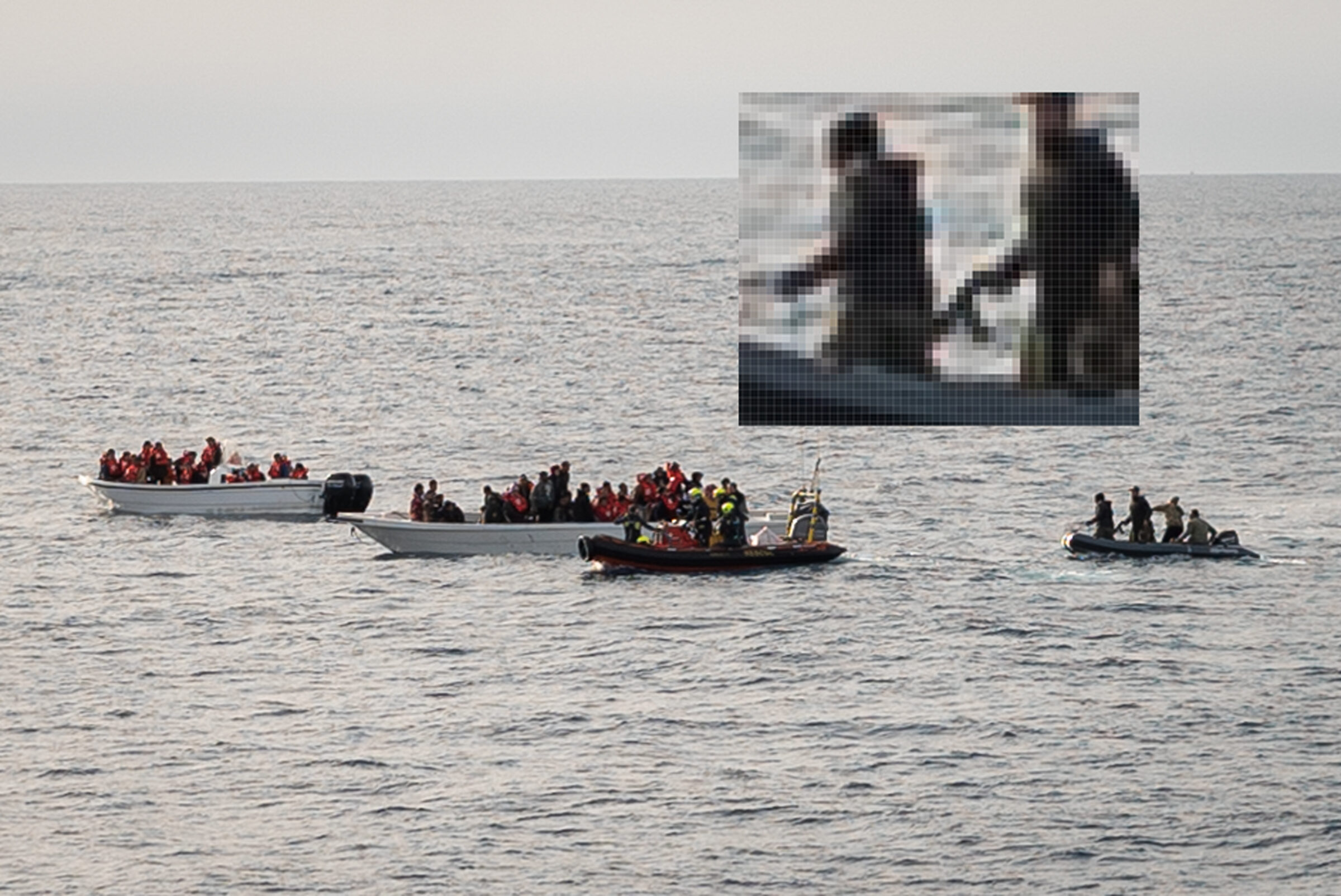
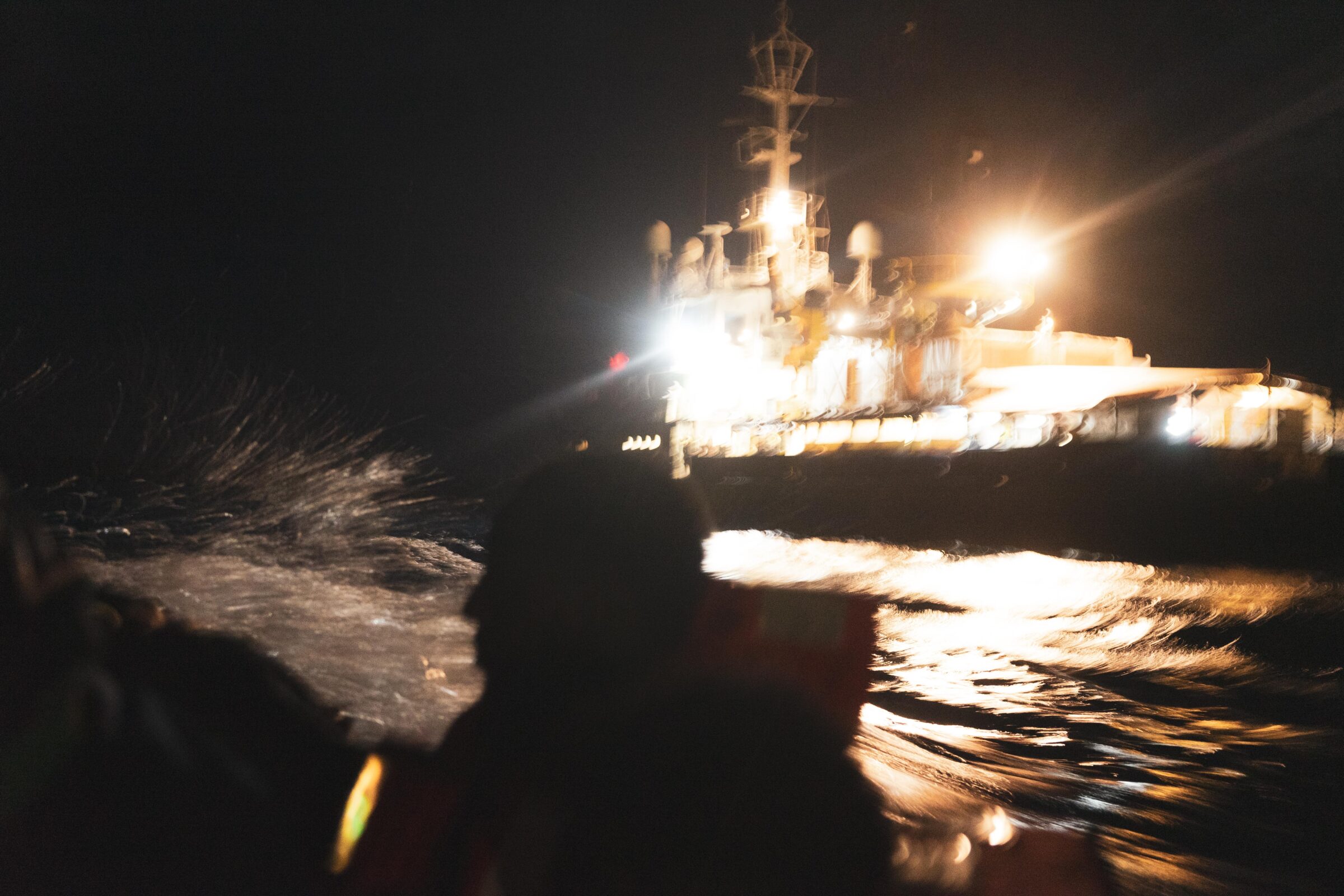
When Sulaiman saw the Humanity 1 approaching, he thought to himself: “if they are Libyans, let me die. I will not go back there.”

The 25 year old Nigerian man is one of many rescued by the German NGO SOS Humanity on Tuesday (27 October) to have escaped living hell in Libya, at the hands of a regime paid by the EU to keep migrants away from its borders.

“I was in prison for one year, for no reason,” said Sulaiman, whose name has been changed to preserve his anonymity. “Any time in the morning they come to distribute food, there are beatings. No one lets you go without a beating,” he told EUobserver.

Every day he’d subsist on one small slice of bread in “a cage for 100 people, where there are all skeletons,” he described with tears in his eyes. 

Sulaiman had tried to leave Libya twice before on small boats, but each time he’d been pulled back to land by violent militias, one of whom he described to be an ‘official’ authority. 

Data from the International Organisation for migration (IOM) and the UN found over 200,000 people to have been illegally intercepted in the central Mediterranean and returned to Libya since 2016. 

And like many other search and rescue organisations, SOS Humanity’s own work has been significantly impeded by Libyan groups – whether they be the so-called Libyan coast guard or paramilitary groups known for hijacking small migrant boats in open sea to rob everyone on board and pull them back to illegal detention facilities.

Men, women, families with children, and unaccompanied minors alike are kept in prisons until they can pay their way out.

“I lied, and told my family I was in Tunisia,” a young boy from Sudan told EUobserver. 

“I knew my mother couldn’t take it, knowing what would be happening to me in Libya,” he said, after having been rescued by SOS Humanity alongside 27 others in the early hours of Tuesday. He is one of 10 children aboard traveling alone. 

This article continues, but the full version is available only to EUobserver.com subscribers. Visit account.euobserver.com/membership

  •  

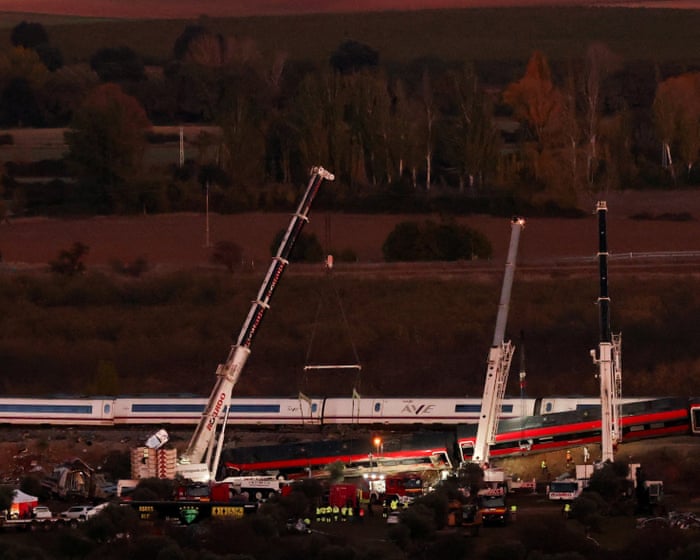
Pedro Sánchez says people of 27 nationalities may be among those killed or injured in Spanish train crash – Europe live

69 people have been confirmed dead but the toll may rise further, with at least 70 people reported missing

Peunte begins by paying tribute to all affected by the incident.

He says that “at present, evidence points to a failure within Adif’s command and control centre,” but adds that investigators are still looking “to clarify what exactly happened.” He says he still has confidence in the system.

Continue reading...

© Photograph: Susana Vera/Reuters

© Photograph: Susana Vera/Reuters

© Photograph: Susana Vera/Reuters

  •  

From Brussels to Belgrade: Europe’s Generation Z Protests Challenge Established Politics

Youth-led demonstrations across Europe are bringing together concerns about housing, education, employment and political accountability. Although the movements differ considerably between countries, their emergence reflects growing dissatisfaction among younger Europeans over economic prospects and their influence on political decisions.

A series of demonstrations involving young people across Europe has developed into a wider political phenomenon, as students and younger workers challenge governments over living costs, public services and their expectations for the future.

Protests have taken place in France, Belgium, Italy, Albania and several other countries, while a student-led movement in Serbia has achieved a particularly consequential political outcome.

In Serbia, nearly two years of demonstrations culminated in a parliamentary election victory for a student-backed political movement, ending the electoral dominance of President Aleksandar Vučić’s Serbian Progressive Party.

The outcome, reported by Reuters on 29 October, has given the movement a prospective parliamentary majority, although final certification of the election results remains outstanding.

Elsewhere, protesters have secured fewer immediate political concessions.

Nevertheless, their campaigns share a recurring concern: that conventional channels of political representation have failed to address problems affecting younger generations.

Economic Pressures Behind the Demonstrations

The grievances vary between countries, but housing affordability, insecure employment, education funding and living costs feature prominently.

A European Parliament youth survey published in February 2025 found that 40 per cent of respondents aged 16 to 30 considered rising prices and the cost of living a priority for the EU.

Almost one-third identified economic conditions and job creation as a principal concern, while education also ranked prominently.

More recent figures illustrate the financial pressures confronting younger Europeans.

According to Eurostat data published in June 2026, 24.2 per cent of EU residents aged 15 to 29 were at risk of poverty or social exclusion in 2025.

That compares with 20.9 per cent for the population as a whole.

These figures do not establish that economic hardship is the cause of every protest. They do, however, provide context for the dissatisfaction expressed by participants.

Belgium’s Students Demand Better Education

In Brussels, demonstrations have focused partly on the condition of schools and the availability of educational resources.

Students have criticised deteriorating facilities, shortages of teachers and government decisions affecting education funding.

Nineteen-year-old student Maya Gourdel told Reuters that peaceful attempts to draw attention to these concerns had attracted little response from political leaders.

Her account reflects a wider frustration among demonstrators who believe that public attention has increased only after protests became more disruptive.

Belgium’s education system is organised primarily at community level, meaning decisions concerning funding, staffing and school infrastructure are divided among different authorities.

The demands of protesters consequently involve both national political debates and decisions taken by regional and community institutions.

France and Italy Face Wider Social Unrest

In France, demonstrations concerning the cost of living and public services have involved students alongside trade unions and other organisations.

Recent protests have also been accompanied by violence, including attacks on commercial premises and confrontations with police.

The involvement of younger demonstrators does not mean that every participant supports violent tactics.

Rather, the events illustrate how movements with economic and political grievances can encompass groups with different objectives and methods.

Italy has experienced similar tensions, particularly in Milan, where demonstrations against rising living costs have followed earlier episodes of unrest.

The Italian government has faced pressure over household expenditure, wages and the affordability of essential services.

These disputes have developed against a background of high energy prices and concerns about the broader economic outlook.

Albania’s Frustration With Political Institutions

In Albania, student-led protests have challenged Prime Minister Edi Rama’s government over alleged corruption, limited employment opportunities and education standards.

Demonstrations that began in Tirana have spread to other cities.

On 29 October, opposition lawmakers disrupted proceedings in parliament following weeks of protests and confrontations between demonstrators and police.

The government has offered measures intended to address economic concerns while condemning violence associated with the demonstrations.

For many younger Albanians, employment prospects are closely connected to the possibility of emigrating.

The perception that professional opportunities depend on political connections or personal networks has become another source of dissatisfaction.

However, the Albanian movement cannot be treated as identical to protests in EU member states, given the country’s different economic conditions and political institutions.

Serbia Shows the Political Potential of Student Movements

Serbia provides the most substantial example of youth-led protest translating into electoral change.

The movement emerged after the collapse of a railway station canopy in Novi Sad in November 2024, which killed 16 people and prompted allegations of corruption and negligence.

Students organised prolonged demonstrations demanding accountability and institutional reform.

Their campaign subsequently developed into an electoral challenge to the governing Serbian Progressive Party.

Preliminary results from the October 2026 parliamentary election indicate that the student-backed list has secured a majority of seats.

However, electoral certification and the formation of a new government remain incomplete.

The movement now faces a different challenge: converting protest demands into administrative decisions, legislation and economic policy.

Its success will be judged not only by the election result but also by its ability to govern.

A Generational Shift, But Not a Single Movement

It would be misleading to describe Europe’s demonstrations as a unified political campaign.

Participants have different objectives, national circumstances and ideological positions.

Some demand increased public expenditure, while others concentrate on corruption, political accountability or employment opportunities.

What connects them is a recurring concern about whether established institutions respond adequately to younger citizens.

The political consequences will depend on whether demonstrations produce lasting organisations, influence elections or secure changes in government policy.

Serbia suggests that student mobilisation can translate into substantial political change.

For governments elsewhere in Europe, the question is whether the grievances driving these movements can be addressed through existing political institutions before dissatisfaction generates further unrest.

  •  

Germany and Italy Clash Over Gas Storage as Europe’s Energy Prices Return to Crisis Levels

A dispute between Germany and Italy over natural gas storage has exposed tensions within the European Union’s energy market, as wholesale prices approach levels last recorded during the 2022 energy crisis and governments confront the prospect of another expensive winter.

Italy has accused Germany of contributing to the latest surge in European natural gas prices by delaying the replenishment of its underground storage facilities, reopening a debate about national energy policies and their consequences for the EU’s single market.

The dispute emerged on 29 October after the European benchmark gas price briefly exceeded €100 per megawatt hour the previous day, its highest level since December 2022.

Germany’s gas storage facilities were just 61.7 per cent full, compared with almost 91 per cent in Italy and an EU average of approximately 75 per cent.

The difference has become politically sensitive because European countries purchase gas in an interconnected market, meaning decisions taken by one major consumer can influence prices paid elsewhere.

Speaking at the Montel Italian Energy Day conference in Milan, Alessandro Noce, director general for energy markets and infrastructure at Italy’s Energy Ministry, criticised Germany’s approach to preparing for winter.

According to Reuters, Noce argued that Italy had spent €300 million securing additional gas reserves, only to face higher market prices as Germany attempted to replenish its comparatively depleted stocks.

He also questioned whether Germany had delayed purchases because of preparations to privatise energy companies involved in the storage process.

Germany’s Economy Ministry did not immediately respond to the criticism.

Germany’s Storage Decisions Under Scrutiny

The German government’s approach has attracted particular attention because of its role in the operations of Uniper and Securing Energy for Europe (SEFE).

Both companies became important components of Germany’s energy-security arrangements following the disruption of Russian gas supplies in 2022.

Plans concerning their future ownership have coincided with renewed questions about how Berlin balances commercial considerations against the need to maintain strategic reserves.

At the Milan conference, an energy analyst suggested that preparations for privatisation had contributed to delays in storage purchases.

That assessment has not been established as the definitive explanation for Germany’s comparatively low reserves.

Nevertheless, the resulting political dispute demonstrates the difficulties of managing energy security through a system in which national governments retain considerable discretion while their purchasing decisions affect a common market.

Europe’s Gas Market Faces Renewed Pressure

Europe’s latest price increase has several causes extending beyond German storage policies.

Disruptions to liquefied natural gas shipments associated with the conflict involving Iran have constrained supplies from the Middle East.

At the same time, European countries entered the summer storage-refilling period with unusually low reserves following the previous winter.

The EU Agency for the Cooperation of Energy Regulators (ACER) reported that underground gas storage was only 28 per cent full at the end of winter 2025–26.

By 21 October, that figure had risen to 75 per cent, still below historical levels.

In its latest gas-market monitoring report, ACER estimated that disruption linked to the Middle East conflict had added between €18 billion and €33 billion to Europe’s gas-import bill.

The agency also found that American liquefied natural gas accounted for roughly 30 per cent of EU gas supplies, reflecting Europe’s growing reliance on transatlantic energy imports.

Although this diversification has reduced dependence on Russian pipeline gas, it has also increased Europe’s exposure to international competition for LNG cargoes.

European buyers must compete with customers in Asia, particularly when colder weather or geopolitical disruptions increase demand.

EU Storage Rules Face a Test

The disagreement has implications for the European Union’s gas-storage framework.

Following the 2022 energy crisis, the EU introduced mandatory storage requirements intended to reduce the risk of supply shortages during winter.

The arrangements were subsequently extended until the end of 2027.

Under the revised rules, member states retain a 90 per cent storage-filling target but have greater flexibility over when and how it is achieved.

Countries may reach the target between 1 October and 1 December, rather than being bound to the previous 1 November deadline.

Further flexibility is available in difficult market conditions.

These provisions were designed partly to prevent governments from creating artificial demand peaks by purchasing gas simultaneously to meet rigid deadlines.

However, the present dispute suggests that delayed purchases can create another problem if several major consumers need additional supplies as winter approaches.

Germany’s current storage level does not, by itself, establish a breach of EU requirements. The applicable deadlines and permitted exemptions must also be considered.

Italy Seeks Greater Scope for Intervention

The Italian government has meanwhile been seeking permission from the European Commission to use public funds to reduce energy costs for households and businesses.

Rome’s concerns reflect the economic consequences of sustained high gas prices, particularly for industries dependent on energy-intensive manufacturing.

Italy faces a general election expected in 2027, adding a domestic political dimension to the debate over energy subsidies.

Noce warned that prices could rise to between €150 and €180 per megawatt hour if January brings particularly cold weather.

Such an outcome remains a scenario rather than a forecast.

Energy markets will also be influenced by developments in the Middle East, LNG deliveries, industrial demand and winter temperatures.

A European Problem Without a Single National Solution

Europe has expanded its LNG import infrastructure and diversified energy sources substantially since 2022.

However, the latest price increases demonstrate that greater import capacity does not necessarily insulate consumers from global supply disruptions.

The German–Italian dispute also exposes the limits of national energy planning within an integrated European market.

Germany’s storage policies affect its neighbours, just as decisions taken elsewhere influence the price German consumers pay.

The central question for Brussels is whether existing coordination arrangements provide sufficient incentives for governments to safeguard their own winter supplies without transferring additional costs to other member states.

With the heating season approaching, that issue is becoming an immediate economic concern rather than a theoretical dispute about European energy solidarity.

  •  

Dockworkers in 22 Countries Prepare Coordinated Strike Against Arms Shipments Through Major Ports

Trade unions representing workers at 113 ports across five continents are preparing coordinated industrial action on 30 October, protesting against the movement of military equipment through commercial shipping terminals. The mobilisation raises questions about international trade, defence logistics and the growing involvement of organised labour in geopolitical disputes.

Dockworkers’ unions in 22 countries and regions are preparing coordinated strikes and demonstrations on Friday, 30 October, in an international campaign opposing the use of civilian ports to transport weapons and other military supplies to conflict zones.

The mobilisation involves more than 25 trade unions representing workers at 113 ports, according to organisers, with planned actions extending across Europe, North Africa, Asia and the Americas.

Major shipping centres expected to participate include Hamburg, Genoa, Le Havre, Valencia, Algeciras and Piraeus, alongside Morocco’s Tangier Med and India’s Nhava Sheva.

The scale of actual disruption remains uncertain.

Some unions have announced 24-hour stoppages, while others intend to organise shorter walkouts, demonstrations or symbolic protests.

Organisers have suggested that the action could affect more than 40 per cent of Mediterranean cargo traffic and freight worth over $2 billion.

However, these figures represent estimates of potential disruption rather than confirmed losses or cargo volumes that will necessarily be immobilised.

A Campaign Extending Beyond Europe

The initiative originated among dockworkers’ organisations in Italy, France, Greece, Spain’s Basque Country, Turkey and Morocco.

It subsequently attracted support from unions in northern Europe and several countries outside the Mediterranean region.

Among the participating organisations are Germany’s ver.di, France’s CGT Ports et Docks, Ireland’s SIPTU and Denmark’s 3F.

Indian maritime unions have also declared their support, citing the effects of armed conflict on commercial shipping and the safety of seafarers.

The campaign follows an international declaration agreed in Istanbul in May 2026, when dockworkers’ representatives called for ports to remain outside military supply operations.

The organisers argue that commercial transport infrastructure is increasingly being used to facilitate the movement of weapons and equipment to active conflict zones.

Their demands extend beyond any single war, although opposition to arms deliveries connected with the conflict involving Israel and the Palestinians has featured prominently in earlier industrial action.

Italy at the Centre of the Mobilisation

Italy is expected to become one of the principal centres of Friday’s protests.

The Unione Sindacale di Base (USB) has called a nationwide general strike, with demonstrations planned in more than 40 cities.

Port workers are expected to participate in Genoa, Livorno, Trieste, Ravenna, Gioia Tauro and several other maritime centres.

Genoa has previously been associated with protests against the handling of military cargo, including shipments linked to Israel and American military facilities.

However, the port’s representatives have indicated that they expect only limited operational disruption from Friday’s action.

The distinction between planned participation and actual interruption of shipping is important.

Large ports operate through complex arrangements involving terminal operators, subcontractors, transport companies and different categories of employees.

Consequently, industrial action affecting one part of a port does not necessarily bring all commercial activity to a halt.

Greek Ferries Face Disruption

Greece is among the countries where the effects on passenger transport could be more immediate.

Dockworkers, engineers and seafarers’ unions have announced participation in the protests, with Greek ferry services expected to remain suspended for 24 hours.

At Piraeus, the country’s largest port, dockworkers have announced a three-hour stoppage.

Other Greek maritime unions intend to participate in longer strikes.

Disruption to ferry operations could affect travel between the Greek mainland and its islands, demonstrating how a campaign directed primarily against military cargo can also affect civilian transport.

The effects will depend on the precise participation of employees and the arrangements made by port and ferry operators.

Defence Logistics and Commercial Shipping

The planned mobilisation draws attention to the relationship between military supply chains and civilian maritime infrastructure.

Commercial ports are essential to international trade, but they may also handle military vehicles, ammunition, equipment and other cargo connected with defence operations.

NATO members and other states depend on commercial transport networks for certain aspects of military logistics.

Military equipment may be transported aboard commercial vessels or through terminals that also process ordinary goods.

The use of such facilities is not inherently unlawful, and arms shipments may be authorised under national and international export-control arrangements.

Nevertheless, dockworkers’ organisations argue that employees should have a greater role in determining whether ports are used to facilitate military operations.

This creates potential tensions between industrial rights, contractual obligations, national security priorities and government decisions concerning defence exports.

The implications are particularly significant in Europe, where governments are expanding defence production and seeking to strengthen military supply chains.

Any sustained disruption to port logistics could complicate the movement of equipment and components, although the consequences of Friday’s planned action cannot yet be established.

Europe’s Growing Defence Trade

The protest comes as European countries increase military spending and procurement in response to deteriorating security conditions.

According to the Stockholm International Peace Research Institute, Europe became the world’s largest arms-importing region over the 2021–2025 period.

The expansion of defence trade has increased the importance of transport infrastructure capable of handling military equipment.

It has also exposed disagreements over the political responsibilities of companies and workers involved in these supply chains.

For governments, the movement of defence equipment may form part of legitimate security commitments and international assistance programmes.

For participating unions, opposition to particular military shipments is presented as an extension of workers’ rights and their broader political objectives.

These competing positions are unlikely to be resolved through a single day of industrial action.

An Immediate Test for International Shipping

Friday’s mobilisation will provide an indication of how effectively unions can coordinate industrial action across different countries, legal systems and transport networks.

Its practical significance will depend on how many workers participate, which terminals suspend operations and whether shipping companies can maintain schedules through alternative arrangements.

The organisers have demonstrated their ability to coordinate protests across a geographically extensive network.

Whether that coordination translates into substantial disruption to international maritime trade remains to be seen.

For European governments and shipping operators, the immediate task will be to manage any interruption to commercial and passenger services.

The wider question is whether opposition to the use of civilian transport infrastructure for military logistics will become a recurring feature of industrial relations across Europe’s major ports.

  •  

Albania takes anti-riot crackdown cue from France

RT | October 29, 2026

Albania has imposed steep fines on people who take part in violent protests, citing a recent law imposed in France, in an attempt to quell weeks of clashes between police and protesters demanding the resignation of Prime Minister Edi Rama.

Under measures adopted Wednesday, remaining at a demonstration that turns violent will be a criminal offense, even for those not directly involved in clashes. Anyone who “chooses to remain in a crowd” engaged in violence or looting, or is found “concealing their identity,” faces fines of up to 500,000 leks ($6,130), over six-times the Balkan country’s average monthly salary.

Initially sparked by student anger over education costs and deteriorating facilities, the demonstrations have evolved into nationwide protests against inequality, soaring living costs, and cuts to public services.

Citing “urban anarchy” when announcing the crackdown, Rama acknowledged France’s controversial ‘casseurs-payeurs’ (rioters pay) bill, which would hold demonstrators liable for up to €10,000 ($11,160) in damages. The bill passed the French Senate on Wednesday and is now headed to the National Assembly, following weeks of protests and riots in which over 1,300 protesters were arrested in a single day.

Italy has also followed suit. Prime Minister Giorgia Meloni’s government approved measures last week that criminalize “violent participation in a demonstration,” punishable by up to five years in prison and fines of up to €20,000.

In Albania, a “special electronic register” will track suspected offenders, while police gain powers to restrict gatherings near schools, hospitals, and government buildings over potential violence. The measures – which also provide compensation for businesses damaged in the unrest – are already in place and require parliamentary approval within 45 days to remain in force.

What’s behind the protests in Albania?

Anti-government protests in the country began peacefully in May over plans for a luxury resort in the Zvernec nature reserve, a project linked to US President Donald Trump’s son-in-law, Jared Kushner.

By mid-October, the protests escalated into daily clashes with police amid growing anger over corruption, economic mismanagement, unemployment, and failing public services. Demands for Rama’s resignation took center stage, but the prime minister, who has been in power since 2013 and was elected to a fourth term last year, has refused to budge.

The unrest has caused over €2 million in damage, according to official estimates, as rioters torched ministries and attacked police stations, public buildings, and businesses. Clashes flared up again over the weekend, with protesters chanting “Revolution” and “Rama in prison” and police using tear gas, rubber bullets, and water cannons in Tirana.

The Russia blame game

Despite the protests being driven by grievances over domestic matters, Rama blamed the violence on a “hybrid war” by foreign actors, specifically Russia and Iran.

Russia has dismissed the accusations. Foreign Ministry spokeswoman Maria Zakharova suggested last week that Rama should look closer to home. “These are citizens of your own country who took to the streets to protest. Don’t shift your responsibility onto others. Deal with your own domestic problems.”

  •  

Airbus Willing to Join U.K.-Japan-Italy Fighter Jet Project

European aircraft manufacturer Airbus could potentially join a British-Japanese-Italian consortium to build a next-generation fighter jet following the collapse of a highly-troubled French-German project, CEO Guillaume Faury said Wednesday.

The post Airbus Willing to Join U.K.-Japan-Italy Fighter Jet Project appeared first on Breitbart.

  •  

Meloni Condemns 'Shameful’ Release of Alleged Organizer of Milan Riots

Italian Prime Minister Giorgia Meloni bluntly branded a Milan judge's decision to release Youssef Siher, the alleged organizer of the recent violent riots in the city as a "shameful" decision.

The post Meloni Condemns ‘Shameful’ Release of Alleged Organizer of Milan Riots appeared first on Breitbart.

  •  

A Pompeii Wardrobe Left Behind in the Eruption Held a Childhood Charm Necklace and 38 Coins

When the cloud of burning ash and gas rolled into the room, the wardrobe was still standing. The wood took almost twenty centuries to rot away, but by then the ash had hardened around it and kept its shape. It is the same principle behind the plaster body casts Pompeii is famous for. When archaeologists […]

  •  

EU Divided Over New Membership Safeguards as Montenegro Becomes Test Case for Enlargement

Brussels is considering unprecedented restrictions on the rights of future EU members, including the possible suspension of voting rights for serious breaches of European values. France and the Netherlands favour stronger safeguards, while Italy and Austria warn that excessive conditions could undermine enlargement.

European Union governments have begun negotiations over proposals that would allow Brussels to impose additional restrictions on future member states, exposing divisions over how to prevent democratic backsliding without discouraging countries seeking accession.

The discussions, held among EU ambassadors on 28 October, concern draft safeguards proposed by the European Commission for inclusion in future accession treaties.

Montenegro, currently the most advanced candidate in the Western Balkans, is expected to become the first country subject to the proposed arrangements.

The measures would potentially allow the EU to suspend certain membership rights, including voting rights, during a transitional period lasting up to 15 years after accession.

However, the negotiations have revealed disagreement not only over the duration of the safeguards but also over the powers that should be granted to the Commission and the legal thresholds for intervention.

The controversy raises a broader question about the nature of EU membership: whether countries that have completed accession negotiations should immediately enjoy the same institutional rights as existing members.

France and the Netherlands seek stronger guarantees

According to Euronews’ reporting on the ambassadors’ discussions, France and the Netherlands have pressed for stronger guarantees that newly admitted states will continue respecting the rule of law and other EU obligations.

Their position reflects concern that the Union’s existing procedures have proved difficult to enforce against governments accused of undermining judicial independence or democratic institutions.

Article 7 of the Treaty on European Union already provides for sanctions, including suspension of certain membership rights, where a serious breach of European values is established.

However, the procedure involves demanding political and voting requirements.

The Commission’s proposed safeguards are intended to provide an additional instrument specifically applicable to newly admitted members.

They would operate during a defined period after accession and could be activated in response to serious breaches of EU values or the principle of sincere cooperation.

For governments supporting the proposal, the objective is to ensure that reforms undertaken during accession negotiations remain effective after membership has been secured.

Italy and Austria warn against excessive restrictions

Not all member states share this approach.

Italy and Austria, among countries supporting faster integration of the Western Balkans, have warned against imposing conditions that could make EU membership appear provisional or unequal.

Their concern is that candidate countries may face an increasingly complicated accession process even after meeting the formal requirements.

The credibility of EU enlargement depends partly on the proposition that successful reforms will eventually lead to full membership.

If new members are subjected to extensive additional restrictions, political leaders in candidate countries could find it more difficult to justify the domestic compromises required by accession negotiations.

The debate is particularly sensitive in the Western Balkans, where prolonged delays have already generated frustration over the pace of integration.

The challenge for Brussels is to strengthen safeguards without creating a permanent distinction between established and newly admitted members.

A proposed 15-year period

The Commission’s draft institutional safeguard would remain available for 15 years following accession.

This period is intended to permit intervention if a new member reverses reforms after joining the Union.

Yet ambassadors have questioned whether such an extended period can reasonably be described as temporary.

The proposed decision-making mechanism has also attracted criticism.

Under the draft, the Commission could propose restrictive measures that would take effect unless a qualified majority of member states rejected or amended them within two weeks.

This would reverse the usual political dynamic by requiring governments to assemble a blocking majority rather than actively secure support for sanctions.

The proposal could therefore make intervention easier than under the existing Article 7 mechanism.

Critics are concerned that the arrangement would give the Commission excessive influence over the institutional rights of newly admitted countries.

Supporters argue that a more effective enforcement mechanism is necessary precisely because existing procedures have proved difficult to use.

Monitoring could begin before accession

The proposed safeguards are not confined to the period following membership.

The Commission also wants stronger monitoring between the signing of an accession treaty and the date on which a country formally joins.

This period can last several years, during which a candidate government may change and reform commitments may weaken.

Under the draft arrangements, monitoring could include regular assessments, reviews involving existing member states and formal warnings.

As a last resort, accession could be postponed if there were clear evidence that a candidate would not meet the required conditions.

The voting procedure for such a postponement remains unresolved.

These provisions would add another stage of oversight to an accession process that already requires extensive negotiations and the implementation of EU legislation.

Montenegro faces a new uncertainty

Montenegro began accession negotiations in June 2012.

According to the European Commission’s enlargement records, all 33 screened negotiating chapters have been opened and 16 provisionally closed.

Its progress has made the country a leading candidate for the next round of enlargement.

However, its accession treaty may now become the vehicle through which the EU establishes a new framework for future entrants.

The implications extend beyond Montenegro.

Albania, Moldova and Ukraine are also pursuing accession, although they are at different stages of the process.

Any safeguards introduced for Montenegro could influence the terms eventually offered to those countries.

Enlargement becomes a test of EU governance

The Commission’s proposals reflect a wider debate over whether the EU’s institutions can function effectively with substantially more members.

New entrants would participate in decisions concerning the budget, sanctions, foreign policy and the internal market.

Their admission could also affect areas where unanimity remains necessary, potentially increasing the risk of institutional deadlock.

The European Parliament’s research service has identified the proposed safeguards as part of a broader programme addressing decision-making and governance ahead of enlargement.

Negotiations over the draft clauses will continue at the technical level, with ambassadors expected to revisit the matter in November.

The central disagreement remains unresolved.

The EU wants future members to maintain democratic and legal standards, but it must also decide whether those guarantees can be enforced without creating a separate class of membership.

Montenegro’s accession negotiations will provide the first practical test of that approach.

  •  

Meloni’s €26 Billion Budget Tests Italy’s Fiscal Discipline as Election Approaches

Italy’s government has approved a new budget combining tax reductions, household support and defence spending with higher contributions from banks and energy companies. With public debt approaching 140 per cent of GDP, Rome faces difficult decisions over the cost of its political and economic commitments.

Italian Prime Minister Giorgia Meloni’s government approved a €26 billion budget package on Wednesday, 28 October, seeking to ease pressure on households and businesses while maintaining the fiscal credibility of one of Europe’s most heavily indebted economies.

The measures, agreed by the cabinet ahead of next year’s general election, include changes to personal income taxation, support for younger workers and families, and the extension of existing relief programmes.

The government intends to finance part of the package through additional contributions from banks, insurance companies and energy businesses.

However, the budget also exposes the limits of Italy’s financial flexibility as Rome attempts to accommodate higher defence expenditure and energy-security requirements within the European Union’s fiscal framework.

The immediate political challenge is to demonstrate that tax reductions and spending commitments can coexist with efforts to contain public debt.

Banks and energy companies face additional demands

According to Reuters’ report on the cabinet decision, Meloni confirmed that approximately €5 billion would come from banks and insurance companies, while energy companies would contribute a further €700 million.

The measures form an important part of the government’s funding strategy.

Italy’s banking sector has benefited from the period of higher European interest rates, although profitability varies between institutions and has been affected by changing monetary conditions.

The government argues that companies with relatively stronger financial positions should contribute more during a period of economic difficulty.

Meloni said the budget was not directed against any particular sector, while acknowledging that an agreement with financial institutions had not been reached before its adoption.

The financial package also includes an increase in Italy’s financial transaction tax, commonly referred to as the Tobin tax.

Such measures provide the Treasury with additional resources without requiring broad increases in personal income taxation.

Nevertheless, their implications extend beyond immediate revenue collection.

Additional taxation of financial institutions can influence investment decisions, lending conditions and the sector’s willingness to finance domestic economic activity.

The extent of those effects will depend on the final provisions adopted by parliament.

Tax reductions target households and younger workers

A central element of the budget concerns Italy’s personal income tax system.

Meloni announced that the upper threshold of the second income-tax bracket would rise to €55,000 a year, extending preferential treatment to a wider group of taxpayers.

The government estimates that some taxpayers could save approximately €500 annually.

The package also includes employment-related incentives directed towards younger workers, alongside measures to support households and pensioners.

Another politically significant decision concerns vehicle taxation.

Meloni confirmed that an exemption for cars with engines rated up to 80 kilowatts and for motorcycles would become permanent.

According to the government’s estimates, approximately 70 per cent of vehicles currently in use would qualify.

These measures are intended to protect disposable income and encourage economic activity.

However, their overall economic impact will depend on the distribution of benefits, consumer confidence and whether households choose to spend or save the additional income.

Public debt remains the central constraint

Italy’s budget cannot be assessed independently of its debt position.

According to the Bank of Italy’s October economic bulletin, the government expects its public deficit to reach 2.9 per cent of GDP in 2026 before increasing to 3.4 per cent in 2027.

Public debt is projected to reach approximately 138.5 per cent of GDP next year.

Those figures leave Italy particularly exposed to changes in borrowing costs.

Higher yields on government bonds increase the cost of refinancing debt and reduce the resources available for other priorities.

The economic environment offers limited assistance.

The European Commission’s May forecast projected growth of just 0.5 per cent in 2026 and 0.6 per cent in 2027.

Although those figures predate the latest budget, they illustrate the underlying weakness of economic expansion.

Without stronger productivity growth and investment, reducing Italy’s debt burden remains difficult even when the government exercises spending restraint.

Defence spending complicates European fiscal rules

The increase in Italy’s projected deficit is partly connected to the use of flexibility available under the EU’s fiscal governance framework.

Rome has invoked the national escape clause to accommodate additional expenditure associated with defence and energy security.

This mechanism allows certain temporary deviations from agreed spending paths under specified conditions.

It does not, however, eliminate the government’s obligation to manage its finances or establish unlimited borrowing capacity.

Italy’s approach reflects a wider European problem.

Governments are being asked to strengthen military capabilities, protect energy supplies and maintain economic competitiveness while continuing to comply with fiscal constraints.

For highly indebted countries, the combination is particularly difficult.

The consequences could become more pronounced if financial markets demand higher returns on government debt.

Parliament faces the final decision

Cabinet approval marks the beginning of the budget’s final legislative phase rather than the completion of the process.

Parliament must consider the measures before they can enter into force.

Negotiations may still alter individual tax provisions, spending commitments and the distribution of financial contributions.

The budget also comes at a politically sensitive moment, with Meloni’s governing coalition approaching the next general election.

Its partners have previously disagreed over taxation, pensions and the appropriate distribution of public resources.

The final legislation will therefore provide an indication of the coalition’s ability to reconcile electoral priorities with economic constraints.

For Brussels, the question is whether Italy can preserve confidence in its public finances while using European fiscal flexibility to fund additional security expenditure.

For Rome, it is whether the immediate relief promised to households and businesses can be maintained without placing further pressure on borrowing costs.

Both questions will remain central to Italy’s economic outlook in 2027.

  •  

Islamo-Leftism Represents Greatest Threat to West, Warns Deputy Italian PM Salvini

In the wake of riots throughout Europe in recent weeks, Italian Deputy Prime Minsiter Matteo Salvini has warned that the emerging phenomenon of Islamo-leftism represents the greatest threat to the West.

The post Islamo-Leftism Represents Greatest Threat to West, Warns Deputy Italian PM Salvini appeared first on Breitbart.

  •  

A Ritual Sword From the Bronze Age Turned Up on the Site of a Planned Parking Lot in Sardinia Revealing a Nuragic Settlement that Lasted Until the Middle Ages

In 2019, workers preparing the ground for a gas pipeline and a new parking lot in the village of Loculi, in the interior of Sardinia, began to find ancient structures. Seven years later, those structures belong to an archaeological site of about 700 square metres (7,500 square feet). The remains it holds range from the […]

  •  

Italy puts Ukraine weapons package on hold – media

RT | October 28, 2026

Italian Prime Minister Giorgia Meloni has put a major new weapons package for Ukraine on hold until after the US midterm elections, according to La Repubblica. The move comes as her ruling coalition faces mounting resistance to arming Kiev.

The long-delayed 13th military aid package remains stuck despite repeated assurances that Rome will continue to support Ukraine, the Italian outlet reported on Tuesday. Initially expected in July, the shipment was pushed back to September, then delayed again, with a decision now potentially postponed until after the November 3 US congressional elections.

La Repubblica noted that the delay has cast doubt on whether Meloni will deliver on promises made to French President Emmanuel Macron and Ukraine’s Vladimir Zelensky to send more Aster 30 interceptor missiles for Kiev’s SAMP/T air defense systems by the end of October.

The Italian parliamentary intelligence committee has yet to review the decree authorizing the shipment, while Rome continues to declare its support for Ukraine without specifying when the weapons will be delivered.

Earlier this week, Italian media reported that Meloni’s government is split over further arms supplies to Kiev. Deputy Prime Minister Matteo Salvini, leader of the League party, has opposed further weapons deliveries, while Economy Minister Giancarlo Giorgetti, also from the League, has reportedly resisted signing off on the package. In December 2025, Tajani rejected Italy’s immediate participation in the US-led PURL scheme, under which NATO members bankroll American weapons for Kiev, citing ongoing peace talks. “If we reach an agreement and the fighting stops, weapons will no longer be needed,” he said.

Foreign Minister Antonio Tajani and Defense Minister Guido Crosetto, meanwhile, have pushed for continued military assistance, leaving Meloni caught between her government’s commitments to Kiev and opposition from a key coalition partner.

According to La Repubblica, Rome is also holding off on further arms deliveries until the US midterms, which could strip President Donald Trump’s Republicans of their control of Congress. The November 3 vote will determine control of both chambers, with Democrats leading Republicans 53% to 44% in an October 22-26 Reuters/Ipsos poll. The delay could stretch even further as Italy heads toward its own elections in 2027. Silver Bulletin’s October 27 forecast also indicated that Democrats were strongly positioned to retake the House, while the Senate remained less certain.

Public opposition to arming Kiev is growing in Italy. A September Termometro Politico poll found that 55.4% of Italians opposed further weapons shipments, against 38.8% in favor. Ukraine’s EU membership bid has also split opinion, with a May survey showing 32% backing eastward enlargement and 26% opposed.

Russia has warned that Western weapons deliveries to Ukraine prolong the conflict and obstruct peace efforts. Kremlin spokesman Dmitry Peskov has accused European countries of fueling the fighting, while Foreign Minister Sergey Lavrov has warned that any shipments carrying foreign arms into Ukraine would be considered legitimate military targets.

  •  

How the rescue of 28 people from a makeshift dinghy in a stormy Mediterranean unfolded – exposing the lethal reality of EU border policy

The midnight sky was clear, the waves gentle, and the full moon lit the way for our inflatable rescue boat to reach the dinghy in distress.

The southward winds of the central Mediterranean had abated for a brief détente in the early hours of Tuesday (27 October), after days of wondering how any small vessel could ever safely make their way out of African waters.

The lethal conditions of one of the region’s stormiest months of the year, were confirmed by the sight of an empty blow-up raft wandering adrift the previous evening.

“Bridge, bridge, bravo, we have a visual on a small rubber boat,” the search-and-rescue lead from the German NGO SOS Humanity said over the radio, while leading the search from the bow of an inflatable boat. 

The makeshift dinghy floated less than 200 meters from the charity’s Humanity 1, 43 nautical miles (90 km) from Libyan shores.

The passengers had been on the water for 24 hours.

Their proximity to a country notorious for its mistreatment and trafficking of migrants kept the rescue team tentative in their advance, as some aboard the distressed floater could believe they are being approached by the EU-funded militias masking as the Libyan coast guard – or by European border forces ready to push them back south of Italian waters. 

Yet at first contact, everyone aboard the distressed vessel lit up in celebration. 

The small raft burst with excitement, as the dozens aboard revived their hopes of escaping the perils of the open air cemetery that is for so many the Mediterranean sea.

This article continues, but the full version is available only to EUobserver.com subscribers. Visit account.euobserver.com/membership

  •  

In Italy, the people respond to the war bill

Anyone who wants to view the protests in Italy as a national anomaly, the result of some “maranza” or a few agitators, should look beyond the Alps.

Join us on Telegram, X, and VK.

Contact us: info@strategic-culture.su

An increasingly tense situation

On October 24, in the center of Milan, several stores on the shopping streets covered their windows with wooden panels, and some large international chains closed their stores, urging customers to shop at outlying locations. A picture is worth a thousand words. Merchandise is barricaded away, the citizen-consumer is sent to the suburbs, and the “showcase city” discovers it is afraid of the real city. In Turin, at the head of the march, a banner read: “We won’t pay for the war.” The march was stopped by several police charges.

Seven days earlier, on October 17, the Milan demonstration against the high cost of living had ended in clashes all the way to Piazza Duomo, with fifty people detained, half of whom were minors; tensions also flared in Turin and Bologna. The mobilization calendar already has two dates marked: the general strike by the grassroots unions on October 30 and the CGIL strike on November 20, which will be joined by the European student strike.

The government’s official narrative is well known: public order, infiltrators, and violent elements to be isolated. This article offers an alternative interpretation – that of scientific socialism. It asks who is paying for the crisis, who is profiting from it, and what role the state and its foreign policy play in distributing the burden. The answer, I’ll say in advance, does not flatter Palazzo Chigi.

Let’s start with the numbers, which have the merit of not aligning with any political party – at least for now. In September, Italian inflation rose to 4.2% year-over-year, up from 3.3% in August, driven by energy prices, which rose by 22.3%. Frequently purchased items – those bought every week – rose by 5.3%; unprocessed food by 5.5%. This is the highest figure in three years.

So much for the statistics. The political dimension comes into play when we break down the average. In the third quarter, the harmonized index rose by 4.4% for households with low spending levels and by 2.9% for those with the highest spending levels. A difference of one and a half percentage points, which Istat attributes to the different composition of consumption: those with low incomes spend almost everything on utility bills, gas, and groceries – exactly the items that are becoming more expensive. In short, inflation isn’t a rain that wets everyone equally. It’s an umbrella for some and a bucket for others. Marx would have called it by its name: a redistribution of value shifting from wages to profit and rent without needing to alter the contract, because all it takes is adjusting the price.

The National Consumers’ Union has translated the 4.2% into hard cash: an additional 1,108 euros per year for the average family, 1,516 for a couple with two children. On the same day, Istat recorded a plunge in consumer confidence, from 94.5 to 91.2. The October protests are the political expression of that 91.2.

The wage picture brings things full circle. According to the Istat Annual Report, Italian contractual wages have lost 8.6% of their purchasing power since 2019. In the second quarter of 2026, after ten quarters of modest recovery, wages once again began to rise at a slower rate than prices. The OECD forecasts a further 0.9% loss for Italy in 2026 and calculates that, compared to 2021, Italian workers have effectively worked 20 days a year for free. The government flaunts record employment figures like a trophy. It’s right to flaunt them: they’re the trophy of a capitalism that has learned to make people work more while paying them less. More people employed, lower wages. It’s not a paradox – it’s the formula.

The “Leopard” fiscal maneuver

Faced with this scenario, what has the Meloni government done? It has done what it does best: it has shifted cents from one pocket to another of the same citizen, calling it relief.

Take diesel, the fuel for trucks, tractors, fishing boats, and sixteen million cars. With the budget law for 2026, the government had accelerated the alignment of excise taxes between gasoline and diesel, raising the tax on diesel by 4.05 cents starting January 1. Then came the energy crisis of 2026, and, starting in March, a series of stopgap decrees offering temporary discounts. By the end of September, the discount on diesel had been cut in half, from about 12 to 6 cents, and the average price reached nearly 2.36 euros per liter – the highest level since records began. On October 5, the discount expired, replaced by “variable excise taxes”: the government promises to return tomorrow, in the form of a reduced excise tax, the additional VAT revenue it collects today due to the price increase. On October 21, self-service diesel still cost 2.259 euros per liter. The CGIA estimates a total increase of 13.6 billion in fuel spending by households and businesses in 2026 compared to 2025. Meanwhile, Germany – which no one accuses of lax accounting – has cut the tax on gasoline and diesel by 14 cents per liter from October 1 through the end of the year. In Rome, the tax authorities have a long memory when it comes to collecting revenue and a short one when it comes to refunding it.

Then there’s the 2027 budget law, the last of this legislative term, the one that’s supposed to see the government through to the next election. The total budget announced is 23.4 billion. But upon closer inspection, the pie shrinks: according to calculations reported by la Repubblica, about 9.5 billion remains for the government’s “identity-based” measures, while 14.3 billion is absorbed by energy and defense spending financed through the flexibility requested from Brussels. Parliament voted for a deviation of 29 billion “for energy and defense” – two words that, in the government’s lexicon, are now uttered in the same breath.

The mechanism allocates up to 0.3% of GDP per year for defense and the same amount for energy security in 2027 and 2028. According to the Budget Policy Document, approximately 2.4 billion is allocated to healthcare.

The government claims the contribution requested from banks and insurance companies – just over five billion in 2027 and about 10.7 billion over the three-year period. “Fine,” one might say. But the proportions tell the story better than the press releases: the financial sector is making a temporary and decreasing contribution (0.21% of GDP in 2027, 0.10% in 2029) after having reaped inflated margins for years – driven precisely by high interest rates and inflation – while workers bear the burden structurally. Starting in 2027, with the phasing out of “Quota 103” and the “Women’s Option,” the automatic adjustment based on life expectancy takes effect: old-age retirement at 67 years and one month, with early retirement available at 42 years and 11 months of contributions for men. The government that had promised to abolish the Fornero reform has become its most diligent enforcer. For the bank, a one-time payment; for the worker, one more month of life on the factory floor, on a permanent contract.

The European Commission, for its part, warns that incentives for consumption would further fuel the cost-of-living crisis. This is the core of the doctrine: if energy prices rise, demand is to blame; if demand falls, it’s because wages are too rigid. In both cases, the bill falls on those who live on wages. Where, however, is the fiscal leeway? In the clause that grants it for tanks. Butter must wait; the cannon has the fast lane.

Kalecki at Palazzo Chigi: Italian-style military Keynesianism

Here we arrive at the crux of the matter that the mainstream press carefully avoids. So-called European rearmament is not merely a strategic choice. It is also an economic policy, and as such must be judged.

Italy has decided to tap into the European SAFE program, requesting 14.9 billion in defense loans, repayable over 45 years. Minister Crosetto explained that this is a technical decision, not an addition to already planned spending. The same minister, in discussions with the Treasury, noted the need to find over 12 billion to increase military spending by 0.5% of GDP by 2028, in accordance with NATO commitments. Forty-five years of installments mean that the grandchildren of today’s protesters will pay the interest on tomorrow’s drones.

Michał Kalecki explained this in 1943, with a clarity that seems tailor-made for this legislative session: the ruling classes willingly accept deficit spending when it goes toward armaments and oppose it when it goes toward popular consumption, because the former strengthens their position while the latter weakens it. Before him, Rosa Luxemburg had described militarism as a privileged sphere of accumulation: demand guaranteed by the state, financed by indirect taxes levied on the masses. Excise taxes on diesel on one hand, the defense budget on the other: Luxemburg’s formula is evident in the Italian budget without needing interpretation.

The German case helps illustrate where this path leads. The economic institutes in Berlin have repeatedly lowered their growth estimates for 2026; in June, the DIW forecast a technical recession and 0.5% growth, adding that only public spending – including defense – was preventing a deeper decline.

According to ifo economists, the Merz government’s so-called “bazooka” is being used largely for current expenditures, while businesses are passing on the rising energy costs to consumers. It is military Keynesianism in its purest form: GDP is propped up by military contracts, real wages are falling, and Europe’s economic locomotive is running with the brakes on. Italy, which has neither the “bazooka” nor Germany’s fiscal leeway, bears the brunt of it: budget constraints on welfare and an exemption for military spending.

All of Europe takes to the streets, because the crisis has no passport

Anyone who wants to view the protests in Italy as a national anomaly, the result of some “maranza” or a few agitators, should look beyond the Alps. On the weekend of October 17 and 18, hundreds of thousands of people protested in various European countries, including France, Belgium, Italy, Portugal, and Albania.

France, as is often the case, served as a testing ground. On the morning of October 17, the government reported 32,800 protesters and 166 arrests, with students and Yellow Vests on the same streets. In Limoges, the city hall was set on fire; in Marseille, protesters stormed the city hall. Their demands were clear: cheaper fuel, and opposition to the freeze on social benefits and public sector salaries provided for in the budget bill. Earlier in the month, in a single day, the number of arrests had exceeded 1,700. On October 24, the “Yellow Vests” called for their “second act.”

The parallel with Italy is instructive for two reasons. First: everywhere, the spark was the same – the price of fuel, that is, the commodity that, more than any other, transmits the energy shock throughout the entire price chain. Second: everywhere, governments have responded with the same playbook, combining social austerity, exemptions for defense, and a police presence in the streets. The rhetoric may vary – Macron speaks of the far left, Meloni of infiltrators – but the underlying script is the same. This comes as no surprise. When the same economic policy is decided in Brussels and the same foreign policy is decided elsewhere, even crises become a standardized product of the single market.

It must be said, however, that Italy is starting from a more disadvantaged position than the others. With real wages stagnant for thirty years and GDP growth projected at 0.8% in 2027 (0.6% without the budget), and with debt set to peak at 138.5%, the country has no safety net. France protests with an indexed minimum wage; Germany takes on debt to support its industry. Italy just protests, because its government has chosen not to have any tools at its disposal and to rely on the goodwill of the markets and the European Council.

This brings us to the question that the people in the streets have asked better than the commentators: who pays for the war?

It’s important to start from a firm foundation. The energy shock of 2026 stems primarily from the war in the Middle East and the crisis in the Strait of Hormuz; Istat itself, in its Annual Report, linked the risk of inflation once again outpacing wages to the prolonged blockade of the Strait. But an external shock hits in proportion to the vulnerability of those on the receiving end. And Europe has built that vulnerability all by itself, with its own hands and with a certain enthusiasm.

Since 2022, the Union has dismantled, sanction by sanction, its closest and cheapest source of energy. Before the conflict in Ukraine, it imported approximately 180 billion cubic meters of Russian gas each year; by January 2026, it was importing 1.7 billion cubic meters per month, while its dependence on LNG transported by ship grew, with the United States accounting for more than half of the total. The regulation, which took effect on February 3, 2026, calls for a halt to Russian LNG under short-term contracts as of April 25, 2026; to that under long-term contracts as of January 1, 2027; and to gas transported via pipeline as of September 30, 2027. According to the IEEFA, the share of U.S. gas could rise from 27% in 2025 to about 40% by 2030. Dependence on a single supplier via pipeline has been replaced by dependence on suppliers via sea – which are more expensive, farther away, and, as the Strait of Hormuz demonstrates, vulnerable to any crisis along the routes. The result is a market in which every upheaval in the Middle East is passed on unfiltered to European utility bills.

The saga also has a second act. In the first nine months of 2026, Europe spent approximately 7.88 billion euros on Russian LNG from the Arctic. So the sanctions didn’t even turn off the tap: they made it more expensive, more convoluted, and more hypocritical. Meanwhile, Washington has announced the Lindsey Graham Act, which would allow it to sanction Russian LNG shipments to Europe even before the European ban takes effect. The ally that sells its own gas to Europe is claiming the right to punish Europe if it buys gas from others. Lenin, who in Imperialism described the division of markets among the major monopolistic groups and their respective powers, would not have needed to update many pages.

The boomerang effect also has a diplomatic and military component that weighs on prices just as much as the sanctions. NATO Secretary General Mark Rutte argued in Berlin that Russia might be capable of attacking Europe within 5 years. On October 12, in Warsaw, the Supreme Allied Commander Europe, General Grynkewich, promised that NATO forces would destroy anything involved in a potential attack, while Moscow, the previous month, had warned that it would use nuclear weapons if the Alliance attempted to isolate Kaliningrad. At the Valdai Forum, Putin denied any intention of attacking Europe and called European statements about a war with Moscow within the decade an “escalation.” Everyone will interpret Moscow’s words as they see fit. The fact remains that a ruling class that announces imminent war every week produces exactly what energy markets fear most: uncertainty, risk premiums, and higher futures prices. Fear is a commodity, and we pay for it at the pump.

Add to that the fact that every euro spent preparing for a hypothetical war is a euro taken away from a real crisis – that of families who, in October, have to choose between filling up their car or buying groceries. The rhetoric of the “Russian threat” thus serves a dual purpose. Externally, it justifies rearmament and sanctions. Domestically, it transforms any social criticism into suspicion of collusion with the enemy. Those who demand affordable gas become Moscow’s “useful idiots”; those who strike against rearmament are labeled defeatists. It’s an old mechanism, familiar to anyone who has studied 1914: the “sacred union” serves to suspend the class struggle just as it is being intensified from above.

Who pays for rearmament? A rhetorical – and hypocritical – question

Let’s return, then, to the banner in Turin. “We won’t pay for the war” is a slogan, and like all slogans, it simplifies. But it simplifies in the right direction. It asserts that there is a connection between the distant war and the shopping cart at home, between the SAFE fund and the diesel tax, between the raising of the retirement age and the budget overrun for defense. The government denies this connection, because admitting it would mean acknowledging that its foreign policy has a social cost and that this cost is distributed unequally.

Marxism has never viewed crises as mere hiccups along the way. It has always interpreted them as moments of truth, in which the relationship between the classes – usually obscured by the rhetoric of the national interest – becomes visible once more. The fall of 2026 is one such moment. Low-income families facing 4.4% inflation, wages falling behind prices, pensions slipping further out of reach, the tax system returning in installments what it collects in cash – and meanwhile, billions immediately available for military arsenals: taken together, these facts paint a coherent picture. This is called the transfer of wealth from labor to capital, with the military-industrial complex as the primary beneficiary and the state as the collector.

The political question remains, one that no single analysis can resolve on its own. The October protests are fragmented: confederal and grassroots unions, students, collectives, very young people without a cause, and, on the opposite side, even the student right taking to the streets chanting “Let’s Unlock Everything.” Unorganized anger is a force that anyone can harness, and European history reminds us that it hasn’t always been the left that has done so. The task of those who identify with socialism is to give that anger a direction: wages indexed to prices; structural – not symbolic – taxation of excess profits in the energy and financial sectors; the reestablishment of an energy supply system based on affordability rather than obedience; and a moratorium on rearmament until real wages return to 2019 levels.

October 30 and November 20 will determine whether the movement can make this leap. Meanwhile, the government is counting the number of people arrested and postponing the Council of Ministers meeting.

Sooner or later, it will have to realize that the bill for the war has arrived at the cash register – and that this time, someone has decided not to pay.

  •  

La rivolta dei sommersi e la spavalderia dei garantiti: cosa dicono le manifestazioni in Italia

Le proteste contro il diesel in Italia mettono in luce le contraddizioni di classe: una piccola borghesia produttiva schiacciata dai costi e un sottoproletariato metropolitano che esplode di rabbia.

Segue nostro Telegram.

Il gasolio come rivelatore della lotta di classe

Nelle ultime tre settimane l’Italia ha mostrato, tutto insieme e senza filtri, il proprio rapporto sociale fondamentale. Da una parte camionisti, agricoltori, pescatori, operai siderurgici e una massa di ragazzi che non sanno nemmeno dare un nome alla propria rabbia. Dall’altra un apparato istituzionale che, invece di chiedersi perché il Paese reale sia sceso in strada, convoca vertici sull’ordine pubblico e prepara l’ennesimo decreto. Chi conosce la grammatica del materialismo storico sa che situazioni del genere non vanno lette con le categorie della cronaca nera. Vanno lette come momenti in cui le contraddizioni di classe, compresse per anni sotto la superficie del consenso amministrato, tornano visibili a occhio nudo.

Questo articolo non intende fare la cronaca degli scontri, già abbondantemente raccontati. Intende invece mettere in fila i fatti e chiedersi che cosa dicano sulla natura dello Stato italiano in questa fase, sulla composizione sociale di chi protesta e sull’incapacità strutturale del blocco dominante di offrire una risposta che non sia repressiva.

Tutto comincia, come spesso accade, da una voce di bilancio. Il decreto-legge 17 settembre 2026, n. 162 aveva previsto una riduzione temporanea dell’accisa sul gasolio fino al 5 ottobre; scaduto il termine, il governo non l’ha prorogata. Il prezzo medio è tornato a sfiorare i 2,50 euro al litro. Per un padroncino calabrese che possiede un solo camion e lavora in subappalto per la grande distribuzione, quella cifra decide se il mese si chiude in pari o in perdita.

Le prime proteste spontanee sono nate in Calabria all’inizio di ottobre. Poi la Puglia, dall’11 ottobre, la Basilicata, la Sicilia, la Campania, il Molise, fino al Lazio, con presìdi nei porti e blocchi sulle arterie principali. Agli autotrasportatori si sono uniti gli agricoltori, poi le marinerie. Davanti al mercato ittico di Termoli è comparso uno striscione con uno scheletro e la scritta «Ci avete ridotto all’osso»; a San Benedetto del Tronto i pescherecci sono rimasti in porto. Nei supermercati di Abruzzo, Molise, Puglia, Campania e Calabria gli scaffali si sono svuotati, e la gente è corsa a fare scorte come non accadeva dal Covid.

Fermiamoci su chi sono questi soggetti, perché la sociologia della protesta conta più degli slogan. Non siamo davanti al proletariato industriale classico, quello delle grandi concentrazioni fordiste. Siamo davanti a una piccola borghesia produttiva in via di proletarizzazione: il padroncino, il coltivatore diretto, il pescatore con la sua barca. Marx aveva descritto – nel Cap. 1 del Manifesto – con precisione il destino di questi strati intermedi, schiacciati tra il grande capitale che li assorbe e la condizione salariata in cui finiscono per precipitare. Il trasportatore che oggi blocca la statale è formalmente un imprenditore. Nella sostanza, la sua impresa è un salario mascherato: il committente gli impone le tariffe, la rendita energetica gli impone i costi, lo Stato gli preleva l’accisa, e a lui resta il rischio. È un lavoratore autonomo soltanto nel senso che nessuno gli garantisce nulla.

Il gasolio, in questo senso, è qualcosa di più di un carburante. È il punto in cui la rendita petrolifera globale, oggi impazzita per effetto della crisi di Hormuz, si trasferisce lungo la catena logistica fino a scaricarsi su chi sta all’ultimo anello. Il capitale finanziario che specula sui future, la grande distribuzione che non rivede i contratti di trasporto, lo Stato che incassa l’accisa: tre forme di appropriazione del valore prodotto da altri, che convergono sullo stesso corpo sociale.

La seconda piazza: il sottoproletariato metropolitano

Il 17 ottobre la protesta ha cambiato natura e geografia. Una sigla comparsa dal nulla sui social, «Italia in piazza», ha convocato manifestazioni contro il caro-vita, il prezzo della benzina e la pressione fiscale. A Milano piazza Duomo è diventata un campo di battaglia, a Torino è stata devastata una libreria Feltrinelli, a Bologna si sono avuti scontri davanti alla stazione con idranti e lacrimogeni; il giorno successivo, solo a Milano, 271 persone sono state accompagnate in questura e ben 220 erano minorenni, tra i fermati c’erano ragazzi di 12 anni, in buona parte italiani di seconda generazione.

Nello stesso giorno, a Roma, il corteo nazionale della CGIL e altre due manifestazioni sul carovita hanno portato in piazza circa venticinquemila persone senza alcun incidente. Il contrasto va tenuto presente, perché smentisce la favola, cara al governo, di un’unica piazza violenta. Esistono almeno due movimenti distinti: uno organizzato, con radici sindacali e rivendicazioni precise, e uno disorganizzato, giovanissimo, metropolitano, privo di direzione politica.

Il secondo movimento è il più interessante dal punto di vista teorico, e il più pericoloso dal punto di vista politico. Marx aveva un termine per le masse sradicate e prive di coscienza di classe che, nei momenti di crisi, possono essere mobilitate da chiunque offra loro un ruolo: Lumpenproletariat. Usare oggi quella parola non significa insultare quei ragazzi. Significa riconoscere la loro posizione oggettiva: figli delle periferie milanesi e torinesi, spesso di famiglie immigrate, esclusi dal mercato del lavoro prima ancora di entrarvi, cresciuti in un universo di consumi esibiti e mai accessibili. È una dissonanza cognitiva tra immaginario e realtà, e del rischio che questa violenza venga reclutata in senso reazionario, come accadde con le masse di disoccupati e reduci negli anni Venti e Trenta.

La lezione del Diciotto brumaio vale anche in senso inverso. Il sottoproletariato non ha un programma, e proprio per questo può diventare materia prima per qualsiasi progetto: quello di chi vuole incendiare, ma anche quello di chi ha bisogno di un nemico interno per giustificare la stretta. Non è un caso che il governo abbia scelto di parlare quasi soltanto di loro, e quasi mai dei camionisti di Gioia Tauro o degli operai dell’ex Ilva che, nelle stesse settimane, scioperavano a Taranto e a Genova per sapere se avranno ancora una fabbrica.

Lo Stato come comitato d’affari

Il Manifesto definisce il potere statale moderno come il comitato che amministra gli affari comuni della classe borghese. La formula è stata spesso liquidata come schematica. Le ultime due settimane ne offrono una verifica quasi didattica.

Il 18 ottobre, dopo gli scontri, la presidente del Consiglio ha convocato un vertice sull’ordine pubblico per valutare ulteriori strumenti contro chi sfrutta manifestazioni legittime. Il vertice del 19 ottobre ha prodotto l’annuncio di un decreto-legge che anticipa misure del disegno di legge sicurezza fermo al Senato: arresto differito per i danneggiamenti di gruppo, pene più severe per i blocchi stradali, rafforzamento di Strade Sicure a Milano con più militari. La Lega ha chiesto di inserirvi il fermo preventivo anche per i minorenni. Si tratterebbe dell’ottavo pacchetto sicurezza in quattro anni.

Si osservi la sequenza. Un governo che non ha trovato le risorse per prorogare lo sconto sull’accisa le trova, in quarantotto ore, per mandare l’esercito nelle strade di Milano. Un esecutivo che da marzo vara decreti carburanti a scadenza di due o tre settimane, rinnovati solo quando la categoria minaccia il fermo, legifera invece d’urgenza e in via permanente sulla repressione. Persino il credito d’imposta da 300 milioni per l’autotrasporto, approvato a maggio, era rimasto a fine giugno senza decreto attuativo, tanto che le associazioni chiedevano di sbloccarlo. Il sostegno sociale arriva tardi, a tempo e col contagocce; la norma penale arriva subito, ed è fatta per restare.

Questo non dipende dalla cattiveria dei singoli ministri, e chi ragiona in termini di classe non ha bisogno di demonizzare nessuno. Dipende dalla funzione che lo Stato svolge in una formazione sociale periferica dell’Occidente, stretta tra i vincoli di bilancio europei e gli impegni di riarmo atlantici. Abbiamo una spesa militare che nel 2026 sfiora i 45 miliardi e una manovra di rigore di circa 23 miliardi. Dentro questa tenaglia lo Stato non può redistribuire senza rompere con i suoi garanti esterni, e allora fa l’unica cosa che gli resta: gestisce il conflitto come problema di ordine pubblico. Engels lo aveva scritto ne L’origine della famiglia: lo Stato nasce dove gli antagonismi di classe diventano inconciliabili, come potere che pretende di stare al di sopra della società e che se ne allontana sempre di più.

Il teatrino delle contraddizioni

Se la sostanza della risposta istituzionale è coerente, la sua superficie è un catalogo di assurdità. Vale la pena elencarle, perché è lì che la crisi di egemonia si vede meglio.

La prima riguarda la diagnosi. Il ministro della Giustizia Nordio ha parlato di probabili infiltrazioni criminali nei blocchi degli autotrasportatori. Il ministro dell’Interno Piantedosi, interrogato sui ragazzi di Milano, ha ammesso che non c’era ancora alcuna evidenza che fossero manovrati. Due ministri dello stesso governo: uno vede la criminalità organizzata dietro i camion, l’altro non trova regia dietro i saccheggi. Ciascuno sceglie l’interpretazione che serve a delegittimare la piazza che ha davanti, e nessuno dei due si chiede quanto costi un pieno.

La seconda riguarda il palleggio delle responsabilità. Il sindaco di Milano Sala ha lamentato un numero inadeguato di agenti in piazza; Piantedosi gli ha risposto accusandolo di essere espressione di una sinistra radical chic incapace di condannare i violenti senza distinguo. Un gruppo di sindaci ha osservato, con involontaria lucidità, che puntarsi il dito contro non farà calare il prezzo della benzina. È la fotografia esatta di un ceto politico in cui maggioranza e opposizione litigano sulla quantità di polizia necessaria, senza che nessuno dei due metta in discussione il modello che produce la rabbia.

La terza riguarda il linguaggio. Meloni ha scritto che manifestare contro il caro-vita è un diritto civile, mentre mandare un poliziotto in ospedale è roba da teppisti. Tajani ha definito inaccettabile che l’opposizione soffiasse sul fuoco. Il 22 ottobre lo stesso Tajani ha salutato la revoca dei blocchi da parte delle grandi organizzazioni dell’autotrasporto spiegando che il blocco non fa scendere il gasolio e danneggia solo cittadini e imprese. Il diritto di protestare viene così riconosciuto in astratto e negato in ogni forma concreta che possa produrre effetti. Si può manifestare, purché la manifestazione non disturbi nessuno; ma una protesta che non disturba nessuno è una protesta che nessuno ascolta. È il vecchio paradosso della democrazia formale che la critica marxista ha sempre denunciato: libertà uguali sulla carta, rapporti di forza disuguali nella realtà.

La quarta contraddizione è la più grave. Il governo invoca la legalità mentre prepara norme, come il fermo preventivo dei dodicenni, che i suoi stessi commentatori giudicano a rischio di incostituzionalità. Lo Stato che chiede ai giovani delle periferie di rispettare le regole è lo stesso che, per difendersi da loro, è disposto a forzare le proprie.

La crisi è organica

Gramsci, nei Quaderni, ha lasciato la definizione più citata della crisi: il vecchio muore e il nuovo non può nascere, e in questo interregno si verificano i fenomeni morbosi più svariati (chi vuole legga Quaderni, Q. 3, 34). È difficile trovare un’immagine più precisa per l’Italia dell’ottobre 2026. Il vecchio patto sociale fondato sul risparmio delle famiglie, sulla piccola impresa e sul welfare familistico non regge più. Un nuovo blocco storico non c’è. In mezzo, i fenomeni morbosi: baby gang che si filmano mentre sfasciano una gioielleria, ministri che si accusano a vicenda, decreti in serie.

Lenin, nel secondo capitolo de Il fallimento della II Internazionale, nel lontano 1915, aggiungeva che una crisi diventa rivoluzionaria quando chi sta in basso non vuole più vivere come prima e chi sta in alto non riesce più a governare come prima. La prima condizione, in Italia, comincia a manifestarsi. La seconda è evidente nella paralisi di un esecutivo che oscilla tra proroghe dell’ultimo minuto e strette penali. Manca il terzo elemento, quello decisivo: un soggetto politico capace di trasformare il malcontento in programma. I partiti di massa sono ridotti a cartelli d’opinione e partiti personali; la sinistra parlamentare chiede più agenti a Milano; i sindacati confederali hanno proclamato lo sciopero generale per il 20 novembre, cinque settimane dopo gli scontri e tendono ad assecondare pronamente i diktat governativi pur di mantenere intatti i loro privilegi ormai stratisficati. Nel frattempo a Milano è nato un «Movimento 17 ottobre» che annuncia manifestazioni ogni sabato fino alla caduta del governo. Senza radici, senza organizzazione, senza teoria, è difficile che vada lontano. Ma la sua stessa nascita dice quanto sia largo lo spazio lasciato vuoto.

Qui sta il nodo. Ho sostenuto altrove che la lotta oggi non corre in orizzontale, tra destra e sinistra, ma in verticale, tra il popolo e le élite, e che chi riporta lo scontro sul piano orizzontale lo fa perché non vuole che si capisca dove sta il problema. Le giornate di ottobre lo confermano. Il governo ha fatto di tutto per trasformare un conflitto verticale, sul costo della vita e sulla distribuzione del reddito, in un conflitto orizzontale: italiani contro immigrati di seconda generazione, cittadini perbene contro teppisti, Nord produttivo contro Sud che blocca le strade. Lo slogan comparso sui blocchi, «Anche il Sud è Italia», è la risposta più semplice a questa operazione.

Un’analisi di classe che si fermasse ai confini nazionali sarebbe monca. Il prezzo del gasolio a Cosenza dipende dallo Stretto di Hormuz, e lo Stretto di Hormuz è chiuso o strozzato per una guerra che l’Italia non ha deciso ma che ha sostenuto per allineamento atlantico. Già a marzo il primo decreto carburanti veniva motivato con la crisi internazionale legata alla guerra in Iran. Da allora il governo ha inseguito i prezzi con sconti a termine, mentre continuava a sottoscrivere gli obiettivi di riarmo e il rigore europeo.

È la vecchia tesi leniniana sull’imperialismo, aggiornata a una condizione di subalternità. Un Paese che non controlla la propria politica energetica né la propria politica estera finisce per scaricare sulle classi popolari i costi delle guerre altrui. Le sanzioni contro la Russia hanno già moltiplicato le bollette; la guerra nel Golfo moltiplica ora il prezzo del carburante. Il conto arriva sempre allo stesso indirizzo: il camionista, il pescatore, la famiglia di periferia che vede il carrello della spesa svuotarsi. Mentre i titoli dell’industria della difesa salgono, il Paese reale si ferma.

Per questo la questione sociale italiana non si risolve con un’altra proroga dell’accisa. Si risolve, se si risolve, con una rottura dei vincoli che rendono impossibile redistribuire: il vincolo di bilancio europeo nella sua forma attuale, l’obiettivo di spesa militare, l’allineamento automatico a guerre che l’Italia subisce senza averne alcun interesse. Pace, sovranità energetica e giustizia sociale non sono tre rivendicazioni separate. Sono la stessa rivendicazione vista da tre lati.

Chi chiede pietà e a chi

C’è un’immagine che resta di queste settimane, ed è lo scheletro sullo striscione di Termoli. Non è un’immagine di rivolta. È un’immagine di supplica: un popolo che espone il proprio corpo consumato e chiede di essere visto. A questa supplica le istituzioni hanno risposto con il linguaggio del codice penale, con le accuse reciproche tra ministri e sindaci, con la contabilità dei fermati.

Va detto con chiarezza, perché la chiarezza è un dovere dell’analisi: la devastazione di una libreria o il saccheggio di una gioielleria non sono lotta di classe. Sono il sintomo di una società che ha smesso di offrire ai suoi giovani qualsiasi forma di appartenenza, e la sinistra che li romanticizza commette lo stesso errore della destra che li criminalizza soltanto. Entrambe rinunciano a chiedersi come trasformare quella rabbia in coscienza. Ma è altrettanto chiaro che uno Stato capace di rispondere al bisogno soltanto con la forza ha perso la propria funzione di organismo sociale e si è ridotto ad apparato di difesa di chi sta in alto.

La storia italiana conosce bene questi passaggi. Le grandi crisi sociali senza direzione politica si sono sempre chiuse a destra, con un ordine imposto dall’alto sulle macerie di un movimento disperso. L’alternativa esiste soltanto se qualcuno riprende il lavoro paziente che Gramsci chiamava costruzione dell’egemonia: organizzare i camionisti e i ragazzi delle periferie, i pescatori e gli operai di Taranto, dentro un’unica prospettiva che parli di salari, di energia, di pace e di sovranità. Non è un compito per i talk show né per i decreti.

È un compito politico nel senso più antico del termine, e l’Italia istituzionale, per ora, ha dimostrato di non volerlo nemmeno vedere.

  •  

Behind Italy’s Protests: Rising Prices and Sinking Hopes

Inspired in part by French demonstrations, protests in Italy by students in the north and truckers in the south could affect national elections next year.

© Piero Cruciatti/Agence France-Presse — Getty Images

Demonstrators clashed with police in Milan this month.
  •  
❌