❌

Reading view

Stressing about heading to the polls? Here are tips for preparing to vote.

Each week, MS NOW legal analyst Andrew Weissmann, co-host of our “Main Justice” podcast, answers legal questions from our audience in our MS NOW Membership exclusive series, “Answers with Andrew Weissmann.”

In light of the volume of audience questions about the midterm elections, including about voting and election procedures, this week Weissmann invited former Maricopa County recorder Stephen Richer to join him on the show for an election-focused conversation. Richer, a Republican, oversaw voter registration and other aspects of elections in Maricopa County, Arizona, from January 2021 to January 2025.

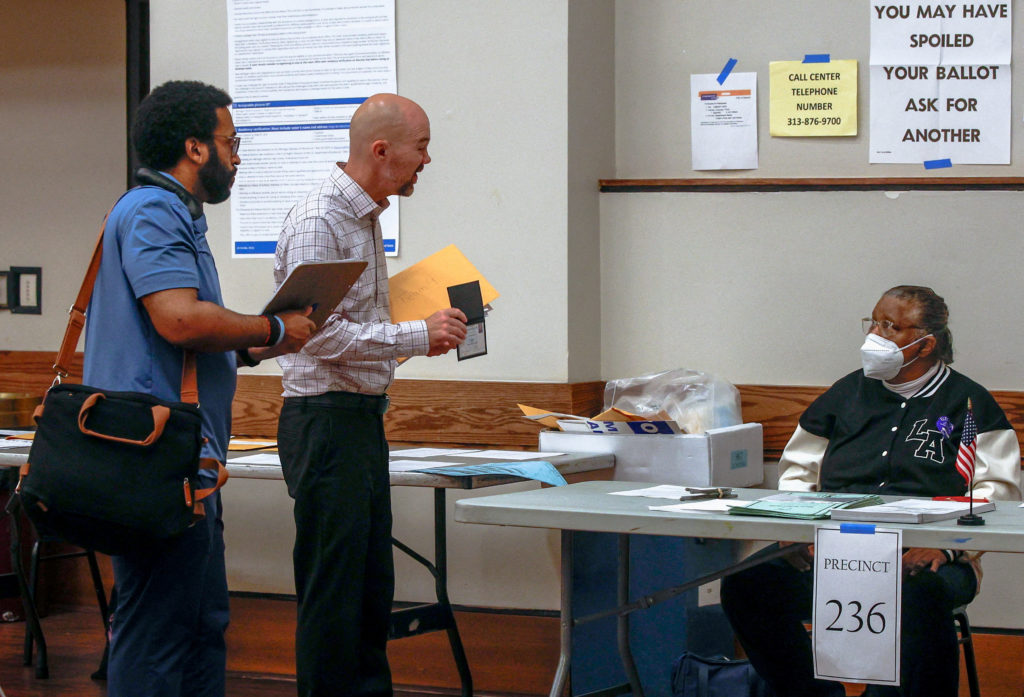
In the video above, Weissmann and Richer discuss options for people preparing to vote — plan in advance and go early, they advise — and what to do if voters are concerned they have witnessed harassment or that their ballot isn’t being recorded properly.

Eight tips for people preparing to vote:

  • Stay in line if the polls close; you are entitled to cast your vote if you are in line before the closing time.
  • Every state is different — know your state’s voting laws (even things like rules on handing out water to people in line).
  • Some states require photo ID and some do not.
  • If you make a mistake on your ballot, ask for a new one.
  • If the machines are down at your polling place, ask for a paper ballot.
  • If you run into problems at the polls, report it to a poll worker or call 866-OUR-VOTE.
  • Sending armed federal agents, including those from Immigration and Customs Enforcement, to election sites is illegal. Federal law and many states’ laws prohibit not only armed federal agents at polling sites but also interference in elections or voter intimidation by any officials or private citizens.
  • You are not required to know how to speak, read or write English to vote. The Voting Rights Act guarantees you the right to bring an assister or translator of your choice when voting as long as they are not your employer or a labor union representative.

Become an MS NOW Member to watch all of Weissmann’s answers, get the chance to submit your own questions and explore full episodes of all the MS NOW Membership exclusive series.

The post Stressing about heading to the polls? Here are tips for preparing to vote. appeared first on MS NOW.

  •  

Montana Man Faces Felony Charges for Telling Man of South Asian Descent To 'Go Back to His Country'

Two men at odds, one with a blurry face | Illustration: Midjourney

Jaxton Tayte Collins, a 21-year-old from Montana, had been out drinking at a bar in downtown Helena before he allegedly shoved a man of South Asian descent and told him to "go back to his country." Those comments, along with an alleged shove, could land him in jail for up to five years.

According to reporting from the Billings Gazette, "the complainant told officers he was walking with friends when a man in an orange shirt and wearing a large cross necklace approached his friend, who is of Indian descent and wears a head covering." The man in the orange shirt, later identified as Collins, "allegedly shoved the friend with both hands and "told him to go back to his country." Witnesses characterized the August 7th incident as "an attack," and called it "frightening."​

Officers then arrived on the scene and located Collins nearby. He told cops that he had been at a bar drinking and told the victim to go back to his own country "because he was angry." However, he denied pushing him.​

On Tuesday, Collins was arraigned on one count of misdemeanor assault and one felony charge of malicious intimidation or harassment of civil or human rights. Under Montana law, malicious intimidation or harassment occurs when a person "purposely or knowingly, with the intent to terrify, intimidate, threaten, harass, annoy, or offend" causes bodily injury, "reasonable apprehension of bodily injury," or damages property because of another person's "race, creed, religion, color, national origin, or involvement in civil rights or human rights activities." Collins pleaded not guilty on both counts. 

It's certainly plausible that Collins' actions could fall under these criteria. But the question that will likely decide Collins' fate pertains to the alleged shove.

In a statement to Reason, the Foundation for Individual Rights and Expression (FIRE) says, "The First Amendment protects even the most offensive and hateful speech. At the same time, it does not give a free pass to commit assault." 

In Wisconsin v. Mitchell (1993), the Supreme Court upheld an enhanced sentence for a black man who urged his friends to attack a white teenager because of his race, ruling that states can impose harsher penalties for crimes motivated by bias—including racial, religious, and cultural bias—and that someone's words can serve as evidence of that motive.

"So if the defendant assaulted someone because of his race or national origin, the First Amendment likely wouldn't shield him from an enhanced penalty," says FIRE.

Montana's law isn't an outlier, and people have been convicted in other states for less. California, Washington, Michigan, and Illinois all have similar "hate crime" laws that can make it a felony to use force or threaten violence against someone because of their race, religion, or other characteristics.

In 2019, Reason reported on Timothy Trybus, who was convicted of two felony hate crimes in Chicago after drunkenly harassing a woman who was wearing a shirt with a Puerto Rican flag on it. He told her, "You shouldn't be wearing that in America." Tybrus never laid a hand on her, yet his comments upgraded a misdemeanor disorderly conduct charge into two felonies. He was sentenced to two years of probation and 200 hours of community service.

Collins' next hearing is scheduled for April 8, 2027. If convicted, he could face up to five years in prison and a fine of up to $5,000.

Collins' words that night reflect a condemnable kind of nativism that is fundamentally un-American. But so is punishing someone for the content of their beliefs. If Collins did in fact shove the man, that could very well constitute a felony under Montana law. But if he's being prosecuted simply for his words, "that would obviously raise serious First Amendment concerns," says FIRE.

The post Montana Man Faces Felony Charges for Telling Man of South Asian Descent To 'Go Back to His Country' appeared first on Reason Magazine.

  •  

The Oleshky Paradox: How a Humanitarian Rescue Became a Political Gift to Putin and Trump

The evacuation of civilians from Russian-occupied Oleshky offers a rare humanitarian breakthrough in a war that has produced precious few. Yet behind the diplomatic congratulations and carefully managed publicity lies a striking contradiction: Moscow is receiving international recognition for helping rescue people whose suffering is inseparable from its own occupation. For Vladimir Putin, it is an opportunity to appear conciliatory without changing his military objectives. For Donald Trump, it is a diplomatic achievement conveniently timed ahead of the American congressional elections.

In Oleshky, the humanitarian convoys have finally arrived. So have the television cameras. After more than four years of Russian occupation, hunger and isolation, the surviving inhabitants of this devastated Ukrainian town have suddenly found themselves at the centre of international diplomacy.

Their predicament has acquired a political significance extending far beyond the immediate question of how to get food into Oleshky and its people out.

On Friday, 30 October, Kyrylo Budanov, head of Ukraine’s Presidential Office, confirmed that humanitarian assistance had reached the town and transport was ready for residents wishing to evacuate to Ukrainian-controlled territory.

Ukraine’s Human Rights Commissioner, Dmytro Lubinets, is coordinating the operation. Twenty-five buses, capable of transporting 750 passengers, together with ambulances for vulnerable residents, have been prepared.

The temporary ceasefire, which began on 27 October, is scheduled to expire on 1 November.

The number of evacuees remains uncertain. Ukraine’s prime minister withdrew an earlier estimate, explaining that the figures were changing and that premature disclosures could compromise the mission.

For civilians who have endured years of occupation, the operation offers something considerably more valuable than diplomatic recognition: a chance to survive.

For the governments involved, however, the calculations are rather different.

The concession that costs Putin remarkably little

The White House announced the agreement on 23 October, crediting Melania Trump with securing the humanitarian ceasefire.

It was an unusual intervention by an American First Lady, and one that Ukrainian officials have publicly welcomed.

But the limited scope of the arrangement deserves attention.

Moscow has agreed to suspend hostilities temporarily, permit humanitarian deliveries and facilitate civilian evacuations. It has not agreed to withdraw its forces, reconsider its territorial demands or substantially alter its conduct of the wider war.

The political return, meanwhile, could be considerable.

Russia can demonstrate cooperation with Washington. The Trump administration can point to a negotiated outcome. The First Lady receives international recognition for a humanitarian initiative.

All this comes just days before the American congressional elections on 3 November, offering the White House a visible diplomatic success without requiring the Kremlin to sacrifice anything strategically important.

Whether the operation will actually deliver Republican votes is another matter. There is no evidence that it will materially influence electoral preferences.

But the publicity value is unmistakable.

For Putin, the arrangement offers something perhaps more useful than an electoral favour to Trump: an opportunity to cultivate the image of a reasonable negotiating partner while preserving Russia’s freedom of military action.

The occupying power as humanitarian benefactor

There is a deeper irony in Russia’s new role as a partner in Oleshky’s rescue.

Before the invasion, approximately 24,000 people lived in the town. Today, an estimated 1,700–2,000 remain.

The survivors have endured Russian occupation since 2022, widespread destruction, restrictions on movement and severe shortages of basic necessities. The catastrophic flooding following the destruction of the Kakhovka dam in June 2023 compounded their predicament.

Yet Moscow can now present itself as a participant in relieving the humanitarian catastrophe.

The transformation is politically convenient.

Images of Russian officials accompanying aid convoys may help construct a narrative of humanitarian responsibility, particularly for international audiences unfamiliar with the town’s recent history.

Facilitating an evacuation does not, however, absolve an occupying power of its obligations towards civilians.

Nor should cooperation on a single humanitarian operation be mistaken for evidence that Moscow has reconsidered the policies that produced the crisis.

When survivors become instruments of propaganda

The information campaign surrounding Oleshky is particularly revealing.

On 7 October, Ukraine’s Security Service warned that Russian military personnel were allegedly preparing interviews in which residents would blame Ukrainian forces for their suffering while praising Russian troops.

These allegations require independent scrutiny. But they raise an uncomfortable question: how much weight should be attached to political declarations made by people emerging from years of occupation?

Fear can produce silence. It can also produce conformity.

Civilians dependent upon the authorities controlling their territory may repeat the language of those authorities, whether from conviction, intimidation or self-preservation.

Some residents may genuinely support Russia. That does not make them less entitled to humanitarian assistance.

There is a fundamental distinction between holding pro-Russian political opinions and actively collaborating in crimes against Ukraine.

A state defending its sovereignty need not demand ideological conformity from citizens it seeks to protect.

Indeed, rescuing them irrespective of their political sympathies is a more meaningful demonstration of democratic principles than any carefully staged declaration of gratitude.

Melania Trump and the choreography of compassion

The American dimension introduces its own peculiarities.

The White House has portrayed the ceasefire as an achievement of the First Lady’s personal diplomacy. Yet Washington was not the only party attempting to secure an agreement.

On 16 October, a week before the White House announcement, Pope Leo XIV appealed directly to Putin for a ceasefire in Oleshky to permit food deliveries, medical assistance and voluntary evacuations.

Three days later, the pontiff raised the same issue with Volodymyr Zelensky.

The Vatican’s documented intervention does not negate Melania Trump’s involvement, which Ukrainian and Russian officials have acknowledged. It does, however, complicate the suggestion that the breakthrough was exclusively an American diplomatic achievement.

In the meantime, the publicity surrounding the operation has assumed a conspicuous political character.

On 29 October, Melania Trump announced that four journalists from Newsmax, a broadcaster closely associated with Trump’s conservative constituency, would accompany the mission as neutral observers.

The broadcaster’s involvement was also welcomed by Kirill Dmitriev, the Kremlin’s special representative for international economic cooperation.

The interests converge rather neatly.

Washington obtains images of successful humanitarian diplomacy. Moscow gains an opportunity to appear cooperative before an American audience. The First Lady receives recognition for an initiative that has produced tangible results where much broader diplomatic efforts have struggled.

None of this diminishes the importance of saving civilians. But the political presentation risks becoming an achievement in its own right, potentially obscuring the question of why those civilians required rescuing in the first place.

The ceasefire ends at Oleshky

The military reality provides a rather less reassuring picture.

Oleshky lies on the Russian-controlled eastern bank of the Dnipro, opposite Ukrainian-held Kherson.

According to reporting by Le Monde, Ukrainian officials fear that Russian forces could exploit the temporary pause to replenish supplies and prepare further operations around Kherson.

Such concerns do not establish that a new offensive is imminent. Nevertheless, they highlight the distinction between a local humanitarian agreement and a genuine reduction in military confrontation.

The evacuation route reflects these security sensitivities.

Rather than crossing the Dnipro directly, residents wishing to reach Ukrainian-controlled territory are expected to travel through Russia and Belarus.

The arrangement avoids an immediate frontline crossing but creates separate concerns about possible coercion, screening and freedom of movement.

Meanwhile, Russia has made clear that its willingness to negotiate humanitarian pauses does not imply a willingness to suspend its broader offensive.

The distinction is critical. Moscow can cooperate over evacuation buses while continuing to launch missiles elsewhere in Ukraine.

What Europe should take from Oleshky

For European governments, the danger lies in confusing limited cooperation with strategic change.

The Kremlin has demonstrated that it can make a carefully circumscribed humanitarian concession, receive international recognition and retain its fundamental negotiating position.

The wider implications are significant.

A diplomatic process that rewards Moscow for temporary gestures while leaving its military objectives untouched risks producing the appearance of progress rather than progress itself.

Europe’s interest is not merely in securing occasional humanitarian agreements, valuable though they are. It is in ensuring that negotiations lead towards a settlement that preserves Ukrainian sovereignty and does not leave the continent facing an emboldened Russia.

For now, Oleshky offers no evidence that Moscow has moved substantially closer to such an outcome.

The humanitarian mission may save hundreds of Ukrainian lives. If it succeeds, those who negotiated and implemented it deserve recognition.

But political recognition should not become historical absolution.

The occupying power has agreed to help evacuate civilians from a town it continues to occupy. Washington has secured a diplomatic achievement that places few constraints on Russia’s military ambitions.

The cameras will eventually leave Oleshky. The temporary ceasefire will expire.

And unless something more substantial changes, Russia’s occupation — and the war that made the evacuation necessary — will continue.

  •  

Inés Miranda Navarro: 5-Year Prison Term Sought Over Public Contracts, IMACO 89, Algeria and Polisario

Updated: October 29, 2026 Five years in prison and a ten-year ban from holding public office. That is the prison term sought by Spain’s anti-corruption prosecutors against Inés Miranda Navarro, a senior official at the Cabildo of Gran Canaria, in the case surrounding the “Landscape Days” events. According to the investigating judge’s order and the […]

  •  

Newsom Deploys Election Lawyers to Protect California Vote

Gavin Newsom announces California election protection measures amid dispute with Donald Trump over federal agents at polling places.

The move comes amid a federal dispute over election oversight and a court ruling blocking efforts to set aside more than 20,000 mail-in ballots.


California Gov. Gavin Newsom announced Thursday that he would deploy election lawyers and observers across the state to protect voters’ rights, escalating a confrontation with President Donald Trump’s administration over federal involvement in polling places ahead of the elections.

RELATED: More Than 26.6 Million Have Voted Early in U.S. Midterms

The legal teams will be sent to key districts with closely contested races, Newsom said, warning against unauthorized interference in the electoral process.

“A warning to Donald Trump: I’m deploying election lawyers to key battleground districts in California to protect every vote. And I just made it a FELONY to illegally seize ballots,” the Democratic governor wrote on social media platform X.

Newsom also approved legislation making the unlawful seizure of election ballots a felony, establishing criminal penalties for unauthorized interference with ballots.

A warning to Donald Trump:

I’m deploying election lawyers to key battleground districts in California to protect every vote.

And I just made it a FELONY to illegally seize ballots.

— Gavin Newsom (@GavinNewsom) October 29, 2026

The measures follow the Trump administration’s announcement that it would deploy federal agents to polling places to prevent potential electoral irregularities. Trump has repeatedly accused California of failing to address alleged voter fraud.

Speaking Wednesday night on Jimmy Kimmel Live, Newsom criticized the administration’s approach, accusing the White House of trying to suppress votes and create grounds to challenge the election results.

He argued that the administration was seeking to create conditions that could later be used to question the outcome and allege fraud.

The dispute has also reached the courts. On Wednesday, a federal judge rejected a Justice Department request to set aside more than 20,000 mail-in ballots cast in California while authorities verified voters’ citizenship.

The judge warned that withholding the ballots would cause widespread disruption and interfere with an electoral process already underway.

California officials had also questioned the reliability of the voter list submitted by the federal government and rejected its request to verify voters’ citizenship before ballots were counted.

The Justice Department confirmed it would appeal the ruling, setting the stage for further legal disputes between federal and state authorities before the election process concludes.

  •  

"Je n'ai plus de RSA depuis deux mois... j'ai volé pour me nourrir" : un homme condamné à 36 mois de prison pour avoir volé avec violence un vélo et 110 euros de courses au magasin Aldi à Cahors

Un homme de 43 ans a été condamné mardi 27 octobre à Cahors à 36 mois de prison, dont 12 avec sursis probatoire, pour vol et violences. Il avait volé pour 109 euros de marchandises dans un Aldi et agressé un homme...

  •  

5 expert takeaways on 2026 midterm election security

With Election Day around the corner, states have been working hard to prepare, with some adopting new congressional maps and voting rules on top of normal election security measures. PBS News' Liz Landers and Votebeat editorial director Jessica Huseman hosted a Reddit "Ask Me Anything" Q&A on Wednesday to address people's questions.

  •  

From Brussels to Belgrade: Europe’s Generation Z Protests Challenge Established Politics

Youth-led demonstrations across Europe are bringing together concerns about housing, education, employment and political accountability. Although the movements differ considerably between countries, their emergence reflects growing dissatisfaction among younger Europeans over economic prospects and their influence on political decisions.

A series of demonstrations involving young people across Europe has developed into a wider political phenomenon, as students and younger workers challenge governments over living costs, public services and their expectations for the future.

Protests have taken place in France, Belgium, Italy, Albania and several other countries, while a student-led movement in Serbia has achieved a particularly consequential political outcome.

In Serbia, nearly two years of demonstrations culminated in a parliamentary election victory for a student-backed political movement, ending the electoral dominance of President Aleksandar Vučić’s Serbian Progressive Party.

The outcome, reported by Reuters on 29 October, has given the movement a prospective parliamentary majority, although final certification of the election results remains outstanding.

Elsewhere, protesters have secured fewer immediate political concessions.

Nevertheless, their campaigns share a recurring concern: that conventional channels of political representation have failed to address problems affecting younger generations.

Economic Pressures Behind the Demonstrations

The grievances vary between countries, but housing affordability, insecure employment, education funding and living costs feature prominently.

A European Parliament youth survey published in February 2025 found that 40 per cent of respondents aged 16 to 30 considered rising prices and the cost of living a priority for the EU.

Almost one-third identified economic conditions and job creation as a principal concern, while education also ranked prominently.

More recent figures illustrate the financial pressures confronting younger Europeans.

According to Eurostat data published in June 2026, 24.2 per cent of EU residents aged 15 to 29 were at risk of poverty or social exclusion in 2025.

That compares with 20.9 per cent for the population as a whole.

These figures do not establish that economic hardship is the cause of every protest. They do, however, provide context for the dissatisfaction expressed by participants.

Belgium’s Students Demand Better Education

In Brussels, demonstrations have focused partly on the condition of schools and the availability of educational resources.

Students have criticised deteriorating facilities, shortages of teachers and government decisions affecting education funding.

Nineteen-year-old student Maya Gourdel told Reuters that peaceful attempts to draw attention to these concerns had attracted little response from political leaders.

Her account reflects a wider frustration among demonstrators who believe that public attention has increased only after protests became more disruptive.

Belgium’s education system is organised primarily at community level, meaning decisions concerning funding, staffing and school infrastructure are divided among different authorities.

The demands of protesters consequently involve both national political debates and decisions taken by regional and community institutions.

France and Italy Face Wider Social Unrest

In France, demonstrations concerning the cost of living and public services have involved students alongside trade unions and other organisations.

Recent protests have also been accompanied by violence, including attacks on commercial premises and confrontations with police.

The involvement of younger demonstrators does not mean that every participant supports violent tactics.

Rather, the events illustrate how movements with economic and political grievances can encompass groups with different objectives and methods.

Italy has experienced similar tensions, particularly in Milan, where demonstrations against rising living costs have followed earlier episodes of unrest.

The Italian government has faced pressure over household expenditure, wages and the affordability of essential services.

These disputes have developed against a background of high energy prices and concerns about the broader economic outlook.

Albania’s Frustration With Political Institutions

In Albania, student-led protests have challenged Prime Minister Edi Rama’s government over alleged corruption, limited employment opportunities and education standards.

Demonstrations that began in Tirana have spread to other cities.

On 29 October, opposition lawmakers disrupted proceedings in parliament following weeks of protests and confrontations between demonstrators and police.

The government has offered measures intended to address economic concerns while condemning violence associated with the demonstrations.

For many younger Albanians, employment prospects are closely connected to the possibility of emigrating.

The perception that professional opportunities depend on political connections or personal networks has become another source of dissatisfaction.

However, the Albanian movement cannot be treated as identical to protests in EU member states, given the country’s different economic conditions and political institutions.

Serbia Shows the Political Potential of Student Movements

Serbia provides the most substantial example of youth-led protest translating into electoral change.

The movement emerged after the collapse of a railway station canopy in Novi Sad in November 2024, which killed 16 people and prompted allegations of corruption and negligence.

Students organised prolonged demonstrations demanding accountability and institutional reform.

Their campaign subsequently developed into an electoral challenge to the governing Serbian Progressive Party.

Preliminary results from the October 2026 parliamentary election indicate that the student-backed list has secured a majority of seats.

However, electoral certification and the formation of a new government remain incomplete.

The movement now faces a different challenge: converting protest demands into administrative decisions, legislation and economic policy.

Its success will be judged not only by the election result but also by its ability to govern.

A Generational Shift, But Not a Single Movement

It would be misleading to describe Europe’s demonstrations as a unified political campaign.

Participants have different objectives, national circumstances and ideological positions.

Some demand increased public expenditure, while others concentrate on corruption, political accountability or employment opportunities.

What connects them is a recurring concern about whether established institutions respond adequately to younger citizens.

The political consequences will depend on whether demonstrations produce lasting organisations, influence elections or secure changes in government policy.

Serbia suggests that student mobilisation can translate into substantial political change.

For governments elsewhere in Europe, the question is whether the grievances driving these movements can be addressed through existing political institutions before dissatisfaction generates further unrest.

  •  

Trump's Claims About Noncitizen Voting Are 'Not Credible,' a Federal Judge Says in a Scathing Decision

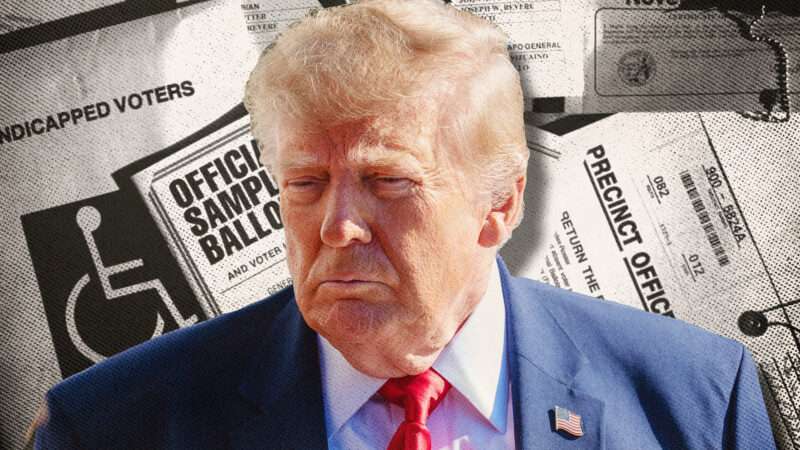
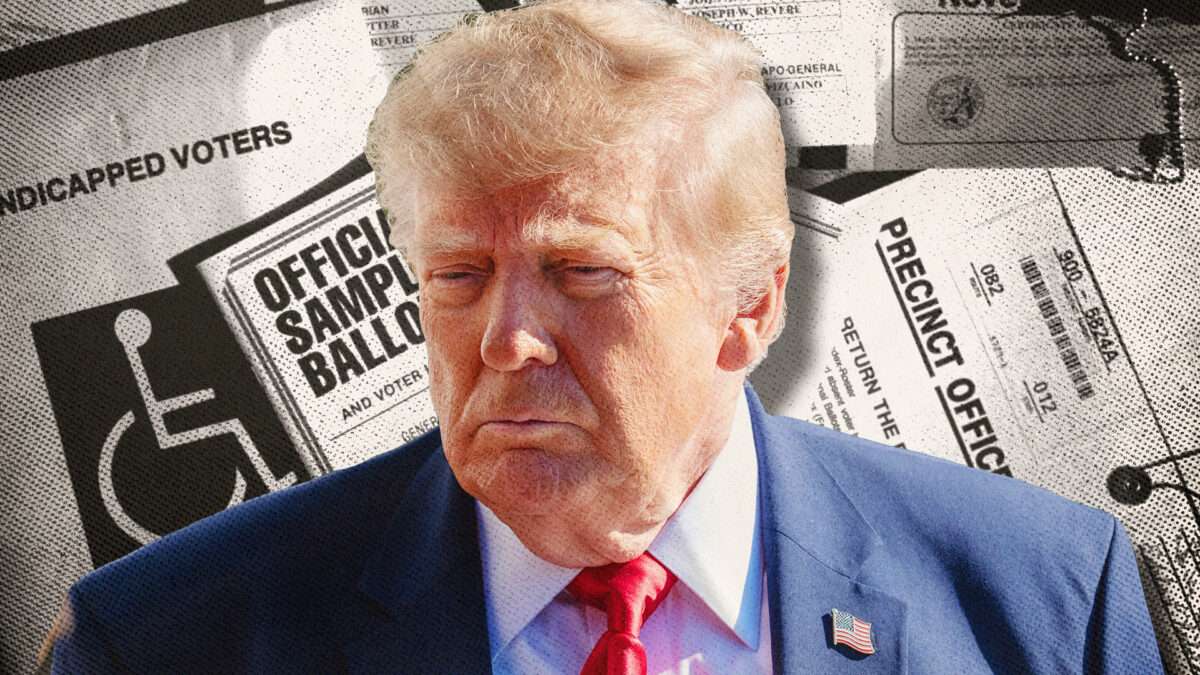
President Donald Trump against a background of California ballots | Andrew Leyden/Zuma Press/Newscom/Joe Sohm/Dreamstime

In a July 16 letter to California Secretary of State Shirley Weber, the Department of Homeland Security (DHS) said a "preliminary review" suggested there "may be as many as 190,832 non-citizens registered to vote" in her state. Weber was skeptical—for good reason, it turned out. Three months later, the Trump administration reduced that estimate by nearly 90 percent, saying about 20,000 "likely noncitizens" had received California vote-by-mail ballots.

The Justice Department gave Weber and Dean Logan, Los Angeles County's top election official, 48 hours to determine whether any of the people on the government's list were in fact citizens. Otherwise, it said, Weber and Logan should segregate those ballots and refrain from processing them until citizenship could be verified. After Weber and Logan declined to comply with the Justice Department's demands, it asked a federal judge for a temporary restraining order (TRO) requiring them to do so—a request that he rejected in a scathing opinion on Wednesday.

"Never before in American history has the federal government, on the eve of an election, sought to coerce a state and local government to abandon their own Constitutional elections procedures and bend to the will of the Executive Branch," writes U.S. District Judge David O. Carter, a Bill Clinton appointee. "This request violates longstanding constitutional principles mandating that states have control over their elections. If Plaintiff's last-minute request for relief were granted, either party could create chaos for their own political purposes to disrupt the election process. Over 20,000 registered Californians would potentially lose the right that generations of Americans have fought to preserve."

The Justice Department delivered its list of "likely noncitizens" to Logan three weeks before Election Day. At that point, Los Angeles County already had sent ballots to 5.9 million voters and processed 331,000 of them. Logan said he was "legally prohibited" from doing what the Justice Department wanted because it had failed to explain the methodology used to compile the list, raising the possibility that citizens would be denied their voting rights.

There was ample reason for that concern. On July 17, DHS Secretary Markwayne Mullin averred that "as many as" 15,903 noncitizens were registered to vote in Nevada. The following month, when the DHS submitted a list of allegedly illegal voters to Nevada election officials, the number had fallen to 185—99 percent lower than Mullin's original figure. It turned out that every one of those 185 voters was a U.S. citizen.

"DHS has identified over 250,000 potential non-citizens illegally registered to vote" in California, New Jersey, Nevada, and Pennsylvania, Mullin said in July. He was echoing President Donald Trump, who for years has grossly exaggerated the extent of illegal voting by noncitizens, often in service of his own vanity.

Trump has repeatedly claimed, for example, that he would have won the popular vote in 2016 but for "the millions of people who voted illegally," and in January 2024 he warned that noncitizen voters "could very well affect the next election." In a speech the night before Mullin's announcement, Trump asserted that the DHS had "identified approximately 278,000 non-citizens who are registered to vote in federal elections."

Judging from Nevada's experience, the actual number may be closer to zero. It is hard to say, because the methods used by the DHS remain hazy.

In the California case, Carter says, the DHS "purchased a voter file that appeared to reflect 'the actual voter rolls in California, that as of August 2025, may be used for the 2026 federal election.'" It "then 'enhance[d]' the voter data through a 'reliable third-party data analytics'" and used records maintained by U.S. Citizenship and Immigration Services (USCIS) to find "an internal USCIS immigration number" that "may" correspond to each registered voter. "The matches are scored," Carter notes, "because 'the resulting data may be incomplete, outdated, or mismatched.'"

The DHS "then compared the potential identity matches to Department of State and Social Security Administration data to screen out U.S. citizens," Carter adds. "In the next step, a confidence level was assigned (where a high score supported a 'strong identity link') and a manual review was conducted for each match to 'determine which registered voters'" were "likely to be aliens." Then came "a 'quality review' to identify issues such as 'duplicate entries' and 'incomplete records,'" followed by "an 'enrichment process' that utilized 'additional unique identifiers' to 'improv[e]' the matching process."

The government did not initially specify the source of the "reliable third-party data analytics." But it later revealed that "the third-party platform it relied on was
Lexis Nexis," Carter notes. "It remains unknown how Lexis Nexis performed its analysis, such as how it 'linked names to Social Security numbers not available on the California public voter file.' Plaintiff likewise did not explain what its 'enrichment process' entailed or how it occurred. Plaintiff also provided 'no error rates' or 'validation against a reliable benchmark' that would enable a determination of the accuracy of its findings. Omissions of this critical information prevent an evaluation of Plaintiff's procedure, including how Plaintiff reduced its initial claim of nearly 200,000 alleged noncitizens to 20,000 individuals."

Potential sources of error include conflating people with similar or identical names and outdated records that do not reflect recent naturalization. Because it is unclear how the DHS tried to address such problems, it is not surprising that Weber and Logan did not want to rely on the Trump administration's list, especially given its pattern of dramatically reducing the putative number of illegally registered voters.

"It is well-documented that matching voter registration records with data from other
administrative databases 'presents numerous challenges,'" Carter writes. And given the potential for error, he says, "Plaintiff's allegations are not credible." He adds that the TRO sought by the Justice Department "would likely lead to voter disenfranchisement" and "would create a significant administrative burden for Defendants, leading to chaos and upending the election."

In any event, Carter says, the Trump administration does not have legal standing to seek such an order. The government's main argument was that California officials, by refusing to segregate ballots from people on its list, were interfering with its enforcement of 18 USC 611, which makes it a misdemeanor for "any alien to vote" in a federal election.

"Defendants do not 'interfere' with the United States' ability to enforce Section 611 by
administering an ongoing election in accordance with established State and Federal law, rather than assuming new obligations pursuant to a federal criminal law they are not responsible for enforcing," Carter writes. It is well established that state officials have no obligation to enforce federal law, he notes, and that they cannot be "commandeered" to do so.

Nor does the federal government need such assistance to enforce Section 611. "The very same day the United States filed its TRO [application] in this Court, the Department of Justice brought charges against 28 individuals" in California under that law, Carter notes. It is not clear how many of those defendants, who represent 0.0001 percent of California's 23 million registered voters, actually cast ballots. But "if fraudulent voting occurs," Carter says, "the United States should uphold the law and bring additional Section 611 indictments against those non-citizens it believes actually voted illegally in the current—or a prior—election."

The Constitution gives states the primary responsibility for conducting elections, subject to explicit limits imposed by Congress. But the Justice Department's actions in this case "are indicative of a broad, ongoing pattern of attempted election interference by federal officials," Carter writes. The department "has filed at least thirty-one lawsuits in federal district courts across the country seeking complete voter rolls from the States. Out of the twenty-six decided cases, the DOJ has prevailed in precisely zero."

In addition to "its failed attempt to seek State voter rolls," Carter notes, "the United States has also requested that States act based on the Executive's own lists." But "sister district courts across the country have cast doubt" on the reliability of those lists for the same reasons that Carter cites in this case.

On October 23, the Justice Department "sent letters to every county in California requiring them to set aside the votes of alleged non-citizens," Carter notes. "The letters stated that election officials 'risk significant federal scrutiny' if they failed to comply with the Government's demands. The government reiterated its threat in open court yesterday, stating that State and County election officials who do not comply with their letter risk federal charges under 18 U.S.C. § 2, which criminalizes aiding and abetting the commission of a criminal offense. The court reiterates what it said yesterday: these threats must stop."

The post Trump's Claims About Noncitizen Voting Are 'Not Credible,' a Federal Judge Says in a Scathing Decision appeared first on Reason Magazine.

  •  

Milei and Allegations Regarding Aiding the Escape of Flávio Bolsonaro

Three legal complaints filed with the Argentine justice system call for an investigation into President Javier Milei, Foreign Minister Pablo Quirno, Security Minister Alejandra Monteoliva, and advisor Santiago Caputo, alleging their involvement in the escape of Brazilian Senator Flávio Bolsonaro. The filings cite potential offenses including concealment, human trafficking, the misuse of public resources, and facilitating the illegal stay of a fugitive from Brazilian justice.

RELATED:

Flávio Bolsonaro Flees to US, Claims Brazil Presidency

The complaints—brought by Left Front leader Gabriel Solano and Socialist lawmaker Esteban Paulón—are being processed in the Comodoro Py courts; the first has been assigned to Judge María Eugenia Capuchetti. Meanwhile, lawmaker Marcela Pagano filed her complaint in the federal courts of Misiones, where Judge Marcelo Cardoso is presiding.

Pagano argued that the case should examine a potential crime of “illegal human trafficking across national borders,” an offense aggravated by the involvement of government officials. The legislator warned that these actions could compromise the Argentine state’s sovereignty regarding “border control, the fulfillment of its criminal cooperation obligations with a Mercosur member state, and the integrity of federal agencies.”

Cases Against Flávio Bolsonaro

In Brazil, Flávio Bolsonaro has been under investigation for alleged money laundering, corruption, and violations of foreign exchange regulations—all linked to the financing of Dark Horse, a film about his father, former President Jair Bolsonaro. The investigation connects him to banker Daniel Vorcaro, who is accused of fraud; the senator allegedly solicited millions in funding from him for the film. He is also implicated in a separate case involving money laundering through online gambling platforms.

A few days ago, Brazilian Supreme Court Justice Flávio Dino ordered an investigation into whether there was foreign support—specifically involving funds from the United States—for the presidential campaign of Bolsonaro, who was defeated by Luiz Inácio Lula da Silva.

Brazilian senator Flavio Bolsonaro has fled to the United States and declared himself Brazil’s “true elected president” after losing the presidential election to Luiz Inacio Lula da Silva by 4.4 million votes. He is challenging the official result from abroad.

In a manifesto… pic.twitter.com/ilZxhozka4

— teleSUR English (@telesurenglish) October 29, 2026

Change in the official account

Solano’s complaint highlights a shift in the Argentine government’s account. After initially denying that Bolsonaro had entered the country, the National Migration Directorate acknowledged at 2:00 a.m. that the senator had crossed the border on October 27 via the Tancredo Neves International Bridge, using an Italian passport.

Although the ruling administration claimed the documentation was “valid,” Bolsonaro’s passport was actually suspended, and he faced ongoing criminal proceedings, including charges related to money laundering. Former Migration Director Florencia Carignano noted that the government made a political decision to allow his entry, despite these legal proceedings.

The filings also detail the alleged use of state resources. According to the complaints, agents from the Airport Security Police (PSA) escorted Bolsonaro, who arrived at the airport in a vehicle bearing Argentine diplomatic license plates.

Additionally, an investigation is underway regarding the logistics surrounding a private Gulfstream G400 aircraft operated by the company Baires Fly. The firm is linked to Sergio Mastropietro—who is currently facing prosecution in a corruption case involving the National Disability Agency (ANDIS)—and has ties to drug trafficker Federico Machado. The aircraft reportedly remained in Puerto Iguazú for over 24 hours without authorization from the National Civil Aviation Administration (ANAC), with an estimated cost of $140,000, arranged through a broker in the United States.

Constitutional law expert Andrés Gil Domínguez pointed out that Emergency Decree (DNU) 366/25 establishes that “failure to disclose the existence of a criminal record” serves as grounds for denying entry. The expert highlighted the irregularity of a foreign national—who was the subject of multiple judicial warrants—being able to travel through the country while circumventing the controls established by Law 25.871.

The complaints call for charges of abuse of authority and breach of public official duties. Furthermore, they request the preservation of surveillance camera footage as well as immigration and airport records, in order to determine the criminal liability of those involved.

  •  

Trump's Justice Department pushes a spate of politically sensitive cases as midterm elections near

Defense lawyers and Democrats say a blitz of headline-making actions and cases is no coincidence and reeks of politics — in both the timing and the targets.

  •  

Neil Gorsuch called this law a ‘curious animal.’ A new bill would tame it.

One of the nation’s strangest laws is primed for reform in a new bill from Rep. Steve Cohen, D-Tenn., that would bring a dose of logic to federal drug policy.

That unusual law — Supreme Court Justice Neil Gorsuch called it a “curious animal” — is the Controlled Substance Analogue Enforcement Act. Known as the Analogue Act for short, it’s part of the Anti-Drug Abuse Act of 1986, which was rushed into law ahead of that year’s midterm elections by a bipartisan Congress and Republican President Ronald Reagan. Passed in the shadow of high-profile deaths, including that of basketball star Len Bias, the Anti-Drug Abuse Act brought mandatory minimum sentences and a vast disparity in punishment for crack and powder cocaine offenses, respectively.

The Analogue Act separately sought to solve the problem of so-called designer drugs. The problem, as the authorities saw it, was that the law was too specific. Cocaine, heroin and other drugs were illegal because they were listed under the Nixon-era Controlled Substances Act’s drug schedules. But nothing was stopping underground chemists from tinkering with listed substances to produce new ones that the law didn’t capture. Congress could ban novel drugs as they appeared on the illicit market, but that took time and would only apply going forward. Bad actors went unpunished in the meantime, so the government thinking went.

As I laid out in my book, “Bizarro,” on the inside story of the Analogue Act and one of the most peculiar cases it spawned, law enforcement was tired of playing catchup in the cat-and-mouse game. It wanted to go on offense. The result was the Analogue Act, which expanded federal drug law to say that any substances “substantially similar” to already illegal ones like cocaine, heroin and others on the most restricted drug schedules were illegal, too.

‘Curious animal’

In solving one problem, the Analogue Act confronted another: the Constitution.

Due process means that people need notice of what’s legal, so they can live their lives accordingly. Yet the act’s substantial-similarity test outlawed a potentially infinite number of substances with a vague, unscientific standard. Whether that standard is satisfied in a given case depends on whether prosecutors can convince juries that one substance is “substantially similar” to another. The ambiguous test has led to conflicting verdicts in different cases involving the same substance.

Even the Drug Enforcement Administration’s chemists haven’t always agreed among themselves about which substances qualify as analogues. If the government’s own experts can’t agree about what’s legal, how can people subject to the law be expected to know?

Judges appointed by Republican and Democratic presidents alike have questioned the act’s constitutionality. Notable among them is Gorsuch. Before President Donald Trump appointed him to the Supreme Court in 2017, the jurist called the act a “curious animal” in a 2015 ruling when he was on the Denver-based appeals court. Gorsuch deemed the “substantially similar” test’s meaning an “open question,” as he wondered whether it gives citizens fair notice.

Neil Gorsuch and Donald Trump look at each other.
Judge Neil Gorsuch, left, shakes hands with President Donald Trump on Jan. 31, 2017, at the White House.Carlos Barria / Reuters

But even since he joined the high court, the justices have refused to consider a petition attacking the Analogue Act. The court’s lack of interest effectively has left the matter with Congress.

Taming the animal with an ‘and’

Enter the new bill announced by Cohen, who has criticized the drug war during his nearly two decades in the House. The Democrat isn’t running for re-election this year, after Tennessee Republicans passed a congressional map, backed by recent Supreme Court rulings, that splintered his Memphis base in what was the state’s only majority-Black district.

Cohen’s “Public Health and Research Reforms in Controlled Substances Act” would, as its name suggests, shift drug law from a punitive approach to one centered on public health, with a revamped scheduling system, scientific research promotion and other measures.

Its analogue amendment wouldn’t overturn the constitutionally suspect “substantially similar” test, but it would address one of its ridiculous aspects.

To understand the fix, it’s necessary to know what the act says currently. It has three sections that define what a controlled substance analogue is, according to its 1) structure, 2) effect and 3) represented effect. It defines an analogue as a substance:

i) the chemical structure of which is substantially similar to the chemical structure of a controlled substance in schedule I or II;

ii) which has a stimulant, depressant, or hallucinogenic effect on the central nervous system that is substantially similar to or greater than the stimulant, depressant, or hallucinogenic effect on the central nervous system of a controlled substance in schedule I or II; or

iii) with respect to a particular person, which such person represents or intends to have a stimulant, depressant, or hallucinogenic effect on the central nervous system that is substantially similar to or greater than the stimulant, depressant, or hallucinogenic effect on the central nervous system of a controlled substance in schedule I or II.

Beyond the vagueness at the heart of the term “substantially similar,” a key issue is the language in between each section. There’s an “or” in between the second and third sections on effect and representation, but there’s nothing in between the first and second sections on structure and effect. A draft version of the 1986 law had an “and” in between those first two sections, which would have clearly meant that, to qualify as an analogue, at least a substantially similar chemical structure was required.

It’s unclear why the “and” didn’t make it into the final version of the Analogue Act. But its omission has prompted an outlier legal argument that prosecutors only have to prove one of the three prongs: structure, effect or representation of effect. The consequences of that reading are extreme, because if only representation is required (regardless of what the substance actually is or does), then people can serve decades in prison for selling something that isn’t similar to a scheduled drug at all.

What an appeals court called an “absurd” example of that phenomenon arose in a prosecution against people who sold a mixture of candle wax and flour under the pretense that it was crack/cocaine. “The treatment of candle wax and flour, no matter how it is marketed, as a schedule I controlled substance is an ‘absurd’ result of the kind our canons of construction instruct us to avoid,” the Philadelphia-based court said in a 2003 case, reversing a district court that ruled otherwise.

Yet the concern over that absurdity was not relegated to history. Just a few years ago, a San Francisco-based appeals court suggested that the act could still be used to achieve such an outlandish outcome. Even the government wasn’t pressing for that aggressive interpretation, so the court didn’t feel bound to embrace it in that case.

But if the Analogue Act stays on the books as is, courts could keep reaching “absurd” results in future cases.

‘Open question’

Cohen’s proposed legislation would prevent that absurdity by adding the “and.” Had it been there at the time of the wax-and-flour case, the district court would have had to side with the defense, because even if the mixture was marketed as crack, its chemical structure was not substantially similar to crack by any reasonable measure.

The dome of the Capitol and a yellow sign are seen in the background as Steve Cohen speaks in the foreground.
U.S. Rep. Steve Cohen (D-Tenn.) speaks during a press conference on April 20, 2026, outside the U.S. Capitol.Anna Moneymaker / Getty Images

To be sure, the new bill’s analogue amendment wouldn’t solve the due process problem inherent in the “substantially similar” test; that could probably only be done by overturning the act entirely. Still, the bill would bring a dose of logic that has been missing for four decades.

Whether that modest measure has the votes to become law with today’s Congress and White House is, as Gorsuch put it in 2015, an “open question.” But even if this bill doesn’t pass, it’s an important question to keep asking.

Subscribe to the Deadline: Legal newsletter for expert analysis on the top legal stories of the week, including updates from the Supreme Court and developments in the Trump administration’s legal cases.

The post Neil Gorsuch called this law a ‘curious animal.’ A new bill would tame it. appeared first on MS NOW.

Judge Neil Gorsuch, left, shakes hands with President Donald Trump, after President Trump nominated Gorsuch to be an associate justice of the U.S. Supreme Court, on Jan. 31, 2017, at the White House.

U.S. Rep. Steve Cohen (D-TN) speaks during a press conference on April 20, 2026, outside the U.S. Capitol.
  •  

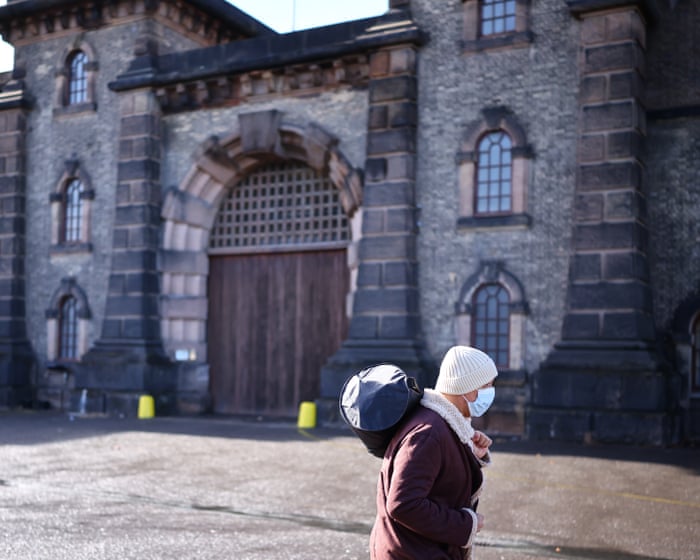
More prisoners recalled to jail than released in England and Wales

Ministry of Justice figures show recalls rose 27% in year to June despite emergency measures to ease overcrowding

More people were recalled to jails in England and Wales in the first half of this year than were released, despite government efforts to reduce the prison population, according to figures released on Thursday.

Ministry of Justice (MoJ) data shows that 12,338 people were recalled to custody between the beginning of April and the end of June, while 12,278 people were released. It continues a trend set between January and March, when 13,193 people were returned to prison and 12,977 released.

Continue reading...

© Photograph: Tolga Akmen/EPA

© Photograph: Tolga Akmen/EPA

© Photograph: Tolga Akmen/EPA

  •  
❌