❌

Reading view

Albanese looks for reset on world stage as ‘spot fires burn’ domestically and likely interest rate hike looms

The prime minister will speak with King Charles and others at the Commonwealth heads of government meeting in Antigua and Barbuda

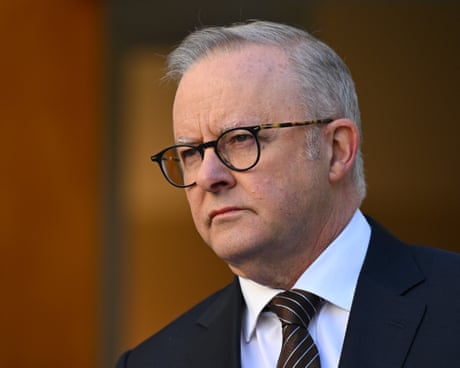
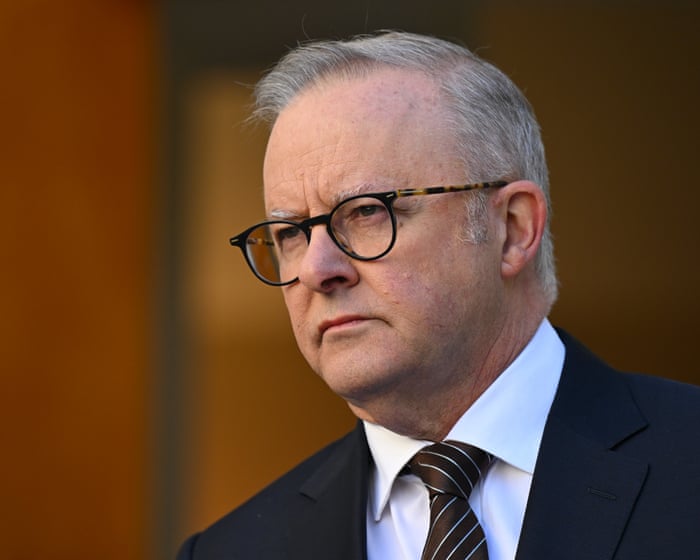
As “summit season” begins, reaffirming ties with fellow leaders on the world stage could be a circuit breaker for Anthony Albanese amid domestic and economic woes, analysts have said.

But a likely interest rate hike triggered by higher-than-expected inflation while the prime minister is overseas will make his job – and the treasurer’s – even harder.

Sign up for Guardian Australia’s Politics, really newsletter here

Continue reading...

© Photograph: Lukas Coch/AAP

© Photograph: Lukas Coch/AAP

© Photograph: Lukas Coch/AAP

  •  

Ukraine’s Zelenskyy praises US over $2.1bn Patriot missile deal but warns it could take years

The Ukrainian president called the US decision strong, but added that delivery of 500 Patriot PAC-3 missiles ⁠could take years

The US has approved the sale ⁠of 500 Patriot PAC-3 missiles ⁠to Ukraine for an estimated $2.1bn, but Volodymyr Zelenskyy has warned deliveries could take years and stockpiles were needed now to counter Russian ballistic missile attacks.

“The proposed sale will improve Ukraine’s capability to meet current and future threats by improving its integrated air and missile defense capabilities,” the US state department said in a statement on Friday.

Continue reading...

© Photograph: Getty Images

© Photograph: Getty Images

© Photograph: Getty Images

  •  

US cancels G20 ‘family photo’ after Australia, UK and others refuse to appear with Russia

Marco Rubio pulls plug on traditional photo op at meeting of foreign ministers after about one-third of countries threaten boycott

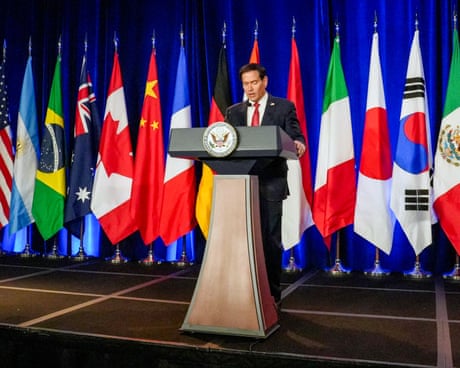
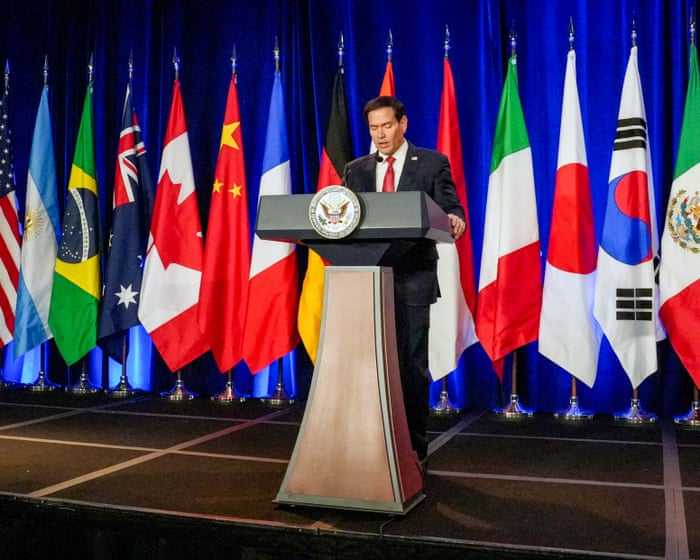
The traditional “family photo” to open the G20 foreign ministers’ meeting has been abruptly cancelled in the US after a host of nations – including Australia and the UK – refused to appear beside the Russian foreign minister, Sergei Lavrov.

The US secretary of state, Marco Rubio, pulled the plug after several European officials, the UK and Australia made it known they would boycott or walk out of the snapshot that often kicks off such international gatherings.

Continue reading...

© Photograph: Megan Varner/Pool Reuters/AP

© Photograph: Megan Varner/Pool Reuters/AP

© Photograph: Megan Varner/Pool Reuters/AP

  •  

A top-secret spy mission, a decades-old scandal – and the Austin Powers-esque saga to lift the lid

Rex Patrick’s latest transparency fight is over what he calls ‘most open secret in the history of Australian spying’ – maybe even the world

A campaign to uncover any documents relating to whether Australian spies bugged Timor-Leste to gain the upper hand in sensitive oil and gas negotiations will be a little less secret after a critical win by the former senator Rex Patrick.

The politician turned transparency advocate is trying to finally lift the lid on the top-secret mission in 2004 that became a public scandal years later after an ex-spy and a former attorney general attempted to mount a case in The Hague.

Continue reading...

© Photograph: Mick Tsikas/AAP

© Photograph: Mick Tsikas/AAP

© Photograph: Mick Tsikas/AAP

  •  

Jayapal: Trump Has 'No Coherent Foreign Policy Anymore'

Friday on MS NOW’s “State of Play,” Rep. Pramila Jayapal (D-WA) said President Donald Trump has “no coherent foreign policy anymore.” Anchor Peter Alexander said, “G20 foreign ministers are meeting in Atlanta, the U.S., of course, the host there. China

The post Jayapal: Trump Has ‘No Coherent Foreign Policy Anymore’ appeared first on Breitbart.

  •  

With or Without Netanyahu, Israel Will Want American Taxpayers To Keep Funding Its Wars

Benjamin Netanyahu and Gadi Eisenkot | ahav Studio/Avi Ohayon / Government Press Office of Israel/Gil Cohen-Magen/dpa/picture-alliance/Newscom/Les Cunliffe/Dreamstime

On Friday morning, with 99.5 percent of the votes tallied, the Israeli Central Elections Committee published a final version of the Knesset seat count. Israeli Prime Minister Benjamin Netanyahu's right-wing bloc secured the most seats in the country's parliament after Tuesday's election, though significantly fewer than in 2022. The bloc, according to The Times of Israel, will enter the Knesset with 53 seats, while the main opposition bloc led by Gadi Eisenkot will hold 48. With both groups failing to win the 61 seats needed for a majority, tricky negotiations between the nine Zionist parties and the two Arab-interest parties will be needed to form a governing coalition.

Regardless of who becomes Israel's prime minister, Americans can be confident about one thing: Israel's next leader will likely keep making war in the Middle East with American money and American bombs.

Under Netanyahu, who has served 19 nonconsecutive years as prime minister, Israel has been engaged in controversial and expansive wars across the Middle East. Throughout these wars, the U.S. has armed and funded Israel. Although Israel received aid throughout the Cold War, the U.S. increased its obligations starting in FY 1999 by regularly renewing 10-year funding commitments. Under the current agreement between the two countries, which went into effect in FY 2019, the United States pledged to provide $38 billion in military aid to Israel through FY 2028, subject to congressional appropriations.  

A large component of this aid—$33 billion pledged under the current agreement, according to the Congressional Research Service (CRS)—has come through Foreign Military Financing (FMF) grants. These allow partner countries to purchase American weapons, with the costs "reimbursed" by American tax dollars. Data from the Defense Security Cooperation Agency, which manages U.S. arms transfers, show that from FY 2020 to FY 2024, almost $13 billion—90.5 percent—of U.S.-to-Israel arms transfers were paid for by American-issued FMFs. Last year, the CRS found that "annual FMF grants to Israel represent approximately 14% of the overall Israeli defense budget." 

Earlier this month, Al Jazeera reported that since Hamas' October 7, 2023, attack on Israel, the United States has approved $33.16 billion in arms transfers to Israel, almost all of which were funded by FMF grants. 

Netanyahu has said he plans to wean Israel off a donor-recipient aid system, preferring joint defense collaboration. The U.S. and Israel already jointly develop some weapons, such as the David's Sling and Iron Dome missile defense systems, but, as The Washington Post reports, the U.S. funds most of these projects. A CRS report from earlier this year explains how difficult it would be for Israel to transition away from U.S. assistance: "With a fleet of fighter aircraft that is almost entirely American-made and a missile defense architecture which relies on U.S. assistance," the CRS writes, "Israel may remain dependent for quite some time on U.S. supply chains and, in times of military operations, direct defensive U.S. military support."

Should an Eisenkot-led coalition come to power in the coming government negotiations, the prospect of America sending less money to Israel is slim as well. Eisenkot has been clear that his government would expect U.S. financial support, telling BizPortal earlier this week that he would keep seeking the $3.8 billion in annual aid the U.S. currently provides. He's also praised "[U.S. President Donald] Trump's decision to strike Iran together with Israel," telling the New York Post it was "courageous." 

Should he become the next prime minister, conflict between Israel and Iran, or with any of Israel's neighbors, is unlikely to be resolved, which, as the CRS report above indicates, comes at the cost of American taxpayers.

With over $32 trillion in debt held by the public, the United States clearly needs to cut spending. Military aid to highly developed foreign nations like Israel is an obvious place to start. However, given America's long history of signing checks for the country, combined with Trump's unwavering support, taxpayers hoping for such relief shouldn't hold their breath.

The post With or Without Netanyahu, Israel Will Want American Taxpayers To Keep Funding Its Wars appeared first on Reason Magazine.

  •  

Navy airman recounts USS Lincoln leap: ‘If I was supposed to die then I would have just been dead’

One of the eight sailors who attempted suicide by jumping overboard during the grueling deployment of the USS Abraham Lincoln aircraft carrier strike group is speaking out after he was effectively punished for the incident.   Navy airman Nicholas McKelvey, 19, jumped overboard on Aug. 3, 255 days into the ship’s deployment, The New York Times…

  •  

Watch live: Trump officials announce new anti-fraud measures in Minnesota

Top Trump administration officials are set to announce new anti-fraud measures Friday in Minnesota as the White House steps up its crackdown on fraud involving federal assistance and healthcare programs. Treasury Secretary Scott Bessent, FBI Director Kash Patel, Centers for Medicare and Medicaid Services Administrator Mehmet Oz and Federal Trade Commission Chair Andrew Ferguson will…

  •  

North Korea linked to $6.3B Binance hack

A North Korea-based cybercrime group appears to be behind a $6.3 billion hack of the cryptocurrency exchange Binance, according to two blockchain intelligence firms. Both TRM Labs and Chainalysis tied the largest crypto hack on record to TraderTraitor, a North Korean hacking unit that has previously targeted the digital asset industry. Billions of dollars’ worth…

  •  

Experts warn AI copyright changes could breach Australian constitution and spark huge compensation rights case

Scraping copyrighted material from internet could ‘potentially’ amount to acquisition of property by government, Anne Twomey says

Altering copyright law to allow AI companies to scrape music, books and journalism could trigger a constitutional breach, Coalition senators and the recording industry have warned, as they raise new fears it could open Australia to massive legal action and compensation claims from rights holders worldwide.

The attorney general’s department admitted it was “extremely alive” to the issue, and Australia’s leading constitutional expert, Anne Twomey, agreed there was “potentially” a concern – depending how legislation was drafted – that granting AI companies permission to scrape copyrighted material from the internet could amount to an acquisition of property by the government.

Continue reading...

© Photograph: Lukas Coch/AAP

© Photograph: Lukas Coch/AAP

© Photograph: Lukas Coch/AAP

  •  

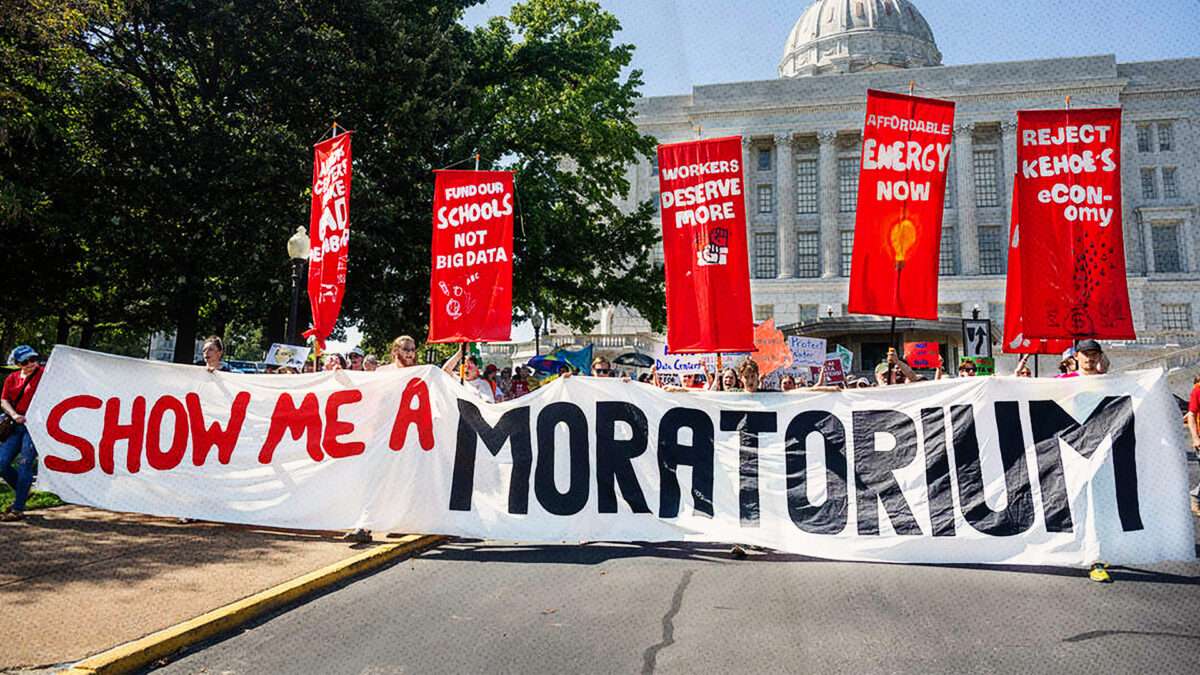
Data Center Bans Won't Stop AI. They'll Barely Slow It Down.

Protesters demanding a data center moratorium | Emily Curiel/TNS/Newscom.

With a contentious midterm election less than a week away, one cause has unified voters and candidates across the political spectrum: slowing down AI. 

A friend of mine who directs tens of millions of dollars in midterm election spending says he's never seen voter salience of an issue—AI, broadly—increase so quickly. In July, Gallup found that 39 percent of Americans thought AI does more harm than good, up from 31 percent in 2025. Only 9 percent of Americans, meanwhile, thought the technology did more good than harm (down from 12 percent last year). 

Public sentiment has since soured even more. An October ABC News/Washington Post/Ipsos poll found that 57 percent of Americans think AI is bad for society, while a staggering 66 percent said they opposed new data center construction in the United States.

Politicians on the left and right have seized on this political sentiment and offered their own data center stiff-arm policy du jour. However, even a full e-brake on data center construction would do little to stop AI progress. 

In August, Arvind Narayanan, director of the Princeton Center for Information Technology Policy and co-author of AI Snake Oil: What Artificial Intelligence Can Do, What It Can't, and How to Tell the Difference, claimed that a data center moratorium would basically not slow AI development at all. 

Using a back-of-the-envelope calculation, he concluded (under some reasonable assumptions) that a one-year data center moratorium in a "typical U.S. state" would slow down AI progress nationally by only five to 10 hours. Assuming that at least half of data center developers would avoid a moratorium by building their facilities elsewhere, a one-year freeze on construction in larger states like New York would set AI in America back by less than one day, according to Narayanan. 

My own modeling of this question reaches essentially the same conclusion as Narayanan's, but rather than assuming computing power will continue growing at its current rate, it treats future growth as dependent on how much computing capacity gets built. I considered three theoretical policy regimes: a full stop on new data center construction and on replacement of depreciated graphics processing units (GPUs); a full stop on new data center construction only; and no restrictions whatsoever. 

The point is that, as a federal policy, standing athwart data centers yelling "Stop!" doesn't accomplish the outcomes that moratorium-ites claim to want. And, while some local policies could slightly impede center growth, the only way to hamper the progress of frontier models would be to enact an extremely draconian policy regime—one that goes beyond moratoriums for new data centers and prohibits GPU upgrades in existing facilities—which no one is actually proposing or close to implementing. 

What does this all tell us about where advocates of any stripe should put their efforts? 

For those in favor of accelerating AI, on the one hand, it provides comfort in that data center construction, even in the extreme, is not a binding constraint to AI advancement. But on the other hand, the political energy currently concentrated on mobilizing the backlash won't stay focused there forever; an issue where more than two-thirds of people are even tangentially opposed to your "side" is not one that easily disappears.

For doomers, it means if the goal is a "pause" of some sort on the ability of AI technology to, say, replace you in your job, targeting data center construction isn't the best way to go about it. It may be a useful galvanizing node in the broader policy fight, but don't expect it to cause any meaningful change in the current trajectory—whatever you believe that to be. 

The ineffectiveness of data center moratoriums doesn't make the policy on its own more or less optimal. But if the data center protests are a proxy for broader AI-induced anxiety about large language models crowding out human pursuits, causing unemployment, or destroying the environment, protestors will need to find another leverage point.

The post Data Center Bans Won't Stop AI. They'll Barely Slow It Down. appeared first on Reason Magazine.

  •  

Massachusetts Voters Don't Seem Inclined To Repeal Marijuana Legalization Next Week

a hand drops a card bearing a cannabis leaf into a ballot box | Picsfive/M Akbar Arda/Dreamstime/Fatima Ruiz

A decade ago, 54 percent of Massachusetts voters said yes to Question 4, a ballot initiative that legalized possession, home cultivation, and commercial distribution of recreational marijuana. Judging from recent surveys, voters are not inclined to reverse that decision by approving Question 8, an initiative on next Tuesday's ballot.

Question 8, a.k.a. the Eliminate Recreational Marijuana Sales and Allow Limited Possession Initiative, would permit adults 21 or older to possess up to an ounce of cannabis. But they would have to get it from the black market, since Question 8 would not allow them to grow it or buy it from state-licensed retailers.

The initiative "would keep personal possession of marijuana legal, keep medical marijuana legal, and stop commercial marijuana stores," its supporters say. They allege that legalization has impaired "productivity" and led to increases in "fatal car accidents," "workplace injuries," "healthcare costs," "crime (like DUI's)," "ER visits," and "mental health conditions like psychosis, severe anxiety, and schizophrenia, particularly in young adults."

Voters do not seem impressed by those arguments. In eight polls between mid-February and mid-October, support for Question 8 ranged from 20 percent to 41 percent. In the most recent survey, conducted by The Boston Globe, 71 percent of respondents said they planned to vote no on Question 8, which suggests that experience with legalization has substantially increased opposition to pot prohibition in Massachusetts.

Question 8's sponsor, the Coalition for a Healthy Massachusetts, is funded almost entirely by Smart Approaches to Marijuana (SAM). As of October 20, the Virginia-based group had spent $3.7 million on the project, compared to $2.8 million in spending by the opposition, which includes several marijuana businesses.

SAM's co-founder, Kevin Sabet, who served as a drug policy adviser during the Clinton, George W. Bush, and Obama administrations, says he was motivated by the concerns of Massachusetts residents who approached him. "Many of them voted for this initiative 10 years ago and feel betrayed," Sabet told WGBH, an NPR station in Boston. If so, the polls indicate such converts are far outnumbered by former Question 4 opponents who have traveled that road in the opposite direction.

"We're under no illusions that the bluest state in the country is going to pass this easily with flying colors," Sabet told WBUR, another Boston NPR station, a few weeks ago. "But we want to have that conversation."

The conversation clearly is not going the way Sabet hoped. Massachusetts, which was the fifth state to legalize recreational marijuana, is now one of two dozen, which together account for most of the U.S. population. In October 2025, Gallup put nationwide support for marijuana legalization at 64 percent, which was down a bit from the peak of 70 percent recorded in 2023 but still 16 points higher than in 2012, when Colorado and Washington started this ball rolling.

Public support for legalizing recreational marijuana tends to be even higher in states that have done it. In Civiqs surveys last December, support in 15 states where voters had approved legalization ranged from 62 percent in Missouri to 77 percent in Oregon. It had increased since legalization in every state but New Jersey, where it was down one point from the 67 percent of voters who approved Public Question 1 in 2020. In Massachusetts, support had risen from 54 percent to 76 percent.

The fate of two other drug policy initiatives that voters will consider next week is less clear. As far as I can tell, pollsters have not asked voters about them.

Colorado's Proposition 132 would make manufacturing or distributing any amount of illicit fentanyl a Level 1 drug felony punishable by a mandatory minimum sentence of eight years. Under current law, the penalties vary depending on the amount of fentanyl involved.

In Idaho, House Joint Resolution 4, a proposed constitutional amendment, would strip voters of the power to legalize marijuana or any other psychoactive substance. If the initiative passes, which requires approval by a simple majority, that power will be reserved to the state legislature.

The post Massachusetts Voters Don't Seem Inclined To Repeal Marijuana Legalization Next Week appeared first on Reason Magazine.

  •  

Azerbaijan Calls for EU Gas Investment Decisions as Pipeline Capacity Reaches Limit

Speaking at a briefing in Brussels attended by EU Today, Azerbaijani presidential envoy Elchin Amirbayov said his country was prepared to increase natural gas exports to Europe, but warned that insufficient pipeline capacity, investment restrictions and uncertainty over long-term contracts were preventing further expansion.

Azerbaijan is prepared to increase natural gas supplies to the European Union, but further expansion will require investment in transport infrastructure and long-term commitments from European buyers, according to Elchin Amirbayov, Representative of the President of Azerbaijan on Special Assignments.

Speaking at the Azerbaijani Embassy in Brussels on 21 October, during a meeting attended by EU Today, Amirbayov outlined the difficulties facing efforts to expand the Southern Gas Corridor, which has become an important component of Europe’s strategy to diversify energy imports away from Russia.

“Today it’s fully booked already by all those contracts which we have concluded with all recipients of our gas,” Amirbayov said, referring to existing pipeline capacity.

He stressed that Azerbaijan possessed additional natural gas resources but that increasing deliveries depended on the availability of transportation infrastructure and commercially viable investment arrangements.

“As far as our capacity to provide them with gas is concerned, it is there because we have necessary resources. But what we need to be able to do that is also transportation infrastructure,” he explained.

Europe’s 2027 gas target faces infrastructure constraints

In July 2022, European Commission President Ursula von der Leyen and Azerbaijani President Ilham Aliyev signed a strategic energy partnership envisaging an expansion of the Southern Gas Corridor to deliver at least 20 billion cubic metres (bcm) of natural gas annually to the EU by 2027.

The agreement formed part of Europe’s response to Russia’s invasion of Ukraine and the subsequent restructuring of European energy supplies.

According to the European Commission, Azerbaijan and its state energy company SOCAR supplied 12.5 bcm to EU member states in 2025, an increase of more than 50 per cent compared with 2021.

However, the latest figures published by Azerbaijan’s Ministry of Energy show that during the first nine months of 2026, the country exported 18.4 bcm worldwide, including 8.6 bcm to European destinations.

The figures underline the challenge of achieving the planned increase in deliveries without additional investment.

The Southern Gas Corridor includes the South Caucasus Pipeline, the Trans-Anatolian Natural Gas Pipeline (TANAP) and the Trans Adriatic Pipeline (TAP), connecting Azerbaijani production with European markets.

TAP completed an initial capacity expansion in early 2026, adding 1.2 bcm annually. Further expansion will depend on additional infrastructure and sufficient contractual demand.

As EU Today previously reported, Azerbaijan began supplying natural gas to Germany and Austria in January 2026, extending its presence in central European markets.

Long-term contracts and investment financing

Amirbayov emphasised that additional gas infrastructure could not be developed without long-term commercial arrangements.

“Gas being different from oil, it has to be based on long-term contracts, on long-term expressed willingness,” he said.

He also raised the difficulties created by European restrictions on financing fossil-fuel infrastructure, suggesting that EU institutions and member states needed to reconcile their energy security requirements with existing investment policies.

The regulatory situation is complex. The European Investment Bank no longer finances new unabated fossil-fuel energy projects, including conventional gas infrastructure. However, the EU taxonomy framework permits certain gas-related activities under specific conditions.

Amirbayov said European countries had differing energy requirements and were at different stages of the transition away from fossil fuels. Those differences complicated agreement on the financing of additional gas supplies.

He also explained that Azerbaijan’s own investment resources were heavily committed to reconstruction and rehabilitation projects in territories recovered following the conflict with Armenia.

“We cannot do that job ourselves for the reasons I just explained,” he said, referring to the financial requirements of expanding export infrastructure.

Natural gas and Europe’s energy transition

Amirbayov acknowledged Azerbaijan’s own investment in renewable energy, including wind, solar and hydropower. He highlighted the Caspian Sea’s potential for offshore wind generation and described the country’s efforts to increase renewables in its domestic energy system.

Nevertheless, he questioned whether natural gas could be replaced by renewable sources within a short period.

“I don’t think it’s realistic,” he said when discussing the prospect of replacing natural gas within the next year or two.

His comments come as Brussels continues to balance its climate objectives with energy security requirements and the planned reduction of Russian gas imports.

Azerbaijan has increasingly positioned itself as an alternative supplier to European countries seeking to diversify their energy sources. However, Amirbayov made clear that further expansion would depend on decisions taken by European governments, financial institutions and energy companies.

“We are there, ready to assist,” he said, adding that further progress would require clear intentions and decisions from the European side.

The immediate question is whether European buyers and policymakers can establish sufficient contractual certainty and investment arrangements to support the additional pipeline capacity envisaged in the 2022 partnership.

  •  

Gulf states must rethink trillion-dollar defence in light of US-Iran war, says report

IISS study questions overreliance on American support and ‘overdependence on expensive, high-end systems’

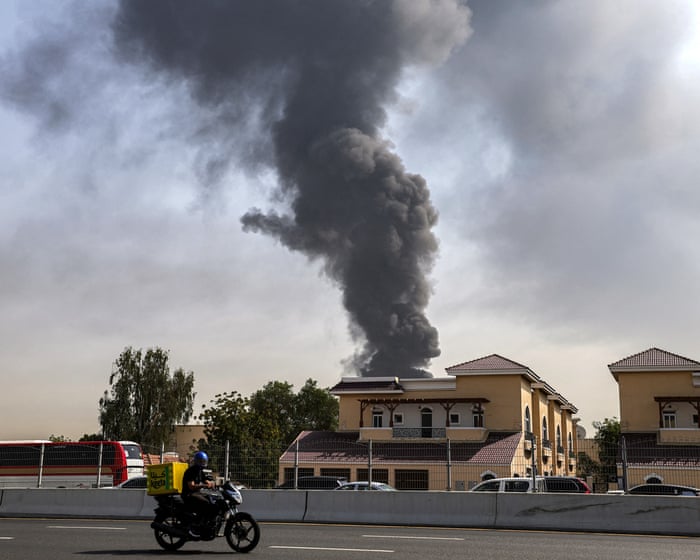
Gulf states are going to have to reconfigure their trillion-dollar defences given the damage inflicted on their economies and the questionable continued value of US bases in the face of Iranian attack, according to a study by the International Institute for Strategic Studies.

The report says that in the weeks before the 8 April ceasefire, 12 regional states, overwhelmingly in the Gulf, faced 4,670 Iranian one-way attack drones and more than 1,400 ballistic missiles. Nearly half were aimed at the United Arab Emirates. Although the vast majority were repelled, one estimate of the damage to energy infrastructure cited by the report is put as high as $58bn (£43bn).

Continue reading...

© Photograph: AFP/Getty Images

© Photograph: AFP/Getty Images

© Photograph: AFP/Getty Images

  •  
❌