
❌

Reading view

Russian Drone Strike Kills 14 at Dnipro Railway Station as Ukraine Faces New Wave of Attacks

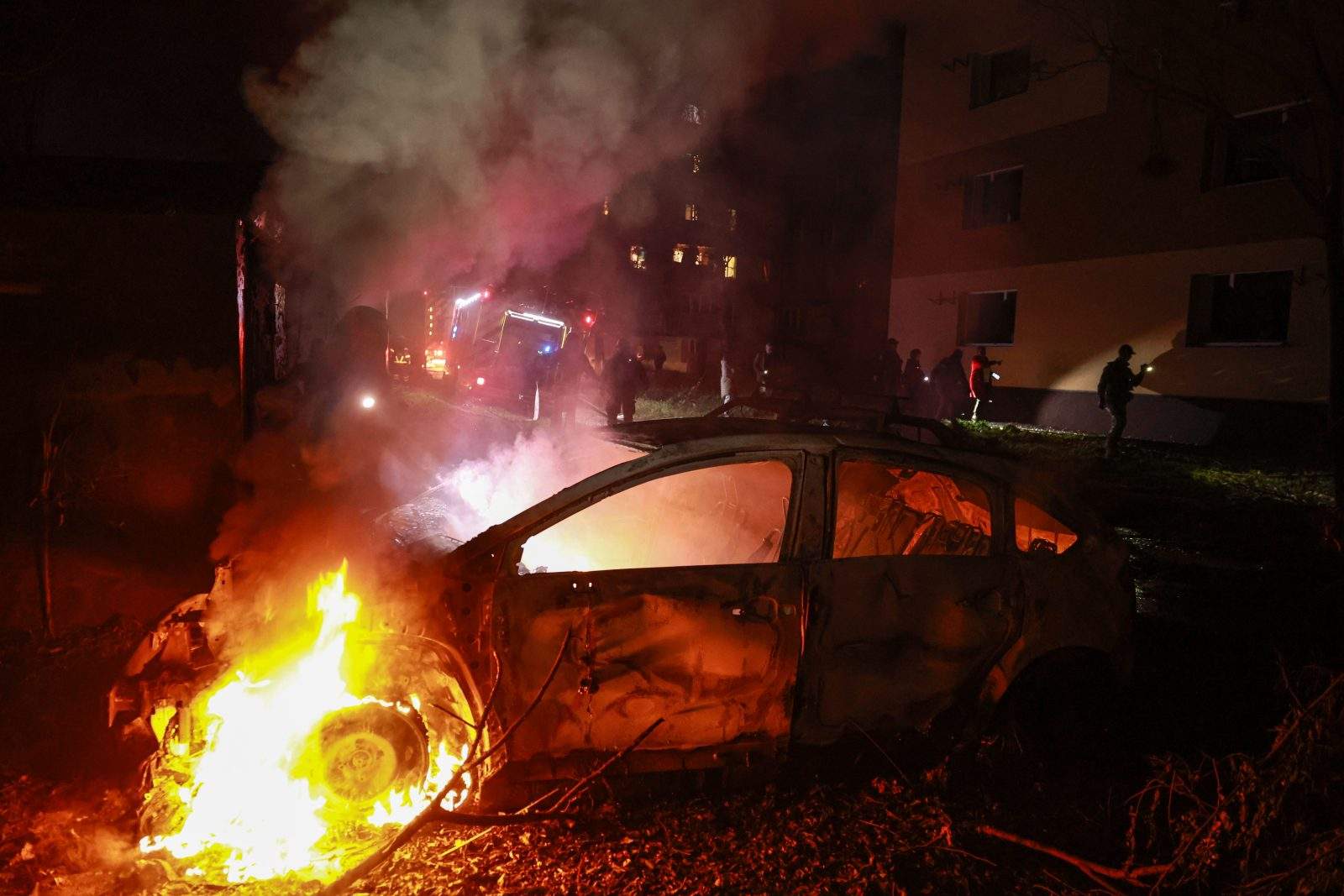
A Russian jet-powered drone struck a crowded railway platform in the Ukrainian city of Dnipro on Thursday, killing at least 14 people and injuring 14 others. The attack has renewed questions about the protection of civilian transport infrastructure and Ukraine’s ability to defend its cities against increasingly varied aerial threats.

At least 14 people were killed when a Russian drone struck the main railway station in Dnipro on 29 October, hitting a platform where passengers were waiting beside two trains.

The attack took place at approximately 11am local time, according to Ukrainian officials, and struck an area occupied by a commuter train and a scheduled passenger service.

Ukraine’s state railway operator, Ukrzaliznytsia, said the drone hit the platform where train No. 866, operating between Dnipro and Zaporizhzhia, was standing.

The number of fatalities was subsequently confirmed by Oleksandr Hanzha, head of the Dnipropetrovsk regional military administration.

Fourteen people were also reported injured, including an 11-year-old boy. Six of the wounded were in serious condition, with medical personnel treating multiple shrapnel injuries.

The attack occurred despite an elevated warning of aerial danger.

Ukrzaliznytsia reported that passengers remained on the platform when the drone struck, raising questions about the practical difficulties of evacuating busy railway stations during air-raid alerts.

A Drone Penetrates Ukraine’s Air Defences

According to Ukraine’s Air Force, Russian forces launched four jet-powered attack drones towards Dnipropetrovsk region.

Three were intercepted by Ukrainian air defences, while the fourth struck the railway platform.

The use of jet-powered unmanned aircraft is significant because these systems present different interception challenges from the slower propeller-driven drones frequently used in Russian attacks.

Their speed can reduce the time available for detection, identification and engagement, particularly when an attack is directed towards an urban area with substantial civilian activity.

The circumstances of the Dnipro strike nevertheless require further investigation, including the precise drone model, its flight path and the conditions under which the aircraft penetrated Ukrainian defences.

The railway operator’s account indicates that the platform was crowded when the attack occurred.

Dnipro Mayor Borys Filatov described the incident as a tragedy and emphasised that the victims were ordinary civilians using public transport.

Emergency services, police and medical teams were deployed to the station, where rescuers treated the injured and recovered the bodies of those killed.

Railways Remain Essential to Ukraine

Ukraine’s railway network has retained considerable importance throughout Russia’s full-scale invasion, which began in February 2022.

With civilian air transport severely restricted, trains provide a principal means of travelling between cities and moving people away from areas exposed to military operations.

Rail services also support the movement of humanitarian supplies, commercial goods and essential equipment.

Dnipro is especially important because of its position in central-eastern Ukraine and its transport connections with areas nearer the front line.

The route towards Zaporizhzhia serves a population that has experienced repeated attacks and displacement during the war.

Disruption to railway services therefore affects more than transport schedules. It can interfere with access to employment, medical treatment, family networks and evacuation routes.

Railway infrastructure may also have military logistical functions, but this does not remove the legal protections afforded to civilians and civilian objects under international humanitarian law.

The law requires parties to distinguish between military objectives and civilians, and prohibits indiscriminate attacks.

Whether a particular strike constitutes a violation depends on evidence concerning the target, intended military advantage, precautions taken and foreseeable civilian harm.

Ukrainian authorities have characterised the Dnipro attack as an assault on civilians. Russia had not provided a substantiated explanation for the specific strike in the reporting available on Thursday.

Further Fatalities Across Ukraine

The attack formed part of a wider series of Russian strikes against Ukrainian cities on 29 October.

In Chernihiv, two teenage girls were killed in an attack on a central street, while an additional strike in Kremenchuk killed three people at a residential building.

The incidents brought the reported death toll from these attacks to at least 19.

They occurred as a temporary localised ceasefire around Russian-occupied Oleshky, in Kherson region, continued to permit preparations for humanitarian assistance.

The contrast illustrates the limited geographical scope of the Oleshky arrangement.

Although the ceasefire offers an opportunity to deliver supplies to civilians trapped by the fighting, it does not represent a general cessation of hostilities.

Zelensky Calls for Continued Pressure on Russia

President Volodymyr Zelensky condemned the Dnipro attack and urged Ukraine’s international partners to maintain pressure on Moscow.

He argued that easing sanctions while Russian forces continued striking civilian areas would undermine efforts to secure a reduction in hostilities.

The attack also adds urgency to Ukraine’s continuing requests for air-defence assistance, particularly systems and interceptors capable of addressing multiple categories of aerial threat.

European governments face difficult decisions about supplying additional equipment while maintaining sufficient stocks for their own security requirements.

For Ukraine, the immediate priority remains the treatment of the injured, investigation of the strike and restoration of safe railway operations.

For its international partners, the incident raises a question extending beyond Dnipro: how to protect the civilian infrastructure upon which daily life depends while Russia retains the capacity to launch repeated aerial attacks across the country.
  •  

NATO Confronts Growing Black Sea Threat as Drone Attacks Target Commercial Shipping

France has deployed a maritime patrol aircraft to Romania following a series of attacks on civilian vessels near NATO territory. The escalating threat has prompted closer cooperation between Romania, Bulgaria and Turkey, raising questions about maritime security and the protection of Europe’s eastern flank.

A series of drone attacks on commercial shipping in the western Black Sea has brought the consequences of Russia’s war against Ukraine increasingly close to NATO territory, prompting additional military surveillance and renewed regional defence cooperation.

France has temporarily deployed an Atlantique 2 maritime patrol aircraft to Romania, while NATO members bordering the Black Sea are strengthening arrangements to monitor shipping routes, identify airborne threats and protect critical infrastructure.

The French aircraft began operating from Romania’s Mihail Kogălniceanu airbase on 18 October and is scheduled to continue reconnaissance missions until 6 November.

Its deployment follows repeated attacks on merchant vessels near Romania and Bulgaria, both members of NATO and the European Union.

At least eight cargo ships have been struck in the region during October, with approximately 34 sailors reported dead or missing, according to figures reported by Reuters on 27 October.

The incidents have transformed commercial maritime security into an increasingly urgent issue for European defence planners.

Commercial vessels enter the conflict zone

The latest escalation has centred on shipping routes serving Ukraine’s Danube ports and commercial traffic passing through the western Black Sea.

Russia’s attacks on Ukrainian maritime infrastructure have increased the importance of alternative export routes, including those connecting the Danube to international shipping lanes.

However, recent incidents demonstrate that geographical proximity to NATO territory does not necessarily provide commercial vessels with protection from the effects of the conflict.

On 23 October, a drone struck a Comoros-flagged cargo vessel near the Romanian port of Constanța.

According to maritime security company Ambrey, the vessel was hit approximately 16 nautical miles east of the port and subsequently capsized.

One crew member was reported dead, nine were rescued and three remained missing in the initial casualty figures.

Ambrey assessed it as highly likely that Russian forces carried out the attack, pointing to the vessel’s links with Ukrainian Danube ports.

That assessment represents an attribution by a commercial security organisation, rather than a final determination by an international investigative body.

Other incidents have similarly raised questions over responsibility.

Ukraine has accused Russia of attacking civilian shipping, while Bulgarian authorities have acknowledged difficulties in conclusively identifying the operators of drones involved in some strikes.

France strengthens maritime surveillance

Romania’s Defence Ministry announced on 27 October that the Atlantique 2 deployment followed a request from Bucharest in response to the deteriorating security situation.

The aircraft is conducting surveillance and reconnaissance over the western Black Sea, working with Romanian naval authorities and maritime rescue coordination services.

Its principal responsibilities include identifying hazards to navigation and improving awareness of threats to critical infrastructure within Romania’s exclusive economic zone.

That infrastructure includes offshore energy facilities and maritime installations whose protection is increasingly relevant to European energy security.

The deployment adds to Romanian naval patrols conducted by ships, helicopters and unmanned systems.

Romanian authorities are also providing navigational warnings and recommended routes to commercial vessels.

Nevertheless, additional surveillance does not automatically prevent attacks.

The practical challenge lies in detecting relatively small unmanned aircraft or maritime drones, determining their intentions and responding before they reach civilian targets.

Romania, Bulgaria and Turkey coordinate their response

The security crisis was also discussed at a trilateral meeting of defence ministers in Sofia on 28 October.

Romania’s Defence Minister, Ștefan-Radu Oprea, met his Bulgarian counterpart, Dimitar Stoyanov, and Turkey’s Defence Minister, Yaşar Güler, to examine the consequences of attacks on commercial shipping.

According to the Romanian Defence Ministry, the ministers discussed closer intelligence-sharing, improved maritime surveillance and better coordination between their naval forces.

They also reaffirmed the importance of the existing Black Sea mine-countermeasures initiative involving the three countries.

Maritime mines remain a persistent hazard because they can drift beyond their original deployment areas, endangering civilian vessels irrespective of their destination or ownership.

The trilateral format provides a practical mechanism for neighbouring countries to coordinate activities while retaining responsibility for their respective national waters.

It also gives Turkey a central role in regional discussions, reflecting its position on the Black Sea and its control of access through the Turkish Straits under the Montreux Convention.

The limits of NATO’s maritime protection

The attacks raise a complicated legal and operational question: what responsibilities do NATO members have when civilian ships are attacked near their coastlines?

The distinction between territorial waters and an exclusive economic zone is important.

A coastal state’s territorial sea generally extends up to 12 nautical miles from its baseline, while its exclusive economic zone can extend considerably further and confers particular economic and jurisdictional rights.

An attack within a NATO member’s exclusive economic zone does not automatically constitute an armed attack against that member’s territory.

Nor does every strike on a civilian ship near NATO territory automatically trigger the collective-defence provisions of Article 5.

The circumstances, attribution, location and consequences of an incident would all influence the response.

This creates a security problem in which threats can affect European economic interests without necessarily crossing a threshold requiring collective military action.

Maritime trade and energy infrastructure face increasing risks

The implications extend beyond individual vessels.

Repeated attacks can increase insurance costs, complicate shipping schedules and discourage operators from using particular routes.

They can also affect Ukrainian agricultural exports and the wider commercial networks linking Black Sea ports to European markets.

Offshore energy installations face related vulnerabilities, particularly where surveillance and response capabilities are insufficient.

For NATO, the challenge is therefore to strengthen deterrence and protection without unintentionally escalating the conflict.

France’s reconnaissance deployment and the trilateral cooperation between Romania, Bulgaria and Turkey indicate that regional governments are moving towards a more coordinated response.

However, the continuing attacks demonstrate the difficulties of protecting civilian maritime activity against comparatively inexpensive unmanned systems.

The longer-term question is whether increased surveillance, counter-drone capabilities and naval cooperation can make western Black Sea shipping sufficiently secure while the war in Ukraine continues.

  •  

Russian Air Strikes Kill 20 in Zaporizhzhia, Including Three Children, as Rescuers Search Rubble

At least 30 people have been injured after Russian guided aerial bombs struck residential buildings in the Ukrainian city of Zaporizhzhia. The fate of several residents remains unknown as emergency workers continue searching collapsed apartment blocks.

At least 20 civilians, including three children, have been killed in Russian air strikes on the southern Ukrainian city of Zaporizhzhia on Saturday morning, 10 October, according to regional authorities. Rescue workers are continuing to search the ruins of residential buildings, with several people still unaccounted for.

The death toll rose from eight to 30 as emergency crews recovered more victims. The Zaporizhzhia regional military administration confirmed that three children were among those killed, while earlier reports recorded 16 injured, including three children. Two of the wounded were in a serious condition.

Authorities had previously reported that 12 people remained missing, although they did not provide a revised figure after the death toll increased. Rescue operations continued amid concerns that further victims could be trapped beneath collapsed concrete and other debris.

Apartment Buildings Destroyed by Guided Bombs

Russian forces launched the attack shortly before dawn, using guided aerial bombs against residential areas of Zaporizhzhia. According to the regional administration’s preliminary assessment, one five-storey apartment building suffered a direct hit and was destroyed, while part of another residential block collapsed.

The attack damaged at least 26 residential buildings in the Shevchenkivskyi and Voznesenivskyi districts, comprising 23 apartment blocks and three private houses. Three buildings sustained particularly extensive damage, while non-residential properties were also affected.

Firefighters, police officers and medical personnel were deployed to the affected neighbourhoods, supported by municipal workers and local residents. Emergency crews continued removing debris and examining unstable structures while officials assessed the extent of the destruction.

The Ukrainian National Police said that officers were documenting the consequences of the attack, including damage to civilian infrastructure. Investigators were also recording evidence for possible war crimes proceedings.

Search Continues as Casualty Figures Rise

The scale of the destruction has complicated efforts to establish the number of victims. The initial casualty figures increased repeatedly as rescuers gained access to damaged buildings and recovered bodies.

Earlier in the morning, authorities reported four deaths. The figure subsequently rose to seven, then eight, before reaching 11 shortly after midday. The number of injured also increased as information emerged from hospitals and emergency services.

At 10.15am local time, 16 people were confirmed wounded. Three were children, while two patients were described as seriously injured. The regional administration said most of the remaining casualties were in a condition of moderate severity.

Officials warned that the casualty figures could change as operations continued. The authorities had not established how many of those initially reported missing might still be trapped in the wreckage, and the recovery of additional bodies had not been accompanied by a revised missing-person count.

Zaporizhzhia Faces Continued Russian Air Attacks

Zaporizhzhia, an industrial city in south-eastern Ukraine, has remained exposed to Russian aerial attacks throughout the full-scale invasion. Its proximity to Russian-held territory in the surrounding region leaves residential districts vulnerable to aircraft-launched weapons.

Guided aerial bombs present a particular challenge for Ukrainian air defences. Unlike conventional unguided bombs, they can be fitted with glide and guidance systems allowing Russian aircraft to release them from considerable distances. Their substantial explosive payloads can cause extensive structural damage when they strike apartment buildings.

Saturday’s attack comes only three days after Russia launched another large-scale assault across Ukraine, targeting energy infrastructure and residential areas. As EU Today reported on 7 October, that operation killed at least 11 people and caused damage in several Ukrainian cities, including Zaporizhzhia.

The latest fatalities also follow earlier attacks on civilian facilities in the city. In February, Russian drones struck a maternity hospital in Zaporizhzhia, causing a fire and injuring patients.

The repeated strikes have placed continuing pressure on the city’s emergency services, which must respond to new attacks while repairing damage to residential buildings and public infrastructure.

Day of Mourning Declared

The Zaporizhzhia authorities have declared Sunday, 11 October, a day of mourning for those killed in Saturday’s bombardment. The announcement followed confirmation that the death toll had reached 11, including three children.

The Russian attack has also renewed attention to the vulnerability of densely populated urban areas to guided aerial bombs. Under international humanitarian law, deliberate attacks against civilians and indiscriminate attacks are prohibited, while all parties must distinguish between military objectives and civilian objects.

Ukrainian investigators are continuing to document the damage and civilian casualties. The precise circumstances of each impact, including the intended targets, have not yet been independently established.

For the families awaiting news of missing relatives, the immediate priority remains the search beneath the destroyed buildings. As of the latest available information on Saturday, rescue workers were still operating at the sites, and the authorities had warned that the number of dead could rise further.

  •  

NATO chief says ‘no imminent danger’ but rearmament of Europe continues in full swing

More rearmament talks are underway in Brussels as European politicians continue building an increasingly tense anti-Russian discourse. On Wednesday, September 30, defense ministers and industry representatives joined the Euronews Defense and Space Summit, focusing on the bloc’s growing defense expenditure and member cooperation.

The summit took place after weeks of allegations of hybrid attacks on EU members, which pushed the already tense rearmament narrative permeating the European political establishment up a couple more notches. It also followed, by only a couple of days, the Council of the EU’s announcement of the next phase of five European Defense Projects of Common Interest (EDPCIs) – projects that “allow EU countries to work together on major defense initiatives that are too large or too complex for individual countries to develop on their own.”

Read more: “Militarization of rules and minds” in Europe threatens workers and welfare

While separate, the two events shared several points in common, starting with a focus on increasing coordination between EU countries to arm more efficiently – and spend the billions of euros planned for defense over the coming years. They also emphasized sections of the military sector to receive the most attention – including drones and military capacities in Eastern Europe. 

This geographical focus goes beyond EU members, expanding to – at least – Ukraine and Moldova. Most EDPCIs – like the Drone and Counter-Drone European Resolve (DECODER) and the Eastern Flank Watch – list Ukraine as a partner. Ukrainian arms entrepreneurs were also present at the summit in Brussels, including leading figures from Fire Point, one of the country’s most prominent arms companies.

Very imminent investments into arms

While NATO Secretary General Mark Rutte stated in his summit intervention that there is “no imminent danger” to the alliance members’ territories, he and others did not hold back in offering anticipations of an unstable period.

Belgian Minister of Defense Theo Francken, for one, anticipated “more hybrid threat actions” and an overall “dark winter for Europe” – a scenario he seems to want to address by spending more on arms and cutting social services, as he has explicitly stated on numerous occasions.

“Europe has been very good in investing in soft power, in social security,” Francken said. “And it’s beautiful to have a pension system, to have social welfare systems when someone gets sick, when somebody loses his job – we have everything. But when there’s a war or there’s hybrid threats, we don’t have anything.”

Considering the significant amount of money European countries have already invested into armament, his assessment that “we don’t have anything” is inaccurate at best. 

It also remains contested on a regular basis on the streets of many European cities, where trade unions, students, and peace movements continue to protest against austerity budgets that aim to provide for war.

Europe needs a policy that builds security with its neighbors

In addition to large-scale demonstrations against social security and labor cuts in France’s proposed 2027 budget and student strikes against conscription in Germany last week, mobilizations are expected to grow over the coming months – including an international youth strike in November.

“We reject the militarization of our societies and support the young people who are refusing it,” the Stop ReArm Europe coalition wrote on September 23. “Thousands of high school students and university students across Europe are rising up to refuse militarization and the return of conscription.”

Read more: German students say ‘we don’t want to go to war’

“Nearly 20 million children in the EU – one in four – live at risk of poverty or social exclusion,” the group added. “Meanwhile, governments have committed to military spending that the EU’s own Defense Commissioner, Andrius Kubilius, puts at €7 trillion by 2035.”

“The trillions earmarked for militarized security will leave us staring down the barrel of a gun and indebted to global financiers,” Stop ReArm wrote, calling for a solidarity- and care-based alternative. “This must go hand in hand with a non-aligned foreign policy that resolves conflicts through diplomacy, upholds international law and human rights, and builds common security for all: security with our neighbors, not against them.”

  •  

How Ukraine became a cash cow for Europe’s war elite 

Is Ukraine becoming an “Eastern European Israel” for the EU? Sociologist and author Volodymyr Ishchenko joins Rania Khalek and Zoe Alexandra to discuss Ukraine’s eroding sovereignty, who profits from keeping the fighting going, and whether an off-ramp still exists to a war with Russia now costing Ukraine 27,000 casualties per month, according to Poland’s prime minister.

Europe is pushing record defense budgets and warning that Russia could test NATO within months. But this month Ukraine launched its largest drone attack yet on Moscow, Washington approved a $2.68 billion air defense sale, and the EU unblocked €6.6 billion in military aid. Is Europe readying to defend itself from a Russia with imperialist ambitions? Or preparing for a forever war, where profiteers abound and working-class Ukrainians do the fighting and dying at the direction of a state they’ve come to hate?

Ishchenko describes an emerging vision for Ukraine amongst Kyiv’s power brokers: a militarized, ethnonationalist frontier state serving as outsourced security for the European Union against Russia. Sound familiar? 

“Maybe NATO at this point is not an alliance for security, but actually a source of insecurity in Europe.” 

Watch full episodes of BT Live, join breakthroughnews.org as a member today!

  •  

European leaders fixate on Russia, avoid criticizing US at UNGA

Artificial intelligence was the concept of choice among European speakers during the first days of the United Nations General Assembly (UNGA). Prime ministers and presidents recognized opportunities and invoked stronger regulation – then returned to advocating for more military spending, planning deterrence, and avoiding harsh words for the Trump administration.

Read more: The AI frontier asks to be paced: anatomy of a panic

“I’m afraid I may lack originality in describing it [the situation in the world],” French President Emmanuel Macron remarked, referring to the overlaps between interventions. For once, he was not wrong. Most European speeches described the world in terms of crisis, yet failed to spell out the connections between that situation and the behavior of the United States. Macron’s speech was no true exception.

Instead, most seemed keen to endear themselves to the Trump administration. New-ish British Prime Minister Andy Burnham called the UK “America’s closest ally” and announced a new “AI defense partnership” with the US – giving listeners something to truly worry about when AI is concerned.

The East European anti-communist set

Others were even friendlier to the UNGA host country. Romanian President Nicușor Dan said it was a particular pleasure to address the assembly in the US, “a country with which Romania shares a long history of friendship, a nation towards which Romanians look with respect and gratitude, including for its essential contribution to the fall of the Iron Curtain and the opening of my country’s path towards democracy and freedom.”

Read more: Hybrid threats: Romania continues to self-sabotage through militarization

Remarks directed against Eastern European countries’ socialist past were echoed by Polish President Karol Nawrocki and Croatian Prime Minister Andrej Plenković. These speeches reaffirmed commitment to the West, including the North Atlantic Treaty Organization (NATO), and gratitude for positive changes these leaders perceived over the past 30 years.

“Millions of Romanians know from their own experience the difference between a communist system that oppressed them and stifled their initiative and freedom of choice, and a democracy that rewards work, innovation, and personal responsibility,” Dan added. 

None of these Eastern European leaders addressed the mass unemployment, emigration, and crumbling public services that soared while “work, innovation, and personal responsibility” took over.

Peace through protection, resilience through military strength

European interventions went to great lengths to reaffirm support for Ukraine and, perhaps more notably, criticism of the Putin administration. Plenty used the floor to repeat the belief that European countries must rearm in the face of a perceived – and still materially nonexistent – “Russian threat.”

As Ukrainian President Volodymyr Zelenskyy referred to a vision of “peace through protection” and showcased defense cooperation agreements, Burnham talked of resilience through military strength. 

Read more: ‘Ukraine is no longer a sovereign country,’ says sociologist Volodymyr Ishchenko

Some commended themselves for quickly approaching NATO’s 5% expenditure commitments. Others turned to “obstructions” of freedom of navigation – referring, of course, to the closure of the Strait of Hormuz caused by the illegal US-Israel war on Iran. Yet most European speeches did not even mention the US in this context, let alone offer comparable words of condemnation dedicated to Russia.

Spain vows to continue believing “humanity can continue to progress”

As has become customary, the speech delivered by Spanish Prime Minister Pedro Sánchez was among the few to stray from the underwhelming regional tone. Sánchez, whose administration has been attacked by the US government on several occasions, spoke of the conditions facing the world today as exacerbated by the selfishness, ignorance, and cruelty of some UN member states – not naming anyone in particular.

He singled out cruelty as the worst of these pillars driving powerful nations’ behavior in international spaces: “A cruelty that no longer flinches at the sight of a starving child’s ribs or a hospital reduced to rubble.”

Read more: Over 1 million years of children’s lives lost in Gaza during genocide, study finds

Sánchez said Spain would not give in to attacks on multilateral institutions, nor would it stop believing “that humanity can continue to progress.”

“We are not going to do it, because we want to live up to our children’s expectations. Because we know that, in a few years, future generations will look back. They will study this decisive decade. And they will ask us what role each of us played. They will ask us what we did when some countries began to break the rules and others decided to turn a blind eye. They will ask what we did when defending what we believed in began to cost dearly. And when that happens, we want to be able to tell them that we did not stop fighting. We did not. We want to be able to tell them that we gave everything to leave them a more peaceful, sustainable, and fairer world.”

  •  
❌