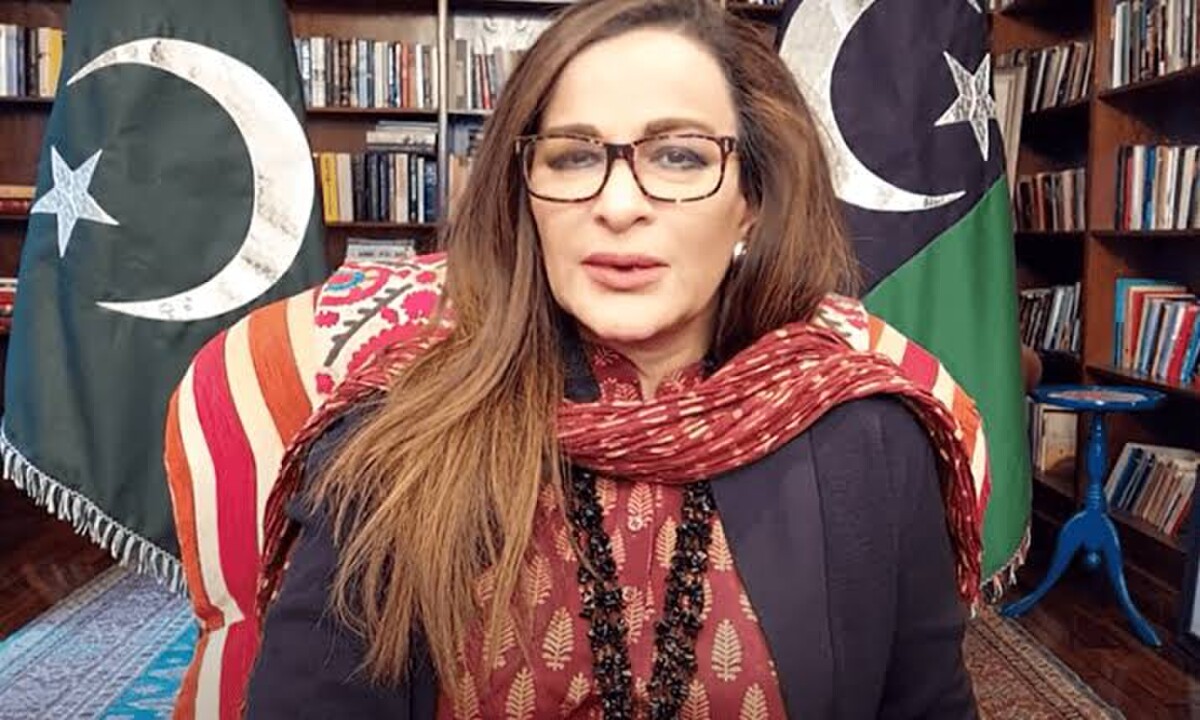
A PPP delegation called on Senate Opposition Leader Allama Raja Nasir Abbas on Friday and urged the opposition to join a proposed parliamentary committee on electoral reforms, Senator Sherry Rehman said after the meeting.
“He told us that he will respond [to the proposal] after consultation. We are hopeful that their response will be positive,” Rehman said in a video statement.
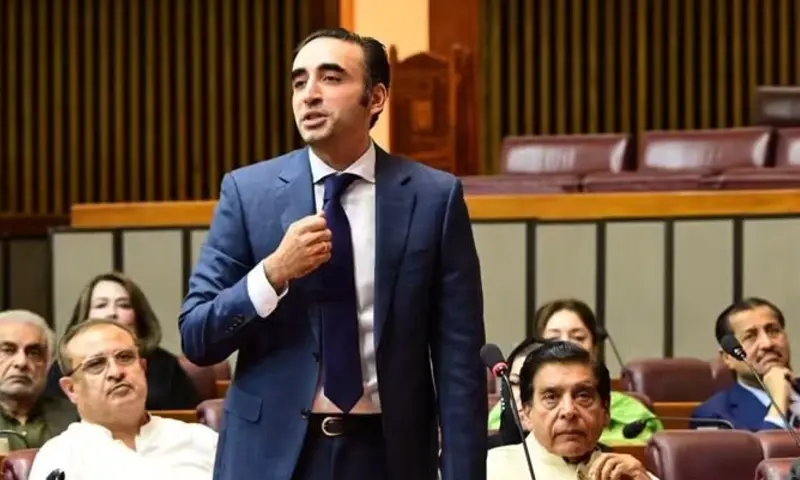
The proposal for the committee’s formation was shared by PPP chairperson Bilawal Bhutto-Zardari during the National Assembly (NA) on Thursday. He had said Parliament had decided to constitute a committee on electoral reforms in response to a PPP request and urged Opposition Leader in the NA Mehmood Khan Achakzai to nominate a representative to the committee since the opposition had described electoral rigging as a “fundamental issue”.
PTI lawmakers had quit the parliamentary standing committees last year on the directives of their party chief.
Another PPP delegation, comprising party’s secretary general Nayyar Bokhari, Senator Waqar Mehdi, Nadeem Afzal Chan and Rehman, visited Senate Opposition Leader Abbas today with yet another invitation to join the proposed body.
“Every political party should ensure its participation in the committee. We all know that the PTI has boycotted parliamentary committees. So we asked them to join this committee, play an active role in it, express their reservations and suggest reforms,” Rehman said in the video statement.
These committees, she said, were the “heart of parliamentary work”.
She further stated that the PTI should participate in other parliamentary committees as well and “strengthen Parliament’s role”.
Rehman added that Abbas had welcomed the PPP delegation, expressed gratitude to Bilawal and said they would respond to the proposal after consultation.
“We are hopeful that their response will be positive,” she said.
A day earlier, another PPP delegation invited Opposition Leader Mehmood Khan Achakzai to participate in the parliamentary committee to promote consultation and discussion among parliamentary representatives on electoral reforms.
Later, in a press conference, Raja Pervez Ashraf said the PPP delegation had a meeting with Achakzai on Bilawal’s instructions to invite him to join the committee.
“The PPP wants the PTI to participate in parliamentary standing committees as well as the electoral reforms committee,” he added.
Achakzai had sought time to consult before responding to the invitation, he said.
Addressing a rally in Karachi earlier this month, Bilawal had also extended an olive branch to the opposition parties, saying their positive engagement with the federal government could result in the reversal of governor’s rule in Khyber Pakhtunkhwa.
The PPP chairman had invited the opposition to join the Parliamentary electoral reforms process and “engage with the federal government”.
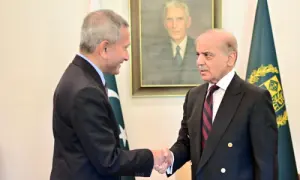
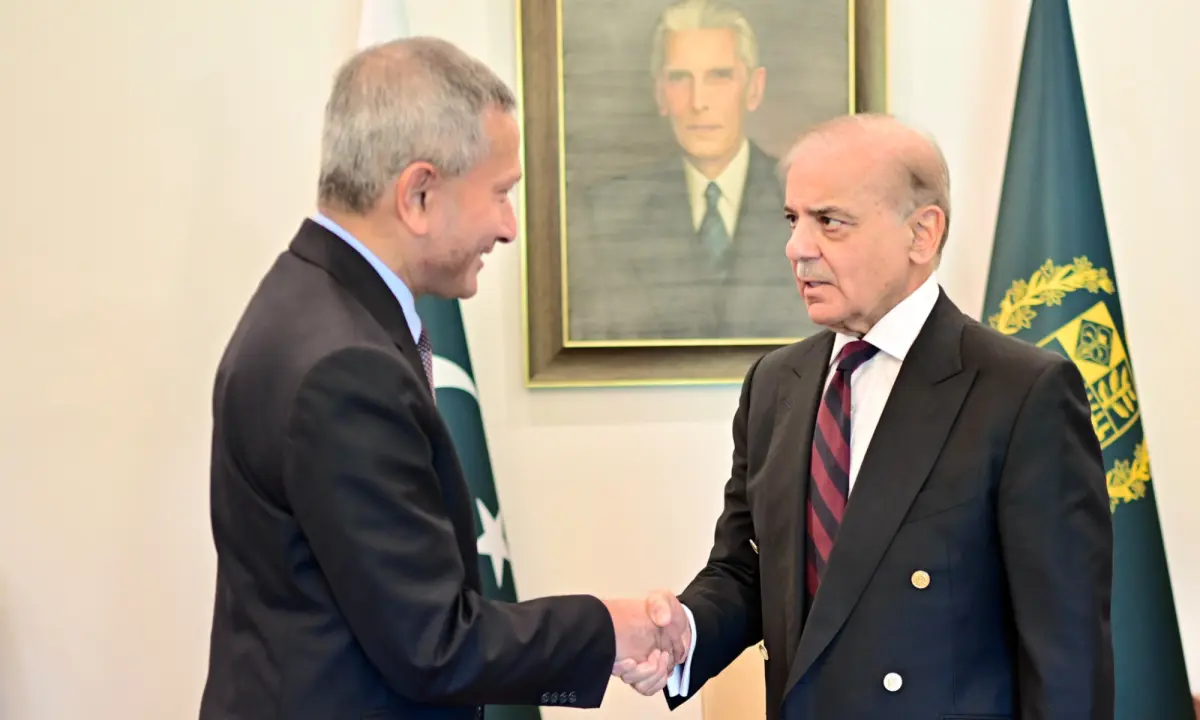
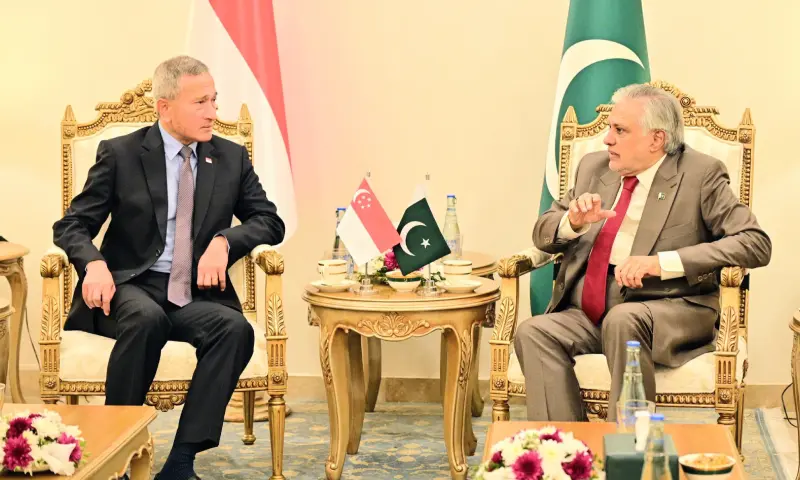
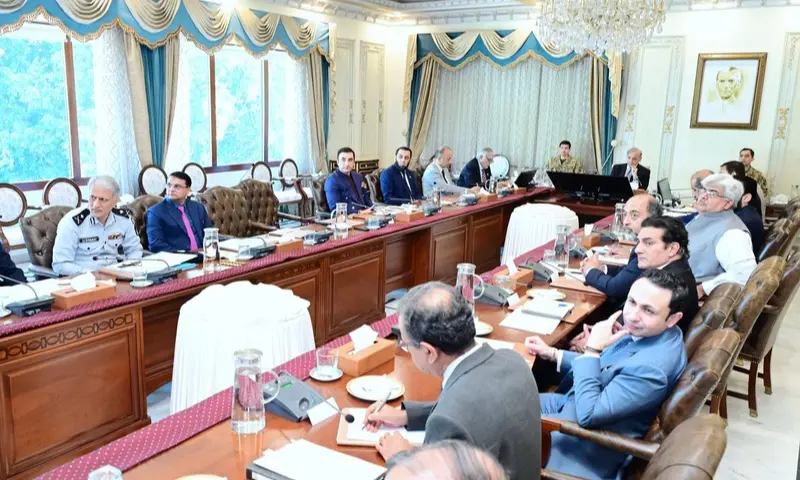
Prime Minister Shehbaz Sharif on Friday expressed admiration for Singapore’s “remarkable economic transformation” and achievements in innovation and development.
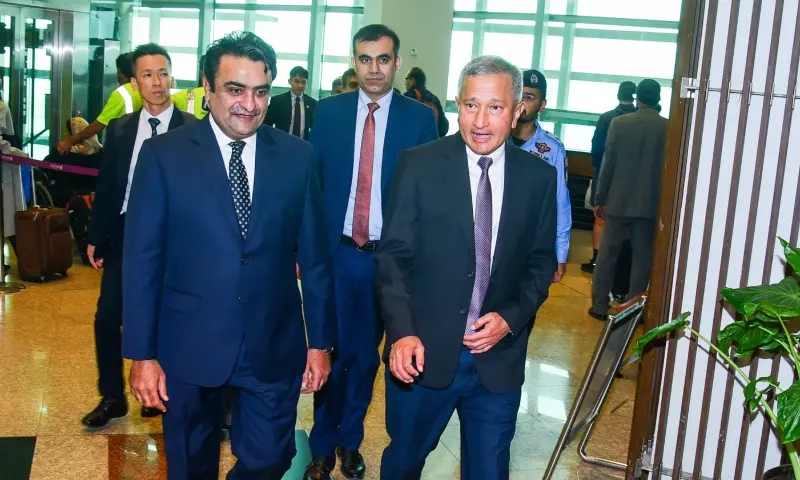
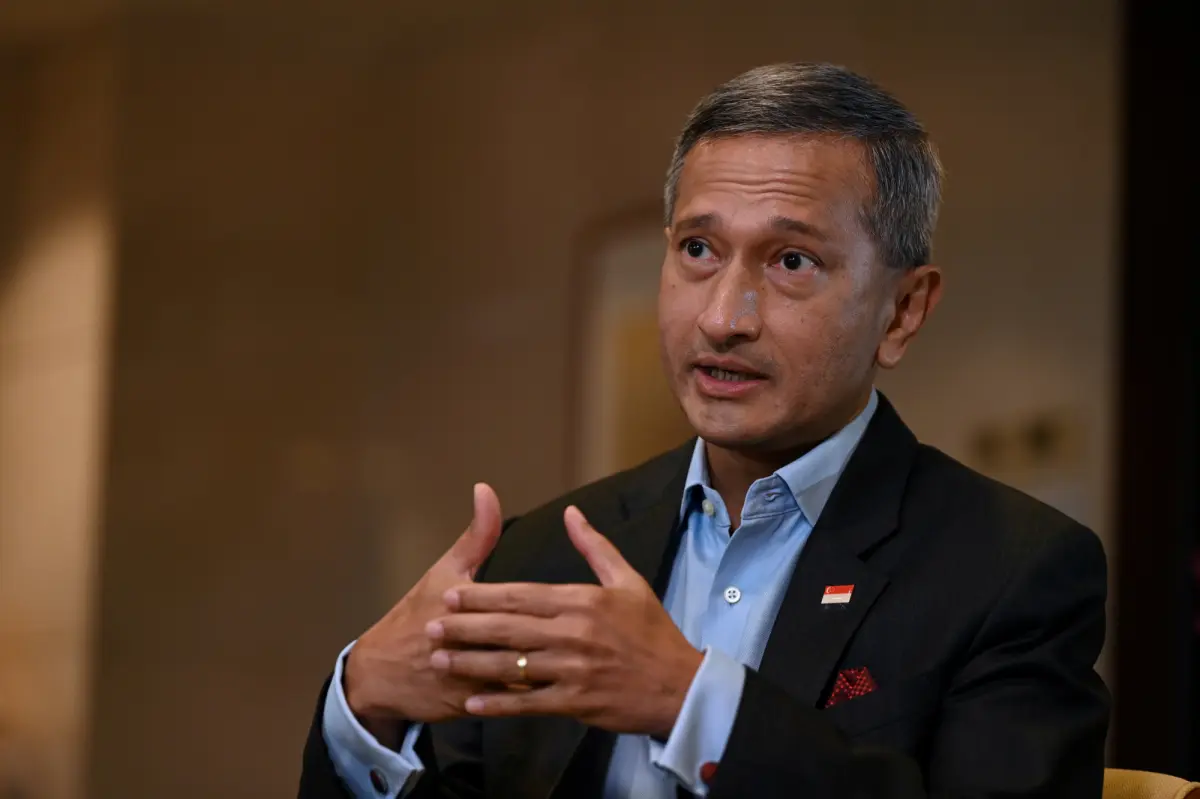
The development came during a meeting with Singapore’s foreign minister, Vivian Balakrishnan, who is currently in the country on an official visit.
According to the Prime Minister’s Office (PMO), the premier reaffirmed Pakistan’s commitment to further strengthening its longstanding and friendly relations with Singapore, particularly as the two countries are commemorating the 60th anniversary of the establishment of diplomatic relations this year.
“The prime minister expressed admiration for Singapore’s remarkable economic transformation and achievements in innovation and development. He underscored the importance Pakistan attaches to its partnership with Singapore, both bilaterally and multilaterally including within the Association of Southeast Asian Nations (Asean),” it said.
The statement said that the two sides discussed ways to enhance bilateral trade and investment and expand cooperation in priority areas, including the digital economy, fintech, infrastructure development, logistics, small and medium enterprises and the services sector. They also discussed exploring new avenues for mutually beneficial economic cooperation and enhancing people-to-people contacts.
“The two sides also exchanged views on regional and international developments and reaffirmed their commitment to continued engagement and cooperation at bilateral and multilateral fora,” it said.
Possible resumption of direct flights discussed
The meeting came shortly after Dar discussed with the visiting diplomat the possible resumption of direct flights between Pakistan and Singapore “to facilitate business travel and close contact between our peoples”.
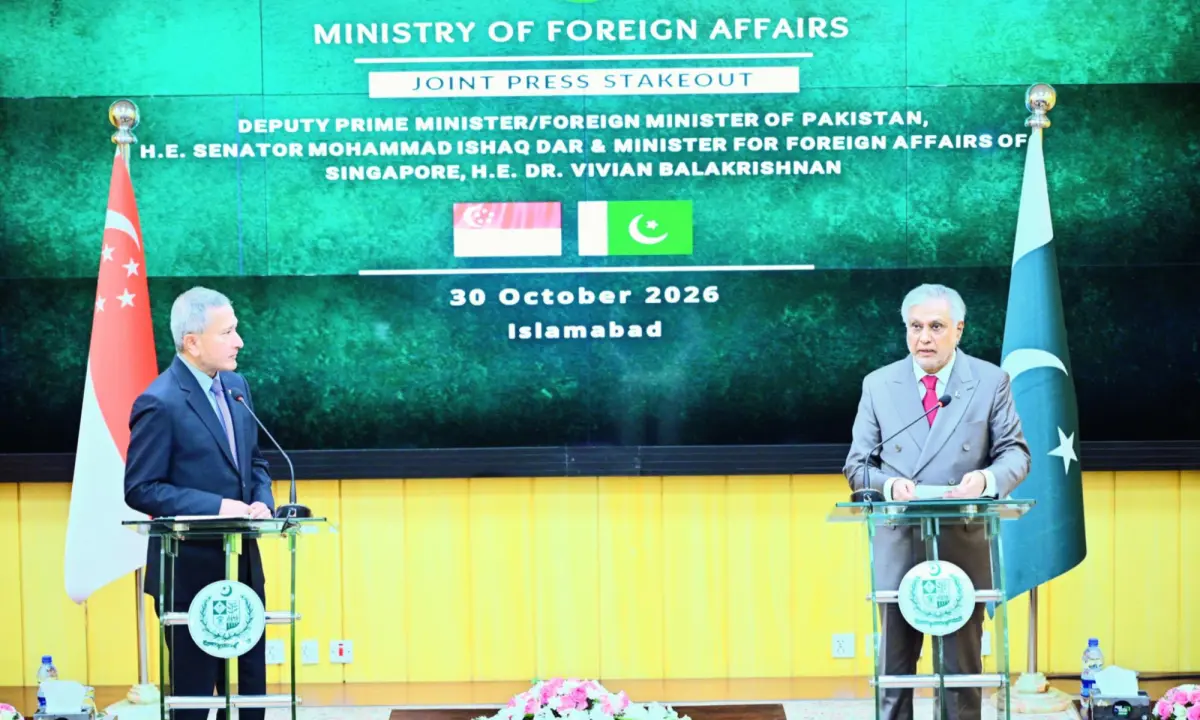
Dar shared this while addressing a press conference alongside Balakrishnan. He began by saying that Pakistan and Singapore enjoyed longstanding and friendly ties focused on mutual respect and goodwill, and Pakistan was one of the first countries to recognise Singapore following its independence in 1965.
He noted that Balakrishnan’s visit to Pakistan was the first one by a Singaporean foreign minister in over two decades.
“I am grateful that he was kind to accept my invitation,” he said, adding that the trip was particularly significant as the two countries were commemorating 60 years of diplomatic relations this year.
“The visit reflects our shared commitment to strengthen this friendship and broaden our cooperation.”
Dar said that delegation-level talks and a restricted meeting between the two sides earlier in the day focused on strengthening political and economic ties, expanding cooperation in technology and education and promoting culture and people-to-people contact.
“We also exchanged views on key regional and international developments,” he added.
He further stated that the two sides had recognised “the considerable untapped potential in our relationship” and stressed the importance of sustained engagement.
“We agreed to hold regular bilateral political consultation and promote high-level exchanges to strengthen cooperation between our governments and institutions,” he said, adding that economic cooperation was central to the discussions.
He said “we welcomed the significant growth” in bilateral trade between the two countries and discussed ways to build on this progress further.
“We agreed to encourage closer engagement between our business communities through the exchange of business delegations and stronger links between our chambers of commerce,” he elaborated.
Moreover, Dar continued, the reopening of the Trade and Investment Office at Pakistan’s High Commission in Singapore had also been discussed.
“The reopening of the Pakistan Trade and Investment Office is a testament to Pakistan’s resolve to promote stronger B2B ties with our friendly country Singapore.”
Beyond trade and investment, he said: “We discussed the scope for closer cooperation in education, research and innovation, including digital technologies and artificial intelligence. We also considered ways to strengthen links between our universities and research institutions. We also agreed to deepen cooperation in human resource development, agriculture and climate domains.”
Dar noted that Pakistani professionals in Singapore contributed to its economy and society and served as a “valuable bridge between our two nations”.
He said, “We agreed to encourage greater cultural, academic, youth and people-to-people exchanges.”
Moreover, he said, “We also discussed the possible resumption of direct flights to facilitate business travel and close contact between our peoples.”
Pakistan’s engagement with the Association of Southeast Asian Nations (Asean) as the country’s “oldest sectoral dialogue partner” also came under discussion, Dar said.
“Pakistan attaches great importance to practical cooperation with the organisation and its member states. I convey Pakistan’s best wishes to Singapore as it prepares to assume the Asean chairmanship in 2027.
“We look forward to working closely with Singapore in support of its priorities as the chair and to further strengthening the Pakistan-Asean cooperation.”
Dar said the meetings in Islamabad also presented the opportunity to share perspectives on regional and international peace and the security landscape.
“We discussed the impact of regional tensions on maritime trade,” he said, adding that secure sea routes and uninterrupted supply chains were essential to trade and economic stability.
He said the two sides had reaffirmed the central role of dialogue and diplomacy, respect for international law and adherence to the principles of the UN Charter in addressing regional and global challenges.
The DPM said he had conveyed to the visiting dignitary that Pakistan remained engaged with key regional and international partners to encourage continued dialogue and diplomacy as it was the “only viable means to resolve outstanding challenges”.
On Palestine, he said, “I expressed concern over the continued expansion of illegal settlements and efforts to alter the status of the West Bank and Al-Quds Al-Sharif. I stressed the urgent need for unhindered delivery of humanitarian assistance to the people of Gaza. I reiterated firm support for an independent, sovereign, viable, and contiguous state of Palestine based on pre-June 1967 borders with Al-Quds Al-Sharif as its capital, which is the stated policy of the Islamic Republic of Pakistan”.
In the context of South Asia, Dar said he briefed the visiting dignitary on the importance of a “just, durable and peaceful settlement of the longstanding Jammu and Kashmir dispute in accordance with the relevant UN Security Council resolutions”.
He concluded his speech by saying: “We look forward to working very closely with Singapore to carry forward the understanding reached today. Pakistan and Singapore’s friendship remains strong and forward-looking as we mark 60 years of diplomatic relations.
“We have committed to deepening this partnership and building a more prosperous future for our people.”
Speaking after him, Balakrishnan began by saying: “This is a significant year for Singapore and Pakistan. We have never forgotten that Pakistan was one of the earliest countries to recognise Singapore’s independence. And that’s why we are commemorating the 60th anniversary of diplomatic ties.”
Over the years, he said, there had been high-level exchanges between the two countries.
He added that “we’ve had opportunities for a substantive and productive exchange of views”.
“We’re in constant communication, far more than people realise — that we have a very effective partnership.”
Balakrishnan continued that Pakistan and Singapore had “excellent ties” at the diplomatic level.
“In fact, they are so good that it makes it even more obvious that actual trade relations — and looking at the numbers and the data — ought to be much higher. And that, I would say, is the first order of business.
“We need to facilitate greater trade and investment flows. We need to strengthen the links, especially between SMEs, between businessmen, and they need to meet, they need to know each other, they need to understand the business opportunities and the risks on both sides in Southeast Asia as well as South Asia,” he added.
Balakrishnan said governments of the two countries needed to facilitate these interactions and identify new opportunities for mutually beneficial cooperation.
“In an increasingly uncertain global environment, including on the business side of it, I think it is all the more important for our two countries to remain open, connected and constructively engaged with each other,” he said.
The two sides, he said, also discussed carbon markets, which “we think is another fertile opportunity for Singapore and Pakistan to work together”.
“It will be another promising avenue to attract investments into projects in Pakistan that reduce emissions while supporting sustainable development, and our officials are exploring opportunities in this area.”
Speaking about the exchange of a memorandum of understanding (MoU) on disaster management between Singapore and Pakistan, he said it reflected “our shared commitment to strengthen disaster preparedness and response”.
Disasters, he said, were not something one wished for. “But it is something which we have to prepare for and to be acutely aware that at the rate things are going, and with the progression of climate change, this is a current and clear threat. And the more we can work together and prepare together, the more resilient we will be”.
Unfortunately, Pakistan had extensive experience in responding to large-scale natural disasters, Balakrishnan said, adding that Singapore could learn from Pakistan in how to cope with disasters and be more resilient for the future.
“Through this MoU, we hope to explore cooperation in areas including early warning systems, the sharing of best practices, strengthening search and rescue capabilities, as well as hopefully conducting joint training and exercises.
“It’s again worth remembering that disasters do not respect boundaries, do not have passports, and again, the more we can work together, the better,” he added.
Moreover, the Singaporean foreign minister said “we welcome the opportunities to deepen cooperation between our institutes of higher learning, which includes the Nanyang Technological University and the National University of Singapore with Pakistan’s National University of Sciences and Technology”.
“I want to emphasise that this is just the beginning. We hope to expand that list in due time.”
On regional and international developments, he congratulated Dar for the “incredibly valuable role that Pakistan is playing”.
“For instance, we know there is crisis in the Gulf, and in fact, most of the energy that comes through the Gulf is actually headed to the east — South Asia, Southeast Asia, and to Northeast Asia.
“And the unique, but very constructive and valuable role that Pakistan plays is the one which we commend you for, and we wish you every success because if you succeed, it’s good for all of us.”
He emphasised that international law was critical for both Pakistan and Singapore.
And in the case of Singapore, he said, “because we are an island city state and our trade volume is three times our GDP, the maritime arena is essential. And therefore, the United Nations Convention of the Law of the Sea 1982, which sets out the freedom of navigation and overflight, especially in straits used for international navigation as a right not by the grace of littoral powers — This is of acute importance to us, and we are very, very heartened that Pakistan stands in exactly the same position this issue with us”.
He noted that Singapore would take the chairmanship of Asean next year while Pakistan was already the chair of the Shanghai Cooperation Organisation. This, he said, would present another set of opportunities for these two regional blocs, “two dynamic, diverse regional blocs, to look for opportunities to do together”.
He then moved on to education, saying that opportunities in this area were also discussed.
“We are living in an age of a new industrial revolution, AI and digital technologies, and it is essential to ensure that our young people have the relevant skills not for yesterday’s jobs, but for tomorrow’s jobs.
“And so, this emphasis on skills and relevant qualifications and capability and human talent development is another very important area for cooperation between Pakistan and Singapore,” he added.
Talks on enhancing trade, investment cooperation
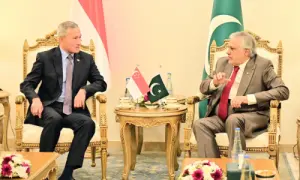
Earlier, the two leaders held talks and discussed ways to enhance cooperation in trade and investment, the Foreign Office (FO) said.
Balakrishnan arrived in Islamabad earlier in the day. He called on DPM Dar at the Ministry of Foreign Affairs.
The FO said in a statement that the two leaders reviewed the “longstanding and friendly relations” between Pakistan and Singapore as the two countries marked 60 years of diplomatic relations.
They underscored the importance of sustained high-level exchanges and discussed ways to further enhance cooperation in trade, investment, connectivity and skills development, while promoting business-to-business exchanges and people-to-people contacts, the statement added.
Dar and Balakrishnan also discussed cooperation at multilateral fora and Pakistan’s enhanced engagement with Asean, particularly in the context of Singapore’s forthcoming chairmanship of the body in 2027.
Moreover, exchanging views on regional and global developments, Dar emphasised the importance of dialogue and diplomacy in resolving disputes and advancing lasting peace and stability, the statement said.
Delegation-level talks
Later, their opening remarks from delegation-level talks between the two sides were televised, with Dar saying that the depth of diplomatic relations between Pakistan and Singapore was not reflected in economic ties.
He said his focus had been on “economic diplomacy” after joining the Foreign Office, adding: “If we work together, […] I am sure we can reach a new level of economic relations.”
The DPM further suggested the Board of Investment in Pakistan could work with its counterpart in Singapore.
He said the two countries had “great cooperation” on multilateral issues and Singapore’s interest in regional issues was “greatly appreciated”.
“You remain in touch, and we keep sharing developments with you.”
He added that the two had also discussed Palestine and Kashmir issues, among other matters, in a restricted meeting.
“So I think this friendship and great cooperation will continue from our side, and I am sure you will always reciprocate, rather go a mile ahead of us,” the DPM said.
For his part, the Singaporean foreign minister recalled that Pakistan was one of the “early countries to recognise Singapore post independence”. He pointed out that Singapore was 61 years old and was commemorating the 60th anniversary of diplomatic ties with Pakistan.
According to the FO, the delegation-level talks focus on expanding trade and investment, strengthening cooperation in agriculture and food security and enhancing connectivity to promote tourism and business exchanges.
“The two sides also explored collaboration in education, vocational training, disaster management and information technology. The Singaporean foreign minister highlighted the potential of carbon markets to attract green investment to Pakistan. Dar emphasised the importance of stronger institutional mechanisms and regular follow-up to advance mutually beneficial cooperation,” it said.
“The Ministers also exchanged views on regional and global developments. Singapore’s foreign minister commended Pakistan’s sustained efforts to promote dialogue and diplomacy in the region and its important contributions to regional peace and stability,” it added.
“Both sides agreed to build on the positive momentum generated by the visit, ensure timely follow-up on the understandings reached, and sustain engagement to further strengthen Pakistan-Singapore relations across all areas of mutual interest,” it said.
After the meeting, Dar and Balakrishnan also exchanged a MoU on cooperation in disaster management between Pakistan’s National Disaster Management Authority and the Singapore Civil Defence Force in Islamabad.
“The MoU reflects the shared commitment of Pakistan and Singapore to strengthening cooperation in disaster preparedness and response and building resilience against natural disasters,” the FO statement on the document’s exchange said.
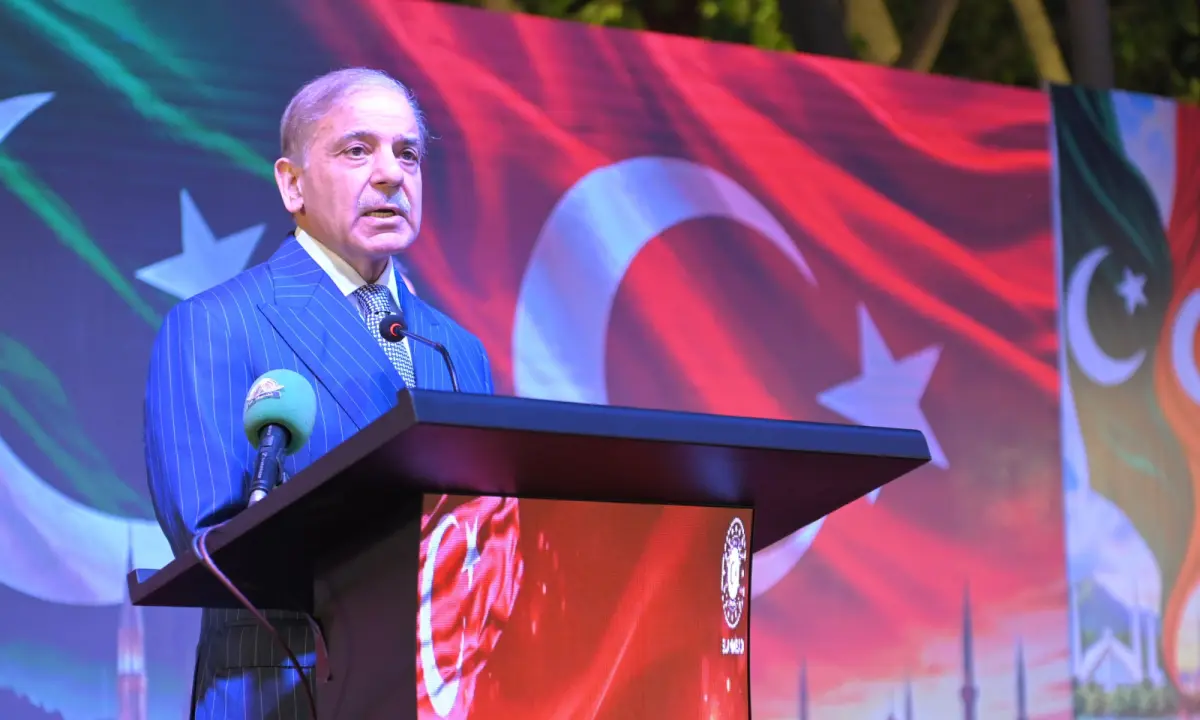
Prime Minister Shehbaz Sharif on Thursday affirmed that Pakistan and Turkiye would continue to push for dialogue and diplomacy while strengthening their defences under the Makkah Defence Agreement.
He made the remarks while addressing an event in Islamabad marking the 103rd national day of Turkiye, with which Pakistan enjoys strong bilateral ties and maintains multi-sectoral cooperation.
The premier said the pact, signed on Aug 7 between Pakistan, Turkiye and Saudi Arabia, marked an “important milestone” in cooperation between Islamabad and Ankara.
“It strengthens our collective deterrence and reinforces our shared commitment to regional peace and stability,” PM Shehbaz noted.
“While we strengthen our defences, we shall continue to champion dialogue, diplomacy, respect for international law and the peaceful settlement of disputes.”
The prime minister hailed Turkiye’s diplomatic support during Marka-i-Haq last May, when India initiated unilateral aggression against Pakistan, triggering a four-day conflict between the nuclear-armed neighbours.
“Turkiye stood firmly by our side with unwavering commitment and dedication. This sincere act of solidarity was a profound source of comfort and strength for the people of Pakistan, a gesture that will forever remain etched in our hearts and our memories,” he emphasised.
Additionally, the premier observed that Islamabad and Ankara’s relationship had evolved into a “multifaceted strategic partnership”, spanning political dialogue, defence, trade, culture and people-to-people ties, among other areas.
He stressed that the economic partnership between Pakistan and Turkiye needs to match the heights of the political and strategic bond between both nations.
“In July this year, at the Pakistan-Turkiye business conference in Istanbul, I announced the establishment of the President Tayyip Erdogan Special Economic Zone in Karachi,” PM Shehbaz said.
“Now I invite Turkish businessmen to look at Pakistan with its young population, strategic location and growing economic opportunities. Let us translate the goodwill between our two peoples into joint ventures, shared prosperity and meaningful jobs for our young people.”
During his speech, the prime minister highlighted the longstanding, historic ties that the two countries shared, recalling that during the Khilafat Movement — a campaign to protect the Ottoman Empire after World War I — people donated whatever they could from the subcontinent, including money and jewellery, to support their “Turkish brethren”.
“A century ago, our forefathers sent their love across the seas. Generations later, that love returned to our doorsteps during our darkest times,” he added, referring to humanitarian aid from Turkiye during the 2005 earthquake and the devastating floods of 2010.
PM Shehbaz also highlighted that under Turkish President Recep Tayyip Erdogan’s instructions, Turkiye established a modern hospital, a school and modern villages for the people of Muzaffargarh after the floods.
“The 100 years between the Khilafat Movement and that moment seemed to close into a single circle,” the premier said, noting that when a massive earthquake rocked Turkiye in February 2023, “the people of Pakistan grieved as if the rubble lay upon our own homes”.
“We stood with our Turkish brothers and sisters, in their hour of sorrow, just as they had stood with us.”
Earlier this week, Pakistan, Turkiye, Saudi Arabia and Iran participated in a quadrilateral meeting where Iranian President Masoud Pezeshkian called for “regional unity” and hoped that the presence of other Islamic powers would “further consolidate regional unity and cohesion”.
Earlier this month, both nations signed an agreement to enhance cooperation in combating terrorism, narcotics trafficking and organised crime and agreed to establish a joint working group to strengthen collaboration between their interior ministries.
The decisions were taken during a meeting between Interior Minister Mohsin Naqvi and his Turkish counterpart Mustafa Çiftçi in Istanbul.
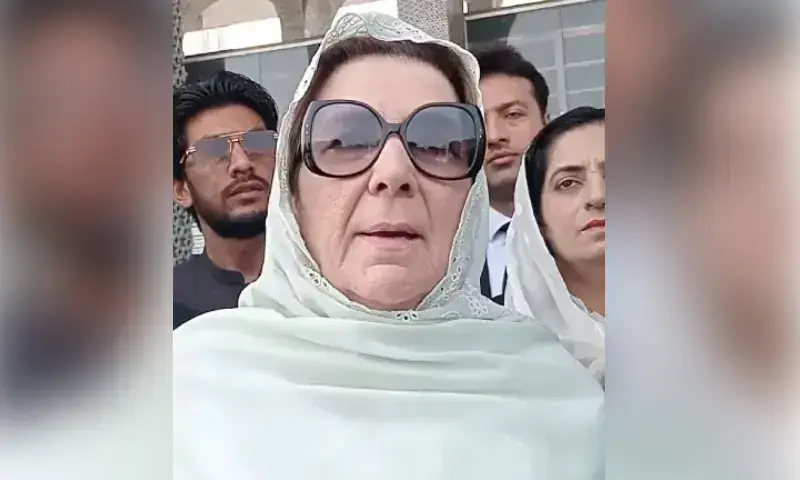
Adviser to the prime minister on political affairs, Rana Sanaullah, on Thursday informed the Senate that Noreen Niazi, the sister of jailed PTI founder Imran Khan, was fine after being provided medical treatment in Lahore.
Imran’s three sisters — Noreen, Aleema Khan, and Uzma Khan — have been in detention since Sept 21 under the Punjab Maintenance of Public Order Ordinance, 1960 (MPO) on the Lahore deputy commissioner’s (DC) orders.
On Wednesday, Noreen’s lawyer said that she was moved from Lahore’s Kot Lakhpat jail to the Punjab Institute of Cardiology (PIC) due to high blood pressure. Her lawyer claimed that no family member had been informed about her deteriorating health condition.
Speaking on the floor of the Senate on Thursday, Sanaullah responded to the query by PTI parliamentary leader Barrister Ali Zafar, who sought information regarding Noreen’s health and her being taken to the hospital.
The PML-N senator said Noreen was “immediately provided with medical facilities”.
“As per the information available, she is fine and all her medical tests are normal,” he said.
On concerns about Noreen’s family allegedly not being allowed to meet her, the prime minister’s adviser said details would also be sought on the matter. He assured the PTI that if this was true, it would be addressed depending on the circumstances at the hospital.
During his address, PTI Senator Mashal Yousafzai continued to interrupt Sanaullah, questioning the need for Noreen’s detention.
The PML-N senator replied: “She is in jail because she wanted to spread turmoil in the country. She wanted to attack Islamabad by launching a long march and inciting the people.”
Addressing Zafar, Sanaullah said that as the PTI founder was in jail under judicial custody, any relief regarding his health and meeting should be sought from the courts.
Imran’s sisters are currently serving the second term of a 30-day detention under the MPO, which was extended on Oct 7. The detention came amid reports of a crackdown on the PTI ahead of its countrywide protest and march to Islamabad, which the party had called to demand Imran’s release from jail and mobilise people for the supremacy of the Constitution.
‘Must never allow our humanity to fail’
In his remarks on the Senate floor, Zafar contended that Noreen had been detained despite not having committed any crime.
While Noreen’s lawyer had said she had faced high blood pressure, Zafar said she suffered a heart attack and claimed that her family was not being allowed to meet her.
Quoting Shakespeare’s phrase “milk of human kindness”, Senator Zafar said if even a little human kindness remained, the government must immediately stop grave human rights violations.
“If there is even a minimum of human kindness left in you, release her. At least allow her family to meet her and ensure proper medical care,” he said while speaking on a point of order.
He also condemned the detention of Imran’s nephews, asking why family members should suffer for their relationship with a political leader.
He alleged Imran had been kept in solitary confinement for a year and was being subjected to torture, claiming that the PTI founder’s wife Bushra Bibi was also facing inhumane treatment.
He demanded an immediate end to their mistreatment, which the government denies, saying both are being provided with the facilities they are entitled to.
Zafar claimed that the government believes the Constitution can be broken and suspended, as witnessed in the imposition of governor’s rule and emergency in Khyber Pakhtunkhwa, which has rendered the elected provincial government non-functional.
“There is one thing that cannot be broken, suspended or compromised: the fundamental human rights of the people of Pakistan,” he asserted.
Senator Zafar stressed that even if governor’s rule was claimed to be justified, it could never be a licence to violate fundamental rights, detain the chief minister, speaker and elected representatives, or keep their whereabouts undisclosed.
He warned that violating the sanctity of home and family honour, which hold deepest importance in Pashtun society, would provoke strong resentment among people of KP.
He also referred to reports of attacks on homes of MNAs and alleged violence against their wives and sisters, calling for impartial investigation.
“These are not merely political issues. These are matters of human rights, human dignity, family honour and rule of law. Human rights stand above politics,” he said.
Concluding, he said: “The Constitution may be violated by those who wield power, democratic mandates may be undermined, and institutions may fail in their duty. But we must never allow our humanity to fail.”
PTI condemns Noreen’s hospital transfer ‘sans informing family’
Meanwhile, in a statement, the PTI condemned the transfer of 70-year-old Noreen to the PIC without informing her family, expressing grave concern over her health and the treatment of “political prisoners”.
PTI Central Information Secretary Sheikh Waqas Akram criticised the authorities for not informing Noreen’s family after she felt unwell while in custody at the Kot Lakhpat jail.
He described the handling of her medical emergency as “callous and inhumane”, arguing that denying family members timely information about the condition of an elderly heart patient raised serious questions about prisoners’ rights, legal safeguards and basic human dignity.
“Noreen Niazi’s transfer to the PIC without prior notification to her family is alarming,” Akram said, demanding an immediate explanation from the Punjab government and the relevant authorities.
He demanded that Noreen receive the best possible medical treatment under the supervision of senior cardiologists without any delay, that her necessary diagnostic tests be conducted, and that her family be allowed access in accordance with applicable law.
“The authorities must provide her family with complete, credible and timely information about her condition,” the PTI leader further stressed.
Warning the government against disregarding fundamental rights in the alleged pursuit of political objectives, he said the PTI would not compromise on the protection of human life, health or constitutional freedoms under any circumstances.
Prime Minister Shehbaz Sharif on Thursday approved the expansion of Allama Iqbal International Airport and Jinnah International Airport as outlined in their respective masterplans while seeking to turn Karachi into an “air cargo hub”.
According to a statement by the Prime Minister’s Office (PMO), the directives came during a meeting held in Islamabad under the premier’s chairmanship. It was attended by Deputy Prime Minister and Foreign Minister Ishaq Dar, federal ministers Khawaja Asif, Musadik Malik, Ahad Khan Cheema, Attaullah Tarar and other senior officials.
The statement said the meeting was briefed on a survey recently completed by an international firm assessing the quality of travel facilities at major airports.
During the meeting, the premier directed that no compromise be made on quality in the expansion projects, that they be aligned with international requirements and that third-party validation be ensured for reforms aimed at improving the expansion projects.
The meeting was informed that work on the installation of automated border management systems (e-gates) at major airports was underway. Furthermore, “work is also ongoing on the air cargo village to make Karachi an air cargo hub,” the statement said.
Per the statement, it was discussed that facilitating passengers at Pakistani airports should be made the “top priority”. PM Shehbaz directed that facilities be improved in line with international standards. To that effect, he directed to obtain the services of internationally renowned institutions.
He also emphasised the provision of regular training in high-quality service delivery to officers and staff facilitating passengers at airports, along with an improvement in the coordination among various entities present at airports.
“The services of the best caterers [should] be obtained for passengers at airports, and there will be no compromise on the quality of food and beverages,” the statement said.
The meeting was further briefed on the upgradation of various airports across the country and ongoing development work by the Civil Aviation Authority (CAA).
Furthermore, the meeting was informed that the expansion of the runway at Jinnah International Airport had been completed. According to the PMO, the Federal Investigation Agency (FIA) had also increased the number of staff and counters, keeping in view passenger convenience.
A meet-and-greet service had been launched at Islamabad airport, the statement added. Similarly, the FIA had established pre-departure desks at major airports in the country for timely guidance to passengers.
“The meeting was informed that the existing aviation institution in Hyderabad is being further improved to establish an international standard aviation university, with work to commence by February 2028,” PMO’s statement said.
Earlier this month, PM Shehbaz had also ordered the installation of “smart scanners” at all international airports to facilitate travellers.
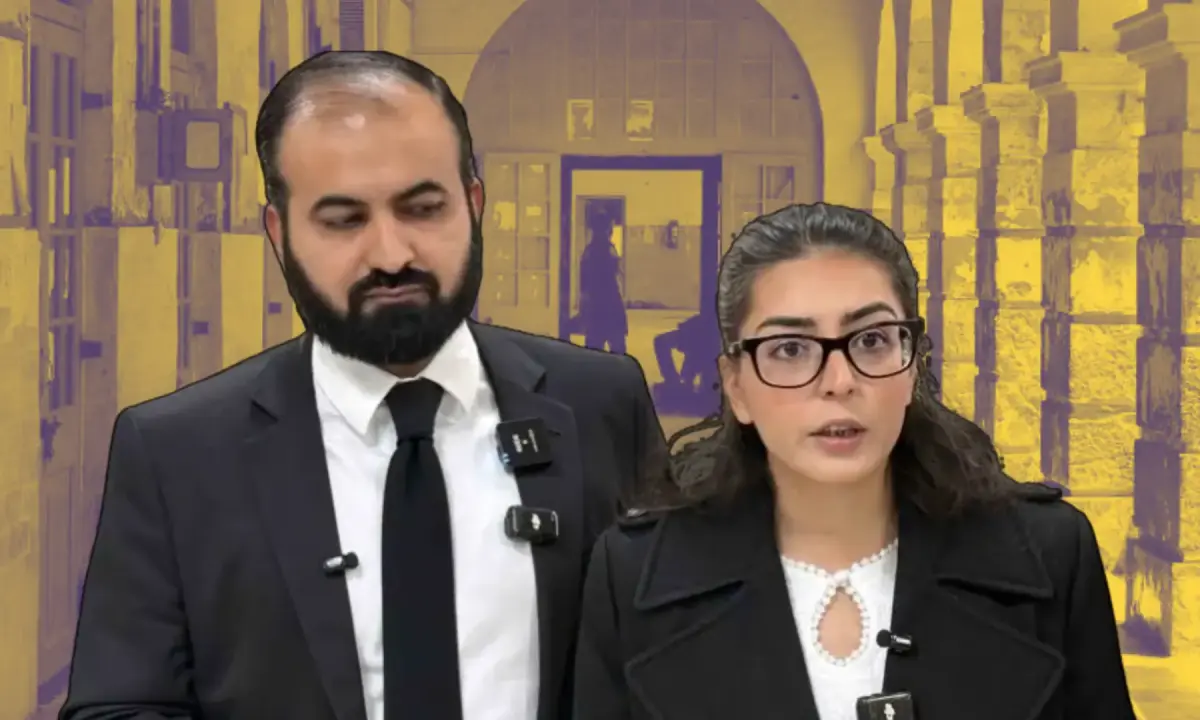
Human rights lawyer Imaan Zainab Mazari-Hazir and her husband, Hadi Ali Chattha, were convicted for the second time in less than a year on Thursday. This time, the couple was sentenced to 10 years in a security breach case following a jail trial.
The 2024 case pertained to the alleged disruption of an international cricket team’s security route and incitement to public unrest. The couple, accused of removing barriers from the route, was indicted on Oct 7.
After an anti-terrorism court pronounced them guilty, journalists and lawyers raised questions and expressed reservations.
Legal adviser for the International Commission of Jurists Reema Omer termed the convictions “cruel, vindictive and textbook examples of using law and the judicial process as weapons of persecution”.
“Imaan and Hadi are prisoners of conscience,” she posted on X.
Lawyer Rida Hosain said the convictions were “a stain on our judicial system”.
“Those entrusted with upholding the rule of law are weaponising it to persecute courageous human rights lawyers.
“This only further exposes a system that is functioning as an instrument of repression,” she said.
Op-ed editor at The News, Zebunnisa Burki, reacted to the development with “beyond ridiculous”.
Journalist Zarrar Khuhro also pointed out that the couple was sentenced to 10 years for “removing a barrier”.
“A decade in jail is what rapists usually get,” he said.
Journalist Asma Shirazi reacted to the news by calling it “reprehensible and regrettable”.
Journalist Maryam Nawaz Khan criticised the judgement saying: “A sham/ secret trial delivers a sham sentence. Imaan Mazari and Hadi Ali Chattha, two human rights lawyers, sentenced to 10 years in prison over road barriers they maintain they never removed. First, their tweets; now, this. Criminalising dissent and persecuting lawyers is an assault on fundamental rights and constitutional freedoms. This sentence is outrageous and unlawful.”
Academic Nida Kirmani said the couple was “paying the price for standing up to a cruel and vindictive state run by petty men with fragile egos”.
“Absolutely absurd verdict,” she said.
Journalist Saqib Bashir said the couple was sentenced without a “transparent” trial.
“This is a mockery of the judiciary and the justice system; it is a judicial murder of dissenting voices,” former Jamaat-i-Islami senator Mushtaq Ahmed said.
“Imaan and Hadi are strong voices against enforced disappearances and extrajudicial killings and that is their only crime,” he said.
“Those who speak up for justice face jail. Those who justify the state’s dictatorial actions ascend to higher positions,” journalist Veengas said.
The National Commission for Human Rights also expressed serious concern, saying the right to a fair trial, due process and effective judicial remedies must be fully protected.
“The severity of the sentences raises concerns about proportionality and the protection of fundamental rights,” the commission said.
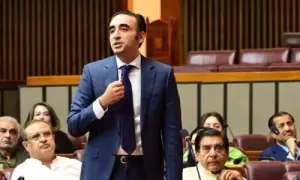
PPP Chairman Bilawal Bhutto-Zardari on Thursday urged National Assembly Opposition Leader Mehmood Khan Achakzai to use the “authority and power” delegated to him by jailed PTI founder Imran Khan to direct opposition members to participate in House committees and discuss pressing national issues.
He made the remarks while addressing the National Assembly during a session chaired by Deputy Speaker Syed Ghulam Mustafa.
Addressing the House, Bilawal called for strengthening Parliament by taking decisions on matters of national interest collectively on a single platform.
“If Parliament is powerful, we are all powerful; this is the power bestowed on us by the people of Pakistan,” he said.
Urging the speaker and the government to fulfil their responsibilities, the PPP chairman also called on the opposition to play its role in the House.
“Those who want this House to remain dysfunctional and do not want the people of Pakistan to benefit from it have succeeded,” he said, pointing towards the opposition benches. “Congratulations to you,” he added sarcastically.
“You have played a part in helping these people achieve their objective,” he said, criticising the opposition.
Bilawal also criticised the opposition’s decision to boycott committee proceedings, saying it had contributed to the “weakening” of Parliament.
“It is your responsibility to represent your party, the people and your constituencies in these committees. However, you are not raising their concerns on the relevant platforms,” he said.
Turning to Achakzai, Bilawal urged the opposition leader to use the “authority and power” delegated to him and the Senate opposition leader by Imran Khan to direct opposition members to participate in committee proceedings and discuss pressing national issues.
Bilawal said that since Parliament had decided, on a motion moved by the PPP, to constitute a committee on electoral reforms, the opposition leader should nominate a representative to the committee and submit the name to the speaker’s office.
He recalled that the opposition had described electoral rigging as its “fundamental issue”.
Urging the opposition leader to participate in the committee’s proceedings, Bilawal said the move was necessary if the opposition wanted the issue of alleged rigging to be addressed before the next general election, local government polls or by-elections.
The PPP chairman also described participation in the committee as a fundamental step towards restoring Parliament’s respect and authority.
“I request the opposition to at least exercise the power it has,” he said, questioning the purpose of an electoral reforms committee if the opposition did not participate in its proceedings.
“If we make efforts to bring all stakeholders together in a committee or arrange a briefing on terrorism, economic and security issues, and other concerns without the opposition’s participation, it will be pointless,” he said.
Against the backdrop of the evolving geopolitical situation, Bilawal called for the foreign, interior and defence ministers to brief the House on the challenges facing Pakistan.
“Tell this House about the potential threats facing Pakistan and the region, particularly as three key maritime routes are closed,” he said.
He also called for a briefing on developments related to the war in Iran and its implications for Pakistan. In addition, he sought a briefing from the government on the recent defence pacts signed by Pakistan.
“Every member of this House has the right to be informed about the challenges facing Pakistan, whether terrorism or other domestic issues, the steps being taken to address them and their potential consequences in the days ahead,” he said.
Addressing a rally in Karachi earlier this month, Bilawal had also extended an olive branch to the opposition parties, saying their positive engagement with the federal government could result in the reversal of governor’s rule in Khyber Pakhtunkhwa.
The PPP chairman had invited the opposition to join the Parliamentary electoral reforms process and “engage with the federal government”.
The Centre imposed governor’s rule and emergency in KP on Oct 11, citing the provincial government’s “deliberate disengagement” from the fight against terrorism. The move had drawn criticism from the opposition.
PPP delegation meets Achakzai
Separately, a PPP delegation met Achakzai and invited the PTI to join the parliamentary committee on electoral reforms, according to a statement the party issued on X.
The PPP delegation comprised of Raja Pervez Ashraf and Syed Naveed Qamar. Senate Opposition Leader Raja Nasir Abbas was also present.
The delegation invited Achakzai to participate in the parliamentary committee to promote consultation and discussion among parliamentary representatives on electoral reforms, the statement said.
Later, in a press conference, Ashraf said the PPP delegation had a meeting with Achakzai on Bilawal’s instructions to invite him to join the committee.
“The PPP wants the PTI to participate in parliamentary standing committees as well as the electoral reforms committee,” he added.
Achakzai had sought time to consult before responding to the invitation, he said.
The PPP has consistently sought to improve the electoral process, Ashraf said, adding that PTI also wanted electoral reforms.
“The PTI will respond to the PPP after consultations,” he said.
ISLAMABAD – Just when Pakistani social media users were getting used to National Cyber Crime Investigation Agency (NCCIA) keeping an eye on their online activities, the federal government announced plans to bring another regulatory authority into action as the country of nearly 245 million needs another watchdog.
Federal Minister for Information Technology Shaza Fatima Khawaja said the government intends to operationalise Social Media Regulatory Authority soon, in another step towards tighter oversight of Pakistan’s digital landscape. Sharing her views at ceremony of Cybersecurity Awareness Week, the minister presented the initiative as part of the government’s broader strategy to strengthen cybersecurity, protect personal information and tackle emerging online threats.
The announcement comes at time when Pakistan’s internet users are already facing increased scrutiny under the Prevention of Electronic Crimes Act (PECA), with the NCCIA now functioning as a specialised agency responsible for investigating cybercrime.
One Cybercrime Watchdog is Not Enough?
The latest move follows a stern warning from NCCIA officials that online activities involving alleged anti-state content, harassment and defamatory material are under observation.
NCCIA Additional Director Atif Ameer delivered a particularly memorable warning to social media users: “You are not clicking alone.” The official identified three major enforcement priorities: fraudulent call centres, content considered anti-state and harassment conducted through digital platforms.
Now, with another regulatory authority expected to become operational, questions are likely to emerge about how far government supervision of social media will extend and where the line between cybersecurity and online expression will be drawn.
Explaining the government’s position, Shaza Fatima said increasing dependence on digital technology had exposed Pakistan to new cybersecurity challenges, particularly as artificial intelligence made online threats more sophisticated. She stressed the need for stronger reporting mechanisms, improved cybersecurity awareness and better protection of sensitive information.
The minister also gets attention to children’s growing exposure to social media, warning that cyberbullying, online fraud and careless sharing of private details could create serious risks for individuals and their families. Her remarks highlighted genuine concerns surrounding digital safety, particularly in a country where online services and social media are becoming part of everyday life.
While authorities maintain that stronger regulation is necessary to counter cybercrime, the planned activation of another social media watchdog is also likely to revive debate over digital freedoms, privacy and the potential misuse of regulatory powers.
The government has yet to provide a firm date for the authority’s operational launch or fully explain how its responsibilities will differ from the NCCIA’s existing mandate.
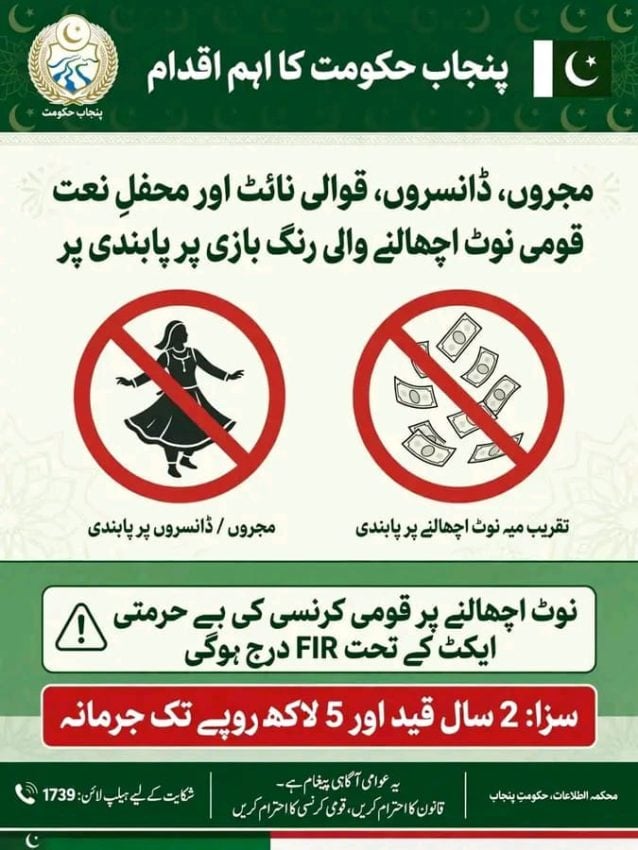
LAHORE (Daily Pakistan) – Social media is buzzing with claims that Punjab government imposed ban on showering currency notes at mujra performances, dance shows, qawwali nights and Mehfil-e-Naat gatherings, with violators reportedly facing imprisonment and hefty fines.
The viral posts claim that anyone found throwing currency notes at such gatherings could face registration of a First Information Report (FIR), imprisonment for up to two years and a fine of Rs500,000. Some posts mentioned “National Currency Disrespect Act”, calling the measure as an officially approved government crackdown.
However, a review of available legal records, media reports and government-related information raises serious questions about the accuracy of these claims. Despite the circulation of official-looking posters, no Punjab government official has publicly confirmed the alleged province-wide ban or the punishments being widely shared online.
Although the latest viral claims remain unconfirmed, Punjab authorities have previously acted against money-throwing during stage performances. In September this year, Punjab Council of the Arts and Information and Culture Department initiated proceedings against several stage performers and theatre managements in Lahore and Gujranwala.
The action followed alleged violations of the Punjab Drama Act, government policies and standard operating procedures. Some notices specifically referred to money being thrown towards performers and the failure of theatre managements to stop the practice.
This shows that authorities addressed currency showering in regulated entertainment venues. It does not, however, establish that every such act is now a criminal offence across Punjab.
A review of currency-related legislation listed by State Bank of Pakistan and relevant sections of the Pakistan Penal Code did not identify any statute called the National Currency Disrespect Act. Existing Pakistani laws address offences involving counterfeit banknotes, forged currency, fraudulent circulation and related misconduct.
Sections 489A to 489E of the Pakistan Penal Code deal with specified currency-related offences. These provisions do not establish a general two-year prison sentence or Rs500,000 fine for simply showering genuine currency notes at gatherings.
State Bank also maintains regulations concerning the handling and condition of banknotes. However, penalties imposed on commercial banks for currency-management violations should not be confused with criminal punishment for individuals attending public events.
No Confirmation So Far
So far, there is no public statement from Punjab government official or government run social media handle confirming the alleged ban, the supposed National Currency Disrespect Act or the claimed imprisonment and fine has been verified.
TEL AVIV — Israel is heading towards fresh political deadlock after 2026 general election failed to get clear majority, leaving Prime Minister Benjamin Netanyahu facing uncertainty over his political future as opposition parties and Arab lawmakers gain influence in the 120-member Knesset.
The latest provisional results show Netanyahu’s right-wing and religious alliance projected to secure 53 parliamentary seats, eight short of the 61 required to form a government. The opposition bloc, led by former Israeli military chief Gadi Eisenkot, is expected to capture 48 seats, while Arab political parties are projected to win a combined 19 seats, potentially placing them at the centre of negotiations over Israel’s next government.
With more than 98 percent of ballots reportedly counted, the parliamentary balance is becoming clearer, although individual party allocations remain subject to change until the results are officially certified.
Israel Election 2026: Latest Vote Count
Political alliance
Projected seats
Position
Netanyahu-led alliance
53
8 short of majority
Eisenkot-led opposition
48
13 short of majority
Arab political parties
19
Potential coalition partners
Total
120
61 required for majority
Even though Netanyahu’s bloc is ahead of the opposition, it lacks support to establish a government independently. The opposition could theoretically secure a majority with Arab parties, but political disagreements and coalition restrictions remain major obstacles.
Netanyahu’s Likud party has retained its position as Israel’s largest individual political force, with projections placing its parliamentary representation at approximately 26 to 27 seats. However, the results suggest that several of Netanyahu’s political allies have lost ground. The parties associated with far-right leaders Itamar Ben-Gvir and Bezalel Smotrich are projected to secure seven and six seats respectively, reducing their combined representation to 13 seats from 20 in the previous parliament.
Their reduced parliamentary strength could complicate Netanyahu’s efforts to rebuild his governing alliance.
Israel Election 2026: Latest Party-Wise Seat Position
Political party
Leader
Projected seats
Likud
Benjamin Netanyahu
26–27
Yashar
Gadi Eisenkot
21
B’Yachad (Together)
Naftali Bennett and Yair Lapid
12
Joint List
Arab political alliance
12
The Democrats
Yair Golan
8
Otzma Yehudit
Itamar Ben-Gvir
7
United Torah Judaism
Yaakov Asher
7
Yisrael Beiteinu
Avigdor Liberman
7
Ra’am
Mansour Abbas
7
Shas
Aryeh Deri
6–7
Religious Zionism–Zehut
Bezalel Smotrich and Moshe Feiglin
6
One of the key developments in Israel’s latest parliamentary election has been the increased representation of Arab political parties. Joint List is projected to win 12 seats, while Mansour Abbas’s Ra’am party is expected to secure seven. Together, these parties would control 19 parliamentary seats, giving Arab lawmakers a potentially influential position during negotiations over the next government.
The growing parliamentary strength does not automatically guarantee participation in a governing coalition. Several Jewish-led political parties remain reluctant to rely on Arab parties for parliamentary support, while Netanyahu’s alliance has also opposed such arrangements.
Former Israeli army chief Gadi Eisenkot has emerged as one of the election’s central political figures, with his Yashar party projected to win 21 seats. The party’s performance places it behind Likud but ahead of several established political forces.
Eisenkot’s opposition alliance also includes parties associated with former Prime Minister Naftali Bennett, Yair Lapid, Yair Golan and Avigdor Liberman. The joint Bennett-Lapid list is projected to secure 12 seats, while the Democrats and Yisrael Beiteinu are expected to win eight and seven seats respectively.
Israel’s latest parliamentary election recorded voter turnout of approximately 77.7 percent, reflecting substantial public participation. Arab citizens of Israel also voted in large numbers, contributing to stronger parliamentary representation for Arab-led political parties.
ISLAMABAD (Daily Pakistan) – Pakistani lawyers are heading to polling stations today to elect new leadership of the Supreme Court Bar Association (SCBA)for 2026-27, with two powerful rival groups battling for control of the influential lawyers’ body.
The elections brought Asma Jahangir Group and the Hamid Khan Group into direct competition, with the presidency and other crucial positions at stake. A total of 4,634 registered voters are eligible to participate in the nationwide electoral exercise, for which 13 polling stations have been established. However, the voting process encountered an early hurdle in Karachi, where polling was delayed as election officials awaited the arrival of polling agents.
The key contest is unfolding between Syed Amjad Ali Shah, the presidential candidate of the Asma Jahangir Group, popularly known as the Independent Group, and Sardar Amanullah Khan, representing the Hamid Khan Group, also called the Professional Group. The rivalry between the two established groups has traditionally been a defining feature of Supreme Court Bar politics, making the presidential contest particularly significant for the country’s legal community.
Beyond the presidency, several key positions are also being fiercely contested. For secretary’s office, Muhammad Arif Awan of the Independent Group is taking on Mian Irfan Akram of the Professional Group. The race for additional secretary features Qazi Shehryar Iqbal and Saira Khalid Rajput, while Muhammad Tanveer Chaudhry and Rai Azhar Iqbal Kharl are competing for the finance secretary’s position.
Supreme Court Bar Association occupies strong position in Pakistan’s legal landscape, frequently taking positions on judicial independence, constitutional matters, legal reforms and issues affecting the judiciary. Its elected leadership represents Supreme Court practitioners and can play a prominent role in debates concerning the justice system.
With the Independent and Professional groups competing for the association’s most influential offices, the outcome will determine which camp leads the SCBA during the 2026-27 term.
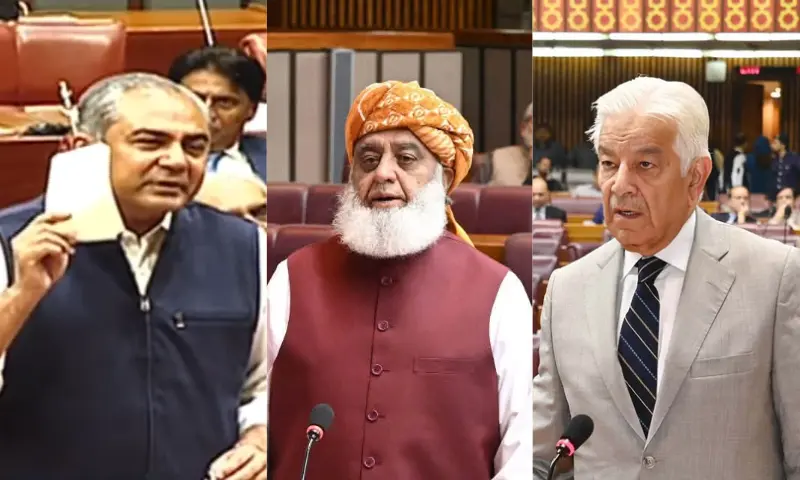
Federal ministers on Thursday responded to Jamiat Ulema-i-Islam-Fazl (JUI-F) chief Maulana Fazlur Rehman’s remarks regarding a recent huddle in Tehran comprising the Makkah defence pact countries and Iran.
Defence Minister Khawaja Asif and Interior Minister Mohsin Naqvi said the meeting was not related to defence. Hence, Asif said his presence was not required, while Naqvi explained the reasons for his participation.
The remarks came after the JUI-F chief questioned Asif’s absence and Naqvi’s presence at the meeting.
The meeting brought together top officials from Iran and member countries of the Makkah Defence Alliance — including Pakistan’s Chief of Defence Forces and Chief of the Army Staff Field Marshal Asim Munir, Saudi Defence Minister Prince Khalid bin Salman, and Turkish intelligence chief Ibrahim Kalin.
On Iran’s side, President Masoud Pezeshkian, Supreme National Security Council Secretary Mohsen Rezaei and Foreign Minister Abbas Araghchi were present. The huddle agreed to “continue their dialogue to bolster cooperation among the four regional nations, including in the areas of regional peace and security”.
On Wednesday, Fazl referred to the development during his address in the National Assembly (NA) and commented: “A defence pact is taking shape in Iran, a meeting is under way (there), and the defence minister is sitting here.”
Amid laughter and desk thumping in the Lower House, he referred to Naqvi’s presence at the Tehran huddle and questioned: “The interior minister is required there as well?”
Then, taking a jibe at Asif, he repeated the defence minister’s phrase that he had used against the PTI.
“There is your respect and stature — koi sharam hoti hai, koi haya hoti hai (have some shame, show some modesty),” he said, breaking into laughter.
Responding to him in the NA on Thursday, Asif said no defence pact was taking shape in Tehran, nor was the discussion focused on Pakistan’s defence or any related matter.
He said CDF Munir had “assumed a role for Pakistan” following last year’s military conflict with India. That role, he said, was of “peace and dialogue so that peace is established in our region”.
Since then, he noted, Pakistan has signed two defence pacts — the Makkah defence pact and the Badr Memorandum of Understanding.
“I was involved in those pacts as I am the defence minister,” he explained, adding that the meeting in Tehran was “not the defence ministry’s mandate”.
The CDF had gone there “as a messenger of peace and paved the ground” for the huddle, he said, ostensibly referring to Tehran last week.
During that visit, the CDF had proposed the Tehran meeting, according to Iranian Foreign Ministry spokesman Esmaeil Baqaei.
Asif said this was the situation and he was “not needed in Tehran”.
He added that the CDF had played a role in averting a confrontation. “The situation could have deteriorated as far as the Yemen issue is concerned […] There has been some talk and peace may emerge in the coming days or week as far as Saudi Arabia versus Yemen [sic] is concerned.”
Asif advised Fazl to be the bigger person and said his criticism was “misplaced”.
The defence minister further said Pakistan’s and the CDF’s role at the international level should be acknowledged, keeping political differences aside. He said one should at least show some dignity.
‘Not related to defence’
Meanwhile, in the Senate, Naqvi also responded to Fazl’s remarks on his participation in the Tehran meeting. The proceedings were marred by loud exchanges between the interior minister and JUI-F Senator Kamran Murtaza.
Naqvi clarified that he and CDF Munir undertook the visit to “handle the ongoing crisis in Iran”.
On Fazl’s query of why Asif had not gone there, he said, “He (Fazl) did not know that this [trip] was not related to defence.”
Defending his inclusion, the minister said: “I do not go out of my own volition. I have been especially tasked by the prime minister sahib; he has entrusted me with some matters regarding the current crisis of the [Iran] war, because of which I go.”
The independent senator noted that the JUI-F had been commenting on him for many days.
“I personally had heartfelt respect for Maulana Fazlur Rehman, but yesterday when he said I spit on the state, that respect ended,” Naqvi said.
Naqvi said he wanted to ask Fazl and his party’s senators present there just one question and then noted that JUI-F leaders had made very “disgusting statements about institutions” three to four months ago.
This prompted Senator Murtaza to object, saying he could not speak on a personal agenda in the House. Presiding Officer Shahadat Awan also immediately said he was expunging the word “disgusting” from Naqvi’s remarks.
As Murtaza continued shouting, Naqvi said, “You should listen here … You will have to listen.”
The presiding officer noted that Naqvi was a member of the Senate and urged the JUI-F leader to take his seat.
Resuming his remarks, Naqvi said, “Giving people the perception that this was a defence pact; this was not a defence agreement at all.
He added: “For them, the state is like a mother until the day they can squeeze it dry. The state is very good as long as they can extract wealth from the state, and when you do not get a share in the state and the government, then you spit on the state. This is not appropriate anywhere.”
Murtaza again interrupted, objecting to Naqvi’s language, at which the latter replied that the other side had also used similar language a day ago.
As the JUI-F senator continued speaking amid the presiding officer’s calls to halt cross-talk, Naqvi said, “If they criticise, they should garner and keep the courage to take the answer as well. This is no way [to behave] that you go and say whatever you want.”
The interior minister then went on to criticise the JUI-F, alleging that it “used Islam for business and for politics”.
Amid the ruckus, PML-N’s Abid Sher Ali also stood up and responded loudly, prompting State Minister of Interior Tallal Chaudhry and the presiding officer to urge him to take his seat.
Naqvi then addressed PTI’s Ali Zafar and said, “These very people (JUI-F) used to come to us before governor’s rule [was imposed] and say, ‘Impose governor’s rule, rid us of them!’ […] Those who come and sit with you and engage in opposition wanted governor’s rule imposed from their hearts. I will prove this to you.”
Addressing JUI-F, the interior minister said, “Now, you will not get jobs in the state. Now you will not get money from the state, nor will you get tickets from the state.”
He asserted that it was the JUI-F that was “continuously crossing the line” and that they would get a response if they kept doing so.
‘Full of contradictions’
In his remarks in the NA, Asif alleged that Fazl’s past “is full of contradictions”.
“You taunt me with ‘have some shame, show some modesty’, but you should also have some shame and show some modesty. How many perks have you enjoyed over the past 40 years? You have been violating the very principles that you have been highlighting,” the PML-N leader said.
He recalled that Fazl had also offered to mediate with Kabul. “Were you the foreign minister?” he questioned, alleging that the move was aimed at “value addition to his politics and leverage that to extract maximum advantage from the government”.
Asif said Fazl had been in the government with every political party, making an incomplete remark: “When you don’t get a share in the power —”
“When you delete the past from your memory and attack your rivals — at least I don’t have that courage. When I speak, my past is fresh in my mind; that if I say this, whether I would be taunted that we supported General Ziaul Haq’s government,” he went on to say.
The defence minister recalled that Fazl was part of the Musharraf government, had also been an opposition leader in the House and also served as the Kashmir Committee chairperson. He said a person serving as the head of such a committee that raises issues at an international forum should have “impeccable credentials”.
When some lawmakers opposed him in favour of Fazl, he remarked, “The Maulana now needs women’s support. He is unable to find a man.”
He also accused Fazl of “targeting our diplomatic efforts”, saying that the government’s achievement at the global stage had not received the commendation they deserved.
Asif said his advice to the JUI-F would be a line often seen on buses and trucks: “Mehnat kar, hasad na kar (work hard and don’t envy).”
He ended his address, alleging that had Fazl been given some share in the governance in Khyber Pakhtunkhwa following the imposition of emergency and governor’s rule in the province, the JUI-F chief’s address the previous day would not have been delivered.
“This sideshow that they (JUI-F) are running, I feel that it is unfortunate that our sisters have been forced to defend the men [of JUI-F] while the men are nowhere to be seen,” Asif remarked.
Describing Fazl’s address as “blackmail”, Asif warned against coming into power based on “compromises”.
“Sitting in the opposition would be a more respectable approach, rather than sitting with people who will blackmail you,” he said.
“We as senior parliamentarians should convey to the nation that we will not do group-based politics but politics rooted in the constitution and [..] for the security of the country,” Asif urged, adding that lawmakers should chart a way forward together, rather than “grabbing each other by the collar”.
JUI-F’s Murtaza alleges ‘programme to sling mud’ at Fazl
In remarks after the Senate ruckus, JUI-F’s Murtaza accused the government of staging a “requested programme”.
“I think nizam sahib (Mr System) sent messages and made calls to many people today, and told them to sling mud at Maulana sahib like this,” he said on Geo News’ programme ‘Aaj Shahzeb Khanzada Kay Sath’, apparently referring to Naqvi.
Murtaza questioned why Asif “suddenly remembered” to respond to Fazl the next day, rather than using his right of reply “even though he was present” in the NA yesterday.
He went on to object to the interior minister making “personal accusations”, even though he could have simply explained that the prime minister had tasked him with peace efforts.
The JUI-F senator insisted that Fazl’s remarks were not particularly about Pakistan but “if a state starts making its children fight each other”, asking if the ministers were considering that the state was doing so.
Asked what Fazl implied, Murtaza maintained that the JUI-F’s stance was “about every such state” that engaged in such acts.
The senator also claimed that Chaudhry had approached him with an “offer for a certain thing” when he was in the Senate hall.
“Did I reject you or not? 26th Amendment,” Murtaza said, with Chaudhry acknowledging that a “lot of things were being discussed at the time of 26th Amendment” but “not everything should be disclosed”.
Meanwhile, appearing on the same show, the state minister for interior regretted that Fazl, despite being a senior politician and a religious leader, “made martyrs a point of his and discuss it to advance his politics”.
Chaudhry said he had noted immense anger and frustration visible in the JUI-F chief’s demeanour in recent days.
Asked if the government wanted a “clash” with the JUI-F chief, the PML-N leader said, “I think Maulana sahib is deliberately clashing and bringing up such issues, after which no option is left for us other than to respond to it. Today, I have never seen Kamran Murtaza sahib in such a state of anger in my entire life.”
He highlighted that Fazl had questioned “what has this state given us”. “Do you think the state has given you nothing?” he asked.
Electoral reforms committee
In his remarks, Senate Opposition Leader Allama Raja Nasir Abbas claimed KP had been “snatched from the people” and reiterated the opposition’s allegations of rigging in the 2024 general elections.
“If even one person’s vote is snatched, it is a crime. It is the responsibility of those conducting elections to protect the vote. Earlier also you laid a crooked brick, and Pakistan broke. On Feb 8, elections were stolen. While stealing elections, where have you reached — you have even stolen Khyber Pakhtunkhwa,” he claimed.
The opposition leader said no society could progress without law, or function if law existed but without its implementation.
The House also took up a motion moved by Minister of State for Law Barrister Aqeel Malik for the constitution of a parliamentary electoral reforms committee.
PTI’s Zafar said he could write down entire electoral reforms on paper in an hour. “The issue is implementation. Make such a committee and procedure that the electoral process is actually implemented. Whatever they want to do, only that is approved,” he said.
Barrister Aqeel said the issue could be resolved by sitting together and asked members to bring their proposals.
Singapore’s Minister for Foreign Affairs Dr Vivian Balakrishnan will undertake an official visit to Islamabad on Friday (Oct 30) at the invitation of Deputy Prime Minister and Foreign Minister Ishaq Dar, the Foreign Office (FO) said on Thursday.
“The visit assumes significance as it coincides with the 60th anniversary of the establishment of diplomatic relations between Pakistan and Singapore and comes ahead of Singapore’s assumption of the Asean chairmanship in 2027,” the FO said in a statement.
During the visit, Dar and Dr Balakrishnan will hold bilateral talks covering the entire spectrum of Pakistan-Singapore relations and exchange views on regional and global developments of mutual interest, it added.
A memorandum of understanding (MoU) on cooperation in disaster management between Pakistan’s National Disaster Management Authority (NDMA) and Singapore’s Civil Defence Force (SCDF) will also be exchanged.
Balakrishnan will also call on Pakistan’s leadership, the FO said.
Pakistan and Singapore maintain cordial bilateral relations based on mutual respect and longstanding friendship. The visit underscores the shared commitment of the two countries to deepening and diversifying their bilateral partnership, it added.
DPM Dar last spoke to Balakrishnan in May, requesting Singapore’s support in facilitating the “welfare and repatriation” of 11 Pakistanis and 20 Iranians aboard vessels seized by the United States.
RAWALPINDI (DAILY PAKISTAN) – Lawyer and rights activist Imaan Mazari and her husband, Advocate Hadi Ali Chattha have been sentenced for 10 years in prison each in case involving allegations of breaching security arrangements during an international cricket team’s visit to Pakistan.
The duo gets prison terms totalling 13 years each under three separate legal provisions in a security breach case, with the effective imprisonment set at 10 years each under terrorism-related charge. The court also imposed two years’ imprisonment and a Rs50,000 fine under Section 353 of the Pakistan Penal Code, which concerns assault or criminal force used to deter a public servant from performing official duties.
Additionally, one year’s imprisonment and a Rs50,000 fine were awarded under Section 186, relating to obstruction of a public servant in the discharge of official functions. The sentences under the three provisions total 13 years for each convict, while the combined fines amount to Rs200,000 per person.
However, the court extended the benefit of Section 382-B of the Code of Criminal Procedure, which provides for time already spent in custody to be counted towards imprisonment. According to the reported short order, the effective prison term will be 10 years rather than 13 years, indicating that the sentences will run concurrently.
The case stems from allegations that the lawyer couple interfered with security arrangements during an international cricket team’s visit to Islamabad in October 2024. The case was registered at Aabpara Police Station.
The ruling, announced on October 29, 2026, followed months of legal proceedings over allegations that the lawyer couple interfered with security arrangements established for the visiting cricket team, creating potential risks and obstructing official duties.
The case was registered at Islamabad’s Aabpara Police Station, with prosecutors accusing the couple of disrupting security protocols and interfering with state functions.
The verdict came despite a last-minute attempt by the defence to secure an adjournment on the grounds that related legal challenges remained unresolved before superior courts.
During the proceedings, defence counsel Aimal Mandokhail strongly opposed the announcement of the judgment, arguing that the court should first await decisions on petitions pending before the Supreme Court and the Islamabad High Court.
He maintained that proceeding with the verdict while those applications remained under judicial consideration raised serious legal and procedural concerns. Mandokhail also informed the court that an application seeking the transfer of the trial to another court was still pending before the high court. The defence argued that the outstanding petitions should be decided before the trial court delivered its final judgment.
Security Breach Case
The prosecution centres on an incident dating back to October 2024, when security arrangements were in place for an international cricket team’s movement through Islamabad. Authorities alleged that Mazari and Chattha interfered with the designated security route and removed barriers intended to protect the visiting players.
The couple faced accusations involving obstruction of government officials and violations of security arrangements, with terrorism-related provisions also included in the proceedings. The defence has disputed the allegations and challenged the application of anti-terrorism laws to the incident.
The case formally advanced earlier this month when the court indicted both lawyers on October 7, despite objections concerning access to case documents and the completion of procedural requirements.
The latest judgment followed the conclusion of trial proceedings at Rawalpindi’s Adiala Jail earlier this week. Both accused recorded their statements under Section 342 of the Code of Criminal Procedure, which allows defendants to respond to evidence presented against them. State prosecutors subsequently completed their final arguments, after which the court reserved its decision for October 29.
Meanwhile, the couple had approached the Supreme Court to challenge an earlier Islamabad High Court decision declining to halt the trial. Their legal team also contested the framing of charges and the inclusion of terrorism-related provisions, maintaining that the proceedings suffered from procedural irregularities.
ISLAMABAD (Daily Pakistan) – With Pakistani capital struggling to meet water needs of a rapidly expanding population, the Capital Development Authority (CDA) has taken a major step towards building the capital’s first significant new surface-water source in nearly three decades, launching the procurement process for the long-awaited Shahdara Dam project.
The proposed Rs3.62 billion development will help Islamabad with daily water demand of 250 million gallons, while CDA’s existing network supplies only around 70 million gallons. The staggering gap of approximately 180 million gallons per day has placed growing pressure on the city’s aging infrastructure, leaving many communities dependent on underground water resources and alternative arrangements.
CDA Chairman Sohail Ashraf confirmed that the authority is advancing Shahdara Dam project, with construction expected to begin once the tendering and contractor selection process is completed.
Located along Shahdara stream near the famous Shahdara picnic spot in the Margalla Hills foothills, the planned reservoir is expected to supply an additional 5 to 10 million gallons of water daily, offering some relief to Islamabad’s overstretched water distribution system. Although the approved project planning document, known as PC-I, provides a two-year completion period, CDA is aiming to complete the dam in approximately 20 months.
The authority initiated prequalification for an Engineering, Procurement and Construction (EPC) contract in October 2026, inviting interested firms to submit applications through the electronic procurement platform EPADS. The initial notices appeared around October 12, followed by a corrigendum, with the application deadline falling around October 28.
Construction, however, has not yet started. The project must first pass through the remaining procurement, technical and contractual requirements. The dam’s preliminary estimated cost stands at Rs3.62 billion, though the final financial outlay could change depending on detailed engineering work, land requirements, water conveyance infrastructure and treatment facilities.
The project is designed to capture rainwater flowing through Shahdara stream, turning runoff that would otherwise pass through the area’s natural drainage channels into a usable water resource. Earlier feasibility assessments outline a concrete gravity dam approximately 33 metres high and 68 metres long. Its reservoir would cover roughly 25 acres, with a gross storage capacity of around 690 acre-feet, equivalent to approximately 225 million US gallons.
The project has a lengthy planning history. The Water and Power Development Authority (WAPDA) completed its feasibility assessment, which was provided to CDA earlier in 2026, while engineering consultancy NESPAK has been involved in planning and design activities.
Land surveys and acquisition arrangements have also formed part of the preparatory work, including survey-related involvement by SUPARCO. The final specifications and operational water yield will depend on detailed design and hydrological assessments.
Islamabad’s growing water crisis presents a striking contradiction: the city receives substantial annual rainfall but continues to experience persistent supply shortages. With average annual rainfall estimated at approximately 1,100 millimetres, Islamabad receives considerable water during the monsoon season. Yet much of this runoff travels through streams and drainage channels without being retained for future consumption.
Beyond Shahdara, the civic agency is preparing another major push to conserve rainwater and replenish Islamabad’s declining groundwater reserves. CDA Chairman Sohail Ashraf has outlined plans for four smaller check dams in the Margalla Hills foothills, with proposed locations including D-12, Shah Allah Ditta and Saidpur.
The authority is also exploring two other reservoirs that could significantly strengthen water availability in Islamabad and adjoining areas. Chinot Dam, proposed within the Simly Dam catchment, is intended to capture additional water that might otherwise escape during periods of heavy rainfall.
ISLAMABAD – Defence Minister Khawaja Asif strongly responded to JUI-F chief Maulana Fazlur Rehman in heated National Assembly session, clarifying that Field Marshal Asim Munir’s Tehran visit was aimed at promoting regional peace, not negotiating a defence agreement.
A fierce political showdown occured in National Assembly as Defence Minister Khawaja Asif launched counterattack against Jamiat Ulema-e-Islam-Fazl (JUI-F) chief Maulana Fazlur Rehman, questioning his political legacy, challenging his performance on Kashmir and accusing him of exploiting religion for personal and political gains.
Asif defended Chief of Defence Forces (CDF) Field Marshal Asim Munir’s visit to Tehran, rejecting suggestions that the high-level diplomatic engagement involved negotiations over a new defence agreement. The minister insisted that Pakistan’s military leadership is playing key role in reducing regional tensions and bringing rival countries to the negotiating table.
Asif maintained that the Tehran visit was a diplomatic initiative focused on regional peace, not a mission to negotiate or finalise a military pact.
Why Khawaja Asif Did Not Attend the Tehran Meeting?
Addressing questions surrounding his absence from high-level gathering, Asif explained that his participation was unnecessary because the discussions did not concern any agreement falling under the Ministry of Defence.
He said the meeting brought together representatives holding different positions, including Saudi Arabia’s defence minister and Türkiye’s intelligence chief, rather than the defence ministers of all participating countries. The minister argued that describing the gathering as a defence-related negotiation would misrepresent its purpose.
Asif praised Field Marshal Munir’s diplomatic involvement, saying the military leader had consistently encouraged dialogue as a way to resolve regional disputes. Referring to Pakistan’s military victory last year, Asif said the field marshal had subsequently contributed to efforts aimed at promoting negotiations and restoring stability across the region.
He stressed that Pakistan and its military leadership deserved wider international recognition for their contributions to peace-building initiatives.
The defence minister’s response became increasingly confrontational as he shifted from explaining the Tehran visit to challenging Fazlur Rehman’s political credentials. Although Asif acknowledged JUI-F chief’s seniority and influence in national politics, he argued that those questioning others should also be prepared to defend their own records.
He reminded the house that Fazlur Rehman had enjoyed positions of influence in several governments and had served as chairman of the National Assembly’s Kashmir Committee for approximately a decade. Asif questioned what tangible achievements the JUI-F leader could claim for the Kashmir cause during his lengthy tenure.
Asif further claimed that he had been willing to acknowledge his own mistakes publicly, describing himself as the only politician to have apologised for his past positions. He conceded that his earlier speeches frequently returned to haunt him whenever he discussed the country’s hybrid political system, but insisted that political accountability should apply equally to everyone.
The parliamentary clash took a sharper turn when Khawaja Asif accused Fazlur Rehman of using religious influence to advance his political interests and obtain financial benefits. The defence minister alleged that JUI-F leader had made religion a source of political and financial advantage, contrasting his approach with that of other mainstream political parties.
The confrontation followed Fazlur Rehman’s criticism of the government’s representation at the Tehran discussions. JUI-F chief had questioned why Pakistan’s defence minister remained in Islamabad while the country’s senior military leadership participated in important regional security talks.
The diplomatic engagement took place against the backdrop of growing instability in the Middle East and efforts by regional powers to prevent another escalation. October 26 discussions involved Field Marshal Asim Munir, Saudi Defence Minister Prince Khalid bin Salman, Turkish intelligence chief Ibrahim Kalin and senior Iranian officials.
Iranian authorities described the initiative as an effort to develop regional security cooperation and reduce the risks of further conflict. The talks also drew attention because of the existing Makkah Joint Defence Agreement involving Pakistan, Saudi Arabia and Türkiye.

 Login