SINGAPORE/HONG KONG — Hackers stole $6.3 billion from Binance, the world's largest cryptocurrency exchange, in what analysts say is the biggest crypto hack ever, an attack that could prompt investors to rethink the risks of owning digital assets. The hackers behind the raid were from North Korea, according to U.S. blockchain analysis firms TRM Labs and Chainalysis. The attackers targeted Binance wallets on 10 blockchains and shifted most of the funds in about 20 minutes, TRM Labs said in a statement. Binance said it worked with partners to freeze the affected assets with about $3 billion located so far. It did not mention the status of the remaining $3.3 billion, and its co-founder Yi He said the exchange would cover "all hacking losses." Binance said its deposits were unaffected and it expects to resume withdrawal services in the next 48 hours. TRM said several features of the attack matched earlier heists linked to North Korea, including a 2025 hack of crypto exchange Bybit that the U.S. Federal Bureau of Investigation had attributed to Pyongyang. "We make this judgment with high conf
SINGAPORE/HONG KONG — Hackers stole $6.3 billion from Binance, the world's largest cryptocurrency exchange, in what analysts say is the biggest crypto hack ever, an attack that could prompt investors to rethink the risks of owning digital assets. The hackers behind the raid were from North Korea, according to U.S. blockchain analysis firms TRM Labs and Chainalysis. The attackers targeted Binance wallets on 10 blockchains and shifted most of the funds in about 20 minutes, TRM Labs said in a statement. Binance said it worked with partners to freeze the affected assets with about $3 billion located so far. It did not mention the status of the remaining $3.3 billion, and its co-founder Yi He said the exchange would cover "all hacking losses." Binance said its deposits were unaffected and it expects to resume withdrawal services in the next 48 hours. TRM said several features of the attack matched earlier heists linked to North Korea, including a 2025 hack of crypto exchange Bybit that the U.S. Federal Bureau of Investigation had attributed to Pyongyang. "We make this judgment with high conf
SINGAPORE — North Korean hackers were behind a $6.3 billion raid on cryptocurrency exchange Binance, according to U.S. blockchain analysis firm TRM Labs. "An attacker moved approximately $6.36 billion out of Binance wallets on ten blockchains, most of it in about 20 minutes," TRM Labs said in a blog post on its website. "TRM attributes the attack to TraderTraitor, North Korea's elite hacking unit, based on robust on and off-chain intelligence. We make this judgment with high confidence."
SINGAPORE — North Korean hackers were behind a $6.3 billion raid on cryptocurrency exchange Binance, according to U.S. blockchain analysis firm TRM Labs. "An attacker moved approximately $6.36 billion out of Binance wallets on ten blockchains, most of it in about 20 minutes," TRM Labs said in a blog post on its website. "TRM attributes the attack to TraderTraitor, North Korea's elite hacking unit, based on robust on and off-chain intelligence. We make this judgment with high confidence."
US President Donald Trump is scrapping two of his last midterm election rallies, his Republican Party said Thursday, as the 80-year-old leader lashed out at a reporter who asked if he was “sick of travelling”.
“You’re sick to ask that question. You are sick,” Trump told the reporter after returning to Washington from a campaign trip to South Carolina.
“I feel perfect. You are disgusting. Put yourself in shape, you look like hell.”
Trump told reporters he did not “feel like I have to go to Kansas,” a Midwestern state where Senator Roger Marshall, a fellow Republican, is in an unexpectedly competitive race with Democratic challenger Adam Hamilton.
“He is doing very well,” Trump said of Marshall.
“We are going to have a strong Tuesday night.”
Later on Thursday, the Republican National Committee said in a statement that it would also cancel a planned rally in Iowa, home to several competitive congressional races.
Instead of the events in Kansas and Iowa, Trump will hold a “large number” of virtual “telerallies” in a series of states, the Republican National Committee said.
The canceled in-person rallies were set for Salina, Kansas, on Saturday, and Dubuque, Iowa, on Sunday.
Republicans are fighting to keep control of Congress in the November 3 midterms. Trump has urged the party to “pretend I’m on the ballot” to maximise turnout despite his poor approval ratings.
“With Republicans in a strong position in Kansas and Iowa, previously planned in-person rallies in those states will no longer take place as scheduled,” the RNC statement said.
The president is still expected to travel to rallies in several states before Tuesday’s election. Trump’s final election rally is now set to be in Florida on Friday.
Despite being the oldest elected president in US history, Trump has kept up a gruelling schedule of near-daily rallies throughout October to help Republicans in the midterms.
Since October 1, Trump has hosted 25 rallies in 19 states, often speaking for his party in rural areas of Republican-friendly states. Tuesday’s midterm elections will determine whether Republicans retain narrow control of the US Senate and House of Representatives.
MAGA Inc, a campaign funding group aligned with Trump, said on Thursday it would host a series of “tele-rallies” with the president in at least 19 states, including Kansas and Iowa, before Election Day.
Trump has noted that his recent series of more than hour-long campaign speeches has been challenging. Sounding hoarse in Mississippi on Monday, Trump said, “God didn’t make your vocal cords to do a rally every day.”
On Thursday, after campaigning for Senator Darline Graham in South Carolina, Trump ridiculed a Reuters reporter who asked how he felt after weeks of rallies and whether he was sick of travelling.
“You’ve been following me for two weeks,” Trump said before boarding his motorcade back to the White House.
George Russell said one difficult Formula One season would not define his career and he still had plenty of time on his side.
The Briton started the campaign as the favourite but has been eclipsed by 20-year-old Mercedes teammate Kimi Antonelli, who is set to clinch the title in Mexico City this weekend.
“I’ve probably learned more about myself this year than I would have liked, in all honesty,” Russell said on Thursday, acknowledging that Antonelli, who will be Italy’s first champion in 73...
SINGAPORE — North Korean hackers were behind a $6.3 billion raid on cryptocurrency exchange Binance, according to U.S. blockchain analysis firm TRM Labs. "An attacker moved approximately $6.36 billion out of Binance wallets on ten blockchains, most of it in about 20 minutes," TRM Labs said in a blog post on its website. "TRM attributes the attack to TraderTraitor, North Korea's elite hacking unit, based on robust on and off-chain intelligence. We make this judgment with high confidence."
SINGAPORE — North Korean hackers were behind a $6.3 billion raid on cryptocurrency exchange Binance, according to U.S. blockchain analysis firm TRM Labs. "An attacker moved approximately $6.36 billion out of Binance wallets on ten blockchains, most of it in about 20 minutes," TRM Labs said in a blog post on its website. "TRM attributes the attack to TraderTraitor, North Korea's elite hacking unit, based on robust on and off-chain intelligence. We make this judgment with high confidence."
Binance, the world’s largest cryptocurrency exchange, said a security breach had resulted in an estimated $6.3 billion impact that analysts said could amount to the biggest crypto heist ever and might make investors rethink the risks of owning digital assets.
Binance said it had worked with partners to freeze the affected assets, with about $3bn located so far. It gave no update on the status of the remaining $3.3bn as Binance co-founder Yi He said the company would cover “all hacking losses”.
An initial investigation suggested the breach may have started with a hacked laptop belonging to one of its engineers, which let an attacker gain access to one of its systems and make unauthorised withdrawals, Binance said.
Later, US blockchain analysis firm TRM Labs said North Korean hackers were behind the raid on Binance.
“An attacker moved approximately $6.36 bn out of Binance wallets on 10 blockchains, most of it in about 20 minutes,” TRM Labs said in a blog post on its website.
“TRM attributes the attack to TraderTraitor, North Korea’s elite hacking unit, based on robust on and off-chain intelligence. We make this judgement with high confidence,” the blog said.
‘Biggest hack in history’
Markets reacted immediately to Binance’s hacking in early Asian trading on Friday.
Bitcoin dropped more than 3 per cent to a six-week low of $76,368 and ether fell more than 3pc to a two-month low of $2,178. BNB, a token originally launched as Binance Coin that can be used to pay Binance fees, was down 5pc over the past 24 hours at $709.70, according to market aggregator CoinGecko.
Shares in crypto exchange Coinbase Global slid 4.8pc while those of bitcoin buyer Strategy fell nearly 6pc in extended US trading.
The incident could be the world’s biggest crypto heist, according to analytics firm Chainalysis and other industry experts.
“It’s the biggest hack in history,” said Aravind Srinivasan, head of large crypto market maker GSR’s systematic OTC business.
Beyond the potential loss of assets, the security breach was likely to have wider ramifications for crypto, which had already been under pressure lately due to higher US interest rates and softer demand from exchange-traded fund buyers, analysts said.
“It may further dampen risk appetite and prompt investors to reassess the safety of assets held on centralised exchanges, as well as counterparty, solvency and liquidity risks,” said Tim Sun, senior researcher at HashKey Group, based in Hong Kong.
Binance, which allows users to buy, sell and trade digital assets, has 335 million registered users globally and had about $162.8 billion in assets under custody as of the exchange’s 2025 annual report.
“User funds remain safe,” Binance said in a statement.
“As a precaution, all deposits and withdrawals are temporarily suspended while our security teams conduct checks, secure wallet infrastructure, and trace affected assets, with the close support of our law enforcement and industry partners.”
Binance has secure asset fund
Binance runs a secure asset fund for users, which is a reserve held entirely in bitcoin that is intended to protect user assets in cases of security breaches, according to its website.
“It’s becoming very hard to counter hacks as AI can find vulnerabilities faster than you can fix them,” said Bernardo Brites, CEO of Trace Finance, a payments and stablecoin infrastructure company.
“My view is that users will move away from smaller and medium-sized exchanges, (it is) becoming too risky to park your money somewhere that couldn’t cover a hack of meaningful size.”
Stablecoin issuer Tether said it had frozen nearly $1.57 billion in assets linked to the incident, while Circle froze more than $800 million.
World Liberty Financial, a crypto company linked to US President Donald Trump and his family, said on Thursday it had worked with cryptocurrency custodian BitGo to freeze funds stolen in what it described as a Binance hack. Binance’s Yi said $27 million in stablecoins and about $2 million worth of World Liberty tokens had been frozen.
Crypto firm Ripple also froze roughly $200 million in funds, Yi said. Jack McDonald, senior vice president of stablecoins at Ripple, said the company was closely monitoring reports of a potential exploit involving Binance and was freezing affected funds and coordinating with relevant parties.
Incident adds to string of crypto thefts
Miguel Morel, CEO of blockchain intelligence firm Arkham, said data indicated that billions of dollars appeared to have been hacked from Binance by an unknown actor.
The incident adds to a string of crypto thefts. Last year, attackers stole $2.9 billion worth of cryptocurrency across nearly 150 attacks, according to researchers at TRM Labs. In September, cryptocurrency exchange Bitget said roughly $350 million in crypto had been stolen from its platform, underscoring the industry’s vulnerability to hackers.
Authorities have warned that organised crime groups are increasingly using cryptocurrencies to move funds across borders outside the traditional financial system.
Binance.US, a separate cryptocurrency exchange, said it was not affected by the security incident.
Coinbase said it was unaffected and was monitoring the situation.
In an unrelated incident earlier on Thursday, prediction market operator Polymarket temporarily halted trading after a security incident involving a third-party provider. It later resumed trading and said it would fully reimburse affected traders.
A Vamos teve lucro líquido ajustado de R$ 151 milhões no terceiro trimestre, saltando 199,1% em relação ao resultado apresentado um ano antes, segundo balanço divulgado nesta quinta-feira (29).
A companhia de aluguel e gestão de frotas de veículos pesados, que é parte da holding Simpar, teve um resultado operacional medido pelo Ebitda de R$ 1 bilhão no período, quantia 15,7% acima do apurado no terceiro trimestre de 2025.
Analistas, em média, esperavam lucro líquido de R$ 134 milhões para a Vamos no período, com Ebitda de R$ 1 bilhão, segundo dados compilados pela LSEG.
A receita líquida somou R$ 1,59 bilhão, alta de 4,3% na comparação anual.
A companhia terminou o período com uma alavancagem financeira de 2,93 vezes ante 3,27 vezes no final do terceiro trimestre de 2025.
Os preços do café no Vietnã continuaram a cair antes do pico da colheita, em meio à queda das cotações globais, enquanto os prêmios subiram na Indonésia, informaram os comerciantes nesta quinta-feira.
Os produtores das Terras Altas Centrais, o cinturão cafeeiro do Vietnã, venderam os grãos a preços entre 88.000 e 89.000 dongs (US$ 3,40 a US$ 3,44) por kg, abaixo dos 91.000 a 92.500 dongs da semana passada, marcando o menor nível desde meados de junho, de acordo com dados da LSEG.
Os contratos futuros de café robusta para janeiro fecharam em queda de US$ 21, ou 1%, a US$3.199 por tonelada métrica na quarta-feira.
“Os agricultores já começaram a colheita, mas os volumes continuam limitados. É provável que a oferta se torne mais abundante no próximo mês”, disse um corretor das Terras Altas Centrais.
“Alguns agricultores disseram que as condições climáticas adversas no início do ano fizeram com que uma pequena parte de sua safra produzisse grãos menores e mais escuros”, acrescentou o corretor.
O corretor ofereceu 83.000 dongs por kg para entrega em dezembro.
Os corretores ofereceram robusta grau 2, com 5% de grãos pretos e quebrados, com um prêmio de US$150 a US$200 por tonelada em relação ao contrato de janeiro da bolsa em Londres.
Na Indonésia, os grãos de café robusta de Sumatra foram oferecidos com um prêmio de US$220 em relação ao contrato de novembro, acima do prêmio de US$165 a US$200 da semana passada, disse um corretor.
Outro corretor citou um prêmio de US$300 em relação ao contrato de janeiro, superior ao prêmio de US$230 da semana passada.
(Reportagem de Phuong Nguyen, em Hanói, e Mas Alina Arifin, em Bandar Lampung)
Al menos cuatro personas han muerto y otras 11 han resultado heridas este jueves al estrellarse un helicóptero del ejército de Italia en Bosnia y Herzegovina, ha informado el Ministerio de Defensa italiano.
Lugar del accidente de un helicóptero CH-47 Chinook del contingente italiano de la misión Eufor Althea de la Unión Europea, en Gorice, (Bosnia y Herzegovina), este jueves.
A Multiplan teve lucro líquido de R$ 383 milhões no terceiro trimestre, um salto de 73,3% em relação ao mesmo período de 2025, segundo balanço divulgado nesta quinta-feira (29).
A operadora de shopping centers e empreendimentos imobiliários apurou resultado operacional medido pelo Ebitda de R$ 598 milhões, valor 37,3% acima do obtido na base anual.
Analistas, em média, esperavam que a empresa reportasse lucro líquido de R$ 262 milhões e Ebitda de R$ 500 milhões, segundo dados da LSEG.
A empresa teve receita líquida de R$ 846 milhões, 37% acima do faturamento de um ano antes.
As ações nos EUA caíram nesta quinta-feira (29) com os investidores reavaliando os gastos maciços das grandes empresas de tecnologia em inteligência artificial, enquanto assimilavam resultados financeiros de grande repercussão e dados cruciais sobre a inflação, um dia após o Fed (Federal Reserve) manter as taxas de juros dos EUA inalteradas.
Todos os três principais índices acionários dos EUA perderam terreno, com o Nasdaq, de forte presença tecnológica, registrando a maior queda após a divulgação, na noite de quarta-feira, dos resultados trimestrais decepcionantes da Alphabet .
Em contrapartida, o Russell 2000, de pequenas capitalizações, registrou um sólido avanço.
As ações do setor de chips interromperam sua sequência de quatro dias de ganhos, à medida que os investidores procuravam distinguir entre empresas capazes de financiar suas altas ambições em IA e aquelas que queimam caixa e recorrem a empréstimos para alcançar seus objetivos.
De acordo com dados preliminares, o S&P 500 perdeu 0,31%, fechando em 7.721,02 pontos, enquanto o Nasdaq Composite recuou 1,36%, para 26.188,08 pontos. O Dow Jones Industrial Average caiu 0,25%, para 52.345,80 pontos.
US stock prices retreated on Thursday, with investors reassessing big tech’s massive AI spending spree as they digested high-profile earnings, crucial inflation data and the US Federal Reserve’s policy decision.
All three major US stock indexes were in negative territory, with the Nasdaq dragged sharply lower by tech and tech-related megacaps in the wake of Alphabet’s disappointing quarterly results released late Wednesday.
In contrast, the smallcap Russell 2000 advanced 0.8 per cent.
Semiconductor stocks were poised to snap their four-day winning streak, dropping 2.0pc as investors sought to distinguish between companies that can fund their lofty AI ambitions from those that burn through cash and borrow funds to realise their ambitions.
Alphabet was in the latter camp following its quarterly report released late on Wednesday. The Google parent’s revenue miss was compounded by its accelerated AI-related cash burn. Its shares slid 13.2pc.
“A risk-off day like this, with small caps outperforming, is a good sign that thus far the market’s interpretation of cracks in the AI story doesn’t mean cracks in every corner of the market,” said Ross Mayfield, investment strategy analyst at Baird in Louisville, Kentucky.
“There’s plenty of other places to go with your money outside of the AI trade that have pretty decent prospects.”
On Wednesday, Federal Reserve policymakers chose to hold US rates steady, acknowledging that while price pressures remain “elevated”, the central bank will decide on its next move as it “accumulates more information”.
A raft of economic data released on Thursday answered that call, with a first take on third-quarter GDP that showed the US economy grew at a faster-than-expected pace in the third quarter, while price growth continued to gain heat with a war-related oil supply crunch feeding into broader, systemic inflation.
The Dow Jones Industrial Average fell 315.36 points, or 0.59pc, to 52,163.07, the S&P 500 lost 48.73 points, or 0.63pc, to 7,695.25 and the Nasdaq Composite lost 441.15 points, or 1.66pc, to 26,108.35.
Among the 11 major sectors in the S&P 500, communication services and tech were down the most, while healthcare led the gainers.
Third-quarter earnings season has crossed the halfway point, with 253 of the companies in the S&P 500 having reported. Of those, 81pc have beaten analyst expectations, according to the most recent LSEG data.
Analysts now expect aggregate third-quarter S&P 500 earnings growth of 31.0pc, year-on-year, per LSEG.
Caterpillar topped quarterly profit estimates but left its growth targets unchanged. The heavy equipment maker’s shares tumbled 9.5pc.
Eli Lilly jumped 6.3pc after the drugmaker lifted its revenue outlook on the strength of weight-loss drug sales.
Ford gained 2.9pc following the automaker’s third-quarter revenue beat.
Merck beat earnings expectations on the strength of its cancer drug Keytruda and its HPV vaccine Gardasil. The drugmaker’s shares advanced 4.4pc.
Software stocks were broadly weak. Fortinet and ServiceNow dropped more than 20pc each after their quarterly results.
Marvell Technology slumped 12.8pc after media reports said the company was in advanced talks to buy data-centre optics maker Lumentum Holdings. Lumentum shares rose 2.0pc.
Amazon’s shares were off 3.9pc ahead of its earnings report, expected after the closing bell.
Advancing issues outnumbered decliners by a 1.59-to-1 ratio on the NYSE. There were 113 new highs and 155 new lows on the NYSE.
On the Nasdaq, 2,416 stocks rose and 2,221 fell as advancing issues outnumbered decliners by a 1.09-to-1 ratio.
The S&P 500 posted 19 new 52-week highs and six new lows, while the Nasdaq Composite recorded 81 new highs and 131 new lows.
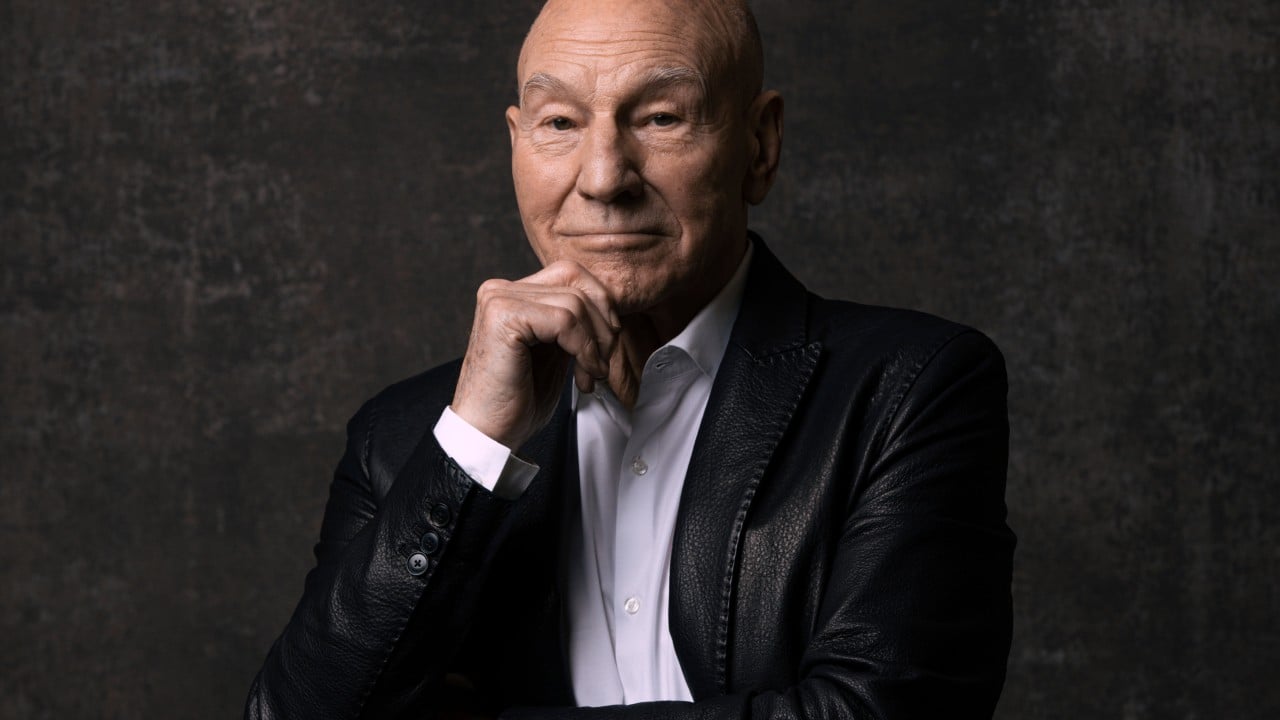
Patrick Stewart, who rose from poverty in England to become an accomplished Shakespearean stage actor and then achieved global stardom as the erudite Captain Jean-Luc Picard in television’s Star Trek: The Next Generation and the telepathic Professor Charles Xavier in the X-Men films, has died at the age of 86.
Stewart, knighted in 2010 by Queen Elizabeth for his contributions to drama, died at his home in Los Angeles, according to a statement on his social media account.
“We announce with...
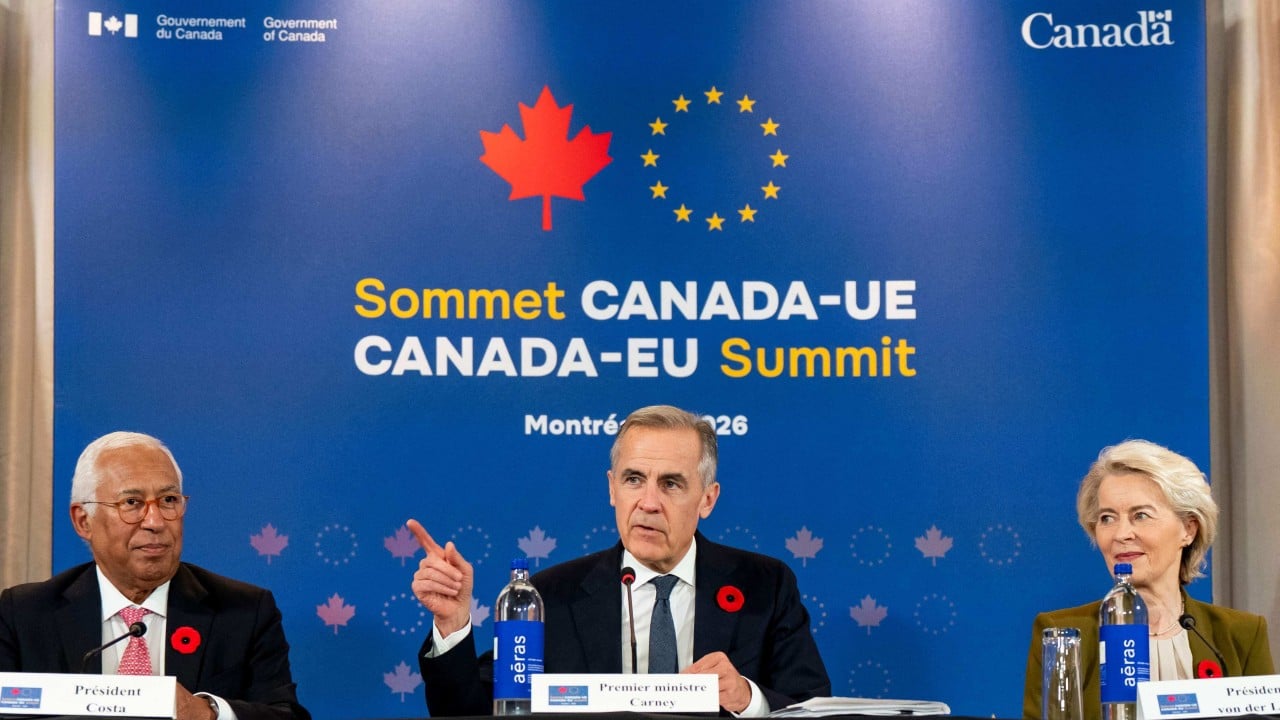
European Commission President Ursula von der Leyen said on Thursday the EU and Canada continue to explore Canada becoming the union’s first “associate member”, a term so divisive among member countries that it does not appear in a joint declaration.
The European Union and Canada aim to deepen cooperation on AI, climate, energy and security, von der Leyen said in a speech at a Canada-EU summit in Montreal.
The associate member term, which Germany and several other EU countries oppose, has no...
Former Afghanistan captain Rashid Khan became the first bowler to claim 200 wickets in men’s Twenty20 Internationals on Thursday, reaching the milestone during Afghanistan’s second T20 against Zimbabwe in Sharjah.
The leg-spinner brought up the landmark when he trapped Tadiwanashe Marumani lbw for two in the ninth over.
Rashid achieved the feat in his 120th T20 international, with the 28-year-old boasting an average of 13.96 and an economy rate of 6.13 in the format.
His record includes two five-wicket hauls, with best figures of 5-3.
The Afghan sits comfortably atop the list of leading wicket-takers in men’s T20 internationals with 200 wickets, 29 clear of England’s Adil Rashid in second place.
Rashid Khan became the first Afghanistan bowler to reach 200 ODI wickets during a match against Bangladesh in Abu Dhabi in October last year.
QatarEnergy is buying long-term supplies of liquefied natural gas from the US and other producers as part of a trading strategy designed to generate revenue if exports through the Strait of Hormuz are disrupted in the future, CEO Saad Sherida Al-Kaabi told Reuters on Thursday.
A Suzano está comunicando clientes na Europa e América do Norte sobre novo aumento no preço da celulose da companhia a partir de novembro, segundo fonte do mercado.
O reajuste a ser aplicado será de US$50 dólares, com isso, na Europa, o preço de lista da celulose da companhia na Europa passará a ser de US$1.410 por tonelada. Procurada, a Suzano confirmou o reajuste.
A companhia, maior produtora de celulose de eucalipto do mundo, já havia elevado o preço do insumo neste mês em US$20 na Ásia, e em US$50 nas Américas.
Shell and TotalEnergies reported on Thursday sharply higher third-quarter profits and raised share buybacks, as war-driven energy prices and record refining margins helped both beat expectations.
Hershey on Thursday warned that increased pressure on shoppers due to high inflation and interest rates could impact how much consumers spend on candy this Halloween. U.S. consumer sentiment hovered near record lows in October as Americans head into the holiday season with their budgets under strain from high gas prices as a fallout of the U.S. war in Iran. Hershey lowered its annual organic net sales growth target to about 3 percent, citing weakness in channels such as convenience stores, where customers were budgeting for higher gas prices. The Milk Duds maker was banking on last-minute shoppers looking for bulk packs of candy ahead of Halloween on Saturday, October 31, executives said on a post-earnings call. "Now we need consumers to show up, we need them. The last few days are really critical," said Hershey CEO Kirk Tanner. A 51.03-ounce pack of Hershey assorted Halloween candy with 165 pieces cost about $23.87 on Walmart's website as of Thursday morning. "Halloween participation is expected to be in line with 2025, though financial pressures could shape final purchase decisions," Tan
Hershey on Thursday warned that increased pressure on shoppers due to high inflation and interest rates could impact how much consumers spend on candy this Halloween. U.S. consumer sentiment hovered near record lows in October as Americans head into the holiday season with their budgets under strain from high gas prices as a fallout of the U.S. war in Iran. Hershey lowered its annual organic net sales growth target to about 3 percent, citing weakness in channels such as convenience stores, where customers were budgeting for higher gas prices. The Milk Duds maker was banking on last-minute shoppers looking for bulk packs of candy ahead of Halloween on Saturday, October 31, executives said on a post-earnings call. "Now we need consumers to show up, we need them. The last few days are really critical," said Hershey CEO Kirk Tanner. A 51.03-ounce pack of Hershey assorted Halloween candy with 165 pieces cost about $23.87 on Walmart's website as of Thursday morning. "Halloween participation is expected to be in line with 2025, though financial pressures could shape final purchase decisions," Tan
WASHINGTON — The Federal Communications Commission on Thursday voted to bar all Chinese labs from testing electronic devices including smartphones, cameras and computers for use in the US, expanding a previous agency action targeting Beijing. The FCC said it will prohibit test labs and certification bodies in countries including China that deny reciprocal treatment to US-based test labs. The FCC prohibitions are slated to take effect in December 2028. FCC Chair Brendan Carr said that in 2025, 82 percent of electronics were tested in China, which does not have an agreement with the US. "These labs are a critical gateway into American communications infrastructure -- and their privileged role gives them access to sensitive and confidential information about electronic products often months before the devices enter the market," Carr said, adding they could "allow insecure gear into the U.S. market, disrupt communications networks, or even steal intellectual property." The Chinese Embassy in Washington did not immediately respond to a request for comment. In 2025, the FCC banned testing of
WASHINGTON — The Federal Communications Commission on Thursday voted to bar all Chinese labs from testing electronic devices including smartphones, cameras and computers for use in the US, expanding a previous agency action targeting Beijing. The FCC said it will prohibit test labs and certification bodies in countries including China that deny reciprocal treatment to US-based test labs. The FCC prohibitions are slated to take effect in December 2028. FCC Chair Brendan Carr said that in 2025, 82 percent of electronics were tested in China, which does not have an agreement with the US. "These labs are a critical gateway into American communications infrastructure -- and their privileged role gives them access to sensitive and confidential information about electronic products often months before the devices enter the market," Carr said, adding they could "allow insecure gear into the U.S. market, disrupt communications networks, or even steal intellectual property." The Chinese Embassy in Washington did not immediately respond to a request for comment. In 2025, the FCC banned testing of

 Login