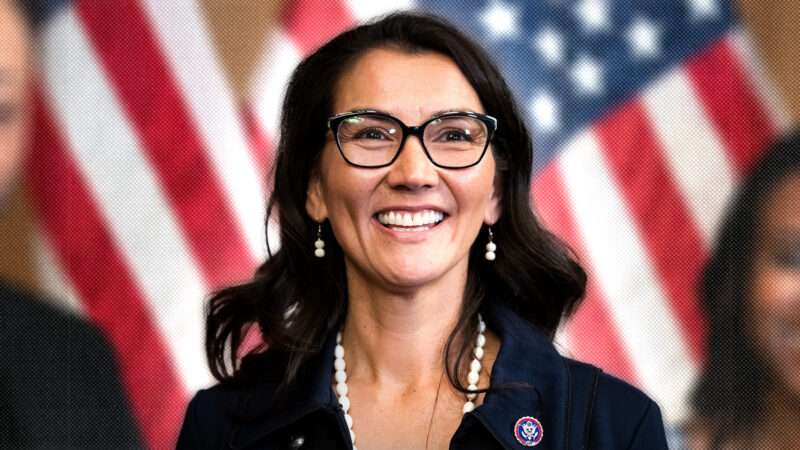
On this week's episode of Freed Up, Robby "Lestat" Soave and Christian "Lizard" Britschgi sport their Halloween costumes while reviewing Nathan Fielder's buzzy new documentary, You Can See Everything. During their discussion, they analyze the psyche of Elizabeth Holmes as well as the differences between documentaries and biographical dramas, and Christian gets an opportunity to defend his written critique of the film. Next, the boys shift gears and unpack reports that Mary Peltola's Senate campaign in Alaska helped recruit a second "Dan Sullivan" to confuse voters who meant to support the incumbent, Sen. Dan Sullivan (R–Alaska).
0:00—Halloween costumes
4:58—Robby and Christian review You Can See Everything
9:05—The ethical dilemmas in You Can See Everything
16:00—Elizabeth Holmes is still a liar
30:00—The Dropout vs. You Can See Everything
42:24—Mary Peltola's dirty tactics come to light.
54:06—Freed Up live for the 2026 midterm elections
If you enjoy Freed Up, come watch Robby debate at our upcoming Reason Versus event in Washington, D.C. Tickets are available here.
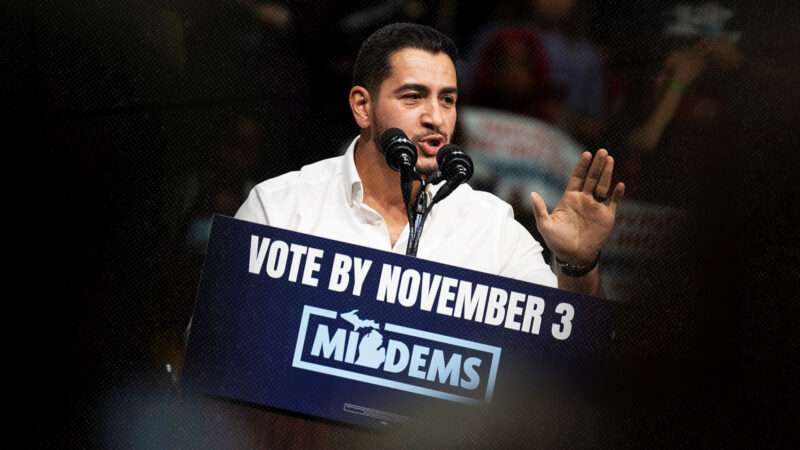
When Abdul El-Sayed ran for governor of Michigan in 2018, progressive media hailed him as the next Barack Obama. El-Sayed did not appreciate the comparison. "I get compared to Obama because my name is funny, and I'm brown, and my politics are about inspiring us to believe in each other again," he toldVox at the time.
In El-Sayed's telling, Obama was a "fairly centrist, middle-of-the-road" Democrat. He did not intend that as a compliment. El-Sayed believed the administration's policies were not nearly progressive enough—indeed, he believed Obama had betrayed the agenda he ran on. The far-reaching financial, environmental, and labor regulations that Obama pushed through were not nearly enough for El-Sayed.
El-Sayed ultimately fell short in the 2018 Democratic gubernatorial primary. Eight years later, he's a much savvier political operative; now running for the U.S. Senate, he has welcomed Obama's support this time. Yet El-Sayed's commitment to a left-wing agenda has hardly diminished. If he defeats his opponent, former Rep. Mike Rogers (R–Mich.), he will be one of the most far-left politicians to win a statewide election in recent memory—and in a purple-ish swing state that President Donald Trump won twice.
Like his friend and mentor Sen. Bernie Sanders (I–Vt.), El-Sayed is not a member of the Democratic Socialists of America (DSA); unlike Sanders, El-Sayed maintains that he is a capitalist rather than a socialist. Yet his political project has much in common with the DSA, and he has given every indication that he will align himself with DSA-affiliated members of Congress—veterans such as Rep. Alexandria Ocasio-Cortez (D–N.Y.) and likely newcomers such as Darializa Avila Chevalier and Claire Valdez, both of New York, who rode similar waves of populist resentment to victory over establishment Democrats.
El-Sayed's left-wing bona fides were evident during his debate with Rogers on October 8. The Democrat proposed giving the federal government vast new powers: up to 50 percent control over AI companies, a socialized health insurance program along the lines of Medicare for All, and price controls on the domestic oil industry. Asked what he would do to bring down the national debt and pay for all the new spending he wants, he had a simple, three-word answer: "Tax. Billionaire. Wealth."
El-Sayed's support for higher taxes exempts one important constituency: seniors. Like many Democrats—andRepublicans such as Rep. Nancy Mace (R–S.C.)—El-Sayed wants to exempt retirees from property tax increases, a policy that critics have branded "total boomer luxury communism" because it forces younger, less wealthy Americans to shoulder ever more of the social burden. The new wave of leftist Democrats think that higher taxes on the 1 percent, combined with cuts to the military budget, would be sufficient to pay down the debt while vastly expanding the social safety net.
In fact, El-Sayed has proposed tying Pentagon spending to education, such that an increase in money for the military would necessitate more funding toward schools. Don't expect this to work the other way around: Under El-Sayed's plan, a decrease in Pentagon spending would not force the government to stop throwing so much money at failing schools.
Ann Arbor and Onward
El-Sayed was born on Halloween in 1984. He grew up in Bloomfield Hills, an affluent, predominantly white suburb north of Detroit. His parents divorced when he was young, and El-Sayed lived with his Egyptian father and white stepmother. In high school, he was captain of the football, wrestling, and lacrosse teams. He continued to play on a club lacrosse team at the University of Michigan, which he attended from 2003 to 2007. (We overlapped briefly, though I never met him: I attended Michigan from 2006 to 2010.)
That meant going to Ann Arbor, a progressive college town with a long history of radical activism. Students for a Democratic Society (SDS), the prototypical '60s New Left student activist group, was founded in Ann Arbor in 1960; its first president, Alan Haber, still lives there. The White Panther Party, a sort of hippie counterpart to the Black Panthers, was based in Ann Arbor for a while; in the 1970s, the socialist Human Rights Party won multiple seats on city council. Liberalism, as well as radicalism, has thrived in Ann Arbor: The same year the SDS was born, future President John F. Kennedy came to the town to propose the international volunteer organization that eventually emerged as the Peace Corps. In the 2008 Democratic presidential primaries, the student-run Michigan Daily naturally endorsed the inspirational liberal candidate, Obama, over the establishment favorite, Hillary Clinton.
Over the course of the next decade—as left-wing enthusiasm for the Obama project faded and was replaced by bitter disappointment—El-Sayed enrolled in Oxford University and then Columbia University, pursuing a career in public health. (He never completed a residency, which has led to some scrutiny, even from friendly media figures, regarding his decision to describe himself as a physician.) In 2015, the mayor of Detroit appointed him the city's executive health officer. He resigned that position in 2017 to run for governor. That pattern repeated itself a few years later: He was appointed health director of Wayne County, which includes Detroit, in 2022, and resigned in 2025 to run for Senate.
Unlike in 2018, El-Sayed's hard-left politics and contempt for the Democratic establishment were now well-calibrated to prevail in the primaries. He defeated a more moderate candidate, Rep. Haley Stevens (D–Mich.), in part due to her support for Israel—an issue that El-Sayed frequently discusses. The same phenomenon has played out all over the country, with establishment Democratic figures paying a huge price when perceived as indifferent to voter outrage over Israel.
What works in the Democratic primaries does not always do as well in the general election. But while El-Sayed's politics are well to the left of the state he seeks to represent, the president's unpopularity may be enough to push him over the finish line. El-Sayed is narrowly ahead of Rogers in the latest polling. The Republican has finally resorted to breaking with the president on key policy issues—he has said that he wishes to end some of Trump's tariffs, conceding that "Canada is not our enemy"—but it may be too little too late.
Moreover, El-Sayed's left-wing foreign policy positions, which are not necessarily antithetical to libertarian views, count for more in Michigan than in other places. The state has a significant Arab-American population that politicians have ignored at their peril. In 2024, dissatisfaction with President Joe Biden's failure to curtail Israel's war on Gaza prompted many Arabs in Michigan to cast ballots for Green Party candidate Jill Stein, or even Trump, over Democratic nominee Kamala Harris. Republicans have sought to portray El-Sayed as insufficiently supportive of Israel, but that doesn't always play well in Michigan—particularly at a time when dissatisfaction with Trump's blunders in the Middle East is strong among Democrats, independents, and even many Republicans.
El-Sayed does have a possible Achilles heel on foreign policy: His association with the far-left Twitch streamer Hasan Piker. To many outside observers, the candidate's courting of Piker reads as a huge unforced error. Not only did El-Sayed seek the approval of an internet personality best known for praising authoritarian governments and evincing sympathy for terrorist groups, but he brought Piker to Michigan, put him in front of a camera, and made him a de facto representative of the campaign. For everyone except the toxically online, Piker is a bizarre and marginal shock jock, a man who says things like "America deserved 9/11." Piker is what happens when you pay too much attention to podcasts. He is also a reminder that while the insurgent left often claims to speak for ordinary, blue-collar working people, its agenda tends to be most popular with the affluent and elite-educated. In El-Sayed's showdown with Stevens, polls had her up 22 points with noncollege voters and 46 points with black voters. (Stevens herself is white.)
Yet El-Sayed prevailed, and he dealt with the Piker issue by shunting him to the sidelines. When asked about Piker, El-Sayed dutifully recites that a Twitch streamer from California has nothing to do with a Senate race in Michigan. (The obvious retort is Well, you brought him here.) He has also adopted right-coded language to explain why he should not be held responsible for Piker's inflammatory comments, tellingPolitico that he was over "this whole gotcha game, platform policing, cancel culture."
The GOP, meanwhile, may have gone overboard in the other direction. Rogers, a traditional Republican more in the George W. Bush mold than the Trump mold, is not exactly a right-wing firebrand, yet he could not stop himself from suggesting that El-Sayed has some sort of connection to Islamic terrorists. Just as Democrats should genuinely worry that linking up with people like Piker will cost them Jewish votes, Republicans should think more about whether reflexively calling Muslims terrorists is a bad strategy to win in Michigan.
After all, the form of radicalism that El-Sayed typifies is not really Islamic. It's not even foreign. It's the radicalism of left-wing economics, of making the federal government larger and more robust. He wants to prohibit corporations from buying houses and to punish companies like Airbnb over "housing dislocation." He wants to raise the capital gains tax, the inheritance tax, and the top marginal tax rates. He wants to give the Federal Trade Commission expansive new powers. He thinks higher education should be free for everyone. If he makes it to the Senate, El-Sayed will be a reliable vote for the Sanders agenda, including moratoriums on new data center construction, a much stronger Environmental Protection Agency, and, of course, Medicare for All. Indeed, one of El-Sayed's most frequent criticisms of Obama over the years has been that the Affordable Care Act did not go nearly far enough, and that it may have even been counterproductive to the mission of building a socialist health system.
Obama appeared alongside El-Sayed in Detroit on October 24. The candidate was savvy enough not to bring up his thoughts about Obamacare.
This Week on Free Media
I explain why it would be wrong to nationalize Elon Musk's companies.
Worth Watching
I finally watched You Can See Everything, Nathan Fielder's quasi-documentary about Theranos founder Elizabeth Holmes. It was made with considerable technical skill, and there's plenty to like about it—but ultimately I landed in the same camp as Reason's Christian Britschgi. We will discuss the film on this week's episode of Freed Up; look for that later today on the Free Media YouTube page.
Perceptive citizens of the great state of Alaska may have noticed that there are two Senate candidates on the ballot named Dan Sullivan: the incumbent, Republican Sen. Dan S. Sullivan, and Dan J. Sullivan, a completely unknown person who is not actively campaigning for the seat.
The intention seemed obvious: The false Sullivan is trying to siphon off some votes from the real Sullivan in hopes of benefiting the actual challenger, Democratic candidate Mary Peltola. But while it was clear who stood to gain from this scheme, how this had all been arranged remained unclear. Until now.
The rumors are apparently true: Political strategists working closely with the Peltola campaign and the Democratic Senatorial Campaign Committee (DSCC) explicitly recruited the other Sullivan, according to bombshell reporting by The New York Times. All deny any involvement, but the Times has them dead to rights:
The Times has found, based on interviews and text messages, along with documents prepared for a potential lawsuit against the campaign, that not only did Ms. Peltola's team work with people trying to recruit Mr. Sullivan to run for Senate, but the effort was much broader. The group worked to coax other would-be spoilers into the race, to dilute the incumbent's support and help catapult the Democrat to victory.
The campaign consulted with Jerid Kurtz, a Democratic operative, to find and recruit Sullivan, a retired teacher. Kurtz went so far as to fly to Sullivan's remote Alaskan village and personally convince him to run. Sullivan said he "didn't have any interest in being a politician," but loathed President Donald Trump and was eager to help Democrats win the Senate.
Elisa Rios, Peltola's former campaign manager, willingly admitted all this to the Times, claiming that voters deserved to know the truth; reading between the lines, it seems like she's a disgruntled former employee. However, she reconsidered before publication and asked the Times to disregard her interview. The Times quite reasonably declined. In any case, numerous other staffers confirmed her story.
Trump's Justice Department has filed suit, claiming that the other Sullivan's presence on the ballot would render the election illegitimate if Peltola wins. It seems unlikely the administration will win that argument, and these sorts of tactics are nothing new.
They are still quite contemptible, however. Peltola, who was well aware of the scheme, is trying to trick the people of Alaska into voting for the wrong person so that she's more likely to win. Maybe that's not quite so despicable as Vivek Ramaswamy's ad about Amy Acton, but it's just as dastardly—and much more likely to damage the integrity of the election. Ramaswamy's actions generated significant bipartisan backlash; will Democrats who claim that democracy itself is on the ballot speak up and denounce this?
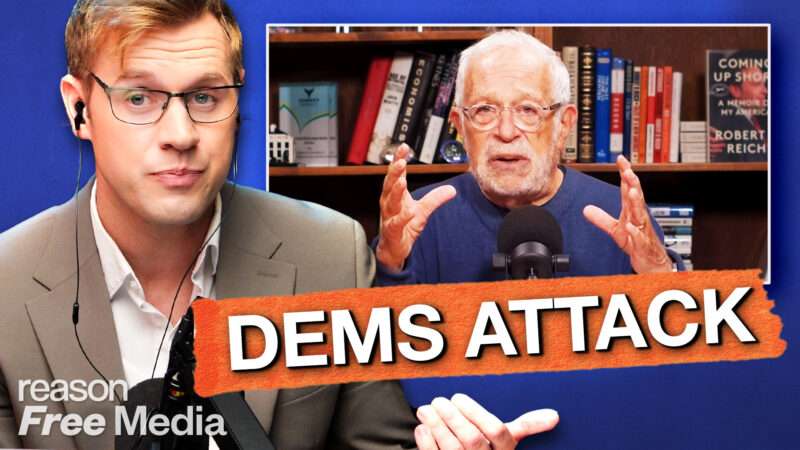
Elon Musk is under attack! Countless Democrats are admitting they plan to investigate or even jail him if they take back power on Congress in the midterms. They can't tell you what he specifically did wrong, but they'll come up with something.
Just as bad, or even worse, however, is that some of his critics want to nationalize his companies, including Starlink, which provides crucial infrastructure to Ukraine. Former Labor Secretary Robert Reich, a far-left populist Democrat, thinks Starlink is too important to be left under Musk's control, and that the federal government would do a better job administering it. I doubt that, but let's hear what he had to say:
NEW: Robert Reich calls for the "defunding" of Elon Musk, calls for Democrats to go after Musk's companies.
"Democrats ought to [start] laying the groundwork for nationalizing Starlink & SpaceX… It should be a public corporation."
From the horse's mouth: Reich thinks Democrats should be laying the groundwork to nationalize Starlink and SpaceX. This idea is crazy and reckless—and even dangerous. Here's why.
Now it's important to go over some of the background here. Starlink is a product that Ukraine uses to provide internet to its people, but only for civilian uses. Musk has maintained that while he is very happy to provide internet to Ukraine in the face of unrelenting invasion, Starlink cannot be used for offensive military purposes, because this would make his satellites a legitimate target of Russia in terms of their war effort. We want to avoid that. Separately, Starshield, a different system, is administered by the Pentagon, and Musk claims he has no control over it.
What happened last week is that a slowdown of the Starshield system resulted in reduced effectiveness of Ukraine's counterstrikes against Russia. And look, that was a problem. I traveled to Ukraine earlier this summer as part of a delegation arranged by a pro-Ukrainian nonprofit. I saw up close how important Starshield is to the defense of a free Ukraine. Moreover, there's entirely too much griping about Ukraine coming from some corners of right-wing media. Some people often seem to forget that Russia is invading Ukraine, not the other way around. It's Russia that won't accept a peace deal. When President Donald Trump called for an immediate ceasefire, Ukraine stopped hitting energy infrastructure in Russia—but Russia kept attacking anyway. Ukrainian President Volodymyr Zelenskyy has agreed to immediately stop fighting and freeze the conflict along the current lines, just like Trump wants. It's Russian President Vladimir Putin who won't negotiate.
We don't know for sure who ordered the Starshield slowdown. The U.S. government has denied doing so. Musk has, however, claimed Ukraine violated the terms of service of Starlink, using it for offensive military purposes, and thus that system was slowed down. I understand why that might be frustrating for the Ukrainians, but the fact is that it's Musk's company, so he makes the rules. It belongs to him.
And importantly, it has to stay that way. Nationalizing the company would be an insane step to take in response to a tech owner having a say in how his product is used. Do we really trust the government to operate these companies as efficiently as their founders? Of course not. Moreover, in this specific case, it might bring us closer to a direct confrontation with Russia—and as much as it's a good thing to undermine the Russian conquest of Ukraine, we do not want to start World War III.
And there are the broader philosophical harms. We are experiencing an unprecedented flourishing in the tech space, with AI, driverless cars, robotics, and such. When the government nationalizes a successful tech company, it sends a warning to all the others: If you're too good at what you do, we might take you over. We might punish you. This disincentivizes investment and innovation at a time when they're desperately needed.
Nationalizing Musk's companies is doing Ukraine no favors. But it will hurt America's interests too. We want to encourage Musk, Jeff Bezos, Sam Altman, Mark Zuckerberg, and all the rest to compete with one another to design products that make life better, earning them profits along the way. It doesn't work if the government butts in. Unfortunately, far-left thinkers like Reich, Sens. Bernie Sanders (I–Vt.) and Elizabeth Warren (D–Mass.), and many of the people who are about to be elected to Congress for the first time actually want to slow down the pace of tech. That's how much they hate Musk.
On this week's episode of Freed Up, Robby Soave and Christian Britschgi condemn Vivek Ramaswamy's new attack ad against opponent Amy Acton before discussing their predictions for the 2026 midterm elections. Next, the boys get biblical with references to their favorite parables as they discuss Tyler Cowen's latest article on why he thinks Elizabeth Holmes—and most other non-violent female criminals—should not be in prison. The episode wraps with a thoughtful discussion on aging, state attorneys general, and the latest Meta settlement.
00:00—Vivek Ramaswamy ad controversy
20:00—2026 midterm elections
25:50—Should Elizabeth Holmes be in prison?
49:20—Getting older
58:55—An update on Rep. Ilhan Omar
1:03:10—The importance of grain
1:06:14—Robby and Christian extol author Michael Crichton
1:11:30—The war in Ukraine should end.
1:14:50—Meta settled with the state of New Mexico
1:20:00— Christian continues his crusade against state attorneys general.
If you enjoy Freed Up, come watch Robby debate at our upcoming Reason Versus in D.C. Tickets are available here.
Robby Soave on the left, Christian Britschgi on the right, Elizabeth Holmes in the middle with the words "bad blood" written above her face, and the Reason Freed Up logo in the bottom left corner
In my role as a political commentator, I enjoy making predictions. I possess no special talent for this and am often hilariously wrong: Unlike most other pundits, I famously clung to my stupid belief that former President Joe Biden would never step down as the Democrats' 2024 candidate, for instance. I called the 2020 presidential election correctly (and got most states right, only flipping Georgia and Florida), but I messed up in 2024. (Nevertheless, I still demolished my co-host, who didn't appear to take this challenge very seriously.)
The hardest part about making predictions is separating what you want to happen from what is actually likely to happen. Commentators often feel inclined to rally for their preferred outcome, as if shouting about it on television is going to make it come true. In some ways, this is an easier temptation for us libertarians to avoid, since all outcomes generally seem suboptimal. Once again, that is the case: See, for example, the upcoming 2026 midterms.
It seems inarguable that President Donald Trump has squandered much of his political capital by failing to focus narrowly on the economy and instead launching another unpopular war in the Middle East. It also seems obvious that the Democratic Party, once returned in power, will do everything it can to thwart the administration's shrewdest policies—on tech and AI in particular.
But that is my prediction: Democrats will retake the House of Representatives and the Senate.
I don't have any specific map in mind for the House (it's too complicated), but here are my Senate predictions:
Here is my REVISED prediction for the Senate. For the last several weeks, everything has moved in Dems' direction, and I now expect them to take it.
When I looked at the map back in August, I still thought Ohio was a long shot for the Democrats and that Michigan was in play for the GOP due to Abdul El-Sayed being so far left. Now it looks to me like Republicans will lose both seats, along with Texas and Alaska. I'm still betting that the formidable incumbent in Maine, Sen. Susan Collins (R), will hold on—the polls have misjudged her in the past—and that Iowa is a bridge too far for Dems. If Republicans manage to keep those two seats, then it's a 51–49 map in Democrats' favor.
But wait…all is not lost for Trump.
In the event of a 51–49 Dem advantage, it seems somewhat likely to me that Sen. John Fetterman (D–Pa.) could switch parties, which would restore Republican control because of Vice President J.D. Vance's tiebreaking vote. With his conservative rhetoric on Israel and other issues, Fetterman has no future as an elected Democrat in his state—he could never ever ever win a Democratic primary—and will have to strike some sort deal with Trump before his reelection in 2028. Fetterman should agree to become an independent who caucuses with Republicans in exchange for Trump ensuring that no Republican dares run against him in the future. Absent such a deal, Fetterman is virtually guaranteed to be a one-term senator, so if he harbors any desire to keep his job—perhaps that's an open question—he will need to make a move. A 51–49 Senate will give him the exact leverage he needs.
So those are my predictions! What are yours?
This Week on Free Media
I'm joined by Amber Duke to discuss the riots in France, Vivek Ramaswamy's terrible campaign ad, and more.
Worth Watching
Here's another shameless plug for my upcoming debate with Katherine Mangu-Ward, Mehdi Hasan, and Jason Stanley! (Katherine is on my side.) If you are in Washington, D.C., please get tickets here.
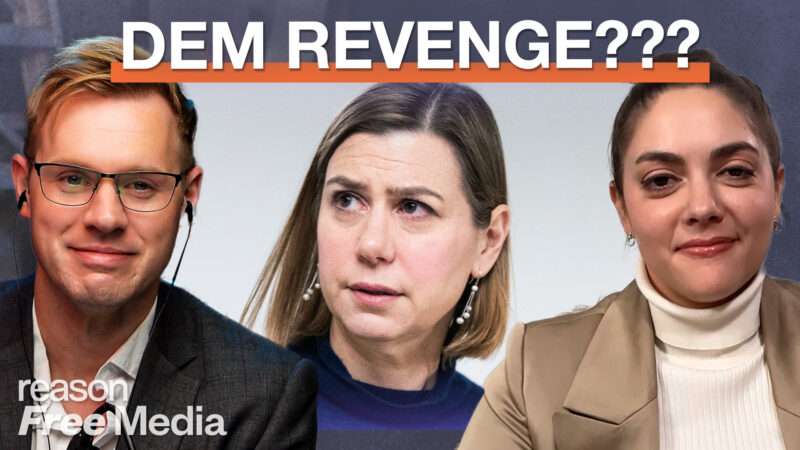
Another day, another series of warnings from Democratic and liberal media figures that they are going to try to put their political opponents in jail if they take back control of government.
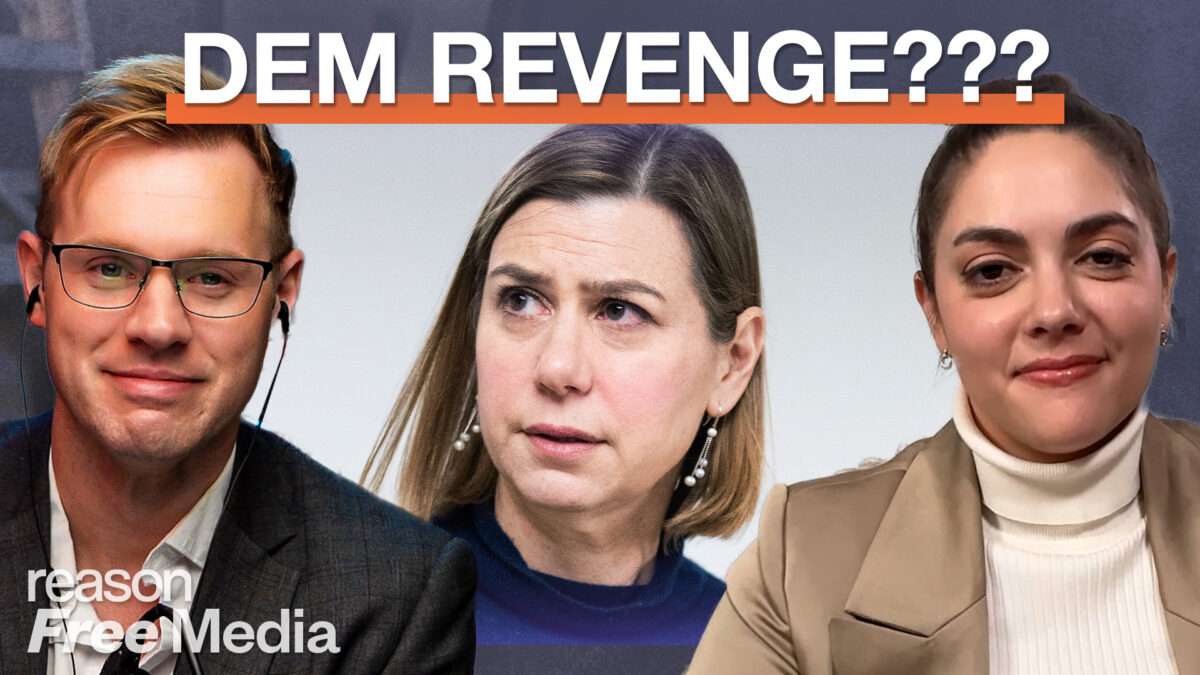
In this segment of Free Media, Reason Senior Editor Robby Soave and Daily Caller Editor in Chief Amber Duke discuss worrisomeremarks from Sen. Elissa Slotkin (D-MI) and journalist Kara Swisher, suggesting retribution for those in the Trump Administration if and when Democrats regain control of Congress.
If you enjoy Free Media, come watch Robby debate at our upcoming Reason Versus in D.C. Tickets are available here.
In this segment of Free Media, Reason Senior Editor Robby Soave and Daily Caller Editor in Chief Amber Duke discuss the ongoing violent protests in France.
If you enjoy Free Media, come watch Robby debate at our upcoming Reason Versus in D.C. Tickets are available here.
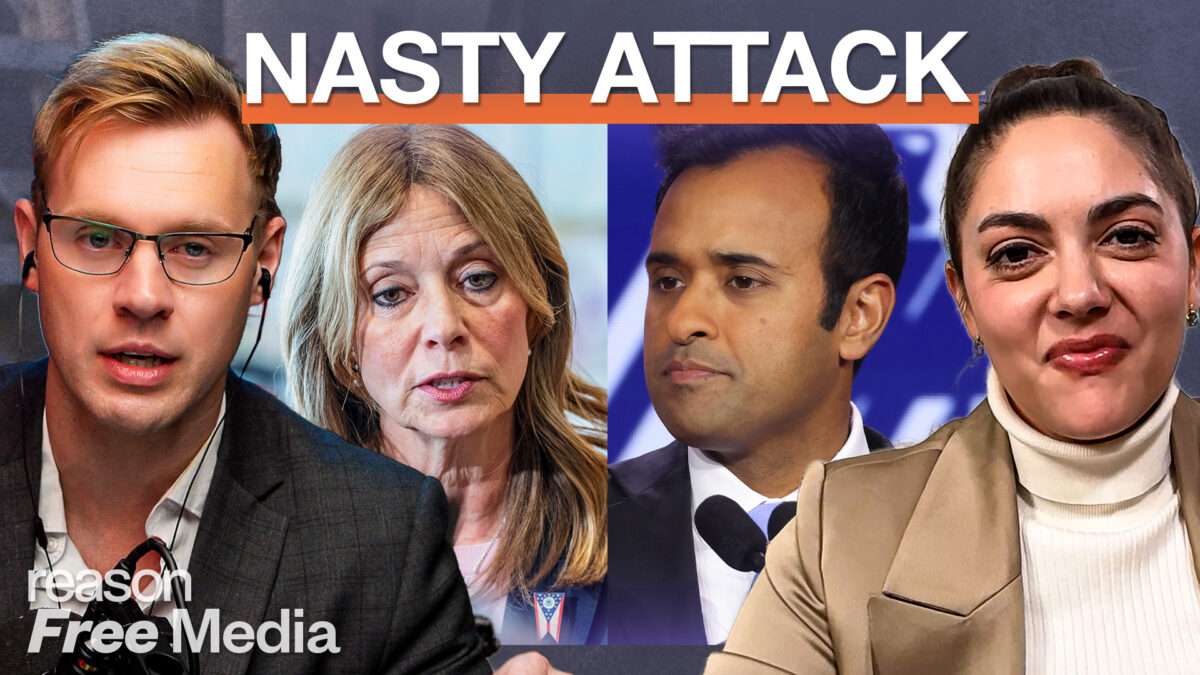
In this segment of Free Media, Reason Senior Editor Robby Soave and Daily Caller Editor in Chief Amber Duke discuss Vivek Ramaswamy's controversial attack ad against his opponent Amy Acton in Ohio's gubernatorial race.
If you enjoy Free Media, come watch Robby debate at our upcoming Reason Versus in Washington, D.C. Tickets are available here.

 Login