❌

Reading view

Israeli Strikes in Gaza Kill at Least Eight Palestinians Over Three Days as Relentless Attacks Continue

Israeli attacks in Gaza have killed at least eight Palestinians over the past three days, according to the Gaza Health Ministry, as the IDF continues its constant violations of the so-called ceasefire deal that was signed in October 2025. The Health Ministry said on Saturday that at least six Palestinians were killed and 38 were […]
  •  

“PRIESTS vs GENOCIDE, DOMINANT ZIONISM and ARMED BANKS“. Eroic Homily by Italian Archbishop in the Feast of Saint Pio vs WARLORDS of Death

“I am the way, the truth, and the life. No one comes to the Father except through me.”

Jesus Christ – Gospel of Saint John the Apostle (14:6)

“Do not fear them, then, for there is nothing hidden that will not be revealed, and nothing secret that will not be made known.What I tell you in the darkness, speak in the light; and what you hear whispered in your ear, proclaim from the housetops.”

Jesus Christ – Gospel of Saint Matthew the Apostle (Mt 10:26-28)


In the cover image the Arcbishop of Saint Pio, father Franco Moscone, and the Zionist rulers Netanyahu and Trump

The Heroic Homily of the Archbishop of San Pio on Genocide, Rampant Zionism, and Banks Profiting from Arms

by Fabio Giuseppe Carlo Carisio

VERSIONE IN ITALIANO

In an era when Catholic progressivism is obscuring the diamond-bright light of the Word of God with diabolical worldliness, there remain Shepherds who have the courage to challenge wolves in sheep’s clothing to save their flock.

One of them is undoubtedly Monsignor Franco Moscone, Archbishop of Manfredonia, Vieste, and San Giovanni Rotondo—home to the Shrine of Saint Pio of Pietrelcina. Yesterday, during the Solemn Mass marking the liturgical feast of the Franciscan friar, the prelate—originally from the Piedmont region of Saint John Bosco and the Langhe (home of the philanthropist Servant of God Giulia di Barolo)—delivered a homily that was not only moving and courageous but truly heroic.

The SAINT, the KING and the SATANIC FREEMASONRY. St. John Bosco’s Prophecy and Fight of to Defend Christianity by the Italian Masons Persecutions

Just as those authentic Christians of the 19th century had to defy Freemasonry in a Turin inflamed by a sham *Risorgimento* in order to defend Gospel values, Archbishop Moscone did not hesitate to use the whip of rhetoric to proclaim the truth as taught by Jesus. Thundering from the virtual pulpit of the modern, magnificent church dedicated to the Saint of the Stigmata, he railed against the dangerous drift of “a narrative leading us straight toward war.”

Gospa News has dedicated three previous articles to the battle waged by this high-ranking prelate of the Archdiocese of Manfredonia, for—just as Gospa News points an accusing finger at the profiteering of… The Weapons Lobby and death.

WEAPONS LOBBY – 20. HUGE BUSINESS OF ZIONIST TRUMP’s WARMONGERS. How a German Industry Became the Golden Goose for the US

Indeed, every one of his statements is borne out in detail by the investigations we have linked to them.

Yesterday, he stood in solidarity with the “Priests against the Gaza genocide”—with whom he had demonstrated in Rome the day before, subsequently having to explain to some of the faithful why his seat was empty at the overnight vigil for the Feast of Saint Pio—but above all, he boldly exposed “dominant Zionism” and the “armed banks” that profit from “ethnic cleansing in Palestine.”

In an era when every public authority is terrified of discussing Jewish extremism for fear of being branded antisemitic, Monsignor Franco displayed a fortitude and intelligence truly bestowed by the Holy Spirit; he used unequivocal words to condemn the Tel Aviv regime, while tempering them by citing the book by Israeli historian Omar Bartov:

“Into the Abyss: From Zionism to Genocide. Israel’s Moral Defeat” (Laterza),

DEVIL NETANYAHU’s HOLOCAUST. Explosive UN findings: “Israel DELIBERATELY TARGETED Gaza CHILDREN”

He did so in a speech challenging—and calling for the “disarming” of—all “theologies of fundamentalism,” such as that of the Boko Haram terrorists: heirs to ISIS and Al-Qaeda, groups created by Anglo-American intelligence to invade the Balkans, Afghanistan, Iraq, and Syria—a connection certainly not made by the priest himself, but one argued in his books by former Interpol official Antonio Evangelista, whom I have interviewed on several occasions.

The prelate cited the theological fundamentalism found among Hindus, as well as among Evangelical Christians and xenophobic Catholics. He concluded with two resounding remarks—delivered before the final blessing of the Mass—regarding the “wars spread by NATO” and the possibility of reviving in Italy the concept of conscientious objection to military spending, as was done during the Cold War.

The Grim NATO’S JIHADs. How Atlantic Intelligence “14 Eyes” uses ISLAMIC TERRORISTS: from Italy to Libya, Ukraine and Syria

I have summarized in a few lines a homily lasting about twenty minutes; it must be heard in its entirety to fully grasp the Gospel narrative that began with the blood of Padre Pio’s stigmata and now extends to Gaza—to the 300 children killed during the sham truce—as well as to Lebanon and the 145 others who died during yet another bogus ceasefire.

For this reason, I will limit myself here to transcribing only those sentences containing the aforementioned key points.

The Empty Chair at the Saint Pio Vigil: Standing with “Priests Against Genocide”

«Someone rightly wrote to me this morning saying, ‘Last night there was an empty chair at the vigil for Saint Pio’—and it was mine, the local bishop’s! It was empty here because I sought to embody the spirit of prophecy, solidarity, and peace that Padre Pio always brought through his life and continues to urge upon us: a most urgent cry in this historic moment to which we are all witnesses». 

St. Pio’ Prophecy on Christians’ homelands, NWO Rockefeller’s Abortion law and Masons war

Thus begins Father Franco’s homily, which seems to encapsulate two years of impassioned denunciations against the holocaust of children in Palestine and Lebanon.

«Yesterday, I attended a demonstration called ‘Priests Against Genocide’; it is an international network of priests that emerged just over a year ago in response to a cry for help from an African nun—a plea heard and taken up by a dedicated priest from Sicily. The network currently brings together over 2,600 priests from 57 nations, as well as 27 bishops and three cardinals. Yesterday, we walked a route through Rome, starting at the Jesuit Curia, passing the embassies to the Holy See for Palestine and Lebanon, and arriving at Piazza Mazzini, where Leonardo’s administrative headquarters is located» the priest continued (hereafter, we will not specify that the italicized text comes from his homily).

ZIONISTS’ Neverending WAR CRIMES, as GENOCIDES. Iran: “US, Israel GUILTY of gravest MASSACRES since 1949”. Children’s Murdering in Lebanon, Qeshm, Minab

«We arrived at this point through prayer, by listening to the Gospel, and by reflecting on the words of Pope Leo’s *Magnifica Humanitas* and those of the Israeli historian Omar Bartov, who published a book titled *Into the Abyss: From Zionism to Genocide—Israel’s Moral Defeat*».

The Stigmata of the Holy Land: 445 Children Killed During False Truces, Christians Driven Out

«I look at the wounds of Padre Pio—at the signs of his identification with Christ Crucified and the blood he shed alongside Jesus’s for fifty years—and I ask myself: where is the blood of the Lord’s stigmata and Padre Pio’s stigmata today? Where is it being shed?»

«It is certainly found in the stigmata borne by the population of Gaza, 97% of whom are left without homes or means of subsistence—a place where a truce is said to exist, yet a genocide quietly continues. Yesterday, we recited the names of 300 children killed in Gaza since the truce began.Padre Pio’s wounds are also found in the ethnic cleansing taking place in the West Bank and southern Lebanon; there, too, we counted 145 children killed since a peace plan was supposedly in place». 

HORRIFIC! Children Killed in Gaza as ISIS-Style by IDF (100 only During Truce). Shot in the head and chest. Investigation by BBC Africa. The best VIDEO of the week

«In those lands, our Christian brothers—representing the oldest churches in history—are particularly being driven away; only one Christian village remains under the administration of the Palestinian Authority. All the others have been wiped out.»

The Archbishop of San Giovanni Rotondo went on to mention the “stigmata” visible in Africa: the wars in the Sahel and Sudan, the massacres committed by Boko Haram terrorists in Nigeria and the abduction of girls, and the repression in Myanmar and across the Middle East.

“The CHRISTIAN ZIONISM Threatens CHRISTIANITY in HOLY LAND”. As in WEST! Apocalyptic Analysis on Jerusalem Orthodox Patriarch’s Prophetic Alarm

He added: «And here in our own Europe, too, Ukraine and Russia continue to send their finest youth to the front lines to be sacrificed. These open, bleeding wounds—akin to the stigmata of Christ—persist in the humiliation of the Venezuelan people and the starving of the Cuban people.»

«I urge everyone to make praying for peace our primary commitment; it was a central focus of Padre Pio’s thoughts and heart throughout his life.»

WARS in VIDEO (until August 2026) & 14 ESCLUSIVE MILITARY INVESTIGATIONS. Zelensky is WASTING EU-funded Drones to KILL Russian Civilians. Putin’s Missiles are WIPING out Military Assets in Kiev

Monsignor Moscone noted that, in the past, prayer groups did not succeed in halting wars as the “greatest Saint of the last century” had hoped: «It was not effective then, yet we must believe it can be effective today, preventing these scattered conflicts from escalating into a world war.»

Father Franco Moscone: “Disarming Fundamentalist Theologies: From Dominant Zionism to Catholic Xenophobia”

«From Padre Pio, we also learn how to properly interpret Sacred Scripture—the words of the entire Bible, and the Gospel in particular. Let us, therefore, call for the disarming of the theologies that fuel fundamentalism of every kind. Jewish theologies that fuel the dominant Zionism; Islamic theologies that foment terrorism and fundamentalist groups; Hindu theologies—but also Christian theologies, particularly of an evangelical bent as well as within our own Catholic Church—that spread division and violence and stoke xenophobia and racism».

FREEMASONRY & ZIONISM – 4. How SYNAGOGUE OF SATAN was LICENSED to KILL! It arose from Conspiracy behind the Heretical Catholic text “Nostra Aetate”

“Arms multinationals and ‘armed banks’ that invest in death.”

«Let us, therefore, pray and read the Word of the Lord and the values ​​of our religion—and all religions—with authenticity and integrity. And let us not be afraid to speak out against what is wrong in this regard. Prayer must translate into action—action that speaks truth and denounces injustice. We cannot settle for a narrative that aims for and leads directly to war—serving solely to boost the interests of major arms multinationals, ‘armed banks,’ and anonymous investment funds that invest only in death—thereby denouncing a form of capitalism and power that makes the rich ever richer and the poor ever poorer, while also—even in our developed West—wiping out the middle class and social mobility, driven by a mindset that leads only to death and injustice».

WEAPONS LOBBY – 21. NATO’s WarCrimes! Attack to Moscow, SCHOOLGIRLS’ Massacre by DRONE of Ex CIA Chief POMPEO. Behind UAV FP-1 the Satanic Kiev Gang of Corruption funded by SOROS too

At the conclusion of Holy Mass—following the reading of the prayer for Civil Protection, of which Saint Pio is the patron—the Archbishop of Manfredonia added a pointed remark that struck like a dart aimed at European armament plans, which he had already severely condemned in previous public statements…

“Wars Spread by NATO and Tax Objection to Arms Spending”

«This is the security we need and desire: the security of Civil Protection, of environmental stewardship… This is true deterrence—not that of armaments and NATO, an alliance that, since its inception, has only brought and spread war across four continents»—a fact confirmed by the recent geopolitical “Mediterranean Sea: Same Blood, Same Mud”) by Interpol official Antonio Evangelista.

“NATO’s LIES ON MEDITERRANEAN WARS FOR GAS”. Exclusive Interview to Former Interpol EU Officer

«A form of deterrence that is essentially cost-free, requiring no massive financial outlay. It makes me wonder if the time has come to revisit a concept discussed during the Cold War—in the 1970s and 80s—namely, not merely conscientious objection to military service, but objection to military spending itself: a tax objection regarding that 5% of funds they want us to divert to entirely different purposes. I take personal responsibility for what I have said; let us now receive the Lord’s blessing—a blessing that is surely one of Peace, and nothing else».

Invoking Saint John Paul II, a heroic fighter against war

In a gesture reminiscent of the greatest, most heroic crusader against conflict and weaponry—Pope Saint John Paul II—the Mass concluded with the moving hymn “Jesus Christ, You Are My Life,” composed by Monsignor Marco Frisina for the World Youth Day held at Tor Vergata, Rome, during the Jubilee of 2000.

From Fatima to Ukraine. The Useless Lesson of Peace by Pope Wojtyla to Christians who want Weapons and War

Every Christian must give praise to God, Jesus Christ, and Saint Pio for sending us another courageous prelate—a bishop—like Karol Wojtyła: the Bishop of Kraków during the Soviet communist regime’s political occupation who later became the Bishop of Rome and succeeded in bringing down the USSR dictatorship through the consecration of Russia to the Immaculate Heart of Mary, in obedience to the secret messages received at Fatima by the visionary Lucia.

Suffice it to recall that it was not the assassination attempt against him on May 13, 1981, nor the military regime imposed by General Wojciech Jaruzelski, but rather the Solidarity trade union—fueled by the Christian spirit instilled by John Paul II himself—that managed to triumph, much like David against Goliath.

IL MIRACOLO NELL’ATTENTATO A PAPA GIOVANNI PAOLO II. Proiettile Deviato dalla Madonna di Fatima e da Suor Rita in BILOCAZIONE come San Pio

That is why, in these recent times that carry an apocalyptic air—as foretold by the secrets of Medjugorje—the prayers of devout Christians and the messages of Our Holy Lady are not enough; heroic bishops are also needed who know how to translate the Gospel and prophecies into action.

A heartfelt thank you, Father Franco!!!

Fabio Giuseppe Carlo Carisio – Founder and Director of Gospa News


RELATED POST

New PANDEMIC and Third WORLD WAR by Now Inevitable… Only Christ Can Help Us in Tribulations of Prophecies by Apocalypse and Medjugorje

Carlson & Waters (VIDEO): “HOW US, UK, EU and NATO are Triggering WORLD WAR III”. The BOJO Fake-Peace Plan in Ukraine to Provoke Russia

FREEMASONRY & ZIONISM – 1. Apocalyptic “Cataclysms” by Synagogue of Satan: Genocides in Palestine & Plotted Pandemic for Lethal Vaccines.

45th Medjugorje Anniversary – MISTERY in VATICAN! Late Cardinal Ruini Certified the Holy Lady’s Apparitions as Authentic (Video). Then “Masonic Clergy” Hid this

Holy Lady’s Victory against Freemasonry in Lourdes. Miracles’ Cave reopened by the Christian Empress thanks Shepherdess Bernadette

FREEMASONRY & VATICAN – 2. Cardinals, Bishops kneeling before Satan at the Masonic Summit in Italy

WEAPONS LOBBY – 19. EU’s MAD REARM by VON DER LEYEN to ENRICH GERMAN DEFENSE INDUSTRY. Rheinmetall 202 % in one Year, + 52 % in two Weeks


  •  

Milei at the UN: Argentina as the ‘promised land’ for capital, AI, and Israel

Far-right Argentine President Javier Milei addressed the 81st session of the United Nations General Assembly on September 23, giving a speech which provoked strong reactions. The South American head of state also participated in a series of high-level meetings.

One of his most quoted lines from his New York City trip has been: “Argentina is the new promised land.”

This is not the first time Milei has used religious concepts and ideas from the Judeo-Christian tradition to explain his political stance, but it is the first time the Argentine president has equated his country, in economic and political terms, with the land of Abraham and his descendants.

This is even more telling when one considers Milei’s extremely close relationship with Israel and ardent defense of its policies of war and genocide across West Asia, as well as the admiration he professes for the Jewish religion.

Milei also emphatically underscored this during his address to the UN General Assembly: “We also made a geopolitical choice: we have unambiguously aligned ourselves with the West … We condemn the Iranian regime’s attacks on the State of Israel.”

And this is an indisputable fact. Since the beginning of his term, Milei has not only aligned himself with the geopolitical interests that the Trump administration has vigorously pursued, but has also become one of Israel’s staunchest allies in the region.

This is quite impressive, considering that President Noboa in Ecuador, De la Espriella in Colombia, and others have also expressed a kind of unwavering alliance with Tel Aviv.

That is why Milei has not limited himself to diplomatic rhetoric, but has pulled the strings of power to designate Iran’s main military force (currently in conflict with Israel and the United States) as a terrorist organization.

“We declare the Iranian Revolutionary Guard a terrorist organization, just as we continue to seek justice for the two attacks we suffered on Argentine soil in 1992 and 1994,” Milei said at the UN, referring to two attacks in Argentina against the Israeli Embassy and the Argentine Israelite Mutual Association (AMIA). The Argentine justice system, advised by Israel and the United States, identified Hezbollah and Iranian citizens as the perpetrators.

Free-market capitalism and Artificial Intelligence

Another topic Milei addressed during his appearance was his staunch defense of free-market capitalism in which the state plays a minimal role: “We do not want to lose again; that is why we embrace free-market capitalism.”

In this regard, Milei once again highlighted his government’s strong support for artificial intelligence companies and the tycoons behind them. It should not be forgotten that the Argentine government signed a working and information-sharing agreement with Palantir, whose co-founder, Peter Thiel, purchased a property on Argentine soil.

This is clearly part of Milei’s neoliberal agenda to attract investment from major foreign capitalists, among whom the owners of technology companies (who are so interested in resources such as lithium, copper, and others that abound in South America) currently stand out.

However, recent statements by former employees of these companies regarding the danger that the development of AI poses to humanity have created some unease around the world. But Milei says that this is precisely the time to move forward: “Prudence does not mean fear, and what’s more, fear should under no circumstances automatically lead to obedience … where many see a threat, we see a frontier.”

Criticism of the UN

Probably one of the most important aspects highlighted in Milei’s speech was his harsh criticism of the UN and its role in current geopolitics: “Today, unfortunately, it is time to acknowledge that this sacred pact has, in fact, been broken.”

But not content with merely pointing out the shortcomings, Milei asserted (very much in line with Trump) that the UN has become a venue for certain people to amass wealth: “It has become a useless organization that serves only to feed a caste of fatally arrogant parasites disguised as well-meaning bureaucrats.”

Hence, he asserted that resolutions ultimately have no real effect on policy. He cited the example of the Malvinas Islands, a territory disputed with the United Kingdom: “What good is a resolution if, for decades, the other party can act contrary to it, and that resolution remains intact in the archives but is powerless in the face of reality?”

Criticism of Milei’s speech

Milei’s statements, while applauded by his supporters, have drawn widespread criticism in Argentina. Much of the criticism has focused on the fact that Milei now seems to staunchly defend Argentina’s right to control the Malvinas Islands, whereas in the past he was cautious and even reluctant to adopt a patriotic stance against the United Kingdom – something both the Argentine left and right have done. “We’re surprised that Milei now remembers when he used to talk about self-determination,” said Axel Kicillof, governor of the province of Buenos Aires.

Likewise, critics pointed out the apparent contradiction in Milei’s rhetoric between extolling the right to self-determination and aligning himself with the interests of Washington and Tel Aviv: “Milei’s stance doesn’t surprise me. The truth is that this line of subservience—and I say this very clearly—is directed at Trump and Netanyahu. Even the terminology is consistent with what Trump proposed and his ideas on the deregulation of artificial intelligence, as well as his view that Argentina’s natural resources are available to anyone who wants to take them,” said Kicillof.

Regarding Milei’s economic rhetoric, Patria Grande leader Juan Grabois said: “Besides being an ignorant imbecile, besides being a lobotomized parrot who parrots Trump, besides plagiarizing Gramsci without knowing he’s “a filthy communist,” what Milei is saying is that we’re basically going to hand over our territory, critical minerals, energy, and national sovereignty to the technocracy.”

  •  

Israeli Strike on Car in Gaza City Kills at Least One Palestinian

An Israeli strike hit a vehicle in Gaza City on Thursday, killing at least one Palestinian, as the IDF continues its constant violations of the US-backed ceasefire deal. The Palestinian news agency WAFA reported that the car was hit south of Gaza City and the victim’s body was transferred by relatives to another vehicle, which […]
  •  

Mais pourquoi Glucksmann voit-il des génocides partout, sauf à Gaza ?

Par Eric V.

En janvier 2022, Raphaël Glucksmann saluait le vote reconnaissant « le génocide des Ouïghours ». Hier, face à Ségolène Royal, il refusait encore le mot pour Gaza. Entre les deux, une commission de l'ONU a conclu au génocide. Lui, non. Il faudrait savoir ce qui a changé : les faits, ou l'accusé.

Mais pourquoi Glucksmann voit-il des génocides partout, sauf à Gaza ?
LE COURRIER
DES STRATÈGES
Restez libre !
Mais pourquoi Glucksmann voit-il des génocides partout, sauf à Gaza ?

LA NEWSLETTER · GRATUITE

Le Courrier,
chaque matin.

L'essentiel de l'actualité, passé au crible par les cinq plumes du Courrier. Dans votre boîte, chaque jour ouvré.

Gratuit. Vous restez libre de partir quand vous voulez.

JE M'INSCRIS lecourrierdesstrateges.fr
lecourrierdesstrateges.fr
Restez libre !

Le 20 janvier 2022, l'Assemblée nationale adopte une résolution qui « reconnaît » les violences infligées aux Ouïghours comme constitutives d'un génocide. Aucune juridiction n'a statué. Aucun organe des Nations unies n'a prononcé le mot. Raphaël Glucksmann, alors député européen, s'en félicite sur X : « Tous les groupes ont voté pour la résolution reconnaissant et condamnant le génocide des Ouïghours […] : c'est un message fort envoyé au régime chinois. » Le mot est posé, et il est applaudi.

Mars 2024. Le même homme, interrogé sur Gaza : « J'ai un emploi extrêmement précautionneux du terme génocide. » Il parle de carnage.

Septembre 2025. La commission d'enquête internationale indépendante mandatée par le Conseil des droits de l'homme conclut qu'Israël commet un génocide à Gaza. Elle retient quatre des cinq actes énumérés par la Convention de 1948 et nomme Netanyahou, Herzog et Gallant. Elle est présidée par Navi Pillay, ancienne présidente du Tribunal pénal international pour le Rwanda, ce qui ne manque pas de sel pour le coréalisateur de Tuez-les tous !.

Hier soir enfin, sur LCI, Ségolène Royal lui lance : « Si les mots sont importants, il faut reconnaître le génocide. » Il refuse. Crimes de guerre, crimes contre l'humanité, tout ce qu'on voudra — le mot, non.

Rwanda : la Cour de Cassation clôt le mythe de la complicité française...
Bisesero : la Cour de cassation a rejeté les pourvois le 9 septembre 2026. Ce que l’arrêt juge en droit, ce qu’il laisse à l’appréciation des juges du fond.
Comment le dictateur Kagamé a construit le narratif anti-français du génocide rwandais avec Glucksmann et Gourevitch
Un livre de Gourevitch, un film de Glucksmann : comment Kigali a fait d’un récit occidental du génocide une raison d’État, avec la France pour coupable désigné.
Mais pourquoi Glucksmann voit-il des génocides partout, sauf à Gaza ?
LE COURRIER
DES STRATÈGES
Restez libre !

ABONNEMENT

Allez au fond
des choses.

Deux grands formats par jour. Les cinq plumes du Courrier. La série Sécession, le dimanche.

Le monde commente. Vous, vous comprenez.

S'ABONNER lecourrierdesstrateges.fr
lecourrierdesstrateges.fr
Restez libre !

Deux dossiers, un seul dictionnaire

Posons les deux dossiers côte à côte, sans rien y ajouter.

Xinjiang, janvier 2022 : pas de juge, pas de conclusion onusienne. Le rapport du Haut-Commissariat, publié sept mois plus tard, parlera de possibles crimes contre l'humanité — pas de génocide. Verdict Glucksmann : génocide, et bravo.

Gaza, septembre 2026 : une commission de l'ONU conclut au génocide, une procédure est pendante devant la Cour internationale de justice. Verdict Glucksmann : précaution.

Si le critère était le juge, les Ouïghours n'auraient pas eu droit au mot. Si c'était le poids des conclusions internationales, Gaza l'aurait obtenu la première. Si c'était l'ampleur des morts, la question ne se poserait même pas. Reste une variable, une seule, qui couvre les deux cas sans en laisser un de côté : l'identité de l'accusé. Contre Pékin, le mot circule librement. Contre un allié, il devient précautionneux.

Je ne sais pas ce qui se passe dans la conscience de M. Glucksmann, et je suppose qu'il est sincère dans les deux cas. Le tableau n'a pas besoin de ses intentions. Il suffit qu'on le lise.

L'intention, justement

La meilleure défense de Glucksmann tient en un mot, et c'est un mot de juriste : l'intention. Le génocide exige la preuve d'une volonté de détruire un groupe comme tel. Au Xinjiang, les camps et les stérilisations forcées documentaient une politique d'État ; à Gaza, il y a une guerre, un ennemi armé, un 7 octobre, et l'intention se discute. C'est un argument sérieux, et il mérite mieux qu'un haussement d'épaules.

Il a pourtant deux défauts. Le premier : c'est précisément sur l'intention que la commission Pillay s'est prononcée, en s'appuyant sur les déclarations publiques des dirigeants israéliens. On peut contester sa conclusion. On ne peut pas prétendre qu'elle n'a pas regardé. Le second : cette exigence probatoire, si scrupuleuse aujourd'hui, personne ne l'a vue à l'œuvre en 2022, quand il s'agissait d'applaudir un vote sans juge. La rigueur qui ne s'exerce que d'un côté n'est pas de la rigueur. C'est un tri.

Le Courrier n'a pas besoin de trancher la qualification juridique de Gaza pour constater ceci : l'étalon a changé en cours de route, et personne n'a été prévenu.

NAZA ? ou la déchéance opposée aux témoins de Gaza
Comment établir le génocide à Gaza ? — chronique documentaire de la semaine du 11 au 17 septembre 2026. Avec Élise Rochefort.

Le mot devenu carte de membre

Le plus inconfortable reste à dire, et il ne concerne pas seulement Glucksmann. Ceux qui trouvaient grotesque la résolution de 2022, et qui exigent aujourd'hui le mot pour Gaza, font exactement la même opération, en miroir. Chaque camp tient son registre : ici des génocides, là des carnages, ailleurs des « opérations ». Nous avons fait du terme le plus lourd du droit international un signe de reconnaissance entre gens du même bord. Qui l'emploie dit moins ce qu'il a vu que de quel côté il se tient.

Ce n'est pas nouveau, et c'est bien le problème. Mais d'un éditorialiste, on peut s'en accommoder. D'un candidat à la présidence de la République, non. Celui qui entrera à l'Élysée votera à l'ONU, signera des ventes d'armes, choisira ses silences au Conseil de sécurité. On sait désormais avec quel dictionnaire il le ferait.

Mais pourquoi Glucksmann voit-il des génocides partout, sauf à Gaza ?
LE COURRIER
DES STRATÈGES
Restez libre !

TELEGRAM · L'INFO EN CONTINU

Entre deux éditions,
le fil.

La newsletter vous donne le matin. Le fil vous donne l'instant.

Gratuit, et en continu.

REJOINDRE LE FIL t.me/resterlibre
t.me/resterlibre
Restez libre !

Dernier mot

Un mot qu'on accorde selon l'accusé n'est plus une qualification. C'est une allégeance.

M. Glucksmann a bâti sa réputation sur l'idée que nommer les crimes est le premier devoir d'un homme libre. Il a raison. Il lui reste à nous expliquer pourquoi ce devoir, impérieux à Pékin, devient facultatif ailleurs.

Précautionneux, donc.

Mais pourquoi Glucksmann voit-il des génocides partout, sauf à Gaza ?
LE COURRIER
DES STRATÈGES
Restez libre !

TIPS · SANS ABONNEMENT

Offrez-nous
un café.

Un média libre vit de ses lecteurs. Un pourboire ponctuel, sans compte ni engagement, quand le cœur vous en dit.

Vous donnez ce que vous voulez. Vous restez libre.

LAISSER UN POURBOIRE merci !
lecourrierdesstrateges.fr
Restez libre !
  •  

Israeli Attacks Kill Five Palestinians Across Gaza

Israeli forces launched attacks across Gaza on Wednesday, killing at least five Palestinians, according to reports from the Strip, as the IDF continues its constant violations of the US-backed ceasefire deal. Medical sources told Reuters that an Israeli airstrike hit a vehicle west of Khan Younis, killing two Palestinians, identified as Osama Abu Khater ​and […]
  •  

Israel tightens restrictions around Ramallah following attack near settlement

For the last several days, Israeli forces have blocked the main entrances and exits to the central West Bank governorate of Ramallah and Al-Bireh, further restricting Palestinian movement.

The punitive measure was taken after a Palestinian man carried out a shooting attack near the illegal settlement of Halamish, located to the northwest of Ramallah in the Occupied West Bank, on Sunday, September 20.

The attack resulted in the killing of an Israeli settler. The assailant was also injured and later identified as Qadri Samara (37). Samara was shot at by Israeli soldiers stationed at an army post near the site of the attack.

Although Samara managed to withdraw from the scene, later in the day Israeli forces carried out a raid at the HClinic Hospital in Ramallah and arrested him.

Following his arrest, the Israeli army also stormed Samara’s town of Biddu, northwest of Jerusalem, on Sunday evening, raiding his home and surrounding worshippers inside a mosque.

Ben-Gvir calls for implementation of death penalty law for the first time on Samara

In a security meeting held on Monday, September 21, Israeli National Security Minister Itamar Ben-Gvir called for the controversial death penalty law, mandated in March, to be used against Qadri Samara.

The law has faced widespread condemnation from international human rights groups for multiple reasons, mainly because it applies exclusively to Palestinians, while exempting Israelis convicted of the same offenses from the same penalty.

Both Israeli soldiers and illegal settlers have enjoyed total impunity despite murdering thousands of Palestinians over the past two decades in the occupied West Bank, a territory regarded under Palestinian jurisdiction in accordance with international law.

  •  

Israeli Strike in Gaza City Kills Two Palestinians

An Israeli strike hit Gaza City’s al-Tuffah neighborhood on Tuesday, killing at least two Palestinians, as the IDF continues daily attacks in the Strip in violation of the US-backed ceasefire deal. According to the Palestinian news agency WAFA, an Israeli drone hit a group of people near the Muscat school. In addition to the two […]

💾

  •  

Gaza’s disabled left behind: ‘All our dreams are gone’

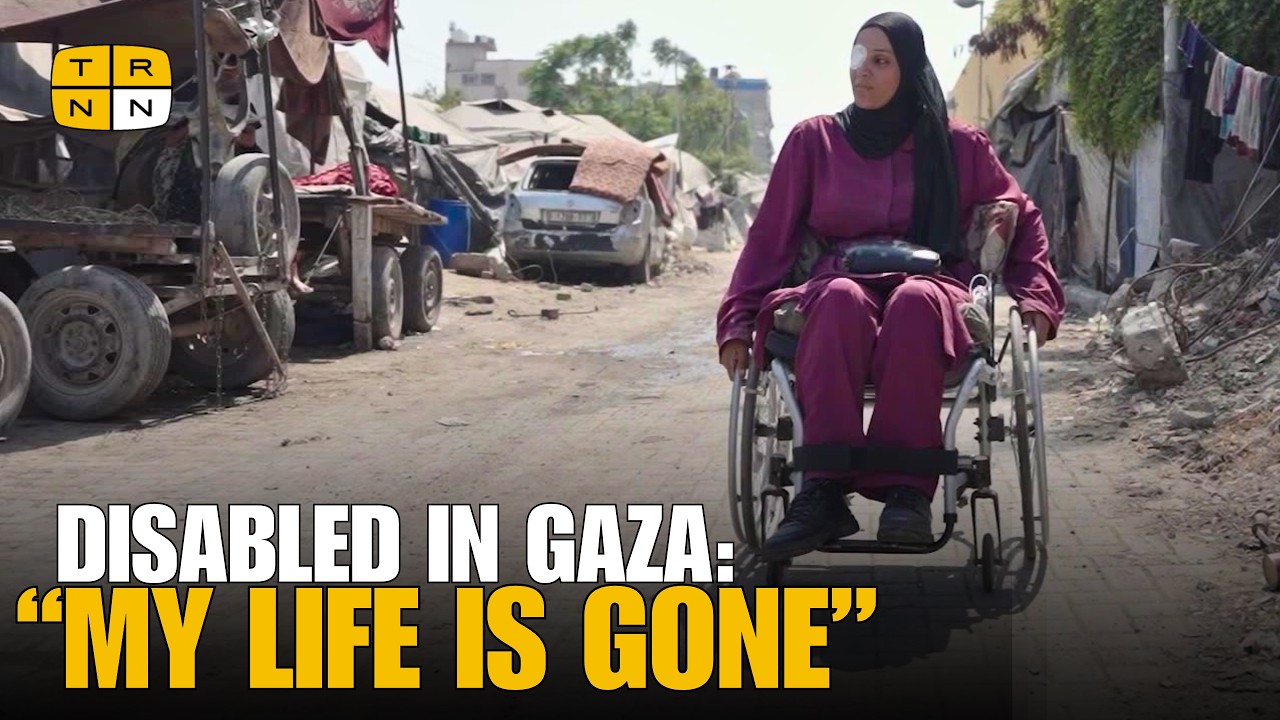
In Gaza, everyone is struggling to survive. For disabled people in Gaza, that struggle is multiplied. Rabab Nawfal and Suha Maqat, both wheelchair users, were champion athletes on Palestine’s national teams before Israel’s US-backed genocidal war. Two days before it began, they were playing qualifiers to represent Palestine abroad.

In this TRNN documentary report, they describe living through famine, fleeing bombardment in wheelchairs that no longer work, and asking for help that never comes. With 81% of Gaza’s roads damaged or destroyed and the UN documenting thousands of amputations, Israel is not only making life impossible for disabled Palestinians; it is creating a new generation of them.

Editor’s Note: This documentary report was filmed in Gaza City three weeks before the ceasefire in Gaza was shakily implemented beginning on October 10, 2025. Since the “ceasefire” began, Israeli forces have killed over 1,300 Palestinians, including 301 children, according to the Gaza Ministry of Health.

Credits:

  • Producers: Belal Awad, Leo Erhardt
  • Videographers: Ruwaida Amer, Mahmoud Al Mashharawi
  • Video Editor: Leo Erhardt
Transcript

Suha Maqat, Palestinian Athlete: 

I’m in a wheelchair—how am I going to escape? 

Rabab Nawfal, Palestinian Athlete: 

There were days when we ate animal food, bird food. 

Suha Maqat, Palestinian Athlete: 

I lost my eye. What more do you want? 

Rabab Nawfal, Palestinian Athlete: 

My dreams have been shattered. 

Narrator: 

In Gaza, everyone is struggling to survive. But for people with disabilities, that struggle is multiplied. Rabab Nawfal and Suha Maqat – both wheelchair users – were champion athletes before this war. 

Rabab Nawfal, Palestinian Athlete: 

I’m one of those people who didn’t go to the south. I lived through famine twice. I lived it twice. No one asked after me. There were days when we didn’t eat anything. There were days when we ate animal food, bird food. We ate everything—animals, birds. Even those things were expensive, and then they were cut off. The day they were cut off, we stopped eating anything. 

Ramadan came during the famine. We didn’t eat anything. A long day passed, and we didn’t eat anything. We used to crave drinking water. We used to crave a piece of bread. We were hoping that the famine would never come back. But unfortunately, it did—and it’s still coming back. 

We’ve suffered a lot in life. I was abandoned. No one took responsibility for me. My mother and father used to take care of me, but they left. These days, my brother takes care of me—and he is injured. My life is ruined. No one is with me. No one cares. And the one person standing by me is injured. He can barely carry his own family. 

When we were displaced, he couldn’t help us. He wasn’t able. For people with disabilities like me, it’s been difficult to live through this war. Those who are not disabled can maybe manage their lives. They can move, walk long distances—but I can’t. 

Suha Maqat, Palestinian Athlete: 

The closest people to me abandoned me—they didn’t stand by me. They left me to fend for myself. I feel like I live in a forest with wolves and monsters. I can’t. I try to make things work,

but I can’t. I’m mentally exhausted. The circumstances of this war are incredibly difficult. Even the word displacement is difficult for the injured and disabled. 

When we left, my brother was injured and my sister was in a bad state. Even though he was injured, he was pushing my sister, as I pushed myself along. I got stuck in the sand, and they wanted to bomb the building next to us. It was the most difficult moment. I said to myself, now I’m going to be killed. It was the hardest moment of my life. 

I thought—how will I escape? How will I, in my wheelchair, escape? How am I going to get out? My brother was injured and couldn’t carry me. I thought, I’m done; there’s no life for me anymore. That’s it. I’m going to be killed. 

Rabab Nawfal, Palestinian Athlete: 

The hardest thing I’ve experienced in this war has been displacement. I woke up one day and saw the Israelis in front of us. I was all by myself. I rushed out, but I couldn’t continue. There was a lot of shelling, shooting, bombs. It was a miracle I got out alive. It happened again and again—the same scenario repeated a thousand times. 

Narrator: 

Both Suha and Rabab rely entirely on their wheelchairs to move. Without them, the most basic tasks become impossible. Israel’s blockade has meant that access to this crucial item has been cut off. 

Even with functioning wheelchairs, with 81% of roads in Gaza now damaged or destroyed, access and movement is extremely limited. 

Rabab Nawfal, Palestinian Athlete: 

There are no wheelchairs in Gaza. And without a wheelchair, I can’t move. The wheelchair takes me to my medicine, my food, my drink—I need it for everything. Right now, my chair is broken. I’ve lost all means of life. 

Suha Maqat, Palestinian Athlete: 

As you can see, my chair is broken. I push myself in it, I fall off all the time, I cut and bruise my legs. If someone kind is around, then I can move. Otherwise, I can’t. 

We requested wheelchairs, but it was no use. We asked and asked, and they said no. Rabab Nawfal, Palestinian Athlete: 

My life before the war was very beautiful. I was a champion of Palestine’s disabled national team for strength games—basketball, tennis. I used to do all kinds of sports that suited my disability. I was a success story. I was a hero. These days, I feel worthless. Nothing in life. I can’t even get from here to there. I can’t move from here to there in a wheelchair. My life is 

gone. There is no life.

These days, we only dream of having the most basic things: flour, water. The simplest things—we can’t get. Drinking water—we can’t get it. 

Suha Maqat, Palestinian Athlete: 

Suha before is different from Suha today. I used to be a champion of Palestine. Today, I’m nothing. Today, just a daughter who needs her mother—who needs her mother to help her. 

Rabab Nawfal, Palestinian Athlete: 

Two days before the war, we were playing qualifiers to represent Palestine internationally. But we didn’t manage it. On the day of the championship, the war erupted. So our dreams are gone. All our dreams are gone. My dreams have been shattered. 

I wanted to raise my son. I wanted to raise him well and teach him. Before the war, I wanted to enroll him in karate. I wanted him to become something. I couldn’t. I wanted him to be into sports like me—to become a doctor. I wanted him to grow up and help me in the future. But my dreams were shattered. I couldn’t do any of it. I can’t do anything. 

Narrator: 

According to the UN 4,800 amputations of limbs had been documented since the beginning of the war. Ten children were losing one or both legs every day. Gaza had become home to the largest group of child amputees in modern history. Not only is Israel making the lives of existing disabled people impossible, it is also creating an entirely new generation of people with disabilities. 

Suha Maqat, Palestinian Athlete: 

Gaza has become a city of ghosts. There is no life in Gaza. As you can see—look at how people are living. On sand! How can people live on sand? How can they occupy Gaza? How? 

We want peace of mind. We don’t want to lose any more loved ones. We’ve lost enough. Is it not enough that I lost my eye? What’s left? What more do you want? I lost my eye—what more do you want? What else should I lose? Nothing’s left. There’s nothing left in this world that I can lose. My family has left. I wish I could see my mother. See my father. 

Rabab Nawfal, Palestinian Athlete: 

Life has become unbearable. No matter how much I talk, I can’t describe what I am feeling or the life we are living. I used to be someone. Now I am nothing.

💾

Champion athletes Rabab Nawfal and Suha Maqat, two of Gaza's disabled people now in broken wheelchairs, on famine, displacement, and being forgotten by the world.
  •  

Israeli Attacks Across Gaza Kill at Least Four Palestinians, Including 11-Year-Old Boy

Israeli attacks across Gaza on Monday killed at least four Palestinians, including an 11-year-old boy, as the IDF continues to frequently kill children as part of its constant violations of the October 2025 ceasefire deal. The boy, identified as Ismail al-Bardawil, died of his wounds sustained by Israeli tanks firing on tents in the al-Mawasi […]
  •  

Israeli Attacks in Gaza Kill at Least Seven Palestinians Over Three Days

Israeli attacks in Gaza have killed at least seven Palestinians and injured 38, according to numbers from Gaza’s Health Ministry, as the IDF continues its constant violations of the so-called ceasefire deal that was signed in October 2025. The Health Ministry said on Saturday that over the previous 48-hour period, the IDF had killed at […]
  •  

Health workers demand action against genocide and militarization at ManiFiesta 2026

Health is always a prominent topic at Belgium’s ManiFiesta, a two-day festival organized by the Workers’ Party of Belgium (PTB) in the beginning of September. Discussions range from the organization of health services or workshops led by progressive health organizations like Medics for the People (MPLP-GVHV) and Viva Salud. This September, the program covered local priorities such as health coverage and hospital reform – along with Israel’s ongoing assault on Gaza’s healthcare system and the threat of militarization across Europe.

Health workers should oppose rearmament

Addressing the question of why health workers should be concerned by Europe’s armament drive, Juliette Mattijsen of the People’s Health Movement (PHM), Nadja Rakowitz of the Association of Democratic Doctors (vdää*) in Germany, and Tim Joye of Medics for the People emphasized the different ways hospitals, health centers, and medical studies are being reshaped. 

Not only are governments imposing cuts on health budgets to enable increased defense spending, as Mattijsen illustrated – some are structurally changing what the health system is supposed to be about.

Read more: Militarization is spreading through Germany’s health sector

As the Merz administration in Germany rushes to build Europe’s mightiest army, Rakowitz explained, it is tabling plans for underground hospitals and an overhaul of triage systems. The goal of these reforms is supposedly to ensure wounded soldiers – from a battlefield that still only exists in the imagination of regional politicians – are cared for swiftly and returned to combat as soon as possible. In Belgium, Joye added, plans are being circulated to introduce war medicine into medical school curricula, and professional congresses have made this their topic of choice.

If European governments have their way, the speakers warned, health systems in the region will increasingly lose their focus on patients and add further strain on service provision. To prevent this, the panel suggested, health workers themselves – nurses, doctors, dentists, and others – must mobilize and actively oppose this dangerous trend.

In Palestine, medics provide more than health care

At another panel hosted by Viva Salud, the focus shifted to Palestine. Gaza’s health services have been militarized by the Israeli occupation, which has turned health infrastructure and workers into direct targets.

Sama Jaber of the Awda Association and Hanne Bosselaers, a Medics for the People general practitioner who participated in the 2025 solidarity flotillas to Gaza, focused their interventions on the relevance of organizing and providing healthcare under occupation.

In Palestine, Jaber pointed out, the formation of medical practitioners is a collective feat. By persevering in their work during a genocide, health workers in Gaza are now giving back to the communities who accompanied them along the way. “Being a health worker in Palestine today means sharing genocide conditions, but also upholding the right to health,” she said.

Read more: In Palestine, healthcare is also a form of resistance

For Bosselaers, the steadfastness of Palestinian comrades has been an inspiration since her first visits to Gaza approximately 15 years ago and the twinning process she supported with a health center in Beit Hanoun. Today, she emphasized, Israeli attacks have leveled Beit Hanoun to the ground – yet health workers have not given up their work.

Doctors and other health workers in Europe need to recognize this unbreakable spirit, Bosselaers said, and support their peers by joining movements at home. This should mean standing by Palestinians’ demands for liberation, she added, but also joining networks struggling against other forms of attack on healthcare: opposing commercialization, austerity, and militarization.

Call to support boycott, divestment and sanctions

Health workers around the world should direct their efforts into directly supporting the health system in Palestine, the panelists pointed out. This does not mean replacing hospitals with large international NGO operations or flying in and taking over, Bosselaers insisted, as is often seen in humanitarian medicine. Instead, she and Jaber suggested, the priority should be mobilizing against the occupation and campaigning for an end to Israel’s impunity.

In this, they echoed Palestinian physician and political leader Mustafa Barghouti, who addressed the panel through a video message. Barghouti invited health workers in Europe to stand firm in their support of Gaza, particularly by supporting boycott, divestment and sanctions (BDS) campaigns. By doing so, he said, they will also recognize the efforts of their peers in Palestine, who are doing more than healthcare today, “helping people persevere in their steadfastness.”

As the genocide continues, Barghouti insisted, health workers in occupied Palestine know their efforts are directed at supporting people in remaining on their land – starting from the most common health procedures. “If you help a woman safely deliver a baby,” he said, “you’re helping her stay in Palestine.”

People’s Health Dispatch is a monthly bulletin published by the People’s Health Movement and Peoples Dispatch. For more articles and to subscribe to People’s Health Dispatch, click here.

  •  

21 displaced people killed in Gaza building collapse

The lethal repercussions of Israel’s three-year genocidal aggression on Gaza continue to unfold. Aside from Israel’s ongoing military assaults after the nominal ceasefire deal, the humanitarian crisis inflicted by the genocide – affecting food, sanitation, medication, and shelter – has become another driver of persistent fatalities. 

At least 21 Palestinians, including 12 children, died in the collapse of the Al-Saadah building in Gaza City on Wednesday, September 16, while 45 people were rescued from under the rubble. 

According to media reports, the building, already damaged by Israeli airstrikes, was housing 100 displaced people, amid a deepening shelter crisis caused by Israel’s ongoing restrictions on reconstruction materials and humanitarian aid.

Read more: Israel escalates aggression in Gaza, Kushner returns to Washington empty-handed

Hamas holds Israel “responsible for the disaster”

Hamas issued a statement, holding Israel “responsible for this disaster,” and affirming that “the building collapse represents a new chapter in the catastrophic humanitarian repercussions of the war.”

The Palestinian movement pointed out that the massive home and neighborhood destruction has forced thousands of displaced people to take refuge in ruined structures. 

It further cautioned that the severe shortage in heavy machinery for clearing debris and conducting rescue operations endangers more lives. 

Hamas also urged mediators, the US administration, and relevant international bodies to take immediate action to lift restrictions blocking the entry of necessary rescue equipment and vehicles, and to secure safe shelter for the displaced population. 

Meanwhile, the Gaza-based Ministry of Public Works and Housing warned that roughly 3,000 buildings across the war-ravaged enclave are currently deemed dangerous or at risk of collapse, which in turn poses a significant threat to thousands of inhabitants.

  •  

Israeli Film Festival in Ghana sparks more controversy

At the end of August, at the Silverbird Cinema in the Accra Mall in Ghana, two Israeli feature films were screened alongside Ghanaian student productions. 

For the second year running, the seats for this Israeli film festival were empty. Ordinary Ghanaians declined the Israeli Embassy’s films, and a peaceful demonstration outside held placards for Palestine and against the continued killing of civilians in Gaza.

There is another screen Ghanaians must refuse to look away from, protestors asserted. The screens on which we have watched Gaza reduced to rubble, families displaced again and again, hospitals and schools destroyed, and children carried from the wreckage of a war that, despite the ceasefire announced in October 2025, has not stopped killing them.

However, something else walked through the doors of the film festival: schoolchildren. In uniform. On a Sunday.

Students from Achimota School and Accra Girls Senior High School, two of Ghana’s most prominent public secondary schools, were brought into an embassy-sponsored event at the center of a serious political controversy. Those of us who were there saw them. We have photographs and videos. The question Ghana must now answer is not about cinema. It is about who sent our children, and why.

The 2025 Israeli Film Festival

Last year, the Embassy staged a week-long Israeli Film Festival at the same venue and called it an exercise in “dialogue and mutual understanding.” Nearly 400 Ghanaian organizations, student movements, trade unions, faith communities, civil-society groups, signed one statement calling for a boycott. Protesters gathered outside. Sponsors pulled out. The Embassy still declared the event a success.

The veteran editor Kwesi Pratt Jnr., who joined the picket, recalled what that “success” looked like a year ago for the “Alhaji and Alhaji” program:

“This is the first time in my life that I’ve seen 400 organizations come together to sign one statement calling for a boycott of the film festival. I joined the picket at the Silverbird Cinema, and a few, very, very few, prominent Ghanaians, including Afenyo-Markin, attended in spite of the protest. But it was a fiasco. The room was empty. Ghanaians rejected the film festival completely.”

So the Embassy returned smaller: two Israeli films on a single Sunday, free entry, free popcorn, raffle prizes, and an invitation aimed squarely at young people. When adults again refused to fill the room, uniformed students appeared. If Ghanaian adults will not lend legitimacy to this event, should Ghanaian children be made to supply it?

The timing makes it harder to dismiss as a routine outing.

President John Dramani Mahama has publicly described what is happening in Gaza as genocide. The Israeli Ambassador to Ghana has publicly rejected that position and defended his government’s conduct. He is entitled to make his case, but he is a guest of a sovereign state, not the author of its policy.

Against that backdrop, the presence of uniformed students inside an embassy program, days after this very public disagreement, demands an accounting. Pratt put the question bluntly:

“At the time that the ambassador was attacking our president, some authorities in our secondary schools decided to side with [the embassy]. What judgment was exercised by the school authorities when they agreed to bus their students to this film festival? What were they expecting? What checks did they do on the quality of the films?”

Picket against Israeli film festival
Ghanaian activists picket the Israeli Film Festival. Photo via PATV

Those are the right questions, and they are not rhetorical. They have not yet been answered and there has been no investigation.

What the students deserve

None of this is an accusation against the children. They may have had little understanding of the political purpose around the event. The responsibility belongs to the adults who placed them there.

Ghana rejected the Israeli film festival not because cinema or cultural exchange is evil. Not because Israeli artists have no right to make films. The rejection is not an attack on Jewish people. Antisemitism is hatred and must also be rejected. 

The problem is that this festival is not an example of artists meeting freely across borders. It is an Israeli Embassy-backed initiative staged while the Palestinian people continue to pay with their lives. Amid the killing of civilians and the destruction of Palestinian life, the use of state diplomacy to manufacture an appearance of normality while those questions remain unresolved is nothing less than political soft power.

Ghanaian children are not diplomatic props, and Ghanaian schools must never become extensions of a foreign embassy. Teach them, yes. Teach them the Holocaust, the Nakba, occupation and international law, and give them the evidence to think critically. That is education. Busing uniformed children into a controversial embassy function, and letting their presence become evidence of Ghanaian acceptance, is the opposite.

That is why the demand is simple, and now directed at the Ministry of Education and the Ghana Education Service: did you know? If yes, explain. If not, investigate. And if any official bypassed procedure or abused authority to place schoolchildren inside a foreign government’s public-relations exercise, hold them accountable.

Ghana’s revolutionary legacy

There is a longer tradition at stake. Ghana is the country from which Kwame Nkrumah declared that our independence was meaningless unless linked with the total liberation of Africa. Africa understands what cultural normalization is for: domination has rarely arrived only with rifles. It seeks respectability, the reception, the festival, the partnership, until oppression becomes a disagreement to be discussed politely while business continues.

Palestine poses that old question to the African conscience once more. And a small part of the answer is being written by who walks into a cinema in Accra Mall, and who is made to walk in.

For the second year, the empty seats have spoken. Now Ghana’s own institutions must speak. Our children deserve education, not enlistment. And a sovereign state deserves to decide, in the light of its own conscience, what its schools lend themselves to.

Stay away. Let the empty seats speak, for the Palestinian child who will never again enter a classroom, and for the proposition that human life is worth more than diplomatic image-building.

  •  

Israel’s Gaza ‘solution’ is to empty it of Palestinians, defense minister says

A view of Palestinian displacement camps amid widespread destruction in Gaza City on August 29, 2026 in Gaza City, Gaza. Photo by Omar Ashtawy/Getty Images

This article was originally published by Truthout on Sept. 03, 2026. It is shared here under a  Creative Commons (CC BY-NC-ND 4.0) license.

Israeli Defense Minister Israel Katz admitted this week that Israel’s goal for Gaza is the mass expulsion of Palestinians from Gaza in “every way possible,” despite denying allegations of ethnic cleansing for years.

“There is no real solution for Gaza in the end without this migration,” Katz said at a conference hosted by Israeli outlet Yedioth Ahronoth on Wednesday, per a translation by France 24. Israel “is organized and prepared to get them out — by sea, by air, by every way possible.”

This plan would amount to ethnic cleansing, something that Palestinians and human rights advocates have long said Israel is carrying out in Gaza and the occupied West Bank. In a report earlier this year, the UN Human Rights Office warned that Israel was carrying out policies consistent with ethnic cleansing between 2024 and 2025, including famine, destruction of civilian infrastructure, and overall imposing conditions “incompatible with [Palestinians’] continued existence in Gaza as a group.”

Katz said that Israel is “seeking Trump’s support” for the idea because no country will take in Palestinians without the approval of the U.S.

The White House has not commented on the plan. When Donald Trump took office last year, he proposed a plan for forced displacement of the entire population of Gaza, dubiously framing it as “voluntary.”

The administration’s stance has since evolved, however. In July, Trump’s “Board of Peace” announced a plan that would still implement colonial control over Gaza, but that would transition power over the Strip to a Palestinian board and demand Israel withdraw its troops from the Strip.

In a rare break with the U.S. last month, Netanyahu announced that he would not be supporting that plan. Keeping with his usual practice of introducing unworkable provisions into negotiations, he said that Israel would not withdraw until Hamas was totally disarmed.

Disarmament — which critics say would still give Israel massive power over Gaza — was already included in the Board of Peace’s 15-point plan. But Netanyahu seems determined to ensure Israel can still carry out its genocide and occupation in Gaza, pledging again on Wednesday that Israel is “not retreating.”

“We control 60 percent of the Strip, and we are not stopping, because we are eliminating the terrorists who threaten us, day in and day out,” he reportedly said.

Trump also previously vowed to end aid to Israel if it annexed the West Bank, however, despite Israel’s ongoing annexation of the occupied Palestinian territory.

The Israeli officials’ remarks were made just weeks before critical Israeli elections in October, in which Katz and Israeli Prime Minister Benjamin Netanyahu are hoping to retain far right control of the state.

Politicians in Netanyahu’s caucus have been openly calling for cruelty toward Palestinians as a campaign strategy. This week, National Security Minister Itamar Ben-Gvir posted then deleted an AI-generated video that showed a line of Palestinians on a conveyor belt being loaded into a detention facility operated by Ben-Gvir. The Palestinians are then shown leaving the facility emaciated, with the politician seemingly showing off Israel’s systematized policy of starvation of Palestinians.

Israeli officials have denied allegations of ethnic cleansing for years.

“The charge of ‘ethnic cleansing’ against Israel is false and dangerous. It is not a legal definition but a political label, used to inflame tensions, spread hate, and fuel antisemitism,” said Israel’s ambassador to the United States, Yechiel Leiter, last year. “Israel does not deport Palestinians because of their identity. Israel has, rather, temporarily removed non-combatant populations from war-zones in order to guarantee their safety.”

The statement was made in response to a September 2025 report released by Senators Chris Van Hollen (D-Maryland) and Jeff Merkley (D-Oregon) saying that Israel was deliberately destroying civilian infrastructure and starving Palestinians with the goal of ethnic cleansing.

“After our trip to the Gaza-Egypt border last year, [Merkley] & I released a report entitled, ‘The Netanyahu Government is Implementing a Plan to Ethnically Cleanse Gaza of Palestinians.’ Now the Israeli Min[ister] of Defense confirmed that’s the goal,” said Van Hollen on Wednesday. “We must end our complicity.”

  •  

Israel bombed a hospital. It separated a family for three years.

Screenshot by TRNN

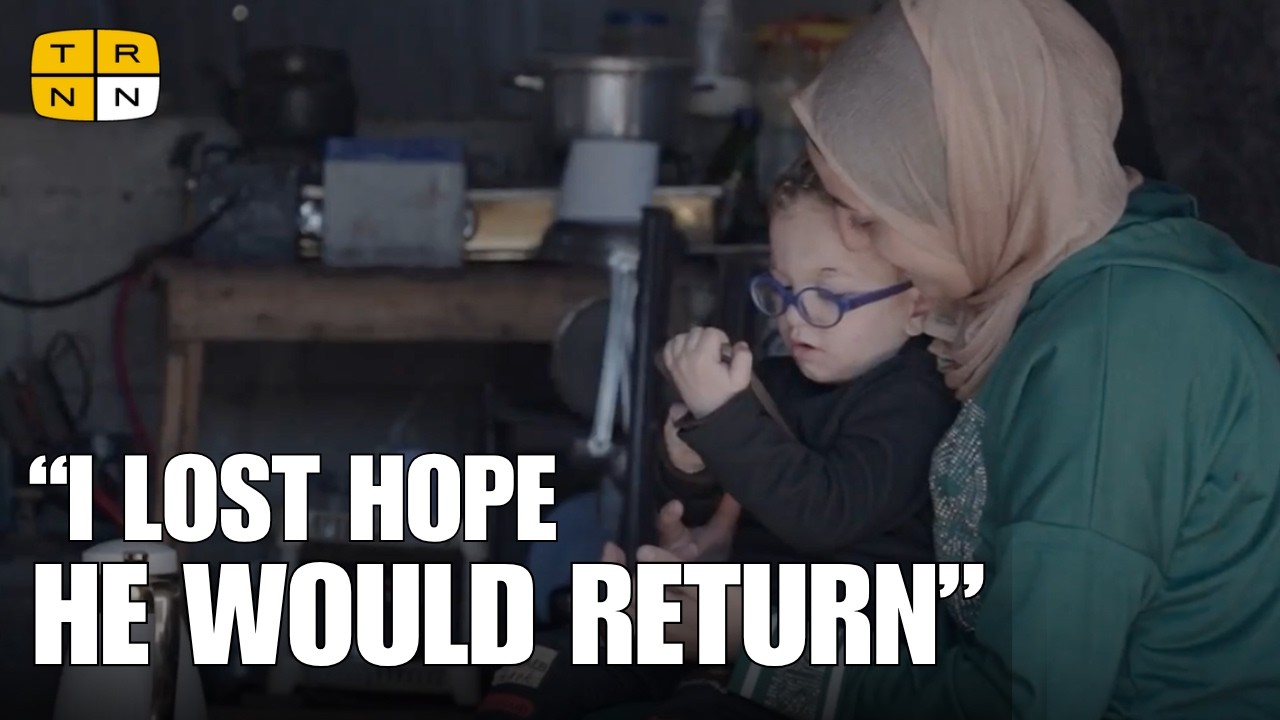
When Israeli forces besieged Al-Shifa Hospital in November 2023, eight premature babies in incubators were evacuated to Egypt under fire. One of them was Joud. His mother, Fatima Dakkeh, spent the next two years and eight months searching for him and fighting to bring him home.

Fatima tells the story of giving birth just months before October 7, losing contact with her son during the first Israeli raid on Al-Shifa, learning a year later that he was alive in Egypt, and a bittersweet reunion with a child who no longer recognized her.

According to the International Rescue Committee, at least 17,000 children in Gaza are unaccompanied or separated from their parents. For many families, there will be no reunion.

Credits:

Producers: Belal Awad, Leo Erhardt
Videographers: Ruwaida Amer, Mahmoud Al Mashharawi
Video Editor: Leo Erhardt

Transcript

Narrator:

Al-Shifa hospital is the largest medical complex in Gaza. Since October 7, it’s been repeatedly raided, occupied and targeted by Israeli forces. Over the course of the Genocide, hundreds were killed in and around the building and the hospital itself was completely destroyed.

In November 2023, under Israeli fire, 8 premature babies in incubators were hurriedly evacuated to Egypt. Joud was one of those babies.

Fatima Dakkeh:

I gave birth to my son, Joud, in July. Joud needed neonatal care at Al-Shifa Hospital. We placed him in the neonatal unit, but then the war started and Joud was there in the hospital. We couldn’t get in touch with Joud because of the shelling and the war.

Narrator:

Fatima Dakkeh and her son Joud have been unable to have a regular mother-son relationship. Joud was born in Gaza just a few months before October 7th 2023 and so, their story has been shaped by war, displacement and separation. Shaped that is, by Israel’s war on Gaza.

Fatima Dakkeh:

When we tried to get to the hospital to get Joud, we weren’t able to get to him and take him out, because of the situation—things had gotten really bad. There was a lot of shelling and there were airstrikes and quadcopters. We planned to go back another day to get Joud, once the situation calms down. But the situation just kept getting worse. The Israelis entered Al-Shifa Hospital and occupied it— that was the first invasion of Al-Shifa Hospital, and my son was inside.

About a year later, I found out my son was in Egypt. I mean, I didn’t give up; I kept going to hospitals, I went to the Red Cross and places like that to search for news about my son, no one could help me. I went to a doctor I know. I told him my story, he said, “I’ll try to get in touch with your son and see where he is.” Thank God, he was the one who discovered my son was in Egypt. After a few days, they sent us pictures of my son, and we found out he was OK. Thank God. They knew he was our son through my name—they had my name on file. We started communicating with him more through my sister-in-law—my sister-in-law in Egypt. We told her the story, and of course she didn’t hesitate; she visited him in hospital, sent us pictures and reassured us about him, thank God.

Honestly, I was happy and upset at the same time because my son was in Egypt, if he would have been here in Gaza he would have suffered a lot. We were starved, even nappies were cut off. Most children were using scraps of cloth as nappies. And milk too, was cut off—we had no milk at all in northern Gaza. I said to myself thank God my son is in a better place than Gaza. But at the same time, I was upset that my son was far from me. I would see mothers playing with their kids, dressing them, carrying them—and I would feel these feelings. I would miss my son. I wished my son was with me. At the same time, I’d look at my situation—how we’re living, in tents, in all this difficulty. I’d say to myself, hopefully he will return to us in a better situation, there will be a ceasefire and we will make up for the days we lost.

I had lost hope that he would return. With the crossing closed and the Israelis were not letting people return. When they first told us he was returning, I was shocked. My husband and I both. We were surprised—how could he come back just like that, overnight? He’s just going to come back, all of a sudden, after we’d lost hope all these years. I was overjoyed with the news that I would see my son again, it was the best news. When we went to the hospital to collect him, it took a really long time for them to bring him to us—many hours. With each passing hour, I would get more and more excited: about seeing him and about how I would greet him. I mean it was really hard, but at the same time, the moment when I saw him was really beautiful.

Yeh, honestly, when I first saw my son, he wouldn’t come to me; he’d cry and avoid me. He would go to his dad before me. he didn’t want to come to me, so I was afraid that he’d stay that way uncomfortable around us And afraid of living with us, and afraid of the situation we’re in— that he wouldn’t accept us Thank God, little by little, he started to accept us.

Narrator:

According to estimates by the International Rescue Committee, 20,000 children are still living separated from their parents in Gaza. Fatima was reunited with Joud and though their separation which lasted 2 years and 8 months impacted both mother and child, they are now reunited. As for the thousands of other survivors in Gaza, for many there will be no reunion.

💾

When Israeli forces raided Al-Shifa Hospital, Fatima Dakkeh’s newborn baby was evacuated to Egypt without her — one of thousands of Gaza's children separated from their families by Israel's war.
  •  

The student movement for Palestine is not going away, but it is adapting to a new political reality

COLLEGE PARK, MD - NOVEMBER 9: Hundreds of University of Maryland students gather on Hornbake Plaza for a pro-Palestine walk-out and protest on Thursday, November 9, 2023. Julia Nikhinson/For The Washington Post via Getty Images

In 2024, at the height of Israel’s US-backed genocide of Palestinians in Gaza, one of the most widespread waves of college campus protests since the Vietnam War exploded across the United States. Then came the repressive backlash. Over the past two years, we’ve seen a harrowing assault on free speech and the right to protest from the federal government and Zionist organizations, and universities themselves have ramped up their own internal surveillance and repression machines, weaponizing them against their own students, grad students, and faculty.

Life, learning, and activism on American college campuses looks very different today than it did in 2024, but the student-led Palestine solidarity movement is not going away. As a new school year begins, we speak with four students at different college campuses across the University System of Maryland (USM), who are all organizers and members of the USM Divestment Coalition for Palestine, about how the movement is maintaining its demands and adapting its tactics in 2026.

Additional links/info:

Credits:

  • Audio Post-Production: Alina Nehlich
Transcript

The following is a rushed transcript and may contain errors. It will be updated.
Maximillian Alvarez:

Welcome back to the Real News Network. I’m Maximillian Alvarez. Two years ago at the height of Israel’s US-backed genocide of Palestinians in Gaza, we witnessed one of the most widespread waves of college campus protests in this country since the Vietnam War. Student-led Palestine solidarity encampments exploded from Columbia University in New York to UCLA to right here in Baltimore. And as we’ve been covering continuously here at The Real News, what we’ve seen since then has been a harrowing assault on free speech and the right to protest from the federal government and Zionist organizations. And we’ve also seen universities themselves, private and public, ramp up their own internal surveillance and repression machines and weaponize them against their own students, grad students, and faculty. Life, learning, and activism on America’s college campuses looks very different today. And today we’re talking with a number of student organizers across our home state of Maryland about how they are adapting their tactics today to continue their struggle to end the slaughter and ethnic cleansing of Palestinians and to hold supporters and enablers of the genocide accountable, including their own universities.

And I am really grateful to be joined today by four students from different institutions across the University System of Maryland who are all also organizers with the USM Divestment Coalition. Thank you all so much for being here. Please introduce yourselves to our listeners.

Khadeeja:

Hi everyone. We’re so excited to be here today and grateful for the opportunity to share a little bit about what the University System of Maryland Divestment Coalition does. My name is Khadeeja. I’m a student within the USM system. I’m also a member of the USM Divestment Coalition and I’m a former member of UMBCSJP. The USM Divestment Coalition is an organizing body of students, faculty, staff, alumni, and community members of the USM and the broader Maryland community organizing for the end of our university system’s complicity in violating Palestinian human rights and upholding the settler Zionist state. Hey

Zyad:

Everyone. We’re really grateful to be here. My name is Zyad and I’m one of the members of the USM Diveston Coalition and a former member of the UMDSJP. I got involved with the coalition after we at UMD finally had successfully achieved a divestment win via our referendum in the student government elections, which over 3,000 students voted in favor for calling UMD to divest from companies complicit in the genocide in Palestine. The university refused to take action on this. However, we knew that the power of divestment was really at the USM level and recognized this led to where we are today with multiple USM schools part of the coalition.

Mohammad:

Yeah. Hi, my name is Mohammad. I’m also a student at the University of Maryland College Park, involved in the SJP. Don’t want to reiterate what Zyad said too much, but similarly, we saw that there was only so much we could do at the school level. We’ve been meeting with our school administration for years and they would always just point their fingers and say, “Hey, we don’t have power over divesting the USM’s $2 billion endowment from weapons manufacturers and companies enabling the genocide in Palestine.” So yeah, that’s why we got involved just to shift the pressure onto the people who actually have decision-making power and to hopefully shift all of our activism back to gain back the momentum that we had during the encampments and actually start negotiating with the people that have the power to divest rather than just screaming it into a vacuum.

Fi:

My name is Fi. I am Towson YDSA’s incoming co-chair. I’m a Towson University student, and I got involved with the USM Divestment Coalition following a teach-in that they had at our university.

Maximillian Alvarez:

Well, thank you all so much for being here. It really, really is incredible to have you all here on the same call together. And I wanted to ask if y’all could just explain a little bit more for our listeners what this Divestment Coalition is, how it came to be, and how you personally got involved in it.

Khadeeja:

Yeah, so I was actually one of the founding members of this Divestment Coalition around two years ago, post-October 2023. A few of us started attending Board of Regents meetings to clarify how the university system of Maryland structure works. Essentially, there’s 12 Maryland public state universities, and they’re governed by one body, which is called the Board of Regents. And these are 21 governor-appointed individuals. So they’re not elected and they’re not necessarily paid for their positions by the state, although we can kind of elaborate further on how they benefit from the structure later. But essentially, they sit above the president. So most people think that university presidents actually control all university operations, but the presidents merely form one of multiple advisory councils to this Board of Regents that ultimately have final say. And these Board of Regents also govern over a $2 billion pooled endowment that is shared between all the schools.

So essentially in that first year, post-October 2023, a few of us started attending Board of Regents meetings and speaking during the public comment portion. And in the past year, we have done a lot of outreach and organized much more with Towson and UMD students. And we’ve developed a lot more internally and externally with a social media presence, as well as developing internal and external goals, increasing our presence at board meetings, and really built up a dedicated organizing body overall.

Fi:

I do want to say one small thing. Although this coalition has sort of united around the issue of Palestine, and that will always remain the core goal is liberation of the Palestinian people and the Palestinian cause. Divestment from weapons manufacturing is an issue that has much broader implications with other imperialist struggles in the world. In countries such as the Philippines, weaponry manufactured by Lockheed Martin, a corporation that the university does a lot of business with, has sort of been used to target certain student activists that have done work in the Philippines, humanitarian work in the Philippines, which I think we’re going to elaborate on more. But divestment is an issue that has very wide-reaching implications, and we are fighting for freedom for colonized and oppressed peoples around the world.

Maximillian Alvarez:

Well, let’s talk a bit more about that and what the USM Divestment Coalition does and why. From the organizing and advocating that y’all are doing on a week-to-week campus-to-campus basis to these larger actions and campaigns like the People’s Tribunal that y’all held earlier this year. Tell us more about what this coalition does and tell us how your universities have responded to the coalition and your demands.

Mohammad:

So I was talking before about how the divestment movement has been around on USM campuses for over a decade now. There have been huge pushes. I have friends who are around now who used to come to these divestment meetings urging the USM to divest from Israel back when they were in middle school. So it’s been going on for a while, but during the encampments era, it escalated and we got to the point where the university couldn’t ignore, or at least not entirely ignore, the calls of its students who overwhelmingly wanted to divest. And at first, the way that manifested was they established an inquiry process. So before, there was no formal way to request that the USM divest its endowment from anything, but they established an inquiry process where every semester there’s a deadline and you can submit something. Usually it’s like a student government at the university that’ll submit a resolution calling on them to divest from anything, whether it be fossil fuels or from Israel, from weapons manufacturers.

Unfortunately though, it wasn’t really legitimate. It was more so just a formal way for them to tell us no, and it wasn’t really being taken. We still weren’t being taken seriously at that point, which is why I think the coalition needed to be formed because all of us, we had the three biggest universities in the USM, University of Maryland College Park, UMBC and Towson University, all pass resolutions calling on the USM to divest, and they were still ignoring it. At that point, you have a substantial portion of the 180,000 students that you represent telling you that they want you to divest, and we still weren’t actually having negotiations with them or having the demand seriously considered or given a reason as to why we can’t divest. So the USM Coalition was basically just a way for us to bridge those concerns that people had and the call for divestment to the people who actually have the power to make it happen.

And we can talk more later about how the response has been on campuses to those calls and the repression we’ve seen. Yeah, essentially what we’ve seen is just them trying to give us more creative ways to deny the calls for divestment. Yeah.

Zyad:

And to add on to that, I think Mohammed mentioned and other people mentioned it as well, and I did as well, but I want to talk more specifically about UMD, at least at UMD and the divestment campaign there, which has a history dating back to actually 2017 where the calls for divestment and specifically for Palestine were made. So it’s clear that the organizing that we’re doing now isn’t new, it’s just how the strategy has shifted. For years, organizers would bring divestment bills to the Student Government Association. And again, like mentioned before, this was done at UMD, at Taos, and then also at UMBC. But at least at UMD, they were blocked by legislatures who weren’t willing to take the stance and didn’t have any morality because they were in there for their political gain. However, like I mentioned before, in spring of 2024, the strategy changed in the sense that instead of trying to persuade the legislatures that didn’t represent the opinions of the students, at UMD, at least we ran a pro-Palestine slate that ran strictly on being pro-Palestinian and being pro-divestment, and basically almost sweeping the entirety of the student government elections and building what became the first pro-Palestine super majority in UMDSJ history.

So with that super majority, we passed our BDS resolution, which went more specific into the other aspects of BDS, boycott divestment and sanctions that followed the demand from the referendum that over 3,000 students voted for. And like we kind of mentioned before, the administration acknowledged the referendum and the resolution, but choose to ignore both. That being because of how the structure is, they actually generally don’t have the power to divest, at least at the system level. And with that, the coalition, the form of the coalition, it was a necessity because the money wasn’t sitting in a place that each individual university has a say over. In fact, the investments are managed through the USM Foundation and the Common Trust Fund, which are governed, like we mentioned, by unelected board of regents that are appointed by the governor. So the campus organizing, the campus wins, they’re real, and we saw a lot of that post-October 2023 and post the encampments because of the escalate organizing that was done specifically with the genocide in Gaza and seeing that escalate.

And over the last two and a half years, we see these wins, but the actual target this entire time was the system itself.

Khadeeja:

So I did my first two years of my undergraduate degree at University of Maryland, Baltimore County, and I spent two years heavily involved in the SJP there. UMBC was always heavily invested in divestment efforts post-October 2023 as the genocide against CASDA accelerated and public consciousness simultaneously was raising. UMBC is actually a minority-serving institution, so the majority of our student body are minorities. So we did receive a lot of support amongst the student body for divestment, and we were the first university within the system to pass a divestment resolution within the Student Government Association. And it explicitly used the Palestinian Boycott Divestment Sanction Movement Framework, which was definitely a big win, and I think set UMBC apart early on within the USM. Not only that though, hundreds of students also signed a petition urging the university’s career center to stop inviting defense contractors to recruitment events.

And two of the main war profiteers in America, Lockheed Martin and Northrop Grumman, actually did stop coming to our career fairs in 2024 and have continued to stop. So UMBC’s student population has always been relatively easy to organize around. That being said, administrations are separate from the student body. We are lucky at UMBC. We’re definitely a bit better off than UMD. UMD is definitely more repressive. Our administration was definitely willing to hear us out a little more and even remove sober homeless off campus. So that was a BDS win. However, they did charge the students wrongfully with student conduct violations in 2024, although they lost the case. The students won that case, but they did release interim time, place, manner policies, which all the universities around that time actually released post-encampments across the nation. So there’s collaboration between universities across the nation and also between the states.

So universities serve as a mouthpiece of the state to repress us. And we saw that at a national scale after the encampments, despite these restrictive efforts, the student movement is constantly adjusting and growing despite their efforts to stall our clearly winning movement. In terms of, I mentioned the Sobrahamus and other divestment efforts at UMBC, but along with divestment also comes the academic and cultural complicity that our universities play in upholding the Zionist settler ideology. So for example, at UMBC, a couple of the campaigns that we are still working on is one of the professors, his name is Eli Lieberman. He teaches Jewish studies and has taught courses that are explicitly biased against the Palestinian people and their struggle for self-determination. He has released papers on deterring terrorism where he compares Palestinian people directly to terrorist groups. There has been a call to remove him, which has not happened yet.

The administration has largely ignored those calls. And then lastly, and also very horrible and shamefully, UMBC has been in a partnership with Israel’s Minister of Agriculture for an aquatics research partnership. And like I mentioned earlier, part of the divestment within the coalition is not only cessation of financial complicity, but also a cessation of academic complicity in the apartheid occupation. So UMBC students have been appealing to university admin to end this partnership. This minister, current minister has called the current genocide in Gaza as rolling out the second NECBA, which the NECBA was the expulsion of over 600,000 Palestinians from their homes in 1948. But regardless, the university has made no effort on that.

Fi:

I can say on Towson University’s campus students, there was one specific instance of students facing very clear repression for exercising their right to free speech, being attacked under these time, place, and manner policies. A die-in was organized shortly after October 7th where students mourned in the University Square and they were threatened with disciplinary action and some were even tracked to their vehicles as they were leaving. And recently there was an IDF soldier came to Towson’s campus unregistered. They showed up, they set up a table in a kind of Kirkian way, just sort of had this sign that was like, “I’m an ex – IDF soldier, ask me anything.” And they were able to bring their own security detail that was not vetted by the university. Their presence themselves was not vetted by the university. And it was a presence that was clearly very intimidating for Arab students.

And yeah, the university responded to. They have not released a statement on this as I am aware. And even in the moment, they did not kick him off campus even as he was in violation of the same sort of jurisdictions that caused very intense discipline to students for exercising similar rights. They just allowed him to be moved back to a different area a little further off campus. So there was very little solidarity for students and tolerance for this kind of rhetoric as well.

Maximillian Alvarez:

Let’s take a step back and put all of this in the context of the past few years. From the genocide in Gaza to the student encampment movement, to the wave of repression from the Biden and Trump administrations and from university administrations themselves. Firstly, I wanted to ask y’all if you could just describe for people out there who aren’t living or working on a college campus right now, what is it like to be a student and a student activist in the US in 2026? And what does the emergence of the USM Divestment Coalition say about the evolution of tactics and goals and strategies of the student movements against war and genocide and censorship?

Mohammad:

Yeah, of course. So I think the way that we’ve seen it at USM schools, and I would say College Park is probably the worst campus when it comes to repression, is they’ve done it very sneakily. So the Maryland SJPs didn’t host an encampment on any of their campuses. They participated in the DMV wide one, which was on a DC campus. So our universities didn’t have, I don’t think they had the same pretext as many other universities did to go in and directly suppress or ban any SJPs like we saw at other campuses. So the way that they went about it, as Katija mentioned earlier, was with these time, place, and manner restrictions that they rolled out on all campuses. But like I said before, College Park probably being the worst example. Yeah, I mean, just to give a few examples, amplified sound isn’t allowed at all.

During the week, you can only use it over the weekend. That obviously makes it harder to protest. You can’t have a group of over 10 students gathering together without a reservation made because it’s then considered an event and you need a reservation to be able to do an event. You’re not allowed to talk unless outside of three designated areas on campus, and you’re not allowed to put stickers up on university property. And what’s more disappointing than just the policies themselves is how selectively enforced they are. If you take a walk around the College Park campus, you’ll see stickers for just about everything. Lots of organizations create stickers. You’ll see them all over the place. Political, not political. It is a very casual thing. But I know personally of two students who put up stickers that actually had their faces covered, but were investigated and the university tracked them down just based on their height and their skin color.

So that’s how seriously they take it when it’s a pro-Palestine sticker is they’ll track the person down, give them student conduct charges, but any other type of sticker, it’s not treated as a big deal because it shouldn’t be a big deal. And obviously we’ve called the university out on this. Why did these really strict policies come about around the same time as the encampments were blowing up? And they have claimed that it isn’t indirect response to it, but we know it is. And we see it in other places. Even in my orientation when I was preparing to. I hadn’t even had my first class on campus yet. This was my first time summer before my freshman year. And for context, I was a freshman after the encampments. And we had the police talking to us, again, first day on campus about how they had prevented any of the.

They didn’t use the word encampment, but the chaos that they saw in other campuses, they were bragging about how they prevented it at UMD and how they wouldn’t let it happen. So it was very explicit. There’s also been repression when we actually go to Board of Regents meeting, this was more recently once who created the USM coalition, which I think Tadija can speak to.

Khadeeja:

Yeah, just really briefly, I’ve been attending the Board of Regents meetings since November 2023. I’ve attended eight Board of Regents meetings and these meetings, the Board of Regents are extremely inaccessible. They basically never meet with students, the Board of Regents and the chancellor. Even though that they’re in these public serving positions to serve the students, they never meet with us. But regardless, their meetings have a public portion, the beginning section, and then they have a public comment section. And people are limited to three minutes, which I know people who have attended meetings before we started attending, and they said that they never saw the time limit being enforced. We would go up there and they would stand behind us with a timer. They would cut us off if we spoke on anything that wasn’t explicitly on the agenda for that day. And mind you, again, these are 21 people, 21 adults, grown-up adults who are meant to serve the students.

And these are young 18, 19-year-olds coming with a prepared speech just for three minutes to talk about something that they care about, something that’s an ethical concern, which the USM claims to have a commitment to global justice. So this should be directly aligned with their mission and values, but it’s become increasingly apparent in the way that they have engaged with us at these meetings that it hasn’t necessarily been in good faith. Also, their security measures have amped up. So they always have security, but they have started searching through our bags, requiring us to open any posters that we have, searching through every single pocket, turning students down from speaking just because they got there a few minutes late. Just things like that have definitely been, I wouldn’t say discouraging, but definitely disappointing.

Zyad:

Back in October 2024, the UMDSJP were planning on organizing an AXGA vigil for the martyrs in Ghaza. And that was faced by a lot of backlash from the Zionist community of UMD, which is really large. And even threats were made to the president of the university threatening to lynch him and his family using racial slurs in emails sent to him unless the event was canceled. And again, this is a peaceful vigil that was being held, not even a protest, honoring the martyrs in Ghaza. And the university folded to the threats claiming that it was not safe for the students to organize that event, which in response to that, they created a blackout date to be held instead. So no student organizations were allowed to have any event regardless of what it was about, which is obviously repressive in the sense of the Palestinian organizing, but also repressive in the forms of freedom of speech.

Any other student organization wanted to have an event they were not allowed to. And this has never been done before. There’s never been a day where you’re not allowed to have an event at all. So the response with that was that UMDSGP sued the school and it’s turned out to be the UMDSGP won the lawsuit and ended with a $100,000 settlement with majority of that being donated directly back to Gaza and the people there. And then I also wanted to mention about doxing, which is very prevalent at UMD. It’s happened at UMBC as well. I’m not too sure in terms of Taos and how common it’s there, but doxing is a method used by Zionists students and just general Zionists to target students that are speaking out against the genocide and speaking against the apartheid system. This has been something that’s been done for almost 10 years now.

And students who were on student government like myself voting for divestment were doxed. Actually, I was doxed over a resolution that condemned the university for allowing the university to host three IOF soldiers who participated in the genocide in Gaza. And for the purpose of the event was to talk about their experience committing a genocide, which was appalling. The university claimed that this was not a security threat or safety threat to the students, but having a peaceful vigil was. And it shows you that clear bias that they have against Palestine. And so in response to that, calling for the university to change their policies to not allow people that have been complicit in genocide and war crimes to be banned from university resulted in being doxed. And many other students have been doxed as well. I think actually one of the people that leads the doxxing campaigns on a popular site that is used for doxing called Canary Mission actually was a UMD alumni.

So it kind of shows you those ties that it’s peer malice targeting students who are just speaking against genocide. And I also kind of want to touch upon the Board of Regents meeting. Hadijah touched on a lot of it, but just to say for any other students here, the meetings that they do are held on Fridays at 8:30 AM. I don’t know about you, but most students are not up at 8:30 AM on a Friday, let alone being held at different campuses. So students who want to raise their voices to the Board of Regents, the people that represent them, they have to wake up at 8:30, figure out a way, drive or figure out their own transportation to get to wherever they’re holding the meeting just to speak to them, which even that is limited. Before there wasn’t a time limit, but when in past and we have spoken, we’ve been given three minutes for time limit that actually moved down to two minutes for one of the meetings for no reason at all.

And they block out only 15 minutes to hear from the people that they represent. So that kind of shows you how they use their oppression, the tactics in terms of saying that there’s only 15 minutes allocated to that, that we’re going to only allow those students to speak for that long. And there’s also double standard in terms of any other people testifying to the USM where they have allowed speakers to go beyond the time as allocated for them. Whereas when students speaking out for divestment, speaking out for the university to cut complicity with the occupation and weapons manufacturers, they are not faced with that same opportunity. And

Fi:

Zaya did bring up Towson and the use of doxing over there. Although I can’t off the top of my head name any direct examples of doxxing. During testimonies for a SGA resolution calling for a divestment, an ex-faculty member named Richard Vatz, who actually has an auditorium named after him, testified against the resolution and advocated for doxing of students, which is incredibly. It’s a very bad look for the university to say the least. And the kind of message that it sends that an ex-faculty member who the university holds very dear is willing to advocate for the doxing and potentially putting these students in real harm underlines how unprotected students are who advocate for this cause.

Mohammad:

Yeah. And I think another important thing to highlight is just that as the student movement has been more successful, I think it’s really done a good job just exposing the underlying racism and agenda that the university upholds. As a Palestinian student myself, I can speak to just the double standards in how the university functions in terms of the curriculum that’s offered. There are no classes at UMD talking about the Palestinian experience. The closest thing there is there’s a class talking about the experience of the minority of Palestinians who live under Israeli society and have Israeli citizenship. So the only class even mentioning Palestinians is taught in the context of a very biased pro-Israel perspective of a specific portion of Palestinians who live with Israeli citizenship. We have Israel studies, Hebrew studies, and Jewish studies, but there isn’t anything about. There’s Arabic studies, but there’s no, like I said before, there’s just a lack of coverage of the Palestinian story and then Palestinian voices in the academics and even looking at the guest speakers that departments invite.

The business school has regularly invited. They’ve made it almost an annual thing at this point. They invite Israeli politicians and staunch pro-Israel advocates to come speak. And actually the one time that they did invite Palestinians, it was the two most sellout one in a thousand worst of the worst Palestinians that they could find. So they just have refused to platform Palestinians in academia in general while not just normalizing, but promoting pro-Israel narratives. And then I think the other area that we see a lot of bias is in their response to hate bias incidents. So they created after October of 2023 when they observed a rise across Across the country in both Islamophobia and antisemitic hate crimes. They created one committee to address both antisemitism and Islamophobia, but there was very clear bias. I’ve spoken to people on the committee who’ve talked about this. And also reading the report they published, they published a 60-page report and in it there was a list of antisemitic incidents.

They have a list of all the hate crimes. Of course, none of the many, many instances of Palestinian students being regularly harassed by Zionist students who were listed. Any Palestinian can speak to that. It is unfortunately very commonplace, but you had a long list of incidents that were literally a sighting of a free Palestine sticker or someone hearing someone else chant free Palestine. And students would call the police and report that and label it as an antisemitic hate crime. And the police not only kept a record of that, which was crazy in and of itself, but they published it somewhere in the 60-page report. So the fact that they’re associating these very mundane examples of people expressing their opposition to the genocide and support for Palestinian people with antisemitism is alarming. And when there’s a very real rise in anti-Palestinian racism and Islamophobia on campus, we see absolutely nothing.

Actually, in the last few weeks of just this past semester, we had two very good examples that highlight just that. So there was an instance of someone who did make an antisemitic post featuring a Jewish student’s face and posting it online with antisemitic symbolism in the back. And the school responded to that very quickly and with heavy condemnation. Within 24 hours, the president of the university had sent an email to everyone. The police department had sent an email to everyone saying that they were actively investigating it. And then not even a week after that, there was a pro-Israel influencer on campus who posted a Muslim girl’s face, visibly Muslim girl. She was wearing a hijab. He posted her face and called her a terrorist and posted it online. This wasn’t an anonymous post like the other one. This was on his personal account. We know who the student is, and multiple people reported this to the administration and were told nothing could be done.

We asked them, why did you just a week ago loudly and openly condemn an antisemitic post featuring a student’s face? But now a very similar incident is happening to a Muslim student and you’re doing nothing. And the explanation was that one was a hate bias incident and one was a hate crime. So it’s using this vague technical language to justify doing nothing when Muslim, Palestinian, Autumn students are being victimized and not necessarily for others. And that same student who posted the Muslim girl’s face went and did it again a week later to another Muslim girl calling her a terrorist and posting it online, which was, I mean, no need to say it is unacceptable, but the university has been unable to condemn or even acknowledge it outside of closed door meeting. So there’s that very clear inequity in how they address that. And aside from the administration, even just the Zionist presence on campus that Zaya talked about before has just got a lot more animalistic in the past two years.

They’ve gotten a lot more bold. There are too many examples to name, but I mean just walking around on campus with a kefia on or being visibly Palestinian or talking about Palestine, I have friends who’ve been shoved, physically attacked. I personally, during my freshman year, a group of friends and I were harassed by a group of 20 Zionists who came up to us because we were playing Arabic music on a speaker and leaving notes on our backpacks, accusing us of having ties to foreign terrorist organizations, even university officials. So for example, the director of Hillel, multiple Palestinian girls specifically have spoken out about being harassed by him at protests to the extent that UMPD, the police department has had to go and talk to him and tell him to stop coming to SJPA events, which to my knowledge he has since, but the fact it got to that point was insane.

And the university allowed him to maintain his position as an adjunct professor at the university. So he still teaches a class. Last semester, there was also a case where a business professor who was organizing an event where she invited some pro-Israel speakers, was confronted. And she actually, to my face and in front of other students, was accusing us of taking money from Iran and then foreign terrorist organizations. So these are people with faculty appointments in the university. It’s not just outside agitators or even random students. These are people who the university has direct ties to going and being able to say whatever they want. And disappointingly but unsurprisingly, the university does nothing, doesn’t treat those incidents the same as they treat others. And it’s really just a general lack of, I can’t even say lack of initiative, just lack of care when it comes to addressing the needs of students who are actually being targeted, whose families are being genocided overseas.

And yeah, I guess that’s just the student experience on campus over the last few years.

Maximillian Alvarez:

Well, let me ask y’all before we have to wrap up, where do things stand now with this coalition and where do they go from here? What are your ultimate goals and what do you think it’s going to take to achieve them?

Khadeeja:

Yeah, I would say at a broader scale, student organizers across the nation have become increasingly more aware of the university system structures and how they all nationally function as an arm of America’s military industrial complex. And that has created the need for centralized campaigns. I would say this is widely reflected within the USM Divestment Coalition. It was the decentralization of all of our university’s separate divestment efforts combined with a greater understanding of the system itself that revealed the necessity for us to shift our strategy. And that was the motivating effort for us coalescing our efforts. Not only has combined efforts strengthened our campaigns through numbers and resource sharing, but this formation of a coalition has allowed us to begin actively archiving our work. Students are only part of the system for around four years, give or take, and the structures are intentionally complicated. So it’s necessary that we have increased our internal research, we’ve increased our political education, we’ve increased our base building with other USM schools, as well as local Maryland campaigns such as the Break the Bonds campaign, which was recently successful that we were an official endorser of.

We’ve collaborated with unions and the broader community at large. And along with doing that work, we’ve institutionalized all of that. We’ve institutionalized the research, the education, and the relationship so that we are not reinventing the wheel every few years. And this strategic shift has allowed us to progress beyond the post-encampment stall where many student organizers were kind of left picking up the pieces and trying to figure out how to emulate a spark, but we’re not trying to do that. Ultimately, we’re concerned with our university’s material function as financial backers of genocide, and we’re strategizing how to achieve material wins because thus far the winds have been largely symbolic. To build off of that, I think as students, like I mentioned, we understand that our universities, they serve as landlords, they serve as extensions of US capitalist imperial society and to reproduce that. They were built on stolen land and they’re sustained on the extraction and exploitation of the global community.

I think it’s important and necessary that we recognize the systems for what they are and that we reject some of the social norms that come with it. And unless we reject them, we can’t really move forward. So although the material aspect is the most important, I mentioned earlier that the US is also uniquely complicit in the Zionist state and that it’s upholding it in a way beyond material, but also ideologically and culturally. Universities are not exempt for that, and so our complicity is unique as a result. So we recognize that true divestment means a dismantling of many of these structures as we currently know them. It would mean a dissolution of the Board of Regents, for example. It would mean the replacement with a popular elective body. It would mean the end of the university’s current volatile investment structure that prioritizes growth at any cost over human rights.

There was recently a position paper put out by National SJP. It’s only about 70 pages. I recommend anyone and everyone to read it. It’s called The University and the Reproduction of Capitalist Imperial Society. It’s publicly available, but it expands upon this idea of the so-called good student where students accept their own subordination within the system and keep their head down so that they may be accepted and receive the material and social benefits that come from the university. It is ultimately our responsibility to disrupt that structure. We are aiming to empower the student and broader community. We want to understand that there’s power within us. We don’t need to rely on the structures as heavily as we have before. And lastly, I want to mention in part of moving forward is, like I mentioned, empowering the student community, but also the larger, broader community. So if the USM, when we say that they control the universities, that really does affect all of us.

So the USM has recently put forth a proposal for a over $300 million development contract basically to turn the surrounding area of UMB, so University of Maryland, Baltimore, to gentrify, essentially to turn it into a college town. An interesting link is that Steven Sabell, who sits on the Board of Regents, is one of the, I think, main financial partners for, I think it’s called Caves Valley Partners, which is I think the largest gentrifier of Baltimore. That’s not a coincidence. There’s a reason that Lockheed Martin is one of the largest employers of the USM and recruiters, and that simultaneously the chair of the Board of Regents, Linda Gooden, is the retired VP of Lockheed Martin. Lastly, also that relates to Baltimore and the broader community. There was a proposal to spend over $300 million, again, on a COP training facility at Coppin University, which is an HBCU, which just further increases the over-militarization and criminalization of the Black community and marginalized communities in Baltimore.

So divestment truly involves all of us. It’s not just the students. It’s truly all of us, students and non-students alike, and the system benefits from us not interacting with each other and not recognizing that our struggles really are interconnected.

Zyad:

Yeah, to go off of that, like I was mentioned before, we are a coalition consisting of organizations across USM, and we really won’t stop until we reach each school and all types of organizations because we know that our demands are connected and that we will continue until demands a reality. In May, we saw the system-wide student council pass a divestment resolution, which was the first of its kind in the entirety of the US, calling for the divestment of arms manufacturing. And we know that the arms manufacturing that we’re targeting don’t only supply the IOF who have been committing an escalated genocide for the last two and a half years, legally stealing land and creating settlements. But these are the same companies that are supplying the human rights violations in Sudan that are armed by Saudi Arabia and other parties by companies like Lockheed Martin or in the Philippines.

And in the Philippines, we want to name this because of people like Chantal Anikoche, who was a UMBC alumni who was kidnapped by the AFP or the Negros 19 who were murdered by weapons used, weapons made by Lockheed Martin and other manufacturing. The weapons economy that killed them is the same economy that the endowment dollars are financing through the USM Common Trust. When we stay divest, we’re not making a statement about only one particular cause. We’re withdrawing material support from a global system of militarized violence. That is a long-term project, not just resolution. It’s not just one board meeting, it’s not just one disruption, but building a coalition of students, faculty, union, and community members who understand that these struggles are structurally connected and refuse to let our institutions be complicit in any of them.

Fi:

And to piggyback off what Zyad and Khadeeja have been saying about the material consequences of the investments that the USM is making into arms manufacturing, not only does this have international ripples in the human rights violations in Sudan and Palestine and the bombing of Mindoro and capture of Chantal and Akoche by the AFP and the murder of 19 activists in Negros in the Philippines, but even domestically, the USM is making decisions that financially disadvantage their workers and the people that are keeping these institutions going. Divestment is an issue that is for the workers as well. We’re advocating for more transparency of where the money is going. I believe it was AFSCME is a faculty and staff union that just suffered mass layoffs across the USM system. And at Bowie State University, they’re in a huge deficit right now due to a misappropriation of funds that haven’t been going toward upkeeping positions for workers that have been working there for a long time, but the creation of newer higher paid consultant positions that are sort of just replicating that sort of anti-worker pro-capitalist establishment where there’s this whole class of consultants and people who are getting paid these large amounts of money and disenfranchising the people that actually run to keep this university going.

We’re talking about healthcare professionals or students with mental health problems. We’re talking about cultural centers such as Norrenborough at UMD, which has faced ongoing structural issues and has consistently been advocating for reallocation of funds to create a more sustainable university that reflects the future that the students are advocating for. And the Board of Regents as an unelected body consistently again and again with the way they allocate the funds of the USM system show very little interest in representing the people. And yeah, it’s about time that students come together and form these strong coalitions. And we stand in solidarity with unions as well that are also getting screwed over by these same misappropriations and unethical decisions. Yeah, the issue of divestment, it’s very all-encompassing.

Mohammad:

Yeah. And I think just to round that out, you described it very well. When you look at it from a broader view tying in what Zaid and Fi said, when we’re talking about divesting for Palestine, obviously that is a moral obligation in itself. We should not be financing the suffering of any people overseas, but the same endowment that is being used to reinforce the suffering of Palestinians is upholding systems of oppression all over the world. And the same Board of Regents members claiming that they can’t pay their own workers despite being allocated money by the Maryland State legislature to do so are claiming they can’t. And all of this just ties back to the issue of the American universities in general, but we can see it very clearly here in the USM, which is that we have a for-profit university system. Even though these are our public institutions, they’re supposed to serve the people of Maryland.

They do not. If you look at the makeup of the Board of Regents, it’s not made up of academics or former university administrators or leadership. All of them are business people. The head of the Board of Regents, she was the former vice president of Lockheed Martin. The chancellor currently, well, he actually was an academic, but his legacy was a partnership program he established with a medical school in Israel. And all of the Board of Regents members, most of them are really just wealthy people who were appointed not to advance the university’s mission or to benefit the people of Maryland, but just to uphold our university’s corporate ties and make sure that we’re still doing research to help develop weapons for Lockheed Martin and Northrop Garden to make sure that we aren’t divesting our endowment from war profiteers, to make sure that we’re still inviting IDF soldiers and not taking a public stand against the suffering that our university is complicit in.

And that’s just why it’s important for us to fight on the USM level, as we’ve been saying before. We are still very optimistic. I mean, if you look at where the movement is now compared to two years ago, students would’ve been shocked that we passed resolutions at all. But now we’ve passed resolutions at the SGA level. The students have made very clear where they stand. We’ve gotten around all the red tape that was set in place. We’re escalating it at a higher level now. There’s the Break the Bonds campaign that Khadija mentioned. We’re seeing divestment actually happening and taking shape now, which is why it’s just more important than ever for us to continue pushing just as hard, harder than we ever have been and making noise.

Maximillian Alvarez:

Thank you for listening to this episode of the Real News Network Podcast. And thank you to our panel of guests, Khadija, Zaid, Mohammed and Fi, who are all student organizers with the University System of Maryland Divestment Coalition. If you want to get more coverage and hear more important conversations just like this, then we need you to become a supporter of The Real News Now. Share this podcast with people in your circles, your friends, your family, your coworkers. Sign up for the Real News newsletter so you never miss a story and go to therealnews.com/donate and become a supporter today. I promise you guys, it really makes a difference. For the Real News Network, this is Maximillian Alvarez signing off from Baltimore. Take care of yourselves and take care of each other.

  •  

Some in Gaza’s youngest generation may not even know what toys are

Displaced Palestinians Children play inside a damaged building at the Islamic University in Gaza City on April 18, 2026. Photo by Saeed Jaras / Middle East Images / AFP via Getty Images

This article was originally published by Truthout on Aug. 13, 2026. It is shared here under a  Creative Commons (CC BY-NC-ND 4.0) license.

While humanitarian associations’ coverage of Gaza focuses on how to provide food, medicine, and shelter, another devastating consequence of wars is the loss of childhood itself.

According to various reports and estimates, tens of thousands of children have been killed or injured in Israel’s war on Gaza, and many more have been affected by the loss of one or both parents. Large numbers of people have been displaced amid widespread destruction and ongoing genocide since 2023.

It is an unbelievable set of statistics that illustrate the systematic killing of childhood in Gaza and the erasure of new generations from Palestinian society. However, according to Save the Children, an estimated 105,000 to 110,000 children have been born in the Gaza Strip during the war — a new generation born alongside the immense number of children killed.

A New Generation Born Amid War

These children are born with nothing but suffering. Many mothers give birth in makeshift tents, in winter or the heat of summer, under bombardment, and with severely limited medical care. Many children experience starvation, displacement, and the loss of family members and lives around them.

Israel is not only preventing normal life but also restricting the entry of toys into Gaza. A wide range of goods, including toys, have been subject to restrictions entering the Strip. Some in the newest generation of Palestinians in Gaza may not even know what toys or games are.

Regarding the war’s impact, Truthout interviewed Italian psychologist and psychotherapist Damiano Rizzi, president of Fondazione Soleterre, an Italian humanitarian organization founded in 2002 that works to protect the physical and psychological well-being of people across the world.

Rizzi works in the West Bank and supports psychosocial programs for children affected by war in both the West Bank and Gaza.

“Children have trauma that affects emotional regulation, communication, language, and trust in the world,” Rizzi says, describing how war impacts the mental state of children. He explained that when trauma is repeated without a root solution, it becomes more complex and appears more as post-traumatic stress disorder, aggressive behaviors, lack of self-awareness, and difficulties in dealing with relationships.

“Trauma becomes permanent because there is almost no experience of an ‘after’ in which children finally feel safe.”

The normal daily life of a 2- or 3-year-old child has lost much of its meaning and is instead filled with fear. The ability to play with toys is not a secondary aspect of childhood; it is a crucial part of a child’s ability to develop, learn, engage with life, and build essential skills. Instead of doing so, many children in Gaza now are growing up searching for water, standing in food lines, and falling asleep to the sound of explosions.

I have seen this play out in the experience of my 5-year-old brother Yamen, who has lived in Gaza throughout the war and continues to suffer there, since he was not able to come with me on my student visa to Italy. “I really want to have a toy,” Yamen said during a video call I had with my family, who remain in Gaza.

Yamen is one of those children who have lost the experience of childhood. He was only three years old when the war began, so he no longer remembers the toys he once had.

He used to have many toys, but he lost many of them amid the chaos of displacement and the destruction of our neighborhood. Later, during the intense starvation conditions that we faced in Gaza in 2025, when we ran out of fuel and firewood with which to cook, we were forced in desperation to burn Yamen’s remaining plastic toys to make a fire. Too young to understand what was happening, Yamen innocently helped us by bringing more of his little plastic cups and toy dishes to feed the flames so we could prepare a meal. Wanting to help us, he was unaware that we were destroying the last pieces of what had once been his childhood.

Yamen’s young mind cannot fully grasp that he once owned so many toys and that they were all lost. He longs to play, go to kindergarten, and make new friends. However, Israel’s restrictions have shaped even his simplest dreams, where something as small as a toy becomes a reminder of the childhood he might have had before the war.

Children in the Strip are also deprived of the right to education; over 90 percent of Gaza’s school buildings have either been destroyed or repurposed as shelters for families displaced by the war. Instead of attending classes, many children now live in school buildings, having lost both their homes and access to education.

Parents Cannot Provide Safety

When a child like my brother asks for a toy, he is not asking for a simple material possession. He is asking for something ordinary: the right to play, imagine, and experience a moment of normal childhood.

Children usually look to their parents for reassurance that the world around them is safe. In Gaza, however, many parents are themselves terrified, exhausted, and overwhelmed by the daily struggle to survive. They spend hours searching for food, clean water, or a safe place to shelter, leaving little emotional energy to comfort their children or help them feel secure. Instead of protecting their children from fear, many parents are forced to endure that fear alongside them. The psychological burden of war affects entire families, making it far more difficult for children to find the stability and reassurance they need during their earliest years of development.

For many children, there are no gardens to play in, no toys, no regular activities, and no functioning schools. Countless children have also lost relatives, neighbors, and friends. The ordinary experiences that define childhood have been stripped away, leaving many parents unable to give their children a sense of normalcy. Children used to calm themselves through the reassurance of trusted adults, but what if the adults are themselves traumatized?

Recovery Seems Far Off in Gaza

Healing is nearly impossible when children remain trapped in the same environment that caused the trauma. “Trauma becomes permanent because there is almost no experience of an ‘after’ in which children finally feel safe,” Rizzi said, explaining why many children in Gaza are unable to recover psychologically. As long as displacement, destruction, deprivation of basic rights, disease, and daily suffering continue, they are denied the safety and stability necessary for healing. Instead of leaving trauma behind, these children are forced to relive it day after day during the most formative years of their lives.

When a child like my brother asks for a toy, he is not asking for a simple material possession. He is asking for something ordinary: the right to play, imagine, and experience a moment of normal childhood. When even toys become difficult to access, it reveals the extent to which war has disrupted the most basic elements of children’s lives.

The loss of access to toys is not only about the absence of objects. It reflects the broader destruction of childhood itself — the memories, skills, imagination, and emotional development that shape a generation. The consequences of war extend beyond physical injuries; they also affect the minds and futures of children who are growing up surrounded by fear and loss.

Children in Gaza are growing up shaped by memories that no child should ever have to experience. They are learning the language of loss and fear before they have the chance to discover the possibilities of life. The damage in Gaza affects more than homes and buildings; it reaches a generation that is being shattered by this war even amid the so-called ceasefire.

  •  
❌