❌

Reading view

Inflation in Greece surged to 5.1% in September 2026

Inflation in Greece surged to 5.1% in September, while the Eurozone average stood at 3.8%, the European Statistics authority EUROSTAT announced on Friday, October 2, 2026, based on preliminary data.. The Energy index rose by 14.1% Annual inflation in the Eurozone came in at 3.8% in September, up from 3.2% in August, while in Greece […]

The post Inflation in Greece surged to 5.1% in September 2026 appeared first on Keep Talking Greece.

  •  

Greece renews mandate for Patriot missiles in Saudi Arabia

Greece will extend the presence of its air defense battery of Patriot missiles in Saudi Arabia for at least another month, top defense and foreign policy officials agreed on Thursday. In a session chaired by Prime Minister Kyriakos Mitsotakis, the Government Council on National Security and Foreign Affairs (KYSEA) took into consideration the increased tension […]

The post Greece renews mandate for Patriot missiles in Saudi Arabia appeared first on Keep Talking Greece.

  •  

UPDATE Tourist killed by lightning on the island of Rhodes

A 58-year-old tourist was killed by a lightning in southern Rhodes early afternoon on Friday. The woman was walking with her husband in Lothiarika area of Laerma near Lindos in the south part of the island in the eastern Aegean Sea. She was struck by the lightning at 14:45 and died on the spot, local […]

The post UPDATE Tourist killed by lightning on the island of Rhodes appeared first on Keep Talking Greece.

  •  

Sailing ban for ferries due to gale-force winds in the Aegean Sea

Ferries remain docked at several ports in Greece on Friday, October 2, due to gale-force winds reaching 9 and up to 10 Beaufort locally in the Aegean Sea. A sailing ban was imposed at the ports of Rafina and Lavrio in south-eastern Attica on Friday morning, while sailings from the port of Piraeus were also […]

The post Sailing ban for ferries due to gale-force winds in the Aegean Sea appeared first on Keep Talking Greece.

  •  

US Secretary of State Marc Rubio in Athens next week

US Secretary of State Marco Rubio will visit Athens next week as head of an American delegation to the 6th US-Greece Strategic Dialogue. According to a statement by the State Department, his visit is part of a series of stops at Rekjavik, Athens, and Lisbon from October 5 to 8, 2026. “In Greece, Secretary Rubio […]

The post US Secretary of State Marc Rubio in Athens next week appeared first on Keep Talking Greece.

  •  

Greece Weather Warning: RED ALERT for Crete and Dodecanese (MAPs)

Greece’s National Meteorological Service EMY updated its weather warning and upgraded it to Category 5 – RED ALERT. The weather warning regards mainly the island of Crete and the Dodecanese island group and is valid from Friday to Sunday, October 2-4, 2026. According to the weather warning, heavy rainfalls, thunderstorms and gale-force winds up to […]

The post Greece Weather Warning: RED ALERT for Crete and Dodecanese (MAPs) appeared first on Keep Talking Greece.

  •  

Rainstorm sweeps across Crete: One dead, floods, infrastructure damages (videos)

A heavy rainstorm has been sweeping across the island of Crete on Thursday with tons of water flooding homes, businesses and agricultural land, damaging roads and bridges, causing the life of one person and putting at risk the lives of thousands. Most affected are the regions of Heraklion, Lasithi and Rethymnon. Thye bad weather is […]

The post Rainstorm sweeps across Crete: One dead, floods, infrastructure damages (videos) appeared first on Keep Talking Greece.

  •  

Prosecutor leading investigation of Cerimedo arrested by Bolivian police, days after facing US sanctions

On the evening of Wednesday, September 30, Bolivian police arrested Attorney General Roger Mariaca and raided the Attorney General’s Office in Sucre and Santa Cruz. The police action comes just days after the US State Department sanctioned and revoked the visas of Mariaca and 21 other Bolivians.

Analysts suggest that the timing of the US sanctions, Mariaca’s arrest, and the raids, are no coincidence, calling it “political pressure” related to a high-profile case.

Mariaca is leading the investigation into Argentine political consultant Fernando Cerimedo. The influential political advisor to Latin America’s far right allegedly influenced elections through social media bot farms, may be involved in drug trafficking, and was accused of ordering an assassination attempt on his ex-partner, Nadia Beller. She was shot three times but survived after undergoing emergency surgery.

Cerimedo has been in custody in Bolivia after attempting to leave the country by plane following the attack on Beller. Messages were found on his cell phone that, according to the prosecution, directly link him to the attempt on her life. Despite the emerging evidence against him, not only in ordering the hit on Beller, but also in crimes of corruption and drug trafficking, Cerimedo seems to have friends in high places, both in the Bolivian president’s office, and in the United States, that may have set the stage for the arrest of his investigator, Attorney General Roger Mariaca.

Read more: Attempted murder accusations, troll farms, and presidential connections: the notorious case of Fernando Cerimedo

Argentine outlet Página 12, reported that, according to Beller, the sanctions against Mariaca were “a move by Donald Trump’s team to protect Cerimedo. As the Washington Post noted this week: ‘Cerimedo is the MAGA (Make America Great Again, Trump’s slogan) man across the entire continent.’”

In the report, Beller is quoted as saying: “Is this decision by the United States part of the fight for the Shield of the Americas or is it about protecting the MAGA network?…If the reason is corruption and drug trafficking, then they need to explain why the visa is being revoked for the attorney general who is investigating a network of that nature. Are they going after the investigator, or are they protecting part of the network?”

As evidence mounts against Cerimedo, the US instead accused his investigator, Mariaca, of allegedly soliciting and accepting bribes to facilitate drug trafficking and helping people involved in violent crimes escape justice.

After news broke of the US actions against him, Roger Mariaca had said he will not back down and will continue the investigations until the end: “[I received the news] with great surprise … I will not back down even one centimeter from the investigations that fall under my jurisdiction.”

He highlighted that while it is clear that the Cerimedo case has generated international intrigue, “no political pressure, whether national or international, can become an impediment to clarifying the facts which must be investigated.”

He was arrested two days later.

Involvement in the drug trade?

In addition to Cerimedo’s well-documented ties to high profile right-wing politicians across Latin America, including in Bolivia, recent revelations from ex-partner Beller, suggest that the powerful political consultant may have also been involved in the drug trade. In a leaked audio message, Cerimedo is allegedly speaking with a woman with whom he is arranging payment so that several flights can operate without excessive pressure from the authorities. Cerimedo mentions a man named Cabrera, whom the Bolivian media suspect is Franz Cabrera, the former head of the Special Force to Fight Against Drug Trafficking (FELCN), who was recently dismissed.

According to the investigations, they allegedly “were paid” for nearly 45 flights, amounting to $700,000, raising significant suspicions about the source of the funds that the political consultant is said to have handled.

The timing of the sanctions against Mariaca and his arrest have raised questions about US interference in the Bolivian justice system. But, as pressure escalates over the investigation into Cerimedo, the case is also revealing a far deeper web of political connection and influence than was initially known, placing it under renewed scrutiny. Wether the investigation is further disrupted or allowed to proceed, what happens next could expose even more about Cerimedo and the network of the Latin American far right.

  •  

NATO chief says ‘no imminent danger’ but rearmament of Europe continues in full swing

More rearmament talks are underway in Brussels as European politicians continue building an increasingly tense anti-Russian discourse. On Wednesday, September 30, defense ministers and industry representatives joined the Euronews Defense and Space Summit, focusing on the bloc’s growing defense expenditure and member cooperation.

The summit took place after weeks of allegations of hybrid attacks on EU members, which pushed the already tense rearmament narrative permeating the European political establishment up a couple more notches. It also followed, by only a couple of days, the Council of the EU’s announcement of the next phase of five European Defense Projects of Common Interest (EDPCIs) – projects that “allow EU countries to work together on major defense initiatives that are too large or too complex for individual countries to develop on their own.”

Read more: “Militarization of rules and minds” in Europe threatens workers and welfare

While separate, the two events shared several points in common, starting with a focus on increasing coordination between EU countries to arm more efficiently – and spend the billions of euros planned for defense over the coming years. They also emphasized sections of the military sector to receive the most attention – including drones and military capacities in Eastern Europe. 

This geographical focus goes beyond EU members, expanding to – at least – Ukraine and Moldova. Most EDPCIs – like the Drone and Counter-Drone European Resolve (DECODER) and the Eastern Flank Watch – list Ukraine as a partner. Ukrainian arms entrepreneurs were also present at the summit in Brussels, including leading figures from Fire Point, one of the country’s most prominent arms companies.

Very imminent investments into arms

While NATO Secretary General Mark Rutte stated in his summit intervention that there is “no imminent danger” to the alliance members’ territories, he and others did not hold back in offering anticipations of an unstable period.

Belgian Minister of Defense Theo Francken, for one, anticipated “more hybrid threat actions” and an overall “dark winter for Europe” – a scenario he seems to want to address by spending more on arms and cutting social services, as he has explicitly stated on numerous occasions.

“Europe has been very good in investing in soft power, in social security,” Francken said. “And it’s beautiful to have a pension system, to have social welfare systems when someone gets sick, when somebody loses his job – we have everything. But when there’s a war or there’s hybrid threats, we don’t have anything.”

Considering the significant amount of money European countries have already invested into armament, his assessment that “we don’t have anything” is inaccurate at best. 

It also remains contested on a regular basis on the streets of many European cities, where trade unions, students, and peace movements continue to protest against austerity budgets that aim to provide for war.

Europe needs a policy that builds security with its neighbors

In addition to large-scale demonstrations against social security and labor cuts in France’s proposed 2027 budget and student strikes against conscription in Germany last week, mobilizations are expected to grow over the coming months – including an international youth strike in November.

“We reject the militarization of our societies and support the young people who are refusing it,” the Stop ReArm Europe coalition wrote on September 23. “Thousands of high school students and university students across Europe are rising up to refuse militarization and the return of conscription.”

Read more: German students say ‘we don’t want to go to war’

“Nearly 20 million children in the EU – one in four – live at risk of poverty or social exclusion,” the group added. “Meanwhile, governments have committed to military spending that the EU’s own Defense Commissioner, Andrius Kubilius, puts at €7 trillion by 2035.”

“The trillions earmarked for militarized security will leave us staring down the barrel of a gun and indebted to global financiers,” Stop ReArm wrote, calling for a solidarity- and care-based alternative. “This must go hand in hand with a non-aligned foreign policy that resolves conflicts through diplomacy, upholds international law and human rights, and builds common security for all: security with our neighbors, not against them.”

  •  

Israeli authorities order total shut down of West Bank

On Sunday, September 27, the Israeli occupation authorities announced a multi-day comprehensive closure of all crossings into and out of the West Bank, coinciding with the Jewish holiday of Sukkot.

The closure will continue until at least Saturday, October 3, further exacerbating already stifling restrictions on movement across the occupied territories.

The move came days after the Israeli forces blocked the main entrances and exits to the central West Bank governorate of Ramallah and Al-Bireh, which constitutes a major commercial hub and connects the territory’s northern governorates with those to the south.

In recent days, thousands of Palestinians were stranded at Israeli military checkpoints due to these restrictions that eventually culminated with the holiday-related closure. This includes vulnerable people such as patients, elderly people, pregnant women, and even preschoolers unaccompanied by their parents.

On Friday, September 25, media outlets reported that kindergarten students waited at the Atarah military checkpoint in northern Ramallah for nine hours the previous night, with their bus finally managing to bring them home after 10:30 PM. 

Meanwhile, BreakThrough News documented the delay an ambulance of the Palestine Red Crescent Society (PRCS) faced at the same checkpoint on Monday, September 28.

On Sunday, Israel announced a comprehensive closure of all crossings into and out of the West Bank for the Jewish holiday of Sukkot. This has left Palestinians – workers, students, and even ambulances transporting patients – stranded at checkpoints for hours.

BT's Aseel Saleh… pic.twitter.com/XbI2o928QM

— BreakThrough News (@BTnewsroom) September 29, 2026

BreakThrough News also spoke to some Palestinian citizens at the checkpoint, who affirmed that they had to wait for many hours at each checkpoint inside the governorate on a daily basis.

A cargo driver from the southern governorate of Hebron, who travels to Ramallah every day, said that he sometimes has no other choice but to sleep in his car when facing extended delays.

Another Palestinian, who spoke on condition of anonymity, suggested that the Israeli measures in place aim to make the Palestinian people in the West Bank feel frustrated about their daily life, pushing them to leave their homeland permanently.

Illegal Israeli settlers storm different parts of Ramallah during the holiday

The provocative acts related to the current holiday were not limited to the comprehensive closure. On Tuesday, September 29, over 100 illegal Israeli colonists stormed the town of Beitunia and the nearby Ein Jaryout area, west of Ramallah, under protection of the Israeli forces.

Palestinian movement was heavily restricted and the entrances to the targeted areas were blocked by the Israeli military to clear the way for a large convoy of settler vehicles. 

Moreover, the event involved the assault and detention of Palestinian residents and damage to property, alongside a religious march and prayers by settlers.

Journalists were also reportedly prevented from covering the events, under the direct threat of firearms. 

On that same day, a group of settlers entered the Al-Tireh neighborhood and the adjacent town of Surda, situated just a short distance from Beitunia. During the incident, they raised Israeli flags at Al-Awda Square, obstructed traffic intersections, and hurled stones damaging vehicles.

The incursions in Ramallah were carried out one day after Israel’s National Security Minister Itamar Ben-Gvir led hundreds of Israelis in a raid on Al-Aqsa Mosque.

During the assault, they performed dances inside the courtyards of the Al-Aqsa Sanctuary.

Referring to the Al-Aqsa Mosque as the Temple Mount (a biblical name), Ben-Gvir declared from there:

“October 7 was massive and enormous pain, great pain. But today, three years later, on the holiday of Sukkot. We can rejoice in many things.We are the masters of the Temple Mount. We are the masters of the prisons. We turned the lives of terrorists into hell.”

The statement of Ben-Gvir is seen by analysts as nothing but a blatant affirmation that Israel is an apartheid colonial state, which systematically seeks to ethnically cleanse Palestinians.

Read more: Ben-Gvir provokes Palestinians with threat to prominent Palestinian leader and prisoner Marwan Barghouti

  •  

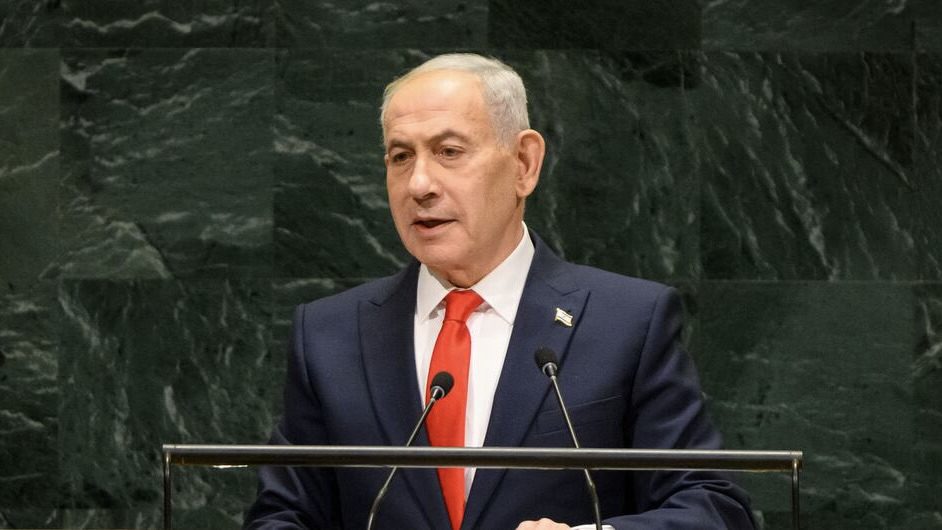
77 countries walk out during Netanyahu’s UN speech

Israel continues to face isolation in international forums as it continues its multi-front war on the peoples of West Asia. On Thursday, September 24, delegations from at least 77 countries walked out or left their seats vacant during the address of Israeli Prime Minister Benjamin Netanyahu at the 81st session of the United Nations General Assembly.

The move was interpreted as opposition to Israel’s three-year genocidal aggression on Gaza, and atrocities across multiple parts of West Asia.

Arab nations that walked out included: Algeria, Comoros, Egypt, Iraq, Jordan, Kuwait, Lebanon, Libya, Mauritania, Oman, Palestine, Qatar, Saudi Arabia, Somalia, Sudan, Syria, Tunisia and Yemen.

Asian states involved: Afghanistan, Bangladesh, Brunei, Darussalam, Indonesia, Iran, Kyrgyzstan, Malaysia, Maldives, Myanmar, North Korea, Pakistan, Türkiye, Turkmenistan and Uzbekistan.

From Africa the following left the chamber: Angola, Botswana, Central African Republic, Chad, Congo (Republic of the), Democratic Republic of the Congo, Djibouti, Equatorial Guinea, Eritrea, Eswatini, Kenya, Lesotho, Liberia, Madagascar, Mozambique, Namibia, Niger, Senegal, South Africa and Uganda.

Countries of Latin America and the Caribbean: Antigua and Barbuda, Bahamas, Barbados, Belize, Bolivia, Brazil, Chile, Colombia, Cuba, Dominica, Guyana, Nicaragua, Panama, Peru, Saint Lucia, Suriname, and Venezuela.

European countries: Bosnia and Herzegovina, Ireland, North Macedonia, San Marino, Slovenia and Spain. 

From Oceania: Tonga and Tuvalu.

Meanwhile, thousands of protesters took to the streets of New York City, where the UN headquarters is located, to protest Netanyahu’s visit and address, calling for US officials to comply with the warrant issued for his arrest from the International Criminal Court. 

Read more: ICC issues arrest warrants for Netanyahu and Gallant as the genocide continues in Gaza

Netanyahu defies the world, vows to continue Israel’s multi-front regional war

Netanyahu began his defiant, combatant speech by calling the departing delegations “moral cowards”.

“If there are any other moral cowards who haven’t yet left this hall, please do so now,” the Israeli PM said, addressing an almost empty chamber.

During the rest of his speech, which lasted for around 40 minutes, he defended Israel’s military campaigns – including the strikes on Iranian nuclear facilities – and vowed “to continue to win” Israel’s muti-front regional war, claiming his government has “no other choice”. 

Netanyahu categorically rejected international accusations of genocide in Gaza, labeling them “the greatest lie of the century”. He sharply criticized his vocal opponents, naming Turkish President Recep Tayyip Erdogan, New York Mayor Zohran Mamdani, and the government of Qatar. 

Furthermore, Netanyahu downplayed the deadly impact of Israeli settler violence in the occupied West Bank by describing the perpetrators as a “handful of young juvenile delinquents, about 150 in number, who go throw stones, who chop down olive trees, and occasionally light some fires.”

He also minimized the total number of Palestinian casualties resulting from settler attacks saying “maybe two or three dead” per year, although the UN reported in August that at least 23 Palestinians were killed and more than 1,040 others were injured in the context of settler attacks since the beginning of 2026.

Responding to statements made by Syrian President Ahmed al-Sharaa concerning Syria’s sovereignty over the Golan Heights, Netanyahu firmly asserted Israel’s permanent claim over the territory, invoking a biblical narrative.

 “Jews have been on the Golan Heights since the days of Moses,” Netanyahu declared, asking Al-Sharaa to “read it in the Bible”.

Abbas continues to appeal to the US despite its sanctions on PA

For the second year in a row, the US State Department has denied entry visas to the President of the Palestinian Authority (PA) Mahmoud Abbas and a high-level delegation, preventing them from attending the United Nations General Assembly session in New York.

According to media reports, the Trump administration justified the revocation of visas by accusing the PA of pursuing legal action against Israel in international courts, and failing to meet past peace commitments. The decision drew wide international criticism for violating UN host-country agreements.

The US action put Abbas on the spot before the Palestinian grassroots, especially as his administration is known for appeasing Washington at the cost of the Palestinian people’s sacrifices.

Read more: Abbas sacks head of detainees’ commission for opposing cuts of prisoners and martyrs’ stipends

Opening his pre-recorded speech delivered remotely, Abbas strongly condemned the revocation of US visas for Palestinian officials – including himself – as “punitive and unlawful”, rejecting the justifications provided by Washington. 

He urged the US to lift the sanctions and restrictions it imposed on the PA, resume dialogue, and work alongside the international community to back the two-state solution.

Abbas stressed that the PA has fulfilled its governance and reform commitments, and reaffirmed his leadership’s dedication to international law and its ongoing stance against “violence and terrorism”.

In terms of the situation on the ground, Abbas cautioned that Palestinians are confronting the most dangerous phase in their modern history. 

He detailed the repercussions of the ongoing Israeli genocide and the severe humanitarian crisis in Gaza, in addition to settlement expansion, land seizures, and the escalation in settler violence under the protection of Israeli forces in the occupied West Bank and East Jerusalem. 

The Palestinian President warned that these systemic practices are designed to fragment the territory and forcibly displace the Palestinian people. 

“We have, for long, warned the international community through the UN General Assembly and the Security Council that these Israeli policies that operate outside international law will destroy the two-state solution,” Abbas asserted. 

The head of the PA slammed some countries for their silence and their continued supply of weapons to Israel. 

While acknowledging the 20-point plan brought forward by US President Donald Trump for post-war Gaza, the related UN Security Council resolution and the Mladenov 15-point roadmap, he lamented the lack of tangible progress and called for the immediate expedition of phase two of the ceasefire deal.

Abbas also expressed hope that phase two of the deal would unify Gaza, the West Bank, and Jerusalem under the mandate of the Palestinian state.

Concluding his address, Abbas called on Trump to abide by his previous commitments made to Arab and Islamic leaders regarding the prevention of land annexation and forced displacement of the Palestinian people.

He further demanded the immediate, unconditional release of more than USD 6 billion in tax revenues withheld by Israel, alongside an end to the financial siege on Palestinian institutions.

With regard to the long-awaited legislative elections, Abbas affirmed that it will take place on November 28, followed subsequently by presidential elections.

He closed by reiterating the vision of a democratic, unarmed Palestinian state grounded in human rights and the rule of law, living side-by-side with Israel in “mutual security and peace”.

Visa revocations show concessions yield zero results, says Omar Assaf

Palestinian political activist and former prisoner in Israeli jails, Omar Assaf, argues that the denial of US entry visas to the Palestinian delegation highlights two critical realities.

First, it exposes a deep-rooted US hostility toward the Palestinian people and their leadership, actively blocking them from reaching the United Nations to make the World hear their grievances, assert their rights, and bear witness to the crimes of the occupation.

Second, it serves as a stark wake-up call for Palestinian leadership that the US administration cannot be relied upon, nor can it be viewed as an honest broker, or a mediator of any kind.

From his point of view, the incident makes clear that a policy of concessions, compliance, appeasement, and pleading yields zero results. Instead, the World only respects the language of strength, unity and upholding rights. Consequently, this must serve as a definitive lesson for Palestinians to close ranks under a unified national stance.

“We must firmly adhere to our people’s rights, stand resilient against challenges, and confront any aggression targeting our land and existence, including our fundamental right to make our voices heard globally to halt these ongoing crimes,” Assaf emphasized.

  •  

All six victims of Athens explosion identified

Devastated relatives who arrived from abroad visited the site of the collapsed building where four tourists and an elderly couple lost their lives on Friday morning, September 25, 2026. With tears in their eyes and broken voice they told media reporters that they came for the identification of the victims adding that the recognition was […]

The post All six victims of Athens explosion identified appeared first on Keep Talking Greece.

  •  

US Ambassador Guilfoyle threatened Greek Minister over LNG policies

Kimberly Guilfoyle, the U.S. ambassador to Greece, has faced scrutiny over remarks she allegedly made during a private dinner in Athens in March 2026, less than six months after she assumed her post in the Greek capital in autumn 2025. According to an exclusive story by the Wall Street Journal investigating the “Balkan actions” of […]

The post US Ambassador Guilfoyle threatened Greek Minister over LNG policies appeared first on Keep Talking Greece.

  •  

Explosion in Athens: All six bodies recovered, the Fire Service confirmed

The spokesman of Greek Fire Service confirmed at 3 p.m. on Saturday, that all six bodies of missing persons have been retrieved from the rubble of the building that collapsed early Friday morning following a powerful explosion in Plaka, the historical and touristic center of Athens. The process of identification is due. At the time […]

The post Explosion in Athens: All six bodies recovered, the Fire Service confirmed appeared first on Keep Talking Greece.

💾

  •  

Athens explosion: Number of missing rises to six: 1 Greek, 2 Britons, 3 US nationals

Search works for the missing people in the rubble of the building that collapsed after an explosion in historical center of Athens, Plaka continue until late Friday night. According to latest information, the number of the missing people has risen to six from five as initially thought. The number was officially announced by the Mayor […]

The post Athens explosion: Number of missing rises to six: 1 Greek, 2 Britons, 3 US nationals appeared first on Keep Talking Greece.

  •  

Greece Weather Warning: Heavy rainfalls and thunderstorms

Greece’s National Meteorological Service, EMY, issued a weather warning, Category 4, of a weather deterioration forecast to start on Friday evening, September 25. The weather deterioration is forecast to begin in the in the northwest of the country with heavy rain and thunderstorms, while hailstorms locally are also possible. It is expected to last until […]

The post Greece Weather Warning: Heavy rainfalls and thunderstorms appeared first on Keep Talking Greece.

  •  

Mazonakis’ death: Creepy details, unacceptable medical practices

More and more creepy details and medically unacceptable practices about the death of popular singer Giorgos Mazonakis emerge as more people have testified to authorities investigating the mysterious case that sent already two doctors in pre-trial custody. On Thursday, the fourth employee at the private practice in Kolonaki, high-end district of Athens, appeared before the […]

The post Mazonakis’ death: Creepy details, unacceptable medical practices appeared first on Keep Talking Greece.

  •  
❌