After hesitating for weeks amid a deteriorating security situation in the Red Sea, Saudi Arabia, Pakistan, and Türkiye (Turkey) have finally agreed to activate “deterrence measures” under the mutual security agreement, the Makkah (Mecca) Pact.’
Under the agreement, Pakistan and Türkiye have agreed to “rapidly deploy forces” in Saudi Arabia to counter the attacks by Yemen’s Houthi rebels.
This is the first time that the ‘Mecca Pact,’ signed in August, has been invoked.
“The committee agreed to activate collective deterrence measures, within the framework of the Alliance, in response to the attacks and all those responsible for them,” Khalid bin Salman, Saudi Arabia’s defense minister, said.
The ‘Mecca Pact’ has a mutual defense clause, similar to NATO’s Article 5, that an armed attack against one country would be considered an attack on all three.
Under the agreement, Ankara could deploy its soldiers in the southern Arabian peninsula for the first time in over a century.
The last time Turkish soldiers served in Yemen was in 1919 under Ottoman rule. After the Ottomans’ defeat in the First World War, Ankara agreed to surrender garrisons outside Anatolia under the Armistice of Mudros.
After the Armistice, signed between the Ottomans and Allied nations in 1918, Ottoman garrisons in Yemen surrendered to the British forces one by one.
Therefore, activating the Mecca Pact could see Turkish forces return to the southern Arabian Peninsula after more than a century.
In fact, while the Mecca Pact was signed only in 2026, Turkey has been waiting for an opportunity to return to Yemen for over a decade.
The Mecca Pact was signed in August 2026.
In 2015, when Saudi Arabia intervened militarily in Yemen against the Houthi rebels for the first time, President Recep Tayyip Erdogan said that “Depending on the course of events, we may consider providing logistical support.”
However, Ankara should not celebrate too soon, as history holds a sobering lesson for the Turks.
The mighty Ottoman Empire once ruled across the three continents of Asia, Africa, and Europe; controlled three of Islam’s holiest sites, including Mecca, Medina, and Jerusalem; and controlled a huge territory in the European lands of the Balkans and southern Europe.
Ottomans, however, could never fully subjugate the Zaidi tribesmen of Yemen, the historical ancestors of today’s Houthi rebels.
Yemen, in fact, was frequently called the “graveyard of Anatolia” or the “graveyard of Ottoman soldiers”.
Yemen – The Graveyard of Turks (Ottomans)
Victoria Clark, in Yemen: Dancing on the Heads of Snakes (2010), writes that by the 1890s Yemen was already “renowned as the ‘graveyard of the Turks'” during Ahmed Feyzi Pasha’s campaigns.
She also quoted an Ottoman official: “Yemen has become now the graveyard of Muslims and money.”
Turkish journalist and author Mustafa Balbay titled his book ‘Türkler Mezarlığı Yemen,’ which means “Cemetery of the Turks”.
In fact, describing Yemen as a “graveyard of Turkish soldiers” is a recurring theme in Ottoman (Turkish) historical memory.
Yemen Türküsü is a famous Turkish folk song that serves as a tragic lament for Ottoman soldiers who marched off to fight in Yemen during World War I and never returned.
Another Turkish folk song remembers the difficulties faced by Ottoman soldiers in Yemen and pays homage to Turks who went to Yemen but never returned.
“There are no clouds in the sky, what is this smoke?
There is no death in the neighborhood, what is this commotion?
These lands of Yemen are so treacherous
Oh, Yemen, its rose is a meadow
Why do those who leave not return?”
Ayşe Hür, in her article “The largest Ottoman cemetery: Yemen,” recounts that the Ottoman rule in Yemen was fiercely opposed by Zaydis, the ancestors of Houthi rebels.
According to the Zaydis, the Ottomans were ‘turbaned infidels’.
Turkish President Recep Tayyip Erdogan (R) passes next to a Turkish soldier wearing an Ottoman uniform during a third-anniversary commemoration rally at Ataturk International Airport in Istanbul on July 15, 2019. Turkey commemorates, on July 15, 2019, the third anniversary of a coup attempt which was followed by a series of purges in the public sector and changes to boost the Turkish President’s powers. (Photo by Ozan KOSE / AFP)
In his work titled “My Lament,” Ahmet İzzet (Furgaç) Pasha, who was sent to Yemen in early 20th century to supress a Zaydi revolt against the Ottomans described the period of Ottoman struggle in Yemen (1635-1840) in following words: “After a century of conflict in Jabal, with internal revolts and constant wars against the Zaydi imams, which continued until the year 1045 AH (1635), the entire Yemen region fell under the rule of the Zaydi imams due to the siege and pressure exerted on Haydar Pasha, who was forgotten and left in Jabal by the central government.”
Ottoman sources do not specify how many people died in the wars with the Zaydis during these 100 years, merely stating that “thousands of people died.”
“Going to Yemen and not returning” has been the fate of Ottoman soldiers since the 16th century, Ayşe Hür wrote in her article.
In the article titled “The Situation in Yemen” in the 15th issue of the Ottoman Newspaper dated 1316 (1900), it was stated: “As a result of Ahmet Fevzi Pasha’s wrong policies, approximately 4,000 soldiers died every year.”
Ayşe Hür also quoted an Ottoman official in her article who said that 1,30,000 Ottoman soldiers were buried in the Hijaz and Yemen between 1871 and 1894.
Marshal Galip, who served as a captain in Yemen in the 19th century, wrote: “Since I worked under the General Staff, all the general staff records passed through my hands. In these records, I noticed a wide and terrible gap between the new soldiers joining the army and those who were replaced or disabled… Yemen was a permanent war zone at that time.
“I compared the number of those who joined their factions or were mobilized en masse and sent away due to rebellions with the number of those who survived and returned to their homeland. The conclusion I reached was this: In the 22 years that had passed, a total of 130,000 Anatolian youths had been buried in the deserts of Hejaz and Yemen.”
In 2011, then-Turkish President Abdullah Gül renovated and inaugurated a Turkish Memorial Cemetery (Yemen-Türk Şehitliği) in Sanaa to commemorate the Ottoman soldiers who died in Yemeni campaigns.
Just one year later, in 2012, Houthi rebels demolished part of the memorial.
For centuries, the memorial has symbolized the Ottoman presence in Yemen. The deliberate attack on this memorial serves as a reminder of how the Houthis recall Ottoman campaigns in Yemen.
The damaged memorial for Turkish Martyrs in Yemen in the Yemeni capital Sanaa.
It was also a clear message to Ankara that they would not accept any Turkish involvement in Yemen.
Writing in Politics Today, Ahd Yaseen Al-Tamimi said: “History textbooks, which were adopted after 1962, presented a positive view of the Ottoman Empire and its rule over Yemen. Nevertheless, this did not prevent Zaydi supporters from maintaining their strict and extremist position on the Ottoman Empire.”
Of course, Turkey is a strong military power, and its influence extends in Yemen as well.
It has achieved remarkable military success in Syria, Libya, and in combating Kurdish insurgents in Iraq. Its military support to Azerbaijan was perhaps the deciding factor in its war against Armenia.
However, Yemen is a different ballgame altogether.
And if history is anything to go by, then Yemen, often described as a “graveyard of the Ottomans,” could once again become a quagmire for Turkey.
Sumit Ahlawat has over a decade of experience in news media. He has worked with Press Trust of India, Times Now, Zee News, Economic Times, and Microsoft News. He holds a Master’s Degree in International Media and Modern History from the University of Sheffield, UK.
He can be reached at ahlawat.sumit85 (at) gmail.com
Washington has sent two contradictory signals on Taiwan in the last few days. Whether these signals reflect strategic ambiguity or strategic confusion in the coming days has become a matter of debate among the strategic experts.
On the one hand, Trump is holding back a $14 billion arms package for Taiwan, pre-approved by the U.S. Congress, despite a bipartisan group of senators explicitly urging him to “formally notify . But the U.S. President has described his decision to pause as a “very good negotiating chip” for his talks with Chinese President Xi Jinping.
Whether that worked in his summit meeting with Xi last week in Washington is not known. But Taiwan’s Defense Minister Wellington Koo confirmed yesterday (October 6) that he has “not heard” of any new sale being cleared, even in smaller chunks.
On the other hand, the Pentagon is seemingly doing the opposite of this pause.
According to reports, the U.S. Department of Defense will station two representatives on a long-term basis inside Taiwan’s Ministry of National Defense headquarters in Taipei from 2026 to 2028.
One official will come from the Office of the Under Secretary of Defense for Policy [OUSD-Policy] — the office that writes U.S. national security and defense strategy. The second will come from the Institute for Defense Analyses [IDA] — a federally funded think tank that does mathematical modeling for war games and combat capability assessment.
The program is called the “Taiwan-US Defense Ministry Joint Cooperation Assessment,” with a total budget of NT$471 million [$14.8 million], including NT$152.5 million this year for personnel, consultancy, travel, data collection, and even interpretation for classified-level meetings.
This would mark the first time U.S. defense officials are permanently embedded inside Taiwan’s military headquarters, shifting cooperation away from traditional channels managed through the American Institute in Taiwan (AIT), Washington’s de facto embassy.
The military relationship between the United States and Taiwan is highly integrated yet formally unofficial. It is governed by the legal framework of the “U.S. Taiwan Relations Act” (TRA), which Congress passed on April 10, 1979.
Congress enacted it immediately after the U.S. formally terminated its previous “Mutual Defense Treaty with the Republic of China (Taiwan)” to officially recognize “the People’s Republic of China (PRC)” in Beijing.
Rather than abandoning Taiwan, Congress designed the TRA as a legal framework to ensure that “robust, unofficial security, commercial, and cultural ties” continue uninterrupted.
In short, the TRA provides a domestic legal workaround for treating Taiwan as a country without formal diplomatic recognition. However, under it, the U.S. is also obligated to maintain Taiwan’s capacity to resist force or coercion in general and the forcible annexation by the PRC in particular.
Over the years, U.S. personnel have served in Taiwan as trainers and advisers. Hundreds of active-duty U.S. military advisors—often colloquially referred to locally as “English teachers” to maintain a low profile—are routinely deployed across Taiwan.
U.S. military observers are present within Taiwan’s annual “Han Kuang live-fire military exercises”. They actively guide Taiwan’s defense strategy toward decentralized command, logistics, and real-world combat readiness.
Taiwanese fighter pilots undergo advanced combat training at Luke Air Force Base in Arizona.
The US remains Taiwan’s primary foreign weapons supplier, with a total backlog of orders nearing $20 billion.
In fact, Taiwan received its first new batch of two advanced Lockheed Martin F-16 Block 70 fighter jets on October 2. This was part of an $8 billion deal approved in 2019 for 66 new-build F-16 Block 70 jets, with the remaining 64 aircraft scheduled for future delivery. out of a 66-aircraft fleet on order.
A newly purchased F-16V Block 70 fighter jet lands at Chi-hang Air Base in Taitung on October 2, 2026. Taiwan received its first two US-made F-16V fighter jets as the island democracy upgrades its military capabilities to deter a potential Chinese attack. The warplanes are part of an $8 billion deal for 66 F-16Vs approved during U.S. President Donald Trump’s first term and scheduled for delivery this year. (Photo by CHENG Yu-chen / AFP)
However, all these coordination efforts between Washington and Taipei are usually routed through the AIT intermediary, as the U.S. adheres to its One China” policy. In that sense, the new proposal to station Pentagon personnel directly inside the Taiwanese Defense Ministry represents a shift from this historical status quo.
The new arrangement puts Americans directly into the core of Taiwan’s defense policymaking, including policy coordination, Han Kuang exercise planning, asymmetric warfare doctrine, and major weapons procurement evaluations, it is said.
Of course, the U.S. routinely sends military and civilian defense officials to work directly inside the defense ministries of partner and allied nations. Established by the Pentagon in 2009, the Ministry of Defense Advisors (MODA) Program specifically trains and deploys high-performing senior U.S. Department of Defense civilians.
These advisors are embedded in partner-nation defense ministries to support institutional capacity building, strategy, financial management, and logistics.
The U.S. also actively deploys specialized defense consultants directly to the defense ministries of nations looking to transition away from historical adversaries such as Ukraine, Moldova, Armenia, and various Balkan nations looking to exit Moscow’s orbit.
The U.S. has a long history of embedding liaison officers in allied countries. For example, it has a Joint Political-Military Group in Israel that embeds officers in missile-defense cooperation for Iron Dome, David’s Sling, and now Iron Beam. But American officials do not operate inside the Kirya (Israel’s defense headquarters).
Similarly, despite 54,000 US personnel stationed in Japan, no U.S. officer sits inside Japan’s Ministry of Defense to assess combat capability.
Perhaps in NATO countries and South Korea, U.S. military officials are believed to sit together often.
There are also “Offices of Defense Cooperation” (ODC), or United States Military Groups, which are technically attached to the local U.S. Embassy for diplomatic protection. These teams provide security assistance and work in routine, day-to-day coordination with host ministry personnel.
However, what makes the proposed U.S. officials sitting directly within Taiwan’s military headquarters unique is that Taiwan is not an ally of America in the strict sense, as the U.S. lacks formal diplomatic recognition of Taiwan, and these officials will bypass the traditional AIT.
Of course, multiple reports in recent years have claimed that U.S. special forces are permanently stationed in Taiwan to assist its 101st Amphibious Reconnaissance Battalion special operations force, though Washington has officially denied it. The same has been the case with the speculations about the coming and going of U.S. military personnel from the Army Special Operations Command base in Taoyuan.
U.S. President Donald Trump (L) poses for photos with China’s President Xi Jinping during a visit to Zhongnanhai Garden in Beijing on May 15, 2026. (Photo by Evan Vucci / POOL / AFP)
How will Beijing React?
At the time of writing, Beijing had not issued an official reaction, possibly because Taiwanese media outlets only recently brought details of this long-term Pentagon deployment to light. It has not been declared officially.
But it goes without saying that Beijing would be “certain to protest” and could respond “with expanded exercises and intimidation”, according to Zivon Wang, a military analyst at the Chinese Council of Advanced Policy Studies in Taipei.
He expects U.S. personnel not to wear uniforms at the Ministry of National Defense because it could be interpreted as a more formalized US-Taiwan military relationship and might further provoke Beijing.
Incidentally, China has made more air and naval incursions across the median line in the Taiwan Strait since 2022. Although Chinese military aircraft had occasionally crossed the median line (established informally in 1954) in the past, the practice became significantly more frequent from 2022, particularly after Nancy Pelosi (then Speaker of the House of Representatives) visited Taiwan in August that year. What had once been an informal but largely respected buffer increasingly became a zone of routine Chinese military activity.
Therefore, it remains to be seen whether China will respond to the Pentagon’s proposed deployment with loud exercises.
It may also remain silent, as nothing is official yet and Trump has his “negotiating chip” of holding back Taiwan’s military package.
Trump’s admirers often see his unpredictability as useful in negotiations with an adversary, because the other side cannot be sure how far he is willing to go.
But his critics argue that his unpredictability becomes counterproductive when allies cannot distinguish a negotiating threat from a real change in American policy.
It remains to be seen who will prove to be right in the case of Taiwan.
Author and veteran journalist Prakash Nanda is Chairman of the Editorial Board of the EurAsian Times and has been commenting on politics, foreign policy, and strategic affairs for nearly three decades. He is a former National Fellow of the Indian Council for Historical Research and a recipient of the Seoul Peace Prize Scholarship.
The author can be reached at prakash.nanda (at) hotmail.com
Russia appears to be preparing to revive and modernize its inventory of the Soviet-era Pechora S-125 short-to-medium-range surface-to-air missile system, in a move that the IAF leadership could well take note of.
S-125 is the same missile that was used to shoot down the US Air Force’s F-117 Nighthawk stealth fighter-bomber over Serbia on March 27, 1999, during the Kosovo War.
The Pechora S-125 (SA-3 Goa) is a legacy Soviet static, short- to medium-range surface-to-air missile system developed to engage low- to medium-altitude air threats using command guidance.
The IAF also modernized its S-125 inventory to plug an operational gap that widened due to delays in procuring MRSAM and Akash air-defense systems. However, the IAF did not pursue modernization to the extent that the capability gains matched the more comprehensive modernization offered by the Russian Pechora-2M.
According to Militarnyi, a Ukrainian media outlet focused on military affairs, the Minsk Wheel Tractor Plant (MZKT) has signed a contract with Moscow-based JSC Oboronitelnye Sistemi to supply 30 specialized wheeled chassis that appear intended for components of the Pechora-2M system.
The Pechora-2M is a heavily modernized Pechora derivative with a self-propelled truck-mounted launcher, digital electronics, an extended engagement envelope, and day/night electro-optical tracking, giving the system much greater tactical mobility.
Under the terms of the contract, Russia would receive 20 MZKT-8021-021 chassis, as well as five each of the MZKT-8022-021 and MZKT-80211-021.
The MZKT-8021/8022 family of specialized chassis was developed specifically to accommodate components of the Pechora-2M air-defense missile system.
Pechora Revival
The delivery schedule extends to 2029, suggesting a planned multi-year acquisition rather than a one-off procurement to meet an immediate operational requirement.
More likely, Russia is seeking to expand its air-defense capacity in response to the heightened threat from the prolific use of drones and other low-cost aerial threats in modern warfare.
Drone warfare has increased the aerial threat severalfold, so it is logical for any nation to increase the density of its AD systems by a corresponding factor.
Russia appears to be increasing its reliance on legacy systems rather than simply discarding them.
Russian Modernisation
The modernized Pechora-2M system was developed as a deep modernization of the Soviet S-125, incorporating a self-propelled, highly mobile launcher and modernized electronics. The modernization transformed the legacy stationary S-125 into a rapidly deployable air-defense platform capable of shoot-and-scoot tactics, reducing its vulnerability to anti-radiation weapons and precision strikes.
The 2M replaces the legacy four-rail stationary ground launcher (5P73) with a twin-rail launcher mounted on a heavy 6×6 truck chassis. The reduction in launch rails was necessary to maintain launcher stability when mounted on a mobile chassis.
The legacy S-125 required considerable time to disassemble, pack onto trailers, move, and re-erect at a new site. In contrast, the Pechora-2M can reportedly be brought into action in roughly 20–25 minutes, facilitating shoot-and-scoot operations.
Besides the self-propelled launchers, the tracking/fire-control radar and other system components are also mounted on high-mobility truck chassis rather than being confined to towed equipment.
File Image: S-125
IAF Pechora Modernization
In 2016, the Indian MoD issued a $272-million tender to digitize 16 Pechora systems. The tender was restricted to Indian companies to support the government’s Make in India policy. The eventual contract, worth ₹591.3 crore, was awarded to Alpha Design Technologies Ltd (ADTL) in 2020.
Russia’s Almaz-Antey is the original equipment manufacturer of the Pechora system. At the time, Indian officials indicated that Russian defense companies preferred to work through Russian state-owned entities, limiting the scope for direct OEM participation by Indian companies.
The scope of the Indian Pechora upgrade was primarily the electronic and mechanical modernization of the existing system rather than a fundamental redesign of its architecture. It included refurbishment and digitization of the missile-guidance radar and integration of the system with the IAF’s Integrated Air Command and Control System (IACCS).
Alpha Design Technologies Ltd executed the upgrade, focusing on digitization and electronic modernization. It replaced vintage electronic components with modern semiconductor-based electronics and digital processing, while modernizing operator consoles and other system elements.
No Mobility
The system retained its original static, four-rail, ground-mounted configuration (5P73 launcher) and towed transport arrangement because the Indian upgrade scope did not include mobility.
Because it lacks mobility, the IAF has traditionally used the Pechora for point defense of fixed, high-value infrastructure such as air bases, radar stations, and other military installations.
A statically deployed AD system protecting a high-value asset made considerably more sense when precision-guided munitions were either unavailable or relatively uncommon. In contemporary warfare, where precision weapons can routinely achieve single-digit-meter accuracy, a static air-defense system defending a high-value asset can itself become a priority target.
Recall the failed PAF attempt to strike the S-400 system deployed to defend Aadampur air base during Op Sindoor. With foresight, and by leveraging the S-400’s mobility, IAF leadership relocated the system before the attack. The episode illustrates the importance of mobility and survivability for high-value air-defense assets.
A Still-Capable System
Despite its vintage, the Pechora remains a potentially useful AD system. Endowed with mobility and modern sensors and electronics, it would acquire significantly greater survivability and tactical utility.
One of its strengths is electro-optical tracking, which permits passive target tracking without radar emissions, reducing vulnerability to anti-radiation weapons. Both Russian and Indian modernization programs have improved the system’s electro-optical capability.
The Indian upgrade incorporates thermal-imaging-based fire-control equipment, while the Pechora-2M also incorporates TV and thermal/infrared electro-optical channels.
Thermal imaging provides a passive night-and-day detection and tracking capability and, unlike conventional television cameras, does not depend on visible light. However, adverse atmospheric conditions can degrade its effectiveness.
It is interesting to note that the IAF chose to upgrade its Pechora systems without fundamentally modifying the missile. Contemporary reporting on the original upgrade program indicated that the IAF considered the existing missile adequate and concentrated instead on digitization, radar, communications, networking, and other system improvements.
The 5V27 family missile has a substantial fragmentation warhead of around 70 kg and uses command guidance. Its continued availability is one possible reason why extending the life of the Pechora system remains attractive.
Russia may also be reviving and revitalizing Pechora-2M systems because it has a substantial existing inventory of 5V27-series missiles. If so, the approach illustrates an important principle of modern warfare: the value of an old weapon system can change when it is combined with modern sensors, electronics, mobility and networking.
In the immediate future, the IAF will need to deploy many more AD systems than it currently does in order to field a robust air-defense capability spanning the entire gamut of aerodynamic threats—aircraft, helicopters, cruise missiles, guided bombs and drones.
Developing additional AD systems may prove more challenging and time-consuming than upgrading existing legacy systems such as the Pechora.
Upgrading the Pechora to add mobility, modern electro-optical sensors and improved networking should be well within Indian technological capability. Even locally manufacturing additional upgraded systems under an appropriate OEM arrangement could be a cost-effective way to augment India’s air-defense capability.
Russia’s apparent decision to extract additional combat value from an old missile system should therefore be viewed less as a revival of obsolete technology and more as an example of how legacy weapons can be adapted to the changing economics and character of air warfare.
Vijainder K Thakur is a retired IAF Jaguar pilot, author, software architect, entrepreneur, and military analyst.
Massive school protests are ongoing in France, where students have been mobilizing for their right to education – and against the austerity measures undermining it. Roughly 1,800 high schools were forced to shut down on Tuesday, October 6, as students – supported by trade unions, families, and progressive politicians – took to the streets. According to trade unions, over 450,000 people participated in protests across the country.
Students at 90% of French universities organized actions on the same day, adding even more weight to the historic mobilization.
The students’ main demands include urgent measures to address the critical situation in French schools: a shortage of teaching and support staff, oversized classes, and dilapidated buildings – particularly in working-class areas. Protesters are also calling for more manageable timetables, affordable and quality food and student housing, and an equitable education system.
Austerity at the roots of the protests
The situation in schools is strongly linked to years of neoliberal policies pushed by President Emmanuel Macron and several administrations. The mobilizations are taking place amid widespread discontent over the planned continuation – and harshening – of the same policies.
The country’s public deficit reached 5.1% of GDP in 2025, and debt interest rates represent a growing driver of this deficit. In 2025, the interest burden amounted to around €66 billion across all public administrations; it is expected to reach €91 billion in 2027 and approximately €120 billion in 2030, warned Francesco Tirro for Progetto Me-Ti.
Mainstream economists suggest the only way to address that deficit is through cuts – an approach the current administration is only too eager to try, including through attacks on the pension and education systems.
Police repression against students
In response to the protests, French authorities have unleashed a rarely seen wave of police violence against students. The Ministry of Interior recorded approximately 5,000 arrests between September 21 and October 2, with 85% of those detained underage. Police used rubber bullets and dispersal grenades on children, leading to serious injuries – including protesters losing limbs and vision.
“Footage and testimonies widely reported over the last week raise alarming concerns about the dangerous use of tear gas, batons and restraint techniques by police,” said Anne Savinel-Barras from Amnesty International France. The organization emphasized that authorities must ensure the response to demonstrations is “necessary and proportionate,” and that “children and young people peacefully demanding their right to education are protected rather than being beaten, tear-gassed, or arbitrarily detained.”
Source: Sophie Binet/X
While human rights organizations appealed for an end to state-sanctioned violence against students, things were much quieter among the European political establishment. Where reactions were formulated, they were mild at best.
Unions and left support the students
Different progressive movements have sharpened their support for the student demonstrations over the past week, resulting in thousands of trade union members and dozens of elected officials forming cordons between police and students to shield the youth. “All over the country, union members have turned out in large numbers to provide protection and support for high school students,” one of the main student associations, Union Syndicale Lycéenne, stated on Tuesday.
“Today’s high school and university students are tomorrow’s workers, and they shouldn’t have to pay the price for austerity policies,” the General Confederation of Labor (Confédération Générale du Travail, CGT) emphasized. “When there is a shortage of teachers, when classrooms are overcrowded, when buildings are falling apart, and when young people see their future prospects shrinking, the answer cannot be repression.”
Progressive politicians, notably from La France Insoumise (LFI), also joined the protests, providing physical protection for students. As the mobilization began to roll out from Créteil, home of LFI’s Clémence Guetté and several other members, the left party was among the first to offer support – and remained by their side as repression grew. One of the most notable examples was Saint-Denis mayor Bally Bagayoko, filmed as he protected students from more violence.
“The coming together of labor unions, the youth movement, and the parliamentary left-wing opposition forms a kind of ‘tortoise formation’ of mutual protection, making a broader collective momentum possible,” emphasized left presidential candidate Jean-Luc Mélenchon.
Solidarity statements came from youth organizations in other European countries, including Greece. “Young people are reacting massively to the cuts in education spending, given that the French government, as in the rest of the EU, is spending billions on military equipment at the expense of wages, healthcare and education,” the Communist Youth of Greece (KNE) wrote in a statement, foreshadowing more student struggles to follow.
A British tourist’s hike in the Imbros Gorge in Sfakia turned into an adventure with a happy ending Tuesday afternoon. The 73-year-old decided to walk through the gorge, with his last contact with his wife taking place on Sunday afternoon, October 4, 2026. Since then, there had been no signs of life, and his wife, […]
After years of lobbying by Riyadh, the United States recently greenlit a potential sale of F-35 fighters to Saudi Arabia. Meanwhile, Turkey is looking to rejoin the F-35 program and is aggressively pursuing the Trump administration to approve the sale of stealth jets.
Another interesting case is India, which is hosting Exercise Tarang Shakti, where six F-35 jets are participating. Indian experts call it a unique opportunity for the IAF to evaluate US stealth jets and see how Indian ground and airborne radars detect them.
Notably, this is the first time F-35s are participating in drills with Indian jets on Indian soil.
Many see this as an historic opportunity to train alongside arguably the world’s best jets and give real-time exposure to the IAF’s Rafale, Su-30MKI and Tejas aircraft. Even IAF critics who don’t favor a potential F-35 sale to India see this as a historic opportunity.
Earlier, a EurAsian Times report said the US State Department announced the proposed sale of F-35 Lightning II and related equipment to Saudi Arabia on September 17, 2026. The proposed sale is expected to cover 48 F-35 aircraft and 49 Pratt & Whitney F135-PW-100 engines, along with communications gear, training, spare parts, and other support as requested by Riyadh.
The approval followed years of lobbying by the Saudi kingdom to procure the highly sought-after stealth fighters.Earlier, the Obama administration explicitly ruled it out in late 2015, stating that Israel would remain the sole F-35 recipient in the region to preserve its qualitative military edge (QME).
Later, the Biden administration explored linking a potential F-35 deal to Saudi-Israeli normalization, but talks stalled after the October 7 Hamas attack on Israel.
The US State Department’s proposed sale still requires congressional approval, and analysts believe Saudi’s purchase of the F-35 could hit a roadblock amid concerns about Riyadh’s ties with China and Israel’s opposition to the deal.
Despite being a founding member of the F-35 program and making a significant financial investment, the US expelled Turkey from the consortium and sanctioned it under CAATSA for purchasing the S-400 despite repeated warnings.
Ankara has been actively pursuing a strategy to divest itself of its Russian-made S-400 and sell it off to a potential third-party buyer.
Earlier, the US President similarly responded to questions about lifting CAATSA sanctions on Turkey by saying, “I’ll always speak to President Erdogan. He is a friend of mine, as you know. And I’ll always make him happy.”
For now, Turkey’s path to obtaining the F-35s is still full of hurdles that both Washington and Ankara may find hard to remove, including Israel’s stiff opposition, as the EurAsian Times has explained before.
Like Saudi Arabia and Turkey, several countries have made unsuccessful attempts to obtain the F-35, widely regarded as the leading fifth-generation multirole fighter thanks to its advanced low-observable stealth and groundbreaking sensor fusion.
Functioning as a highly networked airborne command node—often described as the “quarterback of the skies”—it shares data seamlessly across friendly platforms. In fact, analysts believe that it is the most capable fifth-generation fighter in service anywhere in the world.
Despite this, India — a country that faces the dual threat of China and Pakistan along its borders — has been somewhat indifferent to what many consider the world’s best jets.
US Pitch for F-35s
Donald Trump unofficially pitched the F-35 to India during a meeting with Indian Prime Minister Narendra Modi in February 2025. “Starting this year, we will be increasing military sales to India by many billions of dollars. We are also paving the way to provide India with the F-35 stealth fighters ultimately,” he said at the time.
F-35: Image via US Embassy, New Delhi
The F-35s were also displayed at Aero India 2025 the same month, where they met the Russian Su-57 on the tarmac for the first time.
During his April 2025 visit to India, US Vice President J.D. Vance appeared to reiterate the offer.
“We, of course, want to collaborate more. We want to work together more. And we want your nation to buy more of our military equipment, which we believe is the best in class. American fifth-generation F-35s, for example, would give the Indian Air Force the ability to defend your airspace and protect your people like never before,” he said, making a more direct appeal.
Although the US never made an official offer, the verbal F-35 pitch and the prospect of acquiring a cutting-edge stealth fighter looked great on paper, particularly since China operates two fifth-generation aircraft (the J-20 and J-35A) and is allegedly exporting the J-35A to Pakistan.
However, India’s defense community and Indian Air Force (IAF) veterans seemed unimpressed by the F-35 offer despite acknowledging the aircraft’s potent capabilities, a stance recently reiterated as six F-35s made their debut in India-hosted “Exercise Tarang Shakti 2026” in Jodhpur, Rajasthan.
Seven Reasons Why IAF Veterans Oppose F-35
First, Indian analysts and experts believe that buying an expensive stealth fighter off the shelf from the United States would be a liability, since it would do nothing for the Indian defense manufacturing sector and come with an enormous price tag.
Each F-35 is expected to cost $80 to $120 million, with even higher life cycle costs. Therefore, a fleet of F-35s would impose a heavy financial burden that the Indian Air Force would rather allocate to indigenous programs and more flexible and diverse acquisitions.
Second, analysts and veterans have argued that the US would never part with its technology, eliminating domestic manufacturing. They reckon the F-35 procurement would run counter to the “Make in India” and “Aatmanirbhar Bharat” policies.
Air Marshal Anil Khosla (retd), the former Vice Chief of Air Staff (VCAS), earlier stressed that even with approval of limited technology transfer and local manufacturing, significant challenges would remain. At the time, he highlighted production risks arising from the F-35’s complex global supply chain, noting that Lockheed Martin sources components from multiple countries. He cautioned that any disruption or delay in delivering these parts could halt the entire manufacturing process.
Air Marshal Khosla further noted that India’s continued reliance on foreign suppliers would constrain genuine localization, and the IAF would struggle to manage such disruptions.
Notably, this concern takes on greater significance as delivery of Tejas Mk-1A fighter jets to the Indian Air Force has been delayed due to delays in delivery of F404-IN20 turbofan engines, affecting the service’s preparedness.
File: F-35 Lightning II and Su-57 Felon captured in the same frame for the first time in history at Aero India 2025
Third, there is concern that diverting resources to acquiring the F-35 would inevitably affect India’s own fifth-generation Advanced Medium Combat Aircraft (AMCA), which aims to deliver a fifth-generation platform with advanced sensors, electronic warfare systems, and networked combat features while fostering a domestic aerospace industrial base.
Experts have urged the IAF to focus on its indigenous programs rather than getting trapped in another round of imports.
Fourth, analysts have also cited logistical challenges and operational incompatibility with India’s diverse air force fleet comprising a mix of Russian Su-30MKIs, French Rafales and Mirage 2000, and Tejas. They believe that adding another fighter type would further complicate maintenance, training, and logistics for an already varied inventory.
Fifth, India operates Russian-supplied S-400 systems, which previously caused friction between the US and Turkey.
“An F-35A deal would likely come with strings attached—most notably, a U.S. demand that India abandon its Russian S-400 air defense systems in favor of the American THAAD,” IAF veteran and commentator Squadron Leader Vijainder K. Thakur earlier stated.
The S-400 is deeply embedded in India’s layered air defense network, and New Delhi has been considering an additional order, meaning it would inevitably become a point of contention in any potential deal.
Sixth, the US has been flagged as an unreliable partner.
“Putting too many military aviation eggs in the unreliable US basket will also be an issue. Americans can be “very unreliable” when it comes to putting sanctions and freezing spares and maintenance support,” IAF veteran and aviation analyst, Air Marshal Anil Chopra (retd), earlier wrote in a detailed EurAsian Times article.
Adding the repeated threat of sanctions by the US and a rapidly changing geopolitical scenario further complicates the purchase.
Seventh, the F-35 is embedded in the US-controlled networks, including the Operational Data Integrated Network (ODIN), which sends information back to American servers. Indian experts view this as a breach of operational independence.
Tarang Shakti: F-35 and Rafale
Furthermore, they have cautioned that the US imposes stringent operational restrictions on its system and could try to limit the F-35’s use in combat, particularly against Pakistan.
Critics worldwide have also stressed that an unpredictable US administration could restrict free F-35 operations by limiting hardware and software supplies, commonly referred to as a kill switch. In fact, this is the reason why countries like Canada and Portugal decided to look for an alternative to the American stealth fighter.
Indian strategic discussions generally prioritize accelerating Tejas production, advancing the AMCA, and exploring local manufacturing options for platforms such as the Rafale. If a foreign fifth-generation fighter is ultimately considered, many experts have indicated a preference for the Russian Su-57 because of the technology transfer, local production, and twin-seat variant.
Contact the author at sakshi.tiwari13 (at) outlook.com
Nearly six years after the COVID outbreak, there are fears of another health emergency after reports of the death of a Russian researcher in a suspected case of plague, which has prompted authorities to quarantine over 200 people in the remote Siberian region and enforce strict mask mandates.
Notably, reports suggest that the suspected plague bacteria might have originated from a Russian Anti-Plague Institute, bringing attention to Russia’s secretive biological weapons research programs and bringing back memories of the deadly 1979 Anthrax outbreak in the Soviet Union, which also originated from a research facility.
Authorities have acknowledged the death of a researcher due to a “suspected case of a particularly dangerous infection,” described as “pneumonia of unknown etiology.” However, federal authorities deny any lab release and say tests found no work-related pathogens.
However, concerns remain that Russia is hiding crucial details about the outbreak that could hinder an effective response.
The 28-year-old lab technician Darya Shipilova died on October 2 after reportedly breaking a test tube with live Yersinia pestis at an Anti-Plague Institute on September 25 while handling samples.
According to Russia’s national public health agency, Rospotrebnadzor, the researcher worked at the Irkutsk Anti-Plague Research Institute of Siberia and the Far East in Shelekhov.
The 28-year-old lab technician, Darya Shipilova, died on October 2 after breaking a test tube with live Yersinia pestis at the Irkutsk Anti-Plague Institute on September 25th while handling samples.
Meanwhile, independent regional outlet Liudi Baikala reported that the death of the lab technician has prompted authorities to place nearly 200 people under observation at a hospital and enforce strict mask mandates in the region.
Igor Kobzev, the governor of Irkutsk, noted on Telegram that this was in response to a “suspected case of a particularly dangerous infection.”
Alexey Tsydenov, the head of the neighboring region of Buryatia, said the woman “may have died of the plague.”
Meanwhile, US media outlet Axios reported that the White House is monitoring reports of a suspected plague case and related quarantines in Russia.
Russian health authorities, however, are trying to downplay the incident, saying the situation is under control and rejecting reports of a lab leak.
In a statement issued on October 4, Rospotrebnadzor said the “sanitary and epidemiological situation” in Irkutsk and Shelekhov was “stable,” Forbes reported.
The agency further said it conducted extensive testing and found no pathogens linked to the deceased patient’s laboratory work in her sample.
It added that testing of hundreds of people in primary or secondary contact with the deceased researcher has detected no new infections.
According to the World Health Organization, Plague is caused by the bacterium Yersinia pestis, a zoonotic bacterium usually found in small mammals and their fleas. People infected with Y. pestis often develop symptoms after an incubation period of one to seven days.
Bubonic plague is the most common clinical form.
Plague is transmitted between animals and humans through bites from infected fleas, direct contact with infected tissues, and inhalation of infected respiratory particles.
Plague can be a very severe disease in people, with a case-fatality ratio of 30% to 60% for the bubonic type, and it is always fatal for the pneumonic and septicemic kinds when left untreated.
Pneumonic plague is especially contagious and can trigger severe epidemics through person-to-person transmission via respiratory particles.
Historically, plague caused widespread pandemics with high mortality. It was known as the “Black Death” during the fourteenth century, causing more than 50 million deaths in Europe.
According to some estimates, Black Death wiped out one-third to one-half of the European population between 1347 and 1353.
Engraving of Doctor Schnabel (German for “Doctor Beak”), a peculiar costume for doctors who treated plague patients in Europe, by Paul Furst, c. 1656, via Internet Archive.
Today, however, antibacterial medicines have greatly reduced plague fatality rates.
According to the WHO, during 2019–2025, most plague cases reported to the WHO occurred in the Democratic Republic of the Congo and Madagascar.
While Russian authorities are rejecting the lab-leak theory, saying there are no links to the lab technician’s death and her research work at the Anti-Plague Institute, Moscow’s previous record in handling such lab-leak incidents and hiding crucial information has prompted fears that it is hiding more information than it is sharing.
Notably, the lab-leak theory has brought back the painful memories of the 1979 Sverdlovsk anthrax leak, which, according to the official Soviet Union version, led to the death of 66 people, but according to independent researchers, caused the death of over a hundred people.
The 1979 Sverdlovsk Anthrax Leak In The Soviet Union
In April 1979, a missing or improperly reinstalled exhaust filter at Compound 19, a military microbiology facility involved in the Soviet biological-weapons program, released aerosolized Bacillus anthracis spores.
Over the next few hours, wind carried the plume over the city. People in the plume developed inhalation anthrax over the following days; livestock in the area were also affected.
The Soviet authorities initially suggested the bacteria spread through “contaminated meat.”
However, hospital records, autopsy and epidemiologic evidence, victim interviews, independent research, and Russia’s own investigation in 1992 showed that the pathology was inhalation anthrax, not the gastrointestinal form claimed in the official “contaminated meat” story, and that most of the infections clustered geographically along the wind direction from the facility, and the strain matched material worked on at the site, establishing the lab leak theory.
Boris Yeltsin, the regional Communist Party official at the time who later became Russian president, publicly acknowledged in 1992 that the outbreak came from the military facility.
AI-generated Image.
A 1994 investigation led by Matthew Meselson, which had access to official records and used wind data, victim locations, and strain comparisons, confirmed an accidental airborne release of a laboratory strain.
In 2016, researchers finally sequenced the genome of the bacteria behind the deaths, confirming it was a strain of the anthrax-causing bacterium Bacillus anthracis that Soviet scientists had modified.
It was one of the largest inhalation anthrax outbreaks in history and irrefutable evidence of the Soviet Union’s secret dabbling in offensive bioweapons research.
The event is sometimes called “Biological Chernobyl.”
Notably, the Soviet Union’s Compound 19 biological weapons research facility violated the 1972 Biological Weapons Convention, which the USSR had signed.
According to reports, the Soviets did similar tinkering with plague bacteria (Yersinia pestis); Francisella tularensis, the bacterium that causes tularemia; and Legionella bacteria, which cause Legionnaires’ disease.
There are also reports of similar leaks of deadly viruses and bacteria from Soviet biological weapons labs in the past.
For instance, in 1971, a young scientist reportedly fell ill after a research vessel, the Lev Berg, strayed too close to Vozrozhdeniya Island in Uzbekistan, where Soviets ran a secretive biological weapons research lab. Days later, the scientist was diagnosed with smallpox.
A year later, the corpses of two missing fishermen were found nearby, drifting in their boat. It’s thought that they had caught the plague.
Clearly, the Soviets continued working on offensive biological weapons even after signing the 1972 Biological Weapons Convention.
There are fears that Russia continued such research even after the Soviet Union collapsed.
In fact, dangerous viruses and bacteria have leaked from labs not just in Russia, but in other countries too.
For instance, after the natural SARS epidemic ended, the virus reappeared only through laboratory accidents.
Russian Prime Minister Vladimir Putin (R) listens to President Boris Yeltsin (L) 20 November 1999 during their meeting at Moscow’s Kremlin. Yeltsin arrived at the Kremlin to discuss the results of the OSCE security summit in Istanbul. (Photo by POOL / AFP)
For instance, in 2003, a 27-year-old researcher was infected when West Nile virus samples were cross-contaminated with live SARS coronavirus in a BSL-3 lab in Singapore.
Similarly, after natural smallpox transmission had largely ended in the UK, accredited labs were the source of outbreaks.
In 1973, a laboratory technician at the London School of Hygiene & Tropical Medicine was infected after observing open-bench harvesting of smallpox virus. She transmitted it in the hospital before isolation; two visitors died, and a nurse was infected.
In 1978, a medical photographer, Janet Parker, whose workplace was above a smallpox laboratory in Birmingham, contracted the disease and died.
In 2015, CDC labs potentially exposed dozens of staff to live anthrax after incomplete inactivation. Separately, Dugway Proving Ground shipped inactivated anthrax spores that remained viable to nearly 200 laboratories in the US and several other countries.
In fact, researchers in the US have cataloged thousands of overt laboratory-associated infections in the 20th century alone.
According to the National Library of Medicine, “analysis of the available information revealed that only 18% of the infections were due to known accidents; 42% were caused by bacteria; 27% by viruses; 15% by rickettsiae; 9% by fungi; 3% by chlamydiae; and 3% by parasites.”
A Lancet study on ‘Laboratory-acquired infections and pathogen escapes worldwide between 2000 and 2021’ identified 309 published lab-acquired infections – eight fatal, including plague, meningococcus, Ebola, and one prion case – and 16 pathogen-escape events beyond the immediate worker, among them the Lanzhou Brucella outbreak, multiple anthrax and SARS incidents, poliovirus, and foot-and-mouth virus.
Clearly, lab leaks of viruses, bacteria, and pathogens are neither rare nor unprecedented.
However, the risks associated with such leaks increase manifold when the country of origin hides information and tries to mislead the world community to avoid responsibility.
At this stage, we can only sincerely hope that that is not the case with the death of a young Russian researcher in Siberia.
Sumit Ahlawat has over a decade of experience in news media. He has worked with Press Trust of India, Times Now, Zee News, Economic Times, and Microsoft News. He holds a Master’s Degree in International Media and Modern History from the University of Sheffield, UK.
He can be reached at ahlawat.sumit85 (at) gmail.com
The US has pulled out all its B-1B Lancer bombers from RAF Fairford in the United Kingdom,a key forward operating location used for long-range missions against Iran.
The abrupt move appears to be an attempt by the US to safeguard its long-range strategic bombers from the fate suffered by other military aircraft destroyed by Iranian attacks in the Middle East.
The B-1B bombers arrived at RAF Fairford in March 2026 as part of Operation Epic Fury. Although the US and Iran agreed to a ceasefire in April 2026, the B-1Bs remained stationed at Fairford amid sustained hostilities.
However, the US hastily withdrew all 12 B-1B Lancers from the base on October 4, 2026, amid renewed threats of an Iran-backed plot against the facility. The Pentagon confirmed the bombers have returned to their home bases.
“While operational security precluded us from confirming the movement of our assets and forces in real-time, we can acknowledge now that all US bombers that were deployed to RAF Fairford have re-deployed to their home stations in the United States,” a Pentagon spokesman reportedly said in a statement.
The pullout was extremely unusual since such actions are rarely taken so swiftly from an allied air base thousands of kilometers away from the combat zone. In fact, some of the bombers and their flight crews left RAF Fairford even as aerial refueling aircraft were still being rushed to support the missions to the United States, the New York Times reported.
These claims point towards an uncanny sense of urgency, although the US military has not officially cited a reason for this rushed exodus of bombers from RAF Fairford.
Nonetheless, the move comes days after five British men in their early 20s were arrested near RAF Fairford in Gloucestershire after reports of three suspicious vans approaching the base hosting the US bombers.
They were held on suspicion of Explosives Act offenses and preparing a terrorist act, but were released on police bail with strict conditions the next day. However, a sixth man—identified as a 25-year-old dual UK-Iranian national—was later arrested in London on suspicion of preparing terrorist acts. He was later released on bail.
An investigation into what was believed to be a sabotage operation is now underway. However, both the United States and the United Kingdom have since hinted that Iran has links to the potential attack or sabotage operation.
US President Donald Trump said the suspects had been looking to do “big damage” whereas Secretary of State Marco Rubio said it involved the “hands of a foreign actor,” without directly naming Tehran. Meanwhile, British Prime Minister Andy Burnham said there are “strong indications” that Iran played a role in the security incident at a crucial base that hosts US assets and troops.
Iran dismissed the allegations and has denied any link to the suspected security incident.
“PM Burnham says the UK Government ‘can confirm our belief that we believe Iran to have played a part’ in the RAF Fairford incident,” Iran’s Foreign Minister Abbas Araghchi wrote on X last week. “I can confirm Iran’s belief that releasing supposed terrorists working for foreign states really says it all. You’re barking up the wrong tree.”
Iranian Threats Triggered A Pullout?
The US military has not given any information on the urgent threat, whether it was an imminent strike or a sabotage- or terror-related incident. However, the threats issued by the Islamic Republic and its forces in the past may have influenced the decision to withdraw the bombers.
As the hostilities resumed between the US and Iran in July this year, the Islamic Revolutionary Guards Corps (IRGC) claimed that the US was launching bomber sorties from RAF Fairford to attack Iranian cities, adding that any base used to carry out such strikes would be a legitimate target.
“The American aggressor army, which used to launch cruise missiles from its vessels in the Indian Ocean in its aggression after the official resumption of the war, with the end of the missile reserves of the aforementioned vessels, yesterday switched to using B1 planes flying from Fairford Air Base, England,” Tasnim News Agency quoted the IRGC as saying on July 23. “As the officials of the Ministry of Foreign Affairs also stated, any base that is used to invade Iran’s territory is our legitimate goal.”
In March 2026, Araghchi told the UK Foreign Secretary, Yvette Cooper, that Iran views the UK’s decision to let the US use British bases as “participation in aggression.” Later, it fired two mid-range ballistic missiles at Diego Garcia, the Indian Ocean military outpost jointly operated by the US and the UK. Although none of the missiles reached their designated targets, the attack was launched after the UK approved the US use of its bases as launchpads for attacks on Iranian sites targeting the Strait of Hormuz.
RAF Fairford – Wikimedia Commons
RAF Fairford, for one, has been a key hub for US heavy bombers—including the B-1B and the B-52—conducting missions against Iranian missile infrastructure. Although Washington could fly long-range bombers to attack Iran from its own soil, using RAF Fairford has been significant because it enables long-range strikes and reduces flight times to Iranian targets by over 50% compared to US-based launches, allowing higher sortie rates.
According to media reports, a proxy sabotage or terror operation by Iran on RAF Fairford remains a major possibility. In the past, the United Kingdom has accused Iran of conducting cyberattacks and employing criminal networks and proxies to strike at its critics and dissidents on British soil for years.
Apart from a terror plot, it is hard to say whether Iran has the capability to strike RAF Fairford, or any other base in the United Kingdom.Iran has long claimed a self-imposed limit of about 2,000 kilometers for its ballistic missiles. However, its March 2026 attempted strike on the US-UK base at Diego Garcia demonstrated a much longer reach, and analysts have said it could potentially strike parts of the United Kingdom.
The US currently has about 45 operational B-1B bombers in its inventory, and many are aging airframes with very low readiness rates.
Therefore, losing even a single bomber would remove a scarce, high-payload platform that cannot be rapidly replaced, particularly while the B-21 Raider remains in the early stages of introduction. Additionally, a successful Iranian strike on a high-value asset at a known forward location would also carry symbolic weight, demonstrating an ability to impose costs far from the primary theater.
Vortices and moisture stream from the wings of a B-1B as it flies behind a US Air Force KC-135 Stratotanker, assigned to 506th Expeditionary Air Refueling Squadron, during a Bomber Task Force mission over the Pacific Ocean, June 25, 2022. (USAF)
Moreover, the US military has already faced a trial by fire in the Middle East during the course of this war and lost several military aircraft, many of them on the ground, a fate that it may not wish to befall its highly potent but limited bomber fleet.
On March 27, 2026, for instance, an Iranian drone struck an E-3 Sentry Airborne Warning and Control System (AWACS) aircraft during a strike at Prince Sultan Air Base in Saudi Arabia. Photos published after the strike showed that the rear fuselage of E-3 #81-0005 was completely burned out and destroyed, with debris scattered around the aircraft.
On March 2, CENTCOM reported that three F-15Es were shot down and destroyed by friendly fire over Kuwait; all six aircrew ejected safely and were recovered. The fourth F-15E was shot down by Iran during combat operations over Iran on April 5; both aircrew were safely recovered during separate search-and-rescue operations.
On March 14, media reports stated that five additional KC-135s were damaged on the ground at Prince Sultan Air Base in Saudi Arabia during an Iranian strike.
Later, Iran managed to damage an F-35A fighter jet over Iranian airspace. A recent Congressional Budget Office (CBO) report stated that replacing/repairing the aircraft would cost $120 million, without saying whether it would be written off or repaired.
On April 5, the US forces were forced to destroy two MC-130J Commando II special operations aircraft inside Iran after the planes became stuck and immobilized while supporting combat search-and-rescue efforts for a downed F-15E aircrew. Meanwhile, the US lost an HH-60W Jolly Green II combat search-and-rescue helicopter after it took damage from small-arms fire during the same operation.
In addition to these manned aircraft, the US lost several unmanned aerial vehicles, including MQ-9 Reapers and MQ-1C Tritons. The US has now lost more than 30 Reapers in the conflict with Iran, several destroyed on the ground by Iran across Middle East bases.
If Washington is preparing another round of strikes on Iran, and Tehran answers as it did against US bases in the Middle East, then RAF Fairford could be in the firing line. The IRGC has already called the base a legitimate target. The Pentagon has not said the B-1Bs left because of that threat. Moving all 12 in a day, while tankers were still being scrambled, suggests commanders were not willing to leave a scarce bomber fleet on a base they could no longer treat as safe.
Contact the author at sakshi.tiwari13 (at) outlook.com
The recent summit between US President Donald Trump and Chinese President Xi Jinping may have projected an image of renewed engagement; however, while two Presidents negotiated above the surface, their navies were preparing for a contest in which nuclear-powered attack submarines (SSNs) could play a decisive role.
The strategic rivalry between Washington and Beijing seems to be moving on a very different track—especially under the waters of the Indo-Pacific.
At the moment, the United States may have a substantial lead in the number of SSNs, technology, and operational experience, but China is rapidly catching up by expanding its undersea capabilities.
In its quest to narrow the gap with the US, China has entered a race for undersea advantage across the Indo-Pacific, which could shape deterrence, sea control, and the strategic balance of power for decades to come.
For maritime domination, both SSNs and SSBNs (nuclear-powered ballistic missile submarines) play critical roles.
SSBNs primarily provide nuclear deterrence by ensuring a credible second-strike capability, whereas SSNs are essentially designed to conduct hunter-killer missions, including tracking and, if necessary, engaging adversary SSBNs, as well as escorting carrier strike groups (CSGs) for sea control missions.
As Korean scholar Dongkeun Lee points out, in the context of the Indo-Pacific, SSN operations can be broadly classified into two primary missions: (1) countering SSBN capabilities and (2) escorting CSGs. The former is closely associated with nuclear deterrence, whereas the latter reflects the traditional sea power function of controlling and protecting key sea lines of communication (SLOCs).
Both missions are particularly important in this part of the world as its principal flashpoints, including the East China Sea, the South China Sea, and the Taiwan Strait, are all maritime domains. Maintaining credible naval capabilities, therefore, is essential to advancing both deterrence and broader strategic objectives in the region.
Incidentally, around one-third of global shipping traverses the South China Sea. The maritime gateways here are critical not only for China but also for Taiwan, South Korea and Japan.
American CSGs continue to play a major role in controlling and protecting these critical SLOCs. Consequently, SSNs play an equally crucial role in escorting CSGs. By providing lethal undersea capabilities that can silently target threats across multiple domains, including surface and subsurface targets, SSNs can effectively eliminate threats to aircraft carriers.
The United States permanently deploys an aircraft carrier to the Seventh Fleet, based in Yokosuka, Japan, and it is common for more than one CSG to be present in this region at any given time. SSNs’ presence here serves both to protect US carrier groups and to create the possibility of threatening Chinese nuclear submarines.
Likewise, the PRC is rapidly developing its own CSG capability to counterbalance that of the United States in the South China Sea. China’s Yulin naval base on Hainan Island is an important center for its nuclear submarine forces.
Until recently, the undersea dominance tilted heavily in favor of the US. But the alignments are fast changing.
Though the US Navy still leads with an all-nuclear fleet of 71 active submarines (including 51–53 SSNs/SSGNs), China has now surpassed Russia to command the world’s second-largest nuclear submarine fleet with an estimated 9 to 12 SSNs (such as the Type 093 and Type 093A/093B Shang-class) and 6 SSBNs (Jin-class Type 094), totaling roughly 32 active nuclear submarines across its entire naval forces that operate primarily in the Indo-Pacific region.
People walk past an illustration of a Chinese nuclear submarine at the Military Museum in Beijing on March 3, 2024. (Photo by GREG BAKER / AFP)
In a recent IISS assessment, China launched 10 nuclear-powered submarines between 2021 and 2025, totaling 79,000 tonnes, against America’s 7 boats at 55,000 tonnes. For the first time, China out-built the US in both numbers and tonnage in a five-year window, it is argued.
“Most significantly, this includes the seventh and eighth Type 094 (Jin) nuclear-armed ballistic-missile submarines (SSBNs), which come as part of the emergence of Beijing’s nuclear triad,” the IISS study says.
It noted that commercially available satellite imagery taken in early 2026 showed six Type 094s in total, spread between the Bohai Shipbuilding Heavy Industry Co (BSHIC) shipyard in Huludao, the 1st Submarine Base at Jianggezhuang, the Xiaopingdao test facility and the 2nd Submarine Base at Yalong Bay on Hainan Island.
“Allowing for additional boats either on deterrence patrol or under cover for refit during this period, it is almost certainly the case that China has launched a seventh and eighth Type-094 in 2024 and 2025, respectively,” the IIISS study concludes.
In addition to the Type 094s, Bohai is also producing nuclear-powered guided-missile submarines (SSGN) for the People’s Liberation Army, with the study suggesting that nine Type 093B (Shang III) boats have been launched between 2022 and this year, based on commercial satellite imagery of the facility and US government assessments.
Incidentally, in March this year, the US Navy’s intelligence chief, Rear Admiral Mike Brookes, testified before the US-China Economic and Security Review Commission (USCC) that China is undertaking a major shift toward building an all-nuclear submarine fleet as part of a broader effort to strengthen its undersea warfare capabilities and expand blue-water naval power.
According to Brookes, the People’s Liberation Army Navy (PLAN), which operates more than 60 submarines in total, including roughly 50 conventional diesel-electric boats (SSK) and a smaller number of SSNs and SSBNs, is transitioning away from conventional submarines toward a predominantly nuclear construction program to support sustained operations, strategic deterrence and sea-lane interdiction.
Brookes also pointed out that China had expanded submarine production infrastructure across three major shipyards, tripling construction hall capacity and more than doubling production capability to sustain higher output of advanced nuclear boats through the 2030s.
By 2027, China’s submarine force is projected to reach roughly 70 submarines, adding up to six SSGNs, three smaller-class SSNs, and two SSBNs while retiring older Chinese and Russian-built submarines. By 2035, continued expansion could yield up to 80 submarines, with about half nuclear-powered—a major shift in force composition—and projections for the early 2040s include around 20-30 new-class SSGNs and SSBNs.
These platforms will be designed from the keel up for blue-water operations and persistent presence beyond the first island chain, representing an evolution in PLA Navy undersea operational capabilities. China will likely field a more survivable and numerous ballistic missile submarine force equipped with longer-range, more accurate SLBMs, enabling patrols in bastions closer to home waters while holding the US homeland at risk.
A man looks at a submarine during a media tour by the PLA Naval Museum, organized by the Chinese People’s Liberation Army Navy (PLAN) ahead of the Defense Ministers’ Meeting of the Shanghai Cooperation Organization (SCO) Member States in Qingdao, in eastern China’s Shandong province on June 25, 2025. (Photo by Pedro PARDO / AFP)
Broader deployment of long-range, potentially hypersonic anti-ship and land-attack missiles from undersea platforms is anticipated, along with more sophisticated torpedoes and unmanned vehicles for ISR, mine warfare, and strike missions. Substantial investments in seabed sensors, undersea cables, and unmanned systems will enhance China’s situational awareness while creating vulnerabilities for the US and allies in crisis or conflict.
The Indo-Pacific will remain the PLA Navy’s primary focus, but by 2040 routine submarine deployments to the Indian Ocean, Arctic approaches, and possibly the Atlantic are likely, Brookes cautions.
However, as noted above, the US Navy currently has superior acoustic quieting, combat experience, and highly advanced Virginia-class SSNs. But as the EurAsian Times once explained, the US has a backlog of 12 Virginia-class submarines, in addition to three Columbia-class ballistic submarines.
Its production rate of 1.2 per year falls far short of the required 2.33 per year to meet its own needs and those of its allies (under the AUKUS pact, it is supposed to provide at least three Virginia-class submarines to Australia in the early 2030s).
Only three US shipyards can build nuclear-powered attack submarines (Groton, Connecticut; Quonset Point, Rhode Island; and Newport, Virginia). Only two of them are functional at the moment.
While the US defense industrial base is severely strained, China’s naval shipyards are said to be outperforming. With about 9 older Shang I/II boats plus an estimated 16 Type 093B hulls in service, in trials, or under construction, China is said to have the largest SSN series under construction anywhere.
The 093B reportedly features a vertical launch system for 24 YJ-12/YJ-18 anti-ship cruise missiles and six torpedo tubes, shifting China from torpedo brawls to long-range strike.
In the Indo-Pacific, the undersea race seems to change three fundamentals.
First, the era of uncontested US undersea dominance is over. US SSNs have long hunted Chinese SSBNs inside their bastion, keeping Beijing’s deterrent vulnerable. But now, China can sustain continuous at-sea deterrence patrols from Hainan’s Yalong Bay, protected by surface fleet and seabed sensors. That forces US SSNs to operate closer to Chinese waters, at higher risk, stretching ASW resources thin.
Second, the proliferation of quiet Chinese SSNs with VLS—at least six SSGN hulls launched in the past five years with vertical launch systems that could fire high-speed anti-ship missiles displayed in Beijing—means every US carrier entering the Taiwan Strait or South China Sea now faces a multi-axis underwater missile threat. The carrier’s sanctuary beyond the first island chain, once assumed, is no longer safe.
Third, China’s rapid maritime expansion has fundamentally altered the Indo-Pacific security landscape, prompting Australia and Japan to aggressively build strategic counterweights. Rather than acting in isolation, Canberra and Tokyo have pivoted toward minilateral security alliances, military modernization, and supply chain diversification to offset Beijing’s growing naval dominance.
Australia and Japan, alongside the United States and the Philippines, have formalized a security grouping explicitly designed to counter Beijing’s aggressive maneuvers in the South and East China Seas. This alliance focuses on joint maritime patrols, intelligence sharing, and military interoperability to safeguard freedom of navigation under international law.
Driven by the need to project power across its vast northern approaches, Australia has fundamentally reshaped its defense posture. This is anchored by the AUKUS pact—enabling Australia to acquire conventionally armed, nuclear-powered submarines—positioning the nation as a formidable southern anchor against Chinese naval projection.
For India, which has no SSNs in service (it previously leased from Russia and now plans indigenous production) and operates only three SSBNs (Arihant, Arighaat, and Aridhaman), the implications are significant.
Against India’s slow naval expansion, Chinese nuclear submarines, including intelligence-gathering vessels, now regularly traverse the Indian Ocean.
Overall, one could say that “the silent service” in the Indo-Pacific is becoming loud.
During the Cold War, the submarine race was primarily fought in the Atlantic. Now, it is shifting to the Indo-Pacific, raising uncertainties over whether it will remain free and open.
Author and veteran journalist Prakash Nanda is Chairman of the Editorial Board of the EurAsian Times and has been commenting on politics, foreign policy, and strategic affairs for nearly three decades. He is a former National Fellow of the Indian Council for Historical Research and a recipient of the Seoul Peace Prize Scholarship.
The author can be reached at prakash.nanda (at) hotmail.com
As India hosts Tarang Shakti 2026 multinational drills, one learns not only from large-force engagements or one-on-one combat debriefs, but also from peculiar approaches, mannerisms, body language, and professional conduct.
The Americans have long followed the dictum of stating capabilities as they evolved, and in a way intimidating and making the opponent subservient with their larger-than-life persona.
Americans have led and driven military technologies and used never-ending conflicts to test weapons and doctrines. This gave them confidence and sometimes overconfidence in their approach.
Also, after the end of the Cold War, they chose to be global policemen and thought they would dictate all geopolitical outcomes, although they burned their fingers in most cases, at great cost to American lives and the exchequer.
The Soviet Union invested heavily in military, space, and nuclear power in the four decades after WW II and was a major competitor to the USA and the West. But the Soviet communist economy was otherwise hollow, and geopolitical power ultimately became unsustainable.
For long, the Russians, and their Soviet predecessors, believed in secrecy that kept the opponents guessing, and often being unsure, were frightened of the unknown capabilities.
The French have long worried about a possible Soviet juggernaut overwhelming and running over Europe, and have traditionally not trusted the Americans for their security. They just chose to have their own independent aircraft industry.
Indian military aviation gained valuable experience in WW II and, immediately after independence, began seeing air combat action that continued as recently as Op Sindoor. India benefited from exposure to British, Russian, American, and French aerial platforms and learned operational employment concepts from each.
It is worth understanding each one’s peculiarities.
American Air Operations Approach
The U.S. Air Force (USAF) operations approach has traditionally focused on integrating airpower across all domains to deter, compete, and win in contested environments. They believe in the “Competition Continuum” and view operations through a continuous framework of cooperation, competition, and conflict as part of their core operational concepts.
They believe that you are either with them or against them.
USA has long tried to use its technological edge to overwhelm its opponents. But that did not always work. American air power achieved tactical and operational successes in Vietnam, but it ultimately failed to accomplish its primary strategic and political objectives.
Coercion may not break the “Will” of a determined enemy.
The strategic bombing campaigns, such as “Operation Rolling Thunder” (1965–1968), failed to break the resolve of the North Vietnamese leadership or stop the continuous flow of men and supplies down the Ho Chi Minh Trail.
Political constraints of employment prevented air power from delivering a decisive blow. Heavy conventional bombing can be counterproductive against an asymmetric, rural insurgency, as was the case in Vietnam, often alienating the local population instead of winning “hearts and minds”.
US air power worked well in uncontested campaigns in Iraq and Afghanistan, but failed to achieve worthwhile political objectives. More recently, in “Operation Epic Fury” against Iran, the massive air campaign combined high-altitude dominance with sustained heavy bomber strikes against Iranian infrastructure.
They used stealth platforms (B-2 and F-35) and heavy bombers (B-52) to strike command centers, air defenses, and missile sites simultaneously across Iran. The B-52 missions were meant to target deeply buried, fortified military installations.
The US air power largely achieved its technical objectives, degrading conventional Iranian military production, force projection, and air defense networks. But the air dominance failed to force an unconditional surrender or collapse the regime.
Iran adapted by ceding high skies and shifting focus downward to the lower airspace over the Strait of Hormuz using low-cost drones and missiles, disrupting global shipping and raising transit costs for the U.S. Navy. Iranian missile and drone counter-attacks successfully struck regional forward bases in countries like Saudi Arabia, Jordan, Bahrain, and Kuwait, damaging U.S. ground infrastructure and support aircraft.
The U.S. has been focusing on Joint All-Domain Operations (JADO), synchronizing air, space, cyberspace, land, and maritime capabilities seamlessly across services. NATO has shifted to Agile Combat Employment (ACE), moving operations away from large, centralized bases to dispersed, makeshift locations to increase survivability.
New approach to “Point Defense” requires integrated systems to protect critical base infrastructure from drone and missile threats. USAF is now preparing for “Force Generation” by restructuring how combat-ready forces are presented, trained, and sustained for high-end peer conflicts with China in the Indo-Pacific.
USAF continues to prepare for global vigilance, global reach, and global power. US air warriors are highly professional and focused on leading the world in technology employment, doctrine, and tactical concept development.
FILE IMAGE
Russian Approach to Air Operations
Russia fields the world’s second-ranked military power. Russia possesses the largest nuclear weapons stockpile globally, estimated at over 5,400 warheads.
Russia operates the world’s third-strongest air force, backed by a massive total inventory of over 4,000 military aircraft. Production lines for key tactical aircraft like the Su-34 strike fighter and Su-35 air superiority jet have continued, helping offset operational attrition.
The integration of ultra-long-range air-to-air armaments, such as the R-37M missile, allows Russian jets to threaten targets at extended stand-off ranges.
Advanced 4.5-generation aircraft like the Sukhoi Su-35S feature thrust-vectoring engines for high maneuverability, powerful phased-array radars, and robust electronic warfare suites, alongside early-production fifth-generation Su-57 stealth fighters. Large stockpiles of cruise and ballistic missiles allow for persistent strategic and tactical bombardment.
The Russian Sukhoi Su-57 fifth-generation fighter aircraft prepares to take-off during Aero India 2025, a military aviation exhibition at the Yelahanka Air Force Station in Bengaluru on February 12, 2025. (Photo by Idrees MOHAMMED / AFP)
Russian forces maintain advanced, dense electronic warfare systems that can disrupt enemy communications and neutralize incoming drones. The highly sophisticated integrated air defense systems feature long-range surface-to-air missile (SAM) platforms like the S-400 and S-500.
During the Cold War, the Soviet air arm was designed for long-range, high-altitude interceptions under close ground control. Aircraft were supplemented with long-range air-defense missiles.
Aircrews train extensively in extreme post-stall maneuvers such as the “Cobra,” using vectored engine thrust to maintain control at near-zero airspeeds. For long, Russia treated airpower as an army-centric, ground-support extension, or flying artillery, rather than an independent offensive strike force.
The Russian Aerospace Forces (VKS) was not designed to execute independent, deep-penetration air campaigns like NATO doctrine. Russia lacks comprehensive suppression of enemy air defenses (SEAD) capabilities for wide offensive dominance.
Russia prioritizes layered defense against adversary aerospace threats using advanced mobile SAMs integrated closely with fighter aviation. Lessons from Ukraine have made them switch to stand-off attacks.
Fighters like the Sukhoi Su-34 release glide bombs from 35 to 50 kilometers away to mitigate the risk of entering dense adversary air defenses. They are switching to high-volume usage of tactical and long-range attack drones, along with synchronized cruise missile strikes.
Integration of domestic and foreign-supplied drone technology has expanded real-time reconnaissance and strike coordination on the front lines.
French Approach to Air Operations
The French approach to air operations relies on centralized command and control, rapid global power projection, and a strategic doctrine focused on using precise, minimal necessary force. France has combined air and space into a single force, as the domains are considered contiguous.
The National Air Operations Center (CNOA) at Lyon-Mont Verdun acts as the core command node. This setup allows France to control domestic airspace defense and international expeditions simultaneously.
The French Air and Space Force (FASF) emphasizes rapid responses. French aircraft are designed for agile response. They can project global power, such as deploying multiple Rafale fighters and multi-role tanker transports within hours.
FASF believes in “precision over mass,” using high-tech advanced sensors and specialized platforms like the Rafale. By maintaining very small fleets, they can handle technological upgrades and logistics better.
France favors swift, lethal, targeted actions over extended, nation-sapping campaigns. France is also actively pushing for longer-range air-to-air missiles to counter advanced peer competitors.
The FASF is participating in joint global deployments like Mission Pégase and multinational exercises like Tarang Shakti in India. They also regularly study partner experiences and the Indian Air Force’s (IAF) operational insights to refine modern combat tactics.
France is one of the few countries that builds entire aircraft domestically, reducing dependence and arm-twisting from larger powers like the USA.
French aircrews are heavily trained in dynamic, austere tactical approaches designed to operate in high-threat or completely unprepared environments.
French transport aircrews regularly qualify for tactical approaches onto unprepared surfaces like grass, dirt, and raw Arctic sea ice. French tactical air traffic controllers work alongside aircrews to coordinate stealthy, steep tactical descent profiles to avoid ground fire.
During transits, crews do not fly standard civilian airline tracks, instead simulate full tactical engagements, utilizing low-altitude terrain masking, defensive manoeuvring, and variable cockpit configurations.
The French take some of the most intensive approaches to joint crew mission debriefs, structured around a meticulous three-pronged framework: a specialized learning mode, learning structure, and learning culture. The goal is to seamlessly blend individual pilot progression with overall collective squadron performance, capitalizing directly on individual tactical mistakes to systematically update institutional knowledge.
Rafale fighter jet. Credits: NATO.
The “Pégase” doctrine trains to rely less on massive permanent foreign bases and to demonstrate its aircrews’ ability to deploy multi-role Rafale fighters, A330 MRTT tankers, and A400M transports anywhere in a short time. FASF prioritizes decentralized command and empowering junior aircrew leaders with high autonomy to execute missions quickly inside an adversary’s OODA loop without waiting for centralized approvals.
Indian Aircrew and Dynamic Operations
From years of real combat experience and exercises with major global air forces, the Indian approach to air operations has fundamentally transformed, evolving from a traditional tactical army-support instrument into a highly lethal, multi-domain, strategic aerospace power.
Documented across successive IAF doctrines, India’s operational philosophy is dictated by unique regional geopolitics, primarily the two-front challenge of Pakistan and China, both with nuclear arms.
The IAF operates on a refined Western-style command philosophy tailored for high-tempo operations. IAF believes in centralized command, distributed control, and decentralized execution. While headquarters handle macro-level operational decision-making and resource allocation, local commanders retain execution autonomy to ensure flexibility, agility, and rapid responsiveness in highly dynamic environments.
Historically restrained, India’s modern operational blueprint emphasizes strategic coercion and escalation dominance through its “No-War-No-Peace” strategy. The IAF acknowledges a grey-zone interregnum between total peace and overt war. India mandates using air power as a deterrent instrument of statecraft, with selective tactical application to manage cross-border crises, without inevitably triggering full-scale escalations.
Unlike Western concepts that envision protracted air campaigns, the Indian leadership focuses on intense, precise, and swift achievement of objectives to decisively penalize an aggressor before international political pressures force a ceasefire. A clear plan for quick action and conflict termination.
Faced with advanced missile networks and drone saturation, India has fused its defensive and offensive architectures. IAF’s Integrated Air Command and Control System (IACCS) is the backbone of India’s air operations. IACCS aggregates data from satellites, AWACS, ground radars, and fighter sensors into a single, real-time digital picture. Systems like the indigenously developed Akashteer (Army) seamlessly mesh with the IAF’s IACCS.
This enables autonomous low-level airspace tracking and swift coordination between ground-based systems (like the S-400 and Akash missiles) and interceptor aircraft.
Air operations depend heavily on space for targeting, navigation, and early warning. This evolution has driven an official push to rename the service the Indian Air and Space Force (IASF) to solidify its cross-domain mandate.
Through large multilateral exercises like Exercise Tarang Shakti, the IAF tests its ability to plan and communicate alongside global air assets (such as the F-35, Rafale, and Su-30MKI), building the plug-and-play capability needed for coalition frameworks.
Driven by the national Make in India initiative, India is transitioning from “threat-based” procurement to a “capability-demanded” force structure. Operational planning actively favors indigenously produced platforms (like the Tejas fighter, Light Combat Helicopter, and SkyStriker loitering munitions) alongside advanced electronics, AI-driven sorting algorithms, and electronic warfare suites to ensure technological self-reliance during a prolonged crisis.
Indian aircrew balance high-stakes strategic execution with advanced technological adaptation across diverse geographical environments. Indian military aircrews operate in some of the world’s most unforgiving geographies, requiring specialized tactical approaches. Modern aircrew treat the air and space domains as a single continuum. Crew maintains readiness for both kinetic, punitive precision strikes and non-kinetic shaping operations.
Aircrew train for complete tri-service integration and multi-domain synergy. IAF and Army Aviation crews continuously practice high-tempo combined maneuvers, such as combat para-drops, fast-roping troops from Advanced Light Helicopters (ALH Dhruv), and deploying heavy underslung artillery via Chinook helicopters. Exercises like Yudh Abhyas and tri-service operations (Kargil, Operation Sindoor) train crews to blend air assets seamlessly with ground-based precision weapons, air defense grids, and electronic warfare units.
Indian crews train in agile combat employment, practicing approaches, controlled landings, and rapid departures from dual-use public infrastructure, such as national highway emergency landing strips. India’s aircrew approach leans heavily on simulation and advanced technical upgrades. Indian military crews have traditionally excelled in international air exercises and earned wide recognition.
US vs Russian vs French Networking Traits
The American personal and professional networking culture relies heavily on a mix of proactive communication, authenticity, and a “give-first” mindset.
They listen more than they speak, following a two-ears-to-one-mouth ratio to understand others’ needs.
They are sincere and unpretentious, avoid feigned interest, and build trust quickly. Successful professionals share resources, insights, and introductions freely without keeping an immediate score. They exhibit an upbeat, approachable demeanor and act as a social magnet.
They turn brief chats into long-lasting bonds. Once friendly, they enjoy drinks and laughs.
Russian networking culture relies heavily on deep, trusted inner circles and the traditional exchange of mutual favors, contrasting sharply with more superficial or transactional Western networking styles.
Initially, Russians are naturally suspicious or reserved toward strangers and people outside their immediate circle. Trust is not given automatically. It must be earned over time through repeated, honest interactions.
Once you are accepted into a Russian’s inner circle, the relationship becomes a deeply loyal, enduring bond marked by mutual support and strong personal generosity.
Russians value blunt honesty, clarity, and directness over polite small talk or excessive smiling, which they may view as insincere. They are open to leveraging personal connections to bypass bureaucratic hurdles or solve complex problems.
They love Indians and have watched portrayals of the underprivileged’s carefree, happy-go-lucky demeanor in Hindi movies from the 1950s to the 1980s. They will dance over shots of vodka, singing Hindi songs. Long “Hindi-Russi Bhai Bhai” speeches are always punctuated with shots of neat Vodka.
French personal networking relies on building deep, long-term trust, intellectual engagement, and strict boundaries between professional and personal life.
So don’t expect to be invited to someone’s home or meet their family until you’ve built a deep, multi-year relationship.
Unlike the transactional and rapid-fire approach often seen in Anglo-Saxon business cultures, the French value quality over quantity. First impressions are heavily anchored in respect and hierarchy.
The French value critical thinking and logic. Conversations with the French often turn into a discussion about industry trends, philosophy, or culture. Politely challenging ideas is not seen as rude.
The French love long lunches, paired with wine and cheese. They have a subtle sense of humor. With Indian aviators, they find common ground in the Mirage-2000 and Rafale.
Indians befriend everyone quickly. They can be loud. But they are great hosts and may overdo gifting.
A hug is a very natural way of greeting in India. Handshakes can be firm.
Finally, aviation has its own language. Aviators can get together and drive each other crazy with jokes, fun, laughter and mirth. In a bar, one can see all aviators ending up scissoring and locking their arms into combat maneuvers. Socializing is no less exciting than the air combat they did earlier in the day.
Tarang Shakti is about all this and more.
Air Marshal Anil Chopra (Retired) is an Indian Air Force veteran fighter test pilot and former director-general of the Center for Air Power Studies. He is currently the strategic advisor (aerospace) at SIDM.
As nations worldwide race to bolster air defenses against missiles and one-way attack drones, India’s indigenous Akash surface-to-air missile system—proven in combat against Pakistan during Operation Sindoor in May 2025—is rapidly gaining popularity in the export market.
India’s Defense Secretary Rajesh Kumar Singh recently disclosed that the Akash air defense system has been exported to three countries.
Although Armenia’s purchase of the system is already known, this is the first time a high-ranking Indian official has revealed that the AD system has been acquired by two other countries in Central Asia: Turkmenistan and Tajikistan.
“The first customer was Armenia, which has taken multiple batteries. Thereafter, we’ve also exported it to Tajikistan and Turkmenistan. Production has stabilized. We have additional orders for our own services, and I’m sure there will be many more from various parts of the world, including some of the areas that you mentioned,” the Defense Secretary told ANI on Oct 1, 2026, in an exclusive interaction.
Describing Akash as a milestone in self-reliance, Singh said, “Akash, I would say that it is one of our success stories. It shows the maturing of our indigenous missile design and production system. It is effective in dealing with high-velocity aerial targets.”
He also noted that production of the Akash missile system has stabilized, and orders from other nations are growing even as procurement for the Indian Armed Forces continues.
A mobile short-to-medium-range surface-to-air missile system developed by the Defense Research and Development Organization (DRDO), Akash provides area air defense against multifarious air threats to mobile, semi-mobile, and static vulnerable forces and areas. The missile has a range of 25–30 kilometers, can intercept targets at altitudes of about 18–20 kilometers, and carries a 60 kg high-explosive fragmentation warhead.
“The real-time multi-sensor data processing and threat evaluation enables simultaneous engagement of multiple targets from any direction. The entire system is flexible, upscalable, and can be operated in group and autonomous modes. It employs command guidance and relies on phased array guidance radar to guide the missile till intercept,” states BEL, the manufacturer of the system.
With this export, India appears to have gained a foothold in Central Asia, where the countries have historically relied on Russian arms, but are now diversifying arms supplies as Moscow remains embroiled in a protracted conflict with Ukraine.
File Image: Akash Missiles
Notably, China has emerged as the biggest beneficiary of this vacuum left by Russia’s preoccupation with Ukraine, as previously explained in depth by the EurAsian Times. In fact, both Turkmenistan and Tajikistan already operate a host of air defenses sourced from Beijing, making India’s Akash purchase an even more noteworthy development.
The decision to acquire Akash possibly stems from its strong combat performance during the conflict with Pakistan as part of Operation Sindoor.
Earlier, former DRDO scientist Ravi Kumar Gupta told EurAsian Times: Akash’s versatility gives it an edge over other systems. He said that unlike other surface-to-air missiles that work only at particular altitudes and in specific climates, Akash’s biggest advantage is that it can work “all places.”
“The systems are developed for diverse conditions and can withstand extreme conditions anywhere in the world, which makes them ‘most reliable and sturdy.’ Since the system is fully indigenous, India can fine-tune it to any buyer’s requirements cost-effectively with a high degree of effectiveness against the adversary,” Gupta told EurAsian Times.
Akash: Sky in the Limit
On May 7, 2025, the Indian Air Force (IAF) launched attacks on terror sites located deep within Pakistan as part of “Operation Sindoor.” Pakistan retaliated with “Operation Bunyan al-Marsus.”
Following the first round of strikes by the IAF, Pakistan started to attack India’s western sector with waves of drones, including Chinese and Turkish-origin drones, missiles, rockets, and other aerial threats targeting Indian military installations and civilian areas. At one point, more than 600 drones were fired simultaneously across India’s western front.
The Akash AD—part of a layered air defense network that also included S-400, Barak-8/MRSAM, older systems like Pechora and OSA-AK, counter-UAS grids, and the Integrated Air Command and Control System (IACCS) or Akashteer—showcased resilience in the face of these attacks, ensuring that none of the Pakistani drones and missiles hit any targets.
At the official press briefing on Operation Sindoor, Air Marshal A.K. Bharti, the Director General of Air Operations (DGMO) of the Indian Air Force, specifically praised the Akash AD for thwarting Pakistani attacks.
“Another highlight has been the stellar performance of the indigenous air defense weapon system like the Akash system,” he stated. The sentiment was echoed uniformly across the board, with Lt Gen Rajiv Ghai, who later became the Deputy Army Chief, saying, “BrahMos, Akash and many other homegrown platforms and weapons played a decisive role in Operation Sindoor.”
Notably, small drones made up the majority of Pakistan’s projectiles during the conflict, which were mainly used to scan Indian defenses and overwhelm the air defense network, although a few kamikaze drones, missiles, and aircraft-launched munitions were also used.
Akash operated as a key hard-kill layer against these low-to-medium altitude threats, as its indigenous design, mobility, multi-target capability, and cost-effectiveness suited it well for the threats that characterized much of Pakistan’s response.
According to reports from the time, the Akash intercepted multiple drones and loitering munitions, disrupted swarm attempts, and even helped down guided missiles mid-flight at low altitude.
Akash interceptors helped protect higher-value, longer-range assets by keeping drone-saturation attacks out of the S-400 envelope. However, defense officials cited by Indian media said Akash, which has an interception range of 25 kilometers, played a major role in countering all kinds of threats, including aircraft, armed attack unmanned aerial vehicles (UAVs), and the Turkish Byker Yiha III kamikaze drones.
“It has been very effective against aircraft and other systems. This is the first time we saw it in active conflict. We hear that Akash has been used, and it has brought down a couple of aircraft. The whole team of scientists who have worked on the project is very, very happy. A great moment for all of them,” former DRDO chairman, Dr. G. Satheesh Reddy, said in an interview with NDTV days after the ceasefire was announced on May 10, 2025.
The most compelling commentary on Akash came from Gaddamanugu Chandramouli, the former Akash project director and DRDO scientist, who spent his entire career developing the system.
“Akash, which was indigenously built from scratch, was used in a combat zone for the first time and has proved to be robust and effective. The automated missile system caught the other countries by surprise,” Chandramouli told The Hindu in May 2025.
The Akash Weapon System can simultaneously engage Multiple Targets in Group Mode or Autonomous Mode. It has built-in Electronic Countermeasures features. The entire weapon system is mounted on mobile platforms. It can effectively engage helicopters, jets, and UAVs at ranges of 4-25 kilometers. It is fully automatic and has a quick response time from target detection to kill.
DRDO claims it is the first system in the world capable of engaging four aerial targets simultaneously at a range of 25 kilometers by command guidance using a single firing unit.
Contact the author at sakshi.tiwari13 (at) outlook.com
The US honored seven airmen who piloted F-22 Raptors in combat operations in the Middle East with the “Distinguished Flying Cross” (DFC), even as the United States has relaunched a military buildup in the Region.
Of the seven airmen, six were awarded the DFC for their role in “Operation Midnight Hammer,” launched against Iran in June 2025, while one was honored for a mission in the Middle East without disclosing details.
The DFC is the fourth-highest award for gallantry in the military and honors acts of bravery or exceptional accomplishment in the air.
The USAF launched Operation Midnight Hammer in June 2025 following 12 days of intense clashes between Iran and Israel. The operation included an armada of 125 combat aircraft, including B-2 stealth bombers, F-22 and F-35 stealth fighters, F-16s, F-15Es, and several aerial tankers for refueling, as the EurAsian Times previously reported.
Although the role of the seven B-2 Spirit stealth bombers that dropped 14 bunker-buster GBU-57 MOP bombs on Iran’s underground nuclear facilities has been widely recognized, the F-22 Raptors also played a crucial role in the operation.
These air superiority stealth fighters moved ahead of the B-2 bombers along with the F-35s, conducting air superiority and air defense-suppression missions to clear the way for the B-2s to operate safely and effectively and bomb the three Iranian nuclear sites.
Of the aviators who received the DFC for Operation Midnight Hammer, four came from the Active-Duty 94th Fighter Squadron, part of the 1st Fighter Wing at Joint Base Langley-Eustis, Va., while two came from the associated Virginia Air National Guard’s 149th Fighter Squadron of the 192nd Wing.
Air Combat Command commander Gen. Adrian L. Spain presented the medals to the aviators in a ceremony at the Virginia base on August 31, 2026.
“Their job was to provide air superiority,” Spain said, referring to the F-22s. “The bombers and the rest of the support package relied on these Raptor pilots to clear the skies, shield them from surface threats, and ensure a safe route through heavily contested airspace.”
The F-22 is the USAF’s premier fifth-generation air superiority stealth fighter, allowing it to evade radar detection unlike the 4th- and 4.5th-generation fighters. In fact, the Raptor was purpose-built as an air dominance fighter, optimized to clear the skies of enemy aircraft, escort high-value assets, and operate in the most hostile environments.
Before Operation Midnight Hammer, the F-22 Raptors were also deployed against the Yemen-based Houthis in 2024, as the EurAsian Times reported at the time.
File: F-22 Raptor flying over Langley Air Force Base
Earlier this year, the F-22 Raptors were once again summoned to the region for Operation Epic Fury, launched against Iran on February 28, 2026, together with Israel’s Operation Roaring Lion.
The F-22 Raptors of the 1st Fighter Wing at Langley Air Force Base were deployed to the Ovda Air Base in Israel for the first time ahead of the operation.
During the initial days of Operation Epic Fury, F-22s reportedly suppressed advanced Iranian air defenses, such as the S-300 and Bavar-373 systems, clearing the way for B-2 bombers and other strike packages.
Flying deep into Iranian airspace, the stealth fighters reportedly carried out pinpoint strikes on high-value targets between March 1 and 9, 2026, including military sites, nuclear-related infrastructure, and IRGC (Islamic Revolutionary Guard Corps) command nodes.
The Raptors also reportedly targeted the “infrastructure connected to the Fordow Fuel Enrichment Plant and Natanz Nuclear Facility,” as US Central Command (CENTCOM) previously noted. It “also coordinated with B-2 Spirit bombers and EA-18G Growler electronic attack jets in layered strike packages designed to overwhelm Iran’s integrated air defenses,” it added.
File: U.S. Air Force Lt. Gen. Jason T. Hinds, U.S. Air Forces in Europe – U.S. Air Forces Africa commander, pins a Distinguished Flying Cross medal onto a U.S. Air Force pilot during a ceremony in Essen, Germany, Sept. 22, 2026.
The seventh F-22 pilot—whose name was withheld—received the decoration on September 22 from Lt. Gen. Jason T. Hinds, commander of US Air Forces in Europe (USAFE), for commanding a strike package during a Middle East mission in contested airspace.
The pilot faced “challenging conditions including enemy threats” and “directed the aircraft formation, making critical decisions with limited time and little margin for error,” the USAFE stated.
“For more than an hour, [the pilot] remained focused on protecting teammates” and “acted decisively to protect the larger force, and ensured the formation could safely return,” Hinds said. “Their actions helped give the strike package the time and freedom needed to accomplish its mission.”
Interestingly, the DFC was awarded and publicized by the US Air Force at a time when tensions are escalating between the United States and Iran.
US Commences Military Build-Up in Middle East
The US is deploying a third US aircraft carrier to the Middle East as part of a fresh military buildup as President Donald Trump weighs new strikes.
The USS Theodore Roosevelt carrier strike group departed its San Diego base last week on the Pentagon’s order. The USS Makin Island amphibious readiness group followed, with its two amphibious landing ships. About 9,000 sailors, 7,000 aboard the carrier and 2,000 aboard the amphibious ships, are en route to waters near Iran.
With USS Theodore Roosevelt’s arrival, three aircraft carriers would be standing guard in West Asia by late October, according to US officials who spoke to the media. As of now, the carriers USS George HW Bush and the USS George Washington, along with the USS Boxer amphibious readiness group, are in the region amid ongoing hostilities.
This would bring the overall US naval presence to more than 20,000 sailors and Marines, along with hundreds of aircraft, significantly expanding the military posture.
The USS Theodore Roosevelt (CVN-71) has left San Diego to build a three-carrier presence in the Middle East
Ahead of the U.S. midterm elections, officials confirmed the Roosevelt will join the USS George Washington and the USS George H.W. Bush, a rare trio of supercarriers,… pic.twitter.com/yisXp9TAVu
Additionally, reports citing informed sources suggest that the US military sent two additional Patriot missile batteries to protect oil and gas facilities in Saudi Arabia and Qatar in recent weeks.
Notably, the two sides have remained locked in a tense battle since July, when they started trading fire after a long lull that followed the June memorandum of understanding.
Last week, Iran proposed a new deal in which it would open the Strait of Hormuz in return for lifting the US blockade of its ports, unfreezing funds, and removing sanctions on Iranian oil. However, Trump rejected the proposal, saying Iran is seeking an agreement now because it is losing so badly.
The two sides later held indirect talks, signaling that they may be open to negotiating a fresh deal. However, Trump caused a stir again as he told Time magazine this week that the US military could ramp up bombing of Iran after the November 3 midterm elections that will be held amid continued disapproval of the war at home.
Furthermore, the President said that Iran may have something to do with the recent incident involving the FlyDubai flight, adding that it will be hit very hard if Tehran’s connection is verified.
For now, a deal between Washington and Tehran looks more elusive than ever, especially as the Pentagon is moving major military assets to the region. If Trump decides to resume the bombing, the presence of three aircraft carriers will significantly expand his options and fighter jet presence near Iran.
Contact the author at sakshi.tiwari13 (at) outlook.com
France has started preparations to train Ukrainian pilots to fly Rafale fighter jets ahead of delivery, Benjamin Haddad, France’s Minister Delegate for European Affairs, said. The question is: Will France-supplied Rafale jets end up like Russian Su-57s?
“We are currently discussing with the Ukrainians the issue of deploying Rafale fighter jets, piloted not by French but by Ukrainian pilots, in Ukrainian airspace. That is why we have also begun work on training these pilots,” said Haddad.
Earlier, French President Emmanuel Macron told reporters on July 13 that France and Ukraine agreed on a roadmap that will enable Ukraine to acquire 16 Rafale aircraft, besides other weapons.
“Earlier this afternoon, President (Volodymyr) Zelenskyy and I agreed on a roadmap between our two countries, implementing what had been agreed in principle last November regarding our bilateral defense cooperation,” Macron said at a news conference, referring to the Letter of Intent (LoI) signed between the two leaders for Kyiv’s procurement of the SAMP/T next-generation air defense system and up to 100 Rafale jet fighters.
Ukrainian President Volodymyr Zelensky had acknowledged that the training for Ukrainian pilots and mechanics will begin in France this year. Once training is complete, Zelensky said the first four Rafale jets will be delivered to Kyiv.
“The first aircraft should be flying in Ukrainian skies in 2028-2029. There will also be additional radars and additional missiles,” the French President said.
Ukrainian pilots are highly experienced on Soviet-era warplanes and have mastered flying F-16 and Mirage-2000 jets, but moving to the cutting-edge Rafales could still be a formidable task and could take 12–18 months for experienced pilots to reach combat-ready status.
Ukraine already operates the Mirage 2000-5F delivered by France last year.
Since the Rafales are not expected to arrive in Ukraine for at least the next few years, Ukraine will bet on Mirage 2000-5 and F-16 jets amid Russia’s attacks on the country. But nearly 50% of F-16s and ground-attack aircraft could be out of action by year-end because of maintenance issues, EurAsian Times reported yesterday.
The omnirole Rafale can perform air superiority, ground attack, reconnaissance, and even nuclear deterrence missions. It can switch between missions with ease, unlike single-role planes, making it versatile across evolving battlefields. Rafale also provides sensor fusion, a digital architecture, Link 16 data links, and networked operations.
The Rafale features an active electronically scanned array (AESA) radar, which enables it to identify and track targets at up to 200 kilometers, and the sophisticated SPECTRA electronic warfare system, which provides 360-degree threat detection.
This photograph shows a Rafale jet fighter with Ukraine’s and France’s national flags in the background, taken before the arrival of Ukraine’s President Volodymyr Zelensky at the Villacoublay air base in Velizy-Villacoublay, near Paris, on November 17, 2025. Ukraine’s President visits Paris on November 17, 2025, in a new bid to secure weaponry to defend his country against increasingly lethal Russian missile and drone attacks. His visit is part of a brief tour of his western allies. (Photo by Christophe Ena / POOL / AFP)
These features will boost the Ukrainian Air Force’s situational awareness, survivability in contested airspace, and the ability to operate effectively against Russian air defenses and jets. The aircraft can carry SCALP-EG cruise missiles, AASM Hammer precision-guided bombs, and a heavy payload across 14 hardpoints while retaining air-to-air weapons such as Meteor and MICA.
“Meteor missiles that destroy targets at distances exceeding 200 kilometers will help us push Russian jets away so that they can’t use glide bombs en masse anymore,” Zelensky earlier wrote in a post on X.
Russia has only a few dozen Su-57s in service. They are expensive and slow to replace, especially under tight Western sanctions, while Moscow works aggressively to export them and generate much-needed revenue.
India remains Moscow’s No. 1 client state for arms, and Putin has pitched the aircraft to New Delhi himself. India is believed to be evaluating the 5th-gen jet, despite reports of the IAF not looking for more Sukhoi variants.
Losing one over Ukraine would be a military and political blow for the Kremlin.
It would not only hand Western analysts the wreckage of arguably Russia’s most advanced fighter jet, but the aircraft falling into enemy hands could also seriously hurt its Russian export potential.
Ukrainian and Western reporting describes Su-57s firing Kh-59 and Kh-69 cruise missiles from well inside Russian airspace—often hundreds of kilometers behind the front lines. They have also been tasked with long-range shots at drones and cruise missiles heading for Russian territory, sometimes with short-range missiles carried externally.
Russia has claimed air-to-air kills with Su-57s (of drones and not fighter jets), but it has received little attention in the global media. However, Ukraine’s drones reportedly damaged Su-57s on the ground at Akhtubinsk in 2024 and deeper inside Russia in 2026, which were better reported.
There was no confirmation from Moscow, but things could have been very different had Ukraine flaunted the Su-57 wreckage.
A Sukhoi Su-57 fifth-generation fighter aircraft performs during the MAKS 2019 International Aviation and Space Salon opening ceremony in Zhukovsky outside Moscow on August 27, 2019. (Photo by Alexander NEMENOV / AFP)
Ukraine is doing something similar with its fighter jets. F-16s and the Mirage 2000-5 fleet spend most of their sorties on air defense—intercepting cruise missiles and attack drones. They also launch glide bombs and AASM Hammers from Ukrainian-controlled airspace.
The Ukrainian Air Force has credited F-16s with thousands of drone and missile kills and hundreds of standoff strikes, plus at least one Su-35 shot down in 2026. They still stay away from flying deep and closer to Russian S-400 coverage.
A Rafale deployment might follow the same logic: a July 2026 roadmap for an initial 16 aircraft (out of 100 per the letter of intent), with the first four transferable only after Ukrainian pilots and mechanics finish training, and operational use in Ukrainian skies discussed for 2028–2029.
Haddad’s point—Ukrainian pilots, not French ones—matches that.
Those jets would be most useful doing what the F-16s already do, only with longer-range tools: Meteor and MICA for cruise-missile and fighter defense, AASM Hammer for standoff strikes, all launched from behind Ukraine’s own air defenses.
Using them for deep penetration could endanger them, the same way Russia has refused to burn its Su-57s. Both Ukraine and Russia face the same constraint: a handful of cutting-edge fighters that must be protected at all costs.
Contact EurAsian Times at editor (at) eurasiantimes.com
Amid simmering tensions with China, Japan plans to upgrade its F-15J fighter fleet to the “Super Interceptor” variant, while also procuring F-35 Lightning IIs and pursuing a sixth-generation fighter program.
The F-15J is a variant of the F-15 Eagle customized for the Japan Air Self-Defense Force (JASDF), produced under license, and upgraded over the years.
Japan’s F-15 Japan Super Interceptor program is a major modernization effort to upgrade the fleet with advanced sensors, avionics, electronic warfare systems, and expanded weapons capability.
The program reportedly includes 68 F-15Js modernized under an earlier Multi-Stage Improvement Program (MSIP), but Tokyo is currently focusing its attention on upgrading 20 F-15J aircraft to the F-15JSI standard first.
Japan is pushing its F-15 Japan Super Interceptor (JSI) program with fresh investments in the aircraft’s avionics and support systems, with a revised timeline that extends the deployment of the first 20 aircraft to fiscal year (FY) 2029, Janes reported.
“The original plan called for the completion of modifications to the 20 aircraft by the end of FY 2027. However, in light of the progress of the modification program, deployment completion is now targeted for the end of FY 2029,” a spokesperson for Japan’s Acquisition, Technology, and Logistics Agency (ATLA) said.
Notably, Japan has decided to retire older, non-upgraded F-15Js starting in the late 2020s, while keeping the upgraded fleet into the 2030s.
Japan’s Ministry of Defense (MoD) has described the Super Interceptor program as creating a bridge to the 2030s, when the sixth-generation Global Combat Air Program (GCAP) will likely enter service. The F-15JSI will complement Japan’s F-35 fleet. Tokyo’s program covers 147 Lightning IIs — 105 F-35As and 42 F-35Bs — of which dozens have already been delivered, with the rest still on order from the US
Artist’s impression of F-15JSI or Japanese Super Interceptor. (via Twitter)
The upgrade will essentially boost JASDF’s air defenses and strike options against China’s growing military capabilities and assertiveness in the region, which has led to increased engagements between the two sides.
For example, a Chinese J-15 last year locked its fire-control radar on JASDF’s F-15J during an encounter southeast of Okinawa, as the EurAsian Times reported. No shots were fired, but Japan viewed this as a “dangerous act,” as fire-control locks represent the final step in the targeting process before a missile launch.
Notably, Japan’s F-15Js already handle most air defense identification zone (ADIZ) intercepts, and Okinawa-based squadrons alone often account for most scrambles, mostly against Chinese aircraft. The F-15JSI upgrades will improve Japan’s ability to detect, engage, and strike Chinese forces amid rising assertiveness in the East China Sea, around the disputed Senkakus Islands, and near Okinawa, which lies between Japan and Taiwan
The development comes as the US Air Force (USAF) has confirmed that it will deploy its first Boeing F-15EX Eagle II fighter aircraft to Kadena Air Base in Okinawa, Japan, by the end of the year. About 36 Eagle IIs will be stationed at Kadena to replace older fourth-generation US aircraft based in Japan, with an eye on China.
What is the Super Interceptor Program?
Japan originally received about 213 F-15J and twin-seat F-15DJ aircraft and still operates the world’s largest F-15 fleet outside the United States.
Japan initiated the Super Interceptor program in 2019 as the “F-15 capability enhancement” effort. Boeing and Mitsubishi Heavy Industries (MHI) are jointly undertaking the program through an “integrated partnership,” which will introduce some technologies currently fielded on the F-15EX.
At the heart of the upgrade is replacing the older mechanically scanned AN/APG-63(V)1 radar with the Raytheon AN/APG-82(V)1 active electronically scanned array (AESA) radar.
The AESA radar offers longer detection ranges, better multi-target tracking, jamming resistance, and improved performance against low-observable or high-speed threats. This system will provide the F-15J a dramatic leap in detection range, resolution, and multi-target tracking. The new radar will also support more sophisticated air-to-ground mapping and targeting modes, enabling the aircraft to perform precision strike missions.
The radar is closely tied to the Advanced Display Core Processor II (ADCP II) mission computer (ADCP II), which processes information from the AESA radar, electronic warfare suite, and other sensors much faster. This will enhance situational awareness and support advanced software architectures that allow for easier future upgrades and integration of new weapons or sensors. Succinctly put, this will turn the aircraft into a far more flexible, networked fighter, capable of sharing data with other platforms.
The JSI upgrade will dramatically improve the F-15J’s electronic warfare with the BAE Systems AN/ALQ-250 Eagle Passive/Active Warning Survivability System, or EPAWSS. This sophisticated electronic warfare suite combines radar warning, electronic support measures, and active jamming capabilities into a single, highly integrated package.
EPAWSS will help the aircraft detect and counter a wide range of modern threats, including advanced surface-to-air missiles and fighter radars.
It will improve the aircraft’s ability to operate closer to contested airspace or survive long enough to launch standoff weapons from safer distances, while working with the AESA radar’s EW features to create a layered defensive capability. This would be particularly critical against China’s growing EW capability, AESA radars, and missile threats.
More importantly, the airframe’s hardpoints and systems are modified to carry a substantially larger missile load than the standard F-15J’s eight missiles, potentially more than double in some configurations.
The aircraft will carry significantly more air-to-air weapons, as well as long-range standoff strike options, allowing the JASDF to strike land or maritime targets from hundreds of kilometers away. The upgraded F-15s will be able to act as “missile trucks,” launching precision strikes against Chinese surface ships, coastal missile batteries, radar sites, or other targets from outside the range of many PLA air defenses, while complementing the stealthy F-35 in combat.
Notably, experts believe that Japan could go to war with China over a potential Chinese invasion of Taiwan due to its geographical proximity to the self-ruled islands. The increase in armaments would be particularly useful in that scenario—networked with F-35 aircraft, E-2D Hawkeyes, ground or naval sensors, and US forces, the F-15JSIs could provide volume of fire while stealth assets handle forward roles.
Additionally, the aircraft is expected to receive a host of upgrades to the cockpit, communications, and avionics to modernize the pilot interface and connectivity.
There is also some speculation that the platform will also receive infrared search-and-track technology to enable long-range target identification.
That said, the F-15JSI is not a stealth aircraft and will still face disadvantages against China’s most advanced systems such as the J-20 and future sixth-generation platforms. However, the planned upgrade will transform the F-15J into a more lethal, survivable, and versatile platform tailored to the specific challenges of Chinese air and maritime assertiveness in the region near Japan.
Contact the author at sakshi.tiwari13 (at) outlook.com
More than a year after Donald Trump unofficially offered the F-35 to India, the fighter jet debuted in India’s multinational exercise Tarang Shakti 2026.
For the first time, six US F-35 Lightning II fighter jets and more than 200 airmen joined the Tarang Shakti multinational drills in Jodhpur, western India.
Photos of the jets appeared on social media ahead of their participation in tactical exercises alongside the Indian Air Force’s stalwarts, including the Rafale, the Su-30MKI, and indigenous Tejas fighters in Jodhpur, Rajasthan.
Meanwhile, the Indian Air Force published a video on September 29, 2026, showing an F-35 and Tejas flying together.
The @usairforce F-35A Lightning IIs are making their exercise debut in India at Tarang Shakti.
Combining stealth, advanced sensors, and information-sharing capabilities, the F-35s bring new opportunities to train with the Indian Air Force and other partners, strengthening… pic.twitter.com/wGfT6OxtAc
The exercise comes more than a year after US President Donald Trump offered the F-35 to India during a meeting with Indian Prime Minister Narendra Modi in February 2025. So, while the deployment is meant to provide the IAF practical exposure to the aircraft’s operations and sensor integration in a multinational setting, it has inevitably sparked questions about whether the US is signaling its intent to sell the fighter.
F-35 for India?
“Starting this year, we will be increasing military sales to India by many billions of dollars. We are also paving the way to ultimately provide India with the F-35 stealth fighters,” Trump told reporters in February 2025.
Vice President J.D. Vance reiterated the offer during his visit to India in April 2025, saying, “We, of course, want to collaborate more. We want to work together more. And we want your nation to buy more of our military equipment, which we believe is the best in class. American fifth-generation F-35s, for example, would give the Indian Air Force the ability to defend your airspace and protect your people like never before.”
These pitches took many by surprise, but there was a catch: they were merely verbal pitches, not official offers accompanied by formal discussions.
So, Air Chief Marshal AP Singh, chief of the Indian Air Force, ultimately told reporters that India was not considering the F-35 option, adding that it had not received a formal offer. A fervent supporter of augmenting Indian air power, the IAF top boss emphasized that purchasing a fighter jet was not like “buying a washing machine or refrigerator,” implying that the appropriate process must be followed. “We haven’t examined it [F-35].”
Later that year, the Minister of State for External Affairs, Kirti Vardhan Singh, told Parliament that it had held no formal discussions with the US about acquiring F-35 fighter jets.
However, more than a year later, the deployment of the F-35s for Tarang Shakti gives the impression that the exercise may be an attempt by Washington to keep the door open or provide useful exposure that could entice the Indian Air Force (IAF).
Meanwhile, the Russian envoy to India praised the F-35 fighter jet in a rare move while arguing that it was not suitable for India.
Speaking at the NDTV Defense Forum 2026, Russian Ambassador to India Denis Alipov said, ”The US is welcome to promote its product. It’s a good aircraft, no doubt about that. But way too expensive. If India goes for that, well, that would be India’s sovereign decision. But we are offering a much better deal. Next year we are going to see hopefully many firsts at the Bengaluru air show.”
It appears the Russians might be smelling the US offer.
Russia has also been aggressively pursuing to sell India its fifth-generation Su-57, which Moscow positions as a competitor to the F-35.
It has offered New Delhi a host of options, including an off-the-shelf purchase of Su-57 fighters, full licensed production in India, technology transfer, a “two-seat variant,” and help with India’s own fifth-generation aircraft, the Advanced Medium Combat Aircraft (AMCA).
IAF veteran and commentator, Air Marshal Anil Chopra (retd), told the EurAsian Times, “IAF has trained alongside the F-35s in the past, such as in the Pitch Black exercise. The deployment is likely meant to test the waters by enticing the IAF, and probably to create conjecture, considering that no official offer was ever made. They could also be creating a deliberate distraction for India, particularly since the Russians have sustained their Su-57 campaign and expanded the scope of the initial offer to make it more and more appealing.”
“As for the cost factor mentioned by the Russian envoy, everything we buy is expensive. The Su-57 may be cheaper than the F-35 initially when looking at per-unit price, but it wouldn’t be cheap in the long term,” Chopra added.
That said, since both Su-57 and F-35 offers were made to India around the same time, the two jets have been viewed as competitors in the context of India’s acquisition of a fifth-generation fighter to augment its airpower.
As Air Marshal Chopra added: India may need a fifth-gen fighter as a stopgap solution till the AMCA arrives. If the US makes an enticing offer and meets India’s core requirements, American jets offered to the IAF are “quite possible”, but India should best avoid letting the USA get into its fighter aircraft ecosystem.
F-35: Image via US Embassy, New Delhi
F-35 vs Su-57 Showdown?
Although India is developing its own fifth-generation stealth aircraft, the AMCA, it is unlikely to be delivered to the IAF before the mid-2030s. Defense Secretary R.K. Singh recently said the first flight is targeted for September 2028, but the aircraft may take time to become operationally available to the IAF.
This means waiting for the AMCA would leave India with a glaring capability gap vis-à-vis adversaries China and Pakistan. China already operates two different fifth-generation stealth fighters: the J-20 and J-35A, and is currently testing two sixth-generation fighter prototypes. Meanwhile, Beijing could export its 5th-gen J-35A to Pakistan.
File: F-35 Lightning II and Su-57 Felon captured in the same frame for the first time in history at Aero India 2025
However, Air Marshal Chopra had earlier told the EurAsian Times that the decision not to show any interest in the Su-57 and the rhetoric about focusing on AMCA is meant to keep American ire and sanctions at bay.
For now, India’s path to bolstering its airpower includes accelerating Tejas production, advancing work on AMCA, and signing a deal for 114 Rafale fighters with France.
Observers have noted that India’s sustained disinterest in buying the F-35, arguably the best fifth-generation stealth fighter on the market, stemmed mainly from American unreliability, including painful delays in delivering F404-IN20 turbofan engines for Tejas Mk-1A jets.
So far, the US has not been able to break into the Indian fighter jet ecosystem, and has pitched multiple warplanes to the IAF, including F-15EX, F-21 (modified F-16), and F/A-18 Super Hornets. However, none of them appears to have lured the Indians. Can the F-35 do? Only time will tell.
Indians are reportedly also concerned about operational costs linked to the F-35, anxiety over introducing a complex Western platform to its fleet, Washington’s unwillingness to transfer the technology and allow local manufacturing, and potential operational restrictions on F-35 use.
Skeptics have noted that the sale may never go through, given that India operates the Russian S-400 air defense system and has integrated it into its layered air defense network.
Earlier, the US expelled Turkey from the F-35 consortium for buying the S-400 and has not yet approved the F-35 sale to it, despite Ankara’s assurances that it would never activate the system.
Meanwhile, India is also aggressively evaluating the French 6th-gen FCAS program.
Contact the author at sakshi.tiwari13 (at) outlook.com
After a long period of uncertainty and an ice-thin contest with Northrop Grumman,Boeing has won the US Navy’s F/A-XX next-generation carrier-based fighter contract, making it the sole developer of America’s crewed sixth-generation combat jets, after F-47.
On September 29, the Department of War awarded Boeing a $20 billion contract for the F/A-XX’s full-scale development phase. The contract covers multiple test aircraft for ground, airworthiness, systems, and weapons integration testing.
“The F/A-XX is a critical pillar in our commitment to maintaining peace through strength. F/A-XX will dominate contested airspace, extend operational reach, and deliver a decisive combat advantage for the warfighter,” Michael P. Duffey, Under Secretary of War for Acquisition and Sustainment, was quoted as saying in the official statement.
Boeing had already secured the Air Force’s F-47 program in March 2025, defeating Lockheed Martin—the company behind both of the service’s fifth-generation fighters, the F-22 Raptor and F-35 Lightning II.
Responding to the Navy award, Steve Parker, president and CEO of Boeing Defense, Space & Security, stated: “Delivering two advanced fighters in parallel was always our plan, and we invested accordingly. We are ready and able to build multiple concurrent future combat aircraft franchise programs.”
The decision ends nearly a year of ambiguity surrounding the F/A-XX, which will eventually replace the F/A-18E/F Super Hornets in US Navy service since the 1990s. Last year, the Pentagon said it was prioritizing the F-47 over the F/A-XX, and asked the House and Senate defense policy committees to divert $500 million from the “accelerated development” of a Navy stealth fighter to the F-47.
However, the US Navy’s leadership and Congress pushed back against the Pentagon and called for increased funding and award of the contract.
In January 2026, the House and Senate Appropriations Committees negotiated a draft defense spending bill that earmarked nearly $900 million for the F/A-XX, a stark increase from the $74 million the Pentagon sought.
File: Artist rendering of the F/A-XX (Boeing Image)
Naval officials and analysts made the case for the F/A-XX by pointing to its utility amid the burgeoning threat from China in the Indo-Pacific theatre. Rep. Ken Calvert, R-Calif., the head of the House Appropriations subcommittee on defense, said, “We need sixth-generation fighters. The US Navy needs sixth-generation fighters. I’m concerned that any hesitancy on our part to proceed with the planned procurement of the sixth-gen fighters for the Navy will leave us dangerously outmatched in a China fight.”
Meanwhile, Daniel Cheever, Commander of Naval Air Forces, was quoted saying: “I’m looking forward to [the F/A-XX] because that sixth-generation means air superiority in that timeframe in the future, which means sea control. And as long as you have air superiority, you have sea control around the globe.”
Beijing has been flying two different prototypes of sixth-generation fighters—the J-36 and the J-50—one of which could possibly evolve into a carrier-based sixth-generation fighter aircraft. This sparked concerns across the US Navy that the service that fielded the world’s first-ever carrier-capable stealth fighter may lose out on this crucial race.
“This achievement marks a new era for the US Navy,” said acting Secretary of the Navy Hung Cao. “The Sixth-Generation fighter is a generational leap in air superiority and will provide the world’s best aviators with unparalleled capabilities to fight, win, and come home safe. We are excited to partner with Boeing, and for our warfighters to continue to dominate the skies and defeat our nation’s enemies.”
Unlike the USAF NGAD program, the US Navy has released little information on a futuristic F/A-XX, although authorities have said the F/A-XX will have a longer range than current aircraft and serve as a covert tip of the spear for the carrier air wing. In addition, the F/A-XX will be interoperable with manned and unmanned platforms such as Collaborative Combat Aircraft (CCA) and increase the capability of every CCA it teams with.
However, a pressing question experts have been discussing after the award was presented to Boeing is whether the naval fighter will be a navalized variant of the F-47, or the aerospace giant will build a new fighter from the ground up.
F/A-XX vs F-47
Boeing can leverage relevant production experience, supply chains, and design work it has already completed for the F-47 program.
Many aviation enthusiasts have wondered if Boeing will produce the F/A-XX as a navalized version of the F-47; the two aircraft are built for fundamentally different environments and missions, which will influence their design differences.
The F-47 is a land-based air-superiority fighter focused on speed, altitude, long-range penetration, and counter-air roles to succeed the F-22, whereas the F/A-XX is a carrier-based multirole strike fighter to replace the F/A-18E/F Super Hornet and EA-18G Growler.
This distinction means that the naval F/A-XX next-generation fighter jet must be designed for catapult launches, arrested landings, folding wings for carrier storage, saltwater corrosion resistance, and high sortie rates in a maritime environment, while prioritizing range for Pacific operations and multirole strike capability.
F-47 artist rendering-Wikimedia Commons
Notably, several past studies examined a joint sixth-generation solution and concluded it was unworkable. For this reason, the USAF and the Navy formally split their paths and decided to pursue separate programs based on specific requirements.
The US Navy has consistently asserted that its fighter will have a separate airframe from the Air Force, rejecting the joint approach controversially used for the F-35 program for many practical reasons.
The Navy’s carrier version, the F-35C, required extensive modifications from the USAF’s F-35A baseline, including a larger wing area, stronger landing gear and structure, folding wingtips, a tailhook, corrosion-resistant materials and coatings, and revised fuel and internal arrangements. The changes added weight, cost, and complexity, contributing to schedule delays and performance compromises.
When every percentage of range, stealth, and kinematic performance matters against near-peer threats such as China, the structural and aerodynamic penalties of carrier suitability become more painful for a pure air-superiority fighter.
Boeing’s previously released concept rendering of F/A-XX (Via X)
That said, the F-47 and F/A-XX may share some basic commonalities, which may even help the US Navy’s next-generation fighter program.
The first question is how quickly a workable F/A-XX can be fielded—which really comes down to how much it draws on the already-developed F-47. If the two designs share much commonality, or were developed together, an F/A-XX could fly much sooner than expected.
Boeing released F/A-XX concept renderings, including one shown at the 2025 Tailhook Symposium and newer ones after the award,that visually resemble its F-47 concepts in areas such as cockpit shape, overall planform, and possible canard-like foreplanes.
Moreover, the two Boeing designs can share high-value subsystems, sensors, software, open mission systems, Artificial intelligence, or Collaborative Combat Aircraft (CCA) integration, and design philosophy without locking both aircraft into the same airframe.
This level of commonality could offer high cost and risk benefits while preserving optimization.
US Navy’s Fighter Program Trails Yet Again
While the F-47 is on track for its first flight, the F/A-XX has yet to receive a designation, and concerns remain about how Boeing will manage the industrial constraints of pursuing two contemporary programs at the same time.
Air Force Brig. Gen. Timothy Helfrich, the service’s Portfolio Acquisition Executive for Fighters and Advanced Aircraft, recently stated, “We’re not too far away from an F-47 production line, which will be additive to the production capacity.”
By contrast, the F/A-XX is roughly 18 months behind the F-47 in program phase and several years behind in physical hardware maturity.
Boeing has already invested heavily in expanded, secure St. Louis facilities sized for multiple advanced fighters. However, with the F/A-XX, the company will likely face significant industrial constraints developing both aircraft simultaneously while still supporting F-15EX and T-7 production. The company is likely to be constrained by a limited specialized workforce and potential supply-chain bottlenecks.
Against that backdrop, the F-47 will likely receive priority focus first so manufacturing lessons, tooling, supply-chain fixes, and digital production processes can be refined on the Air Force lines before F/A-XX ramps into full-scale assembly in the early 2030s.
Notably, the delay in awarding the F/A-XX contract somewhat mimics a historical pattern of laxity in advancing the US Navy’s fighter jet programs, giving dominant USAF programs more leverage.
The US Navy formally launched the F/A-18E/F Super Hornet program in 1992 as a lower-risk alternative. Although the aircraft made its maiden flight on November 29, 1995, its Engineering and Manufacturing Development (EMD) phase faced intense political scrutiny and budget constraints throughout the mid-to-late 1990s over its effectiveness and cost.
Meanwhile, a comparable multirole fighter for the USAF, the F-15E Strike Eagle, progressed much faster.
Selected for the Dual-Role Fighter program in February 1984, the Strike Eagle flew its first production model on December 11, 1986, and reached Initial Operational Capability (IOC) in September 1989—a full decade before the Super Hornet entered fleet service in 1999 and reached IOC in 2001.
Later, the Joint Program Office-managed F-35 program prioritized the F-35A and F-35B because of their earlier operational needs and less complex technical requirements than the F-35C. In fact, the F-35C carrier variant was the last to achieve Initial Operational Capability (IOC) in 2019, following the F-35A (2016) and the F-35B (2015).
Since both contracts are now with Boeing, whether this historical pattern will reverse or shrink remains to be seen.
Contact the author at sakshi.tiwari13 (at) outlook.com
Filippos Kambouris, a Trash TV presenter and president of the right-wing populist LAOS party, has been arrested over his alleged leading role in a scheme to defraud the Greek state to the tune of millions of euros. Citing police sources, media noted later on Tuesday according to preliminary findings losses to e-EFKA and the Greek […]
Traffic bans, closed metro stations and a ban of gatherings and protest rallies are being imposed in the entire center of Greek capital Athens during the visit of US Secretary of State Marco Rubio on Wednesday, October 7, 2026. Following a decision of by the head of the Athens Police Directorate, all outdoor public gatherings […]
On October 4, over 150 million Brazilians were called to the polls to elect their president, deputies, and governors, and to replace the majority of senators. The elections, for many, brought a major surprise. Although polls indicated a lead for the incumbent president, progressive Luiz Inácio “Lula” da Silva, far-right Senator Flávio Bolsonaro clinched first place. Flávio is the son of former President Jair Bolsonaro who is currently serving a 27-year sentence for his involvement in an attempted coup against Lula in 2022.
According to the final tally, Bolsonaro received 47.03% of the vote (56 million votes) while Lula received 45.16%, nearly 54 million votes. Thus, Bolsonaro’s lead amounts to just over 2 million votes. In third place is Augusto Cury, with 2.89%. He is followed by Renan Santos and Ronaldo Caiado, with 2.24% and 2.18%, respectively. The remaining candidates received less than 0.3%.
A look at how the different regions of the country voted, a clear political divide between the north and the south of the country becomes apparent. The north (including states such as Amazonas, Pará, Amapá, Maranhão, Piauí, Bahia, Sergipe, Alagoas, Pernambuco, Paraíba, and Rio Grande do Norte) supported the continued presence of the state and the welfare policies proposed by Lula.
For its part, including the northern state of Roraima, the south of the country clearly backed Bolsonaro’s neoliberal and pro-Trump agenda: Acre, Rondônia, Mato Grosso, Tocantins, Goiás, Mato Grosso do Sul, Minas Gerais, Espírito Santo, Rio de Janeiro, Paraná, Santa Catarina, and Rio Grande do Sul voted for Bolsonaro.
On his X account, the far-right senator from the Liberal Party (PL) said: “Together, we’re going to build a new Brazil. A Brazil of prosperity! Tomorrow, you’ll stand before the ballot box and choose the future of our country, the future of our children, of this generation and the next. Change is in your hands. Brazil is going to win!”
For his part, the president and candidate of the Workers’ Party (PT) said: “The result is often unexpected. You never get everything you want.” Yet, Lula, who has fought dozens of political battles, said: “[The runoff] is the time to show the true picture of Brazil today and of the Brazil we want.”
To secure victory, Bolsonaro hopes to win over the votes of the candidates who finished behind the finalists – the majority of whom undoubtedly hold right-wing ideologies. Lula, however, can still turn the situation around if he manages to form the right alliances and win over voters who cast invalid ballots (about 3%), as well as those who abstained, who account for 21.08% of the total electorate.
Senate, house of representatives, and governors
And while Lula has expressed optimism about the possibility of turning the tide in the presidential runoff to be held on October 25, the political reality in Brazil has changed. Bolsonaro’s PL party has managed to double its number of senators: it won 19 of the 54 seats up for election out of a total of 81 senators. Among them, immediate family members of the former president, such as Michelle Bolsonaro and Carlos Bolsonaro, won seats. In total, the PL will hold more than a third of the Senate, while Lula’s PT will hold 9.
This institution is particularly important because it approves or rejects the judges of the Federal Supreme Court (the country’s highest court) who are nominated by the president. This gives Bolsonaro significant ideological leverage, as he claims his father is being held in custody due to a conspiracy between political powers and a biased judicial system.
In the elections for the Chamber of Deputies, which has 513 seats, the Bolsonaro camp also secured a significant victory. With 100% of the votes counted, the PL won 121 seats, while the Brazil of Hope Federation coalition (which includes Lula’s PT, the Green Party, and the Communist Party) won 88 seats.
However, due to the method of seat allocation, Brazil favors a Chamber of Deputies with representation from many political forces. This is how the Progressive Union secured 87 seats, the Social Democratic Party 43, the Republicans 41, the Brazilian Democratic Movement 36, Podemos 27, the PSOL 15, as well as the Brazilian Socialist Party, among others.
Thus, while the right has the numbers to secure a numerical advantage in the Chamber of Deputies, it will have to contend with deep-seated and historic internal contradictions that could complicate a potential Bolsonaro presidency. Similarly, if Lula manages to prevail in the runoff, he will face a highly complex Senate and Chamber of Deputies that could potentially oppose him.
In the gubernatorial elections, the PL is also the biggest winner. Of 27 states, the Liberal Party has won six so far, while the PT, the Social Democratic Party, the PP, and the Republicans have each won three. Other states will have to elect their governors in a runoff election.
The most talked-about result is the decisive victory in São Paulo by Tarcísio de Freitas, Jair Bolsonaro’s former Minister of Infrastructure, who defeated Fernando Haddad, Lula’s right-hand man. São Paulo is Brazil’s most populous state (46 million people) and home to the South American country’s most powerful economic hubs.
A political future in doubt
It has been repeatedly emphasized that, due to its economic and geopolitical importance, the elections in Brazil are of enormous significance for the future of Latin America. It is no coincidence that former US Secretary of State Henry Kissinger (who promoted a series of dictatorships in the region) said: “Whichever way Brazil leans, Latin America will lean that way.”
The South American far right, which has enjoyed unprecedented electoral success in recent years, knows that without Brazil, its poker hand will always be incomplete. Uruguay indeed remains the only country in the region that does not share the views of Milei in Argentina, Kast in Chile, or De la Espriella in Colombia, but Brazil alone accounts for more than 50% of the region’s total GDP.
Similarly, the left and the center know that a potential victory for Lula would be one of the last battles to be fought against the formidable advance of a right wing aligned with the foreign policies of Trump and Israel, with the most orthodox neoliberalism, and with the economic interests of capital magnates, including the big tech companies. And if Lula manages to recover from this defeat, it would mark a major shift in course for the legendary union leader – not only for Brazil but for the entire region.
As Lula said, “now a different kind of campaign begins.” Both candidates will pull out all the stops to win control of South America’s most populous and powerful country. It certainly won’t be a “clean” campaign, but if one pays attention to the finalists’ statements, every means at their disposal will be used to achieve the coveted goal.
US influence on the elections
Political analysts have expressed concerns about alleged foreign interference in the elections. In July 2025, Trump had imposed 50% tariffs on Brazil over what he considered an unfair ruling against Jair Bolsonaro – whom the US president calls “his friend”.
In August 2026, the United States revoked the visa of Brazil’s ambassador to Washington, a move denounced by Brasília as a violation of international law.
Just last week, US Secretary of State Marco Rubio ordered the closure of the US embassy in Brazil during the elections due to alleged “threats,” a move viewed by some political commentators as a tactic to create tension during the elections.
During the first round of the presidential campaign, Trump did not make any direct statements of support for Flávio Bolsonaro. However, once the results were known, the US president told the press: “It’s a great victory – a close one, but a very, very great, incredible victory.”
In this regard, it remains to be seen whether Trump will make some kind of direct statement in support of Bolsonaro’s candidacy – as he has done in past elections in Colombia, Argentina, Honduras, and elsewhere – in favor of far-right candidates who support his agenda. Or, even more importantly, whether he will make any kind of promise to the Brazilian people if Bolsonaro wins – or, worse yet, threaten them if they vote for Lula.
Spanish Prime Minister Pedro Sánchez announced a snap election for late November after two housing bills were defeated in a parliamentary vote on Friday, October 2. The bills came amid widespread mass mobilizations demanding urgent action on the country’s housing crisis, following the eviction of an 87-year-old woman in Madrid.
Hundreds of thousands of people took to the streets of approximately 50 cities over the weekend in support of these demands.
“It is true that there are still many injustices to correct, many social goals to achieve, and many problems to solve – above all in the areas of inequality, public services, and access to housing,” Sánchez said in his speech on Monday, as he appealed to voters to give progressive forces more decisive electoral support to allow them to implement reforms more easily.
Real estate speculation drives housing crisis
While Sánchez’s administration has profiled itself as one of the more progressive governments in Europe in terms of international policy, national movements remain frustrated by the lack of decisiveness it has approached making changes at home – including in housing policy.
For years, tenants unions have been warning against the different ways house-owners, particularly real estate speculation funds, have exacerbated housing insecurity for the general population.
Existing anger spilled over as Maricarmen Abascal, an elderly tenant in Madrid, faced eviction from the home she had lived in for 70 years. After the development company Urbagestión Desarrollo e Inversión SL acquired the house Abascal lived in, they imposed a 275% rent increase that she was not able to meet, leading, after a lengthy legal process, to her eviction at the end of last month.
The mobilizations that followed addressed a wider set of problems. “Maricarmen’s situation reflects a housing model that prioritizes real estate profits while abandoning the very people who built our neighborhoods over the decades,” Madrid Tenants’ Union (Sindicato de Inquilinas e Inquilinos de Madrid) warned.
“Most serious of all is that this situation cannot be understood without considering the weight of laws inherited from the Franco regime that denied women basic rights,” the union emphasized in May. “The original contract was signed solely by Maricarmen’s father because the legal system of the time rendered women invisible within the family. Had that same contract been signed today, both parents would have been named as holders, and Maricarmen would remain fully protected.”
“Yet an extremely restrictive interpretation of the regulations has ultimately weighed more heavily than social reality, than the desire to protect those who rent, and more than seventy years of roots in a neighborhood,” they added. “For the Madrid Tenants’ Union, the position is clear: no formalistic interpretation of the law can justify evicting an 87-year-old woman from the home where she has lived her entire life simply to boost the profitability of a real estate investment.”
Unions promise building general strike for housing
The protests formulated several demands to the government, including a ban on eviction of vulnerable tenants where alternative housing is not available; a limit to short-term and room rentals; a rent freeze; and an extension for contracts ending in 2026 and 2027.
Such demands were generally by the public, as well as by trade unions. “Housing and work are not separate struggles,” unions wrote, pledging to work towards a general strike for housing. “The rise in rents is a direct transfer of wealth from the working class to rentierism. Our wages end up, month after month, in the pockets of the rentiers who control our homes.”
The uproar pushed Sánchez’s government to reflect these demands in two bills it presented to parliament. Most considered this a significant breakthrough for the housing movement despite the official texts not fully corresponding to the protesters’ vocabulary and the vote taking place on two separate proposals.
Watered down or not, right-wing and far-right parties voted against both bills.
“We have a democracy held hostage by rentiers and speculators,” the progressive party Podemos wrote as protests rolled out over the weekend. “The housing mobilization must keep growing and move toward a general strike until the speculators and those who defend them in the institutions have nowhere left to hide.”
“Between now and November 29, the voices of all of us who want peace must be heard,” Irene Montero from Podemos added after the snap election announcement. “Those of us who want our sons and daughters to avoid war and to have healthcare and education, instead of money being spent on weapons; who want homes to live in; who want jobs and time to spend with our loved ones; and who want the cost of living to go down.”

 Login

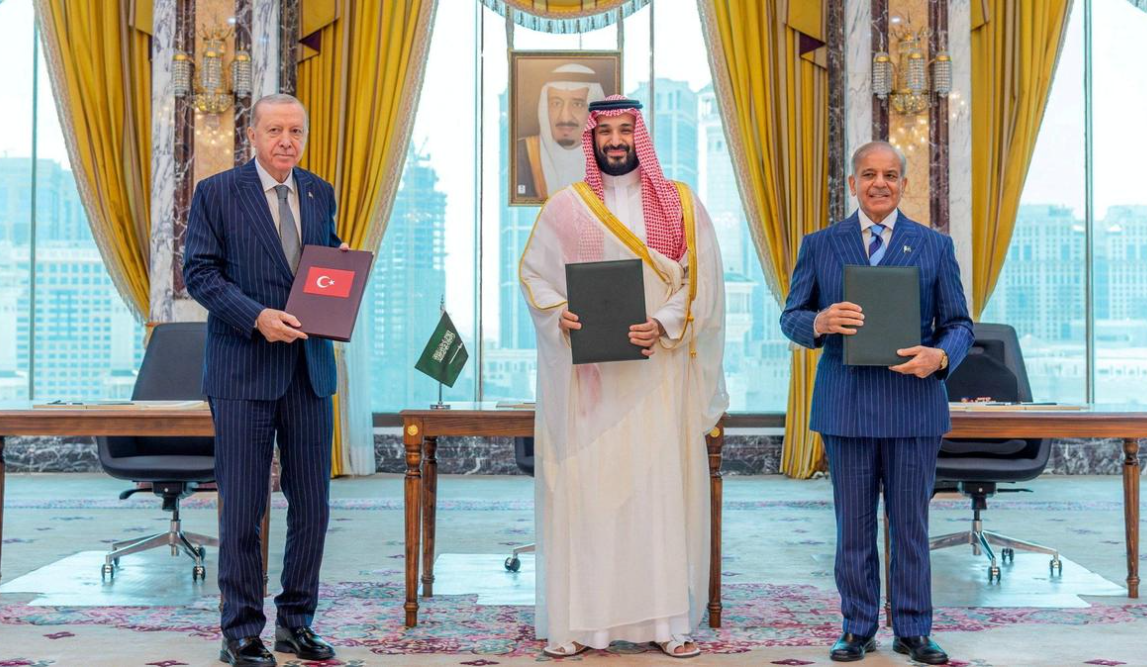


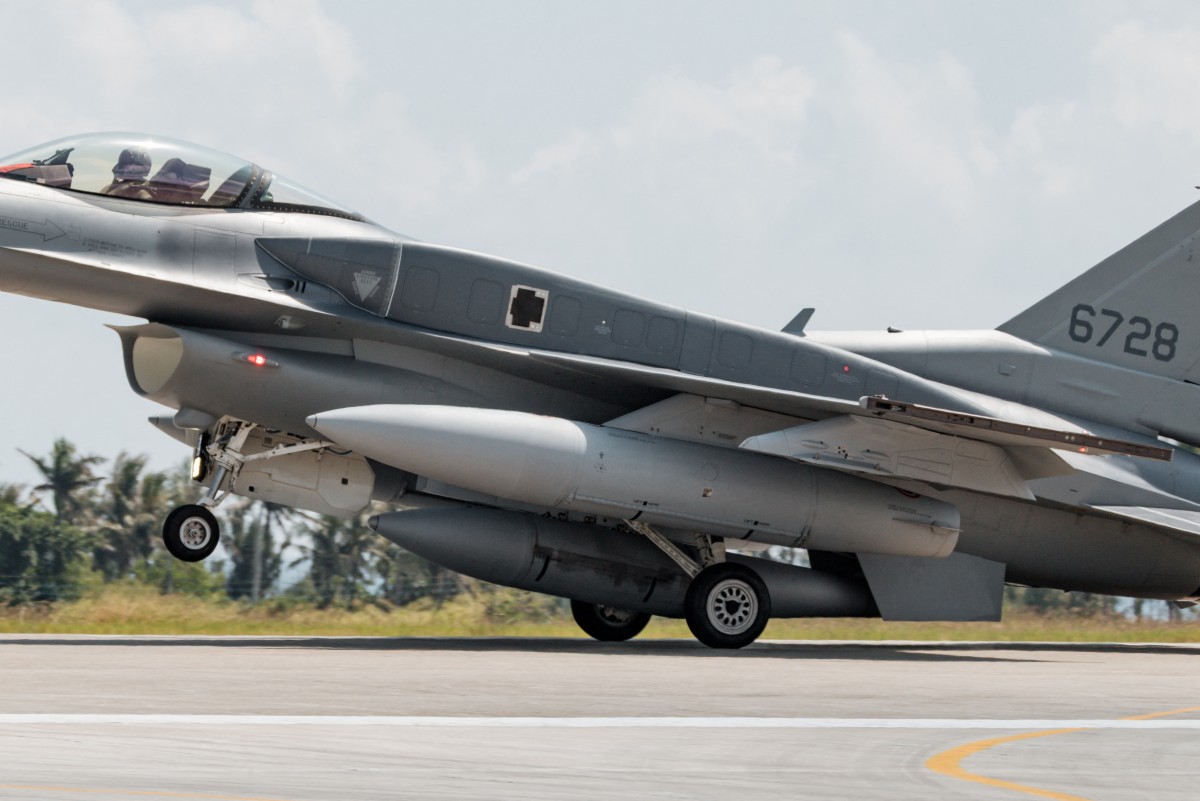
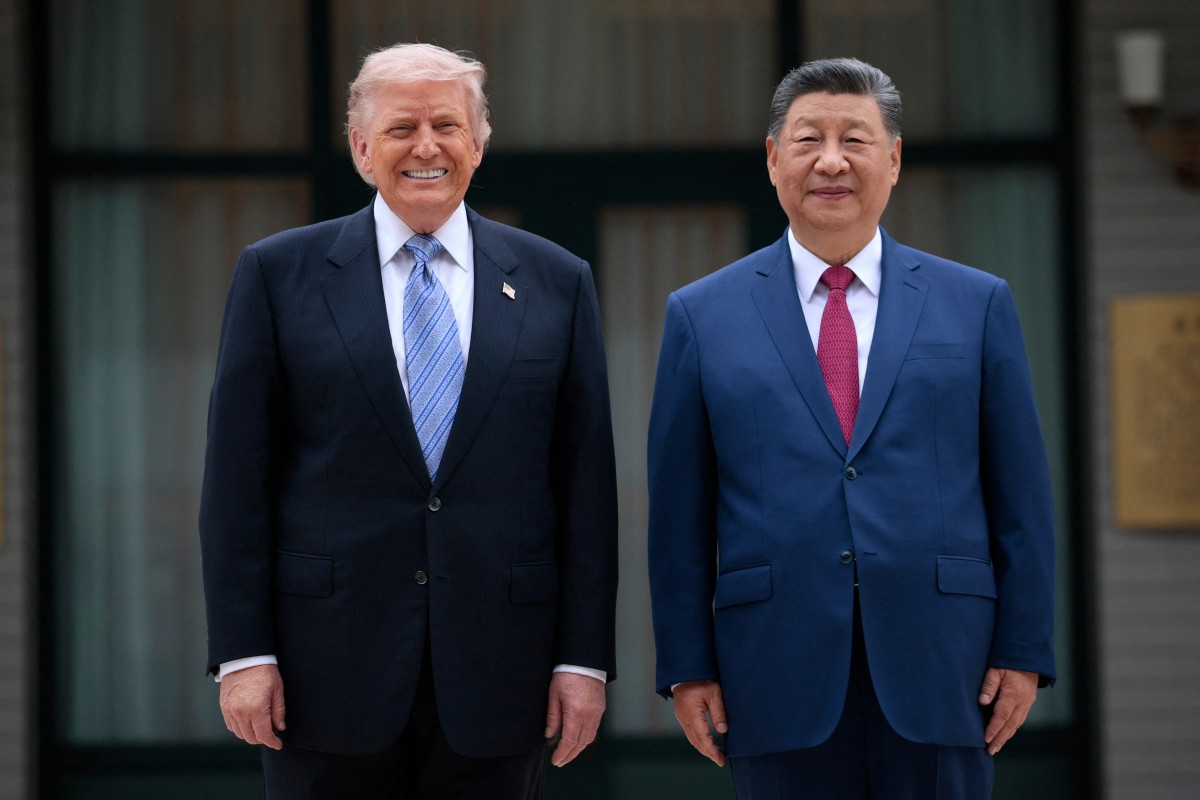
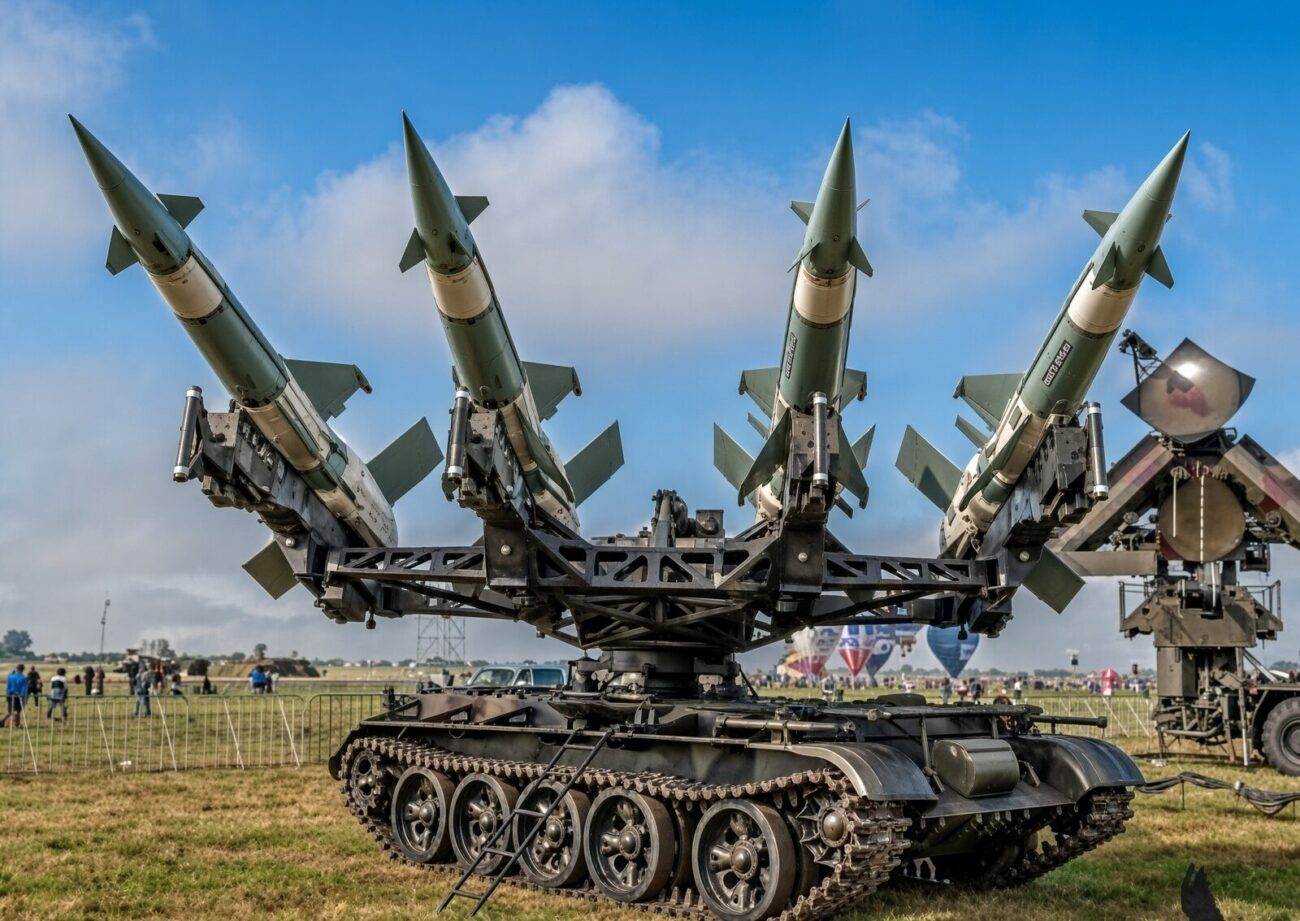


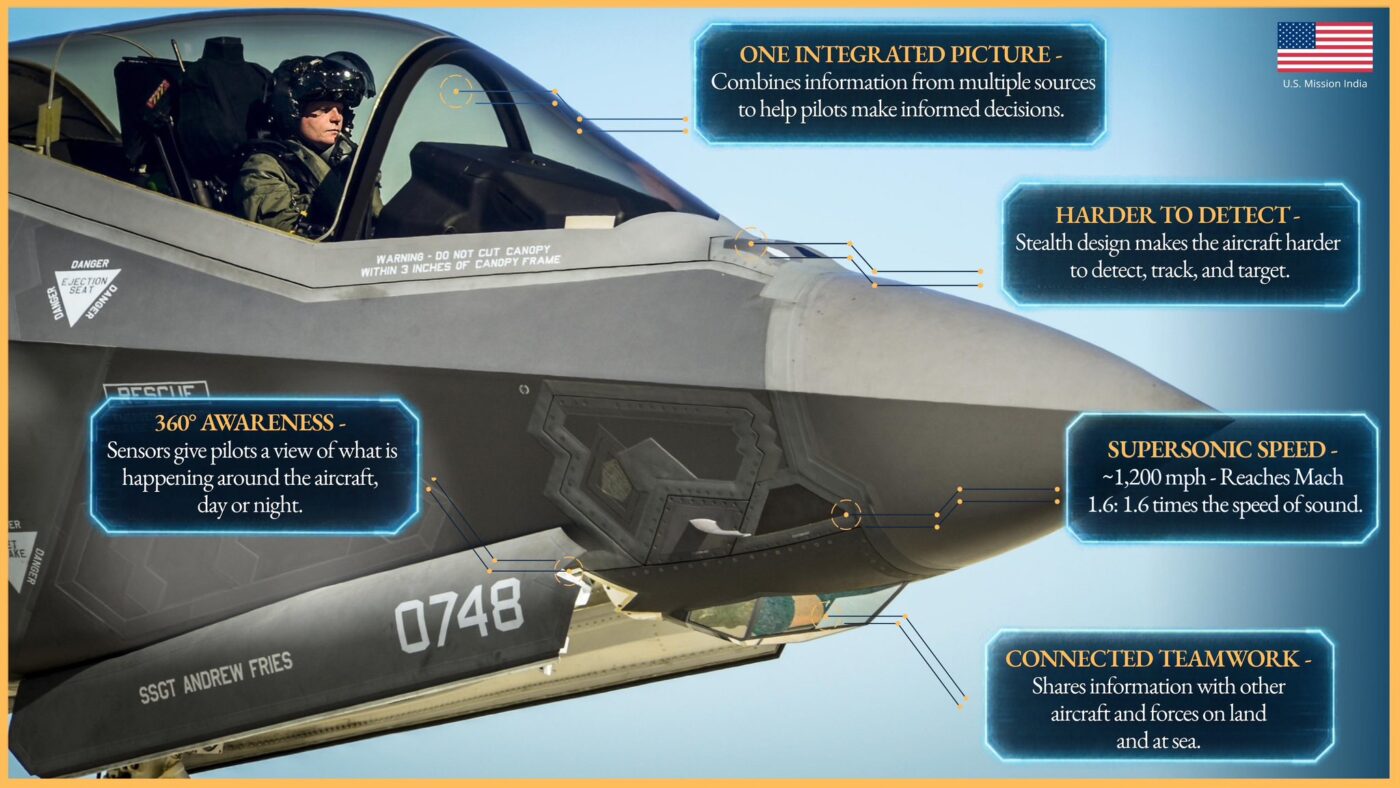
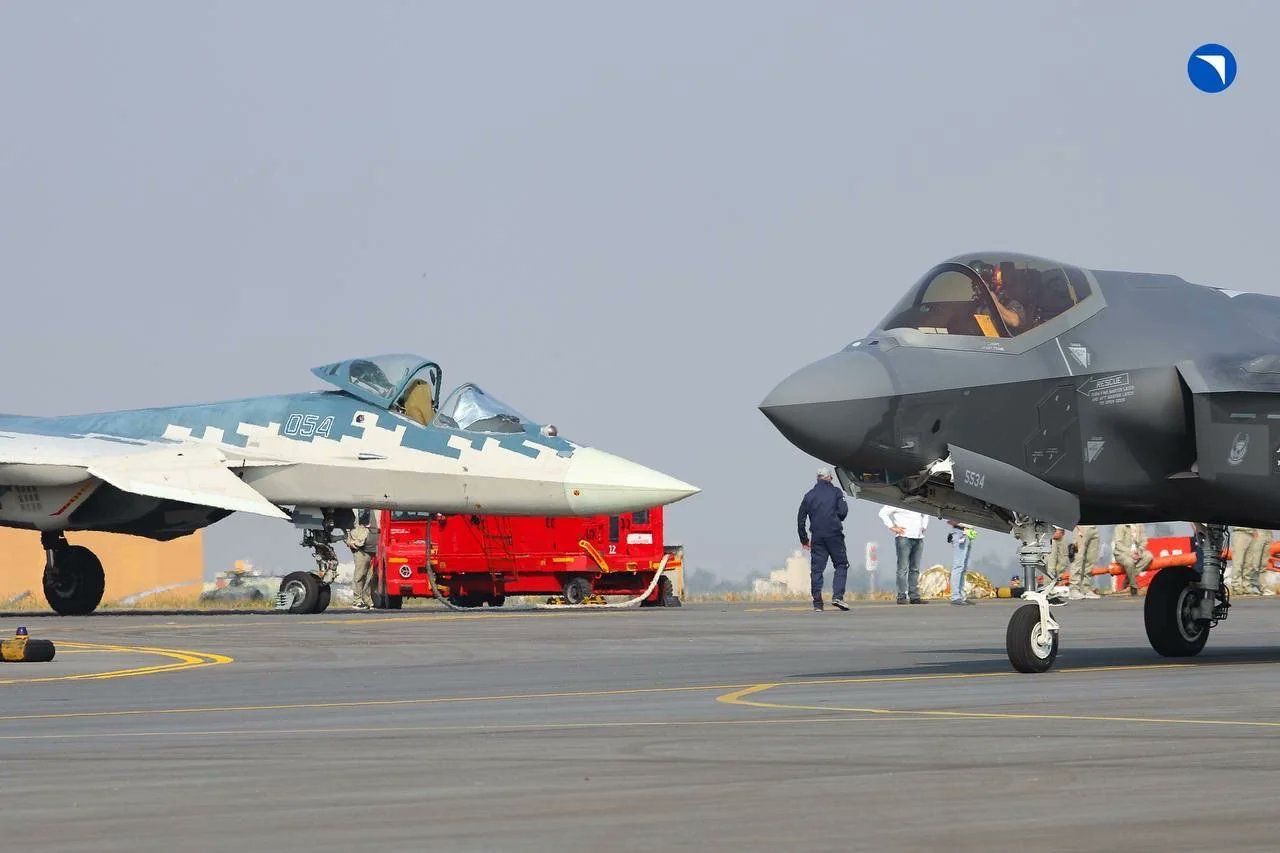
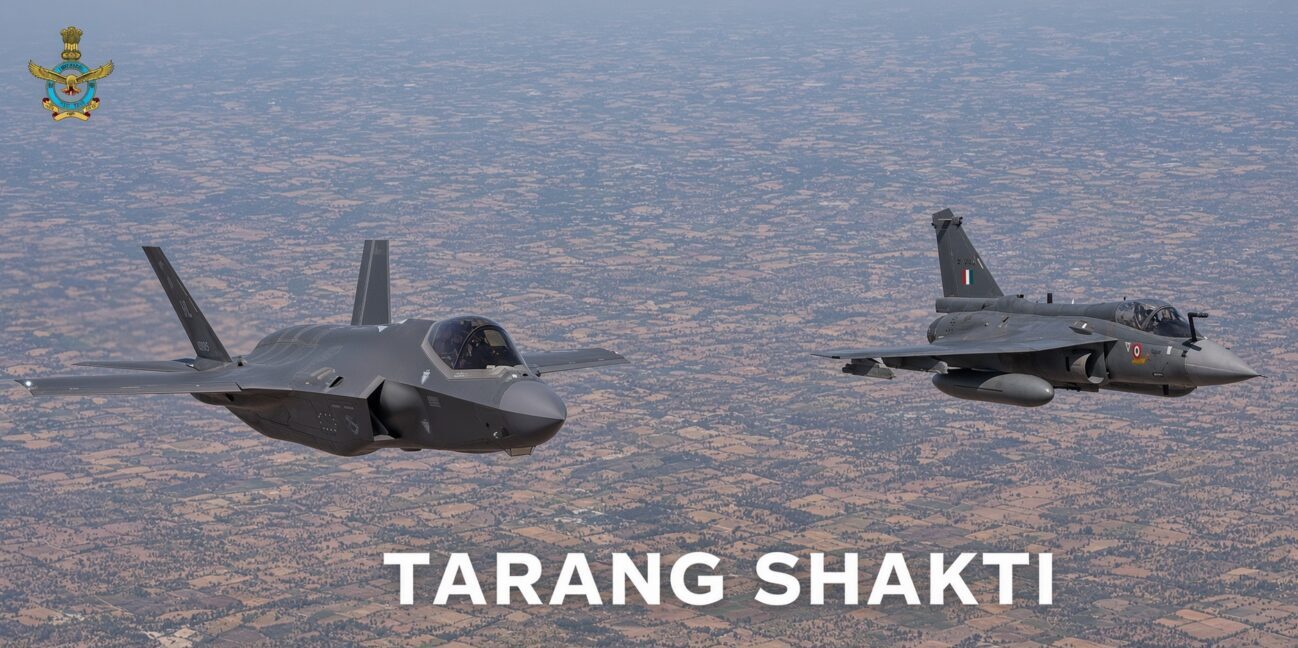





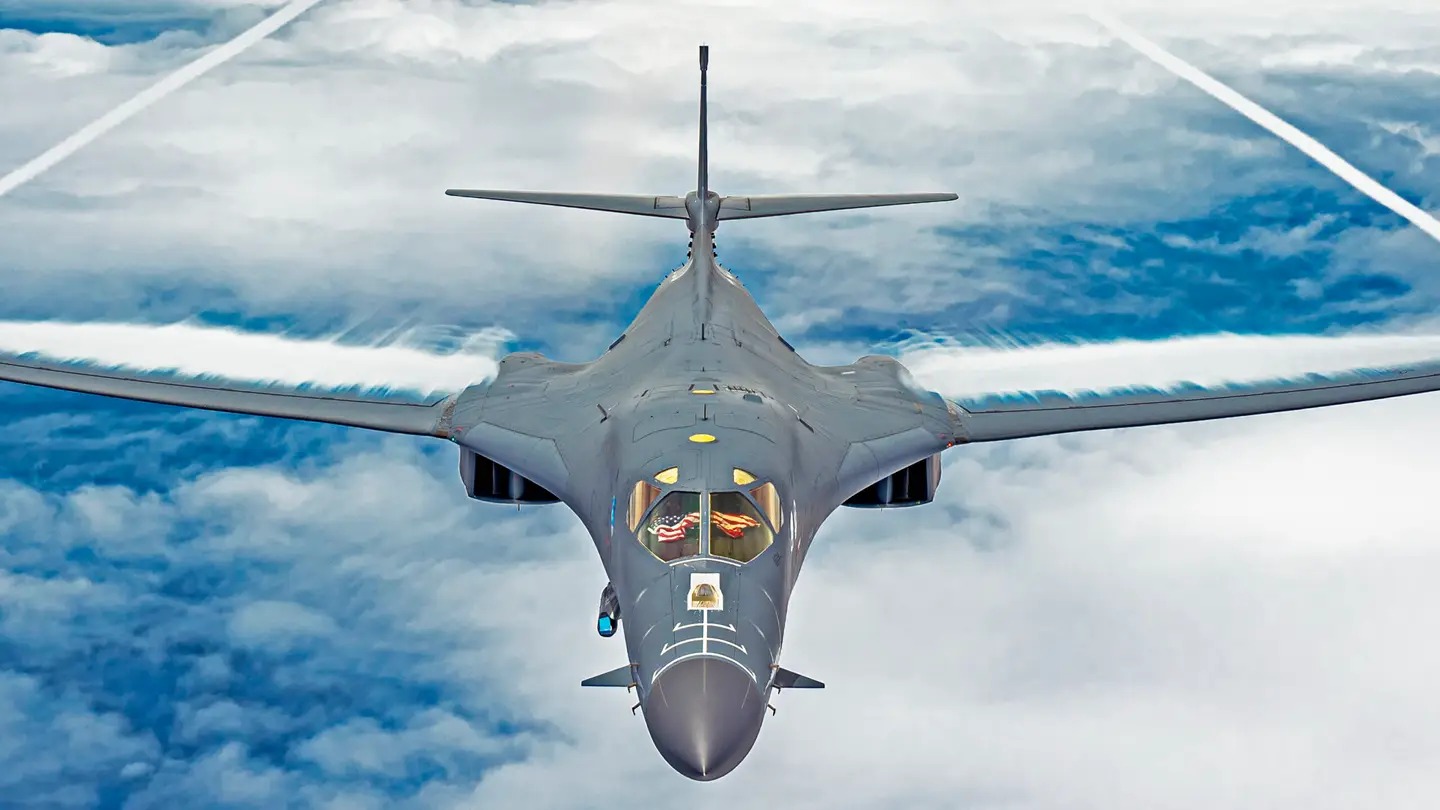
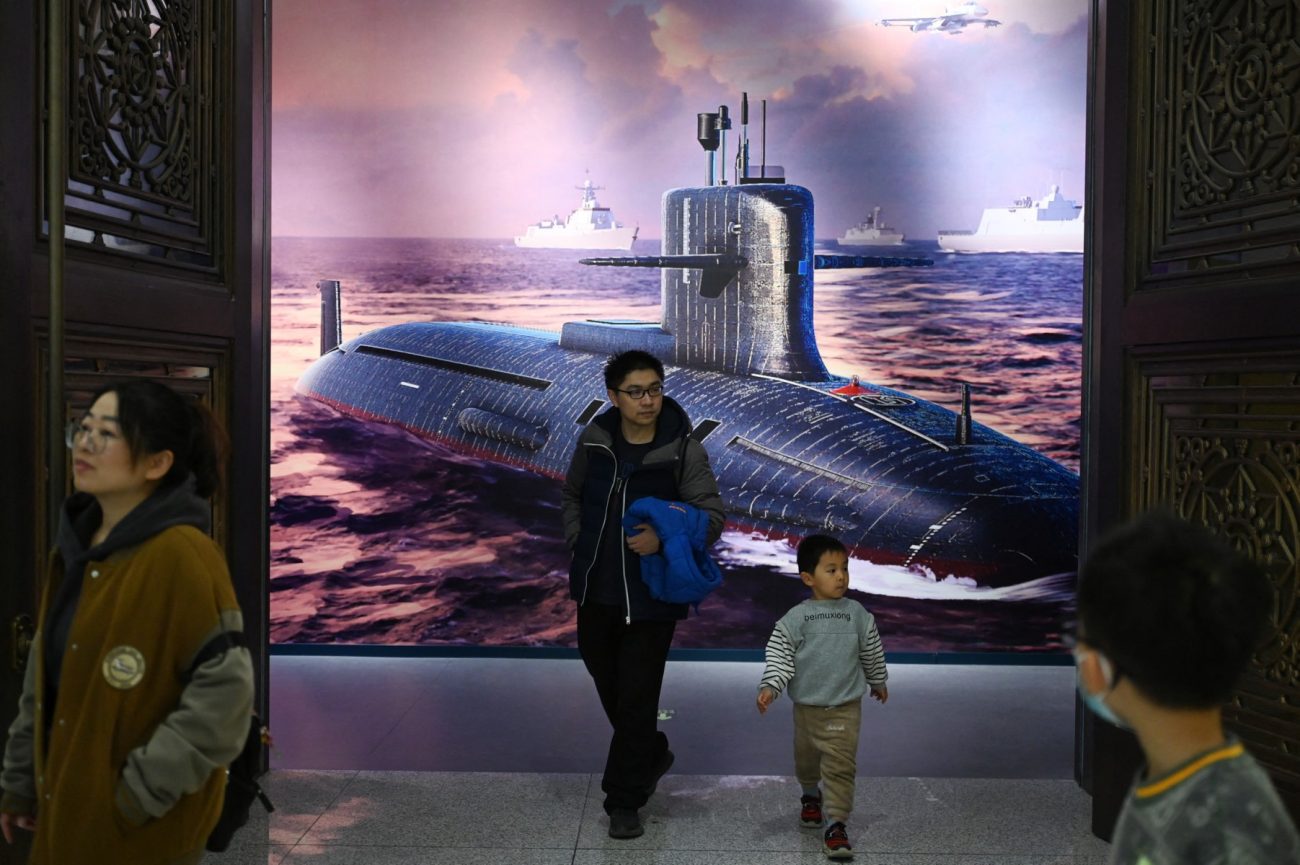
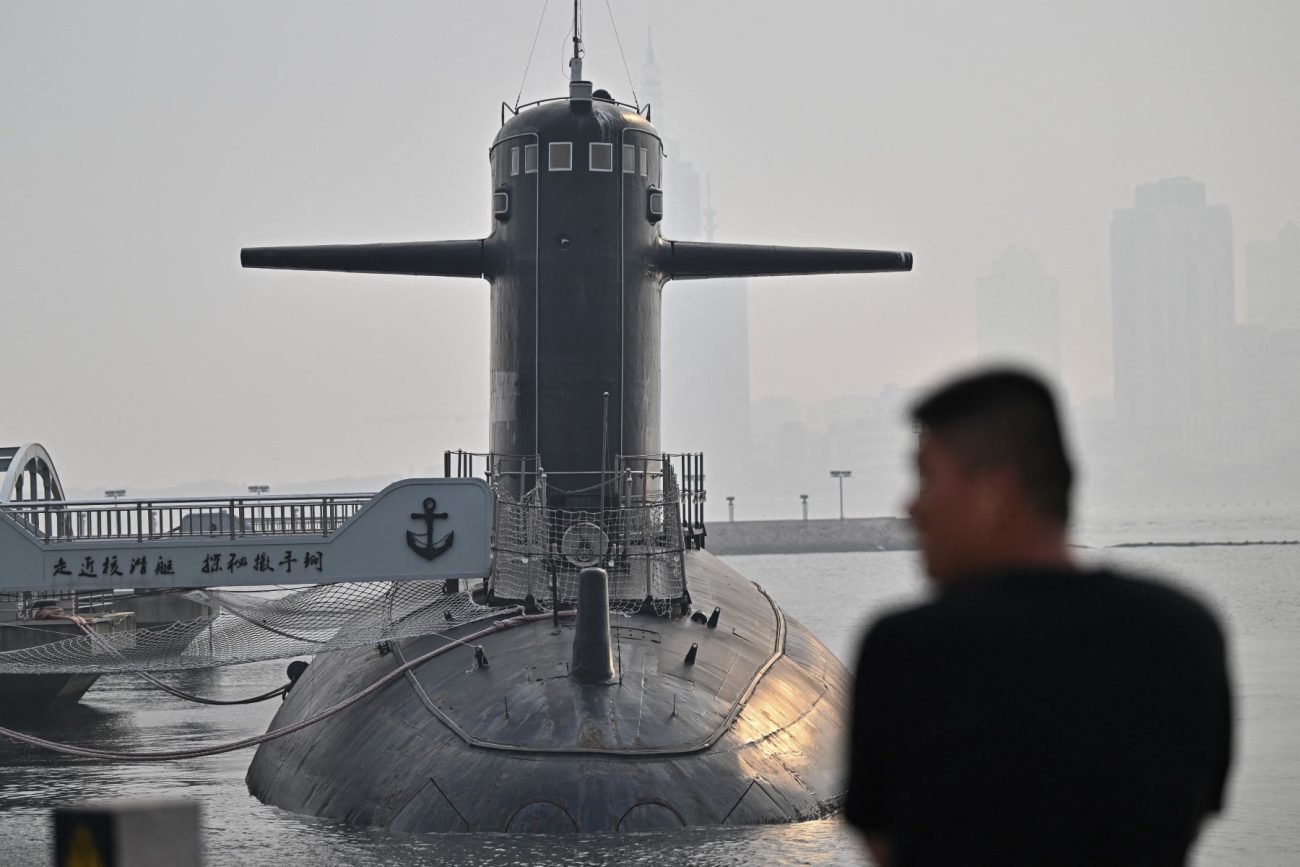
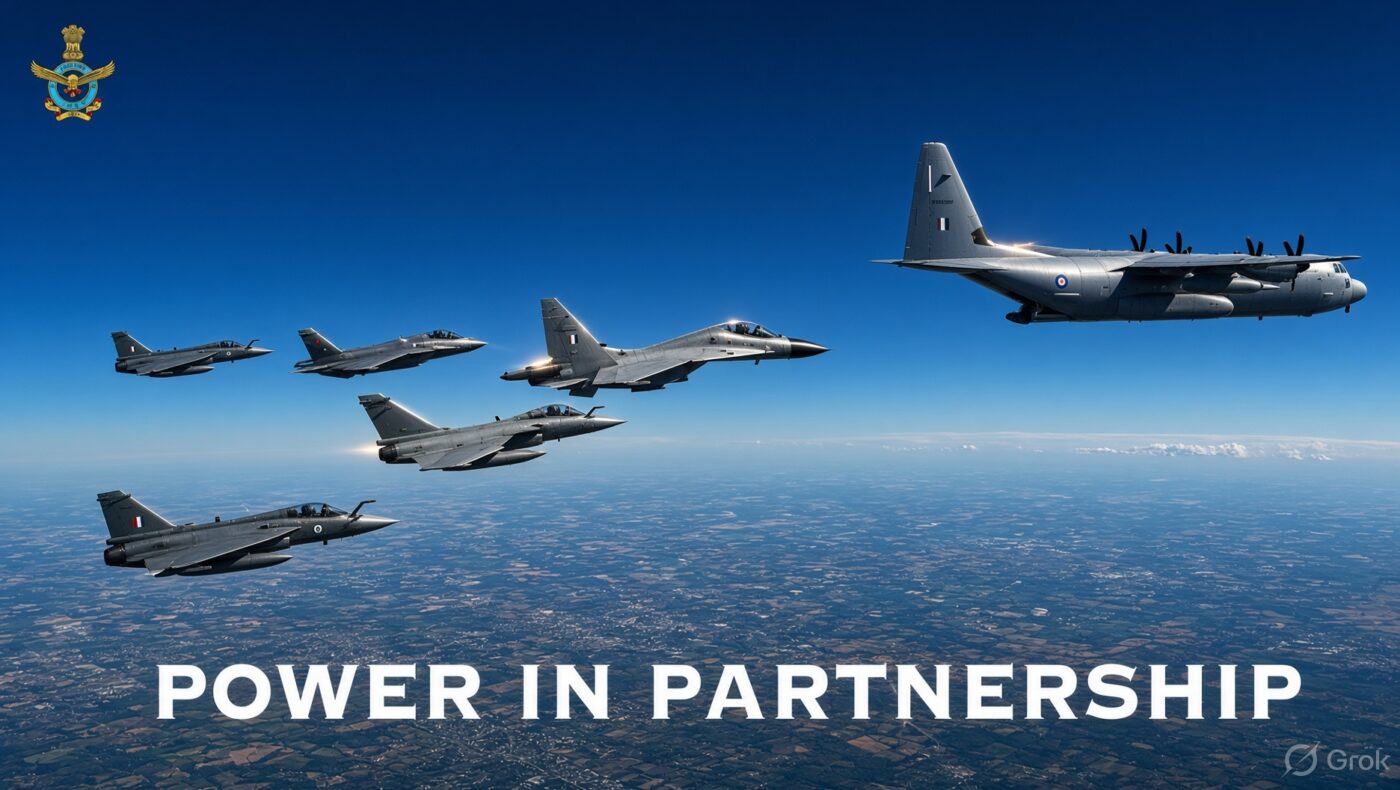

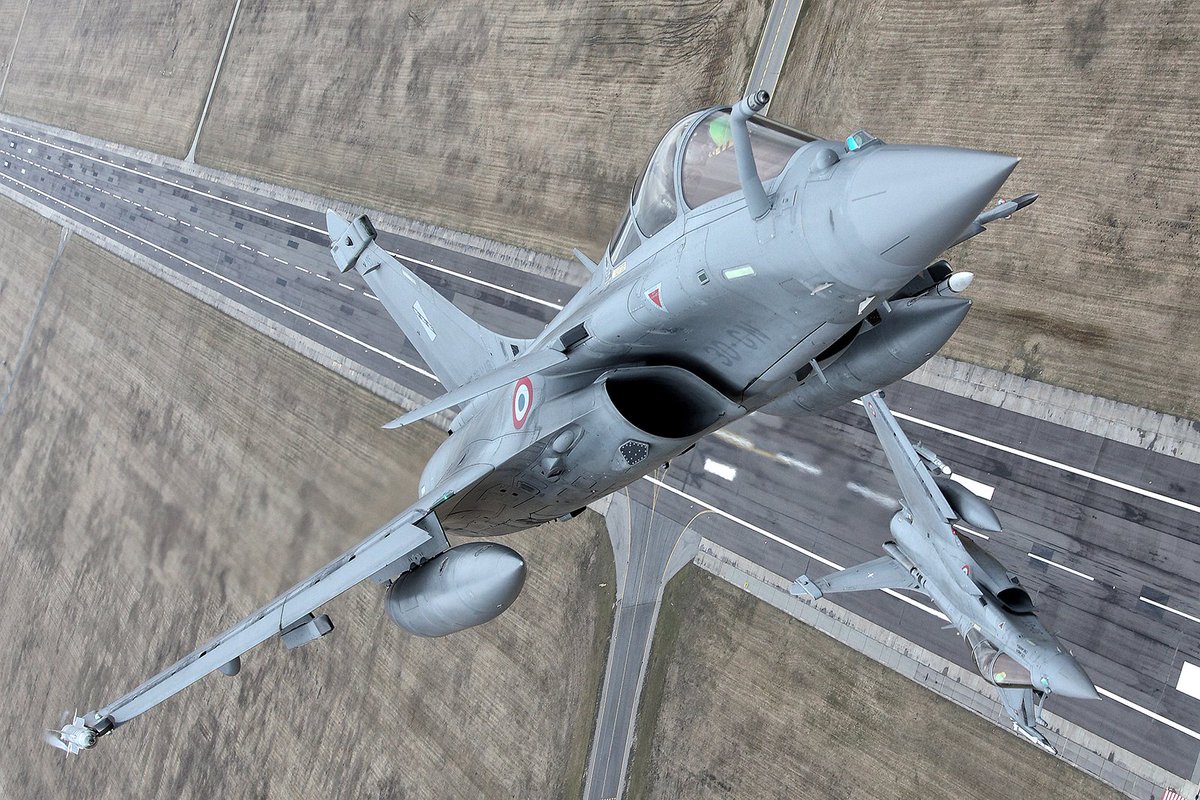
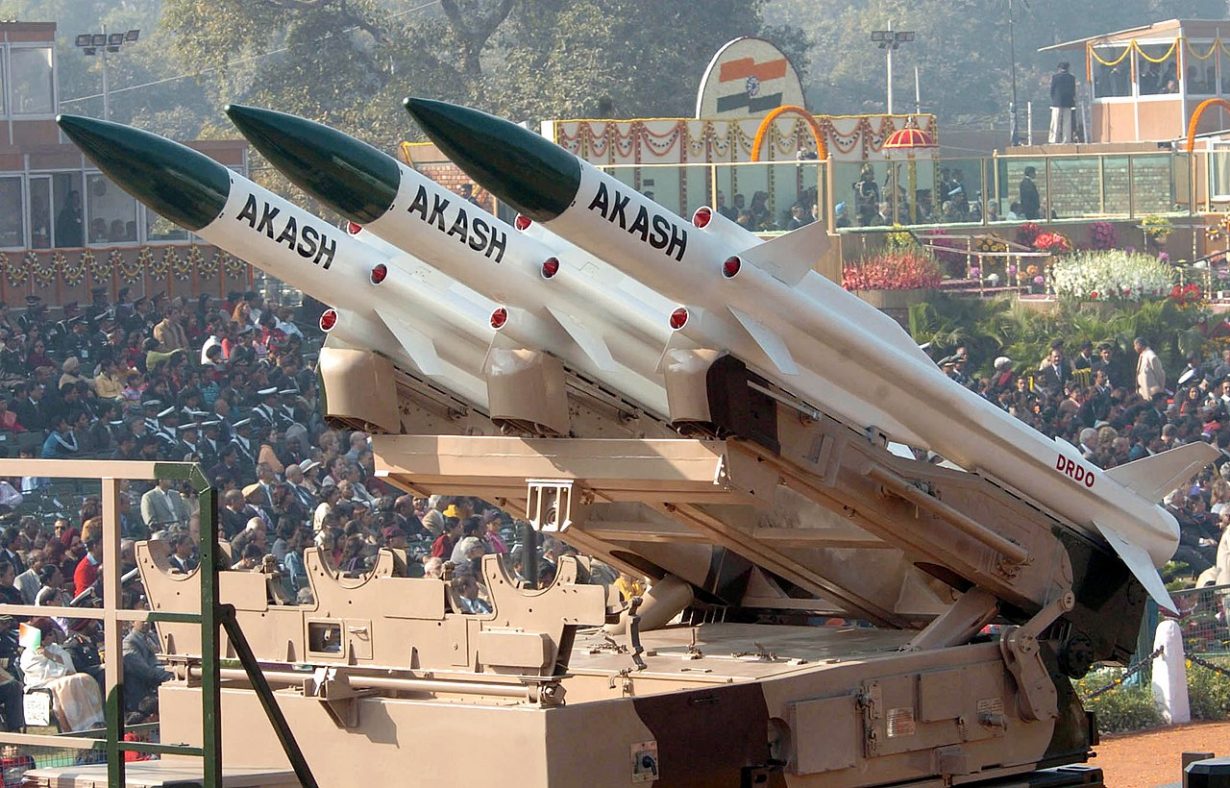
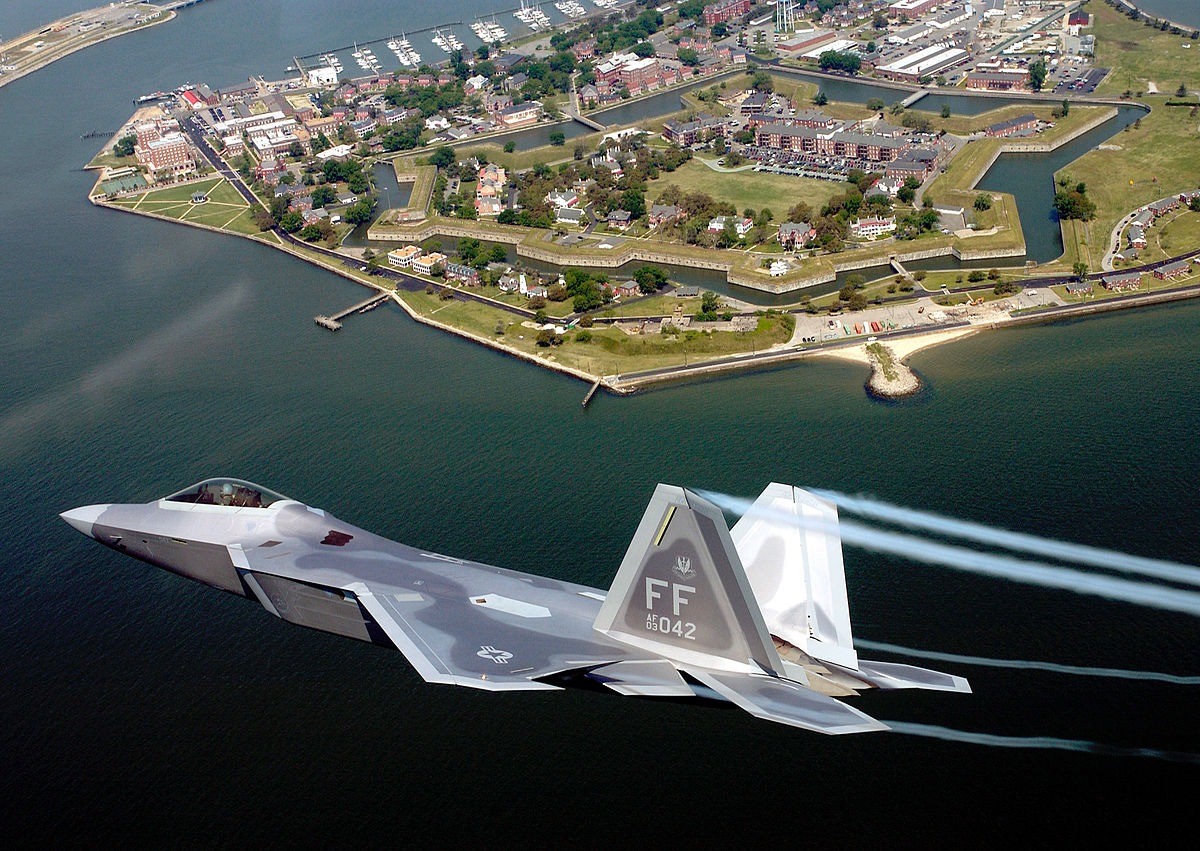
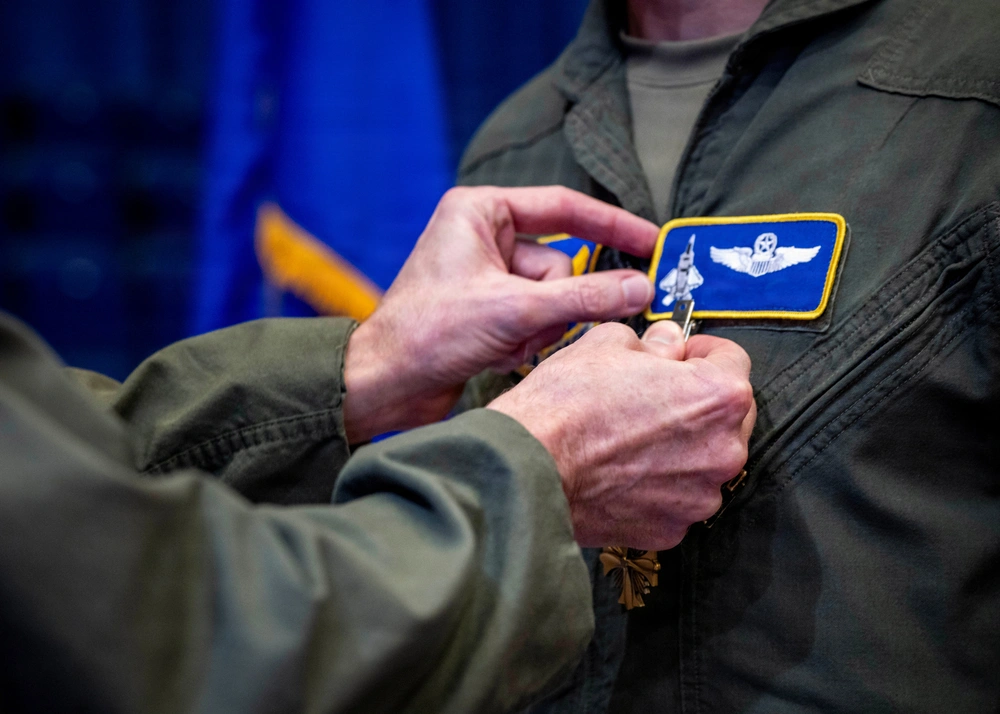
 The USS Theodore Roosevelt (CVN-71) has left San Diego to build a three-carrier presence in the Middle East